


3066 Results
Form:
books
books
Actions:
Price:
$35.00
(available to order)
Summary:
In this short, intentionally polemical book, Neil Leach draws on the ideas of philosophers and cultural theorists such as Walter Benjamin and Jean Baudrillard to develop a novel and highly incisive critique of the consequences of the growing (...)
$35.00
(available to order)
Summary:
In this short, intentionally polemical book, Neil Leach draws on the ideas of philosophers and cultural theorists such as Walter Benjamin and Jean Baudrillard to develop a novel and highly incisive critique of the consequences of the growing (...)
Title:
The anaesthetics of architecture
Actions:
Price:
$35.00
(available to order)
Summary:
In this short, intentionally polemical book, Neil Leach draws on the ideas of philosophers and cultural theorists such as Walter Benjamin and Jean Baudrillard to develop a novel and highly incisive critique of the consequences of the growing preoccupation with images and image-making in contemporary architectural culture. The problem with this preoccupation, Leach argues, is that it can induce a sort of numbness, as the saturation of images floods the senses and obscures deeper concerns. This problem is particularly acute for a discipline such as architecture, which relies heavily on visual representation. As a result, architects can become anaesthetized from the social and political realities of everyday life. In the intoxicating world of the image, the aesthetics of architecture threaten to become the anaesthetics of architecture. In this culture of aesthetic consumption, this "culture of the cocktail," meaningful discourse gives way to strategies of seduction, and architectural design is reduced to the superficial play of empty, seductive forms.
The anaesthetics of architecture
Actions:
Price:
$35.00
(available to order)
Summary:
In this short, intentionally polemical book, Neil Leach draws on the ideas of philosophers and cultural theorists such as Walter Benjamin and Jean Baudrillard to develop a novel and highly incisive critique of the consequences of the growing preoccupation with images and image-making in contemporary architectural culture. The problem with this preoccupation, Leach argues, is that it can induce a sort of numbness, as the saturation of images floods the senses and obscures deeper concerns. This problem is particularly acute for a discipline such as architecture, which relies heavily on visual representation. As a result, architects can become anaesthetized from the social and political realities of everyday life. In the intoxicating world of the image, the aesthetics of architecture threaten to become the anaesthetics of architecture. In this culture of aesthetic consumption, this "culture of the cocktail," meaningful discourse gives way to strategies of seduction, and architectural design is reduced to the superficial play of empty, seductive forms.
Form:
books
books
Publication:
May 1999, Cambridge, Mass.
May 1999, Cambridge, Mass.
Subject:
Architectural Theory
Architectural Theory
Form:
journals and magazines
journals and magazines
Actions:
Price:
$47.95
(available in store)
Summary:
The rural is not what it used to be. No longer simply a site for agricultural production for the city, the relationship between the rural and urban has become much more complex. Established categories such as rural /urban and village/city no longer hold true. Rural and urban conditions have become increasingly blurred, so how can we identify and distinguish their specific(...)
$47.95
(available in store)
Summary:
The rural is not what it used to be. No longer simply a site for agricultural production for the city, the relationship between the rural and urban has become much more complex. Established categories such as rural /urban and village/city no longer hold true. Rural and urban conditions have become increasingly blurred, so how can we identify and distinguish their specific(...)
Title:
AD Designing the rural: a global countryside in Flux
Actions:
Price:
$47.95
(available in store)
Summary:
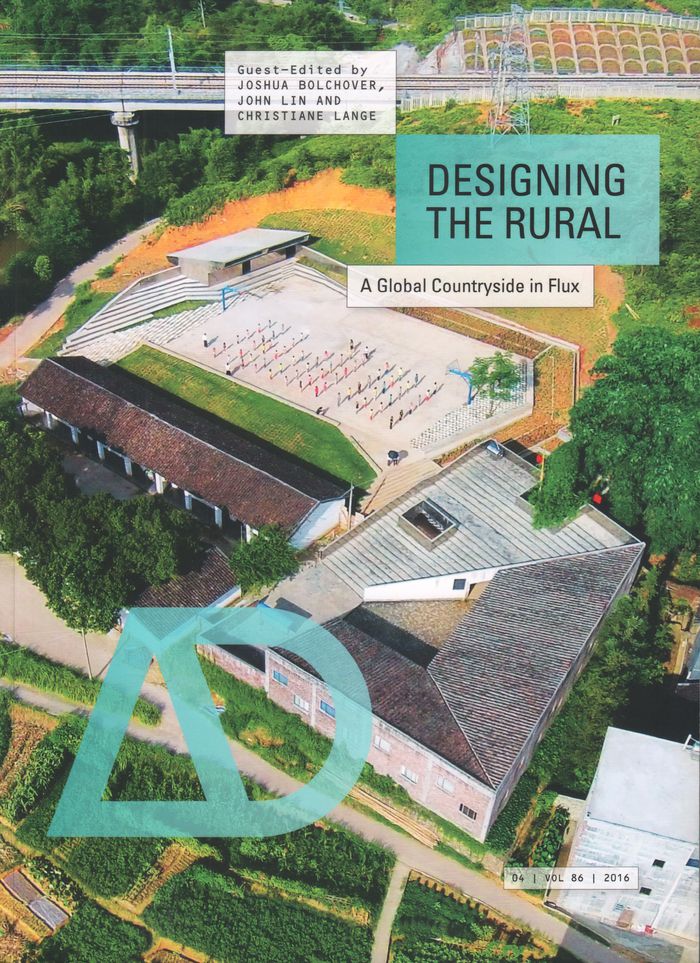
The rural is not what it used to be. No longer simply a site for agricultural production for the city, the relationship between the rural and urban has become much more complex. Established categories such as rural /urban and village/city no longer hold true. Rural and urban conditions have become increasingly blurred, so how can we identify and distinguish their specific characteristics? Where is the rural, and what role does it play in an urbanised world? In developing countries the countryside is a volatile and contradictory landscape: legally designated rural areas look like dense slums; factories intersect fields and farmers no longer farm. In contrast, in developed regions, the rural has become a highly controlled landscape of production and consumption: industrialised agriculture coexists with leisure landscapes for tourism, retirement and recreation. This issue of AD investigates how architects and researchers are critically engaging with the rural as an experimental field of exploration.
AD Designing the rural: a global countryside in Flux
Actions:
Price:
$47.95
(available in store)
Summary:
The rural is not what it used to be. No longer simply a site for agricultural production for the city, the relationship between the rural and urban has become much more complex. Established categories such as rural /urban and village/city no longer hold true. Rural and urban conditions have become increasingly blurred, so how can we identify and distinguish their specific characteristics? Where is the rural, and what role does it play in an urbanised world? In developing countries the countryside is a volatile and contradictory landscape: legally designated rural areas look like dense slums; factories intersect fields and farmers no longer farm. In contrast, in developed regions, the rural has become a highly controlled landscape of production and consumption: industrialised agriculture coexists with leisure landscapes for tourism, retirement and recreation. This issue of AD investigates how architects and researchers are critically engaging with the rural as an experimental field of exploration.
Form:
journals and magazines
journals and magazines
Publication:
August 2016
August 2016
Subject:
Magazines
Magazines
Form:
books
books
Actions:
Price:
$60.00
(available to order)
Summary:
We all have memories of the object-world of childhood. For many of us, playthings and images from those days continue to resonate. Rereading a swathe of modern and contemporary artistic production through the lens of its engagement with childhood, this book blends in-depth art historical analysis with sustained theoretical exploration of topics such as surrealist(...)
$60.00
(available to order)
Summary:
We all have memories of the object-world of childhood. For many of us, playthings and images from those days continue to resonate. Rereading a swathe of modern and contemporary artistic production through the lens of its engagement with childhood, this book blends in-depth art historical analysis with sustained theoretical exploration of topics such as surrealist(...)
Title:
Dark toys: Surrealism and the culture of childhood
Actions:
Price:
$60.00
(available to order)
Summary:
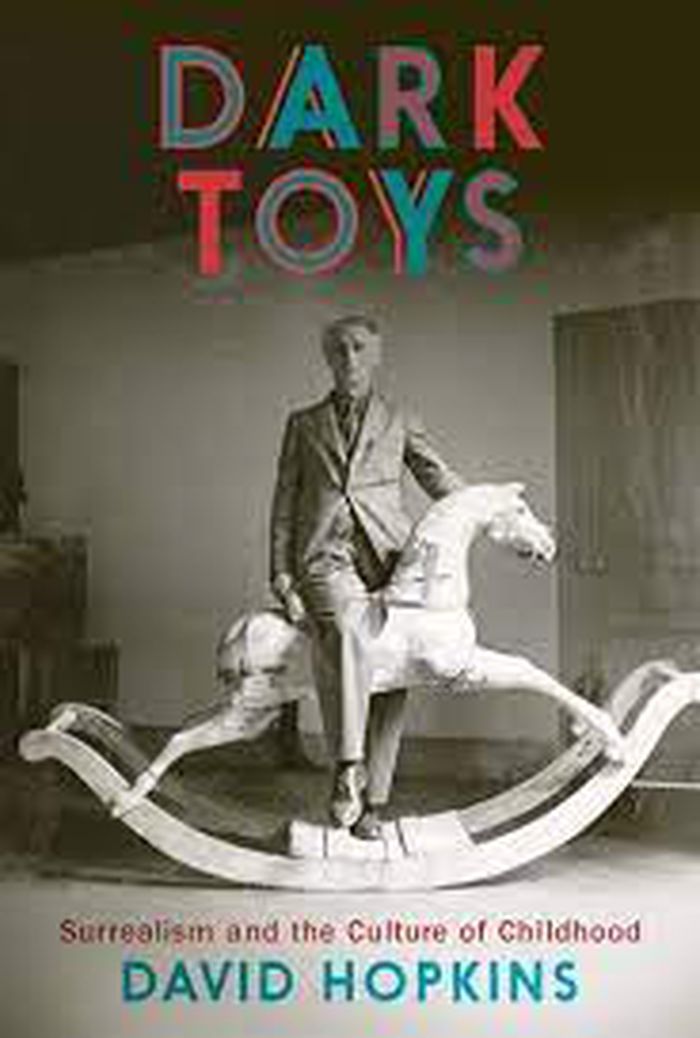
We all have memories of the object-world of childhood. For many of us, playthings and images from those days continue to resonate. Rereading a swathe of modern and contemporary artistic production through the lens of its engagement with childhood, this book blends in-depth art historical analysis with sustained theoretical exploration of topics such as surrealist temporality, toys, play, nostalgia, memory, and 20th-century constructions of the child. The result is an entirely new approach to the surrealist tradition via its engagement with “childish things.” Providing what the author describes as a “long history of surrealism,” this book plots a trajectory from surrealism itself to the art of the 1980s and 1990s, through to the present day. It addresses a range of figures from Marcel Duchamp, Giorgio de Chirico, Max Ernst, Hans Bellmer, Joseph Cornell, and Helen Levitt, at one end of the spectrum, to Louise Bourgeois, Eduardo Paolozzi, Claes Oldenburg, Susan Hiller, Martin Sharp, Helen Chadwick, Mike Kelley, and Jeff Koons, at the other.
Dark toys: Surrealism and the culture of childhood
Actions:
Price:
$60.00
(available to order)
Summary:
We all have memories of the object-world of childhood. For many of us, playthings and images from those days continue to resonate. Rereading a swathe of modern and contemporary artistic production through the lens of its engagement with childhood, this book blends in-depth art historical analysis with sustained theoretical exploration of topics such as surrealist temporality, toys, play, nostalgia, memory, and 20th-century constructions of the child. The result is an entirely new approach to the surrealist tradition via its engagement with “childish things.” Providing what the author describes as a “long history of surrealism,” this book plots a trajectory from surrealism itself to the art of the 1980s and 1990s, through to the present day. It addresses a range of figures from Marcel Duchamp, Giorgio de Chirico, Max Ernst, Hans Bellmer, Joseph Cornell, and Helen Levitt, at one end of the spectrum, to Louise Bourgeois, Eduardo Paolozzi, Claes Oldenburg, Susan Hiller, Martin Sharp, Helen Chadwick, Mike Kelley, and Jeff Koons, at the other.
Form:
books
books
Publication:
April 2021
April 2021
Subject:
Art Theory
Art Theory
Form:
books
books
Actions:
Price:
$18.00
(available in store)
Summary:
Line B. Løkken takes her point of departure in documentary strategies, but empties her pictures of obvious action. The specific place is allowed to appear through isolated objects and tableaux which represent something larger. In this publication Løkken penetrates to a backdrop of heritage and memories by way of a place that seems impregnated with human activity. The(...)
$18.00
(available in store)
Summary:
Line B. Løkken takes her point of departure in documentary strategies, but empties her pictures of obvious action. The specific place is allowed to appear through isolated objects and tableaux which represent something larger. In this publication Løkken penetrates to a backdrop of heritage and memories by way of a place that seems impregnated with human activity. The(...)
Title:
Angle 4° : Line B. Løkken, pitching pennies
Actions:
Price:
$18.00
(available in store)
Summary:
Line B. Løkken takes her point of departure in documentary strategies, but empties her pictures of obvious action. The specific place is allowed to appear through isolated objects and tableaux which represent something larger. In this publication Løkken penetrates to a backdrop of heritage and memories by way of a place that seems impregnated with human activity. The motifs appear to be linked to the idea of the humble cottage. Here there is space for potentially nostalgic bric-à-brac, but also objects with an unclear practical purpose. Løkken’s title plays on a typical spring game, and interweaves images of Scrabble, piles of chalk and an old crossword book. On the opposite face of the squares and alphabet dice of the Scrabble box (which quietly spell b-r-ø-l – “roar”) is a horn on which some tufts of grass have been caught. Maturing, aging and new freshness play together over the pages, also in tactile and colouristic ways.
Angle 4° : Line B. Løkken, pitching pennies
Actions:
Price:
$18.00
(available in store)
Summary:
Line B. Løkken takes her point of departure in documentary strategies, but empties her pictures of obvious action. The specific place is allowed to appear through isolated objects and tableaux which represent something larger. In this publication Løkken penetrates to a backdrop of heritage and memories by way of a place that seems impregnated with human activity. The motifs appear to be linked to the idea of the humble cottage. Here there is space for potentially nostalgic bric-à-brac, but also objects with an unclear practical purpose. Løkken’s title plays on a typical spring game, and interweaves images of Scrabble, piles of chalk and an old crossword book. On the opposite face of the squares and alphabet dice of the Scrabble box (which quietly spell b-r-ø-l – “roar”) is a horn on which some tufts of grass have been caught. Maturing, aging and new freshness play together over the pages, also in tactile and colouristic ways.
Form:
books
books
Publication:
July 2022
July 2022
Subject:
Photography monographs
Photography monographs
Form:
books
books
Title:
Why public space matters
Why public space matters
Actions:
Price:
$46.99
(available in store)
Summary:
Public spaces — where people from all walks of life play, work, meet, talk, read, think, debate, and protest — are vital to a healthy civic life. And, as the eminent scholar of public space Setha Low argues in this book, even fleeting moments of visibility and encounter in these spaces tend to foster a broader worldview and our willingness to accept difference. Yet we are(...)
$46.99
(available in store)
Summary:
Public spaces — where people from all walks of life play, work, meet, talk, read, think, debate, and protest — are vital to a healthy civic life. And, as the eminent scholar of public space Setha Low argues in this book, even fleeting moments of visibility and encounter in these spaces tend to foster a broader worldview and our willingness to accept difference. Yet we are(...)
Title:
Why public space matters
Actions:
Price:
$46.99
(available in store)
Summary:
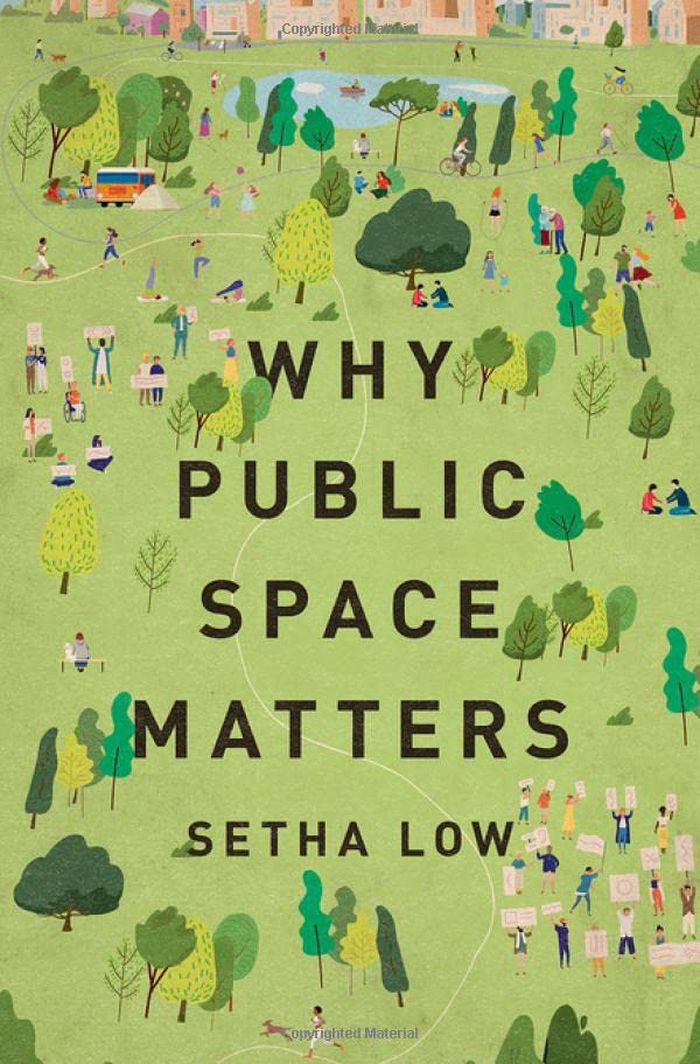
Public spaces — where people from all walks of life play, work, meet, talk, read, think, debate, and protest — are vital to a healthy civic life. And, as the eminent scholar of public space Setha Low argues in this book, even fleeting moments of visibility and encounter in these spaces tend to foster a broader worldview and our willingness to accept difference. Yet we are losing public spaces to accelerated urban development and the belief that public spaces are expendable. Low explores why public spaces matter today, how they are at risk, and what we can do about protecting these essential places that support our everyday lives. Finally, she shows how we can work to promote public space protection and expansion at both the grassroots and global levels. Throughout, she focuses on real public spaces and the people who use them in cities and regions across the Americas, from New Jersey to Costa Rica
Why public space matters
Actions:
Price:
$46.99
(available in store)
Summary:
Public spaces — where people from all walks of life play, work, meet, talk, read, think, debate, and protest — are vital to a healthy civic life. And, as the eminent scholar of public space Setha Low argues in this book, even fleeting moments of visibility and encounter in these spaces tend to foster a broader worldview and our willingness to accept difference. Yet we are losing public spaces to accelerated urban development and the belief that public spaces are expendable. Low explores why public spaces matter today, how they are at risk, and what we can do about protecting these essential places that support our everyday lives. Finally, she shows how we can work to promote public space protection and expansion at both the grassroots and global levels. Throughout, she focuses on real public spaces and the people who use them in cities and regions across the Americas, from New Jersey to Costa Rica
Form:
books
books
Publication:
December 2022
December 2022
Form:
books
books
Price:
$24.95
(available in store)
Summary:
"Le point de départ du masque Lancaster / Hanover est l'espace, dans le sens le plus large du mot, d'une Communauté Fermière et le fait de conjurer (comme la danse rituelle) cet espace à l'aide d'un nombre de 'sujets' et de leurs 'objets' respectifs qui dénotent ce 'lieu d'habitation' imaginaire. C'est l'espace-habitation d'une communauté, conjuré dans l'autonomie d'un(...)
$24.95
(available in store)
Summary:
"Le point de départ du masque Lancaster / Hanover est l'espace, dans le sens le plus large du mot, d'une Communauté Fermière et le fait de conjurer (comme la danse rituelle) cet espace à l'aide d'un nombre de 'sujets' et de leurs 'objets' respectifs qui dénotent ce 'lieu d'habitation' imaginaire. C'est l'espace-habitation d'une communauté, conjuré dans l'autonomie d'un(...)
Title:
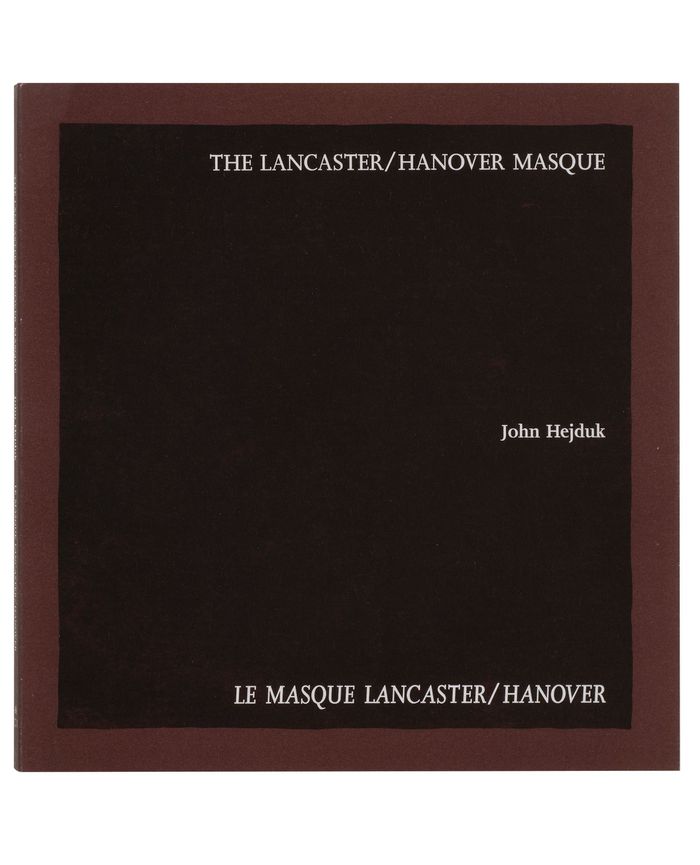
John Hejduk: The Lancaster/Hanover Masque, le Masque Lancaster/Hanover
Actions:
Price:
$24.95
(available in store)
Summary:
"Le point de départ du masque Lancaster / Hanover est l'espace, dans le sens le plus large du mot, d'une Communauté Fermière et le fait de conjurer (comme la danse rituelle) cet espace à l'aide d'un nombre de 'sujets' et de leurs 'objets' respectifs qui dénotent ce 'lieu d'habitation' imaginaire. C'est l'espace-habitation d'une communauté, conjuré dans l'autonomie d'un jeu théâtrale et architectonique." Avec une préface de Phyllis Lambert et un essai de Wim van der Bergh. "The point of departure for the Lancaster/Hanover Masque is the space of a Rural Farm Community and the process of 'spell-binding' the space (as in a ritual dance) by means of a number of 'subjects' and corresponding 'objects' which denote this imaginary habitat. It is the simulated living-dwelling space of a community spell-bound in the autonomy of a theatrical/architectural play." With a preface by Phyllis Lambert and an essay by Wim van der Bergh.
John Hejduk: The Lancaster/Hanover Masque, le Masque Lancaster/Hanover
Actions:
Price:
$24.95
(available in store)
Summary:
"Le point de départ du masque Lancaster / Hanover est l'espace, dans le sens le plus large du mot, d'une Communauté Fermière et le fait de conjurer (comme la danse rituelle) cet espace à l'aide d'un nombre de 'sujets' et de leurs 'objets' respectifs qui dénotent ce 'lieu d'habitation' imaginaire. C'est l'espace-habitation d'une communauté, conjuré dans l'autonomie d'un jeu théâtrale et architectonique." Avec une préface de Phyllis Lambert et un essai de Wim van der Bergh. "The point of departure for the Lancaster/Hanover Masque is the space of a Rural Farm Community and the process of 'spell-binding' the space (as in a ritual dance) by means of a number of 'subjects' and corresponding 'objects' which denote this imaginary habitat. It is the simulated living-dwelling space of a community spell-bound in the autonomy of a theatrical/architectural play." With a preface by Phyllis Lambert and an essay by Wim van der Bergh.
Form:
books
books
Publication:
March 1992, Montréal / London / New York
March 1992, Montréal / London / New York
Subject:
CCA Publications
CCA Publications
Form:
books
books
Actions:
Price:
$40.95
(available to order)
Summary:
While we all live our lives in designed landscapes of various types, only on occasion do we consider what these landscapes mean to us and how they have acquired that significance. Can a landscape architect or garden designer really imbue new settings with meaning, or does meaning evolve over time, created by those who perceive and use these landscapes? What role does the(...)
$40.95
(available to order)
Summary:
While we all live our lives in designed landscapes of various types, only on occasion do we consider what these landscapes mean to us and how they have acquired that significance. Can a landscape architect or garden designer really imbue new settings with meaning, or does meaning evolve over time, created by those who perceive and use these landscapes? What role does the(...)
Title:
Meaning in landscape architecture and gardens: Four essays, Four commentaries
Actions:
Price:
$40.95
(available to order)
Summary:
While we all live our lives in designed landscapes of various types, only on occasion do we consider what these landscapes mean to us and how they have acquired that significance. Can a landscape architect or garden designer really imbue new settings with meaning, or does meaning evolve over time, created by those who perceive and use these landscapes? What role does the selection and arrangement of plants and hard materials play in this process and just where does the passage of time enter into the equation? These questions collectively provide the core material for Meaning in Landscape Architecture and Gardens, a compendium of four landmark essays written over a period of twenty years by leading scholars in the field of landscape architecture. New commentaries by the authors accompany each of the essays and reflect on the thinking behind them as well as the evolution of the author’s thoughts since their original publication.
Meaning in landscape architecture and gardens: Four essays, Four commentaries
Actions:
Price:
$40.95
(available to order)
Summary:
While we all live our lives in designed landscapes of various types, only on occasion do we consider what these landscapes mean to us and how they have acquired that significance. Can a landscape architect or garden designer really imbue new settings with meaning, or does meaning evolve over time, created by those who perceive and use these landscapes? What role does the selection and arrangement of plants and hard materials play in this process and just where does the passage of time enter into the equation? These questions collectively provide the core material for Meaning in Landscape Architecture and Gardens, a compendium of four landmark essays written over a period of twenty years by leading scholars in the field of landscape architecture. New commentaries by the authors accompany each of the essays and reflect on the thinking behind them as well as the evolution of the author’s thoughts since their original publication.
Form:
books
books
Publication:
March 2011
March 2011
Subject:
Landscape Theory
Landscape Theory
Form:
books
books
Price:
$39.95
(available to order)
Summary:
Based on the research of the Banff New Media Institute from 1995 to 2005, these essays, transcripts and artists projects celebrate the belief that artists and cultural industries, in collaboration with scientists, social scientists and humanists, have a critical role to play in developing technologies that work for human betterment and allow for a more participatory(...)
$39.95
(available to order)
Summary:
Based on the research of the Banff New Media Institute from 1995 to 2005, these essays, transcripts and artists projects celebrate the belief that artists and cultural industries, in collaboration with scientists, social scientists and humanists, have a critical role to play in developing technologies that work for human betterment and allow for a more participatory(...)
Title:
Euphoria and dystophia: the Banff New Media Institute dialogues
Actions:
Price:
$39.95
(available to order)
Summary:
Based on the research of the Banff New Media Institute from 1995 to 2005, these essays, transcripts and artists projects celebrate the belief that artists and cultural industries, in collaboration with scientists, social scientists and humanists, have a critical role to play in developing technologies that work for human betterment and allow for a more participatory culture. Each thematic chapter features an introduction, an original essay and carefully edited transcriptions drawn from thousands of hours of audio material with artists and theorists such as Laurie Anderson, Herve Fische, Kim Sawchuck, Zainub Verjee, Bill Vorn and many others. Also included is the catalogue of the exhibition, The Art Formerly Known As New Media, and a DVD based on the electronic journal, HorizonZero. Featured artists include Geoff Lillemon, Matthew Sloly, Maria Lantin, Shu Lea Cheang, Sara Diamond, Michael Naimark, Greg Niemeyer, Catherine Richards and Martin Wattenberg, Maciej Wisniewski. With a Forward by Kellogg Booth and an Afterword by Susan Kennard
Euphoria and dystophia: the Banff New Media Institute dialogues
Actions:
Price:
$39.95
(available to order)
Summary:
Based on the research of the Banff New Media Institute from 1995 to 2005, these essays, transcripts and artists projects celebrate the belief that artists and cultural industries, in collaboration with scientists, social scientists and humanists, have a critical role to play in developing technologies that work for human betterment and allow for a more participatory culture. Each thematic chapter features an introduction, an original essay and carefully edited transcriptions drawn from thousands of hours of audio material with artists and theorists such as Laurie Anderson, Herve Fische, Kim Sawchuck, Zainub Verjee, Bill Vorn and many others. Also included is the catalogue of the exhibition, The Art Formerly Known As New Media, and a DVD based on the electronic journal, HorizonZero. Featured artists include Geoff Lillemon, Matthew Sloly, Maria Lantin, Shu Lea Cheang, Sara Diamond, Michael Naimark, Greg Niemeyer, Catherine Richards and Martin Wattenberg, Maciej Wisniewski. With a Forward by Kellogg Booth and an Afterword by Susan Kennard
Form:
books
books
Publication:
September 2011
September 2011
Subject:
Art Theory
Art Theory
Form:
books
books
Actions:
Price:
$27.50
(available to order)
Summary:
The concept of an encyclopedic museum was born of the Enlightenment, a manifestation of society's growing belief that the spread of knowledge and the promotion of intellectual inquiry were crucial to human development and the future of a rational society. With Museums Matter, James Cuno, president and director of the Art Institute of Chicago, takes us on a brief tour(...)
$27.50
(available to order)
Summary:
The concept of an encyclopedic museum was born of the Enlightenment, a manifestation of society's growing belief that the spread of knowledge and the promotion of intellectual inquiry were crucial to human development and the future of a rational society. With Museums Matter, James Cuno, president and director of the Art Institute of Chicago, takes us on a brief tour(...)
Title:
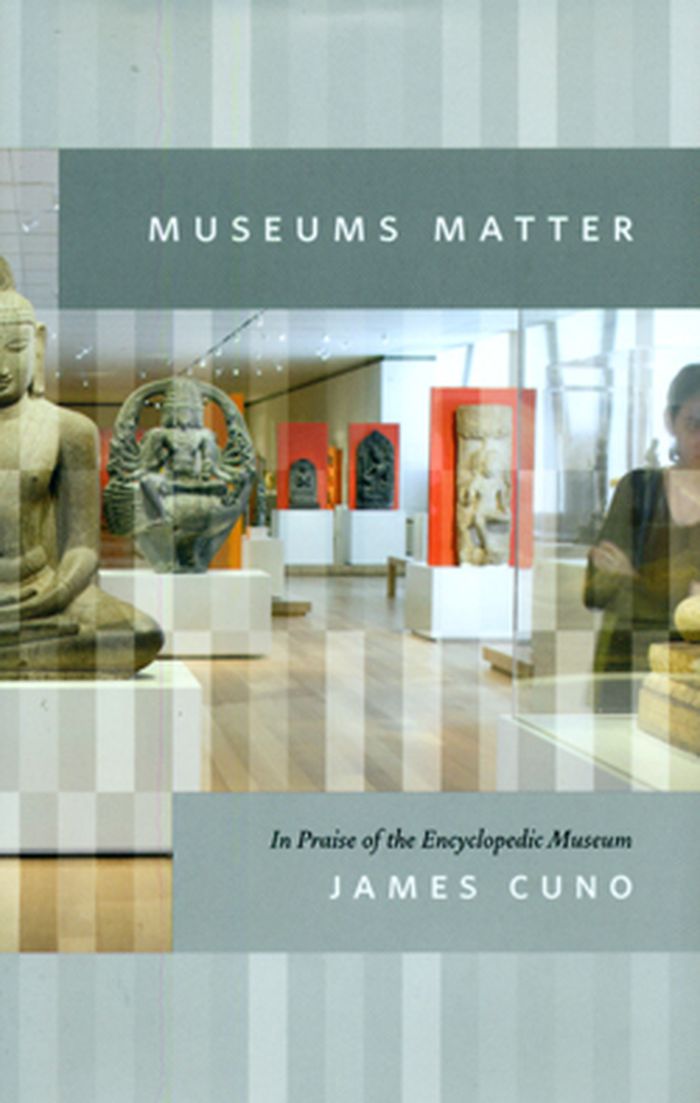
Museums matter: in praise of the encyclopedic museum
Actions:
Price:
$27.50
(available to order)
Summary:
The concept of an encyclopedic museum was born of the Enlightenment, a manifestation of society's growing belief that the spread of knowledge and the promotion of intellectual inquiry were crucial to human development and the future of a rational society. With Museums Matter, James Cuno, president and director of the Art Institute of Chicago, takes us on a brief tour of the modern museum, from the creation of the British Museum - the archetypal encyclopedic collection - to the present, when major museums host millions of visitors annually and play a major role in the cultural lives of their cities. Engaging with thinkers such as Edward Said and Martha Nussbaum, and drawing on examples from the politics of India to the destruction of the Bramiyan Buddhas to the history of trade and travel, Cuno makes a case for the encyclopedic museum as a truly cosmopolitan institution, promoting tolerance, understanding, and a shared sense of history - values that are essential in our ever more globalized age.
Museums matter: in praise of the encyclopedic museum
Actions:
Price:
$27.50
(available to order)
Summary:
The concept of an encyclopedic museum was born of the Enlightenment, a manifestation of society's growing belief that the spread of knowledge and the promotion of intellectual inquiry were crucial to human development and the future of a rational society. With Museums Matter, James Cuno, president and director of the Art Institute of Chicago, takes us on a brief tour of the modern museum, from the creation of the British Museum - the archetypal encyclopedic collection - to the present, when major museums host millions of visitors annually and play a major role in the cultural lives of their cities. Engaging with thinkers such as Edward Said and Martha Nussbaum, and drawing on examples from the politics of India to the destruction of the Bramiyan Buddhas to the history of trade and travel, Cuno makes a case for the encyclopedic museum as a truly cosmopolitan institution, promoting tolerance, understanding, and a shared sense of history - values that are essential in our ever more globalized age.
Form:
books
books
Publication:
December 2011
December 2011
Subject:
Museums and Universal Exhibitions
Museums and Universal Exhibitions
Form:
books
books
Title:
Guy de Cointet
Guy de Cointet
Actions:
Price:
$45.00
(available to order)
Summary:
Mentor to a generation of Californian Conceptualists and performance artists, Guy de Cointet (1934-1983) took language as a material from which to generate drawings, plays and performances. De Cointet collected phrases, words and even single letters culled from popular culture and literary sources, and scripted them as dialogues or props for plays inspired by the writings(...)
$45.00
(available to order)
Summary:
Mentor to a generation of Californian Conceptualists and performance artists, Guy de Cointet (1934-1983) took language as a material from which to generate drawings, plays and performances. De Cointet collected phrases, words and even single letters culled from popular culture and literary sources, and scripted them as dialogues or props for plays inspired by the writings(...)
Title:
Guy de Cointet
Actions:
Price:
$45.00
(available to order)
Summary:
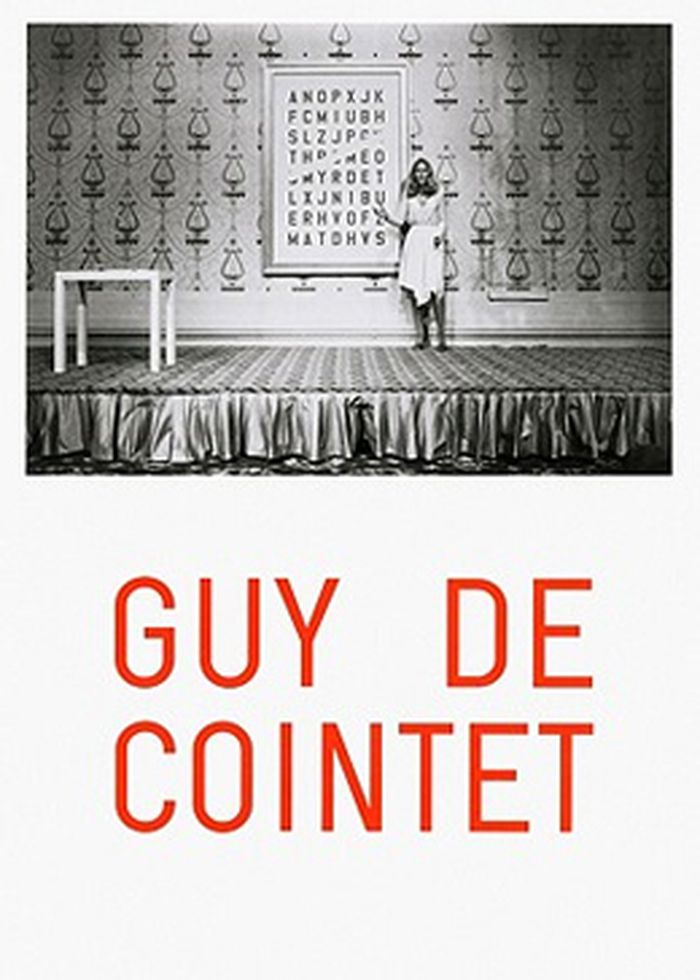
Mentor to a generation of Californian Conceptualists and performance artists, Guy de Cointet (1934-1983) took language as a material from which to generate drawings, plays and performances. De Cointet collected phrases, words and even single letters culled from popular culture and literary sources, and scripted them as dialogues or props for plays inspired by the writings and homonymic compositional methods of Raymond Roussel: in the 1976 play "At Sunrise... A Cry Was Heard," for example, a large painting depicting letters bisected by a white sash provides the dialogue of the lead actress, who recites its jumble of letters as if it were ordinary conversation. His drawings were often generated by geometric erasures of found text, leaving behind Concrete-style abstract patterns. A formative figure for Mike Kelley and Paul McCarthy during his tenure at the Otis Art institute, de Cointet is today in the process of being rediscovered; this timely monograph is the first overview of his enigmatic and influential oeuvre.
Guy de Cointet
Actions:
Price:
$45.00
(available to order)
Summary:
Mentor to a generation of Californian Conceptualists and performance artists, Guy de Cointet (1934-1983) took language as a material from which to generate drawings, plays and performances. De Cointet collected phrases, words and even single letters culled from popular culture and literary sources, and scripted them as dialogues or props for plays inspired by the writings and homonymic compositional methods of Raymond Roussel: in the 1976 play "At Sunrise... A Cry Was Heard," for example, a large painting depicting letters bisected by a white sash provides the dialogue of the lead actress, who recites its jumble of letters as if it were ordinary conversation. His drawings were often generated by geometric erasures of found text, leaving behind Concrete-style abstract patterns. A formative figure for Mike Kelley and Paul McCarthy during his tenure at the Otis Art institute, de Cointet is today in the process of being rediscovered; this timely monograph is the first overview of his enigmatic and influential oeuvre.
Form:
books
books
Publication:
March 2012
March 2012
Subject:
Contemporary Art Monographs
Contemporary Art Monographs


