


3250 Results
Form:
books
books
Actions:
Price:
$35.00
(available to order)
Summary:
This book is the first English translation of a renowned collection of essays by Joan Fontcuberta, in which he considers the technological shift that photography has undergone in recent years. The medium finds itself torn between loss and hope, between the disappearance of the silver gelatin photograph and the possibilities of the digital medium. Fontcuberta uses the(...)
$35.00
(available to order)
Summary:
This book is the first English translation of a renowned collection of essays by Joan Fontcuberta, in which he considers the technological shift that photography has undergone in recent years. The medium finds itself torn between loss and hope, between the disappearance of the silver gelatin photograph and the possibilities of the digital medium. Fontcuberta uses the(...)
Title:
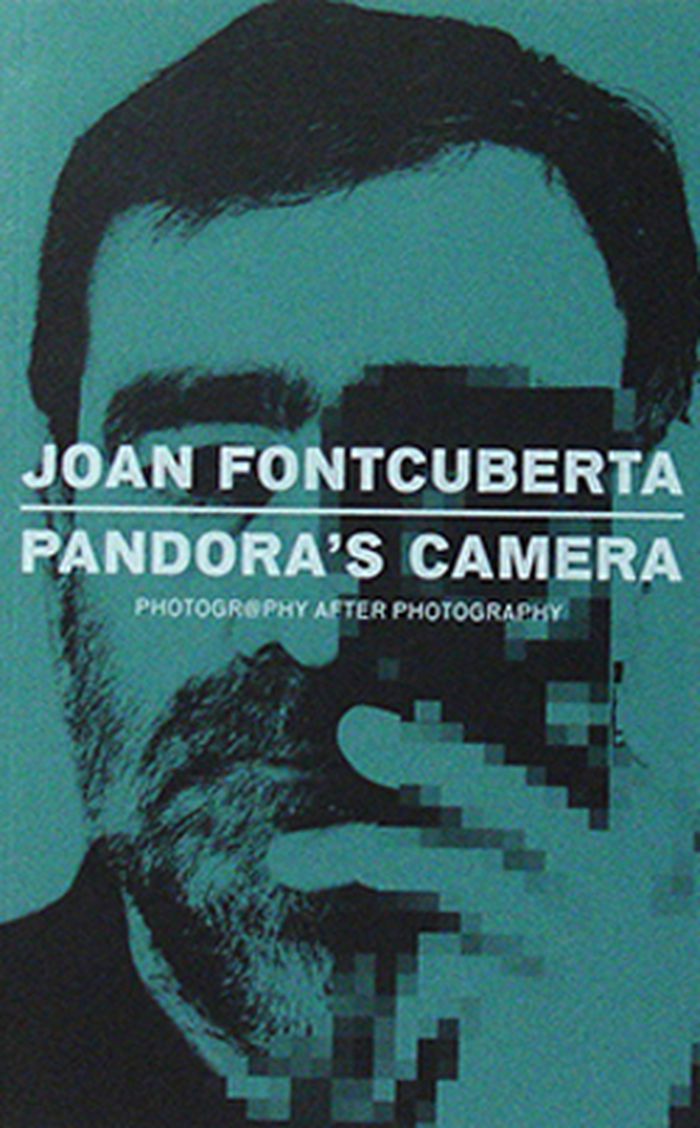
Pandora's camera: photogr@phy after photography
Actions:
Price:
$35.00
(available to order)
Summary:
This book is the first English translation of a renowned collection of essays by Joan Fontcuberta, in which he considers the technological shift that photography has undergone in recent years. The medium finds itself torn between loss and hope, between the disappearance of the silver gelatin photograph and the possibilities of the digital medium. Fontcuberta uses the motif of Pandora’s box to conceptualise the capricious nature of photography, its fickle relationship to truth – employing the Greek myth concerning a large jar containing myriad forms of human unhappiness, or blessings, depending on the version you read. As Pandora’s camera, digital technology spells calamity to some and liberation to others; it is blamed for irretrievably discrediting veracity, but at the same time it introduces a new degree of truth. In his signature ironic style and playful tone, Fontcuberta examines the new principles that have arisen within the digital ecosystem, in jocular essays such as I Knew the Spice Girls or The Mystery of the Missing Nipple. His critical reflections and poetic evocations are inspired by the hope that still remains in the notion of a postmodern Pandora’s camera – one that might not only describe our environment, but also bring transparency to it.
Pandora's camera: photogr@phy after photography
Actions:
Price:
$35.00
(available to order)
Summary:
This book is the first English translation of a renowned collection of essays by Joan Fontcuberta, in which he considers the technological shift that photography has undergone in recent years. The medium finds itself torn between loss and hope, between the disappearance of the silver gelatin photograph and the possibilities of the digital medium. Fontcuberta uses the motif of Pandora’s box to conceptualise the capricious nature of photography, its fickle relationship to truth – employing the Greek myth concerning a large jar containing myriad forms of human unhappiness, or blessings, depending on the version you read. As Pandora’s camera, digital technology spells calamity to some and liberation to others; it is blamed for irretrievably discrediting veracity, but at the same time it introduces a new degree of truth. In his signature ironic style and playful tone, Fontcuberta examines the new principles that have arisen within the digital ecosystem, in jocular essays such as I Knew the Spice Girls or The Mystery of the Missing Nipple. His critical reflections and poetic evocations are inspired by the hope that still remains in the notion of a postmodern Pandora’s camera – one that might not only describe our environment, but also bring transparency to it.
Form:
books
books
Publication:
November 2014
November 2014
Subject:
Theory of Photography
Theory of Photography
Form:
books
books
Actions:
Price:
$50.00
(available in store)
Summary:
Maria Giuseppina Grasso Cannizzo exhibited at the Venice Biennial in 2004 and 2008, and was honored by the Royal Institute of British Architects (RIBA) in 2012. That same year she won a gold medal for her life’s work at the Milan Triennial, and has been nominated twice for the Mies van der Rohe Prize. Nevertheless, she’s still considered an insider’s tip. She lives in(...)
$50.00
(available in store)
Summary:
Maria Giuseppina Grasso Cannizzo exhibited at the Venice Biennial in 2004 and 2008, and was honored by the Royal Institute of British Architects (RIBA) in 2012. That same year she won a gold medal for her life’s work at the Milan Triennial, and has been nominated twice for the Mies van der Rohe Prize. Nevertheless, she’s still considered an insider’s tip. She lives in(...)
Title:
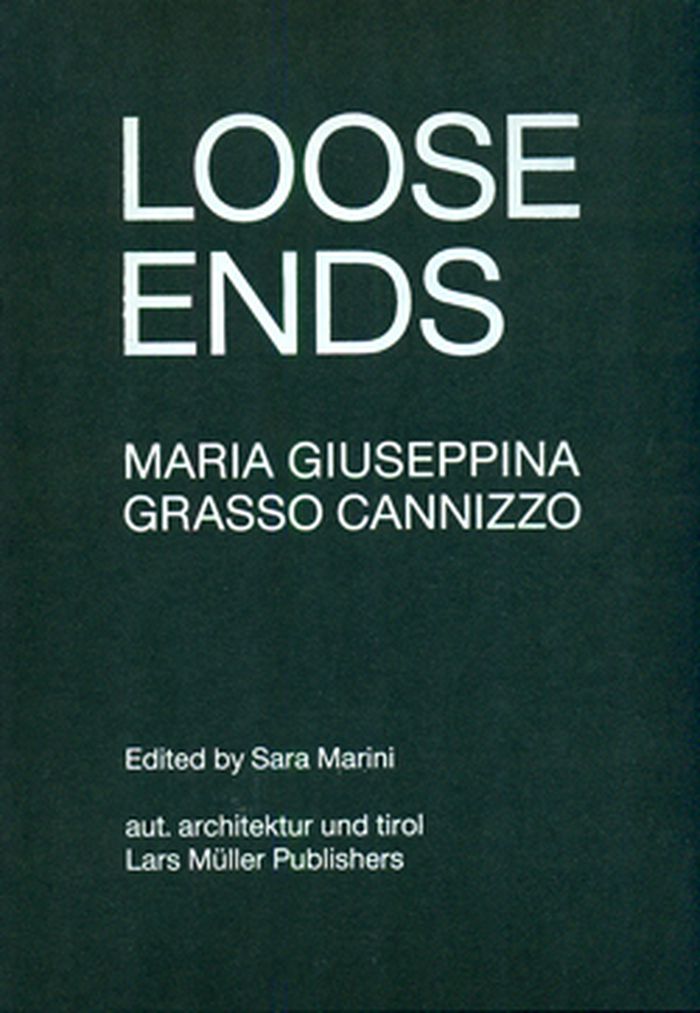
Loose ends : Maria Guiseppina Grasso Cannizzo
Actions:
Price:
$50.00
(available in store)
Summary:
Maria Giuseppina Grasso Cannizzo exhibited at the Venice Biennial in 2004 and 2008, and was honored by the Royal Institute of British Architects (RIBA) in 2012. That same year she won a gold medal for her life’s work at the Milan Triennial, and has been nominated twice for the Mies van der Rohe Prize. Nevertheless, she’s still considered an insider’s tip. She lives in Vittoria, a small city in southern Sicily, where she realizes the majority of her architecture, including many transformations of historical buildings, single and multiple-family housing, or projects such as the control tower in Marina di Ragusa. Grasso Cannizzo’s special design methods are based on her analyses of the urban context and the landscape, as well as her examination of the specific “story” behind each project. She translates the knowledge gained into minimal, self-aware, and sometimes radical concepts, which are ultimately always open to any changes that life and the passage of time may bring. At the same time, this first comprehensive monograph is also a conceptual manifesto by Grasso Cannizzo. Collected in a black box, loose prints provide insight into her most important buildings and make it possible to see the architect’s general design methods.
Loose ends : Maria Guiseppina Grasso Cannizzo
Actions:
Price:
$50.00
(available in store)
Summary:
Maria Giuseppina Grasso Cannizzo exhibited at the Venice Biennial in 2004 and 2008, and was honored by the Royal Institute of British Architects (RIBA) in 2012. That same year she won a gold medal for her life’s work at the Milan Triennial, and has been nominated twice for the Mies van der Rohe Prize. Nevertheless, she’s still considered an insider’s tip. She lives in Vittoria, a small city in southern Sicily, where she realizes the majority of her architecture, including many transformations of historical buildings, single and multiple-family housing, or projects such as the control tower in Marina di Ragusa. Grasso Cannizzo’s special design methods are based on her analyses of the urban context and the landscape, as well as her examination of the specific “story” behind each project. She translates the knowledge gained into minimal, self-aware, and sometimes radical concepts, which are ultimately always open to any changes that life and the passage of time may bring. At the same time, this first comprehensive monograph is also a conceptual manifesto by Grasso Cannizzo. Collected in a black box, loose prints provide insight into her most important buildings and make it possible to see the architect’s general design methods.
Form:
books
books
Publication:
July 2014
July 2014
Subject:
Architecture Monographs
Architecture Monographs
Form:
books
books
Price:
$49.95
(available to order)
Summary:
''Cloud-to-ground'' is the scientific term for lightning that strikes directly into the ground. Cloud-to-ground, published in conjunction with the Israeli pavilion at the 18th International Architecture Exhibition of the Venice Biennale, investigates the shifts in political power structure that result from the wide-spread use of cloud technology: the storage, processing,(...)
$49.95
(available to order)
Summary:
''Cloud-to-ground'' is the scientific term for lightning that strikes directly into the ground. Cloud-to-ground, published in conjunction with the Israeli pavilion at the 18th International Architecture Exhibition of the Venice Biennale, investigates the shifts in political power structure that result from the wide-spread use of cloud technology: the storage, processing,(...)
Title:
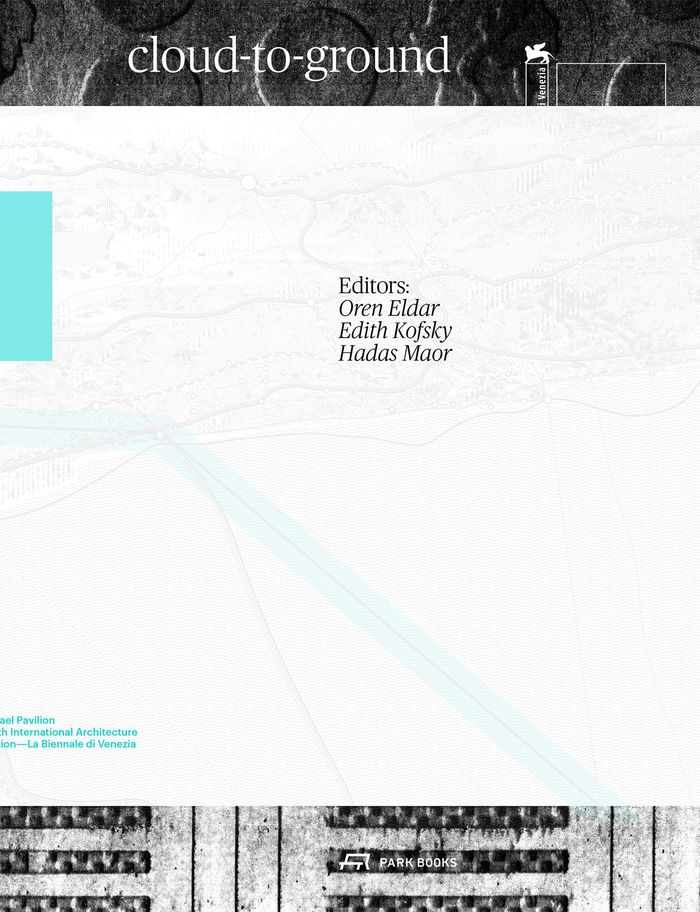
Cloud-to-ground.Israel pavillion, Venice Architecture Biennale
Actions:
Price:
$49.95
(available to order)
Summary:
''Cloud-to-ground'' is the scientific term for lightning that strikes directly into the ground. Cloud-to-ground, published in conjunction with the Israeli pavilion at the 18th International Architecture Exhibition of the Venice Biennale, investigates the shifts in political power structure that result from the wide-spread use of cloud technology: the storage, processing, and analysis of inconceivable amounts of data in computer “clouds.” The focus is on major infrastructure projects currently underway in Israel and the Middle East region. These include Nimbus, a major cloud project pursued by the Israeli government for which Google and Amazon are building new powerful data centers, and the Blue Raman fiber-optic cable across the Negev Desert, also laid by Google, which will bypass Egypt on its way from India to Europe and at the same time revive the ancient trade routes that passed through this country. ''Cloud-to-ground'' also documents the decommissioning and demolition of countless telephone exchanges in Israel’s cities that have become obsolete. It thus brings to attention the physical nature of these largely ignored “black box” structures and connects them to the history of the Middle East and recent developments in global communication technology. Essays by prominent Israeli scholars are complemented by numerous photographs, sketches, and archival documents, as well as a newly compiled index of 140 telephone exchanges in Israel.
Cloud-to-ground.Israel pavillion, Venice Architecture Biennale
Actions:
Price:
$49.95
(available to order)
Summary:
''Cloud-to-ground'' is the scientific term for lightning that strikes directly into the ground. Cloud-to-ground, published in conjunction with the Israeli pavilion at the 18th International Architecture Exhibition of the Venice Biennale, investigates the shifts in political power structure that result from the wide-spread use of cloud technology: the storage, processing, and analysis of inconceivable amounts of data in computer “clouds.” The focus is on major infrastructure projects currently underway in Israel and the Middle East region. These include Nimbus, a major cloud project pursued by the Israeli government for which Google and Amazon are building new powerful data centers, and the Blue Raman fiber-optic cable across the Negev Desert, also laid by Google, which will bypass Egypt on its way from India to Europe and at the same time revive the ancient trade routes that passed through this country. ''Cloud-to-ground'' also documents the decommissioning and demolition of countless telephone exchanges in Israel’s cities that have become obsolete. It thus brings to attention the physical nature of these largely ignored “black box” structures and connects them to the history of the Middle East and recent developments in global communication technology. Essays by prominent Israeli scholars are complemented by numerous photographs, sketches, and archival documents, as well as a newly compiled index of 140 telephone exchanges in Israel.
Form:
books
books
Publication:
September 2023
September 2023
Subject:
Biennial
Biennial
Form:
books
books

Actions:
Price:
$55.95
(available to order)
Summary:
In 1988, photographer Sandy Sorlien set out on a series of journeys to document the rich architectural heritage that America is losing to the cheap and banal design aesthetic of tract housing, strip malls, and big-box stores. Her eight-year odyssey took her over ninety thousand miles of back roads to every state in the Union in search of homes that reflect and define the(...)
$55.95
(available to order)
Summary:
In 1988, photographer Sandy Sorlien set out on a series of journeys to document the rich architectural heritage that America is losing to the cheap and banal design aesthetic of tract housing, strip malls, and big-box stores. Her eight-year odyssey took her over ninety thousand miles of back roads to every state in the Union in search of homes that reflect and define the(...)
Title:
Fifty houses : images from the American road
Actions:
Price:
$55.95
(available to order)
Summary:
In 1988, photographer Sandy Sorlien set out on a series of journeys to document the rich architectural heritage that America is losing to the cheap and banal design aesthetic of tract housing, strip malls, and big-box stores. Her eight-year odyssey took her over ninety thousand miles of back roads to every state in the Union in search of homes that reflect and define the region in which they stand. After making over a thousand "house portraits," Sorlien has chosen one representative image from each state and collected them in Fifty Houses. Shot with black-and-white infrared film, the homes captured through Sorlien's lens range from the grand to the humble, from the historic to the commonplace. Included here are a classic saltbox in Newtown, Connecticut; the House on the Rocks in Rhode Island's Narragansett Bay; a mobile home in Bushnell, Florida; a Stick-style folk Victorian in Biloxi, Mississippi; a limestone cottage in Fredericksburg, Texas; a false-front house in Rollins, Montana; a log cabin in Dubois, Wyoming; an adobe dwelling in Sante Fe, New Mexico; and a platform tent in Healy, Alaska. Each image is accompanied by a vignette from Sorlien's road journal, offering details of the house depicted, its owners and history, other houses in the region, or her travel experiences in the state.
Fifty houses : images from the American road
Actions:
Price:
$55.95
(available to order)
Summary:
In 1988, photographer Sandy Sorlien set out on a series of journeys to document the rich architectural heritage that America is losing to the cheap and banal design aesthetic of tract housing, strip malls, and big-box stores. Her eight-year odyssey took her over ninety thousand miles of back roads to every state in the Union in search of homes that reflect and define the region in which they stand. After making over a thousand "house portraits," Sorlien has chosen one representative image from each state and collected them in Fifty Houses. Shot with black-and-white infrared film, the homes captured through Sorlien's lens range from the grand to the humble, from the historic to the commonplace. Included here are a classic saltbox in Newtown, Connecticut; the House on the Rocks in Rhode Island's Narragansett Bay; a mobile home in Bushnell, Florida; a Stick-style folk Victorian in Biloxi, Mississippi; a limestone cottage in Fredericksburg, Texas; a false-front house in Rollins, Montana; a log cabin in Dubois, Wyoming; an adobe dwelling in Sante Fe, New Mexico; and a platform tent in Healy, Alaska. Each image is accompanied by a vignette from Sorlien's road journal, offering details of the house depicted, its owners and history, other houses in the region, or her travel experiences in the state.
Form:
books
books
Publication:
September 2002, Baltimore
September 2002, Baltimore
Subject:
History until 1900
History until 1900
Form:
books
books
Price:
$39.95
(available to order)
Summary:
We shape ourselves, and are shaped in return, by the walls that contain us. Buildings affect how we sleep, work, socialise and even breathe. They can isolate and endanger us but they can also heal us. We project our hopes and fears onto buildings, while they absorb our histories. In Living With Buildings, Iain Sinclair embarks on a series of expeditions - through(...)
$39.95
(available to order)
Summary:
We shape ourselves, and are shaped in return, by the walls that contain us. Buildings affect how we sleep, work, socialise and even breathe. They can isolate and endanger us but they can also heal us. We project our hopes and fears onto buildings, while they absorb our histories. In Living With Buildings, Iain Sinclair embarks on a series of expeditions - through(...)
Title:
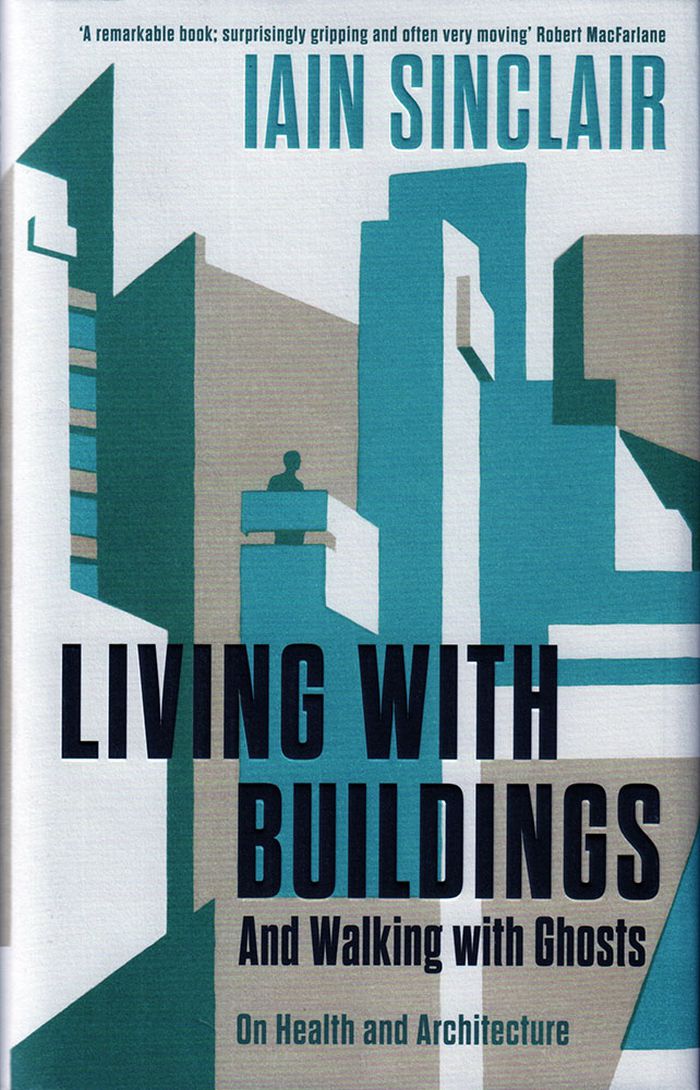
Living with buildings and walking with ghosts: on health and architecture
Actions:
Price:
$39.95
(available to order)
Summary:
We shape ourselves, and are shaped in return, by the walls that contain us. Buildings affect how we sleep, work, socialise and even breathe. They can isolate and endanger us but they can also heal us. We project our hopes and fears onto buildings, while they absorb our histories. In Living With Buildings, Iain Sinclair embarks on a series of expeditions - through London, Marseille, Mexico and the Outer Hebrides. He explores the relationship between sickness and structure, and between art, architecture, social planning and health, taking plenty of detours along the way. Walking is Sinclair's defensive magic against illness and, as he moves, he observes his surroundings: stacked tower blocks and behemoth estates; halogen-lit glasshouse offices and humming hospitals; the blackened hull of a Spitalfields church and the floating mass of Le Corbusier's radiant city. Sinclair also peels back layers of life. A father and his daughter (who has a rare syndrome) visit the estate where they once lived. Developers clink champagne glasses as residents are 'decanted' from their homes. A box sculpted from whalebone, thought to contain healing properties, is returned to its origins with unexpected consequences. Part investigation, part travelogue, ‘Living with Buildings’ brings the spaces we inhabit to life as never before. Published in association with the Wellcome Collection exhibition Living with Buildings, 4 October 2018- 3 March 2019.
Living with buildings and walking with ghosts: on health and architecture
Actions:
Price:
$39.95
(available to order)
Summary:
We shape ourselves, and are shaped in return, by the walls that contain us. Buildings affect how we sleep, work, socialise and even breathe. They can isolate and endanger us but they can also heal us. We project our hopes and fears onto buildings, while they absorb our histories. In Living With Buildings, Iain Sinclair embarks on a series of expeditions - through London, Marseille, Mexico and the Outer Hebrides. He explores the relationship between sickness and structure, and between art, architecture, social planning and health, taking plenty of detours along the way. Walking is Sinclair's defensive magic against illness and, as he moves, he observes his surroundings: stacked tower blocks and behemoth estates; halogen-lit glasshouse offices and humming hospitals; the blackened hull of a Spitalfields church and the floating mass of Le Corbusier's radiant city. Sinclair also peels back layers of life. A father and his daughter (who has a rare syndrome) visit the estate where they once lived. Developers clink champagne glasses as residents are 'decanted' from their homes. A box sculpted from whalebone, thought to contain healing properties, is returned to its origins with unexpected consequences. Part investigation, part travelogue, ‘Living with Buildings’ brings the spaces we inhabit to life as never before. Published in association with the Wellcome Collection exhibition Living with Buildings, 4 October 2018- 3 March 2019.
Form:
books
books
Publication:
October 2018
October 2018
Subject:
Current Exhibitions
Current Exhibitions
Form:
archives
archives
Holdings:
Description:
0.25 linear metres (2 boxes)
Description:
0.25 linear metres (2 boxes)
Author:
Subject:
Title:
Nicholas Olsberg research files on Arthur Erickson, 1960-2005.
Actions:
Holdings:
Description:
0.25 linear metres (2 boxes)
Nicholas Olsberg research files on Arthur Erickson, 1960-2005.
Actions:
Holdings:
Description:
0.25 linear metres (2 boxes)
Form:
archives
archives
Author:
Subject:
Form:
archives
archives
Actions:
Holdings:
Description:
2 boxes (2.5 linear ft.)
Description:
2 boxes (2.5 linear ft.)
Author:
Subject:
Title:
Mies van der Rohe : research papers, 1968-1980.
Actions:
Holdings:
Description:
2 boxes (2.5 linear ft.)
Mies van der Rohe : research papers, 1968-1980.
Actions:
Holdings:
Description:
2 boxes (2.5 linear ft.)
Form:
archives
archives
Author:
Subject:
Form:
books
books
Actions:
Price:
$45.00
(available to order)
Summary:
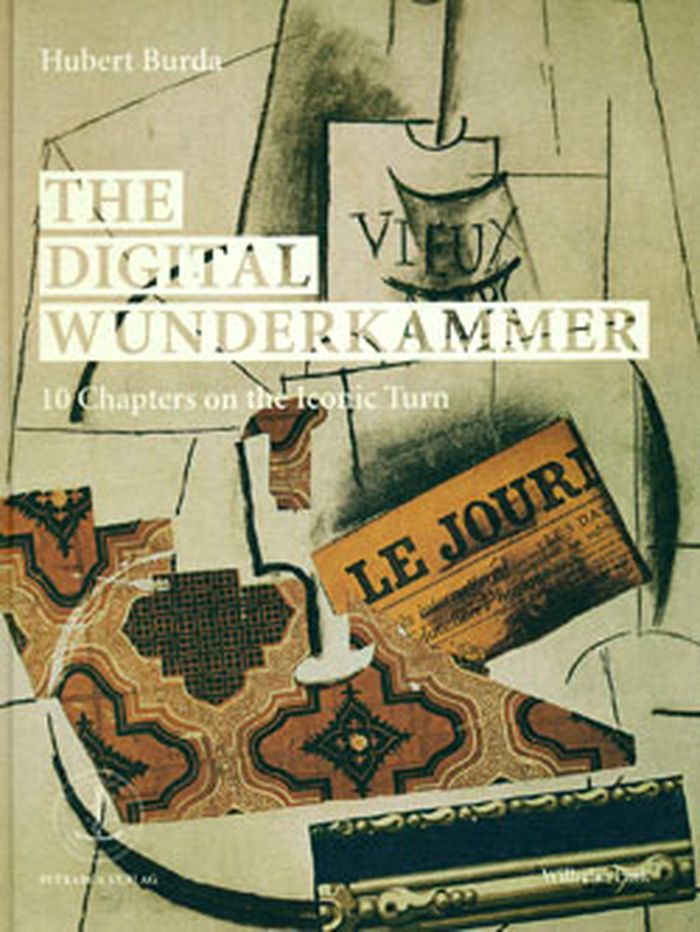
As digital technology advances at breakneck speed, images are circulating quicker than ever before. But what is the status of the image in the digital era? In this publication, art historian Hubert Burda (born 1940) examines the "iconic turn" in ten themed chapters and conversations with leading cultural theorists. In the first chapter, "The View Through the Window,"(...)
$45.00
(available to order)
Summary:
As digital technology advances at breakneck speed, images are circulating quicker than ever before. But what is the status of the image in the digital era? In this publication, art historian Hubert Burda (born 1940) examines the "iconic turn" in ten themed chapters and conversations with leading cultural theorists. In the first chapter, "The View Through the Window,"(...)
Title:
The digital wunderkammer : 10 chapters on the iconic turn
Actions:
Price:
$45.00
(available to order)
Summary:
As digital technology advances at breakneck speed, images are circulating quicker than ever before. But what is the status of the image in the digital era? In this publication, art historian Hubert Burda (born 1940) examines the "iconic turn" in ten themed chapters and conversations with leading cultural theorists. In the first chapter, "The View Through the Window," Burda traces the connection between perspectival painting and the television, demonstrating in the second chapter how the image requires a frame, which in turn requires a material vehicle - the topic of the third chapter - that in our era has become a non-material vehicle with its own formal parameters. In the fourth chapter, "The Mobile Image," Burda shows how images have always been linked to portability, but now migrate to an unprecedented degree, so that anyone with a personal device can globally disseminate, say, footage from a concert via Youtube. A discussion of the capacity of individual images to placate or ennervate leads to a seventh chapter on the appetite for the Sublime and the rhetoric and representation of power throughout art history. Following a discussion of the democratization of celebrity culture, Burda proposes that the Google search box is perhaps the most interesting "interface" of our times, analogous to the seventeenth-century cabinet of curiosities (or wunderkammer). Conversations with Friedrich Kittler, Peter Sloterdijk, Bazon Brock, Horst Bredekamp and Hans Belting further extend this imaginative debate on the "iconic turn."
The digital wunderkammer : 10 chapters on the iconic turn
Actions:
Price:
$45.00
(available to order)
Summary:
As digital technology advances at breakneck speed, images are circulating quicker than ever before. But what is the status of the image in the digital era? In this publication, art historian Hubert Burda (born 1940) examines the "iconic turn" in ten themed chapters and conversations with leading cultural theorists. In the first chapter, "The View Through the Window," Burda traces the connection between perspectival painting and the television, demonstrating in the second chapter how the image requires a frame, which in turn requires a material vehicle - the topic of the third chapter - that in our era has become a non-material vehicle with its own formal parameters. In the fourth chapter, "The Mobile Image," Burda shows how images have always been linked to portability, but now migrate to an unprecedented degree, so that anyone with a personal device can globally disseminate, say, footage from a concert via Youtube. A discussion of the capacity of individual images to placate or ennervate leads to a seventh chapter on the appetite for the Sublime and the rhetoric and representation of power throughout art history. Following a discussion of the democratization of celebrity culture, Burda proposes that the Google search box is perhaps the most interesting "interface" of our times, analogous to the seventeenth-century cabinet of curiosities (or wunderkammer). Conversations with Friedrich Kittler, Peter Sloterdijk, Bazon Brock, Horst Bredekamp and Hans Belting further extend this imaginative debate on the "iconic turn."
Form:
books
books
Publication:
August 2011
August 2011
Subject:
Epistemology
Epistemology
Form:
books
books
Actions:
Price:
$55.00
(available to order)
Summary:
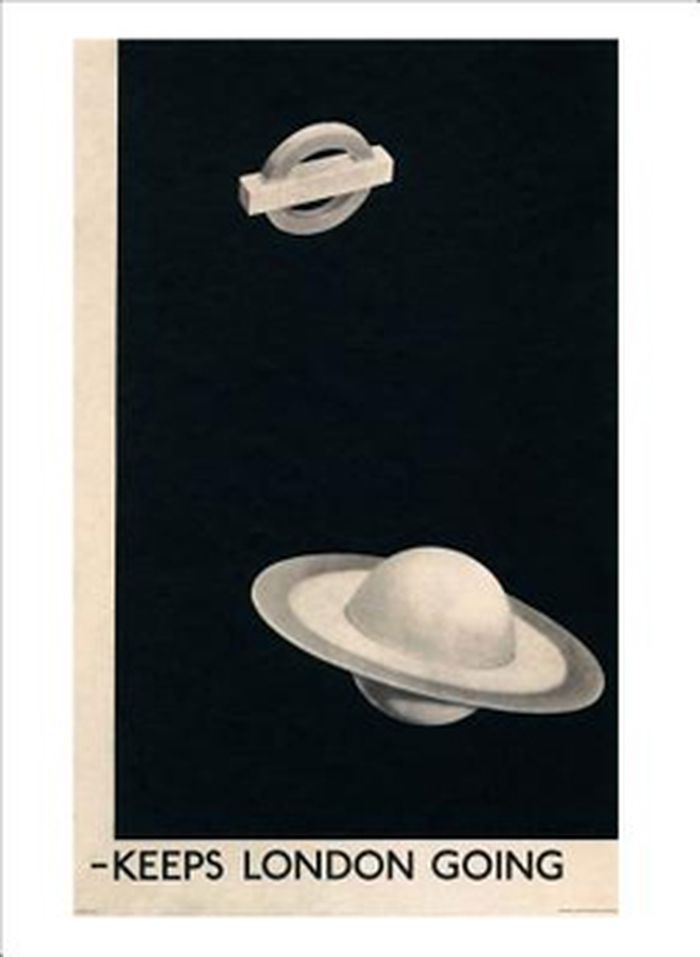
The modern poster dates back to around 1870, when color lithography had been sufficiently perfected to permit mass production. Artists such as Toulouse-Lautrec and Jules Chéret were quick to perceive and embrace the possibilities of the poster as a form, as means of disseminating their work and as a source of income. New movements in late nineteenth-century art, such as(...)
$55.00
(available to order)
Summary:
The modern poster dates back to around 1870, when color lithography had been sufficiently perfected to permit mass production. Artists such as Toulouse-Lautrec and Jules Chéret were quick to perceive and embrace the possibilities of the poster as a form, as means of disseminating their work and as a source of income. New movements in late nineteenth-century art, such as(...)
Title:
The European poster 1881-1938
Actions:
Price:
$55.00
(available to order)
Summary:
The modern poster dates back to around 1870, when color lithography had been sufficiently perfected to permit mass production. Artists such as Toulouse-Lautrec and Jules Chéret were quick to perceive and embrace the possibilities of the poster as a form, as means of disseminating their work and as a source of income. New movements in late nineteenth-century art, such as Art Nouveau and Symbolism, also adapted their respective styles to commercial demands, and their graphic power was such that major poster surveys were held as early as 1884. Later on, in the early days of the Soviet avant-garde, artists like Rodchenko and Klutsis were also to apply their graphic know-how to the poster form, in the service of a new communist Russia and its booming industries. This boxed volume reproduces 175 posters from the last decades of the nineteenth century to the early twentieth century, loose-leaf and in full color. The works have been gathered by expert Carlos Pérez from European museums and renowned international private collections. An accompanying paperback book, housed within the box, provides an historical overview. Among the 90-plus artists included here are Chéret, Ramón Casas, Toulouse-Lautrec, Pierre Bonnard, Alfons Mucha, Henri Matisse, Cassandre, Paul Colin, Jean Carlu, Giacomo Balla, Herbert Bayer, Otto Baumberger, John Heartfield, Vladimir Lebedev, Alexander Rodchenko, Man Ray, Kurt Schwitters, Oskar Schlemmer, Gustav Klutsis, Robert Béreny and Fortunato Depero.
The European poster 1881-1938
Actions:
Price:
$55.00
(available to order)
Summary:
The modern poster dates back to around 1870, when color lithography had been sufficiently perfected to permit mass production. Artists such as Toulouse-Lautrec and Jules Chéret were quick to perceive and embrace the possibilities of the poster as a form, as means of disseminating their work and as a source of income. New movements in late nineteenth-century art, such as Art Nouveau and Symbolism, also adapted their respective styles to commercial demands, and their graphic power was such that major poster surveys were held as early as 1884. Later on, in the early days of the Soviet avant-garde, artists like Rodchenko and Klutsis were also to apply their graphic know-how to the poster form, in the service of a new communist Russia and its booming industries. This boxed volume reproduces 175 posters from the last decades of the nineteenth century to the early twentieth century, loose-leaf and in full color. The works have been gathered by expert Carlos Pérez from European museums and renowned international private collections. An accompanying paperback book, housed within the box, provides an historical overview. Among the 90-plus artists included here are Chéret, Ramón Casas, Toulouse-Lautrec, Pierre Bonnard, Alfons Mucha, Henri Matisse, Cassandre, Paul Colin, Jean Carlu, Giacomo Balla, Herbert Bayer, Otto Baumberger, John Heartfield, Vladimir Lebedev, Alexander Rodchenko, Man Ray, Kurt Schwitters, Oskar Schlemmer, Gustav Klutsis, Robert Béreny and Fortunato Depero.
Form:
books
books
Publication:
July 2012
July 2012
Subject:
Printed Matter
Printed Matter
Form:
books
books
Price:
$75.00
(available to order)
Summary:
The retro-futuristic epoch is one of the most visually spectacular in architecture's history. This book compiles radical ideas and visionary structures. The notion of utopia proves as diverse as it does universal. From exuberant master plans to singular architectural expressions, the rise of the utopian architectural movement in the 1960s and 1970s represents a critical(...)
$75.00
(available to order)
Summary:
The retro-futuristic epoch is one of the most visually spectacular in architecture's history. This book compiles radical ideas and visionary structures. The notion of utopia proves as diverse as it does universal. From exuberant master plans to singular architectural expressions, the rise of the utopian architectural movement in the 1960s and 1970s represents a critical(...)
Title:
The tale of tomorrow: utopian architecture in the modernist realm
Actions:
Price:
$75.00
(available to order)
Summary:
The retro-futuristic epoch is one of the most visually spectacular in architecture's history. This book compiles radical ideas and visionary structures. The notion of utopia proves as diverse as it does universal. From exuberant master plans to singular architectural expressions, the rise of the utopian architectural movement in the 1960s and 1970s represents a critical shift in ideology away from mid-century traditionalism. This period shakes off the conformity and conventions of the 1950s in favor of a more experimental post-war agenda. Marked by groundbreaking reinterpretations of both the single family house as well as more large scale developments, the embrace of utopian and generally progressive thinking mirrored the cultural revolution of the times. These daring, charming, futuristic, and hopeful designs were not isolated to a particular part of the world. Visionary voices longing for a fresh approach to architecture began appearing across France, Japan, the United States, and beyond. The Tale of Tomorrow documents this prolific era in architecture--a time when anything felt possible as architects began to think further and further outside the box. 'The Tale of Tomorrow' focuses exclusively on built manifestations of utopian ideas. Highlighting well-known projects as well as the more obscure, the collection of utopian approaches compiled here maintain their visual power and infectious optimism nearly half a century later. These experimental structures, both large and small, appear in everyday places in stark contrast to their far-from-utopian contexts.
The tale of tomorrow: utopian architecture in the modernist realm
Actions:
Price:
$75.00
(available to order)
Summary:
The retro-futuristic epoch is one of the most visually spectacular in architecture's history. This book compiles radical ideas and visionary structures. The notion of utopia proves as diverse as it does universal. From exuberant master plans to singular architectural expressions, the rise of the utopian architectural movement in the 1960s and 1970s represents a critical shift in ideology away from mid-century traditionalism. This period shakes off the conformity and conventions of the 1950s in favor of a more experimental post-war agenda. Marked by groundbreaking reinterpretations of both the single family house as well as more large scale developments, the embrace of utopian and generally progressive thinking mirrored the cultural revolution of the times. These daring, charming, futuristic, and hopeful designs were not isolated to a particular part of the world. Visionary voices longing for a fresh approach to architecture began appearing across France, Japan, the United States, and beyond. The Tale of Tomorrow documents this prolific era in architecture--a time when anything felt possible as architects began to think further and further outside the box. 'The Tale of Tomorrow' focuses exclusively on built manifestations of utopian ideas. Highlighting well-known projects as well as the more obscure, the collection of utopian approaches compiled here maintain their visual power and infectious optimism nearly half a century later. These experimental structures, both large and small, appear in everyday places in stark contrast to their far-from-utopian contexts.
Form:
books
books
Publication:
April 2015
April 2015
Subject:
Experimentale architecture
Experimentale architecture


