


336 Results
Form:
audio
audio
Title:
Skip Prop Mix.
Skip Prop Mix.
Actions:
Description:
1 online resource.
Author:
Subject:
Publication:
[Place of publication not identified] : Lateral Addition, 2020.
[Place of publication not identified] : Lateral Addition, 2020.
Form:
audio
audio
Publication:
[Place of publication not identified] : Lateral Addition, 2020.
[Place of publication not identified] : Lateral Addition, 2020.
Author:
Subject:
Form:
books
books
Title:
Hidden cities : the discovery and loss of ancient North American civilization / Roger G. Kennedy.
Hidden cities : the discovery and loss of ancient North American civilization / Roger G. Kennedy.
Actions:
Holdings:
Description:
vii, 372 pages, 8 unnumbered pages of plates : illustrations ; 25 cm
Description:
vii, 372 pages, 8 unnumbered pages of plates : illustrations ; 25 cm
Author:
Subject:
Publication:
New York : Free Press ; Toronto : Maxwell Macmillan Canada ; New York : Maxwell Macmillan International, [1994], ©1994.
New York : Free Press ; Toronto : Maxwell Macmillan Canada ; New York : Maxwell Macmillan International, [1994], ©1994.
Title:
Hidden cities : the discovery and loss of ancient North American civilization / Roger G. Kennedy.
Actions:
Holdings:
Description:
vii, 372 pages, 8 unnumbered pages of plates : illustrations ; 25 cm
Hidden cities : the discovery and loss of ancient North American civilization / Roger G. Kennedy.
Actions:
Holdings:
Description:
vii, 372 pages, 8 unnumbered pages of plates : illustrations ; 25 cm
Form:
books
books
Publication:
New York : Free Press ; Toronto : Maxwell Macmillan Canada ; New York : Maxwell Macmillan International, [1994], ©1994.
New York : Free Press ; Toronto : Maxwell Macmillan Canada ; New York : Maxwell Macmillan International, [1994], ©1994.
Author:
Subject:
Form:
books
books
Actions:
Subject:
Publication:
Breakdown Break Down 2017
Breakdown Break Down 2017
Form:
books
books
Publication:
Breakdown Break Down 2017
Breakdown Break Down 2017
Subject:
Form:
books
books
Actions:
Price:
$60.00
(available in store)
Summary:
Works include: IBA Housing; Moon Soon Restaurant & Bar; Vitra Fire Station. Projects include: Cologne Rheinauhafen Redevelopment; Dusseldorf Art & Media Center; Cardiff Bay Opera House; Spittelau Viaducts; New York City 42nd Street Hotel Project.
$60.00
(available in store)
Summary:
Works include: IBA Housing; Moon Soon Restaurant & Bar; Vitra Fire Station. Projects include: Cologne Rheinauhafen Redevelopment; Dusseldorf Art & Media Center; Cardiff Bay Opera House; Spittelau Viaducts; New York City 42nd Street Hotel Project.
Subject:
Architecture Monographs
Architecture Monographs
Publication:
February 1996, Tokyo
February 1996, Tokyo
Title:
GA Document Extra 03 : Zaha Hadid
Actions:
Price:
$60.00
(available in store)
Summary:
Works include: IBA Housing; Moon Soon Restaurant & Bar; Vitra Fire Station. Projects include: Cologne Rheinauhafen Redevelopment; Dusseldorf Art & Media Center; Cardiff Bay Opera House; Spittelau Viaducts; New York City 42nd Street Hotel Project.
GA Document Extra 03 : Zaha Hadid
Actions:
Price:
$60.00
(available in store)
Summary:
Works include: IBA Housing; Moon Soon Restaurant & Bar; Vitra Fire Station. Projects include: Cologne Rheinauhafen Redevelopment; Dusseldorf Art & Media Center; Cardiff Bay Opera House; Spittelau Viaducts; New York City 42nd Street Hotel Project.
Form:
books
books
Publication:
February 1996, Tokyo
February 1996, Tokyo
Subject:
Architecture Monographs
Architecture Monographs
Form:
books
books
Title:
2001: a space odyssey
2001: a space odyssey
Actions:
Price:
$20.00
(available to order)
Summary:
Written when landing on the moon was still a dream, made into one of the most influential films of our century, brilliant, compulsive, prophetic, 2001: A Space Odyssey tackles the enduring theme of man's place in the universe. Including a new Foreword by the author and a fascinating new introduction by Stephen Baxter, this special edition is an essential addition to every(...)
$20.00
(available to order)
Summary:
Written when landing on the moon was still a dream, made into one of the most influential films of our century, brilliant, compulsive, prophetic, 2001: A Space Odyssey tackles the enduring theme of man's place in the universe. Including a new Foreword by the author and a fascinating new introduction by Stephen Baxter, this special edition is an essential addition to every(...)
Title:
2001: a space odyssey
Actions:
Price:
$20.00
(available to order)
Summary:
Written when landing on the moon was still a dream, made into one of the most influential films of our century, brilliant, compulsive, prophetic, 2001: A Space Odyssey tackles the enduring theme of man's place in the universe. Including a new Foreword by the author and a fascinating new introduction by Stephen Baxter, this special edition is an essential addition to every SF reader's collection. On the moon an enigma is uncovered. So great are the implications that, for the first time, men are sent out deep into the solar system. But, before they can reach their destination, things begin to go wrong. Horribly wrong.
2001: a space odyssey
Actions:
Price:
$20.00
(available to order)
Summary:
Written when landing on the moon was still a dream, made into one of the most influential films of our century, brilliant, compulsive, prophetic, 2001: A Space Odyssey tackles the enduring theme of man's place in the universe. Including a new Foreword by the author and a fascinating new introduction by Stephen Baxter, this special edition is an essential addition to every SF reader's collection. On the moon an enigma is uncovered. So great are the implications that, for the first time, men are sent out deep into the solar system. But, before they can reach their destination, things begin to go wrong. Horribly wrong.
Form:
books
books
Publication:
November 1993
November 1993
Subject:
Architecture and the imaginary
Architecture and the imaginary
Form:
books
books

Price:
$45.00
(available to order)
Summary:
Wobbly drawing machines with personality, a roomful of light bulbs that pulse the syncopated rhythm of a hundred heartbeats, bouncing an encoding of Beethoven’s Moonlight Sonata off the moon—HOLO returns to further explore the frontiers of twenty-first century creativity.
$45.00
(available to order)
Summary:
Wobbly drawing machines with personality, a roomful of light bulbs that pulse the syncopated rhythm of a hundred heartbeats, bouncing an encoding of Beethoven’s Moonlight Sonata off the moon—HOLO returns to further explore the frontiers of twenty-first century creativity.
Title:
HOLO 2
Actions:
Price:
$45.00
(available to order)
Summary:
Wobbly drawing machines with personality, a roomful of light bulbs that pulse the syncopated rhythm of a hundred heartbeats, bouncing an encoding of Beethoven’s Moonlight Sonata off the moon—HOLO returns to further explore the frontiers of twenty-first century creativity.
HOLO 2
Actions:
Price:
$45.00
(available to order)
Summary:
Wobbly drawing machines with personality, a roomful of light bulbs that pulse the syncopated rhythm of a hundred heartbeats, bouncing an encoding of Beethoven’s Moonlight Sonata off the moon—HOLO returns to further explore the frontiers of twenty-first century creativity.
Form:
books
books
Publication:
December 2016
December 2016
Subject:
Magazines
Magazines
Form:
books
books
Actions:
Price:
$60.00
(available to order)
Summary:
A project composed across several decades, Guido Guidi's Lunario takes the name of a traditional farmer’s almanac to bring together several strands of work all relating to the moon. Distortion, experimentation and illusion inform Guidi’s earlier work of the late 1960s and early 1970s, further developed by the introduction of a fish-eye lens. The moon’s physical form(...)
$60.00
(available to order)
Summary:
A project composed across several decades, Guido Guidi's Lunario takes the name of a traditional farmer’s almanac to bring together several strands of work all relating to the moon. Distortion, experimentation and illusion inform Guidi’s earlier work of the late 1960s and early 1970s, further developed by the introduction of a fish-eye lens. The moon’s physical form(...)
Title:
Guido Guidi: Lunario 1968-1999
Actions:
Price:
$60.00
(available to order)
Summary:
A project composed across several decades, Guido Guidi's Lunario takes the name of a traditional farmer’s almanac to bring together several strands of work all relating to the moon. Distortion, experimentation and illusion inform Guidi’s earlier work of the late 1960s and early 1970s, further developed by the introduction of a fish-eye lens. The moon’s physical form echoes throughout the works: in a woman’s face, or a child’s playing ball caught between light and shadow. Guidi’s barren, lunar landscapes give way in the 1980s to colour photographs, all of which culminate in the dramatic partial solar-eclipse of August 11, 1999. Throughout Lunario, Guido Guidi comes back to the moon as a source of stylistic and thematic inspiration: a symbol of melancholy and madness, changeability and a constant reminder of the transience of everyday life.
Guido Guidi: Lunario 1968-1999
Actions:
Price:
$60.00
(available to order)
Summary:
A project composed across several decades, Guido Guidi's Lunario takes the name of a traditional farmer’s almanac to bring together several strands of work all relating to the moon. Distortion, experimentation and illusion inform Guidi’s earlier work of the late 1960s and early 1970s, further developed by the introduction of a fish-eye lens. The moon’s physical form echoes throughout the works: in a woman’s face, or a child’s playing ball caught between light and shadow. Guidi’s barren, lunar landscapes give way in the 1980s to colour photographs, all of which culminate in the dramatic partial solar-eclipse of August 11, 1999. Throughout Lunario, Guido Guidi comes back to the moon as a source of stylistic and thematic inspiration: a symbol of melancholy and madness, changeability and a constant reminder of the transience of everyday life.
Form:
books
books
Publication:
March 2020
March 2020
Subject:
Photography monographs
Photography monographs
Form:
books
books

Title:
Seven great explorations
Seven great explorations
Actions:
Price:
$4.95
(available to order)
Summary:
The seven explorations featured in this book tell the stories of the adventurers who mapped the earth and first set foot on the moon. Each explorations is a tale of daring, perseverance, and heroism, and is a benchmark in the course of human civilization. A brief informative text amd Celia King's miniature pop-ups bring each exploration to life.
$4.95
(available to order)
Summary:
The seven explorations featured in this book tell the stories of the adventurers who mapped the earth and first set foot on the moon. Each explorations is a tale of daring, perseverance, and heroism, and is a benchmark in the course of human civilization. A brief informative text amd Celia King's miniature pop-ups bring each exploration to life.
Title:
Seven great explorations
Actions:
Price:
$4.95
(available to order)
Summary:
The seven explorations featured in this book tell the stories of the adventurers who mapped the earth and first set foot on the moon. Each explorations is a tale of daring, perseverance, and heroism, and is a benchmark in the course of human civilization. A brief informative text amd Celia King's miniature pop-ups bring each exploration to life.
Seven great explorations
Actions:
Price:
$4.95
(available to order)
Summary:
The seven explorations featured in this book tell the stories of the adventurers who mapped the earth and first set foot on the moon. Each explorations is a tale of daring, perseverance, and heroism, and is a benchmark in the course of human civilization. A brief informative text amd Celia King's miniature pop-ups bring each exploration to life.
Form:
books
books
Publication:
January 1900, San Francisco
January 1900, San Francisco
Subject:
Children's Books
Children's Books
Form:
books
books
Price:
$19.95
(available to order)
Summary:
Ses amis, ses collègues de l'agence Magnum, ses proches racontent un instant passé en compagnie du photographe Henri Cartier-Bresson. De Sarah Moon à Yvonne Baby, de Robert Delpire à Paul Virilio, de Raymond Depardon à René Burri, tous évoquent ses colères ou ses joies d'enfant, son goût pour l'amitié et sa passion pour la vie.
$19.95
(available to order)
Summary:
Ses amis, ses collègues de l'agence Magnum, ses proches racontent un instant passé en compagnie du photographe Henri Cartier-Bresson. De Sarah Moon à Yvonne Baby, de Robert Delpire à Paul Virilio, de Raymond Depardon à René Burri, tous évoquent ses colères ou ses joies d'enfant, son goût pour l'amitié et sa passion pour la vie.
Title:
Henri
Actions:
Price:
$19.95
(available to order)
Summary:
Ses amis, ses collègues de l'agence Magnum, ses proches racontent un instant passé en compagnie du photographe Henri Cartier-Bresson. De Sarah Moon à Yvonne Baby, de Robert Delpire à Paul Virilio, de Raymond Depardon à René Burri, tous évoquent ses colères ou ses joies d'enfant, son goût pour l'amitié et sa passion pour la vie.
Henri
Actions:
Price:
$19.95
(available to order)
Summary:
Ses amis, ses collègues de l'agence Magnum, ses proches racontent un instant passé en compagnie du photographe Henri Cartier-Bresson. De Sarah Moon à Yvonne Baby, de Robert Delpire à Paul Virilio, de Raymond Depardon à René Burri, tous évoquent ses colères ou ses joies d'enfant, son goût pour l'amitié et sa passion pour la vie.
Form:
books
books
Publication:
August 2011
August 2011
Subject:
small format
small format
Form:
books
books
Price:
$37.95
(available to order)
Summary:
In 1976, Robert Adams shot "Fort Collins, Colorado," a nighttime picture of a lone tree in a Colorado parking lot, the crescent moon hanging in the sky above. More than 30 years earlier, Ansel Adams had captured "Moonrise, Hernandez, New Mexico," showing a magnificent vista of desert scrub and clustered buildings, snow-capped mountains in the distance, the full moon(...)
$37.95
(available to order)
Summary:
In 1976, Robert Adams shot "Fort Collins, Colorado," a nighttime picture of a lone tree in a Colorado parking lot, the crescent moon hanging in the sky above. More than 30 years earlier, Ansel Adams had captured "Moonrise, Hernandez, New Mexico," showing a magnificent vista of desert scrub and clustered buildings, snow-capped mountains in the distance, the full moon(...)
Subject:
Theory of Photography
Theory of Photography
Publication:
June 2002, Andover, Massachusetts
June 2002, Andover, Massachusetts
Title:
Reinventing the West : the photography of Ansel Adams and Robert Adams
Actions:
Price:
$37.95
(available to order)
Summary:
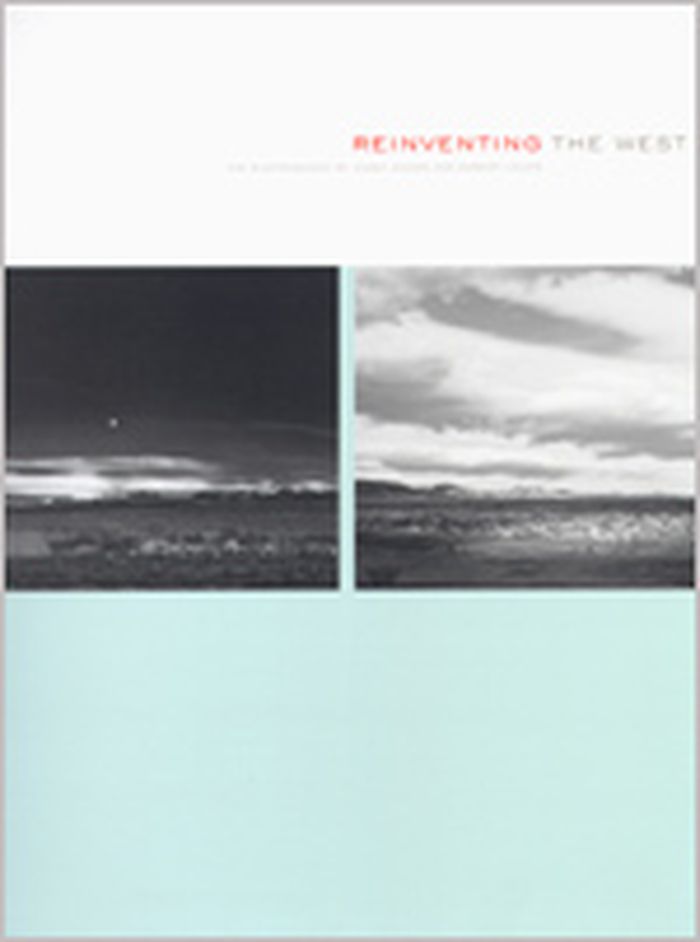
In 1976, Robert Adams shot "Fort Collins, Colorado," a nighttime picture of a lone tree in a Colorado parking lot, the crescent moon hanging in the sky above. More than 30 years earlier, Ansel Adams had captured "Moonrise, Hernandez, New Mexico," showing a magnificent vista of desert scrub and clustered buildings, snow-capped mountains in the distance, the full moon majestically presiding in the expansive sky overhead. These two pictures could be neither more different nor more similar; nor could the younger Adams have made his photograph without knowledge of his greatly admired predecessor's. If Ansel Adams created singular images in search of a platonic ideal of nature, Robert Adams explored repetition and conformity; both were responding, in their own personal and aesthetic way, to the landscape of the American West. The first book to juxtapose bodies of work by these two 20th-century master photographers, Reinventing the West reveals how their photographs reflect changing attitudes toward the western landscape and the natural world.
Reinventing the West : the photography of Ansel Adams and Robert Adams
Actions:
Price:
$37.95
(available to order)
Summary:
In 1976, Robert Adams shot "Fort Collins, Colorado," a nighttime picture of a lone tree in a Colorado parking lot, the crescent moon hanging in the sky above. More than 30 years earlier, Ansel Adams had captured "Moonrise, Hernandez, New Mexico," showing a magnificent vista of desert scrub and clustered buildings, snow-capped mountains in the distance, the full moon majestically presiding in the expansive sky overhead. These two pictures could be neither more different nor more similar; nor could the younger Adams have made his photograph without knowledge of his greatly admired predecessor's. If Ansel Adams created singular images in search of a platonic ideal of nature, Robert Adams explored repetition and conformity; both were responding, in their own personal and aesthetic way, to the landscape of the American West. The first book to juxtapose bodies of work by these two 20th-century master photographers, Reinventing the West reveals how their photographs reflect changing attitudes toward the western landscape and the natural world.
Form:
books
books
Publication:
June 2002, Andover, Massachusetts
June 2002, Andover, Massachusetts
Subject:
Theory of Photography
Theory of Photography


