


11306 Results
Form:
archives
Level of archival description:
Fonds
archives
Level of archival description:
Fonds
Title:
Günter Günschel fonds
Günter Günschel fonds
Reference number:
AP187
Synopsis:
The Günter Günschel fonds documents the architectural work of Günter Günschel. The fonds spans the years 1943 to 2006 and consists of drawings, photographic materials, and textual documentation related to over 50 projects, such as Kristallwucherungen (1953-1988), Geodätische Hallen (1955-1978), Wohnheim in Raumzellenbauweise für das Studentenwerk Göttingen (1969), Stadtquartiere (1977-1988), Emtwurf zur Bebauung der Weserinsel Teerhof in Bremen (1977-1978), and Stühle, Computergrafiken (1998).
AP187
Synopsis:
The Günter Günschel fonds documents the architectural work of Günter Günschel. The fonds spans the years 1943 to 2006 and consists of drawings, photographic materials, and textual documentation related to over 50 projects, such as Kristallwucherungen (1953-1988), Geodätische Hallen (1955-1978), Wohnheim in Raumzellenbauweise für das Studentenwerk Göttingen (1969), Stadtquartiere (1977-1988), Emtwurf zur Bebauung der Weserinsel Teerhof in Bremen (1977-1978), and Stühle, Computergrafiken (1998).
People:
Date:
1943-2006
1943-2006
Title:
Günter Günschel fonds
Actions:
AP187
Synopsis:
The Günter Günschel fonds documents the architectural work of Günter Günschel. The fonds spans the years 1943 to 2006 and consists of drawings, photographic materials, and textual documentation related to over 50 projects, such as Kristallwucherungen (1953-1988), Geodätische Hallen (1955-1978), Wohnheim in Raumzellenbauweise für das Studentenwerk Göttingen (1969), Stadtquartiere (1977-1988), Emtwurf zur Bebauung der Weserinsel Teerhof in Bremen (1977-1978), and Stühle, Computergrafiken (1998).
Günter Günschel fonds
Actions:
AP187
Synopsis:
The Günter Günschel fonds documents the architectural work of Günter Günschel. The fonds spans the years 1943 to 2006 and consists of drawings, photographic materials, and textual documentation related to over 50 projects, such as Kristallwucherungen (1953-1988), Geodätische Hallen (1955-1978), Wohnheim in Raumzellenbauweise für das Studentenwerk Göttingen (1969), Stadtquartiere (1977-1988), Emtwurf zur Bebauung der Weserinsel Teerhof in Bremen (1977-1978), and Stühle, Computergrafiken (1998).
Form:
archives
Level of archival description:
Fonds
archives
Level of archival description:
Fonds
Date:
1943-2006
1943-2006
People:
Level of archival description:
Project
Project
Actions:
Reference number:
AP178.S1.1995.PR01
Description:
This project series documents renovations made to the Piscina de Marés in Leça de Palmeira, Portugal. While the records were held in the office’s archives this project was assigned the number 33/90. The office assigned the date 1995 to this project. The project is recorded through drawings, photographs, negatives and textual records dating from 1993-1995. The drawings consist of sketches, plans and details, while the photographic materials show the construction work. Textual records include specifications and correspondence from the city.
AP178.S1.1995.PR01
Description:
This project series documents renovations made to the Piscina de Marés in Leça de Palmeira, Portugal. While the records were held in the office’s archives this project was assigned the number 33/90. The office assigned the date 1995 to this project. The project is recorded through drawings, photographs, negatives and textual records dating from 1993-1995. The drawings consist of sketches, plans and details, while the photographic materials show the construction work. Textual records include specifications and correspondence from the city.
People:
Date:
1993-1995
1993-1995
Title:
Recuperação de Piscina de Marés [Ocean swimming pool renovations], Leça da Palmeira (1995)
Actions:
AP178.S1.1995.PR01
Description:
This project series documents renovations made to the Piscina de Marés in Leça de Palmeira, Portugal. While the records were held in the office’s archives this project was assigned the number 33/90. The office assigned the date 1995 to this project. The project is recorded through drawings, photographs, negatives and textual records dating from 1993-1995. The drawings consist of sketches, plans and details, while the photographic materials show the construction work. Textual records include specifications and correspondence from the city.
Recuperação de Piscina de Marés [Ocean swimming pool renovations], Leça da Palmeira (1995)
Actions:
AP178.S1.1995.PR01
Description:
This project series documents renovations made to the Piscina de Marés in Leça de Palmeira, Portugal. While the records were held in the office’s archives this project was assigned the number 33/90. The office assigned the date 1995 to this project. The project is recorded through drawings, photographs, negatives and textual records dating from 1993-1995. The drawings consist of sketches, plans and details, while the photographic materials show the construction work. Textual records include specifications and correspondence from the city.
Level of archival description:
Project
Project
Date:
1993-1995
1993-1995
People:
Level of archival description:
Project
Project
Reference number:
AP178.S1.1992.PR04
Description:
This project series documents the Helsinki Museum of Contemporary Art. While the records were held in the office’s archives this project was assigned the number 28/90. The office assigned the dates 1992-1993 to this project. For the 75th anniversary of the independence of the country, the Finnish government held a competition for the design of the Museum of Contemporary Art of Helsinki. The competition was exclusive to Scandinavian architects, with the exception of four invited architects, including Àlvaro Siza. Eduardo Souto de Moura collaborated with Siza on the design. The project site was located in the center of Helsinki, near the main post office and the Parliament. Siza decided to name the building Cometa. The proposal included exhibition spaces, teaching and public facilities, an auditorium, workrooms, workshops, storerooms, film studio, and spaces for the administration and archives. The showrooms were located on the first floor and most of the lighting was intended to come from natural light. The design proposed by Siza included the use of granite for the exterior of the building. Steven Holl was selected by the jury to built the museum. Documenting this project are floor plans, sections, elevations, and site plans. Textual material includes project documentation, competition documentation, and correspondence. Photographs and negatives document the project site.
AP178.S1.1992.PR04
Description:
This project series documents the Helsinki Museum of Contemporary Art. While the records were held in the office’s archives this project was assigned the number 28/90. The office assigned the dates 1992-1993 to this project. For the 75th anniversary of the independence of the country, the Finnish government held a competition for the design of the Museum of Contemporary Art of Helsinki. The competition was exclusive to Scandinavian architects, with the exception of four invited architects, including Àlvaro Siza. Eduardo Souto de Moura collaborated with Siza on the design. The project site was located in the center of Helsinki, near the main post office and the Parliament. Siza decided to name the building Cometa. The proposal included exhibition spaces, teaching and public facilities, an auditorium, workrooms, workshops, storerooms, film studio, and spaces for the administration and archives. The showrooms were located on the first floor and most of the lighting was intended to come from natural light. The design proposed by Siza included the use of granite for the exterior of the building. Steven Holl was selected by the jury to built the museum. Documenting this project are floor plans, sections, elevations, and site plans. Textual material includes project documentation, competition documentation, and correspondence. Photographs and negatives document the project site.
People:
Date:
1992-1993
1992-1993
Title:
Museu de Arte Contemporânea para Helsínquia [Helsinki Museum of Contemporary Art], Helsinki, Finland (1992-1993)
Actions:
AP178.S1.1992.PR04
Description:
This project series documents the Helsinki Museum of Contemporary Art. While the records were held in the office’s archives this project was assigned the number 28/90. The office assigned the dates 1992-1993 to this project. For the 75th anniversary of the independence of the country, the Finnish government held a competition for the design of the Museum of Contemporary Art of Helsinki. The competition was exclusive to Scandinavian architects, with the exception of four invited architects, including Àlvaro Siza. Eduardo Souto de Moura collaborated with Siza on the design. The project site was located in the center of Helsinki, near the main post office and the Parliament. Siza decided to name the building Cometa. The proposal included exhibition spaces, teaching and public facilities, an auditorium, workrooms, workshops, storerooms, film studio, and spaces for the administration and archives. The showrooms were located on the first floor and most of the lighting was intended to come from natural light. The design proposed by Siza included the use of granite for the exterior of the building. Steven Holl was selected by the jury to built the museum. Documenting this project are floor plans, sections, elevations, and site plans. Textual material includes project documentation, competition documentation, and correspondence. Photographs and negatives document the project site.
Museu de Arte Contemporânea para Helsínquia [Helsinki Museum of Contemporary Art], Helsinki, Finland (1992-1993)
Actions:
AP178.S1.1992.PR04
Description:
This project series documents the Helsinki Museum of Contemporary Art. While the records were held in the office’s archives this project was assigned the number 28/90. The office assigned the dates 1992-1993 to this project. For the 75th anniversary of the independence of the country, the Finnish government held a competition for the design of the Museum of Contemporary Art of Helsinki. The competition was exclusive to Scandinavian architects, with the exception of four invited architects, including Àlvaro Siza. Eduardo Souto de Moura collaborated with Siza on the design. The project site was located in the center of Helsinki, near the main post office and the Parliament. Siza decided to name the building Cometa. The proposal included exhibition spaces, teaching and public facilities, an auditorium, workrooms, workshops, storerooms, film studio, and spaces for the administration and archives. The showrooms were located on the first floor and most of the lighting was intended to come from natural light. The design proposed by Siza included the use of granite for the exterior of the building. Steven Holl was selected by the jury to built the museum. Documenting this project are floor plans, sections, elevations, and site plans. Textual material includes project documentation, competition documentation, and correspondence. Photographs and negatives document the project site.
Level of archival description:
Project
Project
Date:
1992-1993
1992-1993
People:
Form:
articles
articles
Actions:
Başak Eren, Emma Larcelet, Fabrizio Furiassi, Katie Filek, Ushma Thakrar, and Robin Hueppe
Title:
On Legibility / Tracing Illegibility
Başak Eren, Emma Larcelet, Fabrizio Furiassi, Katie Filek, Ushma Thakrar, and Robin Hueppe
Actions:
On Legibility / Tracing Illegibility
Başak Eren, Emma Larcelet, Fabrizio Furiassi, Katie Filek, Ushma Thakrar, and Robin Hueppe
Actions:
Form:
archives
Level of archival description:
Fonds
archives
Level of archival description:
Fonds
Title:
Lars Spuybroek fonds
Lars Spuybroek fonds
Reference number:
AP173
Synopsis:
The Lars Spuybroek fonds documents the professional practice of architect Lars Spuybroek from his early projects in the 1990s to projects undertaken with his firm NOX from 1995 to 2010. The majority of the documents in the fonds consist of photographic materials, drawings and textual records relating to over 70 projects, such as the H2Oexpo in Neeltje Jans Island, Netherlands (1997), the Maison Folie in Nantes, France (2001) and the D-Tower in Doetinchem, Netherlands (2004).
AP173
Synopsis:
The Lars Spuybroek fonds documents the professional practice of architect Lars Spuybroek from his early projects in the 1990s to projects undertaken with his firm NOX from 1995 to 2010. The majority of the documents in the fonds consist of photographic materials, drawings and textual records relating to over 70 projects, such as the H2Oexpo in Neeltje Jans Island, Netherlands (1997), the Maison Folie in Nantes, France (2001) and the D-Tower in Doetinchem, Netherlands (2004).
People:
Date:
1980s-2010
1980s-2010
Title:
Lars Spuybroek fonds
Actions:
AP173
Synopsis:
The Lars Spuybroek fonds documents the professional practice of architect Lars Spuybroek from his early projects in the 1990s to projects undertaken with his firm NOX from 1995 to 2010. The majority of the documents in the fonds consist of photographic materials, drawings and textual records relating to over 70 projects, such as the H2Oexpo in Neeltje Jans Island, Netherlands (1997), the Maison Folie in Nantes, France (2001) and the D-Tower in Doetinchem, Netherlands (2004).
Lars Spuybroek fonds
Actions:
AP173
Synopsis:
The Lars Spuybroek fonds documents the professional practice of architect Lars Spuybroek from his early projects in the 1990s to projects undertaken with his firm NOX from 1995 to 2010. The majority of the documents in the fonds consist of photographic materials, drawings and textual records relating to over 70 projects, such as the H2Oexpo in Neeltje Jans Island, Netherlands (1997), the Maison Folie in Nantes, France (2001) and the D-Tower in Doetinchem, Netherlands (2004).
Form:
archives
Level of archival description:
Fonds
archives
Level of archival description:
Fonds
Date:
1980s-2010
1980s-2010
People:
Level of archival description:
Project
Project
Reference number:
AP178.S1.1999.PR11
Description:
This project series documents the exhibition stand "Horm" at the Fiera del Mobile in Milan, Italy. While the records were held in the office’s archives this work was assigned the label "outro" in place of the usual project number, to designate that it was work done for an exhibition. The office assigned the dates 1999-2000 for this exhibition work. This project consisted of a stand for the furniture design brand Horm at the Fiera del Mobile (furniture fair). The materials document the built stand through a small number of photographs.
AP178.S1.1999.PR11
Description:
This project series documents the exhibition stand "Horm" at the Fiera del Mobile in Milan, Italy. While the records were held in the office’s archives this work was assigned the label "outro" in place of the usual project number, to designate that it was work done for an exhibition. The office assigned the dates 1999-2000 for this exhibition work. This project consisted of a stand for the furniture design brand Horm at the Fiera del Mobile (furniture fair). The materials document the built stand through a small number of photographs.
People:
Date:
circa 2000
circa 2000
Title:
Stand "Horm" Fiera del Mobile ["Horm" stand for Fiera del Mobile], Milano (1999-2000)
Actions:
AP178.S1.1999.PR11
Description:
This project series documents the exhibition stand "Horm" at the Fiera del Mobile in Milan, Italy. While the records were held in the office’s archives this work was assigned the label "outro" in place of the usual project number, to designate that it was work done for an exhibition. The office assigned the dates 1999-2000 for this exhibition work. This project consisted of a stand for the furniture design brand Horm at the Fiera del Mobile (furniture fair). The materials document the built stand through a small number of photographs.
Stand "Horm" Fiera del Mobile ["Horm" stand for Fiera del Mobile], Milano (1999-2000)
Actions:
AP178.S1.1999.PR11
Description:
This project series documents the exhibition stand "Horm" at the Fiera del Mobile in Milan, Italy. While the records were held in the office’s archives this work was assigned the label "outro" in place of the usual project number, to designate that it was work done for an exhibition. The office assigned the dates 1999-2000 for this exhibition work. This project consisted of a stand for the furniture design brand Horm at the Fiera del Mobile (furniture fair). The materials document the built stand through a small number of photographs.
Level of archival description:
Project
Project
Date:
circa 2000
circa 2000
People:
Level of archival description:
Project
Project
Reference number:
AP178.S1.1989.PR02
Description:
This project series documents the Biblioteca de França (Bibliothèque Nationale de France) in Paris, France. While the records were held in the office’s archives this project was assigned the number 62/80. The office assigned the date 1989 for this project. An architectural competition for the Bibliothèque Nationale de France was held in 1988. Siza proposed a design but was not selected by the jury to build the library. Dominique Perrault was the architect seletected and the library was open in 1996. Documenting this project are presentation drawings, competition documentation, and slides of models.
AP178.S1.1989.PR02
Description:
This project series documents the Biblioteca de França (Bibliothèque Nationale de France) in Paris, France. While the records were held in the office’s archives this project was assigned the number 62/80. The office assigned the date 1989 for this project. An architectural competition for the Bibliothèque Nationale de France was held in 1988. Siza proposed a design but was not selected by the jury to build the library. Dominique Perrault was the architect seletected and the library was open in 1996. Documenting this project are presentation drawings, competition documentation, and slides of models.
People:
Date:
1989-2016
1989-2016
Title:
Biblioteca de França [National Library of France], Paris, France (1989)
Actions:
AP178.S1.1989.PR02
Description:
This project series documents the Biblioteca de França (Bibliothèque Nationale de France) in Paris, France. While the records were held in the office’s archives this project was assigned the number 62/80. The office assigned the date 1989 for this project. An architectural competition for the Bibliothèque Nationale de France was held in 1988. Siza proposed a design but was not selected by the jury to build the library. Dominique Perrault was the architect seletected and the library was open in 1996. Documenting this project are presentation drawings, competition documentation, and slides of models.
Biblioteca de França [National Library of France], Paris, France (1989)
Actions:
AP178.S1.1989.PR02
Description:
This project series documents the Biblioteca de França (Bibliothèque Nationale de France) in Paris, France. While the records were held in the office’s archives this project was assigned the number 62/80. The office assigned the date 1989 for this project. An architectural competition for the Bibliothèque Nationale de France was held in 1988. Siza proposed a design but was not selected by the jury to build the library. Dominique Perrault was the architect seletected and the library was open in 1996. Documenting this project are presentation drawings, competition documentation, and slides of models.
Level of archival description:
Project
Project
Date:
1989-2016
1989-2016
People:
Form:
photographs
photographs
Actions:
Reference number:
ARCH175934
Description:
photograph of a wall panel (detail) for a housing development for East Vancouver, presented in the Art in Living Group Exhibition "The New Community" (1945). Negative exposed probably 1945, printed in 1996.
ARCH175934
Description:
photograph of a wall panel (detail) for a housing development for East Vancouver, presented in the Art in Living Group Exhibition "The New Community" (1945). Negative exposed probably 1945, printed in 1996.
People:
Date:
negative exposed probably 1945, printed 1996
negative exposed probably 1945, printed 1996
Title:
Wall panel from the Art in Living Group exhibition "The New Community", 1945, showing redevelopment plan for eastern Strathcona district
Actions:
ARCH175934
Description:
photograph of a wall panel (detail) for a housing development for East Vancouver, presented in the Art in Living Group Exhibition "The New Community" (1945). Negative exposed probably 1945, printed in 1996.
Wall panel from the Art in Living Group exhibition "The New Community", 1945, showing redevelopment plan for eastern Strathcona district
Actions:
ARCH175934
Description:
photograph of a wall panel (detail) for a housing development for East Vancouver, presented in the Art in Living Group Exhibition "The New Community" (1945). Negative exposed probably 1945, printed in 1996.
Form:
photographs
photographs
Date:
negative exposed probably 1945, printed 1996
negative exposed probably 1945, printed 1996
People:
Form:
exhibitions
exhibitions
Actions:
Description:
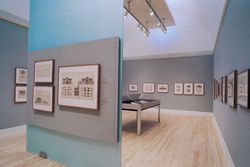
As Building Director of Baden in southwest Germany, Friedrich Weinbrenner (1766–1826) had the unique opportunity to create in Karlsruhe—the capital and his native city—one of the most homogeneous architectural ensembles ever achieved by a single architect. The exhibition focuses on the impact of scientific and administrative reform on the urban and agricultural(...)
As Building Director of Baden in southwest Germany, Friedrich Weinbrenner (1766–1826) had the unique opportunity to create in Karlsruhe—the capital and his native city—one of the most homogeneous architectural ensembles ever achieved by a single architect. The exhibition focuses on the impact of scientific and administrative reform on the urban and agricultural(...)
Location:
Main galleries
Main galleries
Date:
31 January 1990 to 18 March 1990
31 January 1990 to 18 March 1990
Title:
Friedrich Weinbrenner, Architect of Karlsruhe
Actions:
Description:
As Building Director of Baden in southwest Germany, Friedrich Weinbrenner (1766–1826) had the unique opportunity to create in Karlsruhe—the capital and his native city—one of the most homogeneous architectural ensembles ever achieved by a single architect. The exhibition focuses on the impact of scientific and administrative reform on the urban and agricultural(...)
Friedrich Weinbrenner, Architect of Karlsruhe
Actions:
Description:
As Building Director of Baden in southwest Germany, Friedrich Weinbrenner (1766–1826) had the unique opportunity to create in Karlsruhe—the capital and his native city—one of the most homogeneous architectural ensembles ever achieved by a single architect. The exhibition focuses on the impact of scientific and administrative reform on the urban and agricultural(...)
Form:
exhibitions
exhibitions
Date:
31 January 1990 to
18 March 1990
31 January 1990 to
18 March 1990
Location:
Main galleries
Main galleries
Level of archival description:
Sub-series
Sub-series
Actions:
Reference number:
AP178.S1.1995.PR10.SS1
Description:
This project subseries documents the Conjunto Habitações in Quinta da Palmeira, Evora, Portugal. While the records were held in the office's archives, this project was assigned the number 66/90 A/B. The office assigned the date 1995 to this project. Documenting this project are sketches, studies, and plans. Photographic material includes photographs, slides and negatives of the project site and model. Textual material includes project documentation, notes, meeting minutes, contracts, technical specifications, and correpondence with Câmara Municipal de Évora, and Sociedade Hoteleira Do Arez.
AP178.S1.1995.PR10.SS1
Description:
This project subseries documents the Conjunto Habitações in Quinta da Palmeira, Evora, Portugal. While the records were held in the office's archives, this project was assigned the number 66/90 A/B. The office assigned the date 1995 to this project. Documenting this project are sketches, studies, and plans. Photographic material includes photographs, slides and negatives of the project site and model. Textual material includes project documentation, notes, meeting minutes, contracts, technical specifications, and correpondence with Câmara Municipal de Évora, and Sociedade Hoteleira Do Arez.
People:
Date:
1995-2008
1995-2008
Title:
Conjunto Habitações [Housing complex], Quinta da Palmeira, Evora, Portugal (1995)
Actions:
AP178.S1.1995.PR10.SS1
Description:
This project subseries documents the Conjunto Habitações in Quinta da Palmeira, Evora, Portugal. While the records were held in the office's archives, this project was assigned the number 66/90 A/B. The office assigned the date 1995 to this project. Documenting this project are sketches, studies, and plans. Photographic material includes photographs, slides and negatives of the project site and model. Textual material includes project documentation, notes, meeting minutes, contracts, technical specifications, and correpondence with Câmara Municipal de Évora, and Sociedade Hoteleira Do Arez.
Conjunto Habitações [Housing complex], Quinta da Palmeira, Evora, Portugal (1995)
Actions:
AP178.S1.1995.PR10.SS1
Description:
This project subseries documents the Conjunto Habitações in Quinta da Palmeira, Evora, Portugal. While the records were held in the office's archives, this project was assigned the number 66/90 A/B. The office assigned the date 1995 to this project. Documenting this project are sketches, studies, and plans. Photographic material includes photographs, slides and negatives of the project site and model. Textual material includes project documentation, notes, meeting minutes, contracts, technical specifications, and correpondence with Câmara Municipal de Évora, and Sociedade Hoteleira Do Arez.
Level of archival description:
Project
Project
Date:
1995-2008
1995-2008
People:


