


318 Results
Form:
books
books
Actions:
Price:
$60.95
(available to order)
Summary:
Herman De Vries was trained as a horticulturist and worked as a natural scientist. He started to draw and paint in the mid-1950s. His early works were composed of white paintings and sculptures, which he defined as "informal" because they bore no figuration or color. With these works, he investigated the idea of "randomness" as a principle of order with the aim of(...)
$60.95
(available to order)
Summary:
Herman De Vries was trained as a horticulturist and worked as a natural scientist. He started to draw and paint in the mid-1950s. His early works were composed of white paintings and sculptures, which he defined as "informal" because they bore no figuration or color. With these works, he investigated the idea of "randomness" as a principle of order with the aim of(...)
Title:
herman de vries chance & change
Actions:
Price:
$60.95
(available to order)
Summary:
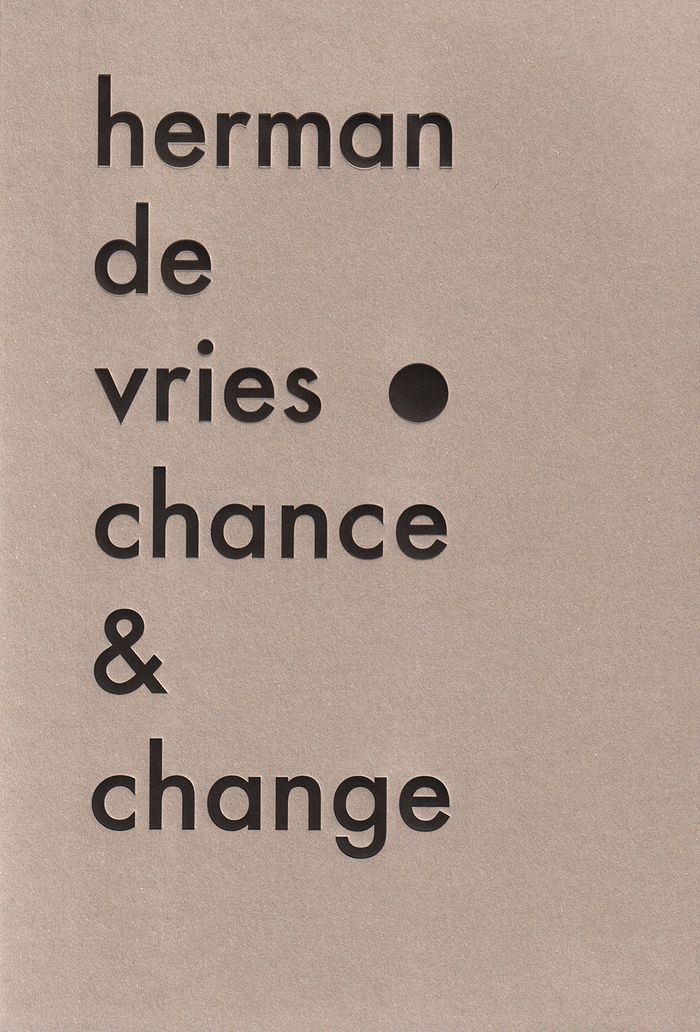
Herman De Vries was trained as a horticulturist and worked as a natural scientist. He started to draw and paint in the mid-1950s. His early works were composed of white paintings and sculptures, which he defined as "informal" because they bore no figuration or color. With these works, he investigated the idea of "randomness" as a principle of order with the aim of achieving absolute objectivity. During this time, he was actively involved in the exhibitions and publications of the international ZERO movement. From 1964 onward, his concern for the relationship between humanity and nature took a leading role in his work, and he developed a unique oeuvre in which he juxtaposed art, science, and philosophy with the reality of the world. In 1975, he decided that the phenomena and processes of nature constitute the physical and autonomous work of art that he, as an artist, should represent.
herman de vries chance & change
Actions:
Price:
$60.95
(available to order)
Summary:
Herman De Vries was trained as a horticulturist and worked as a natural scientist. He started to draw and paint in the mid-1950s. His early works were composed of white paintings and sculptures, which he defined as "informal" because they bore no figuration or color. With these works, he investigated the idea of "randomness" as a principle of order with the aim of achieving absolute objectivity. During this time, he was actively involved in the exhibitions and publications of the international ZERO movement. From 1964 onward, his concern for the relationship between humanity and nature took a leading role in his work, and he developed a unique oeuvre in which he juxtaposed art, science, and philosophy with the reality of the world. In 1975, he decided that the phenomena and processes of nature constitute the physical and autonomous work of art that he, as an artist, should represent.
Form:
books
books
Publication:
January 2018
January 2018
Subject:
Contemporary Art Monographs
Contemporary Art Monographs
Form:
books
books
Actions:
Price:
$33.95
(available to order)
Summary:
In this work of aesthetic theory, James Voorhies argues that we live in the shadow of old ways of thinking about art that emphasize the immediate visual experience of an autonomous art object. But theory must change as artistic and curatorial production has changed. It should encompass the full range of activities through which we encounter art and exhibitions, in which(...)
$33.95
(available to order)
Summary:
In this work of aesthetic theory, James Voorhies argues that we live in the shadow of old ways of thinking about art that emphasize the immediate visual experience of an autonomous art object. But theory must change as artistic and curatorial production has changed. It should encompass the full range of activities through which we encounter art and exhibitions, in which(...)
Title:
Postsensual aesthetics: on the logic of the curatorial
Actions:
Price:
$33.95
(available to order)
Summary:
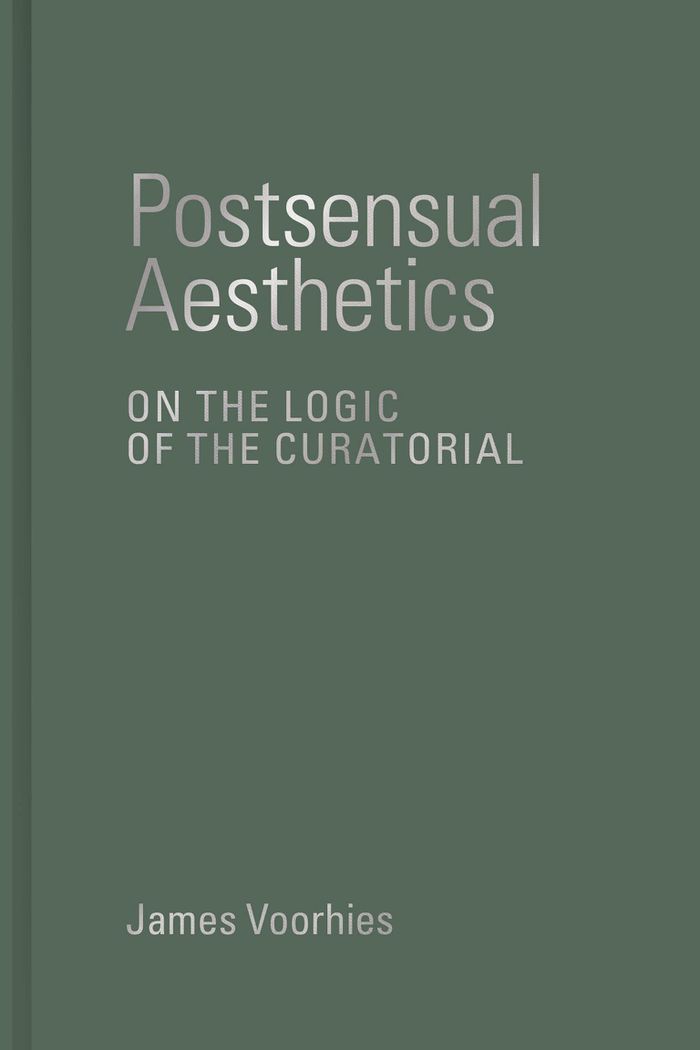
In this work of aesthetic theory, James Voorhies argues that we live in the shadow of old ways of thinking about art that emphasize the immediate visual experience of an autonomous art object. But theory must change as artistic and curatorial production has changed. It should encompass the full range of activities through which we encounter art and exhibitions, in which reading and thinking are central to the aesthetic experience. Voorhies advances the theoretical framework of a “postsensual aesthetics,” which does not mean we are beyond a sensual engagement with objects, but rather embraces the cognitive connections with ideas that unite art and knowledge production. Cognitive engagements with art often begin with publications conceived as integral to exhibitions, conveying the knowledge and research artists and curators produce, and continuing in time and space beyond traditional curatorial frames. The idea, and not just visual immediacy, is now art's defining moment.
Postsensual aesthetics: on the logic of the curatorial
Actions:
Price:
$33.95
(available to order)
Summary:
In this work of aesthetic theory, James Voorhies argues that we live in the shadow of old ways of thinking about art that emphasize the immediate visual experience of an autonomous art object. But theory must change as artistic and curatorial production has changed. It should encompass the full range of activities through which we encounter art and exhibitions, in which reading and thinking are central to the aesthetic experience. Voorhies advances the theoretical framework of a “postsensual aesthetics,” which does not mean we are beyond a sensual engagement with objects, but rather embraces the cognitive connections with ideas that unite art and knowledge production. Cognitive engagements with art often begin with publications conceived as integral to exhibitions, conveying the knowledge and research artists and curators produce, and continuing in time and space beyond traditional curatorial frames. The idea, and not just visual immediacy, is now art's defining moment.
Form:
books
books
Publication:
February 2023
February 2023
Subject:
Museology
Museology
Form:
books
books
Actions:
Price:
$75.00
(available in store)
Summary:
The history of climate change and the history of architecture are connected in many ways. Through a multilayered chronology, "It’s About Time" showcases historical and contemporary building projects such as solar houses, autonomous structures and earth buildings, alongside more than 45 key moments in environmental justice history: among them the first Earth Day, the(...)
$75.00
(available in store)
Summary:
The history of climate change and the history of architecture are connected in many ways. Through a multilayered chronology, "It’s About Time" showcases historical and contemporary building projects such as solar houses, autonomous structures and earth buildings, alongside more than 45 key moments in environmental justice history: among them the first Earth Day, the(...)
Title:
It's about time: The architecture of climate change
Actions:
Price:
$75.00
(available in store)
Summary:
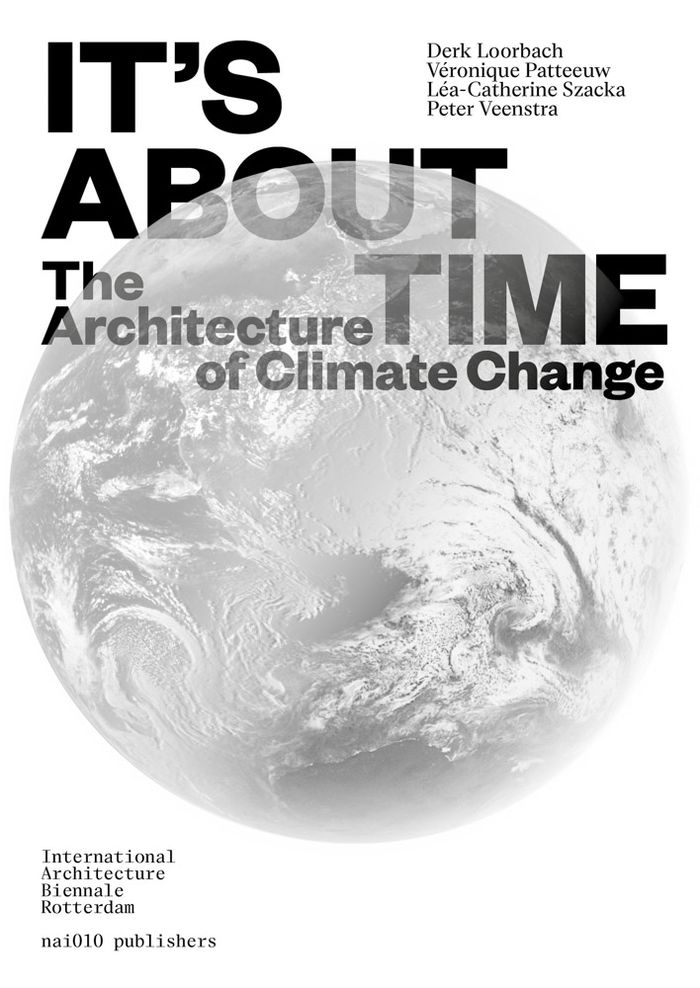
The history of climate change and the history of architecture are connected in many ways. Through a multilayered chronology, "It’s About Time" showcases historical and contemporary building projects such as solar houses, autonomous structures and earth buildings, alongside more than 45 key moments in environmental justice history: among them the first Earth Day, the United Nations conference in Stockholm, the Chernobyl disaster, the Paris Climate Agreements and the European Green Deal. It explores architectural experimentation in the past, depicts the present moment of transition and offers hopeful glimpses of the future. Serving as both a reference and a source of inspiration, this publication is intended for architects, educators, students, scientists or anyone looking to play their part in shaping a more sustainable world. It emphasizes that while the time for change has now arrived, the field of architecture can play a key role in the transitions ahead.
It's about time: The architecture of climate change
Actions:
Price:
$75.00
(available in store)
Summary:
The history of climate change and the history of architecture are connected in many ways. Through a multilayered chronology, "It’s About Time" showcases historical and contemporary building projects such as solar houses, autonomous structures and earth buildings, alongside more than 45 key moments in environmental justice history: among them the first Earth Day, the United Nations conference in Stockholm, the Chernobyl disaster, the Paris Climate Agreements and the European Green Deal. It explores architectural experimentation in the past, depicts the present moment of transition and offers hopeful glimpses of the future. Serving as both a reference and a source of inspiration, this publication is intended for architects, educators, students, scientists or anyone looking to play their part in shaping a more sustainable world. It emphasizes that while the time for change has now arrived, the field of architecture can play a key role in the transitions ahead.
Form:
books
books
Publication:
February 2025
February 2025
Subject:
Biennial
Biennial
Form:
books
books
Price:
$152.50
(available to order)
Summary:
The radical youth movements of the 1960s and '70s gave rise to both militant political groups ranging from urban guerrilla groups to autonomist counterculture, as well as radical media, including radio, music, film, video, and television. This book is concerned with both of those tendencies considered as bifurcations of radical media ecologies in the 1970s. While some of(...)
$152.50
(available to order)
Summary:
The radical youth movements of the 1960s and '70s gave rise to both militant political groups ranging from urban guerrilla groups to autonomist counterculture, as well as radical media, including radio, music, film, video, and television. This book is concerned with both of those tendencies considered as bifurcations of radical media ecologies in the 1970s. While some of(...)
Title:
Guerrilla networks: an anarchaeology of 1970s radical media ecologies
Actions:
Price:
$152.50
(available to order)
Summary:
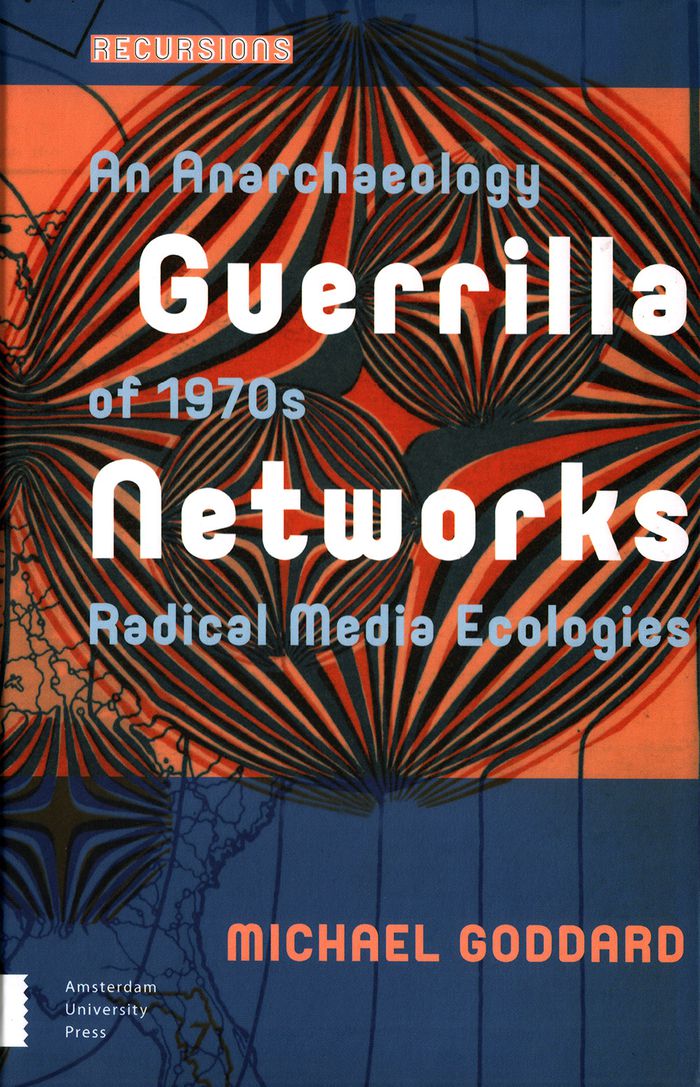
The radical youth movements of the 1960s and '70s gave rise to both militant political groups ranging from urban guerrilla groups to autonomist counterculture, as well as radical media, including radio, music, film, video, and television. This book is concerned with both of those tendencies considered as bifurcations of radical media ecologies in the 1970s. While some of the forms of media creativity and invention mapped here, such as militant film and video, pirate radio and guerrilla television, fit within conventional definitions of media, others, such as urban guerrilla groups and autonomous movements, do not. Nevertheless what was at stake in all these ventures was the use of available means of expression in order to produce transformative effects, and they were all in different ways responding to ideas and practices of guerrilla struggle and specifically of guerrilla media. This book examines these radical media ecologies as guerrilla networks, emphasising the proximity and inseparability of radical media and political practices.
Guerrilla networks: an anarchaeology of 1970s radical media ecologies
Actions:
Price:
$152.50
(available to order)
Summary:
The radical youth movements of the 1960s and '70s gave rise to both militant political groups ranging from urban guerrilla groups to autonomist counterculture, as well as radical media, including radio, music, film, video, and television. This book is concerned with both of those tendencies considered as bifurcations of radical media ecologies in the 1970s. While some of the forms of media creativity and invention mapped here, such as militant film and video, pirate radio and guerrilla television, fit within conventional definitions of media, others, such as urban guerrilla groups and autonomous movements, do not. Nevertheless what was at stake in all these ventures was the use of available means of expression in order to produce transformative effects, and they were all in different ways responding to ideas and practices of guerrilla struggle and specifically of guerrilla media. This book examines these radical media ecologies as guerrilla networks, emphasising the proximity and inseparability of radical media and political practices.
Form:
books
books
Publication:
January 2018
January 2018
Subject:
Art Theory
Art Theory
Form:
books
books
Actions:
Price:
$49.50
(available to order)
Summary:
Unlike traditional art works, installation art has no autonomous existence. It is usually created at the exhibition site, and its essence is spectator participation. Installation art originated as a radical art form presented only at alternative art spaces;(...)
$49.50
(available to order)
Summary:
Unlike traditional art works, installation art has no autonomous existence. It is usually created at the exhibition site, and its essence is spectator participation. Installation art originated as a radical art form presented only at alternative art spaces;(...)
Subject:
Contemporary Art Monographs
Contemporary Art Monographs
Publication:
April 2000, Cambridge, Mass.
April 2000, Cambridge, Mass.
Title:
From margin to center : the spaces of installation art
Actions:
Price:
$49.50
(available to order)
Summary:
Unlike traditional art works, installation art has no autonomous existence. It is usually created at the exhibition site, and its essence is spectator participation. Installation art originated as a radical art form presented only at alternative art spaces; its assimilation into mainstream museums and galleries is a relatively recent phenomenon. The move of installation art from the margin to the center of the art world has had far-reaching effects on the works created and on museum practice. This is the first book-length study of installation art. Julie Reiss concentrates on some of the central figures in its emergence, including artists, critics, and curators. Her primary focus is installations created in New York City--which has a particularly rich history of installation art--beginning in the late 1950s. She takes us from Allan Kaprow's 1950s' environments to examples from minimalism, performance art, and process art to establish installation art¹s autonomy as its relationship to other movements.
From margin to center : the spaces of installation art
Actions:
Price:
$49.50
(available to order)
Summary:
Unlike traditional art works, installation art has no autonomous existence. It is usually created at the exhibition site, and its essence is spectator participation. Installation art originated as a radical art form presented only at alternative art spaces; its assimilation into mainstream museums and galleries is a relatively recent phenomenon. The move of installation art from the margin to the center of the art world has had far-reaching effects on the works created and on museum practice. This is the first book-length study of installation art. Julie Reiss concentrates on some of the central figures in its emergence, including artists, critics, and curators. Her primary focus is installations created in New York City--which has a particularly rich history of installation art--beginning in the late 1950s. She takes us from Allan Kaprow's 1950s' environments to examples from minimalism, performance art, and process art to establish installation art¹s autonomy as its relationship to other movements.
Form:
books
books
Publication:
April 2000, Cambridge, Mass.
April 2000, Cambridge, Mass.
Subject:
Contemporary Art Monographs
Contemporary Art Monographs
Form:
books
books
Title:
Thinking photography
Thinking photography
Actions:
Price:
$38.95
(available to order)
Summary:
"Thinking photography" brings debates within the theory and practice of communications and culture, in this case in photography and photography criticism, to a wider audience. Victor Burgin's book is concerned with the production of meaning in photographs ( and so it is fully illustrated). A photograph has traditionally been understood as an expression of the(...)
$38.95
(available to order)
Summary:
"Thinking photography" brings debates within the theory and practice of communications and culture, in this case in photography and photography criticism, to a wider audience. Victor Burgin's book is concerned with the production of meaning in photographs ( and so it is fully illustrated). A photograph has traditionally been understood as an expression of the(...)
Title:
Thinking photography
Actions:
Price:
$38.95
(available to order)
Summary:
"Thinking photography" brings debates within the theory and practice of communications and culture, in this case in photography and photography criticism, to a wider audience. Victor Burgin's book is concerned with the production of meaning in photographs ( and so it is fully illustrated). A photograph has traditionally been understood as an expression of the photographer's personality, a transparent presentation of a real scene, or more recently in 'modernist' criticism as a purely formal object. Victor Burgin and his collaborators - Umberto Eco, Allan Sekula, John Tagg and Simon Watney - taking their cue from Walter Benjamin's "The author as producer" (also reprinted here), and working from a wide range of photographs, challenge the concept of the autonomous, spontaneously creative artist, the idea of documentary truth in photography and the notion of purely visual languages. They develop an account of the production of the meaning as a photograph within social institutions - advertising, journalism, art - within a society with a history and within the unconscious.
Thinking photography
Actions:
Price:
$38.95
(available to order)
Summary:
"Thinking photography" brings debates within the theory and practice of communications and culture, in this case in photography and photography criticism, to a wider audience. Victor Burgin's book is concerned with the production of meaning in photographs ( and so it is fully illustrated). A photograph has traditionally been understood as an expression of the photographer's personality, a transparent presentation of a real scene, or more recently in 'modernist' criticism as a purely formal object. Victor Burgin and his collaborators - Umberto Eco, Allan Sekula, John Tagg and Simon Watney - taking their cue from Walter Benjamin's "The author as producer" (also reprinted here), and working from a wide range of photographs, challenge the concept of the autonomous, spontaneously creative artist, the idea of documentary truth in photography and the notion of purely visual languages. They develop an account of the production of the meaning as a photograph within social institutions - advertising, journalism, art - within a society with a history and within the unconscious.
Form:
books
books
Publication:
April 2003, New York
April 2003, New York
Subject:
Theory of Photography
Theory of Photography
Form:
books
books
Actions:
Price:
$98.50
(available to order)
Summary:
The Bridge in Tadashi Kawamata's Bridge and Archives is a long, functional bridge installation that extends between the exhibition galleries of the Museum Schloss Moyland and the castle itself. It expresses the artist's own interpretation of the particular character of the location, which houses the world's largest collection of works by Joseph Beuys and also the Joseph(...)
$98.50
(available to order)
Summary:
The Bridge in Tadashi Kawamata's Bridge and Archives is a long, functional bridge installation that extends between the exhibition galleries of the Museum Schloss Moyland and the castle itself. It expresses the artist's own interpretation of the particular character of the location, which houses the world's largest collection of works by Joseph Beuys and also the Joseph(...)
Subject:
Contemporary Art Monographs
Contemporary Art Monographs
Publication:
June 2003, Bielefeld, Germany
June 2003, Bielefeld, Germany
Title:
Tadashi Kawamata : bridge and archives
Actions:
Price:
$98.50
(available to order)
Summary:
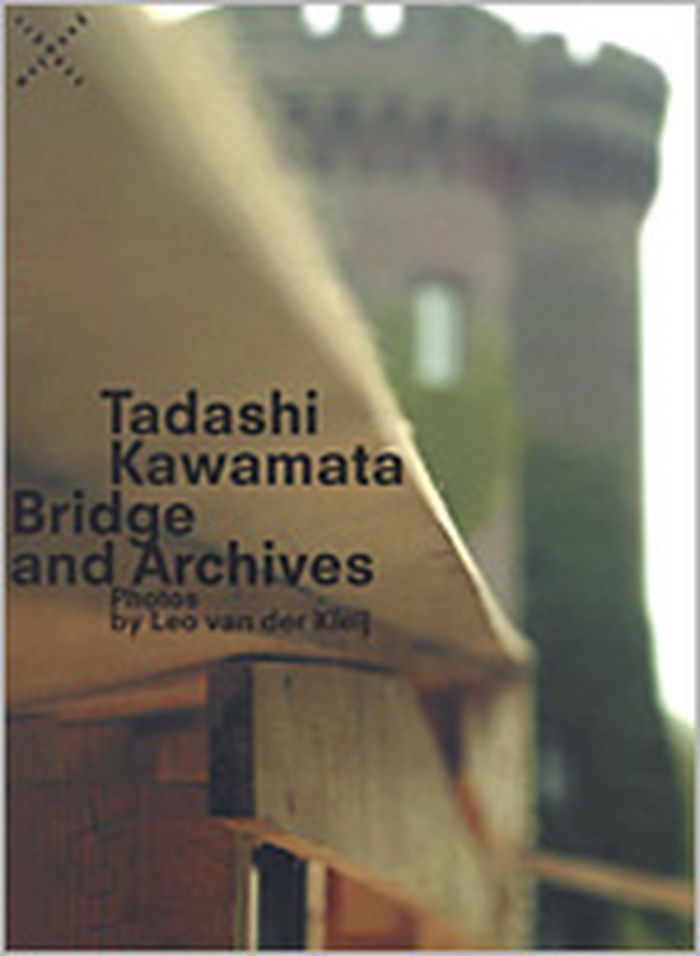
The Bridge in Tadashi Kawamata's Bridge and Archives is a long, functional bridge installation that extends between the exhibition galleries of the Museum Schloss Moyland and the castle itself. It expresses the artist's own interpretation of the particular character of the location, which houses the world's largest collection of works by Joseph Beuys and also the Joseph Beuys Archive--hence the Archive in the title. The bridge places the viewer at the center of two poles of art and represents an incongruous addition to the romantic castle ensemble. Demonstrating how the artistic work of Kawamata stands on the threshold between functional everyday object and autonomous work of art, between emergence and transience, between the individual and society, the bridge also reveals points of contact between the art of Beuys and Kawamata's own process-based and socially relevant work. Japanese artist Tadashi Kawamata has collaborated since 1986 with Dutch photographer Leo van der Kleij, who documents the artist's work in photographs.
Tadashi Kawamata : bridge and archives
Actions:
Price:
$98.50
(available to order)
Summary:
The Bridge in Tadashi Kawamata's Bridge and Archives is a long, functional bridge installation that extends between the exhibition galleries of the Museum Schloss Moyland and the castle itself. It expresses the artist's own interpretation of the particular character of the location, which houses the world's largest collection of works by Joseph Beuys and also the Joseph Beuys Archive--hence the Archive in the title. The bridge places the viewer at the center of two poles of art and represents an incongruous addition to the romantic castle ensemble. Demonstrating how the artistic work of Kawamata stands on the threshold between functional everyday object and autonomous work of art, between emergence and transience, between the individual and society, the bridge also reveals points of contact between the art of Beuys and Kawamata's own process-based and socially relevant work. Japanese artist Tadashi Kawamata has collaborated since 1986 with Dutch photographer Leo van der Kleij, who documents the artist's work in photographs.
Form:
books
books
Publication:
June 2003, Bielefeld, Germany
June 2003, Bielefeld, Germany
Subject:
Contemporary Art Monographs
Contemporary Art Monographs
Form:
books
books
Actions:
Price:
$176.95
(available to order)
Summary:
This is the first book about the history, influences, and impact of the "Werkstatt für Photography" (Photography Workshop) founded by the Berlin photographer Michael Schmidt at the Volkshochschule Kreuzberg in 1976. In the midst of the Cold War, the Werkstatt initiated an artistic "airlift" to the United States, a democratic field of experimentation beyond the pale of(...)
$176.95
(available to order)
Summary:
This is the first book about the history, influences, and impact of the "Werkstatt für Photography" (Photography Workshop) founded by the Berlin photographer Michael Schmidt at the Volkshochschule Kreuzberg in 1976. In the midst of the Cold War, the Werkstatt initiated an artistic "airlift" to the United States, a democratic field of experimentation beyond the pale of(...)
Subject:
Photography Collections
Photography Collections
Publication:
June 2017
June 2017
Title:
Werkstatt für photographie 1976-1986
Actions:
Price:
$176.95
(available to order)
Summary:
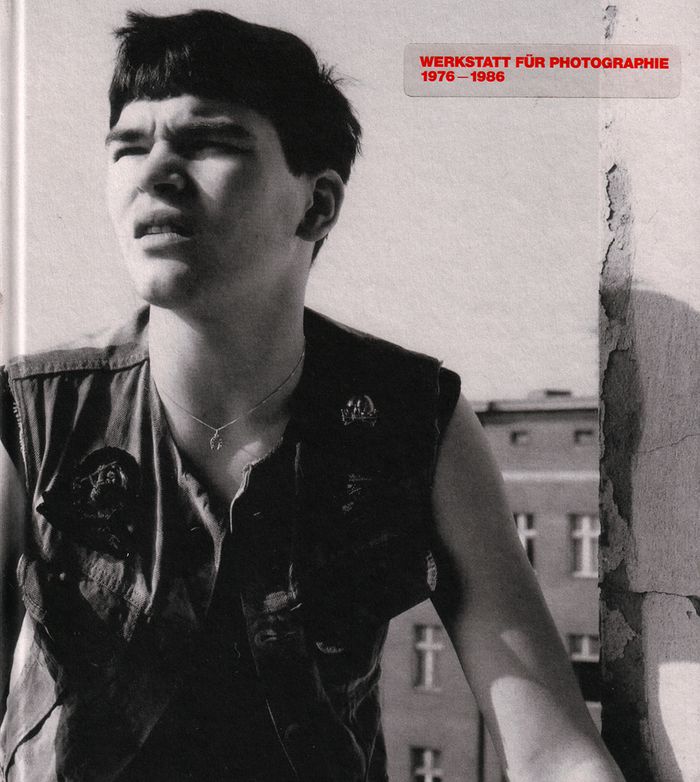
This is the first book about the history, influences, and impact of the "Werkstatt für Photography" (Photography Workshop) founded by the Berlin photographer Michael Schmidt at the Volkshochschule Kreuzberg in 1976. In the midst of the Cold War, the Werkstatt initiated an artistic "airlift" to the United States, a democratic field of experimentation beyond the pale of traditional vocational and political-institutional standards. Those same years witnessed the establishment of infrastructures in West Germany that paved the way for the emancipation of photography as an art form. These included documenta 6 (1977), the first photo galleries and photography journals, and a number of pathbreaking exhibitions. Berlin, Hanover, and Essen played important roles in that process. All in all, the picture of a medium in transition emerges, a medium that developed an autonomous form of artistic authorship in the field of documentary. This book presents the story of German photography in the 1970s and 1980s, its international ties, its protagonists, and its networks.
Werkstatt für photographie 1976-1986
Actions:
Price:
$176.95
(available to order)
Summary:
This is the first book about the history, influences, and impact of the "Werkstatt für Photography" (Photography Workshop) founded by the Berlin photographer Michael Schmidt at the Volkshochschule Kreuzberg in 1976. In the midst of the Cold War, the Werkstatt initiated an artistic "airlift" to the United States, a democratic field of experimentation beyond the pale of traditional vocational and political-institutional standards. Those same years witnessed the establishment of infrastructures in West Germany that paved the way for the emancipation of photography as an art form. These included documenta 6 (1977), the first photo galleries and photography journals, and a number of pathbreaking exhibitions. Berlin, Hanover, and Essen played important roles in that process. All in all, the picture of a medium in transition emerges, a medium that developed an autonomous form of artistic authorship in the field of documentary. This book presents the story of German photography in the 1970s and 1980s, its international ties, its protagonists, and its networks.
Form:
books
books
Publication:
June 2017
June 2017
Subject:
Photography Collections
Photography Collections
Form:
books
books
Actions:
Price:
$19.50
(available to order)
Summary:
In "The Freedom of the Architect", Pritzker Prize-winning architect Rafael Moneo speaks on form, language and history, broadly, and as represented in examples of his own work. He elaborates on how architects today have disassociated their work from the environment, creating autonomous landmarks with little relationship to their surroundings and how the architect as(...)
$19.50
(available to order)
Summary:
In "The Freedom of the Architect", Pritzker Prize-winning architect Rafael Moneo speaks on form, language and history, broadly, and as represented in examples of his own work. He elaborates on how architects today have disassociated their work from the environment, creating autonomous landmarks with little relationship to their surroundings and how the architect as(...)
Subject:
small format
small format
Publication:
July 2003, Ann Arbor
July 2003, Ann Arbor
Title:
The freedom of the architect : Rafael Moneo
Actions:
Price:
$19.50
(available to order)
Summary:
In "The Freedom of the Architect", Pritzker Prize-winning architect Rafael Moneo speaks on form, language and history, broadly, and as represented in examples of his own work. He elaborates on how architects today have disassociated their work from the environment, creating autonomous landmarks with little relationship to their surroundings and how the architect as individual challenges the role of history in the built environment. Moneo’s reflections on his own work include: The City Hall of Murcia, Spain, The Museum of Fine Arts Houston, the Kursaal Auditorium in San Sebastian, Spain, and the acclaimed Our Lady of the Angels Cathedral in Los Angeles. Spanish born, Madrid-based Moneo’s work unites tradition and innovation. He has developed an extensive body of work as an architectural critic and theoretician and his writing has appeared in "Oppositions" and "Lotus". He is a committed educator, having chaired the Harvard Graduate School of Design and lectured internationally.
The freedom of the architect : Rafael Moneo
Actions:
Price:
$19.50
(available to order)
Summary:
In "The Freedom of the Architect", Pritzker Prize-winning architect Rafael Moneo speaks on form, language and history, broadly, and as represented in examples of his own work. He elaborates on how architects today have disassociated their work from the environment, creating autonomous landmarks with little relationship to their surroundings and how the architect as individual challenges the role of history in the built environment. Moneo’s reflections on his own work include: The City Hall of Murcia, Spain, The Museum of Fine Arts Houston, the Kursaal Auditorium in San Sebastian, Spain, and the acclaimed Our Lady of the Angels Cathedral in Los Angeles. Spanish born, Madrid-based Moneo’s work unites tradition and innovation. He has developed an extensive body of work as an architectural critic and theoretician and his writing has appeared in "Oppositions" and "Lotus". He is a committed educator, having chaired the Harvard Graduate School of Design and lectured internationally.
Form:
books
books
Publication:
July 2003, Ann Arbor
July 2003, Ann Arbor
Subject:
small format
small format
Form:
books
books
Actions:
Price:
$34.50
(available in store)
Summary:
This book offers a comprehensive account of modern Spanish culture, tracing its dramatic and often unexpected development from its beginnings after the Revolution of 1868 to the present day. Specially-commissioned essays by leading experts provide analyses of the historical and political background of modern Spain, the culture of the major autonomous regions (notably(...)
$34.50
(available in store)
Summary:
This book offers a comprehensive account of modern Spanish culture, tracing its dramatic and often unexpected development from its beginnings after the Revolution of 1868 to the present day. Specially-commissioned essays by leading experts provide analyses of the historical and political background of modern Spain, the culture of the major autonomous regions (notably(...)
Title:
The Cambridge companion to modern Spanish culture
Actions:
Price:
$34.50
(available in store)
Summary:
This book offers a comprehensive account of modern Spanish culture, tracing its dramatic and often unexpected development from its beginnings after the Revolution of 1868 to the present day. Specially-commissioned essays by leading experts provide analyses of the historical and political background of modern Spain, the culture of the major autonomous regions (notably Castile, Catalonia, and the Basque Country), and the country’s literature: narrative, poetry, theatre and the essay. Spain’s recent development is divided into three main phases: from 1868 to the outbreak of the Spanish Civil War; the period of the dictatorship of Francisco Franco; and the post-Franco arrival of democracy. The concept of ‘Spanish culture’ is investigated, and there are studies of Spanish painting and sculpture, architecture, cinema, dance, music, and the modern media. A chronology and guides to further reading are provided, making the volume an invaluable introduction to the politics, literature and culture of modern Spain.
The Cambridge companion to modern Spanish culture
Actions:
Price:
$34.50
(available in store)
Summary:
This book offers a comprehensive account of modern Spanish culture, tracing its dramatic and often unexpected development from its beginnings after the Revolution of 1868 to the present day. Specially-commissioned essays by leading experts provide analyses of the historical and political background of modern Spain, the culture of the major autonomous regions (notably Castile, Catalonia, and the Basque Country), and the country’s literature: narrative, poetry, theatre and the essay. Spain’s recent development is divided into three main phases: from 1868 to the outbreak of the Spanish Civil War; the period of the dictatorship of Francisco Franco; and the post-Franco arrival of democracy. The concept of ‘Spanish culture’ is investigated, and there are studies of Spanish painting and sculpture, architecture, cinema, dance, music, and the modern media. A chronology and guides to further reading are provided, making the volume an invaluable introduction to the politics, literature and culture of modern Spain.
Form:
books
books
Publication:
January 1999, Cambridge
January 1999, Cambridge
Subject:
Architecture since 1900, Europe
Architecture since 1900, Europe


