


295 Results
Form:
books
books
Actions:
Price:
$34.95
(available to order)
Summary:
Our buildings are making us sick. Our homes, offices, factories, and dormitories are, in some sense, fresh parasites on the sacred Earth, "Nahasdzáán". In search of a better way, author Jim Kristofic journeys across the Southwest to apprentice with architects and builders who know how to make buildings that will take care of us. This is where he meets the House Gods who(...)
$34.95
(available to order)
Summary:
Our buildings are making us sick. Our homes, offices, factories, and dormitories are, in some sense, fresh parasites on the sacred Earth, "Nahasdzáán". In search of a better way, author Jim Kristofic journeys across the Southwest to apprentice with architects and builders who know how to make buildings that will take care of us. This is where he meets the House Gods who(...)
Title:
House gods: Sustainbable buildings and renegade builders
Actions:
Price:
$34.95
(available to order)
Summary:
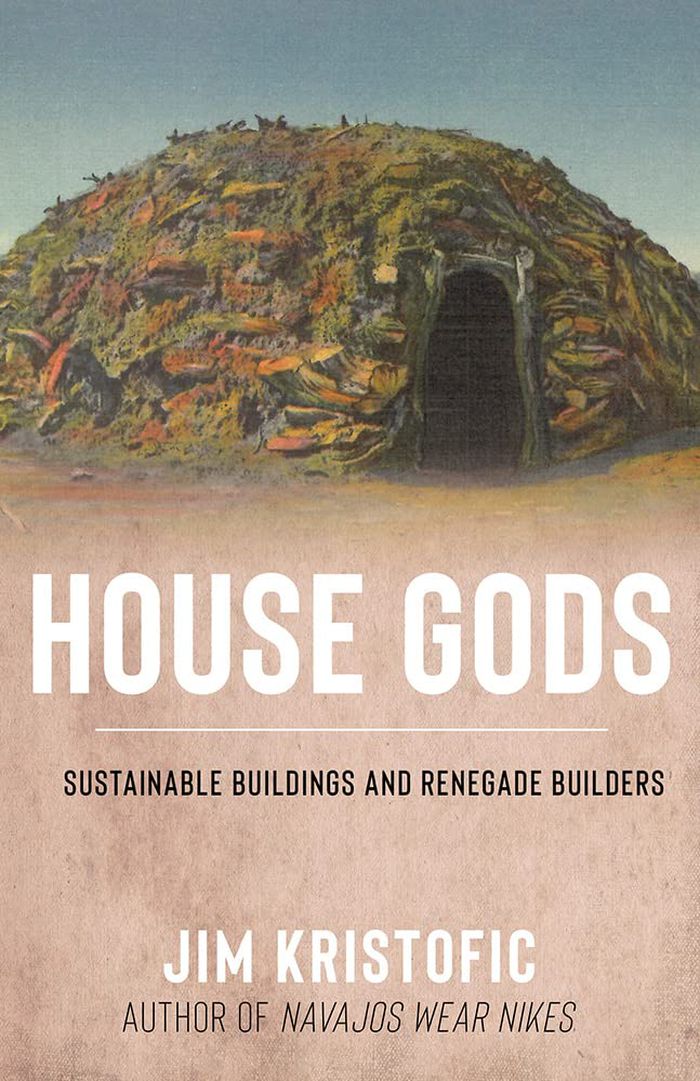
Our buildings are making us sick. Our homes, offices, factories, and dormitories are, in some sense, fresh parasites on the sacred Earth, "Nahasdzáán". In search of a better way, author Jim Kristofic journeys across the Southwest to apprentice with architects and builders who know how to make buildings that will take care of us. This is where he meets the House Gods who are building to the sun so that we can live on Earth. Forever. In this publication, Kristofic pursues the techniques of sustainable building and the philosophies of its practitioners. What emerges is a strange and haunting quest through adobe mud and mayhem, encounters with shamans and stray dogs, solar panels, tragedy, and true believers. It is a story about doing something meaningful, and about the kinds of things that grow out of deep pain. One of these things is compassion--from which may come solace.
House gods: Sustainbable buildings and renegade builders
Actions:
Price:
$34.95
(available to order)
Summary:
Our buildings are making us sick. Our homes, offices, factories, and dormitories are, in some sense, fresh parasites on the sacred Earth, "Nahasdzáán". In search of a better way, author Jim Kristofic journeys across the Southwest to apprentice with architects and builders who know how to make buildings that will take care of us. This is where he meets the House Gods who are building to the sun so that we can live on Earth. Forever. In this publication, Kristofic pursues the techniques of sustainable building and the philosophies of its practitioners. What emerges is a strange and haunting quest through adobe mud and mayhem, encounters with shamans and stray dogs, solar panels, tragedy, and true believers. It is a story about doing something meaningful, and about the kinds of things that grow out of deep pain. One of these things is compassion--from which may come solace.
Form:
books
books
Publication:
May 2022
May 2022
Subject:
Green Architecture
Green Architecture
Form:
journals and magazines
journals and magazines
Actions:
Price:
$52.00
(available in store)
Summary:
Facades play a key role as interfaces between the interior and exterior of build¬ings that are supposed to live with the climate in a dynamic way and not simply function despite of it. Many historic exam¬ples prove that they can perform purposes of both representation and protection, such as vernacular loam buildings in dry and hot climate zones, the double box windows of(...)
$52.00
(available in store)
Summary:
Facades play a key role as interfaces between the interior and exterior of build¬ings that are supposed to live with the climate in a dynamic way and not simply function despite of it. Many historic exam¬ples prove that they can perform purposes of both representation and protection, such as vernacular loam buildings in dry and hot climate zones, the double box windows of(...)
Title:
Detail 5 2026: Climate-adaptive facades
Actions:
Price:
$52.00
(available in store)
Summary:
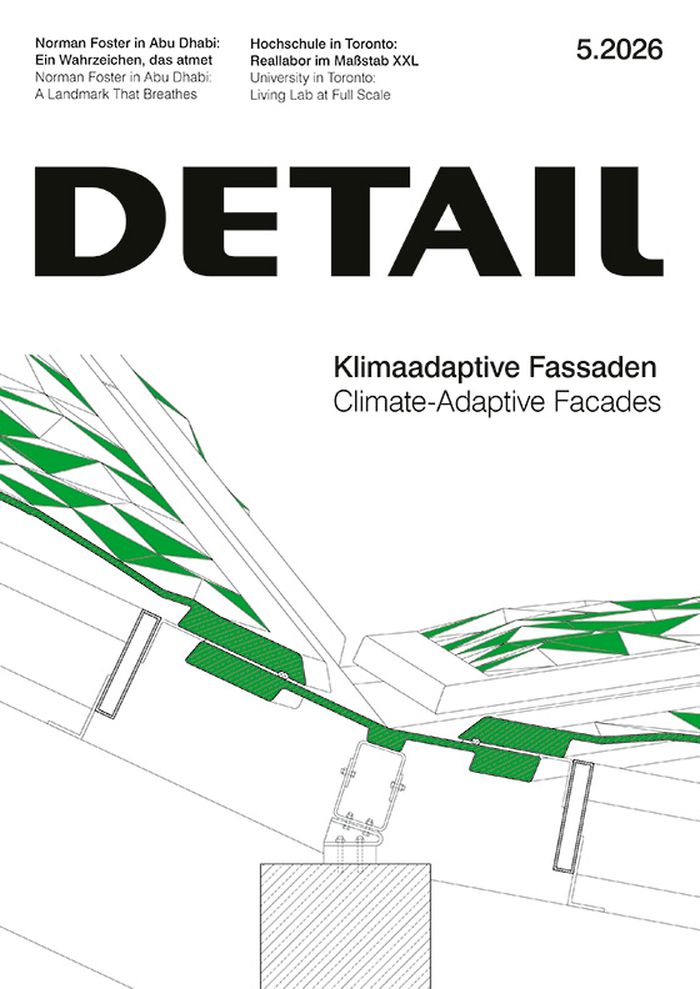
Facades play a key role as interfaces between the interior and exterior of build¬ings that are supposed to live with the climate in a dynamic way and not simply function despite of it. Many historic exam¬ples prove that they can perform purposes of both representation and protection, such as vernacular loam buildings in dry and hot climate zones, the double box windows of historic European houses, or the diaphragm mechanisms of the Institute de Monde Arabe by Atelier Jean Nouvel. Climate buffers, solar chimneys, and photovoltaics are part of the toolkit of international architectural offices. For the police station in Chur by the Swiss studio Comamala Ismail, PV modules were installed on the facades at two different angles. As a result, they double as sun protection. Foster + Partners adapted traditional wind towers for the design of the Zayed National Museum in Abu Dhabi.
Detail 5 2026: Climate-adaptive facades
Actions:
Price:
$52.00
(available in store)
Summary:
Facades play a key role as interfaces between the interior and exterior of build¬ings that are supposed to live with the climate in a dynamic way and not simply function despite of it. Many historic exam¬ples prove that they can perform purposes of both representation and protection, such as vernacular loam buildings in dry and hot climate zones, the double box windows of historic European houses, or the diaphragm mechanisms of the Institute de Monde Arabe by Atelier Jean Nouvel. Climate buffers, solar chimneys, and photovoltaics are part of the toolkit of international architectural offices. For the police station in Chur by the Swiss studio Comamala Ismail, PV modules were installed on the facades at two different angles. As a result, they double as sun protection. Foster + Partners adapted traditional wind towers for the design of the Zayed National Museum in Abu Dhabi.
Form:
journals and magazines
journals and magazines
Publication:
May 2026
May 2026
Subject:
Magazines
Magazines
Form:
books
books
Actions:
Price:
$75.00
(available in store)
Summary:
The history of climate change and the history of architecture are connected in many ways. Through a multilayered chronology, "It’s About Time" showcases historical and contemporary building projects such as solar houses, autonomous structures and earth buildings, alongside more than 45 key moments in environmental justice history: among them the first Earth Day, the(...)
$75.00
(available in store)
Summary:
The history of climate change and the history of architecture are connected in many ways. Through a multilayered chronology, "It’s About Time" showcases historical and contemporary building projects such as solar houses, autonomous structures and earth buildings, alongside more than 45 key moments in environmental justice history: among them the first Earth Day, the(...)
Title:
It's about time: The architecture of climate change
Actions:
Price:
$75.00
(available in store)
Summary:
The history of climate change and the history of architecture are connected in many ways. Through a multilayered chronology, "It’s About Time" showcases historical and contemporary building projects such as solar houses, autonomous structures and earth buildings, alongside more than 45 key moments in environmental justice history: among them the first Earth Day, the United Nations conference in Stockholm, the Chernobyl disaster, the Paris Climate Agreements and the European Green Deal. It explores architectural experimentation in the past, depicts the present moment of transition and offers hopeful glimpses of the future. Serving as both a reference and a source of inspiration, this publication is intended for architects, educators, students, scientists or anyone looking to play their part in shaping a more sustainable world. It emphasizes that while the time for change has now arrived, the field of architecture can play a key role in the transitions ahead.
It's about time: The architecture of climate change
Actions:
Price:
$75.00
(available in store)
Summary:
The history of climate change and the history of architecture are connected in many ways. Through a multilayered chronology, "It’s About Time" showcases historical and contemporary building projects such as solar houses, autonomous structures and earth buildings, alongside more than 45 key moments in environmental justice history: among them the first Earth Day, the United Nations conference in Stockholm, the Chernobyl disaster, the Paris Climate Agreements and the European Green Deal. It explores architectural experimentation in the past, depicts the present moment of transition and offers hopeful glimpses of the future. Serving as both a reference and a source of inspiration, this publication is intended for architects, educators, students, scientists or anyone looking to play their part in shaping a more sustainable world. It emphasizes that while the time for change has now arrived, the field of architecture can play a key role in the transitions ahead.
Form:
books
books
Publication:
February 2025
February 2025
Subject:
Biennial
Biennial
Form:
books
books
Price:
$94.00
(available to order)
Summary:
During the 1960s, as Western notions of endless progress and growth gave way to concerns over industrial pollution, resource depletion and ecological limits, attitudes toward the environment became social, political and ideological. Published to accompany the first expansive survey of the history of environmental thinking in architecture, ''Emerging ecologies:(...)
$94.00
(available to order)
Summary:
During the 1960s, as Western notions of endless progress and growth gave way to concerns over industrial pollution, resource depletion and ecological limits, attitudes toward the environment became social, political and ideological. Published to accompany the first expansive survey of the history of environmental thinking in architecture, ''Emerging ecologies:(...)
Publication:
September 2023
September 2023
Title:
Emerging ecologies: Architecture and the rise of environmentalism
Actions:
Price:
$94.00
(available to order)
Summary:
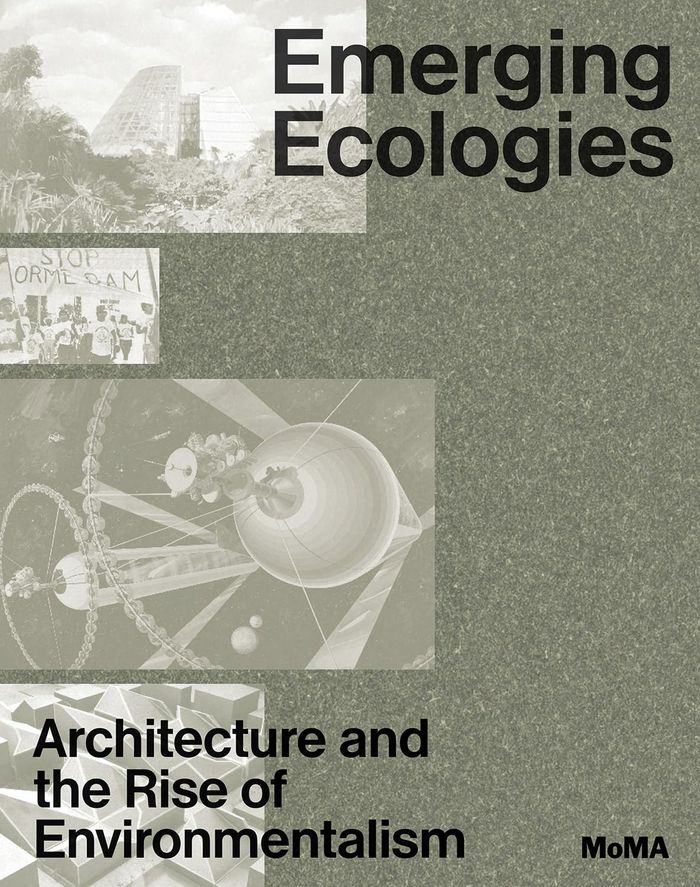
During the 1960s, as Western notions of endless progress and growth gave way to concerns over industrial pollution, resource depletion and ecological limits, attitudes toward the environment became social, political and ideological. Published to accompany the first expansive survey of the history of environmental thinking in architecture, ''Emerging ecologies: Architecture and the rise of environmentalism'' looks at the role architects have played in defining our understanding of ''nature'' and the ''environment,'' specifically during the rise of environmental discourse. The illustrated publication presents over 45 architectural contributions—from Eleanor Raymond and Mária Telkes’ groundbreaking work on solar houses to Buckminster Fuller’s world resource management system and the environmental symbolism of Emilio Ambasz—to explore the role designers played in both promoting ecological concerns and in outlining the very terms of this nascent field. Through an introductory essay by curator Carson Chan and brief texts on each of the featured projects, ''Emerging ecologies'' documents the proximity between ecology, design and statecraft, allowing readers to take stock of historic milestones as architecture confronts today’s climate emergencies.
Emerging ecologies: Architecture and the rise of environmentalism
Actions:
Price:
$94.00
(available to order)
Summary:
During the 1960s, as Western notions of endless progress and growth gave way to concerns over industrial pollution, resource depletion and ecological limits, attitudes toward the environment became social, political and ideological. Published to accompany the first expansive survey of the history of environmental thinking in architecture, ''Emerging ecologies: Architecture and the rise of environmentalism'' looks at the role architects have played in defining our understanding of ''nature'' and the ''environment,'' specifically during the rise of environmental discourse. The illustrated publication presents over 45 architectural contributions—from Eleanor Raymond and Mária Telkes’ groundbreaking work on solar houses to Buckminster Fuller’s world resource management system and the environmental symbolism of Emilio Ambasz—to explore the role designers played in both promoting ecological concerns and in outlining the very terms of this nascent field. Through an introductory essay by curator Carson Chan and brief texts on each of the featured projects, ''Emerging ecologies'' documents the proximity between ecology, design and statecraft, allowing readers to take stock of historic milestones as architecture confronts today’s climate emergencies.
Form:
books
books
Publication:
September 2023
September 2023
Form:
books
books
Price:
$34.95
(available to order)
Summary:
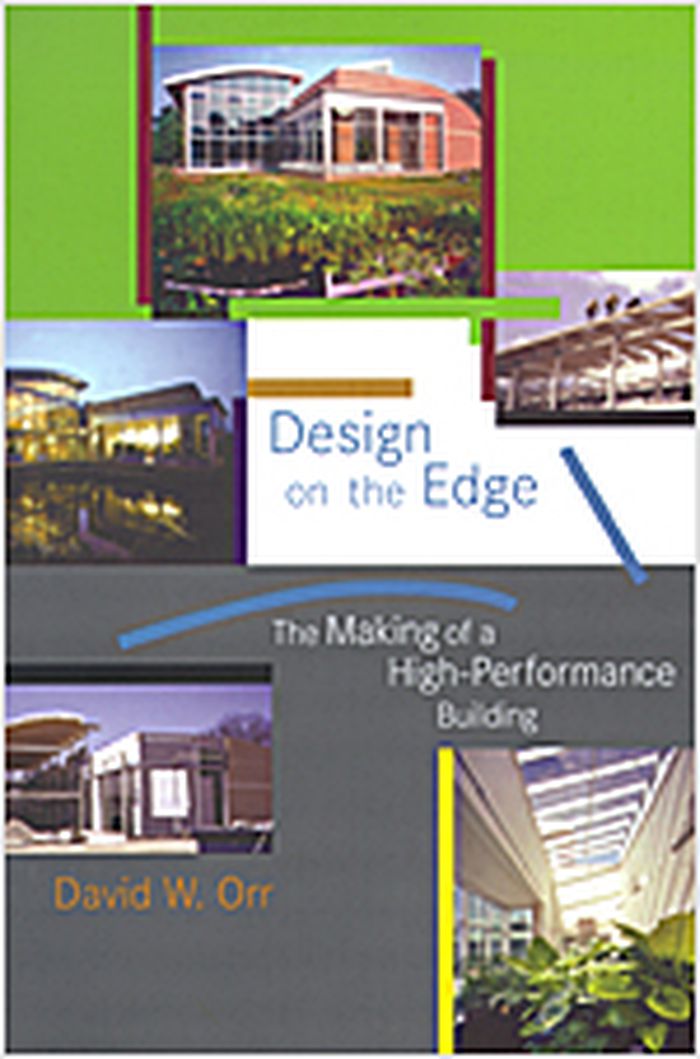
The story of the Adam Joseph Lewis Center at Oberlin College - the first substantially green building to be built on a college campus -encompasses more than the particulars of one building. In "Design on the edge", David Orr writes about the planning and design of Oberlin's environmental studies building as part of a larger story about the art and science of ecological(...)
$34.95
(available to order)
Summary:
The story of the Adam Joseph Lewis Center at Oberlin College - the first substantially green building to be built on a college campus -encompasses more than the particulars of one building. In "Design on the edge", David Orr writes about the planning and design of Oberlin's environmental studies building as part of a larger story about the art and science of ecological(...)
Title:
Design on the edge : the making of a high-performance building
Actions:
Price:
$34.95
(available to order)
Summary:
The story of the Adam Joseph Lewis Center at Oberlin College - the first substantially green building to be built on a college campus -encompasses more than the particulars of one building. In "Design on the edge", David Orr writes about the planning and design of Oberlin's environmental studies building as part of a larger story about the art and science of ecological design and the ability of institutions of higher learning themselves to learn. The Lewis Center, which has attracted worldwide attention as a model of ecological design, operates according to environmental principles. It is powered entirely by solar energy, features landscaping with fruit trees and vegetable gardens, and houses a Living Machine, which processes all wastewater for reuse in the building or landscape. Orr puts the Lewis Center into historical design context and describes the obstacles and successes he encountered in obtaining funds and college approval, interweaving the particulars of the center with thoughts on the larger environmental and societal issues the building process illustrates. Equal parts analysis, personal reflection, and call to action, "Design on the edge" illustrates the process of institutional change, institutional learning, and the political economy of design. It describes how the idea of the Lewis Center originated and was translated into reality with the help of such environmental visionaries as William McDonough and John Todd, and how the building has performed since its completion.
Design on the edge : the making of a high-performance building
Actions:
Price:
$34.95
(available to order)
Summary:
The story of the Adam Joseph Lewis Center at Oberlin College - the first substantially green building to be built on a college campus -encompasses more than the particulars of one building. In "Design on the edge", David Orr writes about the planning and design of Oberlin's environmental studies building as part of a larger story about the art and science of ecological design and the ability of institutions of higher learning themselves to learn. The Lewis Center, which has attracted worldwide attention as a model of ecological design, operates according to environmental principles. It is powered entirely by solar energy, features landscaping with fruit trees and vegetable gardens, and houses a Living Machine, which processes all wastewater for reuse in the building or landscape. Orr puts the Lewis Center into historical design context and describes the obstacles and successes he encountered in obtaining funds and college approval, interweaving the particulars of the center with thoughts on the larger environmental and societal issues the building process illustrates. Equal parts analysis, personal reflection, and call to action, "Design on the edge" illustrates the process of institutional change, institutional learning, and the political economy of design. It describes how the idea of the Lewis Center originated and was translated into reality with the help of such environmental visionaries as William McDonough and John Todd, and how the building has performed since its completion.
Form:
books
books
Publication:
October 2006, Cambridge (MA), London
October 2006, Cambridge (MA), London
Subject:
Green Architecture
Green Architecture


