


3067 Results
Form:
books
books
Actions:
Holdings:
Description:
xii, 413 pages : illustrations, maps ; 24 cm
Description:
xii, 413 pages : illustrations, maps ; 24 cm
Author:
Subject:
Publication:
Cambridge, Mass. : MIT Press, ©2011.
Cambridge, Mass. : MIT Press, ©2011.
Title:
A landscape history of New England / edited by Blake Harrison and Richard W. Judd.
Actions:
Holdings:
Description:
xii, 413 pages : illustrations, maps ; 24 cm
A landscape history of New England / edited by Blake Harrison and Richard W. Judd.
Actions:
Holdings:
Description:
xii, 413 pages : illustrations, maps ; 24 cm
Form:
books
books
Publication:
Cambridge, Mass. : MIT Press, ©2011.
Cambridge, Mass. : MIT Press, ©2011.
Author:
Subject:
Form:
books
books
Actions:
Price:
$60.00
(available to order)
Summary:
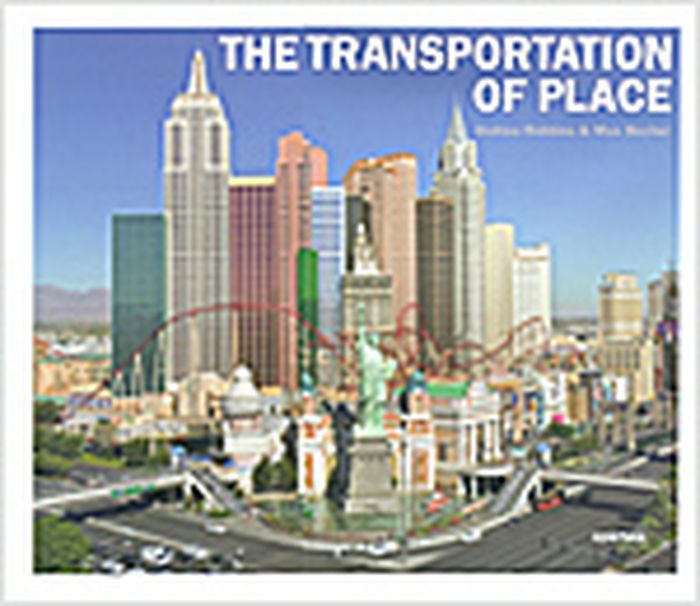
Robbins and Becher produce work that functions as surreal nonfiction, using documentary images to examine contradictions of place and cultural identity. In the words of the artists, “The primary focus of our work is what we call the transportation of place—situations in which one limited or isolated place strongly resembles another distant one. Everywhere, not only in the(...)
$60.00
(available to order)
Summary:
Robbins and Becher produce work that functions as surreal nonfiction, using documentary images to examine contradictions of place and cultural identity. In the words of the artists, “The primary focus of our work is what we call the transportation of place—situations in which one limited or isolated place strongly resembles another distant one. Everywhere, not only in the(...)
Subject:
Photography monographs
Photography monographs
Publication:
May 2006, New York
May 2006, New York
Title:
The transportation of place : Andrea Robbins & Max Becher
Actions:
Price:
$60.00
(available to order)
Summary:
Robbins and Becher produce work that functions as surreal nonfiction, using documentary images to examine contradictions of place and cultural identity. In the words of the artists, “The primary focus of our work is what we call the transportation of place—situations in which one limited or isolated place strongly resembles another distant one. Everywhere, not only in the new world, such situations are accumulating and accepted as genuine locales. Traditional notions of place, in which culture and geographic location neatly coincide, are being challenged by legacies of slavery, colonialism, holocaust, immigration, tourism, and mass-communication. Whether the subject is Germany in Africa, Germans dressing as Native Americans, American towns dressed as Germany, New York in Las Vegas, New York in Cuba, or Cuba in exile, our interest tends to be a place out of place with its various causes and consequences.” The work posits vital questions for a globalized world: What are the larger implications of “ideological passing,” when one culture assumes the skin of another? And what role can photography play as a document in context where cultural signification is entirely fluid? Curator and author Maurice Berger examines the work of Robbins and Becher against the background of race and identity, but also of Surrealism. Lucy Lippard discusses the development of the husband-and-wife team’s work together, as well as looking specifically at the ideas of location, landscape, and manufactured place.
The transportation of place : Andrea Robbins & Max Becher
Actions:
Price:
$60.00
(available to order)
Summary:
Robbins and Becher produce work that functions as surreal nonfiction, using documentary images to examine contradictions of place and cultural identity. In the words of the artists, “The primary focus of our work is what we call the transportation of place—situations in which one limited or isolated place strongly resembles another distant one. Everywhere, not only in the new world, such situations are accumulating and accepted as genuine locales. Traditional notions of place, in which culture and geographic location neatly coincide, are being challenged by legacies of slavery, colonialism, holocaust, immigration, tourism, and mass-communication. Whether the subject is Germany in Africa, Germans dressing as Native Americans, American towns dressed as Germany, New York in Las Vegas, New York in Cuba, or Cuba in exile, our interest tends to be a place out of place with its various causes and consequences.” The work posits vital questions for a globalized world: What are the larger implications of “ideological passing,” when one culture assumes the skin of another? And what role can photography play as a document in context where cultural signification is entirely fluid? Curator and author Maurice Berger examines the work of Robbins and Becher against the background of race and identity, but also of Surrealism. Lucy Lippard discusses the development of the husband-and-wife team’s work together, as well as looking specifically at the ideas of location, landscape, and manufactured place.
Form:
books
books
Publication:
May 2006, New York
May 2006, New York
Subject:
Photography monographs
Photography monographs
Form:
books
books
Actions:
Subject:
Publication:
Paradigm 2021
Paradigm 2021
Form:
books
books
Publication:
Paradigm 2021
Paradigm 2021
Subject:
Form:
audio
audio
Title:
Untitled discrete arbitrary input functions-polyphony-for harpsichord after Brianna and Kassidy.
Untitled discrete arbitrary input functions-polyphony-for harpsichord after Brianna and Kassidy.
Actions:
Description:
1 online resource.
Author:
Subject:
Publication:
[Place of publication not identified] : Lateral Addition, 2021.
[Place of publication not identified] : Lateral Addition, 2021.
Title:
Untitled discrete arbitrary input functions-polyphony-for harpsichord after Brianna and Kassidy.
Actions:
Description:
1 online resource.
Untitled discrete arbitrary input functions-polyphony-for harpsichord after Brianna and Kassidy.
Actions:
Description:
1 online resource.
Form:
audio
audio
Publication:
[Place of publication not identified] : Lateral Addition, 2021.
[Place of publication not identified] : Lateral Addition, 2021.
Author:
Subject:
Form:
journals and magazines
journals and magazines
Price:
$36.00
(available to order)
Summary:
The modern design and perception of the public domain is to a large degree determined by the tension between different memories - individual and collective, old and new, indigenous and immigrant. This makes memory a topical theme in the public domain, and its content, management and place are in urgent need of renewed consideration. How can one actively make use of the(...)
$36.00
(available to order)
Summary:
The modern design and perception of the public domain is to a large degree determined by the tension between different memories - individual and collective, old and new, indigenous and immigrant. This makes memory a topical theme in the public domain, and its content, management and place are in urgent need of renewed consideration. How can one actively make use of the(...)
Title:
Open 7 (no)memory : storing and recalling in contemporary art and culture
Actions:
Price:
$36.00
(available to order)
Summary:
The modern design and perception of the public domain is to a large degree determined by the tension between different memories - individual and collective, old and new, indigenous and immigrant. This makes memory a topical theme in the public domain, and its content, management and place are in urgent need of renewed consideration. How can one actively make use of the information that is stored in modern-day 'places of memory'? What role does art play in this? Is collective memory even a possibility these days? How can cultural heritage be made accessible without transforming city and countryside into one big open-air museum? And what are the implications of new media and digital storage technologies for the social and historical processes of preserving and remembering? Rudi Laermans analyses the modern-day 'heritage regime'. Frank van Vree examines the role of the contemporary monument. Cor Wagenaar advocates the introduction of time as an instrument for the Belvedere Policy. Wolfgang Ernst considers how the archive becomes a literal metaphor in a digital culture. Nico Bick photographed various archives. Jorinde Seijdel takes a closer look at the visual archive of Bill Gates. Sven Lütticken writes about the conspiracy of openness that is apparently at work in the mass media. Geert Lovink interviews artist and archivist Tjebbe van Tijen. Artists' contributions from Joke Robaard, Nico Dockx, Hans Aarsman, Arnoud Holleman and Barbara Visser. Other contributions by Henk Oosterling, Brigitte van der Sande, Stef Scagliola, Jordan Crandall and Paul Meurs.
Open 7 (no)memory : storing and recalling in contemporary art and culture
Actions:
Price:
$36.00
(available to order)
Summary:
The modern design and perception of the public domain is to a large degree determined by the tension between different memories - individual and collective, old and new, indigenous and immigrant. This makes memory a topical theme in the public domain, and its content, management and place are in urgent need of renewed consideration. How can one actively make use of the information that is stored in modern-day 'places of memory'? What role does art play in this? Is collective memory even a possibility these days? How can cultural heritage be made accessible without transforming city and countryside into one big open-air museum? And what are the implications of new media and digital storage technologies for the social and historical processes of preserving and remembering? Rudi Laermans analyses the modern-day 'heritage regime'. Frank van Vree examines the role of the contemporary monument. Cor Wagenaar advocates the introduction of time as an instrument for the Belvedere Policy. Wolfgang Ernst considers how the archive becomes a literal metaphor in a digital culture. Nico Bick photographed various archives. Jorinde Seijdel takes a closer look at the visual archive of Bill Gates. Sven Lütticken writes about the conspiracy of openness that is apparently at work in the mass media. Geert Lovink interviews artist and archivist Tjebbe van Tijen. Artists' contributions from Joke Robaard, Nico Dockx, Hans Aarsman, Arnoud Holleman and Barbara Visser. Other contributions by Henk Oosterling, Brigitte van der Sande, Stef Scagliola, Jordan Crandall and Paul Meurs.
Form:
journals and magazines
journals and magazines
Publication:
January 1900, Rotterdam
January 1900, Rotterdam
Subject:
Magazines
Magazines
Form:
books
books

Actions:
Price:
$52.00
(available to order)
Summary:
Romare Bearden (1911-1988) had a true Renaissance sensibility. He was a fine artist who also successfully turned his hand to printmaking, writing, costume and set design, as well as composing jazz music. In addition, he helped to found the Studio Museum in Harlem, New York's Cinque Gallery and the Black Academy of Arts and Letters, and was once even offered an opportunity(...)
$52.00
(available to order)
Summary:
Romare Bearden (1911-1988) had a true Renaissance sensibility. He was a fine artist who also successfully turned his hand to printmaking, writing, costume and set design, as well as composing jazz music. In addition, he helped to found the Studio Museum in Harlem, New York's Cinque Gallery and the Black Academy of Arts and Letters, and was once even offered an opportunity(...)
Subject:
Contemporary Art Monographs
Contemporary Art Monographs
Publication:
February 2008, New York
February 2008, New York
Title:
Romare Bearden a black odyssey
Actions:
Price:
$52.00
(available to order)
Summary:
Romare Bearden (1911-1988) had a true Renaissance sensibility. He was a fine artist who also successfully turned his hand to printmaking, writing, costume and set design, as well as composing jazz music. In addition, he helped to found the Studio Museum in Harlem, New York's Cinque Gallery and the Black Academy of Arts and Letters, and was once even offered an opportunity to play professional baseball for the Philadelphia Athletics. But it is for his rich and textured collages that Bearden is best known today. In 1977, Bearden created a sequence of 20 collages based on episodes from Homer's Odyssey. It may come as a surprise to even his most avid followers that this devoted chronicler of African American culture and the Harlem Renaissance would gravitate to such a canonical text. But in the essay accompanying Romare Bearden: A Black Odyssey, scholar Robert G. O'Meally argues for their thematic consistency and suggests that, in the figures of Odysseus, Penelope, Poseidon, Nausicca and others, Bearden found themes sympathetic to the African American experience. These motifs of wandering, mourning and the questing for home--considering Bearden's scores of interiors and exteriors, country and city life and depictions of family love--emerge as the central themes of all his art. Romare Bearden: A Black Odyssey, the first in-depth consideration of these collages since they were originally exhibited 30 years ago, will prove a surprise to Bearden fans and newcomers alike.
Romare Bearden a black odyssey
Actions:
Price:
$52.00
(available to order)
Summary:
Romare Bearden (1911-1988) had a true Renaissance sensibility. He was a fine artist who also successfully turned his hand to printmaking, writing, costume and set design, as well as composing jazz music. In addition, he helped to found the Studio Museum in Harlem, New York's Cinque Gallery and the Black Academy of Arts and Letters, and was once even offered an opportunity to play professional baseball for the Philadelphia Athletics. But it is for his rich and textured collages that Bearden is best known today. In 1977, Bearden created a sequence of 20 collages based on episodes from Homer's Odyssey. It may come as a surprise to even his most avid followers that this devoted chronicler of African American culture and the Harlem Renaissance would gravitate to such a canonical text. But in the essay accompanying Romare Bearden: A Black Odyssey, scholar Robert G. O'Meally argues for their thematic consistency and suggests that, in the figures of Odysseus, Penelope, Poseidon, Nausicca and others, Bearden found themes sympathetic to the African American experience. These motifs of wandering, mourning and the questing for home--considering Bearden's scores of interiors and exteriors, country and city life and depictions of family love--emerge as the central themes of all his art. Romare Bearden: A Black Odyssey, the first in-depth consideration of these collages since they were originally exhibited 30 years ago, will prove a surprise to Bearden fans and newcomers alike.
Form:
books
books
Publication:
February 2008, New York
February 2008, New York
Subject:
Contemporary Art Monographs
Contemporary Art Monographs
Form:
books
books
Price:
$18.95
(available to order)
Summary:
Artifacts (including works of architecture) play dual roles; they simultaneously perform functions and carry meaning. Columns support roofs, but while the sturdy Tuscan and Doric types traditionally signify masculinity, the slim and elegant Ionic and Corinthian kinds read as feminine. Words are often inscribed on objects. (On a door: "push" or "pull.") Today, information(...)
$18.95
(available to order)
Summary:
Artifacts (including works of architecture) play dual roles; they simultaneously perform functions and carry meaning. Columns support roofs, but while the sturdy Tuscan and Doric types traditionally signify masculinity, the slim and elegant Ionic and Corinthian kinds read as feminine. Words are often inscribed on objects. (On a door: "push" or "pull.") Today, information(...)
Title:
World's greatest architect: making, meaning, and network culture: 0
Actions:
Price:
$18.95
(available to order)
Summary:
Artifacts (including works of architecture) play dual roles; they simultaneously perform functions and carry meaning. Columns support roofs, but while the sturdy Tuscan and Doric types traditionally signify masculinity, the slim and elegant Ionic and Corinthian kinds read as feminine. Words are often inscribed on objects. (On a door: "push" or "pull.") Today, information is digitally encoded (dematerialized) and displayed (rematerialized) to become part of many different objects, at one moment appearing on a laptop screen and at another, perhaps, on a building facade (as in Times Square). Well-designed artifacts succeed in being both useful and meaningful. In "World's Greatest Architect", William Mitchell offers a series of snapshots - short essays and analyses - that examine the systems of function and meaning currently operating in our buildings, cities, and global networks.In his writing, Mitchell makes connections that aren't necessarily obvious but are always illuminating, moving in one essay from Bush-Cheney's abuse of language to Robert Venturi's argument against rigid ideology and in favor of graceful pragmatism. He traces the evolution of Las Vegas from Sin/Sign City to family-friendly resort and residential real estate boomtown. A purchase of chips leads not only to a complementary purchase of beer but to thoughts of Eames chairs (like Pringles) and Gehry (fun to imitate with tortilla chips in refried beans). As for who the world's greatest architect might be, here's a hint: he's also the oldest.
World's greatest architect: making, meaning, and network culture: 0
Actions:
Price:
$18.95
(available to order)
Summary:
Artifacts (including works of architecture) play dual roles; they simultaneously perform functions and carry meaning. Columns support roofs, but while the sturdy Tuscan and Doric types traditionally signify masculinity, the slim and elegant Ionic and Corinthian kinds read as feminine. Words are often inscribed on objects. (On a door: "push" or "pull.") Today, information is digitally encoded (dematerialized) and displayed (rematerialized) to become part of many different objects, at one moment appearing on a laptop screen and at another, perhaps, on a building facade (as in Times Square). Well-designed artifacts succeed in being both useful and meaningful. In "World's Greatest Architect", William Mitchell offers a series of snapshots - short essays and analyses - that examine the systems of function and meaning currently operating in our buildings, cities, and global networks.In his writing, Mitchell makes connections that aren't necessarily obvious but are always illuminating, moving in one essay from Bush-Cheney's abuse of language to Robert Venturi's argument against rigid ideology and in favor of graceful pragmatism. He traces the evolution of Las Vegas from Sin/Sign City to family-friendly resort and residential real estate boomtown. A purchase of chips leads not only to a complementary purchase of beer but to thoughts of Eames chairs (like Pringles) and Gehry (fun to imitate with tortilla chips in refried beans). As for who the world's greatest architect might be, here's a hint: he's also the oldest.
Form:
books
books
Publication:
September 2008, Boston
September 2008, Boston
Subject:
Architectural Theory
Architectural Theory
Form:
books
books
Price:
$39.00
(available to order)
Summary:
Since they were first established in the 1880s, children’s summer camps have touched the lives of millions of people. Although the camping experience has a special place in the popular imagination, few scholars have given serious thought to this peculiarly American phenomenon. Why were summer camps created? What concerns and ideals motivated their founders? Whom did they(...)
$39.00
(available to order)
Summary:
Since they were first established in the 1880s, children’s summer camps have touched the lives of millions of people. Although the camping experience has a special place in the popular imagination, few scholars have given serious thought to this peculiarly American phenomenon. Why were summer camps created? What concerns and ideals motivated their founders? Whom did they(...)
Title:
A manufactured wilderness: summer camps and the shaping of american youth
Actions:
Price:
$39.00
(available to order)
Summary:
Since they were first established in the 1880s, children’s summer camps have touched the lives of millions of people. Although the camping experience has a special place in the popular imagination, few scholars have given serious thought to this peculiarly American phenomenon. Why were summer camps created? What concerns and ideals motivated their founders? Whom did they serve? How did they change over time? What factors influenced their design? To answer these and many other questions, Abigail A. Van Slyck trains an informed eye on the most visible and evocative aspect of camp life: its landscape and architecture. She argues that summer camps delivered much more than a simple encounter with the natural world. Instead, she suggests, camps provided a man-made version of wilderness, shaped by middle-class anxieties about gender roles, class tensions, race relations, and modernity and its impact on the lives of children. Following a fascinating history of summer camps and a wide-ranging overview of the factors that led to their creation, Van Slyck examines the intersections of the natural landscape with human-built forms and social activities. In particular, she addresses changing attitudes toward such subjects as children’s health, sanitation, play, relationships between the sexes, Native American culture, and evolving ideas about childhood. Generously illustrated with period photographs, maps, plans, and promotional images of camps throughout North America, A Manufactured Wilderness is the first book to offer a thorough consideration of the summer camp environment.
A manufactured wilderness: summer camps and the shaping of american youth
Actions:
Price:
$39.00
(available to order)
Summary:
Since they were first established in the 1880s, children’s summer camps have touched the lives of millions of people. Although the camping experience has a special place in the popular imagination, few scholars have given serious thought to this peculiarly American phenomenon. Why were summer camps created? What concerns and ideals motivated their founders? Whom did they serve? How did they change over time? What factors influenced their design? To answer these and many other questions, Abigail A. Van Slyck trains an informed eye on the most visible and evocative aspect of camp life: its landscape and architecture. She argues that summer camps delivered much more than a simple encounter with the natural world. Instead, she suggests, camps provided a man-made version of wilderness, shaped by middle-class anxieties about gender roles, class tensions, race relations, and modernity and its impact on the lives of children. Following a fascinating history of summer camps and a wide-ranging overview of the factors that led to their creation, Van Slyck examines the intersections of the natural landscape with human-built forms and social activities. In particular, she addresses changing attitudes toward such subjects as children’s health, sanitation, play, relationships between the sexes, Native American culture, and evolving ideas about childhood. Generously illustrated with period photographs, maps, plans, and promotional images of camps throughout North America, A Manufactured Wilderness is the first book to offer a thorough consideration of the summer camp environment.
Form:
books
books
Publication:
October 2006, Minnesota
October 2006, Minnesota
Subject:
Architectural Theory
Architectural Theory
Form:
books
books
Title:
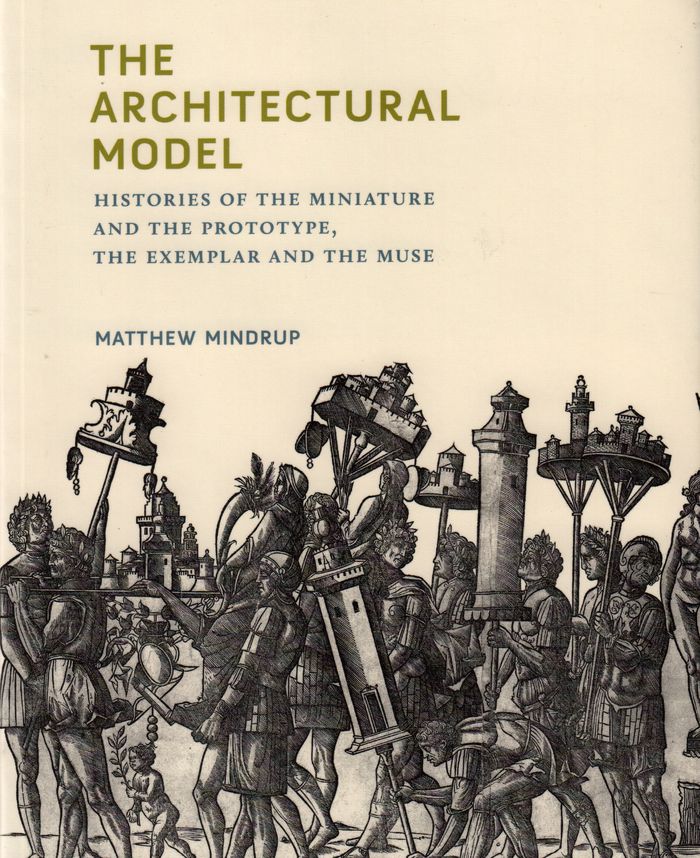
The architectural model: histories of the miniature and the prototype, the exemplar and the muse
The architectural model: histories of the miniature and the prototype, the exemplar and the muse
Actions:
Price:
$60.00
(available to order)
Summary:
For more than five hundred years, architects have employed three-dimensional models as tools to test, refine, and illustrate their ideas. But, as Matthew Mindrup shows, the uses of physical architectural models extend beyond mere representation. An architectural model can also simulate, instruct, inspire, and generate architectural designs. It can be, among other things,(...)
$60.00
(available to order)
Summary:
For more than five hundred years, architects have employed three-dimensional models as tools to test, refine, and illustrate their ideas. But, as Matthew Mindrup shows, the uses of physical architectural models extend beyond mere representation. An architectural model can also simulate, instruct, inspire, and generate architectural designs. It can be, among other things,(...)
Title:
The architectural model: histories of the miniature and the prototype, the exemplar and the muse
Actions:
Price:
$60.00
(available to order)
Summary:
For more than five hundred years, architects have employed three-dimensional models as tools to test, refine, and illustrate their ideas. But, as Matthew Mindrup shows, the uses of physical architectural models extend beyond mere representation. An architectural model can also simulate, instruct, inspire, and generate architectural designs. It can be, among other things, sign, souvenir, toy, funerary object, didactic tool, medium, or muse. In this book, Mindrup surveys the history of architectural models by investigating their uses, both theoretical and practical. Tracing the architectural model's development from antiquity to the present, Mindrup also offers an interpretive framework for understanding each of its applications in the context of time and place. He first examines models meant to portray extant, fantastic, or proposed structures, describing their use in ancient funerary or dedicatory practices, in which models are endowed with magical power; as a medium for architectural reverie and inspiration; and as prototypes for twentieth-century experimental designs. Mindrup then considers models that exemplify certain architectural uses, exploring the influence of Leon Battista Alberti's dictum that models be simple, lest they distract from the architect's ideas; analyzing the model as a generative tool; and investigating allegorical, analogical, and anagogical interpretations of models. Mindrup's histories show how the model can be a surrogate for the architectural structure itself, or for the experience of its formal, tactile, and sensory complexity; and beyond that, that the manipulation, play, experimentation, and dreaming enabled by models allow us to imagine architecture in new ways.
The architectural model: histories of the miniature and the prototype, the exemplar and the muse
Actions:
Price:
$60.00
(available to order)
Summary:
For more than five hundred years, architects have employed three-dimensional models as tools to test, refine, and illustrate their ideas. But, as Matthew Mindrup shows, the uses of physical architectural models extend beyond mere representation. An architectural model can also simulate, instruct, inspire, and generate architectural designs. It can be, among other things, sign, souvenir, toy, funerary object, didactic tool, medium, or muse. In this book, Mindrup surveys the history of architectural models by investigating their uses, both theoretical and practical. Tracing the architectural model's development from antiquity to the present, Mindrup also offers an interpretive framework for understanding each of its applications in the context of time and place. He first examines models meant to portray extant, fantastic, or proposed structures, describing their use in ancient funerary or dedicatory practices, in which models are endowed with magical power; as a medium for architectural reverie and inspiration; and as prototypes for twentieth-century experimental designs. Mindrup then considers models that exemplify certain architectural uses, exploring the influence of Leon Battista Alberti's dictum that models be simple, lest they distract from the architect's ideas; analyzing the model as a generative tool; and investigating allegorical, analogical, and anagogical interpretations of models. Mindrup's histories show how the model can be a surrogate for the architectural structure itself, or for the experience of its formal, tactile, and sensory complexity; and beyond that, that the manipulation, play, experimentation, and dreaming enabled by models allow us to imagine architecture in new ways.
Form:
books
books
Publication:
October 2019
October 2019
Subject:
Architectural Theory
Architectural Theory
Form:
books
books
Actions:
Price:
$49.95
(available in store)
Summary:
Point Saint-Charles, a historically white working-class neighbourhood with a strong Irish and French presence, and Little Burgundy, a multiracial neighbourhood that is home to the city’s English-speaking Black community, face each other across Montreal’s Lachine Canal, once an artery around which work and industry in Montreal were clustered and by which these two(...)
$49.95
(available in store)
Summary:
Point Saint-Charles, a historically white working-class neighbourhood with a strong Irish and French presence, and Little Burgundy, a multiracial neighbourhood that is home to the city’s English-speaking Black community, face each other across Montreal’s Lachine Canal, once an artery around which work and industry in Montreal were clustered and by which these two(...)
Title:
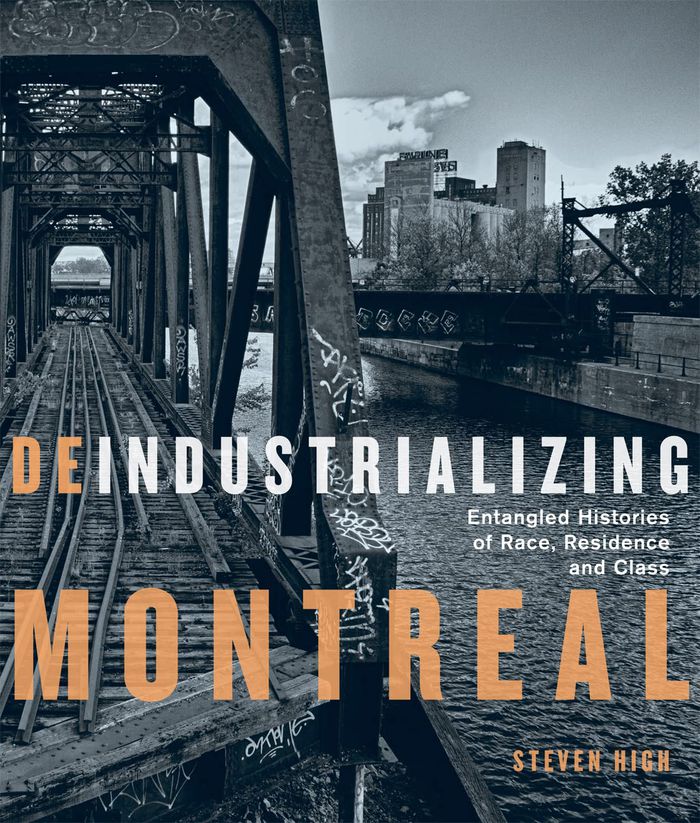
Deindustrializing Montreal: entangled histories of race, residence, and class
Actions:
Price:
$49.95
(available in store)
Summary:
Point Saint-Charles, a historically white working-class neighbourhood with a strong Irish and French presence, and Little Burgundy, a multiracial neighbourhood that is home to the city’s English-speaking Black community, face each other across Montreal’s Lachine Canal, once an artery around which work and industry in Montreal were clustered and by which these two communities were formed and divided. ''Deindustrializing Montreal'' challenges the deepening divergence of class and race analysis by recognizing the intimate relationship between capitalism, class struggles, and racial inequality. Fundamentally, deindustrialization is a process of physical and social ruination as well as part of a wider political project that leaves working-class communities impoverished and demoralized. The structural violence of capitalism occurs gradually and out of sight, but it doesn’t play out the same for everyone. Point Saint-Charles was left to rot until it was revalorized by gentrification, whereas Little Burgundy was torn apart by urban renewal and highway construction. This historical divergence had profound consequences in how urban change has been experienced, understood, and remembered. Drawing extensive interviews, a massive and varied archive of imagery, and original photography by David Lewis into a complex chorus, Steven High brings these communities to life, tracing their history from their earliest years to their decline and their current reality. He extends the analysis of deindustrialization, often focused on single-industry towns, to cities that have seemingly made the post-industrial transition.
Deindustrializing Montreal: entangled histories of race, residence, and class
Actions:
Price:
$49.95
(available in store)
Summary:
Point Saint-Charles, a historically white working-class neighbourhood with a strong Irish and French presence, and Little Burgundy, a multiracial neighbourhood that is home to the city’s English-speaking Black community, face each other across Montreal’s Lachine Canal, once an artery around which work and industry in Montreal were clustered and by which these two communities were formed and divided. ''Deindustrializing Montreal'' challenges the deepening divergence of class and race analysis by recognizing the intimate relationship between capitalism, class struggles, and racial inequality. Fundamentally, deindustrialization is a process of physical and social ruination as well as part of a wider political project that leaves working-class communities impoverished and demoralized. The structural violence of capitalism occurs gradually and out of sight, but it doesn’t play out the same for everyone. Point Saint-Charles was left to rot until it was revalorized by gentrification, whereas Little Burgundy was torn apart by urban renewal and highway construction. This historical divergence had profound consequences in how urban change has been experienced, understood, and remembered. Drawing extensive interviews, a massive and varied archive of imagery, and original photography by David Lewis into a complex chorus, Steven High brings these communities to life, tracing their history from their earliest years to their decline and their current reality. He extends the analysis of deindustrialization, often focused on single-industry towns, to cities that have seemingly made the post-industrial transition.
Form:
books
books
Publication:
May 2022
May 2022
Subject:
Architecture de Montréal
Architecture de Montréal


