


3003 Results
Form:
books
books
Actions:
Price:
$300.00
(available to order)
Summary:
To study Gio Ponti’s prolific body of work is to appreciate the clear, unifying vision behind a complex creative universe. A synthesis of the arts, his creations expand intuitively with the Italian grandeur and studied lightness that defined his iconic style. Ponti’s rare capacity to move seamlessly between scales allowed him to approach the design of a teaspoon with the(...)
$300.00
(available to order)
Summary:
To study Gio Ponti’s prolific body of work is to appreciate the clear, unifying vision behind a complex creative universe. A synthesis of the arts, his creations expand intuitively with the Italian grandeur and studied lightness that defined his iconic style. Ponti’s rare capacity to move seamlessly between scales allowed him to approach the design of a teaspoon with the(...)
Title:
Gio Ponti, Life and works 1923-1979
Actions:
Price:
$300.00
(available to order)
Summary:
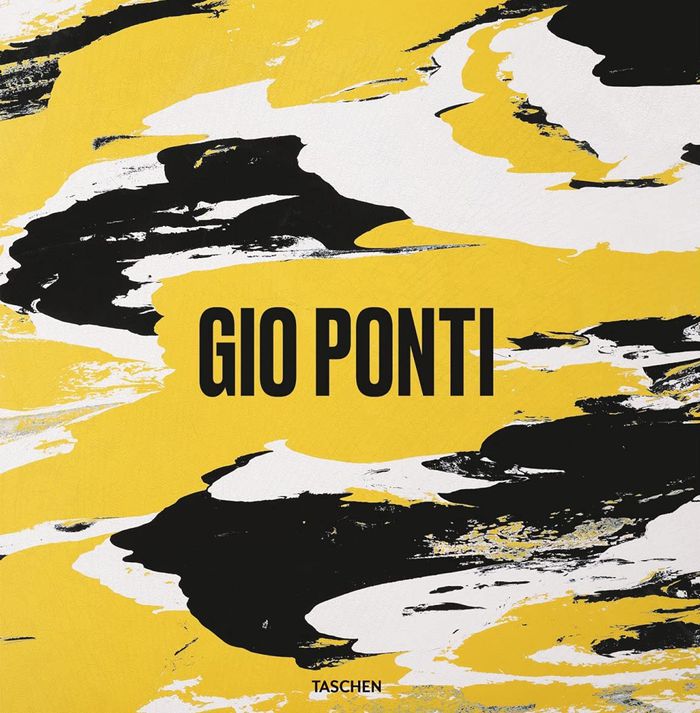
To study Gio Ponti’s prolific body of work is to appreciate the clear, unifying vision behind a complex creative universe. A synthesis of the arts, his creations expand intuitively with the Italian grandeur and studied lightness that defined his iconic style. Ponti’s rare capacity to move seamlessly between scales allowed him to approach the design of a teaspoon with the same conviction as he did an entire city. He was as much an architect and designer as he was a publisher, poet, and man. A treasure in its own regard, his contribution is also a distinctive landmark of Italy’s mid-century Renaissance and the modernist values it sought to realize. This new book is the most comprehensive account of Ponti’s work to date, unprecedented in scale and scope. It tracks the development of his oeuvre over 6 decades, with 136 projects indexed and reproduced in high resolution, each object framed by the context in which Ponti had created it. Like windows onto his elusive life, unpublished materials and candid imagery create new dialogues between his famous masterpieces and his lesser-known feats. A rich layer of texts, featuring an extensive biographical essay by Stefano Casciani, was produced in close collaboration with the Gio Ponti Archives offering an intimate insight on his life’s work. Materializing Ponti’s core philosophy of modernity, this book presents architecture as a performing object, a "self-illuminating" stage for his humanistic art de vivre and boundless creativity.
Gio Ponti, Life and works 1923-1979
Actions:
Price:
$300.00
(available to order)
Summary:
To study Gio Ponti’s prolific body of work is to appreciate the clear, unifying vision behind a complex creative universe. A synthesis of the arts, his creations expand intuitively with the Italian grandeur and studied lightness that defined his iconic style. Ponti’s rare capacity to move seamlessly between scales allowed him to approach the design of a teaspoon with the same conviction as he did an entire city. He was as much an architect and designer as he was a publisher, poet, and man. A treasure in its own regard, his contribution is also a distinctive landmark of Italy’s mid-century Renaissance and the modernist values it sought to realize. This new book is the most comprehensive account of Ponti’s work to date, unprecedented in scale and scope. It tracks the development of his oeuvre over 6 decades, with 136 projects indexed and reproduced in high resolution, each object framed by the context in which Ponti had created it. Like windows onto his elusive life, unpublished materials and candid imagery create new dialogues between his famous masterpieces and his lesser-known feats. A rich layer of texts, featuring an extensive biographical essay by Stefano Casciani, was produced in close collaboration with the Gio Ponti Archives offering an intimate insight on his life’s work. Materializing Ponti’s core philosophy of modernity, this book presents architecture as a performing object, a "self-illuminating" stage for his humanistic art de vivre and boundless creativity.
Form:
books
books
Publication:
June 2021
June 2021
Subject:
Design Monographs
Design Monographs
Form:
books
books
Actions:
Price:
$74.95
(available to order)
Summary:
In an era of globalisation, there is an unprecedented scale and nature of contemporary migrant flows, as well as the flow of goods, capital, ideas, images and technology. This sheer number and mobility of contemporary migrants clearly has massively disruptive effects on traditional modes of dwelling however they were manifest in everyday life. But contemporary migrancy(...)
$74.95
(available to order)
Summary:
In an era of globalisation, there is an unprecedented scale and nature of contemporary migrant flows, as well as the flow of goods, capital, ideas, images and technology. This sheer number and mobility of contemporary migrants clearly has massively disruptive effects on traditional modes of dwelling however they were manifest in everyday life. But contemporary migrancy(...)
Title:
Drifting : architecture and migrancy
Actions:
Price:
$74.95
(available to order)
Summary:
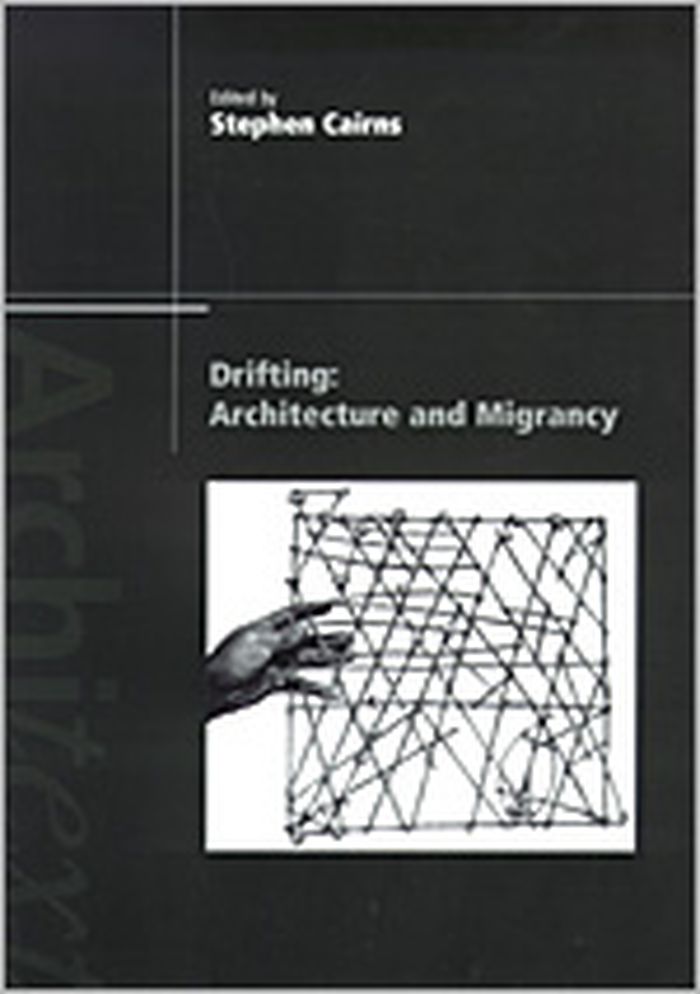
In an era of globalisation, there is an unprecedented scale and nature of contemporary migrant flows, as well as the flow of goods, capital, ideas, images and technology. This sheer number and mobility of contemporary migrants clearly has massively disruptive effects on traditional modes of dwelling however they were manifest in everyday life. But contemporary migrancy also has important consequences for the way dwelling is conceptualised more generally. This book is concerned with the modes of dwelling that emerge through migrancy; it is also concerned with the effects these modes of dwelling have for dominant conceptions of space and place; and finally, it is interested in the kinds of architectures that become possible if those effects are taken seriously. This book inspects the intersections between architectures of place and flows of migrancy. It does so without seeking to defend the idea of place, nor lament its passing. Rather, this book is an exploration of the often complex and unorthodox modes of dwelling that are emerging precisely from within the ruins of the idea of place. This exploration is informed by post-structuralist analyses of architecture and urbanism, and their representation in media such as film. It focuses on the Pacific Rim as an intensified zone of global flows. Within the Pacific Rim there are complex tensions between the new economies of Asia and the settler nations of Canada, the US, Australia and New Zealand. These tensions produce difficulties for the narrative of the nation state, and herald conditions that no longer conform to the geo-political norms of the old world.
Drifting : architecture and migrancy
Actions:
Price:
$74.95
(available to order)
Summary:
In an era of globalisation, there is an unprecedented scale and nature of contemporary migrant flows, as well as the flow of goods, capital, ideas, images and technology. This sheer number and mobility of contemporary migrants clearly has massively disruptive effects on traditional modes of dwelling however they were manifest in everyday life. But contemporary migrancy also has important consequences for the way dwelling is conceptualised more generally. This book is concerned with the modes of dwelling that emerge through migrancy; it is also concerned with the effects these modes of dwelling have for dominant conceptions of space and place; and finally, it is interested in the kinds of architectures that become possible if those effects are taken seriously. This book inspects the intersections between architectures of place and flows of migrancy. It does so without seeking to defend the idea of place, nor lament its passing. Rather, this book is an exploration of the often complex and unorthodox modes of dwelling that are emerging precisely from within the ruins of the idea of place. This exploration is informed by post-structuralist analyses of architecture and urbanism, and their representation in media such as film. It focuses on the Pacific Rim as an intensified zone of global flows. Within the Pacific Rim there are complex tensions between the new economies of Asia and the settler nations of Canada, the US, Australia and New Zealand. These tensions produce difficulties for the narrative of the nation state, and herald conditions that no longer conform to the geo-political norms of the old world.
Form:
books
books
Publication:
September 2003, London / New York
September 2003, London / New York
Subject:
Architectural Theory
Architectural Theory
Form:
books
books
Title:
Donald Judd
Donald Judd
Actions:
Price:
$65.00
(available to order)
Summary:
One of the most influential American artists of the post-war period, Donald Judd changed the course of modern sculpture. Beginning as an art critic and then a painter, Judd moved into three dimensions with the box-like structures he produced in the early 1960s, either arranged on the gallery floor or mounted on the wall. Initially constructed by hand, the sculptures were(...)
$65.00
(available to order)
Summary:
One of the most influential American artists of the post-war period, Donald Judd changed the course of modern sculpture. Beginning as an art critic and then a painter, Judd moved into three dimensions with the box-like structures he produced in the early 1960s, either arranged on the gallery floor or mounted on the wall. Initially constructed by hand, the sculptures were(...)
Title:
Donald Judd
Actions:
Price:
$65.00
(available to order)
Summary:
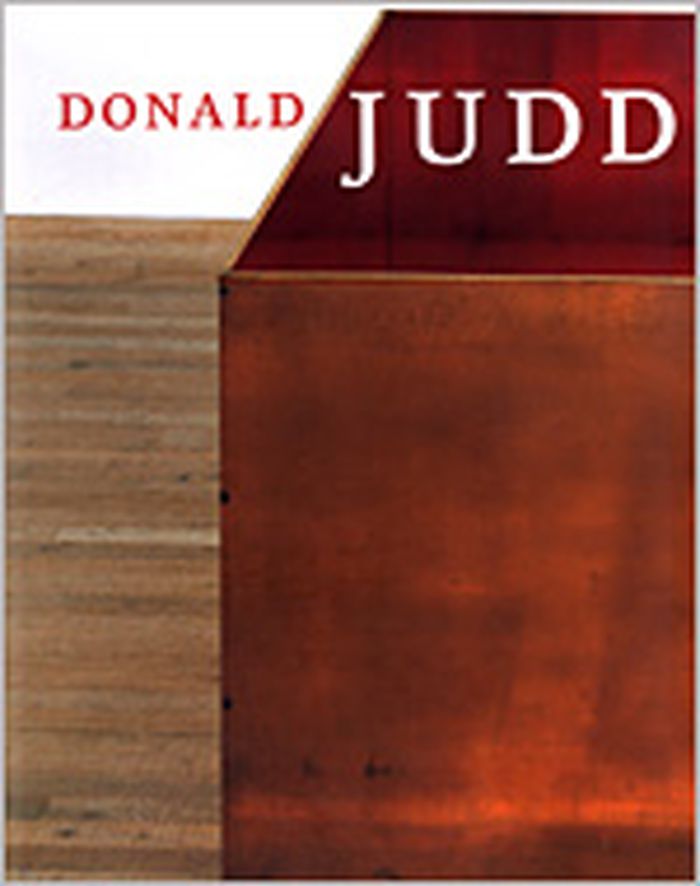
One of the most influential American artists of the post-war period, Donald Judd changed the course of modern sculpture. Beginning as an art critic and then a painter, Judd moved into three dimensions with the box-like structures he produced in the early 1960s, either arranged on the gallery floor or mounted on the wall. Initially constructed by hand, the sculptures were later industrially manufactured in galvanized iron, steel, plexiglass, and plywood. His use of vibrant color, polished and reflective metals, and brightly hued lacquer confounded and continues to confound expectations of what "minimalist" sculpture should look like. This lavishly illustrated survey features 41 works from collections around the world, many of them large scale, each illustrated with full catalogue entries alongside many other major works by Judd. Contributors Nicholas Serota (Director of the Tate), Rudi Fuchs (former Director of The Stedelijk Museum, Amsterdam), American critics Richard Schiff and David Raskin, and British artist and critic David Batchelor explore the conflicts between previous critical interpretations of Judd and his own philosophical, political, and moral understanding of his work. Judd's critical response to the work of other artists is examined, as is the importance of color to his work, and his reaction to new man-made materials and artificially generated color in the late-20th-century environment. A section on Judd's installations at Marfa in Texas, and an extensive new chronology, compiled by Judd's assistant, Jeff Kopie, are also included. "Donald Judd" compromises the most thorough and up-to-date publication on Judd in print today.
Donald Judd
Actions:
Price:
$65.00
(available to order)
Summary:
One of the most influential American artists of the post-war period, Donald Judd changed the course of modern sculpture. Beginning as an art critic and then a painter, Judd moved into three dimensions with the box-like structures he produced in the early 1960s, either arranged on the gallery floor or mounted on the wall. Initially constructed by hand, the sculptures were later industrially manufactured in galvanized iron, steel, plexiglass, and plywood. His use of vibrant color, polished and reflective metals, and brightly hued lacquer confounded and continues to confound expectations of what "minimalist" sculpture should look like. This lavishly illustrated survey features 41 works from collections around the world, many of them large scale, each illustrated with full catalogue entries alongside many other major works by Judd. Contributors Nicholas Serota (Director of the Tate), Rudi Fuchs (former Director of The Stedelijk Museum, Amsterdam), American critics Richard Schiff and David Raskin, and British artist and critic David Batchelor explore the conflicts between previous critical interpretations of Judd and his own philosophical, political, and moral understanding of his work. Judd's critical response to the work of other artists is examined, as is the importance of color to his work, and his reaction to new man-made materials and artificially generated color in the late-20th-century environment. A section on Judd's installations at Marfa in Texas, and an extensive new chronology, compiled by Judd's assistant, Jeff Kopie, are also included. "Donald Judd" compromises the most thorough and up-to-date publication on Judd in print today.
Form:
books
books
Publication:
March 2004, London
March 2004, London
Subject:
Contemporary Art Monographs
Contemporary Art Monographs
Form:
books
books
Actions:
Price:
$33.95
(available to order)
Summary:
Intrigued and inspired by the neon beer signs on shopfronts in his San Francisco neighborhood, Bruce Nauman created his first neon piece, "Window or wall sign", in 1967. He wanted, he said, to achieve "an art that would kind of disappear - that was supposed to not quite look like art." Light offered Nauman a medium both elusive and effervescent, but one that could also(...)
$33.95
(available to order)
Summary:
Intrigued and inspired by the neon beer signs on shopfronts in his San Francisco neighborhood, Bruce Nauman created his first neon piece, "Window or wall sign", in 1967. He wanted, he said, to achieve "an art that would kind of disappear - that was supposed to not quite look like art." Light offered Nauman a medium both elusive and effervescent, but one that could also(...)
Subject:
Contemporary Art Monographs
Contemporary Art Monographs
Publication:
January 2006, Milwaukee
January 2006, Milwaukee
Title:
Elusive signs : Bruce Nauman works with light
Actions:
Price:
$33.95
(available to order)
Summary:
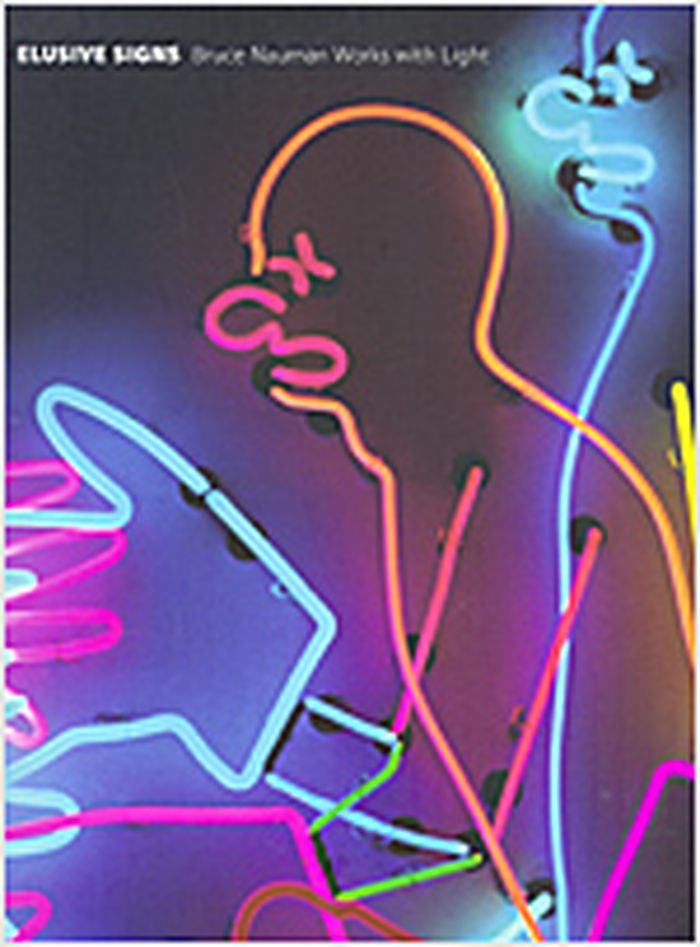
Intrigued and inspired by the neon beer signs on shopfronts in his San Francisco neighborhood, Bruce Nauman created his first neon piece, "Window or wall sign", in 1967. He wanted, he said, to achieve "an art that would kind of disappear - that was supposed to not quite look like art." Light offered Nauman a medium both elusive and effervescent, but one that could also aggressively convey a message. Over the first three decades of his career, Nauman used the medium of light to explore the twists and turns of perception, logic, and meaning with the earnest playfulness that characterizes all his art. "Elusive signs" focuses on the discrete body of Nauman's work that uses neon and fluorescent light in signs and room installations, and includes images of nearly all Nauman's work with light. After "Window or wall sign", Nauman embarked on a series of neons that grappled with the semiotics of body and identity, and with "My name as though it were written on the surface of the moon" (1968), he forces the viewer to contemplate the role of naming in forming identity. Language - signs and symbols - plays an important role in Nauman's art. His later neon works emphasize the neon as a sign, presenting provocative twists of language and offering harsh and humorous sociopolitical commentary in such pieces as "Run from fear, fun from rear" (1972). This series culminates in the monumental, billboard-size "One hundred live and die" (1984), which employs overwhelming scale to bombard the viewer with sardonic aphorisms. In the essays that accompany the images of Nauman's work, Joseph Ketner II of the Milwaukee Art Museum (which originated the exhibit this book accompanies) and critics Janet Kraynak and Gregory Volk analyze the works in light both as a body of work and as an access point to Nauman's entire career.
Elusive signs : Bruce Nauman works with light
Actions:
Price:
$33.95
(available to order)
Summary:
Intrigued and inspired by the neon beer signs on shopfronts in his San Francisco neighborhood, Bruce Nauman created his first neon piece, "Window or wall sign", in 1967. He wanted, he said, to achieve "an art that would kind of disappear - that was supposed to not quite look like art." Light offered Nauman a medium both elusive and effervescent, but one that could also aggressively convey a message. Over the first three decades of his career, Nauman used the medium of light to explore the twists and turns of perception, logic, and meaning with the earnest playfulness that characterizes all his art. "Elusive signs" focuses on the discrete body of Nauman's work that uses neon and fluorescent light in signs and room installations, and includes images of nearly all Nauman's work with light. After "Window or wall sign", Nauman embarked on a series of neons that grappled with the semiotics of body and identity, and with "My name as though it were written on the surface of the moon" (1968), he forces the viewer to contemplate the role of naming in forming identity. Language - signs and symbols - plays an important role in Nauman's art. His later neon works emphasize the neon as a sign, presenting provocative twists of language and offering harsh and humorous sociopolitical commentary in such pieces as "Run from fear, fun from rear" (1972). This series culminates in the monumental, billboard-size "One hundred live and die" (1984), which employs overwhelming scale to bombard the viewer with sardonic aphorisms. In the essays that accompany the images of Nauman's work, Joseph Ketner II of the Milwaukee Art Museum (which originated the exhibit this book accompanies) and critics Janet Kraynak and Gregory Volk analyze the works in light both as a body of work and as an access point to Nauman's entire career.
Form:
books
books
Publication:
January 2006, Milwaukee
January 2006, Milwaukee
Subject:
Contemporary Art Monographs
Contemporary Art Monographs
Form:
books
books
Title:
Absence : J. Meejin Yoon
Absence : J. Meejin Yoon
Actions:
Price:
$45.00
(available to order)
Summary:
Both a book and a sculptural object, "Absence" is a memorial to the twin towers of the World Trade Center. Yoon, an architect and designer who is currently an Assistant Professor of Architecture at the Massachusetts Institute of Technology, chose not to produce a traditional design proposal for the World Trade Center Memorial Competition. Instead she created a(...)
$45.00
(available to order)
Summary:
Both a book and a sculptural object, "Absence" is a memorial to the twin towers of the World Trade Center. Yoon, an architect and designer who is currently an Assistant Professor of Architecture at the Massachusetts Institute of Technology, chose not to produce a traditional design proposal for the World Trade Center Memorial Competition. Instead she created a(...)
Title:
Absence : J. Meejin Yoon
Actions:
Price:
$45.00
(available to order)
Summary:
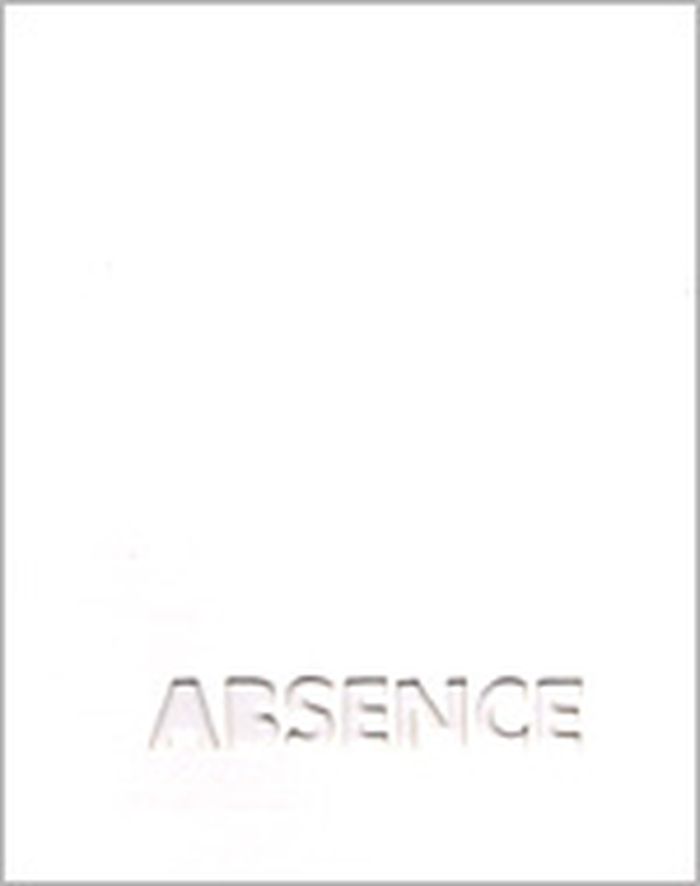
Both a book and a sculptural object, "Absence" is a memorial to the twin towers of the World Trade Center. Yoon, an architect and designer who is currently an Assistant Professor of Architecture at the Massachusetts Institute of Technology, chose not to produce a traditional design proposal for the World Trade Center Memorial Competition. Instead she created a non-architectural, non site-specific space of remembrance : a portable personal memorial in the form of book. At almost two pounds, "Absence" has a considerable physical presence, but it is in every way the ghost of a presence, and it is this ghostliness that gives it its particular emotional weight. A solid white block of thick stock cardboard pages, the book’s only "text" consists of one pinhole and two identical squares die-cut into each of its one hundred and twenty pages – one for each story of the towers including the antenna mast. These removed elements lead the reader floor by floor through the missing buildings towards the final page where the footprint of the entire site of the World Trade Center is die-cut into a delicate lattice of absent structures. Of all of the proposed monuments and grand designs for the twin towers to emerge in the last two years, "Absence" is remarkable for its employment of an under-used strategy : restraint. The simplicity of Yoon’s materials and her use of repetition speak, without words, about unspeakable loss. As a scale model of a vanished architectural site, it operates on a larger cultural level by commemorating the site itself. Unpaginated.
Absence : J. Meejin Yoon
Actions:
Price:
$45.00
(available to order)
Summary:
Both a book and a sculptural object, "Absence" is a memorial to the twin towers of the World Trade Center. Yoon, an architect and designer who is currently an Assistant Professor of Architecture at the Massachusetts Institute of Technology, chose not to produce a traditional design proposal for the World Trade Center Memorial Competition. Instead she created a non-architectural, non site-specific space of remembrance : a portable personal memorial in the form of book. At almost two pounds, "Absence" has a considerable physical presence, but it is in every way the ghost of a presence, and it is this ghostliness that gives it its particular emotional weight. A solid white block of thick stock cardboard pages, the book’s only "text" consists of one pinhole and two identical squares die-cut into each of its one hundred and twenty pages – one for each story of the towers including the antenna mast. These removed elements lead the reader floor by floor through the missing buildings towards the final page where the footprint of the entire site of the World Trade Center is die-cut into a delicate lattice of absent structures. Of all of the proposed monuments and grand designs for the twin towers to emerge in the last two years, "Absence" is remarkable for its employment of an under-used strategy : restraint. The simplicity of Yoon’s materials and her use of repetition speak, without words, about unspeakable loss. As a scale model of a vanished architectural site, it operates on a larger cultural level by commemorating the site itself. Unpaginated.
Form:
books
books
Publication:
September 2003, New York
September 2003, New York
Subject:
Contemporary Art Monographs
Contemporary Art Monographs
Form:
books
books
Title:
Gunnar Asplund
Gunnar Asplund
Actions:
Price:
$99.95
(available to order)
Summary:
Although a contemporary of Walter Gropius and Le Corbusier, Asplund pursued an architecture that does not fit easily into their view of Modernism as a movement that rejected the applied styles and ornamentation of the nineteenth century. Instead, Asplund was at ease with classical or vernacular elements blending with modernist ideals, and displayed a sensitive(...)
$99.95
(available to order)
Summary:
Although a contemporary of Walter Gropius and Le Corbusier, Asplund pursued an architecture that does not fit easily into their view of Modernism as a movement that rejected the applied styles and ornamentation of the nineteenth century. Instead, Asplund was at ease with classical or vernacular elements blending with modernist ideals, and displayed a sensitive(...)
Title:
Gunnar Asplund
Actions:
Price:
$99.95
(available to order)
Summary:
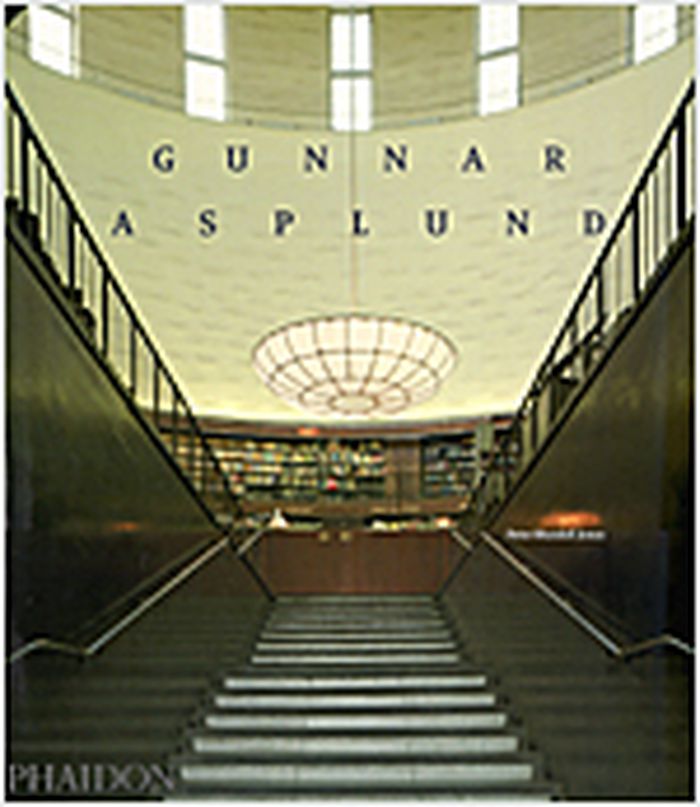
Although a contemporary of Walter Gropius and Le Corbusier, Asplund pursued an architecture that does not fit easily into their view of Modernism as a movement that rejected the applied styles and ornamentation of the nineteenth century. Instead, Asplund was at ease with classical or vernacular elements blending with modernist ideals, and displayed a sensitive understanding of the relationship between architecture and its surrounding landscape. His abilities are amply demonstrated in masterpieces like the Woodland Cemetery. In 1915 Asplund and Sigurd Lewerentz won the competition to plan a new cemetery for Stockholm. Their romantic plan, in which a symbolically straight, narrow pathway abruptly curves blindly away into the forest, and with open fields capped by burial-mound-like hillocks, earned both of them further commissions for buildings within the cemetery. Asplund’s Woodland Chapel of 1920 is tucked into the forest and uses classical elements such as Doric columns, but sparingly and in unusual ways, while manipulating scale in ways that further the spiritual and contemplative nature of the building. The Crematorium and Monument Hall of 1935 are dignified and powerful, unornamented but not austere, to offer comfort to those who use them. The Gothenburg Law Courts, another critical work which was finally completed in 1937, shows how Asplund relates the architecture of Modernism to a historical plan and façade. Buildings such as the architect’s own summer house at Stennäs and the crematoria at Kviberg and Skövde, dating from the later part of his life when he had begun to embrace Modernism, still show traditional classical and vernacular influences and are evidence that not all forms of Modernism constituted a fresh start.
Gunnar Asplund
Actions:
Price:
$99.95
(available to order)
Summary:
Although a contemporary of Walter Gropius and Le Corbusier, Asplund pursued an architecture that does not fit easily into their view of Modernism as a movement that rejected the applied styles and ornamentation of the nineteenth century. Instead, Asplund was at ease with classical or vernacular elements blending with modernist ideals, and displayed a sensitive understanding of the relationship between architecture and its surrounding landscape. His abilities are amply demonstrated in masterpieces like the Woodland Cemetery. In 1915 Asplund and Sigurd Lewerentz won the competition to plan a new cemetery for Stockholm. Their romantic plan, in which a symbolically straight, narrow pathway abruptly curves blindly away into the forest, and with open fields capped by burial-mound-like hillocks, earned both of them further commissions for buildings within the cemetery. Asplund’s Woodland Chapel of 1920 is tucked into the forest and uses classical elements such as Doric columns, but sparingly and in unusual ways, while manipulating scale in ways that further the spiritual and contemplative nature of the building. The Crematorium and Monument Hall of 1935 are dignified and powerful, unornamented but not austere, to offer comfort to those who use them. The Gothenburg Law Courts, another critical work which was finally completed in 1937, shows how Asplund relates the architecture of Modernism to a historical plan and façade. Buildings such as the architect’s own summer house at Stennäs and the crematoria at Kviberg and Skövde, dating from the later part of his life when he had begun to embrace Modernism, still show traditional classical and vernacular influences and are evidence that not all forms of Modernism constituted a fresh start.
Form:
books
books
Publication:
October 2004, London
October 2004, London
Subject:
Architecture Monographs
Architecture Monographs
Form:
books
books
Actions:
Price:
$41.95
(available to order)
Summary:
The concept of "the city" — as well as "the state" and "the nation state" — is passé, agree contributors to this insightful book. The new scale for considering economic strength and growth opportunities is "the megaregion", a network of metropolitan centers and their surrounding areas that are spatially and functionally linked through environmental, economic, and(...)
$41.95
(available to order)
Summary:
The concept of "the city" — as well as "the state" and "the nation state" — is passé, agree contributors to this insightful book. The new scale for considering economic strength and growth opportunities is "the megaregion", a network of metropolitan centers and their surrounding areas that are spatially and functionally linked through environmental, economic, and(...)
Title:
Megaregions ; planning for global competitiveness
Actions:
Price:
$41.95
(available to order)
Summary:
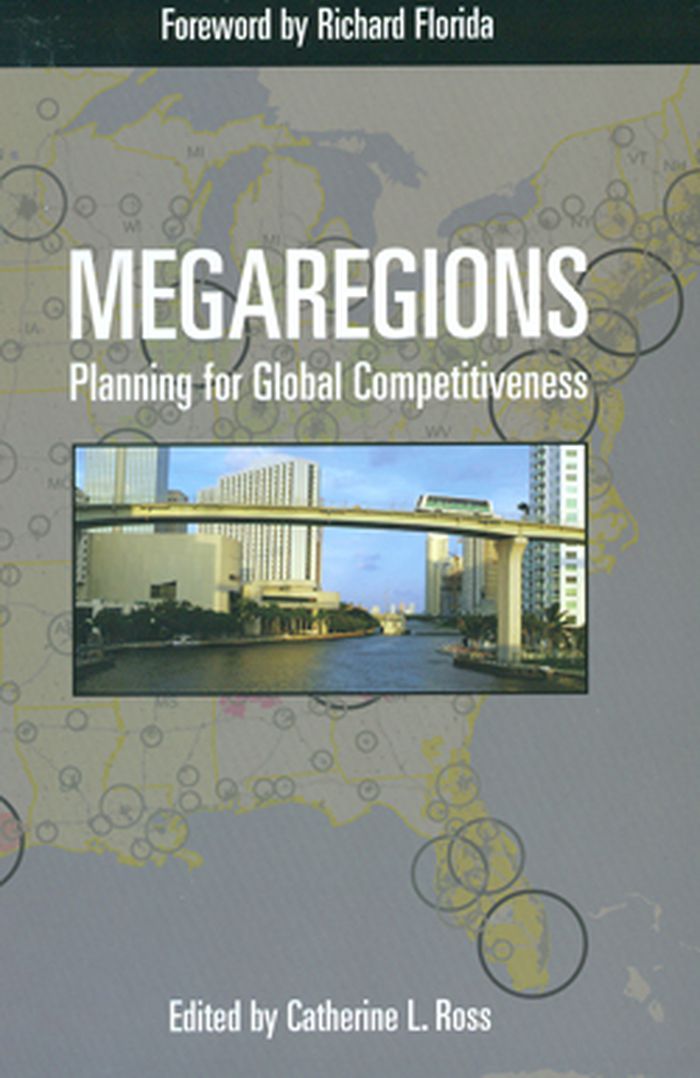
The concept of "the city" — as well as "the state" and "the nation state" — is passé, agree contributors to this insightful book. The new scale for considering economic strength and growth opportunities is "the megaregion", a network of metropolitan centers and their surrounding areas that are spatially and functionally linked through environmental, economic, and infrastructure interactions. Recently a great deal of attention has been focused on the emergence of the European Union and on European spatial planning, which has boosted the region’s competitiveness. Megaregions applies these emerging concepts in an American context. It addresses critical questions for our future : What are the spatial implications of local, regional, national, and global trends within the context of sustainability, economic competitiveness, and social equity? How can we address housing, transportation, and infrastructure needs in growing megaregions? How can we develop and implement the policy changes necessary to make viable, livable megaregions? By the year 2050, megaregions will contain two-thirds of the U.S. population. Given the projected growth of the U.S. population and the accompanying geographic changes, this forward-looking book argues that U.S. planners and policymakers must examine and implement the megaregion as a new and appropriate framework. Contributors, all of whom are leaders in their academic and professional specialties, address the most critical issues confronting the U.S. over the next fifty years. At the same time, they examine ways in which the idea of megaregions might help address our concerns about equity, the economy, and the environment. Together, these essays define the theoretical, analytical, and operational underpinnings of a new structure that could respond to the anticipated upheavals in U.S. population and living patterns.
Megaregions ; planning for global competitiveness
Actions:
Price:
$41.95
(available to order)
Summary:
The concept of "the city" — as well as "the state" and "the nation state" — is passé, agree contributors to this insightful book. The new scale for considering economic strength and growth opportunities is "the megaregion", a network of metropolitan centers and their surrounding areas that are spatially and functionally linked through environmental, economic, and infrastructure interactions. Recently a great deal of attention has been focused on the emergence of the European Union and on European spatial planning, which has boosted the region’s competitiveness. Megaregions applies these emerging concepts in an American context. It addresses critical questions for our future : What are the spatial implications of local, regional, national, and global trends within the context of sustainability, economic competitiveness, and social equity? How can we address housing, transportation, and infrastructure needs in growing megaregions? How can we develop and implement the policy changes necessary to make viable, livable megaregions? By the year 2050, megaregions will contain two-thirds of the U.S. population. Given the projected growth of the U.S. population and the accompanying geographic changes, this forward-looking book argues that U.S. planners and policymakers must examine and implement the megaregion as a new and appropriate framework. Contributors, all of whom are leaders in their academic and professional specialties, address the most critical issues confronting the U.S. over the next fifty years. At the same time, they examine ways in which the idea of megaregions might help address our concerns about equity, the economy, and the environment. Together, these essays define the theoretical, analytical, and operational underpinnings of a new structure that could respond to the anticipated upheavals in U.S. population and living patterns.
Form:
books
books
Publication:
June 2009
June 2009
Subject:
Urban Theory
Urban Theory
Form:
books
books
Actions:
Price:
$75.00
(available to order)
Summary:
Working across an unusually broad range of media, including painting, photography, film, drawing and sculpture, Sigmar Polke is widely regarded as one of the most influential and experimental artists of the post-war generation. His irreverent wit and promiscuous intelligence, coupled with his exceptional grasp of the properties of his materials, provided the foundation(...)
$75.00
(available to order)
Summary:
Working across an unusually broad range of media, including painting, photography, film, drawing and sculpture, Sigmar Polke is widely regarded as one of the most influential and experimental artists of the post-war generation. His irreverent wit and promiscuous intelligence, coupled with his exceptional grasp of the properties of his materials, provided the foundation(...)
Title:
Alibis Sigmar Polke 1963-2010
Actions:
Price:
$75.00
(available to order)
Summary:
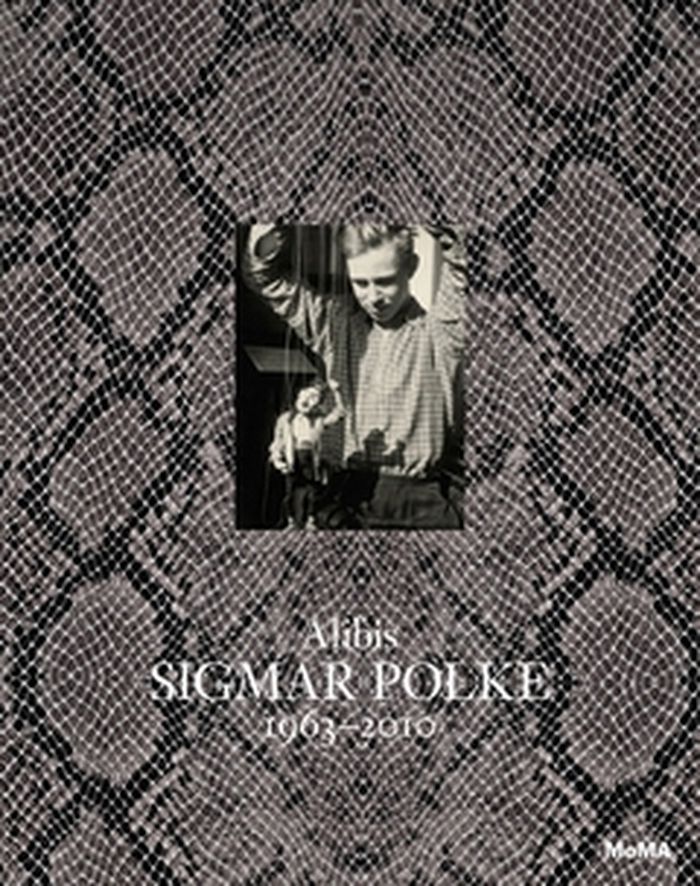
Working across an unusually broad range of media, including painting, photography, film, drawing and sculpture, Sigmar Polke is widely regarded as one of the most influential and experimental artists of the post-war generation. His irreverent wit and promiscuous intelligence, coupled with his exceptional grasp of the properties of his materials, provided the foundation for his punishing critiques of the conventions of art history and social behavior. Experimenting wildly with materials and tools as varied as meteor dust and the xerox machine, Polke made work of both an intimate and monumental scale, drawn from sources as diverse as newspaper headlines and Durer prints. Polke avoided any one signature style, a fluid method best defined by the word "alibi," which means "in or at another place." This also is a reminder of the deflection of responsibility which shaped German behavior during the Nazi period, compelling Polke's generation to reinvent the role of the artist. Published in conjunction with "Alibis: Sigmar Polke 1963-2010," the first exhibition to encompass the artist's work across all media, this richly illustrated publication provides an overview of his cross-disciplinary innovations and career. Essays by Kathy Halbreich, Associate Director of The Museum of Modern Art; Mark Godfrey, Curator of International Art, Tate Modern; and a range of scholars and artists examine the full range of Polke's exceptionally inventive oeuvre and place his enormous skepticism of all social, political and artistic conventions against German history.
Alibis Sigmar Polke 1963-2010
Actions:
Price:
$75.00
(available to order)
Summary:
Working across an unusually broad range of media, including painting, photography, film, drawing and sculpture, Sigmar Polke is widely regarded as one of the most influential and experimental artists of the post-war generation. His irreverent wit and promiscuous intelligence, coupled with his exceptional grasp of the properties of his materials, provided the foundation for his punishing critiques of the conventions of art history and social behavior. Experimenting wildly with materials and tools as varied as meteor dust and the xerox machine, Polke made work of both an intimate and monumental scale, drawn from sources as diverse as newspaper headlines and Durer prints. Polke avoided any one signature style, a fluid method best defined by the word "alibi," which means "in or at another place." This also is a reminder of the deflection of responsibility which shaped German behavior during the Nazi period, compelling Polke's generation to reinvent the role of the artist. Published in conjunction with "Alibis: Sigmar Polke 1963-2010," the first exhibition to encompass the artist's work across all media, this richly illustrated publication provides an overview of his cross-disciplinary innovations and career. Essays by Kathy Halbreich, Associate Director of The Museum of Modern Art; Mark Godfrey, Curator of International Art, Tate Modern; and a range of scholars and artists examine the full range of Polke's exceptionally inventive oeuvre and place his enormous skepticism of all social, political and artistic conventions against German history.
Form:
books
books
Publication:
April 2014
April 2014
Subject:
Contemporary Art Monographs
Contemporary Art Monographs
Form:
journals and magazines
journals and magazines
Title:
OASE #84: Models Maquettes
OASE #84: Models Maquettes
Actions:
Price:
$39.00
(available to order)
Summary:
In recent decades models have made a contribution to architectural discourse that should not be underestimated. Christophe Van Gerrewey considers the models in OMA’s oeuvre and ascertains that OMA’s models always take on a life of their own, turning into ‘a realisation of what architecture promises, yet can never attain itself’. For example, the two plaster models of(...)
$39.00
(available to order)
Summary:
In recent decades models have made a contribution to architectural discourse that should not be underestimated. Christophe Van Gerrewey considers the models in OMA’s oeuvre and ascertains that OMA’s models always take on a life of their own, turning into ‘a realisation of what architecture promises, yet can never attain itself’. For example, the two plaster models of(...)
Title:
OASE #84: Models Maquettes
Actions:
Price:
$39.00
(available to order)
Summary:
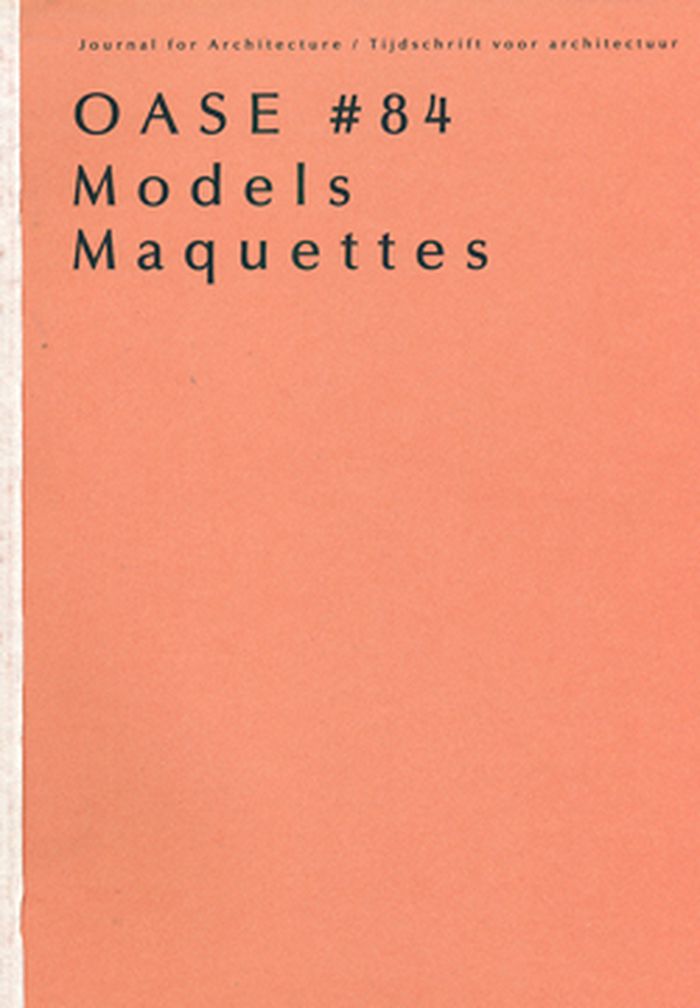
In recent decades models have made a contribution to architectural discourse that should not be underestimated. Christophe Van Gerrewey considers the models in OMA’s oeuvre and ascertains that OMA’s models always take on a life of their own, turning into ‘a realisation of what architecture promises, yet can never attain itself’. For example, the two plaster models of the Très Grande Bibliothèque in Paris afforded new insights into a space that can be read both as mass and as counter-mass, while the model of the cruise terminal in Zeebrugge exemplified the power of the iconic form. OASE 84 devotes considerable attention to (architectural) models that play an important part in the work of various artists as well, like in the work of Mike Kelley and Thomas Demand. These models are hardly ever meant to be realised on a different scale elsewhere; they work with the dualistic connotations of the model directly. Although the two disciplines have markedly different motives for using models, we are confident that the cross-pollination brought about here will generate novel insights about the model’s significance and possibilities. With contributions by Jacob Bil, Adam Caruso, Thomas Demand, Job Floris, Kersten Geers, Christophe Van Gerrewey, Anne Holtrop, Christian Hubert, Junya Ishigami, Krijn de Koning, Véronique Patteeuw, Bas Princen, Hans Teerds, Milica Topalovic and Stefaan Vervoort OASE is an independent, international journal published in Dutch and English that features architecture, urban design and landscape design. Each issue is devoted to a topical theme and thus makes a significant contribution to international discourse within these fields. OASE is published three times a year
OASE #84: Models Maquettes
Actions:
Price:
$39.00
(available to order)
Summary:
In recent decades models have made a contribution to architectural discourse that should not be underestimated. Christophe Van Gerrewey considers the models in OMA’s oeuvre and ascertains that OMA’s models always take on a life of their own, turning into ‘a realisation of what architecture promises, yet can never attain itself’. For example, the two plaster models of the Très Grande Bibliothèque in Paris afforded new insights into a space that can be read both as mass and as counter-mass, while the model of the cruise terminal in Zeebrugge exemplified the power of the iconic form. OASE 84 devotes considerable attention to (architectural) models that play an important part in the work of various artists as well, like in the work of Mike Kelley and Thomas Demand. These models are hardly ever meant to be realised on a different scale elsewhere; they work with the dualistic connotations of the model directly. Although the two disciplines have markedly different motives for using models, we are confident that the cross-pollination brought about here will generate novel insights about the model’s significance and possibilities. With contributions by Jacob Bil, Adam Caruso, Thomas Demand, Job Floris, Kersten Geers, Christophe Van Gerrewey, Anne Holtrop, Christian Hubert, Junya Ishigami, Krijn de Koning, Véronique Patteeuw, Bas Princen, Hans Teerds, Milica Topalovic and Stefaan Vervoort OASE is an independent, international journal published in Dutch and English that features architecture, urban design and landscape design. Each issue is devoted to a topical theme and thus makes a significant contribution to international discourse within these fields. OASE is published three times a year
Form:
journals and magazines
journals and magazines
Publication:
August 2011
August 2011
Form:
books
books
Actions:
Price:
$56.50
(available to order)
Summary:
At its opening on July 16, 2004, Chicago’s Millennium Park was hailed as one of the most important millennium projects in the world. “Politicians come and go; business leaders come and go,” proclaimed mayor Richard M. Daley, “but artists really define a city.” Part park, part outdoor art museum, part cultural center, and part performance space, Millennium Park is now an(...)
$56.50
(available to order)
Summary:
At its opening on July 16, 2004, Chicago’s Millennium Park was hailed as one of the most important millennium projects in the world. “Politicians come and go; business leaders come and go,” proclaimed mayor Richard M. Daley, “but artists really define a city.” Part park, part outdoor art museum, part cultural center, and part performance space, Millennium Park is now an(...)
Subject:
Architecture since 1900, Europe
Architecture since 1900, Europe
Publication:
April 2006, Chicago, London
April 2006, Chicago, London
Title:
Millennium park : creating a Chicago landscape
Actions:
Price:
$56.50
(available to order)
Summary:
At its opening on July 16, 2004, Chicago’s Millennium Park was hailed as one of the most important millennium projects in the world. “Politicians come and go; business leaders come and go,” proclaimed mayor Richard M. Daley, “but artists really define a city.” Part park, part outdoor art museum, part cultural center, and part performance space, Millennium Park is now an unprecedented combination of distinctive architecture, monumental sculpture, and innovative landscaping. Including structures and works by Frank Gehry, Anish Kapoor, Jaume Plensa, and Kathryn Gustafson, the park represents the collaborative efforts of hundreds to turn an unused railroad yard in the heart of the city into a world-class civic space—and, in the process, to create an entirely new kind of cultural philanthropy. Timothy Gilfoyle here offers a biography of this phenomenal undertaking, beginning before 1850 when the site of the park, the “city’s front yard,” was part of Lake Michigan. Gilfoyle studied the history of downtown; spent years with the planners, artists, and public officials behind Millennium Park; documented it at every stage of its construction; and traced the skeins of financing through municipal government, global corporations, private foundations, and wealthy civic leaders. The result is an illustrated testament to the park, the city, and all those attempting to think and act on a monumental scale. And underlying Gilfoyle’s history is also a revealing study of the globalization of art, the use of culture as an engine of economic expansion, and the nature of political and philanthropic power. Born out of civic idealism, raised in political controversy, and maturing into a symbol of the new Chicago, Millennium Park is truly a twenty-first-century landmark, and it now has the history it deserves.
Millennium park : creating a Chicago landscape
Actions:
Price:
$56.50
(available to order)
Summary:
At its opening on July 16, 2004, Chicago’s Millennium Park was hailed as one of the most important millennium projects in the world. “Politicians come and go; business leaders come and go,” proclaimed mayor Richard M. Daley, “but artists really define a city.” Part park, part outdoor art museum, part cultural center, and part performance space, Millennium Park is now an unprecedented combination of distinctive architecture, monumental sculpture, and innovative landscaping. Including structures and works by Frank Gehry, Anish Kapoor, Jaume Plensa, and Kathryn Gustafson, the park represents the collaborative efforts of hundreds to turn an unused railroad yard in the heart of the city into a world-class civic space—and, in the process, to create an entirely new kind of cultural philanthropy. Timothy Gilfoyle here offers a biography of this phenomenal undertaking, beginning before 1850 when the site of the park, the “city’s front yard,” was part of Lake Michigan. Gilfoyle studied the history of downtown; spent years with the planners, artists, and public officials behind Millennium Park; documented it at every stage of its construction; and traced the skeins of financing through municipal government, global corporations, private foundations, and wealthy civic leaders. The result is an illustrated testament to the park, the city, and all those attempting to think and act on a monumental scale. And underlying Gilfoyle’s history is also a revealing study of the globalization of art, the use of culture as an engine of economic expansion, and the nature of political and philanthropic power. Born out of civic idealism, raised in political controversy, and maturing into a symbol of the new Chicago, Millennium Park is truly a twenty-first-century landmark, and it now has the history it deserves.
Form:
books
books
Publication:
April 2006, Chicago, London
April 2006, Chicago, London
Subject:
Architecture since 1900, Europe
Architecture since 1900, Europe


