


3096 Results
Form:
books
books
Actions:
Price:
$66.00
(available to order)
Summary:
Paul Rudolph, one of the 20th century's most iconoclastic architects, is best known -- and most maligned--for his large "brutalist" buildings, like the Yale Art and Architecture Building. So it will surprise many to learn that early in his career he developed a series of houses that represent the unrivaled possibilities of a modest American modernism. With their(...)
$66.00
(available to order)
Summary:
Paul Rudolph, one of the 20th century's most iconoclastic architects, is best known -- and most maligned--for his large "brutalist" buildings, like the Yale Art and Architecture Building. So it will surprise many to learn that early in his career he developed a series of houses that represent the unrivaled possibilities of a modest American modernism. With their(...)
Subject:
Architecture Monographs
Architecture Monographs
Publication:
January 2002, New York
January 2002, New York
Title:
Paul Rudolph : the Florida houses
Actions:
Price:
$66.00
(available to order)
Summary:
Paul Rudolph, one of the 20th century's most iconoclastic architects, is best known -- and most maligned--for his large "brutalist" buildings, like the Yale Art and Architecture Building. So it will surprise many to learn that early in his career he developed a series of houses that represent the unrivaled possibilities of a modest American modernism. With their distinctive natural landscapes, local architectural precedents, and exploitation of innovative construction materials, the Florida houses, some eighty projects built between 1946 and 1961, brought modern architectural form into a gracious subtropical world of natural abundance. Like the locally inspired desert houses of another modern master, Albert Frey, Rudolph's Florida houses represent a distillation and reinterpretation of traditional architectural ideas developed to a high pitch of stylistic refinement. "Paul Rudolph: The Florida Houses" reveals all of Rudolph's early residential work. Along with Rudolph's personal essays and renderings, duotone photographs by Ezra Stoller and Joseph Molitor, and text by Joseph King and Christopher Domin, this new book conveys the lightness, timelessness, strength, materiality, and transcendency of Rudolph's work.
Paul Rudolph : the Florida houses
Actions:
Price:
$66.00
(available to order)
Summary:
Paul Rudolph, one of the 20th century's most iconoclastic architects, is best known -- and most maligned--for his large "brutalist" buildings, like the Yale Art and Architecture Building. So it will surprise many to learn that early in his career he developed a series of houses that represent the unrivaled possibilities of a modest American modernism. With their distinctive natural landscapes, local architectural precedents, and exploitation of innovative construction materials, the Florida houses, some eighty projects built between 1946 and 1961, brought modern architectural form into a gracious subtropical world of natural abundance. Like the locally inspired desert houses of another modern master, Albert Frey, Rudolph's Florida houses represent a distillation and reinterpretation of traditional architectural ideas developed to a high pitch of stylistic refinement. "Paul Rudolph: The Florida Houses" reveals all of Rudolph's early residential work. Along with Rudolph's personal essays and renderings, duotone photographs by Ezra Stoller and Joseph Molitor, and text by Joseph King and Christopher Domin, this new book conveys the lightness, timelessness, strength, materiality, and transcendency of Rudolph's work.
Form:
books
books
Publication:
January 2002, New York
January 2002, New York
Subject:
Architecture Monographs
Architecture Monographs
Form:
books
books
Actions:
Price:
$54.00
(available in store)
Summary:
Among distinguished contemporary designers, Alessandro Mendini is perhaps most deserving of the overused title of Renaissance man. Painter, writer, architect, theorist, designer: his work in all these fields has influenced generations of other artists and craftsmen and delighted even those who don’t know his name but have entered his spaces (like his stores for Alessi and(...)
$54.00
(available in store)
Summary:
Among distinguished contemporary designers, Alessandro Mendini is perhaps most deserving of the overused title of Renaissance man. Painter, writer, architect, theorist, designer: his work in all these fields has influenced generations of other artists and craftsmen and delighted even those who don’t know his name but have entered his spaces (like his stores for Alessi and(...)
Title:
Pulviscoli : 2469 drawings of Alessandro Mendini
Actions:
Price:
$54.00
(available in store)
Summary:
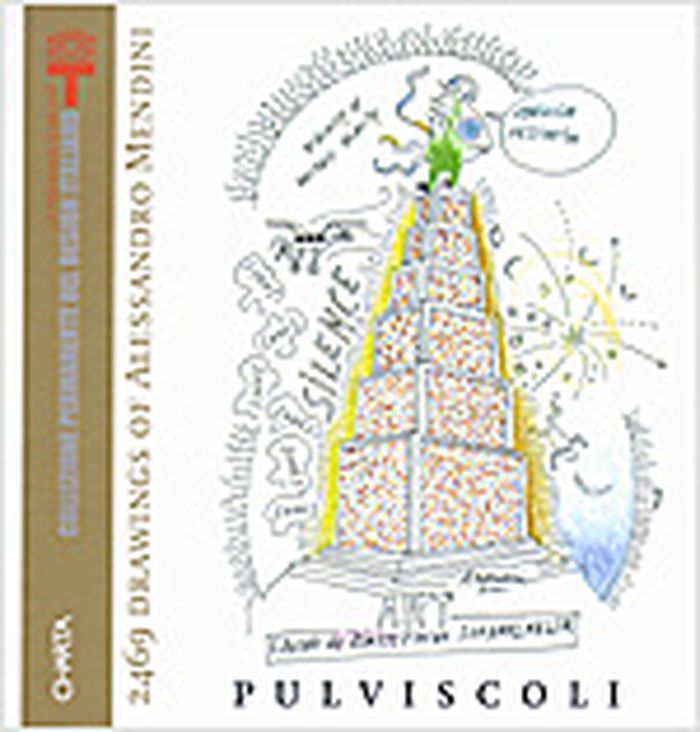
Among distinguished contemporary designers, Alessandro Mendini is perhaps most deserving of the overused title of Renaissance man. Painter, writer, architect, theorist, designer: his work in all these fields has influenced generations of other artists and craftsmen and delighted even those who don’t know his name but have entered his spaces (like his stores for Alessi and Swatch), sipped from his espresso cups, and rested in his chairs. Through his work as a founder of Studio Alchimia in 1979 and editor of the magazines Casabella, Modo, and domus, Mendini has fought the strictures of modernism and championed the expressive value of decoration, which is the foundation for the development of his designs. This book offers a window into Mendini's working methods by presenting some 2,000 of his introductory designs, sketches, and texts that would eventually be realized as objects and buildings. This one-of-a-kind archive is both an important contribution to the history of design for scholars and students and a source of inspiration for designers and artists.
Pulviscoli : 2469 drawings of Alessandro Mendini
Actions:
Price:
$54.00
(available in store)
Summary:
Among distinguished contemporary designers, Alessandro Mendini is perhaps most deserving of the overused title of Renaissance man. Painter, writer, architect, theorist, designer: his work in all these fields has influenced generations of other artists and craftsmen and delighted even those who don’t know his name but have entered his spaces (like his stores for Alessi and Swatch), sipped from his espresso cups, and rested in his chairs. Through his work as a founder of Studio Alchimia in 1979 and editor of the magazines Casabella, Modo, and domus, Mendini has fought the strictures of modernism and championed the expressive value of decoration, which is the foundation for the development of his designs. This book offers a window into Mendini's working methods by presenting some 2,000 of his introductory designs, sketches, and texts that would eventually be realized as objects and buildings. This one-of-a-kind archive is both an important contribution to the history of design for scholars and students and a source of inspiration for designers and artists.
Form:
books
books
Publication:
October 2005, Milano
October 2005, Milano
Subject:
Design Monographs
Design Monographs
Form:
books
books
Actions:
Price:
$57.00
(available to order)
Summary:
Paul Rudolph, one of the 20th century's most iconoclastic architects, is best known—and most maligned—for his large "brutalist" buildings, like the Yale art and architecture building. So it will surprise many to learn that early in his career he developed a series of houses that represent the unrivaled possibilities of a modest American modernism. With their distinctive(...)
$57.00
(available to order)
Summary:
Paul Rudolph, one of the 20th century's most iconoclastic architects, is best known—and most maligned—for his large "brutalist" buildings, like the Yale art and architecture building. So it will surprise many to learn that early in his career he developed a series of houses that represent the unrivaled possibilities of a modest American modernism. With their distinctive(...)
Subject:
Architecture Monographs
Architecture Monographs
Publication:
September 2005, New York
September 2005, New York
Title:
Paul Rudolph : the Florida houses
Actions:
Price:
$57.00
(available to order)
Summary:
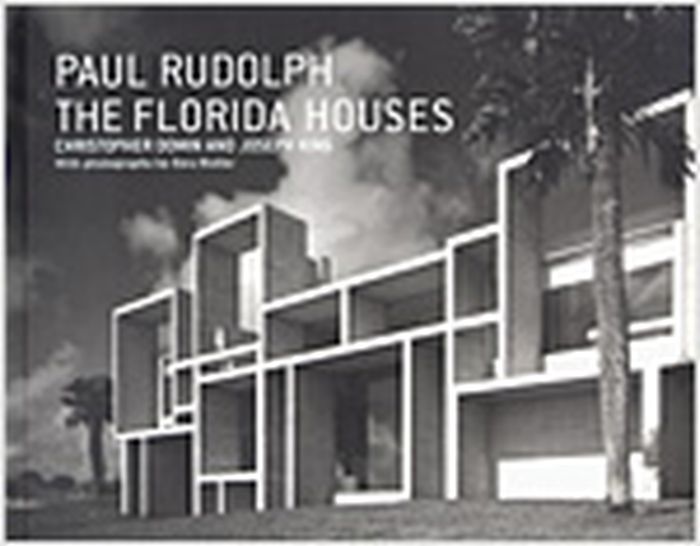
Paul Rudolph, one of the 20th century's most iconoclastic architects, is best known—and most maligned—for his large "brutalist" buildings, like the Yale art and architecture building. So it will surprise many to learn that early in his career he developed a series of houses that represent the unrivaled possibilities of a modest American modernism. With their distinctive natural landscapes, local architectural precedents, and exploitation of innovative construction materials, the Florida houses, some eighty projects built between 1946 and 1961, brought modern architectural form into a gracious subtropical world of natural abundance. Like the locally inspired desert houses of another modern master, Albert Frey, Rudolph's Florida houses represent a distillation and reinterpretation of traditional architectural ideas developed to a high pitch of stylistic refinement. "Paul Rudolph : the Florida houses" reveals all of Rudolph's early residential work. Along with Rudolph's personal essays and renderings, duotone photographs by Ezra Stoller and Joseph Molitor, and text by Joseph King and Christopher Domin, this new book conveys the lightness, timelessness, strength, materiality, and transcendency of Rudolph's work.
Paul Rudolph : the Florida houses
Actions:
Price:
$57.00
(available to order)
Summary:
Paul Rudolph, one of the 20th century's most iconoclastic architects, is best known—and most maligned—for his large "brutalist" buildings, like the Yale art and architecture building. So it will surprise many to learn that early in his career he developed a series of houses that represent the unrivaled possibilities of a modest American modernism. With their distinctive natural landscapes, local architectural precedents, and exploitation of innovative construction materials, the Florida houses, some eighty projects built between 1946 and 1961, brought modern architectural form into a gracious subtropical world of natural abundance. Like the locally inspired desert houses of another modern master, Albert Frey, Rudolph's Florida houses represent a distillation and reinterpretation of traditional architectural ideas developed to a high pitch of stylistic refinement. "Paul Rudolph : the Florida houses" reveals all of Rudolph's early residential work. Along with Rudolph's personal essays and renderings, duotone photographs by Ezra Stoller and Joseph Molitor, and text by Joseph King and Christopher Domin, this new book conveys the lightness, timelessness, strength, materiality, and transcendency of Rudolph's work.
Form:
books
books
Publication:
September 2005, New York
September 2005, New York
Subject:
Architecture Monographs
Architecture Monographs
Form:
books
books
Actions:
Price:
$39.95
(available to order)
Summary:
In 1960, before his skyscrapers and teapots made him a household name, Michael Graves set out on a journey once considered obligatory for a young architect: a grand tour of the great monuments of Europe. As a recipient of the prestigious Prix de Rome, Graves traveled through Italy, Greece, Turkey, Spain, England, Germany, and France, studying and recording the masterworks(...)
$39.95
(available to order)
Summary:
In 1960, before his skyscrapers and teapots made him a household name, Michael Graves set out on a journey once considered obligatory for a young architect: a grand tour of the great monuments of Europe. As a recipient of the prestigious Prix de Rome, Graves traveled through Italy, Greece, Turkey, Spain, England, Germany, and France, studying and recording the masterworks(...)
Title:
Michael Graves : images of a grand tour
Actions:
Price:
$39.95
(available to order)
Summary:
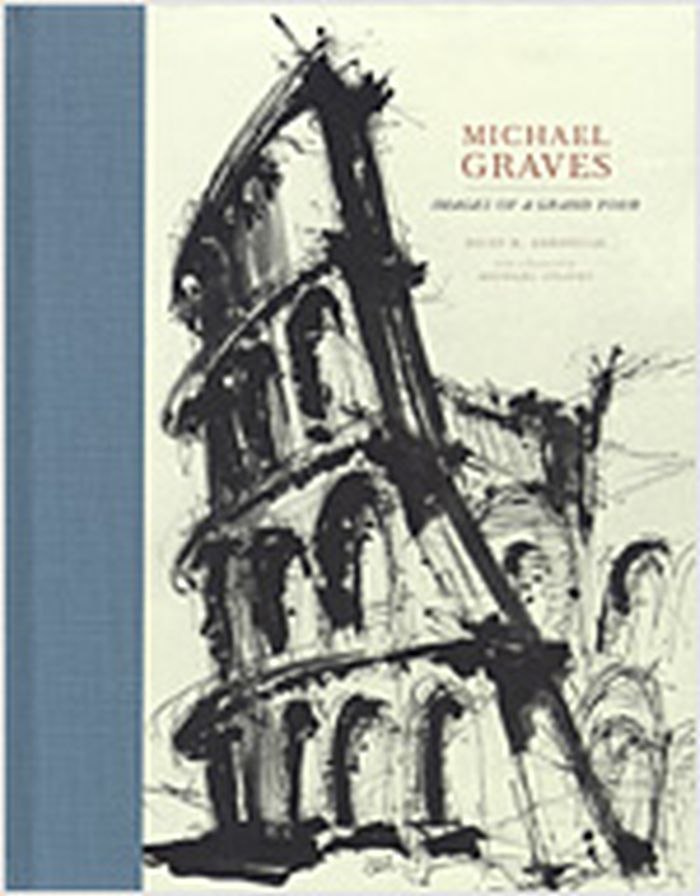
In 1960, before his skyscrapers and teapots made him a household name, Michael Graves set out on a journey once considered obligatory for a young architect: a grand tour of the great monuments of Europe. As a recipient of the prestigious Prix de Rome, Graves traveled through Italy, Greece, Turkey, Spain, England, Germany, and France, studying and recording the masterworks of both ancient and modern architecture. "Michael Graves: Images of A Grand Tour" collects for the first time the stunning artwork produced during this trip. Delicate pencil sketches, striking ink washes, and colourful photographs show the deep connection Graves had to the places he visited, from the Roman Forum to the Grecian Acropolis to Wiltshires Stonehenge. They also tell something of the education of an architect, bringing to light the classical buildings that caused Graves to reexamine his early devotion to modernism. A foreword by Graves reflects on these travels from the distance of forty years, while author Brian Ambroziak puts the tour into the context of Graves's life and work.
Michael Graves : images of a grand tour
Actions:
Price:
$39.95
(available to order)
Summary:
In 1960, before his skyscrapers and teapots made him a household name, Michael Graves set out on a journey once considered obligatory for a young architect: a grand tour of the great monuments of Europe. As a recipient of the prestigious Prix de Rome, Graves traveled through Italy, Greece, Turkey, Spain, England, Germany, and France, studying and recording the masterworks of both ancient and modern architecture. "Michael Graves: Images of A Grand Tour" collects for the first time the stunning artwork produced during this trip. Delicate pencil sketches, striking ink washes, and colourful photographs show the deep connection Graves had to the places he visited, from the Roman Forum to the Grecian Acropolis to Wiltshires Stonehenge. They also tell something of the education of an architect, bringing to light the classical buildings that caused Graves to reexamine his early devotion to modernism. A foreword by Graves reflects on these travels from the distance of forty years, while author Brian Ambroziak puts the tour into the context of Graves's life and work.
Form:
books
books
Publication:
October 2005, New York
October 2005, New York
Subject:
Architecture Monographs
Architecture Monographs
Form:
books
books
Actions:
Price:
$82.00
(available to order)
Summary:
Hermann Czech, born in 1936, is one of Austria’s most eminent and influential architects and theorists. This influence is based not only on his work as a designing architect; Czech is also widely admired for his writings on architectural theory and as the editor and translator of architectural history classics. This book is the long-awaited updated and expanded English(...)
$82.00
(available to order)
Summary:
Hermann Czech, born in 1936, is one of Austria’s most eminent and influential architects and theorists. This influence is based not only on his work as a designing architect; Czech is also widely admired for his writings on architectural theory and as the editor and translator of architectural history classics. This book is the long-awaited updated and expanded English(...)
Title:
Hermann Czech: An architect in Vienna
Actions:
Price:
$82.00
(available to order)
Summary:
Hermann Czech, born in 1936, is one of Austria’s most eminent and influential architects and theorists. This influence is based not only on his work as a designing architect; Czech is also widely admired for his writings on architectural theory and as the editor and translator of architectural history classics. This book is the long-awaited updated and expanded English edition of the only complete examination of Hermann Czech’s work to date. First published in German in 2018, it goes far beyond a mere presentation of an architecture practice’s buildings and projects. The first part traces what links Czech’s work to the approaches of Viennese modernism. The second part explores Czech’s biography and the trajectory of his career, analyzing the contemporary influences that shape his thinking and designs. The third part features selected buildings, unrealized projects, and Czech’s numerous references and underlying reflections. A complete index of his buildings, projects, and writings, an essay by Vienna-based philosopher Elisabeth Nemeth on the relationship between architecture and philosophy in Czech’s work, and an introduction by architectural historian Liane Lefaivre round off this volume.
Hermann Czech: An architect in Vienna
Actions:
Price:
$82.00
(available to order)
Summary:
Hermann Czech, born in 1936, is one of Austria’s most eminent and influential architects and theorists. This influence is based not only on his work as a designing architect; Czech is also widely admired for his writings on architectural theory and as the editor and translator of architectural history classics. This book is the long-awaited updated and expanded English edition of the only complete examination of Hermann Czech’s work to date. First published in German in 2018, it goes far beyond a mere presentation of an architecture practice’s buildings and projects. The first part traces what links Czech’s work to the approaches of Viennese modernism. The second part explores Czech’s biography and the trajectory of his career, analyzing the contemporary influences that shape his thinking and designs. The third part features selected buildings, unrealized projects, and Czech’s numerous references and underlying reflections. A complete index of his buildings, projects, and writings, an essay by Vienna-based philosopher Elisabeth Nemeth on the relationship between architecture and philosophy in Czech’s work, and an introduction by architectural historian Liane Lefaivre round off this volume.
Form:
books
books
Publication:
October 2023
October 2023
Subject:
Architecture Monographs
Architecture Monographs
Form:
books
books
Price:
$102.00
(available to order)
Summary:
Lux Guyer (1894–1955) was the first female architect to establish her own studio in Switzerland in 1924. One of her key designs is the Obere Schiedhalde, a single-family home above Küsnacht near Zurich. Completed in 1929 and temporarily occupied by Guyer and her family, it is a variation of her legendary SAFFA-Haus of 1928. Between 2012 and 2018, the building and the(...)
$102.00
(available to order)
Summary:
Lux Guyer (1894–1955) was the first female architect to establish her own studio in Switzerland in 1924. One of her key designs is the Obere Schiedhalde, a single-family home above Küsnacht near Zurich. Completed in 1929 and temporarily occupied by Guyer and her family, it is a variation of her legendary SAFFA-Haus of 1928. Between 2012 and 2018, the building and the(...)
Subject:
Architecture Monographs
Architecture Monographs
Publication:
January 2024
January 2024
Title:
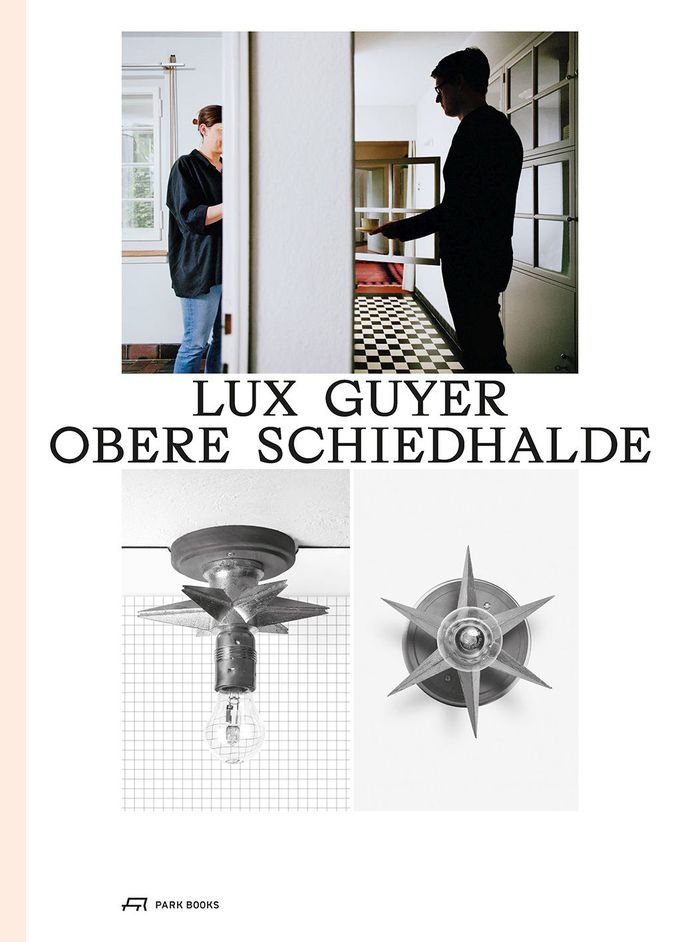
Lux Guyer: Obere Schiedhalde. Renovation of a house from 1920
Actions:
Price:
$102.00
(available to order)
Summary:
Lux Guyer (1894–1955) was the first female architect to establish her own studio in Switzerland in 1924. One of her key designs is the Obere Schiedhalde, a single-family home above Küsnacht near Zurich. Completed in 1929 and temporarily occupied by Guyer and her family, it is a variation of her legendary SAFFA-Haus of 1928. Between 2012 and 2018, the building and the surrounding garden were extensively and carefully restored by Basel-based architecture firm Christ & Gantenbein together with Sven Richter, cofounder of Richter Tobler Architects in Basel. Working in close collaboration with the Canton of Zurich’s office for the preservation of historic monuments, they also called in experts for a historically conscious overhaul of the building. Together with the current owners, the architects made it their mission to not only preserve this significant architectural monument of Swiss Modernism but also make it accessible to the public through this book. Conceived by graphic designers Ludovic Balland and Annina Schepping, "Lux Guyer—Obere Schiedhalde" offers in-depth documentation of the renovated Obere Schiedhalde.
Lux Guyer: Obere Schiedhalde. Renovation of a house from 1920
Actions:
Price:
$102.00
(available to order)
Summary:
Lux Guyer (1894–1955) was the first female architect to establish her own studio in Switzerland in 1924. One of her key designs is the Obere Schiedhalde, a single-family home above Küsnacht near Zurich. Completed in 1929 and temporarily occupied by Guyer and her family, it is a variation of her legendary SAFFA-Haus of 1928. Between 2012 and 2018, the building and the surrounding garden were extensively and carefully restored by Basel-based architecture firm Christ & Gantenbein together with Sven Richter, cofounder of Richter Tobler Architects in Basel. Working in close collaboration with the Canton of Zurich’s office for the preservation of historic monuments, they also called in experts for a historically conscious overhaul of the building. Together with the current owners, the architects made it their mission to not only preserve this significant architectural monument of Swiss Modernism but also make it accessible to the public through this book. Conceived by graphic designers Ludovic Balland and Annina Schepping, "Lux Guyer—Obere Schiedhalde" offers in-depth documentation of the renovated Obere Schiedhalde.
Form:
books
books
Publication:
January 2024
January 2024
Subject:
Architecture Monographs
Architecture Monographs
Form:
books
books
Title:
CCCP (Multilingual Edition)
CCCP (Multilingual Edition)
Actions:
Price:
$26.95
(available to order)
Summary:
This publication explores 90 buildings in 14 former Soviet Republics. Each of these structures expresses what Chaubin considers the fourth age of Soviet architecture, an unknown burgeoning that took place from 1970 until 1990. Contrary to the 1920s and 1950s, no “school” or main trend emerges here. These buildings represent a chaotic impulse brought about by a decaying(...)
$26.95
(available to order)
Summary:
This publication explores 90 buildings in 14 former Soviet Republics. Each of these structures expresses what Chaubin considers the fourth age of Soviet architecture, an unknown burgeoning that took place from 1970 until 1990. Contrary to the 1920s and 1950s, no “school” or main trend emerges here. These buildings represent a chaotic impulse brought about by a decaying(...)
Title:
CCCP (Multilingual Edition)
Actions:
Price:
$26.95
(available to order)
Summary:
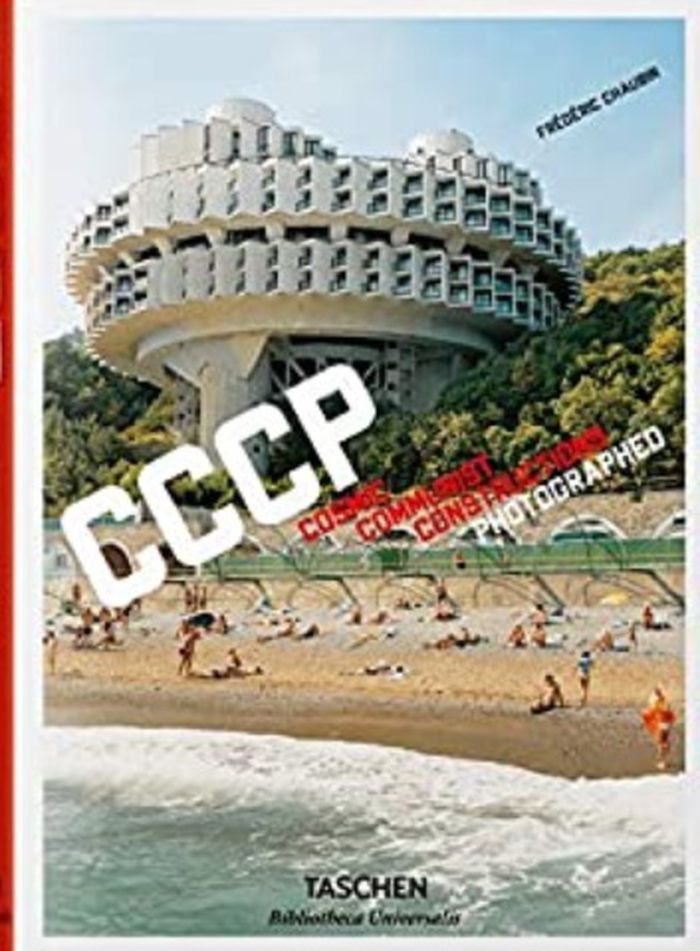
This publication explores 90 buildings in 14 former Soviet Republics. Each of these structures expresses what Chaubin considers the fourth age of Soviet architecture, an unknown burgeoning that took place from 1970 until 1990. Contrary to the 1920s and 1950s, no “school” or main trend emerges here. These buildings represent a chaotic impulse brought about by a decaying system. Taking advantage of the collapsing monolithic structure, architects went far beyond modernism, going back to the roots or freely innovating. Some of the daring ones completed projects that the Constructivists would have dreamt of (Druzhba Sanatorium, Yalta), others expressed their imagination in an expressionist way (Palace of Weddings, Tbilisi). A summer camp, inspired by sketches of a prototype lunar base, lays claim to Suprematist influence (Prometheus youth camp, Bogatyr). Then comes the “speaking architecture” widespread in the last years of the USSR: a crematorium adorned with concrete flames (Crematorium, Kiev), a technological institute with a flying saucer crashed on the roof (Institute of Scientific Research, Kiev), a political center watching you like Big Brother (House of Soviets, Kaliningrad).
CCCP (Multilingual Edition)
Actions:
Price:
$26.95
(available to order)
Summary:
This publication explores 90 buildings in 14 former Soviet Republics. Each of these structures expresses what Chaubin considers the fourth age of Soviet architecture, an unknown burgeoning that took place from 1970 until 1990. Contrary to the 1920s and 1950s, no “school” or main trend emerges here. These buildings represent a chaotic impulse brought about by a decaying system. Taking advantage of the collapsing monolithic structure, architects went far beyond modernism, going back to the roots or freely innovating. Some of the daring ones completed projects that the Constructivists would have dreamt of (Druzhba Sanatorium, Yalta), others expressed their imagination in an expressionist way (Palace of Weddings, Tbilisi). A summer camp, inspired by sketches of a prototype lunar base, lays claim to Suprematist influence (Prometheus youth camp, Bogatyr). Then comes the “speaking architecture” widespread in the last years of the USSR: a crematorium adorned with concrete flames (Crematorium, Kiev), a technological institute with a flying saucer crashed on the roof (Institute of Scientific Research, Kiev), a political center watching you like Big Brother (House of Soviets, Kaliningrad).
Form:
books
books
Publication:
November 2017
November 2017
Subject:
Photography by Region
Photography by Region
Form:
books
books
Actions:
Price:
$85.00
(available to order)
Summary:
In 1950, Indian prime minister Jawaharlal Nehru invited legendary French-Swiss architect Le Corbusier to embark on one of the greatest experiments in urban planning history: to build a new capital Chandigarh, a city whose monumental modernism promised to free India from the fetters of colonial tradition. 'six decades after its founding and on the eve of its becoming a(...)
$85.00
(available to order)
Summary:
In 1950, Indian prime minister Jawaharlal Nehru invited legendary French-Swiss architect Le Corbusier to embark on one of the greatest experiments in urban planning history: to build a new capital Chandigarh, a city whose monumental modernism promised to free India from the fetters of colonial tradition. 'six decades after its founding and on the eve of its becoming a(...)
Title:
Chandigarh revealed: Le Corbusier's city today
Actions:
Price:
$85.00
(available to order)
Summary:
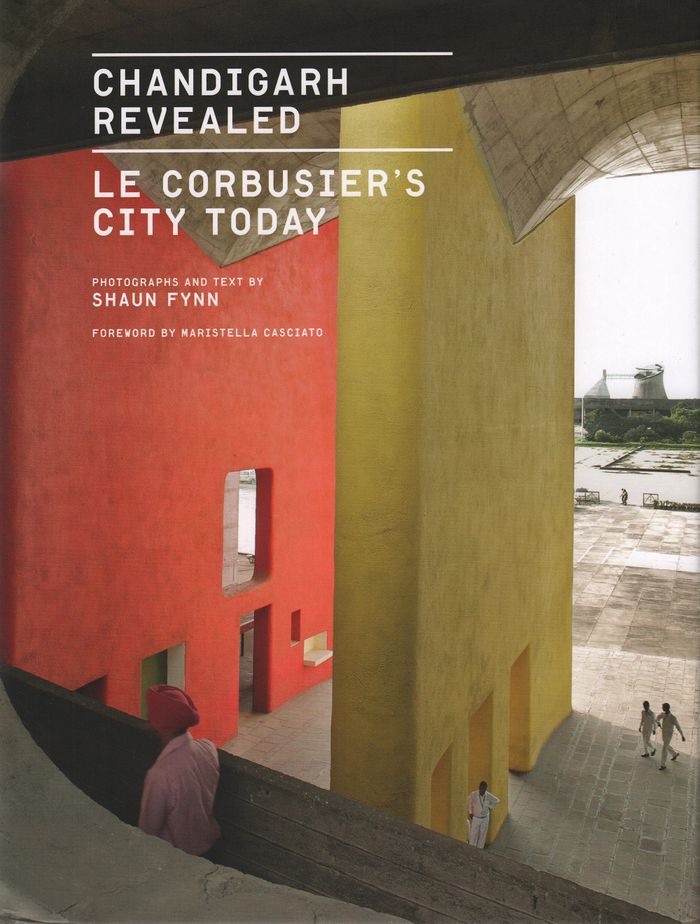
In 1950, Indian prime minister Jawaharlal Nehru invited legendary French-Swiss architect Le Corbusier to embark on one of the greatest experiments in urban planning history: to build a new capital Chandigarh, a city whose monumental modernism promised to free India from the fetters of colonial tradition. 'six decades after its founding and on the eve of its becoming a UNESCO World Heritage Site in 2016, photographer and Chandigarh resident Shaun Fynn was granted unprecedented access to turn his lens on Le Corbusier's city and capture what is rarely seen: the living metropolis behind the master plan. Fynn's captivating images of the city and its inhabitants reveal how the poetry of the architect's compositions has been shaped by the tumult of everyday life. Alongside descriptions of the city's architectural highlights, Chandigarh Revealed features a foreword by Le Corbusier authority Maristella Casciato, an essay by architectural historian Vikram ditya Prak sh, an interview with M. N. Sharma one of two surviving members of Le Corbusier's team and custom-designed maps to orient readers.
Chandigarh revealed: Le Corbusier's city today
Actions:
Price:
$85.00
(available to order)
Summary:
In 1950, Indian prime minister Jawaharlal Nehru invited legendary French-Swiss architect Le Corbusier to embark on one of the greatest experiments in urban planning history: to build a new capital Chandigarh, a city whose monumental modernism promised to free India from the fetters of colonial tradition. 'six decades after its founding and on the eve of its becoming a UNESCO World Heritage Site in 2016, photographer and Chandigarh resident Shaun Fynn was granted unprecedented access to turn his lens on Le Corbusier's city and capture what is rarely seen: the living metropolis behind the master plan. Fynn's captivating images of the city and its inhabitants reveal how the poetry of the architect's compositions has been shaped by the tumult of everyday life. Alongside descriptions of the city's architectural highlights, Chandigarh Revealed features a foreword by Le Corbusier authority Maristella Casciato, an essay by architectural historian Vikram ditya Prak sh, an interview with M. N. Sharma one of two surviving members of Le Corbusier's team and custom-designed maps to orient readers.
Form:
books
books
Publication:
April 2017
April 2017
Subject:
Architecture Monographs
Architecture Monographs
Form:
books
books
Title:
Cities design & evolution
Cities design & evolution
Actions:
Price:
$86.95
(available to order)
Summary:
Why does modern planning sometimes create urban environments that are less attractive and functional than the 'organic urbanism' of traditional cities? "Cities Design and Evolution" takes up the challenge of this question, investigating 'how cities are put together', both in the sense of how the parts are organised in relation to the whole, and how they are created or(...)
$86.95
(available to order)
Summary:
Why does modern planning sometimes create urban environments that are less attractive and functional than the 'organic urbanism' of traditional cities? "Cities Design and Evolution" takes up the challenge of this question, investigating 'how cities are put together', both in the sense of how the parts are organised in relation to the whole, and how they are created or(...)
Title:
Cities design & evolution
Actions:
Price:
$86.95
(available to order)
Summary:
Why does modern planning sometimes create urban environments that are less attractive and functional than the 'organic urbanism' of traditional cities? "Cities Design and Evolution" takes up the challenge of this question, investigating 'how cities are put together', both in the sense of how the parts are organised in relation to the whole, and how they are created or evolve over time."Cities Design and Evolution" offers an engaging and original narrative that interprets planning philosophies from Modernism to New Urbanism, organic theories from Patrick Geddes to Le Corbusier, and evolutionary thinking from Charles Darwin to Richard Dawkins. The book develops a new evolutionary perspective that recognises both the 'designed' and 'organic' nature of cities, and provides a rationale and impetus for fresh approaches to urban planning and design. In what is the first book to significantly apply modern evolutionary thinking to urbanism, "Cities Design and Evolution" promises to stimulate thought, debate and action concerning the nature of cities and future urban planning. The book should appeal to all who are interested in cities, in design and in evolution.
Cities design & evolution
Actions:
Price:
$86.95
(available to order)
Summary:
Why does modern planning sometimes create urban environments that are less attractive and functional than the 'organic urbanism' of traditional cities? "Cities Design and Evolution" takes up the challenge of this question, investigating 'how cities are put together', both in the sense of how the parts are organised in relation to the whole, and how they are created or evolve over time."Cities Design and Evolution" offers an engaging and original narrative that interprets planning philosophies from Modernism to New Urbanism, organic theories from Patrick Geddes to Le Corbusier, and evolutionary thinking from Charles Darwin to Richard Dawkins. The book develops a new evolutionary perspective that recognises both the 'designed' and 'organic' nature of cities, and provides a rationale and impetus for fresh approaches to urban planning and design. In what is the first book to significantly apply modern evolutionary thinking to urbanism, "Cities Design and Evolution" promises to stimulate thought, debate and action concerning the nature of cities and future urban planning. The book should appeal to all who are interested in cities, in design and in evolution.
Form:
books
books
Publication:
January 2009, London, New York
January 2009, London, New York
Subject:
Urban Theory
Urban Theory
Form:
books
books
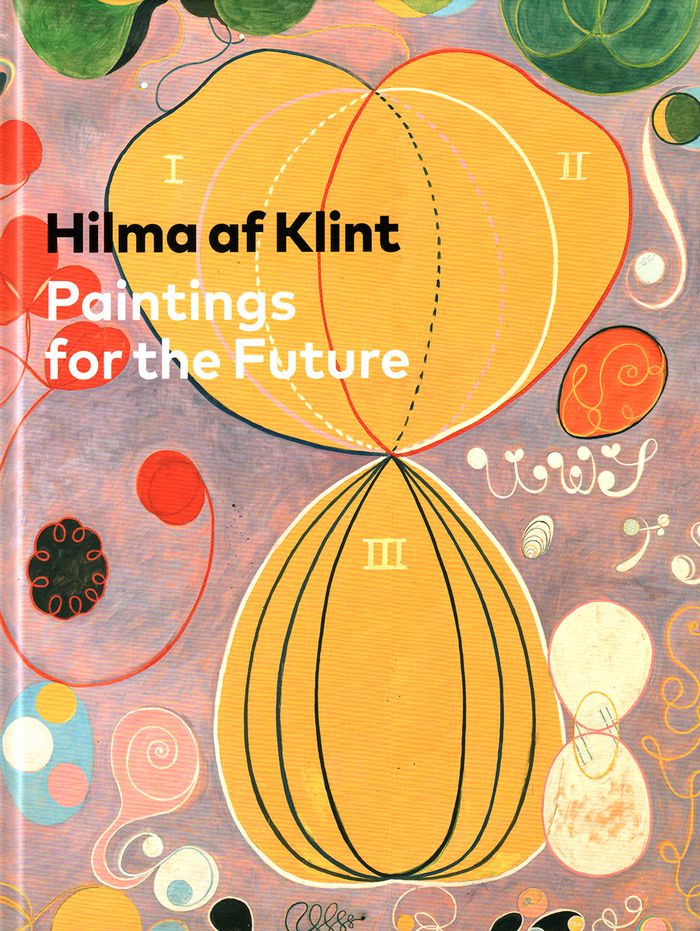
Actions:
Price:
$87.00
(available to order)
Summary:
When Swedish artist Hilma af Klint died in 1944 at the age of 81, she left behind more than 1,000 paintings and works on paper that she had kept largely private during her lifetime. Believing the world was not yet ready for her art, she stipulated that it should remain unseen for another 20 years. But only in recent decades has the public had a chance to reckon with af(...)
$87.00
(available to order)
Summary:
When Swedish artist Hilma af Klint died in 1944 at the age of 81, she left behind more than 1,000 paintings and works on paper that she had kept largely private during her lifetime. Believing the world was not yet ready for her art, she stipulated that it should remain unseen for another 20 years. But only in recent decades has the public had a chance to reckon with af(...)
Title:
Hilma af Klint: paintings for the future
Actions:
Price:
$87.00
(available to order)
Summary:
When Swedish artist Hilma af Klint died in 1944 at the age of 81, she left behind more than 1,000 paintings and works on paper that she had kept largely private during her lifetime. Believing the world was not yet ready for her art, she stipulated that it should remain unseen for another 20 years. But only in recent decades has the public had a chance to reckon with af Klint's radically abstract painting practice — one which predates the work of Vasily Kandinsky and other artists widely considered trailblazers of modernist abstraction. Accompanying the first major survey exhibition of the artist's work in the United States, 'Hilma af Klint: Paintings for the Future' represents her groundbreaking painting series while expanding recent scholarship to present the fullest picture yet of her life and art. Essays explore the social, intellectual and artistic context of af Klint's 1906 break with figuration and her subsequent development, placing her in the context of Swedish modernism and folk art traditions, contemporary scientific discoveries, and spiritualist and occult movements.
Hilma af Klint: paintings for the future
Actions:
Price:
$87.00
(available to order)
Summary:
When Swedish artist Hilma af Klint died in 1944 at the age of 81, she left behind more than 1,000 paintings and works on paper that she had kept largely private during her lifetime. Believing the world was not yet ready for her art, she stipulated that it should remain unseen for another 20 years. But only in recent decades has the public had a chance to reckon with af Klint's radically abstract painting practice — one which predates the work of Vasily Kandinsky and other artists widely considered trailblazers of modernist abstraction. Accompanying the first major survey exhibition of the artist's work in the United States, 'Hilma af Klint: Paintings for the Future' represents her groundbreaking painting series while expanding recent scholarship to present the fullest picture yet of her life and art. Essays explore the social, intellectual and artistic context of af Klint's 1906 break with figuration and her subsequent development, placing her in the context of Swedish modernism and folk art traditions, contemporary scientific discoveries, and spiritualist and occult movements.
Form:
books
books
Publication:
October 2018
October 2018
Subject:
Contemporary Art Monographs
Contemporary Art Monographs


