


3071 Results
Form:
books
books
Actions:
Price:
$72.00
(available in store)
Summary:
This is the first biography of Ernö Goldfinger (1902-1987), the leading modernist architect in Britain in the twentieth century. It is the fascinating story of a man and his struggle to build in a modern style in Britain in the face of contemporary opposition. Today, opposition to his buildings, particularly Trellick Tower, is turning to admiration. 2 Willow Road, his own(...)
$72.00
(available in store)
Summary:
This is the first biography of Ernö Goldfinger (1902-1987), the leading modernist architect in Britain in the twentieth century. It is the fascinating story of a man and his struggle to build in a modern style in Britain in the face of contemporary opposition. Today, opposition to his buildings, particularly Trellick Tower, is turning to admiration. 2 Willow Road, his own(...)
Subject:
Architecture Monographs
Architecture Monographs
Publication:
December 2003, London / New York
December 2003, London / New York
Title:
Ernö Goldfinger : the life of an architect
Actions:
Price:
$72.00
(available in store)
Summary:
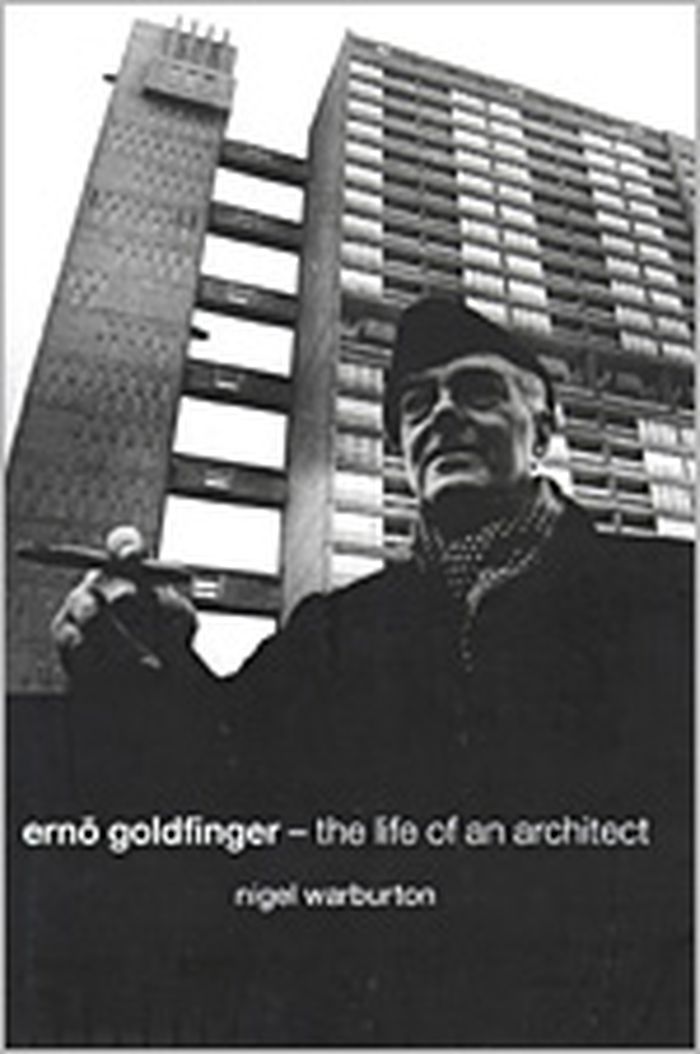
This is the first biography of Ernö Goldfinger (1902-1987), the leading modernist architect in Britain in the twentieth century. It is the fascinating story of a man and his struggle to build in a modern style in Britain in the face of contemporary opposition. Today, opposition to his buildings, particularly Trellick Tower, is turning to admiration. 2 Willow Road, his own house, was recently acquired by the National Trust - its first modern property. A century after his birth his buildings are achieving heritage status. This book tells the story of Goldfinger's life in architecture which raises profound questions about the role of architecture in British society and the political and moral values that buildings can embody. In writing this important new book, Nigel Warburton researched the extensive archive of Goldfinger's writing, office papers, models and drawings held in the RIBA Collection and also interviewed people who knew and worked with him.
Ernö Goldfinger : the life of an architect
Actions:
Price:
$72.00
(available in store)
Summary:
This is the first biography of Ernö Goldfinger (1902-1987), the leading modernist architect in Britain in the twentieth century. It is the fascinating story of a man and his struggle to build in a modern style in Britain in the face of contemporary opposition. Today, opposition to his buildings, particularly Trellick Tower, is turning to admiration. 2 Willow Road, his own house, was recently acquired by the National Trust - its first modern property. A century after his birth his buildings are achieving heritage status. This book tells the story of Goldfinger's life in architecture which raises profound questions about the role of architecture in British society and the political and moral values that buildings can embody. In writing this important new book, Nigel Warburton researched the extensive archive of Goldfinger's writing, office papers, models and drawings held in the RIBA Collection and also interviewed people who knew and worked with him.
Form:
books
books
Publication:
December 2003, London / New York
December 2003, London / New York
Subject:
Architecture Monographs
Architecture Monographs
Form:
books
books
Title:
Hannes Meyer: Co-op interior
Hannes Meyer: Co-op interior
Actions:
Price:
$45.00
(available to order)
Summary:
In his Co-op Interieur (1926)—a simple corner of a room known only in a photograph— Swiss architect Hannes Meyer (1889–1954) gave expression to a radical, antibourgeois style of interior. Comprised only of a bed, a lamp, two chairs and a gramophone on a table, he imagined this room for the nomadic urban worker. Through the absence of people, objects and spatial features(...)
$45.00
(available to order)
Summary:
In his Co-op Interieur (1926)—a simple corner of a room known only in a photograph— Swiss architect Hannes Meyer (1889–1954) gave expression to a radical, antibourgeois style of interior. Comprised only of a bed, a lamp, two chairs and a gramophone on a table, he imagined this room for the nomadic urban worker. Through the absence of people, objects and spatial features(...)
Subject:
Architectural Theory
Architectural Theory
Publication:
July 2016
July 2016
Title:
Hannes Meyer: Co-op interior
Actions:
Price:
$45.00
(available to order)
Summary:
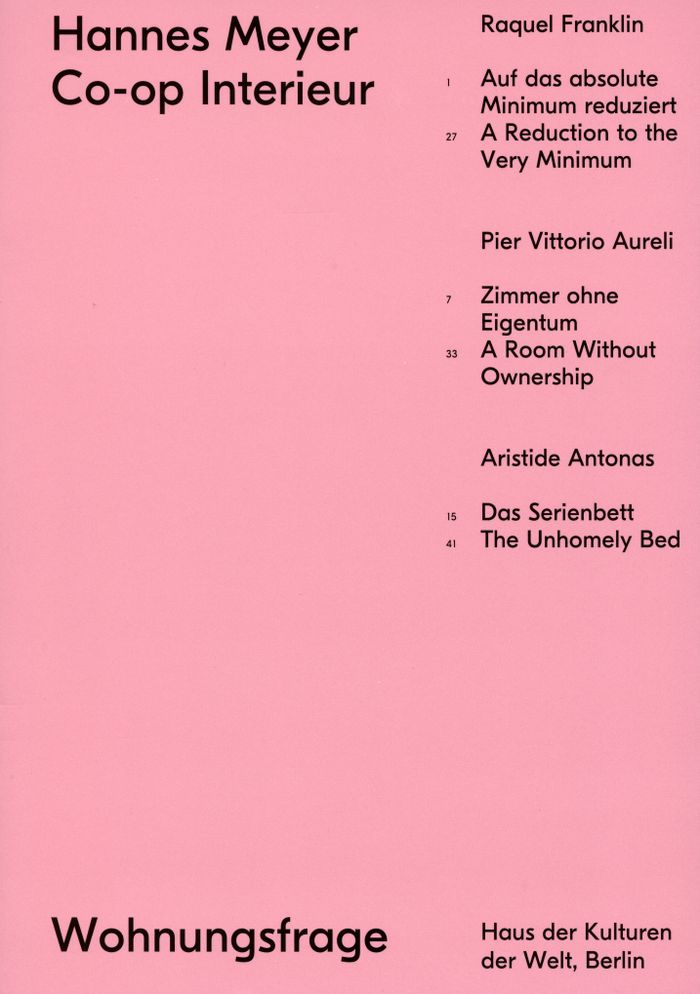
In his Co-op Interieur (1926)—a simple corner of a room known only in a photograph— Swiss architect Hannes Meyer (1889–1954) gave expression to a radical, antibourgeois style of interior. Comprised only of a bed, a lamp, two chairs and a gramophone on a table, he imagined this room for the nomadic urban worker. Through the absence of people, objects and spatial features as much as by the distinctiveness of its design, Meyer was proclaiming an alternative principle for housing, proposing that architecture and design were intended not to fulfill historically determined needs but to overcome their constraints. Historical photographs of the interior and three provocative essays on ownership, minimalism and the “unhomely,” by Brussels-based architecy Pier Vittrio, Mexican architect Raquel Franklin, and Gree architect Aristide Antonas, respectively, explore the layers of meaning within Meyer’s mise-en-scène manifesto on collectivity and utility as a counterpoint to ownership and private property.
Hannes Meyer: Co-op interior
Actions:
Price:
$45.00
(available to order)
Summary:
In his Co-op Interieur (1926)—a simple corner of a room known only in a photograph— Swiss architect Hannes Meyer (1889–1954) gave expression to a radical, antibourgeois style of interior. Comprised only of a bed, a lamp, two chairs and a gramophone on a table, he imagined this room for the nomadic urban worker. Through the absence of people, objects and spatial features as much as by the distinctiveness of its design, Meyer was proclaiming an alternative principle for housing, proposing that architecture and design were intended not to fulfill historically determined needs but to overcome their constraints. Historical photographs of the interior and three provocative essays on ownership, minimalism and the “unhomely,” by Brussels-based architecy Pier Vittrio, Mexican architect Raquel Franklin, and Gree architect Aristide Antonas, respectively, explore the layers of meaning within Meyer’s mise-en-scène manifesto on collectivity and utility as a counterpoint to ownership and private property.
Form:
books
books
Publication:
July 2016
July 2016
Subject:
Architectural Theory
Architectural Theory
Form:
books
books
Actions:
Price:
$23.95
(available to order)
Summary:
The term "guerrilla" may bring to mind a small band of armed soldiers, moving in the dead of night on a stealth mission. In the case of guerrilla gardening, the soldiers are planters, the weapons are shovels, and the mission is to transform an abandoned lot into a thing of beauty. Once an environmentalist's nonviolent direct action for inner-city renewal, this approach to(...)
$23.95
(available to order)
Summary:
The term "guerrilla" may bring to mind a small band of armed soldiers, moving in the dead of night on a stealth mission. In the case of guerrilla gardening, the soldiers are planters, the weapons are shovels, and the mission is to transform an abandoned lot into a thing of beauty. Once an environmentalist's nonviolent direct action for inner-city renewal, this approach to(...)
Title:
Guerrilla gardening : a manualfesto
Actions:
Price:
$23.95
(available to order)
Summary:
The term "guerrilla" may bring to mind a small band of armed soldiers, moving in the dead of night on a stealth mission. In the case of guerrilla gardening, the soldiers are planters, the weapons are shovels, and the mission is to transform an abandoned lot into a thing of beauty. Once an environmentalist's nonviolent direct action for inner-city renewal, this approach to urban beautification is spreading to all types of people in cities around the world. These modern-day Johnny Appleseeds perform random acts of gardening, often without the property owner's prior knowledge or permission. Typical targets are vacant lots, railway land, underused public squares, and back alleys. The concept is simple, whimsical and has the cheeky appeal of being a not-quite-legal call to action. Dig in some soil, plant a few seeds, or mend a sagging fence - one good deed inspiring another, with win-win results all around.
Guerrilla gardening : a manualfesto
Actions:
Price:
$23.95
(available to order)
Summary:
The term "guerrilla" may bring to mind a small band of armed soldiers, moving in the dead of night on a stealth mission. In the case of guerrilla gardening, the soldiers are planters, the weapons are shovels, and the mission is to transform an abandoned lot into a thing of beauty. Once an environmentalist's nonviolent direct action for inner-city renewal, this approach to urban beautification is spreading to all types of people in cities around the world. These modern-day Johnny Appleseeds perform random acts of gardening, often without the property owner's prior knowledge or permission. Typical targets are vacant lots, railway land, underused public squares, and back alleys. The concept is simple, whimsical and has the cheeky appeal of being a not-quite-legal call to action. Dig in some soil, plant a few seeds, or mend a sagging fence - one good deed inspiring another, with win-win results all around.
Form:
books
books
Publication:
April 2007, Gabriola Island
April 2007, Gabriola Island
Subject:
Urban Landscapes
Urban Landscapes
Form:
books
books
Title:
A social ecology of capital
A social ecology of capital
Actions:
Price:
$37.95
(available in store)
Summary:
Faced with an ecological crisis of existential proportions, the economic relations of capitalism have only fanned the flames. The transformation of property relations is an urgent necessity, but not, in itself, enough to save us. Enter 'degrowth': a concept that radically challenges contemporary life, culture and economics as we know it. Through an impressive synthesis of(...)
$37.95
(available in store)
Summary:
Faced with an ecological crisis of existential proportions, the economic relations of capitalism have only fanned the flames. The transformation of property relations is an urgent necessity, but not, in itself, enough to save us. Enter 'degrowth': a concept that radically challenges contemporary life, culture and economics as we know it. Through an impressive synthesis of(...)
Title:
A social ecology of capital
Actions:
Price:
$37.95
(available in store)
Summary:
Faced with an ecological crisis of existential proportions, the economic relations of capitalism have only fanned the flames. The transformation of property relations is an urgent necessity, but not, in itself, enough to save us. Enter 'degrowth': a concept that radically challenges contemporary life, culture and economics as we know it. Through an impressive synthesis of the traditions of eco-Marxism and feminist ecological economics, Éric Pineault presents a well-rounded critique of contemporary capitalist growth and its socio-ecological contradictions, in which growth is understood as both a biophysical and accumulation process. The book provides fresh answers to key questions of current socio-ecological debates: Why does capitalist society depend on accelerating growth? Why is the constant upscaling of its economic process necessary for its social stability? How does this deepen the ecological contradictions that humanity now faces? And what can we learn from this for our understanding of emancipatory futures?
A social ecology of capital
Actions:
Price:
$37.95
(available in store)
Summary:
Faced with an ecological crisis of existential proportions, the economic relations of capitalism have only fanned the flames. The transformation of property relations is an urgent necessity, but not, in itself, enough to save us. Enter 'degrowth': a concept that radically challenges contemporary life, culture and economics as we know it. Through an impressive synthesis of the traditions of eco-Marxism and feminist ecological economics, Éric Pineault presents a well-rounded critique of contemporary capitalist growth and its socio-ecological contradictions, in which growth is understood as both a biophysical and accumulation process. The book provides fresh answers to key questions of current socio-ecological debates: Why does capitalist society depend on accelerating growth? Why is the constant upscaling of its economic process necessary for its social stability? How does this deepen the ecological contradictions that humanity now faces? And what can we learn from this for our understanding of emancipatory futures?
Form:
books
books
Publication:
February 2023
February 2023
Subject:
Environment and environmental theory
Environment and environmental theory
Form:
journals and magazines
journals and magazines
Actions:
Price:
$16.95
(available in store)
Summary:
For this 63rd issue, The Funambulist teamed-up with Tunisian anthropologist and visual artist Myriam Amri and invites you to "Follow the money." In it, the issue enters the crevices of a capitalist system and trace it back to its central nodes: property, land, capital, and class. It reads how money is central to colonial and imperial projects, but also how sovereignty and(...)
$16.95
(available in store)
Summary:
For this 63rd issue, The Funambulist teamed-up with Tunisian anthropologist and visual artist Myriam Amri and invites you to "Follow the money." In it, the issue enters the crevices of a capitalist system and trace it back to its central nodes: property, land, capital, and class. It reads how money is central to colonial and imperial projects, but also how sovereignty and(...)
Title:
The Funambulist n.63 : follow the money
Actions:
Price:
$16.95
(available in store)
Summary:
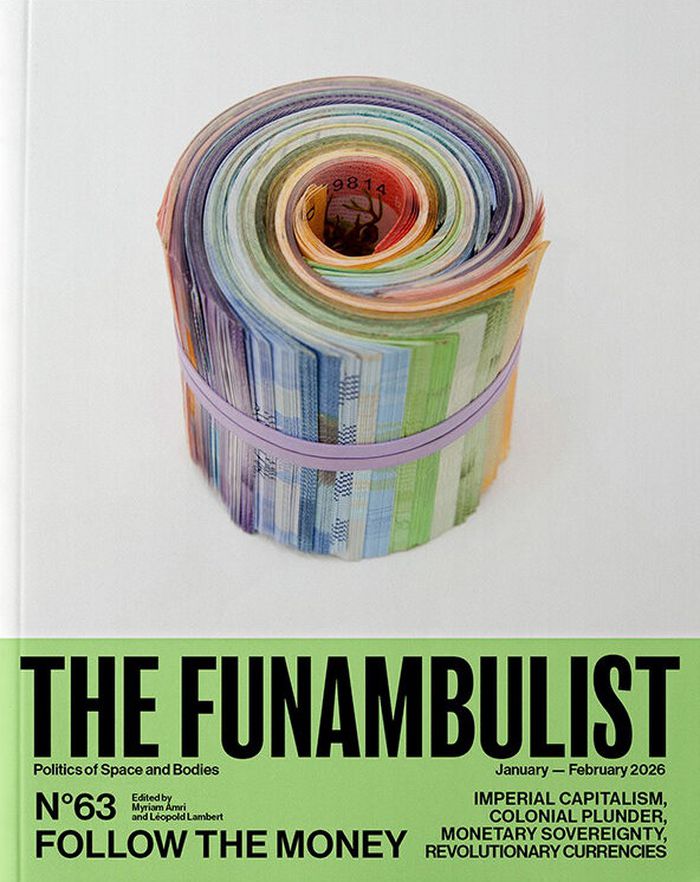
For this 63rd issue, The Funambulist teamed-up with Tunisian anthropologist and visual artist Myriam Amri and invites you to "Follow the money." In it, the issue enters the crevices of a capitalist system and trace it back to its central nodes: property, land, capital, and class. It reads how money is central to colonial and imperial projects, but also how sovereignty and the liberation of our monetary imaginary can be tools of emancipation. From the CFA franc (Ndongo Samba Sylla, Moses März) to the US dollar (Lily H. Chumley) or the Palestinian Pound (Hicham Safieddine), The Funambulist navigates monetary politics around the world, and more specifically in Sudan (Nisrin Elamin & Laleh Khalili), Puerto Rico (Roque Salas Rivera) or Brazil (Cho). The issue also contains a board game entitled "You’ve Got Yourselves a Revolution, Now What?" imagined by the issue editors Myriam Amri and Léopold Lambert and designed by Aude Abou Nasr. As for the cover, it features an artwork by Adriana Martínez Barón.
The Funambulist n.63 : follow the money
Actions:
Price:
$16.95
(available in store)
Summary:
For this 63rd issue, The Funambulist teamed-up with Tunisian anthropologist and visual artist Myriam Amri and invites you to "Follow the money." In it, the issue enters the crevices of a capitalist system and trace it back to its central nodes: property, land, capital, and class. It reads how money is central to colonial and imperial projects, but also how sovereignty and the liberation of our monetary imaginary can be tools of emancipation. From the CFA franc (Ndongo Samba Sylla, Moses März) to the US dollar (Lily H. Chumley) or the Palestinian Pound (Hicham Safieddine), The Funambulist navigates monetary politics around the world, and more specifically in Sudan (Nisrin Elamin & Laleh Khalili), Puerto Rico (Roque Salas Rivera) or Brazil (Cho). The issue also contains a board game entitled "You’ve Got Yourselves a Revolution, Now What?" imagined by the issue editors Myriam Amri and Léopold Lambert and designed by Aude Abou Nasr. As for the cover, it features an artwork by Adriana Martínez Barón.
Form:
journals and magazines
journals and magazines
Publication:
January 2026
January 2026
Subject:
Magazines
Magazines
Form:
books
books
Actions:
Price:
$55.00
(available to order)
Summary:
The Gothic era produced some of the Western world’s most imposing structures, today icons of the European cityscape. Unlike buildings from the Renaissance onward, these medieval works are rarely discussed as the products of the ingenious, innovative contributions of individual architects. This book challenges that common perception by asserting the significant impact of(...)
$55.00
(available to order)
Summary:
The Gothic era produced some of the Western world’s most imposing structures, today icons of the European cityscape. Unlike buildings from the Renaissance onward, these medieval works are rarely discussed as the products of the ingenious, innovative contributions of individual architects. This book challenges that common perception by asserting the significant impact of(...)
Title:
Gothic by design: The dawn of architectural draftsmanship
Actions:
Price:
$55.00
(available to order)
Summary:
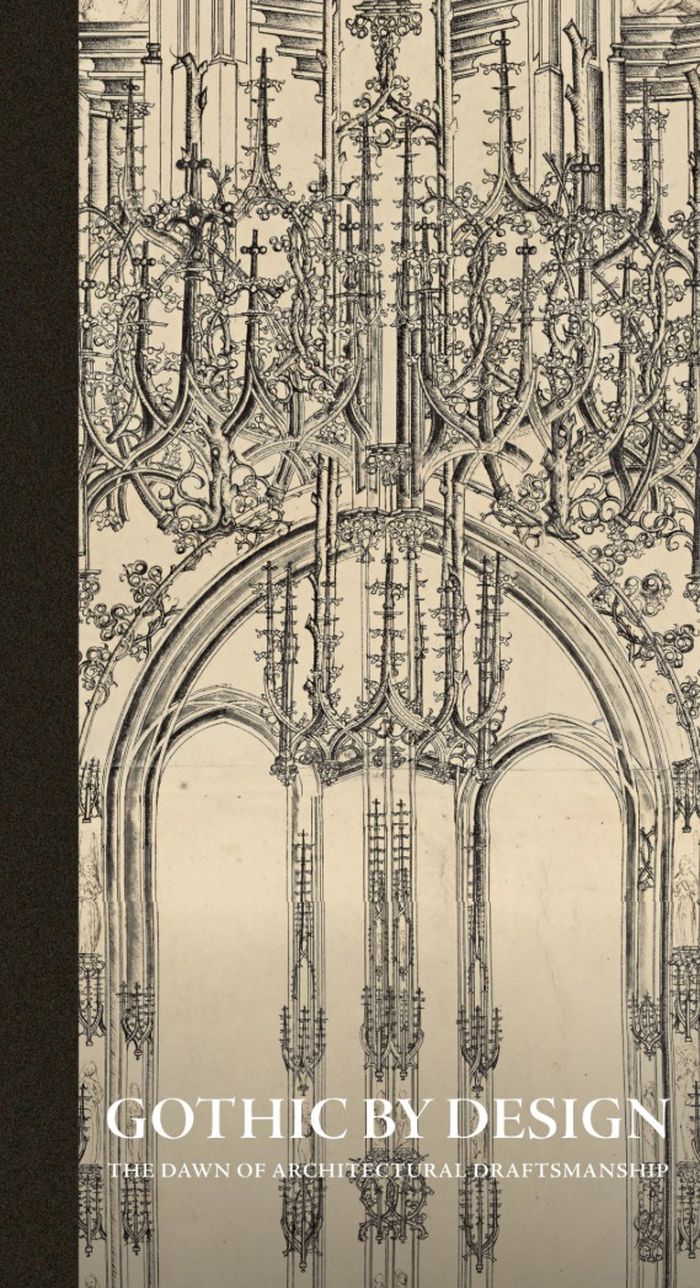
The Gothic era produced some of the Western world’s most imposing structures, today icons of the European cityscape. Unlike buildings from the Renaissance onward, these medieval works are rarely discussed as the products of the ingenious, innovative contributions of individual architects. This book challenges that common perception by asserting the significant impact of draftsmanship on the development of the Gothic style from the twelfth to early sixteenth century. The rediscovery of a little-known corpus of architectural drawings and prints reveals the crucial role of drawings in the development of complex and visually appealing structures—from monumental stone cathedrals to small liturgical objects. "Gothic by design" includes surprising ties to contemporary concerns, showing how these works on paper functioned on and off the building site, established the basis for modern concepts of artistic identity and intellectual property, and provided evidence of the long afterlife of Gothic design strategies and their potential use today in sustainable architecture.
Gothic by design: The dawn of architectural draftsmanship
Actions:
Price:
$55.00
(available to order)
Summary:
The Gothic era produced some of the Western world’s most imposing structures, today icons of the European cityscape. Unlike buildings from the Renaissance onward, these medieval works are rarely discussed as the products of the ingenious, innovative contributions of individual architects. This book challenges that common perception by asserting the significant impact of draftsmanship on the development of the Gothic style from the twelfth to early sixteenth century. The rediscovery of a little-known corpus of architectural drawings and prints reveals the crucial role of drawings in the development of complex and visually appealing structures—from monumental stone cathedrals to small liturgical objects. "Gothic by design" includes surprising ties to contemporary concerns, showing how these works on paper functioned on and off the building site, established the basis for modern concepts of artistic identity and intellectual property, and provided evidence of the long afterlife of Gothic design strategies and their potential use today in sustainable architecture.
Form:
books
books
Publication:
May 2026
May 2026
Subject:
Architectural Drawing
Architectural Drawing
Form:
books
books
Actions:
Price:
$20.00
(available to order)
Summary:
The quintessential American suburbs, with their gracious single-family homes, large green lawns, and leaf-shaded streets, reflected not only residents’ dreams but nightmares, not only hopes but fears: fear of others, of racial minorities and low income groups, fear of themselves, fear of the market, and, above all, fear of change. These fears, and the restrictive(...)
$20.00
(available to order)
Summary:
The quintessential American suburbs, with their gracious single-family homes, large green lawns, and leaf-shaded streets, reflected not only residents’ dreams but nightmares, not only hopes but fears: fear of others, of racial minorities and low income groups, fear of themselves, fear of the market, and, above all, fear of change. These fears, and the restrictive(...)
Title:
Bourgeois Nightmares : Suburbia, 1870-1930
Actions:
Price:
$20.00
(available to order)
Summary:
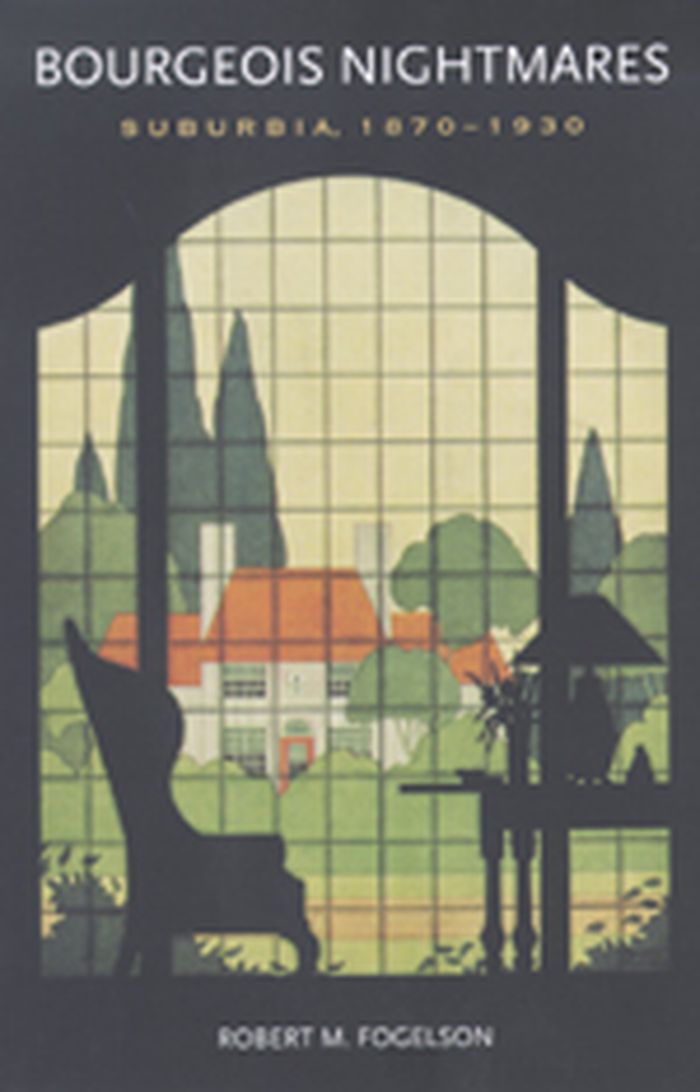
The quintessential American suburbs, with their gracious single-family homes, large green lawns, and leaf-shaded streets, reflected not only residents’ dreams but nightmares, not only hopes but fears: fear of others, of racial minorities and low income groups, fear of themselves, fear of the market, and, above all, fear of change. These fears, and the restrictive covenants that embodied them, are the subject of Robert M. Fogelson’s fascinating new book. As Fogelson reveals, suburban subdividers attempted to cope with the deep-seated fears of unwanted change, especially the encroachment of “undesirable” people and activities, by imposing a wide range of restrictions on the lots. These restrictions ranged from mandating minimum costs and architectural styles for the houses to forbidding the owners to sell or lease their property to any member of a host of racial, ethnic, and religious groups. These restrictions, many of which are still commonly employed, tell us as much about the complexities of American society today as about its complexities a century ago.
Bourgeois Nightmares : Suburbia, 1870-1930
Actions:
Price:
$20.00
(available to order)
Summary:
The quintessential American suburbs, with their gracious single-family homes, large green lawns, and leaf-shaded streets, reflected not only residents’ dreams but nightmares, not only hopes but fears: fear of others, of racial minorities and low income groups, fear of themselves, fear of the market, and, above all, fear of change. These fears, and the restrictive covenants that embodied them, are the subject of Robert M. Fogelson’s fascinating new book. As Fogelson reveals, suburban subdividers attempted to cope with the deep-seated fears of unwanted change, especially the encroachment of “undesirable” people and activities, by imposing a wide range of restrictions on the lots. These restrictions ranged from mandating minimum costs and architectural styles for the houses to forbidding the owners to sell or lease their property to any member of a host of racial, ethnic, and religious groups. These restrictions, many of which are still commonly employed, tell us as much about the complexities of American society today as about its complexities a century ago.
Form:
books
books
Publication:
September 2007, New Haven London
September 2007, New Haven London
Subject:
Suburbs
Suburbs
Form:
books
books
![[Collecting systems] : learning book #001](/img-bookstore/8f1VgIQpwBbXOpoE_9GM4qCs1mc=/700x998/MIG-18252.jpg)
Actions:
Price:
$11.50
(available to order)
Summary:
Factories, farms, and ecosystems all generate mountains of unused material every day. These materials—often viewed as useless leftovers —actually have rich, untapped creative potential. The artist collective Learning Group created several art projects that explore these possibilities, and [Collecting systems] presents these projects in images and words. Members of(...)
$11.50
(available to order)
Summary:
Factories, farms, and ecosystems all generate mountains of unused material every day. These materials—often viewed as useless leftovers —actually have rich, untapped creative potential. The artist collective Learning Group created several art projects that explore these possibilities, and [Collecting systems] presents these projects in images and words. Members of(...)
Publication:
August 2006, Chicago
August 2006, Chicago
Title:
[Collecting systems] : learning book #001
Actions:
Price:
$11.50
(available to order)
Summary:
Factories, farms, and ecosystems all generate mountains of unused material every day. These materials—often viewed as useless leftovers —actually have rich, untapped creative potential. The artist collective Learning Group created several art projects that explore these possibilities, and [Collecting systems] presents these projects in images and words. Members of Learning Group traveled to three different urban environments—Chicago; Monterrey, Mexico; and Mikado, Japan — and built structures that incorporated waste objects in unexpected and fascinating ways. Whether a cardboard house modeled after the structure of sea urchin shells, a wearable walking city, or two houses made of plastic bottles and other gathered materials, their projects recycle trash into treasure. The authors investigate the social issues connected to these projects, such as economics, labor, property rights, and environmental conditions, and they propose innovative courses of action on these issues. In an increasingly disposable world, [Collecting systems] is a compelling look at how we can use the materials around us to their fullest potential.
[Collecting systems] : learning book #001
Actions:
Price:
$11.50
(available to order)
Summary:
Factories, farms, and ecosystems all generate mountains of unused material every day. These materials—often viewed as useless leftovers —actually have rich, untapped creative potential. The artist collective Learning Group created several art projects that explore these possibilities, and [Collecting systems] presents these projects in images and words. Members of Learning Group traveled to three different urban environments—Chicago; Monterrey, Mexico; and Mikado, Japan — and built structures that incorporated waste objects in unexpected and fascinating ways. Whether a cardboard house modeled after the structure of sea urchin shells, a wearable walking city, or two houses made of plastic bottles and other gathered materials, their projects recycle trash into treasure. The authors investigate the social issues connected to these projects, such as economics, labor, property rights, and environmental conditions, and they propose innovative courses of action on these issues. In an increasingly disposable world, [Collecting systems] is a compelling look at how we can use the materials around us to their fullest potential.
Form:
books
books
Publication:
August 2006, Chicago
August 2006, Chicago
Form:
books
books
Actions:
Price:
$67.50
(available to order)
Summary:
The book illustrates nine locations of artistic and architectural interest, conceived by prominent Italian families and dynasties as urban villas or country houses centered around the pursuit of entertainment and leisure. These lavishly decorated and frescoed palaces are adorned with handcrafted furniture and works of art and surrounded by gardens that retain their(...)
$67.50
(available to order)
Summary:
The book illustrates nine locations of artistic and architectural interest, conceived by prominent Italian families and dynasties as urban villas or country houses centered around the pursuit of entertainment and leisure. These lavishly decorated and frescoed palaces are adorned with handcrafted furniture and works of art and surrounded by gardens that retain their(...)
Title:
Villas and gardens of the Renaissance
Actions:
Price:
$67.50
(available to order)
Summary:
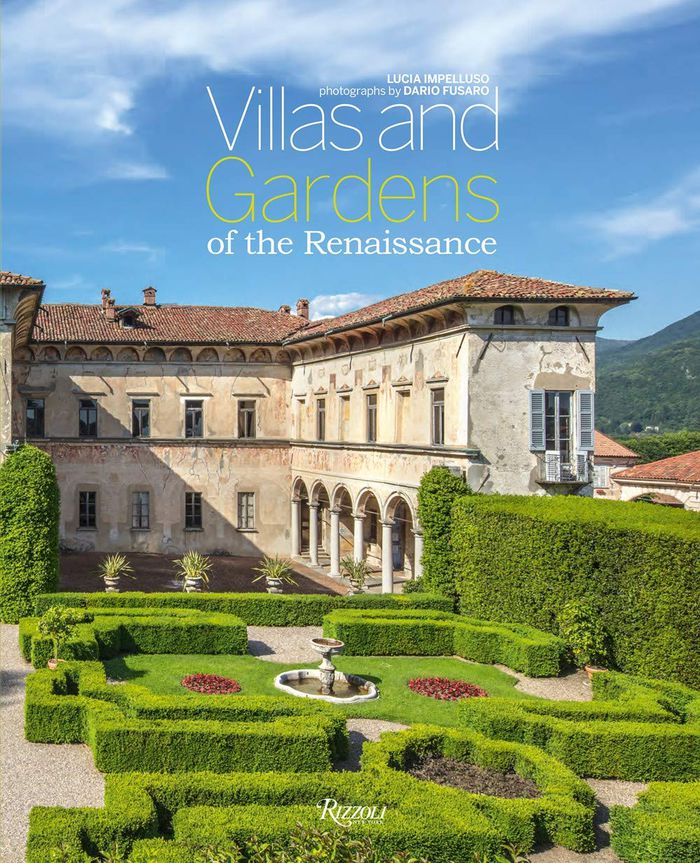
The book illustrates nine locations of artistic and architectural interest, conceived by prominent Italian families and dynasties as urban villas or country houses centered around the pursuit of entertainment and leisure. These lavishly decorated and frescoed palaces are adorned with handcrafted furniture and works of art and surrounded by gardens that retain their original layout to this day--a very rare feature. An historical text introduces each property, giving an overview of its origins. The villas have been specially photographed for this book by Dario Fusaro, with views of both the palace interiors and their grounds, as well as the gardens, glimpses of the halls, details of the furnishings, and a focus on the frescoes, where still preserved. Explanatory text offers insights on the most interesting frescoes, such as those of Veronese at Villa Barbaro. For the first time, Fusaro also employs a drone with the purpose of capturing the architectural structure and elements of each Italian Renaissance garden, from above and as a whole.
Villas and gardens of the Renaissance
Actions:
Price:
$67.50
(available to order)
Summary:
The book illustrates nine locations of artistic and architectural interest, conceived by prominent Italian families and dynasties as urban villas or country houses centered around the pursuit of entertainment and leisure. These lavishly decorated and frescoed palaces are adorned with handcrafted furniture and works of art and surrounded by gardens that retain their original layout to this day--a very rare feature. An historical text introduces each property, giving an overview of its origins. The villas have been specially photographed for this book by Dario Fusaro, with views of both the palace interiors and their grounds, as well as the gardens, glimpses of the halls, details of the furnishings, and a focus on the frescoes, where still preserved. Explanatory text offers insights on the most interesting frescoes, such as those of Veronese at Villa Barbaro. For the first time, Fusaro also employs a drone with the purpose of capturing the architectural structure and elements of each Italian Renaissance garden, from above and as a whole.
Form:
books
books
Publication:
December 2019
December 2019
Subject:
Gardens
Gardens
Form:
books
books
Actions:
Price:
$29.95
(available in store)
Summary:
''Spatializing justice'' calls for architects and urban designers to do more than design buildings and physical systems. Architects should take a position against inequality and practice accordingly. With these thirty short, manifesto-like texts—building blocks for a new kind of architecture—Spatializing Justice offers a practical handbook for confronting social and(...)
$29.95
(available in store)
Summary:
''Spatializing justice'' calls for architects and urban designers to do more than design buildings and physical systems. Architects should take a position against inequality and practice accordingly. With these thirty short, manifesto-like texts—building blocks for a new kind of architecture—Spatializing Justice offers a practical handbook for confronting social and(...)
Publication:
October 2022
October 2022
Title:
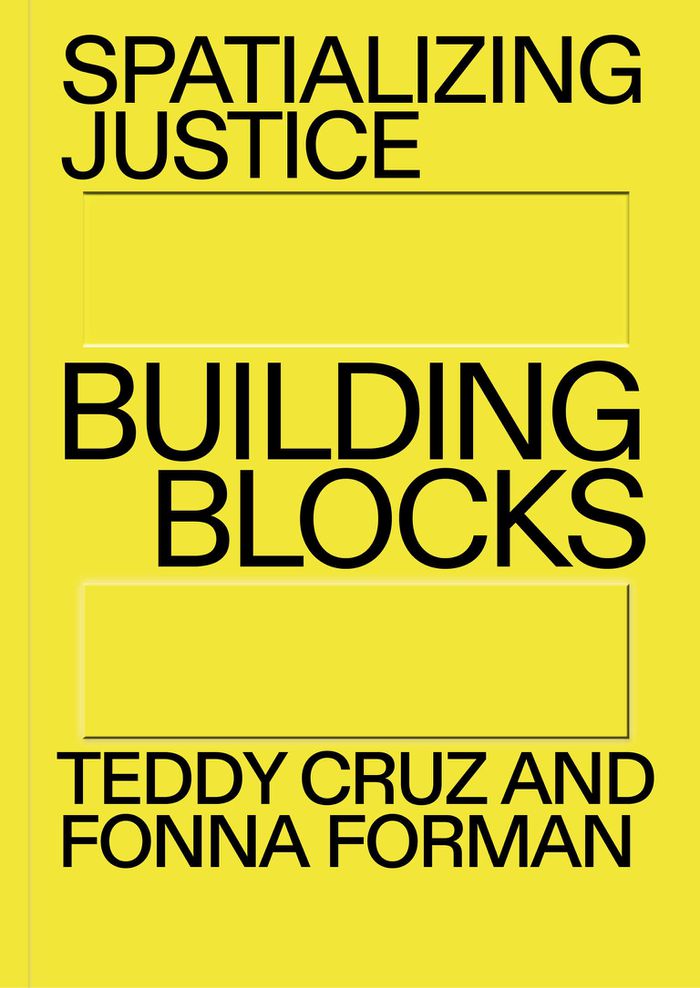
Spatializing justice: Building blocks
Actions:
Price:
$29.95
(available in store)
Summary:
''Spatializing justice'' calls for architects and urban designers to do more than design buildings and physical systems. Architects should take a position against inequality and practice accordingly. With these thirty short, manifesto-like texts—building blocks for a new kind of architecture—Spatializing Justice offers a practical handbook for confronting social and economic inequality and uneven urban growth in architectural and planning practice, urging practitioners to adopt approaches that range from redefining infrastructure to retrofitting McMansions. These building blocks call for expanded modes of practice, through which architects can imagine new spatial procedures, political and economic strategies, and modalities of sociability. Challenging existing exclusionary policies can advance a more experimental architecture not bound by formal parameters. Architects must think of themselves as designers not only of things but of civic processes, complicate the ideas of ownership and property, and imagine new sites of research, pedagogy, and intervention. As one of the texts advises, ''The questions must be different questions if we want different answers.''
Spatializing justice: Building blocks
Actions:
Price:
$29.95
(available in store)
Summary:
''Spatializing justice'' calls for architects and urban designers to do more than design buildings and physical systems. Architects should take a position against inequality and practice accordingly. With these thirty short, manifesto-like texts—building blocks for a new kind of architecture—Spatializing Justice offers a practical handbook for confronting social and economic inequality and uneven urban growth in architectural and planning practice, urging practitioners to adopt approaches that range from redefining infrastructure to retrofitting McMansions. These building blocks call for expanded modes of practice, through which architects can imagine new spatial procedures, political and economic strategies, and modalities of sociability. Challenging existing exclusionary policies can advance a more experimental architecture not bound by formal parameters. Architects must think of themselves as designers not only of things but of civic processes, complicate the ideas of ownership and property, and imagine new sites of research, pedagogy, and intervention. As one of the texts advises, ''The questions must be different questions if we want different answers.''
Form:
books
books
Publication:
October 2022
October 2022


