


39 Results
Form:
books
books
Actions:
Holdings:
Description:
192 pages : color illustrations, color maps ; 24 cm
Description:
192 pages : color illustrations, color maps ; 24 cm
Author:
Subject:
- Company town architecture Russia (Federation) Pictorial works.,
- Company town architecture Soviet Union Pictorial works.,
- Architecture Russia (Federation) Pictorial works.,
- Architecture Soviet Union Pictorial works.,
- Concrete construction Russia (Federation) Pictorial works.,
- Concrete construction Soviet Union Pictorial works.,
- Company towns Russia (Federation) Pictorial works.,
- Company towns Soviet Union Pictorial works.,
- Historic industrial sites Russia (Federation) Pictorial works.,
- Historic industrial sites Soviet Union Pictorial works.,
- Photography Russia (Federation),
- Architecture URSS Ouvrages illustrés.,
- Construction en béton Russie Ouvrages illustrés.,
- Construction en béton URSS Ouvrages illustrés.,
- Sites industriels historiques Russie Ouvrages illustrés.,
- Sites industriels historiques URSS Ouvrages illustrés.,
- Photographie Russie.,
- Architecture,
- Company town architecture,
- Company towns,
- Concrete construction,
- Historic industrial sites,
- Photography,
- Russia (Federation),
- Soviet Union.,
- Illustrated works
(See more)
Publication:
Poznań, Poland : Zupagrafika, 2021., ©2021
Poznań, Poland : Zupagrafika, 2021., ©2021
Title:
Monotowns : Soviet landscapes of post-industrial Russia / by Zupagrafika ; photography, Alexander Veryovkin ; foreword, Konstantin Budarin.
Actions:
Holdings:
Description:
192 pages : color illustrations, color maps ; 24 cm
Monotowns : Soviet landscapes of post-industrial Russia / by Zupagrafika ; photography, Alexander Veryovkin ; foreword, Konstantin Budarin.
Actions:
Holdings:
Description:
192 pages : color illustrations, color maps ; 24 cm
Form:
books
books
Publication:
Poznań, Poland : Zupagrafika, 2021., ©2021
Poznań, Poland : Zupagrafika, 2021., ©2021
Subject:
- Company town architecture Russia (Federation) Pictorial works.,
- Company town architecture Soviet Union Pictorial works.,
- Architecture Russia (Federation) Pictorial works.,
- Architecture Soviet Union Pictorial works.,
- Concrete construction Russia (Federation) Pictorial works.,
- Concrete construction Soviet Union Pictorial works.,
- Company towns Russia (Federation) Pictorial works.,
- Company towns Soviet Union Pictorial works.,
- Historic industrial sites Russia (Federation) Pictorial works.,
- Historic industrial sites Soviet Union Pictorial works.,
- Photography Russia (Federation),
- Architecture URSS Ouvrages illustrés.,
- Construction en béton Russie Ouvrages illustrés.,
- Construction en béton URSS Ouvrages illustrés.,
- Sites industriels historiques Russie Ouvrages illustrés.,
- Sites industriels historiques URSS Ouvrages illustrés.,
- Photographie Russie.,
- Architecture,
- Company town architecture,
- Company towns,
- Concrete construction,
- Historic industrial sites,
- Photography,
- Russia (Federation),
- Soviet Union.,
- Illustrated works
(See more)
Form:
books
books
Actions:
Description:
1 online resource
Subject:
- Architectural criticism.,
- Archives.,
- Historiography.,
- Housing.,
- Modern movement (Architecture),
- City planning.,
- Critique d'architecture.,
- Historiographie.,
- Taudis Élimination.,
- Mouvement moderne (Architecture),
- architectural criticism.,
- historiography.,
- slum clearance.,
- Urban & Land Use Planning.,
- ARCHITECTURE.,
- Essays,
- Electronic books.
(See more)
Publication:
[Place of publication not identified] : Strelka Press, 2013.
[Place of publication not identified] : Strelka Press, 2013.
Form:
books
books
Publication:
[Place of publication not identified] : Strelka Press, 2013.
[Place of publication not identified] : Strelka Press, 2013.
Subject:
- Architectural criticism.,
- Archives.,
- Historiography.,
- Housing.,
- Modern movement (Architecture),
- City planning.,
- Critique d'architecture.,
- Historiographie.,
- Taudis Élimination.,
- Mouvement moderne (Architecture),
- architectural criticism.,
- historiography.,
- slum clearance.,
- Urban & Land Use Planning.,
- ARCHITECTURE.,
- Essays,
- Electronic books.
(See more)
Form:
books
books
Actions:
Holdings:
Description:
236 pages : color illustrations ; 17 x 21 cm
Description:
236 pages : color illustrations ; 17 x 21 cm
Subject:
- Kotov, Arseniy.,
- Architectural photography Russia (Federation),
- Architectural photography Former Soviet republics.,
- Cities and towns Russia (Federation) Pictorial works.,
- Cities and towns Former Soviet republics Pictorial works.,
- Photography, Artistic.,
- Photographie d'architecture Russie.,
- Photographie d'architecture Ex-URSS.,
- Photographie artistique.,
- art photography.,
- Architectural photography,
- Cities and towns,
- Soviet Union Former Soviet republics,
- Russia (Federation),
- photobooks.,
- Photobooks,
- Pictorial works,
- Livres de photographies.
(See more)
Publication:
London : Fuel Design & Publishing, 2020., ©2020
London : Fuel Design & Publishing, 2020., ©2020
Title:
Soviet Cities = Sovetskiye goroda / Arseniy Kotov.
Actions:
Holdings:
Description:
236 pages : color illustrations ; 17 x 21 cm
Soviet Cities = Sovetskiye goroda / Arseniy Kotov.
Actions:
Holdings:
Description:
236 pages : color illustrations ; 17 x 21 cm
Form:
books
books
Publication:
London : Fuel Design & Publishing, 2020., ©2020
London : Fuel Design & Publishing, 2020., ©2020
Subject:
- Kotov, Arseniy.,
- Architectural photography Russia (Federation),
- Architectural photography Former Soviet republics.,
- Cities and towns Russia (Federation) Pictorial works.,
- Cities and towns Former Soviet republics Pictorial works.,
- Photography, Artistic.,
- Photographie d'architecture Russie.,
- Photographie d'architecture Ex-URSS.,
- Photographie artistique.,
- art photography.,
- Architectural photography,
- Cities and towns,
- Soviet Union Former Soviet republics,
- Russia (Federation),
- photobooks.,
- Photobooks,
- Pictorial works,
- Livres de photographies.
(See more)
Form:
books
books
Actions:
Price:
$76.95
(available to order)
Summary:
Soviet mass housing is a contradictory but unique phenomenon. It is usually blamed for creating the most monotonous built environment in the history of mankind, thus constituting a symbol of individual suppression and dejection. The construction programme launched in the post-Stalinist era was the largest undertaken in modern architectural history worldwide. At the same(...)
$76.95
(available to order)
Summary:
Soviet mass housing is a contradictory but unique phenomenon. It is usually blamed for creating the most monotonous built environment in the history of mankind, thus constituting a symbol of individual suppression and dejection. The construction programme launched in the post-Stalinist era was the largest undertaken in modern architectural history worldwide. At the same(...)
Title:
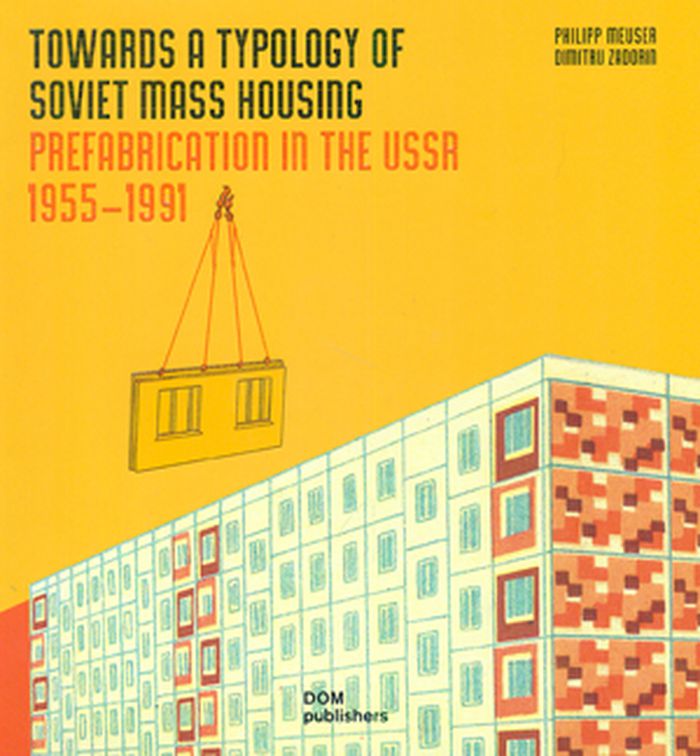
Towards a Typology of Soviet Mass Housing: Prefabrication in the USSR 1955 a 1991
Actions:
Price:
$76.95
(available to order)
Summary:
Soviet mass housing is a contradictory but unique phenomenon. It is usually blamed for creating the most monotonous built environment in the history of mankind, thus constituting a symbol of individual suppression and dejection. The construction programme launched in the post-Stalinist era was the largest undertaken in modern architectural history worldwide. At the same time, Soviet mass housing fulfilled a colossal social role, providing tens of millions of families with their own apartments. It shaped the culture and everyday life of nearly all Soviet citizens. Yet, due to the very scale of construction, it managed to evolve into a complex world denoting an abundance of myths and secrets, achievements and failures. Soviet mass housing is indisputably intriguing, but nevertheless it is still neglected as a theme of research. Therefore, the time is ripe for a critical appraisal of this ambitious project. The authors aim to identify the most significant mass housing series designed and engineered from Kaliningrad to Vladivostok.
Towards a Typology of Soviet Mass Housing: Prefabrication in the USSR 1955 a 1991
Actions:
Price:
$76.95
(available to order)
Summary:
Soviet mass housing is a contradictory but unique phenomenon. It is usually blamed for creating the most monotonous built environment in the history of mankind, thus constituting a symbol of individual suppression and dejection. The construction programme launched in the post-Stalinist era was the largest undertaken in modern architectural history worldwide. At the same time, Soviet mass housing fulfilled a colossal social role, providing tens of millions of families with their own apartments. It shaped the culture and everyday life of nearly all Soviet citizens. Yet, due to the very scale of construction, it managed to evolve into a complex world denoting an abundance of myths and secrets, achievements and failures. Soviet mass housing is indisputably intriguing, but nevertheless it is still neglected as a theme of research. Therefore, the time is ripe for a critical appraisal of this ambitious project. The authors aim to identify the most significant mass housing series designed and engineered from Kaliningrad to Vladivostok.
Form:
books
books
Publication:
February 2016
February 2016
Subject:
Collective Housing
Collective Housing
Form:
books
books
Actions:
Holdings:
Description:
190 pages : illustrations (some color), plans ; 23 cm x 22 cm.
Description:
190 pages : illustrations (some color), plans ; 23 cm x 22 cm.
Subject:
- Prigov, Dmitriĭ Aleksandrovich, 1940-2007 Homes and haunts.,
- Architecture, Domestic Conservation and restoration Russia (Federation) Moscow.,
- Dwellings Conservation and restoration Russia (Federation) Moscow.,
- Conceptual art Russia (Federation) Moscow.,
- Architecture domestique Conservation et restauration Russie Moscou.,
- Habitations Conservation et restauration Russie Moscou.,
- Art conceptuel Russie Moscou.,
- Architecture, Domestic Conservation and restoration,
- Buildings,
- Dwellings Conservation and restoration,
- Architecture domestique Conservation et restauration Russie Moscou (Russie).,
- Habitations Conservation et restauration Russie Moscou (Russie).,
- Moscow (Russia) Buildings, structures, etc.,
- Russia (Federation) Moscow
(See more)
Publication:
Berlin : Dom Publishers ; Moscow : Strelka Institute, 2015., ©2015
Berlin : Dom Publishers ; Moscow : Strelka Institute, 2015., ©2015
Title:
Belyayevo forever : a Soviet microrayon on its way to the UNESCO list / Kuba Snopek ; [translation, Anna Zaytseva].
Actions:
Holdings:
Description:
190 pages : illustrations (some color), plans ; 23 cm x 22 cm.
Belyayevo forever : a Soviet microrayon on its way to the UNESCO list / Kuba Snopek ; [translation, Anna Zaytseva].
Actions:
Holdings:
Description:
190 pages : illustrations (some color), plans ; 23 cm x 22 cm.
Form:
books
books
Publication:
Berlin : Dom Publishers ; Moscow : Strelka Institute, 2015., ©2015
Berlin : Dom Publishers ; Moscow : Strelka Institute, 2015., ©2015
Subject:
- Prigov, Dmitriĭ Aleksandrovich, 1940-2007 Homes and haunts.,
- Architecture, Domestic Conservation and restoration Russia (Federation) Moscow.,
- Dwellings Conservation and restoration Russia (Federation) Moscow.,
- Conceptual art Russia (Federation) Moscow.,
- Architecture domestique Conservation et restauration Russie Moscou.,
- Habitations Conservation et restauration Russie Moscou.,
- Art conceptuel Russie Moscou.,
- Architecture, Domestic Conservation and restoration,
- Buildings,
- Dwellings Conservation and restoration,
- Architecture domestique Conservation et restauration Russie Moscou (Russie).,
- Habitations Conservation et restauration Russie Moscou (Russie).,
- Moscow (Russia) Buildings, structures, etc.,
- Russia (Federation) Moscow
(See more)
Form:
books
books
Actions:
Holdings:
Description:
247 pages, 1 unnumbered page : illustrations (chiefly color), color plans, facsimiles ; 17 x 21 cm
Description:
247 pages, 1 unnumbered page : illustrations (chiefly color), color plans, facsimiles ; 17 x 21 cm
Author:
Subject:
- Herwig, Christopher.,
- Architectural photography.,
- Photography, Artistic.,
- Subway stations Soviet Union Pictorial works.,
- Subway stations Russia (Federation) Pictorial works.,
- Subway stations Former Soviet republics Pictorial works.,
- Subways Russia (Federation) Pictorial works.,
- Subways Former Soviet republics Pictorial works.,
- Photographie d'architecture.,
- Photographie artistique.,
- Stations de métro URSS Ouvrages illustrés.,
- Stations de métro Russie Ouvrages illustrés.,
- Stations de métro Ex-URSS Ouvrages illustrés.,
- Métros Russie Ouvrages illustrés.,
- Métros Ex-URSS Ouvrages illustrés.,
- art photography.,
- 21.40 photographic art: general.,
- Photography.,
- Buildings,
- Subway stations,
- Subways,
- Fotografie,
- Untergrundbahnstation,
- volume nc.,
- text txt.,
- unmediated n.,
- Former Soviet republics Buildings, structures, etc. Pictorial works.,
- Ex-URSS Constructions Ouvrages illustrés.,
- Soviet Union,
- Russia (Federation),
- Soviet Union Former Soviet republics,
- Sowjetunion,
- photobooks.,
- illustrated books.,
- Photobooks,
- Illustrated works,
- Livres de photographies.,
- Ouvrages illustrés.
(See more)
Publication:
London : Martin & Sorrell FUEL Ltd, 2019., ©2019
London : Martin & Sorrell FUEL Ltd, 2019., ©2019
Title:
Soviet metro stations / Christopher Herwig, Owen Hatherley ; [edited by Damon Murray, Stephen Sorrell].
Actions:
Holdings:
Description:
247 pages, 1 unnumbered page : illustrations (chiefly color), color plans, facsimiles ; 17 x 21 cm
Soviet metro stations / Christopher Herwig, Owen Hatherley ; [edited by Damon Murray, Stephen Sorrell].
Actions:
Holdings:
Description:
247 pages, 1 unnumbered page : illustrations (chiefly color), color plans, facsimiles ; 17 x 21 cm
Form:
books
books
Publication:
London : Martin & Sorrell FUEL Ltd, 2019., ©2019
London : Martin & Sorrell FUEL Ltd, 2019., ©2019
Subject:
- Herwig, Christopher.,
- Architectural photography.,
- Photography, Artistic.,
- Subway stations Soviet Union Pictorial works.,
- Subway stations Russia (Federation) Pictorial works.,
- Subway stations Former Soviet republics Pictorial works.,
- Subways Russia (Federation) Pictorial works.,
- Subways Former Soviet republics Pictorial works.,
- Photographie d'architecture.,
- Photographie artistique.,
- Stations de métro URSS Ouvrages illustrés.,
- Stations de métro Russie Ouvrages illustrés.,
- Stations de métro Ex-URSS Ouvrages illustrés.,
- Métros Russie Ouvrages illustrés.,
- Métros Ex-URSS Ouvrages illustrés.,
- art photography.,
- 21.40 photographic art: general.,
- Photography.,
- Buildings,
- Subway stations,
- Subways,
- Fotografie,
- Untergrundbahnstation,
- volume nc.,
- text txt.,
- unmediated n.,
- Former Soviet republics Buildings, structures, etc. Pictorial works.,
- Ex-URSS Constructions Ouvrages illustrés.,
- Soviet Union,
- Russia (Federation),
- Soviet Union Former Soviet republics,
- Sowjetunion,
- photobooks.,
- illustrated books.,
- Photobooks,
- Illustrated works,
- Livres de photographies.,
- Ouvrages illustrés.
(See more)
Form:
books
books
Actions:
Price:
$80.95
(available to order)
Summary:
Photographer Frédéric Chaubin reveals 90 buildings sited in fourteen former Soviet Republics which express what he considers to be the fourth age of Soviet architecture. His poetic pictures reveal an unexpected rebirth of imagination, an unknown burgeoning that took place from 1970 until 1990. Contrary to the 1920s and 1950s, no “school” or main trend emerges here. These(...)
$80.95
(available to order)
Summary:
Photographer Frédéric Chaubin reveals 90 buildings sited in fourteen former Soviet Republics which express what he considers to be the fourth age of Soviet architecture. His poetic pictures reveal an unexpected rebirth of imagination, an unknown burgeoning that took place from 1970 until 1990. Contrary to the 1920s and 1950s, no “school” or main trend emerges here. These(...)
Subject:
Photography monographs
Photography monographs
Publication:
September 2010
September 2010
Title:
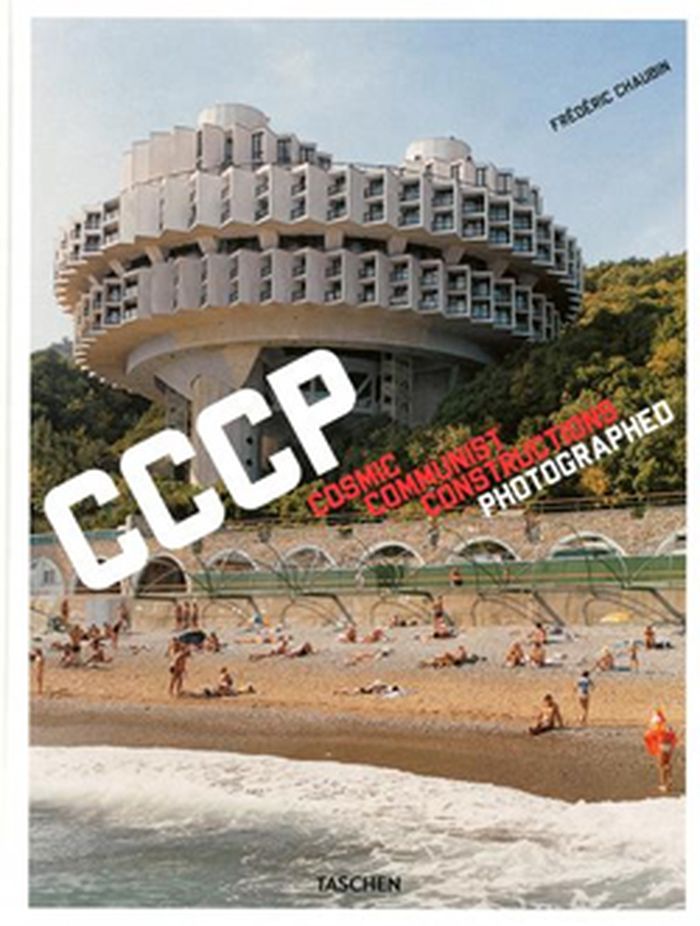
Cosmic communist constructions photographed
Actions:
Price:
$80.95
(available to order)
Summary:
Photographer Frédéric Chaubin reveals 90 buildings sited in fourteen former Soviet Republics which express what he considers to be the fourth age of Soviet architecture. His poetic pictures reveal an unexpected rebirth of imagination, an unknown burgeoning that took place from 1970 until 1990. Contrary to the 1920s and 1950s, no “school” or main trend emerges here. These buildings represent a chaotic impulse brought about by a decaying system. Their diversity announced the end of the Soviet Union. Taking advantage of the collapsing monolithic structure, the holes in the widening net, architects went far beyond modernism, going back to the roots or freely innovating. Some of the daring ones completed projects that the Constructivists would have dreamt of (Druzhba Sanatorium, Yalta), others expressed their imagination in an expressionist way (Palace of Weddings, Tbilisi). A summer camp, inspired by sketches of a prototype lunar base, lays claim to Suprematist influence (Prometheus youth camp, Bogatyr). Then comes the "speaking architecture" widespread in the last years of the USSR : a crematorium adorned with concrete flames (Crematorium, Kiev), a technological institute with a flying saucer crashed on the roof (Institute of Scientific Research, Kiev), a political center watching you like Big Brother (House of Soviets, Kaliningrad). This puzzle of styles testifies to all the ideological dreams of the period, from the obsession with the cosmos to the rebirth of identity. It also outlines the geography of the USSR, showing how local influences made their exotic twists before the country was brought to its end.
Cosmic communist constructions photographed
Actions:
Price:
$80.95
(available to order)
Summary:
Photographer Frédéric Chaubin reveals 90 buildings sited in fourteen former Soviet Republics which express what he considers to be the fourth age of Soviet architecture. His poetic pictures reveal an unexpected rebirth of imagination, an unknown burgeoning that took place from 1970 until 1990. Contrary to the 1920s and 1950s, no “school” or main trend emerges here. These buildings represent a chaotic impulse brought about by a decaying system. Their diversity announced the end of the Soviet Union. Taking advantage of the collapsing monolithic structure, the holes in the widening net, architects went far beyond modernism, going back to the roots or freely innovating. Some of the daring ones completed projects that the Constructivists would have dreamt of (Druzhba Sanatorium, Yalta), others expressed their imagination in an expressionist way (Palace of Weddings, Tbilisi). A summer camp, inspired by sketches of a prototype lunar base, lays claim to Suprematist influence (Prometheus youth camp, Bogatyr). Then comes the "speaking architecture" widespread in the last years of the USSR : a crematorium adorned with concrete flames (Crematorium, Kiev), a technological institute with a flying saucer crashed on the roof (Institute of Scientific Research, Kiev), a political center watching you like Big Brother (House of Soviets, Kaliningrad). This puzzle of styles testifies to all the ideological dreams of the period, from the obsession with the cosmos to the rebirth of identity. It also outlines the geography of the USSR, showing how local influences made their exotic twists before the country was brought to its end.
Form:
books
books
Publication:
September 2010
September 2010
Subject:
Photography monographs
Photography monographs
Form:
books
books
Actions:
Price:
$62.95
(available in store)
Summary:
With the two volumes of Las grandes esperanzas (1976-1992), published in Spanish, Luis Fernández-Galiano looks back on a troubled and fertile era that in Spain began with the Transition to democracy and in the world saw the rise of conservative politics with Reagan and Thatcher at the helm, to last until the historic rupture that followed the fall of the Berlin Wall and(...)
$62.95
(available in store)
Summary:
With the two volumes of Las grandes esperanzas (1976-1992), published in Spanish, Luis Fernández-Galiano looks back on a troubled and fertile era that in Spain began with the Transition to democracy and in the world saw the rise of conservative politics with Reagan and Thatcher at the helm, to last until the historic rupture that followed the fall of the Berlin Wall and(...)
Title:
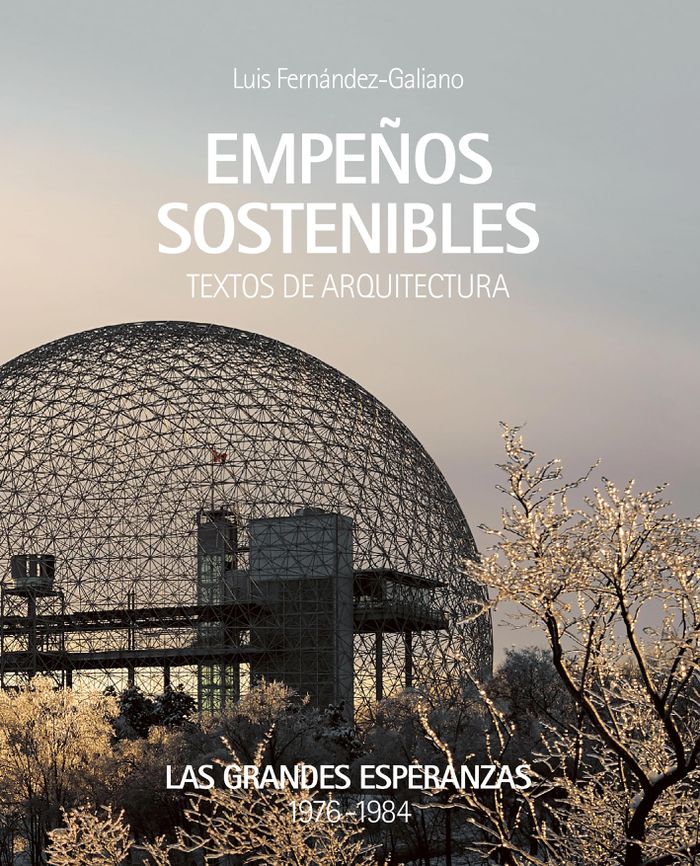
Empenos Sostenibles - Las Grandes Esperanzas 1976-1984
Actions:
Price:
$62.95
(available in store)
Summary:
With the two volumes of Las grandes esperanzas (1976-1992), published in Spanish, Luis Fernández-Galiano looks back on a troubled and fertile era that in Spain began with the Transition to democracy and in the world saw the rise of conservative politics with Reagan and Thatcher at the helm, to last until the historic rupture that followed the fall of the Berlin Wall and the break-up of the USSR. The first tome, Empeños sostenibles (1976-1984), dissects a period marked by the economic recession and ecological awakening brought on by the petroleum shocks that rocked the planet, matters addressed by two dozen texts on technological alternatives, sustainable construction, and the relationship between architecture and energy.
Empenos Sostenibles - Las Grandes Esperanzas 1976-1984
Actions:
Price:
$62.95
(available in store)
Summary:
With the two volumes of Las grandes esperanzas (1976-1992), published in Spanish, Luis Fernández-Galiano looks back on a troubled and fertile era that in Spain began with the Transition to democracy and in the world saw the rise of conservative politics with Reagan and Thatcher at the helm, to last until the historic rupture that followed the fall of the Berlin Wall and the break-up of the USSR. The first tome, Empeños sostenibles (1976-1984), dissects a period marked by the economic recession and ecological awakening brought on by the petroleum shocks that rocked the planet, matters addressed by two dozen texts on technological alternatives, sustainable construction, and the relationship between architecture and energy.
Form:
books
books
Publication:
April 2021
April 2021
Subject:
Contemporary Architecture
Contemporary Architecture
Form:
books
books
Price:
$52.95
(available to order)
Summary:
Preservation is ordinarily reserved for architecture that is unique. So how would we go about preserving buildings that are utterly generic? Such is the case with Belyayevo, an ordinary residential district in Moscow. Belyayevo is a typical microrayon – the standardised neighbourhood system that successive Soviet regimes laid out across the USSR in what was the most(...)
$52.95
(available to order)
Summary:
Preservation is ordinarily reserved for architecture that is unique. So how would we go about preserving buildings that are utterly generic? Such is the case with Belyayevo, an ordinary residential district in Moscow. Belyayevo is a typical microrayon – the standardised neighbourhood system that successive Soviet regimes laid out across the USSR in what was the most(...)
Publication:
January 2016
January 2016
Title:
Belyayevo forever: a Soviet microrayon on its way to the UNESCO list
Actions:
Price:
$52.95
(available to order)
Summary:
Preservation is ordinarily reserved for architecture that is unique. So how would we go about preserving buildings that are utterly generic? Such is the case with Belyayevo, an ordinary residential district in Moscow. Belyayevo is a typical microrayon – the standardised neighbourhood system that successive Soviet regimes laid out across the USSR in what was the most expansive programme of industrialised construction the world has ever seen. Belyayevo’s buildings, and the desolate spaces between them, are identical to thousands of others, but is it different? Kuba Snopek argues that it is. Home to many of the artists of the Moscow Conceptualism school, the place was written into the character of their art. Snopek argues that this intangible heritage is the key to saving a neighbourhood many feel has had its day. But as Russia comes to terms with ist Soviet legacy, will such arguments fall on deaf ears?
Belyayevo forever: a Soviet microrayon on its way to the UNESCO list
Actions:
Price:
$52.95
(available to order)
Summary:
Preservation is ordinarily reserved for architecture that is unique. So how would we go about preserving buildings that are utterly generic? Such is the case with Belyayevo, an ordinary residential district in Moscow. Belyayevo is a typical microrayon – the standardised neighbourhood system that successive Soviet regimes laid out across the USSR in what was the most expansive programme of industrialised construction the world has ever seen. Belyayevo’s buildings, and the desolate spaces between them, are identical to thousands of others, but is it different? Kuba Snopek argues that it is. Home to many of the artists of the Moscow Conceptualism school, the place was written into the character of their art. Snopek argues that this intangible heritage is the key to saving a neighbourhood many feel has had its day. But as Russia comes to terms with ist Soviet legacy, will such arguments fall on deaf ears?
Form:
books
books
Publication:
January 2016
January 2016


