


40 Results
Form:
books
books
Actions:
Description:
1 online resource
Author:
Subject:
Publication:
[Place of publication not identified] : gta Verlag, 2022.
[Place of publication not identified] : gta Verlag, 2022.
Title:
Architecture in Islamic Countries: Selections from the Catalogue for the Second International Exhibition of Architecture Venice 1982/83.
Actions:
Description:
1 online resource
Architecture in Islamic Countries: Selections from the Catalogue for the Second International Exhibition of Architecture Venice 1982/83.
Actions:
Description:
1 online resource
Form:
books
books
Publication:
[Place of publication not identified] : gta Verlag, 2022.
[Place of publication not identified] : gta Verlag, 2022.
Author:
Subject:
Form:
books
books
Actions:
Subject:
Publication:
The Avery Review 2023
The Avery Review 2023
Form:
books
books
Publication:
The Avery Review 2023
The Avery Review 2023
Subject:
Form:
books
books
Actions:
Holdings:
Description:
xxiii, 231 pages : illustrations ; 25 cm.
Description:
xxiii, 231 pages : illustrations ; 25 cm.
Author:
Subject:
Publication:
Williamstown, Massachusetts : Sterling and Francine Clark Art Institute, [2014], New Haven ; London : Yale University Press, ©2014
Williamstown, Massachusetts : Sterling and Francine Clark Art Institute, [2014], New Haven ; London : Yale University Press, ©2014
Title:
Art history in the wake of the global turn / edited by Jill H. Casid and Aruna D'Souza.
Actions:
Holdings:
Description:
xxiii, 231 pages : illustrations ; 25 cm.
Art history in the wake of the global turn / edited by Jill H. Casid and Aruna D'Souza.
Actions:
Holdings:
Description:
xxiii, 231 pages : illustrations ; 25 cm.
Form:
books
books
Publication:
Williamstown, Massachusetts : Sterling and Francine Clark Art Institute, [2014], New Haven ; London : Yale University Press, ©2014
Williamstown, Massachusetts : Sterling and Francine Clark Art Institute, [2014], New Haven ; London : Yale University Press, ©2014
Author:
Subject:
Form:
books
books
Price:
$38.95
(available in store)
Summary:
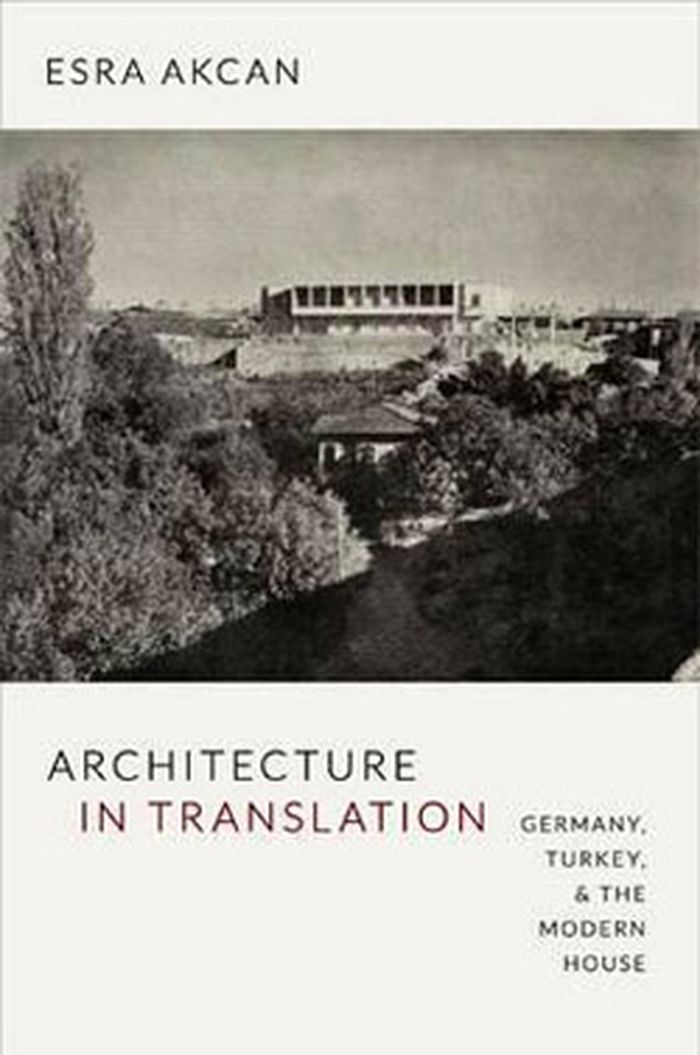
In Architecture in Translation, Esra Akcan offers a way to understand the global circulation of culture that extends the notion of translation beyond language to visual fields. She shows how members of the ruling Kemalist elite in Turkey further aligned themselves with Europe by choosing German-speaking architects to oversee much of the design of modern cities. Focusing(...)
$38.95
(available in store)
Summary:
In Architecture in Translation, Esra Akcan offers a way to understand the global circulation of culture that extends the notion of translation beyond language to visual fields. She shows how members of the ruling Kemalist elite in Turkey further aligned themselves with Europe by choosing German-speaking architects to oversee much of the design of modern cities. Focusing(...)
Title:
Architecture in translation : Germany, Turkey & the modern house
Actions:
Price:
$38.95
(available in store)
Summary:
In Architecture in Translation, Esra Akcan offers a way to understand the global circulation of culture that extends the notion of translation beyond language to visual fields. She shows how members of the ruling Kemalist elite in Turkey further aligned themselves with Europe by choosing German-speaking architects to oversee much of the design of modern cities. Focusing on the period from the 1920s through the 1950s, Akcan traces the geographical circulation of modern residential models, including the garden city—which emphasized green spaces separating low-density neighborhoods of houses surrounded by gardens—and mass housing built first for the working-class residents in industrial cities and, later, more broadly for mixed-income residents. She shows how the concept of translation—the process of change that occurs with transportation of people, ideas, technology, information, and images from one or more countries to another—allows for consideration of the sociopolitical context and agency of all parties in cultural exchanges. Moving beyond the indistinct concepts of hybrid and transculturation and avoiding passive metaphors such as import, influence, or transfer, translation offers a new approach relevant to many disciplines. Akcan advocates a commitment to a new culture of translatability from below for a truly cosmopolitan ethics in a globalizing world.
Architecture in translation : Germany, Turkey & the modern house
Actions:
Price:
$38.95
(available in store)
Summary:
In Architecture in Translation, Esra Akcan offers a way to understand the global circulation of culture that extends the notion of translation beyond language to visual fields. She shows how members of the ruling Kemalist elite in Turkey further aligned themselves with Europe by choosing German-speaking architects to oversee much of the design of modern cities. Focusing on the period from the 1920s through the 1950s, Akcan traces the geographical circulation of modern residential models, including the garden city—which emphasized green spaces separating low-density neighborhoods of houses surrounded by gardens—and mass housing built first for the working-class residents in industrial cities and, later, more broadly for mixed-income residents. She shows how the concept of translation—the process of change that occurs with transportation of people, ideas, technology, information, and images from one or more countries to another—allows for consideration of the sociopolitical context and agency of all parties in cultural exchanges. Moving beyond the indistinct concepts of hybrid and transculturation and avoiding passive metaphors such as import, influence, or transfer, translation offers a new approach relevant to many disciplines. Akcan advocates a commitment to a new culture of translatability from below for a truly cosmopolitan ethics in a globalizing world.
Form:
books
books
Publication:
August 2012
August 2012
Subject:
Architectural Theory
Architectural Theory
Form:
books
books
Title:
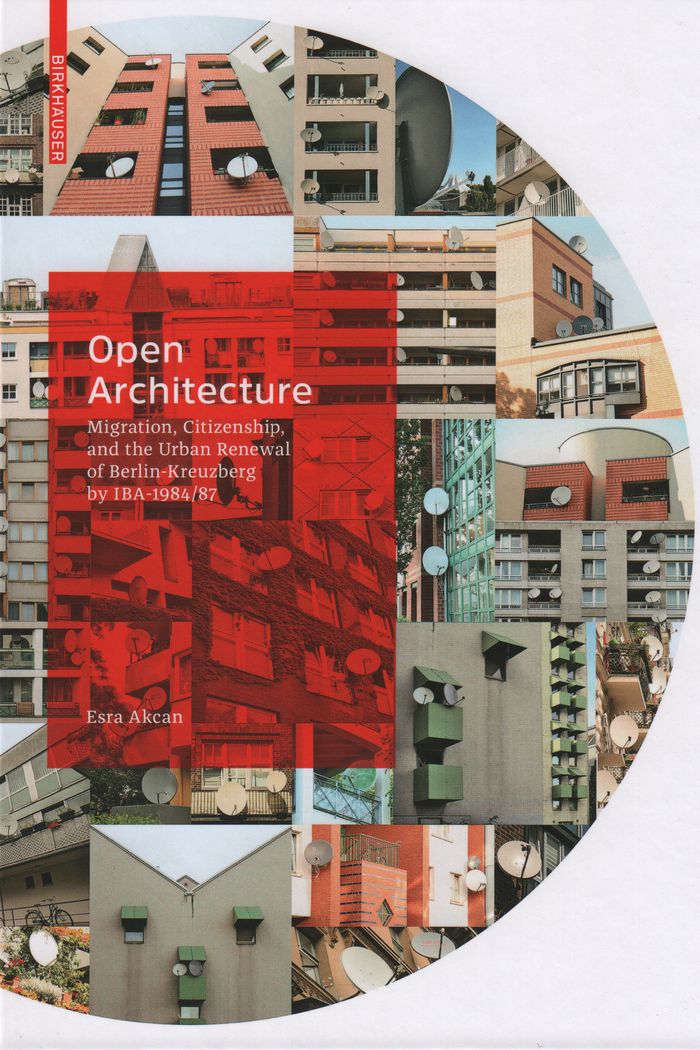
Open architecture: migration, citizenship, and the urban renewal of Berlin-Kreuzberg by IBA 1984-87
Open architecture: migration, citizenship, and the urban renewal of Berlin-Kreuzberg by IBA 1984-87
Actions:
Price:
$112.00
(available to order)
Summary:
The International Building Exhibition 1984/87 in Berlin constitutes one of the most remarkable examples to discuss "open architecture". Almost 10,000 dwellings were constructed or restored in the Kreuzberg districts adjacent to the Berlin Wall, inhabited about halfway by immigrants. The renowned author Esra Akcan, related in many ways to Turkey, Berlin and the USA,(...)
$112.00
(available to order)
Summary:
The International Building Exhibition 1984/87 in Berlin constitutes one of the most remarkable examples to discuss "open architecture". Almost 10,000 dwellings were constructed or restored in the Kreuzberg districts adjacent to the Berlin Wall, inhabited about halfway by immigrants. The renowned author Esra Akcan, related in many ways to Turkey, Berlin and the USA,(...)
Title:
Open architecture: migration, citizenship, and the urban renewal of Berlin-Kreuzberg by IBA 1984-87
Actions:
Price:
$112.00
(available to order)
Summary:
The International Building Exhibition 1984/87 in Berlin constitutes one of the most remarkable examples to discuss "open architecture". Almost 10,000 dwellings were constructed or restored in the Kreuzberg districts adjacent to the Berlin Wall, inhabited about halfway by immigrants. The renowned author Esra Akcan, related in many ways to Turkey, Berlin and the USA, narrates the history and reverberations of this architectural-political event.
Open architecture: migration, citizenship, and the urban renewal of Berlin-Kreuzberg by IBA 1984-87
Actions:
Price:
$112.00
(available to order)
Summary:
The International Building Exhibition 1984/87 in Berlin constitutes one of the most remarkable examples to discuss "open architecture". Almost 10,000 dwellings were constructed or restored in the Kreuzberg districts adjacent to the Berlin Wall, inhabited about halfway by immigrants. The renowned author Esra Akcan, related in many ways to Turkey, Berlin and the USA, narrates the history and reverberations of this architectural-political event.
Form:
books
books
Publication:
April 2018
April 2018
Subject:
Architectural Theory
Architectural Theory
Form:
books
books
Actions:
Holdings:
Description:
ix, 438 pages : illustrations, maps, plans, portraits ; 27 cm.
Description:
ix, 438 pages : illustrations, maps, plans, portraits ; 27 cm.
Author:
Subject:
Publication:
Pittsburgh : University of Pittsburgh Press, 2020., ©2020
Pittsburgh : University of Pittsburgh Press, 2020., ©2020
Title:
Race and modern architecture : a critical history from the Enlightenment to the present / edited by Irene Cheng, Charles L. Davis II, Mabel O. Wilson.
Actions:
Holdings:
Description:
ix, 438 pages : illustrations, maps, plans, portraits ; 27 cm.
Race and modern architecture : a critical history from the Enlightenment to the present / edited by Irene Cheng, Charles L. Davis II, Mabel O. Wilson.
Actions:
Holdings:
Description:
ix, 438 pages : illustrations, maps, plans, portraits ; 27 cm.
Form:
books
books
Publication:
Pittsburgh : University of Pittsburgh Press, 2020., ©2020
Pittsburgh : University of Pittsburgh Press, 2020., ©2020
Author:
Subject:
Form:
books
books
Actions:
Holdings:
Description:
424 pages : illustrations (chiefly color), maps (some color), plans (some color) ; 24 cm
Description:
424 pages : illustrations (chiefly color), maps (some color), plans (some color) ; 24 cm
Author:
Subject:
Publication:
Leuven (Belgium) : Leuven University Press, [2022]
Leuven (Belgium) : Leuven University Press, [2022]
Title:
Making home(s) in displacement : critical reflections on a spatial practice / edited by Luce Beeckmans [and three others].
Actions:
Holdings:
Description:
424 pages : illustrations (chiefly color), maps (some color), plans (some color) ; 24 cm
Making home(s) in displacement : critical reflections on a spatial practice / edited by Luce Beeckmans [and three others].
Actions:
Holdings:
Description:
424 pages : illustrations (chiefly color), maps (some color), plans (some color) ; 24 cm
Form:
books
books
Publication:
Leuven (Belgium) : Leuven University Press, [2022]
Leuven (Belgium) : Leuven University Press, [2022]
Author:
Subject:
Form:
books
books
Price:
$33.50
(available in store)
Summary:
This book is an account of modern architecture in Turkey, placing architecture's history in the larger social, political and cultural context of Turkey's development in the twentieth century. It takes the reader from the end of World War I, when the new Turkish Republic was born out of the disintegration of the Ottoman Empire, to the country's democratization after the(...)
$33.50
(available in store)
Summary:
This book is an account of modern architecture in Turkey, placing architecture's history in the larger social, political and cultural context of Turkey's development in the twentieth century. It takes the reader from the end of World War I, when the new Turkish Republic was born out of the disintegration of the Ottoman Empire, to the country's democratization after the(...)
Subject:
Architecture since 1900, Middle-East
Architecture since 1900, Middle-East
Publication:
November 2011
November 2011
Title:
Turkey
Actions:
Price:
$33.50
(available in store)
Summary:
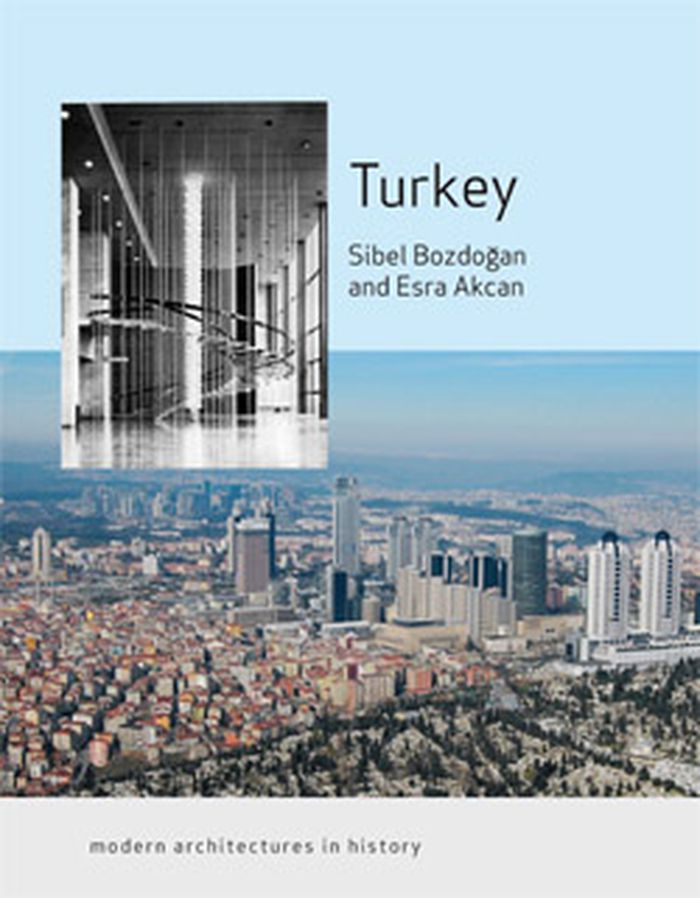
This book is an account of modern architecture in Turkey, placing architecture's history in the larger social, political and cultural context of Turkey's development in the twentieth century. It takes the reader from the end of World War I, when the new Turkish Republic was born out of the disintegration of the Ottoman Empire, to the country's democratization after the 1950s in the midst of the Cold War's competing ideological forces, and finally to the present, with Turkey continuing to be dramatically transformed through globalization, economic integration with the world market and transnational cultural influences, as well as with its renewed preoccupations with identity, including its Islamic and Ottoman heritage. Turkey explores a country on Europe's most eastern margin, and it is unique in tackling the issue of the modern and contemporary periods typically omitted in traditional surveys of modern architecture and Islamic art and architecture. The authors investigate how and why young Turkish architects adopted modernism early in the twentieth century and explore institutional and architect-designed buildings through the decades down to the present day, from government buildings, hotels and factories to apartment blocks and individual homes both urban and rural. They also focus on informal residential areas, and explain how some that have evolved from small settlements to colossal urban quarters exist at a slippery threshold between legality and illegality.
Turkey
Actions:
Price:
$33.50
(available in store)
Summary:
This book is an account of modern architecture in Turkey, placing architecture's history in the larger social, political and cultural context of Turkey's development in the twentieth century. It takes the reader from the end of World War I, when the new Turkish Republic was born out of the disintegration of the Ottoman Empire, to the country's democratization after the 1950s in the midst of the Cold War's competing ideological forces, and finally to the present, with Turkey continuing to be dramatically transformed through globalization, economic integration with the world market and transnational cultural influences, as well as with its renewed preoccupations with identity, including its Islamic and Ottoman heritage. Turkey explores a country on Europe's most eastern margin, and it is unique in tackling the issue of the modern and contemporary periods typically omitted in traditional surveys of modern architecture and Islamic art and architecture. The authors investigate how and why young Turkish architects adopted modernism early in the twentieth century and explore institutional and architect-designed buildings through the decades down to the present day, from government buildings, hotels and factories to apartment blocks and individual homes both urban and rural. They also focus on informal residential areas, and explain how some that have evolved from small settlements to colossal urban quarters exist at a slippery threshold between legality and illegality.
Form:
books
books
Publication:
November 2011
November 2011
Subject:
Architecture since 1900, Middle-East
Architecture since 1900, Middle-East
Form:
books
books

Title:
Architecture and the right to heal: Resettler nationalism in the aftermath of conflict and disaster
Architecture and the right to heal: Resettler nationalism in the aftermath of conflict and disaster
Actions:
Price:
$52.95
(available in store)
Summary:
In "Architecture and the right to heal," Esra Akcan calls for architecture to take an active role in healing communities affected by socioeconomic, political, and environmental disasters. Akcan frames these processes by discussing buildings and spaces in relation to climate change mitigation and transitional justice. Focusing on lands held by the former Ottoman Empire,(...)
$52.95
(available in store)
Summary:
In "Architecture and the right to heal," Esra Akcan calls for architecture to take an active role in healing communities affected by socioeconomic, political, and environmental disasters. Akcan frames these processes by discussing buildings and spaces in relation to climate change mitigation and transitional justice. Focusing on lands held by the former Ottoman Empire,(...)
Title:
Architecture and the right to heal: Resettler nationalism in the aftermath of conflict and disaster
Actions:
Price:
$52.95
(available in store)
Summary:
In "Architecture and the right to heal," Esra Akcan calls for architecture to take an active role in healing communities affected by socioeconomic, political, and environmental disasters. Akcan frames these processes by discussing buildings and spaces in relation to climate change mitigation and transitional justice. Focusing on lands held by the former Ottoman Empire, Akcan highlights the ongoing struggle to heal after internal social, state, and business-led violence ranging from forced disappearance to mass extinction. Putting forth the concept of resettler nationalism as a source of displacement and partition, she argues that while architecture and urban planning have been weaponized to segregate and subjugate minorities throughout history, they could instead confront systemic violence and make accountability and reparations possible. For Akcan, healing constitutes a matter of rights as well as a holistic notion of justice that addresses the intersections of social, global, and environmental issues and one can be achieved through architecture. By locating spaces of political and ecological harm, Akcan advocates for healing on individual, communal, and planetary levels.
Architecture and the right to heal: Resettler nationalism in the aftermath of conflict and disaster
Actions:
Price:
$52.95
(available in store)
Summary:
In "Architecture and the right to heal," Esra Akcan calls for architecture to take an active role in healing communities affected by socioeconomic, political, and environmental disasters. Akcan frames these processes by discussing buildings and spaces in relation to climate change mitigation and transitional justice. Focusing on lands held by the former Ottoman Empire, Akcan highlights the ongoing struggle to heal after internal social, state, and business-led violence ranging from forced disappearance to mass extinction. Putting forth the concept of resettler nationalism as a source of displacement and partition, she argues that while architecture and urban planning have been weaponized to segregate and subjugate minorities throughout history, they could instead confront systemic violence and make accountability and reparations possible. For Akcan, healing constitutes a matter of rights as well as a holistic notion of justice that addresses the intersections of social, global, and environmental issues and one can be achieved through architecture. By locating spaces of political and ecological harm, Akcan advocates for healing on individual, communal, and planetary levels.
Form:
books
books
Publication:
November 2025
November 2025
Subject:
Architecture ecologies
Architecture ecologies
Form:
books
books
Actions:
Price:
$54.00
(available in store)
Summary:
Directed by Paolo Portoghesi, the Second Venice Architecture Biennale raised questions about a postmodernity through realms extending south and east from the Mediterranean, where modernity and decolonisation were converging. Translated here for the first time for an English-speaking audience are selected texts by Mehdi Kowsar, Udo Kultermann, and Portoghesi from the(...)
$54.00
(available in store)
Summary:
Directed by Paolo Portoghesi, the Second Venice Architecture Biennale raised questions about a postmodernity through realms extending south and east from the Mediterranean, where modernity and decolonisation were converging. Translated here for the first time for an English-speaking audience are selected texts by Mehdi Kowsar, Udo Kultermann, and Portoghesi from the(...)
Title:
Architecture in Islamic Countries: Selections from the catalogue for the second International Exhibition of Architecture Venice 1982/83
Actions:
Price:
$54.00
(available in store)
Summary:
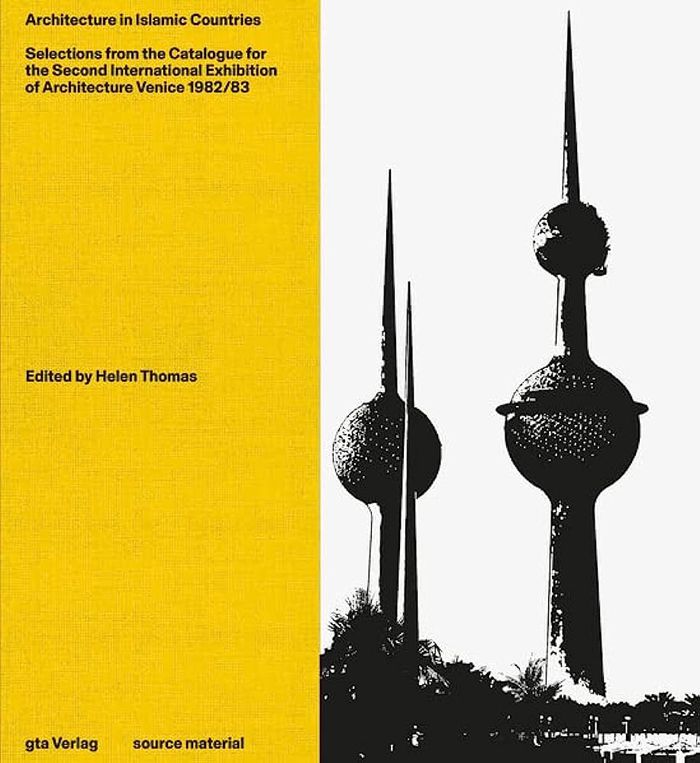
Directed by Paolo Portoghesi, the Second Venice Architecture Biennale raised questions about a postmodernity through realms extending south and east from the Mediterranean, where modernity and decolonisation were converging. Translated here for the first time for an English-speaking audience are selected texts by Mehdi Kowsar, Udo Kultermann, and Portoghesi from the original exhibition catalogue, accompanied by additional commentary. Furthermore, Esra Akcan reflects on the historical and socio-political contexts of the exhibition, while Asli Çiçek and Véronique Patteeuw consider the catalogue itself from the perspective of architectural history.
Architecture in Islamic Countries: Selections from the catalogue for the second International Exhibition of Architecture Venice 1982/83
Actions:
Price:
$54.00
(available in store)
Summary:
Directed by Paolo Portoghesi, the Second Venice Architecture Biennale raised questions about a postmodernity through realms extending south and east from the Mediterranean, where modernity and decolonisation were converging. Translated here for the first time for an English-speaking audience are selected texts by Mehdi Kowsar, Udo Kultermann, and Portoghesi from the original exhibition catalogue, accompanied by additional commentary. Furthermore, Esra Akcan reflects on the historical and socio-political contexts of the exhibition, while Asli Çiçek and Véronique Patteeuw consider the catalogue itself from the perspective of architectural history.
Form:
books
books
Publication:
April 2023
April 2023
Subject:
Contemporary Architecture
Contemporary Architecture


