


35 Results
Form:
books
books
Title:
The perpetual motion machine
The perpetual motion machine
Actions:
Price:
$15.00
(available in store)
Summary:
In the last days of 1907, the German novelist and exponent of glass architecture Paul Scheerbart embarked upon an attempt to invent a perpetual motion machine. Originally published in German in 1910, is an indefinable blend of diary, diagrams and digression that falls somewhere between memoir and reverie. The Perpetual Motion Machine is an ode to the fertility of misery(...)
$15.00
(available in store)
Summary:
In the last days of 1907, the German novelist and exponent of glass architecture Paul Scheerbart embarked upon an attempt to invent a perpetual motion machine. Originally published in German in 1910, is an indefinable blend of diary, diagrams and digression that falls somewhere between memoir and reverie. The Perpetual Motion Machine is an ode to the fertility of misery(...)
Publication:
April 2011
April 2011
Title:
The perpetual motion machine
Actions:
Price:
$15.00
(available in store)
Summary:
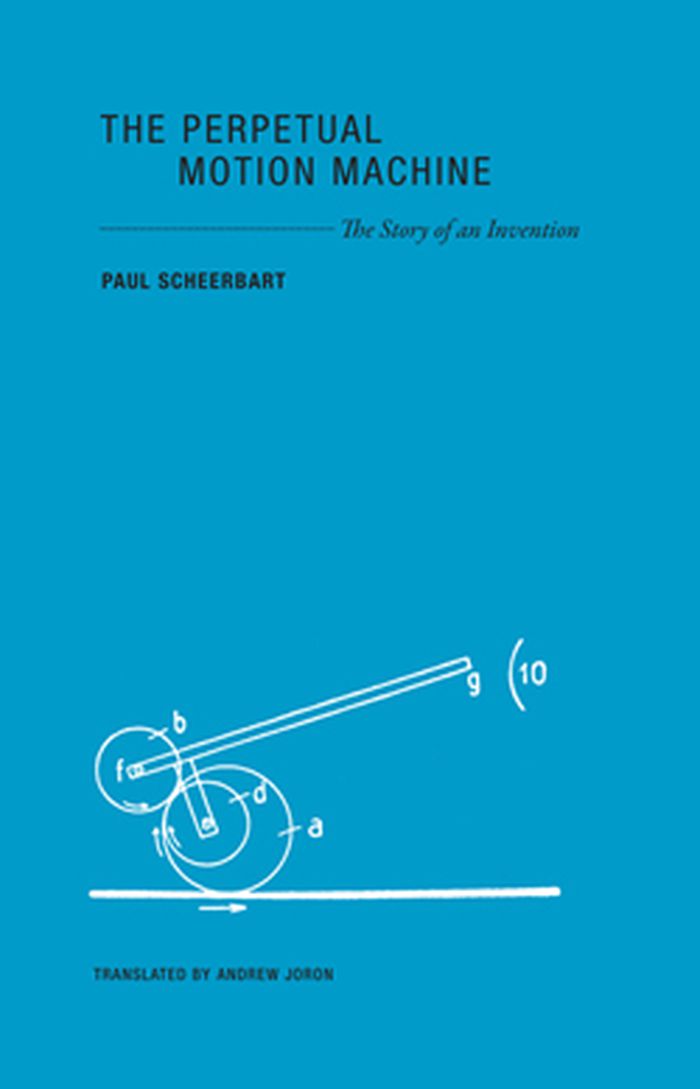
In the last days of 1907, the German novelist and exponent of glass architecture Paul Scheerbart embarked upon an attempt to invent a perpetual motion machine. Originally published in German in 1910, is an indefinable blend of diary, diagrams and digression that falls somewhere between memoir and reverie. The Perpetual Motion Machine is an ode to the fertility of misery and a battle cry of the imagination against praxis.
The perpetual motion machine
Actions:
Price:
$15.00
(available in store)
Summary:
In the last days of 1907, the German novelist and exponent of glass architecture Paul Scheerbart embarked upon an attempt to invent a perpetual motion machine. Originally published in German in 1910, is an indefinable blend of diary, diagrams and digression that falls somewhere between memoir and reverie. The Perpetual Motion Machine is an ode to the fertility of misery and a battle cry of the imagination against praxis.
Form:
books
books
Publication:
April 2011
April 2011
Form:
books
books
Title:
Flowers & mushrooms
Flowers & mushrooms
Actions:
Price:
$57.95
(available to order)
Summary:
Flowers and Mushrooms takes readers inside the rich and diverse symbolism of its eponymous subjects. Flowers have at times stood for freshness and fertility, transience and death. In addition to its ubiquitous and much-maligned image as a hallucinogen, the mushroom has throughout history signified health and life and served as an important symbol within religious ritual.(...)
$57.95
(available to order)
Summary:
Flowers and Mushrooms takes readers inside the rich and diverse symbolism of its eponymous subjects. Flowers have at times stood for freshness and fertility, transience and death. In addition to its ubiquitous and much-maligned image as a hallucinogen, the mushroom has throughout history signified health and life and served as an important symbol within religious ritual.(...)
Title:
Flowers & mushrooms
Actions:
Price:
$57.95
(available to order)
Summary:
Flowers and Mushrooms takes readers inside the rich and diverse symbolism of its eponymous subjects. Flowers have at times stood for freshness and fertility, transience and death. In addition to its ubiquitous and much-maligned image as a hallucinogen, the mushroom has throughout history signified health and life and served as an important symbol within religious ritual. In recent years though, flowers and mushrooms have become a focus in contemporary art, with artists manipulating the many clichés that surround them and adapting their representation to produce new and unexpected layers of meaning, from social criticism to feminism and the conceptual framework of the erotic.
Flowers & mushrooms
Actions:
Price:
$57.95
(available to order)
Summary:
Flowers and Mushrooms takes readers inside the rich and diverse symbolism of its eponymous subjects. Flowers have at times stood for freshness and fertility, transience and death. In addition to its ubiquitous and much-maligned image as a hallucinogen, the mushroom has throughout history signified health and life and served as an important symbol within religious ritual. In recent years though, flowers and mushrooms have become a focus in contemporary art, with artists manipulating the many clichés that surround them and adapting their representation to produce new and unexpected layers of meaning, from social criticism to feminism and the conceptual framework of the erotic.
Form:
books
books
Publication:
February 2014
February 2014
Form:
books
books
Price:
$56.95
(available in store)
Summary:
This publication tells the story of the garden as a rich source of inspiration. Over the centuries artists, writers, poets, and thinkers have each described, depicted, and designed the garden in different ways. In medieval art, the garden was a reflection of paradise, a place of harmony and fertility, shielded from worldly problems. In the eighteenth century this image(...)
$56.95
(available in store)
Summary:
This publication tells the story of the garden as a rich source of inspiration. Over the centuries artists, writers, poets, and thinkers have each described, depicted, and designed the garden in different ways. In medieval art, the garden was a reflection of paradise, a place of harmony and fertility, shielded from worldly problems. In the eighteenth century this image(...)
Title:
On the necessity of gardening: an ABC of art, botany and cultivation
Actions:
Price:
$56.95
(available in store)
Summary:
This publication tells the story of the garden as a rich source of inspiration. Over the centuries artists, writers, poets, and thinkers have each described, depicted, and designed the garden in different ways. In medieval art, the garden was a reflection of paradise, a place of harmony and fertility, shielded from worldly problems. In the eighteenth century this image tilted: the garden became a symbol of worldly powers and politics. The Anthropocene is forcing us to radically rethink the role we have given nature in recent decades. Through essays and an extensive abecedarium this book reflects on the garden as a metaphor for society.
On the necessity of gardening: an ABC of art, botany and cultivation
Actions:
Price:
$56.95
(available in store)
Summary:
This publication tells the story of the garden as a rich source of inspiration. Over the centuries artists, writers, poets, and thinkers have each described, depicted, and designed the garden in different ways. In medieval art, the garden was a reflection of paradise, a place of harmony and fertility, shielded from worldly problems. In the eighteenth century this image tilted: the garden became a symbol of worldly powers and politics. The Anthropocene is forcing us to radically rethink the role we have given nature in recent decades. Through essays and an extensive abecedarium this book reflects on the garden as a metaphor for society.
Form:
books
books
Publication:
November 2021
November 2021
Subject:
Gardens
Gardens
Form:
books
books
Price:
$28.95
(available to order)
Summary:
Originally published in Swedish in 1992, this book examines the enigmatic relation of melancholia to an early kind of cannibalism, which psychoanalysis, in particular, stressed. It contains reading of, amongst others, Franz Kafka, Samuel Beckett, Thomas Bernhard, Sigmund Freud, G. W. F. Hegel, and the Swedish poet Gunnar Ekelöf. The authors also quote Goethe and Rabelais,(...)
$28.95
(available to order)
Summary:
Originally published in Swedish in 1992, this book examines the enigmatic relation of melancholia to an early kind of cannibalism, which psychoanalysis, in particular, stressed. It contains reading of, amongst others, Franz Kafka, Samuel Beckett, Thomas Bernhard, Sigmund Freud, G. W. F. Hegel, and the Swedish poet Gunnar Ekelöf. The authors also quote Goethe and Rabelais,(...)
Subject:
Art Theory
Art Theory
Publication:
October 2008, Berlin, New York
October 2008, Berlin, New York
Title:
As a weasel sucks eggs, an essay on melancholy and cannibalism
Actions:
Price:
$28.95
(available to order)
Summary:
Originally published in Swedish in 1992, this book examines the enigmatic relation of melancholia to an early kind of cannibalism, which psychoanalysis, in particular, stressed. It contains reading of, amongst others, Franz Kafka, Samuel Beckett, Thomas Bernhard, Sigmund Freud, G. W. F. Hegel, and the Swedish poet Gunnar Ekelöf. The authors also quote Goethe and Rabelais, for whom food is a cosmic principle, the soil of fertility, on which all creation is based. In a transferred sense, food also plays that same role for the melancholiac he who questions the normal order of things, who creates an other unknown food, with a variety of meanings. The authors trace the desire for this other food through the ages, and scrutinize its relationship to both primitive sacrificial rites as well as contemporary anthropology, philosophy, and linguistic theory.
As a weasel sucks eggs, an essay on melancholy and cannibalism
Actions:
Price:
$28.95
(available to order)
Summary:
Originally published in Swedish in 1992, this book examines the enigmatic relation of melancholia to an early kind of cannibalism, which psychoanalysis, in particular, stressed. It contains reading of, amongst others, Franz Kafka, Samuel Beckett, Thomas Bernhard, Sigmund Freud, G. W. F. Hegel, and the Swedish poet Gunnar Ekelöf. The authors also quote Goethe and Rabelais, for whom food is a cosmic principle, the soil of fertility, on which all creation is based. In a transferred sense, food also plays that same role for the melancholiac he who questions the normal order of things, who creates an other unknown food, with a variety of meanings. The authors trace the desire for this other food through the ages, and scrutinize its relationship to both primitive sacrificial rites as well as contemporary anthropology, philosophy, and linguistic theory.
Form:
books
books
Publication:
October 2008, Berlin, New York
October 2008, Berlin, New York
Subject:
Art Theory
Art Theory
Form:
books
books
Actions:
Price:
$33.95
(available to order)
Summary:
Across five centuries of Russian history, Russian leaders have used architecture to project unity, identity, and power. Church architecture has inspired national cohesion and justified political control while representing the claims of religion in brick, wood, and stone. The architectural vocabulary of the Soviet state celebrated industrialization, mechanization, and(...)
$33.95
(available to order)
Summary:
Across five centuries of Russian history, Russian leaders have used architecture to project unity, identity, and power. Church architecture has inspired national cohesion and justified political control while representing the claims of religion in brick, wood, and stone. The architectural vocabulary of the Soviet state celebrated industrialization, mechanization, and(...)
Subject:
History until 1900
History until 1900
Publication:
May 2003, Ithaca and London
May 2003, Ithaca and London
Title:
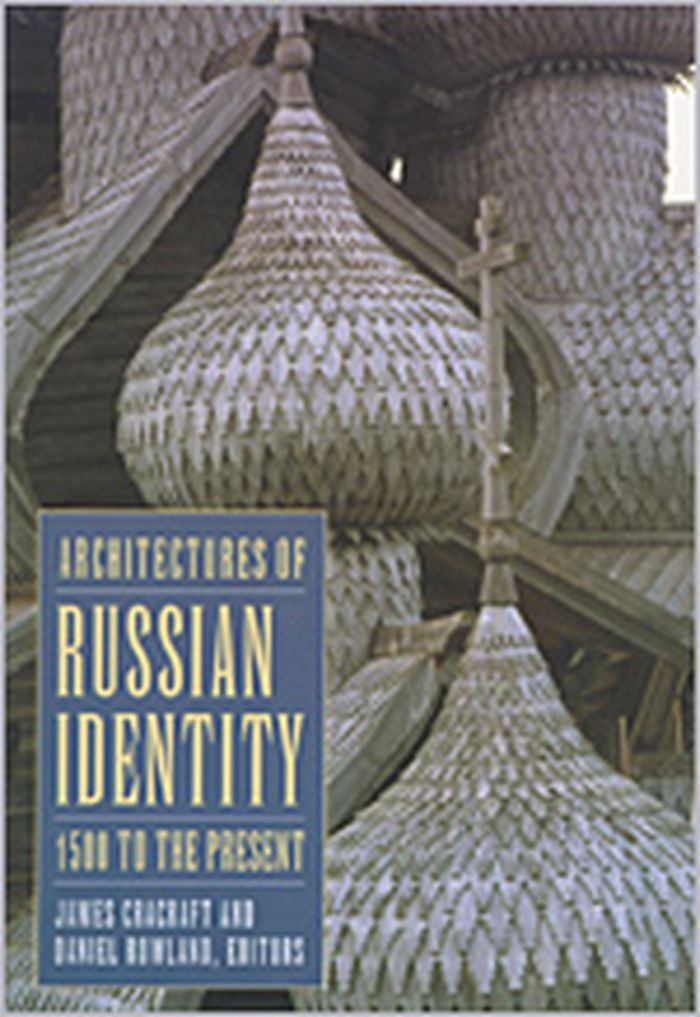
Architectures of Russian identity 1500 to the present
Actions:
Price:
$33.95
(available to order)
Summary:
Across five centuries of Russian history, Russian leaders have used architecture to project unity, identity, and power. Church architecture has inspired national cohesion and justified political control while representing the claims of religion in brick, wood, and stone. The architectural vocabulary of the Soviet state celebrated industrialization, mechanization, and communal life. Buildings and landscapes have expressed utopian urges as well as lofty spiritual goals. Country houses and memorials have encoded their own messages. In Architectures of Russian Identity, James Cracraft and Daniel Rowland gather a group of authors from a wide variety of backgrounds—including history and architectural history, linguistics, literary studies, geography, and political science—to survey the political and symbolic meanings of many different kinds of structures. Fourteen heavily illustrated chapters demonstrate the remarkable fertility of the theme of architecture, broadly defined, for a range of fields dealing with Russia and its surrounding territories. The authors engage key terms in contemporary historiography—identity, nationality, visual culture—and assess the applications of each in Russian contexts.
Architectures of Russian identity 1500 to the present
Actions:
Price:
$33.95
(available to order)
Summary:
Across five centuries of Russian history, Russian leaders have used architecture to project unity, identity, and power. Church architecture has inspired national cohesion and justified political control while representing the claims of religion in brick, wood, and stone. The architectural vocabulary of the Soviet state celebrated industrialization, mechanization, and communal life. Buildings and landscapes have expressed utopian urges as well as lofty spiritual goals. Country houses and memorials have encoded their own messages. In Architectures of Russian Identity, James Cracraft and Daniel Rowland gather a group of authors from a wide variety of backgrounds—including history and architectural history, linguistics, literary studies, geography, and political science—to survey the political and symbolic meanings of many different kinds of structures. Fourteen heavily illustrated chapters demonstrate the remarkable fertility of the theme of architecture, broadly defined, for a range of fields dealing with Russia and its surrounding territories. The authors engage key terms in contemporary historiography—identity, nationality, visual culture—and assess the applications of each in Russian contexts.
Form:
books
books
Publication:
May 2003, Ithaca and London
May 2003, Ithaca and London
Subject:
History until 1900
History until 1900


