


336 Results
Form:
books
books
Actions:
Price:
$40.00
(available in store)
Summary:
Jericho Moons documents Eitan Ben-Moshe’s future works through a visual journey that moves between straight documentation and digital collages of imagined worlds where Ben-Moshe’s sculptures and lightboxes are transformed into new entities. This back and forth calls into question traditional understandings of temporality and reality.The book also features an interview(...)
$40.00
(available in store)
Summary:
Jericho Moons documents Eitan Ben-Moshe’s future works through a visual journey that moves between straight documentation and digital collages of imagined worlds where Ben-Moshe’s sculptures and lightboxes are transformed into new entities. This back and forth calls into question traditional understandings of temporality and reality.The book also features an interview(...)
Title:
Eitan Ben-Moshe: Jericho Moons
Actions:
Price:
$40.00
(available in store)
Summary:
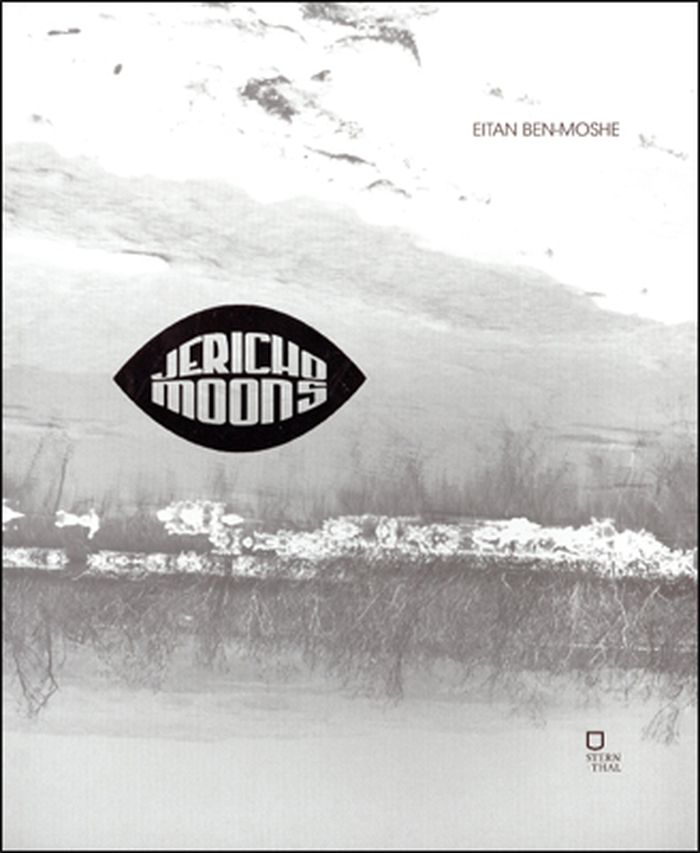
Jericho Moons documents Eitan Ben-Moshe’s future works through a visual journey that moves between straight documentation and digital collages of imagined worlds where Ben-Moshe’s sculptures and lightboxes are transformed into new entities. This back and forth calls into question traditional understandings of temporality and reality.The book also features an interview with Yael Hersonski, the award winning director of ‘A Film Unfinished’, as well as essays by Naomi Aviv and Lior Galili.
Eitan Ben-Moshe: Jericho Moons
Actions:
Price:
$40.00
(available in store)
Summary:
Jericho Moons documents Eitan Ben-Moshe’s future works through a visual journey that moves between straight documentation and digital collages of imagined worlds where Ben-Moshe’s sculptures and lightboxes are transformed into new entities. This back and forth calls into question traditional understandings of temporality and reality.The book also features an interview with Yael Hersonski, the award winning director of ‘A Film Unfinished’, as well as essays by Naomi Aviv and Lior Galili.
Form:
books
books
Publication:
October 2012
October 2012
Subject:
Contemporary Art Monographs
Contemporary Art Monographs
Form:
books
books
Actions:
Description:
1 online resource (77 PDF pages) : illustrations
Author:
Subject:
Publication:
Paris : Onestar Press, 2013
Paris : Onestar Press, 2013
Title:
Lori Waxman : 60 wrd/min art critic
Actions:
Description:
1 online resource (77 PDF pages) : illustrations
Lori Waxman : 60 wrd/min art critic
Actions:
Description:
1 online resource (77 PDF pages) : illustrations
Form:
books
books
Publication:
Paris : Onestar Press, 2013
Paris : Onestar Press, 2013
Author:
Subject:
Form:
journals and magazines
journals and magazines

Actions:
Price:
$26.50
(available to order)
Summary:
The recently appointed artistic director of Dior Homme, Kris van Assche, has created his own unique collection of images as guest curator of A Magazine. His presentation draws heavily on people and influences that have intrigued and influenced him within the creative process such as Gaëtan Bernard, Sarah Moon and Nan Goldin. Also poetic and romantic influences are(...)
$26.50
(available to order)
Summary:
The recently appointed artistic director of Dior Homme, Kris van Assche, has created his own unique collection of images as guest curator of A Magazine. His presentation draws heavily on people and influences that have intrigued and influenced him within the creative process such as Gaëtan Bernard, Sarah Moon and Nan Goldin. Also poetic and romantic influences are(...)
Title:
A magazine #7: Kris Van Assche
Actions:
Price:
$26.50
(available to order)
Summary:
The recently appointed artistic director of Dior Homme, Kris van Assche, has created his own unique collection of images as guest curator of A Magazine. His presentation draws heavily on people and influences that have intrigued and influenced him within the creative process such as Gaëtan Bernard, Sarah Moon and Nan Goldin. Also poetic and romantic influences are explored through works from the artists duo Parkeharrison, and director Jeff Burton.
A magazine #7: Kris Van Assche
Actions:
Price:
$26.50
(available to order)
Summary:
The recently appointed artistic director of Dior Homme, Kris van Assche, has created his own unique collection of images as guest curator of A Magazine. His presentation draws heavily on people and influences that have intrigued and influenced him within the creative process such as Gaëtan Bernard, Sarah Moon and Nan Goldin. Also poetic and romantic influences are explored through works from the artists duo Parkeharrison, and director Jeff Burton.
Form:
journals and magazines
journals and magazines
Publication:
June 2008, Florence
June 2008, Florence
Subject:
Magazines
Magazines
Form:
books
books
Title:
The enchanted clock
The enchanted clock
Actions:
Price:
$26.95
(available to order)
Summary:
In the Palace of Versailles there is a fabulous golden clock, made for Louis XV by the king’s engineer, Claude-Siméon Passemant. The astronomical clock shows the phases of the moon and the movements of the planets, and it will tell time?hours, minutes, seconds, and even sixtieths of seconds until the year 9999. Passemant’s clock brings the nature of time into sharp focus(...)
$26.95
(available to order)
Summary:
In the Palace of Versailles there is a fabulous golden clock, made for Louis XV by the king’s engineer, Claude-Siméon Passemant. The astronomical clock shows the phases of the moon and the movements of the planets, and it will tell time?hours, minutes, seconds, and even sixtieths of seconds until the year 9999. Passemant’s clock brings the nature of time into sharp focus(...)
Title:
The enchanted clock
Actions:
Price:
$26.95
(available to order)
Summary:
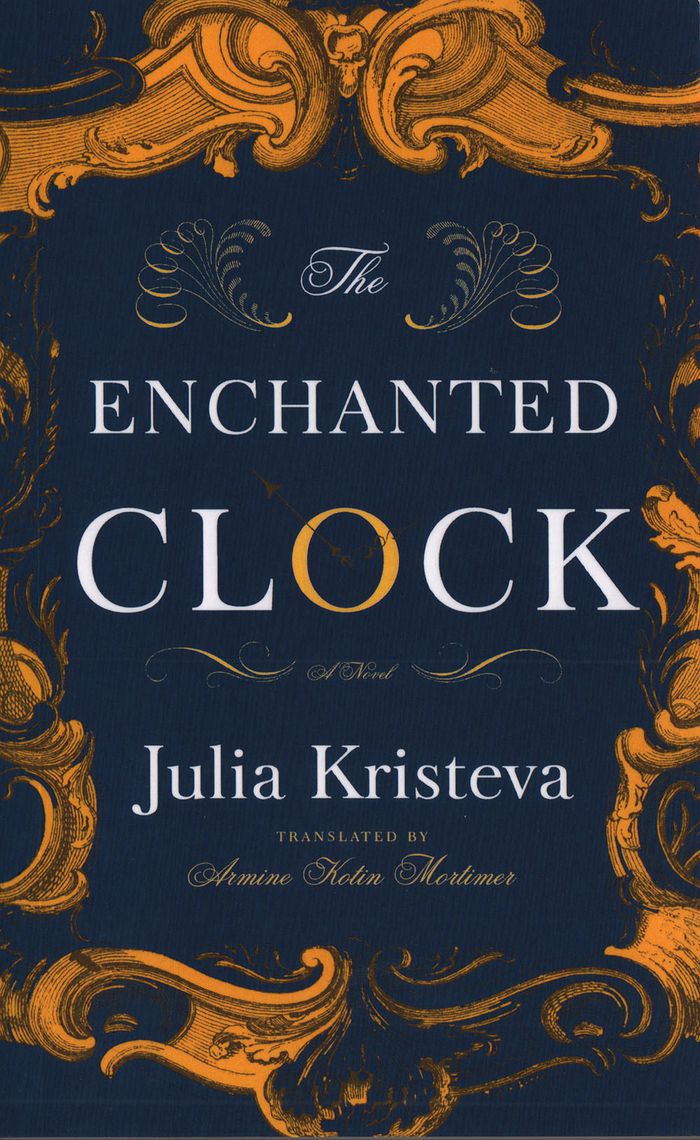
In the Palace of Versailles there is a fabulous golden clock, made for Louis XV by the king’s engineer, Claude-Siméon Passemant. The astronomical clock shows the phases of the moon and the movements of the planets, and it will tell time?hours, minutes, seconds, and even sixtieths of seconds until the year 9999. Passemant’s clock brings the nature of time into sharp focus in Julia Kristeva’s intricate, poetic novel "The Enchanted Clock".
The enchanted clock
Actions:
Price:
$26.95
(available to order)
Summary:
In the Palace of Versailles there is a fabulous golden clock, made for Louis XV by the king’s engineer, Claude-Siméon Passemant. The astronomical clock shows the phases of the moon and the movements of the planets, and it will tell time?hours, minutes, seconds, and even sixtieths of seconds until the year 9999. Passemant’s clock brings the nature of time into sharp focus in Julia Kristeva’s intricate, poetic novel "The Enchanted Clock".
Form:
books
books
Publication:
October 2019
October 2019
Subject:
Literature and poetry
Literature and poetry
Form:
books
books

Title:
Mike Mills: graphics films
Mike Mills: graphics films
Actions:
Price:
$59.00
(available to order)
Summary:
Graphics Films is a painstakingly produced document of Mills' career to date, including many never-before-seen examples of his works in graphic design, installation, publications and film projects. Past projects by Mills include music videos for Air ("Sexy Boy"), Blonde Redhead ("Top Ranking"), Yoko Ono ("Walking on Thin Ice") and Bran Van 3000 ("Afrodiziak") and album(...)
$59.00
(available to order)
Summary:
Graphics Films is a painstakingly produced document of Mills' career to date, including many never-before-seen examples of his works in graphic design, installation, publications and film projects. Past projects by Mills include music videos for Air ("Sexy Boy"), Blonde Redhead ("Top Ranking"), Yoko Ono ("Walking on Thin Ice") and Bran Van 3000 ("Afrodiziak") and album(...)
Subject:
Graphic Designers, Monographs
Graphic Designers, Monographs
Publication:
January 2009, New York, Bologna
January 2009, New York, Bologna
Title:
Mike Mills: graphics films
Actions:
Price:
$59.00
(available to order)
Summary:
Graphics Films is a painstakingly produced document of Mills' career to date, including many never-before-seen examples of his works in graphic design, installation, publications and film projects. Past projects by Mills include music videos for Air ("Sexy Boy"), Blonde Redhead ("Top Ranking"), Yoko Ono ("Walking on Thin Ice") and Bran Van 3000 ("Afrodiziak") and album cover designs for the Beastie Boys (the Root Down EP), Sonic Youth (Washing Machine), Air (Moon Safari and Kelly Watch the Stars) and others.
Mike Mills: graphics films
Actions:
Price:
$59.00
(available to order)
Summary:
Graphics Films is a painstakingly produced document of Mills' career to date, including many never-before-seen examples of his works in graphic design, installation, publications and film projects. Past projects by Mills include music videos for Air ("Sexy Boy"), Blonde Redhead ("Top Ranking"), Yoko Ono ("Walking on Thin Ice") and Bran Van 3000 ("Afrodiziak") and album cover designs for the Beastie Boys (the Root Down EP), Sonic Youth (Washing Machine), Air (Moon Safari and Kelly Watch the Stars) and others.
Form:
books
books
Publication:
January 2009, New York, Bologna
January 2009, New York, Bologna
Subject:
Graphic Designers, Monographs
Graphic Designers, Monographs
Form:
books
books
Actions:
Price:
$45.00
(available to order)
Summary:
'Double Orbit' invites us into a compact world of ambiguous signs, secret passages and seemingly haunted premises. Exploring the peripheries of large western metropolises, Grégoire Pujade-Lauraine's photographs study the built environments that harbour and shape human life, revealing the cryptic symbols etched across their surfaces and embedded in their shadows. The(...)
$45.00
(available to order)
Summary:
'Double Orbit' invites us into a compact world of ambiguous signs, secret passages and seemingly haunted premises. Exploring the peripheries of large western metropolises, Grégoire Pujade-Lauraine's photographs study the built environments that harbour and shape human life, revealing the cryptic symbols etched across their surfaces and embedded in their shadows. The(...)
Title:
Double orbit: Grégoire Pujade-Lauraine
Actions:
Price:
$45.00
(available to order)
Summary:
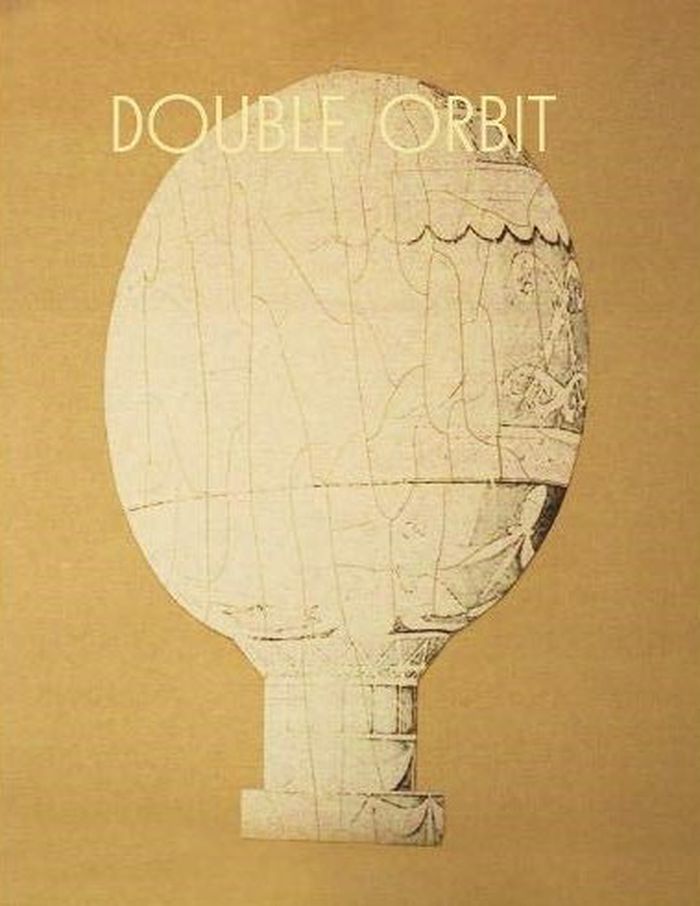
'Double Orbit' invites us into a compact world of ambiguous signs, secret passages and seemingly haunted premises. Exploring the peripheries of large western metropolises, Grégoire Pujade-Lauraine's photographs study the built environments that harbour and shape human life, revealing the cryptic symbols etched across their surfaces and embedded in their shadows. The looming forms defy easy categorisation and disconcerting cyphers periodically emerge from a lingering dusk; an oversized key, a black concrete moon, or the illusion of a limitless temple.
Double orbit: Grégoire Pujade-Lauraine
Actions:
Price:
$45.00
(available to order)
Summary:
'Double Orbit' invites us into a compact world of ambiguous signs, secret passages and seemingly haunted premises. Exploring the peripheries of large western metropolises, Grégoire Pujade-Lauraine's photographs study the built environments that harbour and shape human life, revealing the cryptic symbols etched across their surfaces and embedded in their shadows. The looming forms defy easy categorisation and disconcerting cyphers periodically emerge from a lingering dusk; an oversized key, a black concrete moon, or the illusion of a limitless temple.
Form:
books
books
Publication:
April 2021
April 2021
Subject:
Photography monographs
Photography monographs
Form:
books
books
Actions:
Price:
$32.00
(available to order)
Summary:
DVD Release Date: June 21, 2009. Kamecke's film could be placed in a time capsule and removed some time in the distant future as an exact record of our feelings at the time." So said Kathleen Carroll of the New York Daily News in 1972. NASA commissioned director Theo Kamecke to make the documentary only six weeks before Apollo 11 s flight to the Moon in July 1969. But(...)
$32.00
(available to order)
Summary:
DVD Release Date: June 21, 2009. Kamecke's film could be placed in a time capsule and removed some time in the distant future as an exact record of our feelings at the time." So said Kathleen Carroll of the New York Daily News in 1972. NASA commissioned director Theo Kamecke to make the documentary only six weeks before Apollo 11 s flight to the Moon in July 1969. But(...)
Title:
Moonwalk one, the director's cut
Actions:
Price:
$32.00
(available to order)
Summary:
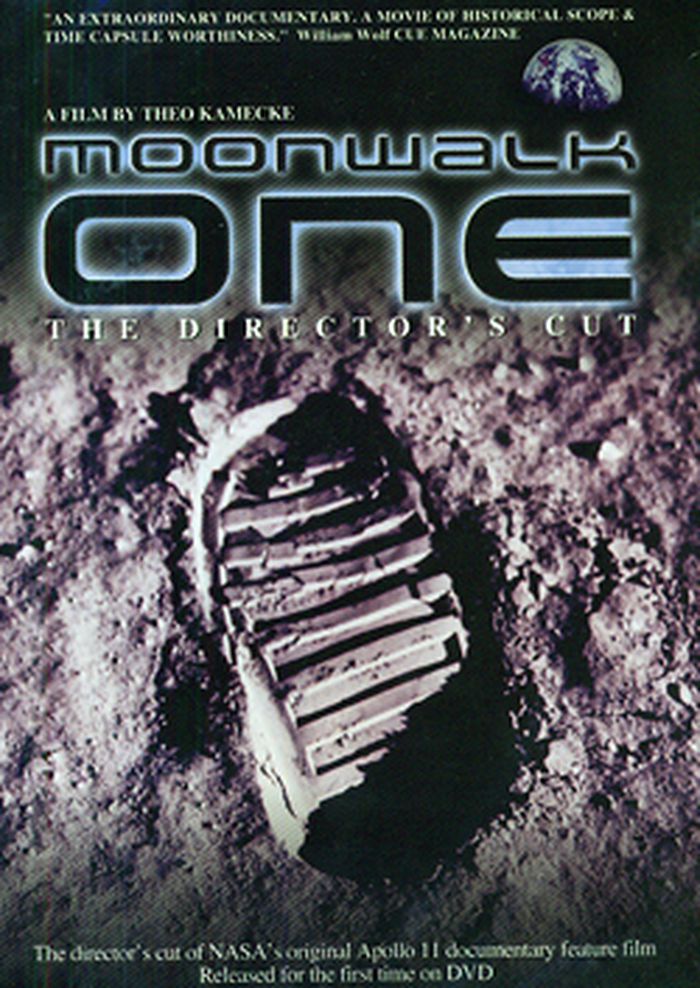
DVD Release Date: June 21, 2009. Kamecke's film could be placed in a time capsule and removed some time in the distant future as an exact record of our feelings at the time." So said Kathleen Carroll of the New York Daily News in 1972. NASA commissioned director Theo Kamecke to make the documentary only six weeks before Apollo 11 s flight to the Moon in July 1969. But instead of a simple documentary film, what transpired was a philosophical and poetic record of Man s first attempt to walk on another world. Opening dramatically with another of mankind s great achievements Stonehenge the film puts the triumph of the Moon shot into its proper historical context. Filmed across the World as the mission unfolded, Moonwalk One uniquely captured the essence of Apollo 11 in a way that subsequent documentaries could only mimic. Combined with Charles Morrow s breathtaking, avant-garde score and Laurence Luckinbill s inspiring narration this is a classic film for all time and makes for fascinating viewing today from the perspective of the early 21st Century. As Joseph Gelmis of the New York daily Newsday declared in 1969; Moonwalk One deserves to be a companion piece to Stanley Kubrik s masterwork 2001: A Space Odyssey .
Moonwalk one, the director's cut
Actions:
Price:
$32.00
(available to order)
Summary:
DVD Release Date: June 21, 2009. Kamecke's film could be placed in a time capsule and removed some time in the distant future as an exact record of our feelings at the time." So said Kathleen Carroll of the New York Daily News in 1972. NASA commissioned director Theo Kamecke to make the documentary only six weeks before Apollo 11 s flight to the Moon in July 1969. But instead of a simple documentary film, what transpired was a philosophical and poetic record of Man s first attempt to walk on another world. Opening dramatically with another of mankind s great achievements Stonehenge the film puts the triumph of the Moon shot into its proper historical context. Filmed across the World as the mission unfolded, Moonwalk One uniquely captured the essence of Apollo 11 in a way that subsequent documentaries could only mimic. Combined with Charles Morrow s breathtaking, avant-garde score and Laurence Luckinbill s inspiring narration this is a classic film for all time and makes for fascinating viewing today from the perspective of the early 21st Century. As Joseph Gelmis of the New York daily Newsday declared in 1969; Moonwalk One deserves to be a companion piece to Stanley Kubrik s masterwork 2001: A Space Odyssey .
Form:
books
books
Publication:
October 2009
October 2009
Subject:
DVDs
DVDs
Form:
books
books

Title:
Plus and minus
Plus and minus
Actions:
Price:
$60.00
(available to order)
Summary:
The visual game 'Plus and minus' consist of 72 cards, each having a different image. Many of these images (48) have a transparent background and can thus be superimposed to compose other more complex images and stimulate the child's creative capacities. Superimposing some of the tree images creates a wood. Superimposing on the wood the image of rain or that of the sun or(...)
$60.00
(available to order)
Summary:
The visual game 'Plus and minus' consist of 72 cards, each having a different image. Many of these images (48) have a transparent background and can thus be superimposed to compose other more complex images and stimulate the child's creative capacities. Superimposing some of the tree images creates a wood. Superimposing on the wood the image of rain or that of the sun or(...)
Title:
Plus and minus
Actions:
Price:
$60.00
(available to order)
Summary:
The visual game 'Plus and minus' consist of 72 cards, each having a different image. Many of these images (48) have a transparent background and can thus be superimposed to compose other more complex images and stimulate the child's creative capacities. Superimposing some of the tree images creates a wood. Superimposing on the wood the image of rain or that of the sun or moon, or of a flight of birds, or of a passing dog, and so on, the total image can be continuously modified.
Plus and minus
Actions:
Price:
$60.00
(available to order)
Summary:
The visual game 'Plus and minus' consist of 72 cards, each having a different image. Many of these images (48) have a transparent background and can thus be superimposed to compose other more complex images and stimulate the child's creative capacities. Superimposing some of the tree images creates a wood. Superimposing on the wood the image of rain or that of the sun or moon, or of a flight of birds, or of a passing dog, and so on, the total image can be continuously modified.
Form:
books
books
Publication:
March 2008, Mantova
March 2008, Mantova
Subject:
Toys
Toys
Form:
books
books
Actions:
Price:
$59.95
(available in store)
Summary:
The realm of finance has its own eco-logics. Hectocorns offer behemoths poison pills, whales take fledglings to the moon, disappear into dark pools, and form fraudulent daisy chains with one another. This book examines slang terms used by traders and other financial professionals, transporting us to a landscape both real and supernatural. Between what these terms mean(...)
$59.95
(available in store)
Summary:
The realm of finance has its own eco-logics. Hectocorns offer behemoths poison pills, whales take fledglings to the moon, disappear into dark pools, and form fraudulent daisy chains with one another. This book examines slang terms used by traders and other financial professionals, transporting us to a landscape both real and supernatural. Between what these terms mean(...)
Title:
Collapsed mythologies: A geofinancial atlas
Actions:
Price:
$59.95
(available in store)
Summary:
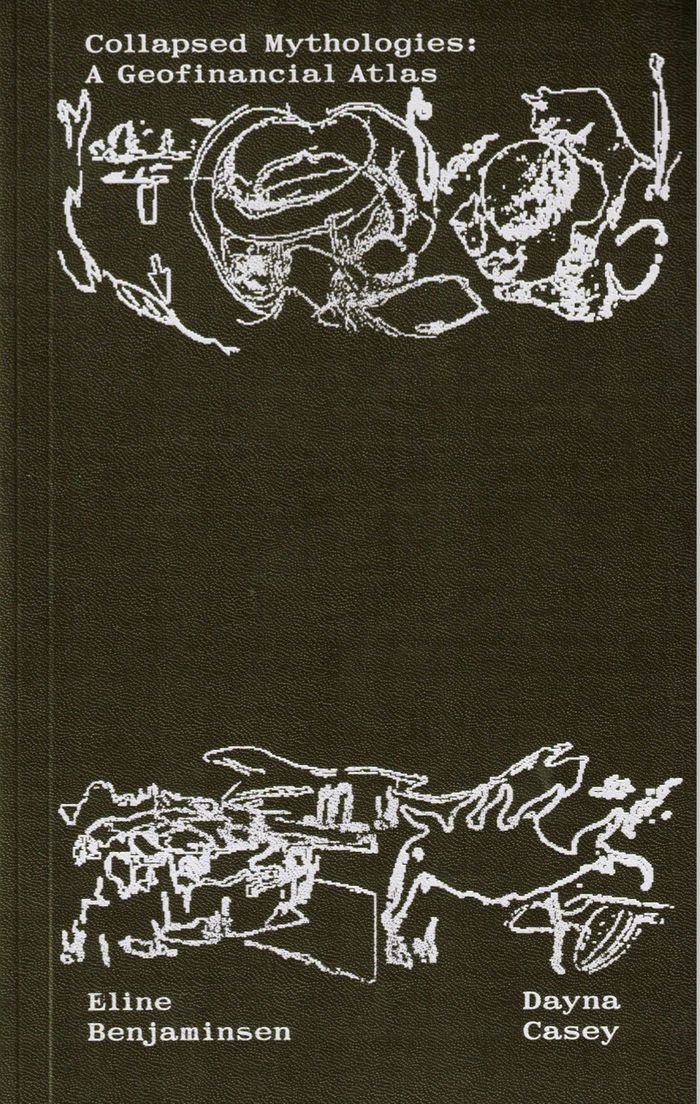
The realm of finance has its own eco-logics. Hectocorns offer behemoths poison pills, whales take fledglings to the moon, disappear into dark pools, and form fraudulent daisy chains with one another. This book examines slang terms used by traders and other financial professionals, transporting us to a landscape both real and supernatural. Between what these terms mean and the ecological world they refer to, Benjaminsen and Casey detect a rich mythological history. Unpacking this seductive language reveals the absurd (super)natural ‘fictions’ that materially and violently shape our worldly ecology.
Collapsed mythologies: A geofinancial atlas
Actions:
Price:
$59.95
(available in store)
Summary:
The realm of finance has its own eco-logics. Hectocorns offer behemoths poison pills, whales take fledglings to the moon, disappear into dark pools, and form fraudulent daisy chains with one another. This book examines slang terms used by traders and other financial professionals, transporting us to a landscape both real and supernatural. Between what these terms mean and the ecological world they refer to, Benjaminsen and Casey detect a rich mythological history. Unpacking this seductive language reveals the absurd (super)natural ‘fictions’ that materially and violently shape our worldly ecology.
Form:
books
books
Publication:
May 2026
May 2026
Subject:
Social
Social
Form:
books
books
Price:
$70.00
(available to order)
Summary:
Conquering the extremes: LIQUIFER Systems Group, a design and research firm based in Vienna and Bremen, has been addressing the issue of human life on Earth and elsewhere in the universe for two decades. Their work demonstrates how consideration of technology-based design solutions and careful use of available resources can enable us to live in space. Their concepts,(...)
$70.00
(available to order)
Summary:
Conquering the extremes: LIQUIFER Systems Group, a design and research firm based in Vienna and Bremen, has been addressing the issue of human life on Earth and elsewhere in the universe for two decades. Their work demonstrates how consideration of technology-based design solutions and careful use of available resources can enable us to live in space. Their concepts,(...)
Subject:
Experimentale architecture
Experimentale architecture
Publication:
February 2024
February 2024
Title:
LIQUIFER: Living beyond Earth. Architecture for extreme environments
Actions:
Price:
$70.00
(available to order)
Summary:
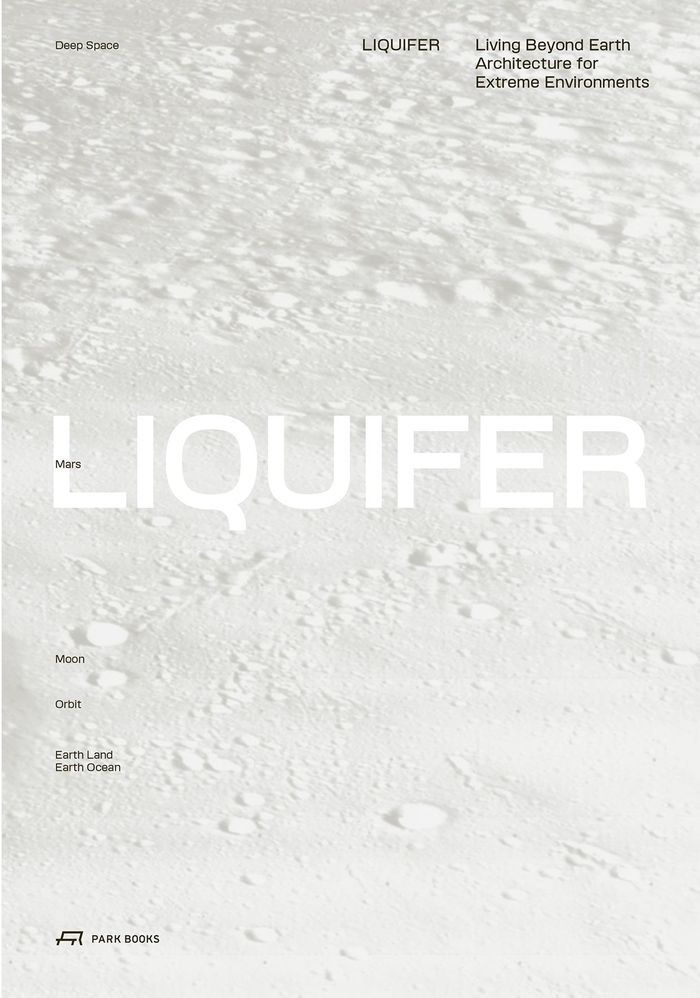
Conquering the extremes: LIQUIFER Systems Group, a design and research firm based in Vienna and Bremen, has been addressing the issue of human life on Earth and elsewhere in the universe for two decades. Their work demonstrates how consideration of technology-based design solutions and careful use of available resources can enable us to live in space. Their concepts, feasibility studies, and technological developments all deal with the key issue of scarcity that defines life everywhere: on Mars, on the Moon, in orbit, as well as on Earth. LIQUIFER. Living Beyond Earth is the first book to present the practice’s groundbreaking work.
LIQUIFER: Living beyond Earth. Architecture for extreme environments
Actions:
Price:
$70.00
(available to order)
Summary:
Conquering the extremes: LIQUIFER Systems Group, a design and research firm based in Vienna and Bremen, has been addressing the issue of human life on Earth and elsewhere in the universe for two decades. Their work demonstrates how consideration of technology-based design solutions and careful use of available resources can enable us to live in space. Their concepts, feasibility studies, and technological developments all deal with the key issue of scarcity that defines life everywhere: on Mars, on the Moon, in orbit, as well as on Earth. LIQUIFER. Living Beyond Earth is the first book to present the practice’s groundbreaking work.
Form:
books
books
Publication:
February 2024
February 2024
Subject:
Experimentale architecture
Experimentale architecture


