


322 Results
Form:
books
books
Price:
$115.00
(available in store)
Summary:
For over two decades, the pioneering, multidisciplinary Danish firm BIG-Bjarke Ingels Group has created a wide range of projects that give form to the future, standing out for their bold-yet-practical forms, elements of surprise, and people-focused solutions. ''BIG Atlas'' offers an ambitious and all-encompassing survey of more than fifty completed projects from around(...)
$115.00
(available in store)
Summary:
For over two decades, the pioneering, multidisciplinary Danish firm BIG-Bjarke Ingels Group has created a wide range of projects that give form to the future, standing out for their bold-yet-practical forms, elements of surprise, and people-focused solutions. ''BIG Atlas'' offers an ambitious and all-encompassing survey of more than fifty completed projects from around(...)
Subject:
Architecture Monographs
Architecture Monographs
Publication:
June 2026
June 2026
Title:
BIG Atlas
Actions:
Price:
$115.00
(available in store)
Summary:
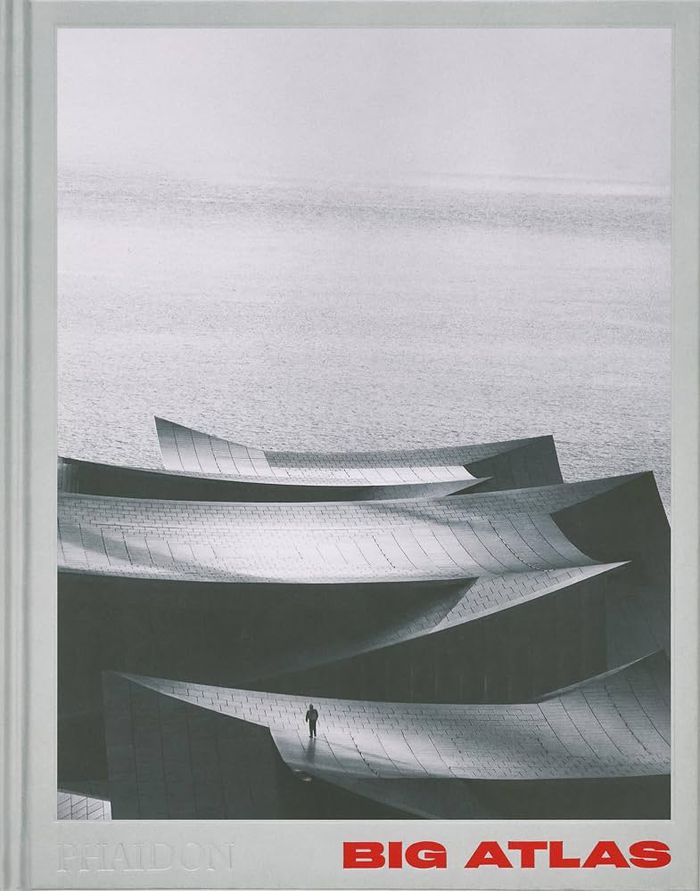
For over two decades, the pioneering, multidisciplinary Danish firm BIG-Bjarke Ingels Group has created a wide range of projects that give form to the future, standing out for their bold-yet-practical forms, elements of surprise, and people-focused solutions. ''BIG Atlas'' offers an ambitious and all-encompassing survey of more than fifty completed projects from around the world, from an energy plant topped with a ski slope and a LEGO Museum that seems to be made out of the famous bricks to the firm’s own recently completed Copenhagen headquarters. Spanning a rich variety of typologies, scales, and materials, the featured projects are brought to life through more than 600 photographs, plans, and drawings. Presented together for the first time, they trace BIG’s transformation into fully integrated design, synthesizing the fields of architecture, interiors, landscape, engineering, planning, and product design to advance more sustainable ways of living within our environments while simultaneously raising the quality of our lives.
BIG Atlas
Actions:
Price:
$115.00
(available in store)
Summary:
For over two decades, the pioneering, multidisciplinary Danish firm BIG-Bjarke Ingels Group has created a wide range of projects that give form to the future, standing out for their bold-yet-practical forms, elements of surprise, and people-focused solutions. ''BIG Atlas'' offers an ambitious and all-encompassing survey of more than fifty completed projects from around the world, from an energy plant topped with a ski slope and a LEGO Museum that seems to be made out of the famous bricks to the firm’s own recently completed Copenhagen headquarters. Spanning a rich variety of typologies, scales, and materials, the featured projects are brought to life through more than 600 photographs, plans, and drawings. Presented together for the first time, they trace BIG’s transformation into fully integrated design, synthesizing the fields of architecture, interiors, landscape, engineering, planning, and product design to advance more sustainable ways of living within our environments while simultaneously raising the quality of our lives.
Form:
books
books
Publication:
June 2026
June 2026
Subject:
Architecture Monographs
Architecture Monographs
Form:
books
books

Title:
Hélio Oiticica
Hélio Oiticica
Actions:
Price:
$81.95
(available to order)
Summary:
A concise introduction to the pioneering formal and social innovations of the Neoconcretist and Tropicália protagonist. Brazilian artist Hélio Oiticica’s oeuvre remains an indisputable influence on all aspects of avant-garde culture in his home country and abroad, from visual art to music, theater, literature and beyond. This volume demonstrates the numerous ways in which(...)
$81.95
(available to order)
Summary:
A concise introduction to the pioneering formal and social innovations of the Neoconcretist and Tropicália protagonist. Brazilian artist Hélio Oiticica’s oeuvre remains an indisputable influence on all aspects of avant-garde culture in his home country and abroad, from visual art to music, theater, literature and beyond. This volume demonstrates the numerous ways in which(...)
Subject:
Contemporary Art Monographs
Contemporary Art Monographs
Publication:
August 2021
August 2021
Title:
Hélio Oiticica
Actions:
Price:
$81.95
(available to order)
Summary:
A concise introduction to the pioneering formal and social innovations of the Neoconcretist and Tropicália protagonist. Brazilian artist Hélio Oiticica’s oeuvre remains an indisputable influence on all aspects of avant-garde culture in his home country and abroad, from visual art to music, theater, literature and beyond. This volume demonstrates the numerous ways in which Oiticica’s work explored and expanded formal artistic modes, pushing past the boundaries of color and structure. Oiticica prioritized the inclusive and participatory possibilities of art, represented through his forays into environmental art and interactive installation. Large-scale projects such as his monumental installation Tropicália (1966–67), which satirizes the idea of Brazil as a tropical paradise, are documented alongside his works on paper and textile pieces. The text traces the evolution of Oiticica’s multidisciplinary practice and underlines the cosmological ideas that guided his approach to art and life, demonstrating the profound impact Oiticica's ideas had on the wider art world, both past and present.
Hélio Oiticica
Actions:
Price:
$81.95
(available to order)
Summary:
A concise introduction to the pioneering formal and social innovations of the Neoconcretist and Tropicália protagonist. Brazilian artist Hélio Oiticica’s oeuvre remains an indisputable influence on all aspects of avant-garde culture in his home country and abroad, from visual art to music, theater, literature and beyond. This volume demonstrates the numerous ways in which Oiticica’s work explored and expanded formal artistic modes, pushing past the boundaries of color and structure. Oiticica prioritized the inclusive and participatory possibilities of art, represented through his forays into environmental art and interactive installation. Large-scale projects such as his monumental installation Tropicália (1966–67), which satirizes the idea of Brazil as a tropical paradise, are documented alongside his works on paper and textile pieces. The text traces the evolution of Oiticica’s multidisciplinary practice and underlines the cosmological ideas that guided his approach to art and life, demonstrating the profound impact Oiticica's ideas had on the wider art world, both past and present.
Form:
books
books
Publication:
August 2021
August 2021
Subject:
Contemporary Art Monographs
Contemporary Art Monographs
Form:
books
books
Actions:
Holdings:
Description:
780 pages : illustrations (some color) ; 24 cm
Description:
780 pages : illustrations (some color) ; 24 cm
Author:
Subject:
Publication:
Fribourg, Switzerland : Fri Art ; London : Koenig Books, [2017], ©2017
Fribourg, Switzerland : Fri Art ; London : Koenig Books, [2017], ©2017
Title:
The anti-museum : an anthology / by Mathieu Copeland and Balthazar Lovay ; authors & contributors, Guillaume Apollinaire [and many others] ; translation, Thomas Butler [and nine others].
Actions:
Holdings:
Description:
780 pages : illustrations (some color) ; 24 cm
The anti-museum : an anthology / by Mathieu Copeland and Balthazar Lovay ; authors & contributors, Guillaume Apollinaire [and many others] ; translation, Thomas Butler [and nine others].
Actions:
Holdings:
Description:
780 pages : illustrations (some color) ; 24 cm
Form:
books
books
Publication:
Fribourg, Switzerland : Fri Art ; London : Koenig Books, [2017], ©2017
Fribourg, Switzerland : Fri Art ; London : Koenig Books, [2017], ©2017
Author:
Subject:
Form:
books
books
Title:
Vatnasafn/ library of water
Vatnasafn/ library of water
Actions:
Price:
$54.00
(available to order)
Summary:
The distinctive geography, climate and culture of Iceland has engaged Roni Horn for over 30 years. Her intimate relationship with the island has led to a multidisciplinary series of works, including books, drawings, sculpture, texts and photographs. Located in a converted library building on a promontory overlooking the ocean in Stykkishólmur on Iceland's west coast,(...)
$54.00
(available to order)
Summary:
The distinctive geography, climate and culture of Iceland has engaged Roni Horn for over 30 years. Her intimate relationship with the island has led to a multidisciplinary series of works, including books, drawings, sculpture, texts and photographs. Located in a converted library building on a promontory overlooking the ocean in Stykkishólmur on Iceland's west coast,(...)
Title:
Vatnasafn/ library of water
Actions:
Price:
$54.00
(available to order)
Summary:
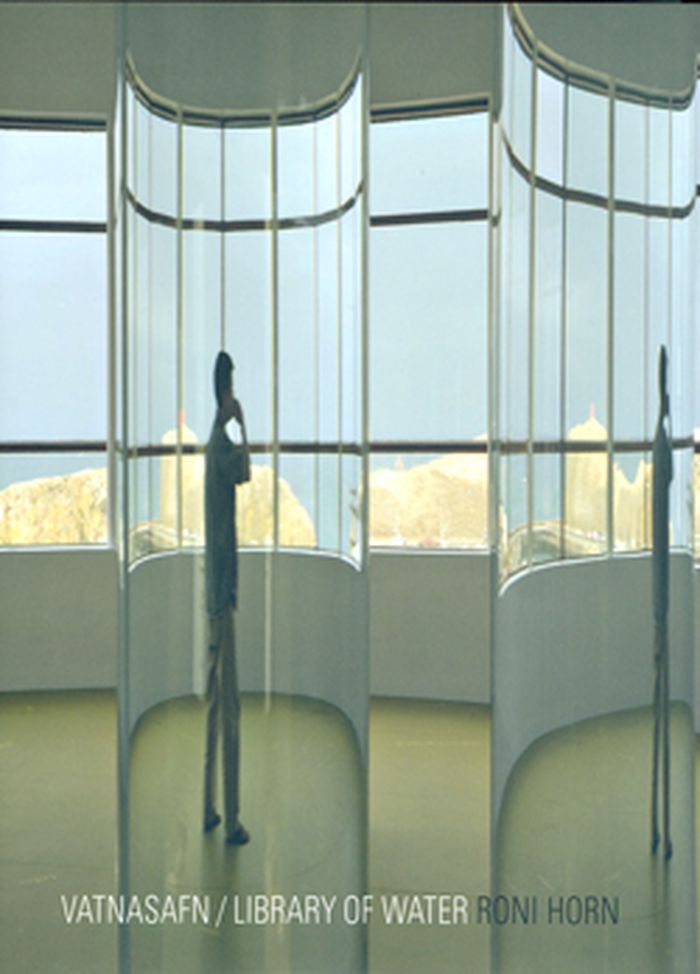
The distinctive geography, climate and culture of Iceland has engaged Roni Horn for over 30 years. Her intimate relationship with the island has led to a multidisciplinary series of works, including books, drawings, sculpture, texts and photographs. Located in a converted library building on a promontory overlooking the ocean in Stykkishólmur on Iceland's west coast, Vatnasafn/Library of Water incorporates Horn's abiding interest in water and weather, reflection and illumination, and the relation of these phenomena to the fluidity of human identity. The installation houses 24 glass columns containing local glacier water that reflect outside weather conditions onto a rubber floor embedded with weather-related adjectives. It also functions as a community space, a writers' studio and an oral archive of local weather reports. An introduction by co-director of the London-based nonprofit Artangel, James Lingwood, surveys Horn's substantial body of Iceland-related work alongside essays by critics Briony Fer and Adrian Searle, a selection of weather reports and writings by Horn, inspired by her experience of the enigmatic island.
Vatnasafn/ library of water
Actions:
Price:
$54.00
(available to order)
Summary:
The distinctive geography, climate and culture of Iceland has engaged Roni Horn for over 30 years. Her intimate relationship with the island has led to a multidisciplinary series of works, including books, drawings, sculpture, texts and photographs. Located in a converted library building on a promontory overlooking the ocean in Stykkishólmur on Iceland's west coast, Vatnasafn/Library of Water incorporates Horn's abiding interest in water and weather, reflection and illumination, and the relation of these phenomena to the fluidity of human identity. The installation houses 24 glass columns containing local glacier water that reflect outside weather conditions onto a rubber floor embedded with weather-related adjectives. It also functions as a community space, a writers' studio and an oral archive of local weather reports. An introduction by co-director of the London-based nonprofit Artangel, James Lingwood, surveys Horn's substantial body of Iceland-related work alongside essays by critics Briony Fer and Adrian Searle, a selection of weather reports and writings by Horn, inspired by her experience of the enigmatic island.
Form:
books
books
Publication:
June 2009
June 2009
Subject:
Contemporary Art Monographs
Contemporary Art Monographs
Form:
books
books
Actions:
Price:
$49.80
(available to order)
Summary:
This book presents objects from the 21st Century by Spanish designers of the 21st century. This publication is motivated by the conviction that the concept of the object, as such, has been left behind. The universe of objects, or perhaps we would have to say of "offjects," put forward here is that of the work of those generation that graduated after the Barcelona(...)
$49.80
(available to order)
Summary:
This book presents objects from the 21st Century by Spanish designers of the 21st century. This publication is motivated by the conviction that the concept of the object, as such, has been left behind. The universe of objects, or perhaps we would have to say of "offjects," put forward here is that of the work of those generation that graduated after the Barcelona(...)
Title:
Offjects. Concepts and designs for a change of century
Actions:
Price:
$49.80
(available to order)
Summary:
This book presents objects from the 21st Century by Spanish designers of the 21st century. This publication is motivated by the conviction that the concept of the object, as such, has been left behind. The universe of objects, or perhaps we would have to say of "offjects," put forward here is that of the work of those generation that graduated after the Barcelona Olympics: from 1992 into these first few years of the 21st century. What seems clear is that the classic definition of "design" has been rendered obsolete. In the first place because an object's conceptual and narrative charge largely determines its material and physical configuration, and in second place, because many present-day pieces are not produced industrially - some because their designers chose not to, others because they seem not to fit into excessively conservative industrial set-ups. What does seem to be the case is that we are dealing with a new typology of designer, more open, more multidisciplinary and more remote from the traditional commercial circuit, which is not to say remote from the market.
Offjects. Concepts and designs for a change of century
Actions:
Price:
$49.80
(available to order)
Summary:
This book presents objects from the 21st Century by Spanish designers of the 21st century. This publication is motivated by the conviction that the concept of the object, as such, has been left behind. The universe of objects, or perhaps we would have to say of "offjects," put forward here is that of the work of those generation that graduated after the Barcelona Olympics: from 1992 into these first few years of the 21st century. What seems clear is that the classic definition of "design" has been rendered obsolete. In the first place because an object's conceptual and narrative charge largely determines its material and physical configuration, and in second place, because many present-day pieces are not produced industrially - some because their designers chose not to, others because they seem not to fit into excessively conservative industrial set-ups. What does seem to be the case is that we are dealing with a new typology of designer, more open, more multidisciplinary and more remote from the traditional commercial circuit, which is not to say remote from the market.
Form:
books
books
Publication:
October 2007, Barcelona
October 2007, Barcelona
Subject:
Industrial Design
Industrial Design
Form:
books
books
Actions:
Price:
$63.95
(available to order)
Summary:
Is less really more? At long last, designers, artists, and architects have rediscovered the evocative effect of patterns and are paying homage to décors once rejected as superfluous, by covering lamps, chairs, rooms or entire façades with stripes, polka dots and camouflage designs. Indispensable for anyone interested in contemporary trends in design, art and(...)
$63.95
(available to order)
Summary:
Is less really more? At long last, designers, artists, and architects have rediscovered the evocative effect of patterns and are paying homage to décors once rejected as superfluous, by covering lamps, chairs, rooms or entire façades with stripes, polka dots and camouflage designs. Indispensable for anyone interested in contemporary trends in design, art and(...)
Subject:
Ornementation
Ornementation
Publication:
May 2007, Basel - Boston - Berlin
May 2007, Basel - Boston - Berlin
Title:
Patterns in design, art and architecture
Actions:
Price:
$63.95
(available to order)
Summary:
Is less really more? At long last, designers, artists, and architects have rediscovered the evocative effect of patterns and are paying homage to décors once rejected as superfluous, by covering lamps, chairs, rooms or entire façades with stripes, polka dots and camouflage designs. Indispensable for anyone interested in contemporary trends in design, art and architecture, this softcover edition of a classic is quite simply opulent and dazzling – a lavishly illustrated overview composed by experts. This book presents the various multidisciplinary approaches to patterns, showing the many functions and fields of application. Using examples of contemporary work by internationally renowned designers such as Fabio Novembre, Claesson Koivisto Rune and Karim Rashid, by architects such as Herzog & de Meuron, Steven Holl and Sauerbruch Hutton, and artists such as Bridget Riley and Gerhard Richter, a kaleidoscope of colours and forms are laid out before the reader. New interpretations of traditional motifs are illustrated, as well as the impact and influence of technical innovations such as laser engraving and digital milling on the creation and realization of patterns today.
Patterns in design, art and architecture
Actions:
Price:
$63.95
(available to order)
Summary:
Is less really more? At long last, designers, artists, and architects have rediscovered the evocative effect of patterns and are paying homage to décors once rejected as superfluous, by covering lamps, chairs, rooms or entire façades with stripes, polka dots and camouflage designs. Indispensable for anyone interested in contemporary trends in design, art and architecture, this softcover edition of a classic is quite simply opulent and dazzling – a lavishly illustrated overview composed by experts. This book presents the various multidisciplinary approaches to patterns, showing the many functions and fields of application. Using examples of contemporary work by internationally renowned designers such as Fabio Novembre, Claesson Koivisto Rune and Karim Rashid, by architects such as Herzog & de Meuron, Steven Holl and Sauerbruch Hutton, and artists such as Bridget Riley and Gerhard Richter, a kaleidoscope of colours and forms are laid out before the reader. New interpretations of traditional motifs are illustrated, as well as the impact and influence of technical innovations such as laser engraving and digital milling on the creation and realization of patterns today.
Form:
books
books
Publication:
May 2007, Basel - Boston - Berlin
May 2007, Basel - Boston - Berlin
Subject:
Ornementation
Ornementation
Form:
books
books
Title:
Enoura Observatory
Enoura Observatory
Actions:
Price:
$93.00
(available in store)
Summary:
Apart from photography, Japanese artist Hiroshi Sugimoto has been working in sculpture, performing arts and architecture for more than 20 years. Since the early 2010s, he has been constructing the Enoura Observatory, and with his singular vision he has brought together ancient and contemporary Japanese traditions in one art and architectural complex. This book provides an(...)
$93.00
(available in store)
Summary:
Apart from photography, Japanese artist Hiroshi Sugimoto has been working in sculpture, performing arts and architecture for more than 20 years. Since the early 2010s, he has been constructing the Enoura Observatory, and with his singular vision he has brought together ancient and contemporary Japanese traditions in one art and architectural complex. This book provides an(...)
Title:
Enoura Observatory
Actions:
Price:
$93.00
(available in store)
Summary:
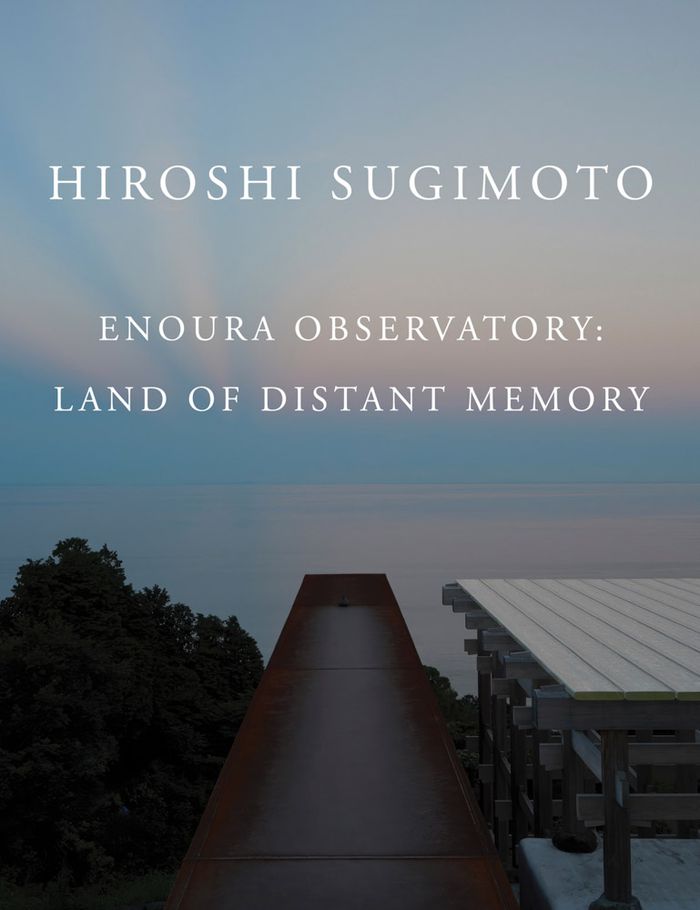
Apart from photography, Japanese artist Hiroshi Sugimoto has been working in sculpture, performing arts and architecture for more than 20 years. Since the early 2010s, he has been constructing the Enoura Observatory, and with his singular vision he has brought together ancient and contemporary Japanese traditions in one art and architectural complex. This book provides an account of this stunning multidisciplinary project. The Observatory, part of the artist's Odawara Art Foundation, is sited on a hilly area covered with citrus trees in Odawara, nestled against the outer rim of the Hakone Mountains and overlooking Sagami Bay. Odawara is home to groups of artisans with mastery of sophisticated techniques that have been handed down for centuries. Sugimoto has constructed the Enoura Observatory using these techniques, which are growing increasingly difficult to preserve. He envisions it as a forum for disseminating art and culture both within Japan and to the rest of the world. The stunning photographs in ''Enoura Observatory: Land of Distant Memories" reveal Sugimoto's poetic vision for this total work of art that is the culmination of his art practice.
Enoura Observatory
Actions:
Price:
$93.00
(available in store)
Summary:
Apart from photography, Japanese artist Hiroshi Sugimoto has been working in sculpture, performing arts and architecture for more than 20 years. Since the early 2010s, he has been constructing the Enoura Observatory, and with his singular vision he has brought together ancient and contemporary Japanese traditions in one art and architectural complex. This book provides an account of this stunning multidisciplinary project. The Observatory, part of the artist's Odawara Art Foundation, is sited on a hilly area covered with citrus trees in Odawara, nestled against the outer rim of the Hakone Mountains and overlooking Sagami Bay. Odawara is home to groups of artisans with mastery of sophisticated techniques that have been handed down for centuries. Sugimoto has constructed the Enoura Observatory using these techniques, which are growing increasingly difficult to preserve. He envisions it as a forum for disseminating art and culture both within Japan and to the rest of the world. The stunning photographs in ''Enoura Observatory: Land of Distant Memories" reveal Sugimoto's poetic vision for this total work of art that is the culmination of his art practice.
Form:
books
books
Publication:
September 2025
September 2025
Subject:
Contemporary Art Monographs
Contemporary Art Monographs
Form:
books
books
Actions:
Price:
$58.95
(available to order)
Summary:
"Recycled theory" is a multidisciplinary dictionary made of entries in form of texts, drawings and quotes, which explore the concept of “recycling” in design cultures and in the theories that nurture them. Usually we recycle things, objects, spaces but more often we return on principles and approaches to rearrange them, put them back into circulation, and override them.(...)
$58.95
(available to order)
Summary:
"Recycled theory" is a multidisciplinary dictionary made of entries in form of texts, drawings and quotes, which explore the concept of “recycling” in design cultures and in the theories that nurture them. Usually we recycle things, objects, spaces but more often we return on principles and approaches to rearrange them, put them back into circulation, and override them.(...)
Title:
Recycled theory: illustrated dictionary
Actions:
Price:
$58.95
(available to order)
Summary:
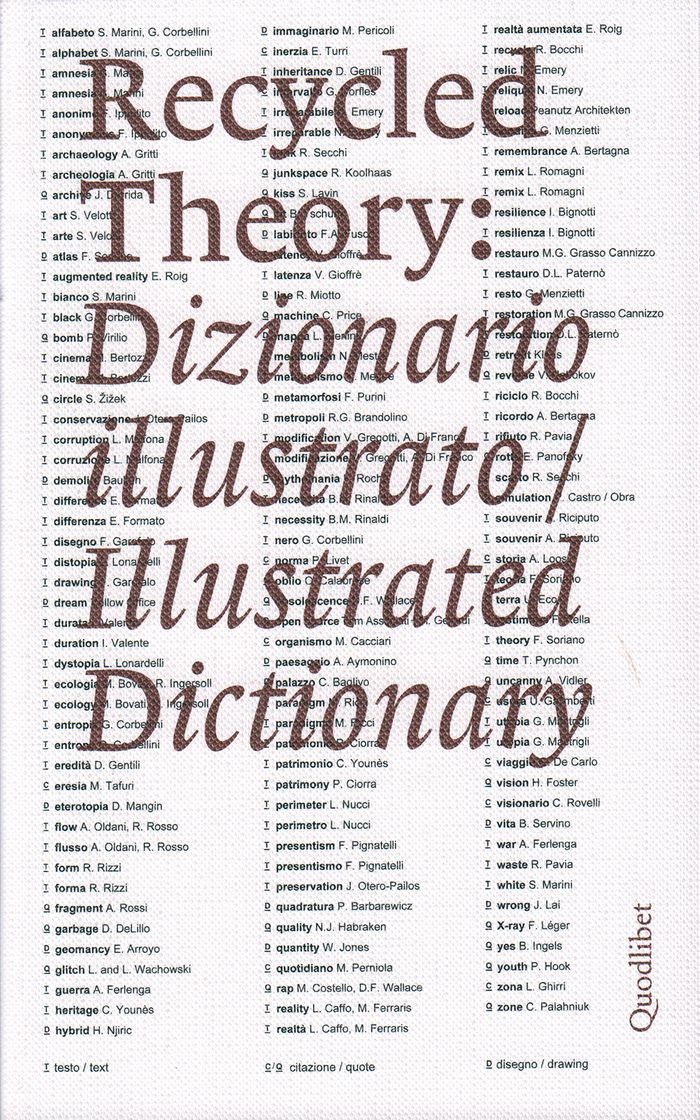
"Recycled theory" is a multidisciplinary dictionary made of entries in form of texts, drawings and quotes, which explore the concept of “recycling” in design cultures and in the theories that nurture them. Usually we recycle things, objects, spaces but more often we return on principles and approaches to rearrange them, put them back into circulation, and override them. The practice of recycling is therefore placed in an area of negotiation between memory and amnesia, it brings out the unexpected self-regeneration potential of what exists, our ability to preserve and reinvent it, even through its partial breakdown. The words here collected (from “amnesia” to “zone”) identify materials, procedures, ambiguities, deviations, and potential nexus of recycling, recording terms that tell the different processes of production and sense of city and landscape after recent socio-economic upheavals and the widening of preservation as the prevalent scenario for the project. Recycled Theory comes out of the collaboration of eleven Italian universities engaged in the research “Re-cycle Italy: New Life Cycles for Architecture and Infrastructure of City and Landscape.”
Recycled theory: illustrated dictionary
Actions:
Price:
$58.95
(available to order)
Summary:
"Recycled theory" is a multidisciplinary dictionary made of entries in form of texts, drawings and quotes, which explore the concept of “recycling” in design cultures and in the theories that nurture them. Usually we recycle things, objects, spaces but more often we return on principles and approaches to rearrange them, put them back into circulation, and override them. The practice of recycling is therefore placed in an area of negotiation between memory and amnesia, it brings out the unexpected self-regeneration potential of what exists, our ability to preserve and reinvent it, even through its partial breakdown. The words here collected (from “amnesia” to “zone”) identify materials, procedures, ambiguities, deviations, and potential nexus of recycling, recording terms that tell the different processes of production and sense of city and landscape after recent socio-economic upheavals and the widening of preservation as the prevalent scenario for the project. Recycled Theory comes out of the collaboration of eleven Italian universities engaged in the research “Re-cycle Italy: New Life Cycles for Architecture and Infrastructure of City and Landscape.”
Form:
books
books
Publication:
November 2016
November 2016
Subject:
Green Architecture
Green Architecture
Form:
books
books

Actions:
Price:
$85.00
(available to order)
Summary:
This book explores the evolving concept of unfinishedness as essential to understanding art movements from the Renaissance to the present day. Unfinished features more than 200 works, created in a variety of media, by artists ranging from Leonardo, Titian, Rembrandt, Turner, and Cézanne to Picasso, Warhol, Twombly, Freud, Richter, and Nauman. What unites these works,(...)
$85.00
(available to order)
Summary:
This book explores the evolving concept of unfinishedness as essential to understanding art movements from the Renaissance to the present day. Unfinished features more than 200 works, created in a variety of media, by artists ranging from Leonardo, Titian, Rembrandt, Turner, and Cézanne to Picasso, Warhol, Twombly, Freud, Richter, and Nauman. What unites these works,(...)
Publication:
May 2016
May 2016
Title:
Unfinished: thoughts left visible
Actions:
Price:
$85.00
(available to order)
Summary:
This book explores the evolving concept of unfinishedness as essential to understanding art movements from the Renaissance to the present day. Unfinished features more than 200 works, created in a variety of media, by artists ranging from Leonardo, Titian, Rembrandt, Turner, and Cézanne to Picasso, Warhol, Twombly, Freud, Richter, and Nauman. What unites these works, across centuries and media, is that each one displays some aspect of being unfinished. Essays and case studies by major contemporary scholars address this key concept from the perspective of both the creator and the viewer, probing the impact that this long artistic trajectory—which can be traced back to the first century—has had on modern and contemporary art. The book explores the degrees to which instances of incompleteness were accidental or intentional, experimental or conceptual. Also included are illuminating interviews with contemporary artists, including Tuymans, Celmins, and Marden, and parallel considerations of the unfinished in literature and film. The result is a multidisciplinary approach and thought-provoking analysis that provide valuable insight into the making, meaning, and critical reception of the unfinished in art.
Unfinished: thoughts left visible
Actions:
Price:
$85.00
(available to order)
Summary:
This book explores the evolving concept of unfinishedness as essential to understanding art movements from the Renaissance to the present day. Unfinished features more than 200 works, created in a variety of media, by artists ranging from Leonardo, Titian, Rembrandt, Turner, and Cézanne to Picasso, Warhol, Twombly, Freud, Richter, and Nauman. What unites these works, across centuries and media, is that each one displays some aspect of being unfinished. Essays and case studies by major contemporary scholars address this key concept from the perspective of both the creator and the viewer, probing the impact that this long artistic trajectory—which can be traced back to the first century—has had on modern and contemporary art. The book explores the degrees to which instances of incompleteness were accidental or intentional, experimental or conceptual. Also included are illuminating interviews with contemporary artists, including Tuymans, Celmins, and Marden, and parallel considerations of the unfinished in literature and film. The result is a multidisciplinary approach and thought-provoking analysis that provide valuable insight into the making, meaning, and critical reception of the unfinished in art.
Form:
books
books
Publication:
May 2016
May 2016
Form:
books
books
Price:
$26.99
(available to order)
Summary:
Excluded from traditional design history and educational canons that heavily favor European modernist influences, the work and experiences of Black designers have been systematically overlooked in the profession for decades. However, given the national focus on diversity, equity, and inclusion in the aftermath of the nationwide Black Lives Matter protests in the United(...)
$26.99
(available to order)
Summary:
Excluded from traditional design history and educational canons that heavily favor European modernist influences, the work and experiences of Black designers have been systematically overlooked in the profession for decades. However, given the national focus on diversity, equity, and inclusion in the aftermath of the nationwide Black Lives Matter protests in the United(...)
Subject:
Design Theory
Design Theory
Publication:
February 2022
February 2022
Title:
The black experience in design: identity, expression & reflection
Actions:
Price:
$26.99
(available to order)
Summary:
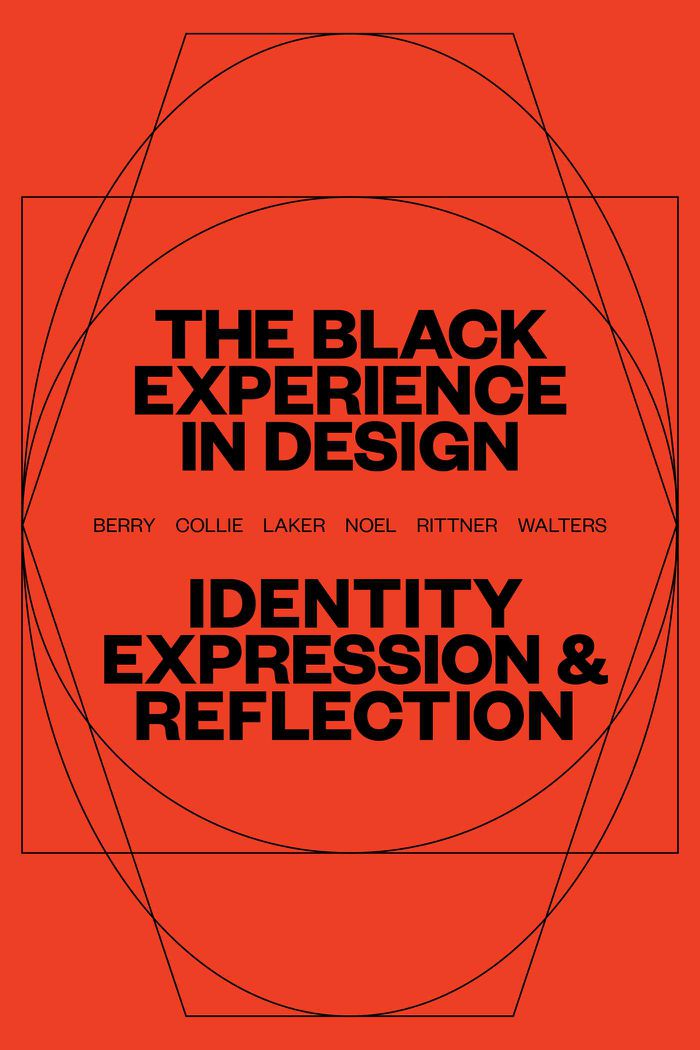
Excluded from traditional design history and educational canons that heavily favor European modernist influences, the work and experiences of Black designers have been systematically overlooked in the profession for decades. However, given the national focus on diversity, equity, and inclusion in the aftermath of the nationwide Black Lives Matter protests in the United States, educators, practitioners, and students now have the opportunity to make long-term, systemic changes in design education, research, and practice, reclaiming the contributions of Black designers in the process. This anthology centers on a range of perspectives, spotlights teaching practices, research, stories, and conversations from a Black/African diasporic lens. Through the voices represented, this text exemplifies the inherently collaborative and multidisciplinary nature of design, providing access to ideas and topics for a variety of audiences, meeting people as they are and wherever they are in their knowledge about design. Ultimately, this book serves as both inspiration and a catalyst for the next generation of creative minds tasked with imagining, shaping, and designing our future.
The black experience in design: identity, expression & reflection
Actions:
Price:
$26.99
(available to order)
Summary:
Excluded from traditional design history and educational canons that heavily favor European modernist influences, the work and experiences of Black designers have been systematically overlooked in the profession for decades. However, given the national focus on diversity, equity, and inclusion in the aftermath of the nationwide Black Lives Matter protests in the United States, educators, practitioners, and students now have the opportunity to make long-term, systemic changes in design education, research, and practice, reclaiming the contributions of Black designers in the process. This anthology centers on a range of perspectives, spotlights teaching practices, research, stories, and conversations from a Black/African diasporic lens. Through the voices represented, this text exemplifies the inherently collaborative and multidisciplinary nature of design, providing access to ideas and topics for a variety of audiences, meeting people as they are and wherever they are in their knowledge about design. Ultimately, this book serves as both inspiration and a catalyst for the next generation of creative minds tasked with imagining, shaping, and designing our future.
Form:
books
books
Publication:
February 2022
February 2022
Subject:
Design Theory
Design Theory


