


3003 Results
Form:
books
books
Actions:
Price:
$20.95
(available in store)
Summary:
In December 2006, close to Zurich airport, Opfikerpark was completed after a construction period of 79 weeks. Central element of the park is a concrete sculpture, over 500m-long, accommodating a lake surrounded by sandy beaches and a reed belt. The idea for the design of the park was the result of an international competition initiated in 2001 and won by Berlin practice(...)
$20.95
(available in store)
Summary:
In December 2006, close to Zurich airport, Opfikerpark was completed after a construction period of 79 weeks. Central element of the park is a concrete sculpture, over 500m-long, accommodating a lake surrounded by sandy beaches and a reed belt. The idea for the design of the park was the result of an international competition initiated in 2001 and won by Berlin practice(...)
Subject:
Landscape Architecture, Monographs
Landscape Architecture, Monographs
Publication:
July 2007, Berlin
July 2007, Berlin
Title:
79 KW Zurich : building Opfikerpark
Actions:
Price:
$20.95
(available in store)
Summary:
In December 2006, close to Zurich airport, Opfikerpark was completed after a construction period of 79 weeks. Central element of the park is a concrete sculpture, over 500m-long, accommodating a lake surrounded by sandy beaches and a reed belt. The idea for the design of the park was the result of an international competition initiated in 2001 and won by Berlin practice Kiefer. As the second exhibition at gallery AedesLand, this project will be introduced in June 2007. Contrary to the usual approach, the exhibition does not aim to present an already completed construction but rather make transparent the process of creation and realization of the building project ‘opfikerpark’. The efforts and challenges to create a complex and outstanding structure, which were faced by client, planners, engineers as well as executing contractors, shall be recorded in a commented illustration of the construction work. Building sites are temporary production sites involving a multitude of disciplines and trades which need to be coordinated. The exhibition reflects the progressing technological, organizational and design process as well as the objective and subjective influences in effect and thus aims to convey a realistic image of the building activities. Photographer Hanns Joosten has documented the construction progress at regular intervals. His high-quality, large-scale images communicate the special aesthetics of a building site in all its diversity and affect the atmosphere of the exhibition. The whole exhibition space will be part of the exhibition, even floors and ceilings. In addition, a media installation explains the progress of constructing Opfikerpark where viewpoints of diverse disciplines and participants meet. The players get a chance to speak and express their personal perspective on the building process with spoken commentaries. How is a large park constructed? How does a building site work? What do you need so many planners for? And how do they work together? Based on these questions, spontaneous contributions shall throw a critical and ironic light on the expert discourse.
79 KW Zurich : building Opfikerpark
Actions:
Price:
$20.95
(available in store)
Summary:
In December 2006, close to Zurich airport, Opfikerpark was completed after a construction period of 79 weeks. Central element of the park is a concrete sculpture, over 500m-long, accommodating a lake surrounded by sandy beaches and a reed belt. The idea for the design of the park was the result of an international competition initiated in 2001 and won by Berlin practice Kiefer. As the second exhibition at gallery AedesLand, this project will be introduced in June 2007. Contrary to the usual approach, the exhibition does not aim to present an already completed construction but rather make transparent the process of creation and realization of the building project ‘opfikerpark’. The efforts and challenges to create a complex and outstanding structure, which were faced by client, planners, engineers as well as executing contractors, shall be recorded in a commented illustration of the construction work. Building sites are temporary production sites involving a multitude of disciplines and trades which need to be coordinated. The exhibition reflects the progressing technological, organizational and design process as well as the objective and subjective influences in effect and thus aims to convey a realistic image of the building activities. Photographer Hanns Joosten has documented the construction progress at regular intervals. His high-quality, large-scale images communicate the special aesthetics of a building site in all its diversity and affect the atmosphere of the exhibition. The whole exhibition space will be part of the exhibition, even floors and ceilings. In addition, a media installation explains the progress of constructing Opfikerpark where viewpoints of diverse disciplines and participants meet. The players get a chance to speak and express their personal perspective on the building process with spoken commentaries. How is a large park constructed? How does a building site work? What do you need so many planners for? And how do they work together? Based on these questions, spontaneous contributions shall throw a critical and ironic light on the expert discourse.
Form:
books
books
Publication:
July 2007, Berlin
July 2007, Berlin
Subject:
Landscape Architecture, Monographs
Landscape Architecture, Monographs
Form:
books
books
Price:
$75.95
(available to order)
Summary:
More than one hundred exhibitions of Frank Lloyd Wright's work were mounted between 1894 and his death in 1959. Wright organized the majority of these exhibitions himself and viewed them as crucial to his self-presentation as his extensive writings. He used them to promote his designs, appeal to new viewers, and persuade his detractors. Wright on Exhibit presents the(...)
$75.95
(available to order)
Summary:
More than one hundred exhibitions of Frank Lloyd Wright's work were mounted between 1894 and his death in 1959. Wright organized the majority of these exhibitions himself and viewed them as crucial to his self-presentation as his extensive writings. He used them to promote his designs, appeal to new viewers, and persuade his detractors. Wright on Exhibit presents the(...)
Title:
Wright on exhibit: Frank Lloyd Wright's architectural exhibitions
Actions:
Price:
$75.95
(available to order)
Summary:
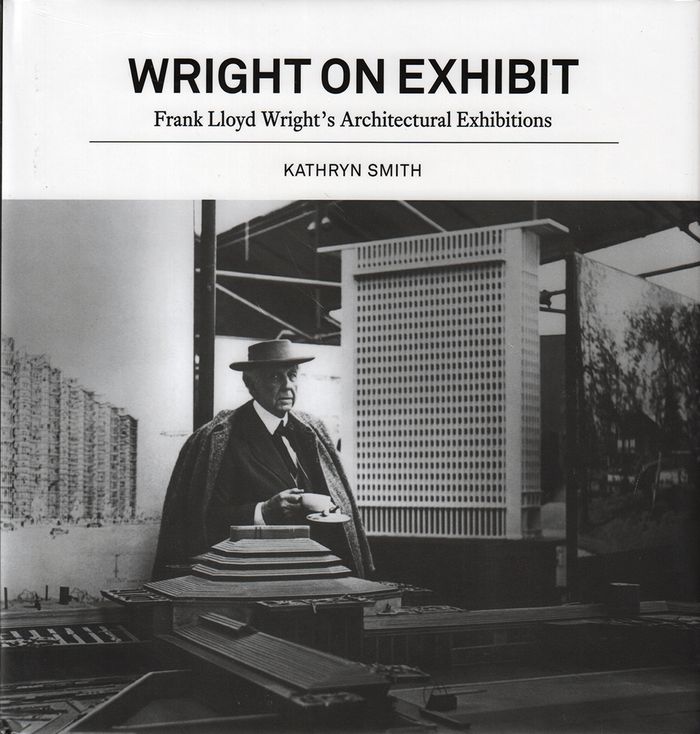
More than one hundred exhibitions of Frank Lloyd Wright's work were mounted between 1894 and his death in 1959. Wright organized the majority of these exhibitions himself and viewed them as crucial to his self-presentation as his extensive writings. He used them to promote his designs, appeal to new viewers, and persuade his detractors. Wright on Exhibit presents the first history of this neglected aspect of the architect’s influential career. Drawing extensively from Wright’s unpublished correspondence, Kathryn Smith challenges the preconceived notion of Wright as a self-promoter who displayed his work in search of money, clients, and fame. She shows how he was an artist-architect projecting an avant-garde program, an innovator who expanded the palette of installation design as technology evolved, and a social activist driven to revolutionize society through design. While Wright’s earliest exhibitions were largely for other architects, by the 1930s he was creating public installations intended to inspire debate and change public perceptions about architecture. The nature of his exhibitions expanded with the times beyond models, drawings, and photographs to include more immersive tools such as slides, film, and even a full-scale structure built especially for his 1953 retrospective at the Guggenheim Museum. Placing Wright’s exhibitions side by side with his writings, Smith shows how integral these exhibitions were to his vision and sheds light on the broader discourse concerning architecture and modernism during the first half of the twentieth century. Wright on Exhibit features color renderings, photos, and plans, as well as a checklist of exhibitions and an illustrated catalog of extant and lost models made under Wright’s supervision.
Wright on exhibit: Frank Lloyd Wright's architectural exhibitions
Actions:
Price:
$75.95
(available to order)
Summary:
More than one hundred exhibitions of Frank Lloyd Wright's work were mounted between 1894 and his death in 1959. Wright organized the majority of these exhibitions himself and viewed them as crucial to his self-presentation as his extensive writings. He used them to promote his designs, appeal to new viewers, and persuade his detractors. Wright on Exhibit presents the first history of this neglected aspect of the architect’s influential career. Drawing extensively from Wright’s unpublished correspondence, Kathryn Smith challenges the preconceived notion of Wright as a self-promoter who displayed his work in search of money, clients, and fame. She shows how he was an artist-architect projecting an avant-garde program, an innovator who expanded the palette of installation design as technology evolved, and a social activist driven to revolutionize society through design. While Wright’s earliest exhibitions were largely for other architects, by the 1930s he was creating public installations intended to inspire debate and change public perceptions about architecture. The nature of his exhibitions expanded with the times beyond models, drawings, and photographs to include more immersive tools such as slides, film, and even a full-scale structure built especially for his 1953 retrospective at the Guggenheim Museum. Placing Wright’s exhibitions side by side with his writings, Smith shows how integral these exhibitions were to his vision and sheds light on the broader discourse concerning architecture and modernism during the first half of the twentieth century. Wright on Exhibit features color renderings, photos, and plans, as well as a checklist of exhibitions and an illustrated catalog of extant and lost models made under Wright’s supervision.
Form:
books
books
Publication:
May 2017
May 2017
Subject:
Architecture Monographs
Architecture Monographs
Form:
books
books
Price:
$24.95
(available in store)
Summary:
In the 1970s, early in his career, Appelt first saw the spectacular cantilevered steel bridge, a marvel of 19th-century engineering spanning over 8,000 feet and still in regular use today. Fascinated by its kinetic and cinematic appearance, when he was invited to reflect on the works in the CCA’s collection, Appelt took the opportunity to revisit the bridge. He reframed(...)
$24.95
(available in store)
Summary:
In the 1970s, early in his career, Appelt first saw the spectacular cantilevered steel bridge, a marvel of 19th-century engineering spanning over 8,000 feet and still in regular use today. Fascinated by its kinetic and cinematic appearance, when he was invited to reflect on the works in the CCA’s collection, Appelt took the opportunity to revisit the bridge. He reframed(...)
Subject:
CCA Publications
CCA Publications
Publication:
March 2005, Montréal
March 2005, Montréal
Title:
Dieter Appelt / Forth Bridge cinema. metric space = espace métrique
Actions:
Price:
$24.95
(available in store)
Summary:
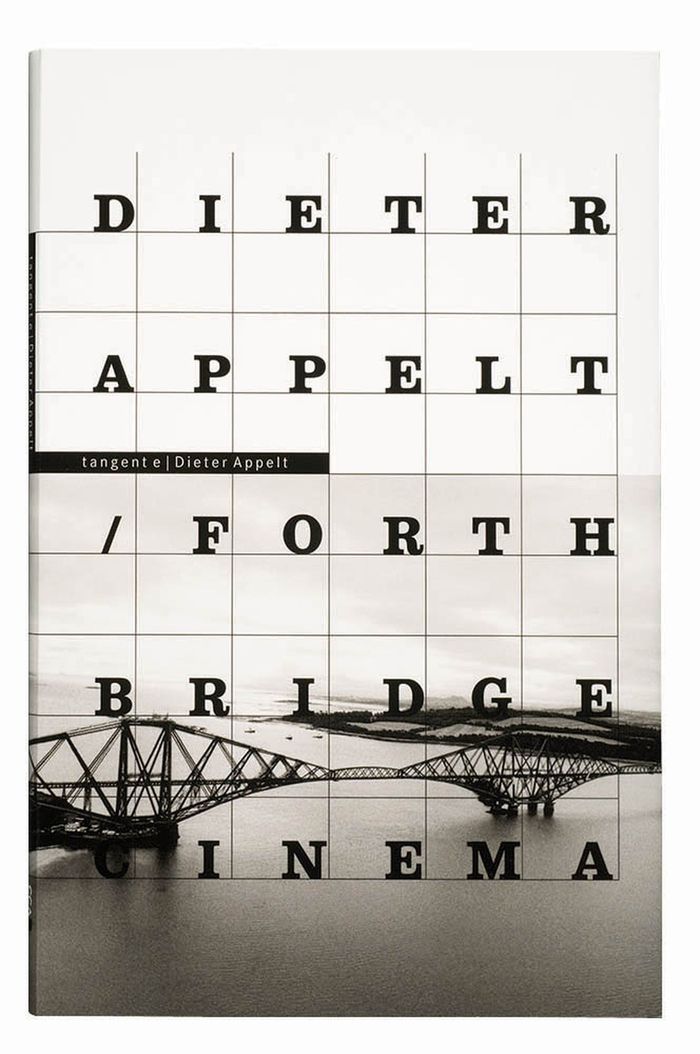
In the 1970s, early in his career, Appelt first saw the spectacular cantilevered steel bridge, a marvel of 19th-century engineering spanning over 8,000 feet and still in regular use today. Fascinated by its kinetic and cinematic appearance, when he was invited to reflect on the works in the CCA’s collection, Appelt took the opportunity to revisit the bridge. He reframed it in light of his long-standing preoccupation with the analysis of architectural constructs in spatial and temporal terms, producing 312 black-and-white 35mm film stills as well as sound recordings. Eight large-scale photographic panels will be presented at the CCA, each comprising a montage of 39 of the film stills edited so as to propose a series of horizontal and vertical readings of the bridge. A selection of albums and photographs from the CCA’s Forth Bridge archives will also be presented accompanied by drawings from Appelt. The beautifully produced publication includes essays by Dieter Appel, Hubertus von Amelunxen, and Louise Désy, as well as a forword by Phyllis Lambert. Au début de sa carrière, dans les années 1970, Appelt avait vu pour la première fois ce spectaculaire pont cantilever en acier, une merveille de l’ingénierie du XIXe siècle, encore en service aujourd’hui, qui s’étend sur 8 000 pieds. Fasciné par son aspect cinétique et cinématique, Appelt a profité de cette invitation pour livrer une réflexion sur les œuvres de la collection du CCA et offrir ainsi une relecture du pont. Fidèle à son intérêt de longue date pour l’analyse spatiale et temporelle des constructions architecturales, il l’a recadré et a produit 312 photos de film 35 mm noir et blanc ainsi que des enregistrements sonores. Huit panneaux photographiques grand format seront exposés au CCA, chacun comportant un montage de 39 photos de films agencées de façon à proposer une série de lectures horizontales et verticales du pont. On pourra aussi voir une sélection d’albums et de photographies des archives du Forth Bridge du CCA, accompagnés de dessins d’Appelt. La publication contient des essais de Dieter Appelt, Hubertus von Amelunxen, et Louise Désy ainsi qu'une préface de Phyllis Lambert.
Dieter Appelt / Forth Bridge cinema. metric space = espace métrique
Actions:
Price:
$24.95
(available in store)
Summary:
In the 1970s, early in his career, Appelt first saw the spectacular cantilevered steel bridge, a marvel of 19th-century engineering spanning over 8,000 feet and still in regular use today. Fascinated by its kinetic and cinematic appearance, when he was invited to reflect on the works in the CCA’s collection, Appelt took the opportunity to revisit the bridge. He reframed it in light of his long-standing preoccupation with the analysis of architectural constructs in spatial and temporal terms, producing 312 black-and-white 35mm film stills as well as sound recordings. Eight large-scale photographic panels will be presented at the CCA, each comprising a montage of 39 of the film stills edited so as to propose a series of horizontal and vertical readings of the bridge. A selection of albums and photographs from the CCA’s Forth Bridge archives will also be presented accompanied by drawings from Appelt. The beautifully produced publication includes essays by Dieter Appel, Hubertus von Amelunxen, and Louise Désy, as well as a forword by Phyllis Lambert. Au début de sa carrière, dans les années 1970, Appelt avait vu pour la première fois ce spectaculaire pont cantilever en acier, une merveille de l’ingénierie du XIXe siècle, encore en service aujourd’hui, qui s’étend sur 8 000 pieds. Fasciné par son aspect cinétique et cinématique, Appelt a profité de cette invitation pour livrer une réflexion sur les œuvres de la collection du CCA et offrir ainsi une relecture du pont. Fidèle à son intérêt de longue date pour l’analyse spatiale et temporelle des constructions architecturales, il l’a recadré et a produit 312 photos de film 35 mm noir et blanc ainsi que des enregistrements sonores. Huit panneaux photographiques grand format seront exposés au CCA, chacun comportant un montage de 39 photos de films agencées de façon à proposer une série de lectures horizontales et verticales du pont. On pourra aussi voir une sélection d’albums et de photographies des archives du Forth Bridge du CCA, accompagnés de dessins d’Appelt. La publication contient des essais de Dieter Appelt, Hubertus von Amelunxen, et Louise Désy ainsi qu'une préface de Phyllis Lambert.
Form:
books
books
Publication:
March 2005, Montréal
March 2005, Montréal
Subject:
CCA Publications
CCA Publications


