


3021 Results
Form:
books
books
Title:
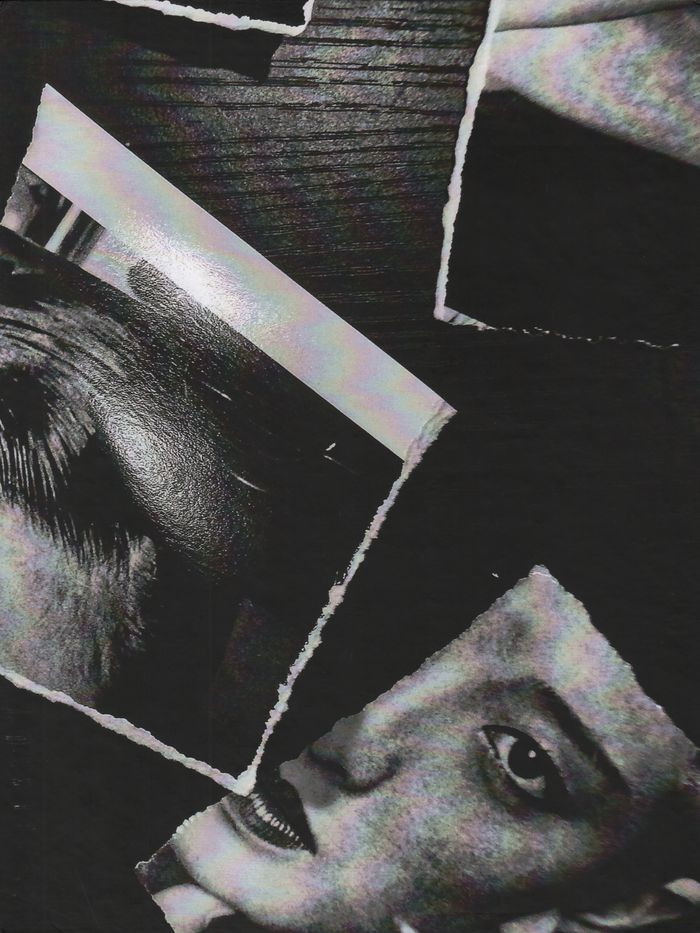
Daido Moriyama: record
Daido Moriyama: record
Actions:
Price:
$92.00
(available to order)
Summary:
Inspired by Japanese photographers, as well as by William Klein’s seminal photography book on New York, Daido Moriyama moved from Osaka to Tokyo in the early sixties to become a photographer. He became the leading exponent of a fierce new photographic style that corresponded perfectly to the abrasive and intense climate of Tokyo during a period of great social upheaval.(...)
$92.00
(available to order)
Summary:
Inspired by Japanese photographers, as well as by William Klein’s seminal photography book on New York, Daido Moriyama moved from Osaka to Tokyo in the early sixties to become a photographer. He became the leading exponent of a fierce new photographic style that corresponded perfectly to the abrasive and intense climate of Tokyo during a period of great social upheaval.(...)
Title:
Daido Moriyama: record
Actions:
Price:
$92.00
(available to order)
Summary:
Inspired by Japanese photographers, as well as by William Klein’s seminal photography book on New York, Daido Moriyama moved from Osaka to Tokyo in the early sixties to become a photographer. He became the leading exponent of a fierce new photographic style that corresponded perfectly to the abrasive and intense climate of Tokyo during a period of great social upheaval. Between June 1972 and July 1973 Moriyama produced his own magazine publication, Kiroku, which was then referred to as Record. It became a diaristic journal of his work as it developed. Ten years ago, after a decades-long interval, he was able to resume publication of Record. Now this book collects work from all thirty published issues, edited into a single sequence, punctuated by Moriyama’s own text as it appeared in the magazine. Produced at the magazine’s original size, with an introduction by Mark Holborn, this volume features more than 200 works from throughout the magazine’s history. It used to be assumed that Moriyama’s peculiarly Japanese style was tied to his Tokyo roots. The evidence of the last ten years demonstrates that Moriyama, a restless world traveler, has been able to apply his unique vision to northern Europe; southern France; the cities of Florence, London, Barcelona, Taipei, Hong Kong, New York, and Los Angeles as well as the alleys of Osaka; the landscape of Hokkaido; and Afghanistan.
Daido Moriyama: record
Actions:
Price:
$92.00
(available to order)
Summary:
Inspired by Japanese photographers, as well as by William Klein’s seminal photography book on New York, Daido Moriyama moved from Osaka to Tokyo in the early sixties to become a photographer. He became the leading exponent of a fierce new photographic style that corresponded perfectly to the abrasive and intense climate of Tokyo during a period of great social upheaval. Between June 1972 and July 1973 Moriyama produced his own magazine publication, Kiroku, which was then referred to as Record. It became a diaristic journal of his work as it developed. Ten years ago, after a decades-long interval, he was able to resume publication of Record. Now this book collects work from all thirty published issues, edited into a single sequence, punctuated by Moriyama’s own text as it appeared in the magazine. Produced at the magazine’s original size, with an introduction by Mark Holborn, this volume features more than 200 works from throughout the magazine’s history. It used to be assumed that Moriyama’s peculiarly Japanese style was tied to his Tokyo roots. The evidence of the last ten years demonstrates that Moriyama, a restless world traveler, has been able to apply his unique vision to northern Europe; southern France; the cities of Florence, London, Barcelona, Taipei, Hong Kong, New York, and Los Angeles as well as the alleys of Osaka; the landscape of Hokkaido; and Afghanistan.
Form:
books
books
Publication:
October 2017
October 2017
Subject:
Photography monographs
Photography monographs
Form:
books
books
Actions:
Price:
$18.00
(available to order)
Summary:
Identifying an intensified concern for place-based production in art and architecture, "Surface tension – supplements" addresses questions of site-specific art, public and architectural design, and location-based practice. With Supplement No. 1, issues of spatial practice are explored in critical essays by Jennifer Gabrys on the geographic implications of Fresh Kills(...)
$18.00
(available to order)
Summary:
Identifying an intensified concern for place-based production in art and architecture, "Surface tension – supplements" addresses questions of site-specific art, public and architectural design, and location-based practice. With Supplement No. 1, issues of spatial practice are explored in critical essays by Jennifer Gabrys on the geographic implications of Fresh Kills(...)
Subject:
Acoustics
Acoustics
Publication:
June 2006, Copenhagen, Los Angeles
June 2006, Copenhagen, Los Angeles
Title:
Surface tension - supplement no 1
Actions:
Price:
$18.00
(available to order)
Summary:
Identifying an intensified concern for place-based production in art and architecture, "Surface tension – supplements" addresses questions of site-specific art, public and architectural design, and location-based practice. With Supplement No. 1, issues of spatial practice are explored in critical essays by Jennifer Gabrys on the geographic implications of Fresh Kills Landfill, Scott Berzofsky, Nicholas Petr, Nicholas Wisniewski & Michael Rakowitz on artistic interventions in Baltimore, and by Claudine Isé, curator of "Vanishing Point", an exhibition at the Wexner Center for the Arts, which questions the aesthetics of urban non-spaces through recent photography and film. In addition field reports by Robin Wilson on public art projects in Bristol, Goto Newton on the cultures of interventionist practice in Curitiba Brazil, and Ken Ehrlich on the infrastructure of signage in Los Angeles as seen through the photographic works of Brandon Lattu complement the articles. In addition, documentation of public projects in Tijuana and Ohio by the artist groups Simparch and e-Xplo will be presented, along with projects designed specifically for the book by Sophie Warren and Jonathan Mosely, a Bristol-based team working with questions of utopian architecture, and Brandon LaBelle with a textual-photographic meditation on experimental architecture. Additional writings by Kathy Battista and Aoife O’Brien provide critical and creative perspectives on recent events, books, and exhibitions working with questions of architecture, performance, and media.
Surface tension - supplement no 1
Actions:
Price:
$18.00
(available to order)
Summary:
Identifying an intensified concern for place-based production in art and architecture, "Surface tension – supplements" addresses questions of site-specific art, public and architectural design, and location-based practice. With Supplement No. 1, issues of spatial practice are explored in critical essays by Jennifer Gabrys on the geographic implications of Fresh Kills Landfill, Scott Berzofsky, Nicholas Petr, Nicholas Wisniewski & Michael Rakowitz on artistic interventions in Baltimore, and by Claudine Isé, curator of "Vanishing Point", an exhibition at the Wexner Center for the Arts, which questions the aesthetics of urban non-spaces through recent photography and film. In addition field reports by Robin Wilson on public art projects in Bristol, Goto Newton on the cultures of interventionist practice in Curitiba Brazil, and Ken Ehrlich on the infrastructure of signage in Los Angeles as seen through the photographic works of Brandon Lattu complement the articles. In addition, documentation of public projects in Tijuana and Ohio by the artist groups Simparch and e-Xplo will be presented, along with projects designed specifically for the book by Sophie Warren and Jonathan Mosely, a Bristol-based team working with questions of utopian architecture, and Brandon LaBelle with a textual-photographic meditation on experimental architecture. Additional writings by Kathy Battista and Aoife O’Brien provide critical and creative perspectives on recent events, books, and exhibitions working with questions of architecture, performance, and media.
Form:
books
books
Publication:
June 2006, Copenhagen, Los Angeles
June 2006, Copenhagen, Los Angeles
Subject:
Acoustics
Acoustics
Form:
books
books
Actions:
Price:
$49.95
(available to order)
Summary:
Over the past decade, a seismic shift in economic and political forces has transformed life in the second-largest city on the West Coast, situated at the most heavily trafficked international border crossing in the world. Tijuana’s newfound wealth and haphazard expansion have changed patterns of migration for the city’s many artists, who once routinely moved north to Los(...)
$49.95
(available to order)
Summary:
Over the past decade, a seismic shift in economic and political forces has transformed life in the second-largest city on the West Coast, situated at the most heavily trafficked international border crossing in the world. Tijuana’s newfound wealth and haphazard expansion have changed patterns of migration for the city’s many artists, who once routinely moved north to Los(...)
Title:
Strange new world : art and design from Tijuana
Actions:
Price:
$49.95
(available to order)
Summary:
Over the past decade, a seismic shift in economic and political forces has transformed life in the second-largest city on the West Coast, situated at the most heavily trafficked international border crossing in the world. Tijuana’s newfound wealth and haphazard expansion have changed patterns of migration for the city’s many artists, who once routinely moved north to Los Angeles but are now staying or returning, and being joined by friends from Mexico City and beyond. This flourishing, strengthening artistic community has responded to the city’s accelerated evolution with a broad range of work, from painting to conceptually driven installations; from street-level digital video to ambitious photo-documentation, filmmaking and political work; from architectural proposals to product design associated with the "Nortec" musical movement. The work gathered in "Strange new world" embraces Tijuana as a paradigm of a new postmodern form of urbanization shaped by the pressures of economic globalization and cultural transnationalism since 1994. It struggles to make sense of new realities changing the ways in which people live in cities around the globe. Like Aldous Huxley's Brave New World, it is part science fiction, part political commentary and part artistic revolution and cultural critique. Arranged around the concepts of the urban theorist Michael Smith, it features work by ERRE, Einar and Jamex de la Torre and Yvonne Venegas, among others.
Strange new world : art and design from Tijuana
Actions:
Price:
$49.95
(available to order)
Summary:
Over the past decade, a seismic shift in economic and political forces has transformed life in the second-largest city on the West Coast, situated at the most heavily trafficked international border crossing in the world. Tijuana’s newfound wealth and haphazard expansion have changed patterns of migration for the city’s many artists, who once routinely moved north to Los Angeles but are now staying or returning, and being joined by friends from Mexico City and beyond. This flourishing, strengthening artistic community has responded to the city’s accelerated evolution with a broad range of work, from painting to conceptually driven installations; from street-level digital video to ambitious photo-documentation, filmmaking and political work; from architectural proposals to product design associated with the "Nortec" musical movement. The work gathered in "Strange new world" embraces Tijuana as a paradigm of a new postmodern form of urbanization shaped by the pressures of economic globalization and cultural transnationalism since 1994. It struggles to make sense of new realities changing the ways in which people live in cities around the globe. Like Aldous Huxley's Brave New World, it is part science fiction, part political commentary and part artistic revolution and cultural critique. Arranged around the concepts of the urban theorist Michael Smith, it features work by ERRE, Einar and Jamex de la Torre and Yvonne Venegas, among others.
Form:
books
books
Publication:
August 2006, La Jolla
August 2006, La Jolla
Subject:
Contemporary Art Monographs
Contemporary Art Monographs
Form:
books
books
Actions:
Price:
$54.95
(available to order)
Summary:
For years, architects have enjoyed the challenge of incorporating lightweight structures -- fabrics, tents, canopies, membranes, and so on -- into their designs. Such materials are a welcome boon to architectural creativity, allowing designers to envision spaces that take innovative shapes and interact with their surroundings in ways unattainable with conventional(...)
$54.95
(available to order)
Summary:
For years, architects have enjoyed the challenge of incorporating lightweight structures -- fabrics, tents, canopies, membranes, and so on -- into their designs. Such materials are a welcome boon to architectural creativity, allowing designers to envision spaces that take innovative shapes and interact with their surroundings in ways unattainable with conventional(...)
Title:
The magic of tents : transforming space
Actions:
Price:
$54.95
(available to order)
Summary:
For years, architects have enjoyed the challenge of incorporating lightweight structures -- fabrics, tents, canopies, membranes, and so on -- into their designs. Such materials are a welcome boon to architectural creativity, allowing designers to envision spaces that take innovative shapes and interact with their surroundings in ways unattainable with conventional materials. Recent years have seen an increase in the use of such structures, in part because advances in computer technology have made it easier to render and model such projects, and in part because such structures are ideally suited to today's increasing concerns about environmentalism and sustainability. The Magic of Tents showcases innovative uses of lightweight, tented structures from across the United States and around the world -- from an Arizona school to an Istanbul bank, from a Miami nightclub on the beach to a private home in Germany, from corporate headquarters in Los Angeles to offices in Oslo, and many more! The book features both residential and commercial projects, projects with both exterior and interior usages, projects where the tented element is the driving component of the design, and projects that incorporate lightweight structures to accent or address a specific need. Endlessly flexible, nurturing of creativity, cost- and energy-conscious, tented structures are an ideal means to address many concerns of modern architecture -- a creative means to not only define space, but also to transform it into something to meet all sorts of design needs, for projects both grand and small.
The magic of tents : transforming space
Actions:
Price:
$54.95
(available to order)
Summary:
For years, architects have enjoyed the challenge of incorporating lightweight structures -- fabrics, tents, canopies, membranes, and so on -- into their designs. Such materials are a welcome boon to architectural creativity, allowing designers to envision spaces that take innovative shapes and interact with their surroundings in ways unattainable with conventional materials. Recent years have seen an increase in the use of such structures, in part because advances in computer technology have made it easier to render and model such projects, and in part because such structures are ideally suited to today's increasing concerns about environmentalism and sustainability. The Magic of Tents showcases innovative uses of lightweight, tented structures from across the United States and around the world -- from an Arizona school to an Istanbul bank, from a Miami nightclub on the beach to a private home in Germany, from corporate headquarters in Los Angeles to offices in Oslo, and many more! The book features both residential and commercial projects, projects with both exterior and interior usages, projects where the tented element is the driving component of the design, and projects that incorporate lightweight structures to accent or address a specific need. Endlessly flexible, nurturing of creativity, cost- and energy-conscious, tented structures are an ideal means to address many concerns of modern architecture -- a creative means to not only define space, but also to transform it into something to meet all sorts of design needs, for projects both grand and small.
Form:
books
books
Publication:
May 2004, New York
May 2004, New York
Subject:
Miniature Architecture
Miniature Architecture
Form:
books
books
Actions:
Price:
$50.00
(available to order)
Summary:
With "Edens lost & found", filmmakers Harry Wiland and Dale Bell herald a sea change in the relationship between ordinary citizens, environmental groups, and government. From across America they gather evidence of a new spirit of cooperation among neighbors, planners, architects and builders, city officials, and government agencies. Indeed, as urban issues have become(...)
$50.00
(available to order)
Summary:
With "Edens lost & found", filmmakers Harry Wiland and Dale Bell herald a sea change in the relationship between ordinary citizens, environmental groups, and government. From across America they gather evidence of a new spirit of cooperation among neighbors, planners, architects and builders, city officials, and government agencies. Indeed, as urban issues have become(...)
Subject:
Urban Landscapes
Urban Landscapes
Publication:
May 2006, White River Junction
May 2006, White River Junction
Title:
Edens lost and found : how ordinary citizens are restoring our great American cities
Actions:
Price:
$50.00
(available to order)
Summary:
With "Edens lost & found", filmmakers Harry Wiland and Dale Bell herald a sea change in the relationship between ordinary citizens, environmental groups, and government. From across America they gather evidence of a new spirit of cooperation among neighbors, planners, architects and builders, city officials, and government agencies. Indeed, as urban issues have become undeniably urgent problems that demand answers, people from disparate backgrounds and political leanings are joining forces to recast life in American cities. As citizens take action where government has failed, they are finding support, encouragement, and help from their neighbors. Conversely, as progressive-minded government agencies and organizations explore nontraditional solutions, an energized community rallies to the cause. Neither exclusively top-down, nor grass roots, we are in the midst of an unprecedented movement that unites efforts from every quarter in a common cause. Focusing on Chicago, Los Angeles, Philadelphia, and Seattle-four cities that face vastly different challenges-"Edens lost & found" highlights the remarkable power of hope, pride, ingenuity, and chutzpah that characterize this era of collaboration. Bioengineering concepts-now increasingly understood by many to offer the most effective, cost-efficient solutions-are playing a central role. Working with-rather than in opposition to-nature is leading to such innovations as rooftop and urban gardens, restored parks, transformed vacant lots, the re-greening of city streets, and eco-friendly watershed management. Edens Lost & Found shows how working to reshape the land also transforms the relationships people have to one another.
Edens lost and found : how ordinary citizens are restoring our great American cities
Actions:
Price:
$50.00
(available to order)
Summary:
With "Edens lost & found", filmmakers Harry Wiland and Dale Bell herald a sea change in the relationship between ordinary citizens, environmental groups, and government. From across America they gather evidence of a new spirit of cooperation among neighbors, planners, architects and builders, city officials, and government agencies. Indeed, as urban issues have become undeniably urgent problems that demand answers, people from disparate backgrounds and political leanings are joining forces to recast life in American cities. As citizens take action where government has failed, they are finding support, encouragement, and help from their neighbors. Conversely, as progressive-minded government agencies and organizations explore nontraditional solutions, an energized community rallies to the cause. Neither exclusively top-down, nor grass roots, we are in the midst of an unprecedented movement that unites efforts from every quarter in a common cause. Focusing on Chicago, Los Angeles, Philadelphia, and Seattle-four cities that face vastly different challenges-"Edens lost & found" highlights the remarkable power of hope, pride, ingenuity, and chutzpah that characterize this era of collaboration. Bioengineering concepts-now increasingly understood by many to offer the most effective, cost-efficient solutions-are playing a central role. Working with-rather than in opposition to-nature is leading to such innovations as rooftop and urban gardens, restored parks, transformed vacant lots, the re-greening of city streets, and eco-friendly watershed management. Edens Lost & Found shows how working to reshape the land also transforms the relationships people have to one another.
Form:
books
books
Publication:
May 2006, White River Junction
May 2006, White River Junction
Subject:
Urban Landscapes
Urban Landscapes
Form:
books
books

Actions:
Price:
$79.95
(available to order)
Summary:
This book reveals that historic sites and buildings have much to tell us about women's history. It documents women's contributions to the historic preservation movement at places such as Mount Vernon and explores women's history at several existing landmarks such as historic homes, as wells as in a wider array of cultural landscapes ranging from nurses' residences in(...)
$79.95
(available to order)
Summary:
This book reveals that historic sites and buildings have much to tell us about women's history. It documents women's contributions to the historic preservation movement at places such as Mount Vernon and explores women's history at several existing landmarks such as historic homes, as wells as in a wider array of cultural landscapes ranging from nurses' residences in(...)
Subject:
Architectural Theory
Architectural Theory
Publication:
November 2002, Baltimore
November 2002, Baltimore
Title:
Restoring womens' history through historic preservation
Actions:
Price:
$79.95
(available to order)
Summary:
This book reveals that historic sites and buildings have much to tell us about women's history. It documents women's contributions to the historic preservation movement at places such as Mount Vernon and explores women's history at several existing landmarks such as historic homes, as wells as in a wider array of cultural landscapes ranging from nurses' residences in Montreal to prostitutes' quarters in Los Angeles. The book includes essays on six exemplary projects that have advanced the integration of women's history into historic preservation and closes with three perspectives on preservation policy and practice. National in scope but applicable in any locality, Restoring Women's History through Historic Preservation combines the most important recently published information with the best new research and covers many national, state, and local initiatives of the past decade. It collects in one volume the seminal work of twenty academic historians, preservationists, and professionals at parks and monuments throughout the country who examine practical ways to represent women's history through historic preservation programs. Over the past several decades, work in the areas of women's history and historic preservation has done much to change not only how we regard history but also how we might broaden the very notion of what we consider historical. This volume reflects a growing commitment to historic preservation and shows how practitioners in both fields can benefit from an exchange of insights and create more effective public history.
Restoring womens' history through historic preservation
Actions:
Price:
$79.95
(available to order)
Summary:
This book reveals that historic sites and buildings have much to tell us about women's history. It documents women's contributions to the historic preservation movement at places such as Mount Vernon and explores women's history at several existing landmarks such as historic homes, as wells as in a wider array of cultural landscapes ranging from nurses' residences in Montreal to prostitutes' quarters in Los Angeles. The book includes essays on six exemplary projects that have advanced the integration of women's history into historic preservation and closes with three perspectives on preservation policy and practice. National in scope but applicable in any locality, Restoring Women's History through Historic Preservation combines the most important recently published information with the best new research and covers many national, state, and local initiatives of the past decade. It collects in one volume the seminal work of twenty academic historians, preservationists, and professionals at parks and monuments throughout the country who examine practical ways to represent women's history through historic preservation programs. Over the past several decades, work in the areas of women's history and historic preservation has done much to change not only how we regard history but also how we might broaden the very notion of what we consider historical. This volume reflects a growing commitment to historic preservation and shows how practitioners in both fields can benefit from an exchange of insights and create more effective public history.
Form:
books
books
Publication:
November 2002, Baltimore
November 2002, Baltimore
Subject:
Architectural Theory
Architectural Theory
Form:
books
books
Price:
$67.50
(available to order)
Summary:
Ed Ruscha is one of the first American artists to introduce a critique of popular culture and an examination of language into the visual arts. Although he first made his reputation as a painter, Ruscha is also celebrated for his drawings (made both with conventional materials and with food, blood, gunpowder, and shellac), prints, films, photographs, and books. He is(...)
$67.50
(available to order)
Summary:
Ed Ruscha is one of the first American artists to introduce a critique of popular culture and an examination of language into the visual arts. Although he first made his reputation as a painter, Ruscha is also celebrated for his drawings (made both with conventional materials and with food, blood, gunpowder, and shellac), prints, films, photographs, and books. He is(...)
Subject:
Contemporary Art Monographs
Contemporary Art Monographs
Publication:
April 2002, Cambridge, Mass. / London
April 2002, Cambridge, Mass. / London
Title:
Leave any information at the signal : writings, interviews, bits, pages
Actions:
Price:
$67.50
(available to order)
Summary:
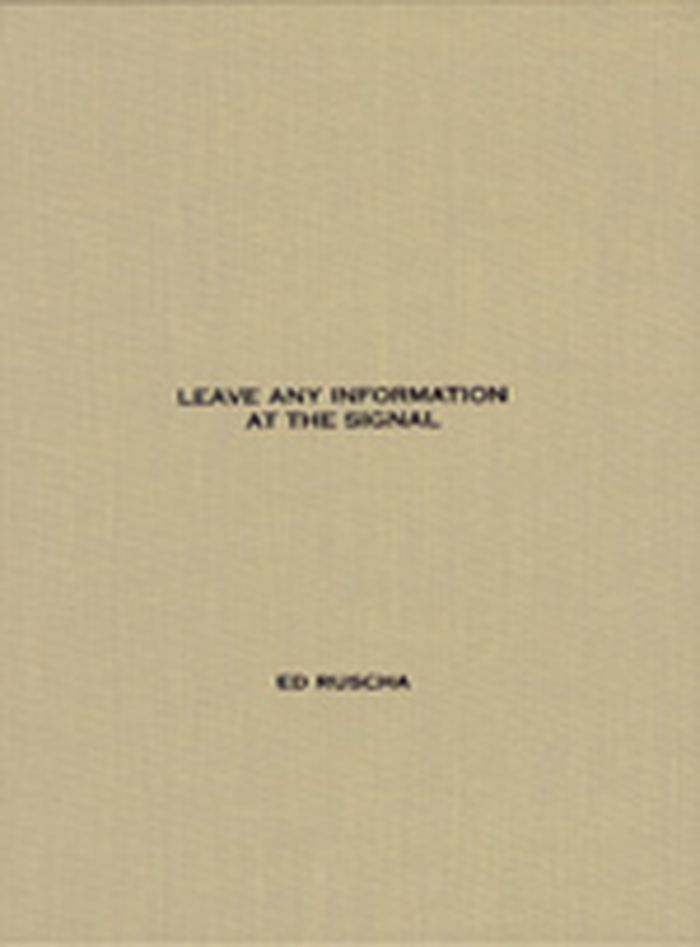
Ed Ruscha is one of the first American artists to introduce a critique of popular culture and an examination of language into the visual arts. Although he first made his reputation as a painter, Ruscha is also celebrated for his drawings (made both with conventional materials and with food, blood, gunpowder, and shellac), prints, films, photographs, and books. He is often associated with Los Angeles as a Pop and Conceptualist hub, but tends to regard such labels with a satirical, if not jaundiced, eye. Indeed, his work is characterized by the tensions between high and low, solemn and irreverent, and serious and nonsensical, and it draws on popular culture as well as Western art traditions. "Leave any information at the signal" not only documents the work of this influential artist as he rose to prominence but also contains his writings and commentaries on other artistic developments of the period. The book is divided into three parts, each of which is arranged chronologically. Part one contains statements, letters, and other writings. Part two consists of more than fifty interviews, some of which have never before been published or translated into English. Part three contains sketchbook pages, word groupings, and other notes that chart how Ruscha develops ideas and solves artistic problems. They are published here for the first time. The book also contains more than eighty illustrations, selected and arranged by the artist.
Leave any information at the signal : writings, interviews, bits, pages
Actions:
Price:
$67.50
(available to order)
Summary:
Ed Ruscha is one of the first American artists to introduce a critique of popular culture and an examination of language into the visual arts. Although he first made his reputation as a painter, Ruscha is also celebrated for his drawings (made both with conventional materials and with food, blood, gunpowder, and shellac), prints, films, photographs, and books. He is often associated with Los Angeles as a Pop and Conceptualist hub, but tends to regard such labels with a satirical, if not jaundiced, eye. Indeed, his work is characterized by the tensions between high and low, solemn and irreverent, and serious and nonsensical, and it draws on popular culture as well as Western art traditions. "Leave any information at the signal" not only documents the work of this influential artist as he rose to prominence but also contains his writings and commentaries on other artistic developments of the period. The book is divided into three parts, each of which is arranged chronologically. Part one contains statements, letters, and other writings. Part two consists of more than fifty interviews, some of which have never before been published or translated into English. Part three contains sketchbook pages, word groupings, and other notes that chart how Ruscha develops ideas and solves artistic problems. They are published here for the first time. The book also contains more than eighty illustrations, selected and arranged by the artist.
Form:
books
books
Publication:
April 2002, Cambridge, Mass. / London
April 2002, Cambridge, Mass. / London
Subject:
Contemporary Art Monographs
Contemporary Art Monographs
Form:
books
books
Actions:
Price:
$39.95
(available to order)
Summary:
Few twentieth-century writers on architecture and design have enjoyed the renown of Reyner Banham. Born and trained in England and a U.S. resident starting in 1976, Banham wrote incisively about American and European buildings and culture. Now readers can enjoy a chronological cross-section of essays, polemics, and reviews drawn from more than three decades of Banham's(...)
$39.95
(available to order)
Summary:
Few twentieth-century writers on architecture and design have enjoyed the renown of Reyner Banham. Born and trained in England and a U.S. resident starting in 1976, Banham wrote incisively about American and European buildings and culture. Now readers can enjoy a chronological cross-section of essays, polemics, and reviews drawn from more than three decades of Banham's(...)
Title:
A critic writes : essays by Reyner Banham
Actions:
Price:
$39.95
(available to order)
Summary:
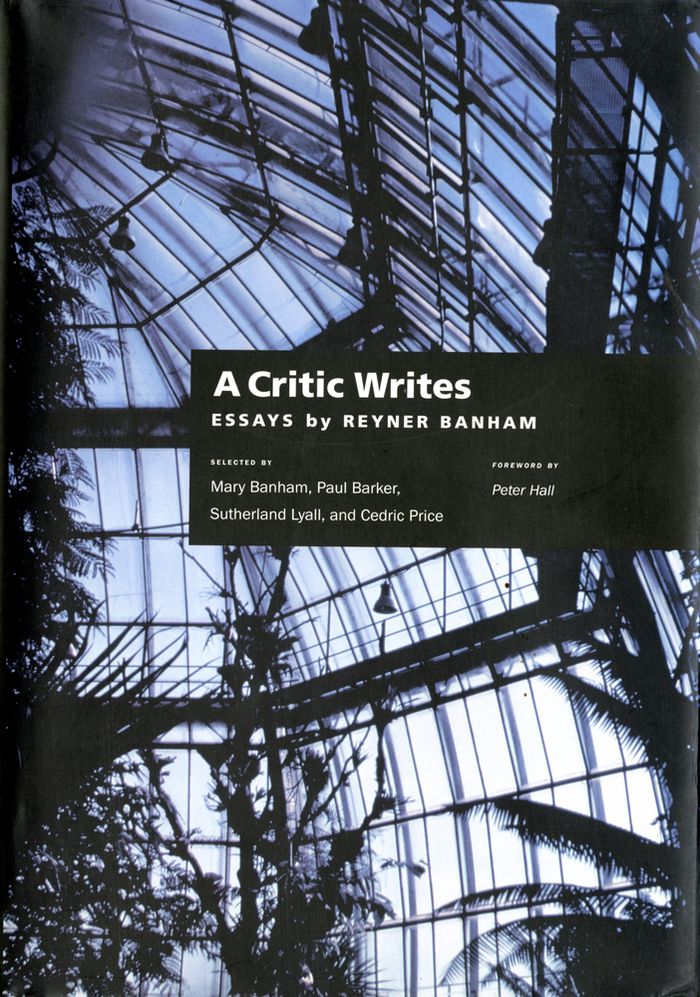
Few twentieth-century writers on architecture and design have enjoyed the renown of Reyner Banham. Born and trained in England and a U.S. resident starting in 1976, Banham wrote incisively about American and European buildings and culture. Now readers can enjoy a chronological cross-section of essays, polemics, and reviews drawn from more than three decades of Banham's writings. The volume, which includes discussions of Italian Futurism, Adolf Loos, Paul Scheerbart, and the Bauhaus as well as explorations of contemporary architecture by Frank Gehry, James Stirling, and Norman Foster, conveys the full range of Banham's belief in industrial and technological development as the motor of architectural evolution. Banham's interests and passions ranged from architecture and the culture of pop art to urban and industrial design. In brilliant analyses of automobile styling, mobile homes, science fiction films, and the American predilection for gadgets, he anticipated many of the preoccupations of contemporary cultural studies. Los Angeles, the city that Banham commemorated in a book and a film, receives extensive attention in essays on the Santa Monica Pier, the Getty Museum, Forest Lawn cemetery, and the ubiquitous freeway system. Eminently readable, provocative, and entertaining, this book is certain to consolidate Banham's reputation among architects and students of contemporary culture. For those acquainted with his writing, it offers welcome surprises as well as familiar delights. For those encountering Banham for the first time, it comprises the perfect introduction.
A critic writes : essays by Reyner Banham
Actions:
Price:
$39.95
(available to order)
Summary:
Few twentieth-century writers on architecture and design have enjoyed the renown of Reyner Banham. Born and trained in England and a U.S. resident starting in 1976, Banham wrote incisively about American and European buildings and culture. Now readers can enjoy a chronological cross-section of essays, polemics, and reviews drawn from more than three decades of Banham's writings. The volume, which includes discussions of Italian Futurism, Adolf Loos, Paul Scheerbart, and the Bauhaus as well as explorations of contemporary architecture by Frank Gehry, James Stirling, and Norman Foster, conveys the full range of Banham's belief in industrial and technological development as the motor of architectural evolution. Banham's interests and passions ranged from architecture and the culture of pop art to urban and industrial design. In brilliant analyses of automobile styling, mobile homes, science fiction films, and the American predilection for gadgets, he anticipated many of the preoccupations of contemporary cultural studies. Los Angeles, the city that Banham commemorated in a book and a film, receives extensive attention in essays on the Santa Monica Pier, the Getty Museum, Forest Lawn cemetery, and the ubiquitous freeway system. Eminently readable, provocative, and entertaining, this book is certain to consolidate Banham's reputation among architects and students of contemporary culture. For those acquainted with his writing, it offers welcome surprises as well as familiar delights. For those encountering Banham for the first time, it comprises the perfect introduction.
Form:
books
books
Publication:
April 1999, Berkeley
April 1999, Berkeley
Subject:
Architectural Theory
Architectural Theory
Form:
books
books
Price:
$75.95
(available to order)
Summary:
Valerio Olgiati has worked as an architect in Los Angeles, Zurich, and, since 2008, in Flims. He has been a visiting professor at the Eidgenössische Technische Hochschule (Swiss Federal Institute of Technology) in Zurich, the AA in London, and at Cornell University in Ithaca, New York. Since 2002 he has been professor at the Accademia di architettura in Mendrisio and(...)
$75.95
(available to order)
Summary:
Valerio Olgiati has worked as an architect in Los Angeles, Zurich, and, since 2008, in Flims. He has been a visiting professor at the Eidgenössische Technische Hochschule (Swiss Federal Institute of Technology) in Zurich, the AA in London, and at Cornell University in Ithaca, New York. Since 2002 he has been professor at the Accademia di architettura in Mendrisio and(...)
Title:
Dado : built and inhabited by Rudolph Olgiati and Valerio Olgiati
Actions:
Price:
$75.95
(available to order)
Summary:
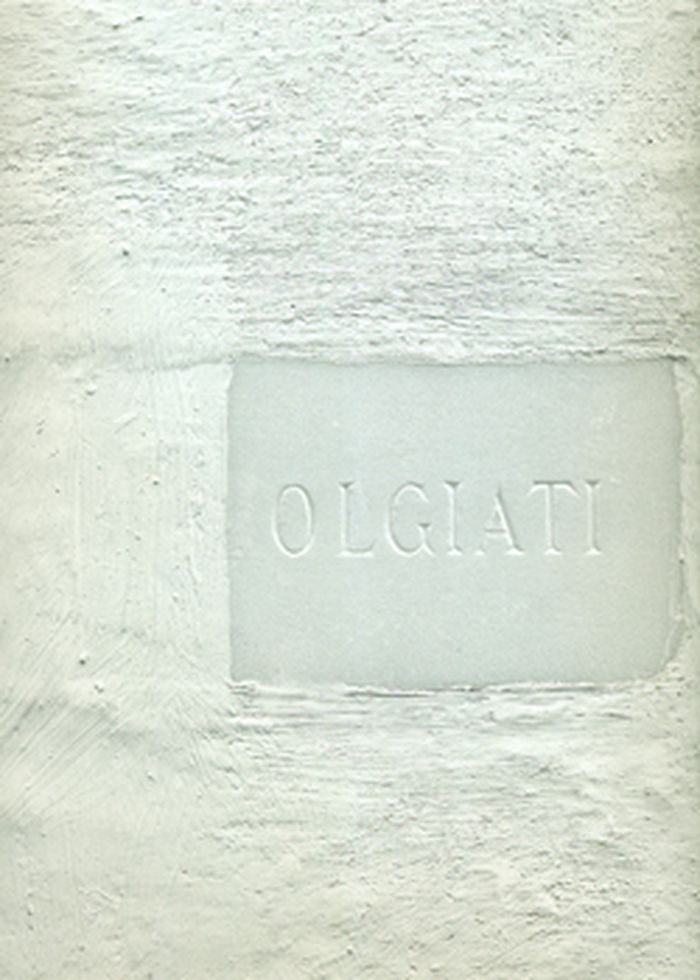
Valerio Olgiati has worked as an architect in Los Angeles, Zurich, and, since 2008, in Flims. He has been a visiting professor at the Eidgenössische Technische Hochschule (Swiss Federal Institute of Technology) in Zurich, the AA in London, and at Cornell University in Ithaca, New York. Since 2002 he has been professor at the Accademia di architettura in Mendrisio and since autumn 2009 he has held the Kenzo Tange Chair at Harvard. The unmistakable straight lines and independence of his buildings has brought him international attention. The Olgiati’s family estate is located in the historical town center of Flims. Rudolf Olgiati (1910–95) purchased the property, known as Dado, in 1930 and throughout his life used it to realize his architectural thoughts and ideas. Today, the son is living in his father’s house, and in 2008 he set up his much-admired architectural firm on the former site of the barn. This publication portrays the life and work of both architects using the example of the house and studio - that is, through the transformations they have undergone at the hands of their residents over a period of nearly eighty years. It shows personal furniture and objects, the individual layout and design of the spaces, and hence the penchants and attitudes of the two architects. At the same time this unusual portrait documents not only the relationship between father and son but also the characters of two generations and their understanding of architecture and aesthetics.
Dado : built and inhabited by Rudolph Olgiati and Valerio Olgiati
Actions:
Price:
$75.95
(available to order)
Summary:
Valerio Olgiati has worked as an architect in Los Angeles, Zurich, and, since 2008, in Flims. He has been a visiting professor at the Eidgenössische Technische Hochschule (Swiss Federal Institute of Technology) in Zurich, the AA in London, and at Cornell University in Ithaca, New York. Since 2002 he has been professor at the Accademia di architettura in Mendrisio and since autumn 2009 he has held the Kenzo Tange Chair at Harvard. The unmistakable straight lines and independence of his buildings has brought him international attention. The Olgiati’s family estate is located in the historical town center of Flims. Rudolf Olgiati (1910–95) purchased the property, known as Dado, in 1930 and throughout his life used it to realize his architectural thoughts and ideas. Today, the son is living in his father’s house, and in 2008 he set up his much-admired architectural firm on the former site of the barn. This publication portrays the life and work of both architects using the example of the house and studio - that is, through the transformations they have undergone at the hands of their residents over a period of nearly eighty years. It shows personal furniture and objects, the individual layout and design of the spaces, and hence the penchants and attitudes of the two architects. At the same time this unusual portrait documents not only the relationship between father and son but also the characters of two generations and their understanding of architecture and aesthetics.
Form:
books
books
Publication:
March 2010
March 2010
Subject:
Architecture Monographs
Architecture Monographs
Form:
books
books
Title:
The Hollywood sign
The Hollywood sign
Actions:
Price:
$27.95
(available to order)
Summary:
Hollywood's famous sign, constructed of massive white block letters set into a steep hillside, is an emblem of the movie capital it looms over and an international symbol of glamour and star power. To so many who see its image, the sign represents the earthly home of that otherwise ethereal world of fame, stardom, and celebrity -the goal of American and worldwide(...)
$27.95
(available to order)
Summary:
Hollywood's famous sign, constructed of massive white block letters set into a steep hillside, is an emblem of the movie capital it looms over and an international symbol of glamour and star power. To so many who see its image, the sign represents the earthly home of that otherwise ethereal world of fame, stardom, and celebrity -the goal of American and worldwide(...)
Title:
The Hollywood sign
Actions:
Price:
$27.95
(available to order)
Summary:
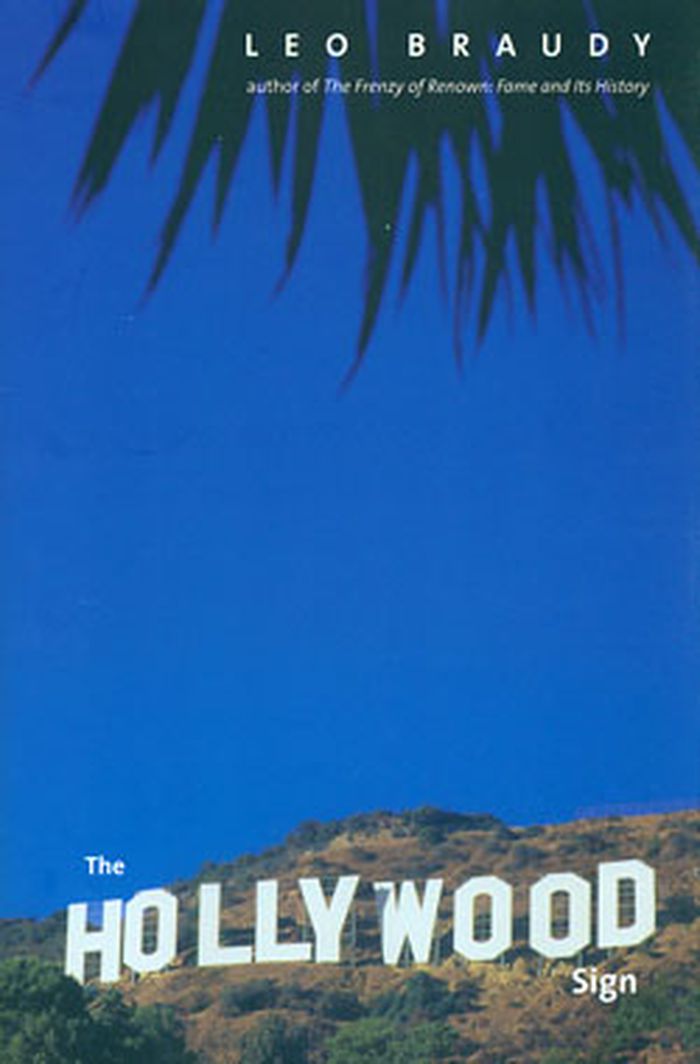
Hollywood's famous sign, constructed of massive white block letters set into a steep hillside, is an emblem of the movie capital it looms over and an international symbol of glamour and star power. To so many who see its image, the sign represents the earthly home of that otherwise ethereal world of fame, stardom, and celebrity -the goal of American and worldwide aspiration to be in the limelight, to be, like the Hollywood sign itself, instantly recognizable. How an advertisement erected in 1923, touting the real estate development Hollywoodland, took on a life of its own is a story worthy of the entertainment world that is its focus. Leo Braudy traces the remarkable history of this distinctly American landmark, which has been saved over the years by a disparate group of fans and supporters, among them Alice Cooper and Hugh Hefner, who spearheaded its reconstruction in the 1970s. He also uses the sign's history to offer an intriguing look at the rise of the movie business from its earliest, silent days through the development of the studio system that helped define modern Hollywood. Mixing social history, urban studies, literature, and film, along with forays into such topics as the lure of Hollywood for utopian communities and the development of domestic architecture in Los Angeles, The Hollywood Sign is a fascinating account of how a temporary structure has become a permanent icon of American culture.
The Hollywood sign
Actions:
Price:
$27.95
(available to order)
Summary:
Hollywood's famous sign, constructed of massive white block letters set into a steep hillside, is an emblem of the movie capital it looms over and an international symbol of glamour and star power. To so many who see its image, the sign represents the earthly home of that otherwise ethereal world of fame, stardom, and celebrity -the goal of American and worldwide aspiration to be in the limelight, to be, like the Hollywood sign itself, instantly recognizable. How an advertisement erected in 1923, touting the real estate development Hollywoodland, took on a life of its own is a story worthy of the entertainment world that is its focus. Leo Braudy traces the remarkable history of this distinctly American landmark, which has been saved over the years by a disparate group of fans and supporters, among them Alice Cooper and Hugh Hefner, who spearheaded its reconstruction in the 1970s. He also uses the sign's history to offer an intriguing look at the rise of the movie business from its earliest, silent days through the development of the studio system that helped define modern Hollywood. Mixing social history, urban studies, literature, and film, along with forays into such topics as the lure of Hollywood for utopian communities and the development of domestic architecture in Los Angeles, The Hollywood Sign is a fascinating account of how a temporary structure has become a permanent icon of American culture.
Form:
books
books
Publication:
March 2011
March 2011
Subject:
Signage
Signage


