


3085 Results
Form:
books
books
Price:
$33.95
(available to order)
Summary:
Big Tech firms dominate the global economy. But what value do they actually produce? In this brilliant survey of global tech economy, Nick Dyer-Witheford and Alessandra Mularoni argue that the role of firms like Amazon and Google, Palantir and Uber, is in the automation of circulation. By applying digital technologies to processes of market exchange—everything from(...)
$33.95
(available to order)
Summary:
Big Tech firms dominate the global economy. But what value do they actually produce? In this brilliant survey of global tech economy, Nick Dyer-Witheford and Alessandra Mularoni argue that the role of firms like Amazon and Google, Palantir and Uber, is in the automation of circulation. By applying digital technologies to processes of market exchange—everything from(...)
Title:
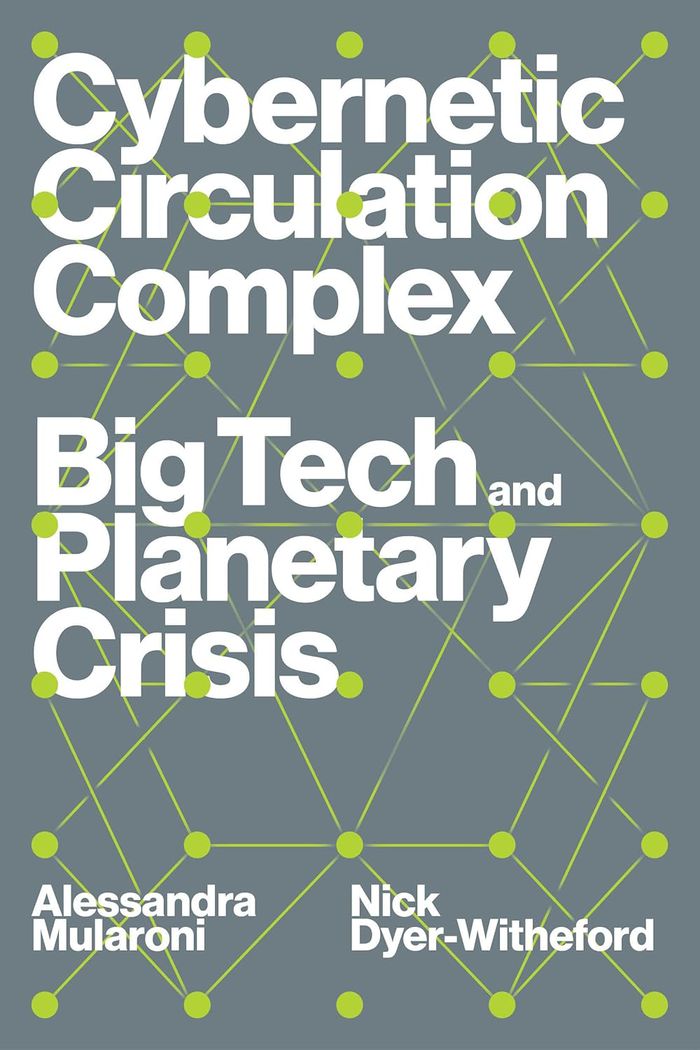
Cybernetic circulation complex: Big tech and planetary crisis
Actions:
Price:
$33.95
(available to order)
Summary:
Big Tech firms dominate the global economy. But what value do they actually produce? In this brilliant survey of global tech economy, Nick Dyer-Witheford and Alessandra Mularoni argue that the role of firms like Amazon and Google, Palantir and Uber, is in the automation of circulation. By applying digital technologies to processes of market exchange—everything from advertising and shopping, to logistics and financial services—Big Tech aims to subject these activities to the level of control and predictability that capital has secured in industrial production. But there is a way out of the multiple crises that Big Tech has helped precipitate. If we are to break their grip on the global economy then it’ll take more than just antitrust legislation or reducing individual time online. By understanding the central role Big Tech plays in contemporary capitalism, Dyer-Witheford and Mularoni argue that what is required instead is a new, ambitious and comprehensive program of democratic collective planning that can move us beyond capitalism. ''Cybernetic Circulation Complex'' offers not only a compelling analysis of the power of Big Tech and their role in our current global crises, but a roadmap for a new form of life: biocommunism, a digital degrowth that can help us steer between the double boundaries of ecological sustainability and equitable social development.
Cybernetic circulation complex: Big tech and planetary crisis
Actions:
Price:
$33.95
(available to order)
Summary:
Big Tech firms dominate the global economy. But what value do they actually produce? In this brilliant survey of global tech economy, Nick Dyer-Witheford and Alessandra Mularoni argue that the role of firms like Amazon and Google, Palantir and Uber, is in the automation of circulation. By applying digital technologies to processes of market exchange—everything from advertising and shopping, to logistics and financial services—Big Tech aims to subject these activities to the level of control and predictability that capital has secured in industrial production. But there is a way out of the multiple crises that Big Tech has helped precipitate. If we are to break their grip on the global economy then it’ll take more than just antitrust legislation or reducing individual time online. By understanding the central role Big Tech plays in contemporary capitalism, Dyer-Witheford and Mularoni argue that what is required instead is a new, ambitious and comprehensive program of democratic collective planning that can move us beyond capitalism. ''Cybernetic Circulation Complex'' offers not only a compelling analysis of the power of Big Tech and their role in our current global crises, but a roadmap for a new form of life: biocommunism, a digital degrowth that can help us steer between the double boundaries of ecological sustainability and equitable social development.
Form:
books
books
Publication:
February 2025
February 2025
Subject:
Social
Social
Form:
books
books
Actions:
Price:
$45.95
(available to order)
Summary:
In his new book, critical theorist Mark Neocleous engages in a sustained critique of the theory and practice of pacification. Combining philosophical analysis with historical detail, Neocleous analyses the development of pacification as a key concept through which capitalist modernity has been organised, offering readers the first book that treats pacification as an(...)
$45.95
(available to order)
Summary:
In his new book, critical theorist Mark Neocleous engages in a sustained critique of the theory and practice of pacification. Combining philosophical analysis with historical detail, Neocleous analyses the development of pacification as a key concept through which capitalist modernity has been organised, offering readers the first book that treats pacification as an(...)
Title:
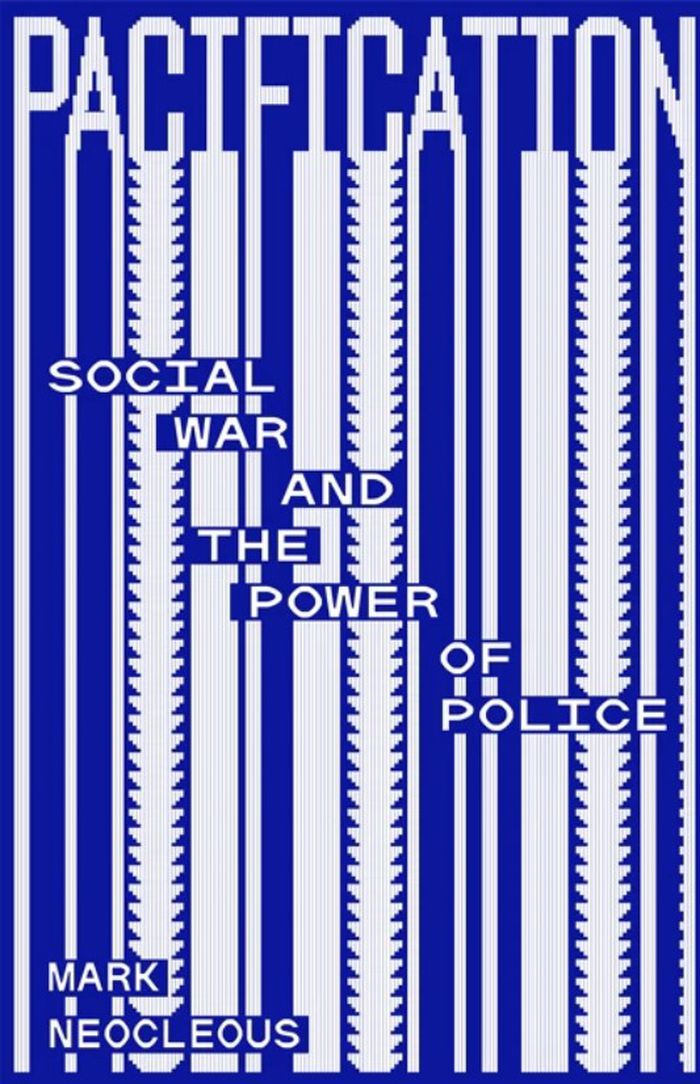
Pacification: Social war and the power of police
Actions:
Price:
$45.95
(available to order)
Summary:
In his new book, critical theorist Mark Neocleous engages in a sustained critique of the theory and practice of pacification. Combining philosophical analysis with historical detail, Neocleous analyses the development of pacification as a key concept through which capitalist modernity has been organised, offering readers the first book that treats pacification as an important concept in the history of state power and capitalism. Neocleous’s approach is fourfold, examining pacification as social warfare carried out through the ideology of peace; as a form of social police carried out through mechanisms of security; as law and order exercised through the permanent wars of class society; and as the myriad practices of power designed to counter insurgency. Making use of official documents of state, the writings of counterinsurgency thinkers and the ideas perpetuated by practitioners of counterrevolution, the book unravels the complex ways through which pacification generates new forms of social war and new modes of policing that reproduce capitalist order and fabricate obedient subjects. Through expansive accounts of war and police, and engaging with a range of topics from debt to death, from stasis to civil war, and from the police kettle to the politics of fear, the book offers a provocative analysis of the ways in which state and capital combine to build a pacified social order.
Pacification: Social war and the power of police
Actions:
Price:
$45.95
(available to order)
Summary:
In his new book, critical theorist Mark Neocleous engages in a sustained critique of the theory and practice of pacification. Combining philosophical analysis with historical detail, Neocleous analyses the development of pacification as a key concept through which capitalist modernity has been organised, offering readers the first book that treats pacification as an important concept in the history of state power and capitalism. Neocleous’s approach is fourfold, examining pacification as social warfare carried out through the ideology of peace; as a form of social police carried out through mechanisms of security; as law and order exercised through the permanent wars of class society; and as the myriad practices of power designed to counter insurgency. Making use of official documents of state, the writings of counterinsurgency thinkers and the ideas perpetuated by practitioners of counterrevolution, the book unravels the complex ways through which pacification generates new forms of social war and new modes of policing that reproduce capitalist order and fabricate obedient subjects. Through expansive accounts of war and police, and engaging with a range of topics from debt to death, from stasis to civil war, and from the police kettle to the politics of fear, the book offers a provocative analysis of the ways in which state and capital combine to build a pacified social order.
Form:
books
books
Publication:
February 2025
February 2025
Subject:
Social
Social
Form:
books
books
Title:
Screening the city
Screening the city
Actions:
Price:
$29.00
(available to order)
Summary:
In this provocative collection of essays, films as diverse as "The Man with a Movie Camera", "Annie Hall", "Street of Crocodiles", "Boyz N the Hood", "Three Colors Red", and "Crash" are examined in terms of the relationship between cinema and the changing urban experience in Europe and the United States since the early twentieth century. Peter Jelavich, for example, links(...)
$29.00
(available to order)
Summary:
In this provocative collection of essays, films as diverse as "The Man with a Movie Camera", "Annie Hall", "Street of Crocodiles", "Boyz N the Hood", "Three Colors Red", and "Crash" are examined in terms of the relationship between cinema and the changing urban experience in Europe and the United States since the early twentieth century. Peter Jelavich, for example, links(...)
Subject:
Urban Theory
Urban Theory
Publication:
March 2003, London / New York
March 2003, London / New York
Title:
Screening the city
Actions:
Price:
$29.00
(available to order)
Summary:
In this provocative collection of essays, films as diverse as "The Man with a Movie Camera", "Annie Hall", "Street of Crocodiles", "Boyz N the Hood", "Three Colors Red", and "Crash" are examined in terms of the relationship between cinema and the changing urban experience in Europe and the United States since the early twentieth century. Peter Jelavich, for example, links the suppression of the creative, liberal Weimar Berlin in the 1931 film "Berlin Alexanderplatz" to the rise of the Nazi regime and the end of one of the great eras of modernist experimentation in German visual culture; Jessie Labov considers Kieslowski’s treatment of the Warsaw housing blok in "Dekalog" in terms of Solidarity’s strategy of resisting totalitarianism in 1980's Poland; Allan Siegel examines the motif of the city in a broad range of American and international cinema to demonstrate how film and society since the 1960's have been driven by the fading of mass political radicalism and the triumph of privatization and capital; Paula Massood uses the socially illuminating theories of Mikhail Bakhtin to examine the representation of the ghetto and urban underclass in recent African-American films such as "Menace II Society"; and Matthew Gandy examines the focus on disease in Todd Haynes’s "[Safe]" as a metaphor for social and spatial breakdown in contemporary Los Angeles.
Screening the city
Actions:
Price:
$29.00
(available to order)
Summary:
In this provocative collection of essays, films as diverse as "The Man with a Movie Camera", "Annie Hall", "Street of Crocodiles", "Boyz N the Hood", "Three Colors Red", and "Crash" are examined in terms of the relationship between cinema and the changing urban experience in Europe and the United States since the early twentieth century. Peter Jelavich, for example, links the suppression of the creative, liberal Weimar Berlin in the 1931 film "Berlin Alexanderplatz" to the rise of the Nazi regime and the end of one of the great eras of modernist experimentation in German visual culture; Jessie Labov considers Kieslowski’s treatment of the Warsaw housing blok in "Dekalog" in terms of Solidarity’s strategy of resisting totalitarianism in 1980's Poland; Allan Siegel examines the motif of the city in a broad range of American and international cinema to demonstrate how film and society since the 1960's have been driven by the fading of mass political radicalism and the triumph of privatization and capital; Paula Massood uses the socially illuminating theories of Mikhail Bakhtin to examine the representation of the ghetto and urban underclass in recent African-American films such as "Menace II Society"; and Matthew Gandy examines the focus on disease in Todd Haynes’s "[Safe]" as a metaphor for social and spatial breakdown in contemporary Los Angeles.
Form:
books
books
Publication:
March 2003, London / New York
March 2003, London / New York
Subject:
Urban Theory
Urban Theory
Form:
books
books
Actions:
Price:
$63.00
(available to order)
Summary:
Pioneering architecture in Graz: the radical architecture project known as the Friendly Alien - the new building for the Kunsthaus Graz - was developed by the British star architects Peter Cook and Colin Fournier. Within the scope of Graz 2003 - Kulturhauptstadt Europas (Graz 2003 - Cultural Capital of Europe) the city of Graz provided the possibility for the two(...)
$63.00
(available to order)
Summary:
Pioneering architecture in Graz: the radical architecture project known as the Friendly Alien - the new building for the Kunsthaus Graz - was developed by the British star architects Peter Cook and Colin Fournier. Within the scope of Graz 2003 - Kulturhauptstadt Europas (Graz 2003 - Cultural Capital of Europe) the city of Graz provided the possibility for the two(...)
Title:
A friendly alien : ein Kunsthaus für Graz - Peter Cook, Colin Fournier Architects
Actions:
Price:
$63.00
(available to order)
Summary:
Pioneering architecture in Graz: the radical architecture project known as the Friendly Alien - the new building for the Kunsthaus Graz - was developed by the British star architects Peter Cook and Colin Fournier. Within the scope of Graz 2003 - Kulturhauptstadt Europas (Graz 2003 - Cultural Capital of Europe) the city of Graz provided the possibility for the two London-based architects Peter Cook and Colin Fournier to transform a visionary concept into built reality: the Kunsthaus Graz, a new and unique site for international exhibitions of modern and contemporary art. With this radical architecture project, Graz received a futuristic-looking building which satisfies to a high degree both the psychological and the functional demands of a visitor-oriented international art museum. The unusual biomorphic forms of the Friendly Alien make for a suspenseful dialog with the historic old town, especially with the century-old Graz landmark, the cubic clock-tower high up on castle hill. The documentation at hand presents the development of the Friendly Alien from a Utopian concept to a highly complex functional body. The extensive photographic material includes first-rate computer simulations and sheds light on the urban environment and its history, shows the unique architectural features of the building, and investigates with an "x-ray view" the complex network of static and technical utilities in the "skin", the nerve center of the Friendly Alien.
A friendly alien : ein Kunsthaus für Graz - Peter Cook, Colin Fournier Architects
Actions:
Price:
$63.00
(available to order)
Summary:
Pioneering architecture in Graz: the radical architecture project known as the Friendly Alien - the new building for the Kunsthaus Graz - was developed by the British star architects Peter Cook and Colin Fournier. Within the scope of Graz 2003 - Kulturhauptstadt Europas (Graz 2003 - Cultural Capital of Europe) the city of Graz provided the possibility for the two London-based architects Peter Cook and Colin Fournier to transform a visionary concept into built reality: the Kunsthaus Graz, a new and unique site for international exhibitions of modern and contemporary art. With this radical architecture project, Graz received a futuristic-looking building which satisfies to a high degree both the psychological and the functional demands of a visitor-oriented international art museum. The unusual biomorphic forms of the Friendly Alien make for a suspenseful dialog with the historic old town, especially with the century-old Graz landmark, the cubic clock-tower high up on castle hill. The documentation at hand presents the development of the Friendly Alien from a Utopian concept to a highly complex functional body. The extensive photographic material includes first-rate computer simulations and sheds light on the urban environment and its history, shows the unique architectural features of the building, and investigates with an "x-ray view" the complex network of static and technical utilities in the "skin", the nerve center of the Friendly Alien.
Form:
books
books
Publication:
October 2003, Ostfildern
October 2003, Ostfildern
Subject:
Architecture Monographs
Architecture Monographs
Form:
books
books
Actions:
Price:
$19.95
(available in store)
Summary:
The city of Graz in Steiermark, Austria, has been chosen as cultural capital of Europe for 2003. On this occasion, a number of significant architectural projects, art installations and events have been planned in the city. This exhibition at the Aedes West gallery in Berlin focuses on two of the major and most radical architectural projects: the new museum of Modern Art,(...)
$19.95
(available in store)
Summary:
The city of Graz in Steiermark, Austria, has been chosen as cultural capital of Europe for 2003. On this occasion, a number of significant architectural projects, art installations and events have been planned in the city. This exhibition at the Aedes West gallery in Berlin focuses on two of the major and most radical architectural projects: the new museum of Modern Art,(...)
Title:
Curves and spikes : Kunsthaus und stadthalle für Graz
Actions:
Price:
$19.95
(available in store)
Summary:
The city of Graz in Steiermark, Austria, has been chosen as cultural capital of Europe for 2003. On this occasion, a number of significant architectural projects, art installations and events have been planned in the city. This exhibition at the Aedes West gallery in Berlin focuses on two of the major and most radical architectural projects: the new museum of Modern Art, which was the object of an international design competition won by the London architects Peter Cook and Colin Fournier, and the Stadthalle designed by the Graz architect Klaus Kada. The Kunsthaus is currently under construction and will open on the 23rd of September 2003. The Stadthalle opened on the 6th of October 2002. These two projects make an unusual pair in that they are in complete contrast not only in terms of programme and but mostly in terms of their design philosophy: the Kunsthaus is a biomorphic project conceived as a smooth bulbous volume of continuous double curved surfaces, while the Stadthalle is distinguished by a slender roof cantilevered high above the street. The playful aesthetic tension between these two extreme designs, at this interesting and provocative point in history when the architectural envelope is being pushed in many contradictory directions, provides the dominant conceptual and visual theme of the exhibition, which also offers an overview of some of the other key design projects recently completed in the city.
Curves and spikes : Kunsthaus und stadthalle für Graz
Actions:
Price:
$19.95
(available in store)
Summary:
The city of Graz in Steiermark, Austria, has been chosen as cultural capital of Europe for 2003. On this occasion, a number of significant architectural projects, art installations and events have been planned in the city. This exhibition at the Aedes West gallery in Berlin focuses on two of the major and most radical architectural projects: the new museum of Modern Art, which was the object of an international design competition won by the London architects Peter Cook and Colin Fournier, and the Stadthalle designed by the Graz architect Klaus Kada. The Kunsthaus is currently under construction and will open on the 23rd of September 2003. The Stadthalle opened on the 6th of October 2002. These two projects make an unusual pair in that they are in complete contrast not only in terms of programme and but mostly in terms of their design philosophy: the Kunsthaus is a biomorphic project conceived as a smooth bulbous volume of continuous double curved surfaces, while the Stadthalle is distinguished by a slender roof cantilevered high above the street. The playful aesthetic tension between these two extreme designs, at this interesting and provocative point in history when the architectural envelope is being pushed in many contradictory directions, provides the dominant conceptual and visual theme of the exhibition, which also offers an overview of some of the other key design projects recently completed in the city.
Form:
books
books
Publication:
March 2003, Berlin
March 2003, Berlin
Subject:
small format
small format
Form:
books
books
Price:
$35.95
(available in store)
Summary:
Over the last twenty-five years, the concept of personhood has become central to many contentious debates. Corporations have won free speech protections, as if they were individuals. The right to life or freedom has been claimed on behalf of fetuses, trees, and elephants. The fund of human rights is spilling over into the nonhuman. ''The Problem of Personhood'' reveals(...)
$35.95
(available in store)
Summary:
Over the last twenty-five years, the concept of personhood has become central to many contentious debates. Corporations have won free speech protections, as if they were individuals. The right to life or freedom has been claimed on behalf of fetuses, trees, and elephants. The fund of human rights is spilling over into the nonhuman. ''The Problem of Personhood'' reveals(...)
Title:
The problem of personhood: Giving rights to trees, corporations and robots
Actions:
Price:
$35.95
(available in store)
Summary:
Over the last twenty-five years, the concept of personhood has become central to many contentious debates. Corporations have won free speech protections, as if they were individuals. The right to life or freedom has been claimed on behalf of fetuses, trees, and elephants. The fund of human rights is spilling over into the nonhuman. ''The Problem of Personhood'' reveals the unsettling consequences of granting rights to imagined persons, such as Sophia the robot citizen or New Zealand’s Whanganui River. Synthesizing the political and philosophical debates on personhood and drawing on a varied cast of thinkers that includes Simone Weil, Hannah Arendt, and Dr. Seuss, Lisa Siraganian uncovers the disturbing impact of this contemporary development. Awarding rights to robots and rivers all too easily becomes a legal tool to turn people into capital. When robot Sophia is made a citizen, “she” is transformed into a subject in the law without the corresponding legal duties that protect us from her. At the root of this trend is the US Supreme Court’s Citizens United ruling that grants First Amendment rights to corporations as if they were individuals. The result has not been the transformation of things into humans so much as humans into things, when animals and the environment would be better protected with reference to our humanity rather than to theirs.
The problem of personhood: Giving rights to trees, corporations and robots
Actions:
Price:
$35.95
(available in store)
Summary:
Over the last twenty-five years, the concept of personhood has become central to many contentious debates. Corporations have won free speech protections, as if they were individuals. The right to life or freedom has been claimed on behalf of fetuses, trees, and elephants. The fund of human rights is spilling over into the nonhuman. ''The Problem of Personhood'' reveals the unsettling consequences of granting rights to imagined persons, such as Sophia the robot citizen or New Zealand’s Whanganui River. Synthesizing the political and philosophical debates on personhood and drawing on a varied cast of thinkers that includes Simone Weil, Hannah Arendt, and Dr. Seuss, Lisa Siraganian uncovers the disturbing impact of this contemporary development. Awarding rights to robots and rivers all too easily becomes a legal tool to turn people into capital. When robot Sophia is made a citizen, “she” is transformed into a subject in the law without the corresponding legal duties that protect us from her. At the root of this trend is the US Supreme Court’s Citizens United ruling that grants First Amendment rights to corporations as if they were individuals. The result has not been the transformation of things into humans so much as humans into things, when animals and the environment would be better protected with reference to our humanity rather than to theirs.
Form:
books
books
Publication:
April 2026
April 2026
Subject:
Social
Social
Form:
books
books
Actions:
Price:
$67.95
(available in store)
Summary:
Munich, notorious in recent history as the capital of the Nazi movement, is the site of Gavriel Rosenfeld's inquiry into the German collective memory of the Third Reich. Rosenfeld shows, with how the city's urban form developed after 1945 in direct reflection of its inhabitants'(...)
$67.95
(available in store)
Summary:
Munich, notorious in recent history as the capital of the Nazi movement, is the site of Gavriel Rosenfeld's inquiry into the German collective memory of the Third Reich. Rosenfeld shows, with how the city's urban form developed after 1945 in direct reflection of its inhabitants'(...)
Title:
Munich and memory : architecture, monuments, and the legacy of the third Reich
Actions:
Price:
$67.95
(available in store)
Summary:
Munich, notorious in recent history as the capital of the Nazi movement, is the site of Gavriel Rosenfeld's inquiry into the German collective memory of the Third Reich. Rosenfeld shows, with how the city's urban form developed after 1945 in direct reflection of its inhabitants' evolving memory of the Second World War and the Nazi dictatorship. In the second half of the twentieth century, the German people's struggle to come to terms with the legacy of Nazism has dramatically shaped nearly all dimensions of their political, social, and cultural life. The area of urban development and the built environment, little explored until now, offers visible evidence of the struggle. By examining the ways in which the people of Munich reconstructed the ruins of their historic buildings, created new works of architecture, dealt with surviving Nazi buildings, and erected new monuments to commemorate the horrors of the recent past, Rosenfeld identifies a spectrum of competing memories of the Nazi experience. Examining the debates between traditionalists, modernists, postmodernists, and critical preservationists, Rosenfeld shows that the memory of Nazism in Munich has never been "repressed" but has rather been defined by constant dissension and evolution. On balance, however, he concludes that Munich came to embody in its urban form a conservative view of the past that was inclined to diminish local responsibility for the Third Reich.
Munich and memory : architecture, monuments, and the legacy of the third Reich
Actions:
Price:
$67.95
(available in store)
Summary:
Munich, notorious in recent history as the capital of the Nazi movement, is the site of Gavriel Rosenfeld's inquiry into the German collective memory of the Third Reich. Rosenfeld shows, with how the city's urban form developed after 1945 in direct reflection of its inhabitants' evolving memory of the Second World War and the Nazi dictatorship. In the second half of the twentieth century, the German people's struggle to come to terms with the legacy of Nazism has dramatically shaped nearly all dimensions of their political, social, and cultural life. The area of urban development and the built environment, little explored until now, offers visible evidence of the struggle. By examining the ways in which the people of Munich reconstructed the ruins of their historic buildings, created new works of architecture, dealt with surviving Nazi buildings, and erected new monuments to commemorate the horrors of the recent past, Rosenfeld identifies a spectrum of competing memories of the Nazi experience. Examining the debates between traditionalists, modernists, postmodernists, and critical preservationists, Rosenfeld shows that the memory of Nazism in Munich has never been "repressed" but has rather been defined by constant dissension and evolution. On balance, however, he concludes that Munich came to embody in its urban form a conservative view of the past that was inclined to diminish local responsibility for the Third Reich.
Form:
books
books
Publication:
April 2000, Berkeley
April 2000, Berkeley
Subject:
Urban Theory
Urban Theory
Form:
journals and magazines
journals and magazines
Title:
New Geographies 12: Commons
New Geographies 12: Commons
Actions:
Price:
$45.00
(available to order)
Summary:
The commons as a contested political idea has been continually articulated and reproduced in many disciplines and in relation to specific historical and geographical contexts. Since the 1960s, the concept of commons has started to play an increasingly important role in the field of urban studies. While commons are usually perceived as the material spaces of the city such(...)
$45.00
(available to order)
Summary:
The commons as a contested political idea has been continually articulated and reproduced in many disciplines and in relation to specific historical and geographical contexts. Since the 1960s, the concept of commons has started to play an increasingly important role in the field of urban studies. While commons are usually perceived as the material spaces of the city such(...)
Title:
New Geographies 12: Commons
Actions:
Price:
$45.00
(available to order)
Summary:
The commons as a contested political idea has been continually articulated and reproduced in many disciplines and in relation to specific historical and geographical contexts. Since the 1960s, the concept of commons has started to play an increasingly important role in the field of urban studies. While commons are usually perceived as the material spaces of the city such as streets, parks, public spaces, etc., they are also perceived as the immaterial public realm- including subaltern and mainstream culture, knowledge, language, and modes of sociality. As the commoning process continuously involves the substance of urban spaces, be it physical or virtual, the concept of commons has actively contributed to reshaping spatial imaginaries such as urban islands, archipelagos, and thresholds. This issue of 'New Geographies' proposes the concept of commons as a mode of thinking that challenges assumptions in the design disciplines such as public and private spaces, local and regional geographies, and capital and state interventions. It expands the production of space as the commons into a planetary territory all the way from the intimate and subjective scale of the body to the connected material and immaterial spaces. In doing so, NG 12 aims to foreground the significance of political thinking in the process of space production, and invites to imagine alternative social relations and modes of urbanization.
New Geographies 12: Commons
Actions:
Price:
$45.00
(available to order)
Summary:
The commons as a contested political idea has been continually articulated and reproduced in many disciplines and in relation to specific historical and geographical contexts. Since the 1960s, the concept of commons has started to play an increasingly important role in the field of urban studies. While commons are usually perceived as the material spaces of the city such as streets, parks, public spaces, etc., they are also perceived as the immaterial public realm- including subaltern and mainstream culture, knowledge, language, and modes of sociality. As the commoning process continuously involves the substance of urban spaces, be it physical or virtual, the concept of commons has actively contributed to reshaping spatial imaginaries such as urban islands, archipelagos, and thresholds. This issue of 'New Geographies' proposes the concept of commons as a mode of thinking that challenges assumptions in the design disciplines such as public and private spaces, local and regional geographies, and capital and state interventions. It expands the production of space as the commons into a planetary territory all the way from the intimate and subjective scale of the body to the connected material and immaterial spaces. In doing so, NG 12 aims to foreground the significance of political thinking in the process of space production, and invites to imagine alternative social relations and modes of urbanization.
Form:
journals and magazines
journals and magazines
Publication:
April 2022
April 2022
Subject:
Magazines
Magazines
Form:
books
books
Actions:
Holdings:
Description:
391 pages : illustrations (some color) ; 26 cm
Description:
391 pages : illustrations (some color) ; 26 cm
Author:
Subject:
Publication:
Québec (Québec) : Septentrion, [2022]
Québec (Québec) : Septentrion, [2022]
Title:
Le Grand Théâtre de Québec : l'histoire vivante d'une scène d'exception / sous la direction de Louis Jolicœur et André Morency.
Actions:
Holdings:
Description:
391 pages : illustrations (some color) ; 26 cm
Le Grand Théâtre de Québec : l'histoire vivante d'une scène d'exception / sous la direction de Louis Jolicœur et André Morency.
Actions:
Holdings:
Description:
391 pages : illustrations (some color) ; 26 cm
Form:
books
books
Publication:
Québec (Québec) : Septentrion, [2022]
Québec (Québec) : Septentrion, [2022]
Author:
Subject:
Form:
books
books
Actions:
Holdings:
Description:
[2], 22 pages : illustrations, map ; 22 cm
Description:
[2], 22 pages : illustrations, map ; 22 cm
Subject:
Publication:
Ottawa : [publisher not identified], 1962.
Ottawa : [publisher not identified], 1962.
Title:
Ottawa & Hull : aperçu d'histoire / rédigé au Service d'information et d'histoire, Commission de la capitale Nationale.
Actions:
Holdings:
Description:
[2], 22 pages : illustrations, map ; 22 cm
Ottawa & Hull : aperçu d'histoire / rédigé au Service d'information et d'histoire, Commission de la capitale Nationale.
Actions:
Holdings:
Description:
[2], 22 pages : illustrations, map ; 22 cm
Form:
books
books
Publication:
Ottawa : [publisher not identified], 1962.
Ottawa : [publisher not identified], 1962.
Subject:


