


3106 Results
Form:
books
books
Title:
CCCP (Multilingual Edition)
CCCP (Multilingual Edition)
Actions:
Price:
$26.95
(available to order)
Summary:
This publication explores 90 buildings in 14 former Soviet Republics. Each of these structures expresses what Chaubin considers the fourth age of Soviet architecture, an unknown burgeoning that took place from 1970 until 1990. Contrary to the 1920s and 1950s, no “school” or main trend emerges here. These buildings represent a chaotic impulse brought about by a decaying(...)
$26.95
(available to order)
Summary:
This publication explores 90 buildings in 14 former Soviet Republics. Each of these structures expresses what Chaubin considers the fourth age of Soviet architecture, an unknown burgeoning that took place from 1970 until 1990. Contrary to the 1920s and 1950s, no “school” or main trend emerges here. These buildings represent a chaotic impulse brought about by a decaying(...)
Title:
CCCP (Multilingual Edition)
Actions:
Price:
$26.95
(available to order)
Summary:
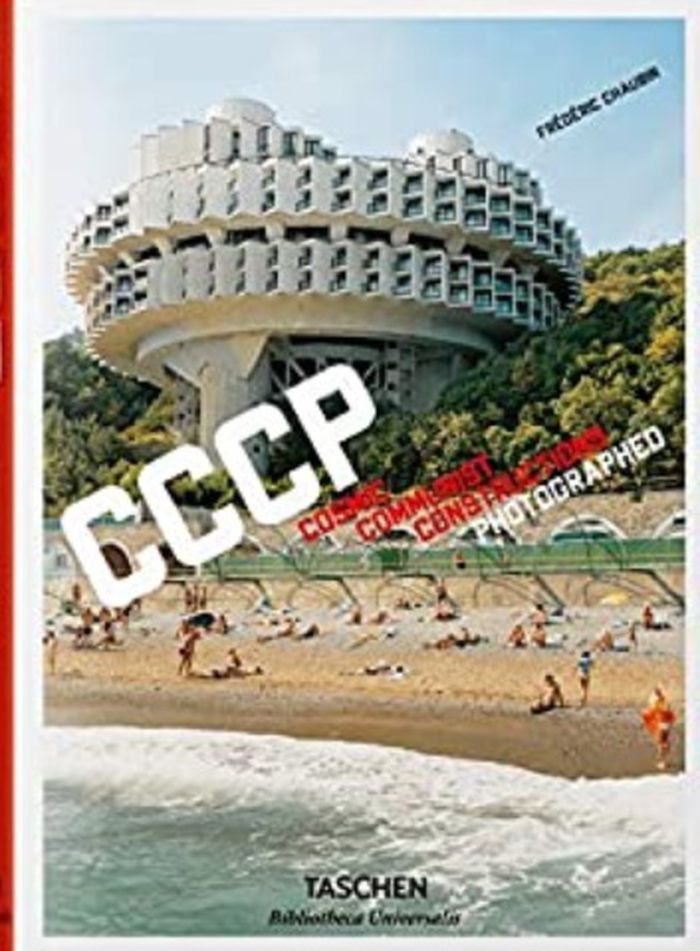
This publication explores 90 buildings in 14 former Soviet Republics. Each of these structures expresses what Chaubin considers the fourth age of Soviet architecture, an unknown burgeoning that took place from 1970 until 1990. Contrary to the 1920s and 1950s, no “school” or main trend emerges here. These buildings represent a chaotic impulse brought about by a decaying system. Taking advantage of the collapsing monolithic structure, architects went far beyond modernism, going back to the roots or freely innovating. Some of the daring ones completed projects that the Constructivists would have dreamt of (Druzhba Sanatorium, Yalta), others expressed their imagination in an expressionist way (Palace of Weddings, Tbilisi). A summer camp, inspired by sketches of a prototype lunar base, lays claim to Suprematist influence (Prometheus youth camp, Bogatyr). Then comes the “speaking architecture” widespread in the last years of the USSR: a crematorium adorned with concrete flames (Crematorium, Kiev), a technological institute with a flying saucer crashed on the roof (Institute of Scientific Research, Kiev), a political center watching you like Big Brother (House of Soviets, Kaliningrad).
CCCP (Multilingual Edition)
Actions:
Price:
$26.95
(available to order)
Summary:
This publication explores 90 buildings in 14 former Soviet Republics. Each of these structures expresses what Chaubin considers the fourth age of Soviet architecture, an unknown burgeoning that took place from 1970 until 1990. Contrary to the 1920s and 1950s, no “school” or main trend emerges here. These buildings represent a chaotic impulse brought about by a decaying system. Taking advantage of the collapsing monolithic structure, architects went far beyond modernism, going back to the roots or freely innovating. Some of the daring ones completed projects that the Constructivists would have dreamt of (Druzhba Sanatorium, Yalta), others expressed their imagination in an expressionist way (Palace of Weddings, Tbilisi). A summer camp, inspired by sketches of a prototype lunar base, lays claim to Suprematist influence (Prometheus youth camp, Bogatyr). Then comes the “speaking architecture” widespread in the last years of the USSR: a crematorium adorned with concrete flames (Crematorium, Kiev), a technological institute with a flying saucer crashed on the roof (Institute of Scientific Research, Kiev), a political center watching you like Big Brother (House of Soviets, Kaliningrad).
Form:
books
books
Publication:
November 2017
November 2017
Subject:
Photography by Region
Photography by Region
Form:
books
books
Title:
Cities design & evolution
Cities design & evolution
Actions:
Price:
$86.95
(available to order)
Summary:
Why does modern planning sometimes create urban environments that are less attractive and functional than the 'organic urbanism' of traditional cities? "Cities Design and Evolution" takes up the challenge of this question, investigating 'how cities are put together', both in the sense of how the parts are organised in relation to the whole, and how they are created or(...)
$86.95
(available to order)
Summary:
Why does modern planning sometimes create urban environments that are less attractive and functional than the 'organic urbanism' of traditional cities? "Cities Design and Evolution" takes up the challenge of this question, investigating 'how cities are put together', both in the sense of how the parts are organised in relation to the whole, and how they are created or(...)
Title:
Cities design & evolution
Actions:
Price:
$86.95
(available to order)
Summary:
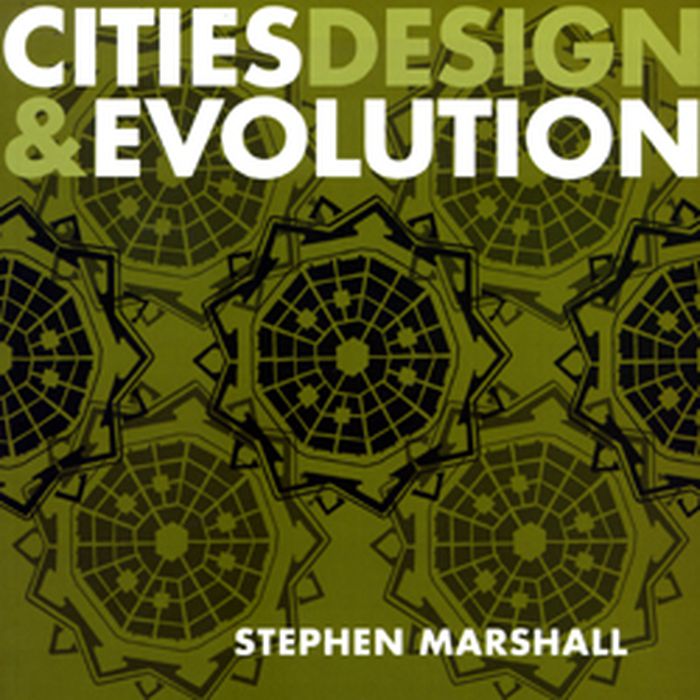
Why does modern planning sometimes create urban environments that are less attractive and functional than the 'organic urbanism' of traditional cities? "Cities Design and Evolution" takes up the challenge of this question, investigating 'how cities are put together', both in the sense of how the parts are organised in relation to the whole, and how they are created or evolve over time."Cities Design and Evolution" offers an engaging and original narrative that interprets planning philosophies from Modernism to New Urbanism, organic theories from Patrick Geddes to Le Corbusier, and evolutionary thinking from Charles Darwin to Richard Dawkins. The book develops a new evolutionary perspective that recognises both the 'designed' and 'organic' nature of cities, and provides a rationale and impetus for fresh approaches to urban planning and design. In what is the first book to significantly apply modern evolutionary thinking to urbanism, "Cities Design and Evolution" promises to stimulate thought, debate and action concerning the nature of cities and future urban planning. The book should appeal to all who are interested in cities, in design and in evolution.
Cities design & evolution
Actions:
Price:
$86.95
(available to order)
Summary:
Why does modern planning sometimes create urban environments that are less attractive and functional than the 'organic urbanism' of traditional cities? "Cities Design and Evolution" takes up the challenge of this question, investigating 'how cities are put together', both in the sense of how the parts are organised in relation to the whole, and how they are created or evolve over time."Cities Design and Evolution" offers an engaging and original narrative that interprets planning philosophies from Modernism to New Urbanism, organic theories from Patrick Geddes to Le Corbusier, and evolutionary thinking from Charles Darwin to Richard Dawkins. The book develops a new evolutionary perspective that recognises both the 'designed' and 'organic' nature of cities, and provides a rationale and impetus for fresh approaches to urban planning and design. In what is the first book to significantly apply modern evolutionary thinking to urbanism, "Cities Design and Evolution" promises to stimulate thought, debate and action concerning the nature of cities and future urban planning. The book should appeal to all who are interested in cities, in design and in evolution.
Form:
books
books
Publication:
January 2009, London, New York
January 2009, London, New York
Subject:
Urban Theory
Urban Theory
Form:
books
books
Actions:
Price:
$85.00
(available to order)
Summary:
In 1950, Indian prime minister Jawaharlal Nehru invited legendary French-Swiss architect Le Corbusier to embark on one of the greatest experiments in urban planning history: to build a new capital Chandigarh, a city whose monumental modernism promised to free India from the fetters of colonial tradition. 'six decades after its founding and on the eve of its becoming a(...)
$85.00
(available to order)
Summary:
In 1950, Indian prime minister Jawaharlal Nehru invited legendary French-Swiss architect Le Corbusier to embark on one of the greatest experiments in urban planning history: to build a new capital Chandigarh, a city whose monumental modernism promised to free India from the fetters of colonial tradition. 'six decades after its founding and on the eve of its becoming a(...)
Title:
Chandigarh revealed: Le Corbusier's city today
Actions:
Price:
$85.00
(available to order)
Summary:
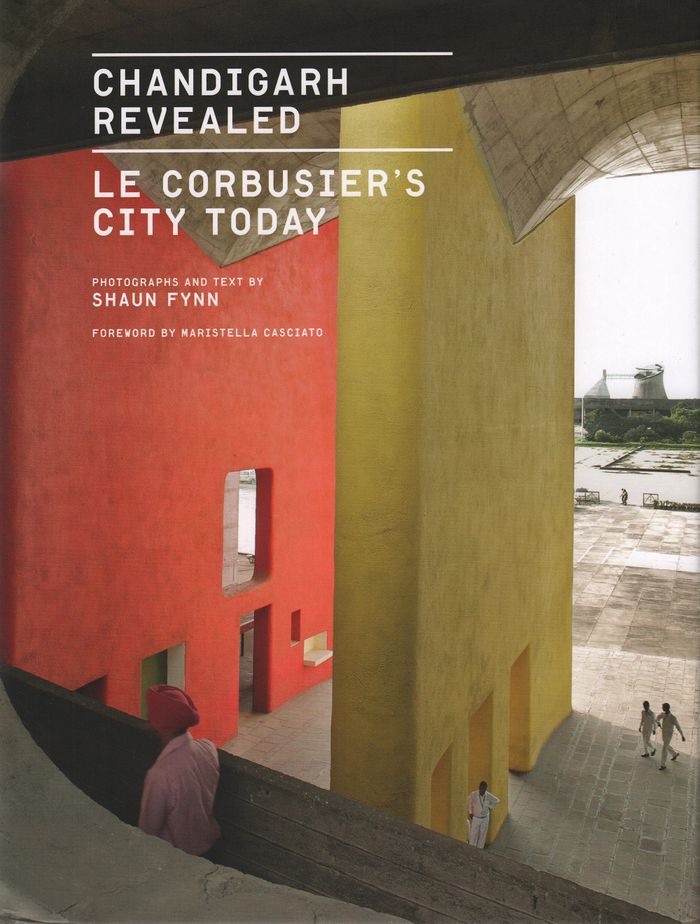
In 1950, Indian prime minister Jawaharlal Nehru invited legendary French-Swiss architect Le Corbusier to embark on one of the greatest experiments in urban planning history: to build a new capital Chandigarh, a city whose monumental modernism promised to free India from the fetters of colonial tradition. 'six decades after its founding and on the eve of its becoming a UNESCO World Heritage Site in 2016, photographer and Chandigarh resident Shaun Fynn was granted unprecedented access to turn his lens on Le Corbusier's city and capture what is rarely seen: the living metropolis behind the master plan. Fynn's captivating images of the city and its inhabitants reveal how the poetry of the architect's compositions has been shaped by the tumult of everyday life. Alongside descriptions of the city's architectural highlights, Chandigarh Revealed features a foreword by Le Corbusier authority Maristella Casciato, an essay by architectural historian Vikram ditya Prak sh, an interview with M. N. Sharma one of two surviving members of Le Corbusier's team and custom-designed maps to orient readers.
Chandigarh revealed: Le Corbusier's city today
Actions:
Price:
$85.00
(available to order)
Summary:
In 1950, Indian prime minister Jawaharlal Nehru invited legendary French-Swiss architect Le Corbusier to embark on one of the greatest experiments in urban planning history: to build a new capital Chandigarh, a city whose monumental modernism promised to free India from the fetters of colonial tradition. 'six decades after its founding and on the eve of its becoming a UNESCO World Heritage Site in 2016, photographer and Chandigarh resident Shaun Fynn was granted unprecedented access to turn his lens on Le Corbusier's city and capture what is rarely seen: the living metropolis behind the master plan. Fynn's captivating images of the city and its inhabitants reveal how the poetry of the architect's compositions has been shaped by the tumult of everyday life. Alongside descriptions of the city's architectural highlights, Chandigarh Revealed features a foreword by Le Corbusier authority Maristella Casciato, an essay by architectural historian Vikram ditya Prak sh, an interview with M. N. Sharma one of two surviving members of Le Corbusier's team and custom-designed maps to orient readers.
Form:
books
books
Publication:
April 2017
April 2017
Subject:
Architecture Monographs
Architecture Monographs
Form:
books
books
Actions:
Price:
$45.00
(available to order)
Summary:
Among the critical adulation that follows VJAA wherever they build, you'll find words like graceful, beautiful, sublime, quiet, classic, disciplined, and light—all suggesting the kind of alchemy that makes the work of this Minnesota-based firm so highly regarded. The magic they perform—marrying the simple forms of modernism with the rich materials of their sites in a(...)
$45.00
(available to order)
Summary:
Among the critical adulation that follows VJAA wherever they build, you'll find words like graceful, beautiful, sublime, quiet, classic, disciplined, and light—all suggesting the kind of alchemy that makes the work of this Minnesota-based firm so highly regarded. The magic they perform—marrying the simple forms of modernism with the rich materials of their sites in a(...)
Subject:
Architecture Monographs
Architecture Monographs
Publication:
December 2006, New York
December 2006, New York
Title:
VJAA : Vincent James associates archtects
Actions:
Price:
$45.00
(available to order)
Summary:
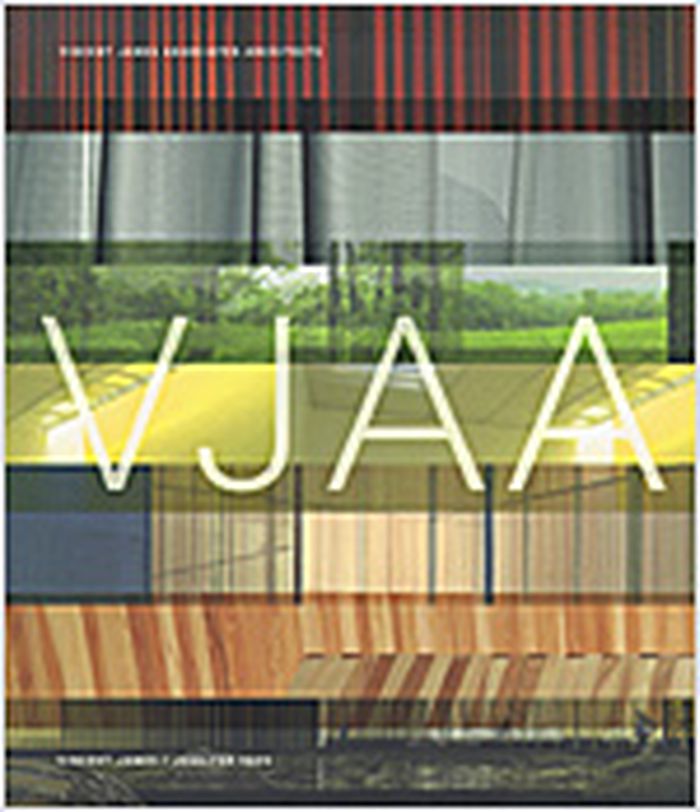
Among the critical adulation that follows VJAA wherever they build, you'll find words like graceful, beautiful, sublime, quiet, classic, disciplined, and light—all suggesting the kind of alchemy that makes the work of this Minnesota-based firm so highly regarded. The magic they perform—marrying the simple forms of modernism with the rich materials of their sites in a thoughtful framework that encourages social interaction and environmental responsibility—is carefully illustrated and explained in this monograph, which evokes the very qualities that make their work so seductive and compelling. A former furniture maker, principal Vincent James brings the woodworker's appreciation of materials, details, joinery, and structure to the firm's work, which here includes both their award-winning houses such as the Dayton and Type/Variant houses and institutional projects, such as the Minneapolis Rowing Club, Tulane University Center, and St. John's Abbey and Monastery Guesthouse. Along with an introductory essay by Hashim Sarkis, partners Vincent James and Jennifer Yoos provide a captivating and insightful portrait of their talented young firm.
VJAA : Vincent James associates archtects
Actions:
Price:
$45.00
(available to order)
Summary:
Among the critical adulation that follows VJAA wherever they build, you'll find words like graceful, beautiful, sublime, quiet, classic, disciplined, and light—all suggesting the kind of alchemy that makes the work of this Minnesota-based firm so highly regarded. The magic they perform—marrying the simple forms of modernism with the rich materials of their sites in a thoughtful framework that encourages social interaction and environmental responsibility—is carefully illustrated and explained in this monograph, which evokes the very qualities that make their work so seductive and compelling. A former furniture maker, principal Vincent James brings the woodworker's appreciation of materials, details, joinery, and structure to the firm's work, which here includes both their award-winning houses such as the Dayton and Type/Variant houses and institutional projects, such as the Minneapolis Rowing Club, Tulane University Center, and St. John's Abbey and Monastery Guesthouse. Along with an introductory essay by Hashim Sarkis, partners Vincent James and Jennifer Yoos provide a captivating and insightful portrait of their talented young firm.
Form:
books
books
Publication:
December 2006, New York
December 2006, New York
Subject:
Architecture Monographs
Architecture Monographs
Form:
books
books
Actions:
Price:
$62.50
(available to order)
Summary:
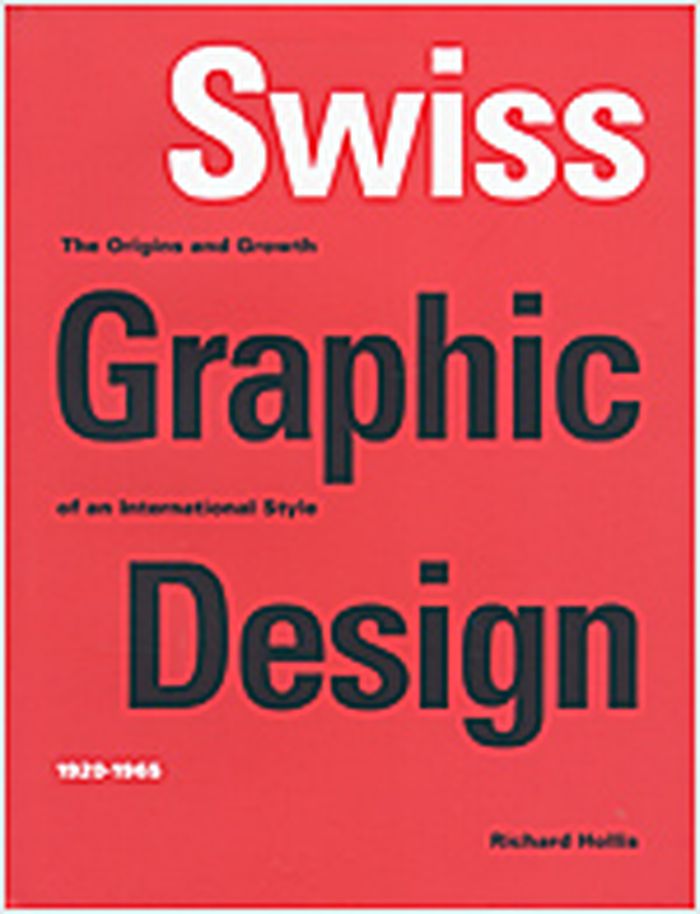
Swiss graphic design and “the Swiss Style” are crucial elements in the history of modernism. During the 1920s and ’30s, skills traditionally associated with Swiss industry, particularly pharmaceuticals and mechanical engineering, were matched by those of the country’s graphic designers, who produced their advertising and technical literature. These pioneering graphic(...)
$62.50
(available to order)
Summary:
Swiss graphic design and “the Swiss Style” are crucial elements in the history of modernism. During the 1920s and ’30s, skills traditionally associated with Swiss industry, particularly pharmaceuticals and mechanical engineering, were matched by those of the country’s graphic designers, who produced their advertising and technical literature. These pioneering graphic(...)
Title:
Swiss graphic design : the origins and growth of an international style 1920-1965
Actions:
Price:
$62.50
(available to order)
Summary:
Swiss graphic design and “the Swiss Style” are crucial elements in the history of modernism. During the 1920s and ’30s, skills traditionally associated with Swiss industry, particularly pharmaceuticals and mechanical engineering, were matched by those of the country’s graphic designers, who produced their advertising and technical literature. These pioneering graphic artists saw design as part of industrial production and searched for anonymous, objective visual communication. They chose photographic images rather than illustration, and typefaces that were industrial-looking rather than those designed for books. This volume looks at graphic language developed by such Swiss designers as Theo Ballmer, Max Bill, Adrian Frutiger, Karl Gerstner, Armin Hoffman, Ernst Keller, Herbert Matter, Josef Müller-Brockmann, and Jan Tschichold. The style of these artists received worldwide admiration for its formal discipline : images and text were organized by geometrical grids. Adopted internationally, the grid and sans serif typefaces such as Helvetica became the classic emblems of Swiss graphic design. This book shows design work across a range of media, including posters, magazines, exhibition displays, brochures, advertisements, books, and film.
Swiss graphic design : the origins and growth of an international style 1920-1965
Actions:
Price:
$62.50
(available to order)
Summary:
Swiss graphic design and “the Swiss Style” are crucial elements in the history of modernism. During the 1920s and ’30s, skills traditionally associated with Swiss industry, particularly pharmaceuticals and mechanical engineering, were matched by those of the country’s graphic designers, who produced their advertising and technical literature. These pioneering graphic artists saw design as part of industrial production and searched for anonymous, objective visual communication. They chose photographic images rather than illustration, and typefaces that were industrial-looking rather than those designed for books. This volume looks at graphic language developed by such Swiss designers as Theo Ballmer, Max Bill, Adrian Frutiger, Karl Gerstner, Armin Hoffman, Ernst Keller, Herbert Matter, Josef Müller-Brockmann, and Jan Tschichold. The style of these artists received worldwide admiration for its formal discipline : images and text were organized by geometrical grids. Adopted internationally, the grid and sans serif typefaces such as Helvetica became the classic emblems of Swiss graphic design. This book shows design work across a range of media, including posters, magazines, exhibition displays, brochures, advertisements, books, and film.
Form:
books
books
Publication:
April 2006, New Haven
April 2006, New Haven
Subject:
Graphic Design and Typography
Graphic Design and Typography
Form:
books
books
Actions:
Price:
$56.00
(available to order)
Summary:
This is the first publication on the Prague Werkbund Housing Estate "Baba", a symbol of architectural Modernism in the Czech Republic. Up until the fall of the Iron Curtain, the housing estate "Baba" in Prague was a little-known tip. This was the(...)
$56.00
(available to order)
Summary:
This is the first publication on the Prague Werkbund Housing Estate "Baba", a symbol of architectural Modernism in the Czech Republic. Up until the fall of the Iron Curtain, the housing estate "Baba" in Prague was a little-known tip. This was the(...)
Title:
Baba : the Werkbund housing estate Prague
Actions:
Price:
$56.00
(available to order)
Summary:
This is the first publication on the Prague Werkbund Housing Estate "Baba", a symbol of architectural Modernism in the Czech Republic. Up until the fall of the Iron Curtain, the housing estate "Baba" in Prague was a little-known tip. This was the last building exhibition which the Werkbund set up in Europe in 1932 and symbolises an entire era, vividly depicting Modern Architecture in the Czech Republic, which has gained growing international recognition since 1989. Three generations of architects were active here; the older generation, still influenced by Cubism, include Janak and Gocar; the middle generation, whose works were purist and functionalist, include Linhart and Stary; and the younger generation, for example, Ladislav Zak, who with their sweeping forms wished to distance themselves from 'white functionalism'. With copious, unpublished source material, this book analyses for the first time the particular status which the Prague Housing Estate has in architectural history. It addresses architectural and sociopolitical topics, documents the individual projects and looks at the circumstances of the private clients.
Baba : the Werkbund housing estate Prague
Actions:
Price:
$56.00
(available to order)
Summary:
This is the first publication on the Prague Werkbund Housing Estate "Baba", a symbol of architectural Modernism in the Czech Republic. Up until the fall of the Iron Curtain, the housing estate "Baba" in Prague was a little-known tip. This was the last building exhibition which the Werkbund set up in Europe in 1932 and symbolises an entire era, vividly depicting Modern Architecture in the Czech Republic, which has gained growing international recognition since 1989. Three generations of architects were active here; the older generation, still influenced by Cubism, include Janak and Gocar; the middle generation, whose works were purist and functionalist, include Linhart and Stary; and the younger generation, for example, Ladislav Zak, who with their sweeping forms wished to distance themselves from 'white functionalism'. With copious, unpublished source material, this book analyses for the first time the particular status which the Prague Housing Estate has in architectural history. It addresses architectural and sociopolitical topics, documents the individual projects and looks at the circumstances of the private clients.
Form:
books
books
Publication:
July 1999, Basel
July 1999, Basel
Subject:
Architecture since 1900, Europe
Architecture since 1900, Europe
Form:
books
books
Actions:
Price:
$60.00
(available to order)
Summary:
Critical theories such as those of the Frankfurt School of the twenties and thirties gave rise to a complex and sophisticated critique of modernity and modernism. The history and theory of twentieth-century architecture, which developed rather independently of (...)
$60.00
(available to order)
Summary:
Critical theories such as those of the Frankfurt School of the twenties and thirties gave rise to a complex and sophisticated critique of modernity and modernism. The history and theory of twentieth-century architecture, which developed rather independently of (...)
Title:
Architecture and modernity : a critique
Actions:
Price:
$60.00
(available to order)
Summary:
Critical theories such as those of the Frankfurt School of the twenties and thirties gave rise to a complex and sophisticated critique of modernity and modernism. The history and theory of twentieth-century architecture, which developed rather independently of this rich tradition, appear naive and unbalanced in comparison. In this exploration of the relationship between modernity, dwelling, and architecture, Hilde Heynen attempts to bridge this gap between the discourse of the modern movement and cultural theories of modernity. On one hand, she discusses architecture from the perspective of critical theory, and on the other she modifies positions within critical theory by linking them with architecture. She assesses architecture as a cultural field that structures daily life and that embodies major contradictions inherent in modernity, arguing that architecture nonetheless has a certain capacity to adopt a critical stance vis-à-vis modernity. The book provides architectural students with an introduction to the discourse of critical theory. The subchapters on Walter Benjamin, Ernst Bloch, Theodor Adorno, and the Venice School (Tafuri, Dal Co, Cacciari) can be studied independently.
Architecture and modernity : a critique
Actions:
Price:
$60.00
(available to order)
Summary:
Critical theories such as those of the Frankfurt School of the twenties and thirties gave rise to a complex and sophisticated critique of modernity and modernism. The history and theory of twentieth-century architecture, which developed rather independently of this rich tradition, appear naive and unbalanced in comparison. In this exploration of the relationship between modernity, dwelling, and architecture, Hilde Heynen attempts to bridge this gap between the discourse of the modern movement and cultural theories of modernity. On one hand, she discusses architecture from the perspective of critical theory, and on the other she modifies positions within critical theory by linking them with architecture. She assesses architecture as a cultural field that structures daily life and that embodies major contradictions inherent in modernity, arguing that architecture nonetheless has a certain capacity to adopt a critical stance vis-à-vis modernity. The book provides architectural students with an introduction to the discourse of critical theory. The subchapters on Walter Benjamin, Ernst Bloch, Theodor Adorno, and the Venice School (Tafuri, Dal Co, Cacciari) can be studied independently.
Form:
books
books
Publication:
November 1998, Cambridge, Mass.
November 1998, Cambridge, Mass.
Subject:
Architectural Theory
Architectural Theory
Form:
books
books
Actions:
Price:
$59.95
(available to order)
Summary:
Boston played a crucial role in the development of American photography, including criticism, collecting, and curating, in the second half of the twentieth century. This book accompanies a landmark exhibition at the DeCordova Museum that includes such important(...)
$59.95
(available to order)
Summary:
Boston played a crucial role in the development of American photography, including criticism, collecting, and curating, in the second half of the twentieth century. This book accompanies a landmark exhibition at the DeCordova Museum that includes such important(...)
Subject:
Theory of Photography
Theory of Photography
Publication:
September 2000, Cambridge, Mass.
September 2000, Cambridge, Mass.
Title:
Photography in Boston : 1955-1985
Actions:
Price:
$59.95
(available to order)
Summary:
Boston played a crucial role in the development of American photography, including criticism, collecting, and curating, in the second half of the twentieth century. This book accompanies a landmark exhibition at the DeCordova Museum that includes such important American artists as Berenice Abbott, Harry Callahan, Paul Caponigro, Marie Cosindas, Harold Edgerton, Nan Goldin, Jerome Liebling, Nicholas Nixon, Barbara Norfleet, Olivia Parker, Rosamond Purcell, Aaron Siskind, and Minor White. The period from 1955 to 1985 reflects photography's acceptance as an art form, the influence of modernism, and the coalescence of a unique constellation of educational institutions, museums, and technological development in the Boston area that directly influenced artistic options for photography. Minor White's arrival at the Massachusetts Institute of Technology in 1965 to run the Center for Creative Photography and the Polaroid Corporation's innovative support of photographic art suggest how developments built upon one another to create a regional critical mass in photography. The book contains twenty-five color plates, sixty duotones, and essays by A. D. Coleman, Rachel Rosenfield Lafo, Arno Rafael Minkkinen, and Kim Sichel.
Photography in Boston : 1955-1985
Actions:
Price:
$59.95
(available to order)
Summary:
Boston played a crucial role in the development of American photography, including criticism, collecting, and curating, in the second half of the twentieth century. This book accompanies a landmark exhibition at the DeCordova Museum that includes such important American artists as Berenice Abbott, Harry Callahan, Paul Caponigro, Marie Cosindas, Harold Edgerton, Nan Goldin, Jerome Liebling, Nicholas Nixon, Barbara Norfleet, Olivia Parker, Rosamond Purcell, Aaron Siskind, and Minor White. The period from 1955 to 1985 reflects photography's acceptance as an art form, the influence of modernism, and the coalescence of a unique constellation of educational institutions, museums, and technological development in the Boston area that directly influenced artistic options for photography. Minor White's arrival at the Massachusetts Institute of Technology in 1965 to run the Center for Creative Photography and the Polaroid Corporation's innovative support of photographic art suggest how developments built upon one another to create a regional critical mass in photography. The book contains twenty-five color plates, sixty duotones, and essays by A. D. Coleman, Rachel Rosenfield Lafo, Arno Rafael Minkkinen, and Kim Sichel.
Form:
books
books
Publication:
September 2000, Cambridge, Mass.
September 2000, Cambridge, Mass.
Subject:
Theory of Photography
Theory of Photography
Form:
books
books
Actions:
Price:
$35.50
(available to order)
Summary:
Critical theories such as those of the Frankfurt School of the twenties and thirties gave rise to a complex and sophisticated critique of modernity and modernism. The history and theory of twentieth-century architecture, which developed rather independently of (...)
$35.50
(available to order)
Summary:
Critical theories such as those of the Frankfurt School of the twenties and thirties gave rise to a complex and sophisticated critique of modernity and modernism. The history and theory of twentieth-century architecture, which developed rather independently of (...)
Title:
Architecture and modernity : a critique
Actions:
Price:
$35.50
(available to order)
Summary:
Critical theories such as those of the Frankfurt School of the twenties and thirties gave rise to a complex and sophisticated critique of modernity and modernism. The history and theory of twentieth-century architecture, which developed rather independently of this rich tradition, appear naive and unbalanced in comparison. In this exploration of the relationship between modernity, dwelling, and architecture, Hilde Heynen attempts to bridge this gap between the discourse of the modern movement and cultural theories of modernity. On one hand, she discusses architecture from the perspective of critical theory, and on the other she modifies positions within critical theory by linking them with architecture. She assesses architecture as a cultural field that structures daily life and that embodies major contradictions inherent in modernity, arguing that architecture nonetheless has a certain capacity to adopt a critical stance vis-à-vis modernity. The book provides architectural students with an introduction to the discourse of critical theory. The subchapters on Walter Benjamin, Ernst Bloch, Theodor Adorno, and the Venice School (Tafuri, Dal Co, Cacciari) can be studied independently.
Architecture and modernity : a critique
Actions:
Price:
$35.50
(available to order)
Summary:
Critical theories such as those of the Frankfurt School of the twenties and thirties gave rise to a complex and sophisticated critique of modernity and modernism. The history and theory of twentieth-century architecture, which developed rather independently of this rich tradition, appear naive and unbalanced in comparison. In this exploration of the relationship between modernity, dwelling, and architecture, Hilde Heynen attempts to bridge this gap between the discourse of the modern movement and cultural theories of modernity. On one hand, she discusses architecture from the perspective of critical theory, and on the other she modifies positions within critical theory by linking them with architecture. She assesses architecture as a cultural field that structures daily life and that embodies major contradictions inherent in modernity, arguing that architecture nonetheless has a certain capacity to adopt a critical stance vis-à-vis modernity. The book provides architectural students with an introduction to the discourse of critical theory. The subchapters on Walter Benjamin, Ernst Bloch, Theodor Adorno, and the Venice School (Tafuri, Dal Co, Cacciari) can be studied independently.
Form:
books
books
Publication:
April 2000, Cambridge, Mass.
April 2000, Cambridge, Mass.
Subject:
Architectural Theory
Architectural Theory
Form:
books
books
Actions:
Price:
$44.95
(available in store)
Summary:
The architect and theorist Walter Curt Behrendt (1884-1945) worked on public housing and urban development as a designer and administrator for the German government after World War I. From 1925 to 1926 he edited the journal "Die Form" for the German Werkbund (...)
$44.95
(available in store)
Summary:
The architect and theorist Walter Curt Behrendt (1884-1945) worked on public housing and urban development as a designer and administrator for the German government after World War I. From 1925 to 1926 he edited the journal "Die Form" for the German Werkbund (...)
Title:
The victory of the new building style
Actions:
Price:
$44.95
(available in store)
Summary:
The architect and theorist Walter Curt Behrendt (1884-1945) worked on public housing and urban development as a designer and administrator for the German government after World War I. From 1925 to 1926 he edited the journal "Die Form" for the German Werkbund and led an articulate and well-orchestrated campaign in support of the Modern Movement. A friend and colleague of Lewis Mumford, he immigrated in 1934 to the United States, where he taught courses on city planning and housing at Dartmouth College and the University of Buffalo. "The Victory of the New Building Style" (1927)—his principal theoretical work in German and the precursor to Modern Building, which he wrote in English—presents a revisionist conception of style that places equal emphasis on form and function. Behrendt calls for architects to return to basic geometries and to articulate explicitly the new social and economic realities. Now available in English for the first time, this incisive treatise boldly advocates international modernism to the general public. Introduction by Detlef Mertins and translation by Harry Francis Mallgrave
The victory of the new building style
Actions:
Price:
$44.95
(available in store)
Summary:
The architect and theorist Walter Curt Behrendt (1884-1945) worked on public housing and urban development as a designer and administrator for the German government after World War I. From 1925 to 1926 he edited the journal "Die Form" for the German Werkbund and led an articulate and well-orchestrated campaign in support of the Modern Movement. A friend and colleague of Lewis Mumford, he immigrated in 1934 to the United States, where he taught courses on city planning and housing at Dartmouth College and the University of Buffalo. "The Victory of the New Building Style" (1927)—his principal theoretical work in German and the precursor to Modern Building, which he wrote in English—presents a revisionist conception of style that places equal emphasis on form and function. Behrendt calls for architects to return to basic geometries and to articulate explicitly the new social and economic realities. Now available in English for the first time, this incisive treatise boldly advocates international modernism to the general public. Introduction by Detlef Mertins and translation by Harry Francis Mallgrave
Form:
books
books
Publication:
January 2000, Los Angeles
January 2000, Los Angeles
Subject:
Architectural Theory
Architectural Theory


