


3029 Results
Form:
books
books
Title:
A museum of one's own
A museum of one's own
Actions:
Price:
$54.95
(available to order)
Summary:
When French revolutionaries sacked royal holdings at the end of the 18th century, they began the largest transfer of artistic goods in world history. By 1850 many "repossessed" treasures had come to rest in a new institution, the public museum, where they were assigned educational tasks. Anne Higonnet's book begins at this turning point in the history of art, but it looks(...)
$54.95
(available to order)
Summary:
When French revolutionaries sacked royal holdings at the end of the 18th century, they began the largest transfer of artistic goods in world history. By 1850 many "repossessed" treasures had come to rest in a new institution, the public museum, where they were assigned educational tasks. Anne Higonnet's book begins at this turning point in the history of art, but it looks(...)
Title:
A museum of one's own
Actions:
Price:
$54.95
(available to order)
Summary:
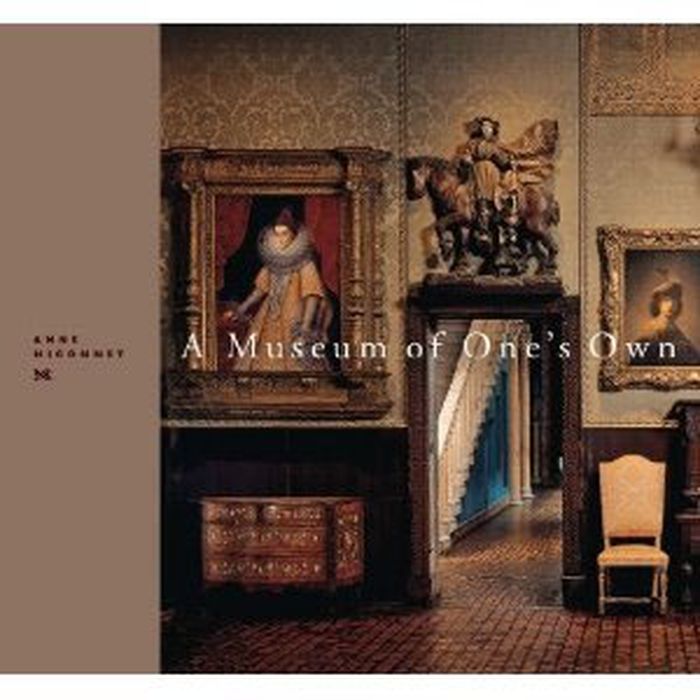
When French revolutionaries sacked royal holdings at the end of the 18th century, they began the largest transfer of artistic goods in world history. By 1850 many "repossessed" treasures had come to rest in a new institution, the public museum, where they were assigned educational tasks. Anne Higonnet's book begins at this turning point in the history of art, but it looks instead at another new institution, the collection museum. Emerging in London with the Wallace Collection, the collection museum spread rapidly in Gilded Age America. To the discontent of many Europeans, cash-flush Americans like J.P. Morgan and Henry Clay Frick went on collecting campaigns that netted masterpiece after masterpiece, along with the furniture and fittings of dozens of aristocratic residences. Higonnet weaves letters, auction records and photographs into an engrossing account of the founding of both renowned and obscure collection museums. She also explores how these collectors stoked the tremendous values accorded paintings by Raphael, Titian, Rembrandt, Vermeer, Velazquez, Gainsborough and Reynolds.
A museum of one's own
Actions:
Price:
$54.95
(available to order)
Summary:
When French revolutionaries sacked royal holdings at the end of the 18th century, they began the largest transfer of artistic goods in world history. By 1850 many "repossessed" treasures had come to rest in a new institution, the public museum, where they were assigned educational tasks. Anne Higonnet's book begins at this turning point in the history of art, but it looks instead at another new institution, the collection museum. Emerging in London with the Wallace Collection, the collection museum spread rapidly in Gilded Age America. To the discontent of many Europeans, cash-flush Americans like J.P. Morgan and Henry Clay Frick went on collecting campaigns that netted masterpiece after masterpiece, along with the furniture and fittings of dozens of aristocratic residences. Higonnet weaves letters, auction records and photographs into an engrossing account of the founding of both renowned and obscure collection museums. She also explores how these collectors stoked the tremendous values accorded paintings by Raphael, Titian, Rembrandt, Vermeer, Velazquez, Gainsborough and Reynolds.
Form:
books
books
Publication:
May 2010
May 2010
Subject:
Museums and Universal Exhibitions
Museums and Universal Exhibitions
Form:
books
books
Actions:
Price:
$55.00
(available in store)
Summary:
The oldest churches shown in this book were built as early as in the 15th century, most of those still standing were built in the 18th and 19th centuries, and quite a few are still being built today. Many were destroyed in the two world wars, many fell victim to ethnic cleansing after 1945, some fell into disrepair during the Soviet era, others were burnt down by(...)
$55.00
(available in store)
Summary:
The oldest churches shown in this book were built as early as in the 15th century, most of those still standing were built in the 18th and 19th centuries, and quite a few are still being built today. Many were destroyed in the two world wars, many fell victim to ethnic cleansing after 1945, some fell into disrepair during the Soviet era, others were burnt down by(...)
Title:
Wooden churches in Eastern Europe
Actions:
Price:
$55.00
(available in store)
Summary:
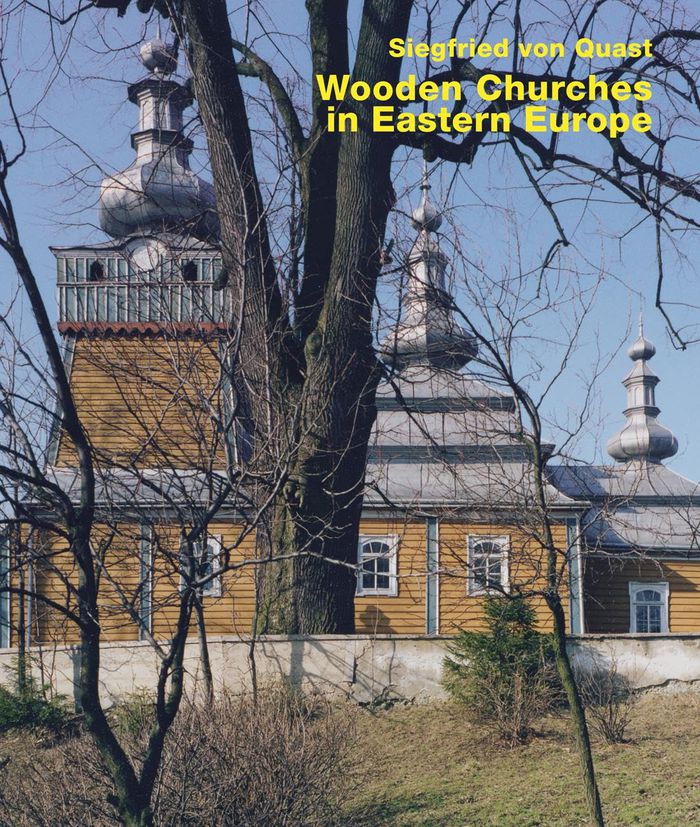
The oldest churches shown in this book were built as early as in the 15th century, most of those still standing were built in the 18th and 19th centuries, and quite a few are still being built today. Many were destroyed in the two world wars, many fell victim to ethnic cleansing after 1945, some fell into disrepair during the Soviet era, others were burnt down by lightning or short circuits, and quite a few simply gave way to the more "representative" stone churches as early as the 19th century. But a large number are still standing, consecrated, and believers gather in them. In fact almost of them in the various Carpathian countries are protected monuments, and many have been lovingly restored in recent times. More than the architectural-historical value, the question arises here of the aesthetic assessment of these small buildings. It is not a refined canon of forms of great architecture that can be derived and proven from the history of architecture that inspires us so much. Ba-sically, they are not overly sophisticated constructions in terms of craftsmanship, they are safe and beautiful in their simplicity. Their aesthetic appeal, however, also includes the surface-weathered material, deformed structures, colour improvisations, recently ornamented sheet metal, inside wall paintings, altar and iconostasis furnishings derived from Renaissance and Baroque periods, but above all their location in the village, mostly isolated, often elevated, surrounded by old trees, enclosures and graves without cemetery order.
Wooden churches in Eastern Europe
Actions:
Price:
$55.00
(available in store)
Summary:
The oldest churches shown in this book were built as early as in the 15th century, most of those still standing were built in the 18th and 19th centuries, and quite a few are still being built today. Many were destroyed in the two world wars, many fell victim to ethnic cleansing after 1945, some fell into disrepair during the Soviet era, others were burnt down by lightning or short circuits, and quite a few simply gave way to the more "representative" stone churches as early as the 19th century. But a large number are still standing, consecrated, and believers gather in them. In fact almost of them in the various Carpathian countries are protected monuments, and many have been lovingly restored in recent times. More than the architectural-historical value, the question arises here of the aesthetic assessment of these small buildings. It is not a refined canon of forms of great architecture that can be derived and proven from the history of architecture that inspires us so much. Ba-sically, they are not overly sophisticated constructions in terms of craftsmanship, they are safe and beautiful in their simplicity. Their aesthetic appeal, however, also includes the surface-weathered material, deformed structures, colour improvisations, recently ornamented sheet metal, inside wall paintings, altar and iconostasis furnishings derived from Renaissance and Baroque periods, but above all their location in the village, mostly isolated, often elevated, surrounded by old trees, enclosures and graves without cemetery order.
Form:
books
books
Publication:
April 2024
April 2024
Subject:
Commercial interiors, Building types
Commercial interiors, Building types
Form:
books
books
Title:
Rachel Harrison If I did it
Rachel Harrison If I did it
Actions:
Price:
$56.00
(available to order)
Summary:
Gracing the cover jacket of Rachel Harrison's highly anticipated second monograph is an informal monument to the man who holds the Americas' namesake. The only hint to this memorial for the 15th century Italian explorer, Amerigo Vespucci, is an apple resting on an outcropping of neon-green cement; of course the fact that the apple is not only artificial but has a bite(...)
$56.00
(available to order)
Summary:
Gracing the cover jacket of Rachel Harrison's highly anticipated second monograph is an informal monument to the man who holds the Americas' namesake. The only hint to this memorial for the 15th century Italian explorer, Amerigo Vespucci, is an apple resting on an outcropping of neon-green cement; of course the fact that the apple is not only artificial but has a bite(...)
Subject:
Contemporary Art Monographs
Contemporary Art Monographs
Publication:
March 2008, Zurich
March 2008, Zurich
Title:
Rachel Harrison If I did it
Actions:
Price:
$56.00
(available to order)
Summary:
Gracing the cover jacket of Rachel Harrison's highly anticipated second monograph is an informal monument to the man who holds the Americas' namesake. The only hint to this memorial for the 15th century Italian explorer, Amerigo Vespucci, is an apple resting on an outcropping of neon-green cement; of course the fact that the apple is not only artificial but has a bite taken out of it suggests otherwise to the discovery of these "Edenic" continents. This slight yet important fact raises the basic concept of if i did it: the active disavowal of art's political function as a museological testament to the "progress" of social history. By tossing off this monumental propensity, Harrison builds "antimonuments;" not so much sculptures but lumpen aggregates of pop psychology. In addition to Vespucci, throughout the book, one finds that celebrities Johnny Depp and Tiger Woods are included in a pantheon with John Locke and 18th century Corsican revolutionary Pasquale Paoli, meanwhile Al Gore checks the temperature, Claude Levi-Strauss checks the door with a taxidermied hen and rooster and a bi-curious Alexander the Great is the master of ceremonies. The title, taken from O.J. Simpson's infamous "hypothetical" account of his murder of Nicole Brown Simpson and Donald Goldman, groups this role call of high- and low- brow idols into a nonhierarchical tableau where cultural and political value are allotted only where one sees fit.
Rachel Harrison If I did it
Actions:
Price:
$56.00
(available to order)
Summary:
Gracing the cover jacket of Rachel Harrison's highly anticipated second monograph is an informal monument to the man who holds the Americas' namesake. The only hint to this memorial for the 15th century Italian explorer, Amerigo Vespucci, is an apple resting on an outcropping of neon-green cement; of course the fact that the apple is not only artificial but has a bite taken out of it suggests otherwise to the discovery of these "Edenic" continents. This slight yet important fact raises the basic concept of if i did it: the active disavowal of art's political function as a museological testament to the "progress" of social history. By tossing off this monumental propensity, Harrison builds "antimonuments;" not so much sculptures but lumpen aggregates of pop psychology. In addition to Vespucci, throughout the book, one finds that celebrities Johnny Depp and Tiger Woods are included in a pantheon with John Locke and 18th century Corsican revolutionary Pasquale Paoli, meanwhile Al Gore checks the temperature, Claude Levi-Strauss checks the door with a taxidermied hen and rooster and a bi-curious Alexander the Great is the master of ceremonies. The title, taken from O.J. Simpson's infamous "hypothetical" account of his murder of Nicole Brown Simpson and Donald Goldman, groups this role call of high- and low- brow idols into a nonhierarchical tableau where cultural and political value are allotted only where one sees fit.
Form:
books
books
Publication:
March 2008, Zurich
March 2008, Zurich
Subject:
Contemporary Art Monographs
Contemporary Art Monographs
Form:
journals and magazines
journals and magazines
Actions:
Price:
$39.95
(available to order)
Summary:
The relationship between architecture and tourism has been the subject of ample research from the urban point of view, resulting in various theories about the "tourist gaze." Themes like identity and city branding are familiar to us all these days, but the relationship between architecture and the touristic landscape has thus far received much less consideration. Now that(...)
$39.95
(available to order)
Summary:
The relationship between architecture and tourism has been the subject of ample research from the urban point of view, resulting in various theories about the "tourist gaze." Themes like identity and city branding are familiar to us all these days, but the relationship between architecture and the touristic landscape has thus far received much less consideration. Now that(...)
Subject:
Magazines
Magazines
Publication:
November 2004, Rotterdam
November 2004, Rotterdam
Title:
Oase 64 : landscape and mass tourism
Actions:
Price:
$39.95
(available to order)
Summary:
The relationship between architecture and tourism has been the subject of ample research from the urban point of view, resulting in various theories about the "tourist gaze." Themes like identity and city branding are familiar to us all these days, but the relationship between architecture and the touristic landscape has thus far received much less consideration. Now that tourism is occupying the natural landscape en masse, it is no longer possible to safeguard the ideal of pure, untouched nature. By its very definition, the touristic landscape is a construct in which cultural and functional aspects have a role. As far back as the 18th century, the experience of a touristic landscape was become a physical one; an irreversible transformation of the landscape has been the result. This edition of "OASE" focuses on architecture's contribution to the structuring of mass tourism in the context of landscape, on how architecture frames the landscape and regiments the flow of tourists. A variety of interventions and strategies are reviewed, from mega-structures and infrastructure in ski resorts and Mediterranean holiday villages to nostalgic settlements in man-made miniature landscapes.
Oase 64 : landscape and mass tourism
Actions:
Price:
$39.95
(available to order)
Summary:
The relationship between architecture and tourism has been the subject of ample research from the urban point of view, resulting in various theories about the "tourist gaze." Themes like identity and city branding are familiar to us all these days, but the relationship between architecture and the touristic landscape has thus far received much less consideration. Now that tourism is occupying the natural landscape en masse, it is no longer possible to safeguard the ideal of pure, untouched nature. By its very definition, the touristic landscape is a construct in which cultural and functional aspects have a role. As far back as the 18th century, the experience of a touristic landscape was become a physical one; an irreversible transformation of the landscape has been the result. This edition of "OASE" focuses on architecture's contribution to the structuring of mass tourism in the context of landscape, on how architecture frames the landscape and regiments the flow of tourists. A variety of interventions and strategies are reviewed, from mega-structures and infrastructure in ski resorts and Mediterranean holiday villages to nostalgic settlements in man-made miniature landscapes.
Form:
journals and magazines
journals and magazines
Publication:
November 2004, Rotterdam
November 2004, Rotterdam
Subject:
Magazines
Magazines
Form:
books
books
Actions:
Price:
$37.50
(available to order)
Summary:
Since the publication of Edward Said's groundbreaking work Orientalism 35 years ago, numerous studies have explored the West's fraught and enduring fascination with the so-called Orient. Focusing their critical attention on the literary and pictorial arts, these studies have, to date, largely neglected the world of interior design. Oriental Interiors is the first book to(...)
$37.50
(available to order)
Summary:
Since the publication of Edward Said's groundbreaking work Orientalism 35 years ago, numerous studies have explored the West's fraught and enduring fascination with the so-called Orient. Focusing their critical attention on the literary and pictorial arts, these studies have, to date, largely neglected the world of interior design. Oriental Interiors is the first book to(...)
Title:
Oriental interiors: design, identity, space
Actions:
Price:
$37.50
(available to order)
Summary:
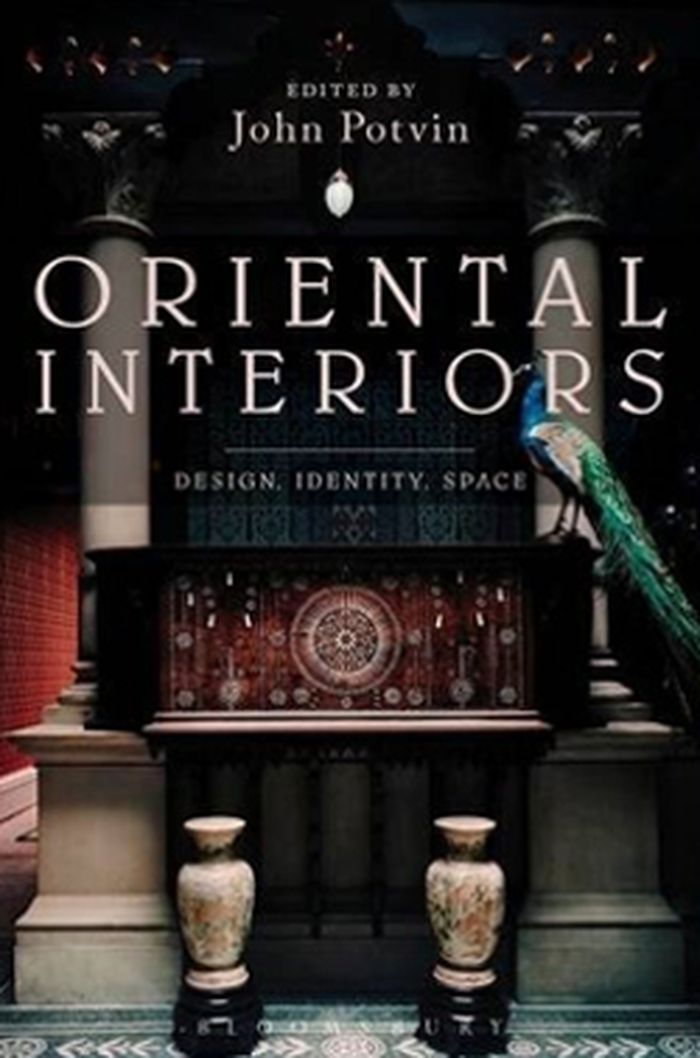
Since the publication of Edward Said's groundbreaking work Orientalism 35 years ago, numerous studies have explored the West's fraught and enduring fascination with the so-called Orient. Focusing their critical attention on the literary and pictorial arts, these studies have, to date, largely neglected the world of interior design. Oriental Interiors is the first book to fully explore the formation and perception of eastern-inspired interiors from an orientalist perspective. Orientalist spaces in the West have taken numerous forms since the 18th century to the present day, and the fifteen chapters in this collection reflect that diversity, dealing with subjects as varied and engaging as harems, Turkish baths on RMS Titanic, Parisian bachelor quarters, potted palms, and contemporary yoga studios. It explores how furnishings, surface treatments, ornament and music, for example, are deployed to enhance the exoticism and pleasures of oriental spaces, looking across a range of international locations. Organized into three parts, each introduced by the editor, the essays are grouped by theme to highlight critical paths into the intersections between orientalist studies, spatial theory, design studies, visual culture and gender studies, making this essential reading for students and researchers alike.
Oriental interiors: design, identity, space
Actions:
Price:
$37.50
(available to order)
Summary:
Since the publication of Edward Said's groundbreaking work Orientalism 35 years ago, numerous studies have explored the West's fraught and enduring fascination with the so-called Orient. Focusing their critical attention on the literary and pictorial arts, these studies have, to date, largely neglected the world of interior design. Oriental Interiors is the first book to fully explore the formation and perception of eastern-inspired interiors from an orientalist perspective. Orientalist spaces in the West have taken numerous forms since the 18th century to the present day, and the fifteen chapters in this collection reflect that diversity, dealing with subjects as varied and engaging as harems, Turkish baths on RMS Titanic, Parisian bachelor quarters, potted palms, and contemporary yoga studios. It explores how furnishings, surface treatments, ornament and music, for example, are deployed to enhance the exoticism and pleasures of oriental spaces, looking across a range of international locations. Organized into three parts, each introduced by the editor, the essays are grouped by theme to highlight critical paths into the intersections between orientalist studies, spatial theory, design studies, visual culture and gender studies, making this essential reading for students and researchers alike.
Form:
books
books
Publication:
December 2015
December 2015
Subject:
Architectural Theory
Architectural Theory
Form:
books
books
Price:
$29.50
(available to order)
Summary:
This exhibition catalogue explores 'the cult of the ruin', a phenomenon of 18th and early 19th century Europe. Mock ruins were built as 'follies' in landscape gardens, while artists imagined how London would appear as a ruined city after the collapse of the British Empire. In Rome, interiors were painted as trompe l'oeil(...)
$29.50
(available to order)
Summary:
This exhibition catalogue explores 'the cult of the ruin', a phenomenon of 18th and early 19th century Europe. Mock ruins were built as 'follies' in landscape gardens, while artists imagined how London would appear as a ruined city after the collapse of the British Empire. In Rome, interiors were painted as trompe l'oeil(...)
Subject:
Architecture Monographs
Architecture Monographs
Publication:
January 1999, London
January 1999, London
Title:
Visions of ruin : architectural fantasies & designs for garden follies
Actions:
Price:
$29.50
(available to order)
Summary:
This exhibition catalogue explores 'the cult of the ruin', a phenomenon of 18th and early 19th century Europe. Mock ruins were built as 'follies' in landscape gardens, while artists imagined how London would appear as a ruined city after the collapse of the British Empire. In Rome, interiors were painted as trompe l'oeil ruins, and in Paris the great chef Antoine Carême served blancmanges in the shape of Roman ruins. John Soane represents the climax of this fascination. In the garden of his Museum at No.13 Lincoln's Inn Fields is the 'Monk's Yard', a mock-ruin assembled from medieval fragments of the Palace of Westminster. At his country house, Pitzhanger Manor in Ealing, he pretended that a mock-classical ruin was a Roman temple he had discovered at the bottom of the garden. He commemorated the completion of his masterpiece, the Bank of England, by exhibiting a series of astonishing views of the structure as if a ruin. He even wrote a narrative, "Crude Hints Towards the History of My House", in which he imagined an archaeologist of future centuries inspecting the fragments of his home. The transcribed text is reprinted in this publication. Architects and artists include Robert Adam, William Chambers, Hubert Robert, Piranesi, Clerrisseau, Richard Wilson, J. M. W. Turner, Gustave Doré and John Martin.
Visions of ruin : architectural fantasies & designs for garden follies
Actions:
Price:
$29.50
(available to order)
Summary:
This exhibition catalogue explores 'the cult of the ruin', a phenomenon of 18th and early 19th century Europe. Mock ruins were built as 'follies' in landscape gardens, while artists imagined how London would appear as a ruined city after the collapse of the British Empire. In Rome, interiors were painted as trompe l'oeil ruins, and in Paris the great chef Antoine Carême served blancmanges in the shape of Roman ruins. John Soane represents the climax of this fascination. In the garden of his Museum at No.13 Lincoln's Inn Fields is the 'Monk's Yard', a mock-ruin assembled from medieval fragments of the Palace of Westminster. At his country house, Pitzhanger Manor in Ealing, he pretended that a mock-classical ruin was a Roman temple he had discovered at the bottom of the garden. He commemorated the completion of his masterpiece, the Bank of England, by exhibiting a series of astonishing views of the structure as if a ruin. He even wrote a narrative, "Crude Hints Towards the History of My House", in which he imagined an archaeologist of future centuries inspecting the fragments of his home. The transcribed text is reprinted in this publication. Architects and artists include Robert Adam, William Chambers, Hubert Robert, Piranesi, Clerrisseau, Richard Wilson, J. M. W. Turner, Gustave Doré and John Martin.
Form:
books
books
Publication:
January 1999, London
January 1999, London
Subject:
Architecture Monographs
Architecture Monographs
Form:
books
books
Actions:
Price:
$100.95
(available in store)
Summary:
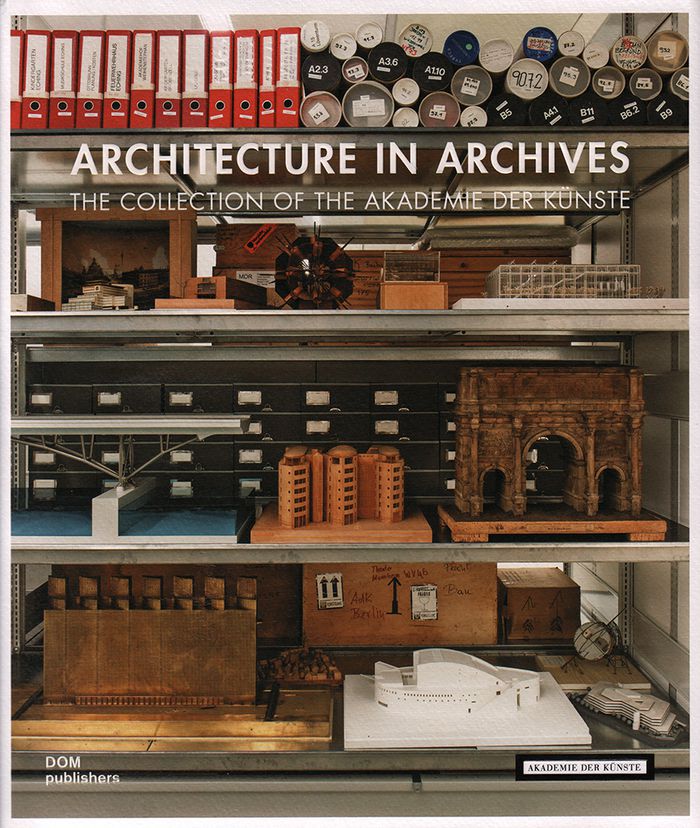
Master builders have been granted membership of the Akademie der Künste since 1696, the year of its foundation. The earliest materials within the Archive documenting the art of architecture date back to the end of the 18th century and give testimony to the pursuits of tutors and pupils at the Akademie. It was not until the end of the 1950s under the post-war president of(...)
$100.95
(available in store)
Summary:
Master builders have been granted membership of the Akademie der Künste since 1696, the year of its foundation. The earliest materials within the Archive documenting the art of architecture date back to the end of the 18th century and give testimony to the pursuits of tutors and pupils at the Akademie. It was not until the end of the 1950s under the post-war president of(...)
Subject:
Museums and Universal Exhibitions
Museums and Universal Exhibitions
Publication:
January 2017
January 2017
Title:
Architecture in archives: the collection of the Akademie der Künste, Berlin
Actions:
Price:
$100.95
(available in store)
Summary:
Master builders have been granted membership of the Akademie der Künste since 1696, the year of its foundation. The earliest materials within the Archive documenting the art of architecture date back to the end of the 18th century and give testimony to the pursuits of tutors and pupils at the Akademie. It was not until the end of the 1950s under the post-war president of the Akademie in West Berlin, the architect Hans Scharoun, that bequests from architects began to be received into the Archive. This publication offers for the first time a comprehensive overview of the archives of architects, engineers, landscape architects, architectural photographers and critics, all of which have been bequeathed to the Architectural Archive of the Akademie der Künste. All 71 archives and 80 collections are introduced with brief biographies of the original authors and descriptions denoting the nature and scope of the holdings. Friedrich Gilly from the Preußische Akademie der Künste is, among others, represented with drawings. A particular abundance of documentation reflects the era of Expressionism following the First World War with the works of Hugo Häring, Hans Scharoun, Bruno Taut, Hans and Wassili Luckhardt, Alfons Anker, Paul Goesch, Adolf Behne and Heinrich Lauterbach. The archives of Richard Ermisch, Paul Baumgarten and Thilo Schoder date back as far as the 1920s. Particular emphasis is laid upon those architects forced to emigrate after 1933, among their number Gabriel Epstein, Julius Posener, Konrad Wachsmann, Adolf Rading and Harry Rosenthal. The post-war period and the 1960s are represented by the archives of Max Taut, Walter Rossow, Dieter Oesterlen, Bernhard Pfau, Ludwig Leo, Bernhard Hermkes, Helmut Hentrich, Werner Hebebrand, Hermann Henselmann, Werner Düttmann, Friedrich Spengelin and Heinz Graffunder. Archives and collections extending into the 21st century emanate from Kurt Ackermann, Hans-Busso von Busse, Peter von Seidlein, Manfred Sack, Jörg Schlaich, Szyszkowitz + Kowalski, Haus-Rucker-Co, Valentien + Valentien and Arno Brandlhuber.
Architecture in archives: the collection of the Akademie der Künste, Berlin
Actions:
Price:
$100.95
(available in store)
Summary:
Master builders have been granted membership of the Akademie der Künste since 1696, the year of its foundation. The earliest materials within the Archive documenting the art of architecture date back to the end of the 18th century and give testimony to the pursuits of tutors and pupils at the Akademie. It was not until the end of the 1950s under the post-war president of the Akademie in West Berlin, the architect Hans Scharoun, that bequests from architects began to be received into the Archive. This publication offers for the first time a comprehensive overview of the archives of architects, engineers, landscape architects, architectural photographers and critics, all of which have been bequeathed to the Architectural Archive of the Akademie der Künste. All 71 archives and 80 collections are introduced with brief biographies of the original authors and descriptions denoting the nature and scope of the holdings. Friedrich Gilly from the Preußische Akademie der Künste is, among others, represented with drawings. A particular abundance of documentation reflects the era of Expressionism following the First World War with the works of Hugo Häring, Hans Scharoun, Bruno Taut, Hans and Wassili Luckhardt, Alfons Anker, Paul Goesch, Adolf Behne and Heinrich Lauterbach. The archives of Richard Ermisch, Paul Baumgarten and Thilo Schoder date back as far as the 1920s. Particular emphasis is laid upon those architects forced to emigrate after 1933, among their number Gabriel Epstein, Julius Posener, Konrad Wachsmann, Adolf Rading and Harry Rosenthal. The post-war period and the 1960s are represented by the archives of Max Taut, Walter Rossow, Dieter Oesterlen, Bernhard Pfau, Ludwig Leo, Bernhard Hermkes, Helmut Hentrich, Werner Hebebrand, Hermann Henselmann, Werner Düttmann, Friedrich Spengelin and Heinz Graffunder. Archives and collections extending into the 21st century emanate from Kurt Ackermann, Hans-Busso von Busse, Peter von Seidlein, Manfred Sack, Jörg Schlaich, Szyszkowitz + Kowalski, Haus-Rucker-Co, Valentien + Valentien and Arno Brandlhuber.
Form:
books
books
Publication:
January 2017
January 2017
Subject:
Museums and Universal Exhibitions
Museums and Universal Exhibitions
Form:
books
books
Actions:
Price:
$75.00
(available to order)
Summary:
Architecture affects people. The architecture of hospitals contributes to the well-being and recovery of patients. This bold proposition dates back to the late 18th century, and has been a recurring theme in the functional development of hospital architecture ever since. The most recent manifestation of this was the phenomenon of 'Evidence-Based Design', which originated(...)
$75.00
(available to order)
Summary:
Architecture affects people. The architecture of hospitals contributes to the well-being and recovery of patients. This bold proposition dates back to the late 18th century, and has been a recurring theme in the functional development of hospital architecture ever since. The most recent manifestation of this was the phenomenon of 'Evidence-Based Design', which originated(...)
Subject:
Commercial interiors, Building types
Commercial interiors, Building types
Publication:
December 2005, Rotterdam
December 2005, Rotterdam
Title:
The architecture of hospitals
Actions:
Price:
$75.00
(available to order)
Summary:
Architecture affects people. The architecture of hospitals contributes to the well-being and recovery of patients. This bold proposition dates back to the late 18th century, and has been a recurring theme in the functional development of hospital architecture ever since. The most recent manifestation of this was the phenomenon of 'Evidence-Based Design', which originated in the USA. This methodology compares the effects of various spatial factors and provided indisputable evidence that architecture does indeed work for the first time. The positive influence of architecture is one of the two cornerstones of "The architecture of hospitals". The other is architecture as an historical discipline with a wide-ranging cultural dimension. The hospital, being a public and representative building with a special societal function, is the ideal vehicle to express this cultural dimension. From French and German examples it seems that good architecture can, moreover, contribute to an agreeable, orderly and well maintained environment, which perhaps has a greater impact on the functioning of the hospital than the effects of Evidence-Based Design. Architecture as architecture and as medicine is the theme of "The architecture of hospitals". Partially based on a project of the same name initiated by the University Medical Center Groningen (UMCG), which included various conferences, studios and workshops, the book bears no resemblance to the standard bundle of conference proceedings. Instead it is a richly illustrated publication which is constructed around five themes : culture, healthcare concepts, Evidence-Based Design, technology and country-specific presentations. With texts by : Cor Wagenaar (ed.), Abram de Swaan, Stephen Verderber, Charles Jencks, Aaron Betsky, Roger Ulrich et al.
The architecture of hospitals
Actions:
Price:
$75.00
(available to order)
Summary:
Architecture affects people. The architecture of hospitals contributes to the well-being and recovery of patients. This bold proposition dates back to the late 18th century, and has been a recurring theme in the functional development of hospital architecture ever since. The most recent manifestation of this was the phenomenon of 'Evidence-Based Design', which originated in the USA. This methodology compares the effects of various spatial factors and provided indisputable evidence that architecture does indeed work for the first time. The positive influence of architecture is one of the two cornerstones of "The architecture of hospitals". The other is architecture as an historical discipline with a wide-ranging cultural dimension. The hospital, being a public and representative building with a special societal function, is the ideal vehicle to express this cultural dimension. From French and German examples it seems that good architecture can, moreover, contribute to an agreeable, orderly and well maintained environment, which perhaps has a greater impact on the functioning of the hospital than the effects of Evidence-Based Design. Architecture as architecture and as medicine is the theme of "The architecture of hospitals". Partially based on a project of the same name initiated by the University Medical Center Groningen (UMCG), which included various conferences, studios and workshops, the book bears no resemblance to the standard bundle of conference proceedings. Instead it is a richly illustrated publication which is constructed around five themes : culture, healthcare concepts, Evidence-Based Design, technology and country-specific presentations. With texts by : Cor Wagenaar (ed.), Abram de Swaan, Stephen Verderber, Charles Jencks, Aaron Betsky, Roger Ulrich et al.
Form:
books
books
Publication:
December 2005, Rotterdam
December 2005, Rotterdam
Subject:
Commercial interiors, Building types
Commercial interiors, Building types
Form:
audio
audio
Description:
1 online resource.
Author:
Subject:
Publication:
[Place of publication not identified] : Lateral Addition, 2018.
[Place of publication not identified] : Lateral Addition, 2018.
Title:
June 21, 2018 : Listening for Southwest Key in San Diego.
Actions:
Description:
1 online resource.
June 21, 2018 : Listening for Southwest Key in San Diego.
Actions:
Description:
1 online resource.
Form:
audio
audio
Publication:
[Place of publication not identified] : Lateral Addition, 2018.
[Place of publication not identified] : Lateral Addition, 2018.
Author:
Subject:


