


3044 Results
Form:
books
books
Actions:
Price:
$49.95
(available to order)
Summary:
Public parks are among the most important open spaces in our cities, and contribute decisively to their character. They fulfil ecological, social and urban design requirements, and upgrade adjacent neighbourhoods and even whole city districts. New parks are being built all over Europe, in the hearts of cities or out in the periphery, as in the case of Invalidenpark in(...)
$49.95
(available to order)
Summary:
Public parks are among the most important open spaces in our cities, and contribute decisively to their character. They fulfil ecological, social and urban design requirements, and upgrade adjacent neighbourhoods and even whole city districts. New parks are being built all over Europe, in the hearts of cities or out in the periphery, as in the case of Invalidenpark in(...)
Subject:
Gardens
Gardens
Publication:
October 2002, Basel
October 2002, Basel
Title:
Parks : green urban spaces in European cities
Actions:
Price:
$49.95
(available to order)
Summary:
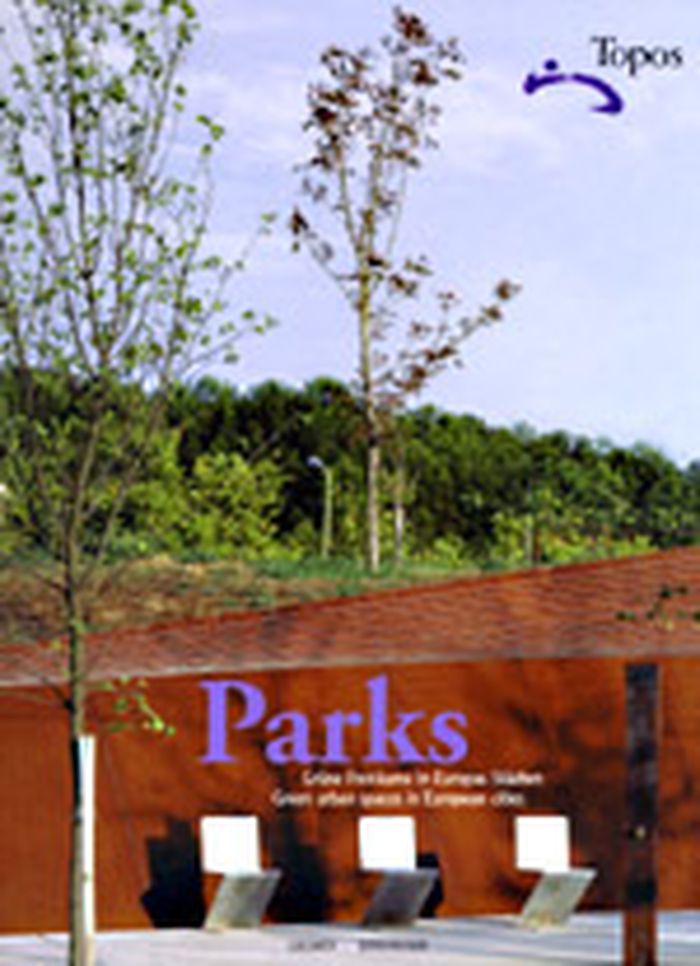
Public parks are among the most important open spaces in our cities, and contribute decisively to their character. They fulfil ecological, social and urban design requirements, and upgrade adjacent neighbourhoods and even whole city districts. New parks are being built all over Europe, in the hearts of cities or out in the periphery, as in the case of Invalidenpark in Berlin and Thames Barrier Park in London, respectively. Some, such as Park André-Citroën, Paris, serve purely recreational purposes. Others, namely the sculpture garden of the Kröller-Muller Museum Park in the Netherland, are devoted to art or to botanic abundance, as the Botanical Garden in Barcelona. The creation of such extensive new green spaces is always the subject of public and professional discourse, no matter whether this concerns La Villette in Paris, Duisburg-Nord Lanscape Park in the Ruhr, or the new park at Munich's old airport in Riem. According, the compact survey is rounded off by theoretical discussion. Based on essays published in "Topos - European landscape magazine" between 1993 and today, the resulting collection of familiar and less-known parks from many European countries provides an excellent overview of current approaches to park and park design.
Parks : green urban spaces in European cities
Actions:
Price:
$49.95
(available to order)
Summary:
Public parks are among the most important open spaces in our cities, and contribute decisively to their character. They fulfil ecological, social and urban design requirements, and upgrade adjacent neighbourhoods and even whole city districts. New parks are being built all over Europe, in the hearts of cities or out in the periphery, as in the case of Invalidenpark in Berlin and Thames Barrier Park in London, respectively. Some, such as Park André-Citroën, Paris, serve purely recreational purposes. Others, namely the sculpture garden of the Kröller-Muller Museum Park in the Netherland, are devoted to art or to botanic abundance, as the Botanical Garden in Barcelona. The creation of such extensive new green spaces is always the subject of public and professional discourse, no matter whether this concerns La Villette in Paris, Duisburg-Nord Lanscape Park in the Ruhr, or the new park at Munich's old airport in Riem. According, the compact survey is rounded off by theoretical discussion. Based on essays published in "Topos - European landscape magazine" between 1993 and today, the resulting collection of familiar and less-known parks from many European countries provides an excellent overview of current approaches to park and park design.
Form:
books
books
Publication:
October 2002, Basel
October 2002, Basel
Subject:
Gardens
Gardens
Form:
books
books
Price:
$54.95
(available in store)
Summary:
Mass-produced from the 1970s to the 1990s, modular kiosks like the seminal K67, designed by the Slovenian architect Saša J. Mächtig, and similar systems – including the Polish Kami, the Macedonian KC190, and the Soviet ‘Bathyscaphe’ – could be found anywhere throughout the former Eastern Bloc and ex-Yugoslav countries, from bustling city squares to socialist-era housing(...)
$54.95
(available in store)
Summary:
Mass-produced from the 1970s to the 1990s, modular kiosks like the seminal K67, designed by the Slovenian architect Saša J. Mächtig, and similar systems – including the Polish Kami, the Macedonian KC190, and the Soviet ‘Bathyscaphe’ – could be found anywhere throughout the former Eastern Bloc and ex-Yugoslav countries, from bustling city squares to socialist-era housing(...)
Title:
Kiosk: The last modernist booths across Central and Eastern Europe
Actions:
Price:
$54.95
(available in store)
Summary:
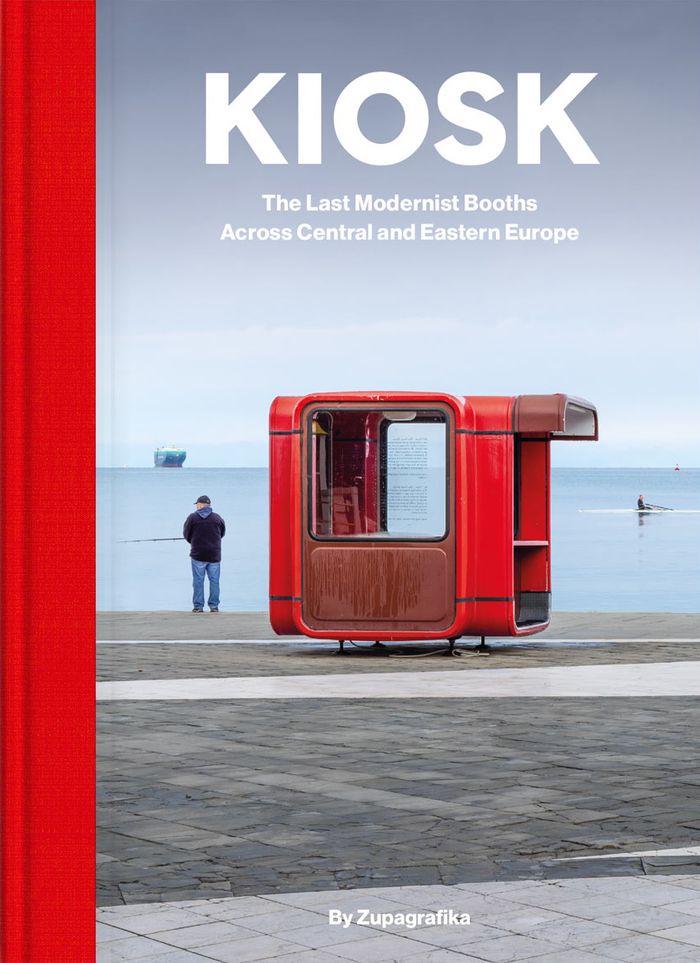
Mass-produced from the 1970s to the 1990s, modular kiosks like the seminal K67, designed by the Slovenian architect Saša J. Mächtig, and similar systems – including the Polish Kami, the Macedonian KC190, and the Soviet ‘Bathyscaphe’ – could be found anywhere throughout the former Eastern Bloc and ex-Yugoslav countries, from bustling city squares to socialist-era housing estates. They served as hot dog and Polish zapiekanka joints, farm egg and rotisserie chicken vendors, funeral flower shops, newsstands, car park booths, currency exchange offices, and more. Featuring over 150 kiosks – from Ljubljana to Warsaw, and from Belgrade to Berlin – this photobook provides previously unseen documentation of the remaining modernist booths that witnessed the socio-political transformation of Central and Eastern Europe at the end of the 20th century. While some remain active or have undergone refurbishment, others have been abandoned or have slowly faded from the urban landscape. The photographs in this unique collection were taken over the last decade by Zupagrafika’s founders, David Navarro and Martyna Sobecka. The book includes a foreword by urban explorer Maciej Czarnecki and an introduction by architectural historian Anna Cymer, offering invaluable insights into the history of these mobile structures.
Kiosk: The last modernist booths across Central and Eastern Europe
Actions:
Price:
$54.95
(available in store)
Summary:
Mass-produced from the 1970s to the 1990s, modular kiosks like the seminal K67, designed by the Slovenian architect Saša J. Mächtig, and similar systems – including the Polish Kami, the Macedonian KC190, and the Soviet ‘Bathyscaphe’ – could be found anywhere throughout the former Eastern Bloc and ex-Yugoslav countries, from bustling city squares to socialist-era housing estates. They served as hot dog and Polish zapiekanka joints, farm egg and rotisserie chicken vendors, funeral flower shops, newsstands, car park booths, currency exchange offices, and more. Featuring over 150 kiosks – from Ljubljana to Warsaw, and from Belgrade to Berlin – this photobook provides previously unseen documentation of the remaining modernist booths that witnessed the socio-political transformation of Central and Eastern Europe at the end of the 20th century. While some remain active or have undergone refurbishment, others have been abandoned or have slowly faded from the urban landscape. The photographs in this unique collection were taken over the last decade by Zupagrafika’s founders, David Navarro and Martyna Sobecka. The book includes a foreword by urban explorer Maciej Czarnecki and an introduction by architectural historian Anna Cymer, offering invaluable insights into the history of these mobile structures.
Form:
books
books
Publication:
November 2024
November 2024
Subject:
Modernism
Modernism
Form:
books
books
Actions:
Price:
$40.50
(available to order)
Summary:
When Urbanization Comes To Ground is a collaborative research project between the Brooklyn-based architecture studio, CAZA, and think tank, SURBA, an urban research collective spearheaded by Carlos Arnaiz and Peter Rowe. Drawing upon case studies including projects in China, Colombia, and the Philippines, this book works across place, time, and culture to offer an(...)
$40.50
(available to order)
Summary:
When Urbanization Comes To Ground is a collaborative research project between the Brooklyn-based architecture studio, CAZA, and think tank, SURBA, an urban research collective spearheaded by Carlos Arnaiz and Peter Rowe. Drawing upon case studies including projects in China, Colombia, and the Philippines, this book works across place, time, and culture to offer an(...)
Title:
CAZA + SURBA: When urbanization comes to ground
Actions:
Price:
$40.50
(available to order)
Summary:
When Urbanization Comes To Ground is a collaborative research project between the Brooklyn-based architecture studio, CAZA, and think tank, SURBA, an urban research collective spearheaded by Carlos Arnaiz and Peter Rowe. Drawing upon case studies including projects in China, Colombia, and the Philippines, this book works across place, time, and culture to offer an allegorical journey into urbanization at large. When ''Urbanization comes to ground'' is a loosely congregated collection of essays that reflect an aggregation of encounters with urban circumstances – physical and immaterial, and structural and affective. From Robots, Utilidors, and a Brave New World to A Third Way Towards Metropolitanism and Tagging Thingness and Scale, this publication questions the role of architecture and its related disciplines in the wake of the master plan. It searches for a field guide to everyday urban life by offering palpable views into the network of relations that characterize this evolving social ecosystem. Through their collective global research projects CAZA and SURBA frame, abstract, poeticize, and render the city as a historical process, a future destination, a production cycle, and a layered landscape of overlapping phenomena.
CAZA + SURBA: When urbanization comes to ground
Actions:
Price:
$40.50
(available to order)
Summary:
When Urbanization Comes To Ground is a collaborative research project between the Brooklyn-based architecture studio, CAZA, and think tank, SURBA, an urban research collective spearheaded by Carlos Arnaiz and Peter Rowe. Drawing upon case studies including projects in China, Colombia, and the Philippines, this book works across place, time, and culture to offer an allegorical journey into urbanization at large. When ''Urbanization comes to ground'' is a loosely congregated collection of essays that reflect an aggregation of encounters with urban circumstances – physical and immaterial, and structural and affective. From Robots, Utilidors, and a Brave New World to A Third Way Towards Metropolitanism and Tagging Thingness and Scale, this publication questions the role of architecture and its related disciplines in the wake of the master plan. It searches for a field guide to everyday urban life by offering palpable views into the network of relations that characterize this evolving social ecosystem. Through their collective global research projects CAZA and SURBA frame, abstract, poeticize, and render the city as a historical process, a future destination, a production cycle, and a layered landscape of overlapping phenomena.
Form:
books
books
Publication:
January 2020
January 2020
Subject:
Architecture Monographs
Architecture Monographs
Form:
books
books
Actions:
Price:
$115.00
(available to order)
Summary:
''Radical practice'' celebrates the extraordinary, award-winning designs of Marlon Blackwell Architects, an Arkansas-based firm with a focus on public and civic projects that are located outside of the established centers of architectural culture. The distinct and original work of Marlon Blackwell Architects has produced iconic and award-winning designs across(...)
$115.00
(available to order)
Summary:
''Radical practice'' celebrates the extraordinary, award-winning designs of Marlon Blackwell Architects, an Arkansas-based firm with a focus on public and civic projects that are located outside of the established centers of architectural culture. The distinct and original work of Marlon Blackwell Architects has produced iconic and award-winning designs across(...)
Subject:
Architecture Monographs
Architecture Monographs
Publication:
June 2022
June 2022
Title:
Radical practice: The work of Marlon Blackwell Architects
Actions:
Price:
$115.00
(available to order)
Summary:
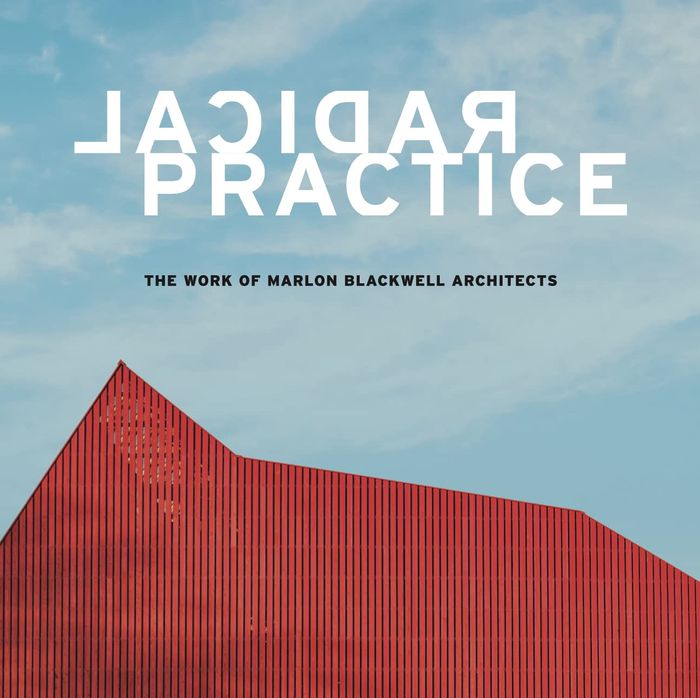
''Radical practice'' celebrates the extraordinary, award-winning designs of Marlon Blackwell Architects, an Arkansas-based firm with a focus on public and civic projects that are located outside of the established centers of architectural culture. The distinct and original work of Marlon Blackwell Architects has produced iconic and award-winning designs across building types, scales, and budgets. Located in Arkansas, the firm merges the universal language of architecture and the particulars of place, a process that has resulted in a distinguished body of work, from schools to parks and beyond. Celebrating thirty years of practice by the 2020 AIA Gold Medal-winning architect Marlon Blackwell, this survey of more than a dozen buildings pairs detailed drawings and the vivid photographs of renowned photographer Timothy Hursley with essays by leading designers, planners, and artists. Contributors include Tod Williams and Billie Tsien, architects of the Obama Presidential Center; Maurice Cox, Chicago's city planning director; Pritzker Prize-winning architect Thom Mayne, James Corner, landscape architect of the High Line, and environmental artist Mary Miss among many others—all of whom attest to Blackwell's reputation as a leading voice of his generation.
Radical practice: The work of Marlon Blackwell Architects
Actions:
Price:
$115.00
(available to order)
Summary:
''Radical practice'' celebrates the extraordinary, award-winning designs of Marlon Blackwell Architects, an Arkansas-based firm with a focus on public and civic projects that are located outside of the established centers of architectural culture. The distinct and original work of Marlon Blackwell Architects has produced iconic and award-winning designs across building types, scales, and budgets. Located in Arkansas, the firm merges the universal language of architecture and the particulars of place, a process that has resulted in a distinguished body of work, from schools to parks and beyond. Celebrating thirty years of practice by the 2020 AIA Gold Medal-winning architect Marlon Blackwell, this survey of more than a dozen buildings pairs detailed drawings and the vivid photographs of renowned photographer Timothy Hursley with essays by leading designers, planners, and artists. Contributors include Tod Williams and Billie Tsien, architects of the Obama Presidential Center; Maurice Cox, Chicago's city planning director; Pritzker Prize-winning architect Thom Mayne, James Corner, landscape architect of the High Line, and environmental artist Mary Miss among many others—all of whom attest to Blackwell's reputation as a leading voice of his generation.
Form:
books
books
Publication:
June 2022
June 2022
Subject:
Architecture Monographs
Architecture Monographs
Form:
books
books
Title:
Book of ruins
Book of ruins
Actions:
Price:
$80.99
(available to order)
Summary:
''Book of ruins'' offers a survey – not encyclopedic, but substantial – of leading moments when the fact and idea of ruins were taken up by writers, travellers and artists: painters, film makers, landscape architects, and architects. Gathering together short texts and extracts that describe and reflect on ruins, dating from remote antiquity (Scipio shedding tears when(...)
$80.99
(available to order)
Summary:
''Book of ruins'' offers a survey – not encyclopedic, but substantial – of leading moments when the fact and idea of ruins were taken up by writers, travellers and artists: painters, film makers, landscape architects, and architects. Gathering together short texts and extracts that describe and reflect on ruins, dating from remote antiquity (Scipio shedding tears when(...)
Subject:
Architectural Theory
Architectural Theory
Publication:
September 2022
September 2022
Title:
Book of ruins
Actions:
Price:
$80.99
(available to order)
Summary:
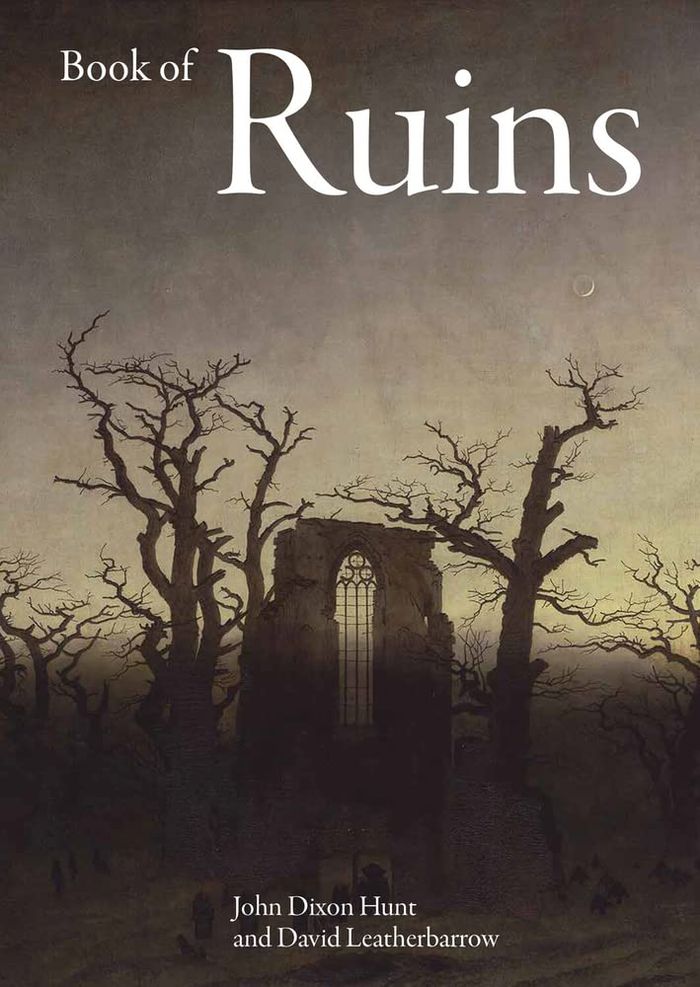
''Book of ruins'' offers a survey – not encyclopedic, but substantial – of leading moments when the fact and idea of ruins were taken up by writers, travellers and artists: painters, film makers, landscape architects, and architects. Gathering together short texts and extracts that describe and reflect on ruins, dating from remote antiquity (Scipio shedding tears when viewing the destruction of Carthage) to present times (the ruins of a modern city, portrayed in the film ''Requiem for Detroit''), it provides a perspective upon what the past has meant to different cultures at different times. Following an introductory essay, the book includes 70 entries, chronologically ordered, each including an indicative image (or two), an introductory commentary by the authors, and the text itself. The texts come from designers (from Bernini through Piranesi to David Chipperfield) as well as other artists (John Piper), and from literary figures (Goethe, Wordsworth, Byron and Shelley, Hugo, and Hardy). It concludes by discussing what we do with ruins by way of preservation, conservation, adaptive reuse and appropriation, and contemporary loss and ruin, as illustrated by 9/11 and the Neues Museum and highlighting the continuing relevance of the ruin.
Book of ruins
Actions:
Price:
$80.99
(available to order)
Summary:
''Book of ruins'' offers a survey – not encyclopedic, but substantial – of leading moments when the fact and idea of ruins were taken up by writers, travellers and artists: painters, film makers, landscape architects, and architects. Gathering together short texts and extracts that describe and reflect on ruins, dating from remote antiquity (Scipio shedding tears when viewing the destruction of Carthage) to present times (the ruins of a modern city, portrayed in the film ''Requiem for Detroit''), it provides a perspective upon what the past has meant to different cultures at different times. Following an introductory essay, the book includes 70 entries, chronologically ordered, each including an indicative image (or two), an introductory commentary by the authors, and the text itself. The texts come from designers (from Bernini through Piranesi to David Chipperfield) as well as other artists (John Piper), and from literary figures (Goethe, Wordsworth, Byron and Shelley, Hugo, and Hardy). It concludes by discussing what we do with ruins by way of preservation, conservation, adaptive reuse and appropriation, and contemporary loss and ruin, as illustrated by 9/11 and the Neues Museum and highlighting the continuing relevance of the ruin.
Form:
books
books
Publication:
September 2022
September 2022
Subject:
Architectural Theory
Architectural Theory
Form:
books
books
Actions:
Price:
$23.95
(available to order)
Summary:
The term "guerrilla" may bring to mind a small band of armed soldiers, moving in the dead of night on a stealth mission. In the case of guerrilla gardening, the soldiers are planters, the weapons are shovels, and the mission is to transform an abandoned lot into a thing of beauty. Once an environmentalist's nonviolent direct action for inner-city renewal, this approach to(...)
$23.95
(available to order)
Summary:
The term "guerrilla" may bring to mind a small band of armed soldiers, moving in the dead of night on a stealth mission. In the case of guerrilla gardening, the soldiers are planters, the weapons are shovels, and the mission is to transform an abandoned lot into a thing of beauty. Once an environmentalist's nonviolent direct action for inner-city renewal, this approach to(...)
Title:
Guerrilla gardening : a manualfesto
Actions:
Price:
$23.95
(available to order)
Summary:
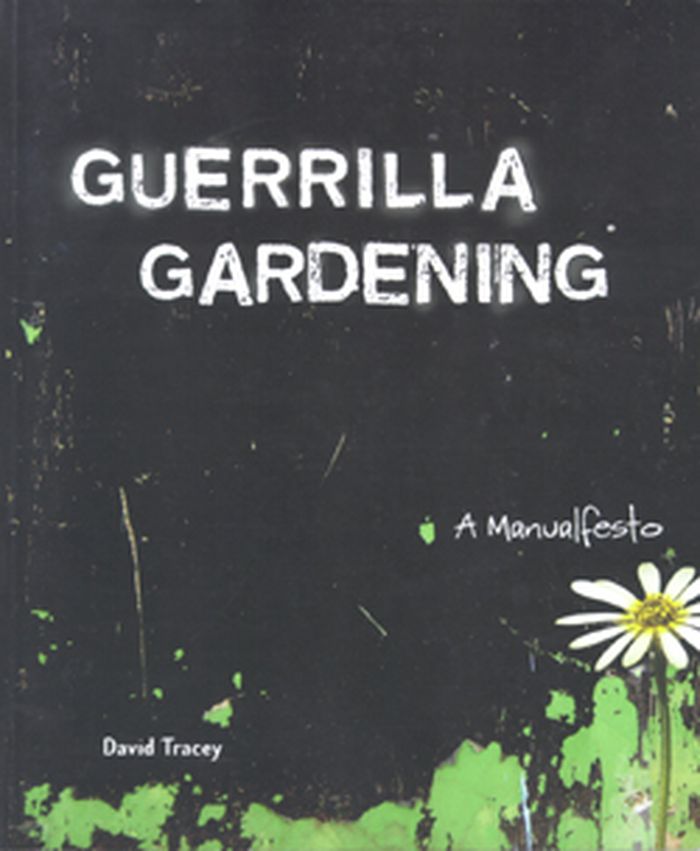
The term "guerrilla" may bring to mind a small band of armed soldiers, moving in the dead of night on a stealth mission. In the case of guerrilla gardening, the soldiers are planters, the weapons are shovels, and the mission is to transform an abandoned lot into a thing of beauty. Once an environmentalist's nonviolent direct action for inner-city renewal, this approach to urban beautification is spreading to all types of people in cities around the world. These modern-day Johnny Appleseeds perform random acts of gardening, often without the property owner's prior knowledge or permission. Typical targets are vacant lots, railway land, underused public squares, and back alleys. The concept is simple, whimsical and has the cheeky appeal of being a not-quite-legal call to action. Dig in some soil, plant a few seeds, or mend a sagging fence - one good deed inspiring another, with win-win results all around.
Guerrilla gardening : a manualfesto
Actions:
Price:
$23.95
(available to order)
Summary:
The term "guerrilla" may bring to mind a small band of armed soldiers, moving in the dead of night on a stealth mission. In the case of guerrilla gardening, the soldiers are planters, the weapons are shovels, and the mission is to transform an abandoned lot into a thing of beauty. Once an environmentalist's nonviolent direct action for inner-city renewal, this approach to urban beautification is spreading to all types of people in cities around the world. These modern-day Johnny Appleseeds perform random acts of gardening, often without the property owner's prior knowledge or permission. Typical targets are vacant lots, railway land, underused public squares, and back alleys. The concept is simple, whimsical and has the cheeky appeal of being a not-quite-legal call to action. Dig in some soil, plant a few seeds, or mend a sagging fence - one good deed inspiring another, with win-win results all around.
Form:
books
books
Publication:
April 2007, Gabriola Island
April 2007, Gabriola Island
Subject:
Urban Landscapes
Urban Landscapes
Form:
books
books
Title:
Inventing American modernism : Joseph Hudnut, Walter Gropius, and the Bauhaus legacy at Harvard
Inventing American modernism : Joseph Hudnut, Walter Gropius, and the Bauhaus legacy at Harvard
Actions:
Price:
$50.00
(available to order)
Summary:
From the late 1930s to the early 1950s, the Harvard Graduate School of Design played a crucial role in shaping a new modern architecture and the modern city. Architects, planners, teachers, and students from all over the world looked to the new GSD, with its celebrated faculty and curriculum, for the path to modern design. While the school’s significance is widely(...)
$50.00
(available to order)
Summary:
From the late 1930s to the early 1950s, the Harvard Graduate School of Design played a crucial role in shaping a new modern architecture and the modern city. Architects, planners, teachers, and students from all over the world looked to the new GSD, with its celebrated faculty and curriculum, for the path to modern design. While the school’s significance is widely(...)
Subject:
Architecture since 1900, Europe
Architecture since 1900, Europe
Publication:
April 2007, Charlottesville, London
April 2007, Charlottesville, London
Title:
Inventing American modernism : Joseph Hudnut, Walter Gropius, and the Bauhaus legacy at Harvard
Actions:
Price:
$50.00
(available to order)
Summary:
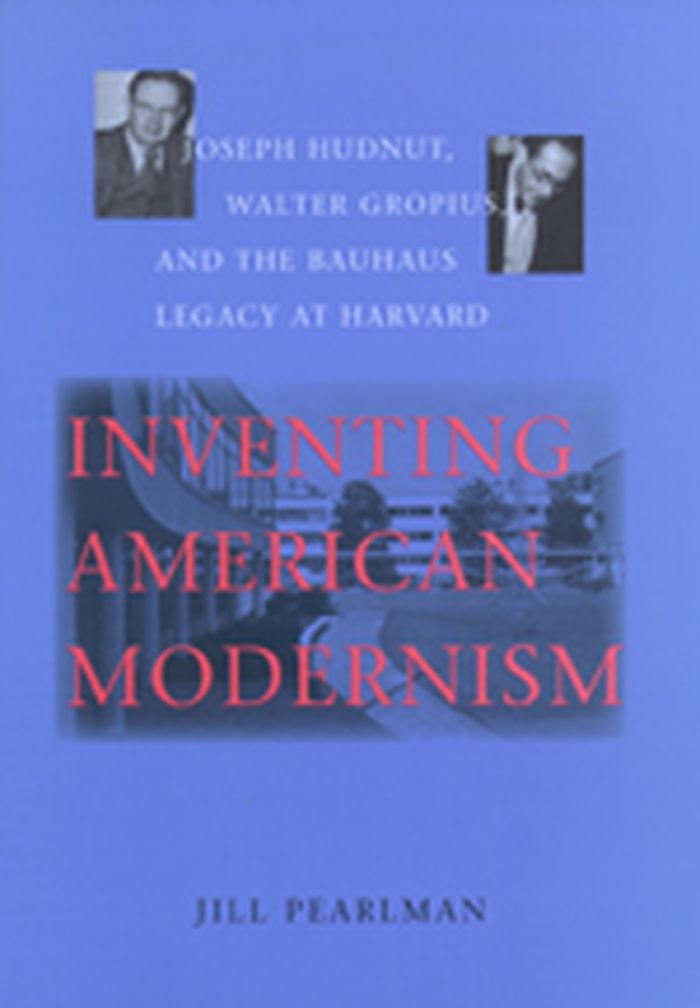
From the late 1930s to the early 1950s, the Harvard Graduate School of Design played a crucial role in shaping a new modern architecture and the modern city. Architects, planners, teachers, and students from all over the world looked to the new GSD, with its celebrated faculty and curriculum, for the path to modern design. While the school’s significance is widely recognized by architectural historians, most studies have concentrated on the Bauhaus founder Walter Gropius and his transformation of Harvard's old Beaux-Arts School of Architecture into a "Harvard-Bauhaus," a radically new school with a single outlook. In "Inventing American modernism", Jill Pearlman argues that Gropius did not effect these changes alone and, further, that the GSD was not merely an offshoot of the Bauhaus. She offers a crucial missing piece to the story — and to the history of modern architecture — by focusing on Joseph Hudnut, the school’s dean and founder. After heading the architecture school at the University of Virginia, and then at Columbia University, Hudnut created the GSD at Harvard in 1936, before Gropius was appointed, and he headed the school until 1953, the year after Gropius resigned. From the beginning, Hudnut gave the GSD its modern pedagogical direction, and he continued to oversee its curriculum and staffing for the next seventeen years. Although originally an admirer of Gropius's work and theories, Hudnut came to clash with him over the control of the direction of modern architecture and planning in the United States Gropius won the battle, but Pearlman shows that, had the GSD followed the path Hudnut wanted, modern architecture and the modern city might well have been different. In his role as public intellectual, Hudnut wielded an influence that reached outside the university, distinguished by his encouraging people to participate in the architectural and urbanistic matters that affected their lives. A story involving European modernists such as Marcel Breuer, Martin Wagner, and Christopher Tunnard, as well as a number of other architects, city planners, and landscape architects, this book is more than the study of a single school; it is a look at the origins of modernism at a defining moment in the history of twentieth-century architecture.
Inventing American modernism : Joseph Hudnut, Walter Gropius, and the Bauhaus legacy at Harvard
Actions:
Price:
$50.00
(available to order)
Summary:
From the late 1930s to the early 1950s, the Harvard Graduate School of Design played a crucial role in shaping a new modern architecture and the modern city. Architects, planners, teachers, and students from all over the world looked to the new GSD, with its celebrated faculty and curriculum, for the path to modern design. While the school’s significance is widely recognized by architectural historians, most studies have concentrated on the Bauhaus founder Walter Gropius and his transformation of Harvard's old Beaux-Arts School of Architecture into a "Harvard-Bauhaus," a radically new school with a single outlook. In "Inventing American modernism", Jill Pearlman argues that Gropius did not effect these changes alone and, further, that the GSD was not merely an offshoot of the Bauhaus. She offers a crucial missing piece to the story — and to the history of modern architecture — by focusing on Joseph Hudnut, the school’s dean and founder. After heading the architecture school at the University of Virginia, and then at Columbia University, Hudnut created the GSD at Harvard in 1936, before Gropius was appointed, and he headed the school until 1953, the year after Gropius resigned. From the beginning, Hudnut gave the GSD its modern pedagogical direction, and he continued to oversee its curriculum and staffing for the next seventeen years. Although originally an admirer of Gropius's work and theories, Hudnut came to clash with him over the control of the direction of modern architecture and planning in the United States Gropius won the battle, but Pearlman shows that, had the GSD followed the path Hudnut wanted, modern architecture and the modern city might well have been different. In his role as public intellectual, Hudnut wielded an influence that reached outside the university, distinguished by his encouraging people to participate in the architectural and urbanistic matters that affected their lives. A story involving European modernists such as Marcel Breuer, Martin Wagner, and Christopher Tunnard, as well as a number of other architects, city planners, and landscape architects, this book is more than the study of a single school; it is a look at the origins of modernism at a defining moment in the history of twentieth-century architecture.
Form:
books
books
Publication:
April 2007, Charlottesville, London
April 2007, Charlottesville, London
Subject:
Architecture since 1900, Europe
Architecture since 1900, Europe
Form:
books
books
Actions:
Price:
$52.50
(available to order)
Summary:
This book is not about war, nor is it a history of war. Avoiding the shock and awe of wartime images, it explores the contemporary spatial configurations of power camouflaged in the infrastructures, environments, and scales of military operations. Instead of wartime highs, this book starts with drawdown lows, when demobilization and decommissioning morph into realignment(...)
$52.50
(available to order)
Summary:
This book is not about war, nor is it a history of war. Avoiding the shock and awe of wartime images, it explores the contemporary spatial configurations of power camouflaged in the infrastructures, environments, and scales of military operations. Instead of wartime highs, this book starts with drawdown lows, when demobilization and decommissioning morph into realignment(...)
Title:
Ecologies of Power: countermapping the logistical landscapes and military geographies of the US Department of Defense
Actions:
Price:
$52.50
(available to order)
Summary:
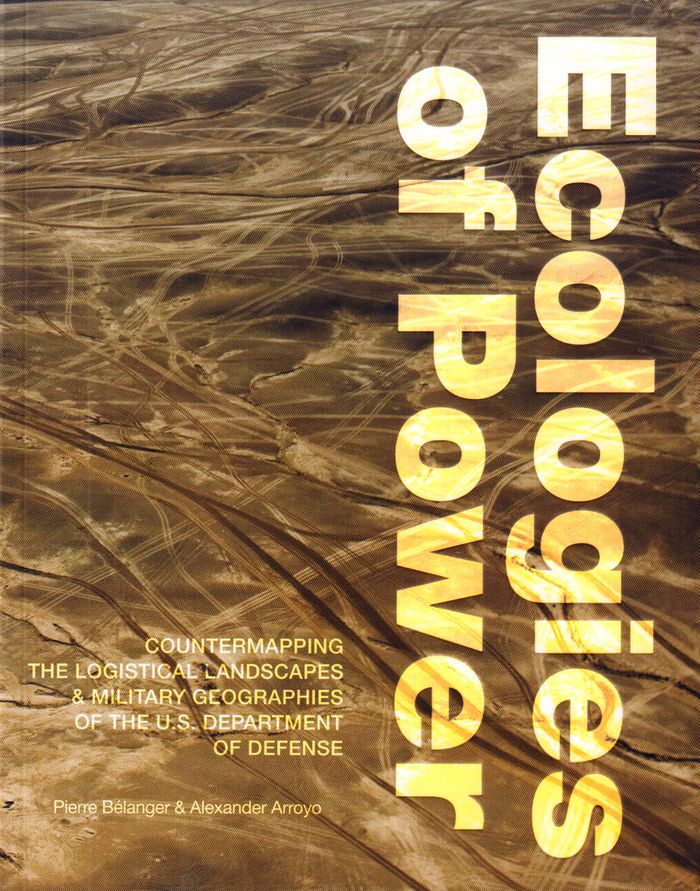
This book is not about war, nor is it a history of war. Avoiding the shock and awe of wartime images, it explores the contemporary spatial configurations of power camouflaged in the infrastructures, environments, and scales of military operations. Instead of wartime highs, this book starts with drawdown lows, when demobilization and decommissioning morph into realignment and prepositioning. It is in this transitional milieu that the full material magnitudes and geographic entanglements of contemporary militarism are laid bare. Through this perpetual cycle of build up and breakdown, the U.S. Department of Defense—the single largest developer, landowner, equipment contractor, and energy consumer in the world—has engineered a planetary assemblage of “operational environments” in which militarized, demilitarized, and non-militarized landscapes are increasingly inextricable. In a series of critical cartographic essays, Pierre Bélanger and Alexander Arroyo trace this footprint far beyond the battlefield, countermapping the geographies of U.S. militarism across five of the most important and embattled operational environments: the ocean, the atmosphere, the highway, the city, and the desert. From the Indian Ocean atoll of Diego Garcia to the defense-contractor archipelago around Washington, D.C.; from the A01 Highway circling Afghanistan’s high-altitude steppe to surveillance satellites pinging the planet from low-earth orbit; and from the vast cold chain conveying military perishables worldwide to the global constellation of military dumps, sinks, and scrapyards, the book unearths the logistical infrastructures and residual landscapes that render strategy spatial, militarism material, and power operational. In so doing, Bélanger and Arroyo reveal unseen ecologies of power at work in the making and unmaking of environments—operational, built, and otherwise—to come.
Ecologies of Power: countermapping the logistical landscapes and military geographies of the US Department of Defense
Actions:
Price:
$52.50
(available to order)
Summary:
This book is not about war, nor is it a history of war. Avoiding the shock and awe of wartime images, it explores the contemporary spatial configurations of power camouflaged in the infrastructures, environments, and scales of military operations. Instead of wartime highs, this book starts with drawdown lows, when demobilization and decommissioning morph into realignment and prepositioning. It is in this transitional milieu that the full material magnitudes and geographic entanglements of contemporary militarism are laid bare. Through this perpetual cycle of build up and breakdown, the U.S. Department of Defense—the single largest developer, landowner, equipment contractor, and energy consumer in the world—has engineered a planetary assemblage of “operational environments” in which militarized, demilitarized, and non-militarized landscapes are increasingly inextricable. In a series of critical cartographic essays, Pierre Bélanger and Alexander Arroyo trace this footprint far beyond the battlefield, countermapping the geographies of U.S. militarism across five of the most important and embattled operational environments: the ocean, the atmosphere, the highway, the city, and the desert. From the Indian Ocean atoll of Diego Garcia to the defense-contractor archipelago around Washington, D.C.; from the A01 Highway circling Afghanistan’s high-altitude steppe to surveillance satellites pinging the planet from low-earth orbit; and from the vast cold chain conveying military perishables worldwide to the global constellation of military dumps, sinks, and scrapyards, the book unearths the logistical infrastructures and residual landscapes that render strategy spatial, militarism material, and power operational. In so doing, Bélanger and Arroyo reveal unseen ecologies of power at work in the making and unmaking of environments—operational, built, and otherwise—to come.
Form:
books
books
Publication:
October 2016
October 2016
Subject:
Architectural Theory
Architectural Theory
Form:
books
books
Price:
$66.00
(available to order)
Summary:
''Lost Days, Endless Nights'' tells a history from below—an account of the lives of the forgotten and dispossessed of Los Angeles: the unemployed, the precariously employed, the evicted, the alienated, the unhoused, the anxious, the exhausted. Through an analysis of abandoned archival works, experimental films, and other projects, Andrew Witt offers an expansive account(...)
$66.00
(available to order)
Summary:
''Lost Days, Endless Nights'' tells a history from below—an account of the lives of the forgotten and dispossessed of Los Angeles: the unemployed, the precariously employed, the evicted, the alienated, the unhoused, the anxious, the exhausted. Through an analysis of abandoned archival works, experimental films, and other projects, Andrew Witt offers an expansive account(...)
Title:
Lost days, endless nights: Photography and film from Los Angeles
Actions:
Price:
$66.00
(available to order)
Summary:
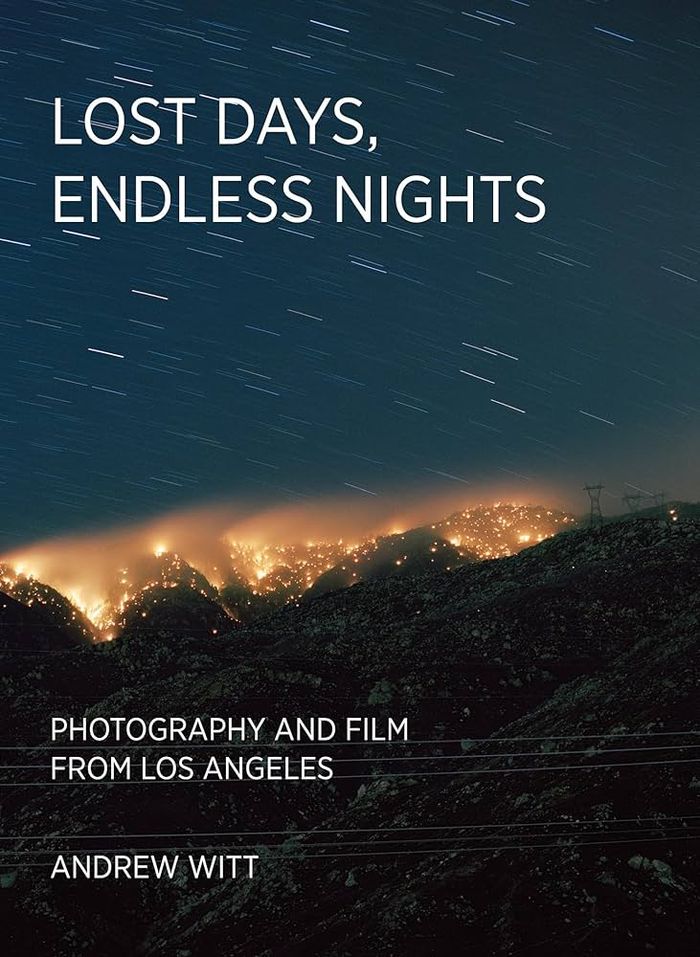
''Lost Days, Endless Nights'' tells a history from below—an account of the lives of the forgotten and dispossessed of Los Angeles: the unemployed, the precariously employed, the evicted, the alienated, the unhoused, the anxious, the exhausted. Through an analysis of abandoned archival works, experimental films, and other projects, Andrew Witt offers an expansive account of the artists who have lived or worked in Los Angeles, delving into the region's history and geography, highlighting its racial, gender, and class conflicts. Presented as a series of nine case studies, Witt explores how artists as diverse as Agnès Varda, Dana Lixenberg, Allan Sekula, Catherine Opie, John Divola, Gregory Halpern, Paul Sepuya, and Guadalupe Rosales have reimagined and reshaped our understanding of contemporary Los Angeles. The book features portraits of those who struggle and attempt to get by in the city: dock workers, students, bus riders, petty criminals, office workers, immigrants, queer and trans activists. Set against the landscape of economic turmoil and environmental crises that shadowed the 1970s, Witt highlights the urgent need for a historical perspective of cultural retrieval and counternarrative. Extending into the present, ''Lost Days, Endless Nights'' advocates for an approach that actively embraces the works and projects that have been overlooked and evicted from the historical imaginary
Lost days, endless nights: Photography and film from Los Angeles
Actions:
Price:
$66.00
(available to order)
Summary:
''Lost Days, Endless Nights'' tells a history from below—an account of the lives of the forgotten and dispossessed of Los Angeles: the unemployed, the precariously employed, the evicted, the alienated, the unhoused, the anxious, the exhausted. Through an analysis of abandoned archival works, experimental films, and other projects, Andrew Witt offers an expansive account of the artists who have lived or worked in Los Angeles, delving into the region's history and geography, highlighting its racial, gender, and class conflicts. Presented as a series of nine case studies, Witt explores how artists as diverse as Agnès Varda, Dana Lixenberg, Allan Sekula, Catherine Opie, John Divola, Gregory Halpern, Paul Sepuya, and Guadalupe Rosales have reimagined and reshaped our understanding of contemporary Los Angeles. The book features portraits of those who struggle and attempt to get by in the city: dock workers, students, bus riders, petty criminals, office workers, immigrants, queer and trans activists. Set against the landscape of economic turmoil and environmental crises that shadowed the 1970s, Witt highlights the urgent need for a historical perspective of cultural retrieval and counternarrative. Extending into the present, ''Lost Days, Endless Nights'' advocates for an approach that actively embraces the works and projects that have been overlooked and evicted from the historical imaginary
Form:
books
books
Publication:
December 2024
December 2024
Subject:
Architecture and Film, Set Design
Architecture and Film, Set Design
Form:
books
books
Actions:
Price:
$44.95
(available to order)
Summary:
"Encounter educational modernism" productively revisits the University of Lethbridge, Alberta, an iconic campus from the late 1960s by Canadian architect Arthur Erickson. The university is recognized for its architectural vision, its linear relationship with the spectacular landscape, and its dynamic spatial imagination of education as an expansive encounter. Designing(...)
$44.95
(available to order)
Summary:
"Encounter educational modernism" productively revisits the University of Lethbridge, Alberta, an iconic campus from the late 1960s by Canadian architect Arthur Erickson. The university is recognized for its architectural vision, its linear relationship with the spectacular landscape, and its dynamic spatial imagination of education as an expansive encounter. Designing(...)
Title:
Encounter educational modernism: Arthur Erickson
Actions:
Price:
$44.95
(available to order)
Summary:
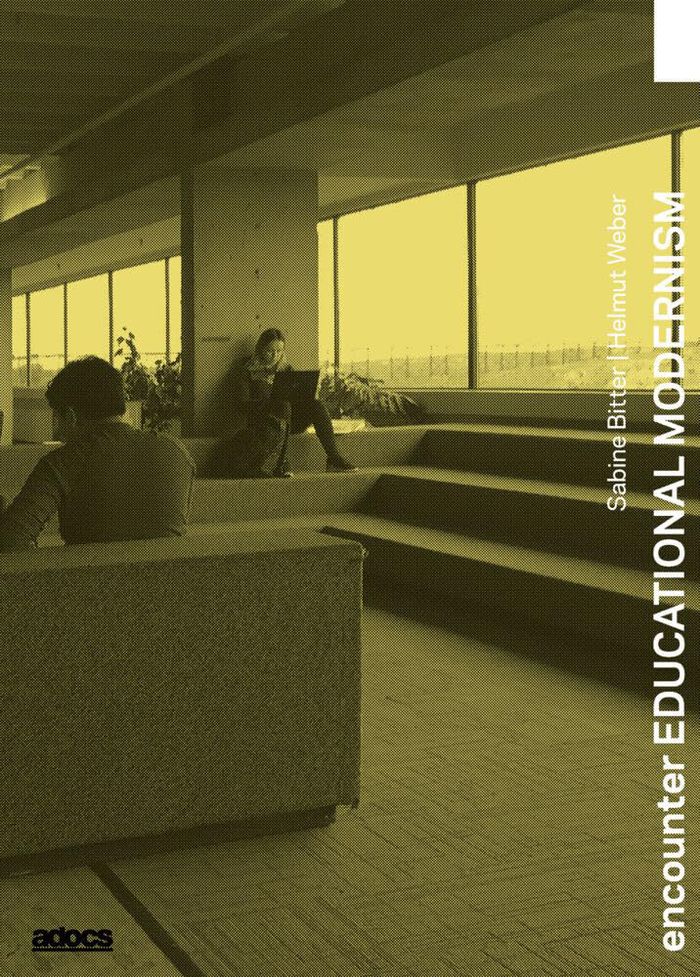
"Encounter educational modernism" productively revisits the University of Lethbridge, Alberta, an iconic campus from the late 1960s by Canadian architect Arthur Erickson. The university is recognized for its architectural vision, its linear relationship with the spectacular landscape, and its dynamic spatial imagination of education as an expansive encounter. Designing the interdisciplinary university as a city within one building, including student housing, the campus stages public spaces of encounter to activate the concept of the student as a global citizen in a new world order. This sixties humanist imagination of the student shapes the spatial program of the architecture, a program which clashes with the current neoliberal view of the student as entrepreneur. The third book in Bitter and Weber's series on architecture and the educational complex, Encounter Educational Modernism is an artistic research project on the architecture of the University of Lethbridge and on modernist imaginations of education. It includes photographs and an introduction from the artists and contributions from University of Lethbridge professor Victoria Baster and poet and educator Jeff Derksen. The series Educational Modernism is published in cooperation with Camera Austria and will be continued with a focus on The Workers University Zagreb by Yugoslavian architects Radovan Niksic and Ninoslav Kucan.
Encounter educational modernism: Arthur Erickson
Actions:
Price:
$44.95
(available to order)
Summary:
"Encounter educational modernism" productively revisits the University of Lethbridge, Alberta, an iconic campus from the late 1960s by Canadian architect Arthur Erickson. The university is recognized for its architectural vision, its linear relationship with the spectacular landscape, and its dynamic spatial imagination of education as an expansive encounter. Designing the interdisciplinary university as a city within one building, including student housing, the campus stages public spaces of encounter to activate the concept of the student as a global citizen in a new world order. This sixties humanist imagination of the student shapes the spatial program of the architecture, a program which clashes with the current neoliberal view of the student as entrepreneur. The third book in Bitter and Weber's series on architecture and the educational complex, Encounter Educational Modernism is an artistic research project on the architecture of the University of Lethbridge and on modernist imaginations of education. It includes photographs and an introduction from the artists and contributions from University of Lethbridge professor Victoria Baster and poet and educator Jeff Derksen. The series Educational Modernism is published in cooperation with Camera Austria and will be continued with a focus on The Workers University Zagreb by Yugoslavian architects Radovan Niksic and Ninoslav Kucan.
Form:
books
books
Publication:
October 2024
October 2024
Subject:
Canadian Architects
Canadian Architects


