


3071 Results
Form:
books
books
Actions:
Holdings:
Description:
xv, 285 pages : illustrations ; 24 cm
Description:
xv, 285 pages : illustrations ; 24 cm
Author:
Subject:
Publication:
New York : Knopf, 1993.
New York : Knopf, 1993.
Title:
New York, New York : how the apartment house transformed the life of the city (1869-1930) / Elizabeth Hawes.
Actions:
Holdings:
Description:
xv, 285 pages : illustrations ; 24 cm
New York, New York : how the apartment house transformed the life of the city (1869-1930) / Elizabeth Hawes.
Actions:
Holdings:
Description:
xv, 285 pages : illustrations ; 24 cm
Form:
books
books
Publication:
New York : Knopf, 1993.
New York : Knopf, 1993.
Author:
Subject:
Form:
video
video
Actions:
Description:
1 online resource (1 video file (27 minutes)) : sound, color
Author:
Subject:
Publication:
London, England : Pidgeon Digital, 1987.
London, England : Pidgeon Digital, 1987.
Title:
Intelligent Buildings / [presented by] Mike Davies (Rogers Stirk Harbour + Partners).
Actions:
Description:
1 online resource (1 video file (27 minutes)) : sound, color
Intelligent Buildings / [presented by] Mike Davies (Rogers Stirk Harbour + Partners).
Actions:
Description:
1 online resource (1 video file (27 minutes)) : sound, color
Form:
video
video
Publication:
London, England : Pidgeon Digital, 1987.
London, England : Pidgeon Digital, 1987.
Author:
Subject:
Form:
books
books
Holdings:
Description:
223 pages : illustrations ; 29 cm
Description:
223 pages : illustrations ; 29 cm
Author:
Subject:
Publication:
New York : Routledge, Taylor & Francis Group, 2013., ©2013
New York : Routledge, Taylor & Francis Group, 2013., ©2013
Title:
Material strategies in digital fabrication / Christopher Beorkrem.
Actions:
Holdings:
Description:
223 pages : illustrations ; 29 cm
Material strategies in digital fabrication / Christopher Beorkrem.
Actions:
Holdings:
Description:
223 pages : illustrations ; 29 cm
Form:
books
books
Publication:
New York : Routledge, Taylor & Francis Group, 2013., ©2013
New York : Routledge, Taylor & Francis Group, 2013., ©2013
Author:
Subject:
Form:
books
books
Holdings:
Description:
296 pages : illustrations ; 24 cm.
Description:
296 pages : illustrations ; 24 cm.
Author:
Subject:
Publication:
Aldershot : Ashgate, 2006.
Aldershot : Ashgate, 2006.
Title:
Total landscape, theme parks, public space / Miodrag Mitrasinovic.
Actions:
Holdings:
Description:
296 pages : illustrations ; 24 cm.
Total landscape, theme parks, public space / Miodrag Mitrasinovic.
Actions:
Holdings:
Description:
296 pages : illustrations ; 24 cm.
Form:
books
books
Publication:
Aldershot : Ashgate, 2006.
Aldershot : Ashgate, 2006.
Author:
Subject:
Form:
books
books
Actions:
Holdings:
Description:
191 pages : illustrations (chiefly color), plans ; 29 cm
Description:
191 pages : illustrations (chiefly color), plans ; 29 cm
Author:
Subject:
Publication:
[Salenstein, Switzerland] : Braun Publishing, 2021.
[Salenstein, Switzerland] : Braun Publishing, 2021.
Title:
Fascination concrete / Chris van Uffelen.
Actions:
Holdings:
Description:
191 pages : illustrations (chiefly color), plans ; 29 cm
Fascination concrete / Chris van Uffelen.
Actions:
Holdings:
Description:
191 pages : illustrations (chiefly color), plans ; 29 cm
Form:
books
books
Publication:
[Salenstein, Switzerland] : Braun Publishing, 2021.
[Salenstein, Switzerland] : Braun Publishing, 2021.
Author:
Subject:
Form:
books
books
Price:
$39.95
(available to order)
Summary:
When the property to the south of Rudolph M. Schindler’s historic house and studio on Kings Road in Los Angeles was sold to the developer of a 3-story, 18-unit condominium complex, a question urgently emerged: How does one build next to the Schindler House? To incite the exchange of ideas on the Schindler House problem, the MAK Center at the Schindler House initiated an(...)
$39.95
(available to order)
Summary:
When the property to the south of Rudolph M. Schindler’s historic house and studio on Kings Road in Los Angeles was sold to the developer of a 3-story, 18-unit condominium complex, a question urgently emerged: How does one build next to the Schindler House? To incite the exchange of ideas on the Schindler House problem, the MAK Center at the Schindler House initiated an(...)
Subject:
Architecture since 1900, Europe
Architecture since 1900, Europe
Publication:
March 2004, Ostfildern-Ruit
March 2004, Ostfildern-Ruit
Title:
Architectural resistance : contemporary architects face Schindler today
Actions:
Price:
$39.95
(available to order)
Summary:
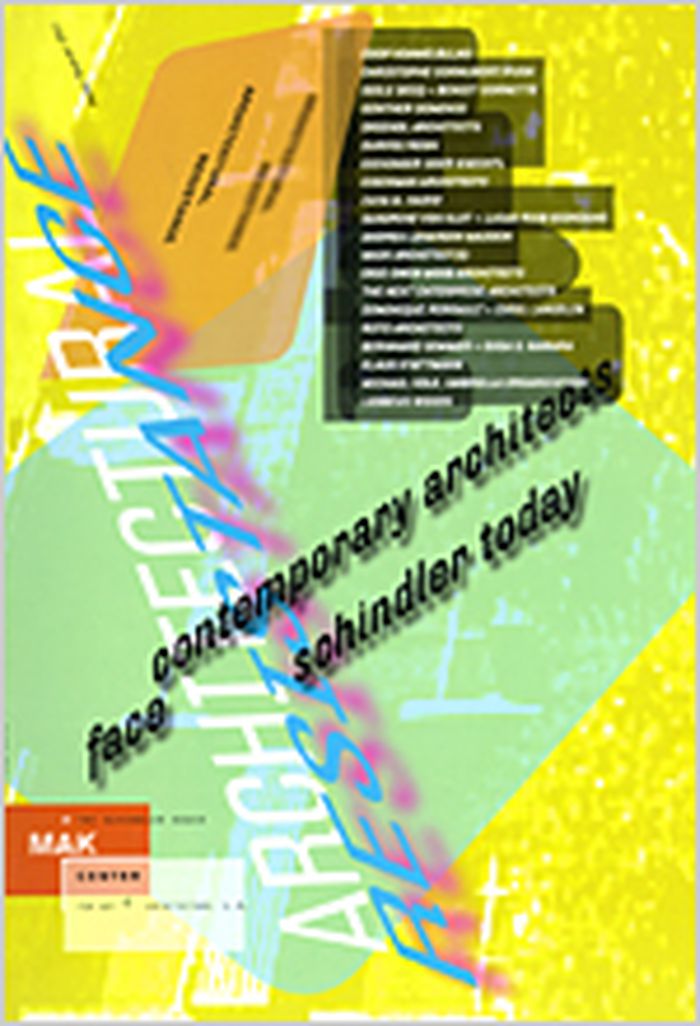
When the property to the south of Rudolph M. Schindler’s historic house and studio on Kings Road in Los Angeles was sold to the developer of a 3-story, 18-unit condominium complex, a question urgently emerged: How does one build next to the Schindler House? To incite the exchange of ideas on the Schindler House problem, the MAK Center at the Schindler House initiated an architectural invitational in which architects were asked to envision a companion to Schindler’s masterwork. Juried by a distinguished international panel, entries were solicited from a roster of both established and young architects. Proposals were contributed by architect teams COOP HIMMEL(B)LAU, Vienna, Christophe Cornubert, PUSH, Los Angeles, Eichinger oder Knechtl, Vienna, Peter Eisenman, New York, Andrea Lenardin-Madden, Los Angeles, Durfee/Regn, Los Angeles, Günther Domenig, Graz, Eric Owen Moss, Los Angeles, Dominique Perrault, Paris, Odile Decq + Benoît Cornette, Paris, Zaha Hadid, London, Georg Driendl, Vienna, Michael Rotondi, Los Angeles, Klaus Stattmann, Vienna, Sandrine von Klot, Vienna, Lebbeus Woods, New York, Bernhard Sommer, Vienna, Mark Mack, Los Angeles, Umbrella Organization, Los Angeles, and The Next Enterprise, Vienna. "Architectural Resistance: Contemporary Architects Face Schindler Today" presents each of their 20 proposals in the context of a discussion about architecture, urban change, site, and historic preservation.
Architectural resistance : contemporary architects face Schindler today
Actions:
Price:
$39.95
(available to order)
Summary:
When the property to the south of Rudolph M. Schindler’s historic house and studio on Kings Road in Los Angeles was sold to the developer of a 3-story, 18-unit condominium complex, a question urgently emerged: How does one build next to the Schindler House? To incite the exchange of ideas on the Schindler House problem, the MAK Center at the Schindler House initiated an architectural invitational in which architects were asked to envision a companion to Schindler’s masterwork. Juried by a distinguished international panel, entries were solicited from a roster of both established and young architects. Proposals were contributed by architect teams COOP HIMMEL(B)LAU, Vienna, Christophe Cornubert, PUSH, Los Angeles, Eichinger oder Knechtl, Vienna, Peter Eisenman, New York, Andrea Lenardin-Madden, Los Angeles, Durfee/Regn, Los Angeles, Günther Domenig, Graz, Eric Owen Moss, Los Angeles, Dominique Perrault, Paris, Odile Decq + Benoît Cornette, Paris, Zaha Hadid, London, Georg Driendl, Vienna, Michael Rotondi, Los Angeles, Klaus Stattmann, Vienna, Sandrine von Klot, Vienna, Lebbeus Woods, New York, Bernhard Sommer, Vienna, Mark Mack, Los Angeles, Umbrella Organization, Los Angeles, and The Next Enterprise, Vienna. "Architectural Resistance: Contemporary Architects Face Schindler Today" presents each of their 20 proposals in the context of a discussion about architecture, urban change, site, and historic preservation.
Form:
books
books
Publication:
March 2004, Ostfildern-Ruit
March 2004, Ostfildern-Ruit
Subject:
Architecture since 1900, Europe
Architecture since 1900, Europe
Form:
books
books

Actions:
Price:
$31.50
(available to order)
Summary:
Despite a modest revival in city living, Americans are spreading out more than ever—into "exurbs" and "boomburbs" miles from anywhere, in big houses in big subdivisions. We cling to the notion of safer neighborhoods and better schools, but what we get, argues Anthony Flint, is long commutes, crushing gas prices and higher taxes—and a landscape of strip malls and office(...)
$31.50
(available to order)
Summary:
Despite a modest revival in city living, Americans are spreading out more than ever—into "exurbs" and "boomburbs" miles from anywhere, in big houses in big subdivisions. We cling to the notion of safer neighborhoods and better schools, but what we get, argues Anthony Flint, is long commutes, crushing gas prices and higher taxes—and a landscape of strip malls and office(...)
Title:
This land : the battle over sprawl and the future of America
Actions:
Price:
$31.50
(available to order)
Summary:
Despite a modest revival in city living, Americans are spreading out more than ever—into "exurbs" and "boomburbs" miles from anywhere, in big houses in big subdivisions. We cling to the notion of safer neighborhoods and better schools, but what we get, argues Anthony Flint, is long commutes, crushing gas prices and higher taxes—and a landscape of strip malls and office parks badly in need of a makeover. "This land" tells the untold story of development in America—how the landscape is shaped by a furious clash of political, economic and cultural forces. It is the story of burgeoning anti-sprawl movement, a 1960s-style revolution of New Urbanism, smart growth, and green building. And it is the story of landowners fighting back on the basis of property rights, with free-market libertarians, homebuilders, road pavers, financial institutions, and even the lawn-care industry right alongside them. The subdivisions and extra-wide roadways are encroaching into the wetlands of Florida, ranchlands in Texas, and the desert outside Phoenix and Las Vegas. But with up to 120 million more people in the country by 2050, will the spread-out pattern cave in on itself? Could Americans embrace a new approach to development if it made sense for them?
This land : the battle over sprawl and the future of America
Actions:
Price:
$31.50
(available to order)
Summary:
Despite a modest revival in city living, Americans are spreading out more than ever—into "exurbs" and "boomburbs" miles from anywhere, in big houses in big subdivisions. We cling to the notion of safer neighborhoods and better schools, but what we get, argues Anthony Flint, is long commutes, crushing gas prices and higher taxes—and a landscape of strip malls and office parks badly in need of a makeover. "This land" tells the untold story of development in America—how the landscape is shaped by a furious clash of political, economic and cultural forces. It is the story of burgeoning anti-sprawl movement, a 1960s-style revolution of New Urbanism, smart growth, and green building. And it is the story of landowners fighting back on the basis of property rights, with free-market libertarians, homebuilders, road pavers, financial institutions, and even the lawn-care industry right alongside them. The subdivisions and extra-wide roadways are encroaching into the wetlands of Florida, ranchlands in Texas, and the desert outside Phoenix and Las Vegas. But with up to 120 million more people in the country by 2050, will the spread-out pattern cave in on itself? Could Americans embrace a new approach to development if it made sense for them?
Form:
books
books
Publication:
June 2006, Baltimore
June 2006, Baltimore
Subject:
Urban Theory
Urban Theory
Form:
books
books
Actions:
Price:
$16.00
(available to order)
Summary:
The German photographer Kerstin Flake has made an impact with her enigmatic pictures of bizarre configurations, taken with an analog large-format camera. In Replaces she has photographed installations in empty industrial premises at the Gründerzeithaus in Leipzig, which functions as her studio. The geography here is significant, as this part of the former East Germany is(...)
$16.00
(available to order)
Summary:
The German photographer Kerstin Flake has made an impact with her enigmatic pictures of bizarre configurations, taken with an analog large-format camera. In Replaces she has photographed installations in empty industrial premises at the Gründerzeithaus in Leipzig, which functions as her studio. The geography here is significant, as this part of the former East Germany is(...)
Title:
Angle 15°: Kerstin Flake, replaces
Actions:
Price:
$16.00
(available to order)
Summary:
The German photographer Kerstin Flake has made an impact with her enigmatic pictures of bizarre configurations, taken with an analog large-format camera. In Replaces she has photographed installations in empty industrial premises at the Gründerzeithaus in Leipzig, which functions as her studio. The geography here is significant, as this part of the former East Germany is rapidly changing. New capital is being generated as a result of hectic property speculation, and in parallel old industry has ground to a halt – its traditional rooting has been lost, and the present is in a state of flux. In Flake’s work the spaces have been emptied of their original function, and the normal physical rules of the game have been abandoned. The places emerge anew, now dominated by irrational compositional principles. Objects are animated like props on a stage. Worn-out window frames on edge and doors stand vertically in the room – the spatial elements stand like absurd exclamation marks that prevent both exit and entry. Furniture is stacked hysterically, with a crazed logic. Men in suits appear in the compositions as rigid horizontal objects, trousered legs create diagonal lines. As a pointed statement this publication is a poetic but also politically oriented investigation of displacements and alternative logic
Angle 15°: Kerstin Flake, replaces
Actions:
Price:
$16.00
(available to order)
Summary:
The German photographer Kerstin Flake has made an impact with her enigmatic pictures of bizarre configurations, taken with an analog large-format camera. In Replaces she has photographed installations in empty industrial premises at the Gründerzeithaus in Leipzig, which functions as her studio. The geography here is significant, as this part of the former East Germany is rapidly changing. New capital is being generated as a result of hectic property speculation, and in parallel old industry has ground to a halt – its traditional rooting has been lost, and the present is in a state of flux. In Flake’s work the spaces have been emptied of their original function, and the normal physical rules of the game have been abandoned. The places emerge anew, now dominated by irrational compositional principles. Objects are animated like props on a stage. Worn-out window frames on edge and doors stand vertically in the room – the spatial elements stand like absurd exclamation marks that prevent both exit and entry. Furniture is stacked hysterically, with a crazed logic. Men in suits appear in the compositions as rigid horizontal objects, trousered legs create diagonal lines. As a pointed statement this publication is a poetic but also politically oriented investigation of displacements and alternative logic
Form:
books
books
Publication:
October 2023
October 2023
Subject:
Photography monographs
Photography monographs
Form:
books
books
Price:
$69.95
(available to order)
Summary:
American cities entered a new phase when, beginning in the 1950s, artists and developers looked upon a decaying industrial zone in Lower Manhattan and saw, not blight, but opportunity: cheap rents, lax regulation, and wide open spaces. Thus, SoHo was born. From 1960 to 1980, residents transformed the industrial neighborhood into an artist district, creating the conditions(...)
$69.95
(available to order)
Summary:
American cities entered a new phase when, beginning in the 1950s, artists and developers looked upon a decaying industrial zone in Lower Manhattan and saw, not blight, but opportunity: cheap rents, lax regulation, and wide open spaces. Thus, SoHo was born. From 1960 to 1980, residents transformed the industrial neighborhood into an artist district, creating the conditions(...)
Title:
The lofts of SoHo: gentrification, art and industry in New York 1950-1980
Actions:
Price:
$69.95
(available to order)
Summary:
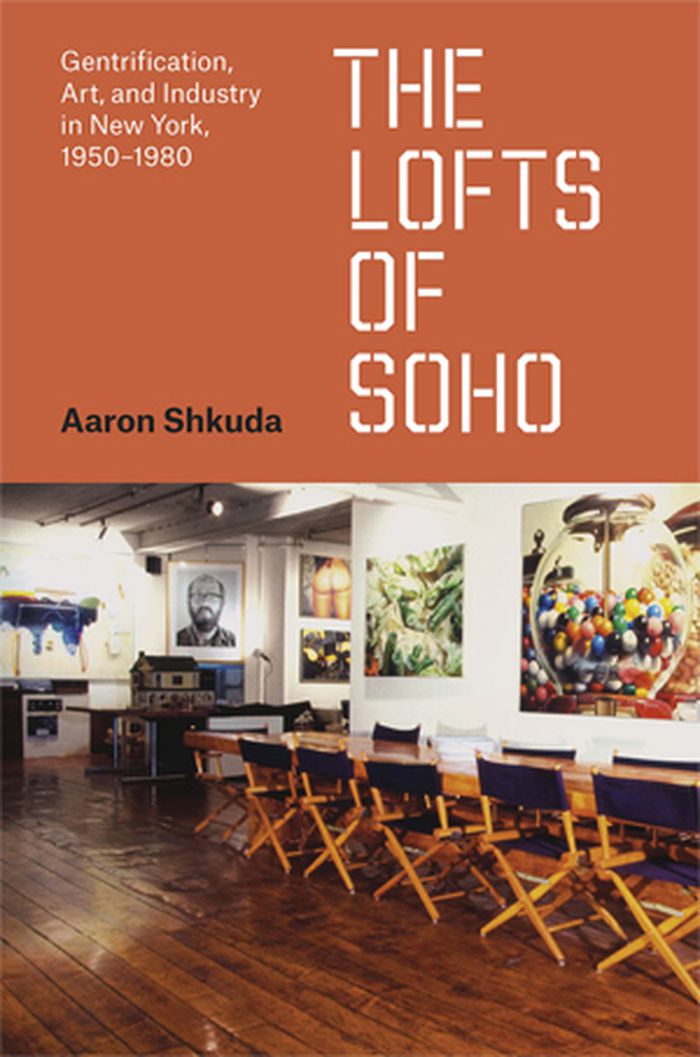
American cities entered a new phase when, beginning in the 1950s, artists and developers looked upon a decaying industrial zone in Lower Manhattan and saw, not blight, but opportunity: cheap rents, lax regulation, and wide open spaces. Thus, SoHo was born. From 1960 to 1980, residents transformed the industrial neighborhood into an artist district, creating the conditions under which it evolved into an upper-income, gentrified area. Introducing the idea—still potent in city planning today—that art could be harnessed to drive municipal prosperity, SoHo was the forerunner of gentrified districts in cities nationwide, spawning the notion of the creative class. In The Lofts of SoHo, Aaron Shkuda studies the transition of the district from industrial space to artists’ enclave to affluent residential area, focusing on the legacy of urban renewal in and around SoHo and the growth of artist-led redevelopment. Shkuda explores conflicts between residents and property owners and analyzes the city’s embrace of the once-illegal loft conversion as an urban development strategy. As Shkuda explains, artists eventually lost control of SoHo’s development, but over several decades they nonetheless forced scholars, policymakers, and the general public to take them seriously as critical actors in the twentieth-century American city.
The lofts of SoHo: gentrification, art and industry in New York 1950-1980
Actions:
Price:
$69.95
(available to order)
Summary:
American cities entered a new phase when, beginning in the 1950s, artists and developers looked upon a decaying industrial zone in Lower Manhattan and saw, not blight, but opportunity: cheap rents, lax regulation, and wide open spaces. Thus, SoHo was born. From 1960 to 1980, residents transformed the industrial neighborhood into an artist district, creating the conditions under which it evolved into an upper-income, gentrified area. Introducing the idea—still potent in city planning today—that art could be harnessed to drive municipal prosperity, SoHo was the forerunner of gentrified districts in cities nationwide, spawning the notion of the creative class. In The Lofts of SoHo, Aaron Shkuda studies the transition of the district from industrial space to artists’ enclave to affluent residential area, focusing on the legacy of urban renewal in and around SoHo and the growth of artist-led redevelopment. Shkuda explores conflicts between residents and property owners and analyzes the city’s embrace of the once-illegal loft conversion as an urban development strategy. As Shkuda explains, artists eventually lost control of SoHo’s development, but over several decades they nonetheless forced scholars, policymakers, and the general public to take them seriously as critical actors in the twentieth-century American city.
Form:
books
books
Publication:
April 2016
April 2016
Subject:
Urban Theory
Urban Theory
Form:
books
books
Title:
In praise of copying
In praise of copying
Actions:
Price:
$29.95
(available to order)
Summary:
This book is devoted to a deceptively simple but original argument: that copying is an essential part of being human, that the ability to copy is worthy of celebration, and that, without recognizing how integral copying is to being human, we cannot understand ourselves or the world we live in. In spite of the laws, stigmas, and anxieties attached to it, the word(...)
$29.95
(available to order)
Summary:
This book is devoted to a deceptively simple but original argument: that copying is an essential part of being human, that the ability to copy is worthy of celebration, and that, without recognizing how integral copying is to being human, we cannot understand ourselves or the world we live in. In spite of the laws, stigmas, and anxieties attached to it, the word(...)
Title:
In praise of copying
Actions:
Price:
$29.95
(available to order)
Summary:
This book is devoted to a deceptively simple but original argument: that copying is an essential part of being human, that the ability to copy is worthy of celebration, and that, without recognizing how integral copying is to being human, we cannot understand ourselves or the world we live in. In spite of the laws, stigmas, and anxieties attached to it, the word “copying” permeates contemporary culture, shaping discourse on issues from hip hop to digitization to gender reassignment, and is particularly crucial in legal debates concerning intellectual property and copyright. Yet as a philosophical concept, copying remains poorly understood. Working comparatively across cultures and times, Marcus Boon undertakes an examination of what this word means—historically, culturally, philosophically—and why it fills us with fear and fascination. He argues that the dominant legal-political structures that define copying today obscure much broader processes of imitation that have constituted human communities for ages and continue to shape various subcultures today. Drawing on contemporary art, music and film, the history of aesthetics, critical theory, and Buddhist philosophy and practice, In Praise of Copying seeks to show how and why copying works, what the sources of its power are, and the political stakes of renegotiating the way we value copying in the age of globalization.
In praise of copying
Actions:
Price:
$29.95
(available to order)
Summary:
This book is devoted to a deceptively simple but original argument: that copying is an essential part of being human, that the ability to copy is worthy of celebration, and that, without recognizing how integral copying is to being human, we cannot understand ourselves or the world we live in. In spite of the laws, stigmas, and anxieties attached to it, the word “copying” permeates contemporary culture, shaping discourse on issues from hip hop to digitization to gender reassignment, and is particularly crucial in legal debates concerning intellectual property and copyright. Yet as a philosophical concept, copying remains poorly understood. Working comparatively across cultures and times, Marcus Boon undertakes an examination of what this word means—historically, culturally, philosophically—and why it fills us with fear and fascination. He argues that the dominant legal-political structures that define copying today obscure much broader processes of imitation that have constituted human communities for ages and continue to shape various subcultures today. Drawing on contemporary art, music and film, the history of aesthetics, critical theory, and Buddhist philosophy and practice, In Praise of Copying seeks to show how and why copying works, what the sources of its power are, and the political stakes of renegotiating the way we value copying in the age of globalization.
Form:
books
books
Publication:
October 2010
October 2010
Subject:
Critical Theory
Critical Theory


