


3071 Results
Form:
books
books
Title:
In praise of copying
In praise of copying
Actions:
Price:
$24.95
(available to order)
Summary:
This book is devoted to a deceptively simple but original argument : that copying is an essential part of being human, that the ability to copy is worthy of celebration, and that, without recognizing how integral copying is to being human, we cannot understand ourselves or the world we live in. In spite of the laws, stigmas, and anxieties attached to it, the word(...)
$24.95
(available to order)
Summary:
This book is devoted to a deceptively simple but original argument : that copying is an essential part of being human, that the ability to copy is worthy of celebration, and that, without recognizing how integral copying is to being human, we cannot understand ourselves or the world we live in. In spite of the laws, stigmas, and anxieties attached to it, the word(...)
Title:
In praise of copying
Actions:
Price:
$24.95
(available to order)
Summary:
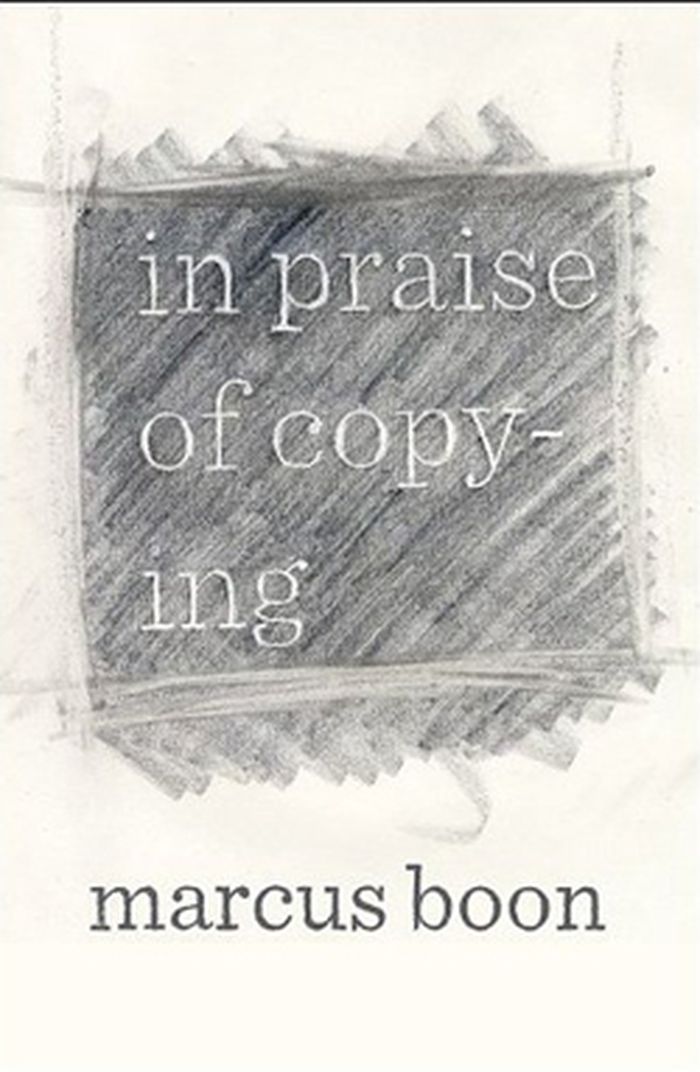
This book is devoted to a deceptively simple but original argument : that copying is an essential part of being human, that the ability to copy is worthy of celebration, and that, without recognizing how integral copying is to being human, we cannot understand ourselves or the world we live in. In spite of the laws, stigmas, and anxieties attached to it, the word “copying” permeates contemporary culture, shaping discourse on issues from hip hop to digitization to gender reassignment, and is particularly crucial in legal debates concerning intellectual property and copyright. Yet as a philosophical concept, copying remains poorly understood. Working comparatively across cultures and times, Marcus Boon undertakes an examination of what this word means — historically, culturally, philosophically — and why it fills us with fear and fascination. He argues that the dominant legal-political structures that define copying today obscure much broader processes of imitation that have constituted human communities for ages and continue to shape various subcultures today. Drawing on contemporary art, music and film, the history of aesthetics, critical theory, and Buddhist philosophy and practice, In Praise of Copying seeks to show how and why copying works, what the sources of its power are, and the political stakes of renegotiating the way we value copying in the age of globalization.
In praise of copying
Actions:
Price:
$24.95
(available to order)
Summary:
This book is devoted to a deceptively simple but original argument : that copying is an essential part of being human, that the ability to copy is worthy of celebration, and that, without recognizing how integral copying is to being human, we cannot understand ourselves or the world we live in. In spite of the laws, stigmas, and anxieties attached to it, the word “copying” permeates contemporary culture, shaping discourse on issues from hip hop to digitization to gender reassignment, and is particularly crucial in legal debates concerning intellectual property and copyright. Yet as a philosophical concept, copying remains poorly understood. Working comparatively across cultures and times, Marcus Boon undertakes an examination of what this word means — historically, culturally, philosophically — and why it fills us with fear and fascination. He argues that the dominant legal-political structures that define copying today obscure much broader processes of imitation that have constituted human communities for ages and continue to shape various subcultures today. Drawing on contemporary art, music and film, the history of aesthetics, critical theory, and Buddhist philosophy and practice, In Praise of Copying seeks to show how and why copying works, what the sources of its power are, and the political stakes of renegotiating the way we value copying in the age of globalization.
Form:
books
books
Publication:
March 2013
March 2013
Subject:
Critical Theory
Critical Theory
Form:
books
books
Actions:
Holdings:
Description:
192 pages : illustrations (some color), plans (some color) ; 31 cm
Description:
192 pages : illustrations (some color), plans (some color) ; 31 cm
Author:
Subject:
Publication:
Basel : Birkhäuser, ©2011.
Basel : Birkhäuser, ©2011.
Title:
Material design : informing architecture by materiality / Thomas Schropfer ; with a foreword by Erwin Viray ; and contributions by James Carpenter [and others].
Actions:
Holdings:
Description:
192 pages : illustrations (some color), plans (some color) ; 31 cm
Material design : informing architecture by materiality / Thomas Schropfer ; with a foreword by Erwin Viray ; and contributions by James Carpenter [and others].
Actions:
Holdings:
Description:
192 pages : illustrations (some color), plans (some color) ; 31 cm
Form:
books
books
Publication:
Basel : Birkhäuser, ©2011.
Basel : Birkhäuser, ©2011.
Author:
Subject:
Form:
books
books
Title:
Once within borders : territories of power, wealth, and belonging since 1500 / Charles S. Maier.
Once within borders : territories of power, wealth, and belonging since 1500 / Charles S. Maier.
Actions:
Holdings:
Description:
xiii, 387 pages : illustrations, maps ; 25 cm
Description:
xiii, 387 pages : illustrations, maps ; 25 cm
Author:
Subject:
Publication:
Cambridge, Massachusetts : The Belknap Press of Harvard University Press, [2016]
Cambridge, Massachusetts : The Belknap Press of Harvard University Press, [2016]
Title:
Once within borders : territories of power, wealth, and belonging since 1500 / Charles S. Maier.
Actions:
Holdings:
Description:
xiii, 387 pages : illustrations, maps ; 25 cm
Once within borders : territories of power, wealth, and belonging since 1500 / Charles S. Maier.
Actions:
Holdings:
Description:
xiii, 387 pages : illustrations, maps ; 25 cm
Form:
books
books
Publication:
Cambridge, Massachusetts : The Belknap Press of Harvard University Press, [2016]
Cambridge, Massachusetts : The Belknap Press of Harvard University Press, [2016]
Author:
Subject:
Form:
books
books
Actions:
Holdings:
Description:
xv, 233 pages : illustrations ; 24 cm
Description:
xv, 233 pages : illustrations ; 24 cm
Author:
Subject:
Publication:
London ; New York, NY : Routledge, 2012.
London ; New York, NY : Routledge, 2012.
Title:
Writing the modern city : literature, architecture, modernity / edited by Sarah Edwards and Jonathan Charley.
Actions:
Holdings:
Description:
xv, 233 pages : illustrations ; 24 cm
Writing the modern city : literature, architecture, modernity / edited by Sarah Edwards and Jonathan Charley.
Actions:
Holdings:
Description:
xv, 233 pages : illustrations ; 24 cm
Form:
books
books
Publication:
London ; New York, NY : Routledge, 2012.
London ; New York, NY : Routledge, 2012.
Author:
Subject:
Form:
journals and magazines
journals and magazines
Title:
Scapegoat 04: currency
Scapegoat 04: currency
Actions:
Price:
$20.00
(available to order)
Summary:
Currency is structured by a fundamental contradiction between its necessary circulation and its stubborn foundation in sovereign territories. On the one hand, it is designed to represent value and facilitate its exchange in standardized, fungible units; on the other, its relative scarcity generates a strong incentive to hoard it, withdrawing and storing its value,(...)
$20.00
(available to order)
Summary:
Currency is structured by a fundamental contradiction between its necessary circulation and its stubborn foundation in sovereign territories. On the one hand, it is designed to represent value and facilitate its exchange in standardized, fungible units; on the other, its relative scarcity generates a strong incentive to hoard it, withdrawing and storing its value,(...)
Title:
Scapegoat 04: currency
Actions:
Price:
$20.00
(available to order)
Summary:
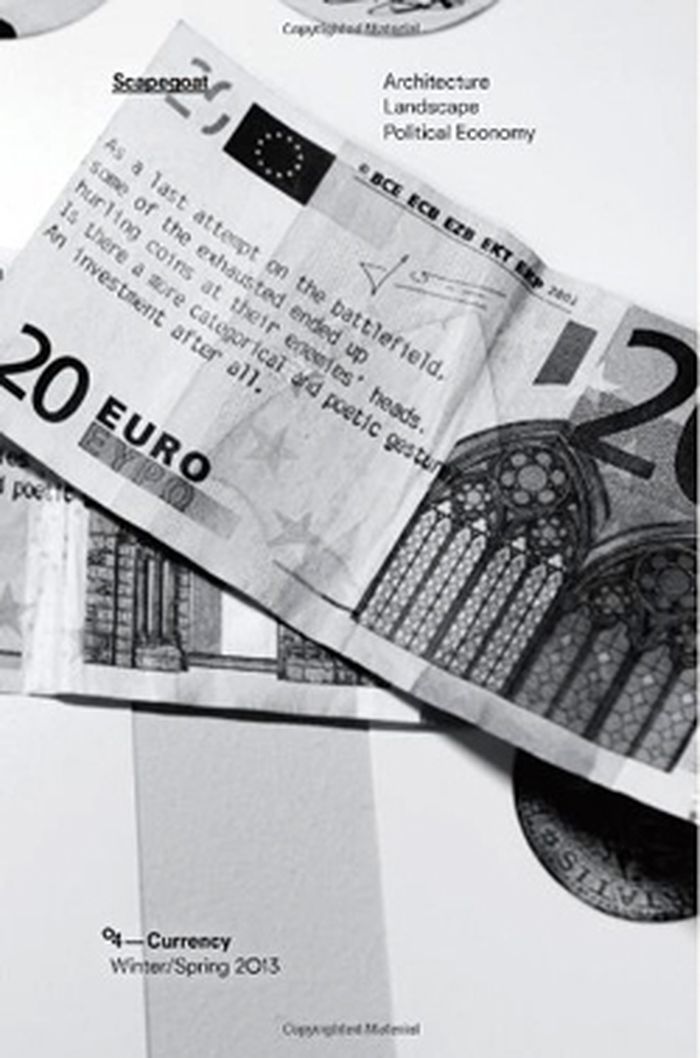
Currency is structured by a fundamental contradiction between its necessary circulation and its stubborn foundation in sovereign territories. On the one hand, it is designed to represent value and facilitate its exchange in standardized, fungible units; on the other, its relative scarcity generates a strong incentive to hoard it, withdrawing and storing its value, converting it into fixed assets such as property whose existence relies on the same institutions of coercion that maintain national borders. Today's globalized capitalism only exacerbates this paradox. The ascendency of finance capital in North America and Europe has created a condition where the accumulation of capital is based almost purely on speculation, and money is multiplied through its circulation. At the same time, the struggle to secure the territories and bodies that guarantee it has become ever more desperate as civilian spaces have been more and more militarized. The result has been an increasingly complex space of value, where the borders that produce its distinctions are no longer located at a nation's edges, but rather lie both within and beyond it. The diverse contributions to Scapegoat's fifth issue, Currency, investigate these contradictory tendencies within the spatiality of currency and present ways that they can be resisted. We follow a line that runs from the material to the immaterial, exploring divergent scales and topologies in the process.
Scapegoat 04: currency
Actions:
Price:
$20.00
(available to order)
Summary:
Currency is structured by a fundamental contradiction between its necessary circulation and its stubborn foundation in sovereign territories. On the one hand, it is designed to represent value and facilitate its exchange in standardized, fungible units; on the other, its relative scarcity generates a strong incentive to hoard it, withdrawing and storing its value, converting it into fixed assets such as property whose existence relies on the same institutions of coercion that maintain national borders. Today's globalized capitalism only exacerbates this paradox. The ascendency of finance capital in North America and Europe has created a condition where the accumulation of capital is based almost purely on speculation, and money is multiplied through its circulation. At the same time, the struggle to secure the territories and bodies that guarantee it has become ever more desperate as civilian spaces have been more and more militarized. The result has been an increasingly complex space of value, where the borders that produce its distinctions are no longer located at a nation's edges, but rather lie both within and beyond it. The diverse contributions to Scapegoat's fifth issue, Currency, investigate these contradictory tendencies within the spatiality of currency and present ways that they can be resisted. We follow a line that runs from the material to the immaterial, exploring divergent scales and topologies in the process.
Form:
journals and magazines
journals and magazines
Publication:
June 2013
June 2013
Subject:
Magazines
Magazines
Form:
books
books
Actions:
Price:
$33.95
(available to order)
Summary:
American cities, once economic and social launch pads for their residents, are all too often plagued by poverty and decay. One need only to look at the ruins of Detroit to see how far some once-great cities have fallen, or to Boston and San Francisco for evidence that such decline is reversible. In Boom Towns, Stephen J.K. Walters diagnoses the root causes of urban(...)
$33.95
(available to order)
Summary:
American cities, once economic and social launch pads for their residents, are all too often plagued by poverty and decay. One need only to look at the ruins of Detroit to see how far some once-great cities have fallen, or to Boston and San Francisco for evidence that such decline is reversible. In Boom Towns, Stephen J.K. Walters diagnoses the root causes of urban(...)
Title:
Boom towns: restoring the urban american dream
Actions:
Price:
$33.95
(available to order)
Summary:
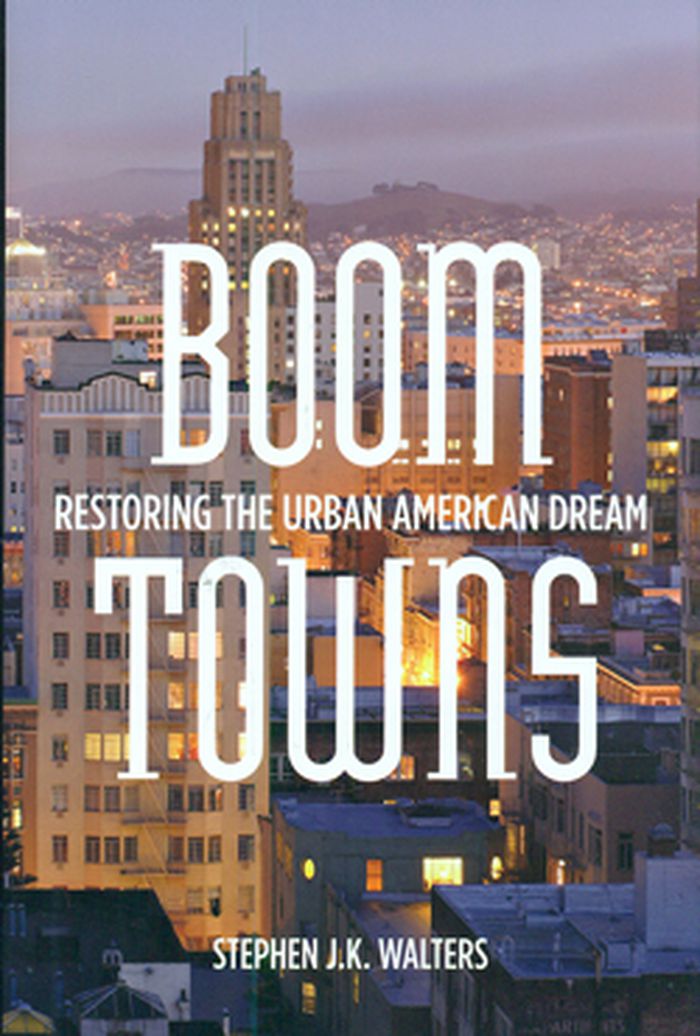
American cities, once economic and social launch pads for their residents, are all too often plagued by poverty and decay. One need only to look at the ruins of Detroit to see how far some once-great cities have fallen, or to Boston and San Francisco for evidence that such decline is reversible. In Boom Towns, Stephen J.K. Walters diagnoses the root causes of urban decline in order to prescribe remedies that will enable cities to thrive once again. Arguing that commonplace explanations for urban decay misunderstand the nature our towns, Walters reconceives of cities as dense accumulations of capital in all of its forms — places that attract people by making their labor more productive and their leisure more pleasurable. Policymakers, therefore, must properly define and enforce property rights in order to prevent the flight of capital and the resulting demise of urban centers. Using vivid evocations of iconic towns and the people who crucially affected their destinies, Walters shows how public policy measures which aim to revitalize often do more harm than good. He then outlines a more promising set of policies to remedy the capital shortage that continues to afflict many cities and needlessly limit their residents' opportunities. With its fresh interpretation of one of the American quandaries of our day, Boom Towns offers a novel contribution to the debate about American cities and a program for their restoration.
Boom towns: restoring the urban american dream
Actions:
Price:
$33.95
(available to order)
Summary:
American cities, once economic and social launch pads for their residents, are all too often plagued by poverty and decay. One need only to look at the ruins of Detroit to see how far some once-great cities have fallen, or to Boston and San Francisco for evidence that such decline is reversible. In Boom Towns, Stephen J.K. Walters diagnoses the root causes of urban decline in order to prescribe remedies that will enable cities to thrive once again. Arguing that commonplace explanations for urban decay misunderstand the nature our towns, Walters reconceives of cities as dense accumulations of capital in all of its forms — places that attract people by making their labor more productive and their leisure more pleasurable. Policymakers, therefore, must properly define and enforce property rights in order to prevent the flight of capital and the resulting demise of urban centers. Using vivid evocations of iconic towns and the people who crucially affected their destinies, Walters shows how public policy measures which aim to revitalize often do more harm than good. He then outlines a more promising set of policies to remedy the capital shortage that continues to afflict many cities and needlessly limit their residents' opportunities. With its fresh interpretation of one of the American quandaries of our day, Boom Towns offers a novel contribution to the debate about American cities and a program for their restoration.
Form:
books
books
Publication:
September 2014
September 2014
Subject:
Urban Theory
Urban Theory
Form:
books
books
Actions:
Holdings:
Description:
x, 611 pages : illustrations (some color), facsimiles, maps, portraits ; 25 cm
Description:
x, 611 pages : illustrations (some color), facsimiles, maps, portraits ; 25 cm
Author:
Subject:
Publication:
New York : Columbia University Press, [2022], ©2022
New York : Columbia University Press, [2022], ©2022
Title:
Before Central Park / Sara Cedar Miller.
Actions:
Holdings:
Description:
x, 611 pages : illustrations (some color), facsimiles, maps, portraits ; 25 cm
Before Central Park / Sara Cedar Miller.
Actions:
Holdings:
Description:
x, 611 pages : illustrations (some color), facsimiles, maps, portraits ; 25 cm
Form:
books
books
Publication:
New York : Columbia University Press, [2022], ©2022
New York : Columbia University Press, [2022], ©2022
Author:
Subject:
Form:
books
books
Holdings:
Description:
191 pages : illustrations (chiefly color), plans ; 28 cm
Description:
191 pages : illustrations (chiefly color), plans ; 28 cm
Author:
Subject:
Publication:
Berlin : Braun Publishing AG, 2023., ©2023
Berlin : Braun Publishing AG, 2023., ©2023
Title:
Bend & build : architecture with bamboo / Chris van Uffelen.
Actions:
Holdings:
Description:
191 pages : illustrations (chiefly color), plans ; 28 cm
Bend & build : architecture with bamboo / Chris van Uffelen.
Actions:
Holdings:
Description:
191 pages : illustrations (chiefly color), plans ; 28 cm
Form:
books
books
Publication:
Berlin : Braun Publishing AG, 2023., ©2023
Berlin : Braun Publishing AG, 2023., ©2023
Author:
Subject:
Form:
books
books
Price:
$38.99
(available in store)
Summary:
As WWI drew to a close, change reverberated through the halls of England’s country homes. As the sun set slowly on the British Empire, the shadows lengthened on the lawns of a thousand stately homes. In The Long Weekend, historian Adrian Tinniswood introduces us to the tumultuous, scandalous and glamourous history of English country houses during the years between(...)
$38.99
(available in store)
Summary:
As WWI drew to a close, change reverberated through the halls of England’s country homes. As the sun set slowly on the British Empire, the shadows lengthened on the lawns of a thousand stately homes. In The Long Weekend, historian Adrian Tinniswood introduces us to the tumultuous, scandalous and glamourous history of English country houses during the years between(...)
Title:
The long weekend: life in the English country house 1918-1939
Actions:
Price:
$38.99
(available in store)
Summary:
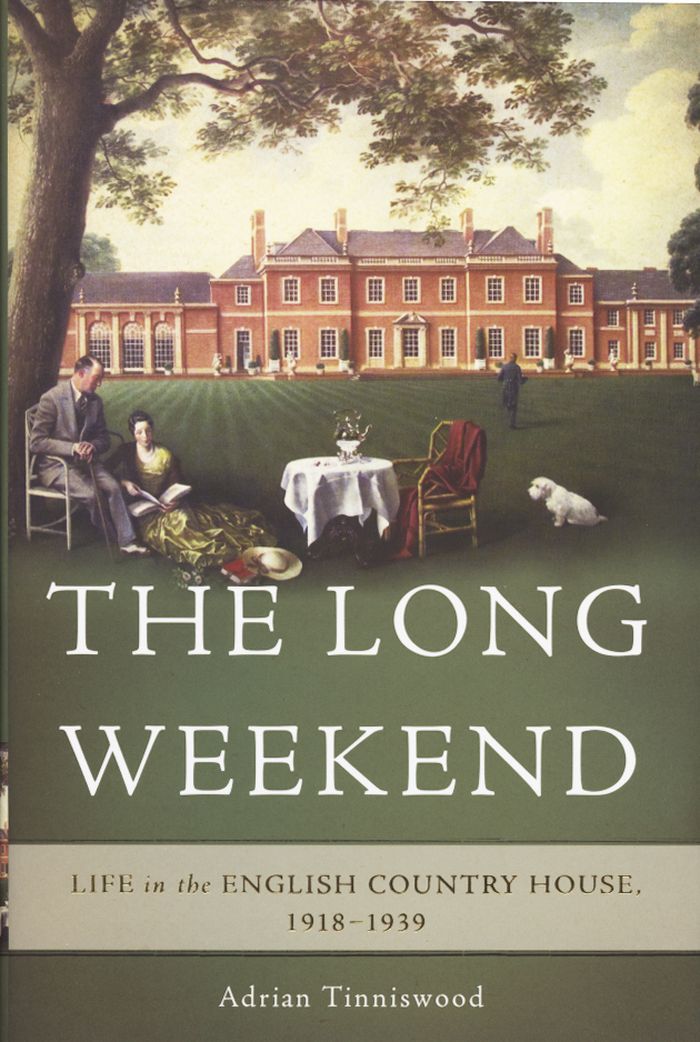
As WWI drew to a close, change reverberated through the halls of England’s country homes. As the sun set slowly on the British Empire, the shadows lengthened on the lawns of a thousand stately homes. In The Long Weekend, historian Adrian Tinniswood introduces us to the tumultuous, scandalous and glamourous history of English country houses during the years between World Wars. As estate taxes and other challenges forced many of these venerable houses onto the market, new sectors of British and American society were seduced by the dream of owning a home in the English countryside. Drawing on thousands of memoirs, letters, and diaries, as well as the eye-witness testimonies of belted earls and bibulous butlers, Tinniswood brings the stately homes of England to life as never before, opening the door to a world by turns opulent and ordinary, noble and vicious, and forever wrapped in myth. We are drawn into the intrigues of legendary families such as the Astors, the Churchills and the Devonshires as they hosted hunting parties and balls that attracted the likes of Charlie Chaplin, T.E. Lawrence, and royals such as Edward VIII and Wallis Simpson. We waltz through aristocratic soirées, and watch as the upper crust struggle to fend off rising taxes and underbred outsiders, property speculators and poultry farmers. We gain insight into the guilt and the gingerbread, and see how the image of the country house was carefully protected by its occupants above and below stairs.
The long weekend: life in the English country house 1918-1939
Actions:
Price:
$38.99
(available in store)
Summary:
As WWI drew to a close, change reverberated through the halls of England’s country homes. As the sun set slowly on the British Empire, the shadows lengthened on the lawns of a thousand stately homes. In The Long Weekend, historian Adrian Tinniswood introduces us to the tumultuous, scandalous and glamourous history of English country houses during the years between World Wars. As estate taxes and other challenges forced many of these venerable houses onto the market, new sectors of British and American society were seduced by the dream of owning a home in the English countryside. Drawing on thousands of memoirs, letters, and diaries, as well as the eye-witness testimonies of belted earls and bibulous butlers, Tinniswood brings the stately homes of England to life as never before, opening the door to a world by turns opulent and ordinary, noble and vicious, and forever wrapped in myth. We are drawn into the intrigues of legendary families such as the Astors, the Churchills and the Devonshires as they hosted hunting parties and balls that attracted the likes of Charlie Chaplin, T.E. Lawrence, and royals such as Edward VIII and Wallis Simpson. We waltz through aristocratic soirées, and watch as the upper crust struggle to fend off rising taxes and underbred outsiders, property speculators and poultry farmers. We gain insight into the guilt and the gingerbread, and see how the image of the country house was carefully protected by its occupants above and below stairs.
Form:
books
books
Publication:
May 2016
May 2016
Subject:
History until 1900, Great Britain
History until 1900, Great Britain
Form:
books
books
Price:
$75.95
(available to order)
Summary:
Valerio Olgiati has worked as an architect in Los Angeles, Zurich, and, since 2008, in Flims. He has been a visiting professor at the Eidgenössische Technische Hochschule (Swiss Federal Institute of Technology) in Zurich, the AA in London, and at Cornell University in Ithaca, New York. Since 2002 he has been professor at the Accademia di architettura in Mendrisio and(...)
$75.95
(available to order)
Summary:
Valerio Olgiati has worked as an architect in Los Angeles, Zurich, and, since 2008, in Flims. He has been a visiting professor at the Eidgenössische Technische Hochschule (Swiss Federal Institute of Technology) in Zurich, the AA in London, and at Cornell University in Ithaca, New York. Since 2002 he has been professor at the Accademia di architettura in Mendrisio and(...)
Title:
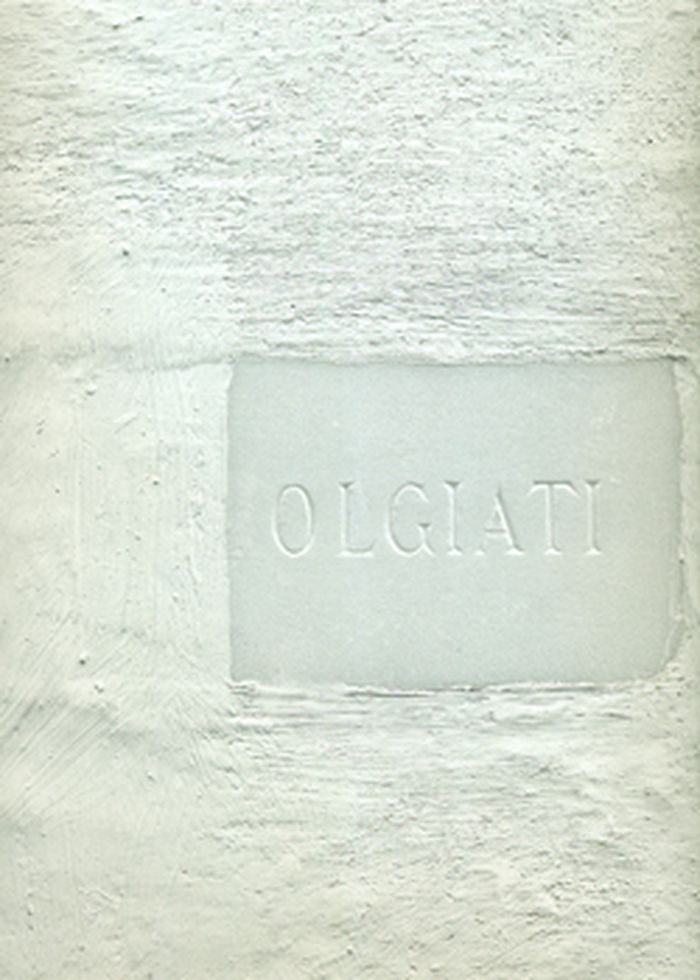
Dado : built and inhabited by Rudolph Olgiati and Valerio Olgiati
Actions:
Price:
$75.95
(available to order)
Summary:
Valerio Olgiati has worked as an architect in Los Angeles, Zurich, and, since 2008, in Flims. He has been a visiting professor at the Eidgenössische Technische Hochschule (Swiss Federal Institute of Technology) in Zurich, the AA in London, and at Cornell University in Ithaca, New York. Since 2002 he has been professor at the Accademia di architettura in Mendrisio and since autumn 2009 he has held the Kenzo Tange Chair at Harvard. The unmistakable straight lines and independence of his buildings has brought him international attention. The Olgiati’s family estate is located in the historical town center of Flims. Rudolf Olgiati (1910–95) purchased the property, known as Dado, in 1930 and throughout his life used it to realize his architectural thoughts and ideas. Today, the son is living in his father’s house, and in 2008 he set up his much-admired architectural firm on the former site of the barn. This publication portrays the life and work of both architects using the example of the house and studio - that is, through the transformations they have undergone at the hands of their residents over a period of nearly eighty years. It shows personal furniture and objects, the individual layout and design of the spaces, and hence the penchants and attitudes of the two architects. At the same time this unusual portrait documents not only the relationship between father and son but also the characters of two generations and their understanding of architecture and aesthetics.
Dado : built and inhabited by Rudolph Olgiati and Valerio Olgiati
Actions:
Price:
$75.95
(available to order)
Summary:
Valerio Olgiati has worked as an architect in Los Angeles, Zurich, and, since 2008, in Flims. He has been a visiting professor at the Eidgenössische Technische Hochschule (Swiss Federal Institute of Technology) in Zurich, the AA in London, and at Cornell University in Ithaca, New York. Since 2002 he has been professor at the Accademia di architettura in Mendrisio and since autumn 2009 he has held the Kenzo Tange Chair at Harvard. The unmistakable straight lines and independence of his buildings has brought him international attention. The Olgiati’s family estate is located in the historical town center of Flims. Rudolf Olgiati (1910–95) purchased the property, known as Dado, in 1930 and throughout his life used it to realize his architectural thoughts and ideas. Today, the son is living in his father’s house, and in 2008 he set up his much-admired architectural firm on the former site of the barn. This publication portrays the life and work of both architects using the example of the house and studio - that is, through the transformations they have undergone at the hands of their residents over a period of nearly eighty years. It shows personal furniture and objects, the individual layout and design of the spaces, and hence the penchants and attitudes of the two architects. At the same time this unusual portrait documents not only the relationship between father and son but also the characters of two generations and their understanding of architecture and aesthetics.
Form:
books
books
Publication:
March 2010
March 2010
Subject:
Architecture Monographs
Architecture Monographs


