


3096 Results
Form:
books
books
Title:
Charles Rose, architect
Charles Rose, architect
Actions:
Price:
$52.00
(available to order)
Summary:
Charles Rose embraces the vast and varied panorama of the American landscape. Sensitive to his sites, the architect recognizes the poetry of every locale and uses his fascination with place as a central character in his designs. Regionalism, a term at times used to underrate architecture that is seen as too parochial or that eschews universal "truths" (most often those of(...)
$52.00
(available to order)
Summary:
Charles Rose embraces the vast and varied panorama of the American landscape. Sensitive to his sites, the architect recognizes the poetry of every locale and uses his fascination with place as a central character in his designs. Regionalism, a term at times used to underrate architecture that is seen as too parochial or that eschews universal "truths" (most often those of(...)
Title:
Charles Rose, architect
Actions:
Price:
$52.00
(available to order)
Summary:
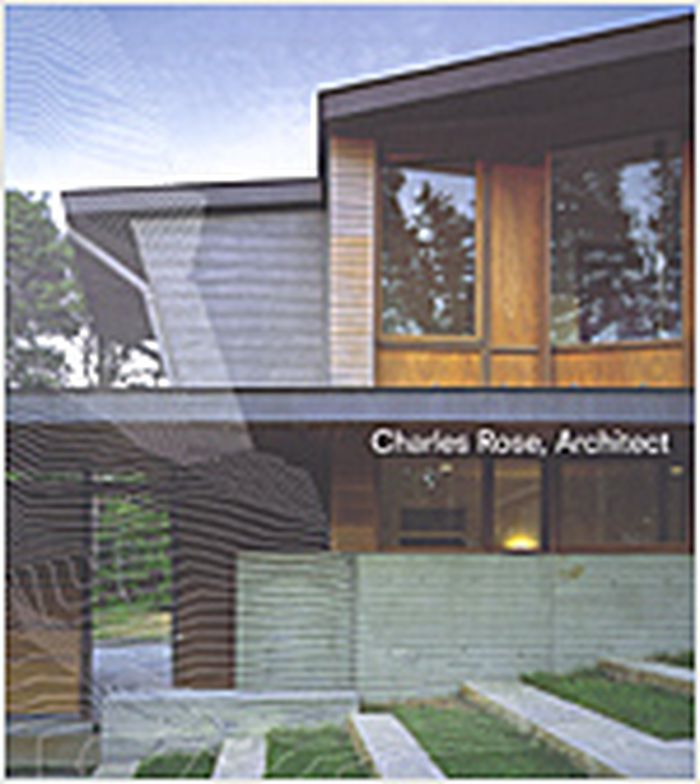
Charles Rose embraces the vast and varied panorama of the American landscape. Sensitive to his sites, the architect recognizes the poetry of every locale and uses his fascination with place as a central character in his designs. Regionalism, a term at times used to underrate architecture that is seen as too parochial or that eschews universal "truths" (most often those of modernism) in favor of a local style, becomes a practice of the highest order in the hands of Rose, one of America's most accomplished young architects. With both the rigor of geometry and a commitment to ecosensitivity, his work is as attuned to the dense urban fabric of New York City as it is to the rural outback of Wyoming. The profile of his award-winning Camp Paint Rock in Hyattville, Wyoming, follows the contours of a nearby canyon; Roses's adaptive reuse of an industrial structure in New York City's Chelsea neighborhood preserves the existing streetscape while creating a seamless flow between inside and out; and the shape of his United States Port of Entry project in Del Rio, Texas, was determined by the scorching Texan sun and features sustainable landscapes. With surprising use of volumes, materials, and geometries, agile movement of spaces, and an active language of planes and lines, Rose creates dynamic, expressive architecture that reminds us that buildings can be both sensitive to their locale and embrace the timeless principles of geometry, material, light, and shadow.
Charles Rose, architect
Actions:
Price:
$52.00
(available to order)
Summary:
Charles Rose embraces the vast and varied panorama of the American landscape. Sensitive to his sites, the architect recognizes the poetry of every locale and uses his fascination with place as a central character in his designs. Regionalism, a term at times used to underrate architecture that is seen as too parochial or that eschews universal "truths" (most often those of modernism) in favor of a local style, becomes a practice of the highest order in the hands of Rose, one of America's most accomplished young architects. With both the rigor of geometry and a commitment to ecosensitivity, his work is as attuned to the dense urban fabric of New York City as it is to the rural outback of Wyoming. The profile of his award-winning Camp Paint Rock in Hyattville, Wyoming, follows the contours of a nearby canyon; Roses's adaptive reuse of an industrial structure in New York City's Chelsea neighborhood preserves the existing streetscape while creating a seamless flow between inside and out; and the shape of his United States Port of Entry project in Del Rio, Texas, was determined by the scorching Texan sun and features sustainable landscapes. With surprising use of volumes, materials, and geometries, agile movement of spaces, and an active language of planes and lines, Rose creates dynamic, expressive architecture that reminds us that buildings can be both sensitive to their locale and embrace the timeless principles of geometry, material, light, and shadow.
Form:
books
books
Publication:
February 2006, New York
February 2006, New York
Subject:
sale books
sale books
Form:
books
books
Actions:
Price:
$34.95
(available to order)
Summary:
Modern Architecture is a landmark text - the first book in which this American architect put forth the principles of a fundamentally new, organic architecture that would reject the trappings of historical styles while avoiding the geometric abstraction of the machine aesthetic advocated by contemporary European modernists. One of the most important documents in the(...)
$34.95
(available to order)
Summary:
Modern Architecture is a landmark text - the first book in which this American architect put forth the principles of a fundamentally new, organic architecture that would reject the trappings of historical styles while avoiding the geometric abstraction of the machine aesthetic advocated by contemporary European modernists. One of the most important documents in the(...)
Subject:
Architecture Monographs
Architecture Monographs
Publication:
March 2008, Princeton, Oxford
March 2008, Princeton, Oxford
Title:
Modern architecture : being the Kahn Lectures for 1930
Actions:
Price:
$34.95
(available to order)
Summary:
Modern Architecture is a landmark text - the first book in which this American architect put forth the principles of a fundamentally new, organic architecture that would reject the trappings of historical styles while avoiding the geometric abstraction of the machine aesthetic advocated by contemporary European modernists. One of the most important documents in the development of modern architecture and the career of Frank Lloyd Wright, "Modern Architecture" is a provocative and profound polemic against America's architectural eclecticism, commercial skyscrapers, and misguided urban planning. The book is also a work of savvy self-promotion, in which Wright not only advanced his own concept of an organic architecture but also framed it as having anticipated by decades - and bettered -what he saw as the reductive modernism of his European counterparts. Based on the 1931 original, for which Wright supplied the cover illustration, this edition includes a new introduction that puts "Modern Architecture" in its broader architectural, historical, and intellectual context for the first time. The subjects of these lively lectures -from "Machinery, Materials and Men" to "The Tyranny of the Skyscraper" and "The City" - move from a general statement of the conditions of modern culture to particular applications in the fields of architecture and urbanism at ever broadening scales. Wright's vision in "Modern Architecture" is ultimately to equate the truly modern with romanticism, imagination, beauty, and nature - all of which he connects with an underlying sense of American democratic freedom and individualism.
Modern architecture : being the Kahn Lectures for 1930
Actions:
Price:
$34.95
(available to order)
Summary:
Modern Architecture is a landmark text - the first book in which this American architect put forth the principles of a fundamentally new, organic architecture that would reject the trappings of historical styles while avoiding the geometric abstraction of the machine aesthetic advocated by contemporary European modernists. One of the most important documents in the development of modern architecture and the career of Frank Lloyd Wright, "Modern Architecture" is a provocative and profound polemic against America's architectural eclecticism, commercial skyscrapers, and misguided urban planning. The book is also a work of savvy self-promotion, in which Wright not only advanced his own concept of an organic architecture but also framed it as having anticipated by decades - and bettered -what he saw as the reductive modernism of his European counterparts. Based on the 1931 original, for which Wright supplied the cover illustration, this edition includes a new introduction that puts "Modern Architecture" in its broader architectural, historical, and intellectual context for the first time. The subjects of these lively lectures -from "Machinery, Materials and Men" to "The Tyranny of the Skyscraper" and "The City" - move from a general statement of the conditions of modern culture to particular applications in the fields of architecture and urbanism at ever broadening scales. Wright's vision in "Modern Architecture" is ultimately to equate the truly modern with romanticism, imagination, beauty, and nature - all of which he connects with an underlying sense of American democratic freedom and individualism.
Form:
books
books
Publication:
March 2008, Princeton, Oxford
March 2008, Princeton, Oxford
Subject:
Architecture Monographs
Architecture Monographs
Form:
books
books
Actions:
Price:
$37.99
(available to order)
Summary:
How, in a turbulent century, was Le Corbusier able to reinvent himself at least five times? How was he able to become the Picasso (or Duchamp) of architecture? How was he able to produce work in a regional Art Nouveau mode, then become a leader of the Modern Movement and International Style, then switch to primitive materials and Brutalism before pre-empting(...)
$37.99
(available to order)
Summary:
How, in a turbulent century, was Le Corbusier able to reinvent himself at least five times? How was he able to become the Picasso (or Duchamp) of architecture? How was he able to produce work in a regional Art Nouveau mode, then become a leader of the Modern Movement and International Style, then switch to primitive materials and Brutalism before pre-empting(...)
Title:
Architecture landscape urbanisme 9 : Le Corbusier & the architecture of reinvention
Actions:
Price:
$37.99
(available to order)
Summary:
How, in a turbulent century, was Le Corbusier able to reinvent himself at least five times? How was he able to become the Picasso (or Duchamp) of architecture? How was he able to produce work in a regional Art Nouveau mode, then become a leader of the Modern Movement and International Style, then switch to primitive materials and Brutalism before pre-empting Post-Modernism through Ronchamp and Chandigarh, and pre-empting High-Tech and Complexity Architecture through the Centre Le Corbusier and the Philips Pavilion? How?’ These transformations were helped along by the way Le Corbusier was able to cross ideas from one medium to another. A work of architecture could be considered as a written text, a drawing, a model, a photograph, a sculpture, a painting or a detailed set of plans. Each medium challenged, clarified and refined the idea from different viewpoints. Each medium made use of different neurons, of different parts of his mind. The result? Continuous creation from different perspectives, a continual reinvention of architecture. This book brings together leading scholars to explore Le Corbusier’s tactics of self-reinvention, his relationship to the artistic avant-garde and his work as a multimedia practitioner. It also contains an English-language edition of Le Corbusier's 'Poème de l’Angle Droit', complete with beautiful colour lithographs. Authors include Tim Benton, Peter Carl, Hilde Heynen, Charles Jencks, Mohsen Mostafavi, Daniel Naegele, Fernando Pérez Oyarzun, and Stanislaus von Moos.
Architecture landscape urbanisme 9 : Le Corbusier & the architecture of reinvention
Actions:
Price:
$37.99
(available to order)
Summary:
How, in a turbulent century, was Le Corbusier able to reinvent himself at least five times? How was he able to become the Picasso (or Duchamp) of architecture? How was he able to produce work in a regional Art Nouveau mode, then become a leader of the Modern Movement and International Style, then switch to primitive materials and Brutalism before pre-empting Post-Modernism through Ronchamp and Chandigarh, and pre-empting High-Tech and Complexity Architecture through the Centre Le Corbusier and the Philips Pavilion? How?’ These transformations were helped along by the way Le Corbusier was able to cross ideas from one medium to another. A work of architecture could be considered as a written text, a drawing, a model, a photograph, a sculpture, a painting or a detailed set of plans. Each medium challenged, clarified and refined the idea from different viewpoints. Each medium made use of different neurons, of different parts of his mind. The result? Continuous creation from different perspectives, a continual reinvention of architecture. This book brings together leading scholars to explore Le Corbusier’s tactics of self-reinvention, his relationship to the artistic avant-garde and his work as a multimedia practitioner. It also contains an English-language edition of Le Corbusier's 'Poème de l’Angle Droit', complete with beautiful colour lithographs. Authors include Tim Benton, Peter Carl, Hilde Heynen, Charles Jencks, Mohsen Mostafavi, Daniel Naegele, Fernando Pérez Oyarzun, and Stanislaus von Moos.
Form:
books
books
Publication:
March 2003, London
March 2003, London
Subject:
Architecture Monographs
Architecture Monographs
Form:
books
books
Actions:
Holdings:
Description:
xv, 508 pages : illustrations (some color), maps ; 28 cm
Description:
xv, 508 pages : illustrations (some color), maps ; 28 cm
Author:
Subject:
Publication:
Cambridge, Mass. : MIT Press, ©1998.
Cambridge, Mass. : MIT Press, ©1998.
Title:
Competing visions : aesthetic invention and social imagination in Central European architecture, 1867-1918 / Ákos Moravánszky.
Actions:
Holdings:
Description:
xv, 508 pages : illustrations (some color), maps ; 28 cm
Competing visions : aesthetic invention and social imagination in Central European architecture, 1867-1918 / Ákos Moravánszky.
Actions:
Holdings:
Description:
xv, 508 pages : illustrations (some color), maps ; 28 cm
Form:
books
books
Publication:
Cambridge, Mass. : MIT Press, ©1998.
Cambridge, Mass. : MIT Press, ©1998.
Author:
Subject:
Form:
books
books
Actions:
Holdings:
Description:
127 pages : illustrations (some color) ; 31 cm
Description:
127 pages : illustrations (some color) ; 31 cm
Author:
Subject:
Publication:
Barcelona, España : Ediciones Polígrafa, ©1994.
Barcelona, España : Ediciones Polígrafa, ©1994.
Title:
Domènech i Montaner / fotografías, Melba Levick.
Actions:
Holdings:
Description:
127 pages : illustrations (some color) ; 31 cm
Domènech i Montaner / fotografías, Melba Levick.
Actions:
Holdings:
Description:
127 pages : illustrations (some color) ; 31 cm
Form:
books
books
Publication:
Barcelona, España : Ediciones Polígrafa, ©1994.
Barcelona, España : Ediciones Polígrafa, ©1994.
Author:
Subject:
Form:
books
books
Actions:
Price:
$24.95
(available to order)
Summary:
In this book, David Brown locates jazz music within the broad aesthetic, political, and theoretical upheavals of our time, asserting that modern architecture and urbanism in particular can be strongly influenced and defined by the ways that improvisation is facilitated in jazz. Improvised music consists of diverse properties that fail to register in the(...)
$24.95
(available to order)
Summary:
In this book, David Brown locates jazz music within the broad aesthetic, political, and theoretical upheavals of our time, asserting that modern architecture and urbanism in particular can be strongly influenced and defined by the ways that improvisation is facilitated in jazz. Improvised music consists of diverse properties that fail to register in the(...)
Title:
Noise orders : jazz, improvisation, and architecture
Actions:
Price:
$24.95
(available to order)
Summary:
In this book, David Brown locates jazz music within the broad aesthetic, political, and theoretical upheavals of our time, asserting that modern architecture and urbanism in particular can be strongly influenced and defined by the ways that improvisation is facilitated in jazz. Improvised music consists of diverse properties that fail to register in the object-oriented understanding of composition. As a result, it is often dismissed as noise — an interfering signal. However, Brown asserts, such interference can bear meaning and stimulate change. "Noise orders" identifies how architecture can respond to the inclusive dynamics of extemporaneous movements, variable conceptions of composition, multiple durations, and wide manipulation of resources found in jazz to enable outcomes that far exceed a design’s seeming potential. By exploring overlapping moments between modernism and the cultural dimensions of jazz, "Noise orders" suggests that the discipline of improvisation continues to open and redefine architectural theory and practice, creating a world where designers contribute to emerging environments rather than make predetermined ones. Comparing modern and avant-garde artists and architects with individuals and groups in jazz—including Piet Mondrian and boogie-woogie, John Cage and Rahsaan Roland Kirk, Le Corbusier and Louis Armstrong, and Ludwig Mies van der Rohe and the Association for the Advancement of Creative Musicians (AACM)—Brown examines how jazz can offer alternative design ideas and directions, be incorporated in contemporary architectural practices, and provide insight on how to develop dynamic metropolitan environments. Interdisciplinary in its approace, "Noise orders" argues for a deeper understanding of the infinite potential inherent in both music and architecture.
Noise orders : jazz, improvisation, and architecture
Actions:
Price:
$24.95
(available to order)
Summary:
In this book, David Brown locates jazz music within the broad aesthetic, political, and theoretical upheavals of our time, asserting that modern architecture and urbanism in particular can be strongly influenced and defined by the ways that improvisation is facilitated in jazz. Improvised music consists of diverse properties that fail to register in the object-oriented understanding of composition. As a result, it is often dismissed as noise — an interfering signal. However, Brown asserts, such interference can bear meaning and stimulate change. "Noise orders" identifies how architecture can respond to the inclusive dynamics of extemporaneous movements, variable conceptions of composition, multiple durations, and wide manipulation of resources found in jazz to enable outcomes that far exceed a design’s seeming potential. By exploring overlapping moments between modernism and the cultural dimensions of jazz, "Noise orders" suggests that the discipline of improvisation continues to open and redefine architectural theory and practice, creating a world where designers contribute to emerging environments rather than make predetermined ones. Comparing modern and avant-garde artists and architects with individuals and groups in jazz—including Piet Mondrian and boogie-woogie, John Cage and Rahsaan Roland Kirk, Le Corbusier and Louis Armstrong, and Ludwig Mies van der Rohe and the Association for the Advancement of Creative Musicians (AACM)—Brown examines how jazz can offer alternative design ideas and directions, be incorporated in contemporary architectural practices, and provide insight on how to develop dynamic metropolitan environments. Interdisciplinary in its approace, "Noise orders" argues for a deeper understanding of the infinite potential inherent in both music and architecture.
Form:
books
books
Publication:
February 2006, Minneapolis, London
February 2006, Minneapolis, London
Subject:
Acoustics
Acoustics
Form:
books
books
Price:
$46.95
(available to order)
Summary:
In "Tower and Office", Spanish architects Inaki Abalos and Juan Herreros look at the role and impact of advanced building technologies in American architecture since World War II. The war, they claim, marked the end of the first cycle of modernism, challenging the belief that technological progress alone could produce a perpetually better future. At the same time, the war(...)
$46.95
(available to order)
Summary:
In "Tower and Office", Spanish architects Inaki Abalos and Juan Herreros look at the role and impact of advanced building technologies in American architecture since World War II. The war, they claim, marked the end of the first cycle of modernism, challenging the belief that technological progress alone could produce a perpetually better future. At the same time, the war(...)
Publication:
October 2005, Cambridge
October 2005, Cambridge
Title:
Tower and office : from Modernist theory to contemporary practice
Actions:
Price:
$46.95
(available to order)
Summary:
In "Tower and Office", Spanish architects Inaki Abalos and Juan Herreros look at the role and impact of advanced building technologies in American architecture since World War II. The war, they claim, marked the end of the first cycle of modernism, challenging the belief that technological progress alone could produce a perpetually better future. At the same time, the war was the source of powerful new structural models and construction methods. The authors examine the ways these technologies have been inflected over the last half century by more subjective and integrated processes of spatial organization. In the first part of the book, Abalos and Herreros focus on the work of Le Corbusier, revealing the degree of complexity achieved in his interpretation of the modern skyscraper. In the second part, they look at the intersection of technical and cultural determinants in the design of high-rise structures since World War II. Among the issues they consider are the evolution of the load-bearing frame, the impact of high-tech systems on tall buildings, and the transparent building skin. In the third part, they address developments in office design and planning, tracing an evolution from the repetitive and homogeneous office skyscraper to the present-day mixed-use structure. Overall they demonstrate how the objective technical analysis associated with modernist architectural theory has given way in recent building practice to a variety of flexible, pragmatic, and environmental approaches. These, they suggest, have opened the way to new urban and architectural forms.
Tower and office : from Modernist theory to contemporary practice
Actions:
Price:
$46.95
(available to order)
Summary:
In "Tower and Office", Spanish architects Inaki Abalos and Juan Herreros look at the role and impact of advanced building technologies in American architecture since World War II. The war, they claim, marked the end of the first cycle of modernism, challenging the belief that technological progress alone could produce a perpetually better future. At the same time, the war was the source of powerful new structural models and construction methods. The authors examine the ways these technologies have been inflected over the last half century by more subjective and integrated processes of spatial organization. In the first part of the book, Abalos and Herreros focus on the work of Le Corbusier, revealing the degree of complexity achieved in his interpretation of the modern skyscraper. In the second part, they look at the intersection of technical and cultural determinants in the design of high-rise structures since World War II. Among the issues they consider are the evolution of the load-bearing frame, the impact of high-tech systems on tall buildings, and the transparent building skin. In the third part, they address developments in office design and planning, tracing an evolution from the repetitive and homogeneous office skyscraper to the present-day mixed-use structure. Overall they demonstrate how the objective technical analysis associated with modernist architectural theory has given way in recent building practice to a variety of flexible, pragmatic, and environmental approaches. These, they suggest, have opened the way to new urban and architectural forms.
Form:
books
books
Publication:
October 2005, Cambridge
October 2005, Cambridge
Form:
books
books
Actions:
Price:
$29.95
(available to order)
Summary:
The red maple leaf is the quintessential symbol of Canada and the flag that popularized it throughout the world was designed in the 1960s as a result of government legislation aimed at creating a vital, new Canadian national identity through objects, events, and building projects. Made in Canada looks at the development of Canadian craft, design, and culture through(...)
$29.95
(available to order)
Summary:
The red maple leaf is the quintessential symbol of Canada and the flag that popularized it throughout the world was designed in the 1960s as a result of government legislation aimed at creating a vital, new Canadian national identity through objects, events, and building projects. Made in Canada looks at the development of Canadian craft, design, and culture through(...)
Title:
Made in Canada : craft and design in the sixties
Actions:
Price:
$29.95
(available to order)
Summary:
The red maple leaf is the quintessential symbol of Canada and the flag that popularized it throughout the world was designed in the 1960s as a result of government legislation aimed at creating a vital, new Canadian national identity through objects, events, and building projects. Made in Canada looks at the development of Canadian craft, design, and culture through ambitious government programs meant to reinforce the country's identity as a modern, sophisticated, and autonomous nation. As well, it documents the demise of a singular notion of modern life and its replacement with a focus on personal identity and consumerism. Changes in the 1960s included the building of modern airports, first space satellite, and new national symbols such as the maple leaf flag. Canadians embraced this heightened sense of individuality and demanded products that were equally individual. As a result pop culture objects sat on cool furniture influenced by Scandinavian modernism while handmade crafts reflected a growing concern with environmental issues. Expo 67 was the turning point - one final expression of optimism before Canada was rocked by social change and varied struggles for identity. Made in Canada examines national dreams and expressions of individuality in thoughtful and illuminating essays. Contributors include Sandra Alfoldy (NSCAD University), Paul Bourassa (Musée des beaux-arts de Québec), Brent Cordner (designer and educator, Toronto), Douglas Coupland (artist and author, Vancouver), Bernard Flaman (Government of Saskatchewan), Rachel Gotlieb (freelance curator and writer, Toronto), Michael Large (Sheridan College Institute of Technology and Advanced Learning), and Michael Prokopow (Design Exchange).
Made in Canada : craft and design in the sixties
Actions:
Price:
$29.95
(available to order)
Summary:
The red maple leaf is the quintessential symbol of Canada and the flag that popularized it throughout the world was designed in the 1960s as a result of government legislation aimed at creating a vital, new Canadian national identity through objects, events, and building projects. Made in Canada looks at the development of Canadian craft, design, and culture through ambitious government programs meant to reinforce the country's identity as a modern, sophisticated, and autonomous nation. As well, it documents the demise of a singular notion of modern life and its replacement with a focus on personal identity and consumerism. Changes in the 1960s included the building of modern airports, first space satellite, and new national symbols such as the maple leaf flag. Canadians embraced this heightened sense of individuality and demanded products that were equally individual. As a result pop culture objects sat on cool furniture influenced by Scandinavian modernism while handmade crafts reflected a growing concern with environmental issues. Expo 67 was the turning point - one final expression of optimism before Canada was rocked by social change and varied struggles for identity. Made in Canada examines national dreams and expressions of individuality in thoughtful and illuminating essays. Contributors include Sandra Alfoldy (NSCAD University), Paul Bourassa (Musée des beaux-arts de Québec), Brent Cordner (designer and educator, Toronto), Douglas Coupland (artist and author, Vancouver), Bernard Flaman (Government of Saskatchewan), Rachel Gotlieb (freelance curator and writer, Toronto), Michael Large (Sheridan College Institute of Technology and Advanced Learning), and Michael Prokopow (Design Exchange).
Form:
books
books
Publication:
February 2005, Montreal
February 2005, Montreal
Subject:
Architecture in Canada
Architecture in Canada
Form:
books
books
Actions:
Price:
$34.95
(available to order)
Summary:
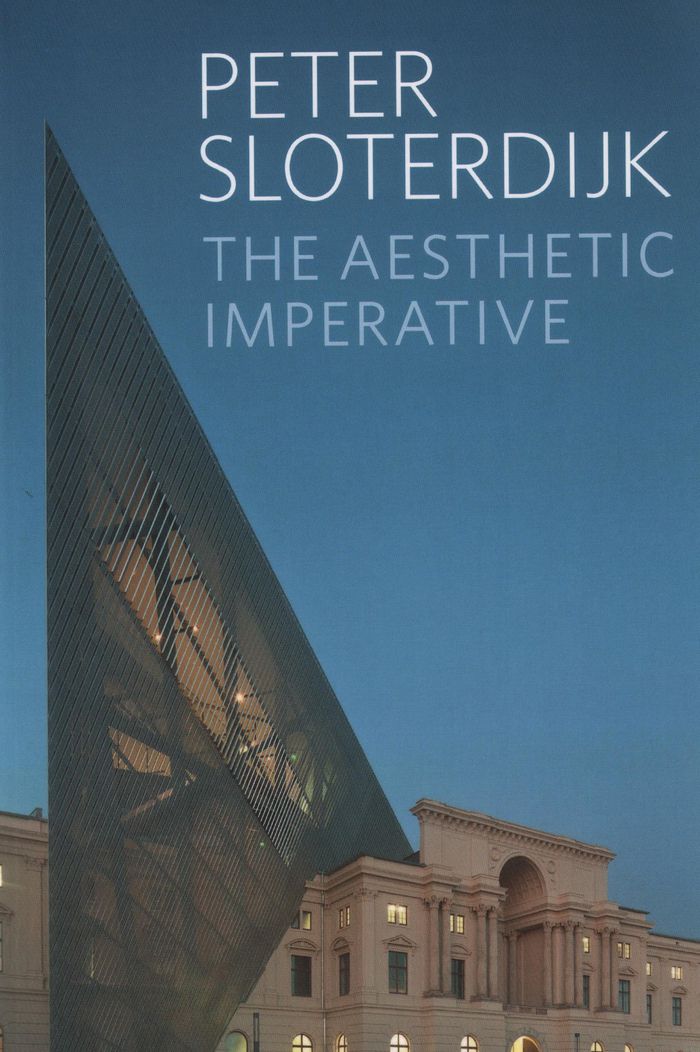
In this wide-ranging book, renowned philosopher and cultural theorist Peter Sloterdijk examines art in all its rich and varied forms: from music to architecture, light to movement, and design to typography. Moving between the visible and the invisible, the audible and the inaudible, his analyses span the centuries, from ancient civilizations to contemporary Hollywood.(...)
$34.95
(available to order)
Summary:
In this wide-ranging book, renowned philosopher and cultural theorist Peter Sloterdijk examines art in all its rich and varied forms: from music to architecture, light to movement, and design to typography. Moving between the visible and the invisible, the audible and the inaudible, his analyses span the centuries, from ancient civilizations to contemporary Hollywood.(...)
Title:
The aesthetic imperative: writings on art
Actions:
Price:
$34.95
(available to order)
Summary:
In this wide-ranging book, renowned philosopher and cultural theorist Peter Sloterdijk examines art in all its rich and varied forms: from music to architecture, light to movement, and design to typography. Moving between the visible and the invisible, the audible and the inaudible, his analyses span the centuries, from ancient civilizations to contemporary Hollywood. With great verve and insight he considers the key issues that have faced thinkers from Aristotle to Adorno, looking at art in its relation to ethics, epistemology, metaphysics, society, politics, anthropology and the subject.Sloterdijk explores a great variety of topics, including the Greek-Roman invention of postcards, medieval barter with purgatory and relics, the capitalist art market, the black boxes and white cubes of modernism, the rise of world’s fairs in the 19th century, the growth of museum and memorial culture, images of the city and the role of creativity. In doing so, Sloterdijk extends his characteristic method of defamiliarisation to transform the way we look at works of art and movements. His bold and original approach leads us away from the well-trodden paths of conventional art history to develop a theory of aesthetics which rejects strict categorisation, emphasising instead the crucial importance of individual subjectivity as a counter to the latent dangers of collective culture.This sustained collection of reflections, at once playful, serious and provocative, goes to the very heart of Sloterdijk’s enduring philosophical preoccupation with the aesthetic. It will be essential reading for students and scholars of philosophy and aesthetics and will appeal to anyone interested in culture and the arts more generally.
The aesthetic imperative: writings on art
Actions:
Price:
$34.95
(available to order)
Summary:
In this wide-ranging book, renowned philosopher and cultural theorist Peter Sloterdijk examines art in all its rich and varied forms: from music to architecture, light to movement, and design to typography. Moving between the visible and the invisible, the audible and the inaudible, his analyses span the centuries, from ancient civilizations to contemporary Hollywood. With great verve and insight he considers the key issues that have faced thinkers from Aristotle to Adorno, looking at art in its relation to ethics, epistemology, metaphysics, society, politics, anthropology and the subject.Sloterdijk explores a great variety of topics, including the Greek-Roman invention of postcards, medieval barter with purgatory and relics, the capitalist art market, the black boxes and white cubes of modernism, the rise of world’s fairs in the 19th century, the growth of museum and memorial culture, images of the city and the role of creativity. In doing so, Sloterdijk extends his characteristic method of defamiliarisation to transform the way we look at works of art and movements. His bold and original approach leads us away from the well-trodden paths of conventional art history to develop a theory of aesthetics which rejects strict categorisation, emphasising instead the crucial importance of individual subjectivity as a counter to the latent dangers of collective culture.This sustained collection of reflections, at once playful, serious and provocative, goes to the very heart of Sloterdijk’s enduring philosophical preoccupation with the aesthetic. It will be essential reading for students and scholars of philosophy and aesthetics and will appeal to anyone interested in culture and the arts more generally.
Form:
books
books
Publication:
April 2017
April 2017
Subject:
Art Theory
Art Theory
Form:
books
books
Title:
The minimalist garden
The minimalist garden
Actions:
Price:
$65.00
(available to order)
Summary:
Over the course of the 20th century many of the best garden designers have looked to the past for inspiration; with the approach of the millennium, however, a fresh approach to garden design - minimalism - has moved to the forefront. The philosophy of minimalism, rooted simultaneously in classicism and modernism, has had a strong influence on architecture and interior(...)
$65.00
(available to order)
Summary:
Over the course of the 20th century many of the best garden designers have looked to the past for inspiration; with the approach of the millennium, however, a fresh approach to garden design - minimalism - has moved to the forefront. The philosophy of minimalism, rooted simultaneously in classicism and modernism, has had a strong influence on architecture and interior(...)
Title:
The minimalist garden
Actions:
Price:
$65.00
(available to order)
Summary:
Over the course of the 20th century many of the best garden designers have looked to the past for inspiration; with the approach of the millennium, however, a fresh approach to garden design - minimalism - has moved to the forefront. The philosophy of minimalism, rooted simultaneously in classicism and modernism, has had a strong influence on architecture and interior and graphic design, as well as landscape. Minimalist gardens, with their emphasis on clean lines, pure form, and a strong sense of place, are closely related to contemporary architecture and lifestyles. New trends in more relaxed and ecologically aware planting have contributed greatly to the development of such green spaces, and the creative use of trees and hedges to define and control space is often an important design element. In this volume, award-winning garden designer Christopher Bradley-Hole has drawn together a great variety of minimalist gardens from around the world - large and small, urban and rural. The projects are grouped into thematic chapters, including the landscape garden, pools and water gardens, courtyard gardens, and terrace and roof gardens. Among the designers are Vladimir Sitta, John Pawson, Luis Barragán, Seth Stein, Jacques Wirtz, Martha Schwartz, Shodo Suzuki, and Isamu Noguchi. Large color photographs and detailed images show the gardens in context; the text discusses the inspiration behind each garden, the relationship of space and proportions, and the frequent use of unusual materials and imaginative planning. Directories of materials and plants for the perfect minimalist garden are included as well.
The minimalist garden
Actions:
Price:
$65.00
(available to order)
Summary:
Over the course of the 20th century many of the best garden designers have looked to the past for inspiration; with the approach of the millennium, however, a fresh approach to garden design - minimalism - has moved to the forefront. The philosophy of minimalism, rooted simultaneously in classicism and modernism, has had a strong influence on architecture and interior and graphic design, as well as landscape. Minimalist gardens, with their emphasis on clean lines, pure form, and a strong sense of place, are closely related to contemporary architecture and lifestyles. New trends in more relaxed and ecologically aware planting have contributed greatly to the development of such green spaces, and the creative use of trees and hedges to define and control space is often an important design element. In this volume, award-winning garden designer Christopher Bradley-Hole has drawn together a great variety of minimalist gardens from around the world - large and small, urban and rural. The projects are grouped into thematic chapters, including the landscape garden, pools and water gardens, courtyard gardens, and terrace and roof gardens. Among the designers are Vladimir Sitta, John Pawson, Luis Barragán, Seth Stein, Jacques Wirtz, Martha Schwartz, Shodo Suzuki, and Isamu Noguchi. Large color photographs and detailed images show the gardens in context; the text discusses the inspiration behind each garden, the relationship of space and proportions, and the frequent use of unusual materials and imaginative planning. Directories of materials and plants for the perfect minimalist garden are included as well.
Form:
books
books
Publication:
October 1999, New York
October 1999, New York
Subject:
Gardens
Gardens


