


3106 Results
Form:
books
books
Actions:
Price:
$60.00
(available to order)
Summary:
Painter, architect, engineer, set designer, father to the Russian Constructivist movement, inventor of the “counter-relief” and author of one of modernism’s greatest icons, the “Monument to the Third International,” Vladimir Tatlin blazed an incredible trail of innovation through the glory years of the Soviet avant-garde. Nevertheless, “Not the old, not the new, but the(...)
$60.00
(available to order)
Summary:
Painter, architect, engineer, set designer, father to the Russian Constructivist movement, inventor of the “counter-relief” and author of one of modernism’s greatest icons, the “Monument to the Third International,” Vladimir Tatlin blazed an incredible trail of innovation through the glory years of the Soviet avant-garde. Nevertheless, “Not the old, not the new, but the(...)
Title:
Vladimir Tatlin: new art for a New World
Actions:
Price:
$60.00
(available to order)
Summary:
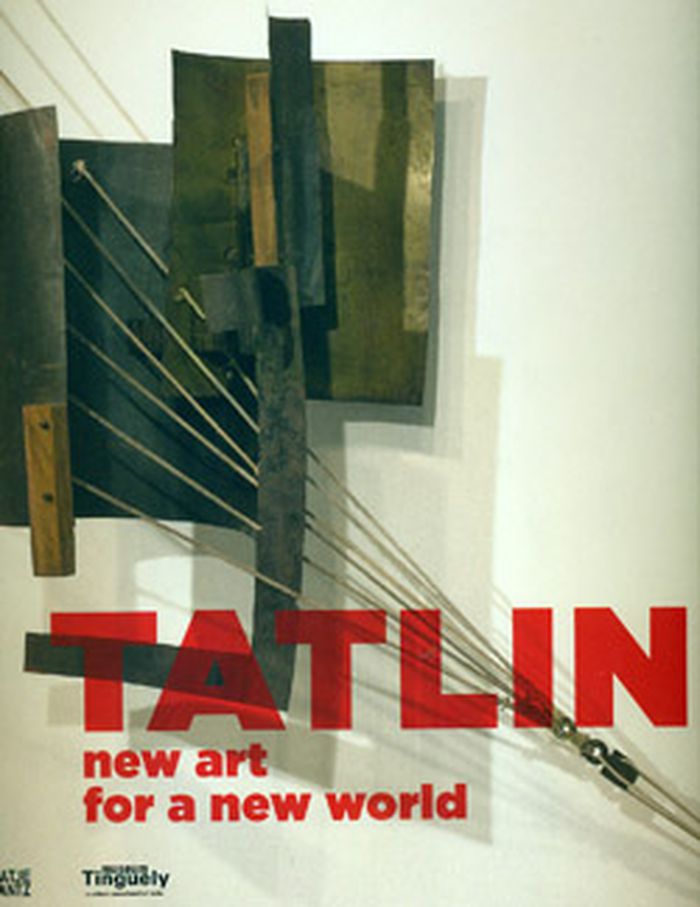
Painter, architect, engineer, set designer, father to the Russian Constructivist movement, inventor of the “counter-relief” and author of one of modernism’s greatest icons, the “Monument to the Third International,” Vladimir Tatlin blazed an incredible trail of innovation through the glory years of the Soviet avant-garde. Nevertheless, “Not the old, not the new, but the necessary” was his motto; having spent his early years as an icon painter, Tatlin eschewed the modernist disavowal of heritage in favor of a research-based attitude to materials and genres. His “counter-relief” sculptures, made of wood, cardboard, metal and wire, were foundational works for Rodchenko and the Constructivists, and their influence can be seen today in the works of creators as various as Zaha Hadid and Richard Tuttle. With 120 color illustrations and a wealth of archival photos, this volume offers the first English-language overview of Tatlin’s diverse achievements in more than 25 years. Published for a landmark exhibition at the Museum Tinguely in Basel, it examines every facet of his output, from his early Cubist-influenced paintings to the counter-reliefs, the “Tower,” prints, set and costume designs and aeronautic researches, and constitutes an essential portrait of the ambitions of Soviet modernism.
Vladimir Tatlin: new art for a New World
Actions:
Price:
$60.00
(available to order)
Summary:
Painter, architect, engineer, set designer, father to the Russian Constructivist movement, inventor of the “counter-relief” and author of one of modernism’s greatest icons, the “Monument to the Third International,” Vladimir Tatlin blazed an incredible trail of innovation through the glory years of the Soviet avant-garde. Nevertheless, “Not the old, not the new, but the necessary” was his motto; having spent his early years as an icon painter, Tatlin eschewed the modernist disavowal of heritage in favor of a research-based attitude to materials and genres. His “counter-relief” sculptures, made of wood, cardboard, metal and wire, were foundational works for Rodchenko and the Constructivists, and their influence can be seen today in the works of creators as various as Zaha Hadid and Richard Tuttle. With 120 color illustrations and a wealth of archival photos, this volume offers the first English-language overview of Tatlin’s diverse achievements in more than 25 years. Published for a landmark exhibition at the Museum Tinguely in Basel, it examines every facet of his output, from his early Cubist-influenced paintings to the counter-reliefs, the “Tower,” prints, set and costume designs and aeronautic researches, and constitutes an essential portrait of the ambitions of Soviet modernism.
Form:
books
books
Publication:
August 2012
August 2012
Subject:
Contemporary Art Monographs
Contemporary Art Monographs
Form:
books
books
Actions:
Price:
$29.95
(available to order)
Summary:
This publication introduces the reader to the basics of architecture so they can gain everything they need to know in order to "talk about" this topic. It provides the general public with the keys to understanding architecture from the twentieth and twenty-first centuries, and simultaneously recalls the great edifices of earlier eras. The work is broken down into chapters(...)
$29.95
(available to order)
Summary:
This publication introduces the reader to the basics of architecture so they can gain everything they need to know in order to "talk about" this topic. It provides the general public with the keys to understanding architecture from the twentieth and twenty-first centuries, and simultaneously recalls the great edifices of earlier eras. The work is broken down into chapters(...)
Title:
Talk about contemporary architecture
Actions:
Price:
$29.95
(available to order)
Summary:
This publication introduces the reader to the basics of architecture so they can gain everything they need to know in order to "talk about" this topic. It provides the general public with the keys to understanding architecture from the twentieth and twenty-first centuries, and simultaneously recalls the great edifices of earlier eras. The work is broken down into chapters that decipher a diverse range of essential concepts and answer the fundamental questions on the subject: What is contemporary architecture? When did it arise? What is its purpose? What are its newest innovations? Who are the leading architects and their most significant contributions? How can different styles be recognized? The answers to all of these questions are explained in clear and engaging text, guiding the reader to appreciate this art form that pervades all public spaces and is of universal interest. Designed as an accessible introduction, this work highlights thirty essential dates that changed the face of architecture, as well as the movers and shakers of the architecture world who have initiated and propelled movements ranging from minimalism to modernism to neo-classicism. The book is completed by a detailed chronology and a glossary of the essential vocabulary needed to talk about architecture.
Talk about contemporary architecture
Actions:
Price:
$29.95
(available to order)
Summary:
This publication introduces the reader to the basics of architecture so they can gain everything they need to know in order to "talk about" this topic. It provides the general public with the keys to understanding architecture from the twentieth and twenty-first centuries, and simultaneously recalls the great edifices of earlier eras. The work is broken down into chapters that decipher a diverse range of essential concepts and answer the fundamental questions on the subject: What is contemporary architecture? When did it arise? What is its purpose? What are its newest innovations? Who are the leading architects and their most significant contributions? How can different styles be recognized? The answers to all of these questions are explained in clear and engaging text, guiding the reader to appreciate this art form that pervades all public spaces and is of universal interest. Designed as an accessible introduction, this work highlights thirty essential dates that changed the face of architecture, as well as the movers and shakers of the architecture world who have initiated and propelled movements ranging from minimalism to modernism to neo-classicism. The book is completed by a detailed chronology and a glossary of the essential vocabulary needed to talk about architecture.
Form:
books
books
Publication:
April 2010
April 2010
Subject:
Contemporary Architecture
Contemporary Architecture
Form:
books
books
Title:
Infinity and perspective
Infinity and perspective
Actions:
Price:
$36.95
(available to order)
Summary:
Much postmodern rhetoric, suggests Karsten Harries, can be understood as a symptom of our civilization's discontent, born of regret that we are no longer able to experience our world as a cosmos that assigns us our place. But dissatisfaction with the modern world may also spring from a conviction that modernism has failed to confront the challenge of an inevitably open(...)
$36.95
(available to order)
Summary:
Much postmodern rhetoric, suggests Karsten Harries, can be understood as a symptom of our civilization's discontent, born of regret that we are no longer able to experience our world as a cosmos that assigns us our place. But dissatisfaction with the modern world may also spring from a conviction that modernism has failed to confront the challenge of an inevitably open(...)
Title:
Infinity and perspective
Actions:
Price:
$36.95
(available to order)
Summary:
Much postmodern rhetoric, suggests Karsten Harries, can be understood as a symptom of our civilization's discontent, born of regret that we are no longer able to experience our world as a cosmos that assigns us our place. But dissatisfaction with the modern world may also spring from a conviction that modernism has failed to confront the challenge of an inevitably open future. Such conviction has frequently led to a critique of modernity's founding heroes. Challenging that critique, Harries insists that modernity is supported by nothing other than human freedom. But more important to Harries is to show how modernist self-assertion is shadowed by nihilism and what it might mean to step out of that shadow. Looking at a small number of medieval and Renaissance texts, as well as some paintings, he uncovers the threshold that separates the modern from the premodern world. At the same time, he illuminates that other, more questionable threshold, between the modern and the postmodern. Two spirits preside over the book: Alberti, the Renaissance author on art and architecture, whose passionate interest in perspective and point of view offers a key to modernity; and Nicolaus Cusanus, the fifteenth-century cardinal, whose work shows that such interest cannot be divorced from speculations on the infinity of God. The title Infinity and Perspective connects the two to each other and to the shape of modernity.
Infinity and perspective
Actions:
Price:
$36.95
(available to order)
Summary:
Much postmodern rhetoric, suggests Karsten Harries, can be understood as a symptom of our civilization's discontent, born of regret that we are no longer able to experience our world as a cosmos that assigns us our place. But dissatisfaction with the modern world may also spring from a conviction that modernism has failed to confront the challenge of an inevitably open future. Such conviction has frequently led to a critique of modernity's founding heroes. Challenging that critique, Harries insists that modernity is supported by nothing other than human freedom. But more important to Harries is to show how modernist self-assertion is shadowed by nihilism and what it might mean to step out of that shadow. Looking at a small number of medieval and Renaissance texts, as well as some paintings, he uncovers the threshold that separates the modern from the premodern world. At the same time, he illuminates that other, more questionable threshold, between the modern and the postmodern. Two spirits preside over the book: Alberti, the Renaissance author on art and architecture, whose passionate interest in perspective and point of view offers a key to modernity; and Nicolaus Cusanus, the fifteenth-century cardinal, whose work shows that such interest cannot be divorced from speculations on the infinity of God. The title Infinity and Perspective connects the two to each other and to the shape of modernity.
Form:
books
books
Publication:
October 2002, Cambridge, Mass.
October 2002, Cambridge, Mass.
Subject:
Architectural Theory
Architectural Theory
Form:
books
books
Actions:
Price:
$39.95
(available in store)
Summary:
Cuban-born, Mexico-based designer Clara Porset is renowned for her mid-century modern furniture and interior design and for her collaborations with architects such as Luis Barragán and Mario Pani. She was also an accomplished critic and writer. ''Living Design'' collects Porset’s essays, reviews, and lectures to highlight her role as an influential thinker, educator, and(...)
$39.95
(available in store)
Summary:
Cuban-born, Mexico-based designer Clara Porset is renowned for her mid-century modern furniture and interior design and for her collaborations with architects such as Luis Barragán and Mario Pani. She was also an accomplished critic and writer. ''Living Design'' collects Porset’s essays, reviews, and lectures to highlight her role as an influential thinker, educator, and(...)
Title:
Living design: The writings of Clara Porset
Actions:
Price:
$39.95
(available in store)
Summary:
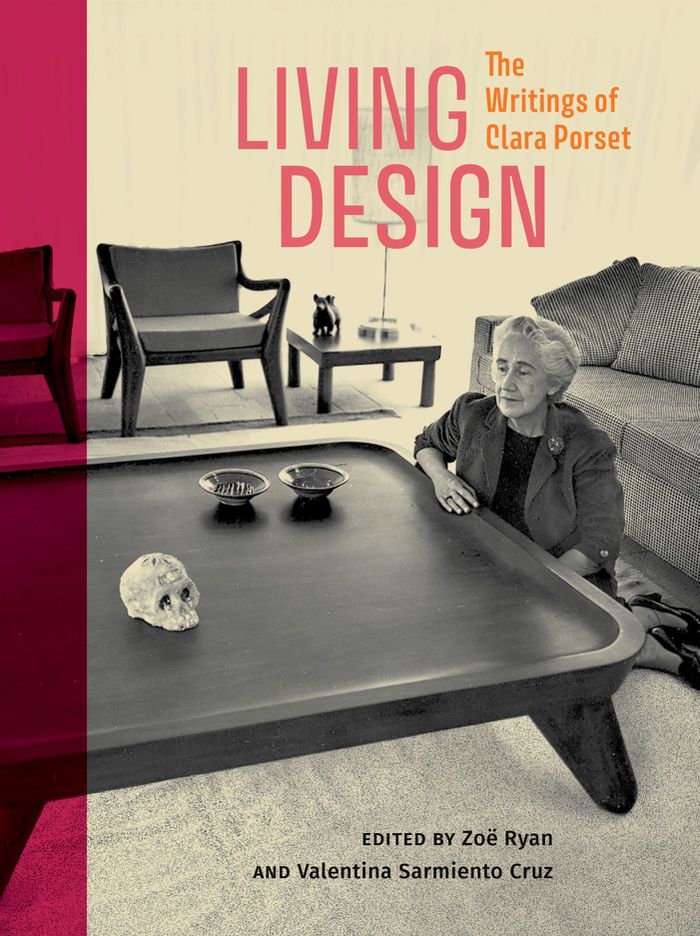
Cuban-born, Mexico-based designer Clara Porset is renowned for her mid-century modern furniture and interior design and for her collaborations with architects such as Luis Barragán and Mario Pani. She was also an accomplished critic and writer. ''Living Design'' collects Porset’s essays, reviews, and lectures to highlight her role as an influential thinker, educator, and practitioner. This volume insightfully contextualizes the politics that shaped Porset’s design principles, charts the influence of the Bauhaus and Black Mountain College on her work, and reveals the period’s fusion of local adaptations and modernist principles that made Mexico a major center of modernist design. At a time when many practitioners believed that design could only be modernized by replacing hand craftsmanship with mechanization, Porset valued both approaches for their distinctive qualities and urged others to do the same. Through her writings, she encouraged efforts to catalyze local design communities during a period of rapid technological and social change. With essays by historian Randal Sheppard and design curator and scholar Ana Elena Mallet, an introduction by volume editors Zoë Ryan and Valentina Sarmiento Cruz, and explanatory notes on the people and publishing forums in Porset’s circle, ''Living Design'' makes available works never before published in English, and with only limited circulation in the Spanish language, in order to recover an important and neglected voice in global modernism.
Living design: The writings of Clara Porset
Actions:
Price:
$39.95
(available in store)
Summary:
Cuban-born, Mexico-based designer Clara Porset is renowned for her mid-century modern furniture and interior design and for her collaborations with architects such as Luis Barragán and Mario Pani. She was also an accomplished critic and writer. ''Living Design'' collects Porset’s essays, reviews, and lectures to highlight her role as an influential thinker, educator, and practitioner. This volume insightfully contextualizes the politics that shaped Porset’s design principles, charts the influence of the Bauhaus and Black Mountain College on her work, and reveals the period’s fusion of local adaptations and modernist principles that made Mexico a major center of modernist design. At a time when many practitioners believed that design could only be modernized by replacing hand craftsmanship with mechanization, Porset valued both approaches for their distinctive qualities and urged others to do the same. Through her writings, she encouraged efforts to catalyze local design communities during a period of rapid technological and social change. With essays by historian Randal Sheppard and design curator and scholar Ana Elena Mallet, an introduction by volume editors Zoë Ryan and Valentina Sarmiento Cruz, and explanatory notes on the people and publishing forums in Porset’s circle, ''Living Design'' makes available works never before published in English, and with only limited circulation in the Spanish language, in order to recover an important and neglected voice in global modernism.
Form:
books
books
Publication:
November 2024
November 2024
Subject:
Design Monographs
Design Monographs
Form:
books
books
Actions:
Price:
$68.95
(available to order)
Summary:
In "Queer moderns", Alice Friedman tells the fascinating story of the queer avant-garde of the 1920s and ’30s in New York, Paris, and Venice, as seen through the eyes of Max Ewing (1903–1934), a young musician, photographer, and man-about-town who, although virtually unknown today, moved in extraordinary circles. In his photographs and letters, we meet the rising stars of(...)
$68.95
(available to order)
Summary:
In "Queer moderns", Alice Friedman tells the fascinating story of the queer avant-garde of the 1920s and ’30s in New York, Paris, and Venice, as seen through the eyes of Max Ewing (1903–1934), a young musician, photographer, and man-about-town who, although virtually unknown today, moved in extraordinary circles. In his photographs and letters, we meet the rising stars of(...)
Title:
Queer moderns: Max Ewing's jazz age New York
Actions:
Price:
$68.95
(available to order)
Summary:
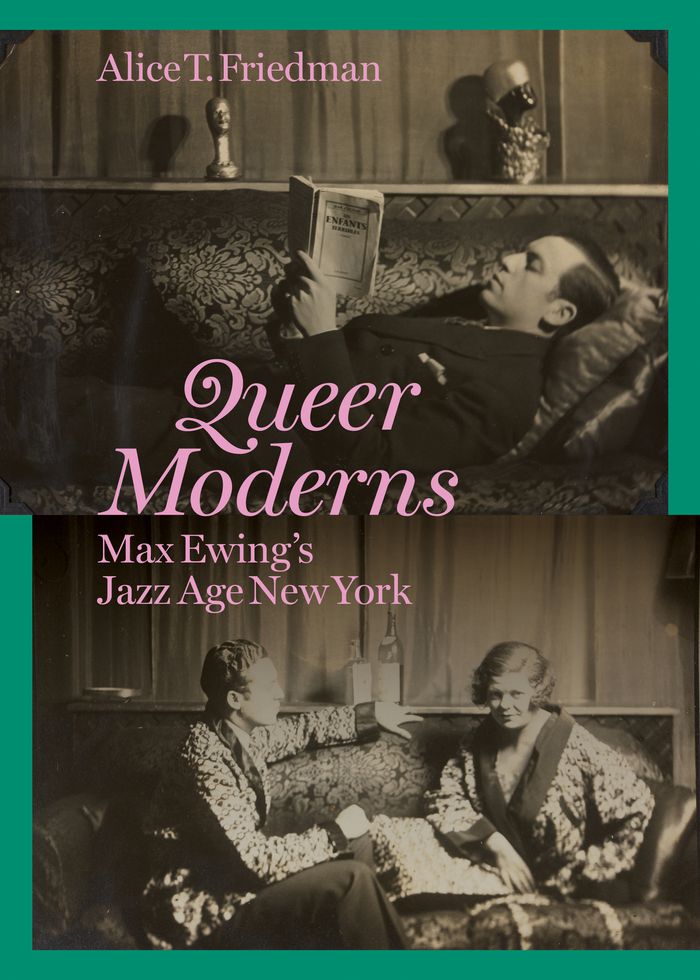
In "Queer moderns", Alice Friedman tells the fascinating story of the queer avant-garde of the 1920s and ’30s in New York, Paris, and Venice, as seen through the eyes of Max Ewing (1903–1934), a young musician, photographer, and man-about-town who, although virtually unknown today, moved in extraordinary circles. In his photographs and letters, we meet the rising stars of modern art, music, dance, and literature and enter a world of interracial friendship, "queer space," and experimentation that shone brightly before being swept away by the Depression. It is a remarkable story that reveals that the history of modernism is more queer and more Black than previously recognized. In the 1920s, Ewing became part of an international coterie of artists led by Carl Van Vechten and Muriel Draper. In Europe, he was entertained by Gertrude Stein, met Stravinsky, and took a road trip with Romaine Brooks and Natalie Barney. In 1928, in a closet in his apartment, Ewing created the "Gallery of extraordinary portraits", an installation of photos of his favorite celebrities—Black and white, clothed and nude. For his "Carnival of Venice", he took portraits of more than a hundred friends—including Paul Robeson, Berenice Abbott, Isamu Noguchi, Agnes de Mille, and E. E. Cummings—posed in front of a backdrop of Saint Mark’s Square.
Queer moderns: Max Ewing's jazz age New York
Actions:
Price:
$68.95
(available to order)
Summary:
In "Queer moderns", Alice Friedman tells the fascinating story of the queer avant-garde of the 1920s and ’30s in New York, Paris, and Venice, as seen through the eyes of Max Ewing (1903–1934), a young musician, photographer, and man-about-town who, although virtually unknown today, moved in extraordinary circles. In his photographs and letters, we meet the rising stars of modern art, music, dance, and literature and enter a world of interracial friendship, "queer space," and experimentation that shone brightly before being swept away by the Depression. It is a remarkable story that reveals that the history of modernism is more queer and more Black than previously recognized. In the 1920s, Ewing became part of an international coterie of artists led by Carl Van Vechten and Muriel Draper. In Europe, he was entertained by Gertrude Stein, met Stravinsky, and took a road trip with Romaine Brooks and Natalie Barney. In 1928, in a closet in his apartment, Ewing created the "Gallery of extraordinary portraits", an installation of photos of his favorite celebrities—Black and white, clothed and nude. For his "Carnival of Venice", he took portraits of more than a hundred friends—including Paul Robeson, Berenice Abbott, Isamu Noguchi, Agnes de Mille, and E. E. Cummings—posed in front of a backdrop of Saint Mark’s Square.
Form:
books
books
Publication:
May 2025
May 2025
Subject:
Art Theory
Art Theory
Form:
books
books
Actions:
Price:
$44.95
(available to order)
Summary:
Modelling Time: The Permanent Collection 1925–2014 chronicles the exhibition Model as Ruin at the House of Artists in Oslo, November 1 – December 15, 2013. Together with master students from the Oslo School of Architecture and Design, Mari Hvattum and Mari Lending brought a unique, modernist model collection out of the archives, re-exhibiting it at the venue that once(...)
$44.95
(available to order)
Summary:
Modelling Time: The Permanent Collection 1925–2014 chronicles the exhibition Model as Ruin at the House of Artists in Oslo, November 1 – December 15, 2013. Together with master students from the Oslo School of Architecture and Design, Mari Hvattum and Mari Lending brought a unique, modernist model collection out of the archives, re-exhibiting it at the venue that once(...)
Title:
Modelling time: the permanent collection 1925-2014
Actions:
Price:
$44.95
(available to order)
Summary:
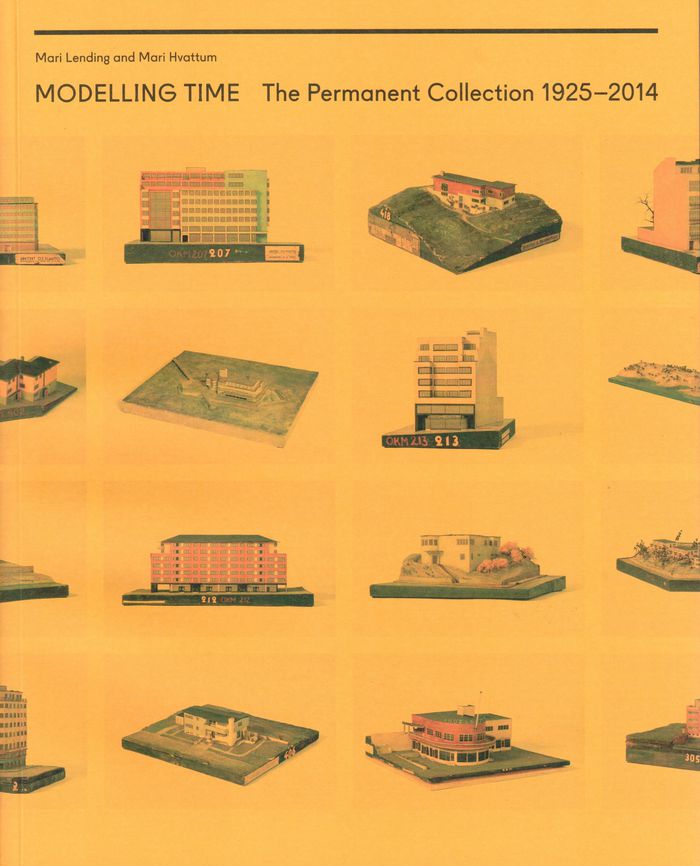
Modelling Time: The Permanent Collection 1925–2014 chronicles the exhibition Model as Ruin at the House of Artists in Oslo, November 1 – December 15, 2013. Together with master students from the Oslo School of Architecture and Design, Mari Hvattum and Mari Lending brought a unique, modernist model collection out of the archives, re-exhibiting it at the venue that once hosted its biggest ever display in 1931. The collection testifies to a different modernism; not white and austere but colourful, diverse, and full of detail. Modelling Time gives an in-depth portrayal of the so-called ‘Permanent Collection’ of Norwegian scale models, photographs and drawings, tracing its international trajectory of exhibitions from Brussels in 1927 to its last appearance at the World’s Fair in New York in 1939. The book documents the collection’s heydays as part of a vivid international modernist culture, as well as its archival diaspora as it falls into oblivion after WWII. In an extensive, archive-based essay editors Lending and Hvattum give the full context of the collection, while Juliane Derry and Jorge Otero-Pailos look into the models’ materiality and issues of decay. Model scholars and architecture curators Barry Bergdoll, Carson Chan, Pippo Ciorra, Oliver Elser, Juliet Koss, Andres Lepik, Adam Lowe, Wallis Miller, Jorge Otero-Pailos, Léa-Catherine Szacka, and Victor Plathe Tschudi presents a variety of perspectives inspired by the Oslo collection.
Modelling time: the permanent collection 1925-2014
Actions:
Price:
$44.95
(available to order)
Summary:
Modelling Time: The Permanent Collection 1925–2014 chronicles the exhibition Model as Ruin at the House of Artists in Oslo, November 1 – December 15, 2013. Together with master students from the Oslo School of Architecture and Design, Mari Hvattum and Mari Lending brought a unique, modernist model collection out of the archives, re-exhibiting it at the venue that once hosted its biggest ever display in 1931. The collection testifies to a different modernism; not white and austere but colourful, diverse, and full of detail. Modelling Time gives an in-depth portrayal of the so-called ‘Permanent Collection’ of Norwegian scale models, photographs and drawings, tracing its international trajectory of exhibitions from Brussels in 1927 to its last appearance at the World’s Fair in New York in 1939. The book documents the collection’s heydays as part of a vivid international modernist culture, as well as its archival diaspora as it falls into oblivion after WWII. In an extensive, archive-based essay editors Lending and Hvattum give the full context of the collection, while Juliane Derry and Jorge Otero-Pailos look into the models’ materiality and issues of decay. Model scholars and architecture curators Barry Bergdoll, Carson Chan, Pippo Ciorra, Oliver Elser, Juliet Koss, Andres Lepik, Adam Lowe, Wallis Miller, Jorge Otero-Pailos, Léa-Catherine Szacka, and Victor Plathe Tschudi presents a variety of perspectives inspired by the Oslo collection.
Form:
books
books
Publication:
October 2016
October 2016
Subject:
Models
Models
Form:
books
books
Actions:
Price:
$41.95
(available to order)
Summary:
Beginning with the inception of the U.S. embassy building program in 1926, and continuing through the 1996 competition for a new embassy in Berlin, "The Architecture of Diplomacy" examines a remarkable(...)
$41.95
(available to order)
Summary:
Beginning with the inception of the U.S. embassy building program in 1926, and continuing through the 1996 competition for a new embassy in Berlin, "The Architecture of Diplomacy" examines a remarkable(...)
Subject:
Commercial interiors, Building types
Commercial interiors, Building types
Publication:
August 1998, New York
August 1998, New York
Title:
The architecture of diplomacy : building America's embassies
Actions:
Price:
$41.95
(available to order)
Summary:
Beginning with the inception of the U.S. embassy building program in 1926, and continuing through the 1996 competition for a new embassy in Berlin, "The Architecture of Diplomacy" examines a remarkable yet little-known chapter in architectural history. It focuses on the 1950s, when modernism became linked with the idea of freedom and the State Department's Office of Foreign Buildings Operations began to showcase modern architecture in its embassies. Architects could build abroad in styles never sanctioned at home, resulting in unusual and sometimes outlandish designs intended to express an "open" America overseas. Indeed, the embassy building program was part of the nation's larger effort to establish and assert its superpower status following World War II. Terrorist threats and espionage scandals also shaped the worldwide building program, and continue to affect it today. "The Architecture of Diplomacy" features the stories behind the Rio de Janiero and Havana embassies by Harrison & Abramovitz, Ralph Rapson's designs for Stockholm and Copenhagen, Gordon Bunshaft's work in Germany, Eero Saarinen's constructions in London and Oslo, and Edward Durell Stone's embassy in New Delhi. Other architects involved in the program included Arquitectonica; Pietro Belluschi; Marcel Breuer; Walter Gropius; Kallmann, McKinnell & Wood; Richard Neutra; and Skidmore, Owings & Merrill. Author Jane C. Loeffler obtained access to original correspondence, drawings, and photographs that have never been published.
The architecture of diplomacy : building America's embassies
Actions:
Price:
$41.95
(available to order)
Summary:
Beginning with the inception of the U.S. embassy building program in 1926, and continuing through the 1996 competition for a new embassy in Berlin, "The Architecture of Diplomacy" examines a remarkable yet little-known chapter in architectural history. It focuses on the 1950s, when modernism became linked with the idea of freedom and the State Department's Office of Foreign Buildings Operations began to showcase modern architecture in its embassies. Architects could build abroad in styles never sanctioned at home, resulting in unusual and sometimes outlandish designs intended to express an "open" America overseas. Indeed, the embassy building program was part of the nation's larger effort to establish and assert its superpower status following World War II. Terrorist threats and espionage scandals also shaped the worldwide building program, and continue to affect it today. "The Architecture of Diplomacy" features the stories behind the Rio de Janiero and Havana embassies by Harrison & Abramovitz, Ralph Rapson's designs for Stockholm and Copenhagen, Gordon Bunshaft's work in Germany, Eero Saarinen's constructions in London and Oslo, and Edward Durell Stone's embassy in New Delhi. Other architects involved in the program included Arquitectonica; Pietro Belluschi; Marcel Breuer; Walter Gropius; Kallmann, McKinnell & Wood; Richard Neutra; and Skidmore, Owings & Merrill. Author Jane C. Loeffler obtained access to original correspondence, drawings, and photographs that have never been published.
Form:
books
books
Publication:
August 1998, New York
August 1998, New York
Subject:
Commercial interiors, Building types
Commercial interiors, Building types
Form:
books
books
Actions:
Price:
$66.00
(available to order)
Summary:
This illustrated collection of essays brings together some of art historian Linda Nochlin’s most important writings on modernism and modernity from across her six-decade career. Before the publication of her seminal essay on feminism in art, “Why Have There Been No Great Women Artists?,” she had already firmly established herself as a major practitioner of a politically(...)
$66.00
(available to order)
Summary:
This illustrated collection of essays brings together some of art historian Linda Nochlin’s most important writings on modernism and modernity from across her six-decade career. Before the publication of her seminal essay on feminism in art, “Why Have There Been No Great Women Artists?,” she had already firmly established herself as a major practitioner of a politically(...)
Title:
Making it modern: Essays on the art of the now
Actions:
Price:
$66.00
(available to order)
Summary:
This illustrated collection of essays brings together some of art historian Linda Nochlin’s most important writings on modernism and modernity from across her six-decade career. Before the publication of her seminal essay on feminism in art, “Why Have There Been No Great Women Artists?,” she had already firmly established herself as a major practitioner of a politically sophisticated and class-conscious social art history. Nochlin was part of an important cohort of scholars writing on modernity, determined to rethink the narratives of the subject under the pressure of contemporary events such as student uprisings, the women’s liberation movement, and the Vietnam War, with the help of politically engaged literary criticism that was emerging at the same time. Nochlin embraced Charles Baudelaire’s conviction that modernity is meant to be of one’s time- and that the role of an art historian was to understand the art of the past not only in its own historical context but according to the urgencies of the contemporary world. From academic debates about the nude in the eighteenth century to the work of Robert Gober in the twenty-first, whatever she turned her analytic eye to was conceived as the art of the now. Including seven previously unpublished pieces, this collection highlights the breadth and diversity of Nochlin’s output across the decades, including discussions on colonialism, fashion, and sex.
Making it modern: Essays on the art of the now
Actions:
Price:
$66.00
(available to order)
Summary:
This illustrated collection of essays brings together some of art historian Linda Nochlin’s most important writings on modernism and modernity from across her six-decade career. Before the publication of her seminal essay on feminism in art, “Why Have There Been No Great Women Artists?,” she had already firmly established herself as a major practitioner of a politically sophisticated and class-conscious social art history. Nochlin was part of an important cohort of scholars writing on modernity, determined to rethink the narratives of the subject under the pressure of contemporary events such as student uprisings, the women’s liberation movement, and the Vietnam War, with the help of politically engaged literary criticism that was emerging at the same time. Nochlin embraced Charles Baudelaire’s conviction that modernity is meant to be of one’s time- and that the role of an art historian was to understand the art of the past not only in its own historical context but according to the urgencies of the contemporary world. From academic debates about the nude in the eighteenth century to the work of Robert Gober in the twenty-first, whatever she turned her analytic eye to was conceived as the art of the now. Including seven previously unpublished pieces, this collection highlights the breadth and diversity of Nochlin’s output across the decades, including discussions on colonialism, fashion, and sex.
Form:
books
books
Publication:
March 2022
March 2022
Subject:
Art Theory
Art Theory
Form:
books
books
Price:
$35.95
(available to order)
Summary:
The "ruins" of the modern era are the landmarks of recent art’s turn toward site and situation, history and memory. The abiding interest of artists in ruination and decay has led in particular to the concept of the modern ruin - an ambiguous site of artistic and architectural modernism, personal and collective memories, and the cultural afterlife of eras such as those of(...)
$35.95
(available to order)
Summary:
The "ruins" of the modern era are the landmarks of recent art’s turn toward site and situation, history and memory. The abiding interest of artists in ruination and decay has led in particular to the concept of the modern ruin - an ambiguous site of artistic and architectural modernism, personal and collective memories, and the cultural afterlife of eras such as those of(...)
Title:
Ruins
Actions:
Price:
$35.95
(available to order)
Summary:
The "ruins" of the modern era are the landmarks of recent art’s turn toward site and situation, history and memory. The abiding interest of artists in ruination and decay has led in particular to the concept of the modern ruin - an ambiguous site of artistic and architectural modernism, personal and collective memories, and the cultural afterlife of eras such as those of state communism and colonialism. Contemporary art’s explorations of the ruin can evoke on the one hand diverse experiences of nostalgia and on the other a ceaselessly renewed encounter with catastrophes of the recent past and apprehensions of the future. For every relic of a harmonious era or utopian dream stands another recalling industrial decline, environmental disaster, and the depredations of war. This anthology provides a comprehensive survey of the contemporary ruin in cultural discourse, aesthetics, and artistic practice. It examines the development of ruin aesthetics from the early modern era to the present; the ruin as a privileged emblem of modernity’s decline; the relic as a portal onto the political history of the recent past; the destruction and decline of cities and landscapes, with the emergence of "non-places" and “drosscape”; the symbolism of the entropic and decayed in critical environmentalism; and the confusing temporalities of the ruin in recent art - its involution of timescales and perspectives as it addresses not just the past but the future.
Ruins
Actions:
Price:
$35.95
(available to order)
Summary:
The "ruins" of the modern era are the landmarks of recent art’s turn toward site and situation, history and memory. The abiding interest of artists in ruination and decay has led in particular to the concept of the modern ruin - an ambiguous site of artistic and architectural modernism, personal and collective memories, and the cultural afterlife of eras such as those of state communism and colonialism. Contemporary art’s explorations of the ruin can evoke on the one hand diverse experiences of nostalgia and on the other a ceaselessly renewed encounter with catastrophes of the recent past and apprehensions of the future. For every relic of a harmonious era or utopian dream stands another recalling industrial decline, environmental disaster, and the depredations of war. This anthology provides a comprehensive survey of the contemporary ruin in cultural discourse, aesthetics, and artistic practice. It examines the development of ruin aesthetics from the early modern era to the present; the ruin as a privileged emblem of modernity’s decline; the relic as a portal onto the political history of the recent past; the destruction and decline of cities and landscapes, with the emergence of "non-places" and “drosscape”; the symbolism of the entropic and decayed in critical environmentalism; and the confusing temporalities of the ruin in recent art - its involution of timescales and perspectives as it addresses not just the past but the future.
Form:
books
books
Publication:
September 2011
September 2011
Subject:
Art Theory
Art Theory
Form:
books
books
Price:
$33.50
(available in store)
Summary:
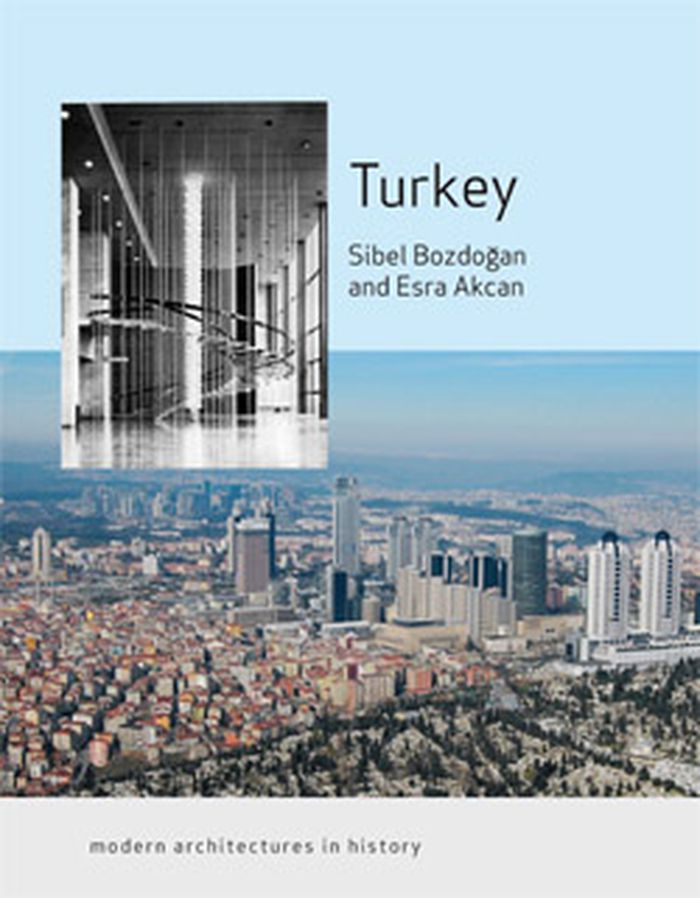
This book is an account of modern architecture in Turkey, placing architecture's history in the larger social, political and cultural context of Turkey's development in the twentieth century. It takes the reader from the end of World War I, when the new Turkish Republic was born out of the disintegration of the Ottoman Empire, to the country's democratization after the(...)
$33.50
(available in store)
Summary:
This book is an account of modern architecture in Turkey, placing architecture's history in the larger social, political and cultural context of Turkey's development in the twentieth century. It takes the reader from the end of World War I, when the new Turkish Republic was born out of the disintegration of the Ottoman Empire, to the country's democratization after the(...)
Subject:
Architecture since 1900, Middle-East
Architecture since 1900, Middle-East
Publication:
November 2011
November 2011
Title:
Turkey
Actions:
Price:
$33.50
(available in store)
Summary:
This book is an account of modern architecture in Turkey, placing architecture's history in the larger social, political and cultural context of Turkey's development in the twentieth century. It takes the reader from the end of World War I, when the new Turkish Republic was born out of the disintegration of the Ottoman Empire, to the country's democratization after the 1950s in the midst of the Cold War's competing ideological forces, and finally to the present, with Turkey continuing to be dramatically transformed through globalization, economic integration with the world market and transnational cultural influences, as well as with its renewed preoccupations with identity, including its Islamic and Ottoman heritage. Turkey explores a country on Europe's most eastern margin, and it is unique in tackling the issue of the modern and contemporary periods typically omitted in traditional surveys of modern architecture and Islamic art and architecture. The authors investigate how and why young Turkish architects adopted modernism early in the twentieth century and explore institutional and architect-designed buildings through the decades down to the present day, from government buildings, hotels and factories to apartment blocks and individual homes both urban and rural. They also focus on informal residential areas, and explain how some that have evolved from small settlements to colossal urban quarters exist at a slippery threshold between legality and illegality.
Turkey
Actions:
Price:
$33.50
(available in store)
Summary:
This book is an account of modern architecture in Turkey, placing architecture's history in the larger social, political and cultural context of Turkey's development in the twentieth century. It takes the reader from the end of World War I, when the new Turkish Republic was born out of the disintegration of the Ottoman Empire, to the country's democratization after the 1950s in the midst of the Cold War's competing ideological forces, and finally to the present, with Turkey continuing to be dramatically transformed through globalization, economic integration with the world market and transnational cultural influences, as well as with its renewed preoccupations with identity, including its Islamic and Ottoman heritage. Turkey explores a country on Europe's most eastern margin, and it is unique in tackling the issue of the modern and contemporary periods typically omitted in traditional surveys of modern architecture and Islamic art and architecture. The authors investigate how and why young Turkish architects adopted modernism early in the twentieth century and explore institutional and architect-designed buildings through the decades down to the present day, from government buildings, hotels and factories to apartment blocks and individual homes both urban and rural. They also focus on informal residential areas, and explain how some that have evolved from small settlements to colossal urban quarters exist at a slippery threshold between legality and illegality.
Form:
books
books
Publication:
November 2011
November 2011
Subject:
Architecture since 1900, Middle-East
Architecture since 1900, Middle-East


