


3270 Results
Form:
books
books
Title:
Transmaterial next : a catalog of materials that redefine our future / edited by Blaine Brownell.
Transmaterial next : a catalog of materials that redefine our future / edited by Blaine Brownell.
Actions:
Holdings:
Description:
314 pages : color illustrations ; 23 cm
Description:
314 pages : color illustrations ; 23 cm
Author:
Subject:
Publication:
New York : Princeton Architectural Press, [2017]
New York : Princeton Architectural Press, [2017]
Title:
Transmaterial next : a catalog of materials that redefine our future / edited by Blaine Brownell.
Actions:
Holdings:
Description:
314 pages : color illustrations ; 23 cm
Transmaterial next : a catalog of materials that redefine our future / edited by Blaine Brownell.
Actions:
Holdings:
Description:
314 pages : color illustrations ; 23 cm
Form:
books
books
Publication:
New York : Princeton Architectural Press, [2017]
New York : Princeton Architectural Press, [2017]
Author:
Subject:
Form:
books
books
Price:
$124.50
(available to order)
Summary:
During his tenure as Chief Royal Architect (1539-1588) in the "Golden Age" of the Ottoman Empire, Sinan designed hundreds of structures that helped create the renowned urban image of Istanbul, particularly mosques with seemingly weightless, light-filled centralized domes that have been compared with developments in Renaissance Italy. His distinctive architectural idiom(...)
$124.50
(available to order)
Summary:
During his tenure as Chief Royal Architect (1539-1588) in the "Golden Age" of the Ottoman Empire, Sinan designed hundreds of structures that helped create the renowned urban image of Istanbul, particularly mosques with seemingly weightless, light-filled centralized domes that have been compared with developments in Renaissance Italy. His distinctive architectural idiom(...)
Title:
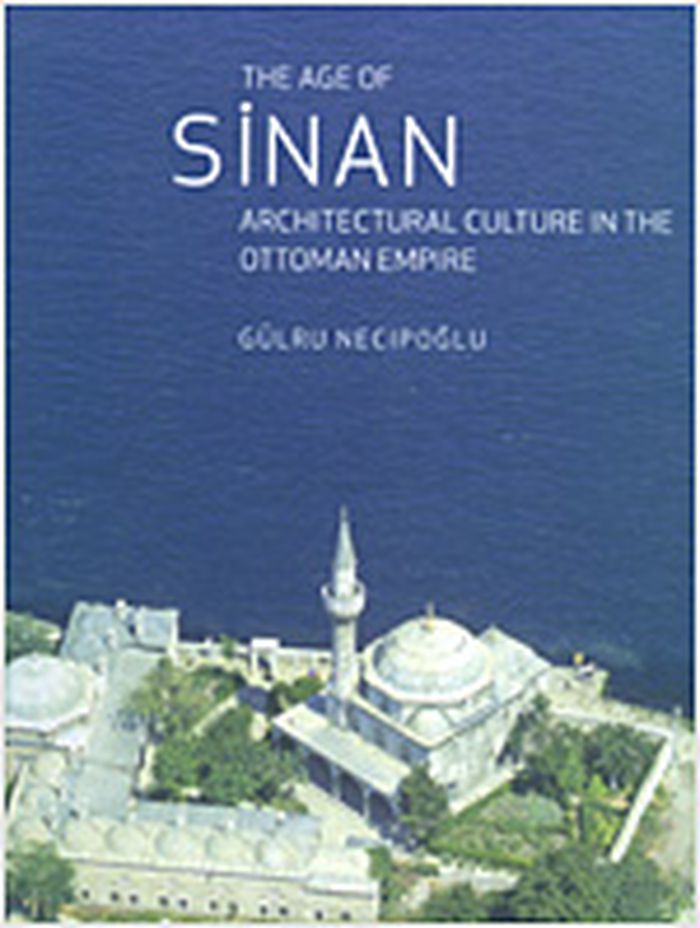
The Age of Sinan : architectural culture in the Ottoman Empire
Actions:
Price:
$124.50
(available to order)
Summary:
During his tenure as Chief Royal Architect (1539-1588) in the "Golden Age" of the Ottoman Empire, Sinan designed hundreds of structures that helped create the renowned urban image of Istanbul, particularly mosques with seemingly weightless, light-filled centralized domes that have been compared with developments in Renaissance Italy. His distinctive architectural idiom left its imprint over a vast empire extending from the Danube to the Tigris, and he became the most celebrated of all Ottoman architects. In this lavishly illustrated, major new assessment of Sinan's oeuvre, Gülru Necipoglu challenges standard views of Sinan as a "Turkish Michelangelo" driven solely by an insatiable urge for artistic experimentation. Her innovative analysis shows that Sinan's rich variety of mosque designs sprang from a process of negotiation between the architect and his elite patrons, both men and women. Defined though they were by social and territorial hierarchies and associated notions of identity, memory, and decorum, Sinan's mosques simultaneously shaped these conceptions. "The Age of Sinan" draws on a wealth of primary sources to reveal the chief architect's monuments as bearers of previously unrecognized dimensions of meaning. A sophisticated study of the cultural and social history of Ottoman architecture, interpreting the works of a seminal figure in the early modern eastern Mediterranean world, it is must-reading for scholars and students of art history and other fields with an interest in the Ottoman Empire.
The Age of Sinan : architectural culture in the Ottoman Empire
Actions:
Price:
$124.50
(available to order)
Summary:
During his tenure as Chief Royal Architect (1539-1588) in the "Golden Age" of the Ottoman Empire, Sinan designed hundreds of structures that helped create the renowned urban image of Istanbul, particularly mosques with seemingly weightless, light-filled centralized domes that have been compared with developments in Renaissance Italy. His distinctive architectural idiom left its imprint over a vast empire extending from the Danube to the Tigris, and he became the most celebrated of all Ottoman architects. In this lavishly illustrated, major new assessment of Sinan's oeuvre, Gülru Necipoglu challenges standard views of Sinan as a "Turkish Michelangelo" driven solely by an insatiable urge for artistic experimentation. Her innovative analysis shows that Sinan's rich variety of mosque designs sprang from a process of negotiation between the architect and his elite patrons, both men and women. Defined though they were by social and territorial hierarchies and associated notions of identity, memory, and decorum, Sinan's mosques simultaneously shaped these conceptions. "The Age of Sinan" draws on a wealth of primary sources to reveal the chief architect's monuments as bearers of previously unrecognized dimensions of meaning. A sophisticated study of the cultural and social history of Ottoman architecture, interpreting the works of a seminal figure in the early modern eastern Mediterranean world, it is must-reading for scholars and students of art history and other fields with an interest in the Ottoman Empire.
Form:
books
books
Publication:
May 2005, Princeton
May 2005, Princeton
Subject:
History until 1900, Asia
History until 1900, Asia
Form:
books
books
Actions:
Holdings:
Description:
xcii, 430 pages : illustrations (some color), maps (some color) ; 21 cm
Description:
xcii, 430 pages : illustrations (some color), maps (some color) ; 21 cm
Author:
Subject:
Publication:
Rotterdam : NAi Publishers, ©2007.
Rotterdam : NAi Publishers, ©2007.
Title:
Wimby! hoogvliet : future, past and present of a new town / [edited by Michelle Provoost ; texts, Annuska Pronkhorst [and others].
Actions:
Holdings:
Description:
xcii, 430 pages : illustrations (some color), maps (some color) ; 21 cm
Wimby! hoogvliet : future, past and present of a new town / [edited by Michelle Provoost ; texts, Annuska Pronkhorst [and others].
Actions:
Holdings:
Description:
xcii, 430 pages : illustrations (some color), maps (some color) ; 21 cm
Form:
books
books
Publication:
Rotterdam : NAi Publishers, ©2007.
Rotterdam : NAi Publishers, ©2007.
Author:
Subject:
Form:
books
books
Actions:
Price:
$7.99
(available to order)
Summary:
The rivalry between the brilliant seventeenth-century Italian architects Gianlorenzo Bernini and Francesco Borromini is the stuff of legend. Possessed of enormous talent and ambition, these two artists -- one trained as a sculptor, the other as a stonecutter -- met as contemporaries in the building yards of St. Peter's in Rome and ended their lives as bitter enemies. Over(...)
$7.99
(available to order)
Summary:
The rivalry between the brilliant seventeenth-century Italian architects Gianlorenzo Bernini and Francesco Borromini is the stuff of legend. Possessed of enormous talent and ambition, these two artists -- one trained as a sculptor, the other as a stonecutter -- met as contemporaries in the building yards of St. Peter's in Rome and ended their lives as bitter enemies. Over(...)
Title:
The genius in the design : Bernini, Borromini, and the rivalry that transformed Rome
Actions:
Price:
$7.99
(available to order)
Summary:
The rivalry between the brilliant seventeenth-century Italian architects Gianlorenzo Bernini and Francesco Borromini is the stuff of legend. Possessed of enormous talent and ambition, these two artists -- one trained as a sculptor, the other as a stonecutter -- met as contemporaries in the building yards of St. Peter's in Rome and ended their lives as bitter enemies. Over the course of their careers they became the most celebrated architects of their era, designing some of the most beautiful buildings in the world and transforming the city of Rome. “The Genius in the Design” is an extraordinary tale of how these two men plotted, schemed, and intrigued to get the better of each other. Full of dramatic tension and great insight into personalities, acclaimed writer Jake Morrissey's engrossing and impeccably researched account also shows that this legendary rivalry defined the Baroque style that immediately succeeded the Renaissance and created the spectacular Roman cityscape of today. Almost exactly the same age -- Bernini was born at the end of 1598, Borromini nine months later -- they were as alike and as different as any two men could be, each a potent combination of passion and enterprise, energy and imperfection. Bernini was a precocious talent who as a youth caught the attention of Pope Paul V and became Rome's most celebrated artist, whose patrons included the wealthiest families in Europe. The city's greatest sculptor -- the creator of such masterpieces as Apollo and Daphne and the Ecstasy of St. Teresa -- Bernini would also have been Rome's pre-eminent architect had it not been for Francesco Borromini, the one man whose talent and virtuosity rivalled his own. In contrast to Bernini's easy grace, Borromini was an introvert with a fiery temper who bristled when anyone interfered with his vision; his temperament alienated him from prospective patrons and precipitated his tragic end. Like Mozart and Salieri, these two masters were inextricably linked, their dazzling work prodding the other to greater achievement while taking merciless advantage of each other's missteps. “The Genius in the Design” is their story, a fascinating narrative of beauty and tragedy marked at turns by personal animosity and astonishing artistic achievement.
The genius in the design : Bernini, Borromini, and the rivalry that transformed Rome
Actions:
Price:
$7.99
(available to order)
Summary:
The rivalry between the brilliant seventeenth-century Italian architects Gianlorenzo Bernini and Francesco Borromini is the stuff of legend. Possessed of enormous talent and ambition, these two artists -- one trained as a sculptor, the other as a stonecutter -- met as contemporaries in the building yards of St. Peter's in Rome and ended their lives as bitter enemies. Over the course of their careers they became the most celebrated architects of their era, designing some of the most beautiful buildings in the world and transforming the city of Rome. “The Genius in the Design” is an extraordinary tale of how these two men plotted, schemed, and intrigued to get the better of each other. Full of dramatic tension and great insight into personalities, acclaimed writer Jake Morrissey's engrossing and impeccably researched account also shows that this legendary rivalry defined the Baroque style that immediately succeeded the Renaissance and created the spectacular Roman cityscape of today. Almost exactly the same age -- Bernini was born at the end of 1598, Borromini nine months later -- they were as alike and as different as any two men could be, each a potent combination of passion and enterprise, energy and imperfection. Bernini was a precocious talent who as a youth caught the attention of Pope Paul V and became Rome's most celebrated artist, whose patrons included the wealthiest families in Europe. The city's greatest sculptor -- the creator of such masterpieces as Apollo and Daphne and the Ecstasy of St. Teresa -- Bernini would also have been Rome's pre-eminent architect had it not been for Francesco Borromini, the one man whose talent and virtuosity rivalled his own. In contrast to Bernini's easy grace, Borromini was an introvert with a fiery temper who bristled when anyone interfered with his vision; his temperament alienated him from prospective patrons and precipitated his tragic end. Like Mozart and Salieri, these two masters were inextricably linked, their dazzling work prodding the other to greater achievement while taking merciless advantage of each other's missteps. “The Genius in the Design” is their story, a fascinating narrative of beauty and tragedy marked at turns by personal animosity and astonishing artistic achievement.
Form:
books
books
Publication:
March 2005, New York
March 2005, New York
Subject:
sale books
sale books
Form:
books
books
Actions:
Price:
$54.95
(available to order)
Summary:
This book is the first to tell the full and true story of Le Corbusier’s adventure in automobile design. Le Corbusier (with Pierre Jeanneret) entered an automobile design competition, submitting plans for "a minimalist vehicle for maximum functionality," the Voiture Minimum. Despite Le Corbusier’s energetic promotion of his design to several important automakers, the(...)
$54.95
(available to order)
Summary:
This book is the first to tell the full and true story of Le Corbusier’s adventure in automobile design. Le Corbusier (with Pierre Jeanneret) entered an automobile design competition, submitting plans for "a minimalist vehicle for maximum functionality," the Voiture Minimum. Despite Le Corbusier’s energetic promotion of his design to several important automakers, the(...)
Publication:
March 2011
March 2011
Title:
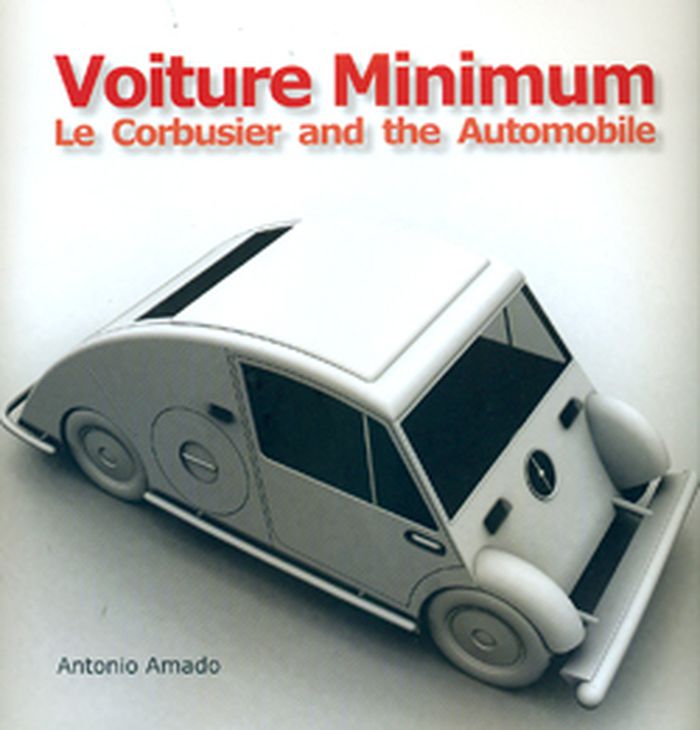
Voiture minimum: Le Corbusier and the automobile
Actions:
Price:
$54.95
(available to order)
Summary:
This book is the first to tell the full and true story of Le Corbusier’s adventure in automobile design. Le Corbusier (with Pierre Jeanneret) entered an automobile design competition, submitting plans for "a minimalist vehicle for maximum functionality," the Voiture Minimum. Despite Le Corbusier’s energetic promotion of his design to several important automakers, the Voiture Minimum was never mass-produced. Architect Antonio Amado describes the project in detail, linking it to Le Corbusier’s architectural work, to Modernist utopian urban visions, and to the automobile design projects of other architects including Walter Gropius and Frank Lloyd Wright.
Voiture minimum: Le Corbusier and the automobile
Actions:
Price:
$54.95
(available to order)
Summary:
This book is the first to tell the full and true story of Le Corbusier’s adventure in automobile design. Le Corbusier (with Pierre Jeanneret) entered an automobile design competition, submitting plans for "a minimalist vehicle for maximum functionality," the Voiture Minimum. Despite Le Corbusier’s energetic promotion of his design to several important automakers, the Voiture Minimum was never mass-produced. Architect Antonio Amado describes the project in detail, linking it to Le Corbusier’s architectural work, to Modernist utopian urban visions, and to the automobile design projects of other architects including Walter Gropius and Frank Lloyd Wright.
Form:
books
books
Publication:
March 2011
March 2011
Form:
books
books
Actions:
Holdings:
Description:
203 pages : illustrations (some color) ; 17 x 24 cm.
Description:
203 pages : illustrations (some color) ; 17 x 24 cm.
Author:
Subject:
Publication:
Ravenna [Italy] : Edizioni del Girasole, [2002]
Ravenna [Italy] : Edizioni del Girasole, [2002]
Title:
La nuova Casa del mutilato di Ravenna : storia, arte, architettura / a cura di Ivan Simonini ; [testi di Vittorio Sgarbi and others].
Actions:
Holdings:
Description:
203 pages : illustrations (some color) ; 17 x 24 cm.
La nuova Casa del mutilato di Ravenna : storia, arte, architettura / a cura di Ivan Simonini ; [testi di Vittorio Sgarbi and others].
Actions:
Holdings:
Description:
203 pages : illustrations (some color) ; 17 x 24 cm.
Form:
books
books
Publication:
Ravenna [Italy] : Edizioni del Girasole, [2002]
Ravenna [Italy] : Edizioni del Girasole, [2002]
Author:
Subject:
Form:
books
books
Title:
The ethics of architecture
The ethics of architecture
Actions:
Price:
$42.99
(available in store)
Summary:
A discussion of how architecture functions in a complex world of obligation and responsibility, with a preface offering specific discussion of architecture during and after the COVID-19 pandemic. What are the special ethical obligations assumed by architects? Because their work creates the basic material conditions that make all other human activity possible, architects(...)
$42.99
(available in store)
Summary:
A discussion of how architecture functions in a complex world of obligation and responsibility, with a preface offering specific discussion of architecture during and after the COVID-19 pandemic. What are the special ethical obligations assumed by architects? Because their work creates the basic material conditions that make all other human activity possible, architects(...)
Title:
The ethics of architecture
Actions:
Price:
$42.99
(available in store)
Summary:
A discussion of how architecture functions in a complex world of obligation and responsibility, with a preface offering specific discussion of architecture during and after the COVID-19 pandemic. What are the special ethical obligations assumed by architects? Because their work creates the basic material conditions that make all other human activity possible, architects and their associates in building enjoy vast influence on how we all live, work, play, worship, and think. With this influence comes tremendous, and not always examined, responsibility. This book addresses the range of ethical issues that architects face, with a broad understanding of ethics. Beyond strictly professional duties - transparency, technical competence, fair trading - lie more profound issues that move into aesthetic, political, and existential realms. Does an architect have a duty to create art, if not always beautiful art? Should an architect feel obliged to serve a community and not just a client? Is justice a possible orientation for architectural practice? Is there such a thing as feeling compelled to "shelter being" in architectural work? By taking these usually abstract questions into the region of physical creation, the book attempts a reformulation of "architectural ethics" as a matter of deep reflection on the architect's role as both citizen and caretaker.
The ethics of architecture
Actions:
Price:
$42.99
(available in store)
Summary:
A discussion of how architecture functions in a complex world of obligation and responsibility, with a preface offering specific discussion of architecture during and after the COVID-19 pandemic. What are the special ethical obligations assumed by architects? Because their work creates the basic material conditions that make all other human activity possible, architects and their associates in building enjoy vast influence on how we all live, work, play, worship, and think. With this influence comes tremendous, and not always examined, responsibility. This book addresses the range of ethical issues that architects face, with a broad understanding of ethics. Beyond strictly professional duties - transparency, technical competence, fair trading - lie more profound issues that move into aesthetic, political, and existential realms. Does an architect have a duty to create art, if not always beautiful art? Should an architect feel obliged to serve a community and not just a client? Is justice a possible orientation for architectural practice? Is there such a thing as feeling compelled to "shelter being" in architectural work? By taking these usually abstract questions into the region of physical creation, the book attempts a reformulation of "architectural ethics" as a matter of deep reflection on the architect's role as both citizen and caretaker.
Form:
books
books
Publication:
March 2021
March 2021
Subject:
Architectural Theory
Architectural Theory
Form:
books
books
Actions:
Holdings:
Description:
xxx, 252 pages ; 22 cm.
Description:
xxx, 252 pages ; 22 cm.
Author:
Subject:
Publication:
Santiago, Chile : Universidad Andrés Bello : Co-op, ©2009.
Santiago, Chile : Universidad Andrés Bello : Co-op, ©2009.
Title:
Portales del laberinto : arquitectura y ciudad en Chile, 1977-2009 / curador, Jorge Francisco Liernur ; Pedro Bannen Lanata [and others] ; prólogo de Alfredo Jocelyn-Holt.
Actions:
Holdings:
Description:
xxx, 252 pages ; 22 cm.
Portales del laberinto : arquitectura y ciudad en Chile, 1977-2009 / curador, Jorge Francisco Liernur ; Pedro Bannen Lanata [and others] ; prólogo de Alfredo Jocelyn-Holt.
Actions:
Holdings:
Description:
xxx, 252 pages ; 22 cm.
Form:
books
books
Publication:
Santiago, Chile : Universidad Andrés Bello : Co-op, ©2009.
Santiago, Chile : Universidad Andrés Bello : Co-op, ©2009.
Author:
Subject:
Form:
books
books
Actions:
Price:
$42.00
(available to order)
Summary:
Born in Estonia 1901 and brought to America in 1906, the architect Louis Kahn grew up in poverty in Philadelphia. By the time of his mysterious death in 1974, he was widely recognized as one of the greatest architects of his era. Yet this enormous reputation was based on only a handful of masterpieces, all built during the last fifteen years of his life. Wendy Lesser’s(...)
$42.00
(available to order)
Summary:
Born in Estonia 1901 and brought to America in 1906, the architect Louis Kahn grew up in poverty in Philadelphia. By the time of his mysterious death in 1974, he was widely recognized as one of the greatest architects of his era. Yet this enormous reputation was based on only a handful of masterpieces, all built during the last fifteen years of his life. Wendy Lesser’s(...)
Title:
You say to brick: the life of Louis Kahn
Actions:
Price:
$42.00
(available to order)
Summary:
Born in Estonia 1901 and brought to America in 1906, the architect Louis Kahn grew up in poverty in Philadelphia. By the time of his mysterious death in 1974, he was widely recognized as one of the greatest architects of his era. Yet this enormous reputation was based on only a handful of masterpieces, all built during the last fifteen years of his life. Wendy Lesser’s You Say to Brick: The Life of Louis Kahn is a major exploration of the architect’s life and work. Kahn, perhaps more than any other twentieth-century American architect, was a “public” architect. Rather than focusing on corporate commissions, he devoted himself to designing research facilities, government centers, museums, libraries, and other structures that would serve the public good. But this warm, captivating person, beloved by students and admired by colleagues, was also a secretive man hiding under a series of masks. Kahn himself, however, is not the only complex subject that comes vividly to life in these pages. His signature achievements—like the Salk Institute in La Jolla, the National Assembly Building of Bangladesh, and the Indian Institute of Management in Ahmedabad—can at first seem as enigmatic and beguiling as the man who designed them. In attempts to describe these structures, we are often forced to speak in contradictions and paradoxes: structures that seem at once unmistakably modern and ancient; enormous built spaces that offer a sense of intimate containment; designs in which light itself seems tangible, a raw material as tactile as travertine or Kahn’s beloved concrete.
You say to brick: the life of Louis Kahn
Actions:
Price:
$42.00
(available to order)
Summary:
Born in Estonia 1901 and brought to America in 1906, the architect Louis Kahn grew up in poverty in Philadelphia. By the time of his mysterious death in 1974, he was widely recognized as one of the greatest architects of his era. Yet this enormous reputation was based on only a handful of masterpieces, all built during the last fifteen years of his life. Wendy Lesser’s You Say to Brick: The Life of Louis Kahn is a major exploration of the architect’s life and work. Kahn, perhaps more than any other twentieth-century American architect, was a “public” architect. Rather than focusing on corporate commissions, he devoted himself to designing research facilities, government centers, museums, libraries, and other structures that would serve the public good. But this warm, captivating person, beloved by students and admired by colleagues, was also a secretive man hiding under a series of masks. Kahn himself, however, is not the only complex subject that comes vividly to life in these pages. His signature achievements—like the Salk Institute in La Jolla, the National Assembly Building of Bangladesh, and the Indian Institute of Management in Ahmedabad—can at first seem as enigmatic and beguiling as the man who designed them. In attempts to describe these structures, we are often forced to speak in contradictions and paradoxes: structures that seem at once unmistakably modern and ancient; enormous built spaces that offer a sense of intimate containment; designs in which light itself seems tangible, a raw material as tactile as travertine or Kahn’s beloved concrete.
Form:
books
books
Publication:
March 2017
March 2017
Subject:
Architecture Monographs
Architecture Monographs
Form:
books
books
Price:
$52.50
(available to order)
Summary:
To concentrate only on the profession of architecture is to ignore the much larger field of architecture, which structures the entire social universe of the architect and of which architects are only one part. This book critically surveys that field, exposing(...)
$52.50
(available to order)
Summary:
To concentrate only on the profession of architecture is to ignore the much larger field of architecture, which structures the entire social universe of the architect and of which architects are only one part. This book critically surveys that field, exposing(...)
Title:
The favored circle : the social foundations of architectural distinction
Actions:
Price:
$52.50
(available to order)
Summary:
To concentrate only on the profession of architecture is to ignore the much larger field of architecture, which structures the entire social universe of the architect and of which architects are only one part. This book critically surveys that field, exposing many myths and debunking a number of heroes in the process. Using the conceptual apparatus of French sociologist Pierre Bourdieu, Stevens describes the field of architecture on two levels. First, he provides a detailed account of the field as it is at any given point in time, describing the different components and their relationships. Second, he analyzes the dynamics of the field through time, from the Renaissance to the present. He discusses the system of architectural education, as well as everyday aspects such as the competition for reputation. He concludes that throughout history, the most eminent architects have been connected to each other by master-pupil and collegiate relations. These networks, which still exist, provide a mechanism for architectural influence that runs parallel to that of the university-based schools.
The favored circle : the social foundations of architectural distinction
Actions:
Price:
$52.50
(available to order)
Summary:
To concentrate only on the profession of architecture is to ignore the much larger field of architecture, which structures the entire social universe of the architect and of which architects are only one part. This book critically surveys that field, exposing many myths and debunking a number of heroes in the process. Using the conceptual apparatus of French sociologist Pierre Bourdieu, Stevens describes the field of architecture on two levels. First, he provides a detailed account of the field as it is at any given point in time, describing the different components and their relationships. Second, he analyzes the dynamics of the field through time, from the Renaissance to the present. He discusses the system of architectural education, as well as everyday aspects such as the competition for reputation. He concludes that throughout history, the most eminent architects have been connected to each other by master-pupil and collegiate relations. These networks, which still exist, provide a mechanism for architectural influence that runs parallel to that of the university-based schools.
Form:
books
books
Publication:
November 1998, Cambridge, Mass.
November 1998, Cambridge, Mass.
Subject:
Architectural Theory
Architectural Theory


