


3114 Results
Form:
books
books
Actions:
Price:
$31.50
(available to order)
Summary:
How exactly has San Francisco's urban landscape changed in the hundred years since the earthquake and cataclysmic firestorms that destroyed three-quarters of the city in 1906? For this rephotography project, bringing past and present into dynamic juxtaposition, photographer Mark Klett has gone to the same locations pictured in forty-five historic photographs taken in the(...)
$31.50
(available to order)
Summary:
How exactly has San Francisco's urban landscape changed in the hundred years since the earthquake and cataclysmic firestorms that destroyed three-quarters of the city in 1906? For this rephotography project, bringing past and present into dynamic juxtaposition, photographer Mark Klett has gone to the same locations pictured in forty-five historic photographs taken in the(...)
Subject:
Photography monographs
Photography monographs
Publication:
March 2006, San Francisco
March 2006, San Francisco
Title:
After the ruins 1906 and 2006 : rephotographing the San Francisco earthquake and fire
Actions:
Price:
$31.50
(available to order)
Summary:
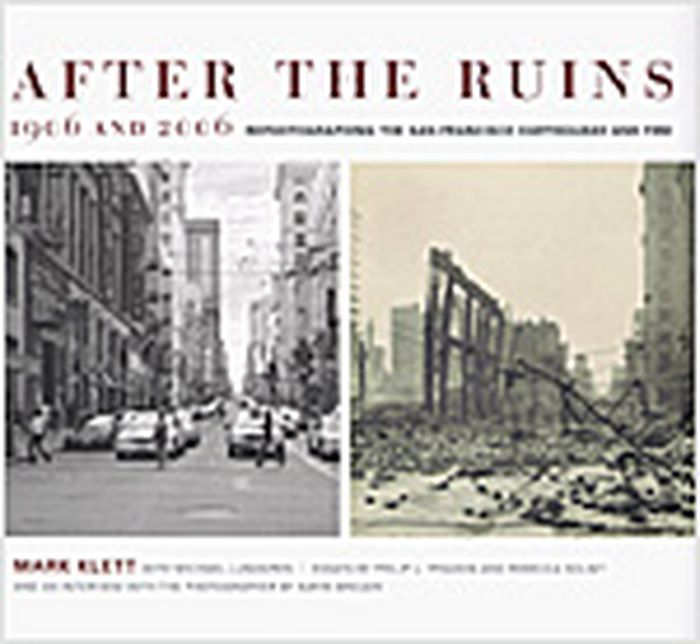
How exactly has San Francisco's urban landscape changed in the hundred years since the earthquake and cataclysmic firestorms that destroyed three-quarters of the city in 1906? For this rephotography project, bringing past and present into dynamic juxtaposition, photographer Mark Klett has gone to the same locations pictured in forty-five historic photographs taken in the days following the 1906 earthquake and fires and precisely duplicated each photograph's vantage point. The result is a comparison that challenges our preconceptions about time, history, and culture. This publication accompanies an exhibition at The Fine Arts Museums of San Francisco. After the Ruins, 1906 and 2006 features a vivid essay by noted environmental historian Philip Fradkin on the events surrounding and following the 1906 earthquake, which he describes as "the equivalent of an intensive, three-day bombing raid, complete with many tons of dynamite that acted as incendiary devices." A lyrical essay by acclaimed writer Rebecca Solnit considers the meaning of ruins, resurrection, and the evolving geography and history of San Francisco.
After the ruins 1906 and 2006 : rephotographing the San Francisco earthquake and fire
Actions:
Price:
$31.50
(available to order)
Summary:
How exactly has San Francisco's urban landscape changed in the hundred years since the earthquake and cataclysmic firestorms that destroyed three-quarters of the city in 1906? For this rephotography project, bringing past and present into dynamic juxtaposition, photographer Mark Klett has gone to the same locations pictured in forty-five historic photographs taken in the days following the 1906 earthquake and fires and precisely duplicated each photograph's vantage point. The result is a comparison that challenges our preconceptions about time, history, and culture. This publication accompanies an exhibition at The Fine Arts Museums of San Francisco. After the Ruins, 1906 and 2006 features a vivid essay by noted environmental historian Philip Fradkin on the events surrounding and following the 1906 earthquake, which he describes as "the equivalent of an intensive, three-day bombing raid, complete with many tons of dynamite that acted as incendiary devices." A lyrical essay by acclaimed writer Rebecca Solnit considers the meaning of ruins, resurrection, and the evolving geography and history of San Francisco.
Form:
books
books
Publication:
March 2006, San Francisco
March 2006, San Francisco
Subject:
Photography monographs
Photography monographs
Form:
books
books

Title:
Alessandro Mendini
Alessandro Mendini
Actions:
Price:
$59.95
(available to order)
Summary:
Alessandro Mendini (Milan, 1931) is one of the few protagonists of the international scene of architecture, art and design who designed in every possible size. Walter Gropius’s renowned statement identifies the architect’s field “from spoon to city”: during his career Mendini faced projects “from the infinitesimal to the infinite”. The book dedicated to Alessandro(...)
$59.95
(available to order)
Summary:
Alessandro Mendini (Milan, 1931) is one of the few protagonists of the international scene of architecture, art and design who designed in every possible size. Walter Gropius’s renowned statement identifies the architect’s field “from spoon to city”: during his career Mendini faced projects “from the infinitesimal to the infinite”. The book dedicated to Alessandro(...)
Title:
Alessandro Mendini
Actions:
Price:
$59.95
(available to order)
Summary:
Alessandro Mendini (Milan, 1931) is one of the few protagonists of the international scene of architecture, art and design who designed in every possible size. Walter Gropius’s renowned statement identifies the architect’s field “from spoon to city”: during his career Mendini faced projects “from the infinitesimal to the infinite”. The book dedicated to Alessandro Mendini published by Corraini is a non-stop stream of images and occasions among the renowned Milanese architect’s works and philosophy. Designing horizons, rooms, bodies and thoughts are the four moments of a personal and evocative course through Mendini’s works: from urban landscape to interior furnishing, to body accessories, to his activity as architecture and design theorist, Mendini is a protagonist of a personal and aesthetic approach to the project. His design is famous for its emotional and individual character, as well as for the greater importance given to psychological and sensory influences rather than rational contents. In fact, his projects have often been associated with definitions such as “visual poetry”, “fairy and baroque design”, and “labyrinth expansion of spaces and sensations”.
Alessandro Mendini
Actions:
Price:
$59.95
(available to order)
Summary:
Alessandro Mendini (Milan, 1931) is one of the few protagonists of the international scene of architecture, art and design who designed in every possible size. Walter Gropius’s renowned statement identifies the architect’s field “from spoon to city”: during his career Mendini faced projects “from the infinitesimal to the infinite”. The book dedicated to Alessandro Mendini published by Corraini is a non-stop stream of images and occasions among the renowned Milanese architect’s works and philosophy. Designing horizons, rooms, bodies and thoughts are the four moments of a personal and evocative course through Mendini’s works: from urban landscape to interior furnishing, to body accessories, to his activity as architecture and design theorist, Mendini is a protagonist of a personal and aesthetic approach to the project. His design is famous for its emotional and individual character, as well as for the greater importance given to psychological and sensory influences rather than rational contents. In fact, his projects have often been associated with definitions such as “visual poetry”, “fairy and baroque design”, and “labyrinth expansion of spaces and sensations”.
Form:
books
books
Publication:
April 2009
April 2009
Subject:
Architecture Monographs
Architecture Monographs
Form:
books
books
Price:
$75.50
(available in store)
Summary:
Born in Athens in 1937, Zoe Zenghelis began her career as a founding member of Office for Metropolitan Architecture (OMA), where her contributions created new opportunities for the group at the vanguard of architectural representation. Within, alongside and beyond this collaboration, Zenghelis developed a body of work exhibiting a playful and iconoclastic evocation of a(...)
$75.50
(available in store)
Summary:
Born in Athens in 1937, Zoe Zenghelis began her career as a founding member of Office for Metropolitan Architecture (OMA), where her contributions created new opportunities for the group at the vanguard of architectural representation. Within, alongside and beyond this collaboration, Zenghelis developed a body of work exhibiting a playful and iconoclastic evocation of a(...)
Title:
Do you remember how perfect everything was?: the work of Zoe Zenghelis
Actions:
Price:
$75.50
(available in store)
Summary:
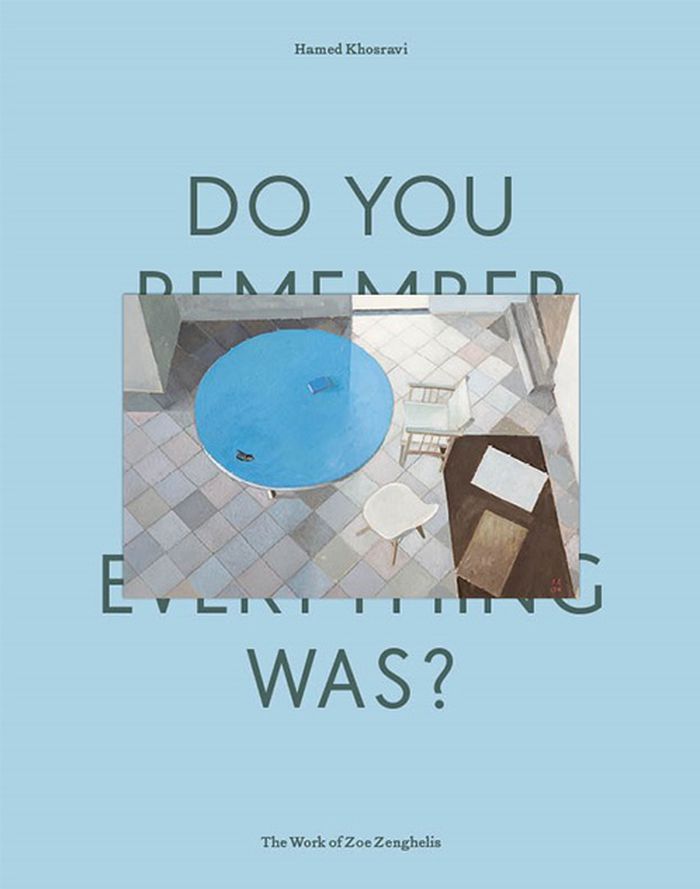
Born in Athens in 1937, Zoe Zenghelis began her career as a founding member of Office for Metropolitan Architecture (OMA), where her contributions created new opportunities for the group at the vanguard of architectural representation. Within, alongside and beyond this collaboration, Zenghelis developed a body of work exhibiting a playful and iconoclastic evocation of a very particular urban form – one that is perhaps a surreal mix of the Aegean landscape of her youth and metropolitan cities such as Paris, Berlin, New York or London. She has lived and worked in the latter since 1955. This book traces the development of Zenghelis’ artistic career through her paintings, projects and teaching. Published to accompany her first major retrospective exhibition, this monograph assembles an extensive selection of Zenghelis’ work from the early 1960s to 2020, alongside a unique collection of her paintings as a member of OMA. Containing a number of studies, sketches and archival documents, it reviews the working process behind Zenghelis’ OMA projects and teaching methods at the Architectural Association.
Do you remember how perfect everything was?: the work of Zoe Zenghelis
Actions:
Price:
$75.50
(available in store)
Summary:
Born in Athens in 1937, Zoe Zenghelis began her career as a founding member of Office for Metropolitan Architecture (OMA), where her contributions created new opportunities for the group at the vanguard of architectural representation. Within, alongside and beyond this collaboration, Zenghelis developed a body of work exhibiting a playful and iconoclastic evocation of a very particular urban form – one that is perhaps a surreal mix of the Aegean landscape of her youth and metropolitan cities such as Paris, Berlin, New York or London. She has lived and worked in the latter since 1955. This book traces the development of Zenghelis’ artistic career through her paintings, projects and teaching. Published to accompany her first major retrospective exhibition, this monograph assembles an extensive selection of Zenghelis’ work from the early 1960s to 2020, alongside a unique collection of her paintings as a member of OMA. Containing a number of studies, sketches and archival documents, it reviews the working process behind Zenghelis’ OMA projects and teaching methods at the Architectural Association.
Form:
books
books
Publication:
December 2022
December 2022
Form:
books
books
Actions:
Price:
$60.00
(available to order)
Summary:
Guido Guidi's new book, "In Veneto," opens with a big eye framed in the blind of a shop window in Mestre, an eye which, by opening like a sort of warning, announces the origin of photography itself. This book contains a selection of hitherto unpublished photographs that Guidi took between 1984 and 1989, using a Deardorff 8X10. This was the first time he had used a large(...)
$60.00
(available to order)
Summary:
Guido Guidi's new book, "In Veneto," opens with a big eye framed in the blind of a shop window in Mestre, an eye which, by opening like a sort of warning, announces the origin of photography itself. This book contains a selection of hitherto unpublished photographs that Guidi took between 1984 and 1989, using a Deardorff 8X10. This was the first time he had used a large(...)
Title:
Guido Guidi: In Veneto 1984-89
Actions:
Price:
$60.00
(available to order)
Summary:
Guido Guidi's new book, "In Veneto," opens with a big eye framed in the blind of a shop window in Mestre, an eye which, by opening like a sort of warning, announces the origin of photography itself. This book contains a selection of hitherto unpublished photographs that Guidi took between 1984 and 1989, using a Deardorff 8X10. This was the first time he had used a large format camera for a whole project, which concentrated on an area in the central Veneto, an area known for having rapidly turned into a deeply uncertain, marginal landscape, one intimately hierarchy-free. The places he visited, in the provinces of Treviso, Vicenza, Padua and Venice, seem to be almost part of the same drawing, of the same place, bearing stark testimony to the process of change that has led to the transformation of a huge rural area, driving it into a form of fragmentation known as urban spread. The photographs in these much-loved places seem to re-evoke the three truths described by Robert Adams in "Beauty in Photography": geography, biography, and metaphor.
Guido Guidi: In Veneto 1984-89
Actions:
Price:
$60.00
(available to order)
Summary:
Guido Guidi's new book, "In Veneto," opens with a big eye framed in the blind of a shop window in Mestre, an eye which, by opening like a sort of warning, announces the origin of photography itself. This book contains a selection of hitherto unpublished photographs that Guidi took between 1984 and 1989, using a Deardorff 8X10. This was the first time he had used a large format camera for a whole project, which concentrated on an area in the central Veneto, an area known for having rapidly turned into a deeply uncertain, marginal landscape, one intimately hierarchy-free. The places he visited, in the provinces of Treviso, Vicenza, Padua and Venice, seem to be almost part of the same drawing, of the same place, bearing stark testimony to the process of change that has led to the transformation of a huge rural area, driving it into a form of fragmentation known as urban spread. The photographs in these much-loved places seem to re-evoke the three truths described by Robert Adams in "Beauty in Photography": geography, biography, and metaphor.
Form:
books
books
Publication:
July 2019
July 2019
Subject:
Photography monographs
Photography monographs
Form:
journals and magazines
journals and magazines
Actions:
Price:
$50.00
(available to order)
Summary:
Despite the exaggerated news of the untimely 'death of the detail' by Greg Lynn, the architectural detail is now more lifelike and active than ever before. In this era of digital design and production technologies, new materials, parametrics, building information modeling (BIM), augmented realities and the nano-bio-information-computation consilience, the detail is now an(...)
$50.00
(available to order)
Summary:
Despite the exaggerated news of the untimely 'death of the detail' by Greg Lynn, the architectural detail is now more lifelike and active than ever before. In this era of digital design and production technologies, new materials, parametrics, building information modeling (BIM), augmented realities and the nano-bio-information-computation consilience, the detail is now an(...)
Title:
AD 230, July/August 2014: future details of architecture
Actions:
Price:
$50.00
(available to order)
Summary:
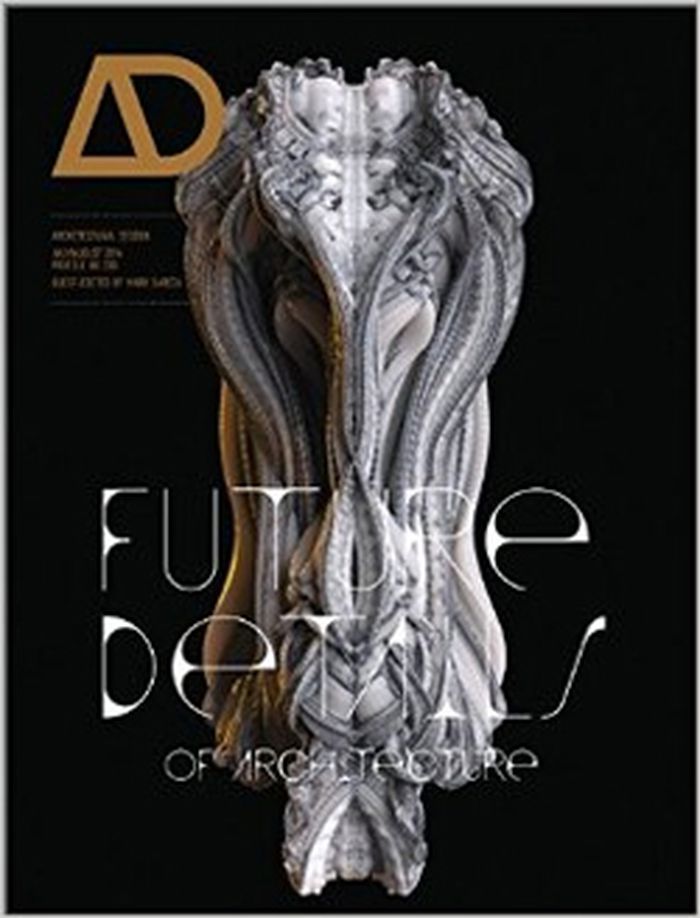
Despite the exaggerated news of the untimely 'death of the detail' by Greg Lynn, the architectural detail is now more lifelike and active than ever before. In this era of digital design and production technologies, new materials, parametrics, building information modeling (BIM), augmented realities and the nano-bio-information-computation consilience, the detail is now an increasingly vital force in architecture. Though such digitally designed and produced details are diminishing in size to the molecular and nano levels, they are increasingly becoming more complex, multi-functional, high performance and self-replicating. Far from being a non-essential and final finish, this new type of highly evolved high-tech detail is rapidly becoming the indispensable and critical core, the (sometimes iconic) DNA of an innovative new species of built environmental form that is spawning in scale and prominence, across product, interior, urban and landscape design. This issue of AD re-examines the history, theories and design of the world’s most significant spatial details, and explores their innovative potentials and possibilities for the future of architecture.
AD 230, July/August 2014: future details of architecture
Actions:
Price:
$50.00
(available to order)
Summary:
Despite the exaggerated news of the untimely 'death of the detail' by Greg Lynn, the architectural detail is now more lifelike and active than ever before. In this era of digital design and production technologies, new materials, parametrics, building information modeling (BIM), augmented realities and the nano-bio-information-computation consilience, the detail is now an increasingly vital force in architecture. Though such digitally designed and produced details are diminishing in size to the molecular and nano levels, they are increasingly becoming more complex, multi-functional, high performance and self-replicating. Far from being a non-essential and final finish, this new type of highly evolved high-tech detail is rapidly becoming the indispensable and critical core, the (sometimes iconic) DNA of an innovative new species of built environmental form that is spawning in scale and prominence, across product, interior, urban and landscape design. This issue of AD re-examines the history, theories and design of the world’s most significant spatial details, and explores their innovative potentials and possibilities for the future of architecture.
Form:
journals and magazines
journals and magazines
Publication:
December 2014
December 2014
Subject:
Magazines
Magazines
Form:
books
books
Title:
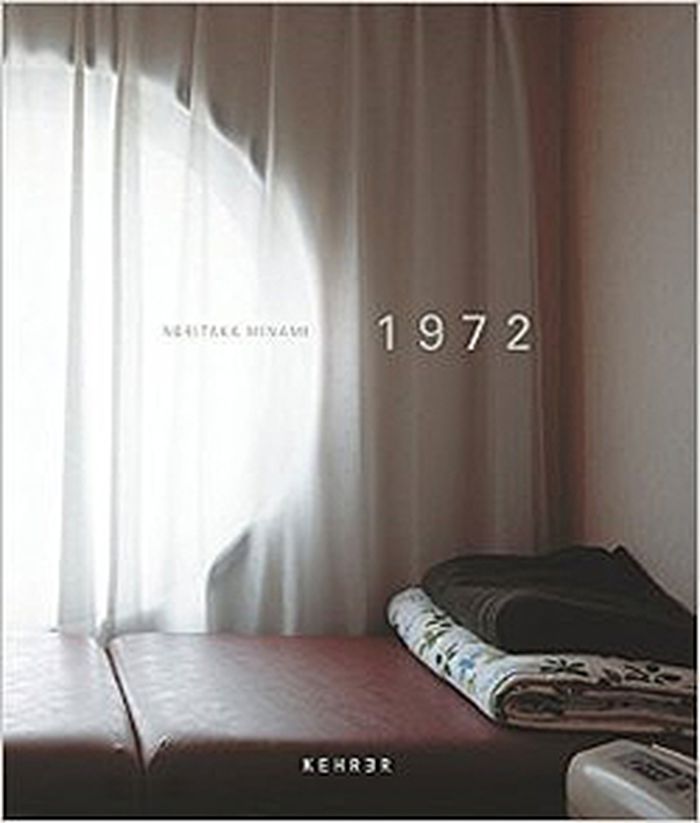
1972: Nakagin Capsule Tower
1972: Nakagin Capsule Tower
Actions:
Price:
$66.50
(available to order)
Summary:
In the city of Tokyo, a building stands as an anachronism in relation to the surrounding urban landscape. The building in question is the Nakagin Capsule Tower designed by Kisho Kurokawa (1934 – 2007), one of the founders of an influential architectural movement in the 1960s called Metabolism. The movement’s aim was to formulate flexible designs that facilitate continual(...)
$66.50
(available to order)
Summary:
In the city of Tokyo, a building stands as an anachronism in relation to the surrounding urban landscape. The building in question is the Nakagin Capsule Tower designed by Kisho Kurokawa (1934 – 2007), one of the founders of an influential architectural movement in the 1960s called Metabolism. The movement’s aim was to formulate flexible designs that facilitate continual(...)
Title:
1972: Nakagin Capsule Tower
Actions:
Price:
$66.50
(available to order)
Summary:
In the city of Tokyo, a building stands as an anachronism in relation to the surrounding urban landscape. The building in question is the Nakagin Capsule Tower designed by Kisho Kurokawa (1934 – 2007), one of the founders of an influential architectural movement in the 1960s called Metabolism. The movement’s aim was to formulate flexible designs that facilitate continual growth and renewal of architecture. As the first capsule apartment in history constructed for everyday use, the Nakagin Capsule Tower is considered the most ambitious attempt in implementing the principles of Metabolism. Kurokawa attached the building with 140 removable capsules to promote modifications to the structure over time, theoretically improving its capacity to adjust to the rapidly changing conditions of the post-industrial society. When the building first opened in March of 1972, it was advertised in the media to signal “the dawn of the capsule age.” At the time, Kurokawa had additional capsule projects planned in the coming years and predicted the mass production of these living unit. Noritaka Minami has been photographing the Nakagin Capsule Tower in Tokyo for the past four years.
1972: Nakagin Capsule Tower
Actions:
Price:
$66.50
(available to order)
Summary:
In the city of Tokyo, a building stands as an anachronism in relation to the surrounding urban landscape. The building in question is the Nakagin Capsule Tower designed by Kisho Kurokawa (1934 – 2007), one of the founders of an influential architectural movement in the 1960s called Metabolism. The movement’s aim was to formulate flexible designs that facilitate continual growth and renewal of architecture. As the first capsule apartment in history constructed for everyday use, the Nakagin Capsule Tower is considered the most ambitious attempt in implementing the principles of Metabolism. Kurokawa attached the building with 140 removable capsules to promote modifications to the structure over time, theoretically improving its capacity to adjust to the rapidly changing conditions of the post-industrial society. When the building first opened in March of 1972, it was advertised in the media to signal “the dawn of the capsule age.” At the time, Kurokawa had additional capsule projects planned in the coming years and predicted the mass production of these living unit. Noritaka Minami has been photographing the Nakagin Capsule Tower in Tokyo for the past four years.
Form:
books
books
Publication:
August 2015
August 2015
Subject:
Photography monographs
Photography monographs
Form:
books
books
Title:
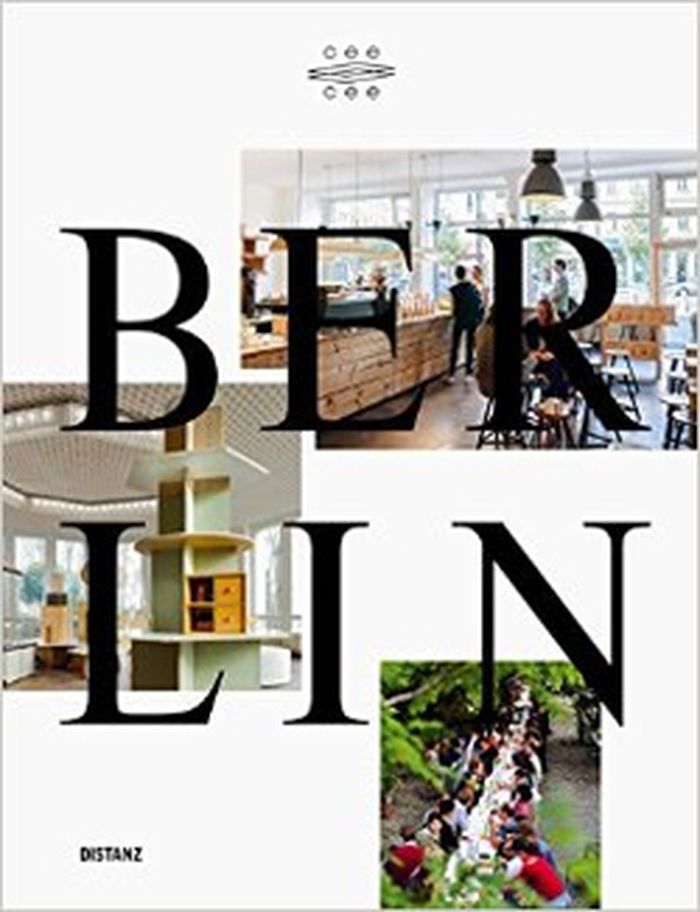
Cee cee : Berlin
Cee cee : Berlin
Actions:
Price:
$48.95
(available to order)
Summary:
Cee Cee is Berlin’s most widely read online medium. Launched as a newsletter for friends in 2011, it covers and comments on the capital’s perpetually changing urban landscape and the multifaceted goings-on in the culture and restaurant scenes. The selection of recommendations is carefully vetted and has become an indispensable guide for Berlin lovers in Germany and(...)
$48.95
(available to order)
Summary:
Cee Cee is Berlin’s most widely read online medium. Launched as a newsletter for friends in 2011, it covers and comments on the capital’s perpetually changing urban landscape and the multifaceted goings-on in the culture and restaurant scenes. The selection of recommendations is carefully vetted and has become an indispensable guide for Berlin lovers in Germany and(...)
Title:
Cee cee : Berlin
Actions:
Price:
$48.95
(available to order)
Summary:
Cee Cee is Berlin’s most widely read online medium. Launched as a newsletter for friends in 2011, it covers and comments on the capital’s perpetually changing urban landscape and the multifaceted goings-on in the culture and restaurant scenes. The selection of recommendations is carefully vetted and has become an indispensable guide for Berlin lovers in Germany and abroad, for expats and locals. Working with a small team of photographers and authors, the people behind Cee Cee, Sven Hausherr and Nina Trippel, have now compiled a book presenting over two hundred of the most exciting features. The mix is diverse, subjective and authentic: secret bars and hidden art collections, idiosyncratic cafés and extravagant restaurants, eccentric concept stores and native originals. Numerous illustrations and full-page views show the Berlin of today. Recommendations, cross-references, guest columns by fashion designers and musicians, and insider’s advice sourced from the Cee Cee community make this book a treasure trove of information for explorers. A Berlin book for Berlin visitors, Berlin lovers, Berlin residents, and future Berliners.
Cee cee : Berlin
Actions:
Price:
$48.95
(available to order)
Summary:
Cee Cee is Berlin’s most widely read online medium. Launched as a newsletter for friends in 2011, it covers and comments on the capital’s perpetually changing urban landscape and the multifaceted goings-on in the culture and restaurant scenes. The selection of recommendations is carefully vetted and has become an indispensable guide for Berlin lovers in Germany and abroad, for expats and locals. Working with a small team of photographers and authors, the people behind Cee Cee, Sven Hausherr and Nina Trippel, have now compiled a book presenting over two hundred of the most exciting features. The mix is diverse, subjective and authentic: secret bars and hidden art collections, idiosyncratic cafés and extravagant restaurants, eccentric concept stores and native originals. Numerous illustrations and full-page views show the Berlin of today. Recommendations, cross-references, guest columns by fashion designers and musicians, and insider’s advice sourced from the Cee Cee community make this book a treasure trove of information for explorers. A Berlin book for Berlin visitors, Berlin lovers, Berlin residents, and future Berliners.
Form:
books
books
Publication:
October 2014
October 2014
Subject:
City Guides
City Guides
Form:
books
books
Title:
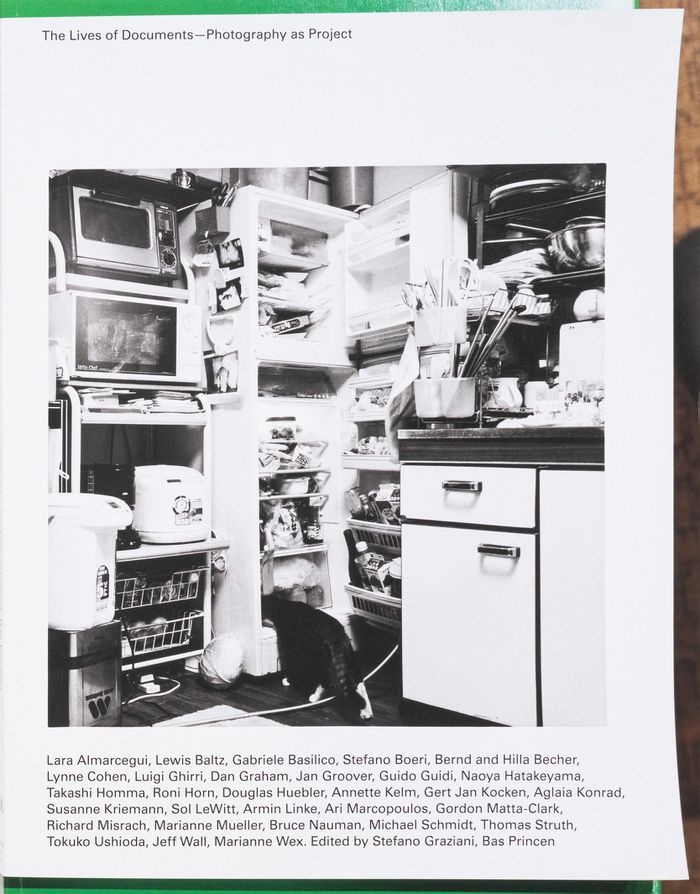
The lives of documents
The lives of documents
Actions:
Price:
$45.00
(available in store)
Summary:
How do photographers select, order, and display their images to make visual arguments about built and natural environments? Conceived as part of a long-term project at the CCA to examine the contemporary role of photography in the study and practice of architecture, The Lives of Documents — Photography as Project prompts reflections on the idea of the documentary as an(...)
$45.00
(available in store)
Summary:
How do photographers select, order, and display their images to make visual arguments about built and natural environments? Conceived as part of a long-term project at the CCA to examine the contemporary role of photography in the study and practice of architecture, The Lives of Documents — Photography as Project prompts reflections on the idea of the documentary as an(...)
Title:
The lives of documents
Actions:
Price:
$45.00
(available in store)
Summary:
How do photographers select, order, and display their images to make visual arguments about built and natural environments? Conceived as part of a long-term project at the CCA to examine the contemporary role of photography in the study and practice of architecture, The Lives of Documents — Photography as Project prompts reflections on the idea of the documentary as an embedded quality of photography. Tracing the research materials, archiving practices, and production processes of diverse authors, photographers Bas Princen and Stefano Graziani highlight a selection of photographic projects that model our visible world by investigating notions of landscape and its destruction, global infrastructure, intimacy and interiority, and conditions of urban and domestic space and life. This publication follows Princen and Graziani’s travels to understand how artists use photography as a tool for their artistic research and how they conceive of their projects as evolving and expanding explorations. Bringing together studio visit images, artist interviews, and Princen and Graziani’s own reproduction of photographic projects, it emphasizes how photography reveals and expresses lived and built realities in ways that traditional architectural tools fail to represent or communicate.
The lives of documents
Actions:
Price:
$45.00
(available in store)
Summary:
How do photographers select, order, and display their images to make visual arguments about built and natural environments? Conceived as part of a long-term project at the CCA to examine the contemporary role of photography in the study and practice of architecture, The Lives of Documents — Photography as Project prompts reflections on the idea of the documentary as an embedded quality of photography. Tracing the research materials, archiving practices, and production processes of diverse authors, photographers Bas Princen and Stefano Graziani highlight a selection of photographic projects that model our visible world by investigating notions of landscape and its destruction, global infrastructure, intimacy and interiority, and conditions of urban and domestic space and life. This publication follows Princen and Graziani’s travels to understand how artists use photography as a tool for their artistic research and how they conceive of their projects as evolving and expanding explorations. Bringing together studio visit images, artist interviews, and Princen and Graziani’s own reproduction of photographic projects, it emphasizes how photography reveals and expresses lived and built realities in ways that traditional architectural tools fail to represent or communicate.
Form:
books
books
Publication:
June 2023
June 2023
Subject:
CCA Publications
CCA Publications
Form:
books
books
Actions:
Price:
$82.50
(available to order)
Summary:
Piloting a single-engine biplane high above Washington D.C. in 1920, the intrepid inventor and aviation pioneer Sherman Fairchild first tested his custom-built sky camera, effectively founding the aerial photography company that would bear his name. Roaming America's skies for the next 40 years, the photographers of the Fairchild Aerial Survey Company documented nearly(...)
$82.50
(available to order)
Summary:
Piloting a single-engine biplane high above Washington D.C. in 1920, the intrepid inventor and aviation pioneer Sherman Fairchild first tested his custom-built sky camera, effectively founding the aerial photography company that would bear his name. Roaming America's skies for the next 40 years, the photographers of the Fairchild Aerial Survey Company documented nearly(...)
Subject:
Architectural Plans and Cartography
Architectural Plans and Cartography
Publication:
October 2001, New York
October 2001, New York
Title:
Cities from the sky : an aerial portrait of America
Actions:
Price:
$82.50
(available to order)
Summary:
Piloting a single-engine biplane high above Washington D.C. in 1920, the intrepid inventor and aviation pioneer Sherman Fairchild first tested his custom-built sky camera, effectively founding the aerial photography company that would bear his name. Roaming America's skies for the next 40 years, the photographers of the Fairchild Aerial Survey Company documented nearly every major city in the United States. Their images, bot maplike shots from high above and low-angle raking views, form a definitive portrait of the American landscape. By the 1970s, the Fairchild archive was scattered across the country. Painstakingly reassembled for this book, the images (many of which have never been seen before) are brought together here for the first time. This large-format book collects over 125 extraordinary images taken between the 1920s and the 1960s. The photographs, valued both as works of art and as tools for urban historians, often capture historic moments: the Capitol Building during Franklin Delano Roosevelt's first inauguration and Yankee Stadium during Don Larsen's perfect game in the 1956 World Series. Others depict architectural lands: the Empire State Building, the Statue of Liberty, the Washington Monument, Hoover Dam, and Alcatraz, to name a few.
Cities from the sky : an aerial portrait of America
Actions:
Price:
$82.50
(available to order)
Summary:
Piloting a single-engine biplane high above Washington D.C. in 1920, the intrepid inventor and aviation pioneer Sherman Fairchild first tested his custom-built sky camera, effectively founding the aerial photography company that would bear his name. Roaming America's skies for the next 40 years, the photographers of the Fairchild Aerial Survey Company documented nearly every major city in the United States. Their images, bot maplike shots from high above and low-angle raking views, form a definitive portrait of the American landscape. By the 1970s, the Fairchild archive was scattered across the country. Painstakingly reassembled for this book, the images (many of which have never been seen before) are brought together here for the first time. This large-format book collects over 125 extraordinary images taken between the 1920s and the 1960s. The photographs, valued both as works of art and as tools for urban historians, often capture historic moments: the Capitol Building during Franklin Delano Roosevelt's first inauguration and Yankee Stadium during Don Larsen's perfect game in the 1956 World Series. Others depict architectural lands: the Empire State Building, the Statue of Liberty, the Washington Monument, Hoover Dam, and Alcatraz, to name a few.
Form:
books
books
Publication:
October 2001, New York
October 2001, New York
Subject:
Architectural Plans and Cartography
Architectural Plans and Cartography
Form:
books
books
Title:
Adam Bartos : boulevard
Adam Bartos : boulevard
Actions:
Price:
$65.00
(available to order)
Summary:
"Boulevard" is a visual tale of two disparate cities: Paris and Los Angeles. In the early seventies, Adam Bartos began to use color photography to document the contemporary urban landscape, infusing his images with a certain quietude and finding composition in even the most random corners of life. He often focused his lens on his native New York, and he published a(...)
$65.00
(available to order)
Summary:
"Boulevard" is a visual tale of two disparate cities: Paris and Los Angeles. In the early seventies, Adam Bartos began to use color photography to document the contemporary urban landscape, infusing his images with a certain quietude and finding composition in even the most random corners of life. He often focused his lens on his native New York, and he published a(...)
Title:
Adam Bartos : boulevard
Actions:
Price:
$65.00
(available to order)
Summary:
"Boulevard" is a visual tale of two disparate cities: Paris and Los Angeles. In the early seventies, Adam Bartos began to use color photography to document the contemporary urban landscape, infusing his images with a certain quietude and finding composition in even the most random corners of life. He often focused his lens on his native New York, and he published a monumental series of photographs of the modern architecture of the United Nations. In the late seventies, and then again in the early eighties, Bartos traveled to Los Angeles and Paris, taking his camera with him. The two trips would have a strong and lasting impact on his vision, and yet until recently, he had never considered the two cities — or bodies of work — together. In "Boulevard", this is not the L.A. or Paris of postcards. As we venture through the scarcely inhabited hotel rooms, backyards, gas stations, and inevitably, city streets, we are struck by the graphical relationships and the surprisingly similar color palates. There is a magnetic attraction and repulsion between these two photo series and cities — polar opposites that, at unexpected moments, converge and suddenly attract. With a preface by Geoff Dyer.
Adam Bartos : boulevard
Actions:
Price:
$65.00
(available to order)
Summary:
"Boulevard" is a visual tale of two disparate cities: Paris and Los Angeles. In the early seventies, Adam Bartos began to use color photography to document the contemporary urban landscape, infusing his images with a certain quietude and finding composition in even the most random corners of life. He often focused his lens on his native New York, and he published a monumental series of photographs of the modern architecture of the United Nations. In the late seventies, and then again in the early eighties, Bartos traveled to Los Angeles and Paris, taking his camera with him. The two trips would have a strong and lasting impact on his vision, and yet until recently, he had never considered the two cities — or bodies of work — together. In "Boulevard", this is not the L.A. or Paris of postcards. As we venture through the scarcely inhabited hotel rooms, backyards, gas stations, and inevitably, city streets, we are struck by the graphical relationships and the surprisingly similar color palates. There is a magnetic attraction and repulsion between these two photo series and cities — polar opposites that, at unexpected moments, converge and suddenly attract. With a preface by Geoff Dyer.
Form:
books
books
Publication:
January 2006, Göttingen
January 2006, Göttingen
Subject:
Photography monographs
Photography monographs


