


332 Results
Form:
books
books
Title:
Machines and robots
Machines and robots
Actions:
Price:
$44.95
(available to order)
Summary:
Machines, automats, and robots have always exerted a special fascination on artists. Yet computers, digitisation, and the Internet have given this attraction entirely new impulses. Moreover, developments in artificial intelligence and robotics are of critical importance today. The fifth volume of this series provides insights into current research topics and investigates(...)
$44.95
(available to order)
Summary:
Machines, automats, and robots have always exerted a special fascination on artists. Yet computers, digitisation, and the Internet have given this attraction entirely new impulses. Moreover, developments in artificial intelligence and robotics are of critical importance today. The fifth volume of this series provides insights into current research topics and investigates(...)
Title:
Machines and robots
Actions:
Price:
$44.95
(available to order)
Summary:
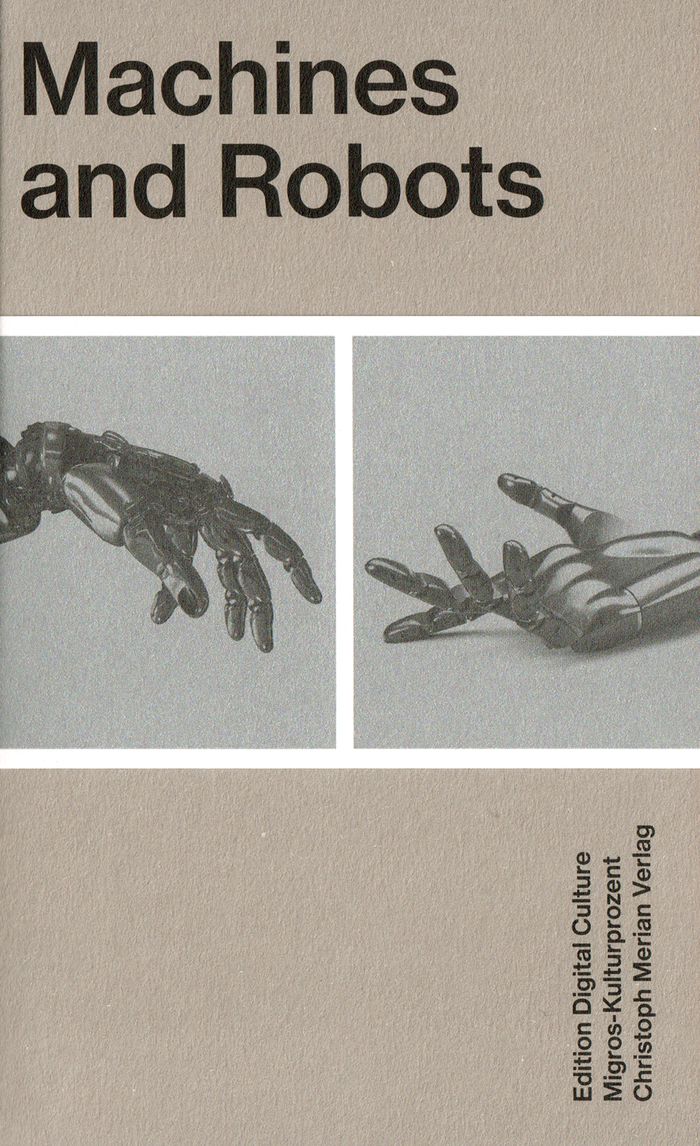
Machines, automats, and robots have always exerted a special fascination on artists. Yet computers, digitisation, and the Internet have given this attraction entirely new impulses. Moreover, developments in artificial intelligence and robotics are of critical importance today. The fifth volume of this series provides insights into current research topics and investigates their artistic potential and possible issues. It contains illustrations and a detailed glossary of significant terms, in addition to contributions by Raffaello D'Andrea, Andreas Broeckmann, Roland Fischer, Martina Kammermann, Bruno Spoerri, Philipp Theisohn, Mads Pankow, and Roland Wetzel.
Machines and robots
Actions:
Price:
$44.95
(available to order)
Summary:
Machines, automats, and robots have always exerted a special fascination on artists. Yet computers, digitisation, and the Internet have given this attraction entirely new impulses. Moreover, developments in artificial intelligence and robotics are of critical importance today. The fifth volume of this series provides insights into current research topics and investigates their artistic potential and possible issues. It contains illustrations and a detailed glossary of significant terms, in addition to contributions by Raffaello D'Andrea, Andreas Broeckmann, Roland Fischer, Martina Kammermann, Bruno Spoerri, Philipp Theisohn, Mads Pankow, and Roland Wetzel.
Form:
books
books
Publication:
April 2018
April 2018
Subject:
Digital Architecture
Digital Architecture
Form:
books
books
Title:
The smartness mandate
The smartness mandate
Actions:
Price:
$47.00
(available to order)
Summary:
In this book, the authors suggest that "smartness" is not primarily a technology, but rather an epistemology. Through this lens, they offer a critical exploration of the practices, technologies, and subjects that such an understanding relies upon—above all, artificial intelligence and machine learning. They approach these not simply as techniques for solving problems of(...)
$47.00
(available to order)
Summary:
In this book, the authors suggest that "smartness" is not primarily a technology, but rather an epistemology. Through this lens, they offer a critical exploration of the practices, technologies, and subjects that such an understanding relies upon—above all, artificial intelligence and machine learning. They approach these not simply as techniques for solving problems of(...)
Subject:
Archive, library and the digital
Archive, library and the digital
Publication:
December 2022
December 2022
Title:
The smartness mandate
Actions:
Price:
$47.00
(available to order)
Summary:
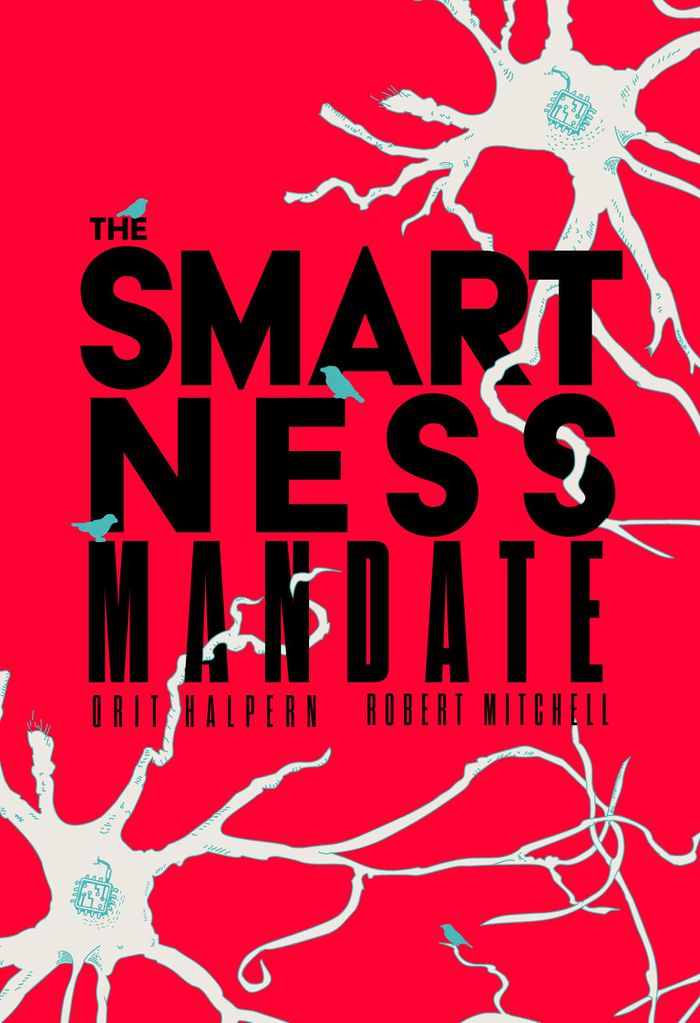
In this book, the authors suggest that "smartness" is not primarily a technology, but rather an epistemology. Through this lens, they offer a critical exploration of the practices, technologies, and subjects that such an understanding relies upon—above all, artificial intelligence and machine learning. They approach these not simply as techniques for solving problems of calculations, but rather as modes of managing life (human and other) in terms of neo-Darwinian evolution, distributed intelligences, and "resilience," all of which have serious implications for society, politics, and the environment.
The smartness mandate
Actions:
Price:
$47.00
(available to order)
Summary:
In this book, the authors suggest that "smartness" is not primarily a technology, but rather an epistemology. Through this lens, they offer a critical exploration of the practices, technologies, and subjects that such an understanding relies upon—above all, artificial intelligence and machine learning. They approach these not simply as techniques for solving problems of calculations, but rather as modes of managing life (human and other) in terms of neo-Darwinian evolution, distributed intelligences, and "resilience," all of which have serious implications for society, politics, and the environment.
Form:
books
books
Publication:
December 2022
December 2022
Subject:
Archive, library and the digital
Archive, library and the digital
Form:
books
books

Actions:
Price:
$29.95
(available to order)
Summary:
The Hylozoic Ground experimental architecture series developed by architect Philip Beesley has been expanded and refined by researchers, engineers and designers from around the world. It is an immersive, interactive environment that moves and breathes around its viewers, creating an environment can feel and care. Next-generation artificial intelligence, synthetic biology,(...)
$29.95
(available to order)
Summary:
The Hylozoic Ground experimental architecture series developed by architect Philip Beesley has been expanded and refined by researchers, engineers and designers from around the world. It is an immersive, interactive environment that moves and breathes around its viewers, creating an environment can feel and care. Next-generation artificial intelligence, synthetic biology,(...)
Title:
Hylozoic ground: liminal responsive architecture
Actions:
Price:
$29.95
(available to order)
Summary:
The Hylozoic Ground experimental architecture series developed by architect Philip Beesley has been expanded and refined by researchers, engineers and designers from around the world. It is an immersive, interactive environment that moves and breathes around its viewers, creating an environment can feel and care. Next-generation artificial intelligence, synthetic biology, and interactive technology create an environment that is nearly alive. The book contains essays by theorists and designers, extended photography, and detailed design documents of the evolving project. Hylozoic ground was featured in Canadian pavillion at the 2010 Venice Biennale.
Hylozoic ground: liminal responsive architecture
Actions:
Price:
$29.95
(available to order)
Summary:
The Hylozoic Ground experimental architecture series developed by architect Philip Beesley has been expanded and refined by researchers, engineers and designers from around the world. It is an immersive, interactive environment that moves and breathes around its viewers, creating an environment can feel and care. Next-generation artificial intelligence, synthetic biology, and interactive technology create an environment that is nearly alive. The book contains essays by theorists and designers, extended photography, and detailed design documents of the evolving project. Hylozoic ground was featured in Canadian pavillion at the 2010 Venice Biennale.
Form:
books
books
Publication:
January 2010
January 2010
Subject:
Contemporary Architecture
Contemporary Architecture
Form:
books
books
Title:
Big data, big design
Big data, big design
Actions:
Price:
$42.95
(available to order)
Summary:
Enter the world of Machine Learning (ML) and Artificial Intelligence (AI) through a design lens in this thoughtful handbook of practical skills, technical knowledge, interviews, essays, and theory, written specifically for designers. Gain an understanding of the design opportunities and design biases that arise when using predictive algorithms. Learn how to place design(...)
$42.95
(available to order)
Summary:
Enter the world of Machine Learning (ML) and Artificial Intelligence (AI) through a design lens in this thoughtful handbook of practical skills, technical knowledge, interviews, essays, and theory, written specifically for designers. Gain an understanding of the design opportunities and design biases that arise when using predictive algorithms. Learn how to place design(...)
Title:
Big data, big design
Actions:
Price:
$42.95
(available to order)
Summary:
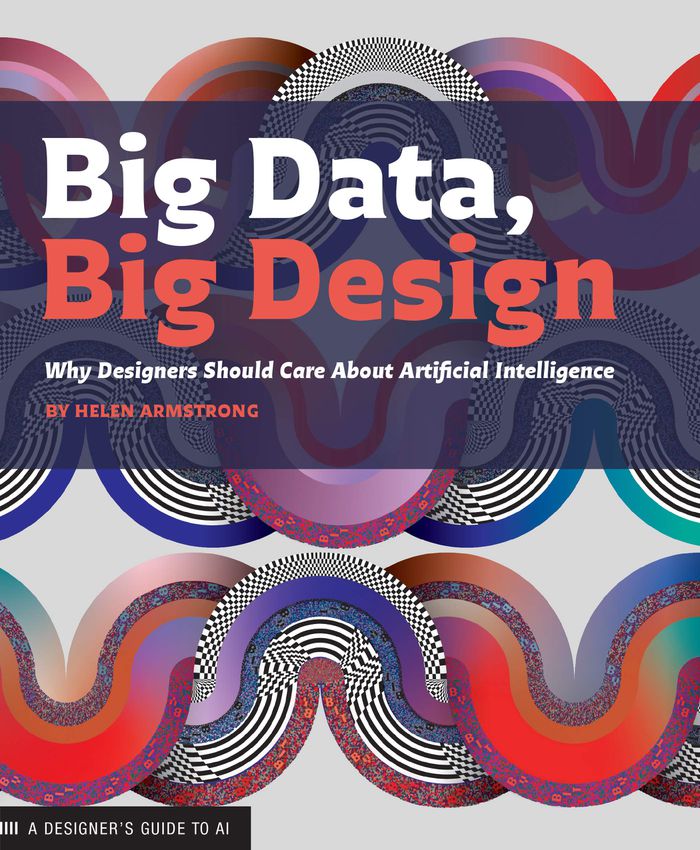
Enter the world of Machine Learning (ML) and Artificial Intelligence (AI) through a design lens in this thoughtful handbook of practical skills, technical knowledge, interviews, essays, and theory, written specifically for designers. Gain an understanding of the design opportunities and design biases that arise when using predictive algorithms. Learn how to place design principles and cultural context at the heart of AI and ML through real-life case studies and examples. This portable, accessible guide will give beginners and more advanced AI and ML users the confidence to make reasoned, thoughtful decisions when implementing ML design solutions.
Big data, big design
Actions:
Price:
$42.95
(available to order)
Summary:
Enter the world of Machine Learning (ML) and Artificial Intelligence (AI) through a design lens in this thoughtful handbook of practical skills, technical knowledge, interviews, essays, and theory, written specifically for designers. Gain an understanding of the design opportunities and design biases that arise when using predictive algorithms. Learn how to place design principles and cultural context at the heart of AI and ML through real-life case studies and examples. This portable, accessible guide will give beginners and more advanced AI and ML users the confidence to make reasoned, thoughtful decisions when implementing ML design solutions.
Form:
books
books
Publication:
October 2021
October 2021
Subject:
Design Theory
Design Theory
Form:
books
books
Actions:
Price:
$24.95
(available to order)
Summary:
The vast social apparatus of the computer network has aligned people with technology in unprecedented ways. The intimacy of the human-computer interface has made it impossible to distinguish technology from the social and cultural business of being human. Cyberculture is the broader name given to this process of becoming through technological means. This book shows that(...)
$24.95
(available to order)
Summary:
The vast social apparatus of the computer network has aligned people with technology in unprecedented ways. The intimacy of the human-computer interface has made it impossible to distinguish technology from the social and cultural business of being human. Cyberculture is the broader name given to this process of becoming through technological means. This book shows that(...)
Publication:
May 2014
May 2014
Title:
Prefiguring cyberculture: an intellectual history
Actions:
Price:
$24.95
(available to order)
Summary:
The vast social apparatus of the computer network has aligned people with technology in unprecedented ways. The intimacy of the human-computer interface has made it impossible to distinguish technology from the social and cultural business of being human. Cyberculture is the broader name given to this process of becoming through technological means. This book shows that cyberculture has been a long time coming.In Prefiguring Cyberculture, media critics and theorists, philosophers, and historians of science explore the antecedents of such aspects of contemporary technological culture as the Internet, the World Wide Web, artificial intelligence, genetic engineering, virtual reality, and the cyborg. The contributors examine key texts that anticipate cybercultural practice and theory, including Plato's "Simile of the Cave"; the Renaissance Ars Memoria; Descartes's Meditations (on the mind-body split); Mary Shelley's Frankenstein; Alan Turing's Computing Machinery and Intelligence; Philip K. Dick's Man, Android, and Machine; William Gibson's Neuromancer; and Arthur C. Clarke's Profiles of the Future.
Prefiguring cyberculture: an intellectual history
Actions:
Price:
$24.95
(available to order)
Summary:
The vast social apparatus of the computer network has aligned people with technology in unprecedented ways. The intimacy of the human-computer interface has made it impossible to distinguish technology from the social and cultural business of being human. Cyberculture is the broader name given to this process of becoming through technological means. This book shows that cyberculture has been a long time coming.In Prefiguring Cyberculture, media critics and theorists, philosophers, and historians of science explore the antecedents of such aspects of contemporary technological culture as the Internet, the World Wide Web, artificial intelligence, genetic engineering, virtual reality, and the cyborg. The contributors examine key texts that anticipate cybercultural practice and theory, including Plato's "Simile of the Cave"; the Renaissance Ars Memoria; Descartes's Meditations (on the mind-body split); Mary Shelley's Frankenstein; Alan Turing's Computing Machinery and Intelligence; Philip K. Dick's Man, Android, and Machine; William Gibson's Neuromancer; and Arthur C. Clarke's Profiles of the Future.
Form:
books
books
Publication:
May 2014
May 2014
Form:
journals and magazines
journals and magazines
Title:
Verb - matters
Verb - matters
Actions:
Price:
$41.95
(available to order)
Summary:
The second issue of Verb asks: What can we really build? Verb Matters explores the formal and material possibilities for construction in our present information era, with its extensive data processing, global networking, and increasingly blurred distinctions between natural matter and artificial technology. This critical itinerary begins with reflections on the results of(...)
$41.95
(available to order)
Summary:
The second issue of Verb asks: What can we really build? Verb Matters explores the formal and material possibilities for construction in our present information era, with its extensive data processing, global networking, and increasingly blurred distinctions between natural matter and artificial technology. This critical itinerary begins with reflections on the results of(...)
Subject:
Magazines
Magazines
Publication:
May 2002, Barcelona
May 2002, Barcelona
Title:
Verb - matters
Actions:
Price:
$41.95
(available to order)
Summary:
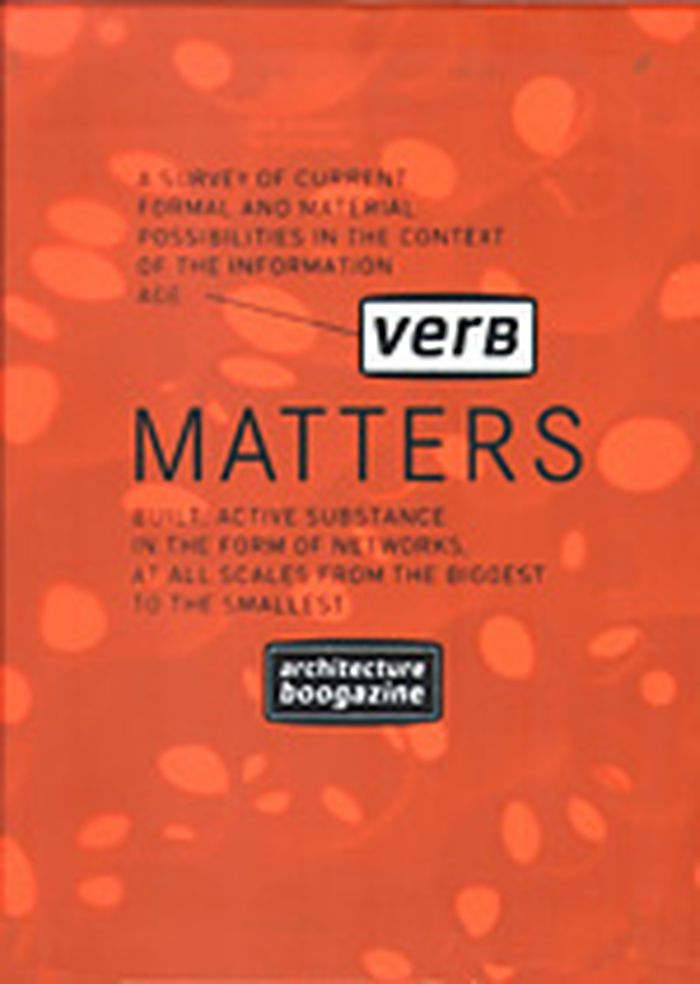
The second issue of Verb asks: What can we really build? Verb Matters explores the formal and material possibilities for construction in our present information era, with its extensive data processing, global networking, and increasingly blurred distinctions between natural matter and artificial technology. This critical itinerary begins with reflections on the results of sophisticated ideas applied to the shaping of buildings including Toyo Ito's ephemeral work, recent attention to inflatable architecture and building with air, and the low tech approach of practitioners like LOT/EK. Consideration of the growing potential of current technology is also examined in a piece equating recent sneaker design technology to that of car manufacturing, as well as the use of artificial intelligence in home control networks at MIT's "Media House" project. Colorful, tactile, dense, and packaged in its own very contemporary design, Verb Matters remains devoted to cutting-edge issues in architecture and design. includes contributions from Toyo Ito, Greg Lynn, LOT/EK, Klein & Dytham, and Sherry Turkle
Verb - matters
Actions:
Price:
$41.95
(available to order)
Summary:
The second issue of Verb asks: What can we really build? Verb Matters explores the formal and material possibilities for construction in our present information era, with its extensive data processing, global networking, and increasingly blurred distinctions between natural matter and artificial technology. This critical itinerary begins with reflections on the results of sophisticated ideas applied to the shaping of buildings including Toyo Ito's ephemeral work, recent attention to inflatable architecture and building with air, and the low tech approach of practitioners like LOT/EK. Consideration of the growing potential of current technology is also examined in a piece equating recent sneaker design technology to that of car manufacturing, as well as the use of artificial intelligence in home control networks at MIT's "Media House" project. Colorful, tactile, dense, and packaged in its own very contemporary design, Verb Matters remains devoted to cutting-edge issues in architecture and design. includes contributions from Toyo Ito, Greg Lynn, LOT/EK, Klein & Dytham, and Sherry Turkle
Form:
journals and magazines
journals and magazines
Publication:
May 2002, Barcelona
May 2002, Barcelona
Subject:
Magazines
Magazines
Form:
books
books

Price:
$43.95
(available to order)
Summary:
By bringing together the voices of a number of curators, scientists, scholars, designers, and artists, the XXII Triennale di Milano seeks to engage its visitors with questions of climate change, migration, artificial intelligence, politics, gender, labour, economics, social justice, and natural histories. This exhibition catalog highlights objects and concepts at all(...)
$43.95
(available to order)
Summary:
By bringing together the voices of a number of curators, scientists, scholars, designers, and artists, the XXII Triennale di Milano seeks to engage its visitors with questions of climate change, migration, artificial intelligence, politics, gender, labour, economics, social justice, and natural histories. This exhibition catalog highlights objects and concepts at all(...)
Title:
Broken nature: design takes on human survival. XXII Triennale du Milano
Actions:
Price:
$43.95
(available to order)
Summary:
By bringing together the voices of a number of curators, scientists, scholars, designers, and artists, the XXII Triennale di Milano seeks to engage its visitors with questions of climate change, migration, artificial intelligence, politics, gender, labour, economics, social justice, and natural histories. This exhibition catalog highlights objects and concepts at all scales that reconsider humans' relationship with their environment, including research into both natural and social ecosystems. The aim is to trace design's ability to move us into a more constructive sense of indebtedness toward nature. This volume will appeal to the design community as well as a broader readership and scholars who study the sociological, economic, political, and personal ramifications of design as it relates to the environment.
Broken nature: design takes on human survival. XXII Triennale du Milano
Actions:
Price:
$43.95
(available to order)
Summary:
By bringing together the voices of a number of curators, scientists, scholars, designers, and artists, the XXII Triennale di Milano seeks to engage its visitors with questions of climate change, migration, artificial intelligence, politics, gender, labour, economics, social justice, and natural histories. This exhibition catalog highlights objects and concepts at all scales that reconsider humans' relationship with their environment, including research into both natural and social ecosystems. The aim is to trace design's ability to move us into a more constructive sense of indebtedness toward nature. This volume will appeal to the design community as well as a broader readership and scholars who study the sociological, economic, political, and personal ramifications of design as it relates to the environment.
Form:
books
books
Publication:
December 2019
December 2019
Subject:
Environment and environmental theory
Environment and environmental theory
Form:
books
books
Title:
Neuromancer
Neuromancer
Actions:
Price:
$27.99
(available in store)
Summary:
Case was the sharpest data-thief in the matrix—until he crossed the wrong people and they crippled his nervous system, banishing him from cyberspace. Now a mysterious new employer has recruited him for a last-chance run at an unthinkably powerful artificial intelligence. With a dead man riding shotgun and Molly, a mirror-eyed street-samurai, to watch his back, Case is(...)
$27.99
(available in store)
Summary:
Case was the sharpest data-thief in the matrix—until he crossed the wrong people and they crippled his nervous system, banishing him from cyberspace. Now a mysterious new employer has recruited him for a last-chance run at an unthinkably powerful artificial intelligence. With a dead man riding shotgun and Molly, a mirror-eyed street-samurai, to watch his back, Case is(...)
Title:
Neuromancer
Actions:
Price:
$27.99
(available in store)
Summary:
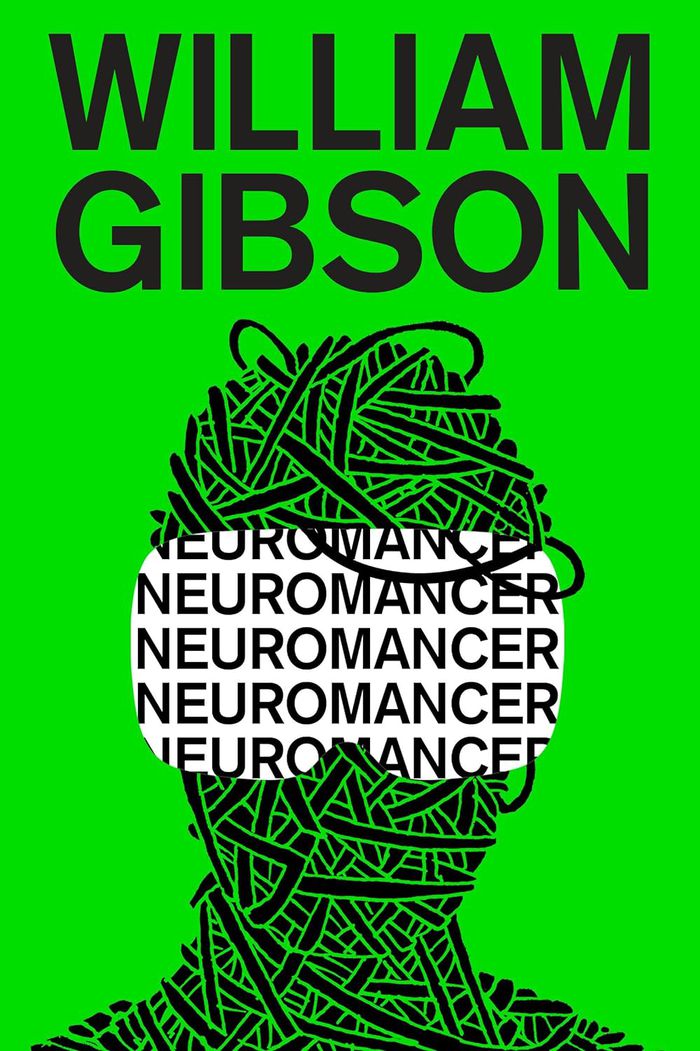
Case was the sharpest data-thief in the matrix—until he crossed the wrong people and they crippled his nervous system, banishing him from cyberspace. Now a mysterious new employer has recruited him for a last-chance run at an unthinkably powerful artificial intelligence. With a dead man riding shotgun and Molly, a mirror-eyed street-samurai, to watch his back, Case is ready for the adventure that upped the ante on an entire genre of fiction. "Neuromancer" was the first fully-realized glimpse of humankind’s digital future—a shocking vision that has challenged our assumptions about technology and ourselves, reinvented the way we speak and think, and forever altered the landscape of our imaginations.
Neuromancer
Actions:
Price:
$27.99
(available in store)
Summary:
Case was the sharpest data-thief in the matrix—until he crossed the wrong people and they crippled his nervous system, banishing him from cyberspace. Now a mysterious new employer has recruited him for a last-chance run at an unthinkably powerful artificial intelligence. With a dead man riding shotgun and Molly, a mirror-eyed street-samurai, to watch his back, Case is ready for the adventure that upped the ante on an entire genre of fiction. "Neuromancer" was the first fully-realized glimpse of humankind’s digital future—a shocking vision that has challenged our assumptions about technology and ourselves, reinvented the way we speak and think, and forever altered the landscape of our imaginations.
Form:
books
books
Publication:
July 2000
July 2000
Subject:
Current Exhibitions
Current Exhibitions
Form:
books
books
Actions:
Price:
$27.00
(available to order)
Summary:
Although often considered to be a fault or a glitch in the system, the event of hallucination is central to the models of image production generated by artificial intelligence (AI). Through mining the latent space of computer vision, Trevor Paglen’s series "Adversarially evolved hallucinations" (2017–ongoing) reveals this phantasmal and hallucinatory domain. In the(...)
$27.00
(available to order)
Summary:
Although often considered to be a fault or a glitch in the system, the event of hallucination is central to the models of image production generated by artificial intelligence (AI). Through mining the latent space of computer vision, Trevor Paglen’s series "Adversarially evolved hallucinations" (2017–ongoing) reveals this phantasmal and hallucinatory domain. In the(...)
Title:
Adversarially evolved hallucinations
Actions:
Price:
$27.00
(available to order)
Summary:
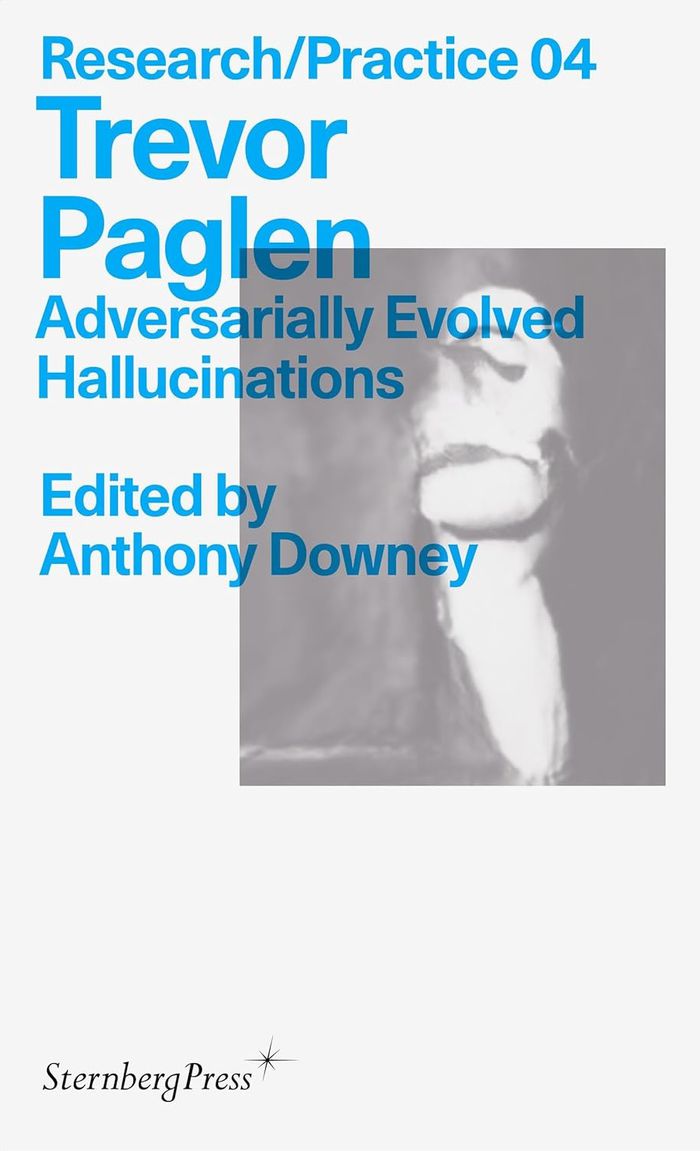
Although often considered to be a fault or a glitch in the system, the event of hallucination is central to the models of image production generated by artificial intelligence (AI). Through mining the latent space of computer vision, Trevor Paglen’s series "Adversarially evolved hallucinations" (2017–ongoing) reveals this phantasmal and hallucinatory domain. In the conversation included in this volume, he discusses how we can think from within these opaque structures and, in turn, questions the frequently inflated claims made on behalf of automated image-production systems. In an accompanying essay, Anthony Downey explores the uncanny realm of algorithmically induced images and proposes that AI, through its generative modeling of the world, invariably estranges us from the present and the future.
Adversarially evolved hallucinations
Actions:
Price:
$27.00
(available to order)
Summary:
Although often considered to be a fault or a glitch in the system, the event of hallucination is central to the models of image production generated by artificial intelligence (AI). Through mining the latent space of computer vision, Trevor Paglen’s series "Adversarially evolved hallucinations" (2017–ongoing) reveals this phantasmal and hallucinatory domain. In the conversation included in this volume, he discusses how we can think from within these opaque structures and, in turn, questions the frequently inflated claims made on behalf of automated image-production systems. In an accompanying essay, Anthony Downey explores the uncanny realm of algorithmically induced images and proposes that AI, through its generative modeling of the world, invariably estranges us from the present and the future.
Form:
books
books
Publication:
August 2024
August 2024
Subject:
Art Theory
Art Theory
Form:
journals and magazines
journals and magazines
Title:
Log 50 fall 2020
Log 50 fall 2020
Actions:
Price:
$25.00
(available in store)
Summary:
From the economic to the political, from public health to the climate, models seem to run the world. In architecture, the model is no longer just a physical tool for conceptualizing or representing architects’ visions but must also encompass digital and 3D-printed models, data and artificial intelligence models, business models, educational models, and even engage the(...)
$25.00
(available in store)
Summary:
From the economic to the political, from public health to the climate, models seem to run the world. In architecture, the model is no longer just a physical tool for conceptualizing or representing architects’ visions but must also encompass digital and 3D-printed models, data and artificial intelligence models, business models, educational models, and even engage the(...)
Title:
Log 50 fall 2020
Actions:
Price:
$25.00
(available in store)
Summary:
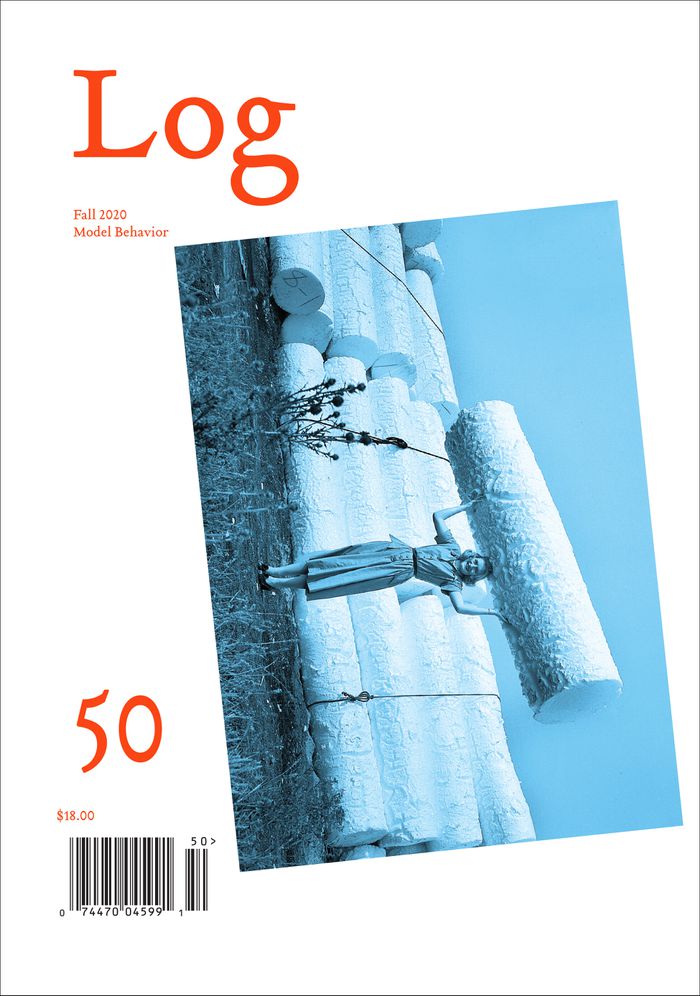
From the economic to the political, from public health to the climate, models seem to run the world. In architecture, the model is no longer just a physical tool for conceptualizing or representing architects’ visions but must also encompass digital and 3D-printed models, data and artificial intelligence models, business models, educational models, and even engage the discipline’s own questionable history in establishing role models. A thematic issue, ''Log 50: model behavior'' interrogates models in this expanded sense: what are their values, their behaviors, and the behaviors they elicit. In a record-setting 256 pages, 39 authors, ranging from established architectural thinkers to up-and-coming practitioners, examine the role of the model in architecture today through critical essays, conversations, observations, projects, and provocations.
Log 50 fall 2020
Actions:
Price:
$25.00
(available in store)
Summary:
From the economic to the political, from public health to the climate, models seem to run the world. In architecture, the model is no longer just a physical tool for conceptualizing or representing architects’ visions but must also encompass digital and 3D-printed models, data and artificial intelligence models, business models, educational models, and even engage the discipline’s own questionable history in establishing role models. A thematic issue, ''Log 50: model behavior'' interrogates models in this expanded sense: what are their values, their behaviors, and the behaviors they elicit. In a record-setting 256 pages, 39 authors, ranging from established architectural thinkers to up-and-coming practitioners, examine the role of the model in architecture today through critical essays, conversations, observations, projects, and provocations.
Form:
journals and magazines
journals and magazines
Publication:
October 2020
October 2020
Subject:
Magazines
Magazines


