


347 Results
Form:
books
books
Title:
Artists in revolution : portraits of the Russian avant-garde, 1905-1925 / Robert C. Williams.
Artists in revolution : portraits of the Russian avant-garde, 1905-1925 / Robert C. Williams.
Actions:
Holdings:
Description:
x, 242 pages : illustrations ; 24 cm
Description:
x, 242 pages : illustrations ; 24 cm
Author:
Subject:
Publication:
London : Scolar Press, 1978, ©1977.
London : Scolar Press, 1978, ©1977.
Title:
Artists in revolution : portraits of the Russian avant-garde, 1905-1925 / Robert C. Williams.
Actions:
Holdings:
Description:
x, 242 pages : illustrations ; 24 cm
Artists in revolution : portraits of the Russian avant-garde, 1905-1925 / Robert C. Williams.
Actions:
Holdings:
Description:
x, 242 pages : illustrations ; 24 cm
Form:
books
books
Publication:
London : Scolar Press, 1978, ©1977.
London : Scolar Press, 1978, ©1977.
Author:
Subject:
Form:
books
books
Actions:
Price:
$39.95
(available to order)
Summary:
In this, the first anthology of Russian contemporary art writing to be published outside Russia, many of the country’s most prominent contemporary artists, writers, philosophers, curators and historians come together to examine the region’s various movements of contemporary art, culture, and theory, from communism, cosmism and conceptualism to past and future futures.(...)
$39.95
(available to order)
Summary:
In this, the first anthology of Russian contemporary art writing to be published outside Russia, many of the country’s most prominent contemporary artists, writers, philosophers, curators and historians come together to examine the region’s various movements of contemporary art, culture, and theory, from communism, cosmism and conceptualism to past and future futures.(...)
Title:
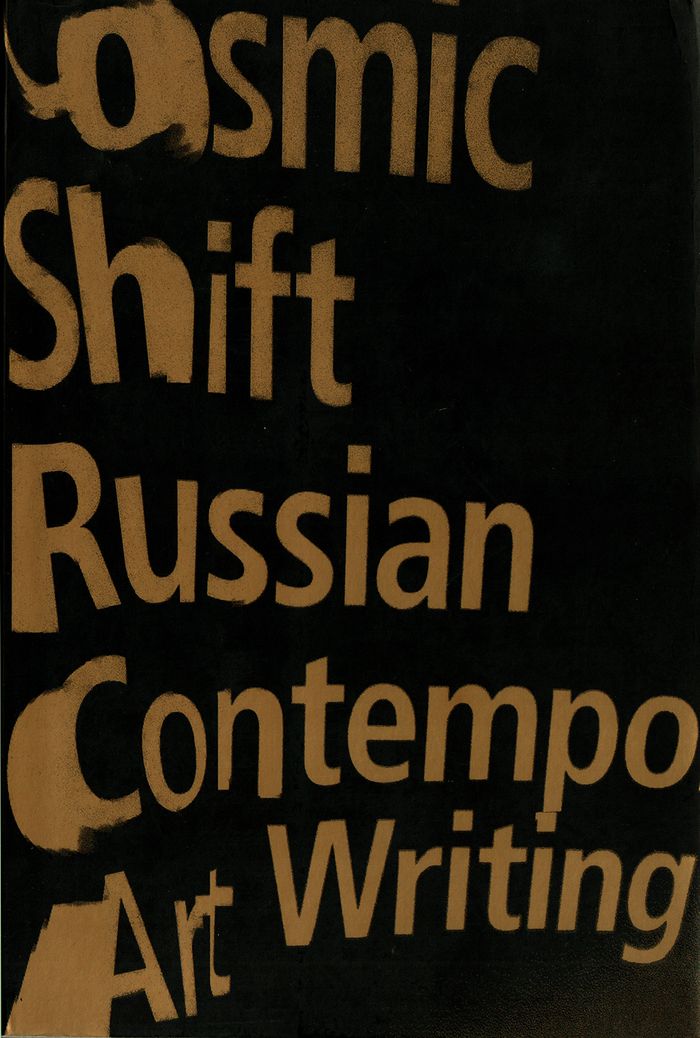
Cosmic shift: Russian contemporary art writing
Actions:
Price:
$39.95
(available to order)
Summary:
In this, the first anthology of Russian contemporary art writing to be published outside Russia, many of the country’s most prominent contemporary artists, writers, philosophers, curators and historians come together to examine the region’s various movements of contemporary art, culture, and theory, from communism, cosmism and conceptualism to past and future futures. With contributions from Barte de Baere, Boris Groys, Ilya and Emilia Kabakov, Anton Vidokle, Bogdan Mamonov, Pavel Pepperstein, Dmitri Prigov and Masha Sumnina amongst many others, this definitive collection reveals a compelling portrait of a vast and complex nation built on a contradicting dialectic between the material and the ideal and a culture battling its own histories and ideologies.
Cosmic shift: Russian contemporary art writing
Actions:
Price:
$39.95
(available to order)
Summary:
In this, the first anthology of Russian contemporary art writing to be published outside Russia, many of the country’s most prominent contemporary artists, writers, philosophers, curators and historians come together to examine the region’s various movements of contemporary art, culture, and theory, from communism, cosmism and conceptualism to past and future futures. With contributions from Barte de Baere, Boris Groys, Ilya and Emilia Kabakov, Anton Vidokle, Bogdan Mamonov, Pavel Pepperstein, Dmitri Prigov and Masha Sumnina amongst many others, this definitive collection reveals a compelling portrait of a vast and complex nation built on a contradicting dialectic between the material and the ideal and a culture battling its own histories and ideologies.
Form:
books
books
Publication:
October 2017
October 2017
Subject:
Art Theory
Art Theory
Form:
books
books
Actions:
Price:
$54.00
(available to order)
Summary:
The 1912 recognition of Albania as an entity on the international horizon is paralleled by our own initial encounter with this Balkan enigma (some fifteen years after the collapse of Albanian Communism). In both cases there were pre-histories to be taken on board and post-histories to be orchestrated. These are the parallel subjects of this book. Bolles+Wilson were one(...)
$54.00
(available to order)
Summary:
The 1912 recognition of Albania as an entity on the international horizon is paralleled by our own initial encounter with this Balkan enigma (some fifteen years after the collapse of Albanian Communism). In both cases there were pre-histories to be taken on board and post-histories to be orchestrated. These are the parallel subjects of this book. Bolles+Wilson were one(...)
Title:
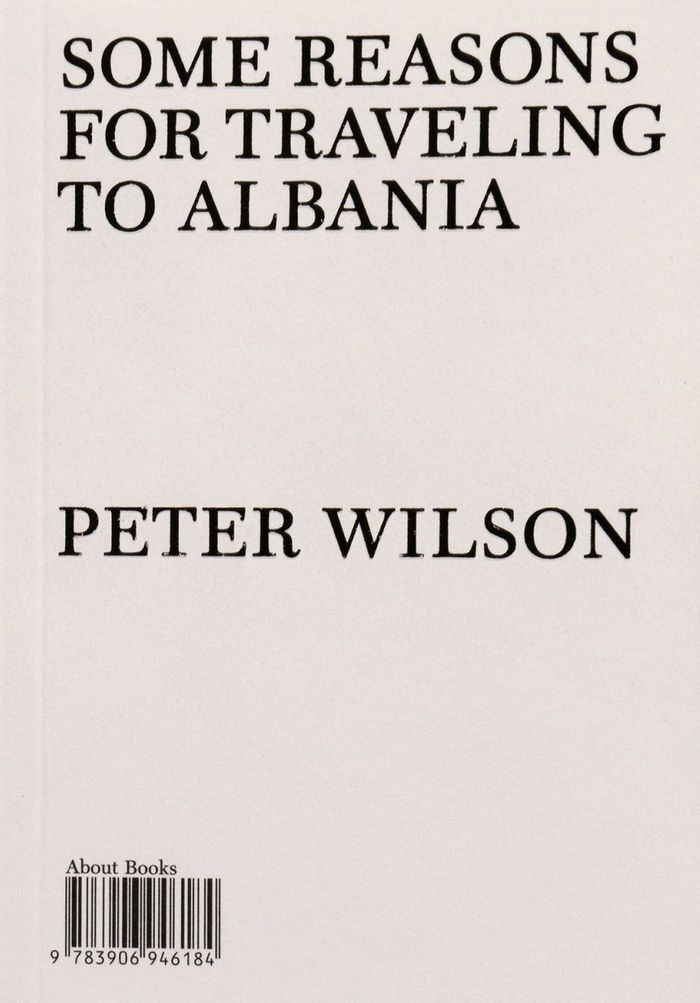
Some reasons for traveling to Albania
Actions:
Price:
$54.00
(available to order)
Summary:
The 1912 recognition of Albania as an entity on the international horizon is paralleled by our own initial encounter with this Balkan enigma (some fifteen years after the collapse of Albanian Communism). In both cases there were pre-histories to be taken on board and post-histories to be orchestrated. These are the parallel subjects of this book. Bolles+Wilson were one of three architectural offices invited to the international competition for a Masterplan to re-script the central axis of Tirana. They designed two rooms within the Rationalist edifice, one the office of Deputy Prime Minister Nico Paleshi, and nearby a room called ‚''Prime Minister’s Think Tank''.
Some reasons for traveling to Albania
Actions:
Price:
$54.00
(available to order)
Summary:
The 1912 recognition of Albania as an entity on the international horizon is paralleled by our own initial encounter with this Balkan enigma (some fifteen years after the collapse of Albanian Communism). In both cases there were pre-histories to be taken on board and post-histories to be orchestrated. These are the parallel subjects of this book. Bolles+Wilson were one of three architectural offices invited to the international competition for a Masterplan to re-script the central axis of Tirana. They designed two rooms within the Rationalist edifice, one the office of Deputy Prime Minister Nico Paleshi, and nearby a room called ‚''Prime Minister’s Think Tank''.
Form:
books
books
Publication:
October 2019
October 2019
Subject:
Architectural Theory
Architectural Theory

Actions:
Price:
$44.95
(available to order)
Summary:
In 1935, well into the era of Soviet communism, Russian satirical writers Ilya Ilf and Evgeny Petrov came to the U.S as special correspondents for the Russian newspaper Pravda. They drove crosscountry and back on a ten-week trip, recording images of American life through humerous texts and the lens of a Leica camera. When they returned home, they published their work in(...)
$44.95
(available to order)
Summary:
In 1935, well into the era of Soviet communism, Russian satirical writers Ilya Ilf and Evgeny Petrov came to the U.S as special correspondents for the Russian newspaper Pravda. They drove crosscountry and back on a ten-week trip, recording images of American life through humerous texts and the lens of a Leica camera. When they returned home, they published their work in(...)
Publication:
October 2006, New York
October 2006, New York
Title:
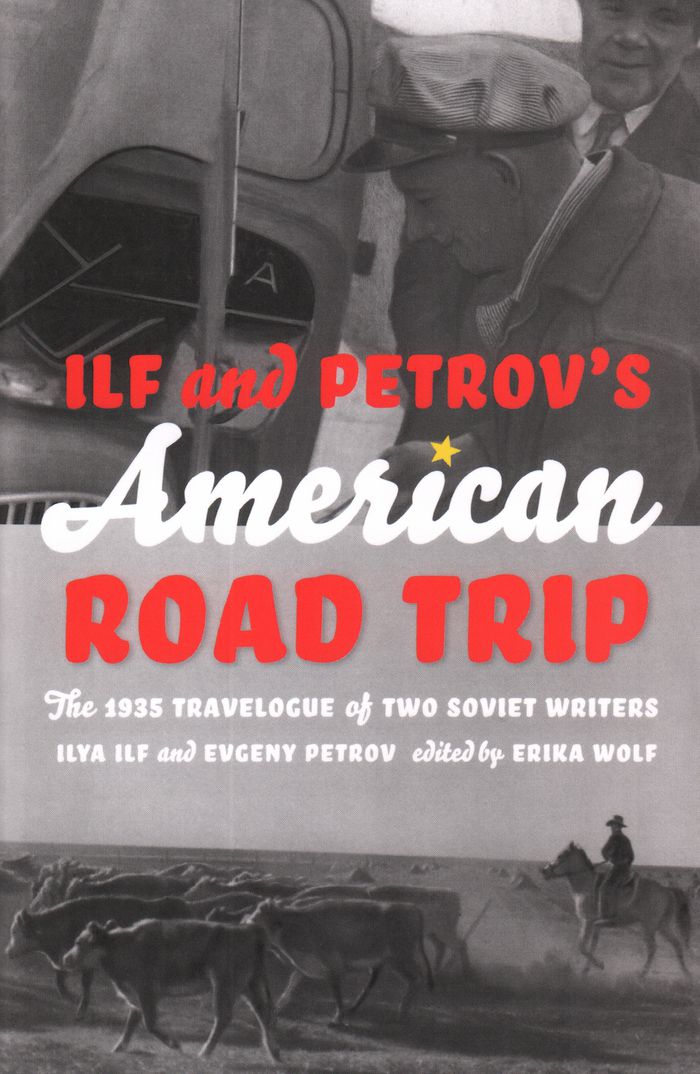
Ilf and Petrov's American road trip : the 1935 travelogue of two soviet writers
Actions:
Price:
$44.95
(available to order)
Summary:
In 1935, well into the era of Soviet communism, Russian satirical writers Ilya Ilf and Evgeny Petrov came to the U.S as special correspondents for the Russian newspaper Pravda. They drove crosscountry and back on a ten-week trip, recording images of American life through humerous texts and the lens of a Leica camera. When they returned home, they published their work in Ogonek, the Soviet equivalent of Time magazine, and later in the book Odnoetazhnaia Amerika (Single-Storied America). This wonderful lost work—filled with wry observations, biting opinions, and telling photographs—is now collected in "Ilf and Petrov's American road trip", the first English translation.
Ilf and Petrov's American road trip : the 1935 travelogue of two soviet writers
Actions:
Price:
$44.95
(available to order)
Summary:
In 1935, well into the era of Soviet communism, Russian satirical writers Ilya Ilf and Evgeny Petrov came to the U.S as special correspondents for the Russian newspaper Pravda. They drove crosscountry and back on a ten-week trip, recording images of American life through humerous texts and the lens of a Leica camera. When they returned home, they published their work in Ogonek, the Soviet equivalent of Time magazine, and later in the book Odnoetazhnaia Amerika (Single-Storied America). This wonderful lost work—filled with wry observations, biting opinions, and telling photographs—is now collected in "Ilf and Petrov's American road trip", the first English translation.
Publication:
October 2006, New York
October 2006, New York
Form:
books
books
Actions:
Price:
$44.95
(available in store)
Summary:
In 1935, well into the era of Soviet communism, Russian satirical writers Ilya Ilf and Evgeny Petrov came to the U.S as special correspondents for the Russian newspaper ''Pravda.'' They drove cross-country and back on a ten-week trip, recording images of American life through humerous texts and the lens of a Leica camera. When they returned home, they published their work(...)
$44.95
(available in store)
Summary:
In 1935, well into the era of Soviet communism, Russian satirical writers Ilya Ilf and Evgeny Petrov came to the U.S as special correspondents for the Russian newspaper ''Pravda.'' They drove cross-country and back on a ten-week trip, recording images of American life through humerous texts and the lens of a Leica camera. When they returned home, they published their work(...)
Title:
Ilf and Petrov's American road trip
Actions:
Price:
$44.95
(available in store)
Summary:
In 1935, well into the era of Soviet communism, Russian satirical writers Ilya Ilf and Evgeny Petrov came to the U.S as special correspondents for the Russian newspaper ''Pravda.'' They drove cross-country and back on a ten-week trip, recording images of American life through humerous texts and the lens of a Leica camera. When they returned home, they published their work in ''Ogonek,'' the Soviet equivalent of ''Time'' magazine, and later in the book ''Odnoetazhnaia Amerika'' (''Single-Storied America''). This wonderful lost workfilled with wry observations, biting opinions, and telling photographsis now collected in ''Ilf and Petrov's American Road Trip,'' the first English translation.
Ilf and Petrov's American road trip
Actions:
Price:
$44.95
(available in store)
Summary:
In 1935, well into the era of Soviet communism, Russian satirical writers Ilya Ilf and Evgeny Petrov came to the U.S as special correspondents for the Russian newspaper ''Pravda.'' They drove cross-country and back on a ten-week trip, recording images of American life through humerous texts and the lens of a Leica camera. When they returned home, they published their work in ''Ogonek,'' the Soviet equivalent of ''Time'' magazine, and later in the book ''Odnoetazhnaia Amerika'' (''Single-Storied America''). This wonderful lost workfilled with wry observations, biting opinions, and telling photographsis now collected in ''Ilf and Petrov's American Road Trip,'' the first English translation.
Form:
books
books
Publication:
August 2013
August 2013
Subject:
Journeys
Journeys
Form:
books
books
Title:
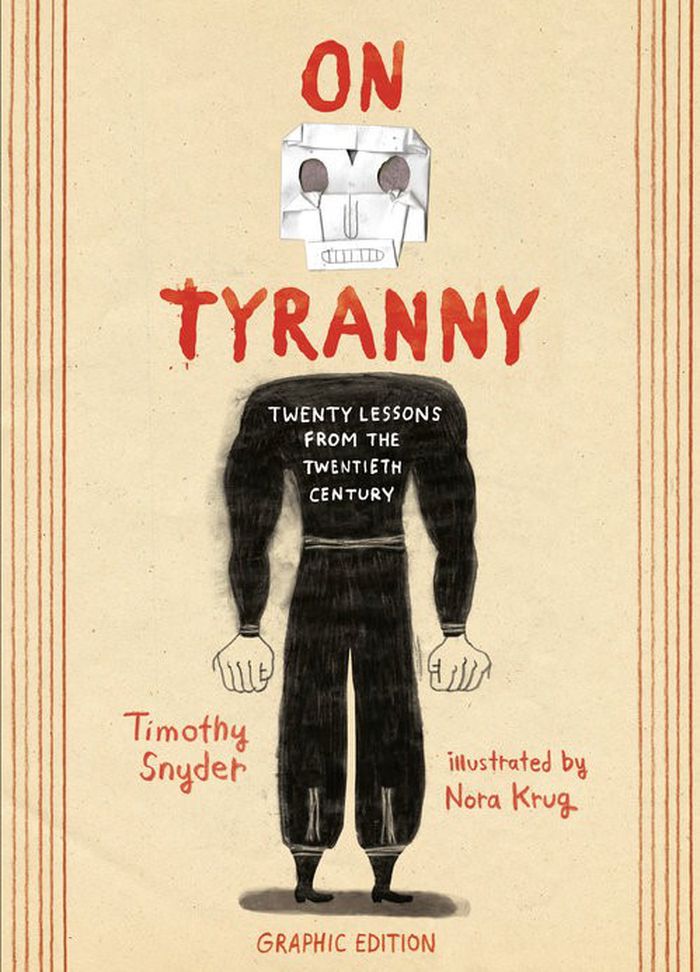
On tyranny, graphic edition
On tyranny, graphic edition
Actions:
Price:
$22.99
(available to order)
Summary:
Timothy Snyder’s New York Times bestseller 'On Tyranny' uses the darkest moments in twentieth-century history, from Nazism to Communism, to teach twenty lessons on resisting modern-day authoritarianism. In this graphic edition, Nora Krug draws from her highly inventive art style - at once a graphic memoir, collage-style scrapbook, historical narrative, and trove of(...)
$22.99
(available to order)
Summary:
Timothy Snyder’s New York Times bestseller 'On Tyranny' uses the darkest moments in twentieth-century history, from Nazism to Communism, to teach twenty lessons on resisting modern-day authoritarianism. In this graphic edition, Nora Krug draws from her highly inventive art style - at once a graphic memoir, collage-style scrapbook, historical narrative, and trove of(...)
Title:
On tyranny, graphic edition
Actions:
Price:
$22.99
(available to order)
Summary:
Timothy Snyder’s New York Times bestseller 'On Tyranny' uses the darkest moments in twentieth-century history, from Nazism to Communism, to teach twenty lessons on resisting modern-day authoritarianism. In this graphic edition, Nora Krug draws from her highly inventive art style - at once a graphic memoir, collage-style scrapbook, historical narrative, and trove of memories - to breathe new life, color, and power into Snyder’s riveting historical references, turning a quick-read pocket guide of lessons into a visually striking rumination. In a time of great uncertainty and instability, this edition of 'On Tyranny' emphasizes the importance of being active, conscious, and deliberate participants in resistance.
On tyranny, graphic edition
Actions:
Price:
$22.99
(available to order)
Summary:
Timothy Snyder’s New York Times bestseller 'On Tyranny' uses the darkest moments in twentieth-century history, from Nazism to Communism, to teach twenty lessons on resisting modern-day authoritarianism. In this graphic edition, Nora Krug draws from her highly inventive art style - at once a graphic memoir, collage-style scrapbook, historical narrative, and trove of memories - to breathe new life, color, and power into Snyder’s riveting historical references, turning a quick-read pocket guide of lessons into a visually striking rumination. In a time of great uncertainty and instability, this edition of 'On Tyranny' emphasizes the importance of being active, conscious, and deliberate participants in resistance.
Form:
books
books
Publication:
October 2021
October 2021
Subject:
Social
Social
Form:
books
books
Price:
$19.95
(available in store)
Summary:
Now is the phantom chapter to the Invisible Committee's previous book, To Our Friends: a new critique from the anonymous collective that establishes their opposition to the world of capital and its law of labor, addresses current anti-terrorist rhetoric and the ferocious repression that comes with it, and clarifies the end of social democracy and the growing rumors of the(...)
$19.95
(available in store)
Summary:
Now is the phantom chapter to the Invisible Committee's previous book, To Our Friends: a new critique from the anonymous collective that establishes their opposition to the world of capital and its law of labor, addresses current anti-terrorist rhetoric and the ferocious repression that comes with it, and clarifies the end of social democracy and the growing rumors of the(...)
Title:
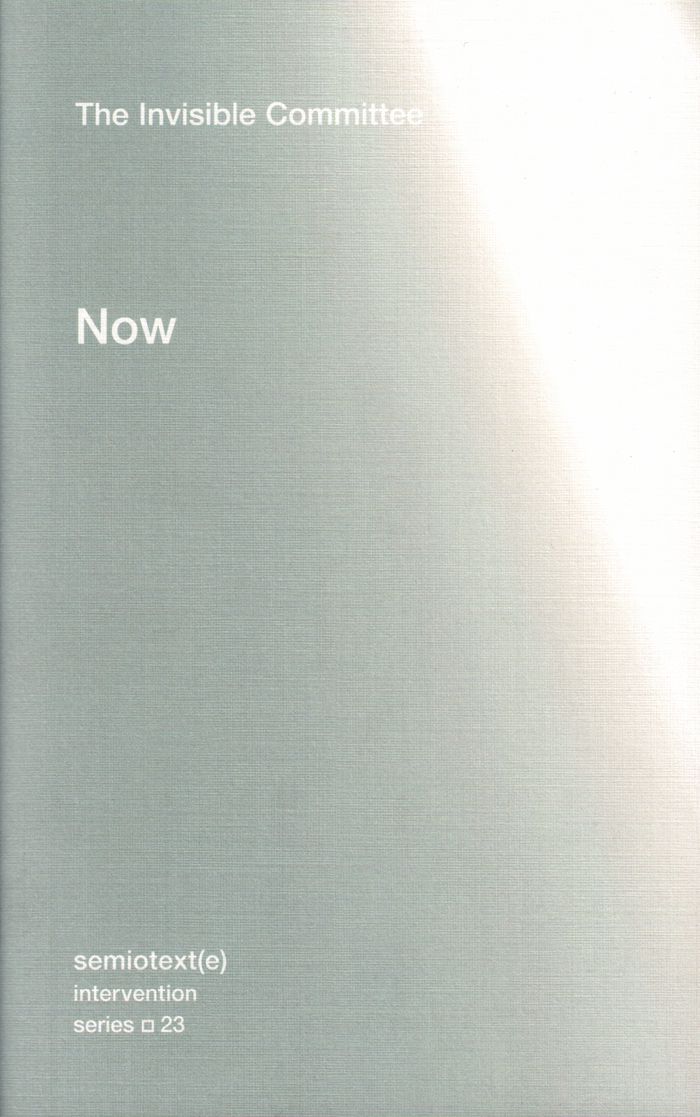
Now
Actions:
Price:
$19.95
(available in store)
Summary:
Now is the phantom chapter to the Invisible Committee's previous book, To Our Friends: a new critique from the anonymous collective that establishes their opposition to the world of capital and its law of labor, addresses current anti-terrorist rhetoric and the ferocious repression that comes with it, and clarifies the end of social democracy and the growing rumors of the need for a coming “civil war.” Now emerges at a time when the Invisible Committee’s contestation has found echoes throughout the West, with a collapse of trust in the police, an inept weariness on the part of the political system, a growing urgency for opposition, a return of the theme of the Commune, a vanishing distinction between radicals and citizens, and a widespread refusal on the part of the citizen to be governed. As farcical political elections continue to unfold worldwide like a line of tumbling dominoes, and governments increasingly struggle to reclaim a legitimacy that has already slipped out of their grasp, Now clarifies the Invisible Committee’s attitude toward all such elections and their outcome: one of utter indifference. Now proposes a “destituent process” that charts out a different path to be taken, a path of outright refusal that simply ignores elections altogether. It is a path that calls for taking over the world and not taking power, for exploring new forms of life and not a new constitution, and for desertion and silence as alternatives to proclamations and crashes. It is also a call for an unprecedented communism—a communism stronger than nation and country.
Now
Actions:
Price:
$19.95
(available in store)
Summary:
Now is the phantom chapter to the Invisible Committee's previous book, To Our Friends: a new critique from the anonymous collective that establishes their opposition to the world of capital and its law of labor, addresses current anti-terrorist rhetoric and the ferocious repression that comes with it, and clarifies the end of social democracy and the growing rumors of the need for a coming “civil war.” Now emerges at a time when the Invisible Committee’s contestation has found echoes throughout the West, with a collapse of trust in the police, an inept weariness on the part of the political system, a growing urgency for opposition, a return of the theme of the Commune, a vanishing distinction between radicals and citizens, and a widespread refusal on the part of the citizen to be governed. As farcical political elections continue to unfold worldwide like a line of tumbling dominoes, and governments increasingly struggle to reclaim a legitimacy that has already slipped out of their grasp, Now clarifies the Invisible Committee’s attitude toward all such elections and their outcome: one of utter indifference. Now proposes a “destituent process” that charts out a different path to be taken, a path of outright refusal that simply ignores elections altogether. It is a path that calls for taking over the world and not taking power, for exploring new forms of life and not a new constitution, and for desertion and silence as alternatives to proclamations and crashes. It is also a call for an unprecedented communism—a communism stronger than nation and country.
Form:
books
books
Publication:
November 2017
November 2017
Subject:
Critical Theory
Critical Theory
Form:
books
books
Actions:
Holdings:
Description:
191 pages : illustrations (some color) ; 21 cm
Description:
191 pages : illustrations (some color) ; 21 cm
Author:
Subject:
Publication:
Paris : Éditions B2, 2018.
Paris : Éditions B2, 2018.
Title:
Bouzloudja : crépuscule d'une utopie / Adrien Minard.
Actions:
Holdings:
Description:
191 pages : illustrations (some color) ; 21 cm
Bouzloudja : crépuscule d'une utopie / Adrien Minard.
Actions:
Holdings:
Description:
191 pages : illustrations (some color) ; 21 cm
Form:
books
books
Publication:
Paris : Éditions B2, 2018.
Paris : Éditions B2, 2018.
Author:
Subject:
Form:
books
books
Actions:
Description:
1 online resource
Author:
Subject:
Publication:
London : Repeater, 2018.
London : Repeater, 2018.
Title:
K-punk : the collected and unpublished writings of Mark Fisher (2004-2016) / edited by Darren Ambrose ; foreword by Simon Reynolds.
Actions:
Description:
1 online resource
K-punk : the collected and unpublished writings of Mark Fisher (2004-2016) / edited by Darren Ambrose ; foreword by Simon Reynolds.
Actions:
Description:
1 online resource
Form:
books
books
Publication:
London : Repeater, 2018.
London : Repeater, 2018.
Author:
Subject:
Form:
books
books
Price:
$29.95
(available in store)
Summary:
''Comradeship'' collects 16 essays by the forward-thinking Slovenian curator, museum director and scholar Zdenka Badovinac (born 1958). Appointed director of Ljubljana's Museum of Modern Art in 1993 in the wake of Slovenian independence, Badovinac has become an influential voice in international conversations rethinking the geopolitics of art after the fall of communism.(...)
$29.95
(available in store)
Summary:
''Comradeship'' collects 16 essays by the forward-thinking Slovenian curator, museum director and scholar Zdenka Badovinac (born 1958). Appointed director of Ljubljana's Museum of Modern Art in 1993 in the wake of Slovenian independence, Badovinac has become an influential voice in international conversations rethinking the geopolitics of art after the fall of communism.(...)
Title:
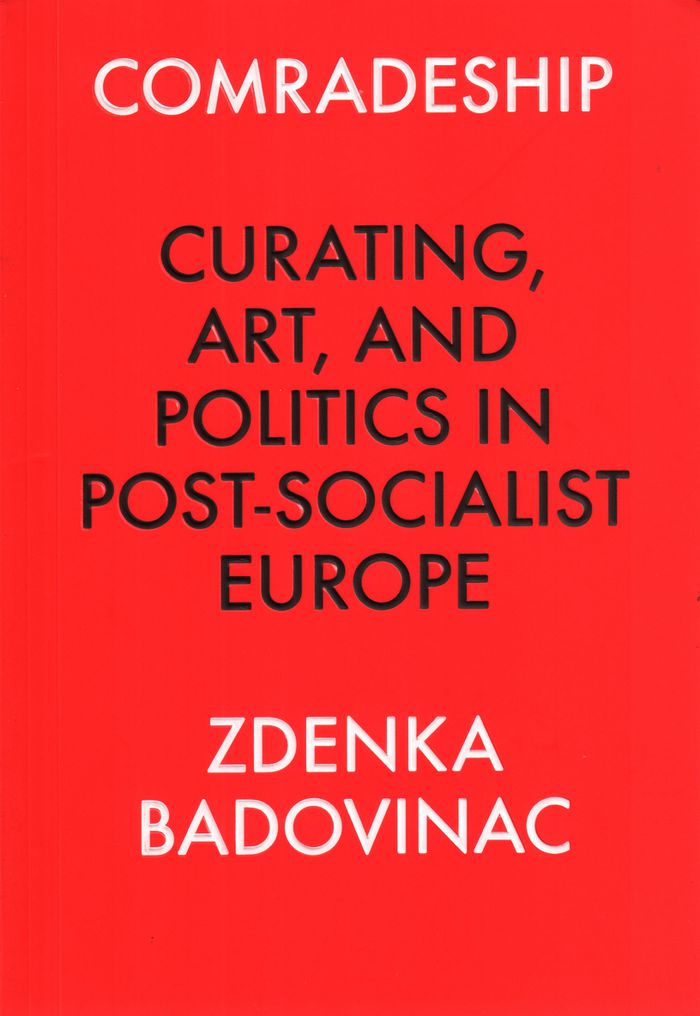
Comradeship: curating, art, and politics in post-socialist Europe
Actions:
Price:
$29.95
(available in store)
Summary:
''Comradeship'' collects 16 essays by the forward-thinking Slovenian curator, museum director and scholar Zdenka Badovinac (born 1958). Appointed director of Ljubljana's Museum of Modern Art in 1993 in the wake of Slovenian independence, Badovinac has become an influential voice in international conversations rethinking the geopolitics of art after the fall of communism. She is a ferocious critic of unequal negotiations between East and West and a leading historian of the avant-garde art that emerged in socialist and post-socialist countries at the end of the last century. One of the longest-serving and most prominent museum directors in the region, Badovinac has pioneered radical institutional forms to create a museum responsive to the complexities of the past, and commensurate with the demands of the present.
Comradeship: curating, art, and politics in post-socialist Europe
Actions:
Price:
$29.95
(available in store)
Summary:
''Comradeship'' collects 16 essays by the forward-thinking Slovenian curator, museum director and scholar Zdenka Badovinac (born 1958). Appointed director of Ljubljana's Museum of Modern Art in 1993 in the wake of Slovenian independence, Badovinac has become an influential voice in international conversations rethinking the geopolitics of art after the fall of communism. She is a ferocious critic of unequal negotiations between East and West and a leading historian of the avant-garde art that emerged in socialist and post-socialist countries at the end of the last century. One of the longest-serving and most prominent museum directors in the region, Badovinac has pioneered radical institutional forms to create a museum responsive to the complexities of the past, and commensurate with the demands of the present.
Form:
books
books
Publication:
April 2019
April 2019
Subject:
Museology
Museology


