


2056 Results
Form:
drawings
Quantity:
20 File
drawings
Quantity:
20 File
Actions:
Reference number:
ARCH41316
Description:
Physical Training Building; recesses for drinking fountains and cuspidors, swimming pool, running track, fresh air intakes, exhaust hoods, radiator recesses, parapet wall, stairs, truss supports: table and hoods for C.P.O. Building, hood and cupboard for temporary guard house
ARCH41316
Description:
Physical Training Building; recesses for drinking fountains and cuspidors, swimming pool, running track, fresh air intakes, exhaust hoods, radiator recesses, parapet wall, stairs, truss supports: table and hoods for C.P.O. Building, hood and cupboard for temporary guard house
People:
Title:
Physical Training Building; recesses for drinking fountains and cuspidors, swimming pool
Actions:
ARCH41316
Description:
Physical Training Building; recesses for drinking fountains and cuspidors, swimming pool, running track, fresh air intakes, exhaust hoods, radiator recesses, parapet wall, stairs, truss supports: table and hoods for C.P.O. Building, hood and cupboard for temporary guard house
Physical Training Building; recesses for drinking fountains and cuspidors, swimming pool
Actions:
ARCH41316
Description:
Physical Training Building; recesses for drinking fountains and cuspidors, swimming pool, running track, fresh air intakes, exhaust hoods, radiator recesses, parapet wall, stairs, truss supports: table and hoods for C.P.O. Building, hood and cupboard for temporary guard house
Form:
drawings
Quantity:
20 File
drawings
Quantity:
20 File
People:
Level of archival description:
Series
Series
Reference number:
AP112.S2
Description:
The series documents the design of Beaver Lake Pavilion, built for the City of Montréal between 1955 and 1959 as part of the redevelopment of Mount Royal Park. Sise worked with architect Guy Desbarats (1925-2003) on the project. The pavilion was built as part of a larger public works project directed by the City during the 1950s and 1960s during which time many park facilities were built. Beaver Lake Pavilion is recognized to have encouraged a renewal in the architectural forms of public facilities (1). The file contains 43 working drawings which depict every aspect of construction of the pavilion (location plan, floor plans, elevations and sections, as well as numerous detail drawings). Included with the drawings is documentation collected by Sise to support his design, including a topographical map of the park (Mount-Royal - Design Map - 1877), as well as a 1955 book published by the City Planning Department of the City of Montreal (Montreal Master Plan - Open Spaces). (1) "Pavillon-restaurant du Lac au Castors, 1955-1958", ARQ, no 91 (juin 1996), p. 21. _____________________ La série documente la conception du pavillon du Lac aux Castors construit pour la Ville de Montréal entre 1955 et 1958, dans le cadre du réaménagement du parc du Mont Royal. Ce pavillon s'insère dans un vaste chantier dirigé par la Ville de Montréal durant les années 1950 et 1960 alors que de nombreux équipements de parcs furent construits. Sise s'était associé pour l'occasion à l'architecte Guy Desbarats (1925-2003). Le pavillon du Lac aux Castors est reconnu pour avoir favorisé le renouvellement des formes architecturales des équipements publics (1). Le dossier comprend 43 dessins d'exécution réalisés à la mine de plomb sur toile concernant tous les aspects de la construction du pavillon (plan d'implantation, plans des étages, élévations et coupes, ainsi que des dessins de nombreux détails). De plus, il contient la documentation colligée par Sise pour l'appuyer dans sa tâche de conception, soit une reproduction d'une carte topographique du parc du Mont-Royal (Mount-Royal - Design Map - 1877), ainsi qu'une publication réalisée par le Département d'urbanisme de la Ville de Montréal en 1955 concernant les espaces publics (Montreal Master Plan - Open Spaces). (1) "Pavillon-restaurant du Lac au Castors, 1955-1958", ARQ, no 91 (juin 1996), p. 21.
AP112.S2
Description:
The series documents the design of Beaver Lake Pavilion, built for the City of Montréal between 1955 and 1959 as part of the redevelopment of Mount Royal Park. Sise worked with architect Guy Desbarats (1925-2003) on the project. The pavilion was built as part of a larger public works project directed by the City during the 1950s and 1960s during which time many park facilities were built. Beaver Lake Pavilion is recognized to have encouraged a renewal in the architectural forms of public facilities (1). The file contains 43 working drawings which depict every aspect of construction of the pavilion (location plan, floor plans, elevations and sections, as well as numerous detail drawings). Included with the drawings is documentation collected by Sise to support his design, including a topographical map of the park (Mount-Royal - Design Map - 1877), as well as a 1955 book published by the City Planning Department of the City of Montreal (Montreal Master Plan - Open Spaces). (1) "Pavillon-restaurant du Lac au Castors, 1955-1958", ARQ, no 91 (juin 1996), p. 21. _____________________ La série documente la conception du pavillon du Lac aux Castors construit pour la Ville de Montréal entre 1955 et 1958, dans le cadre du réaménagement du parc du Mont Royal. Ce pavillon s'insère dans un vaste chantier dirigé par la Ville de Montréal durant les années 1950 et 1960 alors que de nombreux équipements de parcs furent construits. Sise s'était associé pour l'occasion à l'architecte Guy Desbarats (1925-2003). Le pavillon du Lac aux Castors est reconnu pour avoir favorisé le renouvellement des formes architecturales des équipements publics (1). Le dossier comprend 43 dessins d'exécution réalisés à la mine de plomb sur toile concernant tous les aspects de la construction du pavillon (plan d'implantation, plans des étages, élévations et coupes, ainsi que des dessins de nombreux détails). De plus, il contient la documentation colligée par Sise pour l'appuyer dans sa tâche de conception, soit une reproduction d'une carte topographique du parc du Mont-Royal (Mount-Royal - Design Map - 1877), ainsi qu'une publication réalisée par le Département d'urbanisme de la Ville de Montréal en 1955 concernant les espaces publics (Montreal Master Plan - Open Spaces). (1) "Pavillon-restaurant du Lac au Castors, 1955-1958", ARQ, no 91 (juin 1996), p. 21.
People:
Date:
1955-1959
1955-1959
Title:
Beaver Lake Pavilion, Montréal, Québec
Actions:
AP112.S2
Description:
The series documents the design of Beaver Lake Pavilion, built for the City of Montréal between 1955 and 1959 as part of the redevelopment of Mount Royal Park. Sise worked with architect Guy Desbarats (1925-2003) on the project. The pavilion was built as part of a larger public works project directed by the City during the 1950s and 1960s during which time many park facilities were built. Beaver Lake Pavilion is recognized to have encouraged a renewal in the architectural forms of public facilities (1). The file contains 43 working drawings which depict every aspect of construction of the pavilion (location plan, floor plans, elevations and sections, as well as numerous detail drawings). Included with the drawings is documentation collected by Sise to support his design, including a topographical map of the park (Mount-Royal - Design Map - 1877), as well as a 1955 book published by the City Planning Department of the City of Montreal (Montreal Master Plan - Open Spaces). (1) "Pavillon-restaurant du Lac au Castors, 1955-1958", ARQ, no 91 (juin 1996), p. 21. _____________________ La série documente la conception du pavillon du Lac aux Castors construit pour la Ville de Montréal entre 1955 et 1958, dans le cadre du réaménagement du parc du Mont Royal. Ce pavillon s'insère dans un vaste chantier dirigé par la Ville de Montréal durant les années 1950 et 1960 alors que de nombreux équipements de parcs furent construits. Sise s'était associé pour l'occasion à l'architecte Guy Desbarats (1925-2003). Le pavillon du Lac aux Castors est reconnu pour avoir favorisé le renouvellement des formes architecturales des équipements publics (1). Le dossier comprend 43 dessins d'exécution réalisés à la mine de plomb sur toile concernant tous les aspects de la construction du pavillon (plan d'implantation, plans des étages, élévations et coupes, ainsi que des dessins de nombreux détails). De plus, il contient la documentation colligée par Sise pour l'appuyer dans sa tâche de conception, soit une reproduction d'une carte topographique du parc du Mont-Royal (Mount-Royal - Design Map - 1877), ainsi qu'une publication réalisée par le Département d'urbanisme de la Ville de Montréal en 1955 concernant les espaces publics (Montreal Master Plan - Open Spaces). (1) "Pavillon-restaurant du Lac au Castors, 1955-1958", ARQ, no 91 (juin 1996), p. 21.
Beaver Lake Pavilion, Montréal, Québec
Actions:
AP112.S2
Description:
The series documents the design of Beaver Lake Pavilion, built for the City of Montréal between 1955 and 1959 as part of the redevelopment of Mount Royal Park. Sise worked with architect Guy Desbarats (1925-2003) on the project. The pavilion was built as part of a larger public works project directed by the City during the 1950s and 1960s during which time many park facilities were built. Beaver Lake Pavilion is recognized to have encouraged a renewal in the architectural forms of public facilities (1). The file contains 43 working drawings which depict every aspect of construction of the pavilion (location plan, floor plans, elevations and sections, as well as numerous detail drawings). Included with the drawings is documentation collected by Sise to support his design, including a topographical map of the park (Mount-Royal - Design Map - 1877), as well as a 1955 book published by the City Planning Department of the City of Montreal (Montreal Master Plan - Open Spaces). (1) "Pavillon-restaurant du Lac au Castors, 1955-1958", ARQ, no 91 (juin 1996), p. 21. _____________________ La série documente la conception du pavillon du Lac aux Castors construit pour la Ville de Montréal entre 1955 et 1958, dans le cadre du réaménagement du parc du Mont Royal. Ce pavillon s'insère dans un vaste chantier dirigé par la Ville de Montréal durant les années 1950 et 1960 alors que de nombreux équipements de parcs furent construits. Sise s'était associé pour l'occasion à l'architecte Guy Desbarats (1925-2003). Le pavillon du Lac aux Castors est reconnu pour avoir favorisé le renouvellement des formes architecturales des équipements publics (1). Le dossier comprend 43 dessins d'exécution réalisés à la mine de plomb sur toile concernant tous les aspects de la construction du pavillon (plan d'implantation, plans des étages, élévations et coupes, ainsi que des dessins de nombreux détails). De plus, il contient la documentation colligée par Sise pour l'appuyer dans sa tâche de conception, soit une reproduction d'une carte topographique du parc du Mont-Royal (Mount-Royal - Design Map - 1877), ainsi qu'une publication réalisée par le Département d'urbanisme de la Ville de Montréal en 1955 concernant les espaces publics (Montreal Master Plan - Open Spaces). (1) "Pavillon-restaurant du Lac au Castors, 1955-1958", ARQ, no 91 (juin 1996), p. 21.
Level of archival description:
Series
Series
Date:
1955-1959
1955-1959
People:
Level of archival description:
Project
Project
Title:
Carbon Tower (2001)
Carbon Tower (2001)
Reference number:
AP174.S1.2001.D1
Description:
This project file documents an unbuilt design by Testa & Weiser for Carbon Tower (2001), a forty-storey building made almost entirely of carbon fibre. The project was developed in parallel with scripting software designed while Peter Testa and Devyn Weiser co-directed the Emergent Design Group at MIT. "The tower consists of an interdependent set of parts: floor plates hang from a diagrid structure of bundled fibres reinforced by two double-helix covered ramps, which are run in and out of the structure and are themselves made of strands woven at a finer scale. A thin composite skin—glass would be too heavy—wraps the tower’s parts together. A collaboration with Arup in 2002 allowed Testa & Weiser to simplify the scheme even further, by moving all core elements, from elevators to structural supports, to the tower’s perimeter. To take full advantage of the flexibility and energy efficiency of composite materials, Testa & Weiser also imagined that the carbon fibre structures would be formed on site through a process called pultrusion."[1] The file contains a large number of digital files documenting the conceptual and design development of the project; consultation with Arup Consulting Engineers, New York; research on composite materials; fabrication of 3D printed physical models by 3D Systems and Windform; and exhibition of the project at several museums and galleries, including the Museum of Contemporary Art, Los Angeles and the Cooper-Hewitt Smithsonian Design Museum, New York. Also contained in the file are 56 paper drawings (including some sketches done on top of printed computer-aided designs) and two 3D printed physical models produced by 3D Systems. Sources: [1] Canadian Centre for Architecture. Archaeology of the Digital 12: Testa & Weiser, Carbon Tower, ed. Greg Lynn (2015), ISBN 978-1-927071-25-0.
AP174.S1.2001.D1
Description:
This project file documents an unbuilt design by Testa & Weiser for Carbon Tower (2001), a forty-storey building made almost entirely of carbon fibre. The project was developed in parallel with scripting software designed while Peter Testa and Devyn Weiser co-directed the Emergent Design Group at MIT. "The tower consists of an interdependent set of parts: floor plates hang from a diagrid structure of bundled fibres reinforced by two double-helix covered ramps, which are run in and out of the structure and are themselves made of strands woven at a finer scale. A thin composite skin—glass would be too heavy—wraps the tower’s parts together. A collaboration with Arup in 2002 allowed Testa & Weiser to simplify the scheme even further, by moving all core elements, from elevators to structural supports, to the tower’s perimeter. To take full advantage of the flexibility and energy efficiency of composite materials, Testa & Weiser also imagined that the carbon fibre structures would be formed on site through a process called pultrusion."[1] The file contains a large number of digital files documenting the conceptual and design development of the project; consultation with Arup Consulting Engineers, New York; research on composite materials; fabrication of 3D printed physical models by 3D Systems and Windform; and exhibition of the project at several museums and galleries, including the Museum of Contemporary Art, Los Angeles and the Cooper-Hewitt Smithsonian Design Museum, New York. Also contained in the file are 56 paper drawings (including some sketches done on top of printed computer-aided designs) and two 3D printed physical models produced by 3D Systems. Sources: [1] Canadian Centre for Architecture. Archaeology of the Digital 12: Testa & Weiser, Carbon Tower, ed. Greg Lynn (2015), ISBN 978-1-927071-25-0.
People:
Date:
2002-2014
2002-2014
Title:
Carbon Tower (2001)
Actions:
AP174.S1.2001.D1
Description:
This project file documents an unbuilt design by Testa & Weiser for Carbon Tower (2001), a forty-storey building made almost entirely of carbon fibre. The project was developed in parallel with scripting software designed while Peter Testa and Devyn Weiser co-directed the Emergent Design Group at MIT. "The tower consists of an interdependent set of parts: floor plates hang from a diagrid structure of bundled fibres reinforced by two double-helix covered ramps, which are run in and out of the structure and are themselves made of strands woven at a finer scale. A thin composite skin—glass would be too heavy—wraps the tower’s parts together. A collaboration with Arup in 2002 allowed Testa & Weiser to simplify the scheme even further, by moving all core elements, from elevators to structural supports, to the tower’s perimeter. To take full advantage of the flexibility and energy efficiency of composite materials, Testa & Weiser also imagined that the carbon fibre structures would be formed on site through a process called pultrusion."[1] The file contains a large number of digital files documenting the conceptual and design development of the project; consultation with Arup Consulting Engineers, New York; research on composite materials; fabrication of 3D printed physical models by 3D Systems and Windform; and exhibition of the project at several museums and galleries, including the Museum of Contemporary Art, Los Angeles and the Cooper-Hewitt Smithsonian Design Museum, New York. Also contained in the file are 56 paper drawings (including some sketches done on top of printed computer-aided designs) and two 3D printed physical models produced by 3D Systems. Sources: [1] Canadian Centre for Architecture. Archaeology of the Digital 12: Testa & Weiser, Carbon Tower, ed. Greg Lynn (2015), ISBN 978-1-927071-25-0.
Carbon Tower (2001)
Actions:
AP174.S1.2001.D1
Description:
This project file documents an unbuilt design by Testa & Weiser for Carbon Tower (2001), a forty-storey building made almost entirely of carbon fibre. The project was developed in parallel with scripting software designed while Peter Testa and Devyn Weiser co-directed the Emergent Design Group at MIT. "The tower consists of an interdependent set of parts: floor plates hang from a diagrid structure of bundled fibres reinforced by two double-helix covered ramps, which are run in and out of the structure and are themselves made of strands woven at a finer scale. A thin composite skin—glass would be too heavy—wraps the tower’s parts together. A collaboration with Arup in 2002 allowed Testa & Weiser to simplify the scheme even further, by moving all core elements, from elevators to structural supports, to the tower’s perimeter. To take full advantage of the flexibility and energy efficiency of composite materials, Testa & Weiser also imagined that the carbon fibre structures would be formed on site through a process called pultrusion."[1] The file contains a large number of digital files documenting the conceptual and design development of the project; consultation with Arup Consulting Engineers, New York; research on composite materials; fabrication of 3D printed physical models by 3D Systems and Windform; and exhibition of the project at several museums and galleries, including the Museum of Contemporary Art, Los Angeles and the Cooper-Hewitt Smithsonian Design Museum, New York. Also contained in the file are 56 paper drawings (including some sketches done on top of printed computer-aided designs) and two 3D printed physical models produced by 3D Systems. Sources: [1] Canadian Centre for Architecture. Archaeology of the Digital 12: Testa & Weiser, Carbon Tower, ed. Greg Lynn (2015), ISBN 978-1-927071-25-0.
Level of archival description:
Project
Project
Date:
2002-2014
2002-2014
People:
Form:
books, photographs
books, photographs
Actions:
Reference number:
PH1990:0327:001-073
Description:
- Contemporary binding consists of purple cloth-covered boards and purple leather-covered spine and corners. There is a gold gilt inscription on the spine. Endpapers and secondary supports are of light brownish white paper. The book is comprised of 34 pages of text and 74 photographs.
PH1990:0327:001-073
Description:
- Contemporary binding consists of purple cloth-covered boards and purple leather-covered spine and corners. There is a gold gilt inscription on the spine. Endpapers and secondary supports are of light brownish white paper. The book is comprised of 34 pages of text and 74 photographs.
People:
Subject:
architecture
architecture
Date:
printed ca. 1862
printed ca. 1862
Title:
May's Views of Buckinghamshire
Actions:
PH1990:0327:001-073
Description:
- Contemporary binding consists of purple cloth-covered boards and purple leather-covered spine and corners. There is a gold gilt inscription on the spine. Endpapers and secondary supports are of light brownish white paper. The book is comprised of 34 pages of text and 74 photographs.
May's Views of Buckinghamshire
Actions:
PH1990:0327:001-073
Description:
- Contemporary binding consists of purple cloth-covered boards and purple leather-covered spine and corners. There is a gold gilt inscription on the spine. Endpapers and secondary supports are of light brownish white paper. The book is comprised of 34 pages of text and 74 photographs.
Form:
books, photographs
books, photographs
Date:
printed ca. 1862
printed ca. 1862
People:
Subject:
architecture
architecture
Form:
exhibitions
exhibitions
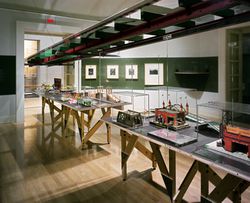
Title:
Toys and Transport
Toys and Transport
Actions:
Description:
Every new transportation link and every change in systems of urban mobility introduces new infrastructure to the urban landscape: massive cuts enabling railway tracks to converge at a terminal or junction; wide railyards that service suburban and metropolitan transit systems; the proliferation of bridges, ramps, elevated highways, freeway cuts, parking lots, and even(...)
Every new transportation link and every change in systems of urban mobility introduces new infrastructure to the urban landscape: massive cuts enabling railway tracks to converge at a terminal or junction; wide railyards that service suburban and metropolitan transit systems; the proliferation of bridges, ramps, elevated highways, freeway cuts, parking lots, and even(...)
Location:
Octagonal gallery
Octagonal gallery
Date:
15 November 2000 to 1 April 2001
15 November 2000 to 1 April 2001
Title:
Toys and Transport
Actions:
Description:
Every new transportation link and every change in systems of urban mobility introduces new infrastructure to the urban landscape: massive cuts enabling railway tracks to converge at a terminal or junction; wide railyards that service suburban and metropolitan transit systems; the proliferation of bridges, ramps, elevated highways, freeway cuts, parking lots, and even(...)
Toys and Transport
Actions:
Description:
Every new transportation link and every change in systems of urban mobility introduces new infrastructure to the urban landscape: massive cuts enabling railway tracks to converge at a terminal or junction; wide railyards that service suburban and metropolitan transit systems; the proliferation of bridges, ramps, elevated highways, freeway cuts, parking lots, and even(...)
Form:
exhibitions
exhibitions
Date:
15 November 2000 to
1 April 2001
15 November 2000 to
1 April 2001
Location:
Octagonal gallery
Octagonal gallery
Form:
events
events

Actions:
Description:
Rebecca Solnit, 2008 CCA Mellon Senior Fellow, is an independent writer, historian, and activist with a particular interest in geography, landscape, slowness, insurrection, photography, indirect routes and subjects that escape category. She lives in San Francisco, has received various awards, including the Lannan, a Guggenheim, and the Western Writers of America Spur(...)
Rebecca Solnit, 2008 CCA Mellon Senior Fellow, is an independent writer, historian, and activist with a particular interest in geography, landscape, slowness, insurrection, photography, indirect routes and subjects that escape category. She lives in San Francisco, has received various awards, including the Lannan, a Guggenheim, and the Western Writers of America Spur(...)
Date:
9 October 2008
9 October 2008
Title:
Rebecca Solnit: The Ruins of Hope, Hope in the Ruins
Actions:
Description:
Rebecca Solnit, 2008 CCA Mellon Senior Fellow, is an independent writer, historian, and activist with a particular interest in geography, landscape, slowness, insurrection, photography, indirect routes and subjects that escape category. She lives in San Francisco, has received various awards, including the Lannan, a Guggenheim, and the Western Writers of America Spur(...)
Rebecca Solnit: The Ruins of Hope, Hope in the Ruins
Actions:
Description:
Rebecca Solnit, 2008 CCA Mellon Senior Fellow, is an independent writer, historian, and activist with a particular interest in geography, landscape, slowness, insurrection, photography, indirect routes and subjects that escape category. She lives in San Francisco, has received various awards, including the Lannan, a Guggenheim, and the Western Writers of America Spur(...)
Form:
events
events
Date:
9 October 2008
9 October 2008
Form:
exhibitions
exhibitions
Actions:
Description:
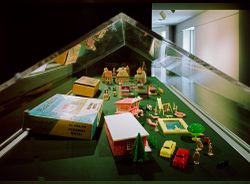
Not only do toys provide evidence of the social and economic life of their period, but architectural toys ranging from wooden building blocks to iron and steel construction sets reflect distinct stylistic predilections and technological advances. New industrial and building techniques were used not only to create the new building types transforming our cities, but were(...)
Not only do toys provide evidence of the social and economic life of their period, but architectural toys ranging from wooden building blocks to iron and steel construction sets reflect distinct stylistic predilections and technological advances. New industrial and building techniques were used not only to create the new building types transforming our cities, but were(...)
Location:
Octagonal gallery
Octagonal gallery
Date:
28 November 1990 to 31 March 1991
28 November 1990 to 31 March 1991
Title:
Buildings in Boxes: Architectural Toys from the CCA
Actions:
Description:
Not only do toys provide evidence of the social and economic life of their period, but architectural toys ranging from wooden building blocks to iron and steel construction sets reflect distinct stylistic predilections and technological advances. New industrial and building techniques were used not only to create the new building types transforming our cities, but were(...)
Buildings in Boxes: Architectural Toys from the CCA
Actions:
Description:
Not only do toys provide evidence of the social and economic life of their period, but architectural toys ranging from wooden building blocks to iron and steel construction sets reflect distinct stylistic predilections and technological advances. New industrial and building techniques were used not only to create the new building types transforming our cities, but were(...)
Form:
exhibitions
exhibitions
Date:
28 November 1990 to
31 March 1991
28 November 1990 to
31 March 1991
Location:
Octagonal gallery
Octagonal gallery
Level of archival description:
Project
Project
Actions:
Reference number:
AP149.S1.2004.PR01
Description:
The project series documents Minimum Cost Housing Group's project of research, design and construction to demonstrate the benefits of urban agriculture as a permanent feature in housing design and urban planning. A first phase of the project, from 2004 to 2007, the study project took place in developping countries in three diffrent sites: Colombo, Sri Lanka; Rosario, Argentina; and Kampala, Uganda. The project was funded by the International Development Research Centre (IDRC) and supported by the ETC-Urban Agriculture Unit in the Netherlands and the Resource centres on Urban Agriculture and Food Security (RUAF). In 2007, a second phase of the project had for objective to implement an urban agriculture production in Montréal. The Minimum Cost Housing Group team created, on McGill Campus, a vegetable garden on the terrace of a parking garage. The project is now known as "Making Edible Campus" and is still on-going. The material in this project series was produced between 2003 and 2010. The project series contains a large collection of working documents and reports submitted to funding institutions, correspondence with collaborators on the three sites, and also photographss of the project in Colombo, Kampala, Rosario sites. Also included are various artefacts related to the sites in the three developping countries and a board game "Gardenpoly" created by the Urban Agriculture seminar students on urban agriculture in Montréal. Promotional panels for the Making Edible Campus are also included.
AP149.S1.2004.PR01
Description:
The project series documents Minimum Cost Housing Group's project of research, design and construction to demonstrate the benefits of urban agriculture as a permanent feature in housing design and urban planning. A first phase of the project, from 2004 to 2007, the study project took place in developping countries in three diffrent sites: Colombo, Sri Lanka; Rosario, Argentina; and Kampala, Uganda. The project was funded by the International Development Research Centre (IDRC) and supported by the ETC-Urban Agriculture Unit in the Netherlands and the Resource centres on Urban Agriculture and Food Security (RUAF). In 2007, a second phase of the project had for objective to implement an urban agriculture production in Montréal. The Minimum Cost Housing Group team created, on McGill Campus, a vegetable garden on the terrace of a parking garage. The project is now known as "Making Edible Campus" and is still on-going. The material in this project series was produced between 2003 and 2010. The project series contains a large collection of working documents and reports submitted to funding institutions, correspondence with collaborators on the three sites, and also photographss of the project in Colombo, Kampala, Rosario sites. Also included are various artefacts related to the sites in the three developping countries and a board game "Gardenpoly" created by the Urban Agriculture seminar students on urban agriculture in Montréal. Promotional panels for the Making Edible Campus are also included.
People:
Date:
2003-2010
2003-2010
Title:
Urban agriculture demonstration
Actions:
AP149.S1.2004.PR01
Description:
The project series documents Minimum Cost Housing Group's project of research, design and construction to demonstrate the benefits of urban agriculture as a permanent feature in housing design and urban planning. A first phase of the project, from 2004 to 2007, the study project took place in developping countries in three diffrent sites: Colombo, Sri Lanka; Rosario, Argentina; and Kampala, Uganda. The project was funded by the International Development Research Centre (IDRC) and supported by the ETC-Urban Agriculture Unit in the Netherlands and the Resource centres on Urban Agriculture and Food Security (RUAF). In 2007, a second phase of the project had for objective to implement an urban agriculture production in Montréal. The Minimum Cost Housing Group team created, on McGill Campus, a vegetable garden on the terrace of a parking garage. The project is now known as "Making Edible Campus" and is still on-going. The material in this project series was produced between 2003 and 2010. The project series contains a large collection of working documents and reports submitted to funding institutions, correspondence with collaborators on the three sites, and also photographss of the project in Colombo, Kampala, Rosario sites. Also included are various artefacts related to the sites in the three developping countries and a board game "Gardenpoly" created by the Urban Agriculture seminar students on urban agriculture in Montréal. Promotional panels for the Making Edible Campus are also included.
Urban agriculture demonstration
Actions:
AP149.S1.2004.PR01
Description:
The project series documents Minimum Cost Housing Group's project of research, design and construction to demonstrate the benefits of urban agriculture as a permanent feature in housing design and urban planning. A first phase of the project, from 2004 to 2007, the study project took place in developping countries in three diffrent sites: Colombo, Sri Lanka; Rosario, Argentina; and Kampala, Uganda. The project was funded by the International Development Research Centre (IDRC) and supported by the ETC-Urban Agriculture Unit in the Netherlands and the Resource centres on Urban Agriculture and Food Security (RUAF). In 2007, a second phase of the project had for objective to implement an urban agriculture production in Montréal. The Minimum Cost Housing Group team created, on McGill Campus, a vegetable garden on the terrace of a parking garage. The project is now known as "Making Edible Campus" and is still on-going. The material in this project series was produced between 2003 and 2010. The project series contains a large collection of working documents and reports submitted to funding institutions, correspondence with collaborators on the three sites, and also photographss of the project in Colombo, Kampala, Rosario sites. Also included are various artefacts related to the sites in the three developping countries and a board game "Gardenpoly" created by the Urban Agriculture seminar students on urban agriculture in Montréal. Promotional panels for the Making Edible Campus are also included.
Level of archival description:
Project
Project
Date:
2003-2010
2003-2010
People:
Form:
events
events

Title:
Learning from... Montréal
Learning from... Montréal
Actions:
Description:
Lance Blomgren uses his 2009 book Walkups—a novella set entirely within Montréal’s row house apartment buildings—as a springboard for an analysis of the discursive plane of fictional architecture. Looking at works by John Hejduk, Ilya Kabakov, Alice Aycock and others, Blomgren argues that contemporary modes of speculative architecture offer a vital, if ethically fraught,(...)
Lance Blomgren uses his 2009 book Walkups—a novella set entirely within Montréal’s row house apartment buildings—as a springboard for an analysis of the discursive plane of fictional architecture. Looking at works by John Hejduk, Ilya Kabakov, Alice Aycock and others, Blomgren argues that contemporary modes of speculative architecture offer a vital, if ethically fraught,(...)
Location:
Paul-Desmarais Theatre
Paul-Desmarais Theatre
Date:
2 May 2013 , 7pm
2 May 2013 , 7pm
Title:
Learning from... Montréal
Actions:
Description:
Lance Blomgren uses his 2009 book Walkups—a novella set entirely within Montréal’s row house apartment buildings—as a springboard for an analysis of the discursive plane of fictional architecture. Looking at works by John Hejduk, Ilya Kabakov, Alice Aycock and others, Blomgren argues that contemporary modes of speculative architecture offer a vital, if ethically fraught,(...)
Learning from... Montréal
Actions:
Description:
Lance Blomgren uses his 2009 book Walkups—a novella set entirely within Montréal’s row house apartment buildings—as a springboard for an analysis of the discursive plane of fictional architecture. Looking at works by John Hejduk, Ilya Kabakov, Alice Aycock and others, Blomgren argues that contemporary modes of speculative architecture offer a vital, if ethically fraught,(...)
Form:
events
events
Date:
2 May 2013
7pm
2 May 2013
7pm
Location:
Paul-Desmarais Theatre
Paul-Desmarais Theatre
Form:
archives
Level of archival description:
Fonds
archives
Level of archival description:
Fonds
Actions:
Reference number:
AP190
Synopsis:
The Preston Scott Cohen Eyebeam project records, 2001-2016, consist of 281 digital files that document the architect’s competition entry for the Eyebeam Atelier Museum in New York City, developed in 2001. The archive includes 154 digital models in Rhinoceros, 30 digital models in STL, approximately 90 digital images, one video, and a number of Illustrator, Photoshop, PDF, and Microsoft Word files.
AP190
Synopsis:
The Preston Scott Cohen Eyebeam project records, 2001-2016, consist of 281 digital files that document the architect’s competition entry for the Eyebeam Atelier Museum in New York City, developed in 2001. The archive includes 154 digital models in Rhinoceros, 30 digital models in STL, approximately 90 digital images, one video, and a number of Illustrator, Photoshop, PDF, and Microsoft Word files.
People:
Date:
2001-2016
2001-2016
Title:
Preston Scott Cohen Eyebeam project records
Actions:
AP190
Synopsis:
The Preston Scott Cohen Eyebeam project records, 2001-2016, consist of 281 digital files that document the architect’s competition entry for the Eyebeam Atelier Museum in New York City, developed in 2001. The archive includes 154 digital models in Rhinoceros, 30 digital models in STL, approximately 90 digital images, one video, and a number of Illustrator, Photoshop, PDF, and Microsoft Word files.
Preston Scott Cohen Eyebeam project records
Actions:
AP190
Synopsis:
The Preston Scott Cohen Eyebeam project records, 2001-2016, consist of 281 digital files that document the architect’s competition entry for the Eyebeam Atelier Museum in New York City, developed in 2001. The archive includes 154 digital models in Rhinoceros, 30 digital models in STL, approximately 90 digital images, one video, and a number of Illustrator, Photoshop, PDF, and Microsoft Word files.
Form:
archives
Level of archival description:
Fonds
archives
Level of archival description:
Fonds
Date:
2001-2016
2001-2016
People:


