


3114 Results
Form:
books
books
Price:
$23.95
(available to order)
Summary:
For some people, their lawn is a source of pride, and for others, caring for their lawn is a chore. Yet for an increasing number of people, turf care is a cause of ecological anxiety. In Lawn People, author Paul Robbins, asks, "How did the needs of the grass come to be my own?" In his goal to get a clearer picture of why people and grasses do what they do, Robbins(...)
$23.95
(available to order)
Summary:
For some people, their lawn is a source of pride, and for others, caring for their lawn is a chore. Yet for an increasing number of people, turf care is a cause of ecological anxiety. In Lawn People, author Paul Robbins, asks, "How did the needs of the grass come to be my own?" In his goal to get a clearer picture of why people and grasses do what they do, Robbins(...)
Title:
Lawn People: how grasses, weeds and chemicals make us who we are
Actions:
Price:
$23.95
(available to order)
Summary:
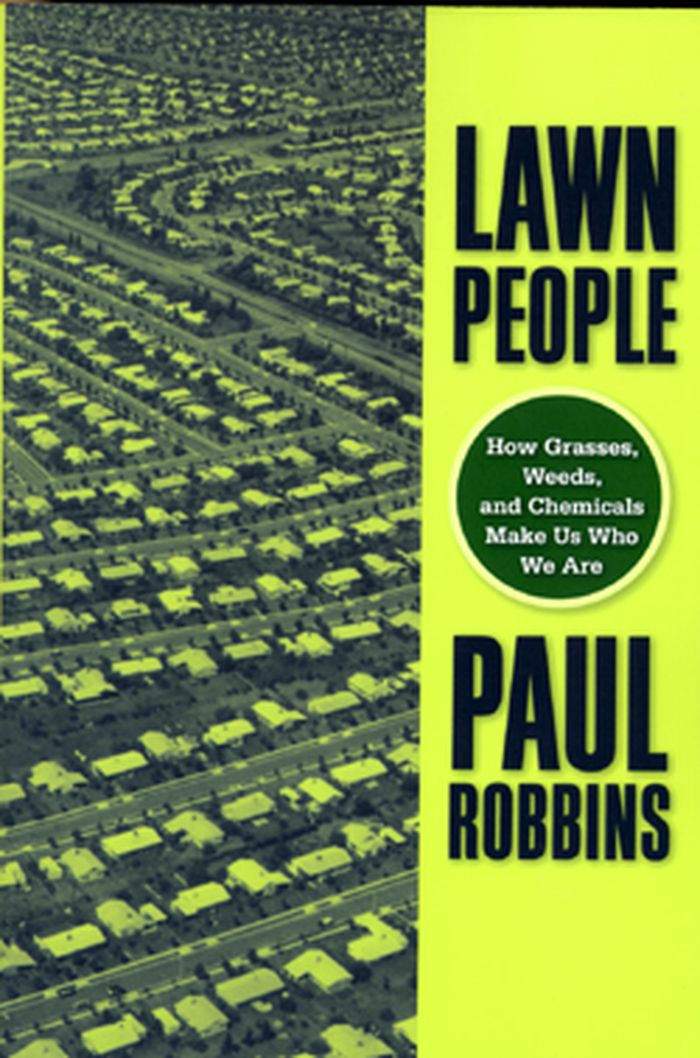
For some people, their lawn is a source of pride, and for others, caring for their lawn is a chore. Yet for an increasing number of people, turf care is a cause of ecological anxiety. In Lawn People, author Paul Robbins, asks, "How did the needs of the grass come to be my own?" In his goal to get a clearer picture of why people and grasses do what they do, Robbins interviews homeowners about their lawns, and uses national surveys, analysis from aerial photographs, and economic data to determine what people really feel about-and how they treat-their lawns. Lawn People places the lawn in its ecological, economic, and social context. Robbins considers the attention we pay our turfgrass-the chemicals we use to grow lawns, the hazards of turf care to our urban ecology, and its potential impact on water quality and household health. He also shows how the ecology of cities creates certain kinds of citizens, deftly contrasting man's control of the lawn with the lawn's control of man. Lawn People provides an intriguing examination of nature's influence on landscape management and on the ecosystem.
Lawn People: how grasses, weeds and chemicals make us who we are
Actions:
Price:
$23.95
(available to order)
Summary:
For some people, their lawn is a source of pride, and for others, caring for their lawn is a chore. Yet for an increasing number of people, turf care is a cause of ecological anxiety. In Lawn People, author Paul Robbins, asks, "How did the needs of the grass come to be my own?" In his goal to get a clearer picture of why people and grasses do what they do, Robbins interviews homeowners about their lawns, and uses national surveys, analysis from aerial photographs, and economic data to determine what people really feel about-and how they treat-their lawns. Lawn People places the lawn in its ecological, economic, and social context. Robbins considers the attention we pay our turfgrass-the chemicals we use to grow lawns, the hazards of turf care to our urban ecology, and its potential impact on water quality and household health. He also shows how the ecology of cities creates certain kinds of citizens, deftly contrasting man's control of the lawn with the lawn's control of man. Lawn People provides an intriguing examination of nature's influence on landscape management and on the ecosystem.
Form:
books
books
Publication:
June 2007, Philadelphie
June 2007, Philadelphie
Subject:
Green Architecture
Green Architecture
Form:
books
books
Actions:
Price:
$59.50
(available to order)
Summary:
From the targeted demolition of Mostar's Stari-Most Bridge in 1993 to the physical and social havoc caused by the 2004 Boxing Day Tsunami, the history of cities is often a history of destruction and reconstruction. But what political and aesthetic criteria should guide us in the rebuilding of cities devastated by war and natural calamities? This publication points to(...)
$59.50
(available to order)
Summary:
From the targeted demolition of Mostar's Stari-Most Bridge in 1993 to the physical and social havoc caused by the 2004 Boxing Day Tsunami, the history of cities is often a history of destruction and reconstruction. But what political and aesthetic criteria should guide us in the rebuilding of cities devastated by war and natural calamities? This publication points to(...)
Title:
Architects without frontiers: war, reconstruction and design responsibility
Actions:
Price:
$59.50
(available to order)
Summary:
From the targeted demolition of Mostar's Stari-Most Bridge in 1993 to the physical and social havoc caused by the 2004 Boxing Day Tsunami, the history of cities is often a history of destruction and reconstruction. But what political and aesthetic criteria should guide us in the rebuilding of cities devastated by war and natural calamities? This publication points to the potential for architects to play important roles in post-war relief and reconstruction. Charlesworth suggests that architects and design professionals have a significant opportunity to assist peace-making and reconstruction efforts in the period immediately after conflict or disaster, when much of the housing, hospital, educational, transport, civic and business infrastructure has been destroyed or badly damaged. Through selected case studies, Charlesworth examines the role of architects, planners, urban designers and landscape architects in three cities following conflict - Beirut, Nicosia and Mostar - three cities where the mental and physical scars of violent conflict still remain. This book expands the traditional role of the architect from 'hero' to 'peacemaker' and discusses how design educators can stretch their wings to encompass the proliferating agendas and sites of civil unrest.
Architects without frontiers: war, reconstruction and design responsibility
Actions:
Price:
$59.50
(available to order)
Summary:
From the targeted demolition of Mostar's Stari-Most Bridge in 1993 to the physical and social havoc caused by the 2004 Boxing Day Tsunami, the history of cities is often a history of destruction and reconstruction. But what political and aesthetic criteria should guide us in the rebuilding of cities devastated by war and natural calamities? This publication points to the potential for architects to play important roles in post-war relief and reconstruction. Charlesworth suggests that architects and design professionals have a significant opportunity to assist peace-making and reconstruction efforts in the period immediately after conflict or disaster, when much of the housing, hospital, educational, transport, civic and business infrastructure has been destroyed or badly damaged. Through selected case studies, Charlesworth examines the role of architects, planners, urban designers and landscape architects in three cities following conflict - Beirut, Nicosia and Mostar - three cities where the mental and physical scars of violent conflict still remain. This book expands the traditional role of the architect from 'hero' to 'peacemaker' and discusses how design educators can stretch their wings to encompass the proliferating agendas and sites of civil unrest.
Form:
books
books
Publication:
April 2006
April 2006
Subject:
Architectural Theory
Architectural Theory
Form:
books
books
Actions:
Price:
$47.95
(available to order)
Summary:
Exploring America's material culture, "Common Places" reveals the history, culture, and social and class relationships that are the backdrop of the everyday structures and environments of ordinary people. Examining America's houses and cityscapes, its rural outbuildings and landscapes from perspectives including cultural geography, decorative arts, architectural history,(...)
$47.95
(available to order)
Summary:
Exploring America's material culture, "Common Places" reveals the history, culture, and social and class relationships that are the backdrop of the everyday structures and environments of ordinary people. Examining America's houses and cityscapes, its rural outbuildings and landscapes from perspectives including cultural geography, decorative arts, architectural history,(...)
Subject:
History until 1900
History until 1900
Publication:
January 1900, Athens, Georgia
January 1900, Athens, Georgia
Title:
Common places : readings in American vernacular architecture
Actions:
Price:
$47.95
(available to order)
Summary:
Exploring America's material culture, "Common Places" reveals the history, culture, and social and class relationships that are the backdrop of the everyday structures and environments of ordinary people. Examining America's houses and cityscapes, its rural outbuildings and landscapes from perspectives including cultural geography, decorative arts, architectural history, and folklore, these articles reflect the variety and vibrancy of the growing field of vernacular architecture. In essays that focus on buildings and spaces unique to the U.S. landscape, Clay Lancaster, Edward T. Price, John Michael Vlach, and Warren E. Roberts reconstruct the social and cultural contexts of the modern bungalow, the small-town courthouse square, the shotgun house of the South, and the log buildings of the Midwest. Surveying the buildings of America's settlement, scholars including Henry Glassie, Norman Morrison Isham, Edward A. Chappell, and Theodore H. M. Prudon trace European ethnic influences in the folk structures of Delaware and the houses of Rhode Island, in Virginia's Renish homes, and in the Dutch barn widely repeated in rural America. Ethnic, regional, and class differences have flavored the nation's vernacular architecture. Fraser D. Neiman reveals overt changes in houses and outbuildings indicative of the growing social separation and increasingly rigid relations between seventeenth-century Virginia planters and their servants. Fred B. Kniffen and Fred W. Peterson show how, following the westward expansion of the nineteenth century, the structures of the eastern elite were repeated and often rejected by frontier builders. Moving into the twentieth century, James Borchert tracks the transformation of the alley from an urban home for Washington's blacks in the first half of the century to its new status in the gentrified neighborhoods of the last decade, while Barbara Rubin's discussion of the evolution of the commercial strip counterpoints the goals of city planners and more spontaneous forms of urban expression. The illustrations that accompany each article present the artifacts of America's material past. Photographs of individual buildings, historic maps of the nation's agricultural expanse, and descriptions of the household furnishings of the Victorian middle class, the urban immigrant population, and the rural farmer's homestead complete the volume, rooting vernacular architecture to the American people, their lives, and their everyday creations.
Common places : readings in American vernacular architecture
Actions:
Price:
$47.95
(available to order)
Summary:
Exploring America's material culture, "Common Places" reveals the history, culture, and social and class relationships that are the backdrop of the everyday structures and environments of ordinary people. Examining America's houses and cityscapes, its rural outbuildings and landscapes from perspectives including cultural geography, decorative arts, architectural history, and folklore, these articles reflect the variety and vibrancy of the growing field of vernacular architecture. In essays that focus on buildings and spaces unique to the U.S. landscape, Clay Lancaster, Edward T. Price, John Michael Vlach, and Warren E. Roberts reconstruct the social and cultural contexts of the modern bungalow, the small-town courthouse square, the shotgun house of the South, and the log buildings of the Midwest. Surveying the buildings of America's settlement, scholars including Henry Glassie, Norman Morrison Isham, Edward A. Chappell, and Theodore H. M. Prudon trace European ethnic influences in the folk structures of Delaware and the houses of Rhode Island, in Virginia's Renish homes, and in the Dutch barn widely repeated in rural America. Ethnic, regional, and class differences have flavored the nation's vernacular architecture. Fraser D. Neiman reveals overt changes in houses and outbuildings indicative of the growing social separation and increasingly rigid relations between seventeenth-century Virginia planters and their servants. Fred B. Kniffen and Fred W. Peterson show how, following the westward expansion of the nineteenth century, the structures of the eastern elite were repeated and often rejected by frontier builders. Moving into the twentieth century, James Borchert tracks the transformation of the alley from an urban home for Washington's blacks in the first half of the century to its new status in the gentrified neighborhoods of the last decade, while Barbara Rubin's discussion of the evolution of the commercial strip counterpoints the goals of city planners and more spontaneous forms of urban expression. The illustrations that accompany each article present the artifacts of America's material past. Photographs of individual buildings, historic maps of the nation's agricultural expanse, and descriptions of the household furnishings of the Victorian middle class, the urban immigrant population, and the rural farmer's homestead complete the volume, rooting vernacular architecture to the American people, their lives, and their everyday creations.
Form:
books
books
Publication:
January 1900, Athens, Georgia
January 1900, Athens, Georgia
Subject:
History until 1900
History until 1900
Form:
books
books

Actions:
Price:
$30.00
(available to order)
Summary:
Sublime landscapes, tranquil urban scenes, frolicking children; who would associate these images with Palestine? All too often the Western media show the country’s gloomy side, and Palestinians as aggressors. It is this that makes identifying with them virtually impossible. If we are to relate to the Palestinians other images are needed, images seen from a cultural and(...)
$30.00
(available to order)
Summary:
Sublime landscapes, tranquil urban scenes, frolicking children; who would associate these images with Palestine? All too often the Western media show the country’s gloomy side, and Palestinians as aggressors. It is this that makes identifying with them virtually impossible. If we are to relate to the Palestinians other images are needed, images seen from a cultural and(...)
Title:
Subjective atlas of Palestine
Actions:
Price:
$30.00
(available to order)
Summary:
Sublime landscapes, tranquil urban scenes, frolicking children; who would associate these images with Palestine? All too often the Western media show the country’s gloomy side, and Palestinians as aggressors. It is this that makes identifying with them virtually impossible. If we are to relate to the Palestinians other images are needed, images seen from a cultural and more human vantage point. The Dutch designer Annelys de Vet invited Palestinian artists, photographers and designers to map their country as they see it. Given their closeness to the subject, this has resulted in unconventional, very human impressions of the landscape and the architecture, the cuisine, the music and the poetry of thought and expression. The drawings, photographs, maps and narratives made for this atlas reveal individual life experiences, from preparing chickpeas to a manual on water pipe smoking, from historic dress to modern music. Pages containing humorous and caustic newspaper cartoons and invented Palestinian currency followed by colourful cultural diaries and moving letters from prisoners. All in all, the contributions give an entirely different angle on a nation in occupied territory. In this subjective atlas it is the Palestinians themselves who show the disarming reverse side of the black-and-white image generally resorted to by the media.
Subjective atlas of Palestine
Actions:
Price:
$30.00
(available to order)
Summary:
Sublime landscapes, tranquil urban scenes, frolicking children; who would associate these images with Palestine? All too often the Western media show the country’s gloomy side, and Palestinians as aggressors. It is this that makes identifying with them virtually impossible. If we are to relate to the Palestinians other images are needed, images seen from a cultural and more human vantage point. The Dutch designer Annelys de Vet invited Palestinian artists, photographers and designers to map their country as they see it. Given their closeness to the subject, this has resulted in unconventional, very human impressions of the landscape and the architecture, the cuisine, the music and the poetry of thought and expression. The drawings, photographs, maps and narratives made for this atlas reveal individual life experiences, from preparing chickpeas to a manual on water pipe smoking, from historic dress to modern music. Pages containing humorous and caustic newspaper cartoons and invented Palestinian currency followed by colourful cultural diaries and moving letters from prisoners. All in all, the contributions give an entirely different angle on a nation in occupied territory. In this subjective atlas it is the Palestinians themselves who show the disarming reverse side of the black-and-white image generally resorted to by the media.
Form:
books
books
Publication:
October 2007, Rotterdam
October 2007, Rotterdam
Subject:
History until 1900, Asia
History until 1900, Asia
Form:
books
books
Actions:
Price:
$109.95
(available to order)
Summary:
2010 marked the 50th anniversary of Brazil's capital Brasilia. Architects Lucio Costa and Oscar Niemeyer designed what has become one of the most studied urban planning project. Niemeyer's Cathedral, his building for the National Congress and the city's 707-ft television tower are icons of modern architecture. The entire city, marked by its cross-shaped layout and vast(...)
$109.95
(available to order)
Summary:
2010 marked the 50th anniversary of Brazil's capital Brasilia. Architects Lucio Costa and Oscar Niemeyer designed what has become one of the most studied urban planning project. Niemeyer's Cathedral, his building for the National Congress and the city's 707-ft television tower are icons of modern architecture. The entire city, marked by its cross-shaped layout and vast(...)
Title:
René Burri, Brasilia: photographs 1960-1993
Actions:
Price:
$109.95
(available to order)
Summary:
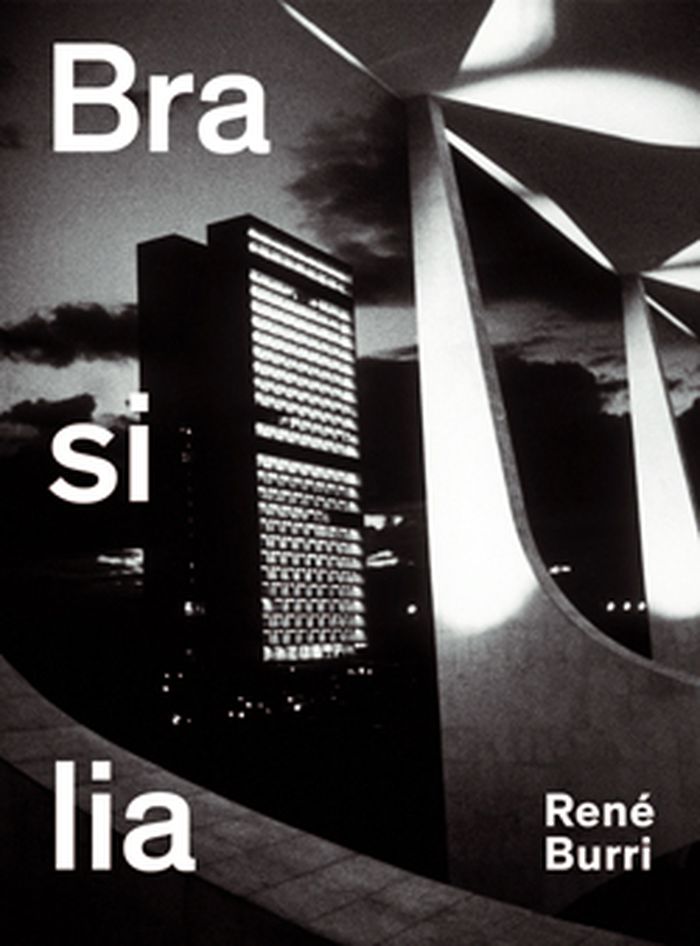
2010 marked the 50th anniversary of Brazil's capital Brasilia. Architects Lucio Costa and Oscar Niemeyer designed what has become one of the most studied urban planning project. Niemeyer's Cathedral, his building for the National Congress and the city's 707-ft television tower are icons of modern architecture. The entire city, marked by its cross-shaped layout and vast open spaces, was named a UNESCO World Heritage site in 1987. The author of this publication visited Brasilia's vast building sites for the first time in 1958. He returned many times over the years, documenting with his camera growth and further development of this built Utopia. Besides documenting the buildings in various stages of completion, Burri took portraits of Niemeyer and his workers and photographed Brasilia's street scenes and people and aerial views of the city's first slums. His images capture the strong sense of a new era and a vibrant atmosphere of hard work and strain; they reflect the huge dimensions of the landscape and the great scale of this project and its ambition to design and build a new capital. This book presents a large selection from hundreds of colour and black-and-white photographs, the majority of them published in this book for the first time.
René Burri, Brasilia: photographs 1960-1993
Actions:
Price:
$109.95
(available to order)
Summary:
2010 marked the 50th anniversary of Brazil's capital Brasilia. Architects Lucio Costa and Oscar Niemeyer designed what has become one of the most studied urban planning project. Niemeyer's Cathedral, his building for the National Congress and the city's 707-ft television tower are icons of modern architecture. The entire city, marked by its cross-shaped layout and vast open spaces, was named a UNESCO World Heritage site in 1987. The author of this publication visited Brasilia's vast building sites for the first time in 1958. He returned many times over the years, documenting with his camera growth and further development of this built Utopia. Besides documenting the buildings in various stages of completion, Burri took portraits of Niemeyer and his workers and photographed Brasilia's street scenes and people and aerial views of the city's first slums. His images capture the strong sense of a new era and a vibrant atmosphere of hard work and strain; they reflect the huge dimensions of the landscape and the great scale of this project and its ambition to design and build a new capital. This book presents a large selection from hundreds of colour and black-and-white photographs, the majority of them published in this book for the first time.
Form:
books
books
Publication:
June 2011
June 2011
Subject:
Photography monographs
Photography monographs
Form:
books
books
Actions:
Price:
$50.00
(available in store)
Summary:
Maria Giuseppina Grasso Cannizzo exhibited at the Venice Biennial in 2004 and 2008, and was honored by the Royal Institute of British Architects (RIBA) in 2012. That same year she won a gold medal for her life’s work at the Milan Triennial, and has been nominated twice for the Mies van der Rohe Prize. Nevertheless, she’s still considered an insider’s tip. She lives in(...)
$50.00
(available in store)
Summary:
Maria Giuseppina Grasso Cannizzo exhibited at the Venice Biennial in 2004 and 2008, and was honored by the Royal Institute of British Architects (RIBA) in 2012. That same year she won a gold medal for her life’s work at the Milan Triennial, and has been nominated twice for the Mies van der Rohe Prize. Nevertheless, she’s still considered an insider’s tip. She lives in(...)
Title:
Loose ends : Maria Guiseppina Grasso Cannizzo
Actions:
Price:
$50.00
(available in store)
Summary:
Maria Giuseppina Grasso Cannizzo exhibited at the Venice Biennial in 2004 and 2008, and was honored by the Royal Institute of British Architects (RIBA) in 2012. That same year she won a gold medal for her life’s work at the Milan Triennial, and has been nominated twice for the Mies van der Rohe Prize. Nevertheless, she’s still considered an insider’s tip. She lives in Vittoria, a small city in southern Sicily, where she realizes the majority of her architecture, including many transformations of historical buildings, single and multiple-family housing, or projects such as the control tower in Marina di Ragusa. Grasso Cannizzo’s special design methods are based on her analyses of the urban context and the landscape, as well as her examination of the specific “story” behind each project. She translates the knowledge gained into minimal, self-aware, and sometimes radical concepts, which are ultimately always open to any changes that life and the passage of time may bring. At the same time, this first comprehensive monograph is also a conceptual manifesto by Grasso Cannizzo. Collected in a black box, loose prints provide insight into her most important buildings and make it possible to see the architect’s general design methods.
Loose ends : Maria Guiseppina Grasso Cannizzo
Actions:
Price:
$50.00
(available in store)
Summary:
Maria Giuseppina Grasso Cannizzo exhibited at the Venice Biennial in 2004 and 2008, and was honored by the Royal Institute of British Architects (RIBA) in 2012. That same year she won a gold medal for her life’s work at the Milan Triennial, and has been nominated twice for the Mies van der Rohe Prize. Nevertheless, she’s still considered an insider’s tip. She lives in Vittoria, a small city in southern Sicily, where she realizes the majority of her architecture, including many transformations of historical buildings, single and multiple-family housing, or projects such as the control tower in Marina di Ragusa. Grasso Cannizzo’s special design methods are based on her analyses of the urban context and the landscape, as well as her examination of the specific “story” behind each project. She translates the knowledge gained into minimal, self-aware, and sometimes radical concepts, which are ultimately always open to any changes that life and the passage of time may bring. At the same time, this first comprehensive monograph is also a conceptual manifesto by Grasso Cannizzo. Collected in a black box, loose prints provide insight into her most important buildings and make it possible to see the architect’s general design methods.
Form:
books
books
Publication:
July 2014
July 2014
Subject:
Architecture Monographs
Architecture Monographs
Form:
books
books
Actions:
Price:
$59.95
(available to order)
Summary:
Cet ouvrage traite de tous les aspects de la construction en extérieur, en mettant l’accent sur les bonnes pratiques et le développement durable. Il recense les différents choix de matériaux et de modes de construction, s'intéresse à des thèmes comme l’influence de la mondialisation, le développement durable et le changement climatique. Il traite des propriétés des(...)
$59.95
(available to order)
Summary:
Cet ouvrage traite de tous les aspects de la construction en extérieur, en mettant l’accent sur les bonnes pratiques et le développement durable. Il recense les différents choix de matériaux et de modes de construction, s'intéresse à des thèmes comme l’influence de la mondialisation, le développement durable et le changement climatique. Il traite des propriétés des(...)
Publication:
January 2012
January 2012
Title:
Construction et architecture paysagère
Actions:
Price:
$59.95
(available to order)
Summary:
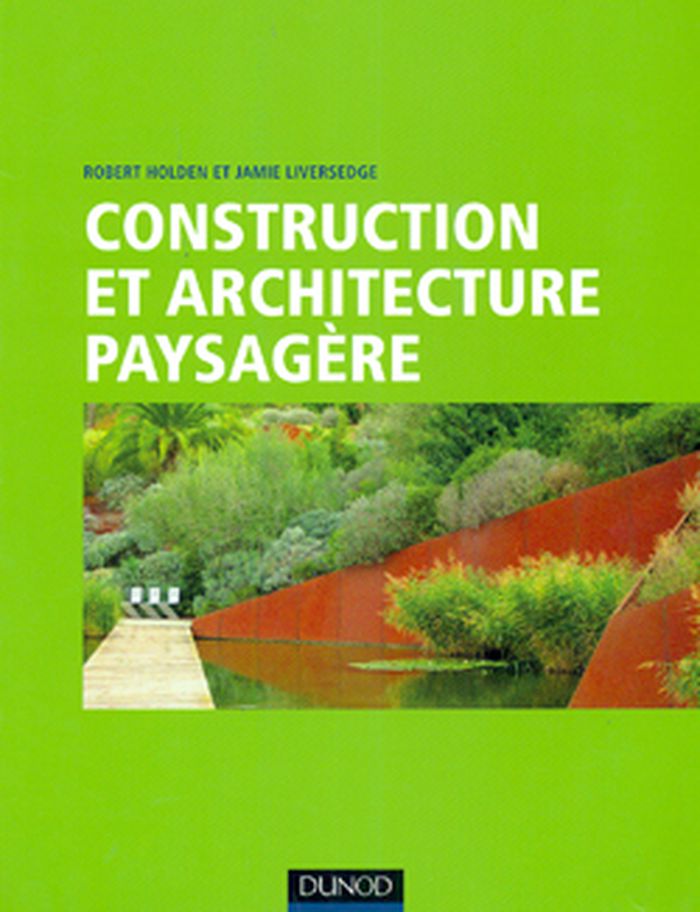
Cet ouvrage traite de tous les aspects de la construction en extérieur, en mettant l’accent sur les bonnes pratiques et le développement durable. Il recense les différents choix de matériaux et de modes de construction, s'intéresse à des thèmes comme l’influence de la mondialisation, le développement durable et le changement climatique. Il traite des propriétés des matériaux, des structures et de la mécanique ; présente les matériaux de construction, conventionnels ou non ; considère différents types d’ouvrages, le terrassement, la terre arable, les structures de soutènement, les murs, les revêtements de sol et les pièces d’eau ; traite de l’assemblage des éléments bâtis, et énumère les différentes techniques de finition et de protection des matériaux.
Construction et architecture paysagère
Actions:
Price:
$59.95
(available to order)
Summary:
Cet ouvrage traite de tous les aspects de la construction en extérieur, en mettant l’accent sur les bonnes pratiques et le développement durable. Il recense les différents choix de matériaux et de modes de construction, s'intéresse à des thèmes comme l’influence de la mondialisation, le développement durable et le changement climatique. Il traite des propriétés des matériaux, des structures et de la mécanique ; présente les matériaux de construction, conventionnels ou non ; considère différents types d’ouvrages, le terrassement, la terre arable, les structures de soutènement, les murs, les revêtements de sol et les pièces d’eau ; traite de l’assemblage des éléments bâtis, et énumère les différentes techniques de finition et de protection des matériaux.
Form:
books
books
Publication:
January 2012
January 2012
Form:
books
books
Actions:
Price:
$45.95
(available to order)
Summary:
Robert Venturi exploded onto the architectural scene in 1966 with a radical call to arms in "Complexity and Contradiction". Further accolades and outrage ensued in 1972 when Venturi and Denise Scott Brown (along with Steven Izenour) analyzed the Las Vegas strip as an archetype in "Learning from Las Vegas". Now, for the first time, these two observer-designer-theorists(...)
$45.95
(available to order)
Summary:
Robert Venturi exploded onto the architectural scene in 1966 with a radical call to arms in "Complexity and Contradiction". Further accolades and outrage ensued in 1972 when Venturi and Denise Scott Brown (along with Steven Izenour) analyzed the Las Vegas strip as an archetype in "Learning from Las Vegas". Now, for the first time, these two observer-designer-theorists(...)
Subject:
Architectural Theory
Architectural Theory
Publication:
October 2004, Cambridge, Mass.
October 2004, Cambridge, Mass.
Title:
Architecture as signs and systems for a mannerist time
Actions:
Price:
$45.95
(available to order)
Summary:
Robert Venturi exploded onto the architectural scene in 1966 with a radical call to arms in "Complexity and Contradiction". Further accolades and outrage ensued in 1972 when Venturi and Denise Scott Brown (along with Steven Izenour) analyzed the Las Vegas strip as an archetype in "Learning from Las Vegas". Now, for the first time, these two observer-designer-theorists turn their iconoclastic vision onto their own remarkable partnership and the rule-breaking architecture it has informed. The views of Venturi and Scott Brown have influenced architects worldwide for nearly half a century. Pluralism and multiculturalism; symbolism and iconography; popular culture and the everyday landscape; generic building and electronic communication are among the many ideas they have championed. Here, they present both a fascinating retrospective of their life work and a definitive statement of its theoretical underpinnings. Accessible, informative, and beautifully illustrated, Architecture as Signs and Systems is a must for students of architecture and urban planning, as well as anyone intrigued by these seminal cultural figures. Venturi and Scott Brown have devoted their professional lives to broadening our view of the built world and enlarging the purview of practitioners within it. By looking backward over their own life work, they discover signs and systems that point forward, toward a humane Mannerist architecture for a complex, multicultural society.
Architecture as signs and systems for a mannerist time
Actions:
Price:
$45.95
(available to order)
Summary:
Robert Venturi exploded onto the architectural scene in 1966 with a radical call to arms in "Complexity and Contradiction". Further accolades and outrage ensued in 1972 when Venturi and Denise Scott Brown (along with Steven Izenour) analyzed the Las Vegas strip as an archetype in "Learning from Las Vegas". Now, for the first time, these two observer-designer-theorists turn their iconoclastic vision onto their own remarkable partnership and the rule-breaking architecture it has informed. The views of Venturi and Scott Brown have influenced architects worldwide for nearly half a century. Pluralism and multiculturalism; symbolism and iconography; popular culture and the everyday landscape; generic building and electronic communication are among the many ideas they have championed. Here, they present both a fascinating retrospective of their life work and a definitive statement of its theoretical underpinnings. Accessible, informative, and beautifully illustrated, Architecture as Signs and Systems is a must for students of architecture and urban planning, as well as anyone intrigued by these seminal cultural figures. Venturi and Scott Brown have devoted their professional lives to broadening our view of the built world and enlarging the purview of practitioners within it. By looking backward over their own life work, they discover signs and systems that point forward, toward a humane Mannerist architecture for a complex, multicultural society.
Form:
books
books
Publication:
October 2004, Cambridge, Mass.
October 2004, Cambridge, Mass.
Subject:
Architectural Theory
Architectural Theory
Form:
books
books
Price:
$63.95
(available to order)
Summary:
From total look to total living: Alchimia, Tadao Ando, Armani, Vanessa Beecroft, Benetton, Pierre Cardin, CP Company, Courrèges, Diesel, Diller & Scofidio, Droog Design, Final Home, Dan Flavin, Tom Ford, Future Systems, Eileen Gray, Gucci, Andreas Gursky, Halston, Herzog & De Meuron, Tommy Hilfiger, Damien Hirst, Ikea, Philip Johnson, Rei Kawakubo, Calvin Klein, Rem(...)
$63.95
(available to order)
Summary:
From total look to total living: Alchimia, Tadao Ando, Armani, Vanessa Beecroft, Benetton, Pierre Cardin, CP Company, Courrèges, Diesel, Diller & Scofidio, Droog Design, Final Home, Dan Flavin, Tom Ford, Future Systems, Eileen Gray, Gucci, Andreas Gursky, Halston, Herzog & De Meuron, Tommy Hilfiger, Damien Hirst, Ikea, Philip Johnson, Rei Kawakubo, Calvin Klein, Rem(...)
Subject:
Interior Design
Interior Design
Publication:
January 1900, Milan
January 1900, Milan
Title:
Total living : fashion, architecture, design, art, communication
Actions:
Price:
$63.95
(available to order)
Summary:
From total look to total living: Alchimia, Tadao Ando, Armani, Vanessa Beecroft, Benetton, Pierre Cardin, CP Company, Courrèges, Diesel, Diller & Scofidio, Droog Design, Final Home, Dan Flavin, Tom Ford, Future Systems, Eileen Gray, Gucci, Andreas Gursky, Halston, Herzog & De Meuron, Tommy Hilfiger, Damien Hirst, Ikea, Philip Johnson, Rei Kawakubo, Calvin Klein, Rem Koolhaas, Helmut Lang, Le Corbusier, Levi's, Mandarina Duck, Marni, Steven Meisel, Alessandro Mendini, Ludwig Mies van der Rohe, Issey Miyake, Moschino, Helmut Newton, Nike, NL Architects, Ora-Ito Studio, John Powson, Prada, Emilio Pucci, Ralph Lauren, Claudio Silvestrin, Hedi Slimane, Paul Smith, Ettore Sottsass, Philippe Starck, Versace, Louis Vuitton, Bruce Weber, Yves Saint Laurent. Styles and lifestyles are fast becoming uniform under labels and definitions of fashion, and as an industry and a cultural form. Total Living is the point of no return in a project which, step-by-step, develops strategies whose goal it is to offer an even more sophisticated and targeted lifestyle. It is a place where there are definitions for clothes, behavior modes, and even the atmoshpheres and spaces in which one moves. Assuming the contours of a landscape of the future, this scenario raises topical themes and problems connected with the overwhelming power of consumerism. Accompanying scholarly essays consider the thematic universes of fashion designers and brands; models of total living in 20th century history; references to total living in mass culture; living and eating; arty fashion and fashionable art; the world of fashion design; the languages of shopping; urban fashion districts; and advertising as a narrative. A rich and interconnected iconographic passage visually narrates the various forms and ramifications of total living today and in the recent past through a succession of utopias, life-projects, urban visions, architecture, special homes, stores, art galleries, museums, and editorial pages and ads from fashion and lifestyle magazines. With texts by Papla Antonelli, Francesco Bonami, Michele Ciavarella, Emanuela de Cecco, Riccardo Dirindin, Roberto Monelli, Herbert Muschamp, Chee Pearlman, Michele Sernini, Dietmar Steiner, and Deyan Sudjic.
Total living : fashion, architecture, design, art, communication
Actions:
Price:
$63.95
(available to order)
Summary:
From total look to total living: Alchimia, Tadao Ando, Armani, Vanessa Beecroft, Benetton, Pierre Cardin, CP Company, Courrèges, Diesel, Diller & Scofidio, Droog Design, Final Home, Dan Flavin, Tom Ford, Future Systems, Eileen Gray, Gucci, Andreas Gursky, Halston, Herzog & De Meuron, Tommy Hilfiger, Damien Hirst, Ikea, Philip Johnson, Rei Kawakubo, Calvin Klein, Rem Koolhaas, Helmut Lang, Le Corbusier, Levi's, Mandarina Duck, Marni, Steven Meisel, Alessandro Mendini, Ludwig Mies van der Rohe, Issey Miyake, Moschino, Helmut Newton, Nike, NL Architects, Ora-Ito Studio, John Powson, Prada, Emilio Pucci, Ralph Lauren, Claudio Silvestrin, Hedi Slimane, Paul Smith, Ettore Sottsass, Philippe Starck, Versace, Louis Vuitton, Bruce Weber, Yves Saint Laurent. Styles and lifestyles are fast becoming uniform under labels and definitions of fashion, and as an industry and a cultural form. Total Living is the point of no return in a project which, step-by-step, develops strategies whose goal it is to offer an even more sophisticated and targeted lifestyle. It is a place where there are definitions for clothes, behavior modes, and even the atmoshpheres and spaces in which one moves. Assuming the contours of a landscape of the future, this scenario raises topical themes and problems connected with the overwhelming power of consumerism. Accompanying scholarly essays consider the thematic universes of fashion designers and brands; models of total living in 20th century history; references to total living in mass culture; living and eating; arty fashion and fashionable art; the world of fashion design; the languages of shopping; urban fashion districts; and advertising as a narrative. A rich and interconnected iconographic passage visually narrates the various forms and ramifications of total living today and in the recent past through a succession of utopias, life-projects, urban visions, architecture, special homes, stores, art galleries, museums, and editorial pages and ads from fashion and lifestyle magazines. With texts by Papla Antonelli, Francesco Bonami, Michele Ciavarella, Emanuela de Cecco, Riccardo Dirindin, Roberto Monelli, Herbert Muschamp, Chee Pearlman, Michele Sernini, Dietmar Steiner, and Deyan Sudjic.
Form:
books
books
Publication:
January 1900, Milan
January 1900, Milan
Subject:
Interior Design
Interior Design
Form:
books
books
Title:
Charles Rose, architect
Charles Rose, architect
Actions:
Price:
$52.00
(available to order)
Summary:
Charles Rose embraces the vast and varied panorama of the American landscape. Sensitive to his sites, the architect recognizes the poetry of every locale and uses his fascination with place as a central character in his designs. Regionalism, a term at times used to underrate architecture that is seen as too parochial or that eschews universal "truths" (most often those of(...)
$52.00
(available to order)
Summary:
Charles Rose embraces the vast and varied panorama of the American landscape. Sensitive to his sites, the architect recognizes the poetry of every locale and uses his fascination with place as a central character in his designs. Regionalism, a term at times used to underrate architecture that is seen as too parochial or that eschews universal "truths" (most often those of(...)
Title:
Charles Rose, architect
Actions:
Price:
$52.00
(available to order)
Summary:
Charles Rose embraces the vast and varied panorama of the American landscape. Sensitive to his sites, the architect recognizes the poetry of every locale and uses his fascination with place as a central character in his designs. Regionalism, a term at times used to underrate architecture that is seen as too parochial or that eschews universal "truths" (most often those of modernism) in favor of a local style, becomes a practice of the highest order in the hands of Rose, one of America's most accomplished young architects. With both the rigor of geometry and a commitment to ecosensitivity, his work is as attuned to the dense urban fabric of New York City as it is to the rural outback of Wyoming. The profile of his award-winning Camp Paint Rock in Hyattville, Wyoming, follows the contours of a nearby canyon; Roses's adaptive reuse of an industrial structure in New York City's Chelsea neighborhood preserves the existing streetscape while creating a seamless flow between inside and out; and the shape of his United States Port of Entry project in Del Rio, Texas, was determined by the scorching Texan sun and features sustainable landscapes. With surprising use of volumes, materials, and geometries, agile movement of spaces, and an active language of planes and lines, Rose creates dynamic, expressive architecture that reminds us that buildings can be both sensitive to their locale and embrace the timeless principles of geometry, material, light, and shadow.
Charles Rose, architect
Actions:
Price:
$52.00
(available to order)
Summary:
Charles Rose embraces the vast and varied panorama of the American landscape. Sensitive to his sites, the architect recognizes the poetry of every locale and uses his fascination with place as a central character in his designs. Regionalism, a term at times used to underrate architecture that is seen as too parochial or that eschews universal "truths" (most often those of modernism) in favor of a local style, becomes a practice of the highest order in the hands of Rose, one of America's most accomplished young architects. With both the rigor of geometry and a commitment to ecosensitivity, his work is as attuned to the dense urban fabric of New York City as it is to the rural outback of Wyoming. The profile of his award-winning Camp Paint Rock in Hyattville, Wyoming, follows the contours of a nearby canyon; Roses's adaptive reuse of an industrial structure in New York City's Chelsea neighborhood preserves the existing streetscape while creating a seamless flow between inside and out; and the shape of his United States Port of Entry project in Del Rio, Texas, was determined by the scorching Texan sun and features sustainable landscapes. With surprising use of volumes, materials, and geometries, agile movement of spaces, and an active language of planes and lines, Rose creates dynamic, expressive architecture that reminds us that buildings can be both sensitive to their locale and embrace the timeless principles of geometry, material, light, and shadow.
Form:
books
books
Publication:
February 2006, New York
February 2006, New York
Subject:
sale books
sale books


