


349 Results
Form:
books
books
Title:
The House at Capo d'Orso
The House at Capo d'Orso
Actions:
Price:
$33.95
(available in store)
Summary:
How does a house shape experience? How does architecture establish a practice of living? Architect Sebastiano Brandolini invites readers on a meditative tour of his family’s house on the Sardinian coast, describing everything from the geology of the rocks beneath, to the history of the surrounding villages, to the way the shifting light measures the day. More than the(...)
$33.95
(available in store)
Summary:
How does a house shape experience? How does architecture establish a practice of living? Architect Sebastiano Brandolini invites readers on a meditative tour of his family’s house on the Sardinian coast, describing everything from the geology of the rocks beneath, to the history of the surrounding villages, to the way the shifting light measures the day. More than the(...)
Title:
The House at Capo d'Orso
Actions:
Price:
$33.95
(available in store)
Summary:
How does a house shape experience? How does architecture establish a practice of living? Architect Sebastiano Brandolini invites readers on a meditative tour of his family’s house on the Sardinian coast, describing everything from the geology of the rocks beneath, to the history of the surrounding villages, to the way the shifting light measures the day. More than the story of a single summer home written by an accomplished architect, this is a study of how place, the built environment, and daily practice make up our lives, at the most minute level of detail. Recalling the essays of Walter Benjamin, Bill Bryson, Rebecca Solnit, and Lawrence Weschler, Brandolini’s writing weaves literature, art history, and the transformation of Sardinia since the 1960s into a single fabric. "The House at Capo d’Orso" is not only a study of architecture and life in the built environment, but of family life, and the way the Brandolini family adapted themselves to the house they built.
The House at Capo d'Orso
Actions:
Price:
$33.95
(available in store)
Summary:
How does a house shape experience? How does architecture establish a practice of living? Architect Sebastiano Brandolini invites readers on a meditative tour of his family’s house on the Sardinian coast, describing everything from the geology of the rocks beneath, to the history of the surrounding villages, to the way the shifting light measures the day. More than the story of a single summer home written by an accomplished architect, this is a study of how place, the built environment, and daily practice make up our lives, at the most minute level of detail. Recalling the essays of Walter Benjamin, Bill Bryson, Rebecca Solnit, and Lawrence Weschler, Brandolini’s writing weaves literature, art history, and the transformation of Sardinia since the 1960s into a single fabric. "The House at Capo d’Orso" is not only a study of architecture and life in the built environment, but of family life, and the way the Brandolini family adapted themselves to the house they built.
Form:
books
books
Publication:
May 2023
May 2023
Subject:
Architectural Theory
Architectural Theory
Form:
books
books
Actions:
Price:
$40.95
(available to order)
Summary:
La présence juive à Paris est très ancienne (on en trouve des attestations dès le Moyen Âge) mais intermittente, car les communautés ont connu des expulsions et des persécutions. C’est au XIXe siècle que les grandes synagogues parisiennes sont construites, qu’un patrimoine monumental se constitue. Mais les pierres ne sauraient, à elles seules, résumer la culture juive(...)
$40.95
(available to order)
Summary:
La présence juive à Paris est très ancienne (on en trouve des attestations dès le Moyen Âge) mais intermittente, car les communautés ont connu des expulsions et des persécutions. C’est au XIXe siècle que les grandes synagogues parisiennes sont construites, qu’un patrimoine monumental se constitue. Mais les pierres ne sauraient, à elles seules, résumer la culture juive(...)
Title:
Guide du patrimoine juif Parisien
Actions:
Price:
$40.95
(available to order)
Summary:
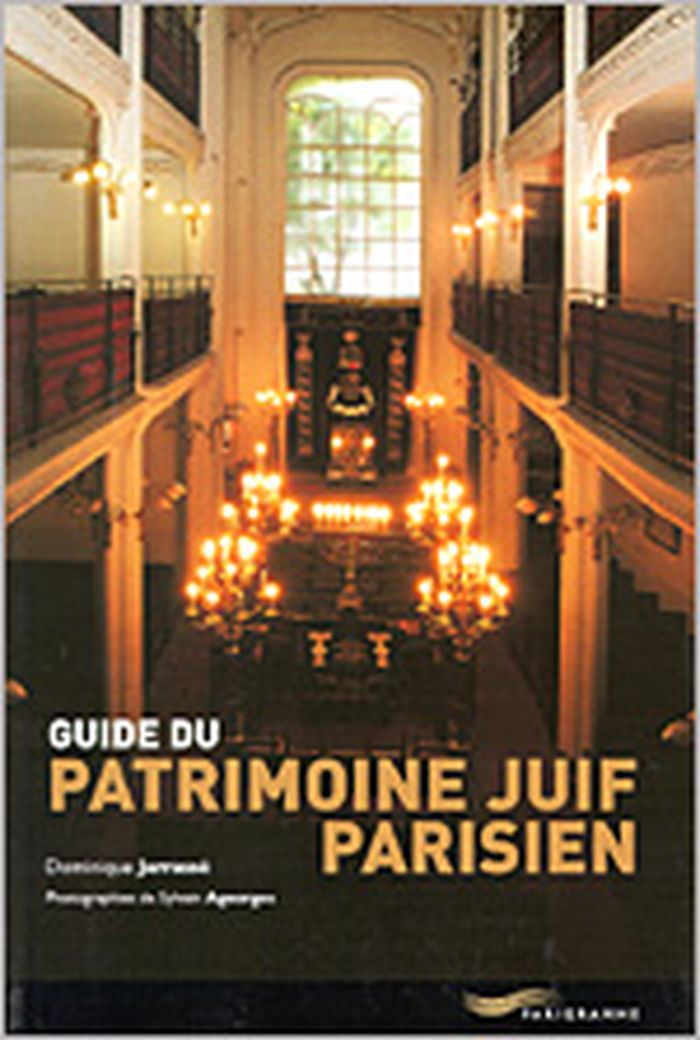
La présence juive à Paris est très ancienne (on en trouve des attestations dès le Moyen Âge) mais intermittente, car les communautés ont connu des expulsions et des persécutions. C’est au XIXe siècle que les grandes synagogues parisiennes sont construites, qu’un patrimoine monumental se constitue. Mais les pierres ne sauraient, à elles seules, résumer la culture juive parisienne qui s’est tout autant forgée dans l’émancipation gagnée pendant la Révolution, dans les affrontements de l’affaire Dreyfus, dans l’épanouissement de la yiddichkeit de l’entre-deux-guerres, ou dans la tragédie de la Choa. Elle s’incarne également dans l’œuvre des mécènes et des philanthropes qui financèrent des fondations, des dispensaires, des logements à bon marché et firent de considérables donations aux grands musées parisiens. Elle s’illustre encore avec des écrivains majeurs, de Henri Heine à Walter Benjamin ou plane entre Montparnasse et Montmartre, en compagnie de Chagall, Soutine, Kisling, Modigliani… Ce guide présente ainsi le patrimoine, mais aussi les lieux de mémoire du judaïsme parisien.
Guide du patrimoine juif Parisien
Actions:
Price:
$40.95
(available to order)
Summary:
La présence juive à Paris est très ancienne (on en trouve des attestations dès le Moyen Âge) mais intermittente, car les communautés ont connu des expulsions et des persécutions. C’est au XIXe siècle que les grandes synagogues parisiennes sont construites, qu’un patrimoine monumental se constitue. Mais les pierres ne sauraient, à elles seules, résumer la culture juive parisienne qui s’est tout autant forgée dans l’émancipation gagnée pendant la Révolution, dans les affrontements de l’affaire Dreyfus, dans l’épanouissement de la yiddichkeit de l’entre-deux-guerres, ou dans la tragédie de la Choa. Elle s’incarne également dans l’œuvre des mécènes et des philanthropes qui financèrent des fondations, des dispensaires, des logements à bon marché et firent de considérables donations aux grands musées parisiens. Elle s’illustre encore avec des écrivains majeurs, de Henri Heine à Walter Benjamin ou plane entre Montparnasse et Montmartre, en compagnie de Chagall, Soutine, Kisling, Modigliani… Ce guide présente ainsi le patrimoine, mais aussi les lieux de mémoire du judaïsme parisien.
Form:
books
books
Publication:
September 2003, Paris
September 2003, Paris
Subject:
History until 1900
History until 1900
Form:
books
books
Title:
The postconceptual condition
The postconceptual condition
Actions:
Price:
$39.99
(available to order)
Summary:
If, as Walter Benjamin claimed, "it is the function of artistic form […] to make historical content into a philosophical truth” then it is the function of criticism to recover and to complete that truth. Contemporary art makes this work more difficult than ever. Today’s art is a point of condensation for a vast array of social and historical forces, economic and political(...)
$39.99
(available to order)
Summary:
If, as Walter Benjamin claimed, "it is the function of artistic form […] to make historical content into a philosophical truth” then it is the function of criticism to recover and to complete that truth. Contemporary art makes this work more difficult than ever. Today’s art is a point of condensation for a vast array of social and historical forces, economic and political(...)
Title:
The postconceptual condition
Actions:
Price:
$39.99
(available to order)
Summary:
If, as Walter Benjamin claimed, "it is the function of artistic form […] to make historical content into a philosophical truth” then it is the function of criticism to recover and to complete that truth. Contemporary art makes this work more difficult than ever. Today’s art is a point of condensation for a vast array of social and historical forces, economic and political forms, and technologies of image production. Contemporary art, Osborne maintains, expresses this condition through its distinctively postconceptual form. These essays—extending the scope and arguments of Osborne’s Anywhere or Not At All: Philosophy of Contemporary Art—move from a philosophical consideration of the changing temporal conditions of capitalist modernity, via problems of formalism, the politics of art and the changing shape of art institutions, to interpretation and analysis of particular works by Akram Zaatari, Xavier Le Roy and Ilya Kabakov, and the postconceptual situation of a crisis-ridden New Music.
The postconceptual condition
Actions:
Price:
$39.99
(available to order)
Summary:
If, as Walter Benjamin claimed, "it is the function of artistic form […] to make historical content into a philosophical truth” then it is the function of criticism to recover and to complete that truth. Contemporary art makes this work more difficult than ever. Today’s art is a point of condensation for a vast array of social and historical forces, economic and political forms, and technologies of image production. Contemporary art, Osborne maintains, expresses this condition through its distinctively postconceptual form. These essays—extending the scope and arguments of Osborne’s Anywhere or Not At All: Philosophy of Contemporary Art—move from a philosophical consideration of the changing temporal conditions of capitalist modernity, via problems of formalism, the politics of art and the changing shape of art institutions, to interpretation and analysis of particular works by Akram Zaatari, Xavier Le Roy and Ilya Kabakov, and the postconceptual situation of a crisis-ridden New Music.
Form:
books
books
Publication:
January 2018
January 2018
Subject:
Art Theory
Art Theory
Form:
books
books
Price:
$27.50
(available to order)
Summary:
Los Angeles is a city that has long thrived on the continual re-creation of its own myth. In this extraordinary work, Norman Klein examines the process of memory erasure in LA. Using a provocative mixture of fact and fiction, the book takes us on an "anti-tour" of downtown LA, examines life for Vietnamese immigrants in the City of Dreams, imagines Walter Benjamin as a Los(...)
$27.50
(available to order)
Summary:
Los Angeles is a city that has long thrived on the continual re-creation of its own myth. In this extraordinary work, Norman Klein examines the process of memory erasure in LA. Using a provocative mixture of fact and fiction, the book takes us on an "anti-tour" of downtown LA, examines life for Vietnamese immigrants in the City of Dreams, imagines Walter Benjamin as a Los(...)
Title:
The history of forgetting: Los Angeles and the erasure of the memory
Actions:
Price:
$27.50
(available to order)
Summary:
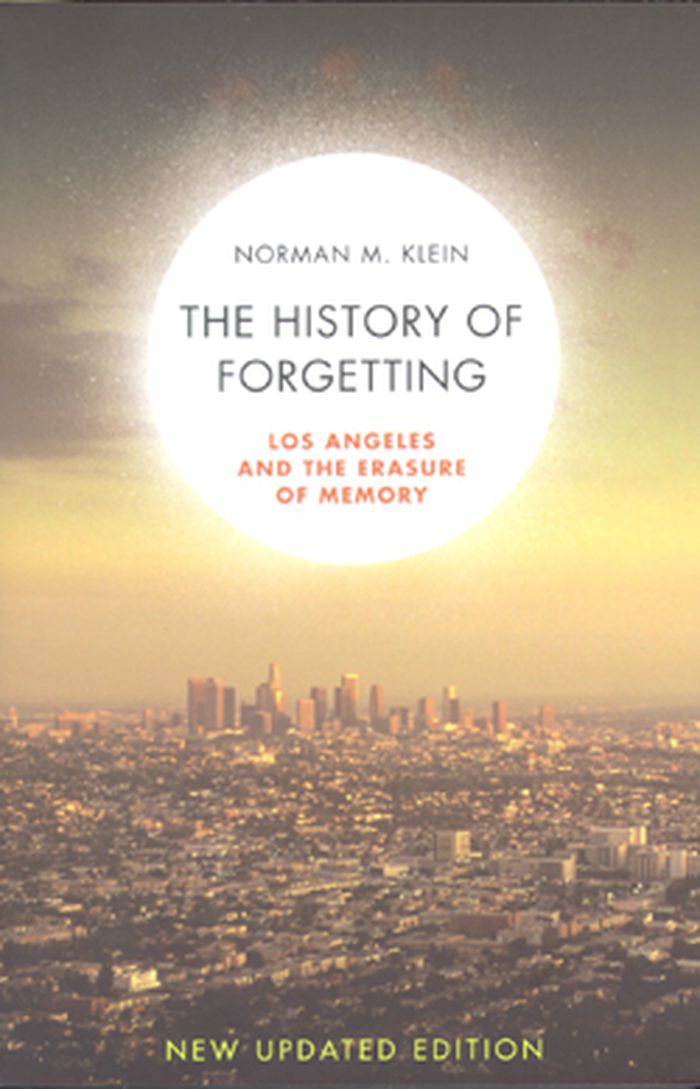
Los Angeles is a city that has long thrived on the continual re-creation of its own myth. In this extraordinary work, Norman Klein examines the process of memory erasure in LA. Using a provocative mixture of fact and fiction, the book takes us on an "anti-tour" of downtown LA, examines life for Vietnamese immigrants in the City of Dreams, imagines Walter Benjamin as a Los Angeleno, and finally looks at the way information technology has recreated the city, turning cyberspace into the last suburb. In this new edition, Norman Klein explores the evolution of the Latino majority, how the Pacific economy is changing the structure of urban life, the impact of collapsing infrastructure in the city, and the restructuring of those very districts that had been "forgotten." Norman M. Klein is a critic and historian of mass culture, author of most recently, The Vatican to Vegas: The History of Special Effects. He teaches at the California Institute of the Arts in Los Angeles.
The history of forgetting: Los Angeles and the erasure of the memory
Actions:
Price:
$27.50
(available to order)
Summary:
Los Angeles is a city that has long thrived on the continual re-creation of its own myth. In this extraordinary work, Norman Klein examines the process of memory erasure in LA. Using a provocative mixture of fact and fiction, the book takes us on an "anti-tour" of downtown LA, examines life for Vietnamese immigrants in the City of Dreams, imagines Walter Benjamin as a Los Angeleno, and finally looks at the way information technology has recreated the city, turning cyberspace into the last suburb. In this new edition, Norman Klein explores the evolution of the Latino majority, how the Pacific economy is changing the structure of urban life, the impact of collapsing infrastructure in the city, and the restructuring of those very districts that had been "forgotten." Norman M. Klein is a critic and historian of mass culture, author of most recently, The Vatican to Vegas: The History of Special Effects. He teaches at the California Institute of the Arts in Los Angeles.
Form:
books
books
Publication:
August 2008, London, New York
August 2008, London, New York
Subject:
Urban Theory
Urban Theory
Form:
books
books
Actions:
Price:
$35.00
(available to order)
Summary:
In this short, intentionally polemical book, Neil Leach draws on the ideas of philosophers and cultural theorists such as Walter Benjamin and Jean Baudrillard to develop a novel and highly incisive critique of the consequences of the growing (...)
$35.00
(available to order)
Summary:
In this short, intentionally polemical book, Neil Leach draws on the ideas of philosophers and cultural theorists such as Walter Benjamin and Jean Baudrillard to develop a novel and highly incisive critique of the consequences of the growing (...)
Title:
The anaesthetics of architecture
Actions:
Price:
$35.00
(available to order)
Summary:
In this short, intentionally polemical book, Neil Leach draws on the ideas of philosophers and cultural theorists such as Walter Benjamin and Jean Baudrillard to develop a novel and highly incisive critique of the consequences of the growing preoccupation with images and image-making in contemporary architectural culture. The problem with this preoccupation, Leach argues, is that it can induce a sort of numbness, as the saturation of images floods the senses and obscures deeper concerns. This problem is particularly acute for a discipline such as architecture, which relies heavily on visual representation. As a result, architects can become anaesthetized from the social and political realities of everyday life. In the intoxicating world of the image, the aesthetics of architecture threaten to become the anaesthetics of architecture. In this culture of aesthetic consumption, this "culture of the cocktail," meaningful discourse gives way to strategies of seduction, and architectural design is reduced to the superficial play of empty, seductive forms.
The anaesthetics of architecture
Actions:
Price:
$35.00
(available to order)
Summary:
In this short, intentionally polemical book, Neil Leach draws on the ideas of philosophers and cultural theorists such as Walter Benjamin and Jean Baudrillard to develop a novel and highly incisive critique of the consequences of the growing preoccupation with images and image-making in contemporary architectural culture. The problem with this preoccupation, Leach argues, is that it can induce a sort of numbness, as the saturation of images floods the senses and obscures deeper concerns. This problem is particularly acute for a discipline such as architecture, which relies heavily on visual representation. As a result, architects can become anaesthetized from the social and political realities of everyday life. In the intoxicating world of the image, the aesthetics of architecture threaten to become the anaesthetics of architecture. In this culture of aesthetic consumption, this "culture of the cocktail," meaningful discourse gives way to strategies of seduction, and architectural design is reduced to the superficial play of empty, seductive forms.
Form:
books
books
Publication:
May 1999, Cambridge, Mass.
May 1999, Cambridge, Mass.
Subject:
Architectural Theory
Architectural Theory
Form:
books
books

Actions:
Price:
$56.00
(available to order)
Summary:
"Shopping" signifies more than the pure purchasing of goods. Strolling, looking at, choosing, buying and consuming goods has long become an essential part of urban life in the 20th century. Shopping is an essential ritual of public life, creating and transforming identity. Ever since Walter Benjamin´s description of the flaneur in the Paris arcades, the complex(...)
$56.00
(available to order)
Summary:
"Shopping" signifies more than the pure purchasing of goods. Strolling, looking at, choosing, buying and consuming goods has long become an essential part of urban life in the 20th century. Shopping is an essential ritual of public life, creating and transforming identity. Ever since Walter Benjamin´s description of the flaneur in the Paris arcades, the complex(...)
Subject:
Contemporary Art Monographs
Contemporary Art Monographs
Publication:
December 2002, Ostfildern
December 2002, Ostfildern
Title:
Shopping : a century of art and consumer culture
Actions:
Price:
$56.00
(available to order)
Summary:
"Shopping" signifies more than the pure purchasing of goods. Strolling, looking at, choosing, buying and consuming goods has long become an essential part of urban life in the 20th century. Shopping is an essential ritual of public life, creating and transforming identity. Ever since Walter Benjamin´s description of the flaneur in the Paris arcades, the complex interchanges between consumer culture and art have become an issue worthy of discussion, and the book Shopping is the first extensive publication to be dedicated to this topic. It documents and analyses the fascination of fine artists, architects, film makers with the more and more sophisticated means of seduction in shop windows, department stores and shopping arcades. Extensive pictorial material serves to illustrate the interaction between art and the consumption of goods using works by Eugène Atget, Berenice Abbott, Walker Evans, Andy Warhol, Claes Oldenburg, Roy Lichtenstein, Christo, Duane Hanson, Barbara Kruger, Jeff Koons, Andreas Gursky, and many more. The book is edited by Christoph Grunenberg and Max Hollein and includes contributions by internationally renowned authors.
Shopping : a century of art and consumer culture
Actions:
Price:
$56.00
(available to order)
Summary:
"Shopping" signifies more than the pure purchasing of goods. Strolling, looking at, choosing, buying and consuming goods has long become an essential part of urban life in the 20th century. Shopping is an essential ritual of public life, creating and transforming identity. Ever since Walter Benjamin´s description of the flaneur in the Paris arcades, the complex interchanges between consumer culture and art have become an issue worthy of discussion, and the book Shopping is the first extensive publication to be dedicated to this topic. It documents and analyses the fascination of fine artists, architects, film makers with the more and more sophisticated means of seduction in shop windows, department stores and shopping arcades. Extensive pictorial material serves to illustrate the interaction between art and the consumption of goods using works by Eugène Atget, Berenice Abbott, Walker Evans, Andy Warhol, Claes Oldenburg, Roy Lichtenstein, Christo, Duane Hanson, Barbara Kruger, Jeff Koons, Andreas Gursky, and many more. The book is edited by Christoph Grunenberg and Max Hollein and includes contributions by internationally renowned authors.
Form:
books
books
Publication:
December 2002, Ostfildern
December 2002, Ostfildern
Subject:
Contemporary Art Monographs
Contemporary Art Monographs
Form:
books
books
Actions:
Price:
$28.95
(available to order)
Summary:
Artists surveyed include: Joseph Albers, Mel Bochner, Daniel Buren, Carlos Cruz-Diez, Robert Delaunay, Sonia Delaunay, Jimmie Durham, Helen Frankenthaler, Paul Gauguin, Donald Judd, Wassily Kandinsky, Paul Klee, Yves Klein, Kazimir Malevich, Piero Manzoni, Henri Matisse, Henri Michaux, Beatriz Milhazes, Piet Mondrian, Barnett Newman, Kenneth Noland, Hélio Oiticica, Paul(...)
$28.95
(available to order)
Summary:
Artists surveyed include: Joseph Albers, Mel Bochner, Daniel Buren, Carlos Cruz-Diez, Robert Delaunay, Sonia Delaunay, Jimmie Durham, Helen Frankenthaler, Paul Gauguin, Donald Judd, Wassily Kandinsky, Paul Klee, Yves Klein, Kazimir Malevich, Piero Manzoni, Henri Matisse, Henri Michaux, Beatriz Milhazes, Piet Mondrian, Barnett Newman, Kenneth Noland, Hélio Oiticica, Paul(...)
Title:
Colour: Documents on comtemporary art
Actions:
Price:
$28.95
(available to order)
Summary:
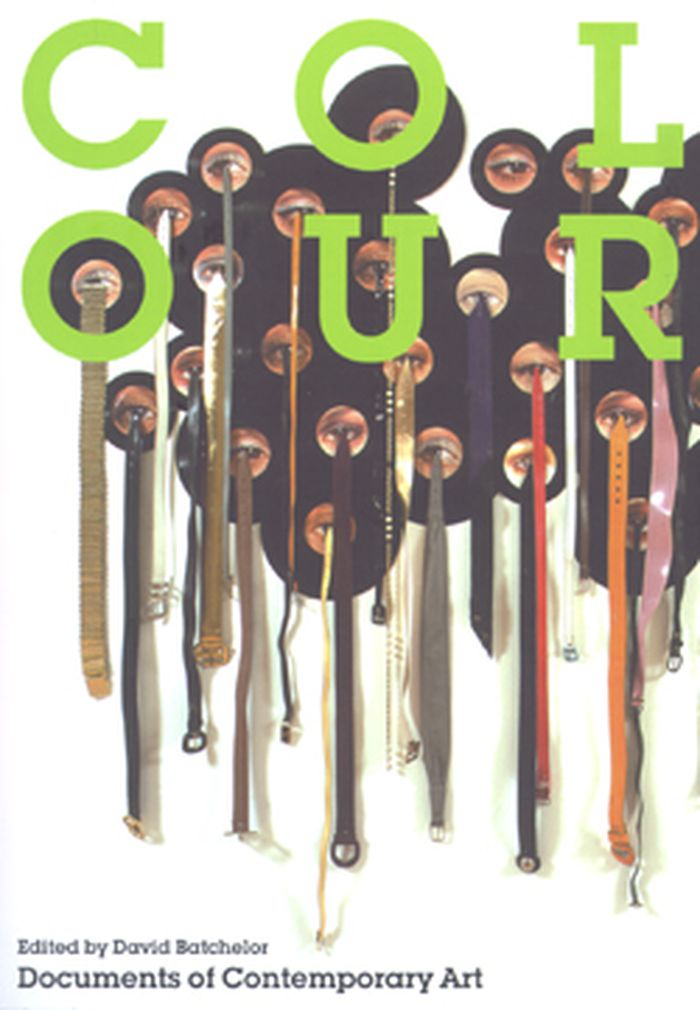
Artists surveyed include: Joseph Albers, Mel Bochner, Daniel Buren, Carlos Cruz-Diez, Robert Delaunay, Sonia Delaunay, Jimmie Durham, Helen Frankenthaler, Paul Gauguin, Donald Judd, Wassily Kandinsky, Paul Klee, Yves Klein, Kazimir Malevich, Piero Manzoni, Henri Matisse, Henri Michaux, Beatriz Milhazes, Piet Mondrian, Barnett Newman, Kenneth Noland, Hélio Oiticica, Paul Signac, Ad Reinhardt, Gerhard Richter, Aleksandr Rodchenko, Bridget Riley, Mark Rothko, Yinka Shonibare, Jessica Stockholder, Theo van Doesburg, Vincent van Gogh, Victor Vasarely, Rachel Whiteread. Writers include: Theodor Adorno, Roland Barthes, Charles Baudelaire, Jean Baudrillard, Walter Benjamin, Charles Blanc, Jacques Derrida, Thierry de Duve, Umberto Eco, Victoria Finlay, Joris-Karl Huysmans, Johannes Itten, Julia Kristeva, Claude Lévi-Strauss, Jacqueline Lichtenstein, Maurice Merleau-Ponty, John Ruskin, Adrian Stokes, Ludwig Wittgenstein. About the Editor: David Batchelor is an artist and writer who has exhibited widely in Europe and America. Senior Tutor in Critical Theory in the Department of Curating Contemporary Art at the Royal College of Art, London, he is a frequent contributor to such journals as Artforum and Frieze and the author of Minimalism and Chromophobia.
Colour: Documents on comtemporary art
Actions:
Price:
$28.95
(available to order)
Summary:
Artists surveyed include: Joseph Albers, Mel Bochner, Daniel Buren, Carlos Cruz-Diez, Robert Delaunay, Sonia Delaunay, Jimmie Durham, Helen Frankenthaler, Paul Gauguin, Donald Judd, Wassily Kandinsky, Paul Klee, Yves Klein, Kazimir Malevich, Piero Manzoni, Henri Matisse, Henri Michaux, Beatriz Milhazes, Piet Mondrian, Barnett Newman, Kenneth Noland, Hélio Oiticica, Paul Signac, Ad Reinhardt, Gerhard Richter, Aleksandr Rodchenko, Bridget Riley, Mark Rothko, Yinka Shonibare, Jessica Stockholder, Theo van Doesburg, Vincent van Gogh, Victor Vasarely, Rachel Whiteread. Writers include: Theodor Adorno, Roland Barthes, Charles Baudelaire, Jean Baudrillard, Walter Benjamin, Charles Blanc, Jacques Derrida, Thierry de Duve, Umberto Eco, Victoria Finlay, Joris-Karl Huysmans, Johannes Itten, Julia Kristeva, Claude Lévi-Strauss, Jacqueline Lichtenstein, Maurice Merleau-Ponty, John Ruskin, Adrian Stokes, Ludwig Wittgenstein. About the Editor: David Batchelor is an artist and writer who has exhibited widely in Europe and America. Senior Tutor in Critical Theory in the Department of Curating Contemporary Art at the Royal College of Art, London, he is a frequent contributor to such journals as Artforum and Frieze and the author of Minimalism and Chromophobia.
Form:
books
books
Publication:
March 2008, London/Massachusetts
March 2008, London/Massachusetts
Subject:
Art Theory
Art Theory
Form:
books
books
Actions:
Price:
$60.00
(available to order)
Summary:
Critical theories such as those of the Frankfurt School of the twenties and thirties gave rise to a complex and sophisticated critique of modernity and modernism. The history and theory of twentieth-century architecture, which developed rather independently of (...)
$60.00
(available to order)
Summary:
Critical theories such as those of the Frankfurt School of the twenties and thirties gave rise to a complex and sophisticated critique of modernity and modernism. The history and theory of twentieth-century architecture, which developed rather independently of (...)
Title:
Architecture and modernity : a critique
Actions:
Price:
$60.00
(available to order)
Summary:
Critical theories such as those of the Frankfurt School of the twenties and thirties gave rise to a complex and sophisticated critique of modernity and modernism. The history and theory of twentieth-century architecture, which developed rather independently of this rich tradition, appear naive and unbalanced in comparison. In this exploration of the relationship between modernity, dwelling, and architecture, Hilde Heynen attempts to bridge this gap between the discourse of the modern movement and cultural theories of modernity. On one hand, she discusses architecture from the perspective of critical theory, and on the other she modifies positions within critical theory by linking them with architecture. She assesses architecture as a cultural field that structures daily life and that embodies major contradictions inherent in modernity, arguing that architecture nonetheless has a certain capacity to adopt a critical stance vis-à-vis modernity. The book provides architectural students with an introduction to the discourse of critical theory. The subchapters on Walter Benjamin, Ernst Bloch, Theodor Adorno, and the Venice School (Tafuri, Dal Co, Cacciari) can be studied independently.
Architecture and modernity : a critique
Actions:
Price:
$60.00
(available to order)
Summary:
Critical theories such as those of the Frankfurt School of the twenties and thirties gave rise to a complex and sophisticated critique of modernity and modernism. The history and theory of twentieth-century architecture, which developed rather independently of this rich tradition, appear naive and unbalanced in comparison. In this exploration of the relationship between modernity, dwelling, and architecture, Hilde Heynen attempts to bridge this gap between the discourse of the modern movement and cultural theories of modernity. On one hand, she discusses architecture from the perspective of critical theory, and on the other she modifies positions within critical theory by linking them with architecture. She assesses architecture as a cultural field that structures daily life and that embodies major contradictions inherent in modernity, arguing that architecture nonetheless has a certain capacity to adopt a critical stance vis-à-vis modernity. The book provides architectural students with an introduction to the discourse of critical theory. The subchapters on Walter Benjamin, Ernst Bloch, Theodor Adorno, and the Venice School (Tafuri, Dal Co, Cacciari) can be studied independently.
Form:
books
books
Publication:
November 1998, Cambridge, Mass.
November 1998, Cambridge, Mass.
Subject:
Architectural Theory
Architectural Theory
Form:
books
books
Actions:
Price:
$35.50
(available to order)
Summary:
Critical theories such as those of the Frankfurt School of the twenties and thirties gave rise to a complex and sophisticated critique of modernity and modernism. The history and theory of twentieth-century architecture, which developed rather independently of (...)
$35.50
(available to order)
Summary:
Critical theories such as those of the Frankfurt School of the twenties and thirties gave rise to a complex and sophisticated critique of modernity and modernism. The history and theory of twentieth-century architecture, which developed rather independently of (...)
Title:
Architecture and modernity : a critique
Actions:
Price:
$35.50
(available to order)
Summary:
Critical theories such as those of the Frankfurt School of the twenties and thirties gave rise to a complex and sophisticated critique of modernity and modernism. The history and theory of twentieth-century architecture, which developed rather independently of this rich tradition, appear naive and unbalanced in comparison. In this exploration of the relationship between modernity, dwelling, and architecture, Hilde Heynen attempts to bridge this gap between the discourse of the modern movement and cultural theories of modernity. On one hand, she discusses architecture from the perspective of critical theory, and on the other she modifies positions within critical theory by linking them with architecture. She assesses architecture as a cultural field that structures daily life and that embodies major contradictions inherent in modernity, arguing that architecture nonetheless has a certain capacity to adopt a critical stance vis-à-vis modernity. The book provides architectural students with an introduction to the discourse of critical theory. The subchapters on Walter Benjamin, Ernst Bloch, Theodor Adorno, and the Venice School (Tafuri, Dal Co, Cacciari) can be studied independently.
Architecture and modernity : a critique
Actions:
Price:
$35.50
(available to order)
Summary:
Critical theories such as those of the Frankfurt School of the twenties and thirties gave rise to a complex and sophisticated critique of modernity and modernism. The history and theory of twentieth-century architecture, which developed rather independently of this rich tradition, appear naive and unbalanced in comparison. In this exploration of the relationship between modernity, dwelling, and architecture, Hilde Heynen attempts to bridge this gap between the discourse of the modern movement and cultural theories of modernity. On one hand, she discusses architecture from the perspective of critical theory, and on the other she modifies positions within critical theory by linking them with architecture. She assesses architecture as a cultural field that structures daily life and that embodies major contradictions inherent in modernity, arguing that architecture nonetheless has a certain capacity to adopt a critical stance vis-à-vis modernity. The book provides architectural students with an introduction to the discourse of critical theory. The subchapters on Walter Benjamin, Ernst Bloch, Theodor Adorno, and the Venice School (Tafuri, Dal Co, Cacciari) can be studied independently.
Form:
books
books
Publication:
April 2000, Cambridge, Mass.
April 2000, Cambridge, Mass.
Subject:
Architectural Theory
Architectural Theory
Form:
books
books
Title:
After-images of the city
After-images of the city
Actions:
Price:
$27.95
(available to order)
Summary:
Criticism on the textual and iconographic construction of the city is extensive, yet the problem of historical change in representations of "the urban" has received little attention. Believing traditional accounts are limited by their reflection of a specific historical moment, Joan Ramon Resina and Dieter Ingenschay focus, by contrast, on transition. In essays written(...)
$27.95
(available to order)
Summary:
Criticism on the textual and iconographic construction of the city is extensive, yet the problem of historical change in representations of "the urban" has received little attention. Believing traditional accounts are limited by their reflection of a specific historical moment, Joan Ramon Resina and Dieter Ingenschay focus, by contrast, on transition. In essays written(...)
Subject:
Urban Theory
Urban Theory
Publication:
February 2003, Ithaca, N.Y.
February 2003, Ithaca, N.Y.
Title:
After-images of the city
Actions:
Price:
$27.95
(available to order)
Summary:
Criticism on the textual and iconographic construction of the city is extensive, yet the problem of historical change in representations of "the urban" has received little attention. Believing traditional accounts are limited by their reflection of a specific historical moment, Joan Ramon Resina and Dieter Ingenschay focus, by contrast, on transition. In essays written for this volume, scholars of literary and visual studies, the history of architecture, cultural theory, and urban geography explore the ways perceptual or conceptual paradigms of the city supersede or replace others, while at the same time retaining the "after-image" of what went before. The writers touch on a wide variety of issues related to contemporary urban cultures as they journey through cities including New York, Barcelona, Madrid, Paris, Tijuana, Berlin, and London. Drawing on the work of Roland Barthes, Walter Benjamin, Camilo José Cela, Honoré de Balzac, and Alfred Stieglitz, their approach is broadly cultural rather than technical. "After-images of the city" takes into account the intrinsic instability of the image and reveals that representations of the modern metropolis cannot be fixed in time and history.
After-images of the city
Actions:
Price:
$27.95
(available to order)
Summary:
Criticism on the textual and iconographic construction of the city is extensive, yet the problem of historical change in representations of "the urban" has received little attention. Believing traditional accounts are limited by their reflection of a specific historical moment, Joan Ramon Resina and Dieter Ingenschay focus, by contrast, on transition. In essays written for this volume, scholars of literary and visual studies, the history of architecture, cultural theory, and urban geography explore the ways perceptual or conceptual paradigms of the city supersede or replace others, while at the same time retaining the "after-image" of what went before. The writers touch on a wide variety of issues related to contemporary urban cultures as they journey through cities including New York, Barcelona, Madrid, Paris, Tijuana, Berlin, and London. Drawing on the work of Roland Barthes, Walter Benjamin, Camilo José Cela, Honoré de Balzac, and Alfred Stieglitz, their approach is broadly cultural rather than technical. "After-images of the city" takes into account the intrinsic instability of the image and reveals that representations of the modern metropolis cannot be fixed in time and history.
Form:
books
books
Publication:
February 2003, Ithaca, N.Y.
February 2003, Ithaca, N.Y.
Subject:
Urban Theory
Urban Theory


