


327 Results
Form:
books
books
Actions:
Holdings:
Description:
407 pages : chiefly illustrations (some color), maps (some color), plans ; 23 x 30 cm
Description:
407 pages : chiefly illustrations (some color), maps (some color), plans ; 23 x 30 cm
Author:
Subject:
Publication:
New York, NY : Metropolis Books, [2016], ©2016
New York, NY : Metropolis Books, [2016], ©2016
Title:
Never built New York / Greg Goldin, Sam Lubell ; foreword by Daniel Libeskind.
Actions:
Holdings:
Description:
407 pages : chiefly illustrations (some color), maps (some color), plans ; 23 x 30 cm
Never built New York / Greg Goldin, Sam Lubell ; foreword by Daniel Libeskind.
Actions:
Holdings:
Description:
407 pages : chiefly illustrations (some color), maps (some color), plans ; 23 x 30 cm
Form:
books
books
Publication:
New York, NY : Metropolis Books, [2016], ©2016
New York, NY : Metropolis Books, [2016], ©2016
Author:
Subject:
Form:
books
books
Actions:
Holdings:
Description:
xxv, 222 pages : illustrations ; 31 cm
Description:
xxv, 222 pages : illustrations ; 31 cm
Author:
Subject:
Publication:
Charlottesville, Virginia : Howell Press, [2001], ©2001
Charlottesville, Virginia : Howell Press, [2001], ©2001
Title:
Lost Virginia : vanished architecture of the Old Dominion / Bryan Clark Green, Calder Loth, William M.S. Rasmussen.
Actions:
Holdings:
Description:
xxv, 222 pages : illustrations ; 31 cm
Lost Virginia : vanished architecture of the Old Dominion / Bryan Clark Green, Calder Loth, William M.S. Rasmussen.
Actions:
Holdings:
Description:
xxv, 222 pages : illustrations ; 31 cm
Form:
books
books
Publication:
Charlottesville, Virginia : Howell Press, [2001], ©2001
Charlottesville, Virginia : Howell Press, [2001], ©2001
Author:
Subject:
Form:
books
books
Actions:
Price:
$23.95
(available to order)
Summary:
Stop, look, and discover — the streets and parks of Manhattan are filled with beautiful historic monuments that will entertain, stimulate, and inspire you. Among the 54 monuments in this volume are major figures in American history: Washington, Lincoln, Lafayette, Horace Greeley, and Gertrude Stein; more obscure figures: Daniel Butterfield, J. Marion Sims, and King(...)
$23.95
(available to order)
Summary:
Stop, look, and discover — the streets and parks of Manhattan are filled with beautiful historic monuments that will entertain, stimulate, and inspire you. Among the 54 monuments in this volume are major figures in American history: Washington, Lincoln, Lafayette, Horace Greeley, and Gertrude Stein; more obscure figures: Daniel Butterfield, J. Marion Sims, and King(...)
Title:
Outdoor monuments of Manhattan : a historical guide
Actions:
Price:
$23.95
(available to order)
Summary:
Stop, look, and discover — the streets and parks of Manhattan are filled with beautiful historic monuments that will entertain, stimulate, and inspire you. Among the 54 monuments in this volume are major figures in American history: Washington, Lincoln, Lafayette, Horace Greeley, and Gertrude Stein; more obscure figures: Daniel Butterfield, J. Marion Sims, and King Jagiello; as well as the icons of New York: Atlas, Prometheus, and the Firemen's Memorial. The monuments represent the work of some of America's best sculptors: Augustus Saint Gaudens' Farragut and Sherman, Daniel Chester French's Four Continents, and Anna Hyatt Huntington's Jose Marti and Joan of Arc. Each monument, illustrated with black-and-white photographs, is located on a map of Manhattan and includes easy-to-follow directions. All the sculptures are considered both as historical mementos and as art. We learn of furious General Sherman court-martialing a civilian journalist, and also of exasperated Saint Gaudens' proposing a hook-and-spring device for improving his assistants' artistic acuity as they help model Sherman. We discover how Lincoln dealt with a vociferous Confederate politician from Ohio, and why the Lincoln in Union Square doesn't rank as a top-notch Lincoln portrait. Sidebars reveal other aspects of the figure or event commemorated, using personal quotes, poems, excerpts from nineteenth-century periodicals (New York Times, Harper's Weekly), and writers ranging from Aeschylus, Washington Irving, and Frederic-Auguste Bartholdi to Mark Twain and Henryk Sienkiewicz. As a historical account, "Outdoor monuments of Manhattan : a historical guide" is a fascinating look at figures and events that changed New York, the United States and the world.
Outdoor monuments of Manhattan : a historical guide
Actions:
Price:
$23.95
(available to order)
Summary:
Stop, look, and discover — the streets and parks of Manhattan are filled with beautiful historic monuments that will entertain, stimulate, and inspire you. Among the 54 monuments in this volume are major figures in American history: Washington, Lincoln, Lafayette, Horace Greeley, and Gertrude Stein; more obscure figures: Daniel Butterfield, J. Marion Sims, and King Jagiello; as well as the icons of New York: Atlas, Prometheus, and the Firemen's Memorial. The monuments represent the work of some of America's best sculptors: Augustus Saint Gaudens' Farragut and Sherman, Daniel Chester French's Four Continents, and Anna Hyatt Huntington's Jose Marti and Joan of Arc. Each monument, illustrated with black-and-white photographs, is located on a map of Manhattan and includes easy-to-follow directions. All the sculptures are considered both as historical mementos and as art. We learn of furious General Sherman court-martialing a civilian journalist, and also of exasperated Saint Gaudens' proposing a hook-and-spring device for improving his assistants' artistic acuity as they help model Sherman. We discover how Lincoln dealt with a vociferous Confederate politician from Ohio, and why the Lincoln in Union Square doesn't rank as a top-notch Lincoln portrait. Sidebars reveal other aspects of the figure or event commemorated, using personal quotes, poems, excerpts from nineteenth-century periodicals (New York Times, Harper's Weekly), and writers ranging from Aeschylus, Washington Irving, and Frederic-Auguste Bartholdi to Mark Twain and Henryk Sienkiewicz. As a historical account, "Outdoor monuments of Manhattan : a historical guide" is a fascinating look at figures and events that changed New York, the United States and the world.
Form:
books
books
Publication:
January 2007, New York
January 2007, New York
Subject:
City Guides
City Guides
Form:
books
books
Actions:
Price:
$82.50
(available to order)
Summary:
Piloting a single-engine biplane high above Washington D.C. in 1920, the intrepid inventor and aviation pioneer Sherman Fairchild first tested his custom-built sky camera, effectively founding the aerial photography company that would bear his name. Roaming America's skies for the next 40 years, the photographers of the Fairchild Aerial Survey Company documented nearly(...)
$82.50
(available to order)
Summary:
Piloting a single-engine biplane high above Washington D.C. in 1920, the intrepid inventor and aviation pioneer Sherman Fairchild first tested his custom-built sky camera, effectively founding the aerial photography company that would bear his name. Roaming America's skies for the next 40 years, the photographers of the Fairchild Aerial Survey Company documented nearly(...)
Subject:
Architectural Plans and Cartography
Architectural Plans and Cartography
Publication:
October 2001, New York
October 2001, New York
Title:
Cities from the sky : an aerial portrait of America
Actions:
Price:
$82.50
(available to order)
Summary:
Piloting a single-engine biplane high above Washington D.C. in 1920, the intrepid inventor and aviation pioneer Sherman Fairchild first tested his custom-built sky camera, effectively founding the aerial photography company that would bear his name. Roaming America's skies for the next 40 years, the photographers of the Fairchild Aerial Survey Company documented nearly every major city in the United States. Their images, bot maplike shots from high above and low-angle raking views, form a definitive portrait of the American landscape. By the 1970s, the Fairchild archive was scattered across the country. Painstakingly reassembled for this book, the images (many of which have never been seen before) are brought together here for the first time. This large-format book collects over 125 extraordinary images taken between the 1920s and the 1960s. The photographs, valued both as works of art and as tools for urban historians, often capture historic moments: the Capitol Building during Franklin Delano Roosevelt's first inauguration and Yankee Stadium during Don Larsen's perfect game in the 1956 World Series. Others depict architectural lands: the Empire State Building, the Statue of Liberty, the Washington Monument, Hoover Dam, and Alcatraz, to name a few.
Cities from the sky : an aerial portrait of America
Actions:
Price:
$82.50
(available to order)
Summary:
Piloting a single-engine biplane high above Washington D.C. in 1920, the intrepid inventor and aviation pioneer Sherman Fairchild first tested his custom-built sky camera, effectively founding the aerial photography company that would bear his name. Roaming America's skies for the next 40 years, the photographers of the Fairchild Aerial Survey Company documented nearly every major city in the United States. Their images, bot maplike shots from high above and low-angle raking views, form a definitive portrait of the American landscape. By the 1970s, the Fairchild archive was scattered across the country. Painstakingly reassembled for this book, the images (many of which have never been seen before) are brought together here for the first time. This large-format book collects over 125 extraordinary images taken between the 1920s and the 1960s. The photographs, valued both as works of art and as tools for urban historians, often capture historic moments: the Capitol Building during Franklin Delano Roosevelt's first inauguration and Yankee Stadium during Don Larsen's perfect game in the 1956 World Series. Others depict architectural lands: the Empire State Building, the Statue of Liberty, the Washington Monument, Hoover Dam, and Alcatraz, to name a few.
Form:
books
books
Publication:
October 2001, New York
October 2001, New York
Subject:
Architectural Plans and Cartography
Architectural Plans and Cartography
Form:
books
books
Actions:
Price:
$75.00
(available to order)
Summary:
Architect of the Broadway Chambers Building, the US Custom House, the Minnesota State Capitol, the St. Louis Art Museum, and large-scale projects like the city plan for New Haven, Connecticut, Gilbert is most famous for his skyscrapers - "symbols of our national genius and unrestraint" - monuments of the Beaux Arts "City Beautiful" aesthetic he embraced throughout(...)
$75.00
(available to order)
Summary:
Architect of the Broadway Chambers Building, the US Custom House, the Minnesota State Capitol, the St. Louis Art Museum, and large-scale projects like the city plan for New Haven, Connecticut, Gilbert is most famous for his skyscrapers - "symbols of our national genius and unrestraint" - monuments of the Beaux Arts "City Beautiful" aesthetic he embraced throughout(...)
Title:
Cass Gilbert : the architecture of inventing the skyline
Actions:
Price:
$75.00
(available to order)
Summary:
Architect of the Broadway Chambers Building, the US Custom House, the Minnesota State Capitol, the St. Louis Art Museum, and large-scale projects like the city plan for New Haven, Connecticut, Gilbert is most famous for his skyscrapers - "symbols of our national genius and unrestraint" - monuments of the Beaux Arts "City Beautiful" aesthetic he embraced throughout his career. Containing essays by major Gilbert scholars, Inventing the Skyline documents fascinating details about the buildings: the color scheme of the main entrance of the Minnesota State Capitol, made to resemble the Byzantine tomb of Galla Placidia in Ravenna; the controversy that erupted over the use of female nudes on the relief of the Essex County Courthouse; and the ill-fated plans for the George Washington Bridge as a Beaux Arts monument with elaborate plazas, fountains, and sculptures.
Cass Gilbert : the architecture of inventing the skyline
Actions:
Price:
$75.00
(available to order)
Summary:
Architect of the Broadway Chambers Building, the US Custom House, the Minnesota State Capitol, the St. Louis Art Museum, and large-scale projects like the city plan for New Haven, Connecticut, Gilbert is most famous for his skyscrapers - "symbols of our national genius and unrestraint" - monuments of the Beaux Arts "City Beautiful" aesthetic he embraced throughout his career. Containing essays by major Gilbert scholars, Inventing the Skyline documents fascinating details about the buildings: the color scheme of the main entrance of the Minnesota State Capitol, made to resemble the Byzantine tomb of Galla Placidia in Ravenna; the controversy that erupted over the use of female nudes on the relief of the Essex County Courthouse; and the ill-fated plans for the George Washington Bridge as a Beaux Arts monument with elaborate plazas, fountains, and sculptures.
Form:
books
books
Publication:
August 2000, New York
August 2000, New York
Subject:
Architecture Monographs
Architecture Monographs
Form:
books
books
Title:
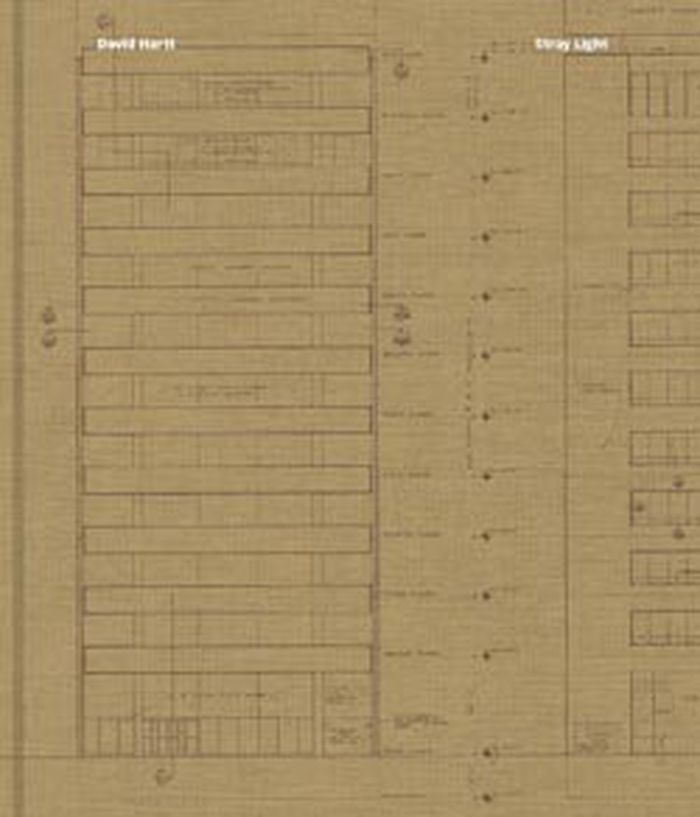
David Hartt : stray light
David Hartt : stray light
Actions:
Price:
$68.95
(available to order)
Summary:
When the Johnson Publishing Company, best known for Jet and Ebony, moved into its iconic building on Michigan Avenue, the structure symbolized a bold entry into both the Chicago skyline and the city’s cultural environment. This emblematic building was the first in Chicago designed and owned by African Americans, a modernist masterpiece that in 1980 the Washington Post(...)
$68.95
(available to order)
Summary:
When the Johnson Publishing Company, best known for Jet and Ebony, moved into its iconic building on Michigan Avenue, the structure symbolized a bold entry into both the Chicago skyline and the city’s cultural environment. This emblematic building was the first in Chicago designed and owned by African Americans, a modernist masterpiece that in 1980 the Washington Post(...)
Title:
David Hartt : stray light
Actions:
Price:
$68.95
(available to order)
Summary:
When the Johnson Publishing Company, best known for Jet and Ebony, moved into its iconic building on Michigan Avenue, the structure symbolized a bold entry into both the Chicago skyline and the city’s cultural environment. This emblematic building was the first in Chicago designed and owned by African Americans, a modernist masterpiece that in 1980 the Washington Post called, “practically a monument—sometimes an ostentatious one—to black success.” David Hartt was given unprecedented access to the building, much of which retains its ’70s design, from bright gold accents to vintage see-through furniture. His resulting photographs take viewers on a rich and revealing tour. They capture the distinct physical characteristics while also illuminating the power structures and ideological purposes they once represented. Hartt’s collection also serves as an unexpected final documentation. Not long after Hartt captured these images, the Johnson Publishing Company announced it was selling its building and moving north. Stray Light is a time capsule of a historic building that once symbolized a bright future.
David Hartt : stray light
Actions:
Price:
$68.95
(available to order)
Summary:
When the Johnson Publishing Company, best known for Jet and Ebony, moved into its iconic building on Michigan Avenue, the structure symbolized a bold entry into both the Chicago skyline and the city’s cultural environment. This emblematic building was the first in Chicago designed and owned by African Americans, a modernist masterpiece that in 1980 the Washington Post called, “practically a monument—sometimes an ostentatious one—to black success.” David Hartt was given unprecedented access to the building, much of which retains its ’70s design, from bright gold accents to vintage see-through furniture. His resulting photographs take viewers on a rich and revealing tour. They capture the distinct physical characteristics while also illuminating the power structures and ideological purposes they once represented. Hartt’s collection also serves as an unexpected final documentation. Not long after Hartt captured these images, the Johnson Publishing Company announced it was selling its building and moving north. Stray Light is a time capsule of a historic building that once symbolized a bright future.
Form:
books
books
Publication:
September 2013
September 2013
Subject:
Photography monographs
Photography monographs
Form:
books
books

Actions:
Price:
$56.00
(available to order)
Summary:
Originally published in 1983, ''Writings 1973-1983 on Works 1969-1979,'' by Los Angeles artist Michael Asher (1943-2012) presents select documentation of 33 works through writings, photographs, architectural floor plans, exhibition announcements and other ephemera. For most of his career, Asher did not create traditional art objects; instead, he altered the existing(...)
$56.00
(available to order)
Summary:
Originally published in 1983, ''Writings 1973-1983 on Works 1969-1979,'' by Los Angeles artist Michael Asher (1943-2012) presents select documentation of 33 works through writings, photographs, architectural floor plans, exhibition announcements and other ephemera. For most of his career, Asher did not create traditional art objects; instead, he altered the existing(...)
Title:
Michael Asher: writings 1973–1983 on works 1969–1979
Actions:
Price:
$56.00
(available to order)
Summary:
Originally published in 1983, ''Writings 1973-1983 on Works 1969-1979,'' by Los Angeles artist Michael Asher (1943-2012) presents select documentation of 33 works through writings, photographs, architectural floor plans, exhibition announcements and other ephemera. For most of his career, Asher did not create traditional art objects; instead, he altered the existing institutional apparatus through which art is presented, creating work that intervened in the architectural, social or economic systems that undergird how art is produced and experienced. For example, in 1974, he removed the partition wall dividing the office and gallery space of the Claire S. Copley Gallery in Los Angeles, revealing the day-to-day activities of the gallery to the public. In another work from 1979, Asher had a bronze replica of a late 18th-century sculpture of George Washington moved from the exterior of the Art Institute of Chicago to a museum gallery that housed 18th-century art, reintroducing the statue to its original period context and shifting its function from public monument to indoor sculpture. Due to its site- and time-specific nature, Asher’s work generally ceased to exist after an exhibition, which makes this highly sought-after book an invaluable resource. As the artist states in the introduction: ''This book as a finished product will have a material permanence that contradicts the actual impermanence of the art-work, yet paradoxically functions as a testimony to that impermanence of my production.''
Michael Asher: writings 1973–1983 on works 1969–1979
Actions:
Price:
$56.00
(available to order)
Summary:
Originally published in 1983, ''Writings 1973-1983 on Works 1969-1979,'' by Los Angeles artist Michael Asher (1943-2012) presents select documentation of 33 works through writings, photographs, architectural floor plans, exhibition announcements and other ephemera. For most of his career, Asher did not create traditional art objects; instead, he altered the existing institutional apparatus through which art is presented, creating work that intervened in the architectural, social or economic systems that undergird how art is produced and experienced. For example, in 1974, he removed the partition wall dividing the office and gallery space of the Claire S. Copley Gallery in Los Angeles, revealing the day-to-day activities of the gallery to the public. In another work from 1979, Asher had a bronze replica of a late 18th-century sculpture of George Washington moved from the exterior of the Art Institute of Chicago to a museum gallery that housed 18th-century art, reintroducing the statue to its original period context and shifting its function from public monument to indoor sculpture. Due to its site- and time-specific nature, Asher’s work generally ceased to exist after an exhibition, which makes this highly sought-after book an invaluable resource. As the artist states in the introduction: ''This book as a finished product will have a material permanence that contradicts the actual impermanence of the art-work, yet paradoxically functions as a testimony to that impermanence of my production.''
Form:
books
books
Publication:
November 2020
November 2020
Subject:
Art Theory
Art Theory


