


328 Results
Form:
books
books

Actions:
Price:
$13.00
(available to order)
Summary:
Du gazon "américain"?! Une pelouse en guerre?! De Pearl Harbor à la Crise des missiles cubains?! Pour Beatriz Colomina, historienne de l'architecture à l'université de Princeton, le mythe patriotique du carré de pelouse (lawn) et le combat jardinier quotidien pour le maintien et l'embellissement de cette interface domestique de la famille et de la communauté reflètent une(...)
$13.00
(available to order)
Summary:
Du gazon "américain"?! Une pelouse en guerre?! De Pearl Harbor à la Crise des missiles cubains?! Pour Beatriz Colomina, historienne de l'architecture à l'université de Princeton, le mythe patriotique du carré de pelouse (lawn) et le combat jardinier quotidien pour le maintien et l'embellissement de cette interface domestique de la famille et de la communauté reflètent une(...)
Title:
La pelouse américaine en guerre de Pearl Harbour à la Crise des Missiles, 1941-1961
Actions:
Price:
$13.00
(available to order)
Summary:
Du gazon "américain"?! Une pelouse en guerre?! De Pearl Harbor à la Crise des missiles cubains?! Pour Beatriz Colomina, historienne de l'architecture à l'université de Princeton, le mythe patriotique du carré de pelouse (lawn) et le combat jardinier quotidien pour le maintien et l'embellissement de cette interface domestique de la famille et de la communauté reflètent une certaine conception du sol américain et de son paysage. Mais ils révèlent surtout une conception de la démocratie et de ses valeurs associées : libertés fondamentales, propriété privée et poursuite du bonheur, trilogie littéralement boostée durant la phase d'émergence de l'Americain Way of Life et de la Cold War. En menant une enquête visuelle et culturelle aussi serrée que passionnante, l'historienne répond à ces trois questions.
La pelouse américaine en guerre de Pearl Harbour à la Crise des Missiles, 1941-1961
Actions:
Price:
$13.00
(available to order)
Summary:
Du gazon "américain"?! Une pelouse en guerre?! De Pearl Harbor à la Crise des missiles cubains?! Pour Beatriz Colomina, historienne de l'architecture à l'université de Princeton, le mythe patriotique du carré de pelouse (lawn) et le combat jardinier quotidien pour le maintien et l'embellissement de cette interface domestique de la famille et de la communauté reflètent une certaine conception du sol américain et de son paysage. Mais ils révèlent surtout une conception de la démocratie et de ses valeurs associées : libertés fondamentales, propriété privée et poursuite du bonheur, trilogie littéralement boostée durant la phase d'émergence de l'Americain Way of Life et de la Cold War. En menant une enquête visuelle et culturelle aussi serrée que passionnante, l'historienne répond à ces trois questions.
Form:
books
books
Publication:
April 2012
April 2012
Subject:
Architectural Theory
Architectural Theory
Form:
books
books
Title:
Desk in exile
Desk in exile
Actions:
Price:
$19.95
(available to order)
Summary:
When the Bauhaus moved to Dessau, the desk moved with it, landing in the director’s office, where it was used as a demonstration of a vision of a modern office culture. The desk took up residence temporarily in the Lawn Road Flats in London before following Gropius to Lincoln, Massachusetts, in 1938. It has remained in Lincoln since then and is currently in the Gropius(...)
$19.95
(available to order)
Summary:
When the Bauhaus moved to Dessau, the desk moved with it, landing in the director’s office, where it was used as a demonstration of a vision of a modern office culture. The desk took up residence temporarily in the Lawn Road Flats in London before following Gropius to Lincoln, Massachusetts, in 1938. It has remained in Lincoln since then and is currently in the Gropius(...)
Title:
Desk in exile
Actions:
Price:
$19.95
(available to order)
Summary:
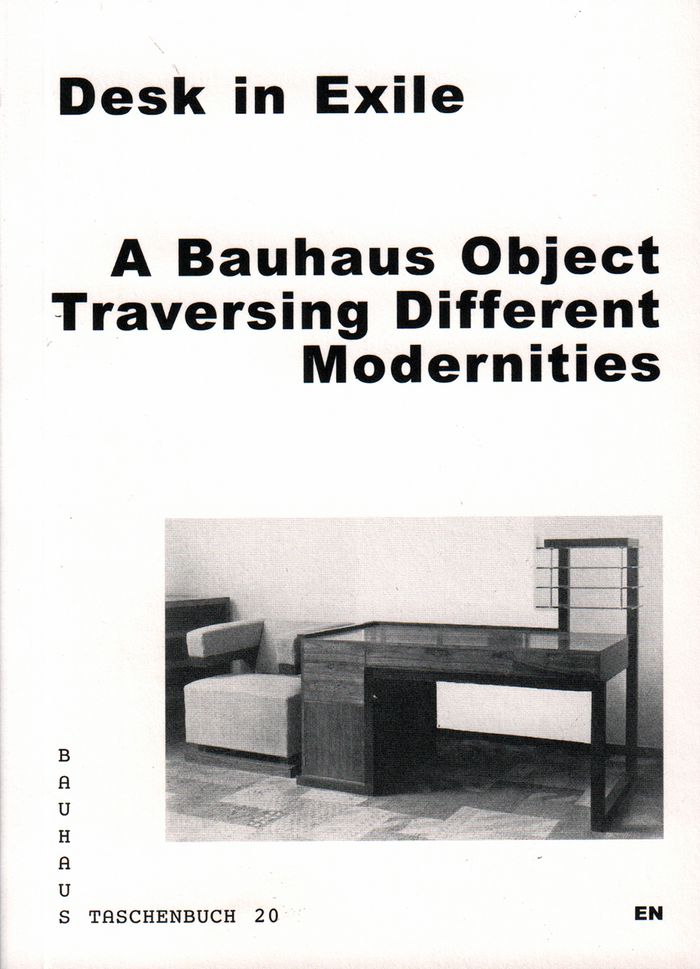
When the Bauhaus moved to Dessau, the desk moved with it, landing in the director’s office, where it was used as a demonstration of a vision of a modern office culture. The desk took up residence temporarily in the Lawn Road Flats in London before following Gropius to Lincoln, Massachusetts, in 1938. It has remained in Lincoln since then and is currently in the Gropius family’s private home. An index of the changing fortunes of the Bauhaus, Gropius’ desk itself becomes an actor in a complex history of changing locations and social environments. Desk in Exile traces the trajectory of this uniquely weighted object, offering a model of an object-based history of exile. Part of Spector Books’ series of readers on individual aspects of Bauhaus design, this volume comes out of the research and curatorial work carried out by the Bauhaus Lab 2016.
Desk in exile
Actions:
Price:
$19.95
(available to order)
Summary:
When the Bauhaus moved to Dessau, the desk moved with it, landing in the director’s office, where it was used as a demonstration of a vision of a modern office culture. The desk took up residence temporarily in the Lawn Road Flats in London before following Gropius to Lincoln, Massachusetts, in 1938. It has remained in Lincoln since then and is currently in the Gropius family’s private home. An index of the changing fortunes of the Bauhaus, Gropius’ desk itself becomes an actor in a complex history of changing locations and social environments. Desk in Exile traces the trajectory of this uniquely weighted object, offering a model of an object-based history of exile. Part of Spector Books’ series of readers on individual aspects of Bauhaus design, this volume comes out of the research and curatorial work carried out by the Bauhaus Lab 2016.
Form:
books
books
Publication:
September 2017
September 2017
Subject:
Design Theory
Design Theory
Form:
books
books
Price:
$75.00
(available to order)
Summary:
In 2008, Swiss architects Herzog & de Meuron and Chinese artist Ai Weiwei joined forces to design the celebrated Beijing National Stadium for the Olympic Games. In 2012, the team came together again for the Serpentine Gallery’s acclaimed annual commission, as part of the London 2012 Festival, the culmination of the Cultural Olympiad. Their pavilion takes visitors beneath(...)
$75.00
(available to order)
Summary:
In 2008, Swiss architects Herzog & de Meuron and Chinese artist Ai Weiwei joined forces to design the celebrated Beijing National Stadium for the Olympic Games. In 2012, the team came together again for the Serpentine Gallery’s acclaimed annual commission, as part of the London 2012 Festival, the culmination of the Cultural Olympiad. Their pavilion takes visitors beneath(...)
Title:
Herzog & de Meuron + Ai Weiwei : Serpentine Gallery Pavilion 2012
Actions:
Price:
$75.00
(available to order)
Summary:
In 2008, Swiss architects Herzog & de Meuron and Chinese artist Ai Weiwei joined forces to design the celebrated Beijing National Stadium for the Olympic Games. In 2012, the team came together again for the Serpentine Gallery’s acclaimed annual commission, as part of the London 2012 Festival, the culmination of the Cultural Olympiad. Their pavilion takes visitors beneath the Serpentine’s lawn to explore the hidden history of its previous pavilions. Supporting the structure from below, eleven columns symbolize past pavilions, and a twelfth represents the current one. The pavilion’s interior is clad in cork, to evoke the excavated earth, and is built as a network of pathways and trenches. Herzog & de Meuron and Weiwei’s archaeological approach creates a space that invites visitors to look beneath the surface of the park as well as back in time to the inspiration of earlier structures. Foreword and interview by Julia Peyton-Jones, Hans Ulrich Obrist
Herzog & de Meuron + Ai Weiwei : Serpentine Gallery Pavilion 2012
Actions:
Price:
$75.00
(available to order)
Summary:
In 2008, Swiss architects Herzog & de Meuron and Chinese artist Ai Weiwei joined forces to design the celebrated Beijing National Stadium for the Olympic Games. In 2012, the team came together again for the Serpentine Gallery’s acclaimed annual commission, as part of the London 2012 Festival, the culmination of the Cultural Olympiad. Their pavilion takes visitors beneath the Serpentine’s lawn to explore the hidden history of its previous pavilions. Supporting the structure from below, eleven columns symbolize past pavilions, and a twelfth represents the current one. The pavilion’s interior is clad in cork, to evoke the excavated earth, and is built as a network of pathways and trenches. Herzog & de Meuron and Weiwei’s archaeological approach creates a space that invites visitors to look beneath the surface of the park as well as back in time to the inspiration of earlier structures. Foreword and interview by Julia Peyton-Jones, Hans Ulrich Obrist
Form:
books
books
Publication:
October 2012
October 2012
Subject:
Architecture Monographs
Architecture Monographs
Form:
books
books

Actions:
Price:
$35.00
(available to order)
Summary:
Design has always prided itself on being relevant to the world it serves, but interest in design was once limited to a small community of design professionals. Today, books on “design thinking” are best sellers, and computer and Web-based tools have expanded the definition of who practices design. Looking at objects, letterforms, experiences, and even theatrical(...)
$35.00
(available to order)
Summary:
Design has always prided itself on being relevant to the world it serves, but interest in design was once limited to a small community of design professionals. Today, books on “design thinking” are best sellers, and computer and Web-based tools have expanded the definition of who practices design. Looking at objects, letterforms, experiences, and even theatrical(...)
Title:
Design: the invention of desire
Actions:
Price:
$35.00
(available to order)
Summary:
Design has always prided itself on being relevant to the world it serves, but interest in design was once limited to a small community of design professionals. Today, books on “design thinking” are best sellers, and computer and Web-based tools have expanded the definition of who practices design. Looking at objects, letterforms, experiences, and even theatrical performances, award-winning author Jessica Helfand asserts that understanding design's purpose is more crucial than ever. Design is meaningful not because it is pretty but because it is an intrinsically humanist discipline, tethered to the very core of why we exist. For example, as designers collaborate with developing nations on everything from more affordable lawn mowers to cleaner drinking water, they must take into consideration the full range of a given community’s complex social needs. Advancing a conversation that is unfolding around the globe, Helfand offers an eye-opening look at how designed things make us feel as well as how—and why—they motivate our behavior.
Design: the invention of desire
Actions:
Price:
$35.00
(available to order)
Summary:
Design has always prided itself on being relevant to the world it serves, but interest in design was once limited to a small community of design professionals. Today, books on “design thinking” are best sellers, and computer and Web-based tools have expanded the definition of who practices design. Looking at objects, letterforms, experiences, and even theatrical performances, award-winning author Jessica Helfand asserts that understanding design's purpose is more crucial than ever. Design is meaningful not because it is pretty but because it is an intrinsically humanist discipline, tethered to the very core of why we exist. For example, as designers collaborate with developing nations on everything from more affordable lawn mowers to cleaner drinking water, they must take into consideration the full range of a given community’s complex social needs. Advancing a conversation that is unfolding around the globe, Helfand offers an eye-opening look at how designed things make us feel as well as how—and why—they motivate our behavior.
Form:
books
books
Publication:
May 2016
May 2016
Subject:
Design Theory
Design Theory
Form:
journals and magazines
journals and magazines
Title:
CLOG 5: National Mall
CLOG 5: National Mall
Actions:
Price:
$18.00
(available in store)
Summary:
In 2009, nearly two million people gathered on the National Mall to witness the inauguration of the forty-fourth President of the United States, Barack Obama. Almost fifty years ago on the same grounds, Martin Luther King, Jr. delivered his "I Have a Dream" speech. "America's Front Lawn," the National Mall was not only designed for large political and social gatherings(...)
$18.00
(available in store)
Summary:
In 2009, nearly two million people gathered on the National Mall to witness the inauguration of the forty-fourth President of the United States, Barack Obama. Almost fifty years ago on the same grounds, Martin Luther King, Jr. delivered his "I Have a Dream" speech. "America's Front Lawn," the National Mall was not only designed for large political and social gatherings(...)
Title:
CLOG 5: National Mall
Actions:
Price:
$18.00
(available in store)
Summary:
In 2009, nearly two million people gathered on the National Mall to witness the inauguration of the forty-fourth President of the United States, Barack Obama. Almost fifty years ago on the same grounds, Martin Luther King, Jr. delivered his "I Have a Dream" speech. "America's Front Lawn," the National Mall was not only designed for large political and social gatherings but also to collect and showcase America's culture. Located in the heart of Washington D.C., the Mall is an historic yet evolving example of urban design. Visited annually by approximately thirty million people, the Mall is also a victim of its own success as its grounds and monuments have been steadily eroded by overcrowding in addition to budgetary and administrative pressures. In response to this decline, the newly-formed Trust for the National Mall recently sponsored a competition to redesign key areas of the National Mall. It's time to critically discuss the space that perhaps more than any other reflects what the nation was, is, and wants to be - the National Mall.
CLOG 5: National Mall
Actions:
Price:
$18.00
(available in store)
Summary:
In 2009, nearly two million people gathered on the National Mall to witness the inauguration of the forty-fourth President of the United States, Barack Obama. Almost fifty years ago on the same grounds, Martin Luther King, Jr. delivered his "I Have a Dream" speech. "America's Front Lawn," the National Mall was not only designed for large political and social gatherings but also to collect and showcase America's culture. Located in the heart of Washington D.C., the Mall is an historic yet evolving example of urban design. Visited annually by approximately thirty million people, the Mall is also a victim of its own success as its grounds and monuments have been steadily eroded by overcrowding in addition to budgetary and administrative pressures. In response to this decline, the newly-formed Trust for the National Mall recently sponsored a competition to redesign key areas of the National Mall. It's time to critically discuss the space that perhaps more than any other reflects what the nation was, is, and wants to be - the National Mall.
Form:
journals and magazines
journals and magazines
Publication:
January 2013
January 2013
Subject:
Magazines
Magazines
Form:
books
books

Actions:
Price:
$31.50
(available to order)
Summary:
Despite a modest revival in city living, Americans are spreading out more than ever—into "exurbs" and "boomburbs" miles from anywhere, in big houses in big subdivisions. We cling to the notion of safer neighborhoods and better schools, but what we get, argues Anthony Flint, is long commutes, crushing gas prices and higher taxes—and a landscape of strip malls and office(...)
$31.50
(available to order)
Summary:
Despite a modest revival in city living, Americans are spreading out more than ever—into "exurbs" and "boomburbs" miles from anywhere, in big houses in big subdivisions. We cling to the notion of safer neighborhoods and better schools, but what we get, argues Anthony Flint, is long commutes, crushing gas prices and higher taxes—and a landscape of strip malls and office(...)
Title:
This land : the battle over sprawl and the future of America
Actions:
Price:
$31.50
(available to order)
Summary:
Despite a modest revival in city living, Americans are spreading out more than ever—into "exurbs" and "boomburbs" miles from anywhere, in big houses in big subdivisions. We cling to the notion of safer neighborhoods and better schools, but what we get, argues Anthony Flint, is long commutes, crushing gas prices and higher taxes—and a landscape of strip malls and office parks badly in need of a makeover. "This land" tells the untold story of development in America—how the landscape is shaped by a furious clash of political, economic and cultural forces. It is the story of burgeoning anti-sprawl movement, a 1960s-style revolution of New Urbanism, smart growth, and green building. And it is the story of landowners fighting back on the basis of property rights, with free-market libertarians, homebuilders, road pavers, financial institutions, and even the lawn-care industry right alongside them. The subdivisions and extra-wide roadways are encroaching into the wetlands of Florida, ranchlands in Texas, and the desert outside Phoenix and Las Vegas. But with up to 120 million more people in the country by 2050, will the spread-out pattern cave in on itself? Could Americans embrace a new approach to development if it made sense for them?
This land : the battle over sprawl and the future of America
Actions:
Price:
$31.50
(available to order)
Summary:
Despite a modest revival in city living, Americans are spreading out more than ever—into "exurbs" and "boomburbs" miles from anywhere, in big houses in big subdivisions. We cling to the notion of safer neighborhoods and better schools, but what we get, argues Anthony Flint, is long commutes, crushing gas prices and higher taxes—and a landscape of strip malls and office parks badly in need of a makeover. "This land" tells the untold story of development in America—how the landscape is shaped by a furious clash of political, economic and cultural forces. It is the story of burgeoning anti-sprawl movement, a 1960s-style revolution of New Urbanism, smart growth, and green building. And it is the story of landowners fighting back on the basis of property rights, with free-market libertarians, homebuilders, road pavers, financial institutions, and even the lawn-care industry right alongside them. The subdivisions and extra-wide roadways are encroaching into the wetlands of Florida, ranchlands in Texas, and the desert outside Phoenix and Las Vegas. But with up to 120 million more people in the country by 2050, will the spread-out pattern cave in on itself? Could Americans embrace a new approach to development if it made sense for them?
Form:
books
books
Publication:
June 2006, Baltimore
June 2006, Baltimore
Subject:
Urban Theory
Urban Theory
Form:
books
books
Title:
What is landscape?
What is landscape?
Actions:
Price:
$29.50
(available to order)
Summary:
Landscape, John Stilgoe tells us, is a noun. From the old Frisian language (once spoken in coastal parts of the Netherlands and Germany), it meant shoveled land: landschop. Sixteenth-century Englishmen misheard or mispronounced this as landskep, which became landskip, then landscape, designating the surface of the earth shaped for human habitation. In What Is Landscape?(...)
$29.50
(available to order)
Summary:
Landscape, John Stilgoe tells us, is a noun. From the old Frisian language (once spoken in coastal parts of the Netherlands and Germany), it meant shoveled land: landschop. Sixteenth-century Englishmen misheard or mispronounced this as landskep, which became landskip, then landscape, designating the surface of the earth shaped for human habitation. In What Is Landscape?(...)
Title:
What is landscape?
Actions:
Price:
$29.50
(available to order)
Summary:
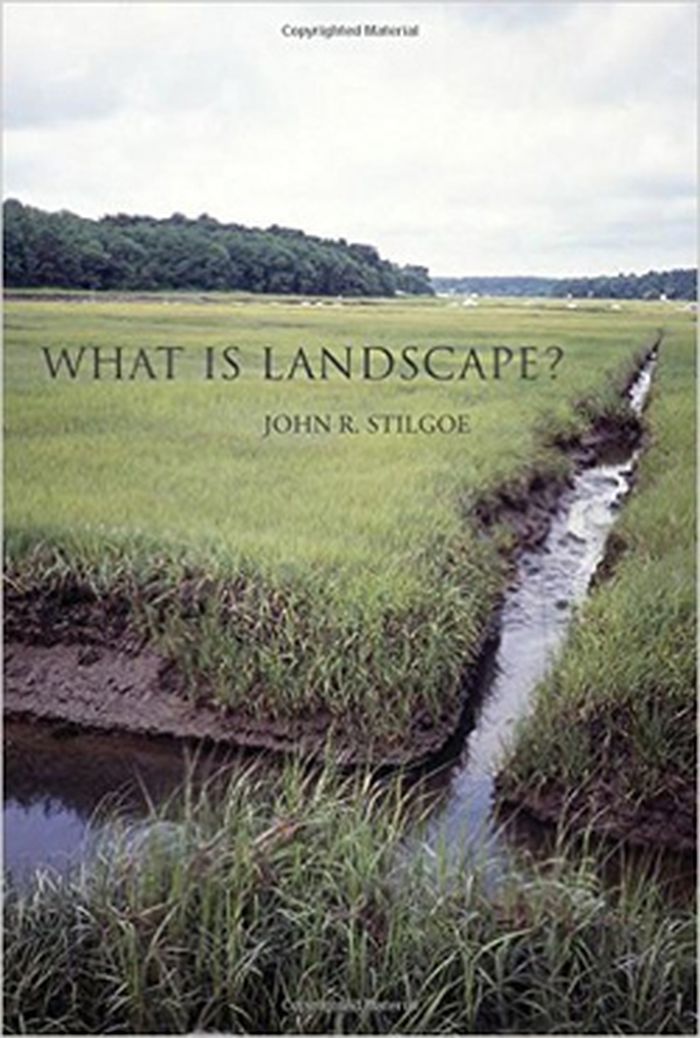
Landscape, John Stilgoe tells us, is a noun. From the old Frisian language (once spoken in coastal parts of the Netherlands and Germany), it meant shoveled land: landschop. Sixteenth-century Englishmen misheard or mispronounced this as landskep, which became landskip, then landscape, designating the surface of the earth shaped for human habitation. In What Is Landscape? Stilgoe maps the discovery of landscape by putting words to things, zeroing in on landscape’s essence but also leading sideways expeditions through such sources as children’s picture books, folklore, deeds, antique terminology, out-of-print dictionaries, and conversations with locals. (“What is that?” “Well, it’s not really a slough, not really, it’s a bayou . . .”) He offers a written narrative lexicon of landscape as word, concept, and path to discoveries. What Is Landscape? is an invitation to walk, to notice, to ask: to see a sandcastle with a pinwheel at the beach and think of Dutch windmills—icons of triumph, markers of territory won from the sea; to walk in the woods and be amused by the Elizabethans’ misuse of the Latin silvaticus (people of the woods) to coin the word savages; to see in a suburban front lawn a representation of the meadow of a medieval freehold.
What is landscape?
Actions:
Price:
$29.50
(available to order)
Summary:
Landscape, John Stilgoe tells us, is a noun. From the old Frisian language (once spoken in coastal parts of the Netherlands and Germany), it meant shoveled land: landschop. Sixteenth-century Englishmen misheard or mispronounced this as landskep, which became landskip, then landscape, designating the surface of the earth shaped for human habitation. In What Is Landscape? Stilgoe maps the discovery of landscape by putting words to things, zeroing in on landscape’s essence but also leading sideways expeditions through such sources as children’s picture books, folklore, deeds, antique terminology, out-of-print dictionaries, and conversations with locals. (“What is that?” “Well, it’s not really a slough, not really, it’s a bayou . . .”) He offers a written narrative lexicon of landscape as word, concept, and path to discoveries. What Is Landscape? is an invitation to walk, to notice, to ask: to see a sandcastle with a pinwheel at the beach and think of Dutch windmills—icons of triumph, markers of territory won from the sea; to walk in the woods and be amused by the Elizabethans’ misuse of the Latin silvaticus (people of the woods) to coin the word savages; to see in a suburban front lawn a representation of the meadow of a medieval freehold.
Form:
books
books
Publication:
August 2015
August 2015
Subject:
Landscape Theory
Landscape Theory
Form:
books
books
Actions:
Price:
$39.95
(available to order)
Summary:
Few twentieth-century writers on architecture and design have enjoyed the renown of Reyner Banham. Born and trained in England and a U.S. resident starting in 1976, Banham wrote incisively about American and European buildings and culture. Now readers can enjoy a chronological cross-section of essays, polemics, and reviews drawn from more than three decades of Banham's(...)
$39.95
(available to order)
Summary:
Few twentieth-century writers on architecture and design have enjoyed the renown of Reyner Banham. Born and trained in England and a U.S. resident starting in 1976, Banham wrote incisively about American and European buildings and culture. Now readers can enjoy a chronological cross-section of essays, polemics, and reviews drawn from more than three decades of Banham's(...)
Title:
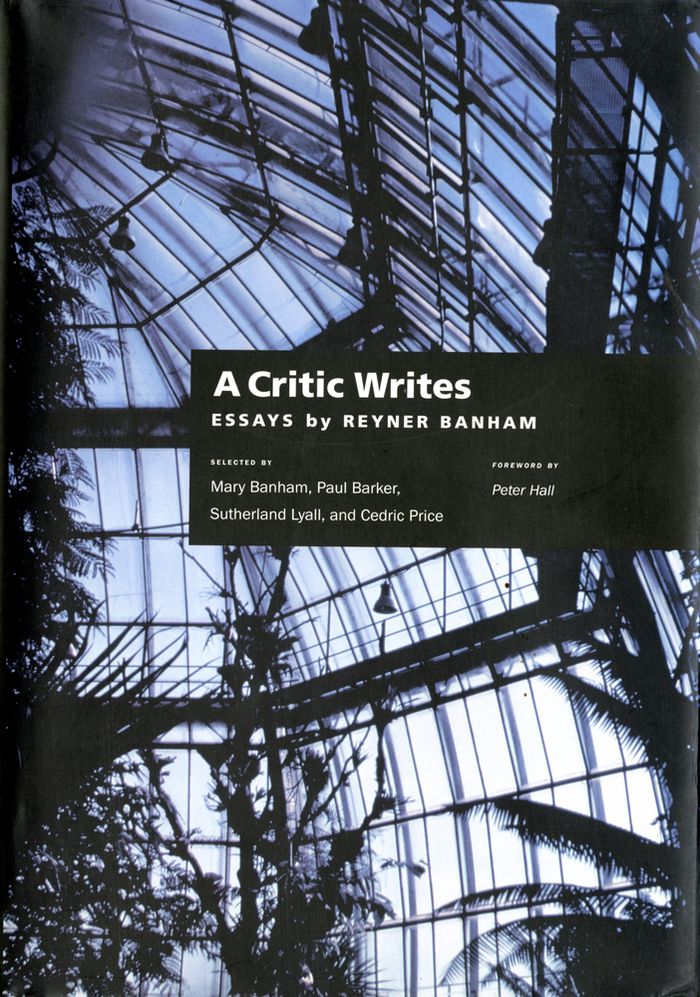
A critic writes : essays by Reyner Banham
Actions:
Price:
$39.95
(available to order)
Summary:
Few twentieth-century writers on architecture and design have enjoyed the renown of Reyner Banham. Born and trained in England and a U.S. resident starting in 1976, Banham wrote incisively about American and European buildings and culture. Now readers can enjoy a chronological cross-section of essays, polemics, and reviews drawn from more than three decades of Banham's writings. The volume, which includes discussions of Italian Futurism, Adolf Loos, Paul Scheerbart, and the Bauhaus as well as explorations of contemporary architecture by Frank Gehry, James Stirling, and Norman Foster, conveys the full range of Banham's belief in industrial and technological development as the motor of architectural evolution. Banham's interests and passions ranged from architecture and the culture of pop art to urban and industrial design. In brilliant analyses of automobile styling, mobile homes, science fiction films, and the American predilection for gadgets, he anticipated many of the preoccupations of contemporary cultural studies. Los Angeles, the city that Banham commemorated in a book and a film, receives extensive attention in essays on the Santa Monica Pier, the Getty Museum, Forest Lawn cemetery, and the ubiquitous freeway system. Eminently readable, provocative, and entertaining, this book is certain to consolidate Banham's reputation among architects and students of contemporary culture. For those acquainted with his writing, it offers welcome surprises as well as familiar delights. For those encountering Banham for the first time, it comprises the perfect introduction.
A critic writes : essays by Reyner Banham
Actions:
Price:
$39.95
(available to order)
Summary:
Few twentieth-century writers on architecture and design have enjoyed the renown of Reyner Banham. Born and trained in England and a U.S. resident starting in 1976, Banham wrote incisively about American and European buildings and culture. Now readers can enjoy a chronological cross-section of essays, polemics, and reviews drawn from more than three decades of Banham's writings. The volume, which includes discussions of Italian Futurism, Adolf Loos, Paul Scheerbart, and the Bauhaus as well as explorations of contemporary architecture by Frank Gehry, James Stirling, and Norman Foster, conveys the full range of Banham's belief in industrial and technological development as the motor of architectural evolution. Banham's interests and passions ranged from architecture and the culture of pop art to urban and industrial design. In brilliant analyses of automobile styling, mobile homes, science fiction films, and the American predilection for gadgets, he anticipated many of the preoccupations of contemporary cultural studies. Los Angeles, the city that Banham commemorated in a book and a film, receives extensive attention in essays on the Santa Monica Pier, the Getty Museum, Forest Lawn cemetery, and the ubiquitous freeway system. Eminently readable, provocative, and entertaining, this book is certain to consolidate Banham's reputation among architects and students of contemporary culture. For those acquainted with his writing, it offers welcome surprises as well as familiar delights. For those encountering Banham for the first time, it comprises the perfect introduction.
Form:
books
books
Publication:
April 1999, Berkeley
April 1999, Berkeley
Subject:
Architectural Theory
Architectural Theory


