


6612 Results
Form:
books
books
Holdings:
Description:
133 pages : illustrations (chiefly color) ; 22 x 22 cm
Description:
133 pages : illustrations (chiefly color) ; 22 x 22 cm
Author:
Subject:
Publication:
New York : EVolo Publishing, 2008.
New York : EVolo Publishing, 2008.
Title:
Skyscraper for the XXI century / edited by Carlo Aiello.
Actions:
Holdings:
Description:
133 pages : illustrations (chiefly color) ; 22 x 22 cm
Skyscraper for the XXI century / edited by Carlo Aiello.
Actions:
Holdings:
Description:
133 pages : illustrations (chiefly color) ; 22 x 22 cm
Form:
books
books
Publication:
New York : EVolo Publishing, 2008.
New York : EVolo Publishing, 2008.
Author:
Subject:
Form:
journals and magazines
journals and magazines
Title:
Future anterior
Future anterior
Actions:
Price:
$14.95
(available to order)
Summary:
Historic preservation is at an important moment of rethinking. The field has grown exponentially in America since its first academic program was founded at Columbia University in 1965. Although initially concerned only with buildings, preservation has recently expanded to include the protection and creative interpretation of entire urban environments, landscapes,(...)
$14.95
(available to order)
Summary:
Historic preservation is at an important moment of rethinking. The field has grown exponentially in America since its first academic program was founded at Columbia University in 1965. Although initially concerned only with buildings, preservation has recently expanded to include the protection and creative interpretation of entire urban environments, landscapes,(...)
Title:
Future anterior
Actions:
Price:
$14.95
(available to order)
Summary:
Historic preservation is at an important moment of rethinking. The field has grown exponentially in America since its first academic program was founded at Columbia University in 1965. Although initially concerned only with buildings, preservation has recently expanded to include the protection and creative interpretation of entire urban environments, landscapes, highways, cultural traditions, artistic practices, and even specific “experiences” such as historic view sheds. Most importantly, historic preservation is beginning a significant re-clarification of its purposes, sharpening and deepening its focus on the contributions old architecture and artifacts make to our understanding of the human condition and how we should address and live in it. Future Anterior is the first and only journal in American academia to be devoted to the study and advancement of preservation, which brings together the interests of scholars and professionals in multiple disciplines such as architecture, art, history, philosophy, law, planning, materials science, cultural anthropology, conservation, and others. Future Anterior establishes an important and much needed forum for the critical examination of this expanding discipline, to spur challenges of its motives, goals, forms of practice and results. The appearance of Future Anterior signals the maturation of the field of preservation and a shift away from nostalgic antiquarianism towards an active involvement in the understanding and creative transformation of human environments. This turn in preservation is reflected in an increased interest in historic architecture and artifacts as expressive resources of great public importance. The destruction of patrimony, from the colossal Buddhas in Afghanistan to New York’s World Trade Center, is seen not just as barbarism but as sources of understanding about where we are going wrong and what we need to do next. In response, architects, planners, urban designers, and artists have been producing works which engage the public in new ways of reflecting and taking on the past not as constraint but as provocation.
Future anterior
Actions:
Price:
$14.95
(available to order)
Summary:
Historic preservation is at an important moment of rethinking. The field has grown exponentially in America since its first academic program was founded at Columbia University in 1965. Although initially concerned only with buildings, preservation has recently expanded to include the protection and creative interpretation of entire urban environments, landscapes, highways, cultural traditions, artistic practices, and even specific “experiences” such as historic view sheds. Most importantly, historic preservation is beginning a significant re-clarification of its purposes, sharpening and deepening its focus on the contributions old architecture and artifacts make to our understanding of the human condition and how we should address and live in it. Future Anterior is the first and only journal in American academia to be devoted to the study and advancement of preservation, which brings together the interests of scholars and professionals in multiple disciplines such as architecture, art, history, philosophy, law, planning, materials science, cultural anthropology, conservation, and others. Future Anterior establishes an important and much needed forum for the critical examination of this expanding discipline, to spur challenges of its motives, goals, forms of practice and results. The appearance of Future Anterior signals the maturation of the field of preservation and a shift away from nostalgic antiquarianism towards an active involvement in the understanding and creative transformation of human environments. This turn in preservation is reflected in an increased interest in historic architecture and artifacts as expressive resources of great public importance. The destruction of patrimony, from the colossal Buddhas in Afghanistan to New York’s World Trade Center, is seen not just as barbarism but as sources of understanding about where we are going wrong and what we need to do next. In response, architects, planners, urban designers, and artists have been producing works which engage the public in new ways of reflecting and taking on the past not as constraint but as provocation.
Form:
journals and magazines
journals and magazines
Publication:
October 2004, New York
October 2004, New York
Subject:
Magazines
Magazines
Form:
books
books
Title:
Inventing future cities
Inventing future cities
Actions:
Price:
$35.95
(available to order)
Summary:
We cannot predict future cities, but we can invent them. Cities are largely unpredictable because they are complex systems that are more like organisms than machines. Neither the laws of economics nor the laws of mechanics apply; cities are the product of countless individual and collective decisions that do not conform to any grand plan. They are the product of our(...)
$35.95
(available to order)
Summary:
We cannot predict future cities, but we can invent them. Cities are largely unpredictable because they are complex systems that are more like organisms than machines. Neither the laws of economics nor the laws of mechanics apply; cities are the product of countless individual and collective decisions that do not conform to any grand plan. They are the product of our(...)
Title:
Inventing future cities
Actions:
Price:
$35.95
(available to order)
Summary:
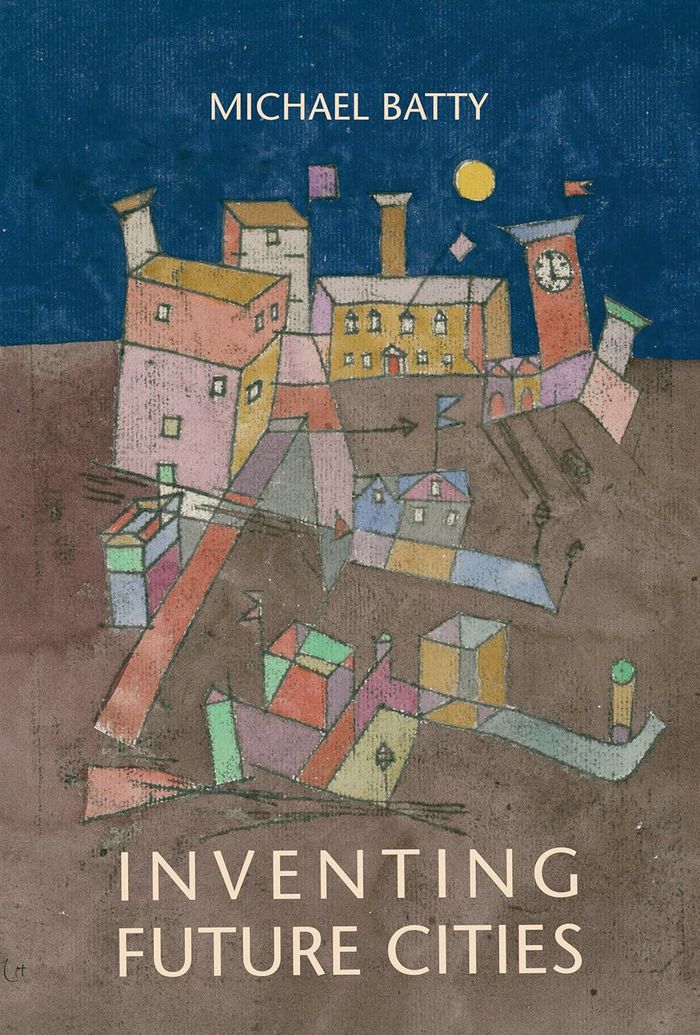
We cannot predict future cities, but we can invent them. Cities are largely unpredictable because they are complex systems that are more like organisms than machines. Neither the laws of economics nor the laws of mechanics apply; cities are the product of countless individual and collective decisions that do not conform to any grand plan. They are the product of our inventions; they evolve. In Inventing Future Cities, Michael Batty explores what we need to understand about cities in order to invent their future. Batty outlines certain themes—principles—that apply to all cities. He investigates not the invention of artifacts but inventive processes. Today form is becoming ever more divorced from function; information networks now shape the traditional functions of cities as places of exchange and innovation. By the end of this century, most of the world's population will live in cities, large or small, sometimes contiguous, and always connected; in an urbanized world, it will be increasingly difficult to define a city by its physical boundaries.
Inventing future cities
Actions:
Price:
$35.95
(available to order)
Summary:
We cannot predict future cities, but we can invent them. Cities are largely unpredictable because they are complex systems that are more like organisms than machines. Neither the laws of economics nor the laws of mechanics apply; cities are the product of countless individual and collective decisions that do not conform to any grand plan. They are the product of our inventions; they evolve. In Inventing Future Cities, Michael Batty explores what we need to understand about cities in order to invent their future. Batty outlines certain themes—principles—that apply to all cities. He investigates not the invention of artifacts but inventive processes. Today form is becoming ever more divorced from function; information networks now shape the traditional functions of cities as places of exchange and innovation. By the end of this century, most of the world's population will live in cities, large or small, sometimes contiguous, and always connected; in an urbanized world, it will be increasingly difficult to define a city by its physical boundaries.
Form:
books
books
Publication:
June 2024
June 2024
Subject:
Urban Theory
Urban Theory
Form:
books
books
Holdings:
Description:
xxiv, 291 pages : illustrations ; 24 cm
Description:
xxiv, 291 pages : illustrations ; 24 cm
Author:
Subject:
Publication:
Chicago ; London : University of Chicago Press, 2010.
Chicago ; London : University of Chicago Press, 2010.
Title:
Terror and wonder : architecture in a tumultuous age / Blair Kamin.
Actions:
Holdings:
Description:
xxiv, 291 pages : illustrations ; 24 cm
Terror and wonder : architecture in a tumultuous age / Blair Kamin.
Actions:
Holdings:
Description:
xxiv, 291 pages : illustrations ; 24 cm
Form:
books
books
Publication:
Chicago ; London : University of Chicago Press, 2010.
Chicago ; London : University of Chicago Press, 2010.
Author:
Subject:
Form:
archives
archives
Holdings:
Description:
1 item ; 25 cm
Description:
1 item ; 25 cm
Author:
Subject:
Title:
Città-Carta-Concorso-Convegno : competition documents, 1992-1994.
Actions:
Holdings:
Description:
1 item ; 25 cm
Città-Carta-Concorso-Convegno : competition documents, 1992-1994.
Actions:
Holdings:
Description:
1 item ; 25 cm
Form:
archives
archives
Author:
Subject:
Form:
books
books
Title:
Inventing future cities
Inventing future cities
Actions:
Price:
$39.95
(available to order)
Summary:
In ''Inventing Future Cities'', Michael Batty explores what we need to understand about cities in order to invent their future. Batty outlines certain themes- principles- that apply to all cities. He investigates not the invention of artifacts but inventive processes. Today form is becoming ever more divorced from function; information networks now shape the traditional(...)
$39.95
(available to order)
Summary:
In ''Inventing Future Cities'', Michael Batty explores what we need to understand about cities in order to invent their future. Batty outlines certain themes- principles- that apply to all cities. He investigates not the invention of artifacts but inventive processes. Today form is becoming ever more divorced from function; information networks now shape the traditional(...)
Title:
Inventing future cities
Actions:
Price:
$39.95
(available to order)
Summary:
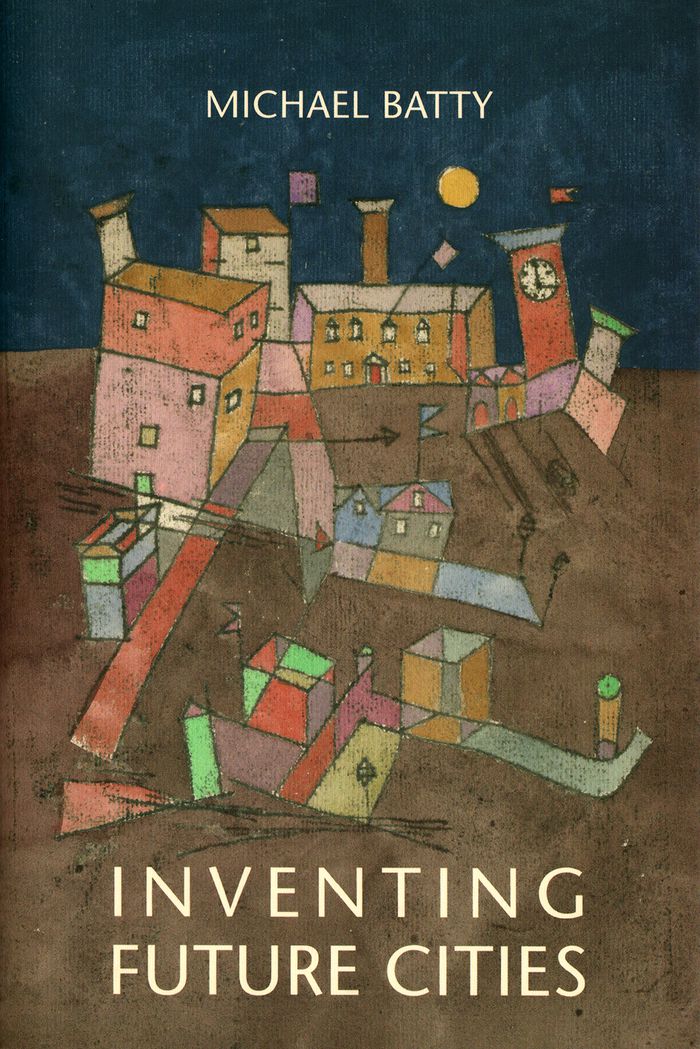
In ''Inventing Future Cities'', Michael Batty explores what we need to understand about cities in order to invent their future. Batty outlines certain themes- principles- that apply to all cities. He investigates not the invention of artifacts but inventive processes. Today form is becoming ever more divorced from function; information networks now shape the traditional functions of cities as places of exchange and innovation. By the end of this century, most of the world's population will live in cities, large or small, sometimes contiguous, and always connected; in an urbanized world, it will be increasingly difficult to define a city by its physical boundaries.
Inventing future cities
Actions:
Price:
$39.95
(available to order)
Summary:
In ''Inventing Future Cities'', Michael Batty explores what we need to understand about cities in order to invent their future. Batty outlines certain themes- principles- that apply to all cities. He investigates not the invention of artifacts but inventive processes. Today form is becoming ever more divorced from function; information networks now shape the traditional functions of cities as places of exchange and innovation. By the end of this century, most of the world's population will live in cities, large or small, sometimes contiguous, and always connected; in an urbanized world, it will be increasingly difficult to define a city by its physical boundaries.
Form:
books
books
Publication:
December 2018
December 2018
Subject:
Urban Theory
Urban Theory
Form:
books
books
Title:
Future primitive revisited
Future primitive revisited
Actions:
Price:
$22.50
(available to order)
Summary:
As our society is stricken with repeated technological disasters, and the apocalyptic problems that go with them, the "neo-primitivist" essays of John Zerzan seem more relevant than ever. ''Future Primitive,'' the core innovative essay of Future Primitive Revisited, has been out of print for years. This new edition is updated with never-before-printed essays that speak to(...)
$22.50
(available to order)
Summary:
As our society is stricken with repeated technological disasters, and the apocalyptic problems that go with them, the "neo-primitivist" essays of John Zerzan seem more relevant than ever. ''Future Primitive,'' the core innovative essay of Future Primitive Revisited, has been out of print for years. This new edition is updated with never-before-printed essays that speak to(...)
Title:
Future primitive revisited
Actions:
Price:
$22.50
(available to order)
Summary:
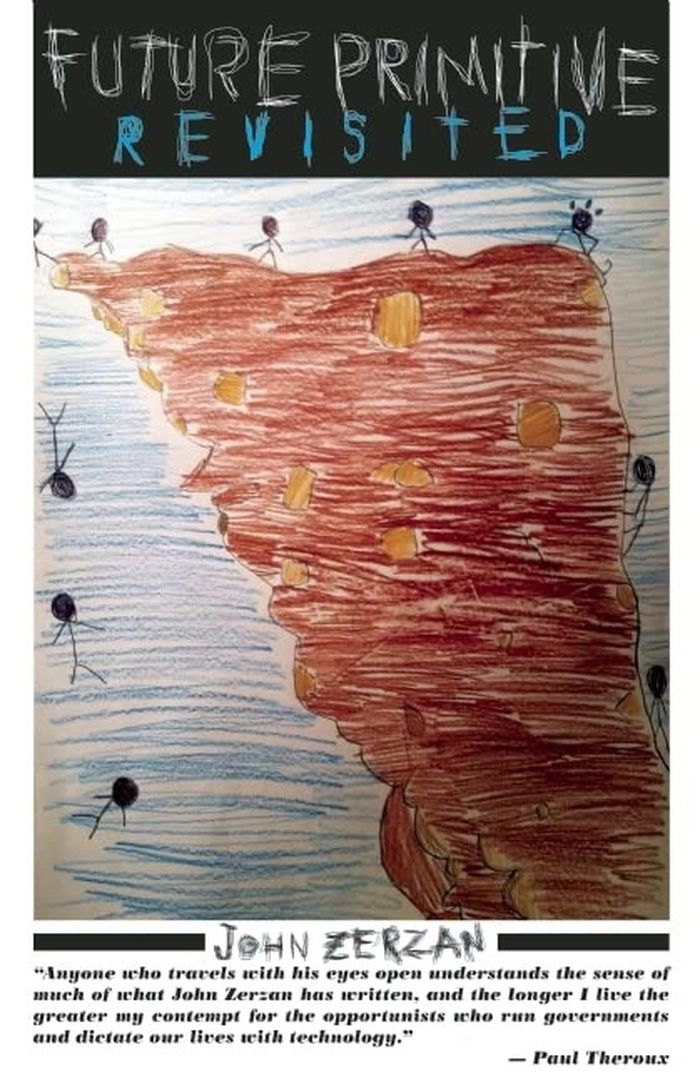
As our society is stricken with repeated technological disasters, and the apocalyptic problems that go with them, the "neo-primitivist" essays of John Zerzan seem more relevant than ever. ''Future Primitive,'' the core innovative essay of Future Primitive Revisited, has been out of print for years. This new edition is updated with never-before-printed essays that speak to a youthful political movement and influential writers such as Derrick Jensen and Paul Theroux. An active participant in the contemporary anarchist resurgence, John Zerzan has been an invited speaker at both radical and conventional events on several continents. His weekly Anarchy Radio broadcast streams live on KWVA radio.
Future primitive revisited
Actions:
Price:
$22.50
(available to order)
Summary:
As our society is stricken with repeated technological disasters, and the apocalyptic problems that go with them, the "neo-primitivist" essays of John Zerzan seem more relevant than ever. ''Future Primitive,'' the core innovative essay of Future Primitive Revisited, has been out of print for years. This new edition is updated with never-before-printed essays that speak to a youthful political movement and influential writers such as Derrick Jensen and Paul Theroux. An active participant in the contemporary anarchist resurgence, John Zerzan has been an invited speaker at both radical and conventional events on several continents. His weekly Anarchy Radio broadcast streams live on KWVA radio.
Form:
books
books
Publication:
June 2012
June 2012
Subject:
Social
Social
Form:
books
books
Holdings:
Description:
xiii, 241 pages : illustrations ; 26 cm
Description:
xiii, 241 pages : illustrations ; 26 cm
Author:
Subject:
Publication:
New York : Princeton Architectural Press, [2015]
New York : Princeton Architectural Press, [2015]
Title:
Slow manifesto : Lebbeus Woods blog / Clare Jacobson, editor.
Actions:
Holdings:
Description:
xiii, 241 pages : illustrations ; 26 cm
Slow manifesto : Lebbeus Woods blog / Clare Jacobson, editor.
Actions:
Holdings:
Description:
xiii, 241 pages : illustrations ; 26 cm
Form:
books
books
Publication:
New York : Princeton Architectural Press, [2015]
New York : Princeton Architectural Press, [2015]
Author:
Subject:
Form:
books
books
Price:
$65.00
(available in store)
Summary:
Filled with drawings, collages, and models, this book examines how each firm’s utopian vision was shaped by the times in which it was conceived. The designs by Archigram, a Londonbased firm headed by Peter Cook, Ron Herron and Dennis Crompton, date back to the moon landing and an era filled with hope for new beginnings. By contrast, the latter project, the work of Future(...)
$65.00
(available in store)
Summary:
Filled with drawings, collages, and models, this book examines how each firm’s utopian vision was shaped by the times in which it was conceived. The designs by Archigram, a Londonbased firm headed by Peter Cook, Ron Herron and Dennis Crompton, date back to the moon landing and an era filled with hope for new beginnings. By contrast, the latter project, the work of Future(...)
Title:
Yesterday's future: visionary designs by Future Systems and Archigram
Actions:
Price:
$65.00
(available in store)
Summary:
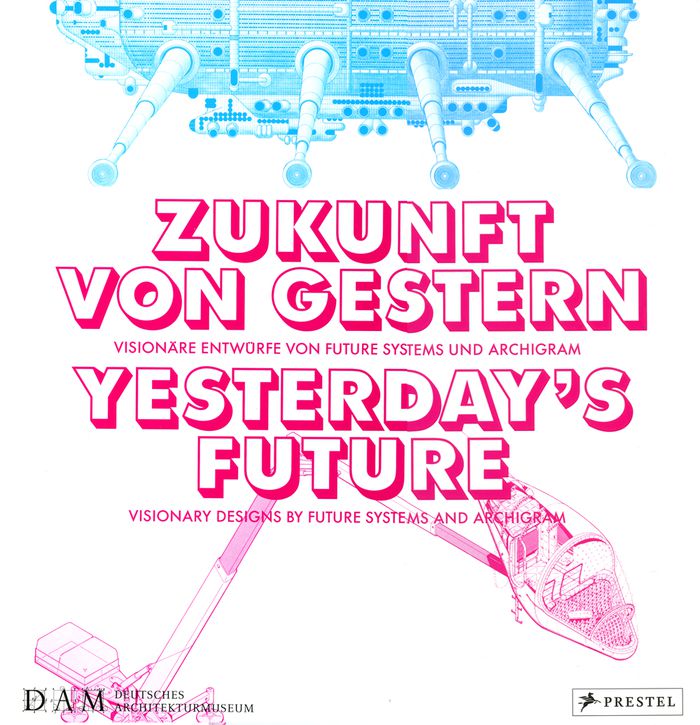
Filled with drawings, collages, and models, this book examines how each firm’s utopian vision was shaped by the times in which it was conceived. The designs by Archigram, a Londonbased firm headed by Peter Cook, Ron Herron and Dennis Crompton, date back to the moon landing and an era filled with hope for new beginnings. By contrast, the latter project, the work of Future Systems, headed by Czech architect Jan Kaplický and David Nixon, was conceptualized at the height of the Cold War, when the future appeared gloomy. While Archigram conceived organic architectures to ensure survival in inhospitable environments, the technical looking designs by Future Systems are intended for use in more friendly climes. Although the majority of these utopian designs were never realized, their plans offer a fascinating look at how architects prepare for a world they can only imagine.
Yesterday's future: visionary designs by Future Systems and Archigram
Actions:
Price:
$65.00
(available in store)
Summary:
Filled with drawings, collages, and models, this book examines how each firm’s utopian vision was shaped by the times in which it was conceived. The designs by Archigram, a Londonbased firm headed by Peter Cook, Ron Herron and Dennis Crompton, date back to the moon landing and an era filled with hope for new beginnings. By contrast, the latter project, the work of Future Systems, headed by Czech architect Jan Kaplický and David Nixon, was conceptualized at the height of the Cold War, when the future appeared gloomy. While Archigram conceived organic architectures to ensure survival in inhospitable environments, the technical looking designs by Future Systems are intended for use in more friendly climes. Although the majority of these utopian designs were never realized, their plans offer a fascinating look at how architects prepare for a world they can only imagine.
Form:
books
books
Publication:
June 2016
June 2016
Subject:
Architecture Monographs
Architecture Monographs
Form:
books
books
Form:
books
books
Publication:
Urbanomic 2023
Urbanomic 2023
Subject:


