


10583 Results
Form:
books
books
Price:
$26.95
(available to order)
Summary:
Helming Los Angeles’s most misunderstood info-architecture practice is Henries Ickles, “the man without self-concept.” Time and again Ickles offers practical solutions to the most impenetrable theoretical entanglements of art, architecture, and science in the 2090s. In the fifth book in the Critical Spatial Practice series, Mark von Schlegell’s fusion of theory and(...)
$26.95
(available to order)
Summary:
Helming Los Angeles’s most misunderstood info-architecture practice is Henries Ickles, “the man without self-concept.” Time and again Ickles offers practical solutions to the most impenetrable theoretical entanglements of art, architecture, and science in the 2090s. In the fifth book in the Critical Spatial Practice series, Mark von Schlegell’s fusion of theory and(...)
Subject:
Critical Theory
Critical Theory
Publication:
October 2014
October 2014
Title:
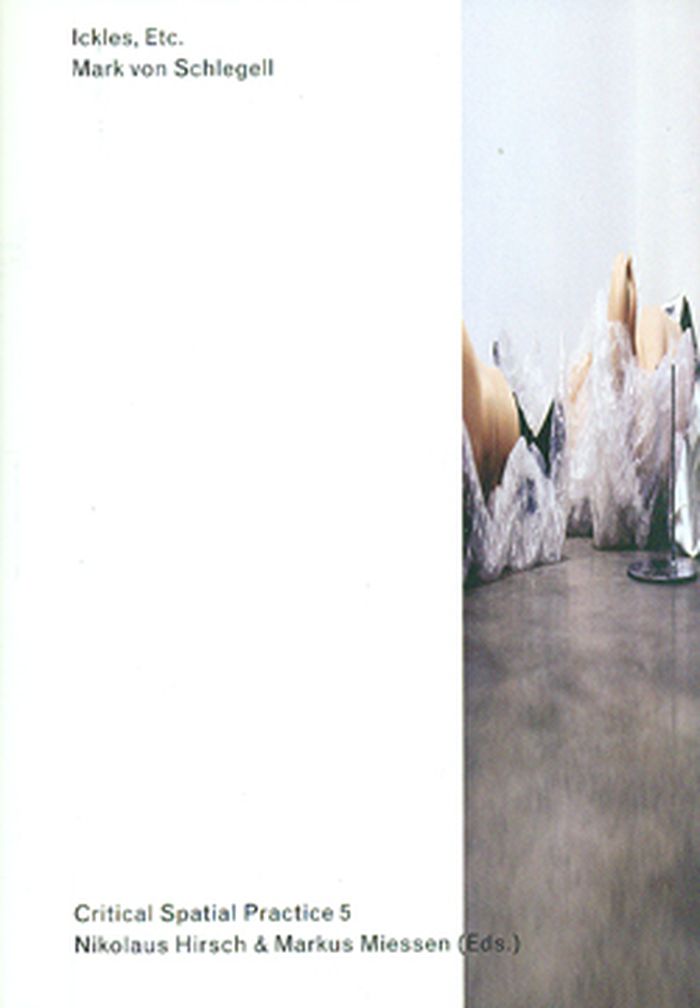
Critical spatial practice 5: ickles, etc.: Mark von Schlegell
Actions:
Price:
$26.95
(available to order)
Summary:
Helming Los Angeles’s most misunderstood info-architecture practice is Henries Ickles, “the man without self-concept.” Time and again Ickles offers practical solutions to the most impenetrable theoretical entanglements of art, architecture, and science in the 2090s. In the fifth book in the Critical Spatial Practice series, Mark von Schlegell’s fusion of theory and fiction puts the SF back in notions of 'speculative aesthetics'. A collection of interconnected comical sci-fi stories written for various exhibitions, Ickles, Etc. explores the future of architectural practice in light of developments in climatology, quasicrystalography, hyper-contemporary art, time travel, and the EGONET.
Critical spatial practice 5: ickles, etc.: Mark von Schlegell
Actions:
Price:
$26.95
(available to order)
Summary:
Helming Los Angeles’s most misunderstood info-architecture practice is Henries Ickles, “the man without self-concept.” Time and again Ickles offers practical solutions to the most impenetrable theoretical entanglements of art, architecture, and science in the 2090s. In the fifth book in the Critical Spatial Practice series, Mark von Schlegell’s fusion of theory and fiction puts the SF back in notions of 'speculative aesthetics'. A collection of interconnected comical sci-fi stories written for various exhibitions, Ickles, Etc. explores the future of architectural practice in light of developments in climatology, quasicrystalography, hyper-contemporary art, time travel, and the EGONET.
Form:
books
books
Publication:
October 2014
October 2014
Subject:
Critical Theory
Critical Theory
Form:
books
books
Title:
Neomaterialism
Neomaterialism
Actions:
Price:
$36.00
(available to order)
Summary:
Since the so-called dematerialization of currencies and art practices in the late 1960s and early 1970, we have witnessed a move into what Joshua Simon calls an economy of neomaterialism. With this, several shifts have occurred: the focus of labor has moved from production to consumption, the commodity has become the historical subject, and symbols now behave like(...)
$36.00
(available to order)
Summary:
Since the so-called dematerialization of currencies and art practices in the late 1960s and early 1970, we have witnessed a move into what Joshua Simon calls an economy of neomaterialism. With this, several shifts have occurred: the focus of labor has moved from production to consumption, the commodity has become the historical subject, and symbols now behave like(...)
Title:
Neomaterialism
Actions:
Price:
$36.00
(available to order)
Summary:
Since the so-called dematerialization of currencies and art practices in the late 1960s and early 1970, we have witnessed a move into what Joshua Simon calls an economy of neomaterialism. With this, several shifts have occurred: the focus of labor has moved from production to consumption, the commodity has become the historical subject, and symbols now behave like materials. Neomaterialism explores the meaning of the world of commodities, and reintroduces various notions of dialectical materialism into the conversation on the subjectivity and vitalism of things. Here, Simon advocates for the unreadymade, sentimental value, and the promise of the dividual as a means for a vocabulary in this new economy of meaning. Reflecting on general intellect as labor and the subjugation of an overqualified generation to the neofeudal order of debt finance—with a particular focus on dispossession and rent economy, post-appropriation display strategies and negation, the barricade and capital’s technocratic fascisms—Neomaterialism merges traditions of epic communism with the communism that is already here.
Neomaterialism
Actions:
Price:
$36.00
(available to order)
Summary:
Since the so-called dematerialization of currencies and art practices in the late 1960s and early 1970, we have witnessed a move into what Joshua Simon calls an economy of neomaterialism. With this, several shifts have occurred: the focus of labor has moved from production to consumption, the commodity has become the historical subject, and symbols now behave like materials. Neomaterialism explores the meaning of the world of commodities, and reintroduces various notions of dialectical materialism into the conversation on the subjectivity and vitalism of things. Here, Simon advocates for the unreadymade, sentimental value, and the promise of the dividual as a means for a vocabulary in this new economy of meaning. Reflecting on general intellect as labor and the subjugation of an overqualified generation to the neofeudal order of debt finance—with a particular focus on dispossession and rent economy, post-appropriation display strategies and negation, the barricade and capital’s technocratic fascisms—Neomaterialism merges traditions of epic communism with the communism that is already here.
Form:
books
books
Publication:
October 2013
October 2013
Subject:
Critical Theory
Critical Theory
Form:
books
books
Title:
Globes: spheres volume II
Globes: spheres volume II
Actions:
Price:
$48.95
(available to order)
Summary:
With Globes, Sloterdijk opens up a history of the political world using the morphological models of the orb and the globe, and argues that all previous statements about globalization have suffered from shortsightedness. For him, globalization begins with the ancient Greeks, who represented the whole world through the shape of the orb. With the discovery of America and the(...)
$48.95
(available to order)
Summary:
With Globes, Sloterdijk opens up a history of the political world using the morphological models of the orb and the globe, and argues that all previous statements about globalization have suffered from shortsightedness. For him, globalization begins with the ancient Greeks, who represented the whole world through the shape of the orb. With the discovery of America and the(...)
Title:
Globes: spheres volume II
Actions:
Price:
$48.95
(available to order)
Summary:
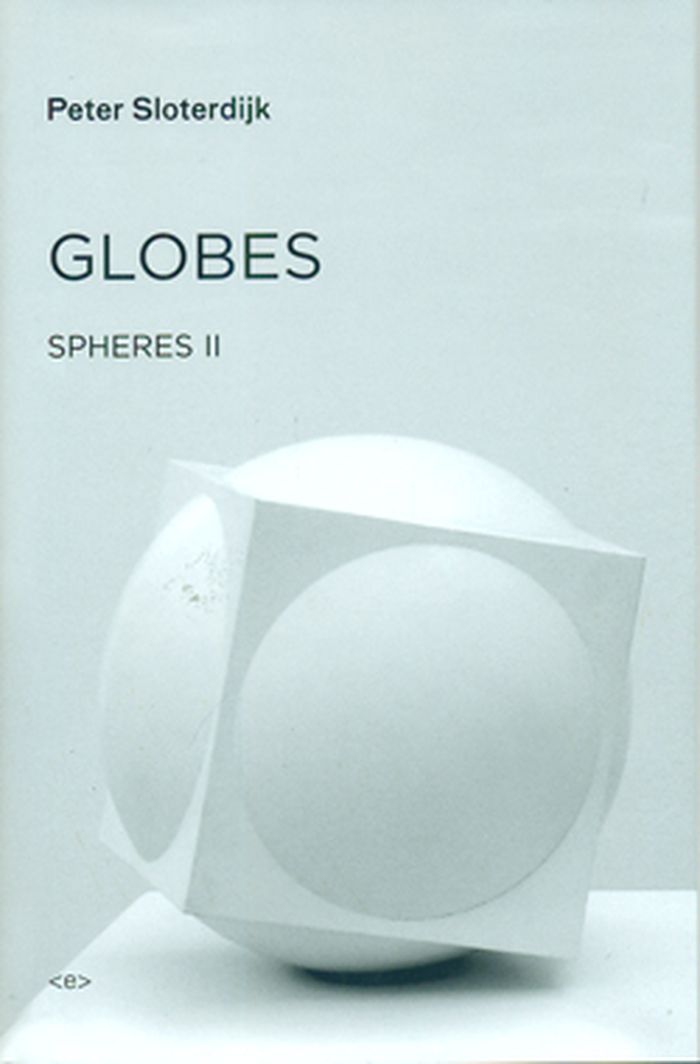
With Globes, Sloterdijk opens up a history of the political world using the morphological models of the orb and the globe, and argues that all previous statements about globalization have suffered from shortsightedness. For him, globalization begins with the ancient Greeks, who represented the whole world through the shape of the orb. With the discovery of America and the first circumnavigations of the earth, the orb was replaced by the globe. This second globalization is currently giving way to the third, which we are living through today, as the general virtuality of all conditions leads to a growing spatial crisis.
Globes: spheres volume II
Actions:
Price:
$48.95
(available to order)
Summary:
With Globes, Sloterdijk opens up a history of the political world using the morphological models of the orb and the globe, and argues that all previous statements about globalization have suffered from shortsightedness. For him, globalization begins with the ancient Greeks, who represented the whole world through the shape of the orb. With the discovery of America and the first circumnavigations of the earth, the orb was replaced by the globe. This second globalization is currently giving way to the third, which we are living through today, as the general virtuality of all conditions leads to a growing spatial crisis.
Form:
books
books
Publication:
October 2014
October 2014
Subject:
Critical Theory
Critical Theory
Form:
books
books
Price:
$51.95
(available to order)
Summary:
Homme de lettres et philosophe non conformiste, réfractaire à l’emprise de l’état sur l’individu, mais aussi naturaliste précurseur de l’écologie, Henry D. Thoreau a régulièrement consigné ses pensées et ses notes de terrain dans un journal de 7000 pages entre 1837 et 1861. Fragmentaire par essence, cette œuvre brosse le portrait de l’auteur et dessine son système de(...)
$51.95
(available to order)
Summary:
Homme de lettres et philosophe non conformiste, réfractaire à l’emprise de l’état sur l’individu, mais aussi naturaliste précurseur de l’écologie, Henry D. Thoreau a régulièrement consigné ses pensées et ses notes de terrain dans un journal de 7000 pages entre 1837 et 1861. Fragmentaire par essence, cette œuvre brosse le portrait de l’auteur et dessine son système de(...)
Title:
Journal
Actions:
Price:
$51.95
(available to order)
Summary:
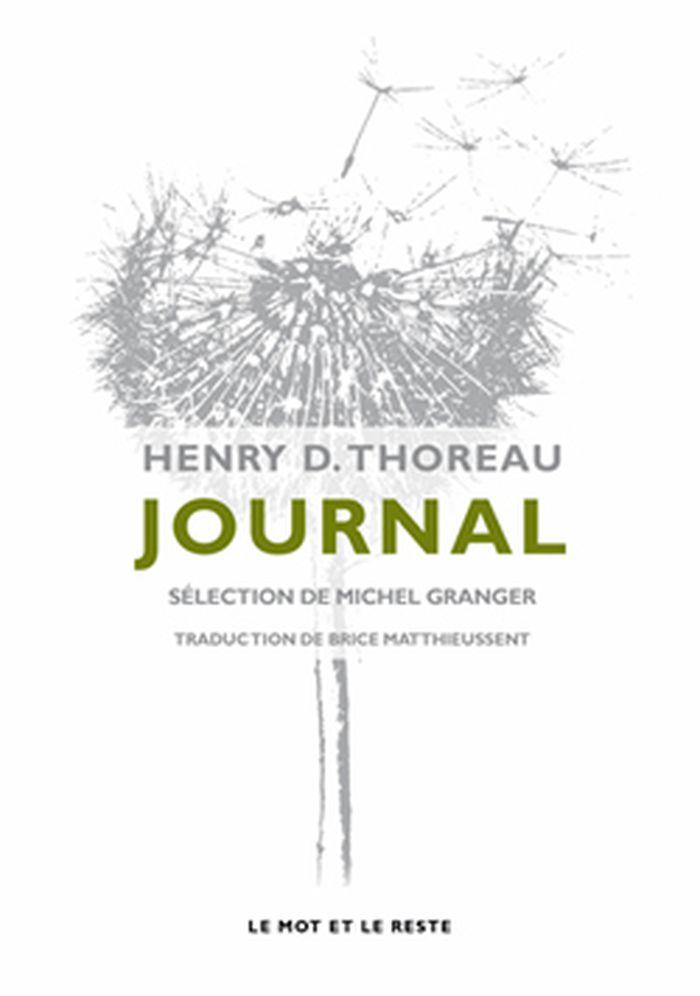
Homme de lettres et philosophe non conformiste, réfractaire à l’emprise de l’état sur l’individu, mais aussi naturaliste précurseur de l’écologie, Henry D. Thoreau a régulièrement consigné ses pensées et ses notes de terrain dans un journal de 7000 pages entre 1837 et 1861. Fragmentaire par essence, cette œuvre brosse le portrait de l’auteur et dessine son système de pensée : elle est précieuse pour corriger les stéréotypes dont on a trop souvent affublé « l’ermite de Walden ». Dans un souci de pertinence et d’homogénéité, Michel Granger a opéré une sélection qui s’efforce de privilégier les bonnes pages du penseur arrivé à la maturité, celui pour qui le Journal est devenu une œuvre primordiale à partir de 1851.
Journal
Actions:
Price:
$51.95
(available to order)
Summary:
Homme de lettres et philosophe non conformiste, réfractaire à l’emprise de l’état sur l’individu, mais aussi naturaliste précurseur de l’écologie, Henry D. Thoreau a régulièrement consigné ses pensées et ses notes de terrain dans un journal de 7000 pages entre 1837 et 1861. Fragmentaire par essence, cette œuvre brosse le portrait de l’auteur et dessine son système de pensée : elle est précieuse pour corriger les stéréotypes dont on a trop souvent affublé « l’ermite de Walden ». Dans un souci de pertinence et d’homogénéité, Michel Granger a opéré une sélection qui s’efforce de privilégier les bonnes pages du penseur arrivé à la maturité, celui pour qui le Journal est devenu une œuvre primordiale à partir de 1851.
Form:
books
books
Publication:
November 2014
November 2014
Subject:
Critical Theory
Critical Theory
Form:
books
books
Title:
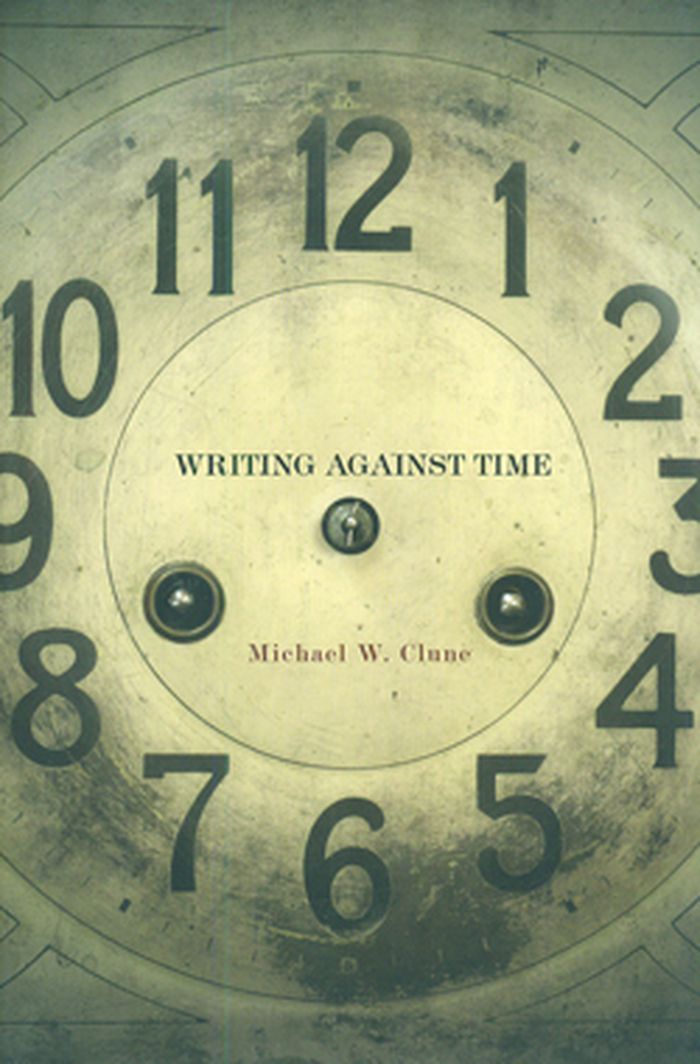
Writing against time
Writing against time
Actions:
Price:
$26.95
(available to order)
Summary:
For centuries, a central goal of art has been to make us see the world with new eyes. Thinkers from Edmund Burke to Elaine Scarry have understood this effort as the attempt to create new forms. But as anyone who has ever worn out a song by repeated listening knows, artistic form is hardly immune to sensation-killing habit. Some of our most ambitious writers—Keats, Proust,(...)
$26.95
(available to order)
Summary:
For centuries, a central goal of art has been to make us see the world with new eyes. Thinkers from Edmund Burke to Elaine Scarry have understood this effort as the attempt to create new forms. But as anyone who has ever worn out a song by repeated listening knows, artistic form is hardly immune to sensation-killing habit. Some of our most ambitious writers—Keats, Proust,(...)
Title:
Writing against time
Actions:
Price:
$26.95
(available to order)
Summary:
For centuries, a central goal of art has been to make us see the world with new eyes. Thinkers from Edmund Burke to Elaine Scarry have understood this effort as the attempt to create new forms. But as anyone who has ever worn out a song by repeated listening knows, artistic form is hardly immune to sensation-killing habit. Some of our most ambitious writers—Keats, Proust, Nabokov, Ashbery—have been obsessed by this problem. Attempting to create an image that never gets old, they experiment with virtual, ideal forms. Reading central works of the past two centuries in light of their shared ambition, Clune produces a revisionary understanding of some of our most important literature.
Writing against time
Actions:
Price:
$26.95
(available to order)
Summary:
For centuries, a central goal of art has been to make us see the world with new eyes. Thinkers from Edmund Burke to Elaine Scarry have understood this effort as the attempt to create new forms. But as anyone who has ever worn out a song by repeated listening knows, artistic form is hardly immune to sensation-killing habit. Some of our most ambitious writers—Keats, Proust, Nabokov, Ashbery—have been obsessed by this problem. Attempting to create an image that never gets old, they experiment with virtual, ideal forms. Reading central works of the past two centuries in light of their shared ambition, Clune produces a revisionary understanding of some of our most important literature.
Form:
books
books
Publication:
November 2013
November 2013
Subject:
Critical Theory
Critical Theory
Form:
books
books
Actions:
Price:
$11.95
(available to order)
Summary:
In this Very Short Introduction, Robert C. Allen shows how the interplay of geography, globalization, technological change, and economic policy has determined the wealth and poverty of nations. Allen shows how the industrial revolution was Britain's path-breaking response to the challenge of globalization.
$11.95
(available to order)
Summary:
In this Very Short Introduction, Robert C. Allen shows how the interplay of geography, globalization, technological change, and economic policy has determined the wealth and poverty of nations. Allen shows how the industrial revolution was Britain's path-breaking response to the challenge of globalization.
Title:
Global economic history: a very short introduction
Actions:
Price:
$11.95
(available to order)
Summary:
In this Very Short Introduction, Robert C. Allen shows how the interplay of geography, globalization, technological change, and economic policy has determined the wealth and poverty of nations. Allen shows how the industrial revolution was Britain's path-breaking response to the challenge of globalization.
Global economic history: a very short introduction
Actions:
Price:
$11.95
(available to order)
Summary:
In this Very Short Introduction, Robert C. Allen shows how the interplay of geography, globalization, technological change, and economic policy has determined the wealth and poverty of nations. Allen shows how the industrial revolution was Britain's path-breaking response to the challenge of globalization.
Form:
books
books
Publication:
November 2014
November 2014
Subject:
Critical Theory
Critical Theory
Form:
books
books
Actions:
Price:
$32.95
(available to order)
Summary:
Rational self-interest is often seen as being at the heart of liberal economic theory. In The Power at the End of the Economy Brian Massumi provides an alternative explanation, arguing that neoliberalism is grounded in complex interactions between the rational and the emotional. Offering a new theory of political economy that refuses the liberal prioritization of(...)
$32.95
(available to order)
Summary:
Rational self-interest is often seen as being at the heart of liberal economic theory. In The Power at the End of the Economy Brian Massumi provides an alternative explanation, arguing that neoliberalism is grounded in complex interactions between the rational and the emotional. Offering a new theory of political economy that refuses the liberal prioritization of(...)
Title:
The power at the end of the economy
Actions:
Price:
$32.95
(available to order)
Summary:
Rational self-interest is often seen as being at the heart of liberal economic theory. In The Power at the End of the Economy Brian Massumi provides an alternative explanation, arguing that neoliberalism is grounded in complex interactions between the rational and the emotional. Offering a new theory of political economy that refuses the liberal prioritization of individual choice, Massumi emphasizes the means through which an individual’s affective tendencies resonate with those of others on infra-individual and transindividual levels. This nonconscious dimension of social and political events plays out in ways that defy the traditional equation between affect and the irrational. Massumi uses the Arab Spring and the Occupy Movement as examples to show how transformative action that exceeds self-interest takes place. Drawing from David Hume, Michel Foucault, Gilles Deleuze, Niklas Luhmann and the field of nonconsciousness studies, Massumi urges a rethinking of the relationship between rational choice and affect, arguing for a reassessment of the role of sympathy in political and economic affairs.
The power at the end of the economy
Actions:
Price:
$32.95
(available to order)
Summary:
Rational self-interest is often seen as being at the heart of liberal economic theory. In The Power at the End of the Economy Brian Massumi provides an alternative explanation, arguing that neoliberalism is grounded in complex interactions between the rational and the emotional. Offering a new theory of political economy that refuses the liberal prioritization of individual choice, Massumi emphasizes the means through which an individual’s affective tendencies resonate with those of others on infra-individual and transindividual levels. This nonconscious dimension of social and political events plays out in ways that defy the traditional equation between affect and the irrational. Massumi uses the Arab Spring and the Occupy Movement as examples to show how transformative action that exceeds self-interest takes place. Drawing from David Hume, Michel Foucault, Gilles Deleuze, Niklas Luhmann and the field of nonconsciousness studies, Massumi urges a rethinking of the relationship between rational choice and affect, arguing for a reassessment of the role of sympathy in political and economic affairs.
Form:
books
books
Publication:
December 2014
December 2014
Subject:
Critical Theory
Critical Theory
Form:
books
books
Actions:
Price:
$40.50
(available to order)
Summary:
In What Animals Teach Us about Politics, Brian Massumi takes up the question of "the animal." By treating the human as animal, he develops a concept of an animal politics. His is not a human politics of the animal, but an integrally animal politics, freed from connotations of the "primitive" state of nature and the accompanying presuppositions about instinct permeating(...)
$40.50
(available to order)
Summary:
In What Animals Teach Us about Politics, Brian Massumi takes up the question of "the animal." By treating the human as animal, he develops a concept of an animal politics. His is not a human politics of the animal, but an integrally animal politics, freed from connotations of the "primitive" state of nature and the accompanying presuppositions about instinct permeating(...)
Title:
What animals teach us about politics
Actions:
Price:
$40.50
(available to order)
Summary:
In What Animals Teach Us about Politics, Brian Massumi takes up the question of "the animal." By treating the human as animal, he develops a concept of an animal politics. His is not a human politics of the animal, but an integrally animal politics, freed from connotations of the "primitive" state of nature and the accompanying presuppositions about instinct permeating modern thought.
What animals teach us about politics
Actions:
Price:
$40.50
(available to order)
Summary:
In What Animals Teach Us about Politics, Brian Massumi takes up the question of "the animal." By treating the human as animal, he develops a concept of an animal politics. His is not a human politics of the animal, but an integrally animal politics, freed from connotations of the "primitive" state of nature and the accompanying presuppositions about instinct permeating modern thought.
Form:
books
books
Publication:
December 2014
December 2014
Subject:
Critical Theory
Critical Theory
Form:
books
books
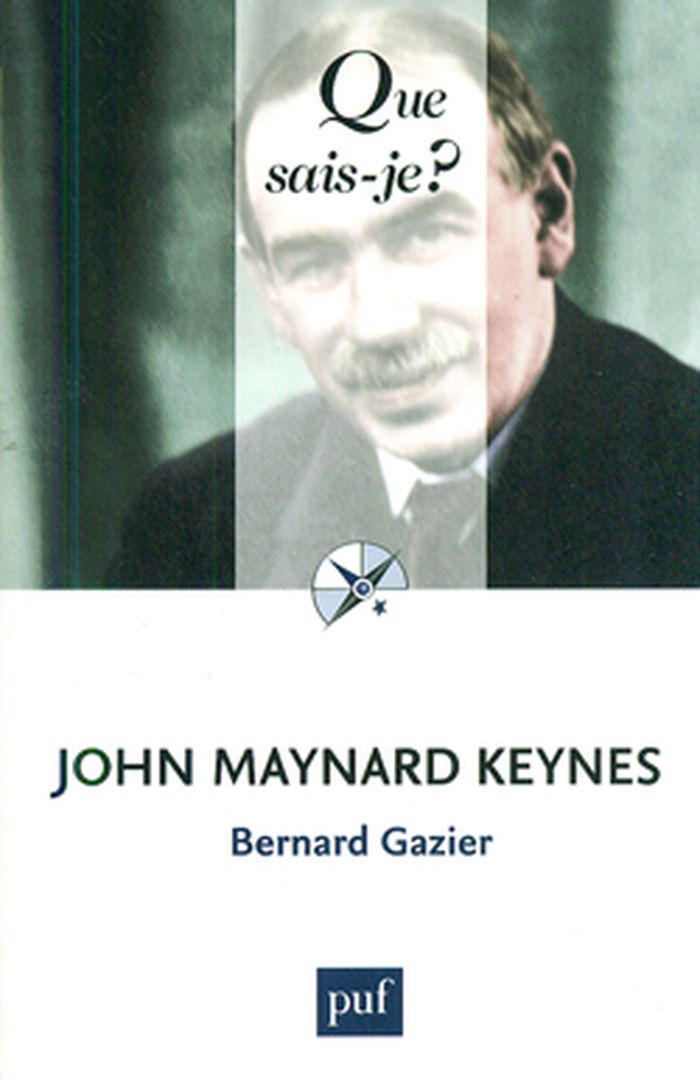
Title:
John Maynard Keynes
John Maynard Keynes
Actions:
Price:
$16.95
(available to order)
Summary:
Considéré comme le plus grand économiste du XXe siècle, l’Anglais John Maynard Keynes (1883-1946) reste un auteur controversé. Après une période de domination presque sans partage durant les années 1960-1970, l’apport du fondateur de la macroéconomie moderne a été radicalement rejeté par de nombreux économistes, pour revenir au premier plan aujourd’hui. En présentant les(...)
$16.95
(available to order)
Summary:
Considéré comme le plus grand économiste du XXe siècle, l’Anglais John Maynard Keynes (1883-1946) reste un auteur controversé. Après une période de domination presque sans partage durant les années 1960-1970, l’apport du fondateur de la macroéconomie moderne a été radicalement rejeté par de nombreux économistes, pour revenir au premier plan aujourd’hui. En présentant les(...)
Title:
John Maynard Keynes
Actions:
Price:
$16.95
(available to order)
Summary:
Considéré comme le plus grand économiste du XXe siècle, l’Anglais John Maynard Keynes (1883-1946) reste un auteur controversé. Après une période de domination presque sans partage durant les années 1960-1970, l’apport du fondateur de la macroéconomie moderne a été radicalement rejeté par de nombreux économistes, pour revenir au premier plan aujourd’hui. En présentant les multiples facettes de cette personnalité hors du commun et en analysant la dynamique de son œuvre, cet ouvrage nous invite à mieux apprécier l’impact des concepts keynésiens sur la pensée économique contemporaine, et à tenter de cerner un homme qui fut d’abord un découvreur.
John Maynard Keynes
Actions:
Price:
$16.95
(available to order)
Summary:
Considéré comme le plus grand économiste du XXe siècle, l’Anglais John Maynard Keynes (1883-1946) reste un auteur controversé. Après une période de domination presque sans partage durant les années 1960-1970, l’apport du fondateur de la macroéconomie moderne a été radicalement rejeté par de nombreux économistes, pour revenir au premier plan aujourd’hui. En présentant les multiples facettes de cette personnalité hors du commun et en analysant la dynamique de son œuvre, cet ouvrage nous invite à mieux apprécier l’impact des concepts keynésiens sur la pensée économique contemporaine, et à tenter de cerner un homme qui fut d’abord un découvreur.
Form:
books
books
Publication:
December 2014
December 2014
Subject:
Critical Theory
Critical Theory
Form:
books
books
Price:
$11.95
(available to order)
Summary:
“Il est permis de douter que même les plus furieux de ceux qui se sont jamais déchirés et mutilés au milieu des cris et des coups de tambour aient abusé de cette merveilleuse liberté autant que l’a fait Vincent Van Gogh : allant porter l’oreille qu’il venait de trancher précisément dans le lieu qui répugne le plus à la bonne société. Il est admirable qu’il ait ainsi à la(...)
$11.95
(available to order)
Summary:
“Il est permis de douter que même les plus furieux de ceux qui se sont jamais déchirés et mutilés au milieu des cris et des coups de tambour aient abusé de cette merveilleuse liberté autant que l’a fait Vincent Van Gogh : allant porter l’oreille qu’il venait de trancher précisément dans le lieu qui répugne le plus à la bonne société. Il est admirable qu’il ait ainsi à la(...)
Title:
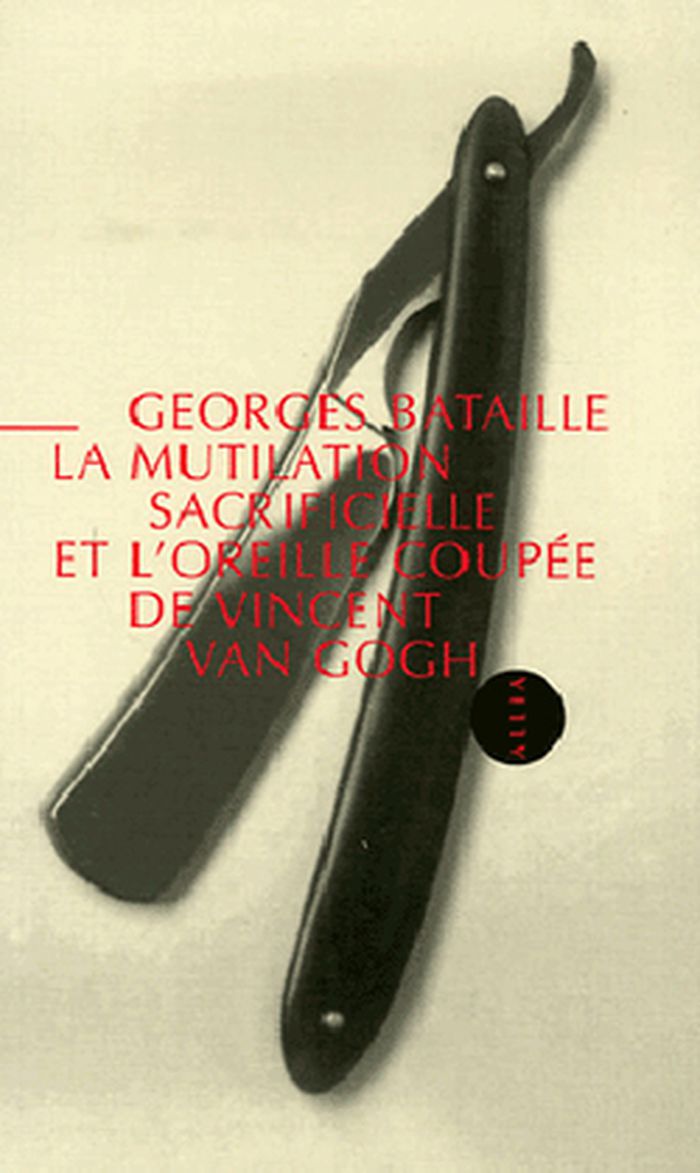
La Mutilation sacrificielle et l’oreille coupée de Vincent Van Gogh
Actions:
Price:
$11.95
(available to order)
Summary:
“Il est permis de douter que même les plus furieux de ceux qui se sont jamais déchirés et mutilés au milieu des cris et des coups de tambour aient abusé de cette merveilleuse liberté autant que l’a fait Vincent Van Gogh : allant porter l’oreille qu’il venait de trancher précisément dans le lieu qui répugne le plus à la bonne société. Il est admirable qu’il ait ainsi à la fois témoigné d’un amour qui ne tenait compte de rien et en quelque sorte craché à la figure de tous ceux qui gardent de la vie qu’ils ont reçue l’idée élevée, officielle, que l’on connaît.” À l’origine de ce bref essai rédigé en 1930, un fait divers : au Père-Lachaise, un certain Gaston F., après avoir fixé le soleil, “reçut de ses rayons l’ordre impératif de se trancher un doigt”. Ce qu’il fit, avec les dents. À partir de ce cas, Bataille étudie le geste de Van Gogh se tranchant l’oreille, qu’il éclaire par l’analyse de son œuvre et par la comparaison avec les rituels sacrificiels d’automutilation dans les sociétés primitives. Ce faisant, il élabore une réflexion sur le sens du sacrifice dans nos sociétés modernes, considéré comme l’action qui peut rompre l’homogénéité habituelle de la personne, imposée par la société. Au-delà de la réflexion sur l’œuvre et la vie de Van Gogh, qui préfigure le texte d’Antonin Artaud, Van Gogh, le suicidé de la société, on retrouve dans cet essai certains des thèmes fondamentaux de l’œuvre de Bataille.
La Mutilation sacrificielle et l’oreille coupée de Vincent Van Gogh
Actions:
Price:
$11.95
(available to order)
Summary:
“Il est permis de douter que même les plus furieux de ceux qui se sont jamais déchirés et mutilés au milieu des cris et des coups de tambour aient abusé de cette merveilleuse liberté autant que l’a fait Vincent Van Gogh : allant porter l’oreille qu’il venait de trancher précisément dans le lieu qui répugne le plus à la bonne société. Il est admirable qu’il ait ainsi à la fois témoigné d’un amour qui ne tenait compte de rien et en quelque sorte craché à la figure de tous ceux qui gardent de la vie qu’ils ont reçue l’idée élevée, officielle, que l’on connaît.” À l’origine de ce bref essai rédigé en 1930, un fait divers : au Père-Lachaise, un certain Gaston F., après avoir fixé le soleil, “reçut de ses rayons l’ordre impératif de se trancher un doigt”. Ce qu’il fit, avec les dents. À partir de ce cas, Bataille étudie le geste de Van Gogh se tranchant l’oreille, qu’il éclaire par l’analyse de son œuvre et par la comparaison avec les rituels sacrificiels d’automutilation dans les sociétés primitives. Ce faisant, il élabore une réflexion sur le sens du sacrifice dans nos sociétés modernes, considéré comme l’action qui peut rompre l’homogénéité habituelle de la personne, imposée par la société. Au-delà de la réflexion sur l’œuvre et la vie de Van Gogh, qui préfigure le texte d’Antonin Artaud, Van Gogh, le suicidé de la société, on retrouve dans cet essai certains des thèmes fondamentaux de l’œuvre de Bataille.
Form:
books
books
Publication:
January 2015
January 2015
Subject:
Critical Theory
Critical Theory


