


6599 Results
Form:
exhibitions
exhibitions
Actions:
Description:
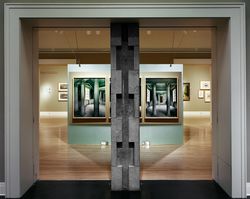
Just as Andrea Palladio’s Villa Rotonda helped to define for future generations the architecture of the Renaissance in Italy, so Chiswick is the locus classicus of the Palladian Revival of the eighteenth century. This exhibition follows a major architect’s thinking as he worked from source to design, from design to representation, in the making of a building which, as the(...)
Just as Andrea Palladio’s Villa Rotonda helped to define for future generations the architecture of the Renaissance in Italy, so Chiswick is the locus classicus of the Palladian Revival of the eighteenth century. This exhibition follows a major architect’s thinking as he worked from source to design, from design to representation, in the making of a building which, as the(...)
Location:
Main galleries
Main galleries
Date:
19 July 1994 to 25 September 1994
19 July 1994 to 25 September 1994
Title:
The Palladian Revival: Lord Burlington, His Villa and Garden at Chiswick
Actions:
Description:
Just as Andrea Palladio’s Villa Rotonda helped to define for future generations the architecture of the Renaissance in Italy, so Chiswick is the locus classicus of the Palladian Revival of the eighteenth century. This exhibition follows a major architect’s thinking as he worked from source to design, from design to representation, in the making of a building which, as the(...)
The Palladian Revival: Lord Burlington, His Villa and Garden at Chiswick
Actions:
Description:
Just as Andrea Palladio’s Villa Rotonda helped to define for future generations the architecture of the Renaissance in Italy, so Chiswick is the locus classicus of the Palladian Revival of the eighteenth century. This exhibition follows a major architect’s thinking as he worked from source to design, from design to representation, in the making of a building which, as the(...)
Form:
exhibitions
exhibitions
Date:
19 July 1994 to
25 September 1994
19 July 1994 to
25 September 1994
Location:
Main galleries
Main galleries
Form:
events
events

Title:
Learning from... Chisasibi
Learning from... Chisasibi
Actions:
Description:
A conversation between artist Thomas Kneubühler and filmmaker Ernest Webb, who explore housing and human migration in a small town on the eastern shore of James Bay. The conversation will be moderated by Alessandra Ponte. Taking the hydroelectric installations in Northern Quebec as his cue, Kneubühler documents how the generation of power touches the land and by extension(...)
A conversation between artist Thomas Kneubühler and filmmaker Ernest Webb, who explore housing and human migration in a small town on the eastern shore of James Bay. The conversation will be moderated by Alessandra Ponte. Taking the hydroelectric installations in Northern Quebec as his cue, Kneubühler documents how the generation of power touches the land and by extension(...)
Location:
Paul Desmarais Theatre
Paul Desmarais Theatre
Date:
25 October 2012 , 7pm
25 October 2012 , 7pm
Title:
Learning from... Chisasibi
Actions:
Description:
A conversation between artist Thomas Kneubühler and filmmaker Ernest Webb, who explore housing and human migration in a small town on the eastern shore of James Bay. The conversation will be moderated by Alessandra Ponte. Taking the hydroelectric installations in Northern Quebec as his cue, Kneubühler documents how the generation of power touches the land and by extension(...)
Learning from... Chisasibi
Actions:
Description:
A conversation between artist Thomas Kneubühler and filmmaker Ernest Webb, who explore housing and human migration in a small town on the eastern shore of James Bay. The conversation will be moderated by Alessandra Ponte. Taking the hydroelectric installations in Northern Quebec as his cue, Kneubühler documents how the generation of power touches the land and by extension(...)
Form:
events
events
Date:
25 October 2012
7pm
25 October 2012
7pm
Location:
Paul Desmarais Theatre
Paul Desmarais Theatre
Form:
exhibitions
exhibitions
Title:
Starting From... The Bubble
Starting From... The Bubble
Actions:
Description:
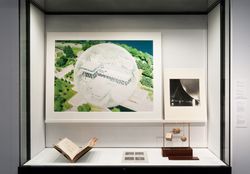
The bubble is a wonder of surface tension. In its architectural interpretation, the bubble can be understood as a feat of engineering or as a metaphor for an enclosed hermetic environment. As such, the bubble emerges, in the architect Cedric Price’s words, “in any shape or any size” as a powerful symbol of the future, or becomes synonymous with the condition of isolation(...)
The bubble is a wonder of surface tension. In its architectural interpretation, the bubble can be understood as a feat of engineering or as a metaphor for an enclosed hermetic environment. As such, the bubble emerges, in the architect Cedric Price’s words, “in any shape or any size” as a powerful symbol of the future, or becomes synonymous with the condition of isolation(...)
Location:
Hall cases
Hall cases
Date:
26 November 2009 to 17 January 2010
26 November 2009 to 17 January 2010
Title:
Starting From... The Bubble
Actions:
Description:
The bubble is a wonder of surface tension. In its architectural interpretation, the bubble can be understood as a feat of engineering or as a metaphor for an enclosed hermetic environment. As such, the bubble emerges, in the architect Cedric Price’s words, “in any shape or any size” as a powerful symbol of the future, or becomes synonymous with the condition of isolation(...)
Starting From... The Bubble
Actions:
Description:
The bubble is a wonder of surface tension. In its architectural interpretation, the bubble can be understood as a feat of engineering or as a metaphor for an enclosed hermetic environment. As such, the bubble emerges, in the architect Cedric Price’s words, “in any shape or any size” as a powerful symbol of the future, or becomes synonymous with the condition of isolation(...)
Form:
exhibitions
exhibitions
Date:
26 November 2009 to
17 January 2010
26 November 2009 to
17 January 2010
Location:
Hall cases
Hall cases
Form:
events
events
Actions:
Description:
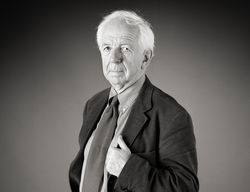
Hubert Damisch, 2003-2004 CCA Mellon Senior Fellow, examines Blur – the cloud building created by New York architects Diller + Scofidio on lake Neuchâtel in Switzerland, which is the most recent and radical expression of the desire for fluidity and evanescence in architecture – and the consequences that it might have on the future of structural thought. Damisch examines(...)
Hubert Damisch, 2003-2004 CCA Mellon Senior Fellow, examines Blur – the cloud building created by New York architects Diller + Scofidio on lake Neuchâtel in Switzerland, which is the most recent and radical expression of the desire for fluidity and evanescence in architecture – and the consequences that it might have on the future of structural thought. Damisch examines(...)
Location:
Paul Desmarais Theatre
Paul Desmarais Theatre
Date:
8 May 2003
8 May 2003
Title:
Hubert Damisch: “Effacer l’architecture?”
Actions:
Description:
Hubert Damisch, 2003-2004 CCA Mellon Senior Fellow, examines Blur – the cloud building created by New York architects Diller + Scofidio on lake Neuchâtel in Switzerland, which is the most recent and radical expression of the desire for fluidity and evanescence in architecture – and the consequences that it might have on the future of structural thought. Damisch examines(...)
Hubert Damisch: “Effacer l’architecture?”
Actions:
Description:
Hubert Damisch, 2003-2004 CCA Mellon Senior Fellow, examines Blur – the cloud building created by New York architects Diller + Scofidio on lake Neuchâtel in Switzerland, which is the most recent and radical expression of the desire for fluidity and evanescence in architecture – and the consequences that it might have on the future of structural thought. Damisch examines(...)
Form:
events
events
Date:
8 May 2003
8 May 2003
Location:
Paul Desmarais Theatre
Paul Desmarais Theatre
Form:
events
events
Title:
Learning from... Copenhagen
Learning from... Copenhagen
Actions:
Description:
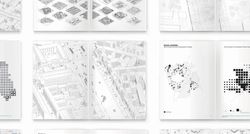
Deane Simpson presents the Atlas of the Copenhagens, a book project addressing an urban territory that has been posited in the media and celebrated by the municipality of Copenhagen as the world’s most sustainable and liveable city. Such claims suggest that Copenhagen is a fitting site to study and engage in a debate on sustainability and liveability. The Atlas operates(...)
Deane Simpson presents the Atlas of the Copenhagens, a book project addressing an urban territory that has been posited in the media and celebrated by the municipality of Copenhagen as the world’s most sustainable and liveable city. Such claims suggest that Copenhagen is a fitting site to study and engage in a debate on sustainability and liveability. The Atlas operates(...)
Location:
Paul-Desmarais Theatre
Paul-Desmarais Theatre
Date:
21 May 2015 , 6pm
21 May 2015 , 6pm
Title:
Learning from... Copenhagen
Actions:
Description:
Deane Simpson presents the Atlas of the Copenhagens, a book project addressing an urban territory that has been posited in the media and celebrated by the municipality of Copenhagen as the world’s most sustainable and liveable city. Such claims suggest that Copenhagen is a fitting site to study and engage in a debate on sustainability and liveability. The Atlas operates(...)
Learning from... Copenhagen
Actions:
Description:
Deane Simpson presents the Atlas of the Copenhagens, a book project addressing an urban territory that has been posited in the media and celebrated by the municipality of Copenhagen as the world’s most sustainable and liveable city. Such claims suggest that Copenhagen is a fitting site to study and engage in a debate on sustainability and liveability. The Atlas operates(...)
Form:
events
events
Date:
21 May 2015
6pm
21 May 2015
6pm
Location:
Paul-Desmarais Theatre
Paul-Desmarais Theatre
Level of archival description:
Series
Series
Title:
Architectural projects
Architectural projects
Reference number:
AP178.S1
Description:
Series AP178.S1 is the largest series of the Álvaro Siza fonds and documents over 200 of Siza’s built and unbuilt architectural projects. The series is divided into project series which are arranged chronologically by project year. Presently, materials in this series range from 1958-2012. The CCA will also receive materials documenting Siza’s more recent work in future additions. Documenting the projects are conceptual, design, presentation, and working drawings, as well as photographic materials, textual documentation, and models. Although the drawings for each project have been identified, Siza often sketches or doodles on textual documentation, such as minutes of meetings or notes. When possible, folders that include textual documents with sketches or doodles have been identified. Amounts and types of materials vary from project to project. Project documentation is usually in Portuguese, with some exceptions including French, English, German, and Dutch. Most project series include sketches, studies, and working drawings. Other drawings included are site plans, floor plans, topographic surveys, elevations, sections, as well as technical and mechanical details. Also documenting the projects are photographic materials and textual documentation, such as correspondence, building programs, contracts, notes, and other working details. Photographic materials found within this archive are slides, negatives, photomontages and photographs of project sites and models.The photomontages were often used to study the function of the project site. To fully understand Siza’s methodology, sketchbooks (Series AP178.S2) should be viewed alongside the project drawings, when possible. Each project series description highlights sketchbooks in series AP178.S2 which contain related sketches. It is important to note that not all projects are represented in the sketchbooks in Series AP178.S2. Moreover, project series descriptions only list related sketchbooks when sketches have been positively identified as related to the corresponding project. The Siza fonds will be processed in four phases. The materials processed in the first, second, and third phases are architectural projects from the 1950’s, 1960’s, and 1970’s; urban planning projects; Reconstrução do Chiado; Berlin projects submitted to the IBA competition; cultural institutions; individual houses; and the Plano de urbanização Deelgebied 5 Schilderswijk-West in The Hague. Among The Hague and the Berlin projects are the Punt en Komma social housing, Bonjour Tristesse, and the Residential settlement in Schilderswijk. This series is better understood in the context of how the records for architectural projects were arranged by Siza’s office. Earlier projects were initially numbered by Siza’s office and then received new project numbers by the office archivist, who joined the office in the 1990s. Project files have been kept in the order in which they were received by the CCA, which is how they were arranged by the office archivist. The project numbers and dates assigned by Siza’s office archivist are included in the descriptions for each project and form the basis for the arrangement of this series. The office archivist numbered projects consecutively by decade, for instance, 58/80 was the 58th project during the 1980s. Numbers which were included in square brackets, ex. [14]/75, show that the project was not a ‘full’ project and contains a small amount of documentation. When projects are followed by a letter (A, B, C) this signifies a project is connected to the first. When the project number is followed by a number (1, 2, 3) this signifies a separate building within a larger project. For the purposes of arrangement, project numbers that were assigned a letter or number are arranged as sub-series of the related project series. Exceptions to this numbering convention are projects 23/60, 25/60, 28/60, 33/60, 34/60 and 35/60. These projects were not in the office’s original project list and were not officially considered projects. The office archivist assembled documentation related to these projects and assigned them numbers. In the early 2000s a large number of photographic materials were gathered together by the office archivist from various correspondence files for a digitization project initiated by the office. These materials remained housed together as a photograph collection in the office. Not all of these materials were digitized by the office. Those that were digitized were assigned numbers which have been identified in the file descriptions. It is important to note that several photographic materials were left with the textual documentation or drawings. When this is the case they are identified in the file description. There are also several panoramic photomontages which were created by either gluing or taping several photographs together to make panoramas of project sites.
AP178.S1
Description:
Series AP178.S1 is the largest series of the Álvaro Siza fonds and documents over 200 of Siza’s built and unbuilt architectural projects. The series is divided into project series which are arranged chronologically by project year. Presently, materials in this series range from 1958-2012. The CCA will also receive materials documenting Siza’s more recent work in future additions. Documenting the projects are conceptual, design, presentation, and working drawings, as well as photographic materials, textual documentation, and models. Although the drawings for each project have been identified, Siza often sketches or doodles on textual documentation, such as minutes of meetings or notes. When possible, folders that include textual documents with sketches or doodles have been identified. Amounts and types of materials vary from project to project. Project documentation is usually in Portuguese, with some exceptions including French, English, German, and Dutch. Most project series include sketches, studies, and working drawings. Other drawings included are site plans, floor plans, topographic surveys, elevations, sections, as well as technical and mechanical details. Also documenting the projects are photographic materials and textual documentation, such as correspondence, building programs, contracts, notes, and other working details. Photographic materials found within this archive are slides, negatives, photomontages and photographs of project sites and models.The photomontages were often used to study the function of the project site. To fully understand Siza’s methodology, sketchbooks (Series AP178.S2) should be viewed alongside the project drawings, when possible. Each project series description highlights sketchbooks in series AP178.S2 which contain related sketches. It is important to note that not all projects are represented in the sketchbooks in Series AP178.S2. Moreover, project series descriptions only list related sketchbooks when sketches have been positively identified as related to the corresponding project. The Siza fonds will be processed in four phases. The materials processed in the first, second, and third phases are architectural projects from the 1950’s, 1960’s, and 1970’s; urban planning projects; Reconstrução do Chiado; Berlin projects submitted to the IBA competition; cultural institutions; individual houses; and the Plano de urbanização Deelgebied 5 Schilderswijk-West in The Hague. Among The Hague and the Berlin projects are the Punt en Komma social housing, Bonjour Tristesse, and the Residential settlement in Schilderswijk. This series is better understood in the context of how the records for architectural projects were arranged by Siza’s office. Earlier projects were initially numbered by Siza’s office and then received new project numbers by the office archivist, who joined the office in the 1990s. Project files have been kept in the order in which they were received by the CCA, which is how they were arranged by the office archivist. The project numbers and dates assigned by Siza’s office archivist are included in the descriptions for each project and form the basis for the arrangement of this series. The office archivist numbered projects consecutively by decade, for instance, 58/80 was the 58th project during the 1980s. Numbers which were included in square brackets, ex. [14]/75, show that the project was not a ‘full’ project and contains a small amount of documentation. When projects are followed by a letter (A, B, C) this signifies a project is connected to the first. When the project number is followed by a number (1, 2, 3) this signifies a separate building within a larger project. For the purposes of arrangement, project numbers that were assigned a letter or number are arranged as sub-series of the related project series. Exceptions to this numbering convention are projects 23/60, 25/60, 28/60, 33/60, 34/60 and 35/60. These projects were not in the office’s original project list and were not officially considered projects. The office archivist assembled documentation related to these projects and assigned them numbers. In the early 2000s a large number of photographic materials were gathered together by the office archivist from various correspondence files for a digitization project initiated by the office. These materials remained housed together as a photograph collection in the office. Not all of these materials were digitized by the office. Those that were digitized were assigned numbers which have been identified in the file descriptions. It is important to note that several photographic materials were left with the textual documentation or drawings. When this is the case they are identified in the file description. There are also several panoramic photomontages which were created by either gluing or taping several photographs together to make panoramas of project sites.
People:
Date:
1948-2012
1948-2012
Title:
Architectural projects
Actions:
AP178.S1
Description:
Series AP178.S1 is the largest series of the Álvaro Siza fonds and documents over 200 of Siza’s built and unbuilt architectural projects. The series is divided into project series which are arranged chronologically by project year. Presently, materials in this series range from 1958-2012. The CCA will also receive materials documenting Siza’s more recent work in future additions. Documenting the projects are conceptual, design, presentation, and working drawings, as well as photographic materials, textual documentation, and models. Although the drawings for each project have been identified, Siza often sketches or doodles on textual documentation, such as minutes of meetings or notes. When possible, folders that include textual documents with sketches or doodles have been identified. Amounts and types of materials vary from project to project. Project documentation is usually in Portuguese, with some exceptions including French, English, German, and Dutch. Most project series include sketches, studies, and working drawings. Other drawings included are site plans, floor plans, topographic surveys, elevations, sections, as well as technical and mechanical details. Also documenting the projects are photographic materials and textual documentation, such as correspondence, building programs, contracts, notes, and other working details. Photographic materials found within this archive are slides, negatives, photomontages and photographs of project sites and models.The photomontages were often used to study the function of the project site. To fully understand Siza’s methodology, sketchbooks (Series AP178.S2) should be viewed alongside the project drawings, when possible. Each project series description highlights sketchbooks in series AP178.S2 which contain related sketches. It is important to note that not all projects are represented in the sketchbooks in Series AP178.S2. Moreover, project series descriptions only list related sketchbooks when sketches have been positively identified as related to the corresponding project. The Siza fonds will be processed in four phases. The materials processed in the first, second, and third phases are architectural projects from the 1950’s, 1960’s, and 1970’s; urban planning projects; Reconstrução do Chiado; Berlin projects submitted to the IBA competition; cultural institutions; individual houses; and the Plano de urbanização Deelgebied 5 Schilderswijk-West in The Hague. Among The Hague and the Berlin projects are the Punt en Komma social housing, Bonjour Tristesse, and the Residential settlement in Schilderswijk. This series is better understood in the context of how the records for architectural projects were arranged by Siza’s office. Earlier projects were initially numbered by Siza’s office and then received new project numbers by the office archivist, who joined the office in the 1990s. Project files have been kept in the order in which they were received by the CCA, which is how they were arranged by the office archivist. The project numbers and dates assigned by Siza’s office archivist are included in the descriptions for each project and form the basis for the arrangement of this series. The office archivist numbered projects consecutively by decade, for instance, 58/80 was the 58th project during the 1980s. Numbers which were included in square brackets, ex. [14]/75, show that the project was not a ‘full’ project and contains a small amount of documentation. When projects are followed by a letter (A, B, C) this signifies a project is connected to the first. When the project number is followed by a number (1, 2, 3) this signifies a separate building within a larger project. For the purposes of arrangement, project numbers that were assigned a letter or number are arranged as sub-series of the related project series. Exceptions to this numbering convention are projects 23/60, 25/60, 28/60, 33/60, 34/60 and 35/60. These projects were not in the office’s original project list and were not officially considered projects. The office archivist assembled documentation related to these projects and assigned them numbers. In the early 2000s a large number of photographic materials were gathered together by the office archivist from various correspondence files for a digitization project initiated by the office. These materials remained housed together as a photograph collection in the office. Not all of these materials were digitized by the office. Those that were digitized were assigned numbers which have been identified in the file descriptions. It is important to note that several photographic materials were left with the textual documentation or drawings. When this is the case they are identified in the file description. There are also several panoramic photomontages which were created by either gluing or taping several photographs together to make panoramas of project sites.
Architectural projects
Actions:
AP178.S1
Description:
Series AP178.S1 is the largest series of the Álvaro Siza fonds and documents over 200 of Siza’s built and unbuilt architectural projects. The series is divided into project series which are arranged chronologically by project year. Presently, materials in this series range from 1958-2012. The CCA will also receive materials documenting Siza’s more recent work in future additions. Documenting the projects are conceptual, design, presentation, and working drawings, as well as photographic materials, textual documentation, and models. Although the drawings for each project have been identified, Siza often sketches or doodles on textual documentation, such as minutes of meetings or notes. When possible, folders that include textual documents with sketches or doodles have been identified. Amounts and types of materials vary from project to project. Project documentation is usually in Portuguese, with some exceptions including French, English, German, and Dutch. Most project series include sketches, studies, and working drawings. Other drawings included are site plans, floor plans, topographic surveys, elevations, sections, as well as technical and mechanical details. Also documenting the projects are photographic materials and textual documentation, such as correspondence, building programs, contracts, notes, and other working details. Photographic materials found within this archive are slides, negatives, photomontages and photographs of project sites and models.The photomontages were often used to study the function of the project site. To fully understand Siza’s methodology, sketchbooks (Series AP178.S2) should be viewed alongside the project drawings, when possible. Each project series description highlights sketchbooks in series AP178.S2 which contain related sketches. It is important to note that not all projects are represented in the sketchbooks in Series AP178.S2. Moreover, project series descriptions only list related sketchbooks when sketches have been positively identified as related to the corresponding project. The Siza fonds will be processed in four phases. The materials processed in the first, second, and third phases are architectural projects from the 1950’s, 1960’s, and 1970’s; urban planning projects; Reconstrução do Chiado; Berlin projects submitted to the IBA competition; cultural institutions; individual houses; and the Plano de urbanização Deelgebied 5 Schilderswijk-West in The Hague. Among The Hague and the Berlin projects are the Punt en Komma social housing, Bonjour Tristesse, and the Residential settlement in Schilderswijk. This series is better understood in the context of how the records for architectural projects were arranged by Siza’s office. Earlier projects were initially numbered by Siza’s office and then received new project numbers by the office archivist, who joined the office in the 1990s. Project files have been kept in the order in which they were received by the CCA, which is how they were arranged by the office archivist. The project numbers and dates assigned by Siza’s office archivist are included in the descriptions for each project and form the basis for the arrangement of this series. The office archivist numbered projects consecutively by decade, for instance, 58/80 was the 58th project during the 1980s. Numbers which were included in square brackets, ex. [14]/75, show that the project was not a ‘full’ project and contains a small amount of documentation. When projects are followed by a letter (A, B, C) this signifies a project is connected to the first. When the project number is followed by a number (1, 2, 3) this signifies a separate building within a larger project. For the purposes of arrangement, project numbers that were assigned a letter or number are arranged as sub-series of the related project series. Exceptions to this numbering convention are projects 23/60, 25/60, 28/60, 33/60, 34/60 and 35/60. These projects were not in the office’s original project list and were not officially considered projects. The office archivist assembled documentation related to these projects and assigned them numbers. In the early 2000s a large number of photographic materials were gathered together by the office archivist from various correspondence files for a digitization project initiated by the office. These materials remained housed together as a photograph collection in the office. Not all of these materials were digitized by the office. Those that were digitized were assigned numbers which have been identified in the file descriptions. It is important to note that several photographic materials were left with the textual documentation or drawings. When this is the case they are identified in the file description. There are also several panoramic photomontages which were created by either gluing or taping several photographs together to make panoramas of project sites.
Level of archival description:
Series
Series
Date:
1948-2012
1948-2012
People:
Form:
exhibitions
exhibitions
Title:
Starting From... Travel
Starting From... Travel
Actions:
Description:
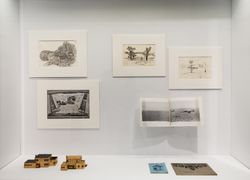
Interpreting the subject of travel to distant places, the exhibition charts an expanded notion of travel that spans imaginary journeys, strange sites, vanishing points, floating and portable houses, endless caves, swirling diamond domes, tombs, crypts and catacombs, tunnel adventures, formal studies, technical innovation, cultural imagination, and experimental(...)
Interpreting the subject of travel to distant places, the exhibition charts an expanded notion of travel that spans imaginary journeys, strange sites, vanishing points, floating and portable houses, endless caves, swirling diamond domes, tombs, crypts and catacombs, tunnel adventures, formal studies, technical innovation, cultural imagination, and experimental(...)
Location:
Hall cases
Hall cases
Date:
3 December 2008 to 1 May 2009
3 December 2008 to 1 May 2009
Title:
Starting From... Travel
Actions:
Description:
Interpreting the subject of travel to distant places, the exhibition charts an expanded notion of travel that spans imaginary journeys, strange sites, vanishing points, floating and portable houses, endless caves, swirling diamond domes, tombs, crypts and catacombs, tunnel adventures, formal studies, technical innovation, cultural imagination, and experimental(...)
Starting From... Travel
Actions:
Description:
Interpreting the subject of travel to distant places, the exhibition charts an expanded notion of travel that spans imaginary journeys, strange sites, vanishing points, floating and portable houses, endless caves, swirling diamond domes, tombs, crypts and catacombs, tunnel adventures, formal studies, technical innovation, cultural imagination, and experimental(...)
Form:
exhibitions
exhibitions
Date:
3 December 2008 to
1 May 2009
3 December 2008 to
1 May 2009
Location:
Hall cases
Hall cases
Form:
events
events

Title:
Learning from... Ordos
Learning from... Ordos
Actions:
Description:
The coal- and gas-rich city of Ordos in northern China boasts a new central district devoid of people. The contemporary city centre was built from scratch on the arid Mongolian steppe at a cost of over $161 billion, and was projected to house over 1 million people. Currently, the government claims that 28,000 reside in the new area. Despite the lack of residents, property(...)
The coal- and gas-rich city of Ordos in northern China boasts a new central district devoid of people. The contemporary city centre was built from scratch on the arid Mongolian steppe at a cost of over $161 billion, and was projected to house over 1 million people. Currently, the government claims that 28,000 reside in the new area. Despite the lack of residents, property(...)
Location:
Paul-Desmarais Theatre
Paul-Desmarais Theatre
Date:
8 November 2012 , 7pm
8 November 2012 , 7pm
Title:
Learning from... Ordos
Actions:
Description:
The coal- and gas-rich city of Ordos in northern China boasts a new central district devoid of people. The contemporary city centre was built from scratch on the arid Mongolian steppe at a cost of over $161 billion, and was projected to house over 1 million people. Currently, the government claims that 28,000 reside in the new area. Despite the lack of residents, property(...)
Learning from... Ordos
Actions:
Description:
The coal- and gas-rich city of Ordos in northern China boasts a new central district devoid of people. The contemporary city centre was built from scratch on the arid Mongolian steppe at a cost of over $161 billion, and was projected to house over 1 million people. Currently, the government claims that 28,000 reside in the new area. Despite the lack of residents, property(...)
Form:
events
events
Date:
8 November 2012
7pm
8 November 2012
7pm
Location:
Paul-Desmarais Theatre
Paul-Desmarais Theatre
Form:
events
events
Title:
Learning from... Luanda
Learning from... Luanda
Actions:
Description:
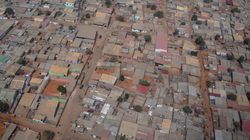
With a metropolitan population of over 5 million, Luanda is the third most populated Portuguese-speaking city in the world after São Paulo and Rio de Janeiro. Architect and researcher Paulo Moreira proposes alternative approaches to urbanism based on ongoing research in Chicala, an informal settlement with direct connection with the commercial areas of the city, as well(...)
With a metropolitan population of over 5 million, Luanda is the third most populated Portuguese-speaking city in the world after São Paulo and Rio de Janeiro. Architect and researcher Paulo Moreira proposes alternative approaches to urbanism based on ongoing research in Chicala, an informal settlement with direct connection with the commercial areas of the city, as well(...)
Location:
Paul-Desmarais Theatre
Paul-Desmarais Theatre
Date:
1 November 2012 , 7pm
1 November 2012 , 7pm
Title:
Learning from... Luanda
Actions:
Description:
With a metropolitan population of over 5 million, Luanda is the third most populated Portuguese-speaking city in the world after São Paulo and Rio de Janeiro. Architect and researcher Paulo Moreira proposes alternative approaches to urbanism based on ongoing research in Chicala, an informal settlement with direct connection with the commercial areas of the city, as well(...)
Learning from... Luanda
Actions:
Description:
With a metropolitan population of over 5 million, Luanda is the third most populated Portuguese-speaking city in the world after São Paulo and Rio de Janeiro. Architect and researcher Paulo Moreira proposes alternative approaches to urbanism based on ongoing research in Chicala, an informal settlement with direct connection with the commercial areas of the city, as well(...)
Form:
events
events
Date:
1 November 2012
7pm
1 November 2012
7pm
Location:
Paul-Desmarais Theatre
Paul-Desmarais Theatre
Form:
events
events

Title:
Learning from… São Paulo
Learning from… São Paulo
Actions:
Description:
Angelo Bucci, architect and professor at the University of São Paulo, Brazil, addresses the violence and changing environment of São Paulo in search of new urban forms. São Paulo’s urban violence can be understood as ruining the experience of the city and, as a result, the purpose of the architect’s work. The lecture examines São Paulo not as a static object, but as an(...)
Angelo Bucci, architect and professor at the University of São Paulo, Brazil, addresses the violence and changing environment of São Paulo in search of new urban forms. São Paulo’s urban violence can be understood as ruining the experience of the city and, as a result, the purpose of the architect’s work. The lecture examines São Paulo not as a static object, but as an(...)
Date:
22 April 2010
22 April 2010
Title:
Learning from… São Paulo
Actions:
Description:
Angelo Bucci, architect and professor at the University of São Paulo, Brazil, addresses the violence and changing environment of São Paulo in search of new urban forms. São Paulo’s urban violence can be understood as ruining the experience of the city and, as a result, the purpose of the architect’s work. The lecture examines São Paulo not as a static object, but as an(...)
Learning from… São Paulo
Actions:
Description:
Angelo Bucci, architect and professor at the University of São Paulo, Brazil, addresses the violence and changing environment of São Paulo in search of new urban forms. São Paulo’s urban violence can be understood as ruining the experience of the city and, as a result, the purpose of the architect’s work. The lecture examines São Paulo not as a static object, but as an(...)
Form:
events
events
Date:
22 April 2010
22 April 2010


