


3590 Results
Form:
books
books
Title:
Ando Tadao
Ando Tadao
Actions:
Price:
$12.00
(available to order)
Summary:
Philippe Starck describes him as a "mystic in a country which is no longer mystic." Drew Philip calls his buildings "land art" that "struggle to emerge from the earth." He is the only architect to have won the discipline`s four most prestigious prizes: the Pritzker, Carlsberg, Praemium Imperiale, and Kyoto Prize. His name is Tadao Ando, and he is one of the world`s(...)
$12.00
(available to order)
Summary:
Philippe Starck describes him as a "mystic in a country which is no longer mystic." Drew Philip calls his buildings "land art" that "struggle to emerge from the earth." He is the only architect to have won the discipline`s four most prestigious prizes: the Pritzker, Carlsberg, Praemium Imperiale, and Kyoto Prize. His name is Tadao Ando, and he is one of the world`s(...)
Subject:
Architecture Monographs
Architecture Monographs
Publication:
January 1900, Hong Kong, Köln, London, Los Angeles, Madrid
January 1900, Hong Kong, Köln, London, Los Angeles, Madrid
Title:
Ando Tadao
Actions:
Price:
$12.00
(available to order)
Summary:
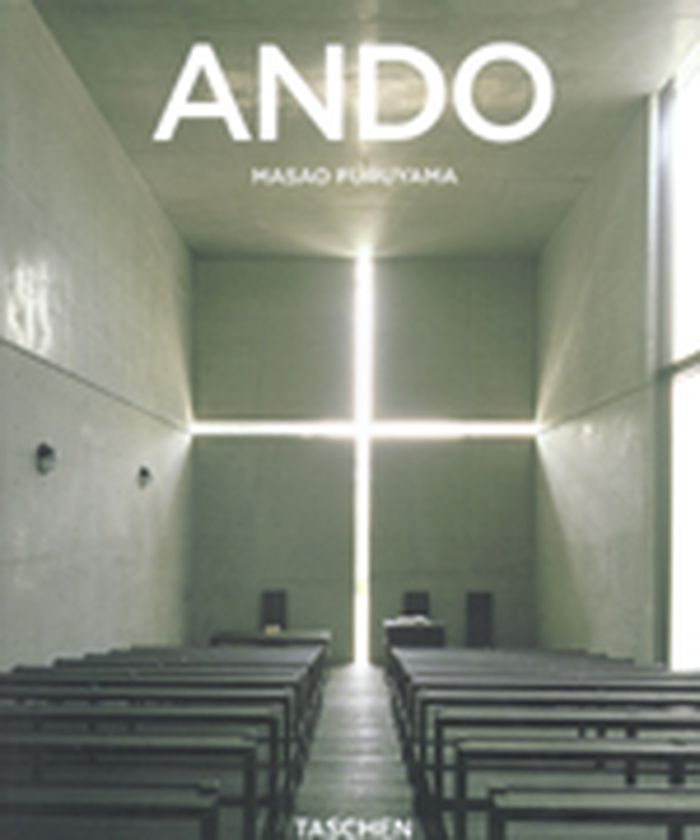
Philippe Starck describes him as a "mystic in a country which is no longer mystic." Drew Philip calls his buildings "land art" that "struggle to emerge from the earth." He is the only architect to have won the discipline`s four most prestigious prizes: the Pritzker, Carlsberg, Praemium Imperiale, and Kyoto Prize. His name is Tadao Ando, and he is one of the world`s greatest living architects. Combining influences from Japanese tradition with the best of Modernism, Ando has developed a completely unique building aesthetic that makes use of concrete, wood, water, light, space, and nature in a way that has never been witnessed elsewhere in architecture. This book provides the perfect introduction to Ando`s work, including private homes, churches, museums, apartment complexes, and cultural spaces throughout Japan, and in France, Italy, Spain, and the USA.
Ando Tadao
Actions:
Price:
$12.00
(available to order)
Summary:
Philippe Starck describes him as a "mystic in a country which is no longer mystic." Drew Philip calls his buildings "land art" that "struggle to emerge from the earth." He is the only architect to have won the discipline`s four most prestigious prizes: the Pritzker, Carlsberg, Praemium Imperiale, and Kyoto Prize. His name is Tadao Ando, and he is one of the world`s greatest living architects. Combining influences from Japanese tradition with the best of Modernism, Ando has developed a completely unique building aesthetic that makes use of concrete, wood, water, light, space, and nature in a way that has never been witnessed elsewhere in architecture. This book provides the perfect introduction to Ando`s work, including private homes, churches, museums, apartment complexes, and cultural spaces throughout Japan, and in France, Italy, Spain, and the USA.
Form:
books
books
Publication:
January 1900, Hong Kong, Köln, London, Los Angeles, Madrid
January 1900, Hong Kong, Köln, London, Los Angeles, Madrid
Subject:
Architecture Monographs
Architecture Monographs
Form:
books
books
Price:
$19.95
(available to order)
Summary:
What if there is no ‘space,’ only a permanent, slow-motion mystic takeover, an implausibly careening awning? Nothing is utopian. Everything wants to be. Soft Architects face the reaching middle. If architecture is the language of concrete and steel, then Soft Architecture needs a vocabulary of flesh, air, fabric and colour. It’s about civic surface and natural history.(...)
$19.95
(available to order)
Summary:
What if there is no ‘space,’ only a permanent, slow-motion mystic takeover, an implausibly careening awning? Nothing is utopian. Everything wants to be. Soft Architects face the reaching middle. If architecture is the language of concrete and steel, then Soft Architecture needs a vocabulary of flesh, air, fabric and colour. It’s about civic surface and natural history.(...)
Publication:
August 2006, Toronto
August 2006, Toronto
Title:
Occasional work and seven walks from the office for soft architecture
Actions:
Price:
$19.95
(available to order)
Summary:
What if there is no ‘space,’ only a permanent, slow-motion mystic takeover, an implausibly careening awning? Nothing is utopian. Everything wants to be. Soft Architects face the reaching middle. If architecture is the language of concrete and steel, then Soft Architecture needs a vocabulary of flesh, air, fabric and colour. It’s about civic surface and natural history. It’s about social space and clothing and urban geography and visual art, and some intersection of all these. This delectable book collects the rococo prose of Lisa Robertson, the ambulatory Office for Soft Architecture. There are essays on Vancouver fountains, the syntax of the suburban home, Value Village, the joy of synthetics, sca×olding and the persistence of the Himalayan blackberry. There are also seven Walks, tours of Vancouver sites – poetic dioramas, really, and more material than cement could ever be.
Occasional work and seven walks from the office for soft architecture
Actions:
Price:
$19.95
(available to order)
Summary:
What if there is no ‘space,’ only a permanent, slow-motion mystic takeover, an implausibly careening awning? Nothing is utopian. Everything wants to be. Soft Architects face the reaching middle. If architecture is the language of concrete and steel, then Soft Architecture needs a vocabulary of flesh, air, fabric and colour. It’s about civic surface and natural history. It’s about social space and clothing and urban geography and visual art, and some intersection of all these. This delectable book collects the rococo prose of Lisa Robertson, the ambulatory Office for Soft Architecture. There are essays on Vancouver fountains, the syntax of the suburban home, Value Village, the joy of synthetics, sca×olding and the persistence of the Himalayan blackberry. There are also seven Walks, tours of Vancouver sites – poetic dioramas, really, and more material than cement could ever be.
Form:
books
books
Publication:
August 2006, Toronto
August 2006, Toronto
Form:
books
books
Title:
The modernist home
The modernist home
Actions:
Price:
$38.95
(available to order)
Summary:
The Modernist house was a test of modern architects’ ability to meet human needs while fuelling the intellect. "The Modernist home" reveals the striking results of the challenge to fit utopian modernist principles to day-to-day living. The Modernist house dissolved the closed spaces of the traditional home, modernising the bathrooms and kitchens, opening the interior(...)
$38.95
(available to order)
Summary:
The Modernist house was a test of modern architects’ ability to meet human needs while fuelling the intellect. "The Modernist home" reveals the striking results of the challenge to fit utopian modernist principles to day-to-day living. The Modernist house dissolved the closed spaces of the traditional home, modernising the bathrooms and kitchens, opening the interior(...)
Title:
The modernist home
Actions:
Price:
$38.95
(available to order)
Summary:
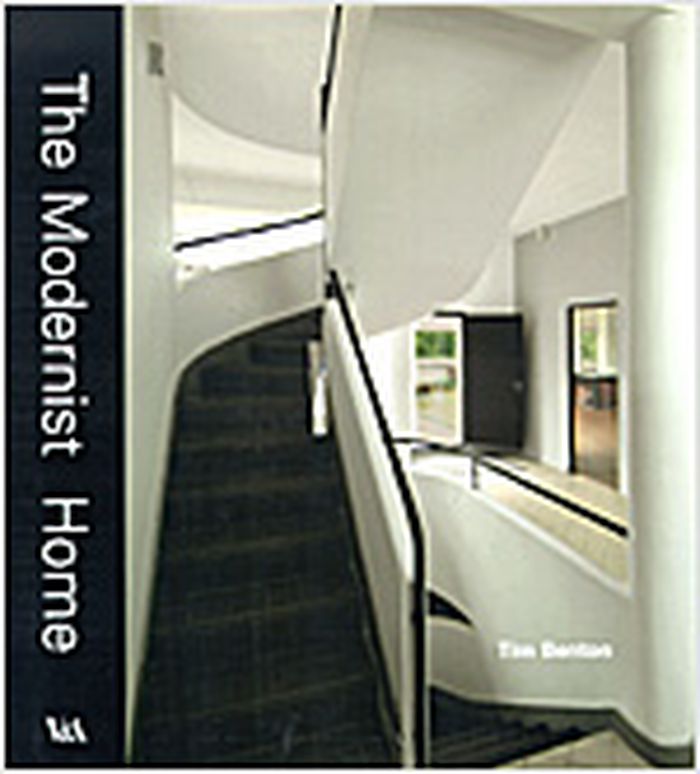
The Modernist house was a test of modern architects’ ability to meet human needs while fuelling the intellect. "The Modernist home" reveals the striking results of the challenge to fit utopian modernist principles to day-to-day living. The Modernist house dissolved the closed spaces of the traditional home, modernising the bathrooms and kitchens, opening the interior to natural light and providing balconies and terraces for sun-worship and sleeping in the open air. Tim Benton uncovers its elements: from the technology that provided central heating and electric lighting; to new construction materials, such as concrete and steel; to close-ups on features like winter gardens and folding furniture. He opens the door on Modernist houses around the world, from Le Corbusier’s Villa Savoye, to Mies van der Rohe’s Barcelona Pavilion, all fully illustrated with colour photographs and plans.
The modernist home
Actions:
Price:
$38.95
(available to order)
Summary:
The Modernist house was a test of modern architects’ ability to meet human needs while fuelling the intellect. "The Modernist home" reveals the striking results of the challenge to fit utopian modernist principles to day-to-day living. The Modernist house dissolved the closed spaces of the traditional home, modernising the bathrooms and kitchens, opening the interior to natural light and providing balconies and terraces for sun-worship and sleeping in the open air. Tim Benton uncovers its elements: from the technology that provided central heating and electric lighting; to new construction materials, such as concrete and steel; to close-ups on features like winter gardens and folding furniture. He opens the door on Modernist houses around the world, from Le Corbusier’s Villa Savoye, to Mies van der Rohe’s Barcelona Pavilion, all fully illustrated with colour photographs and plans.
Form:
books
books
Publication:
May 2006, London
May 2006, London
Subject:
Modernism
Modernism
Form:
books
books
Actions:
Price:
$54.00
(available to order)
Summary:
The pace of modern life is undoubtedly speeding up, yet this acceleration does not seem to have made us any happier or more content. If acceleration is the problem, then the solution, argues Hartmut Rosa in this major new work, lies in “resonance.” The quality of a human life cannot be measured simply in terms of resources, options, and moments of happiness; instead, we(...)
$54.00
(available to order)
Summary:
The pace of modern life is undoubtedly speeding up, yet this acceleration does not seem to have made us any happier or more content. If acceleration is the problem, then the solution, argues Hartmut Rosa in this major new work, lies in “resonance.” The quality of a human life cannot be measured simply in terms of resources, options, and moments of happiness; instead, we(...)
Title:
Resonance: a sociology of the relationship to the world
Actions:
Price:
$54.00
(available to order)
Summary:
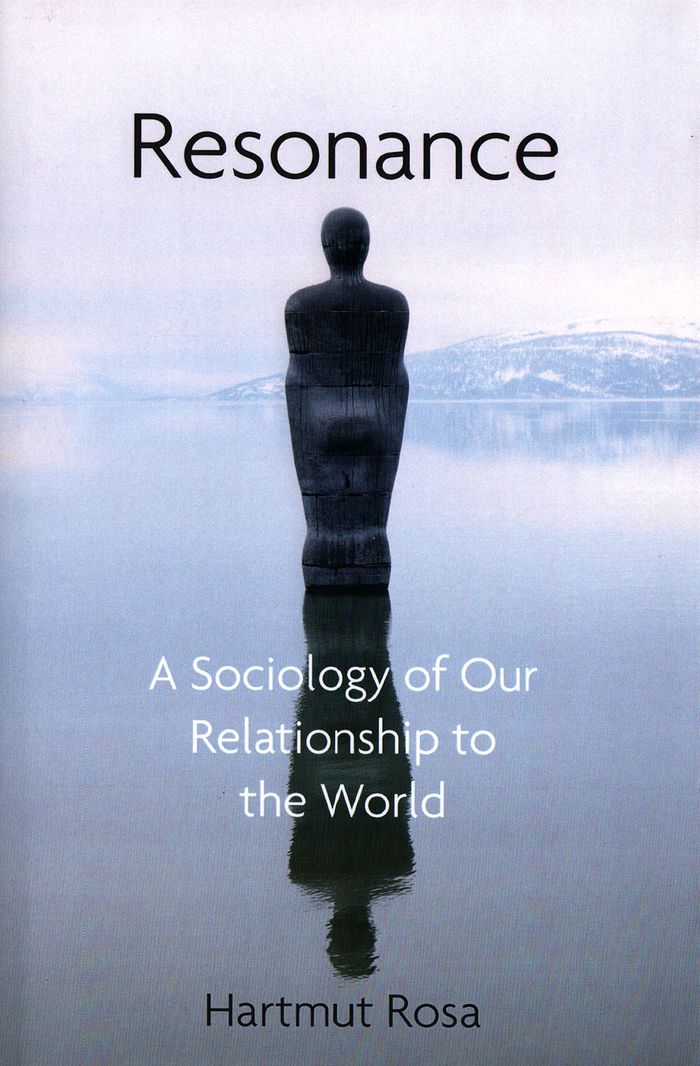
The pace of modern life is undoubtedly speeding up, yet this acceleration does not seem to have made us any happier or more content. If acceleration is the problem, then the solution, argues Hartmut Rosa in this major new work, lies in “resonance.” The quality of a human life cannot be measured simply in terms of resources, options, and moments of happiness; instead, we must consider our relationship to, or resonance with, the world. Applying his theory of resonance to many domains of human activity, Rosa describesthe full spectrum of ways in which we establish our relationship to the world, from the act of breathing to the adoption of culturally distinct worldviews. He then turns to therealms of concrete experience and action – family and politics, work and sports, religion and art – in which we as late modern subjects seek out resonance.
Resonance: a sociology of the relationship to the world
Actions:
Price:
$54.00
(available to order)
Summary:
The pace of modern life is undoubtedly speeding up, yet this acceleration does not seem to have made us any happier or more content. If acceleration is the problem, then the solution, argues Hartmut Rosa in this major new work, lies in “resonance.” The quality of a human life cannot be measured simply in terms of resources, options, and moments of happiness; instead, we must consider our relationship to, or resonance with, the world. Applying his theory of resonance to many domains of human activity, Rosa describesthe full spectrum of ways in which we establish our relationship to the world, from the act of breathing to the adoption of culturally distinct worldviews. He then turns to therealms of concrete experience and action – family and politics, work and sports, religion and art – in which we as late modern subjects seek out resonance.
Form:
books
books
Publication:
September 2019
September 2019
Subject:
Critical Theory
Critical Theory
Form:
books
books
Actions:
Price:
$29.95
(available to order)
Summary:
We tend to think cities look the way they do because of the conscious work of architects, planners and builders. But what if the look of cities had less to do with design, and more to do with social, cultural, financial and political processes, and the way ordinary citizens interact with them? This book is the story of dramatic but unforeseen urban sights: how(...)
$29.95
(available to order)
Summary:
We tend to think cities look the way they do because of the conscious work of architects, planners and builders. But what if the look of cities had less to do with design, and more to do with social, cultural, financial and political processes, and the way ordinary citizens interact with them? This book is the story of dramatic but unforeseen urban sights: how(...)
Title:
Why cities look the way they do
Actions:
Price:
$29.95
(available to order)
Summary:
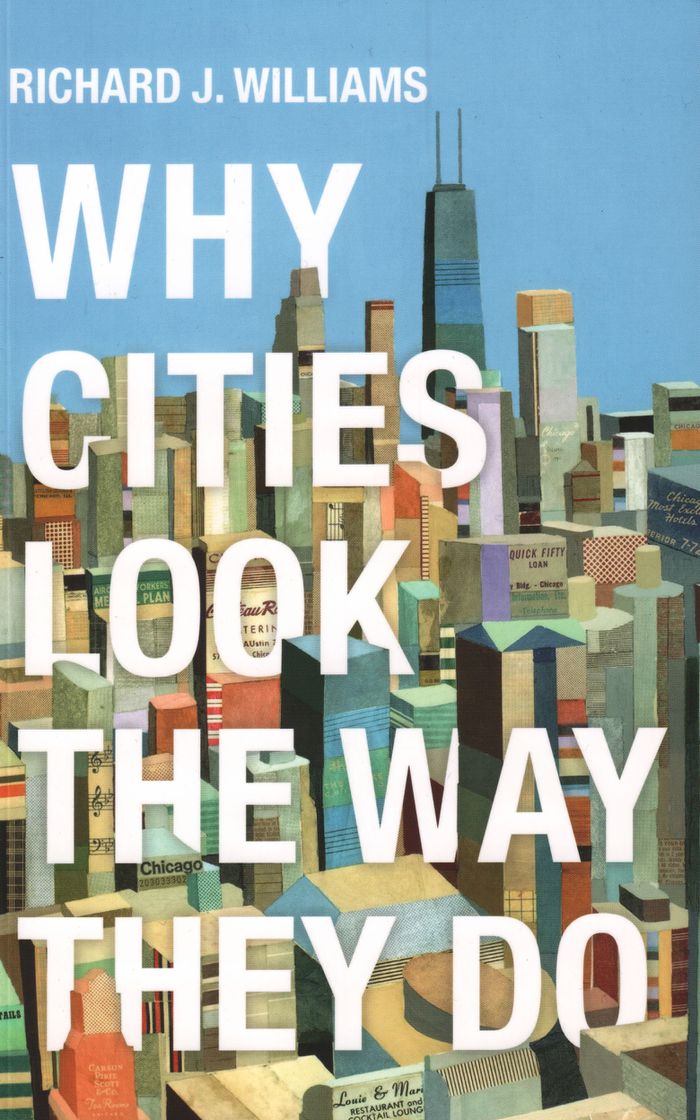
We tend to think cities look the way they do because of the conscious work of architects, planners and builders. But what if the look of cities had less to do with design, and more to do with social, cultural, financial and political processes, and the way ordinary citizens interact with them? This book is the story of dramatic but unforeseen urban sights: how financial capital spawns empty towering skyscrapers and hollowed-out ghettoes; how the zoning of once-illicit sexual practices in marginal areas of the city results in the reinvention of culturally vibrant gay villages; how abandoned factories have been repurposed as creative hubs in a precarious postindustrial economy. It is also the story of how popular urban clichés and the fictional portrayal of cities powerfully shape the way we read and see the bricks, concrete and glass that surround us.
Why cities look the way they do
Actions:
Price:
$29.95
(available to order)
Summary:
We tend to think cities look the way they do because of the conscious work of architects, planners and builders. But what if the look of cities had less to do with design, and more to do with social, cultural, financial and political processes, and the way ordinary citizens interact with them? This book is the story of dramatic but unforeseen urban sights: how financial capital spawns empty towering skyscrapers and hollowed-out ghettoes; how the zoning of once-illicit sexual practices in marginal areas of the city results in the reinvention of culturally vibrant gay villages; how abandoned factories have been repurposed as creative hubs in a precarious postindustrial economy. It is also the story of how popular urban clichés and the fictional portrayal of cities powerfully shape the way we read and see the bricks, concrete and glass that surround us.
Form:
books
books
Publication:
June 2019
June 2019
Subject:
Urban Theory
Urban Theory
Form:
books
books
Actions:
Price:
$69.95
(available in store)
Summary:
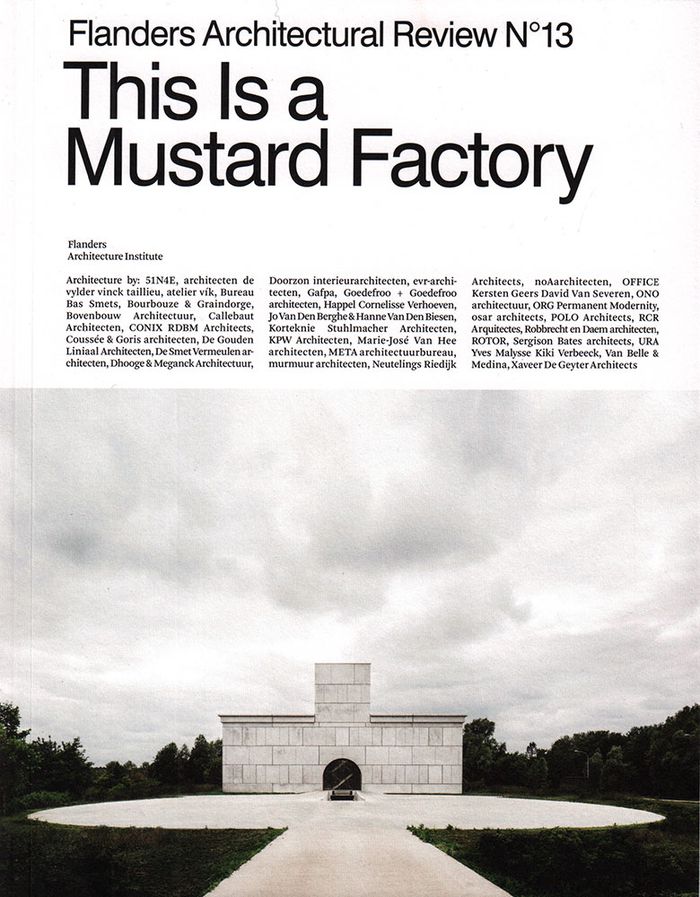
The 13th edition of the Flanders Architectural Review brings together the most high-profile examples of recent architecture in Flanders. Like the mustard factory on the cover, the selected buildings raise questions about the significance of form in architecture. Almost fifty projects are covered by means of extensive plans and photos and they give rise to a critical(...)
$69.95
(available in store)
Summary:
The 13th edition of the Flanders Architectural Review brings together the most high-profile examples of recent architecture in Flanders. Like the mustard factory on the cover, the selected buildings raise questions about the significance of form in architecture. Almost fifty projects are covered by means of extensive plans and photos and they give rise to a critical(...)
Title:
Flanders Architectural Review 13: This is a mustard factory
Actions:
Price:
$69.95
(available in store)
Summary:
The 13th edition of the Flanders Architectural Review brings together the most high-profile examples of recent architecture in Flanders. Like the mustard factory on the cover, the selected buildings raise questions about the significance of form in architecture. Almost fifty projects are covered by means of extensive plans and photos and they give rise to a critical reflection on current developments in Flemish architecture. The book includes articles that deal with such topics as the poetry of utility buildings, the responsibility of architecture for the landscape, the exploration of a new scale and the individual character of Flemish architecture abroad. What the visual essays by four leading photographers have in common is a serious interest in the concrete physical experience. They view the architectural object not as something static, but as a beckoning space that should be explored, studied, tried and tested.
Flanders Architectural Review 13: This is a mustard factory
Actions:
Price:
$69.95
(available in store)
Summary:
The 13th edition of the Flanders Architectural Review brings together the most high-profile examples of recent architecture in Flanders. Like the mustard factory on the cover, the selected buildings raise questions about the significance of form in architecture. Almost fifty projects are covered by means of extensive plans and photos and they give rise to a critical reflection on current developments in Flemish architecture. The book includes articles that deal with such topics as the poetry of utility buildings, the responsibility of architecture for the landscape, the exploration of a new scale and the individual character of Flemish architecture abroad. What the visual essays by four leading photographers have in common is a serious interest in the concrete physical experience. They view the architectural object not as something static, but as a beckoning space that should be explored, studied, tried and tested.
Form:
books
books
Publication:
January 2019
January 2019
Subject:
Architecture since 1900, Europe
Architecture since 1900, Europe
Form:
books
books
Actions:
Price:
$67.50
(available in store)
Summary:
In the mountains of California or on the rooftops of New York, the feeling of utter remoteness can be triggered everywhere in the United States. Not only does the vastness of the country account for it, but also the absence of people. Days can pass without seeing a single human being. Signposts and mailboxes, however, indicate that these far-off regions are inhabited.(...)
$67.50
(available in store)
Summary:
In the mountains of California or on the rooftops of New York, the feeling of utter remoteness can be triggered everywhere in the United States. Not only does the vastness of the country account for it, but also the absence of people. Days can pass without seeing a single human being. Signposts and mailboxes, however, indicate that these far-off regions are inhabited.(...)
Title:
Louise Amelie & Aljaz Fuiz: Off Worlds
Actions:
Price:
$67.50
(available in store)
Summary:
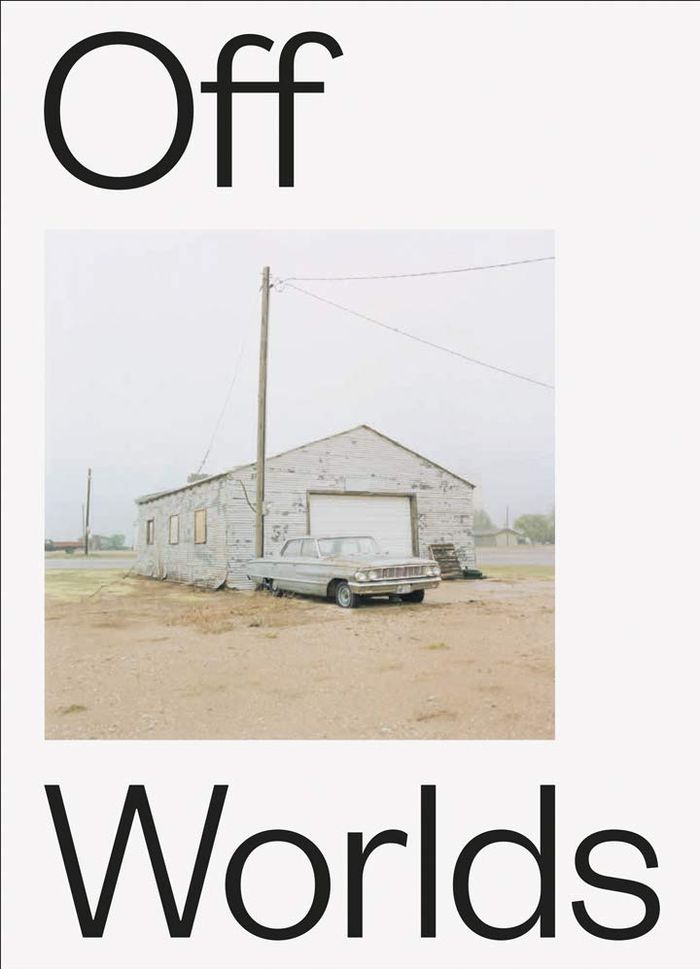
In the mountains of California or on the rooftops of New York, the feeling of utter remoteness can be triggered everywhere in the United States. Not only does the vastness of the country account for it, but also the absence of people. Days can pass without seeing a single human being. Signposts and mailboxes, however, indicate that these far-off regions are inhabited. Similarly, one can get lost in the concrete jungle and on the tarmac of cramped cities. Louise Amelie and Aljaz Fuis have explored these peripheries - in the literal sense of the word - with their camera, the fringes and outermost areas of both the American countryside and metropolises. The photos in this book portray more than a mere geographic separation from society. They capture a systemic or perceived isolation which is frequently transformed into a statement of independence, pride, and liberty.
Louise Amelie & Aljaz Fuiz: Off Worlds
Actions:
Price:
$67.50
(available in store)
Summary:
In the mountains of California or on the rooftops of New York, the feeling of utter remoteness can be triggered everywhere in the United States. Not only does the vastness of the country account for it, but also the absence of people. Days can pass without seeing a single human being. Signposts and mailboxes, however, indicate that these far-off regions are inhabited. Similarly, one can get lost in the concrete jungle and on the tarmac of cramped cities. Louise Amelie and Aljaz Fuis have explored these peripheries - in the literal sense of the word - with their camera, the fringes and outermost areas of both the American countryside and metropolises. The photos in this book portray more than a mere geographic separation from society. They capture a systemic or perceived isolation which is frequently transformed into a statement of independence, pride, and liberty.
Form:
books
books
Publication:
June 2021
June 2021
Subject:
Photography monographs
Photography monographs
Form:
books
books
Actions:
Price:
$55.95
(available to order)
Summary:
In this volume, carbon pioneers Bruce King and Chris Magwood re-envision buildings as one of our most practical and affordable climate solutions instead of leading drivers of climate change. They provide a snapshot of a beginning and map towards a carbon-smart built environment that acts as a CO2 filter. Professional engineers, designers, and developers are invited to(...)
$55.95
(available to order)
Summary:
In this volume, carbon pioneers Bruce King and Chris Magwood re-envision buildings as one of our most practical and affordable climate solutions instead of leading drivers of climate change. They provide a snapshot of a beginning and map towards a carbon-smart built environment that acts as a CO2 filter. Professional engineers, designers, and developers are invited to(...)
Title:
Build beyond zero: New ideas for carbon smart architecture
Actions:
Price:
$55.95
(available to order)
Summary:
In this volume, carbon pioneers Bruce King and Chris Magwood re-envision buildings as one of our most practical and affordable climate solutions instead of leading drivers of climate change. They provide a snapshot of a beginning and map towards a carbon-smart built environment that acts as a CO2 filter. Professional engineers, designers, and developers are invited to imagine the very real potential for our built environment to be a site of net carbon storage, a massive drawdown pool that could help to heal our climate.This book looks at the good and the bad of how we track carbon (Life Cycle Assessment), then takes a deep dive into materials (with a focus on steel and concrete) and biological architecture, and wraps up with education, policy and governance, circular economy, and where we go in the next three decades.
Build beyond zero: New ideas for carbon smart architecture
Actions:
Price:
$55.95
(available to order)
Summary:
In this volume, carbon pioneers Bruce King and Chris Magwood re-envision buildings as one of our most practical and affordable climate solutions instead of leading drivers of climate change. They provide a snapshot of a beginning and map towards a carbon-smart built environment that acts as a CO2 filter. Professional engineers, designers, and developers are invited to imagine the very real potential for our built environment to be a site of net carbon storage, a massive drawdown pool that could help to heal our climate.This book looks at the good and the bad of how we track carbon (Life Cycle Assessment), then takes a deep dive into materials (with a focus on steel and concrete) and biological architecture, and wraps up with education, policy and governance, circular economy, and where we go in the next three decades.
Form:
books
books
Publication:
June 2022
June 2022
Subject:
Green Architecture
Green Architecture
Form:
books
books
Price:
$49.95
(available to order)
Summary:
The Robin Hood Gardens public-housing estate in East London, completed in 1972, was designed by Alison and Peter Smithson as an ethical and aesthetic encounter with the flux and crises of the social world. Now demolished by the forces of speculative development, this Brutalist estate has been the subject of much dispute. But the clichéd terms of debate—a "concrete(...)
$49.95
(available to order)
Summary:
The Robin Hood Gardens public-housing estate in East London, completed in 1972, was designed by Alison and Peter Smithson as an ethical and aesthetic encounter with the flux and crises of the social world. Now demolished by the forces of speculative development, this Brutalist estate has been the subject of much dispute. But the clichéd terms of debate—a "concrete(...)
Title:
Brutalism as found: Housing, form and crisis at Robin Hood Gardens
Actions:
Price:
$49.95
(available to order)
Summary:
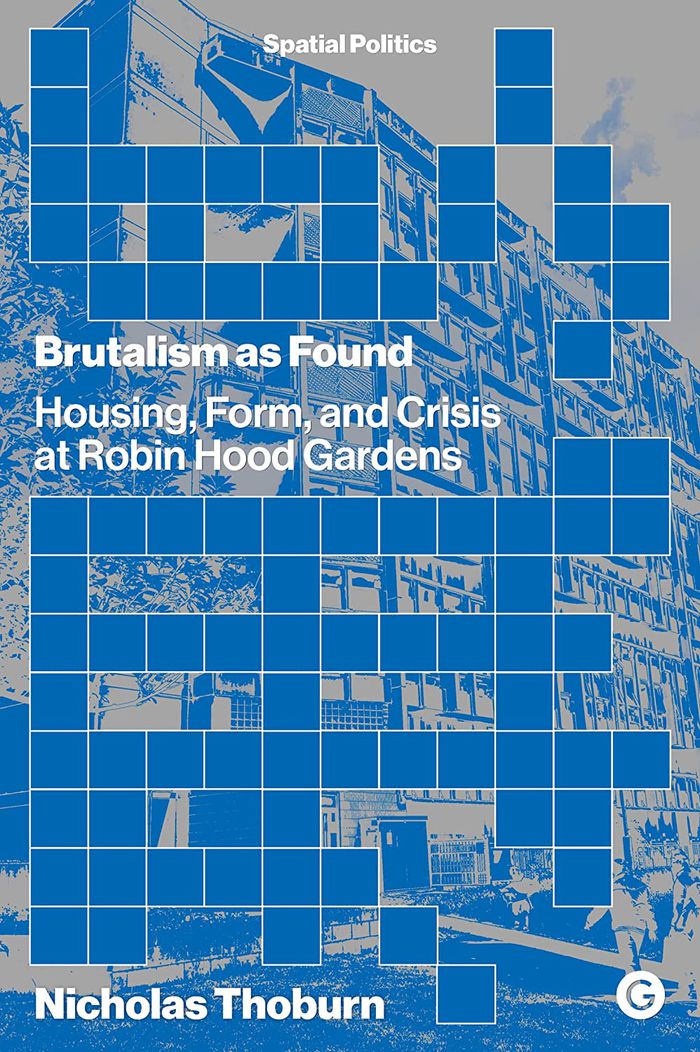
The Robin Hood Gardens public-housing estate in East London, completed in 1972, was designed by Alison and Peter Smithson as an ethical and aesthetic encounter with the flux and crises of the social world. Now demolished by the forces of speculative development, this Brutalist estate has been the subject of much dispute. But the clichéd terms of debate—a "concrete monstrosity" or a "modernist masterpiece"—have marginalized the estate's residents and obscured its architectural originality. Recovering the social in the architectural, this book centers the estate's lived experience of a multiracial working class, not to displace the architecture's sensory qualities of matter and form, but to radicalize them for our present. Immersed in the materials, atmospheres, social forms and afterlives of this experimental estate, Robin Hood Gardens is reconstructed here as a socio-architectural expression of our times out of joint.
Brutalism as found: Housing, form and crisis at Robin Hood Gardens
Actions:
Price:
$49.95
(available to order)
Summary:
The Robin Hood Gardens public-housing estate in East London, completed in 1972, was designed by Alison and Peter Smithson as an ethical and aesthetic encounter with the flux and crises of the social world. Now demolished by the forces of speculative development, this Brutalist estate has been the subject of much dispute. But the clichéd terms of debate—a "concrete monstrosity" or a "modernist masterpiece"—have marginalized the estate's residents and obscured its architectural originality. Recovering the social in the architectural, this book centers the estate's lived experience of a multiracial working class, not to displace the architecture's sensory qualities of matter and form, but to radicalize them for our present. Immersed in the materials, atmospheres, social forms and afterlives of this experimental estate, Robin Hood Gardens is reconstructed here as a socio-architectural expression of our times out of joint.
Form:
books
books
Publication:
November 2022
November 2022
Subject:
Architectural Theory
Architectural Theory
Form:
books
books
Actions:
Price:
$125.00
(available to order)
Summary:
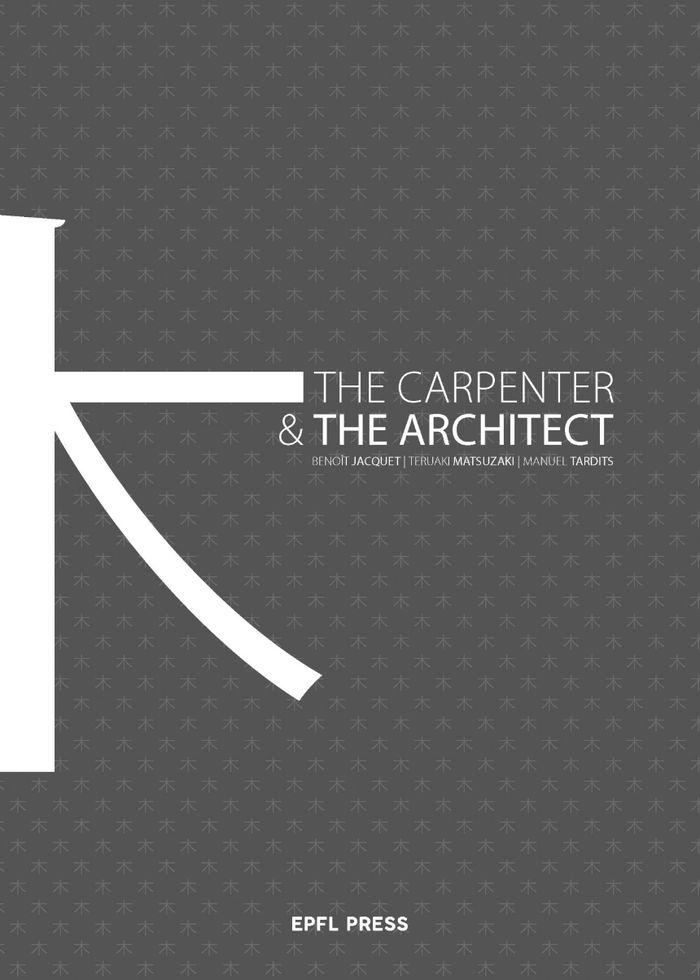
A contemporary reminder of the importance of the carpenter and wood in Japanese architecture. When Japanese architecture is mentioned today, images of temples or pagodas generally come to mind. Others may think of more contemporary works: massive modular walls of rough concrete poured in place and bearing imprints of their formwork in the manner of Ando Tadao, the(...)
$125.00
(available to order)
Summary:
A contemporary reminder of the importance of the carpenter and wood in Japanese architecture. When Japanese architecture is mentioned today, images of temples or pagodas generally come to mind. Others may think of more contemporary works: massive modular walls of rough concrete poured in place and bearing imprints of their formwork in the manner of Ando Tadao, the(...)
Subject:
Architectural Theory
Architectural Theory
Publication:
April 2022
April 2022
Title:
The carpenter and the architect
Actions:
Price:
$125.00
(available to order)
Summary:
A contemporary reminder of the importance of the carpenter and wood in Japanese architecture. When Japanese architecture is mentioned today, images of temples or pagodas generally come to mind. Others may think of more contemporary works: massive modular walls of rough concrete poured in place and bearing imprints of their formwork in the manner of Ando Tadao, the lighter structures of Ito Toyo and Sejima Kazuyo, or the finely wrought facades of Kuma Kengo. A generational chasm and, rather surprisingly, even a historical one seems to have opened up between the emblematic images of traditional Japanese architecture, in which wood is the material of choice, and more current and innovative work, in which its use has been reduced. Even though the carpenter has long been the lead builder, contemporary architectural culture appears to have forgotten this reservoir of construction experience accumulated over centuries.
The carpenter and the architect
Actions:
Price:
$125.00
(available to order)
Summary:
A contemporary reminder of the importance of the carpenter and wood in Japanese architecture. When Japanese architecture is mentioned today, images of temples or pagodas generally come to mind. Others may think of more contemporary works: massive modular walls of rough concrete poured in place and bearing imprints of their formwork in the manner of Ando Tadao, the lighter structures of Ito Toyo and Sejima Kazuyo, or the finely wrought facades of Kuma Kengo. A generational chasm and, rather surprisingly, even a historical one seems to have opened up between the emblematic images of traditional Japanese architecture, in which wood is the material of choice, and more current and innovative work, in which its use has been reduced. Even though the carpenter has long been the lead builder, contemporary architectural culture appears to have forgotten this reservoir of construction experience accumulated over centuries.
Form:
books
books
Publication:
April 2022
April 2022
Subject:
Architectural Theory
Architectural Theory


