


3437 Results
Form:
books
books
Title:
Adam Bartos: darkroom
Adam Bartos: darkroom
Actions:
Price:
$109.95
(available to order)
Summary:
Darkroom charts the physical and psychic terrain of photographic printing rooms while conveying their transition from the realm of pure functionality into historical artifact. Indirect portraits of both producer and product, Bartos' work explores the physical space linking artist to artwork and linking the tools of the medium to the signs of their use. As more darkrooms(...)
$109.95
(available to order)
Summary:
Darkroom charts the physical and psychic terrain of photographic printing rooms while conveying their transition from the realm of pure functionality into historical artifact. Indirect portraits of both producer and product, Bartos' work explores the physical space linking artist to artwork and linking the tools of the medium to the signs of their use. As more darkrooms(...)
Title:
Adam Bartos: darkroom
Actions:
Price:
$109.95
(available to order)
Summary:
Darkroom charts the physical and psychic terrain of photographic printing rooms while conveying their transition from the realm of pure functionality into historical artifact. Indirect portraits of both producer and product, Bartos' work explores the physical space linking artist to artwork and linking the tools of the medium to the signs of their use. As more darkrooms switch to digital printing or close shop altogether, we become more aware that the tangible elements of darkroom printing may one day be lost. Bartos' recent large-format work documents and explores in equal measure the visual language and ethos of that analogue printing culture before it slips beyond our experience forever. The acrid odour of chemistry, an uncanny stillness hanging in damp air - Bartos records the descriptive aspects and spatial constraints of the darkroom but also visualizes the lab as a site of limitless creative potential, invested with as much aura as a photographic print. Heroic and humbling at the same time, these portraits speak to the individuality of the workspaces and their inhabitants but also to the shared architecture of all darkrooms. Bartos presents us with the perceptual tools to know the darkroom as it is today and to remember it one day as it will have been.
Adam Bartos: darkroom
Actions:
Price:
$109.95
(available to order)
Summary:
Darkroom charts the physical and psychic terrain of photographic printing rooms while conveying their transition from the realm of pure functionality into historical artifact. Indirect portraits of both producer and product, Bartos' work explores the physical space linking artist to artwork and linking the tools of the medium to the signs of their use. As more darkrooms switch to digital printing or close shop altogether, we become more aware that the tangible elements of darkroom printing may one day be lost. Bartos' recent large-format work documents and explores in equal measure the visual language and ethos of that analogue printing culture before it slips beyond our experience forever. The acrid odour of chemistry, an uncanny stillness hanging in damp air - Bartos records the descriptive aspects and spatial constraints of the darkroom but also visualizes the lab as a site of limitless creative potential, invested with as much aura as a photographic print. Heroic and humbling at the same time, these portraits speak to the individuality of the workspaces and their inhabitants but also to the shared architecture of all darkrooms. Bartos presents us with the perceptual tools to know the darkroom as it is today and to remember it one day as it will have been.
Form:
books
books
Publication:
November 2011
November 2011
Subject:
Photography monographs
Photography monographs
Form:
books
books
Title:
Circles of round
Circles of round
Actions:
Price:
$18.95
(available to order)
Summary:
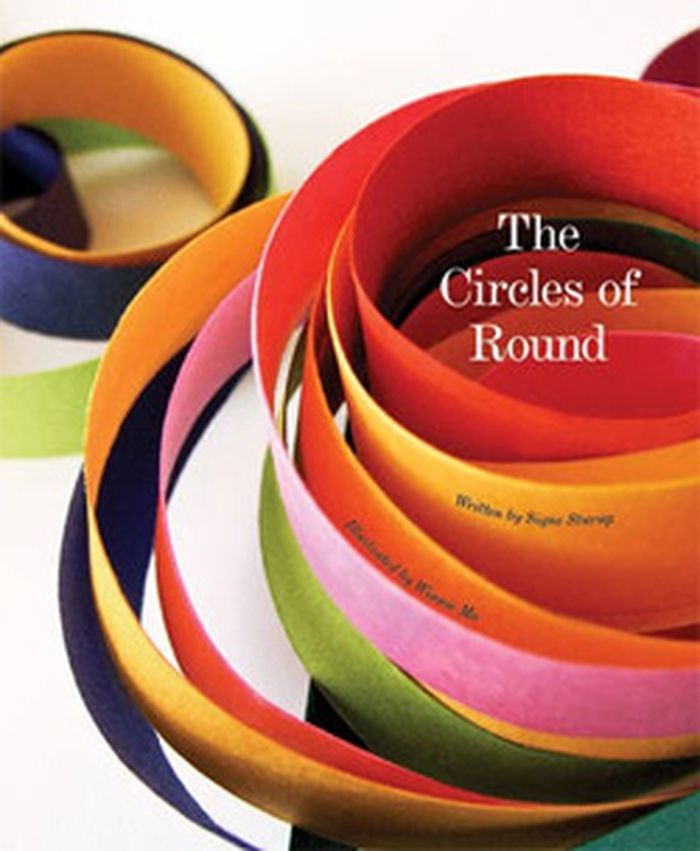
Simply yet strikingly illustrated with photos of three-dimensional shapes made of paper, this story is a great way to introduce children to the powers of advertising.
$18.95
(available to order)
Summary:
Simply yet strikingly illustrated with photos of three-dimensional shapes made of paper, this story is a great way to introduce children to the powers of advertising.
Title:
Circles of round
Actions:
Price:
$18.95
(available to order)
Summary:
Simply yet strikingly illustrated with photos of three-dimensional shapes made of paper, this story is a great way to introduce children to the powers of advertising.
Circles of round
Actions:
Price:
$18.95
(available to order)
Summary:
Simply yet strikingly illustrated with photos of three-dimensional shapes made of paper, this story is a great way to introduce children to the powers of advertising.
Form:
books
books
Publication:
February 2013
February 2013
Subject:
Children's Books
Children's Books
Form:
books
books
Actions:
Holdings:
Description:
1 volume (various pagings) : illustrations, map, plans (etchings, engraving) ; 31 cm (4to)
Description:
1 volume (various pagings) : illustrations, map, plans (etchings, engraving) ; 31 cm (4to)
Author:
Subject:
Publication:
Roma : Dalla Tipografia di Crispino Puccinelli, 1832-1834.
Roma : Dalla Tipografia di Crispino Puccinelli, 1832-1834.
Title:
... Dissertazioni lette nell'adunanza della Pontificia Accademia romana di archeologia ... / da Stefano Piale.
Actions:
Holdings:
Description:
1 volume (various pagings) : illustrations, map, plans (etchings, engraving) ; 31 cm (4to)
... Dissertazioni lette nell'adunanza della Pontificia Accademia romana di archeologia ... / da Stefano Piale.
Actions:
Holdings:
Description:
1 volume (various pagings) : illustrations, map, plans (etchings, engraving) ; 31 cm (4to)
Form:
books
books
Publication:
Roma : Dalla Tipografia di Crispino Puccinelli, 1832-1834.
Roma : Dalla Tipografia di Crispino Puccinelli, 1832-1834.
Author:
Subject:
Form:
books
books
Actions:
Holdings:
Description:
201 pages : illustrations (some color) ; 31 cm
Description:
201 pages : illustrations (some color) ; 31 cm
Author:
Subject:
Publication:
Montréal : VOX, centre de l'image contemporaine, 2009.
Montréal : VOX, centre de l'image contemporaine, 2009.
Title:
Bill Vazan--walking into the vanishing point : art conceptuel / [auteurs, Marie-Josée Jean et al. ; traduction, Michael Gilson et Karen Pick] = Bill Vazan--walking into the vanishing point : conceptual art / [authors, Marie-Josée Jean et al. ; translation, Michael Gilson and Karen Pick].
Actions:
Holdings:
Description:
201 pages : illustrations (some color) ; 31 cm
Bill Vazan--walking into the vanishing point : art conceptuel / [auteurs, Marie-Josée Jean et al. ; traduction, Michael Gilson et Karen Pick] = Bill Vazan--walking into the vanishing point : conceptual art / [authors, Marie-Josée Jean et al. ; translation, Michael Gilson and Karen Pick].
Actions:
Holdings:
Description:
201 pages : illustrations (some color) ; 31 cm
Form:
books
books
Publication:
Montréal : VOX, centre de l'image contemporaine, 2009.
Montréal : VOX, centre de l'image contemporaine, 2009.
Author:
Subject:
Form:
books
books
Title:
The Key of Cvjetno naselje.
The Key of Cvjetno naselje.
Actions:
Description:
1 online resource.
Author:
Subject:
Publication:
[Place of publication not identified] : KONTEJNER, 2026., [Place of publication not identified] : Paradiso, 2026.
[Place of publication not identified] : KONTEJNER, 2026., [Place of publication not identified] : Paradiso, 2026.
Form:
books
books
Publication:
[Place of publication not identified] : KONTEJNER, 2026., [Place of publication not identified] : Paradiso, 2026.
[Place of publication not identified] : KONTEJNER, 2026., [Place of publication not identified] : Paradiso, 2026.
Author:
Subject:
Form:
books
books
Holdings:
Description:
5 preliminary leaves (1) 10-1408 pages, 1 map, 8 plates (including frontispiece) 171 portrait, 1 folded table : illustrations (including facsimiles, plans, portraits) ; 31 cm
Description:
5 preliminary leaves (1) 10-1408 pages, 1 map, 8 plates (including frontispiece) 171 portrait, 1 folded table : illustrations (including facsimiles, plans, portraits) ; 31 cm
Author:
Subject:
Publication:
Brooklyn : W.W. Munsell, [1884]
Brooklyn : W.W. Munsell, [1884]
Title:
History of Kings County : including the city of Brooklyn, N.Y.
Actions:
Holdings:
Description:
5 preliminary leaves (1) 10-1408 pages, 1 map, 8 plates (including frontispiece) 171 portrait, 1 folded table : illustrations (including facsimiles, plans, portraits) ; 31 cm
History of Kings County : including the city of Brooklyn, N.Y.
Actions:
Holdings:
Description:
5 preliminary leaves (1) 10-1408 pages, 1 map, 8 plates (including frontispiece) 171 portrait, 1 folded table : illustrations (including facsimiles, plans, portraits) ; 31 cm
Form:
books
books
Publication:
Brooklyn : W.W. Munsell, [1884]
Brooklyn : W.W. Munsell, [1884]
Author:
Subject:
Form:
books
books
Title:
Paul Graham: Troubled land
Paul Graham: Troubled land
Actions:
Price:
$90.00
(available in store)
Summary:
An iconic project made at the height of the ''Troubles'', ''Troubled land'' deals with the small but insistent signs of political division embedded in the landscape of Northern Ireland. At the heart of the Irish conflict lays the land — who owns it, who controls it, whose history it expresses. Paul Graham’s quietly radical book keeps this material truth in mind as it(...)
$90.00
(available in store)
Summary:
An iconic project made at the height of the ''Troubles'', ''Troubled land'' deals with the small but insistent signs of political division embedded in the landscape of Northern Ireland. At the heart of the Irish conflict lays the land — who owns it, who controls it, whose history it expresses. Paul Graham’s quietly radical book keeps this material truth in mind as it(...)
Title:
Paul Graham: Troubled land
Actions:
Price:
$90.00
(available in store)
Summary:
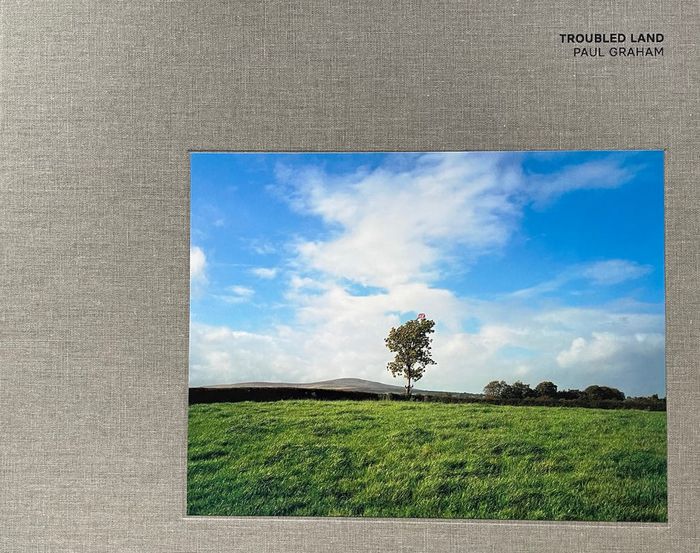
An iconic project made at the height of the ''Troubles'', ''Troubled land'' deals with the small but insistent signs of political division embedded in the landscape of Northern Ireland. At the heart of the Irish conflict lays the land — who owns it, who controls it, whose history it expresses. Paul Graham’s quietly radical book keeps this material truth in mind as it uniquely combines landscape and conflict photography, seducing us with bucolic views in which telling details only gradually appear: painted kerbs, distant soldiers or helicopters, flags and graffiti, paint-splattered roads, each tacitly aligning that location to its Republican or Loyalist allegiance. Pastoral photographs of green fields and hedgerows reveal themselves to be images of conflict and dispute — despite the steadiness of the photographic frame and the clarity of Graham’s vision, this is unsettled land. Originally published in 1986, ''Troubled land'' is reprinted here for the first time in thirty-five years. Controversial then for its use of colour and refusal to follow the clichéd tropes of photojournalism, the book was pivotal in providing a fresh perspective on Northern Ireland’s ''Troubles'' and left a lasting impact on landscape photography, suggesting how it might engage with politics and society rather than escape from them. Together with ''A1 – The Great North Road'' and ''Beyond Caring,'' it completes a new edition of the remarkable trilogy of books Graham made in 1980s UK.
Paul Graham: Troubled land
Actions:
Price:
$90.00
(available in store)
Summary:
An iconic project made at the height of the ''Troubles'', ''Troubled land'' deals with the small but insistent signs of political division embedded in the landscape of Northern Ireland. At the heart of the Irish conflict lays the land — who owns it, who controls it, whose history it expresses. Paul Graham’s quietly radical book keeps this material truth in mind as it uniquely combines landscape and conflict photography, seducing us with bucolic views in which telling details only gradually appear: painted kerbs, distant soldiers or helicopters, flags and graffiti, paint-splattered roads, each tacitly aligning that location to its Republican or Loyalist allegiance. Pastoral photographs of green fields and hedgerows reveal themselves to be images of conflict and dispute — despite the steadiness of the photographic frame and the clarity of Graham’s vision, this is unsettled land. Originally published in 1986, ''Troubled land'' is reprinted here for the first time in thirty-five years. Controversial then for its use of colour and refusal to follow the clichéd tropes of photojournalism, the book was pivotal in providing a fresh perspective on Northern Ireland’s ''Troubles'' and left a lasting impact on landscape photography, suggesting how it might engage with politics and society rather than escape from them. Together with ''A1 – The Great North Road'' and ''Beyond Caring,'' it completes a new edition of the remarkable trilogy of books Graham made in 1980s UK.
Form:
books
books
Publication:
May 2022
May 2022
Subject:
Photography monographs
Photography monographs
Form:
books
books
Actions:
Holdings:
Description:
227 pages : illustrations (some color) ; 25 cm
Description:
227 pages : illustrations (some color) ; 25 cm
Author:
Subject:
Publication:
Québec : Publications du Québec, 2012.
Québec : Publications du Québec, 2012.
Title:
Patrimoine en devenir : l'architecture moderne du Québec / France Vanlaethem ; Michel Brunelle, photographe.
Actions:
Holdings:
Description:
227 pages : illustrations (some color) ; 25 cm
Patrimoine en devenir : l'architecture moderne du Québec / France Vanlaethem ; Michel Brunelle, photographe.
Actions:
Holdings:
Description:
227 pages : illustrations (some color) ; 25 cm
Form:
books
books
Publication:
Québec : Publications du Québec, 2012.
Québec : Publications du Québec, 2012.
Author:
Subject:
Form:
books
books
Actions:
Holdings:
Description:
11 pages, 20 leaves of plates : illustrations ; 51 cm
Description:
11 pages, 20 leaves of plates : illustrations ; 51 cm
Author:
Subject:
Publication:
A Paris : De l'imprimerie royale, 1679.
A Paris : De l'imprimerie royale, 1679.
Title:
Description de la grotte de Versailles.
Actions:
Holdings:
Description:
11 pages, 20 leaves of plates : illustrations ; 51 cm
Description de la grotte de Versailles.
Actions:
Holdings:
Description:
11 pages, 20 leaves of plates : illustrations ; 51 cm
Form:
books
books
Publication:
A Paris : De l'imprimerie royale, 1679.
A Paris : De l'imprimerie royale, 1679.
Author:
Subject:
Form:
books
books
Actions:
Holdings:
Description:
[15], 10-284 pages, [22] leaves of plates (2 folded) : illustrations, 2 folded maps ; 20 cm
Description:
[15], 10-284 pages, [22] leaves of plates (2 folded) : illustrations, 2 folded maps ; 20 cm
Author:
Subject:
Publication:
Montreal : William Greig, St. Paul Street, MDCCCXXXIX [1839]
Montreal : William Greig, St. Paul Street, MDCCCXXXIX [1839]
Title:
Hochelaga depicta : the early history and present state of the city and island of Montreal / edited by Newton Bosworth ; with numerous illustrated engravings.
Actions:
Holdings:
Description:
[15], 10-284 pages, [22] leaves of plates (2 folded) : illustrations, 2 folded maps ; 20 cm
Hochelaga depicta : the early history and present state of the city and island of Montreal / edited by Newton Bosworth ; with numerous illustrated engravings.
Actions:
Holdings:
Description:
[15], 10-284 pages, [22] leaves of plates (2 folded) : illustrations, 2 folded maps ; 20 cm
Form:
books
books
Publication:
Montreal : William Greig, St. Paul Street, MDCCCXXXIX [1839]
Montreal : William Greig, St. Paul Street, MDCCCXXXIX [1839]
Author:
Subject:


