


3590 Results
Form:
books
books
Actions:
Price:
$52.50
(available to order)
Summary:
The urban and cultural climate of Rotterdam changed radically between 1970 and 2000. Opinions differ about what the most important changes were, and when they occurred. "Imagine a metropolis" shows that it was first and foremost a new perspective on Rotterdam that stimulated the development of the city during this period. If the Rotterdam of 1970 was still a city with an(...)
$52.50
(available to order)
Summary:
The urban and cultural climate of Rotterdam changed radically between 1970 and 2000. Opinions differ about what the most important changes were, and when they occurred. "Imagine a metropolis" shows that it was first and foremost a new perspective on Rotterdam that stimulated the development of the city during this period. If the Rotterdam of 1970 was still a city with an(...)
Subject:
Architecture since 1900, Europe
Architecture since 1900, Europe
Publication:
October 2007, Rotterdam
October 2007, Rotterdam
Title:
Imagine a metropolis : Rotterdam's creative class, 1970-2000
Actions:
Price:
$52.50
(available to order)
Summary:
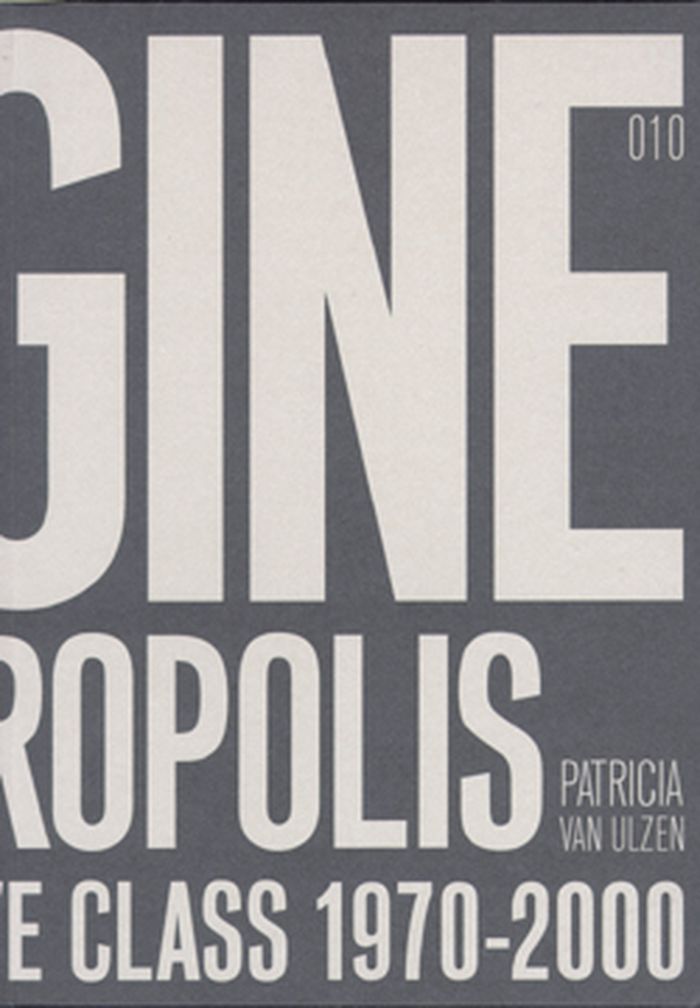
The urban and cultural climate of Rotterdam changed radically between 1970 and 2000. Opinions differ about what the most important changes were, and when they occurred. "Imagine a metropolis" shows that it was first and foremost a new perspective on Rotterdam that stimulated the development of the city during this period. If the Rotterdam of 1970 was still a city with an identity crises that wanted to be small rather than large and cosy rather than commercial, by 2000 Rotterdam had the image of the most metropolitan of all Dutch cities. Artists and other cultural practitioners – a group these days termed the ‘creative class’ – were the first to advance this metropolitan vision, thereby paving the way for the New Rotterdam that would begin to take concrete shape at the end of the 1980s. "Imagine a metropolis" goes on to show that this New Rotterdam is returning to its nineteenth-century identity and the developments of the inter-war years and the period of post-war reconstruction.
Imagine a metropolis : Rotterdam's creative class, 1970-2000
Actions:
Price:
$52.50
(available to order)
Summary:
The urban and cultural climate of Rotterdam changed radically between 1970 and 2000. Opinions differ about what the most important changes were, and when they occurred. "Imagine a metropolis" shows that it was first and foremost a new perspective on Rotterdam that stimulated the development of the city during this period. If the Rotterdam of 1970 was still a city with an identity crises that wanted to be small rather than large and cosy rather than commercial, by 2000 Rotterdam had the image of the most metropolitan of all Dutch cities. Artists and other cultural practitioners – a group these days termed the ‘creative class’ – were the first to advance this metropolitan vision, thereby paving the way for the New Rotterdam that would begin to take concrete shape at the end of the 1980s. "Imagine a metropolis" goes on to show that this New Rotterdam is returning to its nineteenth-century identity and the developments of the inter-war years and the period of post-war reconstruction.
Form:
books
books
Publication:
October 2007, Rotterdam
October 2007, Rotterdam
Subject:
Architecture since 1900, Europe
Architecture since 1900, Europe
Form:
books
books
Title:
Britain's Lost Cities
Britain's Lost Cities
Actions:
Price:
$49.00
(available to order)
Summary:
The destruction meted out on Britain's city center during the 20th century, by the combined efforts of the Luftwaffe and brutalist city planners, is legendary. Medieval churches, Tudor alleyways, Georgian terraces, and Victorian theatres vanished forever, to be replaced by a gruesome landscape of concrete office blocks and characterless shopping malls. Now, for the first(...)
$49.00
(available to order)
Summary:
The destruction meted out on Britain's city center during the 20th century, by the combined efforts of the Luftwaffe and brutalist city planners, is legendary. Medieval churches, Tudor alleyways, Georgian terraces, and Victorian theatres vanished forever, to be replaced by a gruesome landscape of concrete office blocks and characterless shopping malls. Now, for the first(...)
Title:
Britain's Lost Cities
Actions:
Price:
$49.00
(available to order)
Summary:
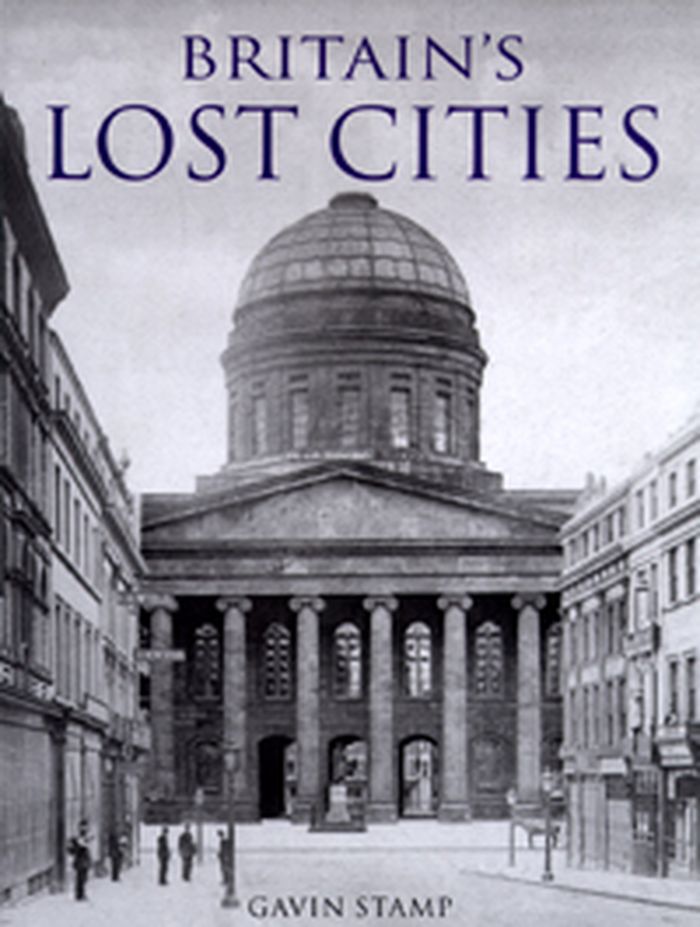
The destruction meted out on Britain's city center during the 20th century, by the combined efforts of the Luftwaffe and brutalist city planners, is legendary. Medieval churches, Tudor alleyways, Georgian terraces, and Victorian theatres vanished forever, to be replaced by a gruesome landscape of concrete office blocks and characterless shopping malls. Now, for the first time, architectural historian Gavin Stamp shows exactly what has been lost. Reproduced in this haunting volume are hundreds of top-quality photographs of cities, showing streets and buildings that are gone forever. The accompanying text traces their creation and destruction, remembering the massive campaign to save the Euston Arch, wantonly demolished in 1962, and mourning the loss of lovely medieval Coventry, which was already doomed by the city planners even before German air raids intervened. Alternately fascinating, enraging, and heartbreaking, this is an extraordinary evocation of Britain's architectural past, and a much-needed reminder of the importance of preserving heritage.
Britain's Lost Cities
Actions:
Price:
$49.00
(available to order)
Summary:
The destruction meted out on Britain's city center during the 20th century, by the combined efforts of the Luftwaffe and brutalist city planners, is legendary. Medieval churches, Tudor alleyways, Georgian terraces, and Victorian theatres vanished forever, to be replaced by a gruesome landscape of concrete office blocks and characterless shopping malls. Now, for the first time, architectural historian Gavin Stamp shows exactly what has been lost. Reproduced in this haunting volume are hundreds of top-quality photographs of cities, showing streets and buildings that are gone forever. The accompanying text traces their creation and destruction, remembering the massive campaign to save the Euston Arch, wantonly demolished in 1962, and mourning the loss of lovely medieval Coventry, which was already doomed by the city planners even before German air raids intervened. Alternately fascinating, enraging, and heartbreaking, this is an extraordinary evocation of Britain's architectural past, and a much-needed reminder of the importance of preserving heritage.
Form:
books
books
Publication:
October 2007, London
October 2007, London
Subject:
Architecture since 1900, Europe
Architecture since 1900, Europe
Form:
books
books
Actions:
Price:
$36.00
(available in store)
Summary:
Upon completing the eponymous Le Corbusier Building in Berlin in 1958, the pioneering Modernist architect Le Corbusier described the building as rising up to, a monumental size without taking from any of its parts their respect for the individual, physical and subjective dimension. Le Corbusier had confronted Berliners, in their divided city, with his concept of communal(...)
$36.00
(available in store)
Summary:
Upon completing the eponymous Le Corbusier Building in Berlin in 1958, the pioneering Modernist architect Le Corbusier described the building as rising up to, a monumental size without taking from any of its parts their respect for the individual, physical and subjective dimension. Le Corbusier had confronted Berliners, in their divided city, with his concept of communal(...)
Title:
Typ Berlin: Le Corbusier's building in Charlottenburg
Actions:
Price:
$36.00
(available in store)
Summary:
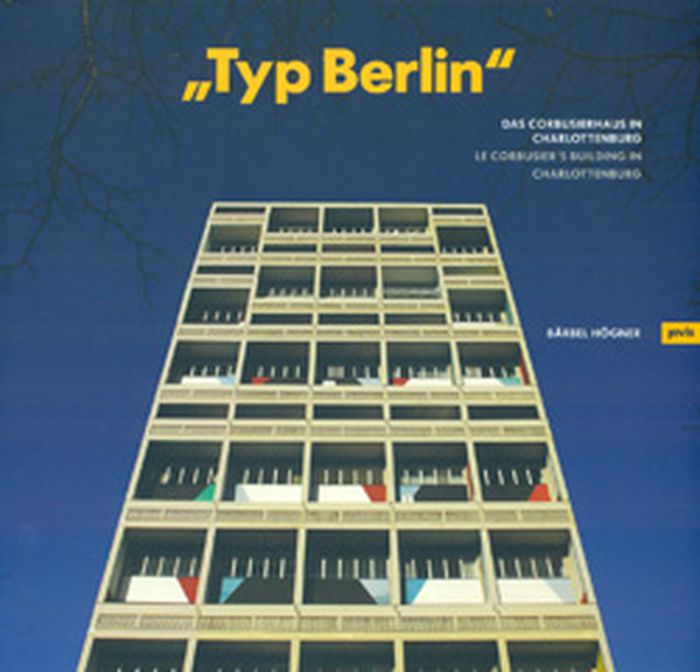
Upon completing the eponymous Le Corbusier Building in Berlin in 1958, the pioneering Modernist architect Le Corbusier described the building as rising up to, a monumental size without taking from any of its parts their respect for the individual, physical and subjective dimension. Le Corbusier had confronted Berliners, in their divided city, with his concept of communal living--a 17-story reinforced-concrete building containing 557 apartments, with only nine corridors to provide access to all of them. Le Corbusier's "machine for living" still influences the inhabitants of the building, yet no matter the architect's intention, it is ultimately the building's residents that give a house its life. Ethnologist and photographer Bärbel Högner was well aware of this when she moved into the Le Corbusier building as artist-in-residence in 2007. Her findings are published in this stunning volume, which features images of the interplay between residents and Le Corbusier's architectural masterwork.
Typ Berlin: Le Corbusier's building in Charlottenburg
Actions:
Price:
$36.00
(available in store)
Summary:
Upon completing the eponymous Le Corbusier Building in Berlin in 1958, the pioneering Modernist architect Le Corbusier described the building as rising up to, a monumental size without taking from any of its parts their respect for the individual, physical and subjective dimension. Le Corbusier had confronted Berliners, in their divided city, with his concept of communal living--a 17-story reinforced-concrete building containing 557 apartments, with only nine corridors to provide access to all of them. Le Corbusier's "machine for living" still influences the inhabitants of the building, yet no matter the architect's intention, it is ultimately the building's residents that give a house its life. Ethnologist and photographer Bärbel Högner was well aware of this when she moved into the Le Corbusier building as artist-in-residence in 2007. Her findings are published in this stunning volume, which features images of the interplay between residents and Le Corbusier's architectural masterwork.
Form:
books
books
Publication:
January 2009, Berlin
January 2009, Berlin
Subject:
Architecture Monographs
Architecture Monographs
Form:
books
books
Actions:
Price:
$25.95
(available to order)
Summary:
The Technical Schools complex in Groningen was designed in 1922 by the then director of technical education, civil engineer Jan Gerko Wiebenga, in collaboration with the Rotterdam architect Leendert Cornelis van der Vlugt. The original complex comprised a secondary and a junior(...)
$25.95
(available to order)
Summary:
The Technical Schools complex in Groningen was designed in 1922 by the then director of technical education, civil engineer Jan Gerko Wiebenga, in collaboration with the Rotterdam architect Leendert Cornelis van der Vlugt. The original complex comprised a secondary and a junior(...)
Subject:
Architecture since 1900, Europe
Architecture since 1900, Europe
Publication:
March 2000, Rotterdam
March 2000, Rotterdam
Title:
The Wiebenga Complex : conversion and restoration of the technical schools in Groningen
Actions:
Price:
$25.95
(available to order)
Summary:
The Technical Schools complex in Groningen was designed in 1922 by the then director of technical education, civil engineer Jan Gerko Wiebenga, in collaboration with the Rotterdam architect Leendert Cornelis van der Vlugt. The original complex comprised a secondary and a junior secondary technical school plus two rows of workshops and laboratories and various outbuildings in between. Wiebenga’s decision to construct the schools in concrete was unusual in that at the time this method of construction was considered suitable only for industrial buildings. The materialization, column structure and window bands all gave the building an unprecedentedly modern appearance. Over the years, the buildings have been radically altered, partially demolished and extended. The Wiebenga complex has recently been renovated, restored and completely adapted to modern educational requirements. Every effort was made to enhance the identity of the original buildings of what is now officially recognized as a modern national monument and the architectural design of the conversion is closely related to the principles of the original concept.
The Wiebenga Complex : conversion and restoration of the technical schools in Groningen
Actions:
Price:
$25.95
(available to order)
Summary:
The Technical Schools complex in Groningen was designed in 1922 by the then director of technical education, civil engineer Jan Gerko Wiebenga, in collaboration with the Rotterdam architect Leendert Cornelis van der Vlugt. The original complex comprised a secondary and a junior secondary technical school plus two rows of workshops and laboratories and various outbuildings in between. Wiebenga’s decision to construct the schools in concrete was unusual in that at the time this method of construction was considered suitable only for industrial buildings. The materialization, column structure and window bands all gave the building an unprecedentedly modern appearance. Over the years, the buildings have been radically altered, partially demolished and extended. The Wiebenga complex has recently been renovated, restored and completely adapted to modern educational requirements. Every effort was made to enhance the identity of the original buildings of what is now officially recognized as a modern national monument and the architectural design of the conversion is closely related to the principles of the original concept.
Form:
books
books
Publication:
March 2000, Rotterdam
March 2000, Rotterdam
Subject:
Architecture since 1900, Europe
Architecture since 1900, Europe
Form:
books
books
Title:
Andrew Kuo: What me worry
Andrew Kuo: What me worry
Actions:
Price:
$55.00
(available to order)
Summary:
Repurposing the sad, comical and seemingly trivial minutiae of everyday life into pie charts, flow charts and other forms of visual data sorting, New York-based artist Andrew Kuo transforms the idlest of days into a witty analysis in color and pattern. The charm of these works lies not only in their balance of what might be called "cool content in geek form," but also in(...)
$55.00
(available to order)
Summary:
Repurposing the sad, comical and seemingly trivial minutiae of everyday life into pie charts, flow charts and other forms of visual data sorting, New York-based artist Andrew Kuo transforms the idlest of days into a witty analysis in color and pattern. The charm of these works lies not only in their balance of what might be called "cool content in geek form," but also in(...)
Title:
Andrew Kuo: What me worry
Actions:
Price:
$55.00
(available to order)
Summary:
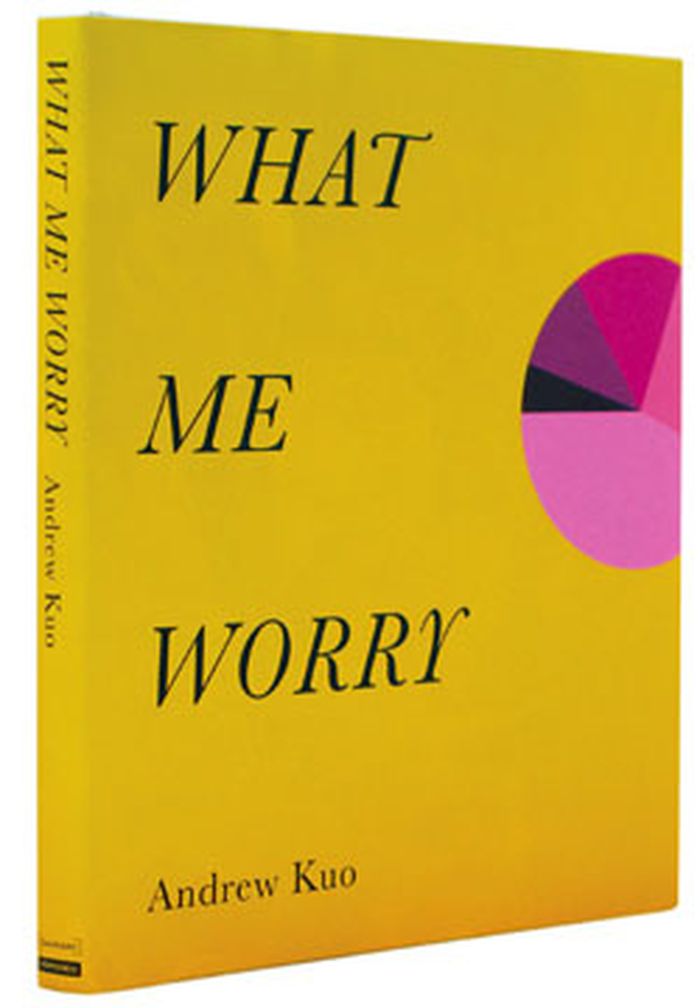
Repurposing the sad, comical and seemingly trivial minutiae of everyday life into pie charts, flow charts and other forms of visual data sorting, New York-based artist Andrew Kuo transforms the idlest of days into a witty analysis in color and pattern. The charm of these works lies not only in their balance of what might be called "cool content in geek form," but also in the criteria and gradations they measure. Kuo's obsessive charts, which resemble Op art, Concrete art or the abstractions of Josef Albers have reached a wide audience through his music reviews for The New York Times, as well as through numerous solo shows over the past ten years. What Me Worry adopts Mad magazine's slogan to gently poke fun at the artist's compulsive record-keeping, and compiles a range of charts, some of which are also made into colorful sculptures, alongside figurative paintings, diary musings and a series of recipes.
Andrew Kuo: What me worry
Actions:
Price:
$55.00
(available to order)
Summary:
Repurposing the sad, comical and seemingly trivial minutiae of everyday life into pie charts, flow charts and other forms of visual data sorting, New York-based artist Andrew Kuo transforms the idlest of days into a witty analysis in color and pattern. The charm of these works lies not only in their balance of what might be called "cool content in geek form," but also in the criteria and gradations they measure. Kuo's obsessive charts, which resemble Op art, Concrete art or the abstractions of Josef Albers have reached a wide audience through his music reviews for The New York Times, as well as through numerous solo shows over the past ten years. What Me Worry adopts Mad magazine's slogan to gently poke fun at the artist's compulsive record-keeping, and compiles a range of charts, some of which are also made into colorful sculptures, alongside figurative paintings, diary musings and a series of recipes.
Form:
books
books
Publication:
April 2011
April 2011
Subject:
Signage
Signage
Form:
books
books
Price:
$43.95
(available to order)
Summary:
Mist-shrouded landscapes and remote farmsteads represent just one of the Waldviertel’s many faces: with the expansion of Krems into a cultural center pulsing with vitality, important new architectural milestones have been set. A pronounced environmental awareness is an essential part of the Waldviertel’s identity and has also found concrete expression in the work of the(...)
$43.95
(available to order)
Summary:
Mist-shrouded landscapes and remote farmsteads represent just one of the Waldviertel’s many faces: with the expansion of Krems into a cultural center pulsing with vitality, important new architectural milestones have been set. A pronounced environmental awareness is an essential part of the Waldviertel’s identity and has also found concrete expression in the work of the(...)
Publication:
October 2011
October 2011
Title:
Lower Austria, the architectural landscape Waldviertel region
Actions:
Price:
$43.95
(available to order)
Summary:
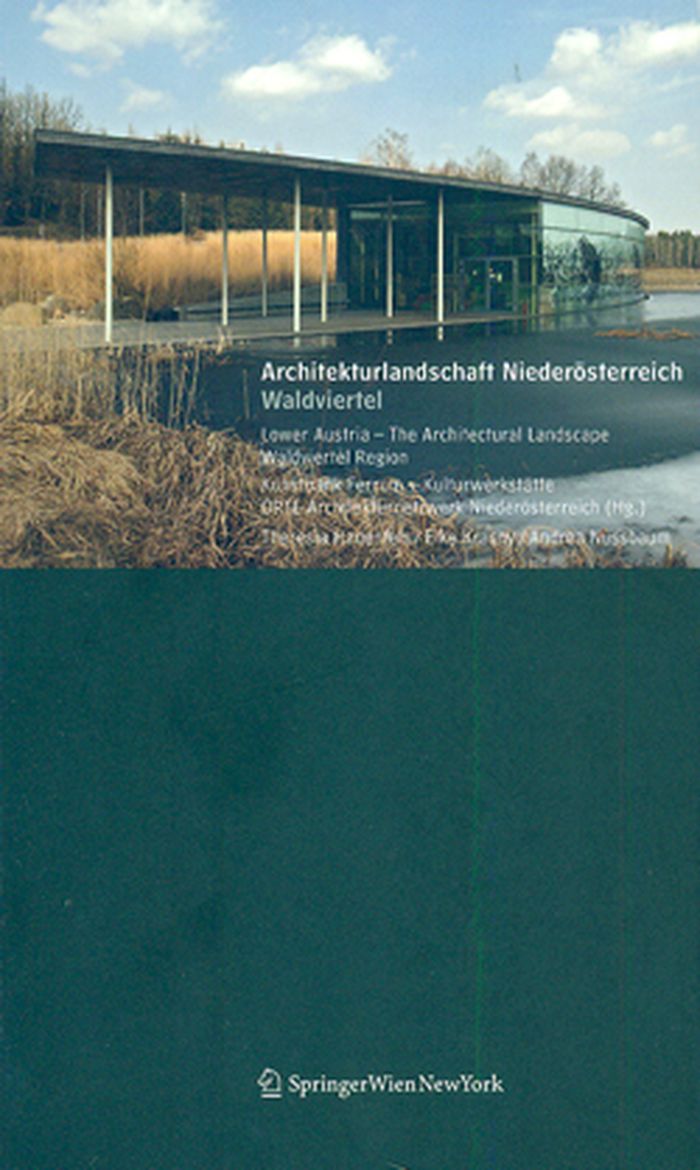
Mist-shrouded landscapes and remote farmsteads represent just one of the Waldviertel’s many faces: with the expansion of Krems into a cultural center pulsing with vitality, important new architectural milestones have been set. A pronounced environmental awareness is an essential part of the Waldviertel’s identity and has also found concrete expression in the work of the region’s innovative architectural offices. The freshness of summer has been historically significant in the Waldviertel, as the public baths and villas of the interwar period attest. At the same time, along the border to the Czech Republic, paralyzed for decades by the Iron Curtain, it is the confrontation with the region’s own history that is most apparent. In short, the Waldviertel is in a state of flux, a status that its architecture both reflects and is central in shaping. The new third volume in this series is presented by Springer Publishing and addresses over 160 buildings from 1919 to the present in essays.
Lower Austria, the architectural landscape Waldviertel region
Actions:
Price:
$43.95
(available to order)
Summary:
Mist-shrouded landscapes and remote farmsteads represent just one of the Waldviertel’s many faces: with the expansion of Krems into a cultural center pulsing with vitality, important new architectural milestones have been set. A pronounced environmental awareness is an essential part of the Waldviertel’s identity and has also found concrete expression in the work of the region’s innovative architectural offices. The freshness of summer has been historically significant in the Waldviertel, as the public baths and villas of the interwar period attest. At the same time, along the border to the Czech Republic, paralyzed for decades by the Iron Curtain, it is the confrontation with the region’s own history that is most apparent. In short, the Waldviertel is in a state of flux, a status that its architecture both reflects and is central in shaping. The new third volume in this series is presented by Springer Publishing and addresses over 160 buildings from 1919 to the present in essays.
Form:
books
books
Publication:
October 2011
October 2011
Form:
books
books
Title:
Greening the city
Greening the city
Actions:
Price:
$54.00
(available to order)
Summary:
This collection brings a unified focus to new research that is expanding the boundaries of our understanding of people's relationship to their built and 'natural' environments. In its own way, each essay raises the same question: What is the nature of nature in the city and how has it changed over the past century? Together, these essays open a new frontier of(...)
$54.00
(available to order)
Summary:
This collection brings a unified focus to new research that is expanding the boundaries of our understanding of people's relationship to their built and 'natural' environments. In its own way, each essay raises the same question: What is the nature of nature in the city and how has it changed over the past century? Together, these essays open a new frontier of(...)
Title:
Greening the city
Actions:
Price:
$54.00
(available to order)
Summary:
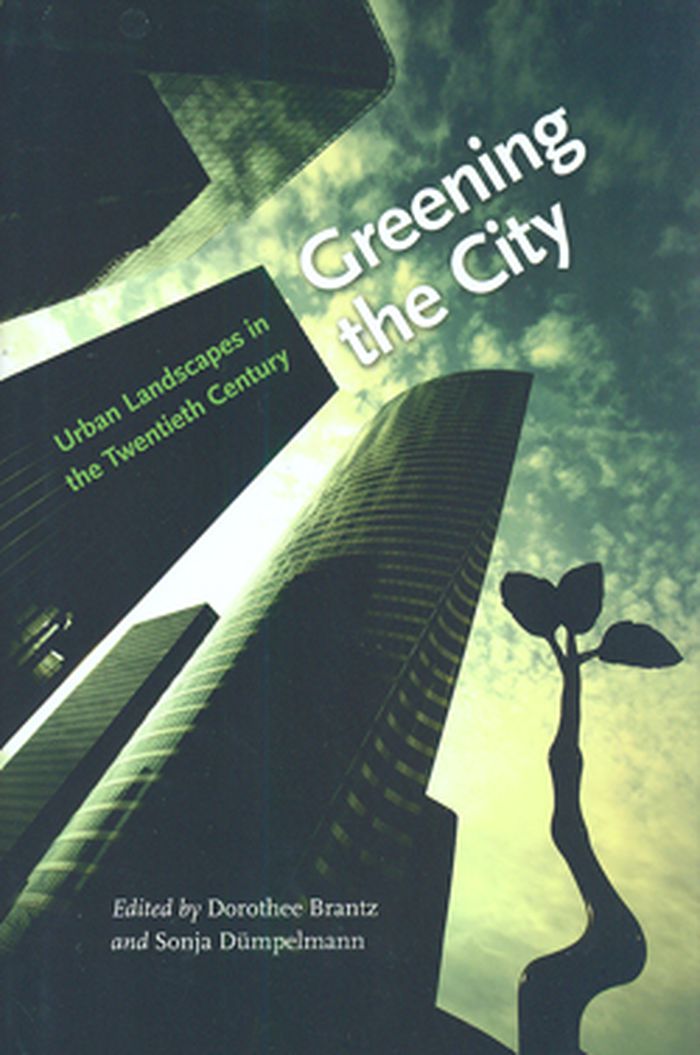
This collection brings a unified focus to new research that is expanding the boundaries of our understanding of people's relationship to their built and 'natural' environments. In its own way, each essay raises the same question: What is the nature of nature in the city and how has it changed over the past century? Together, these essays open a new frontier of scholarship."Greening the City" has the potential of rising to a level of seminal influence. The modern city is not only pavement and concrete. Parks, gardens, trees, and other plants are an integral part of the urban environment.Often the focal points of social movements and political interests, green spaces represent far more than simply an effort to balance the man-made with the natural. A city's history with - and approach to - its parks and gardens reveals much about its workings and the forces acting upon it. Our green spaces offer a unique and valuable window on the history of city life.
Greening the city
Actions:
Price:
$54.00
(available to order)
Summary:
This collection brings a unified focus to new research that is expanding the boundaries of our understanding of people's relationship to their built and 'natural' environments. In its own way, each essay raises the same question: What is the nature of nature in the city and how has it changed over the past century? Together, these essays open a new frontier of scholarship."Greening the City" has the potential of rising to a level of seminal influence. The modern city is not only pavement and concrete. Parks, gardens, trees, and other plants are an integral part of the urban environment.Often the focal points of social movements and political interests, green spaces represent far more than simply an effort to balance the man-made with the natural. A city's history with - and approach to - its parks and gardens reveals much about its workings and the forces acting upon it. Our green spaces offer a unique and valuable window on the history of city life.
Form:
books
books
Publication:
August 2011
August 2011
Subject:
Urban Theory
Urban Theory
Form:
books
books
Actions:
Price:
$45.00
(available in store)
Summary:
Since 2015, Mexican architect Francisco Pardo has run his own practice in fast-growing and fast-changing Mexico City. His projects have reflected how Mexico is transforming the idea of the Latin American city: part ancient, part colonial, part futuristic. His Havre 69 project, created with his partner from architecture firm at103, Julio Amezcua, repurposes a 100-year-old(...)
$45.00
(available in store)
Summary:
Since 2015, Mexican architect Francisco Pardo has run his own practice in fast-growing and fast-changing Mexico City. His projects have reflected how Mexico is transforming the idea of the Latin American city: part ancient, part colonial, part futuristic. His Havre 69 project, created with his partner from architecture firm at103, Julio Amezcua, repurposes a 100-year-old(...)
Title:
Francisco Pardo: imperfections
Actions:
Price:
$45.00
(available in store)
Summary:
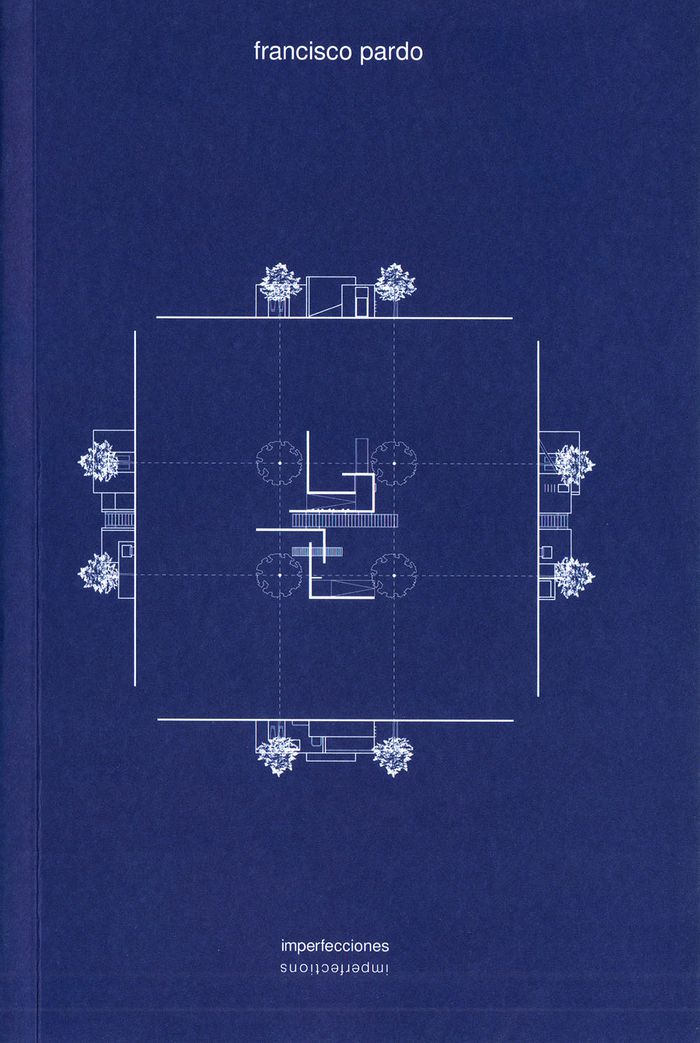
Since 2015, Mexican architect Francisco Pardo has run his own practice in fast-growing and fast-changing Mexico City. His projects have reflected how Mexico is transforming the idea of the Latin American city: part ancient, part colonial, part futuristic. His Havre 69 project, created with his partner from architecture firm at103, Julio Amezcua, repurposes a 100-year-old residence for upper-middle-class families into offices, 12 separate residences, a bakery and a restaurant. On the one hand, Pardo exposes large sections of brick and maintains the original tile, while on the other, he builds modernist concrete and glass boxes that frame the original façade. Likewise, the architect's Milan44 project takes an autoparts store in a warehouse in the Roma neighborhood of Mexico City and creates a vertical urban market that brings the storefront street level onto each level of the structure. The architecture of Francisco Pardo reflects a fresh direction in the vast project of building Latin America into the future.
Francisco Pardo: imperfections
Actions:
Price:
$45.00
(available in store)
Summary:
Since 2015, Mexican architect Francisco Pardo has run his own practice in fast-growing and fast-changing Mexico City. His projects have reflected how Mexico is transforming the idea of the Latin American city: part ancient, part colonial, part futuristic. His Havre 69 project, created with his partner from architecture firm at103, Julio Amezcua, repurposes a 100-year-old residence for upper-middle-class families into offices, 12 separate residences, a bakery and a restaurant. On the one hand, Pardo exposes large sections of brick and maintains the original tile, while on the other, he builds modernist concrete and glass boxes that frame the original façade. Likewise, the architect's Milan44 project takes an autoparts store in a warehouse in the Roma neighborhood of Mexico City and creates a vertical urban market that brings the storefront street level onto each level of the structure. The architecture of Francisco Pardo reflects a fresh direction in the vast project of building Latin America into the future.
Form:
books
books
Publication:
July 2019
July 2019
Subject:
Architecture Monographs
Architecture Monographs
Form:
books
books
Price:
$39.00
(available to order)
Summary:
Biomilano is a glossary of ideas - a mosaic of pieces put together by combining different ways of investigating and using the city, involving biologists, architects, agronomists, politicians and residents. Ideas, thoughts and urban lifestyle habits initially listed verbally and visually are then put together again differently to form six metropolitan frescoes. In each(...)
$39.00
(available to order)
Summary:
Biomilano is a glossary of ideas - a mosaic of pieces put together by combining different ways of investigating and using the city, involving biologists, architects, agronomists, politicians and residents. Ideas, thoughts and urban lifestyle habits initially listed verbally and visually are then put together again differently to form six metropolitan frescoes. In each(...)
Title:
Biomilano: glossary of ideas for a metropolis based around bio-diversity
Actions:
Price:
$39.00
(available to order)
Summary:
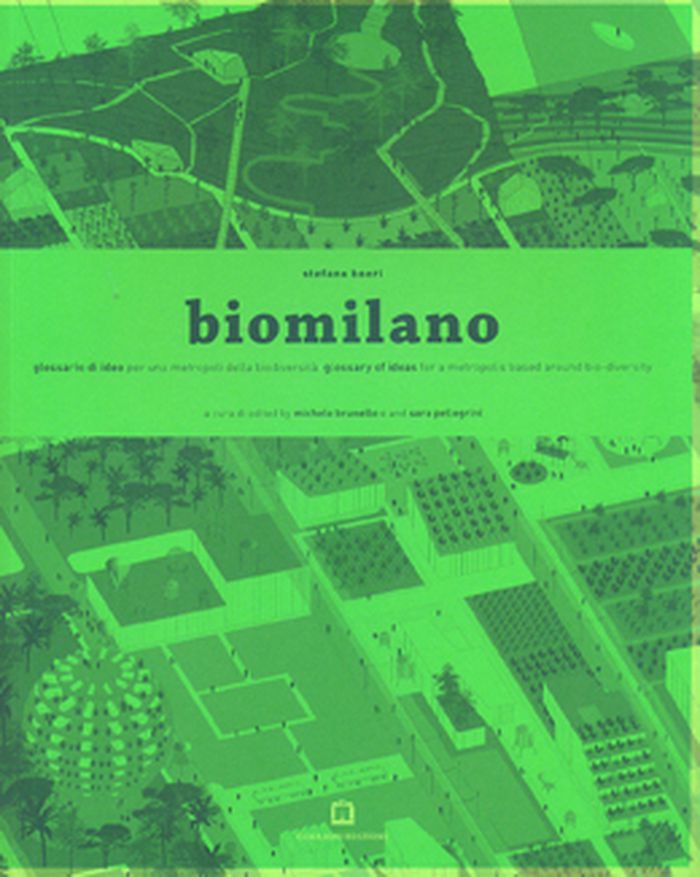
Biomilano is a glossary of ideas - a mosaic of pieces put together by combining different ways of investigating and using the city, involving biologists, architects, agronomists, politicians and residents. Ideas, thoughts and urban lifestyle habits initially listed verbally and visually are then put together again differently to form six metropolitan frescoes. In each of which the fragments are regrouped to create a concrete vision of the city’s present and its future. It is only when you take a step back, raise your eyes and continue reading that the overall view becomes clearer and more recognizable: it is the plan of a city that potentially already exists. The book contains detailed illustrations of the six Biomilano projects – the Orto Botanico Planetario for Expo 2015, Metrobosco, Bosco Verticale , Casa Bosco, Cascine, Ruralità Urbane – using a glossary to describe the economic and territorial energies required to achieve a new balance between the urban sphere, rural areas (cultivated forms of nature) and the natural world.
Biomilano: glossary of ideas for a metropolis based around bio-diversity
Actions:
Price:
$39.00
(available to order)
Summary:
Biomilano is a glossary of ideas - a mosaic of pieces put together by combining different ways of investigating and using the city, involving biologists, architects, agronomists, politicians and residents. Ideas, thoughts and urban lifestyle habits initially listed verbally and visually are then put together again differently to form six metropolitan frescoes. In each of which the fragments are regrouped to create a concrete vision of the city’s present and its future. It is only when you take a step back, raise your eyes and continue reading that the overall view becomes clearer and more recognizable: it is the plan of a city that potentially already exists. The book contains detailed illustrations of the six Biomilano projects – the Orto Botanico Planetario for Expo 2015, Metrobosco, Bosco Verticale , Casa Bosco, Cascine, Ruralità Urbane – using a glossary to describe the economic and territorial energies required to achieve a new balance between the urban sphere, rural areas (cultivated forms of nature) and the natural world.
Form:
books
books
Publication:
November 2011
November 2011
Subject:
Urban Theory
Urban Theory
Form:
books
books
Title:
Guy de Cointet
Guy de Cointet
Actions:
Price:
$45.00
(available to order)
Summary:
Mentor to a generation of Californian Conceptualists and performance artists, Guy de Cointet (1934-1983) took language as a material from which to generate drawings, plays and performances. De Cointet collected phrases, words and even single letters culled from popular culture and literary sources, and scripted them as dialogues or props for plays inspired by the writings(...)
$45.00
(available to order)
Summary:
Mentor to a generation of Californian Conceptualists and performance artists, Guy de Cointet (1934-1983) took language as a material from which to generate drawings, plays and performances. De Cointet collected phrases, words and even single letters culled from popular culture and literary sources, and scripted them as dialogues or props for plays inspired by the writings(...)
Title:
Guy de Cointet
Actions:
Price:
$45.00
(available to order)
Summary:
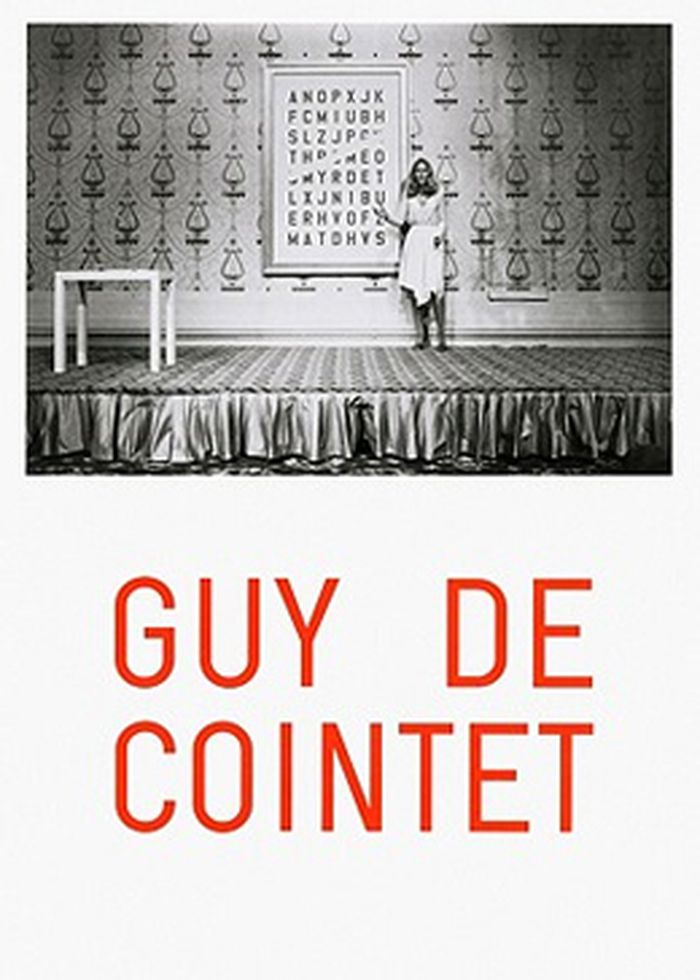
Mentor to a generation of Californian Conceptualists and performance artists, Guy de Cointet (1934-1983) took language as a material from which to generate drawings, plays and performances. De Cointet collected phrases, words and even single letters culled from popular culture and literary sources, and scripted them as dialogues or props for plays inspired by the writings and homonymic compositional methods of Raymond Roussel: in the 1976 play "At Sunrise... A Cry Was Heard," for example, a large painting depicting letters bisected by a white sash provides the dialogue of the lead actress, who recites its jumble of letters as if it were ordinary conversation. His drawings were often generated by geometric erasures of found text, leaving behind Concrete-style abstract patterns. A formative figure for Mike Kelley and Paul McCarthy during his tenure at the Otis Art institute, de Cointet is today in the process of being rediscovered; this timely monograph is the first overview of his enigmatic and influential oeuvre.
Guy de Cointet
Actions:
Price:
$45.00
(available to order)
Summary:
Mentor to a generation of Californian Conceptualists and performance artists, Guy de Cointet (1934-1983) took language as a material from which to generate drawings, plays and performances. De Cointet collected phrases, words and even single letters culled from popular culture and literary sources, and scripted them as dialogues or props for plays inspired by the writings and homonymic compositional methods of Raymond Roussel: in the 1976 play "At Sunrise... A Cry Was Heard," for example, a large painting depicting letters bisected by a white sash provides the dialogue of the lead actress, who recites its jumble of letters as if it were ordinary conversation. His drawings were often generated by geometric erasures of found text, leaving behind Concrete-style abstract patterns. A formative figure for Mike Kelley and Paul McCarthy during his tenure at the Otis Art institute, de Cointet is today in the process of being rediscovered; this timely monograph is the first overview of his enigmatic and influential oeuvre.
Form:
books
books
Publication:
March 2012
March 2012
Subject:
Contemporary Art Monographs
Contemporary Art Monographs


