


3767 Results
Form:
books
books
Actions:
Price:
$33.95
(available to order)
Summary:
A manifesto for the Open City: vibrant, disordered, adaptable. In 1970 Richard Sennett published the ground breaking ''The uses of disorder,'' that the ideal of a planned and ordered city was flawed, likely to produce a fragile, restrictive urban environment. Fifty years later, Sennett returns to these still fertile ideas and alongside campaigner and architect, Pablo(...)
$33.95
(available to order)
Summary:
A manifesto for the Open City: vibrant, disordered, adaptable. In 1970 Richard Sennett published the ground breaking ''The uses of disorder,'' that the ideal of a planned and ordered city was flawed, likely to produce a fragile, restrictive urban environment. Fifty years later, Sennett returns to these still fertile ideas and alongside campaigner and architect, Pablo(...)
Title:
Designing disorder: experiments and disruptions in the city
Actions:
Price:
$33.95
(available to order)
Summary:
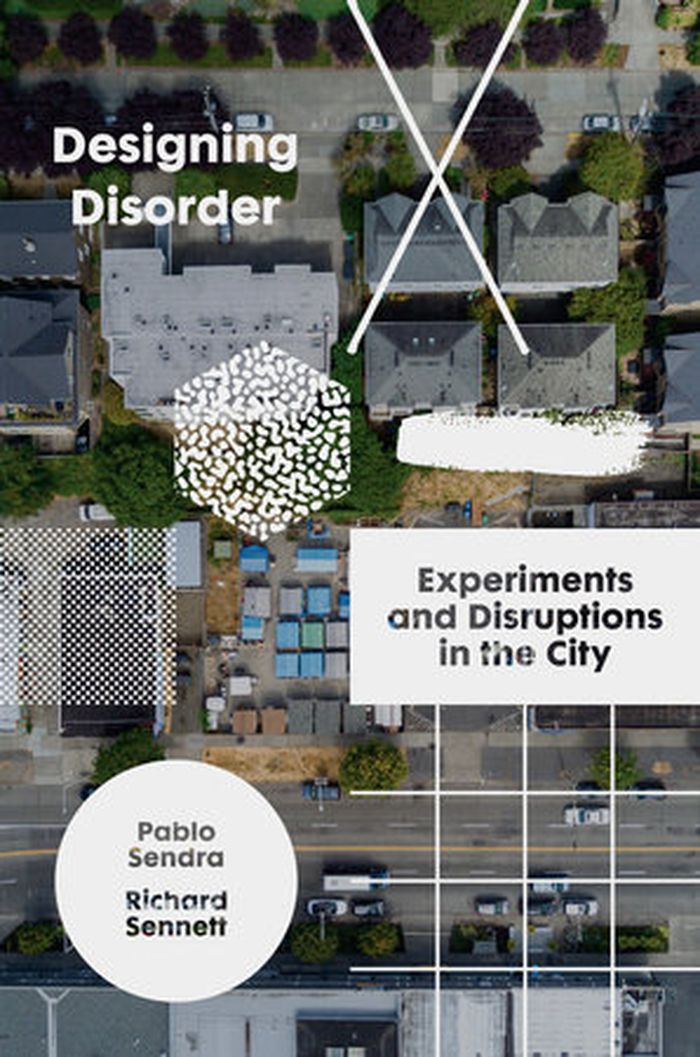
A manifesto for the Open City: vibrant, disordered, adaptable. In 1970 Richard Sennett published the ground breaking ''The uses of disorder,'' that the ideal of a planned and ordered city was flawed, likely to produce a fragile, restrictive urban environment. Fifty years later, Sennett returns to these still fertile ideas and alongside campaigner and architect, Pablo Sendra, sets out an agenda for the design and ethics of the Open City. The public spaces of our cities are under siege from planners, privatisation and increased surveillance. Our streets are becoming ever more lifeless and ordered. What is to be done? Can disorder be designed? Is it possible to maintain the public realm as a flexible space that adapts over time? In this provocative essay Sendra and Sennett propose a reorganisation of how we think and plan the social life of our cities. What the authors call 'Infrastructures of disorder' combine architecture, politics, urban planning and activism in order to develop places that nurture rather than stifle, bring together rather than divide up, remain open to change rather than closed off. The book proves that ideas of disorder are still some of the most radical and transformative in debates on 21st century cities.
Designing disorder: experiments and disruptions in the city
Actions:
Price:
$33.95
(available to order)
Summary:
A manifesto for the Open City: vibrant, disordered, adaptable. In 1970 Richard Sennett published the ground breaking ''The uses of disorder,'' that the ideal of a planned and ordered city was flawed, likely to produce a fragile, restrictive urban environment. Fifty years later, Sennett returns to these still fertile ideas and alongside campaigner and architect, Pablo Sendra, sets out an agenda for the design and ethics of the Open City. The public spaces of our cities are under siege from planners, privatisation and increased surveillance. Our streets are becoming ever more lifeless and ordered. What is to be done? Can disorder be designed? Is it possible to maintain the public realm as a flexible space that adapts over time? In this provocative essay Sendra and Sennett propose a reorganisation of how we think and plan the social life of our cities. What the authors call 'Infrastructures of disorder' combine architecture, politics, urban planning and activism in order to develop places that nurture rather than stifle, bring together rather than divide up, remain open to change rather than closed off. The book proves that ideas of disorder are still some of the most radical and transformative in debates on 21st century cities.
Form:
books
books
Publication:
April 2020
April 2020
Subject:
Urban Theory
Urban Theory
Form:
books
books
Price:
$69.95
(available to order)
Summary:
American cities entered a new phase when, beginning in the 1950s, artists and developers looked upon a decaying industrial zone in Lower Manhattan and saw, not blight, but opportunity: cheap rents, lax regulation, and wide open spaces. Thus, SoHo was born. From 1960 to 1980, residents transformed the industrial neighborhood into an artist district, creating the conditions(...)
$69.95
(available to order)
Summary:
American cities entered a new phase when, beginning in the 1950s, artists and developers looked upon a decaying industrial zone in Lower Manhattan and saw, not blight, but opportunity: cheap rents, lax regulation, and wide open spaces. Thus, SoHo was born. From 1960 to 1980, residents transformed the industrial neighborhood into an artist district, creating the conditions(...)
Title:
The lofts of SoHo: gentrification, art and industry in New York 1950-1980
Actions:
Price:
$69.95
(available to order)
Summary:
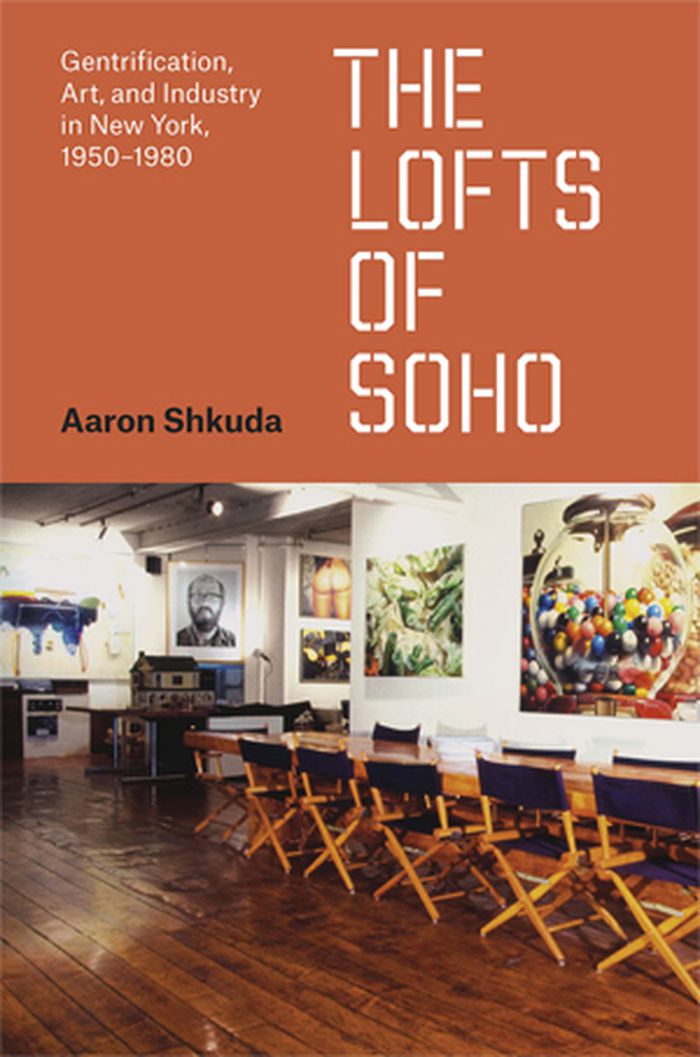
American cities entered a new phase when, beginning in the 1950s, artists and developers looked upon a decaying industrial zone in Lower Manhattan and saw, not blight, but opportunity: cheap rents, lax regulation, and wide open spaces. Thus, SoHo was born. From 1960 to 1980, residents transformed the industrial neighborhood into an artist district, creating the conditions under which it evolved into an upper-income, gentrified area. Introducing the idea—still potent in city planning today—that art could be harnessed to drive municipal prosperity, SoHo was the forerunner of gentrified districts in cities nationwide, spawning the notion of the creative class. In The Lofts of SoHo, Aaron Shkuda studies the transition of the district from industrial space to artists’ enclave to affluent residential area, focusing on the legacy of urban renewal in and around SoHo and the growth of artist-led redevelopment. Shkuda explores conflicts between residents and property owners and analyzes the city’s embrace of the once-illegal loft conversion as an urban development strategy. As Shkuda explains, artists eventually lost control of SoHo’s development, but over several decades they nonetheless forced scholars, policymakers, and the general public to take them seriously as critical actors in the twentieth-century American city.
The lofts of SoHo: gentrification, art and industry in New York 1950-1980
Actions:
Price:
$69.95
(available to order)
Summary:
American cities entered a new phase when, beginning in the 1950s, artists and developers looked upon a decaying industrial zone in Lower Manhattan and saw, not blight, but opportunity: cheap rents, lax regulation, and wide open spaces. Thus, SoHo was born. From 1960 to 1980, residents transformed the industrial neighborhood into an artist district, creating the conditions under which it evolved into an upper-income, gentrified area. Introducing the idea—still potent in city planning today—that art could be harnessed to drive municipal prosperity, SoHo was the forerunner of gentrified districts in cities nationwide, spawning the notion of the creative class. In The Lofts of SoHo, Aaron Shkuda studies the transition of the district from industrial space to artists’ enclave to affluent residential area, focusing on the legacy of urban renewal in and around SoHo and the growth of artist-led redevelopment. Shkuda explores conflicts between residents and property owners and analyzes the city’s embrace of the once-illegal loft conversion as an urban development strategy. As Shkuda explains, artists eventually lost control of SoHo’s development, but over several decades they nonetheless forced scholars, policymakers, and the general public to take them seriously as critical actors in the twentieth-century American city.
Form:
books
books
Publication:
April 2016
April 2016
Subject:
Urban Theory
Urban Theory
Form:
books
books
Price:
$45.00
(available to order)
Summary:
John Kriken of the planning firm Skidmore, Owings & Merrill has been at the forefront of urban planning for over forty years, and he brings both his wealth of experience and his great optimism for the future to "City Building". In writing that both experienced designers and typical city-dwellers will enjoy, he illustrates a means for comprehensive problem solving rather(...)
$45.00
(available to order)
Summary:
John Kriken of the planning firm Skidmore, Owings & Merrill has been at the forefront of urban planning for over forty years, and he brings both his wealth of experience and his great optimism for the future to "City Building". In writing that both experienced designers and typical city-dwellers will enjoy, he illustrates a means for comprehensive problem solving rather(...)
Title:
City building : nine planning principles for the twenty-first century
Actions:
Price:
$45.00
(available to order)
Summary:
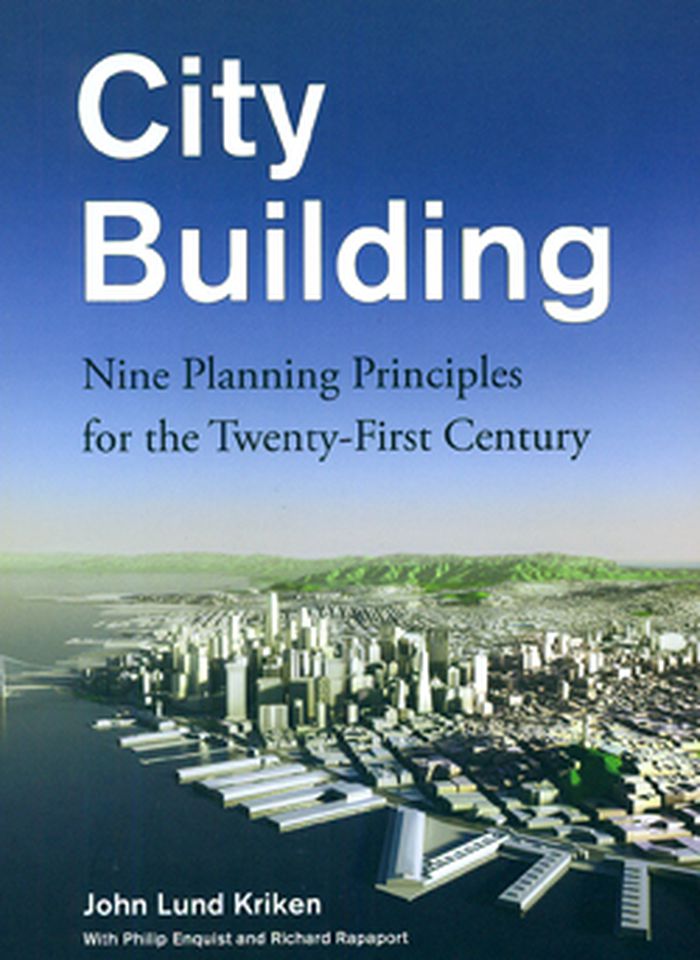
John Kriken of the planning firm Skidmore, Owings & Merrill has been at the forefront of urban planning for over forty years, and he brings both his wealth of experience and his great optimism for the future to "City Building". In writing that both experienced designers and typical city-dwellers will enjoy, he illustrates a means for comprehensive problem solving rather than symptom-based problem solving. The book is organized into three parts. Part 1 examines the past and defines the current practice of city building, addressing its shortcomings and proposing a comprehensive framework for rethinking the approach to cities in the future. Part 2 translates this framework into nine best-practice principles that are common to successful, livable, urban environments : sustainability, accessibility, diversity, open space, compatibility, incentives, adaptability, density, and identity. These principles are illustrated in a global portfolio of city building projects, designed by Skidmore, Owings & Merrill, that show how best practices have been applied successfully — and sometimes not so. Part 3 makes the case that, far from being the problem, cities, properly organized, can be a mechanism for sensible, sustainable uses of increasingly scarce resources. The book concludes with a call for a national planning process and a comprehensive framework for settlement.
City building : nine planning principles for the twenty-first century
Actions:
Price:
$45.00
(available to order)
Summary:
John Kriken of the planning firm Skidmore, Owings & Merrill has been at the forefront of urban planning for over forty years, and he brings both his wealth of experience and his great optimism for the future to "City Building". In writing that both experienced designers and typical city-dwellers will enjoy, he illustrates a means for comprehensive problem solving rather than symptom-based problem solving. The book is organized into three parts. Part 1 examines the past and defines the current practice of city building, addressing its shortcomings and proposing a comprehensive framework for rethinking the approach to cities in the future. Part 2 translates this framework into nine best-practice principles that are common to successful, livable, urban environments : sustainability, accessibility, diversity, open space, compatibility, incentives, adaptability, density, and identity. These principles are illustrated in a global portfolio of city building projects, designed by Skidmore, Owings & Merrill, that show how best practices have been applied successfully — and sometimes not so. Part 3 makes the case that, far from being the problem, cities, properly organized, can be a mechanism for sensible, sustainable uses of increasingly scarce resources. The book concludes with a call for a national planning process and a comprehensive framework for settlement.
Form:
books
books
Publication:
March 2010
March 2010
Subject:
Urban Theory
Urban Theory
Form:
books
books
Title:
The post-socialist city
The post-socialist city
Actions:
Price:
$54.00
(available to order)
Summary:
The socialist ideals of the early twentieth century argued for a radical overhaul of architectural philosophy, reasserting the value of public space and redefining all forms of creative endeavor towards the benefit of the collective. These ideals were realized in the design of public buildings, streets and squares, as well as in films, literature and the visual arts.(...)
$54.00
(available to order)
Summary:
The socialist ideals of the early twentieth century argued for a radical overhaul of architectural philosophy, reasserting the value of public space and redefining all forms of creative endeavor towards the benefit of the collective. These ideals were realized in the design of public buildings, streets and squares, as well as in films, literature and the visual arts.(...)
Title:
The post-socialist city
Actions:
Price:
$54.00
(available to order)
Summary:
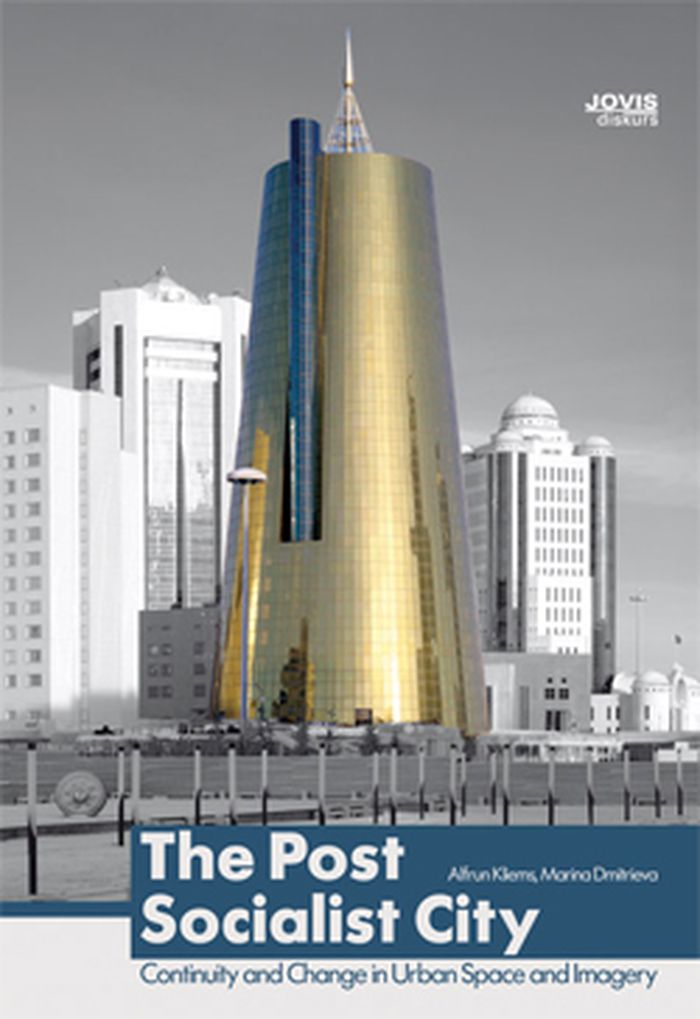
The socialist ideals of the early twentieth century argued for a radical overhaul of architectural philosophy, reasserting the value of public space and redefining all forms of creative endeavor towards the benefit of the collective. These ideals were realized in the design of public buildings, streets and squares, as well as in films, literature and the visual arts. Urban planning under Eastern European Socialism is consequently inseparable from its ideological aspirations, and while its governmental structure may have collapsed, its architectural expressions remain. Over the last decade, however, many classic buildings of this era have been stripped of their political import, being repurposed or even destroyed. The Post Socialist City reveals that many cities across Eastern Europe remain dominated by the industrial complexes and panel buildings erected by Socialism, and analyzes the implications of the uses to which they have subsequently been put.
The post-socialist city
Actions:
Price:
$54.00
(available to order)
Summary:
The socialist ideals of the early twentieth century argued for a radical overhaul of architectural philosophy, reasserting the value of public space and redefining all forms of creative endeavor towards the benefit of the collective. These ideals were realized in the design of public buildings, streets and squares, as well as in films, literature and the visual arts. Urban planning under Eastern European Socialism is consequently inseparable from its ideological aspirations, and while its governmental structure may have collapsed, its architectural expressions remain. Over the last decade, however, many classic buildings of this era have been stripped of their political import, being repurposed or even destroyed. The Post Socialist City reveals that many cities across Eastern Europe remain dominated by the industrial complexes and panel buildings erected by Socialism, and analyzes the implications of the uses to which they have subsequently been put.
Form:
books
books
Publication:
June 2010
June 2010
Subject:
Urban Theory
Urban Theory
Form:
books
books
Price:
$63.95
(available to order)
Summary:
First built in Europe and grandly imported to the United States in the mid-nineteenth century, the classic multiway boulevard has been in decline for many years, victim of a narrowly focused approach to street design that views unencumbered vehicular traffic flow as the highest priority. The American preoccupation with destination and speed has made multiway boulevards(...)
$63.95
(available to order)
Summary:
First built in Europe and grandly imported to the United States in the mid-nineteenth century, the classic multiway boulevard has been in decline for many years, victim of a narrowly focused approach to street design that views unencumbered vehicular traffic flow as the highest priority. The American preoccupation with destination and speed has made multiway boulevards(...)
Subject:
Urban Theory
Urban Theory
Publication:
October 2001, Cambridge, Mass.
October 2001, Cambridge, Mass.
Title:
The boulevard book : history, evolution, design of multiway boulevards
Actions:
Price:
$63.95
(available to order)
Summary:
First built in Europe and grandly imported to the United States in the mid-nineteenth century, the classic multiway boulevard has been in decline for many years, victim of a narrowly focused approach to street design that views unencumbered vehicular traffic flow as the highest priority. The American preoccupation with destination and speed has made multiway boulevards increasingly rare as artifacts of the urban landscape. This book reintroduces the boulevard, tree-lined and with separate realms for through traffic and for slow-paced vehicular-pedestrian movement, as an important and often crucial feature of both historic and contemporary cities. It presents more than fifty boulevards—-as varied as Avenue Montaigne, in Paris; C. G. Road, in Ahmedabad, India; and The Esplanade, in Chico, California--celebrating their usefulness and beauty. It discusses their history and evolution, the misconceptions that led to their near-demise in the United States, and their potential as a modern street type. Based on wide research, "The Boulevard Book" examines the safety of these streets and offers design guidelines for professionals, scholars, and community decision makers. Extensive plans, cross sections, and perspective drawings permit visual comparisons. The book shows how multiway boulevards respond to many issues that are central to urban life, including livability, mobility, safety, interest, economic opportunity, mass transit, and open space.
The boulevard book : history, evolution, design of multiway boulevards
Actions:
Price:
$63.95
(available to order)
Summary:
First built in Europe and grandly imported to the United States in the mid-nineteenth century, the classic multiway boulevard has been in decline for many years, victim of a narrowly focused approach to street design that views unencumbered vehicular traffic flow as the highest priority. The American preoccupation with destination and speed has made multiway boulevards increasingly rare as artifacts of the urban landscape. This book reintroduces the boulevard, tree-lined and with separate realms for through traffic and for slow-paced vehicular-pedestrian movement, as an important and often crucial feature of both historic and contemporary cities. It presents more than fifty boulevards—-as varied as Avenue Montaigne, in Paris; C. G. Road, in Ahmedabad, India; and The Esplanade, in Chico, California--celebrating their usefulness and beauty. It discusses their history and evolution, the misconceptions that led to their near-demise in the United States, and their potential as a modern street type. Based on wide research, "The Boulevard Book" examines the safety of these streets and offers design guidelines for professionals, scholars, and community decision makers. Extensive plans, cross sections, and perspective drawings permit visual comparisons. The book shows how multiway boulevards respond to many issues that are central to urban life, including livability, mobility, safety, interest, economic opportunity, mass transit, and open space.
Form:
books
books
Publication:
October 2001, Cambridge, Mass.
October 2001, Cambridge, Mass.
Subject:
Urban Theory
Urban Theory
Form:
books
books
Title:
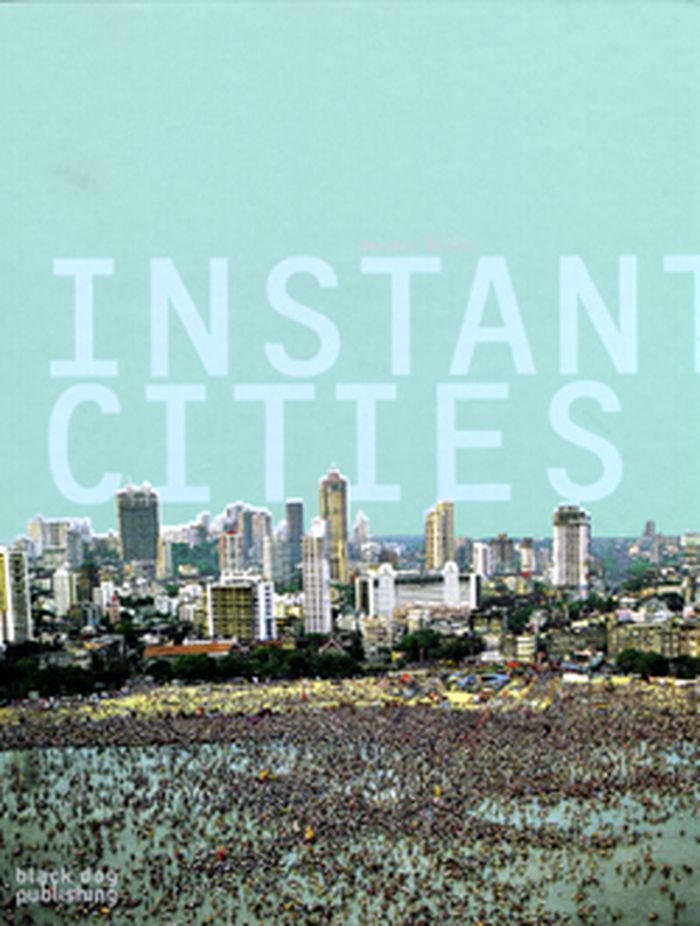
Instant cities
Instant cities
Actions:
Price:
$65.00
(available to order)
Summary:
A major new volume that explores and assesses the phenomenon of the contemporary metropolis. With building space throughout the world at a premium and environmentally-sound development of tremendous importance to the future of the planet, Instant Cities looks ahead to creative, forward-thinking and possibly fanciful notions of the city such as biospheres, space stations(...)
$65.00
(available to order)
Summary:
A major new volume that explores and assesses the phenomenon of the contemporary metropolis. With building space throughout the world at a premium and environmentally-sound development of tremendous importance to the future of the planet, Instant Cities looks ahead to creative, forward-thinking and possibly fanciful notions of the city such as biospheres, space stations(...)
Title:
Instant cities
Actions:
Price:
$65.00
(available to order)
Summary:
A major new volume that explores and assesses the phenomenon of the contemporary metropolis. With building space throughout the world at a premium and environmentally-sound development of tremendous importance to the future of the planet, Instant Cities looks ahead to creative, forward-thinking and possibly fanciful notions of the city such as biospheres, space stations and virtual realities.
Instant cities
Actions:
Price:
$65.00
(available to order)
Summary:
A major new volume that explores and assesses the phenomenon of the contemporary metropolis. With building space throughout the world at a premium and environmentally-sound development of tremendous importance to the future of the planet, Instant Cities looks ahead to creative, forward-thinking and possibly fanciful notions of the city such as biospheres, space stations and virtual realities.
Form:
books
books
Publication:
June 2008, London
June 2008, London
Subject:
Urban Theory
Urban Theory
Form:
books
books
Actions:
Price:
$55.95
(available to order)
Summary:
This book documents recent international trends in the design of public space.
$55.95
(available to order)
Summary:
This book documents recent international trends in the design of public space.
Title:
New landscapes, new territories
Actions:
Price:
$55.95
(available to order)
Summary:
This book documents recent international trends in the design of public space.
New landscapes, new territories
Actions:
Price:
$55.95
(available to order)
Summary:
This book documents recent international trends in the design of public space.
Form:
books
books
Publication:
November 1997, Barcelona
November 1997, Barcelona
Subject:
Urban Theory
Urban Theory
Form:
books
books
Price:
$64.95
(available to order)
Summary:
This book investigates the characteristics of today's built environment: no longer simply a city but increasingly large conurbations made up of a number of development clusters, linked by transport routes. The diffusion of the once compact city into a city web, the 'meta city' is mirrored by changes in society from communities with strong social cohesion and interest in(...)
$64.95
(available to order)
Summary:
This book investigates the characteristics of today's built environment: no longer simply a city but increasingly large conurbations made up of a number of development clusters, linked by transport routes. The diffusion of the once compact city into a city web, the 'meta city' is mirrored by changes in society from communities with strong social cohesion and interest in(...)
Title:
Cities without cities : an interpretation of the Zwischenstadt
Actions:
Price:
$64.95
(available to order)
Summary:
This book investigates the characteristics of today's built environment: no longer simply a city but increasingly large conurbations made up of a number of development clusters, linked by transport routes. The diffusion of the once compact city into a city web, the 'meta city' is mirrored by changes in society from communities with strong social cohesion and interest in their towns and cities to individuals pursing their own goals, with global social links and little interest in their own town or city other than the quality of their personal space. The account is complex and on a number of levels; social, philosophical, economic and environmental. The difficulties in managing or even controlling the city web, divided arbitrarily into areas of limited size and political power, are enormous. Areas compete with each other rather than co-operate. The book provides a better understanding of this new type of urban form and argues for a change in planning systems for better management.
Cities without cities : an interpretation of the Zwischenstadt
Actions:
Price:
$64.95
(available to order)
Summary:
This book investigates the characteristics of today's built environment: no longer simply a city but increasingly large conurbations made up of a number of development clusters, linked by transport routes. The diffusion of the once compact city into a city web, the 'meta city' is mirrored by changes in society from communities with strong social cohesion and interest in their towns and cities to individuals pursing their own goals, with global social links and little interest in their own town or city other than the quality of their personal space. The account is complex and on a number of levels; social, philosophical, economic and environmental. The difficulties in managing or even controlling the city web, divided arbitrarily into areas of limited size and political power, are enormous. Areas compete with each other rather than co-operate. The book provides a better understanding of this new type of urban form and argues for a change in planning systems for better management.
Form:
books
books
Publication:
November 2003, London
November 2003, London
Subject:
Urban Theory
Urban Theory
Form:
books
books
Actions:
Price:
$41.95
(available to order)
Summary:
In this book environmentalist and lawyer William Shutkin describes a new kind of environmental and social activism spreading across the nation, one that joins the pursuit of environmental quality with that of civic health and sustainable local economies. In(...)
$41.95
(available to order)
Summary:
In this book environmentalist and lawyer William Shutkin describes a new kind of environmental and social activism spreading across the nation, one that joins the pursuit of environmental quality with that of civic health and sustainable local economies. In(...)
Title:
The land that could be : environmentalism and democracy in the twenty-first century
Actions:
Price:
$41.95
(available to order)
Summary:
In this book environmentalist and lawyer William Shutkin describes a new kind of environmental and social activism spreading across the nation, one that joins the pursuit of environmental quality with that of civic health and sustainable local economies. In the face of challenges posed by often corrosive market forces and widespread social disaffection, this civic environmentalism is creating nothing less than a new public discourse and dynamic social vision grounded in environmental action. Shutkin points the way to vibrant, sustainable communities through four inspiring examples of civic environmentalism in action: the redevelopment of contaminated urban land for agriculture in inner-city Boston, mass-transit-based development and waterfront restoration in Oakland, protection of open space and conservation-based development in rural Colorado, and smart-growth and sustainability strategies in suburban New Jersey. The book's underlying message is that the nation's environmental health is a critical factor in its success as a vital democracy. Social health, democratic community, and environmentalism, Shutkin shows, are one.
The land that could be : environmentalism and democracy in the twenty-first century
Actions:
Price:
$41.95
(available to order)
Summary:
In this book environmentalist and lawyer William Shutkin describes a new kind of environmental and social activism spreading across the nation, one that joins the pursuit of environmental quality with that of civic health and sustainable local economies. In the face of challenges posed by often corrosive market forces and widespread social disaffection, this civic environmentalism is creating nothing less than a new public discourse and dynamic social vision grounded in environmental action. Shutkin points the way to vibrant, sustainable communities through four inspiring examples of civic environmentalism in action: the redevelopment of contaminated urban land for agriculture in inner-city Boston, mass-transit-based development and waterfront restoration in Oakland, protection of open space and conservation-based development in rural Colorado, and smart-growth and sustainability strategies in suburban New Jersey. The book's underlying message is that the nation's environmental health is a critical factor in its success as a vital democracy. Social health, democratic community, and environmentalism, Shutkin shows, are one.
Form:
books
books
Publication:
January 1960, Cambridge, Mass.
January 1960, Cambridge, Mass.
Subject:
Urban Theory
Urban Theory
Form:
books
books

Actions:
Price:
$39.99
(available to order)
Summary:
The National Mall in Washington, D.C., has held an important place in the American psyche since the early nineteenth century. Home to monuments and museums dedicated to the ideals upon which the United States rests, the Mall serves as a gathering place for public protest and celebration. But as the nation ages and the population diversifies, demands for additional(...)
$39.99
(available to order)
Summary:
The National Mall in Washington, D.C., has held an important place in the American psyche since the early nineteenth century. Home to monuments and museums dedicated to the ideals upon which the United States rests, the Mall serves as a gathering place for public protest and celebration. But as the nation ages and the population diversifies, demands for additional(...)
Title:
The national mail: rethinking Washington's monumental core
Actions:
Price:
$39.99
(available to order)
Summary:
The National Mall in Washington, D.C., has held an important place in the American psyche since the early nineteenth century. Home to monuments and museums dedicated to the ideals upon which the United States rests, the Mall serves as a gathering place for public protest and celebration. But as the nation ages and the population diversifies, demands for additional structures and uses have sparked debates over the Mall's future and the necessity of preserving its legacy and the vision of its designers. The National Mall addresses these issues with a novel and compelling collection of essays, the work of leading design professionals, historians, and social scientists. Supplemented by eye-catching illustrations and photographs, this cross-disciplinary examination follows the discussion over the Mall's design and use, from its conceptual origins as part of Pierre Charles L'Enfant's vision for the capital to the 1902 McMillan Plan to the present day and beyond. It assesses how architectural, societal, and political changes have altered the park-like space between the Capitol and the Lincoln Memorial and explores the influence that disparate interest groups and creeping corporatism have already had on -- and are likely to exert upon -- America's public square. The National Mall presents an overarching account of how a democratic society plans, creates, and expands a national ceremonial space, opening the way for a broadly based inquiry into the Mall as it was, is, and will become. Urban planners, architectural and design historians, and engaged citizens will be challenged and well served by the thoughtful essays collected by Nathan Glazer and Cynthia R. Field. Nathan Glazer is an emeritus professor of sociology and education at Harvard University. He is the author or editor of many books on public policy and urban problems, among them The Public Face of Architecture and From a Cause to a Style: Modernist Architecture's Encounter with the American City. Cynthia R. Field is the architectural historian emerita at the Smithsonian Institution and a faculty member at the Corcoran College of Art. She is the coauthor of The Castle: An Illustrated History of the Smithsonian Building.
The national mail: rethinking Washington's monumental core
Actions:
Price:
$39.99
(available to order)
Summary:
The National Mall in Washington, D.C., has held an important place in the American psyche since the early nineteenth century. Home to monuments and museums dedicated to the ideals upon which the United States rests, the Mall serves as a gathering place for public protest and celebration. But as the nation ages and the population diversifies, demands for additional structures and uses have sparked debates over the Mall's future and the necessity of preserving its legacy and the vision of its designers. The National Mall addresses these issues with a novel and compelling collection of essays, the work of leading design professionals, historians, and social scientists. Supplemented by eye-catching illustrations and photographs, this cross-disciplinary examination follows the discussion over the Mall's design and use, from its conceptual origins as part of Pierre Charles L'Enfant's vision for the capital to the 1902 McMillan Plan to the present day and beyond. It assesses how architectural, societal, and political changes have altered the park-like space between the Capitol and the Lincoln Memorial and explores the influence that disparate interest groups and creeping corporatism have already had on -- and are likely to exert upon -- America's public square. The National Mall presents an overarching account of how a democratic society plans, creates, and expands a national ceremonial space, opening the way for a broadly based inquiry into the Mall as it was, is, and will become. Urban planners, architectural and design historians, and engaged citizens will be challenged and well served by the thoughtful essays collected by Nathan Glazer and Cynthia R. Field. Nathan Glazer is an emeritus professor of sociology and education at Harvard University. He is the author or editor of many books on public policy and urban problems, among them The Public Face of Architecture and From a Cause to a Style: Modernist Architecture's Encounter with the American City. Cynthia R. Field is the architectural historian emerita at the Smithsonian Institution and a faculty member at the Corcoran College of Art. She is the coauthor of The Castle: An Illustrated History of the Smithsonian Building.
Form:
books
books
Publication:
April 2008, Baltimore
April 2008, Baltimore
Subject:
Urban Theory
Urban Theory


