


4165 Results
Form:
books
books
Title:
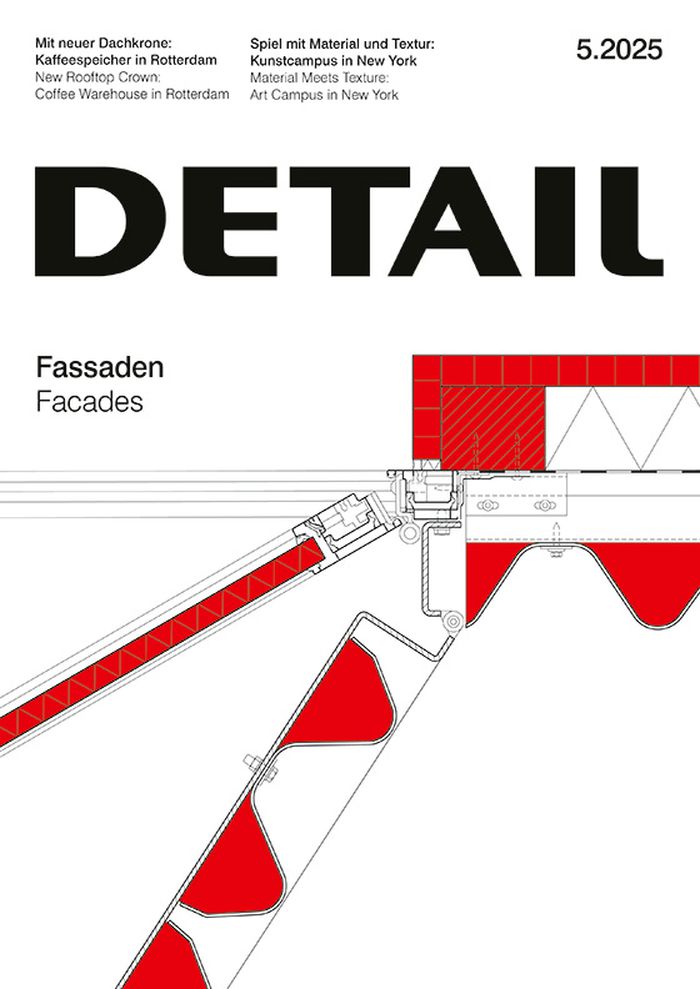
Detail 5 2025 : Facades
Detail 5 2025 : Facades
Actions:
Price:
$55.00
(available in store)
Summary:
The facade is a building’s most outward-facing element. The interplay of materials, textures, colours, and transparent or opaque surfaces defines not only its external character but also its contribution to the urban fabric. While facades in past centuries evolved from traditional construction methods and locally sourced materials, today’s design possibilities are far(...)
$55.00
(available in store)
Summary:
The facade is a building’s most outward-facing element. The interplay of materials, textures, colours, and transparent or opaque surfaces defines not only its external character but also its contribution to the urban fabric. While facades in past centuries evolved from traditional construction methods and locally sourced materials, today’s design possibilities are far(...)
Title:
Detail 5 2025 : Facades
Actions:
Price:
$55.00
(available in store)
Summary:
The facade is a building’s most outward-facing element. The interplay of materials, textures, colours, and transparent or opaque surfaces defines not only its external character but also its contribution to the urban fabric. While facades in past centuries evolved from traditional construction methods and locally sourced materials, today’s design possibilities are far more varied. Technical advances have extended the range of materials we can use and combine across various construction systems. Windows can be any size – from fully enclosed to fully transparent, virtually anything is possible. However, stricter regulations on thermal insulation and airtightness have introduced new constraints. Single-skin facade systems are now the exception; in most cases, a double- skin wall structure with a protective outer layer – the cladding – has become the standard. The projects featured in this issue reveal the diverse ways architecture firms approach the art of cladding – from used roadside safety barriers repurposed for a Swiss maintenance depot to a rich mix of textures shaping an art complex in New York.
Detail 5 2025 : Facades
Actions:
Price:
$55.00
(available in store)
Summary:
The facade is a building’s most outward-facing element. The interplay of materials, textures, colours, and transparent or opaque surfaces defines not only its external character but also its contribution to the urban fabric. While facades in past centuries evolved from traditional construction methods and locally sourced materials, today’s design possibilities are far more varied. Technical advances have extended the range of materials we can use and combine across various construction systems. Windows can be any size – from fully enclosed to fully transparent, virtually anything is possible. However, stricter regulations on thermal insulation and airtightness have introduced new constraints. Single-skin facade systems are now the exception; in most cases, a double- skin wall structure with a protective outer layer – the cladding – has become the standard. The projects featured in this issue reveal the diverse ways architecture firms approach the art of cladding – from used roadside safety barriers repurposed for a Swiss maintenance depot to a rich mix of textures shaping an art complex in New York.
Form:
books
books
Publication:
September 2025
September 2025
Subject:
Magazines
Magazines
Form:
books
books
Actions:
Price:
$52.00
(available in store)
Summary:
As the first independent environments children encounter beyond the home, nurseries, daycare centres, and kindergartens should not appear merely as colourful fantasy worlds. Well-conceived early-learning centres and schools create a microcosm modelled on everyday life – child-friendly yes, but by no means childish. Such places offer security while inviting discovery,(...)
$52.00
(available in store)
Summary:
As the first independent environments children encounter beyond the home, nurseries, daycare centres, and kindergartens should not appear merely as colourful fantasy worlds. Well-conceived early-learning centres and schools create a microcosm modelled on everyday life – child-friendly yes, but by no means childish. Such places offer security while inviting discovery,(...)
Title:
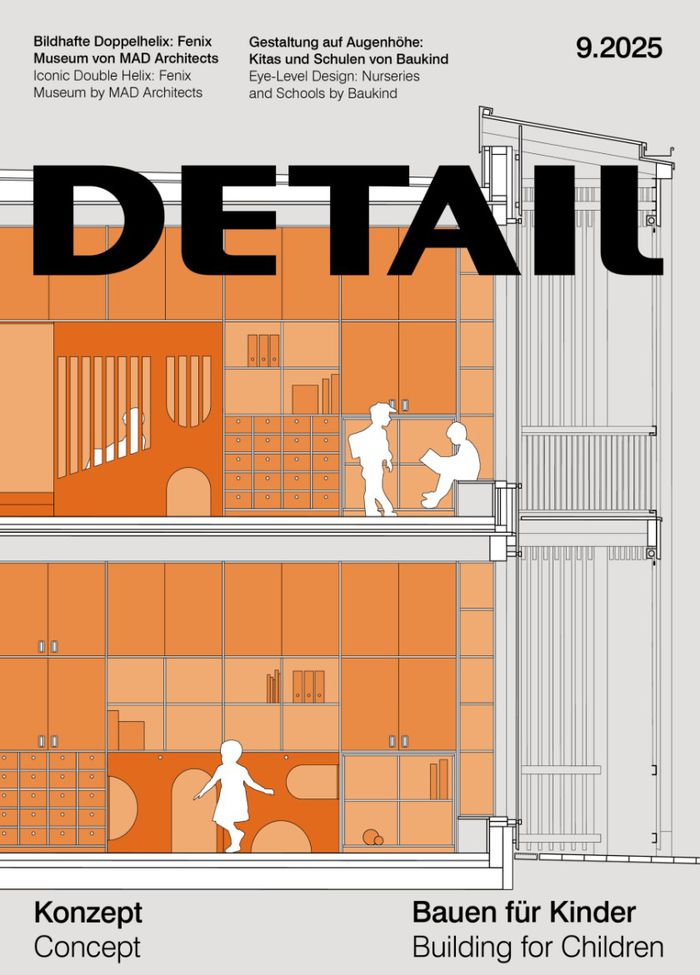
Detail 9 2025: building for children
Actions:
Price:
$52.00
(available in store)
Summary:
As the first independent environments children encounter beyond the home, nurseries, daycare centres, and kindergartens should not appear merely as colourful fantasy worlds. Well-conceived early-learning centres and schools create a microcosm modelled on everyday life – child-friendly yes, but by no means childish. Such places offer security while inviting discovery, appropriation, and adaptation. In this issue we profile child-focused environments realised both as new builds and through adaptive reuse. A kindergarten on a disused industrial site near Copenhagen follows circular construction principles, using mostly materials salvaged from the dilapidated primary school that once stood there. Newly built daycare centres in the German state of Hessen and in Slovenia draw on local building traditions and the surrounding natural landscape. Meanwhile, a former East German telephone exchange was transformed into a playscape that anchors a childcare facility on a university campus in Merseburg.
Detail 9 2025: building for children
Actions:
Price:
$52.00
(available in store)
Summary:
As the first independent environments children encounter beyond the home, nurseries, daycare centres, and kindergartens should not appear merely as colourful fantasy worlds. Well-conceived early-learning centres and schools create a microcosm modelled on everyday life – child-friendly yes, but by no means childish. Such places offer security while inviting discovery, appropriation, and adaptation. In this issue we profile child-focused environments realised both as new builds and through adaptive reuse. A kindergarten on a disused industrial site near Copenhagen follows circular construction principles, using mostly materials salvaged from the dilapidated primary school that once stood there. Newly built daycare centres in the German state of Hessen and in Slovenia draw on local building traditions and the surrounding natural landscape. Meanwhile, a former East German telephone exchange was transformed into a playscape that anchors a childcare facility on a university campus in Merseburg.
Form:
books
books
Publication:
September 2025
September 2025
Subject:
Magazines
Magazines
Form:
books
books
Actions:
Price:
$26.99
(available to order)
Summary:
Fanny Howe on the Art of Poetry: "If I could say I was assigned something at birth, it would be to keep the soul fresh and clean, and to not let anything bring it down."; Marie NDiaye on the Art of Fiction: "Oh, no! Reading beautiful books can’t be traumatizing. Seeing awful things can be—but reading? I don’t believe in that at all."; Prose by Anuk Arudpragasam, Tom(...)
$26.99
(available to order)
Summary:
Fanny Howe on the Art of Poetry: "If I could say I was assigned something at birth, it would be to keep the soul fresh and clean, and to not let anything bring it down."; Marie NDiaye on the Art of Fiction: "Oh, no! Reading beautiful books can’t be traumatizing. Seeing awful things can be—but reading? I don’t believe in that at all."; Prose by Anuk Arudpragasam, Tom(...)
Title:
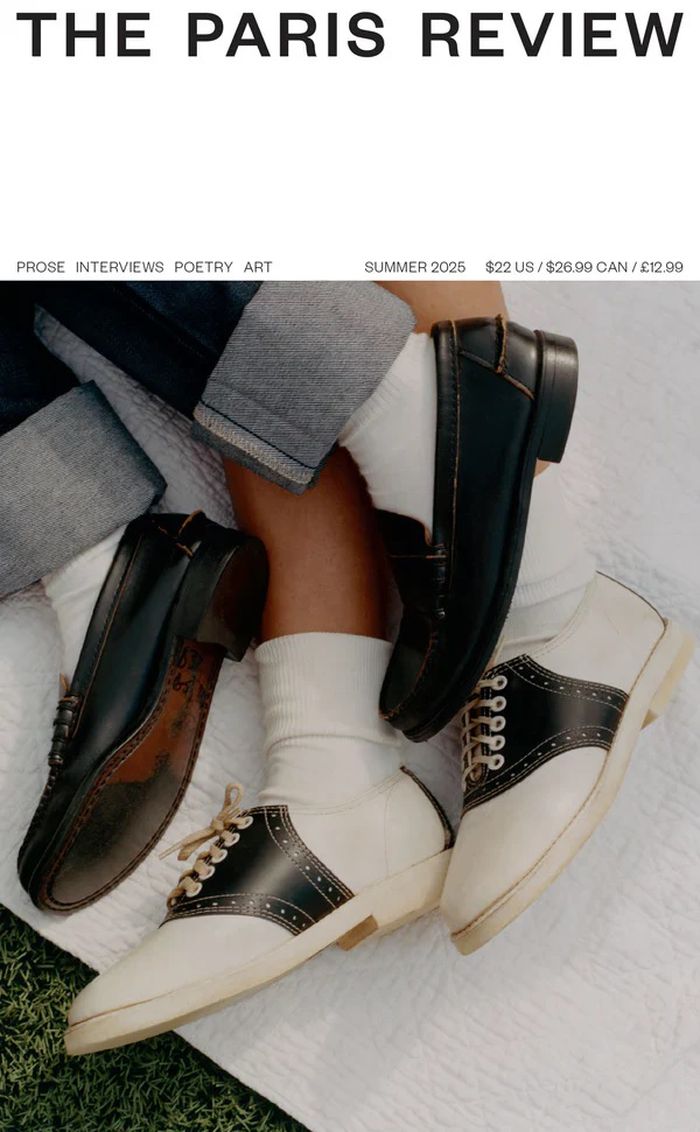
The Paris review n.252, summer 2025
Actions:
Price:
$26.99
(available to order)
Summary:
Fanny Howe on the Art of Poetry: "If I could say I was assigned something at birth, it would be to keep the soul fresh and clean, and to not let anything bring it down."; Marie NDiaye on the Art of Fiction: "Oh, no! Reading beautiful books can’t be traumatizing. Seeing awful things can be—but reading? I don’t believe in that at all."; Prose by Anuk Arudpragasam, Tom Crewe, GauZ’, Zans Brady Krohn, and Joy Williams; Poetry by Will Alexander, John Berryman, Yongyu Chen, Eugene Ostashevsky, Ricardo Reis, and Nell Wright; Art by Anne Collier, Celia Paul, and Alessandro Teoldi; cover by Tyler Mitchell.
The Paris review n.252, summer 2025
Actions:
Price:
$26.99
(available to order)
Summary:
Fanny Howe on the Art of Poetry: "If I could say I was assigned something at birth, it would be to keep the soul fresh and clean, and to not let anything bring it down."; Marie NDiaye on the Art of Fiction: "Oh, no! Reading beautiful books can’t be traumatizing. Seeing awful things can be—but reading? I don’t believe in that at all."; Prose by Anuk Arudpragasam, Tom Crewe, GauZ’, Zans Brady Krohn, and Joy Williams; Poetry by Will Alexander, John Berryman, Yongyu Chen, Eugene Ostashevsky, Ricardo Reis, and Nell Wright; Art by Anne Collier, Celia Paul, and Alessandro Teoldi; cover by Tyler Mitchell.
Form:
books
books
Publication:
June 2025
June 2025
Subject:
Magazines
Magazines
Form:
books
books
Actions:
Price:
$52.00
(available in store)
Summary:
Traditional building forms have undergone repeated revivals and rejections throughout architectural history - from the medievalist nostalgia of the ''Arts and Crafts'' movement to early modernism’s deliberate break with the past, from the fraught alliance of traditionalist styles like Heimatstil with 1930s fascism to the regionalist tendencies of the 1970s. While those(...)
$52.00
(available in store)
Summary:
Traditional building forms have undergone repeated revivals and rejections throughout architectural history - from the medievalist nostalgia of the ''Arts and Crafts'' movement to early modernism’s deliberate break with the past, from the fraught alliance of traditionalist styles like Heimatstil with 1930s fascism to the regionalist tendencies of the 1970s. While those(...)
Title:
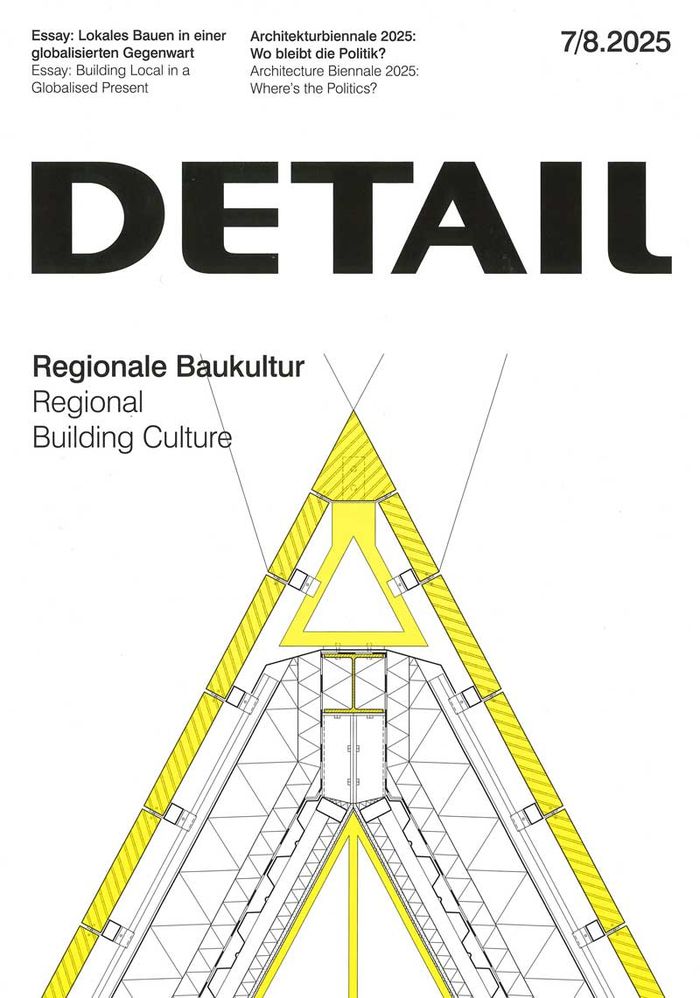
Detail 7/8 2025: Regional Building Culture
Actions:
Price:
$52.00
(available in store)
Summary:
Traditional building forms have undergone repeated revivals and rejections throughout architectural history - from the medievalist nostalgia of the ''Arts and Crafts'' movement to early modernism’s deliberate break with the past, from the fraught alliance of traditionalist styles like Heimatstil with 1930s fascism to the regionalist tendencies of the 1970s. While those earlier movements often focused on formal opposition to the perceived failures of modernism, today’s discourse goes further: there is growing recognition that building regionally also means building in a climate-conscious way, using locally available materials and resources. The projects presented - mainly in rural Austria, Switzerland, France, and the UK - show how this can be done in practice. The motivations behind a return to traditional forms vary: in some cases, building codes or a protected historic setting played a decisive role; in others, the regional architectural language aligned with the values of the architect or client.
Detail 7/8 2025: Regional Building Culture
Actions:
Price:
$52.00
(available in store)
Summary:
Traditional building forms have undergone repeated revivals and rejections throughout architectural history - from the medievalist nostalgia of the ''Arts and Crafts'' movement to early modernism’s deliberate break with the past, from the fraught alliance of traditionalist styles like Heimatstil with 1930s fascism to the regionalist tendencies of the 1970s. While those earlier movements often focused on formal opposition to the perceived failures of modernism, today’s discourse goes further: there is growing recognition that building regionally also means building in a climate-conscious way, using locally available materials and resources. The projects presented - mainly in rural Austria, Switzerland, France, and the UK - show how this can be done in practice. The motivations behind a return to traditional forms vary: in some cases, building codes or a protected historic setting played a decisive role; in others, the regional architectural language aligned with the values of the architect or client.
Form:
books
books
Publication:
July 2025
July 2025
Subject:
Magazines
Magazines
Form:
books
books
Actions:
Price:
$49.00
(available in store)
Summary:
The spiritual and ritual aspects of spatial production are regarded as atavistic and have been largely ignored by theorists. This bilingual (English/German) issue of ARCH+ attempts a tentative atlas of today's ritual landscape, in an effort to counteract its minimization.
$49.00
(available in store)
Summary:
The spiritual and ritual aspects of spatial production are regarded as atavistic and have been largely ignored by theorists. This bilingual (English/German) issue of ARCH+ attempts a tentative atlas of today's ritual landscape, in an effort to counteract its minimization.
Title:
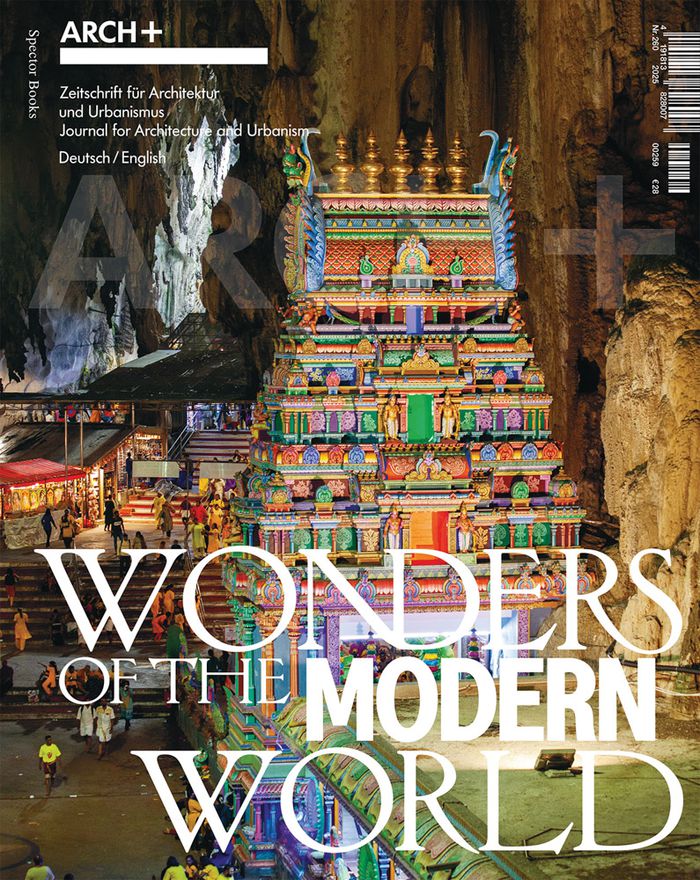
ARCH+: Wonders of the Modern World
Actions:
Price:
$49.00
(available in store)
Summary:
The spiritual and ritual aspects of spatial production are regarded as atavistic and have been largely ignored by theorists. This bilingual (English/German) issue of ARCH+ attempts a tentative atlas of today's ritual landscape, in an effort to counteract its minimization.
ARCH+: Wonders of the Modern World
Actions:
Price:
$49.00
(available in store)
Summary:
The spiritual and ritual aspects of spatial production are regarded as atavistic and have been largely ignored by theorists. This bilingual (English/German) issue of ARCH+ attempts a tentative atlas of today's ritual landscape, in an effort to counteract its minimization.
Form:
books
books
Publication:
December 2025
December 2025
Subject:
Magazines
Magazines
Form:
books
books

Title:
C3 436: Seung H-Sang
C3 436: Seung H-Sang
Actions:
Price:
$55.00
(available in store)
Summary:
''C3 436'' explores architecture shaped by place, purpose, and poetic depth. New Projects chapter features Leopold Banchini Architects who craft an off-grid house inspired by ancestral wisdom in the Moroccan desert, while a modernist library by Jakob + MacFarlane reimagines the Tree of Knowledge. Seung H-Sang’s meditative designs reflect an architecture of boundaries and(...)
$55.00
(available in store)
Summary:
''C3 436'' explores architecture shaped by place, purpose, and poetic depth. New Projects chapter features Leopold Banchini Architects who craft an off-grid house inspired by ancestral wisdom in the Moroccan desert, while a modernist library by Jakob + MacFarlane reimagines the Tree of Knowledge. Seung H-Sang’s meditative designs reflect an architecture of boundaries and(...)
Title:
C3 436: Seung H-Sang
Actions:
Price:
$55.00
(available in store)
Summary:
''C3 436'' explores architecture shaped by place, purpose, and poetic depth. New Projects chapter features Leopold Banchini Architects who craft an off-grid house inspired by ancestral wisdom in the Moroccan desert, while a modernist library by Jakob + MacFarlane reimagines the Tree of Knowledge. Seung H-Sang’s meditative designs reflect an architecture of boundaries and the afterlife, portrayed here in the Order of St. Benedict Waegwan Abbey. K-Projects illustrates layered stories: Seoul’s urban transformation, subtle civic centers, and cultural roots nurtured in agricultural settings. Featuring Terminal 7 Architects, 818 architects, Chak Chak Studio and Young-pil Kim + YuMi Hyun. Across interviews and essays, architects and critics reflect on building with memory, identity, and imagination in a rapidly shifting world.
C3 436: Seung H-Sang
Actions:
Price:
$55.00
(available in store)
Summary:
''C3 436'' explores architecture shaped by place, purpose, and poetic depth. New Projects chapter features Leopold Banchini Architects who craft an off-grid house inspired by ancestral wisdom in the Moroccan desert, while a modernist library by Jakob + MacFarlane reimagines the Tree of Knowledge. Seung H-Sang’s meditative designs reflect an architecture of boundaries and the afterlife, portrayed here in the Order of St. Benedict Waegwan Abbey. K-Projects illustrates layered stories: Seoul’s urban transformation, subtle civic centers, and cultural roots nurtured in agricultural settings. Featuring Terminal 7 Architects, 818 architects, Chak Chak Studio and Young-pil Kim + YuMi Hyun. Across interviews and essays, architects and critics reflect on building with memory, identity, and imagination in a rapidly shifting world.
Form:
books
books
Publication:
August 2025
August 2025
Subject:
Magazines
Magazines
Form:
books
books

Title:
C3 435 : Tomoaki Uno
C3 435 : Tomoaki Uno
Actions:
Price:
$55.00
(available in store)
Summary:
Issue 435 highlights three projects: a university facility in the Netherlands by KAAN Architecten, a residential apartment in Finland by Steven Holl Architects, and a hospital in the United Kingdom by HKS + Cagni Williams Associates + Sonnemann Toon Architects. These innovative designs showcase diverse typologies, emphasizing functionality, sustainability, and(...)
$55.00
(available in store)
Summary:
Issue 435 highlights three projects: a university facility in the Netherlands by KAAN Architecten, a residential apartment in Finland by Steven Holl Architects, and a hospital in the United Kingdom by HKS + Cagni Williams Associates + Sonnemann Toon Architects. These innovative designs showcase diverse typologies, emphasizing functionality, sustainability, and(...)
Title:
C3 435 : Tomoaki Uno
Actions:
Price:
$55.00
(available in store)
Summary:
Issue 435 highlights three projects: a university facility in the Netherlands by KAAN Architecten, a residential apartment in Finland by Steven Holl Architects, and a hospital in the United Kingdom by HKS + Cagni Williams Associates + Sonnemann Toon Architects. These innovative designs showcase diverse typologies, emphasizing functionality, sustainability, and architectural creativity. Additionally, this issue explores three transformative examples of evolving factory architecture—integrating production spaces with offices and incorporating natural elements to create healthier and more inspiring work environments. Last chapter takes a deep dive into the world of Japanese architect Tomoaki Uno. Known for his philosophy of creating “the unprecedented ordinary,” Uno’s work challenges conventional thinking and raises profound questions about the essence of architecture.
C3 435 : Tomoaki Uno
Actions:
Price:
$55.00
(available in store)
Summary:
Issue 435 highlights three projects: a university facility in the Netherlands by KAAN Architecten, a residential apartment in Finland by Steven Holl Architects, and a hospital in the United Kingdom by HKS + Cagni Williams Associates + Sonnemann Toon Architects. These innovative designs showcase diverse typologies, emphasizing functionality, sustainability, and architectural creativity. Additionally, this issue explores three transformative examples of evolving factory architecture—integrating production spaces with offices and incorporating natural elements to create healthier and more inspiring work environments. Last chapter takes a deep dive into the world of Japanese architect Tomoaki Uno. Known for his philosophy of creating “the unprecedented ordinary,” Uno’s work challenges conventional thinking and raises profound questions about the essence of architecture.
Form:
books
books
Publication:
April 2025
April 2025
Subject:
Magazines
Magazines
Form:
books
books
Actions:
Price:
$50.00
(available to order)
Summary:
a+u’s March issue interrogates sacredness and how it manifests in architectural space. Taking examples from religious works of architecture in different parts of the globe, such as Saint Pius Church in Switzerland and Bait Ur Rouf mosque in Bangladesh, this issue endeavors to establish a language of light and shadow, materiality, and scale. The notion of "sacred space" is(...)
$50.00
(available to order)
Summary:
a+u’s March issue interrogates sacredness and how it manifests in architectural space. Taking examples from religious works of architecture in different parts of the globe, such as Saint Pius Church in Switzerland and Bait Ur Rouf mosque in Bangladesh, this issue endeavors to establish a language of light and shadow, materiality, and scale. The notion of "sacred space" is(...)
Title:
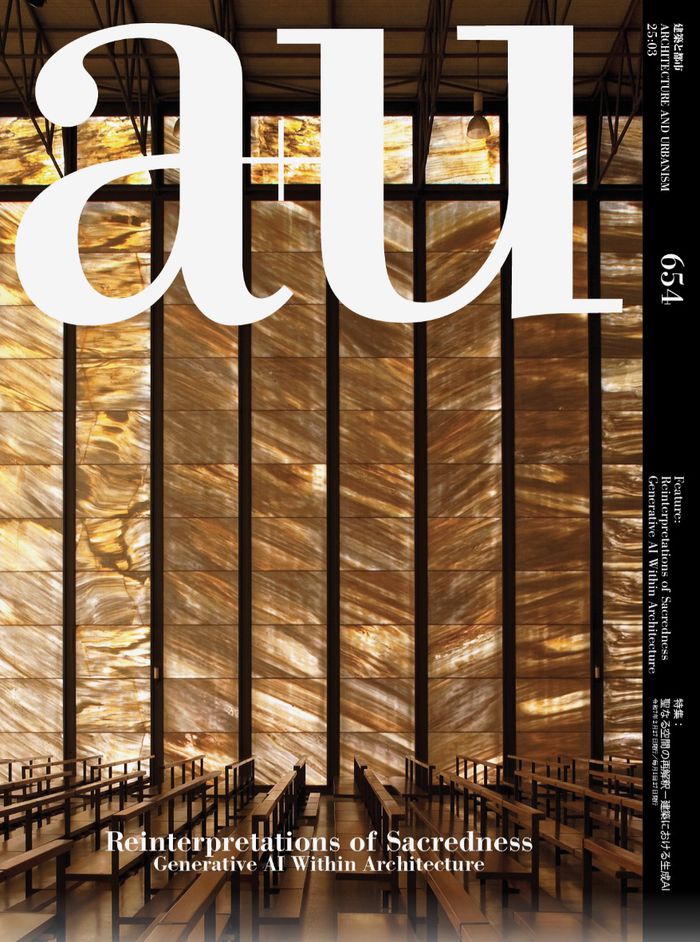
A+U 654 25:03 Reinterpretations of Sacredness Generative AI within Architecture
Actions:
Price:
$50.00
(available to order)
Summary:
a+u’s March issue interrogates sacredness and how it manifests in architectural space. Taking examples from religious works of architecture in different parts of the globe, such as Saint Pius Church in Switzerland and Bait Ur Rouf mosque in Bangladesh, this issue endeavors to establish a language of light and shadow, materiality, and scale. The notion of "sacred space" is further complicated by the introduction of AI. Guest editor Erwin Viray, using the theme of "sacred space," introduces generative AI tools that not only illuminate the direction that architectural design may take, but also confront human sensibilities and shared ideas about architectural space. Continuing this exploration, 14 nonreligious projects, such as Luis Barragán’s Barragán House, Álvaro Siza’s Tidal Pools of Leça da Palmeira, and Anne Holtrop’s Pearl Museum, ponder how this sense of sacredness, feelings of awe and serenity, can be introduced into our everyday lives.
A+U 654 25:03 Reinterpretations of Sacredness Generative AI within Architecture
Actions:
Price:
$50.00
(available to order)
Summary:
a+u’s March issue interrogates sacredness and how it manifests in architectural space. Taking examples from religious works of architecture in different parts of the globe, such as Saint Pius Church in Switzerland and Bait Ur Rouf mosque in Bangladesh, this issue endeavors to establish a language of light and shadow, materiality, and scale. The notion of "sacred space" is further complicated by the introduction of AI. Guest editor Erwin Viray, using the theme of "sacred space," introduces generative AI tools that not only illuminate the direction that architectural design may take, but also confront human sensibilities and shared ideas about architectural space. Continuing this exploration, 14 nonreligious projects, such as Luis Barragán’s Barragán House, Álvaro Siza’s Tidal Pools of Leça da Palmeira, and Anne Holtrop’s Pearl Museum, ponder how this sense of sacredness, feelings of awe and serenity, can be introduced into our everyday lives.
Form:
books
books
Publication:
March 2025
March 2025
Subject:
Magazines
Magazines
Form:
books
books
Actions:
Price:
$34.95
(available in store)
Summary:
''AV Proyectos 129'' explores the architectural potential of colour at different scales, and three exhibitions in Madrid – reviewed by Luis Fernández-Galiano – serve as the introductory frame for a series of projects that are examples of this versatility: the detailed domestic intervention of Beatriz Ramo and Bernd Upmeyer, the unique housing by TEST, Wiki World, and(...)
$34.95
(available in store)
Summary:
''AV Proyectos 129'' explores the architectural potential of colour at different scales, and three exhibitions in Madrid – reviewed by Luis Fernández-Galiano – serve as the introductory frame for a series of projects that are examples of this versatility: the detailed domestic intervention of Beatriz Ramo and Bernd Upmeyer, the unique housing by TEST, Wiki World, and(...)
Title:
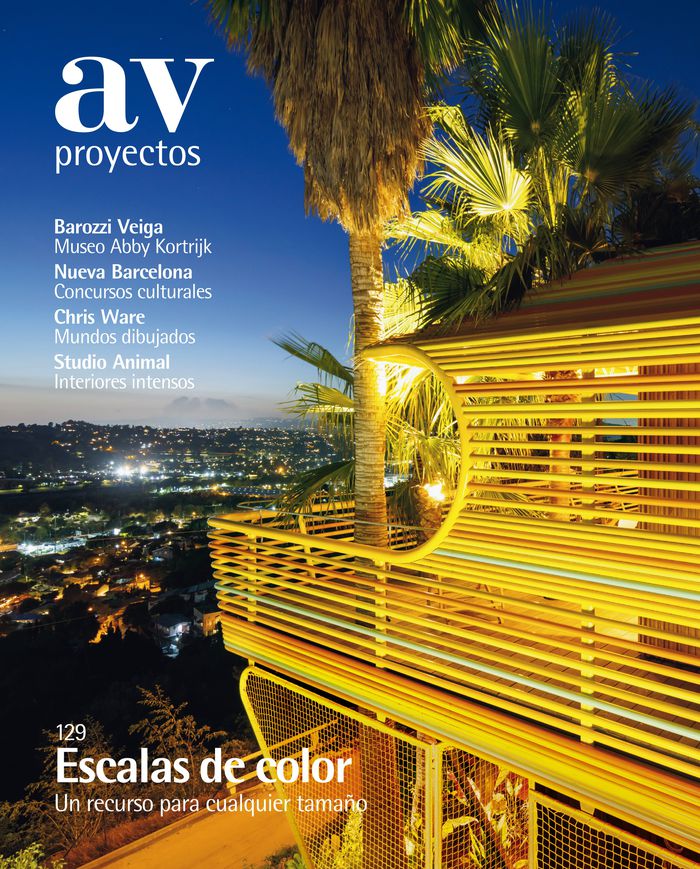
AV Proyectos 129: Escalas de color
Actions:
Price:
$34.95
(available in store)
Summary:
''AV Proyectos 129'' explores the architectural potential of colour at different scales, and three exhibitions in Madrid – reviewed by Luis Fernández-Galiano – serve as the introductory frame for a series of projects that are examples of this versatility: the detailed domestic intervention of Beatriz Ramo and Bernd Upmeyer, the unique housing by TEST, Wiki World, and selgascano, and the large-scale works by Padilla Nicás and BIG. Along this line, the architect and interior designer Javier Jiménez Iniesta, of Studio Animal, talks with ''AV Proyectos'' about his defense of chromatism as a project tool and not just an aesthetic whim.
AV Proyectos 129: Escalas de color
Actions:
Price:
$34.95
(available in store)
Summary:
''AV Proyectos 129'' explores the architectural potential of colour at different scales, and three exhibitions in Madrid – reviewed by Luis Fernández-Galiano – serve as the introductory frame for a series of projects that are examples of this versatility: the detailed domestic intervention of Beatriz Ramo and Bernd Upmeyer, the unique housing by TEST, Wiki World, and selgascano, and the large-scale works by Padilla Nicás and BIG. Along this line, the architect and interior designer Javier Jiménez Iniesta, of Studio Animal, talks with ''AV Proyectos'' about his defense of chromatism as a project tool and not just an aesthetic whim.
Form:
books
books
Publication:
August 2025
August 2025
Subject:
Magazines
Magazines
Form:
books
books
Actions:
Price:
$19.00
(available in store)
Summary:
Le plan moderne s’est voulu neutre, rationnel, reproductible. Avec le typical plan1, Rem Koolhaas a exposé la logique impérieuse de la standardisation qui organise l’espace tertiaire selon des modules sans qualités, des séquences sans histoires, des grilles où le sujet s’efface. Ce plan, produit de la modernité capitaliste, prétendait l’universalité : à chaque fonction,(...)
$19.00
(available in store)
Summary:
Le plan moderne s’est voulu neutre, rationnel, reproductible. Avec le typical plan1, Rem Koolhaas a exposé la logique impérieuse de la standardisation qui organise l’espace tertiaire selon des modules sans qualités, des séquences sans histoires, des grilles où le sujet s’efface. Ce plan, produit de la modernité capitaliste, prétendait l’universalité : à chaque fonction,(...)
Title:
Plan L***** 211 : Troubler le plan
Actions:
Price:
$19.00
(available in store)
Summary:
Le plan moderne s’est voulu neutre, rationnel, reproductible. Avec le typical plan1, Rem Koolhaas a exposé la logique impérieuse de la standardisation qui organise l’espace tertiaire selon des modules sans qualités, des séquences sans histoires, des grilles où le sujet s’efface. Ce plan, produit de la modernité capitaliste, prétendait l’universalité : à chaque fonction, son espace?; à chaque corps, sa case. Mais ce plan, typique, est aussi un plan normatif. En effaçant les singularités, il impose des modèles d’usage, de comportement, de relation. Étendons ce constat à la manière dont le logement collectif se produit avec ses granulométries, ses types – T1-T1bis-T2-T3-T4-T5 – qui répondent plus aux attentes des familles nucléaires qu’à la diversité des formes de vie actuelles.
Plan L***** 211 : Troubler le plan
Actions:
Price:
$19.00
(available in store)
Summary:
Le plan moderne s’est voulu neutre, rationnel, reproductible. Avec le typical plan1, Rem Koolhaas a exposé la logique impérieuse de la standardisation qui organise l’espace tertiaire selon des modules sans qualités, des séquences sans histoires, des grilles où le sujet s’efface. Ce plan, produit de la modernité capitaliste, prétendait l’universalité : à chaque fonction, son espace?; à chaque corps, sa case. Mais ce plan, typique, est aussi un plan normatif. En effaçant les singularités, il impose des modèles d’usage, de comportement, de relation. Étendons ce constat à la manière dont le logement collectif se produit avec ses granulométries, ses types – T1-T1bis-T2-T3-T4-T5 – qui répondent plus aux attentes des familles nucléaires qu’à la diversité des formes de vie actuelles.
Form:
books
books
Publication:
June 2025
June 2025
Subject:
Magazines
Magazines


