


3492 Results
Form:
books
books
Actions:
Price:
$22.50
(available to order)
Summary:
Collaboration with the greatest botanists of his time, an instinctive humanitarianism, and a natural ingenuity in landscape design combined to make Thomas Jefferson a pioneer in American landscape architecture. Frederick D. Nichols and Ralph E. Griswold, in this close study of Jefferson’s many notes, letters, and sketches, present a clear and detailed interpretation of(...)
$22.50
(available to order)
Summary:
Collaboration with the greatest botanists of his time, an instinctive humanitarianism, and a natural ingenuity in landscape design combined to make Thomas Jefferson a pioneer in American landscape architecture. Frederick D. Nichols and Ralph E. Griswold, in this close study of Jefferson’s many notes, letters, and sketches, present a clear and detailed interpretation of(...)
Subject:
Landscape Architecture, Monographs
Landscape Architecture, Monographs
Publication:
June 2003, Charlottesville
June 2003, Charlottesville
Title:
Thomas Jefferson, landscape architect
Actions:
Price:
$22.50
(available to order)
Summary:
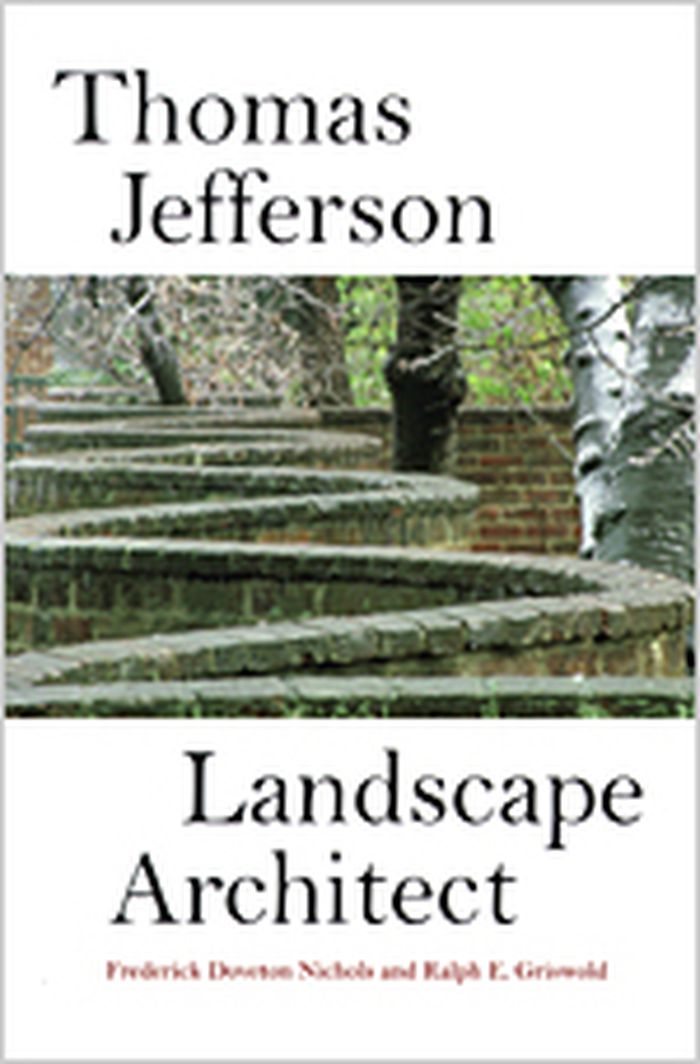
Collaboration with the greatest botanists of his time, an instinctive humanitarianism, and a natural ingenuity in landscape design combined to make Thomas Jefferson a pioneer in American landscape architecture. Frederick D. Nichols and Ralph E. Griswold, in this close study of Jefferson’s many notes, letters, and sketches, present a clear and detailed interpretation of his extraordinary accomplishments in the field. "Thomas Jefferson, Landscape Architect" investigates the many influences on — and of — the Jeffersonian legacy in architecture. Jefferson’s personality, friendships, and convictions, complemented by his extensive reading and travels, clearly influenced his architectural work. His fresh approach to incorporating foreign elements into domestic designs, his revolutionary approach to relating the house to the surrounding land, and his profound influences on the architectural character of the District of Columbia are just a few of Jefferson’s contributions to the American landscape. Eighteenth- and nineteenth-century maps, plans, and drawings, as well as pictures of the species of trees that Jefferson used for his designs, generously illustrate the engaging narrative in "Thomas Jefferson, Landscape Architect".
Thomas Jefferson, landscape architect
Actions:
Price:
$22.50
(available to order)
Summary:
Collaboration with the greatest botanists of his time, an instinctive humanitarianism, and a natural ingenuity in landscape design combined to make Thomas Jefferson a pioneer in American landscape architecture. Frederick D. Nichols and Ralph E. Griswold, in this close study of Jefferson’s many notes, letters, and sketches, present a clear and detailed interpretation of his extraordinary accomplishments in the field. "Thomas Jefferson, Landscape Architect" investigates the many influences on — and of — the Jeffersonian legacy in architecture. Jefferson’s personality, friendships, and convictions, complemented by his extensive reading and travels, clearly influenced his architectural work. His fresh approach to incorporating foreign elements into domestic designs, his revolutionary approach to relating the house to the surrounding land, and his profound influences on the architectural character of the District of Columbia are just a few of Jefferson’s contributions to the American landscape. Eighteenth- and nineteenth-century maps, plans, and drawings, as well as pictures of the species of trees that Jefferson used for his designs, generously illustrate the engaging narrative in "Thomas Jefferson, Landscape Architect".
Form:
books
books
Publication:
June 2003, Charlottesville
June 2003, Charlottesville
Subject:
Landscape Architecture, Monographs
Landscape Architecture, Monographs
Form:
books
books
Title:
MiMo : Miami modern revealed
MiMo : Miami modern revealed
Actions:
Price:
$19.99
(available to order)
Summary:
"MiMo : Miami Modern Revealed" is the first comprehensive survey of the rich postwar architecture that epitomizes the romance and energy that is Miami. Well-known for its revitalized South Beach Deco architecture, Miami's vibrant strain of modern architecture combines attention to space, form, and innovative design with a nuanced subtropical exoticism particular to the(...)
$19.99
(available to order)
Summary:
"MiMo : Miami Modern Revealed" is the first comprehensive survey of the rich postwar architecture that epitomizes the romance and energy that is Miami. Well-known for its revitalized South Beach Deco architecture, Miami's vibrant strain of modern architecture combines attention to space, form, and innovative design with a nuanced subtropical exoticism particular to the(...)
Subject:
sale books
sale books
Publication:
June 2004, San Francisco
June 2004, San Francisco
Title:
MiMo : Miami modern revealed
Actions:
Price:
$19.99
(available to order)
Summary:
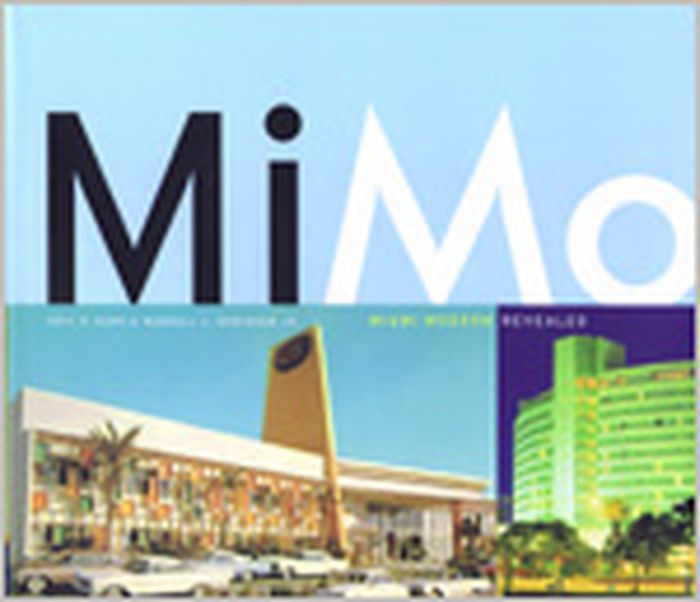
"MiMo : Miami Modern Revealed" is the first comprehensive survey of the rich postwar architecture that epitomizes the romance and energy that is Miami. Well-known for its revitalized South Beach Deco architecture, Miami's vibrant strain of modern architecture combines attention to space, form, and innovative design with a nuanced subtropical exoticism particular to the region, the gateway between the United States and Latin America. From humble motels to sprawling ocean-side resorts, this lively style also thrives in the city's civic, domestic, and commercial architecture. "MiMo" tracks the history and development of the Magic City from the days of nightclub acts and swank hotels to the advent of the crystalline downtown skyscrapers, including detailed overviews of work by Morris Lapidus, Gilbert Fein, and regional masters Alfred Browning Parker, Norman M. Giller, and others. Preservation-minded, the authors list the important buildings which did not survive decades of redevelopment, and conclude with a chapter on the effort to protect threatened MiMo masterpieces. Hundreds of recent and period photographs from the heyday of Miami glamour complete this celebration of some of the hottest architecture around.
MiMo : Miami modern revealed
Actions:
Price:
$19.99
(available to order)
Summary:
"MiMo : Miami Modern Revealed" is the first comprehensive survey of the rich postwar architecture that epitomizes the romance and energy that is Miami. Well-known for its revitalized South Beach Deco architecture, Miami's vibrant strain of modern architecture combines attention to space, form, and innovative design with a nuanced subtropical exoticism particular to the region, the gateway between the United States and Latin America. From humble motels to sprawling ocean-side resorts, this lively style also thrives in the city's civic, domestic, and commercial architecture. "MiMo" tracks the history and development of the Magic City from the days of nightclub acts and swank hotels to the advent of the crystalline downtown skyscrapers, including detailed overviews of work by Morris Lapidus, Gilbert Fein, and regional masters Alfred Browning Parker, Norman M. Giller, and others. Preservation-minded, the authors list the important buildings which did not survive decades of redevelopment, and conclude with a chapter on the effort to protect threatened MiMo masterpieces. Hundreds of recent and period photographs from the heyday of Miami glamour complete this celebration of some of the hottest architecture around.
Form:
books
books
Publication:
June 2004, San Francisco
June 2004, San Francisco
Subject:
sale books
sale books
Form:
books
books
Price:
$115.00
(available in store)
Summary:
"S,M,L,XL" combines a critical selection of the remarkable visionary design work produced over the past 20 years by the Dutch firm Office for Metropolitan Architecture (O.M.A.) and its acclaimed founder, Rem Koolhaas, with a wide variety of startling and poetic writings. The inventive collaboration between Koolhaas and designer Bruce Mau is a graphic overture that weaves(...)
$115.00
(available in store)
Summary:
"S,M,L,XL" combines a critical selection of the remarkable visionary design work produced over the past 20 years by the Dutch firm Office for Metropolitan Architecture (O.M.A.) and its acclaimed founder, Rem Koolhaas, with a wide variety of startling and poetic writings. The inventive collaboration between Koolhaas and designer Bruce Mau is a graphic overture that weaves(...)
Subject:
Architecture Monographs
Architecture Monographs
Publication:
November 1997, New York
November 1997, New York
Title:
S,M,L,XL
Actions:
Price:
$115.00
(available in store)
Summary:
"S,M,L,XL" combines a critical selection of the remarkable visionary design work produced over the past 20 years by the Dutch firm Office for Metropolitan Architecture (O.M.A.) and its acclaimed founder, Rem Koolhaas, with a wide variety of startling and poetic writings. The inventive collaboration between Koolhaas and designer Bruce Mau is a graphic overture that weaves together architectural projects, photos and sketches, diary excerpts, personal travelogues, fairy tales, and fables, as well as critical essays on contemporary architecture and society. The book’s title is also its framework: projects and essays are arranged according to scale. While Small and Medium address issues ranging from the domestic to the public, Large focuses on what Koolhaas calls 'the architecture of Bigness.' Extra Large features projects at the urban scale, along with the seminal essay 'What Ever Happened to Urbanism?' and other studies of the contemporary city. Running throughout the book is a 'dictionary' of an adventurous new Koolhaasian language - an assemblage of definitions, commentaries, and quotes from hundreds of literary, cultural, artistic, and architectural references.
S,M,L,XL
Actions:
Price:
$115.00
(available in store)
Summary:
"S,M,L,XL" combines a critical selection of the remarkable visionary design work produced over the past 20 years by the Dutch firm Office for Metropolitan Architecture (O.M.A.) and its acclaimed founder, Rem Koolhaas, with a wide variety of startling and poetic writings. The inventive collaboration between Koolhaas and designer Bruce Mau is a graphic overture that weaves together architectural projects, photos and sketches, diary excerpts, personal travelogues, fairy tales, and fables, as well as critical essays on contemporary architecture and society. The book’s title is also its framework: projects and essays are arranged according to scale. While Small and Medium address issues ranging from the domestic to the public, Large focuses on what Koolhaas calls 'the architecture of Bigness.' Extra Large features projects at the urban scale, along with the seminal essay 'What Ever Happened to Urbanism?' and other studies of the contemporary city. Running throughout the book is a 'dictionary' of an adventurous new Koolhaasian language - an assemblage of definitions, commentaries, and quotes from hundreds of literary, cultural, artistic, and architectural references.
Form:
books
books
Publication:
November 1997, New York
November 1997, New York
Subject:
Architecture Monographs
Architecture Monographs
Form:
books
books
Price:
$32.95
(available to order)
Summary:
"Peeking through the Keyhole" is about transformations in the way we live and the places we call home. Until the past few decades, transitions in the style of homes and types of households were slow and gradual. With today's instant communication, the way we observe other people, other cultures, and other times has altered, and been altered by, the homes we live in.(...)
$32.95
(available to order)
Summary:
"Peeking through the Keyhole" is about transformations in the way we live and the places we call home. Until the past few decades, transitions in the style of homes and types of households were slow and gradual. With today's instant communication, the way we observe other people, other cultures, and other times has altered, and been altered by, the homes we live in.(...)
Subject:
Architectural Theory
Architectural Theory
Publication:
January 2002, Montréal
January 2002, Montréal
Title:
Peeking through the keyhole : the evolution of North American homes
Actions:
Price:
$32.95
(available to order)
Summary:
"Peeking through the Keyhole" is about transformations in the way we live and the places we call home. Until the past few decades, transitions in the style of homes and types of households were slow and gradual. With today's instant communication, the way we observe other people, other cultures, and other times has altered, and been altered by, the homes we live in. Avi Friedman and David Krawitz guide the reader through the trends and changes that have influenced residential design and construction over the last fifty years. From kitchens to home offices to entire neighbourhoods, they unravel the effect of technology and consumerism on the way we perceive and use domestic space, arguing that the home is no longer a product of pure design but a response to factors and forces beyond the control of designers, builders, and users. Each chapter approaches the theme of home from a different vantage point: the first three chapters focus on food and kitchens, communication, construction and renovation; the middle chapters deal with childhood and aging; and the final chapters examine our ideas of home in the context of the broader community and as an object of commerce. The authors demonstrate how much life has changed in the years following the Second World War, showing how transformations in society, the economy, and lifestyles are reflected in our homes.
Peeking through the keyhole : the evolution of North American homes
Actions:
Price:
$32.95
(available to order)
Summary:
"Peeking through the Keyhole" is about transformations in the way we live and the places we call home. Until the past few decades, transitions in the style of homes and types of households were slow and gradual. With today's instant communication, the way we observe other people, other cultures, and other times has altered, and been altered by, the homes we live in. Avi Friedman and David Krawitz guide the reader through the trends and changes that have influenced residential design and construction over the last fifty years. From kitchens to home offices to entire neighbourhoods, they unravel the effect of technology and consumerism on the way we perceive and use domestic space, arguing that the home is no longer a product of pure design but a response to factors and forces beyond the control of designers, builders, and users. Each chapter approaches the theme of home from a different vantage point: the first three chapters focus on food and kitchens, communication, construction and renovation; the middle chapters deal with childhood and aging; and the final chapters examine our ideas of home in the context of the broader community and as an object of commerce. The authors demonstrate how much life has changed in the years following the Second World War, showing how transformations in society, the economy, and lifestyles are reflected in our homes.
Form:
books
books
Publication:
January 2002, Montréal
January 2002, Montréal
Subject:
Architectural Theory
Architectural Theory
Form:
books
books
Title:
The arts of China after 1620
The arts of China after 1620
Actions:
Price:
$74.95
(available to order)
Summary:
The Arts of China after 1620 concludes a major three-volume survey that examines China's huge wealth of art, architecture and artefacts from prehistoric times to the present. Beginning with discussions of 'fine' art and painting and progressing to analysis of carving and sculpture, ceramics, glassware and textiles, the authors demonstrate how, in the age of the Emperors(...)
$74.95
(available to order)
Summary:
The Arts of China after 1620 concludes a major three-volume survey that examines China's huge wealth of art, architecture and artefacts from prehistoric times to the present. Beginning with discussions of 'fine' art and painting and progressing to analysis of carving and sculpture, ceramics, glassware and textiles, the authors demonstrate how, in the age of the Emperors(...)
Subject:
History until 1900, Asia
History until 1900, Asia
Publication:
September 2006, New Haven / London
September 2006, New Haven / London
Title:
The arts of China after 1620
Actions:
Price:
$74.95
(available to order)
Summary:
The Arts of China after 1620 concludes a major three-volume survey that examines China's huge wealth of art, architecture and artefacts from prehistoric times to the present. Beginning with discussions of 'fine' art and painting and progressing to analysis of carving and sculpture, ceramics, glassware and textiles, the authors demonstrate how, in the age of the Emperors Kangxi, Yongzheng and Qianlong, the 'decorative' arts rose to a prominence quite unlike the western experience. Avoiding misrepresentative categorization, they single out period styles, as well as identifying repeated phases of archaism and Buddhist art, and discuss characteristic groups of jade, ivory, ceramics, glassware and textiles. They consider the importance of the imperial workshops and their role in developing craftsmen's skills and encouraging the cross-over of techniques from different disciplines and they present the compelling influence of Emperor Qianlong's aesthetic innovations. In architecture the vast plan and overwhelming authority of the imperial buildings contrasts with the restrained subtlety of domestic architecture and garden design where magnificent rocks were the principal feature, just as in landscape painting. The survey concludes by examining the development of East/West trade and the effects of commercialization on Chinese arts and crafts. This handsome, well-illustrated book provides a scholarly and illuminating resource for all students of the arts of China.
The arts of China after 1620
Actions:
Price:
$74.95
(available to order)
Summary:
The Arts of China after 1620 concludes a major three-volume survey that examines China's huge wealth of art, architecture and artefacts from prehistoric times to the present. Beginning with discussions of 'fine' art and painting and progressing to analysis of carving and sculpture, ceramics, glassware and textiles, the authors demonstrate how, in the age of the Emperors Kangxi, Yongzheng and Qianlong, the 'decorative' arts rose to a prominence quite unlike the western experience. Avoiding misrepresentative categorization, they single out period styles, as well as identifying repeated phases of archaism and Buddhist art, and discuss characteristic groups of jade, ivory, ceramics, glassware and textiles. They consider the importance of the imperial workshops and their role in developing craftsmen's skills and encouraging the cross-over of techniques from different disciplines and they present the compelling influence of Emperor Qianlong's aesthetic innovations. In architecture the vast plan and overwhelming authority of the imperial buildings contrasts with the restrained subtlety of domestic architecture and garden design where magnificent rocks were the principal feature, just as in landscape painting. The survey concludes by examining the development of East/West trade and the effects of commercialization on Chinese arts and crafts. This handsome, well-illustrated book provides a scholarly and illuminating resource for all students of the arts of China.
Form:
books
books
Publication:
September 2006, New Haven / London
September 2006, New Haven / London
Subject:
History until 1900, Asia
History until 1900, Asia
Form:
books
books
Price:
$24.95
(available to order)
Summary:
During the two hundred millennia we've been on the planet, nothing has shaped us more profoundly than the city. In a fascinating narrative that ranges through cities famous and forgotten, acclaimed historian Ben Wilson tells the glorious story of how urban living has allowed human culture to flourish. Beginning with Uruk, the world's first city, he shows that cities(...)
$24.95
(available to order)
Summary:
During the two hundred millennia we've been on the planet, nothing has shaped us more profoundly than the city. In a fascinating narrative that ranges through cities famous and forgotten, acclaimed historian Ben Wilson tells the glorious story of how urban living has allowed human culture to flourish. Beginning with Uruk, the world's first city, he shows that cities(...)
Title:
Metropolis: a history of the city, mankind's greatest invention
Actions:
Price:
$24.95
(available to order)
Summary:
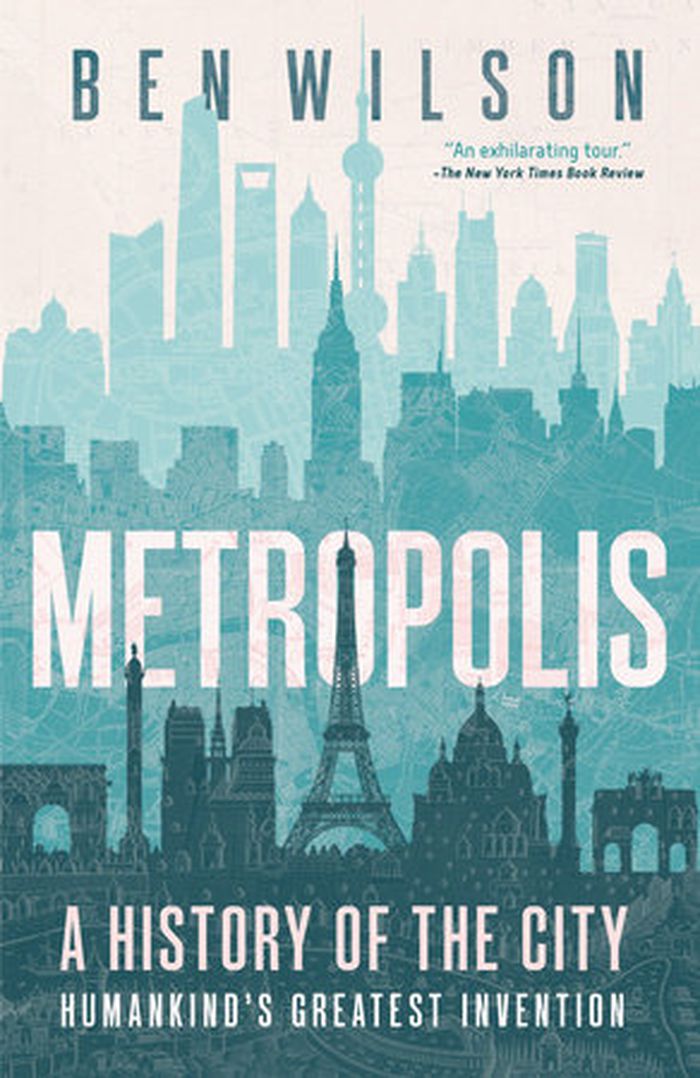
During the two hundred millennia we've been on the planet, nothing has shaped us more profoundly than the city. In a fascinating narrative that ranges through cities famous and forgotten, acclaimed historian Ben Wilson tells the glorious story of how urban living has allowed human culture to flourish. Beginning with Uruk, the world's first city, he shows that cities created such a blossoming of human endeavor--new professions, new forms of art, worship, and trade--that they kick-started civilization itself. Despite outbreaks of plague and war, and outlasting empires, the city endured and new cities sprang up to capture the inimitable energy of human beings together. Wilson reveals the innovations nurturned amid the density of urban centers over the centuries: civics in the agora of Athens, global trade in ninth-century Baghdad, finance in the coffeehouses of London, domestic comforts in the heart of Amsterdam, peacocking in Belle Epoque Paris. In the modern age, the skyscrapers of New York City inspired utopian visions of community design, while the trees of twenty-first-century Seattle and Shanghai point to a sustainable future in the age of climate change. Page turning and irresistible, ''Metropolis'' is a history of cities that is also a history of how humanity lives.
Metropolis: a history of the city, mankind's greatest invention
Actions:
Price:
$24.95
(available to order)
Summary:
During the two hundred millennia we've been on the planet, nothing has shaped us more profoundly than the city. In a fascinating narrative that ranges through cities famous and forgotten, acclaimed historian Ben Wilson tells the glorious story of how urban living has allowed human culture to flourish. Beginning with Uruk, the world's first city, he shows that cities created such a blossoming of human endeavor--new professions, new forms of art, worship, and trade--that they kick-started civilization itself. Despite outbreaks of plague and war, and outlasting empires, the city endured and new cities sprang up to capture the inimitable energy of human beings together. Wilson reveals the innovations nurturned amid the density of urban centers over the centuries: civics in the agora of Athens, global trade in ninth-century Baghdad, finance in the coffeehouses of London, domestic comforts in the heart of Amsterdam, peacocking in Belle Epoque Paris. In the modern age, the skyscrapers of New York City inspired utopian visions of community design, while the trees of twenty-first-century Seattle and Shanghai point to a sustainable future in the age of climate change. Page turning and irresistible, ''Metropolis'' is a history of cities that is also a history of how humanity lives.
Form:
books
books
Publication:
October 2021
October 2021
Subject:
Urban Theory
Urban Theory
Form:
books
books
Title:
The minimum dwelling
The minimum dwelling
Actions:
Price:
$96.00
(available in store)
Summary:
Karel Teige (1900–1951), one of the most important figures of avant-garde modernism of the 1920s and 1930s, influenced virtually every area of art, design, and urban thinking in his native Czechoslovakia. His "Minimum dwelling", originally published in Czech in 1932, and appearing now for the first time in English, is one of the landmark architectural books of the(...)
$96.00
(available in store)
Summary:
Karel Teige (1900–1951), one of the most important figures of avant-garde modernism of the 1920s and 1930s, influenced virtually every area of art, design, and urban thinking in his native Czechoslovakia. His "Minimum dwelling", originally published in Czech in 1932, and appearing now for the first time in English, is one of the landmark architectural books of the(...)
Title:
The minimum dwelling
Actions:
Price:
$96.00
(available in store)
Summary:
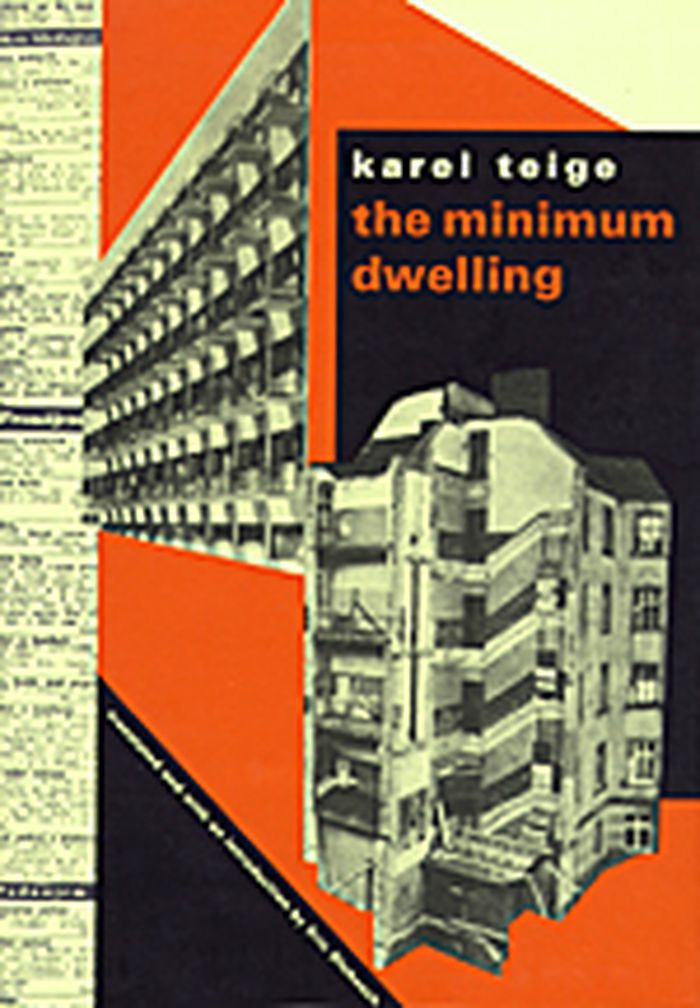
Karel Teige (1900–1951), one of the most important figures of avant-garde modernism of the 1920s and 1930s, influenced virtually every area of art, design, and urban thinking in his native Czechoslovakia. His "Minimum dwelling", originally published in Czech in 1932, and appearing now for the first time in English, is one of the landmark architectural books of the twentieth century. "The minimum dwelling" is not just a book on architecture, but also a blueprint for a new way of living. It calls for a radical rethinking of domestic space and of the role of modern architecture in the planning, design, and construction of new dwelling types for the proletariat. Teige shows how Gropius, Le Corbusier, Mies van der Rohe, and others designed little more than new versions of baroque palaces, mainly for the new financial aristocracy. Teige envisioned the minimum dwelling not as a reduced version of a bourgeois apartment or rural cottage, but as a wholly new dwelling type built on the cooperation of architects, sociologists, economists, health officials, physicians, social workers, politicians, and trade unionists. The book covers many subjects that are still of great relevance. Of particular interest are Teige’s rejection of traditional notions of the kitchen as the core of family-centered plans and of marriage as the foundation of modern cohabitation. He describes alternative lifestyles and new ways of cohabitation of sexes, generations, and classes. The detailed programmatic chapters on collective housing remain far ahead of current thinking, and his comments on collective dwelling presage communal living experiments of the 1960s and 1970s, as well as the communal facilities in contemporary condominium buildings and retirement communities. Translated and introduced by Eric Dluhosch.
The minimum dwelling
Actions:
Price:
$96.00
(available in store)
Summary:
Karel Teige (1900–1951), one of the most important figures of avant-garde modernism of the 1920s and 1930s, influenced virtually every area of art, design, and urban thinking in his native Czechoslovakia. His "Minimum dwelling", originally published in Czech in 1932, and appearing now for the first time in English, is one of the landmark architectural books of the twentieth century. "The minimum dwelling" is not just a book on architecture, but also a blueprint for a new way of living. It calls for a radical rethinking of domestic space and of the role of modern architecture in the planning, design, and construction of new dwelling types for the proletariat. Teige shows how Gropius, Le Corbusier, Mies van der Rohe, and others designed little more than new versions of baroque palaces, mainly for the new financial aristocracy. Teige envisioned the minimum dwelling not as a reduced version of a bourgeois apartment or rural cottage, but as a wholly new dwelling type built on the cooperation of architects, sociologists, economists, health officials, physicians, social workers, politicians, and trade unionists. The book covers many subjects that are still of great relevance. Of particular interest are Teige’s rejection of traditional notions of the kitchen as the core of family-centered plans and of marriage as the foundation of modern cohabitation. He describes alternative lifestyles and new ways of cohabitation of sexes, generations, and classes. The detailed programmatic chapters on collective housing remain far ahead of current thinking, and his comments on collective dwelling presage communal living experiments of the 1960s and 1970s, as well as the communal facilities in contemporary condominium buildings and retirement communities. Translated and introduced by Eric Dluhosch.
Form:
books
books
Publication:
May 2002, Cambridge, Mass.
May 2002, Cambridge, Mass.
Subject:
Architectural Theory
Architectural Theory
Form:
books
books
Actions:
Price:
$51.90
(available to order)
Summary:
Urban gardening has become recently popular. We only have to think of the riverbanks restored to their natural state, the urban gardening and urban farming projects springing up all over the world, the green skyscrapers (prospective and actually built) such as, for instance, the utopian farmscrapers of Vincent Callebout, the conversion of former high rail lines into green(...)
$51.90
(available to order)
Summary:
Urban gardening has become recently popular. We only have to think of the riverbanks restored to their natural state, the urban gardening and urban farming projects springing up all over the world, the green skyscrapers (prospective and actually built) such as, for instance, the utopian farmscrapers of Vincent Callebout, the conversion of former high rail lines into green(...)
Title:
Greenwards: the new delight in urban nature
Actions:
Price:
$51.90
(available to order)
Summary:
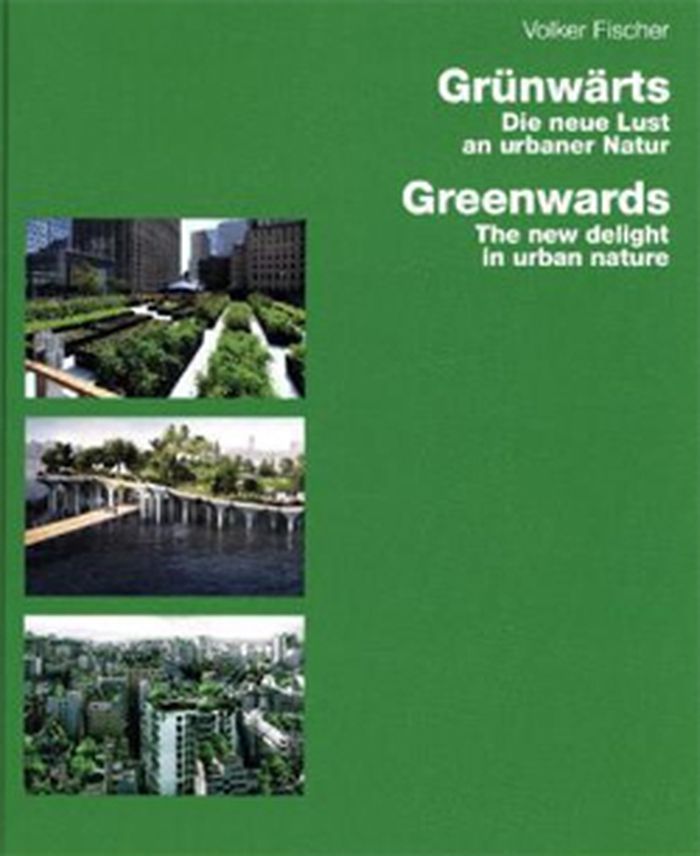
Urban gardening has become recently popular. We only have to think of the riverbanks restored to their natural state, the urban gardening and urban farming projects springing up all over the world, the green skyscrapers (prospective and actually built) such as, for instance, the utopian farmscrapers of Vincent Callebout, the conversion of former high rail lines into green recreation spaces, the meditation gardens of Piet Oudolf, and the vertical gardens of Patrick Blanc. These days, we feel close to greenery, just as we feel close to our pets. We tend and nurture the seeds and stalks, the leaves and flowers, the shrubs and grasses, the bushes and trees, with a matchless solicitude. These culturally coded natural phenomena also have therapeutic qualities, because they offer us self-determination and the possibility to share in social development. This is nothing less than the reintegration of the first, primal nature into the context of the conditions that have become ubiquitous today into the context of what has, today, become 'second nature'. For some people, such as the campaigners of 'Guerilla Gardening', these plants, wild and domestic, provide a way of criticizing the system; others, such as vertical planners of wall gardens like Ken Yeang, utopia-infatuated and bitten by the green bug, presumably see themselves as an avant-garde working in harmony with the system. Volker Fischer was deputy director of the Deutsches Architekturmuseum in Frankfurt am Main for over ten years. From 1994 to 2012 he has built up a new design department at the Museum for Applied Arts in Frankfurt. At the same time, he taught on the history of architecture and design at the Hochschule fur Gestaltung in Offenbach.
Greenwards: the new delight in urban nature
Actions:
Price:
$51.90
(available to order)
Summary:
Urban gardening has become recently popular. We only have to think of the riverbanks restored to their natural state, the urban gardening and urban farming projects springing up all over the world, the green skyscrapers (prospective and actually built) such as, for instance, the utopian farmscrapers of Vincent Callebout, the conversion of former high rail lines into green recreation spaces, the meditation gardens of Piet Oudolf, and the vertical gardens of Patrick Blanc. These days, we feel close to greenery, just as we feel close to our pets. We tend and nurture the seeds and stalks, the leaves and flowers, the shrubs and grasses, the bushes and trees, with a matchless solicitude. These culturally coded natural phenomena also have therapeutic qualities, because they offer us self-determination and the possibility to share in social development. This is nothing less than the reintegration of the first, primal nature into the context of the conditions that have become ubiquitous today into the context of what has, today, become 'second nature'. For some people, such as the campaigners of 'Guerilla Gardening', these plants, wild and domestic, provide a way of criticizing the system; others, such as vertical planners of wall gardens like Ken Yeang, utopia-infatuated and bitten by the green bug, presumably see themselves as an avant-garde working in harmony with the system. Volker Fischer was deputy director of the Deutsches Architekturmuseum in Frankfurt am Main for over ten years. From 1994 to 2012 he has built up a new design department at the Museum for Applied Arts in Frankfurt. At the same time, he taught on the history of architecture and design at the Hochschule fur Gestaltung in Offenbach.
Form:
books
books
Publication:
January 2015
January 2015
Subject:
Urban Landscapes
Urban Landscapes
Form:
books
books
Price:
$63.95
(available to order)
Summary:
This book investigates the state of panoptic art at a time when issues of security and civil liberties are on many people’s minds. Traditional imaging and tracking systems have given way to infinitely more powerful “dataveillance” technologies, as an evolving arsenal of surrogate eyes and ears in our society shifts its focus from military to domestic space. Taking as its(...)
$63.95
(available to order)
Summary:
This book investigates the state of panoptic art at a time when issues of security and civil liberties are on many people’s minds. Traditional imaging and tracking systems have given way to infinitely more powerful “dataveillance” technologies, as an evolving arsenal of surrogate eyes and ears in our society shifts its focus from military to domestic space. Taking as its(...)
Subject:
Contemporary Art Monographs
Contemporary Art Monographs
Publication:
March 2002, Karlsruhe, Germany / Cambridge, Massachusett
March 2002, Karlsruhe, Germany / Cambridge, Massachusett
Title:
CTRL (space) : rhetorics of surveillance from Bentham to big brother
Actions:
Price:
$63.95
(available to order)
Summary:
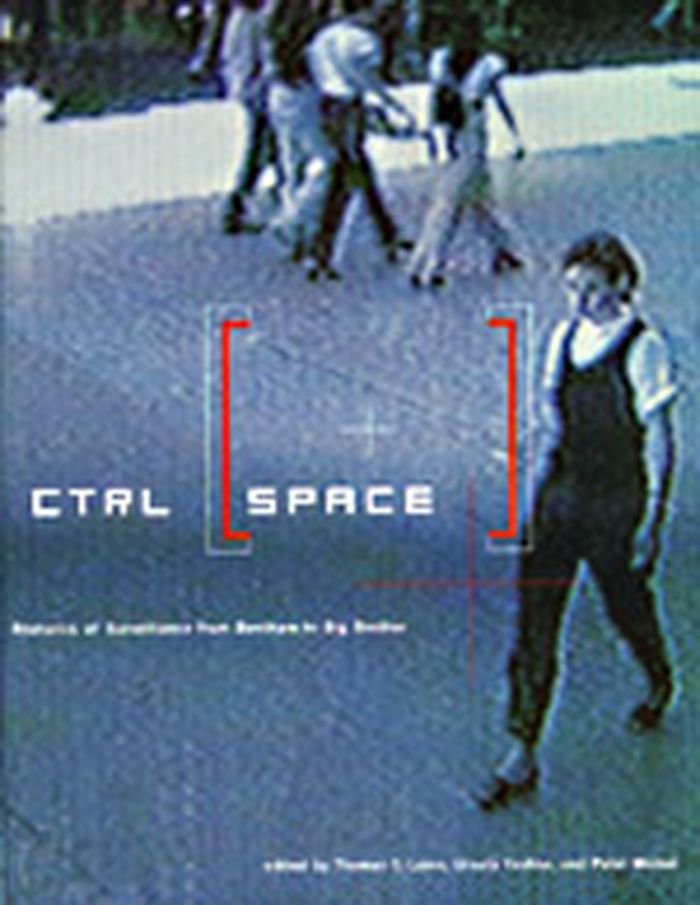
This book investigates the state of panoptic art at a time when issues of security and civil liberties are on many people’s minds. Traditional imaging and tracking systems have given way to infinitely more powerful “dataveillance” technologies, as an evolving arsenal of surrogate eyes and ears in our society shifts its focus from military to domestic space. Taking as its point of departure an architectural drawing by Jeremy Bentham that became the model for an entire social regime, CTRL [SPACE] looks at the shifting relationships between design and power, imaging and oppression, from the eighteenth to the twenty-first centuries. From the photographs taken with hidden cameras by Walker Evans and Paul Strand in the early twentieth century to the appropriation of military satellite technology by Marko Peljhan a hundred years later, the works of a wide range of artists have explored the dynamics of watching and being watched. The artists whose panoptical preoccupations are featured include, among others, Sophie Calle, Diller + Scofidio, Dan Graham, Pierre Huyghe, Michael Klier, Rem Koolhaas, Bruce Nauman, Yoko Ono, Thomas Ruff, Julia Scher, Andy Warhol, and Peter Weibel. This book, along with the exhibition it accompanies, is the first state-of-the-art survey of panopticism--in digital culture, architecture, television, video, cinema, painting, photography, conceptual art, installation work, robotics, and satellite imaging.
CTRL (space) : rhetorics of surveillance from Bentham to big brother
Actions:
Price:
$63.95
(available to order)
Summary:
This book investigates the state of panoptic art at a time when issues of security and civil liberties are on many people’s minds. Traditional imaging and tracking systems have given way to infinitely more powerful “dataveillance” technologies, as an evolving arsenal of surrogate eyes and ears in our society shifts its focus from military to domestic space. Taking as its point of departure an architectural drawing by Jeremy Bentham that became the model for an entire social regime, CTRL [SPACE] looks at the shifting relationships between design and power, imaging and oppression, from the eighteenth to the twenty-first centuries. From the photographs taken with hidden cameras by Walker Evans and Paul Strand in the early twentieth century to the appropriation of military satellite technology by Marko Peljhan a hundred years later, the works of a wide range of artists have explored the dynamics of watching and being watched. The artists whose panoptical preoccupations are featured include, among others, Sophie Calle, Diller + Scofidio, Dan Graham, Pierre Huyghe, Michael Klier, Rem Koolhaas, Bruce Nauman, Yoko Ono, Thomas Ruff, Julia Scher, Andy Warhol, and Peter Weibel. This book, along with the exhibition it accompanies, is the first state-of-the-art survey of panopticism--in digital culture, architecture, television, video, cinema, painting, photography, conceptual art, installation work, robotics, and satellite imaging.
Form:
books
books
Publication:
March 2002, Karlsruhe, Germany / Cambridge, Massachusett
March 2002, Karlsruhe, Germany / Cambridge, Massachusett
Subject:
Contemporary Art Monographs
Contemporary Art Monographs
Form:
books
books
Actions:
Price:
$46.95
(available in store)
Summary:
In the ten years since the first edition of "A Guide to Canadian Architectural Styles" was published, the heritage movement has gained strength, sensitizing many to the value of our architectural legacy. This new edition reflects an enriched understanding of architecture that focuses more on the visual and cultural setting of the built environment and less on individual(...)
$46.95
(available in store)
Summary:
In the ten years since the first edition of "A Guide to Canadian Architectural Styles" was published, the heritage movement has gained strength, sensitizing many to the value of our architectural legacy. This new edition reflects an enriched understanding of architecture that focuses more on the visual and cultural setting of the built environment and less on individual(...)
Subject:
Architecture in Canada
Architecture in Canada
Publication:
September 2003, Peterborough, Ontario
September 2003, Peterborough, Ontario
Title:
A guide to Canadian architectural styles, second edition
Actions:
Price:
$46.95
(available in store)
Summary:
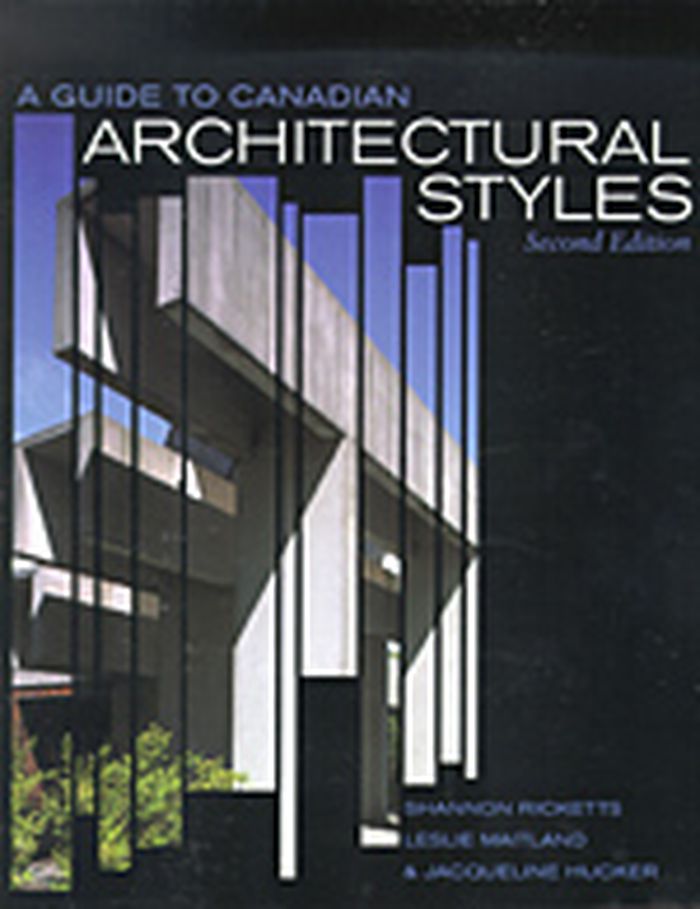
In the ten years since the first edition of "A Guide to Canadian Architectural Styles" was published, the heritage movement has gained strength, sensitizing many to the value of our architectural legacy. This new edition reflects an enriched understanding of architecture that focuses more on the visual and cultural setting of the built environment and less on individual works seen in isolation. Today, we cherish the buildings that characterize the original Main Street / rue Principale - the bank building, the shops, the old hotel, the post office, the city hall. There is more recognition for older inner-city neighbourhoods, with their row housing, churches, and community halls as well as for our often romantic attachment to vernacular rural architecture. This interest in more ordinary-looking architecture marks both the democratization of Canada's heritage movement and its coming of age, for the value of these more modest structures lies in their unique ability to sustain a sense of identity. This book provides an essential profile of the origins and development of the many architectural styles across Canada, from early settlement to the postmodern period, and discusses special forms such as religious, civic, domestic, commercial, and industrial design. While remaining true to the accessible format of the first edition, the second offers updated and considerably expanded text, as well as many more illustrations.
A guide to Canadian architectural styles, second edition
Actions:
Price:
$46.95
(available in store)
Summary:
In the ten years since the first edition of "A Guide to Canadian Architectural Styles" was published, the heritage movement has gained strength, sensitizing many to the value of our architectural legacy. This new edition reflects an enriched understanding of architecture that focuses more on the visual and cultural setting of the built environment and less on individual works seen in isolation. Today, we cherish the buildings that characterize the original Main Street / rue Principale - the bank building, the shops, the old hotel, the post office, the city hall. There is more recognition for older inner-city neighbourhoods, with their row housing, churches, and community halls as well as for our often romantic attachment to vernacular rural architecture. This interest in more ordinary-looking architecture marks both the democratization of Canada's heritage movement and its coming of age, for the value of these more modest structures lies in their unique ability to sustain a sense of identity. This book provides an essential profile of the origins and development of the many architectural styles across Canada, from early settlement to the postmodern period, and discusses special forms such as religious, civic, domestic, commercial, and industrial design. While remaining true to the accessible format of the first edition, the second offers updated and considerably expanded text, as well as many more illustrations.
Form:
books
books
Publication:
September 2003, Peterborough, Ontario
September 2003, Peterborough, Ontario
Subject:
Architecture in Canada
Architecture in Canada


