


DR2007:0020
Description:
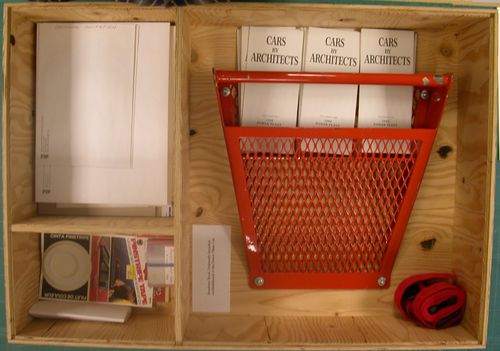
This consists of a boxed set of related pieces from L.W. Richards participation in "The Architecture Series" at the Power Plant contemporary art gallery in 1988-89. L.W. Richards renovated and drove a Pontiac Firebird, named "Power Plant". The project was the subject of Vikky Alexander's essay "Back to the Future" in the Power Plant Gallery's "The Architecture Series", 1989, pp.25-31. The project was reviewed by Adele Freedman (Globe and Mail, March 5, 1988, p.C12), Christopher Hume (Architect designs gallery on wheels, Toronto Star, Feb. 27, 1988, p. G15), and pictured and discussed in The Canadian Architect, Vol. 33, no. 4, April 1988, p.6. The set pf pieces includes: a) B&W photograph of the Power Plant car in an auto-body workshop, b) The Architecture Series, booklet with Alexander's essay, c)newspaper and magazine clippings/reviews, d)orangesteel brochure rack, that L.W. Richards designed, from the Power Plant car (~ 18" x 18" x 3"), e) nine B&W brochures titled "Cars by Architects" that fit into the red-orange rack, and f) ~ 20 colour slides of the Power Plant car in various locations in Toronto.
1988-1989
Power Plant (Cars by Architects), 1988-1989
Actions:
DR2007:0020
Description:
This consists of a boxed set of related pieces from L.W. Richards participation in "The Architecture Series" at the Power Plant contemporary art gallery in 1988-89. L.W. Richards renovated and drove a Pontiac Firebird, named "Power Plant". The project was the subject of Vikky Alexander's essay "Back to the Future" in the Power Plant Gallery's "The Architecture Series", 1989, pp.25-31. The project was reviewed by Adele Freedman (Globe and Mail, March 5, 1988, p.C12), Christopher Hume (Architect designs gallery on wheels, Toronto Star, Feb. 27, 1988, p. G15), and pictured and discussed in The Canadian Architect, Vol. 33, no. 4, April 1988, p.6. The set pf pieces includes: a) B&W photograph of the Power Plant car in an auto-body workshop, b) The Architecture Series, booklet with Alexander's essay, c)newspaper and magazine clippings/reviews, d)orangesteel brochure rack, that L.W. Richards designed, from the Power Plant car (~ 18" x 18" x 3"), e) nine B&W brochures titled "Cars by Architects" that fit into the red-orange rack, and f) ~ 20 colour slides of the Power Plant car in various locations in Toronto.
1988-1989
events
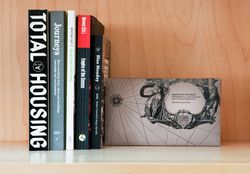
On Experimental Writing: Albert Ferré, Pedro Gadanho, David Howes, Naomi Stead and Kazys Varnelis
Join us for an open discussion about different approaches to contemporary writing about architecture, urbanism and criticism, featuring architectural writers and editors from publications such as Actar, Quaderns, Beyond, and the Architectural Theory Review. Presented in English, with invited guests David Howes, Albert Ferré, Pedro Gadanho, Naomi Stead and Kazys Varnelis.
Paul-Desmarais Theatre
10 February 2011 , 6pm
On Experimental Writing: Albert Ferré, Pedro Gadanho, David Howes, Naomi Stead and Kazys Varnelis
Actions:
Description:
Join us for an open discussion about different approaches to contemporary writing about architecture, urbanism and criticism, featuring architectural writers and editors from publications such as Actar, Quaderns, Beyond, and the Architectural Theory Review. Presented in English, with invited guests David Howes, Albert Ferré, Pedro Gadanho, Naomi Stead and Kazys Varnelis.
events
10 February 2011
6pm
Paul-Desmarais Theatre
events
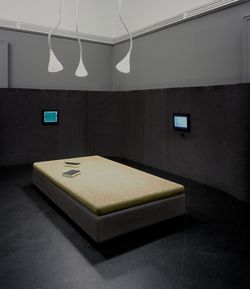
Philip Ursprung, guest curator of the 2002 CCA exhibition Herzog de Meuron: Archaeology of the Mind, discusses the Swiss architects’ collaborative relationship with artists. The lecture is part a series exploring the boundary between art and architecture, presented in conjunction with the exhibition. Philip Ursprung is Professor of the History of Modern and Contemporary(...)
17 October 2002
Philip Ursprung: Close Encounters: Herzog & de Meuron en collaboration avec des artistes
Actions:
Description:
Philip Ursprung, guest curator of the 2002 CCA exhibition Herzog de Meuron: Archaeology of the Mind, discusses the Swiss architects’ collaborative relationship with artists. The lecture is part a series exploring the boundary between art and architecture, presented in conjunction with the exhibition. Philip Ursprung is Professor of the History of Modern and Contemporary(...)
events
17 October 2002
exhibitions
As they fill their sketchbooks with both texts and images, architects capture initial reactions to sites; record impressions and make drawings as they travel; organise work to be done; articulate design concepts and pose solutions; draft essays, lectures, and letters; write research notes; and copy inspirational passages from their readings. The Architect’s Sketchbook:(...)
Hall cases
26 February 1992 to 24 May 1992
The Architect's Sketchbook: Current Practice
Actions:
Description:
As they fill their sketchbooks with both texts and images, architects capture initial reactions to sites; record impressions and make drawings as they travel; organise work to be done; articulate design concepts and pose solutions; draft essays, lectures, and letters; write research notes; and copy inspirational passages from their readings. The Architect’s Sketchbook:(...)
exhibitions
26 February 1992 to
24 May 1992
Hall cases
articles
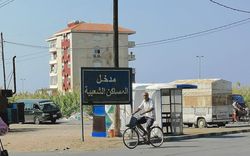
To remain in the no longer, Tripoli, Lebanon, housing crisis, urban planning, urban management, city government, Public Works Studio
5 September 2023
Tripoli: Who Took Away Our Land? (Part 2)
Public Works Studio presents the social and environmental repercussions of the city’s public management
Actions:
events
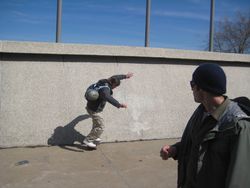
Scouting Skateboard Sites
Skateboarder and landscape architect Mathieu Robichaud takes participants on a guided walk, analysing the skateboarding potential of urban spaces. Robichaud, of the firm Bloom Paysage, specialises in the design of skate parks. Inspired by the exhibition Actions: What You Can Do With the City (2008), the CCA hosts a series of workshops devoted to public actions in urban(...)
11 April 2009
Scouting Skateboard Sites
Actions:
Description:
Skateboarder and landscape architect Mathieu Robichaud takes participants on a guided walk, analysing the skateboarding potential of urban spaces. Robichaud, of the firm Bloom Paysage, specialises in the design of skate parks. Inspired by the exhibition Actions: What You Can Do With the City (2008), the CCA hosts a series of workshops devoted to public actions in urban(...)
events
11 April 2009
webpages
This project, by the CCA’s 2022-2023 Emerging Curator Clarissa Lim Kye Lee, engages with collectives in the Malay Archipelago with aims of developing a shared toolkit for art and cultural workers globally. Through a series of workshops held in Kuala Lumpur, Malaysia in 2024, this project looks to Malaysian collective ecologies and their relationship to their urban environments for ways to reinscribe a concern for the social in contemporary art and architecture.
Making Mamak: Collective Ecologies of Urban Space
Actions:
Summary:
This project, by the CCA’s 2022-2023 Emerging Curator Clarissa Lim Kye Lee, engages with collectives in the Malay Archipelago with aims of developing a shared toolkit for art and cultural workers globally. Through a series of workshops held in Kuala Lumpur, Malaysia in 2024, this project looks to Malaysian collective ecologies and their relationship to their urban environments for ways to reinscribe a concern for the social in contemporary art and architecture.
webpages
events
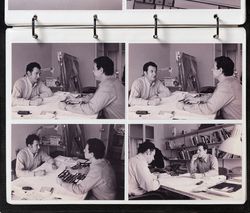
Join us in Madrid for a conversation with Iñaki Ábalos and Juan Herreros, with the participation of Ángel Borrego, Enrique Encabo, Albert Ferré (Associate Director, CCA Publications), María Auxiliadora Gálvez, and Moisés Puente. “Is there such a thing as an architecture of conversation?” ask Iñaki Ábalos and Juan Herreros in their text “A Conversation,” published in CIRCO(...)
7 February 2017, 7pm
AP164: A Conversation with Iñaki Ábalos and Juan Herreros
Actions:
Description:
Join us in Madrid for a conversation with Iñaki Ábalos and Juan Herreros, with the participation of Ángel Borrego, Enrique Encabo, Albert Ferré (Associate Director, CCA Publications), María Auxiliadora Gálvez, and Moisés Puente. “Is there such a thing as an architecture of conversation?” ask Iñaki Ábalos and Juan Herreros in their text “A Conversation,” published in CIRCO(...)
events
7 February 2017
7pm
exhibitions
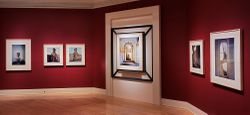
Visions and Views combines contemporary photography and engravings from the seventeenth and eighteenth centuries to establish a dialogue between two different approaches to representing Francesco Borromini’s built work. The photographs, part of a larger commission acquired by the CCA, were taken in Rome by Toronto photographer Edward Burtynsky in 1999. They are presented(...)
Octagonal gallery
15 March 2000 to 7 May 2000
Visions and Views: The Architecture of Borromini in the Photographs of Edward Burtynsky
Actions:
Description:
Visions and Views combines contemporary photography and engravings from the seventeenth and eighteenth centuries to establish a dialogue between two different approaches to representing Francesco Borromini’s built work. The photographs, part of a larger commission acquired by the CCA, were taken in Rome by Toronto photographer Edward Burtynsky in 1999. They are presented(...)
exhibitions
15 March 2000 to
7 May 2000
Octagonal gallery
Sub-series
Opera Houses
CI001.S2.D3
Description:
Charles Rohault de Fleury's sustained involvement with the design of opera houses began with his appointment in 1846 as official architect of the existing Salle Le Pelletier, home to the *Paris Opera, and continued until an open competition was called in 1860 (Charles Garnier won this competition). During this period Rohault de Fleury submitted numerous proposals to replace theprovisional Salle Le Pelletier with a structure more appropriate to the grandeur and importance of France's national opera company. The CCA collection contains four projects related to his work for the Paris opera: two early projects (1846 and 1847) and one later one (1859) for a newopera house, and a portfolio of lithographs and drawings related to alterations and repairs to Salle Le Pelletier (1850-1854). The collection also includes Charles' earliest theatre project, a comprehensive plan for an opera house and surrounding infrastructure for the Theatre Royal Italien opera company (1838-1840), and an album containing drawings and prints of antique and contemporary theatres (1839-1854?). Charles' first project was for the Theatre Royal Italien opera company whose previous home, the Salle Favart, had burned down on the night of January 14 1838. The CCA collection contains an album of presentation drawings for a new theatre located on rue de la Paix with boutiques in the adjacent 'passages' (DR1974:0002:019:001-023). A second album consists of site plans including proposed 'maisons à loyers' (apartment buildings) and documents relating to the cost estimates and rental income for the entire project (DR1974:0002:036:001-016). The architectural style and interior arrangement of the theatre is heavily indebted to Francois Debret's Salle Le Pelletier. Charles' originality lies more in his conception of the social and economic role of the theatre in relation and integration, to its surrounding urban fabric. An explanation of the entire Theatre Royal Italien project, and Charles' role as architect in it, is found in two proposal letters (located in the Avery Library, Columbia University, NY) written by the entrepreneur Eugene Lecomte to the Minister of the Interior, Comte Duchatel, on May 15 and October 31 1839 (1). Charles' album of drawings at the CCA for the theatre and some of the cost and rental estimates are probably presentation copies directly related to the first letter, and most likely submitted to the Minister of the Interior. Charles' project was never executed, and the Italian opera company eventualy found a permanent home in the existing Salle Ventadour (1841). However, the inclusive nature of the Théâtre Royal Italien proposal, with its stress on urban development and contextuality, continued to play a seminal role in his later Paris Opera projects. Upon replacing Francois Debret as architect of Salle Le Pelletier in 1846, Charles proposed nine possible locations (site plans) for a new opera house for the Paris Opera (*Academie Royale de Musique) and, in the following year (1847) prepared a portfolio of drawings for the actual structure with an accompanying seven-page manuscript describing the project. Although executed in successive years, the site plans and 1847 drawings are conceptually related. Both components were undertaken in response to offical interest in a public competition that was never implemented (2)(3). The CCA has two sets of the nine site plans proposed in 1846 (DR1974:0002:036:001-016), one containing transfer lithographed site plans with a written analysis and cost estimate for each of the proposed locations, and the other with only the site plans (similar sets are located in the 'Archives Nationales' in France). They indicate that Charles, (heavily influenced by his Théâtre Royal Italien project) preferred the Rue de la Paix location (siteplan #3) for the new opera house. Although site plan number six, Boulevard des Capucines, was not favoured at this date, it is highly prophetic as it was the location officially chosen in 1860 for the new opera house. Apparently unique to the CCA collection is the 1847 manuscript and portfolio of drawings for the proposed opera house (DR1974:0002:036:001-016). The manuscript is both an indepth review of the requirements for a national opera house and a guide to his portfolio of drawings. Charles' conception and design continued to be strongly influenced by Debret's Salle Lepelletier, as well as his own Théâtre Italien project, and various antique and contemporary opera houses and theatres. Many of the French and Italian sources mentioned in the manuscript are collected in an album (DR1974:0002:010:001-048) as references for his own designs (4). As official architect of Salle Le pelletier, Charles was also responsible for repairs, restorations, and alterations to the existing structure. The drawings and transfer lithographs in the CCA collection (DR1974:0002:036:001-016) are primarily dated 1854, and relate to documented repair and restoration projects undertaken during this period (5)(6). The CCA collection has the presentation drawings and lithographs for the later 1859 project (DR1974:0002:027:001-027) for the Paris opera (*Theatre Imperiale de l'opera) that were sent to Achille Fould, the Minister of State. This project is probably a counterpart to a similiar one that he submitted to the Prefect of the Seine, Baron Haussmann, in the same year (7). Site plans show the opera house on an irregular polygonal site facing Boulevard des Capucines. The placement of the 'maisons à loyers' on the rear of the site reflects Charles' continued emphasis on integrating his opera projects into the surrounding urban context. In 1859, it appeared that Charles was favoured to build the new opera house. But late in the following year, a public competition was called in which Charles Garnier emerged as the victor. Although Charles did not build the final structure, his numerous projects, as exemplified in the CCA collection, were of prime importance in determining the location, configuration, and plan of the Place de l'Opera (8). * The 'Paris Opera' was France's national opera, and thus its name changed numerous times throughout its history according to altering perceptions of its role in French culture and/or changes in political regimes. For reasons of clarity, the national opera will be referred to as the Paris Opera. The names indicated in brackets with a star refer to the proper name of the opera company at the date of the project. (1) Eugene Le Comte, "Projet de Salle rue de la Paix, pour le Théâtre Royal Italien: Lettres à Monsieur le Ministre de l'Intérieur, en date des 15 mai et 31octobre 1839" (Paris: P. Dupont, 1839). (2) Christopher Curtis Mead, "Charles Garnier's Paris Opera and the Renaissance of Classicism in Nineteenth century French Architecture", 3 vols. (PhD thesis; Philadelphia: University of Pennsylvania, 1986), p. 234 and p. 956, fn. 30. (3) Monika Steinhauser, "Die Architektur des Pariser Oper" (Munich: Prestel Verlag, 1969), p. 45, fns. 143 and 144. (4) Barry Bergdoll, "Charles Rohault de Fleury: Part Three: Theatres and the Opera house", 'CCA Research Report', n.d., p. 3. (5) Larousse XIXth Century, s.v. "Rohault de Fleury, Charles". (6) Mead, p. 238. (7) Oeuvres de C. Rohault de Fleury, architecte" (Paris: Librarie centrale d'architecture, 1884).. (8) Macmillan, s.v. "Rohault de Fleury Familly".
1717-1868
Opera Houses
CI001.S2.D3
Description:
Charles Rohault de Fleury's sustained involvement with the design of opera houses began with his appointment in 1846 as official architect of the existing Salle Le Pelletier, home to the *Paris Opera, and continued until an open competition was called in 1860 (Charles Garnier won this competition). During this period Rohault de Fleury submitted numerous proposals to replace theprovisional Salle Le Pelletier with a structure more appropriate to the grandeur and importance of France's national opera company. The CCA collection contains four projects related to his work for the Paris opera: two early projects (1846 and 1847) and one later one (1859) for a newopera house, and a portfolio of lithographs and drawings related to alterations and repairs to Salle Le Pelletier (1850-1854). The collection also includes Charles' earliest theatre project, a comprehensive plan for an opera house and surrounding infrastructure for the Theatre Royal Italien opera company (1838-1840), and an album containing drawings and prints of antique and contemporary theatres (1839-1854?). Charles' first project was for the Theatre Royal Italien opera company whose previous home, the Salle Favart, had burned down on the night of January 14 1838. The CCA collection contains an album of presentation drawings for a new theatre located on rue de la Paix with boutiques in the adjacent 'passages' (DR1974:0002:019:001-023). A second album consists of site plans including proposed 'maisons à loyers' (apartment buildings) and documents relating to the cost estimates and rental income for the entire project (DR1974:0002:036:001-016). The architectural style and interior arrangement of the theatre is heavily indebted to Francois Debret's Salle Le Pelletier. Charles' originality lies more in his conception of the social and economic role of the theatre in relation and integration, to its surrounding urban fabric. An explanation of the entire Theatre Royal Italien project, and Charles' role as architect in it, is found in two proposal letters (located in the Avery Library, Columbia University, NY) written by the entrepreneur Eugene Lecomte to the Minister of the Interior, Comte Duchatel, on May 15 and October 31 1839 (1). Charles' album of drawings at the CCA for the theatre and some of the cost and rental estimates are probably presentation copies directly related to the first letter, and most likely submitted to the Minister of the Interior. Charles' project was never executed, and the Italian opera company eventualy found a permanent home in the existing Salle Ventadour (1841). However, the inclusive nature of the Théâtre Royal Italien proposal, with its stress on urban development and contextuality, continued to play a seminal role in his later Paris Opera projects. Upon replacing Francois Debret as architect of Salle Le Pelletier in 1846, Charles proposed nine possible locations (site plans) for a new opera house for the Paris Opera (*Academie Royale de Musique) and, in the following year (1847) prepared a portfolio of drawings for the actual structure with an accompanying seven-page manuscript describing the project. Although executed in successive years, the site plans and 1847 drawings are conceptually related. Both components were undertaken in response to offical interest in a public competition that was never implemented (2)(3). The CCA has two sets of the nine site plans proposed in 1846 (DR1974:0002:036:001-016), one containing transfer lithographed site plans with a written analysis and cost estimate for each of the proposed locations, and the other with only the site plans (similar sets are located in the 'Archives Nationales' in France). They indicate that Charles, (heavily influenced by his Théâtre Royal Italien project) preferred the Rue de la Paix location (siteplan #3) for the new opera house. Although site plan number six, Boulevard des Capucines, was not favoured at this date, it is highly prophetic as it was the location officially chosen in 1860 for the new opera house. Apparently unique to the CCA collection is the 1847 manuscript and portfolio of drawings for the proposed opera house (DR1974:0002:036:001-016). The manuscript is both an indepth review of the requirements for a national opera house and a guide to his portfolio of drawings. Charles' conception and design continued to be strongly influenced by Debret's Salle Lepelletier, as well as his own Théâtre Italien project, and various antique and contemporary opera houses and theatres. Many of the French and Italian sources mentioned in the manuscript are collected in an album (DR1974:0002:010:001-048) as references for his own designs (4). As official architect of Salle Le pelletier, Charles was also responsible for repairs, restorations, and alterations to the existing structure. The drawings and transfer lithographs in the CCA collection (DR1974:0002:036:001-016) are primarily dated 1854, and relate to documented repair and restoration projects undertaken during this period (5)(6). The CCA collection has the presentation drawings and lithographs for the later 1859 project (DR1974:0002:027:001-027) for the Paris opera (*Theatre Imperiale de l'opera) that were sent to Achille Fould, the Minister of State. This project is probably a counterpart to a similiar one that he submitted to the Prefect of the Seine, Baron Haussmann, in the same year (7). Site plans show the opera house on an irregular polygonal site facing Boulevard des Capucines. The placement of the 'maisons à loyers' on the rear of the site reflects Charles' continued emphasis on integrating his opera projects into the surrounding urban context. In 1859, it appeared that Charles was favoured to build the new opera house. But late in the following year, a public competition was called in which Charles Garnier emerged as the victor. Although Charles did not build the final structure, his numerous projects, as exemplified in the CCA collection, were of prime importance in determining the location, configuration, and plan of the Place de l'Opera (8). * The 'Paris Opera' was France's national opera, and thus its name changed numerous times throughout its history according to altering perceptions of its role in French culture and/or changes in political regimes. For reasons of clarity, the national opera will be referred to as the Paris Opera. The names indicated in brackets with a star refer to the proper name of the opera company at the date of the project. (1) Eugene Le Comte, "Projet de Salle rue de la Paix, pour le Théâtre Royal Italien: Lettres à Monsieur le Ministre de l'Intérieur, en date des 15 mai et 31octobre 1839" (Paris: P. Dupont, 1839). (2) Christopher Curtis Mead, "Charles Garnier's Paris Opera and the Renaissance of Classicism in Nineteenth century French Architecture", 3 vols. (PhD thesis; Philadelphia: University of Pennsylvania, 1986), p. 234 and p. 956, fn. 30. (3) Monika Steinhauser, "Die Architektur des Pariser Oper" (Munich: Prestel Verlag, 1969), p. 45, fns. 143 and 144. (4) Barry Bergdoll, "Charles Rohault de Fleury: Part Three: Theatres and the Opera house", 'CCA Research Report', n.d., p. 3. (5) Larousse XIXth Century, s.v. "Rohault de Fleury, Charles". (6) Mead, p. 238. (7) Oeuvres de C. Rohault de Fleury, architecte" (Paris: Librarie centrale d'architecture, 1884).. (8) Macmillan, s.v. "Rohault de Fleury Familly".
File 3
1717-1868


