


364 Results
Form:
books
books

Actions:
Price:
$69.90
(available to order)
Summary:
The work of Klaus Kinold, born 1939 in Essen, is part of a tradition of photography, and particularly of architectural photography. Architecture was one of the most important themes even of early photo-graphy not least because it stood still. Initially this was an important characteristic, since exposure times were long. Thus began the affinity of photography with the(...)
$69.90
(available to order)
Summary:
The work of Klaus Kinold, born 1939 in Essen, is part of a tradition of photography, and particularly of architectural photography. Architecture was one of the most important themes even of early photo-graphy not least because it stood still. Initially this was an important characteristic, since exposure times were long. Thus began the affinity of photography with the(...)
Title:
Klaus Kinold: Architectural photographs
Actions:
Price:
$69.90
(available to order)
Summary:
The work of Klaus Kinold, born 1939 in Essen, is part of a tradition of photography, and particularly of architectural photography. Architecture was one of the most important themes even of early photo-graphy not least because it stood still. Initially this was an important characteristic, since exposure times were long. Thus began the affinity of photography with the documentary. Reality and represen-tation were supposed to correspond. Quoting a statement by Roland Barthes, Kinold has referred to the still "mysterious bonus of confidence given to the documentary". At a time when digital photographic and processing techniques make all sorts of manipulation possible, the now rare quality of reliability is assigned to this attitude. It was self-evident for Kinold to explore the period whose very name included the term objectivity the New Objectivity (in German: Neue Sachlichkeit).
Klaus Kinold: Architectural photographs
Actions:
Price:
$69.90
(available to order)
Summary:
The work of Klaus Kinold, born 1939 in Essen, is part of a tradition of photography, and particularly of architectural photography. Architecture was one of the most important themes even of early photo-graphy not least because it stood still. Initially this was an important characteristic, since exposure times were long. Thus began the affinity of photography with the documentary. Reality and represen-tation were supposed to correspond. Quoting a statement by Roland Barthes, Kinold has referred to the still "mysterious bonus of confidence given to the documentary". At a time when digital photographic and processing techniques make all sorts of manipulation possible, the now rare quality of reliability is assigned to this attitude. It was self-evident for Kinold to explore the period whose very name included the term objectivity the New Objectivity (in German: Neue Sachlichkeit).
Form:
books
books
Publication:
December 2016
December 2016
Subject:
Photography monographs
Photography monographs
Form:
books
books
Price:
$44.00
(available in store)
Summary:
Once dismissed as a cozy world of teddy bears and fairies, the arrival on the scene of numerous highly original, contemporary, and "cool" graphic artists in recent years has transformed perceptions of children's book illustration. Children now grow up with a more informed and sophisticated visual diet—with cartoons, animated movies, comics, TV, and computer(...)
$44.00
(available in store)
Summary:
Once dismissed as a cozy world of teddy bears and fairies, the arrival on the scene of numerous highly original, contemporary, and "cool" graphic artists in recent years has transformed perceptions of children's book illustration. Children now grow up with a more informed and sophisticated visual diet—with cartoons, animated movies, comics, TV, and computer(...)
Title:
Play pen
Actions:
Price:
$44.00
(available in store)
Summary:
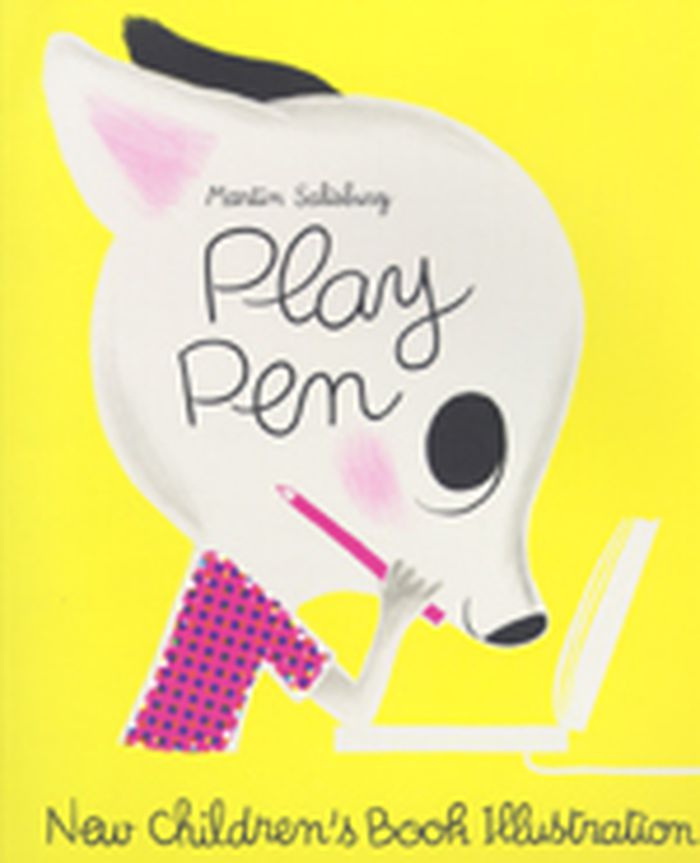
Once dismissed as a cozy world of teddy bears and fairies, the arrival on the scene of numerous highly original, contemporary, and "cool" graphic artists in recent years has transformed perceptions of children's book illustration. Children now grow up with a more informed and sophisticated visual diet—with cartoons, animated movies, comics, TV, and computer games—consuming a vast range of stylistic approaches, and illustrated books have moved to match the demands of a more discerning market. Equally, artists who in the past may not have considered the children's picture book as an appropriate vehicle for artistic expression are increasingly drawn to the area. This book showcases some of the most interesting work emerging within the genre from a range of cultural backgrounds. It examines trends in use of media—both digital and traditional—and discusses the variety of approaches to subject matter.
Play pen
Actions:
Price:
$44.00
(available in store)
Summary:
Once dismissed as a cozy world of teddy bears and fairies, the arrival on the scene of numerous highly original, contemporary, and "cool" graphic artists in recent years has transformed perceptions of children's book illustration. Children now grow up with a more informed and sophisticated visual diet—with cartoons, animated movies, comics, TV, and computer games—consuming a vast range of stylistic approaches, and illustrated books have moved to match the demands of a more discerning market. Equally, artists who in the past may not have considered the children's picture book as an appropriate vehicle for artistic expression are increasingly drawn to the area. This book showcases some of the most interesting work emerging within the genre from a range of cultural backgrounds. It examines trends in use of media—both digital and traditional—and discusses the variety of approaches to subject matter.
Form:
books
books
Publication:
April 2009, London
April 2009, London
Subject:
Illustration
Illustration
Form:
books
books
Actions:
Price:
$22.00
(available to order)
Summary:
This publication gathers for the first time a selection of Vicki Goldberg's essays and criticism, culled from her writings published over the past 25 years. Goldberg's subjects range from pop imagery to war journalism, from photo-booth portraits to manipulated digital imagery, from the “boredom” of voyeurism to the great preponderance of tragic photographs in the news.(...)
$22.00
(available to order)
Summary:
This publication gathers for the first time a selection of Vicki Goldberg's essays and criticism, culled from her writings published over the past 25 years. Goldberg's subjects range from pop imagery to war journalism, from photo-booth portraits to manipulated digital imagery, from the “boredom” of voyeurism to the great preponderance of tragic photographs in the news.(...)
Title:
Light matters : writings on photography
Actions:
Price:
$22.00
(available to order)
Summary:
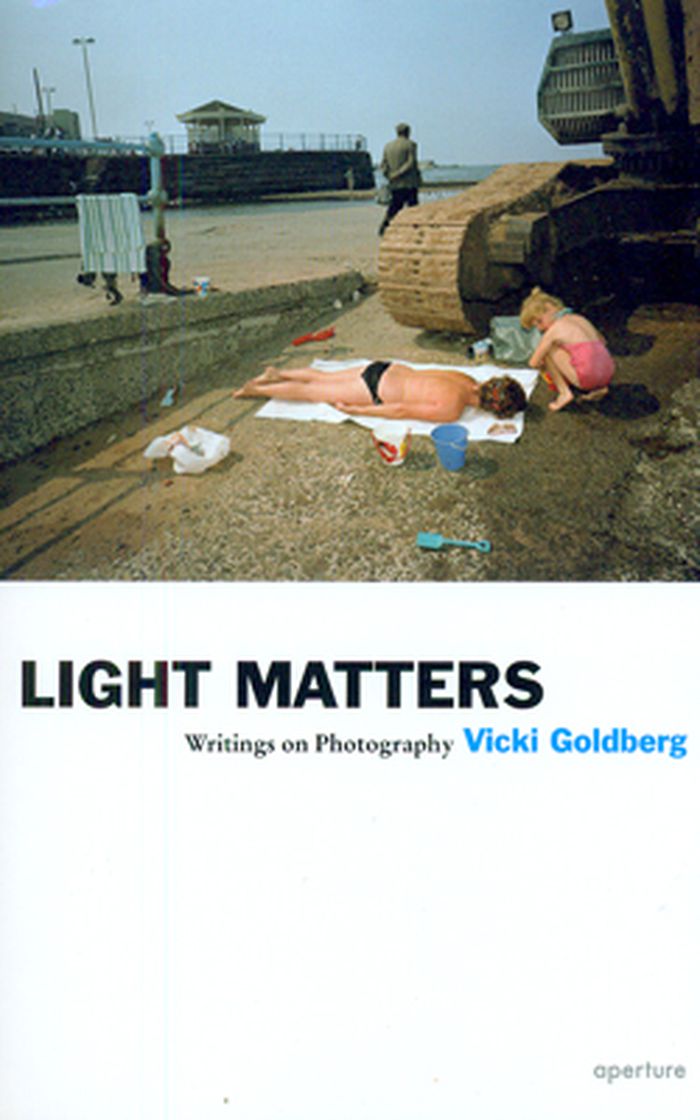
This publication gathers for the first time a selection of Vicki Goldberg's essays and criticism, culled from her writings published over the past 25 years. Goldberg's subjects range from pop imagery to war journalism, from photo-booth portraits to manipulated digital imagery, from the “boredom” of voyeurism to the great preponderance of tragic photographs in the news. She brings new light to the work of the medium's “old masters,” among them Walker Evans, Lotte Jacobi and Lartigue, writing with equal acuity about contemporary trailblazers such as Bill Viola, Daido Moriyama and Bastienne Schmidt. Goldberg also tackles provocative larger issues facing the medium, such as the potentially “transgressive” nature of photographs, and the camera's powerful role in a culture of commodification. Dismissing clichés and deftly negotiating the many diverging paths photography now follows, Goldberg demonstrates how to consider not just photographic images themselves, but their impact, and the meaning of that impact.
Light matters : writings on photography
Actions:
Price:
$22.00
(available to order)
Summary:
This publication gathers for the first time a selection of Vicki Goldberg's essays and criticism, culled from her writings published over the past 25 years. Goldberg's subjects range from pop imagery to war journalism, from photo-booth portraits to manipulated digital imagery, from the “boredom” of voyeurism to the great preponderance of tragic photographs in the news. She brings new light to the work of the medium's “old masters,” among them Walker Evans, Lotte Jacobi and Lartigue, writing with equal acuity about contemporary trailblazers such as Bill Viola, Daido Moriyama and Bastienne Schmidt. Goldberg also tackles provocative larger issues facing the medium, such as the potentially “transgressive” nature of photographs, and the camera's powerful role in a culture of commodification. Dismissing clichés and deftly negotiating the many diverging paths photography now follows, Goldberg demonstrates how to consider not just photographic images themselves, but their impact, and the meaning of that impact.
Form:
books
books
Publication:
November 2010
November 2010
Subject:
Theory of Photography
Theory of Photography
Form:
books
books
Title:
Neubauwelt
Neubauwelt
Actions:
Price:
$80.00
(available to order)
Summary:
My house, my pool, my horse, my Learjet, my Mercedes, my wife, my toys, my trees, my garden, my cockroach. Now it's really all yours. Neubau Welt is an extensive encyclopedia of well over a thousand pictograms of everyday objects and obsessions large and small. They were created by designer Stefan Gandl, whose book dsos1 was also published by dgv and has since become a(...)
$80.00
(available to order)
Summary:
My house, my pool, my horse, my Learjet, my Mercedes, my wife, my toys, my trees, my garden, my cockroach. Now it's really all yours. Neubau Welt is an extensive encyclopedia of well over a thousand pictograms of everyday objects and obsessions large and small. They were created by designer Stefan Gandl, whose book dsos1 was also published by dgv and has since become a(...)
Publication:
October 2007, Berlin
October 2007, Berlin
Title:
Neubauwelt
Actions:
Price:
$80.00
(available to order)
Summary:
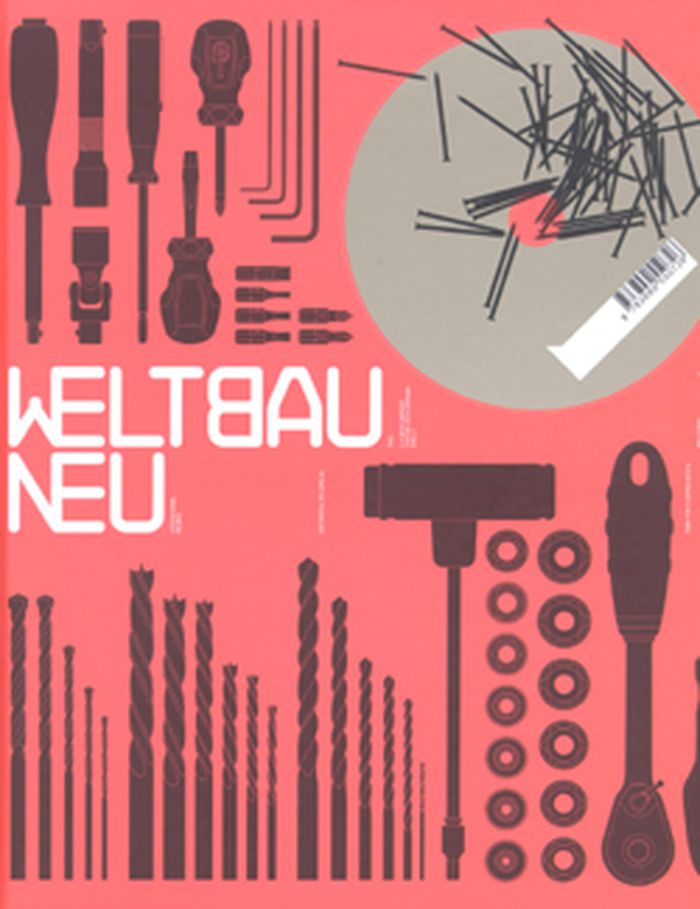
My house, my pool, my horse, my Learjet, my Mercedes, my wife, my toys, my trees, my garden, my cockroach. Now it's really all yours. Neubau Welt is an extensive encyclopedia of well over a thousand pictograms of everyday objects and obsessions large and small. They were created by designer Stefan Gandl, whose book dsos1 was also published by dgv and has since become a collectors’ item. All of the objects shown in the book can also be found as Adobe Illustrator files on an included CD. For the price of the book, readers also buy the right to use the exclusive graphics and Neubau typefaces in their own work. Reminiscent of a digital Letraset, Neubau Welt contains everything any designer could possibly need but couldn't find on Google. Unlike ClipArt, the smorgasbord of objects can be enlarged indefinitely. This also makes them extremely useful for architects and other creatives, who can integrate them into their presentations and visual models.
Neubauwelt
Actions:
Price:
$80.00
(available to order)
Summary:
My house, my pool, my horse, my Learjet, my Mercedes, my wife, my toys, my trees, my garden, my cockroach. Now it's really all yours. Neubau Welt is an extensive encyclopedia of well over a thousand pictograms of everyday objects and obsessions large and small. They were created by designer Stefan Gandl, whose book dsos1 was also published by dgv and has since become a collectors’ item. All of the objects shown in the book can also be found as Adobe Illustrator files on an included CD. For the price of the book, readers also buy the right to use the exclusive graphics and Neubau typefaces in their own work. Reminiscent of a digital Letraset, Neubau Welt contains everything any designer could possibly need but couldn't find on Google. Unlike ClipArt, the smorgasbord of objects can be enlarged indefinitely. This also makes them extremely useful for architects and other creatives, who can integrate them into their presentations and visual models.
Form:
books
books
Publication:
October 2007, Berlin
October 2007, Berlin
Form:
books
books

Actions:
Price:
$46.99
(available to order)
Summary:
Between 1936 and 1941 Walker Evans and James Agee collaborated on one of the most provocative books in American literature, "Let Us Now Praise Famous Men" (1941). While at work on this book, the two also conceived another less well-known but equally important book project entitled "Many Are Called". This three-year photographic study of subway passengers made with a(...)
$46.99
(available to order)
Summary:
Between 1936 and 1941 Walker Evans and James Agee collaborated on one of the most provocative books in American literature, "Let Us Now Praise Famous Men" (1941). While at work on this book, the two also conceived another less well-known but equally important book project entitled "Many Are Called". This three-year photographic study of subway passengers made with a(...)
Title:
Many are called : Walker Evans
Actions:
Price:
$46.99
(available to order)
Summary:
Between 1936 and 1941 Walker Evans and James Agee collaborated on one of the most provocative books in American literature, "Let Us Now Praise Famous Men" (1941). While at work on this book, the two also conceived another less well-known but equally important book project entitled "Many Are Called". This three-year photographic study of subway passengers made with a hidden camera was first published in 1966, with an introduction written by Agee in 1940. Long out of print, "Many Are Called" is now being reissued with a new foreword and afterword and with exquisitely reproduced images from newly prepared digital scans. "Many Are Called" came to fruition at a slow pace. In 1938, Walker Evans began surreptitiously photographing people on the New York City subway. With his camera hidden in his coat--the lens peeking through a buttonhole--he captured the faces of riders hurtling through the dark tunnels, wrapped in their own private thoughts. By 1940-41, Evans had made over six hundred photographs and had begun to edit the series. The book remained unpublished until 1966 when The Museum of Modern Art mounted an exhibition of Evans’s subway portraits. This beautiful new edition--published in the centenary year of the NYC subway--is an essential book for all admirers of Evans’s unparalleled photographs, Agee’s elegant prose, and the great City of New York. Designed by Katy Homans with an introduction by Luc Santé.
Many are called : Walker Evans
Actions:
Price:
$46.99
(available to order)
Summary:
Between 1936 and 1941 Walker Evans and James Agee collaborated on one of the most provocative books in American literature, "Let Us Now Praise Famous Men" (1941). While at work on this book, the two also conceived another less well-known but equally important book project entitled "Many Are Called". This three-year photographic study of subway passengers made with a hidden camera was first published in 1966, with an introduction written by Agee in 1940. Long out of print, "Many Are Called" is now being reissued with a new foreword and afterword and with exquisitely reproduced images from newly prepared digital scans. "Many Are Called" came to fruition at a slow pace. In 1938, Walker Evans began surreptitiously photographing people on the New York City subway. With his camera hidden in his coat--the lens peeking through a buttonhole--he captured the faces of riders hurtling through the dark tunnels, wrapped in their own private thoughts. By 1940-41, Evans had made over six hundred photographs and had begun to edit the series. The book remained unpublished until 1966 when The Museum of Modern Art mounted an exhibition of Evans’s subway portraits. This beautiful new edition--published in the centenary year of the NYC subway--is an essential book for all admirers of Evans’s unparalleled photographs, Agee’s elegant prose, and the great City of New York. Designed by Katy Homans with an introduction by Luc Santé.
Form:
books
books
Publication:
January 1900, New Haven, London
January 1900, New Haven, London
Subject:
Photography monographs
Photography monographs
Form:
books
books
Actions:
Price:
$39.95
(available to order)
Summary:
"Light Matters" gathers for the first time a selection of Vicki Goldberg's essays and criticism, culled from her writings published over the past twenty-five years. Goldberg’s take on photography is both insightful and encompassing: her subjects range from pop imagery to war journalism, from photo-booth portraits to manipulated digital imagery, from the “boredom” of(...)
$39.95
(available to order)
Summary:
"Light Matters" gathers for the first time a selection of Vicki Goldberg's essays and criticism, culled from her writings published over the past twenty-five years. Goldberg’s take on photography is both insightful and encompassing: her subjects range from pop imagery to war journalism, from photo-booth portraits to manipulated digital imagery, from the “boredom” of(...)
Title:
Light matters : writings on photography
Actions:
Price:
$39.95
(available to order)
Summary:
"Light Matters" gathers for the first time a selection of Vicki Goldberg's essays and criticism, culled from her writings published over the past twenty-five years. Goldberg’s take on photography is both insightful and encompassing: her subjects range from pop imagery to war journalism, from photo-booth portraits to manipulated digital imagery, from the “boredom” of voyeurism to the great preponderance of tragic photographs in the news. She brings new light to the work of the medium’s “old masters,” among them Walker Evans, Lotte Jacobi, and Lartigue, writing with equal acuity about contemporary trailblazers such as Bill Viola, Daido Moriyama, and Bastienne Schmidt. Goldberg also tackles provocative larger issues facing the medium, such as the potentially “transgressive” nature of photographs, and the camera’s powerful role in a culture of commodification. Dismissing clichés and deftly negotiating the many diverging paths photography now follows, Goldberg demonstrates how to consider not just photographic images themselves, but their impact, and the meaning of that impact. "Light Matters" showcases a writer of great intelligence, wit, and insight, whose understanding of this multifarious and evolving medium is unsurpassed.
Light matters : writings on photography
Actions:
Price:
$39.95
(available to order)
Summary:
"Light Matters" gathers for the first time a selection of Vicki Goldberg's essays and criticism, culled from her writings published over the past twenty-five years. Goldberg’s take on photography is both insightful and encompassing: her subjects range from pop imagery to war journalism, from photo-booth portraits to manipulated digital imagery, from the “boredom” of voyeurism to the great preponderance of tragic photographs in the news. She brings new light to the work of the medium’s “old masters,” among them Walker Evans, Lotte Jacobi, and Lartigue, writing with equal acuity about contemporary trailblazers such as Bill Viola, Daido Moriyama, and Bastienne Schmidt. Goldberg also tackles provocative larger issues facing the medium, such as the potentially “transgressive” nature of photographs, and the camera’s powerful role in a culture of commodification. Dismissing clichés and deftly negotiating the many diverging paths photography now follows, Goldberg demonstrates how to consider not just photographic images themselves, but their impact, and the meaning of that impact. "Light Matters" showcases a writer of great intelligence, wit, and insight, whose understanding of this multifarious and evolving medium is unsurpassed.
Form:
books
books
Publication:
March 2005, New York
March 2005, New York
Subject:
Theory of Photography
Theory of Photography
Form:
books
books
Actions:
Price:
$48.99
(available in store)
Summary:
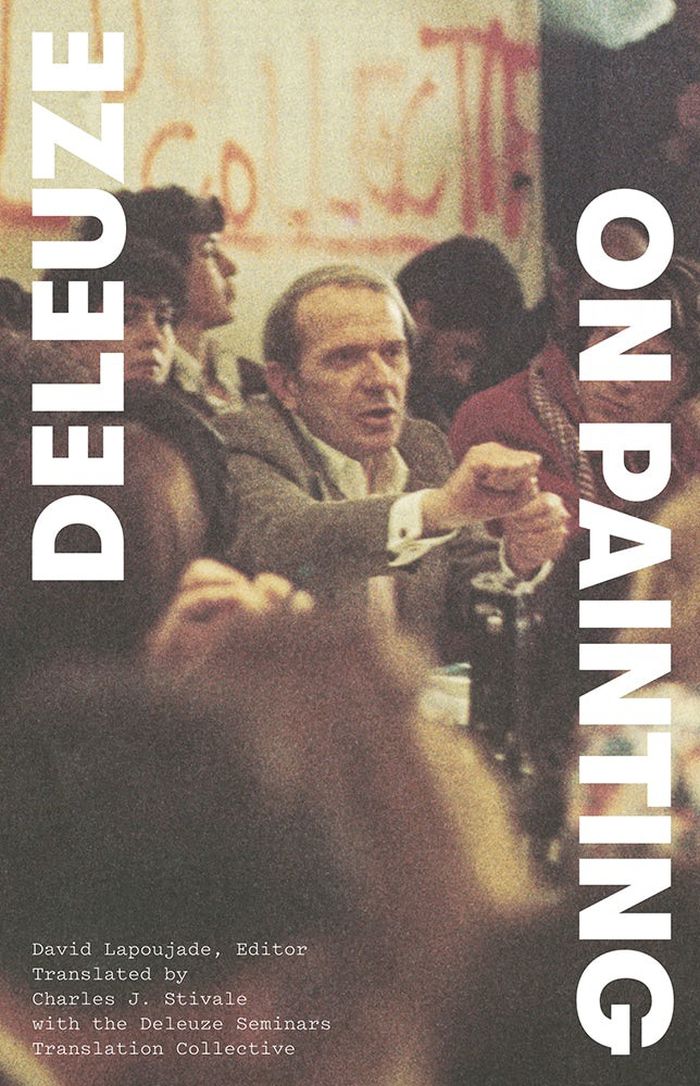
From 1970 until 1987, Gilles Deleuze held a weekly seminar at the Experimental University of Vincennes and, starting in 1980, at Saint-Denis. In the spring of 1981, he began a series of eight seminars on painting and its intersections with philosophy. The recorded sessions, newly transcribed and translated into English, are now available in their entirety for the first(...)
$48.99
(available in store)
Summary:
From 1970 until 1987, Gilles Deleuze held a weekly seminar at the Experimental University of Vincennes and, starting in 1980, at Saint-Denis. In the spring of 1981, he began a series of eight seminars on painting and its intersections with philosophy. The recorded sessions, newly transcribed and translated into English, are now available in their entirety for the first(...)
Title:
On painting: Courses March - June 1981
Actions:
Price:
$48.99
(available in store)
Summary:
From 1970 until 1987, Gilles Deleuze held a weekly seminar at the Experimental University of Vincennes and, starting in 1980, at Saint-Denis. In the spring of 1981, he began a series of eight seminars on painting and its intersections with philosophy. The recorded sessions, newly transcribed and translated into English, are now available in their entirety for the first time. Extensively annotated by philosopher David Lapoujade, On Painting illuminates Deleuze’s thinking on artistic creation, significantly extending the lines of thought in his book Francis Bacon. Through paintings and writing by Rembrandt, Delacroix, Turner, Cézanne, Van Gogh, Klee, Pollock, and Bacon, Deleuze explores the creative process, from chaos to the pictorial fact. The introduction and use of color feature prominently as Deleuze elaborates on artistic and philosophical concepts such as the diagram, modulation, code, and the digital and the analogical. Through this scrutiny, he raises a series of profound and stimulating questions for his students: How does a painter ward off grayness and attain color? What is a line without contour? Why paint at all?
On painting: Courses March - June 1981
Actions:
Price:
$48.99
(available in store)
Summary:
From 1970 until 1987, Gilles Deleuze held a weekly seminar at the Experimental University of Vincennes and, starting in 1980, at Saint-Denis. In the spring of 1981, he began a series of eight seminars on painting and its intersections with philosophy. The recorded sessions, newly transcribed and translated into English, are now available in their entirety for the first time. Extensively annotated by philosopher David Lapoujade, On Painting illuminates Deleuze’s thinking on artistic creation, significantly extending the lines of thought in his book Francis Bacon. Through paintings and writing by Rembrandt, Delacroix, Turner, Cézanne, Van Gogh, Klee, Pollock, and Bacon, Deleuze explores the creative process, from chaos to the pictorial fact. The introduction and use of color feature prominently as Deleuze elaborates on artistic and philosophical concepts such as the diagram, modulation, code, and the digital and the analogical. Through this scrutiny, he raises a series of profound and stimulating questions for his students: How does a painter ward off grayness and attain color? What is a line without contour? Why paint at all?
Form:
books
books
Publication:
August 2025
August 2025
Subject:
Art Theory
Art Theory
Form:
books
books

Title:
Holocaust memorial, Berlin
Holocaust memorial, Berlin
Actions:
Price:
$58.00
(available to order)
Summary:
Inescapably controversial, the Holocaust Memorial Berlin (or, as it’s formally known, the Memorial to the Murdered Jews of Europe) is now finished, some 16 years after it was first proposed. Architect Peter Eisenman’s design, which filled a four-football-field-size parcel of land in the middle of Berlin with more than 2,700 concrete slabs, or stelae, was itself hotly(...)
$58.00
(available to order)
Summary:
Inescapably controversial, the Holocaust Memorial Berlin (or, as it’s formally known, the Memorial to the Murdered Jews of Europe) is now finished, some 16 years after it was first proposed. Architect Peter Eisenman’s design, which filled a four-football-field-size parcel of land in the middle of Berlin with more than 2,700 concrete slabs, or stelae, was itself hotly(...)
Subject:
Architecture Monographs
Architecture Monographs
Publication:
January 1900, Baden
January 1900, Baden
Title:
Holocaust memorial, Berlin
Actions:
Price:
$58.00
(available to order)
Summary:
Inescapably controversial, the Holocaust Memorial Berlin (or, as it’s formally known, the Memorial to the Murdered Jews of Europe) is now finished, some 16 years after it was first proposed. Architect Peter Eisenman’s design, which filled a four-football-field-size parcel of land in the middle of Berlin with more than 2,700 concrete slabs, or stelae, was itself hotly debated, with some complaining that its abstractness, Eisenman’s trademark, made it a monument that evoked no memories. As the debates give way to accounts of the experience of the space, the readers of this book, produced with Eisenman’s cooperation, will be able to compare how successfully the architect’s conception matches the reality. This volume offers a full picture of the process from conceptual and architectural drawings and digital plans to photographs of construction. It holds the narrative of a difficult task, turning “the place of no meaning,” as Eisenman once referred to the site in the hopes of dispelling fears that he was trying to symbolize the deaths that took place during the Holocaust, into a confrontation with the past. Photographs by Hélène Binet and Lukas Wasserman.
Holocaust memorial, Berlin
Actions:
Price:
$58.00
(available to order)
Summary:
Inescapably controversial, the Holocaust Memorial Berlin (or, as it’s formally known, the Memorial to the Murdered Jews of Europe) is now finished, some 16 years after it was first proposed. Architect Peter Eisenman’s design, which filled a four-football-field-size parcel of land in the middle of Berlin with more than 2,700 concrete slabs, or stelae, was itself hotly debated, with some complaining that its abstractness, Eisenman’s trademark, made it a monument that evoked no memories. As the debates give way to accounts of the experience of the space, the readers of this book, produced with Eisenman’s cooperation, will be able to compare how successfully the architect’s conception matches the reality. This volume offers a full picture of the process from conceptual and architectural drawings and digital plans to photographs of construction. It holds the narrative of a difficult task, turning “the place of no meaning,” as Eisenman once referred to the site in the hopes of dispelling fears that he was trying to symbolize the deaths that took place during the Holocaust, into a confrontation with the past. Photographs by Hélène Binet and Lukas Wasserman.
Form:
books
books
Publication:
January 1900, Baden
January 1900, Baden
Subject:
Architecture Monographs
Architecture Monographs
Form:
books
books
Title:
Curating as ethics
Curating as ethics
Actions:
Price:
$39.95
(available to order)
Summary:
Today, everyone is a curator. What was once considered a hallowed expertise is now a commonplace and global activity. Can this new worldwide activity be ethical and, if yes, how? This book argues that curating can be more than just selecting, organizing, and presenting information in galleries or online. Curating can also constitute an ethics, one of acquiring, arranging,(...)
$39.95
(available to order)
Summary:
Today, everyone is a curator. What was once considered a hallowed expertise is now a commonplace and global activity. Can this new worldwide activity be ethical and, if yes, how? This book argues that curating can be more than just selecting, organizing, and presenting information in galleries or online. Curating can also constitute an ethics, one of acquiring, arranging,(...)
Title:
Curating as ethics
Actions:
Price:
$39.95
(available to order)
Summary:
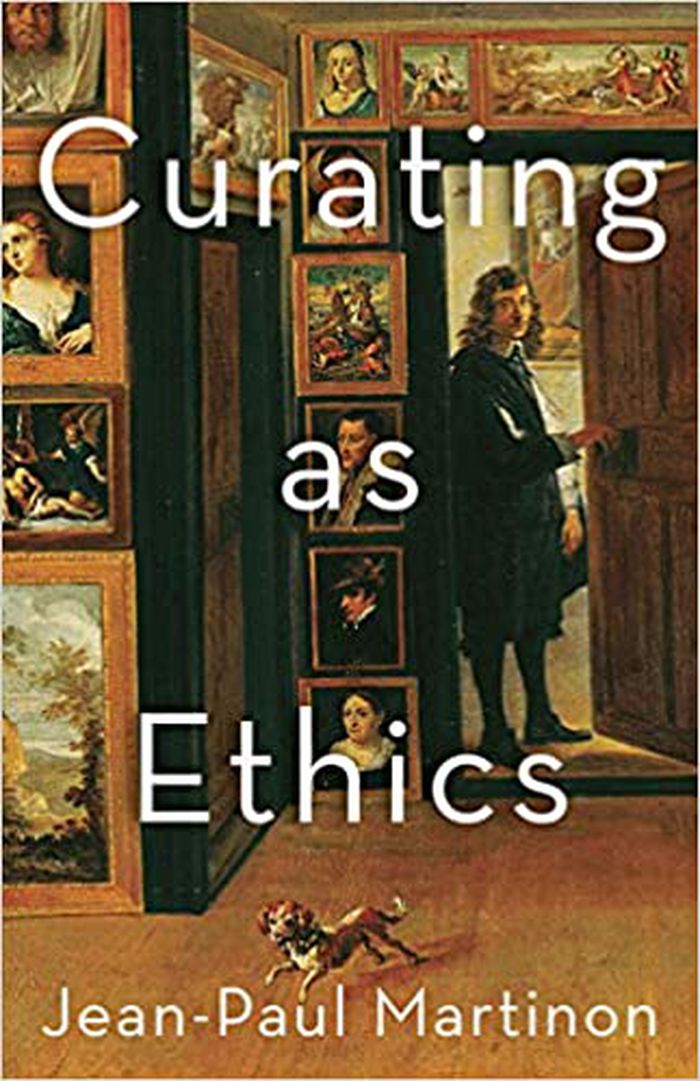
Today, everyone is a curator. What was once considered a hallowed expertise is now a commonplace and global activity. Can this new worldwide activity be ethical and, if yes, how? This book argues that curating can be more than just selecting, organizing, and presenting information in galleries or online. Curating can also constitute an ethics, one of acquiring, arranging, and distributing an always conjectural knowledge about the world. 'Curating as Ethics' is primarily philosophical in scope, evading normative approaches to ethics in favor of an intuitive ethics that operates at the threshold of thought and action. It explores the work of authors as diverse as Heidegger, Spinoza, Meillassoux, Mudimbe, Chalier, and Kofman. Jean-Paul Martinon begins with the fabric of these ethics: how it stems from matter, how it addresses death, how it apprehends interhuman relationships. In the second part he establishes the ground on which the ethics is based, the things that make up the curatorial—for example, the textual and visual evidence or the digital medium. The final part focuses on the activity of curating as such—sharing, caring, preparing, dispensing, and so on.
Curating as ethics
Actions:
Price:
$39.95
(available to order)
Summary:
Today, everyone is a curator. What was once considered a hallowed expertise is now a commonplace and global activity. Can this new worldwide activity be ethical and, if yes, how? This book argues that curating can be more than just selecting, organizing, and presenting information in galleries or online. Curating can also constitute an ethics, one of acquiring, arranging, and distributing an always conjectural knowledge about the world. 'Curating as Ethics' is primarily philosophical in scope, evading normative approaches to ethics in favor of an intuitive ethics that operates at the threshold of thought and action. It explores the work of authors as diverse as Heidegger, Spinoza, Meillassoux, Mudimbe, Chalier, and Kofman. Jean-Paul Martinon begins with the fabric of these ethics: how it stems from matter, how it addresses death, how it apprehends interhuman relationships. In the second part he establishes the ground on which the ethics is based, the things that make up the curatorial—for example, the textual and visual evidence or the digital medium. The final part focuses on the activity of curating as such—sharing, caring, preparing, dispensing, and so on.
Form:
books
books
Publication:
March 2020
March 2020
Subject:
Museology
Museology
Form:
books
books

Actions:
Price:
$33.95
(available to order)
Summary:
Contemporary engagements with documentary are multifaceted and complex, reaching across disciplines to explore the intersections of politics and aesthetics, representation and reality, truth and illusion. Discarding the old notions of “fly on the wall” immediacy or quasi-scientific aspirations to objectivity, critics now understand documentary not as the neutral picturing(...)
$33.95
(available to order)
Summary:
Contemporary engagements with documentary are multifaceted and complex, reaching across disciplines to explore the intersections of politics and aesthetics, representation and reality, truth and illusion. Discarding the old notions of “fly on the wall” immediacy or quasi-scientific aspirations to objectivity, critics now understand documentary not as the neutral picturing(...)
Title:
Documentary Across Disciplines
Actions:
Price:
$33.95
(available to order)
Summary:
Contemporary engagements with documentary are multifaceted and complex, reaching across disciplines to explore the intersections of politics and aesthetics, representation and reality, truth and illusion. Discarding the old notions of “fly on the wall” immediacy or quasi-scientific aspirations to objectivity, critics now understand documentary not as the neutral picturing of reality but as a way of coming to terms with reality through images and narrative. This book collects writings by artists, filmmakers, art historians, poets, literary critics, anthropologists, theorists, and others, to investigate one of the most vital areas of cultural practice: documentary. Their investigations take many forms—essays, personal memoirs, interviews, poetry. Contemporary art turned away from the medium and toward the world, using photography and the moving image to take up global perspectives. Documentary filmmakers, meanwhile, began to work in the gallery context. The contributors consider the hybridization of art and film, and the “documentary turn” of contemporary art. They discuss digital technology and the “crisis of faith” caused by manipulation and generation of images, and the fading of the progressive social mandate that has historically characterized documentary. They consider invisible data and visible evidence; problems of archiving; and surveillance and biometric control, forms of documentation that call for “informatic opacity” as a means of evasion.
Documentary Across Disciplines
Actions:
Price:
$33.95
(available to order)
Summary:
Contemporary engagements with documentary are multifaceted and complex, reaching across disciplines to explore the intersections of politics and aesthetics, representation and reality, truth and illusion. Discarding the old notions of “fly on the wall” immediacy or quasi-scientific aspirations to objectivity, critics now understand documentary not as the neutral picturing of reality but as a way of coming to terms with reality through images and narrative. This book collects writings by artists, filmmakers, art historians, poets, literary critics, anthropologists, theorists, and others, to investigate one of the most vital areas of cultural practice: documentary. Their investigations take many forms—essays, personal memoirs, interviews, poetry. Contemporary art turned away from the medium and toward the world, using photography and the moving image to take up global perspectives. Documentary filmmakers, meanwhile, began to work in the gallery context. The contributors consider the hybridization of art and film, and the “documentary turn” of contemporary art. They discuss digital technology and the “crisis of faith” caused by manipulation and generation of images, and the fading of the progressive social mandate that has historically characterized documentary. They consider invisible data and visible evidence; problems of archiving; and surveillance and biometric control, forms of documentation that call for “informatic opacity” as a means of evasion.
Form:
books
books
Publication:
February 2016
February 2016


