


3590 Results
Form:
books
books
Actions:
Holdings:
Description:
146 pages : illustrations principalement en couleur, cartes ; 28 cm
Description:
146 pages : illustrations principalement en couleur, cartes ; 28 cm
Author:
Subject:
Publication:
Québec : Éditions de l'Épinette noire, [2025]
Québec : Éditions de l'Épinette noire, [2025]
Title:
Géographie et photographie : concepts, formes et paysages partagés ; suivi d'un essai photographique : Québec, banlieue du patrimoine mondial / écrit et illustré par Rémi Guertin.
Actions:
Holdings:
Description:
146 pages : illustrations principalement en couleur, cartes ; 28 cm
Géographie et photographie : concepts, formes et paysages partagés ; suivi d'un essai photographique : Québec, banlieue du patrimoine mondial / écrit et illustré par Rémi Guertin.
Actions:
Holdings:
Description:
146 pages : illustrations principalement en couleur, cartes ; 28 cm
Form:
books
books
Publication:
Québec : Éditions de l'Épinette noire, [2025]
Québec : Éditions de l'Épinette noire, [2025]
Author:
Subject:
Form:
books
books
Actions:
Price:
$78.00
(available to order)
Summary:
The need to personalize our surroundings is a defining human characteristic. For some this need becomes a compulsion to transform their personal surroundings into works of art. The John Michael Kohler Arts Center in Sheboygan, Wisconsin, has undertaken the mission to preserve these environments, which are presented for the first time in Sublime Spaces and Visionary(...)
$78.00
(available to order)
Summary:
The need to personalize our surroundings is a defining human characteristic. For some this need becomes a compulsion to transform their personal surroundings into works of art. The John Michael Kohler Arts Center in Sheboygan, Wisconsin, has undertaken the mission to preserve these environments, which are presented for the first time in Sublime Spaces and Visionary(...)
Subject:
Architecture since 1900, Europe
Architecture since 1900, Europe
Publication:
November 2007, New York
November 2007, New York
Title:
Sublime spaces & visionary worlds : Built environments of vernacular artists
Actions:
Price:
$78.00
(available to order)
Summary:
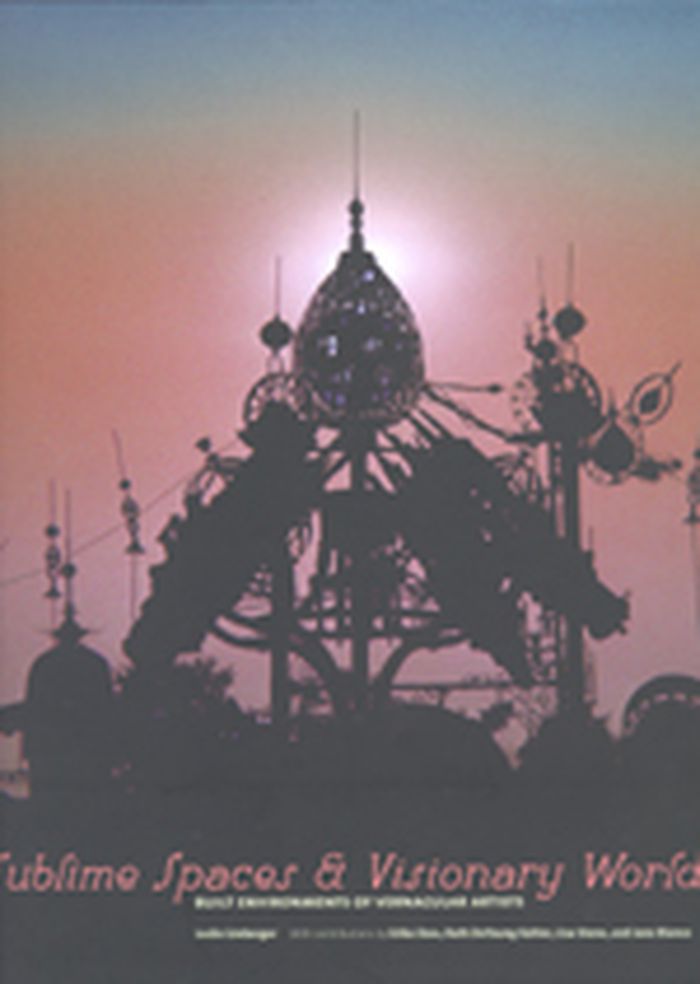
The need to personalize our surroundings is a defining human characteristic. For some this need becomes a compulsion to transform their personal surroundings into works of art. The John Michael Kohler Arts Center in Sheboygan, Wisconsin, has undertaken the mission to preserve these environments, which are presented for the first time in Sublime Spaces and Visionary Worlds. This colorful and inspiring book features the work of twenty-two vernacular artists whose locales, personal histories, and reasons for art-making vary widely but who all share a powerful connection to home-as-art environments. Featured projects range from art environments that remain intact, such as Simon Rodia’s Watts Towers in California, to sites lost over the years such as Emery Blagdon’s six hundred elaborate "Healing Machines," made of copper, aluminum, tinfoil, magnets, ribbons, farm machinery parts, painted light bulbs, beads, coffee can lids, and more. Sublime Spaces and Visionary Worlds is the first book to explore these spectacularly offbeat spaces in detail. From the "Original Rhinestone Cowboy" Loy Bowlin’s wall-to-wall glitter-and-foil living room to the concrete bestiary of the "witch of Fox Point" Mary Nohl, each artist and project is described in detail through a wealth of visuals and text. Sublime Spaces and Visionary Worlds reminds us that our decorative choices tell the world not just what we like but who we are.
Sublime spaces & visionary worlds : Built environments of vernacular artists
Actions:
Price:
$78.00
(available to order)
Summary:
The need to personalize our surroundings is a defining human characteristic. For some this need becomes a compulsion to transform their personal surroundings into works of art. The John Michael Kohler Arts Center in Sheboygan, Wisconsin, has undertaken the mission to preserve these environments, which are presented for the first time in Sublime Spaces and Visionary Worlds. This colorful and inspiring book features the work of twenty-two vernacular artists whose locales, personal histories, and reasons for art-making vary widely but who all share a powerful connection to home-as-art environments. Featured projects range from art environments that remain intact, such as Simon Rodia’s Watts Towers in California, to sites lost over the years such as Emery Blagdon’s six hundred elaborate "Healing Machines," made of copper, aluminum, tinfoil, magnets, ribbons, farm machinery parts, painted light bulbs, beads, coffee can lids, and more. Sublime Spaces and Visionary Worlds is the first book to explore these spectacularly offbeat spaces in detail. From the "Original Rhinestone Cowboy" Loy Bowlin’s wall-to-wall glitter-and-foil living room to the concrete bestiary of the "witch of Fox Point" Mary Nohl, each artist and project is described in detail through a wealth of visuals and text. Sublime Spaces and Visionary Worlds reminds us that our decorative choices tell the world not just what we like but who we are.
Form:
books
books
Publication:
November 2007, New York
November 2007, New York
Subject:
Architecture since 1900, Europe
Architecture since 1900, Europe
Form:
books
books
Actions:
Price:
$12.95
(available to order)
Summary:
In 1956, Time magazine called him one of the “form-givers of the 20th century“: with his invention of steel-tube furniture, Marcel Breuer (1902-1981) has made his mark in the history of design at the tender age of 23. He started his architectural career as one of the Bauhaus’s most influential architects with the 1932 Harnischmacher House. Even Breuer’s earliest work was(...)
$12.95
(available to order)
Summary:
In 1956, Time magazine called him one of the “form-givers of the 20th century“: with his invention of steel-tube furniture, Marcel Breuer (1902-1981) has made his mark in the history of design at the tender age of 23. He started his architectural career as one of the Bauhaus’s most influential architects with the 1932 Harnischmacher House. Even Breuer’s earliest work was(...)
Title:
Breuer : 1902-1981 Createur de formes du XXe siecle
Actions:
Price:
$12.95
(available to order)
Summary:
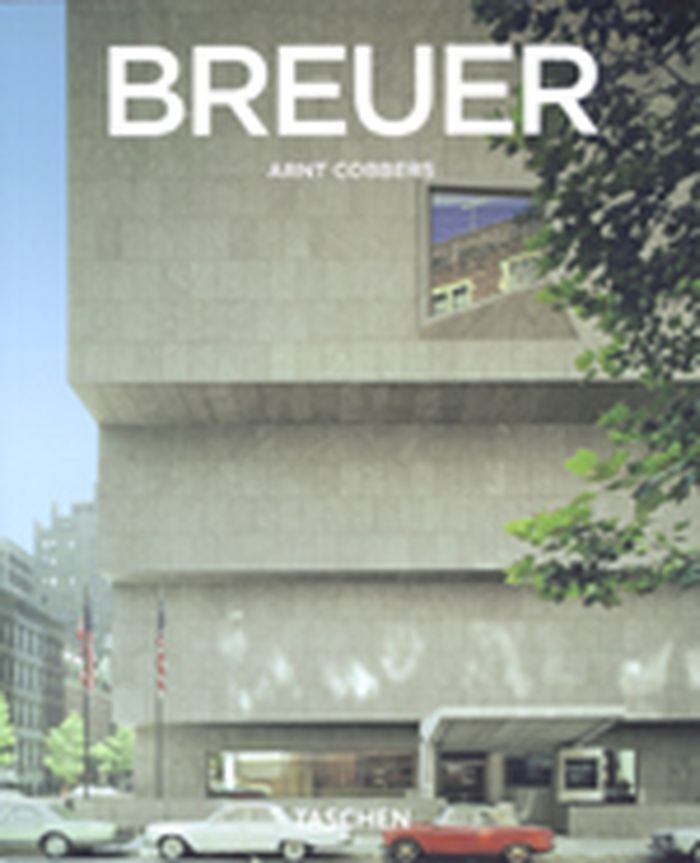
In 1956, Time magazine called him one of the “form-givers of the 20th century“: with his invention of steel-tube furniture, Marcel Breuer (1902-1981) has made his mark in the history of design at the tender age of 23. He started his architectural career as one of the Bauhaus’s most influential architects with the 1932 Harnischmacher House. Even Breuer’s earliest work was marked by the search for a symbiosis between local and global, big and small, smooth and rough. His sparse use of materials emphasized the balance among textures, colors, and shapes. In 1943, he conceived the “binuclear” house concept—the splitting of living and sleeping areas into separate wings—which he first applied to the Geller House I (1944-1946), and which would attain great popularity. After designing the UNESCO headquarters in Paris (1953-1958), reinforced concrete, with its formal plasticity und structural elasticity, continued to give monumental character to buildings such as the Abbey and Campus of St. John’s University in Minnesota (1953-1961), the IBM Research Center in France (1960-1962), and the Whitney Museum of American Art (1963-1966) in New York City. With his keen sense of proportion, shape, and material, Breuer is one of the most important Modernists and is still very much central in the discussion of contemporary architecture.
Breuer : 1902-1981 Createur de formes du XXe siecle
Actions:
Price:
$12.95
(available to order)
Summary:
In 1956, Time magazine called him one of the “form-givers of the 20th century“: with his invention of steel-tube furniture, Marcel Breuer (1902-1981) has made his mark in the history of design at the tender age of 23. He started his architectural career as one of the Bauhaus’s most influential architects with the 1932 Harnischmacher House. Even Breuer’s earliest work was marked by the search for a symbiosis between local and global, big and small, smooth and rough. His sparse use of materials emphasized the balance among textures, colors, and shapes. In 1943, he conceived the “binuclear” house concept—the splitting of living and sleeping areas into separate wings—which he first applied to the Geller House I (1944-1946), and which would attain great popularity. After designing the UNESCO headquarters in Paris (1953-1958), reinforced concrete, with its formal plasticity und structural elasticity, continued to give monumental character to buildings such as the Abbey and Campus of St. John’s University in Minnesota (1953-1961), the IBM Research Center in France (1960-1962), and the Whitney Museum of American Art (1963-1966) in New York City. With his keen sense of proportion, shape, and material, Breuer is one of the most important Modernists and is still very much central in the discussion of contemporary architecture.
Form:
books
books
Publication:
July 2007, Cologne
July 2007, Cologne
Subject:
Architecture Monographs
Architecture Monographs
Form:
books
books
Title:
Doris Salcedo
Doris Salcedo
Actions:
Price:
$59.95
(available to order)
Summary:
Colombian artist Doris Salcedo (b.1958) is one of today's most internationally respected South American sculptors. Inspired as much by poetry and philosophy as by the affecting material qualities of sculpture, Salcedo subtly and painstakingly transforms everyday household objects and garments - symbols of a vanished existence and of the human tragedies that are its(...)
$59.95
(available to order)
Summary:
Colombian artist Doris Salcedo (b.1958) is one of today's most internationally respected South American sculptors. Inspired as much by poetry and philosophy as by the affecting material qualities of sculpture, Salcedo subtly and painstakingly transforms everyday household objects and garments - symbols of a vanished existence and of the human tragedies that are its(...)
Subject:
Contemporary Art Monographs
Contemporary Art Monographs
Publication:
January 2000, London
January 2000, London
Title:
Doris Salcedo
Actions:
Price:
$59.95
(available to order)
Summary:
Colombian artist Doris Salcedo (b.1958) is one of today's most internationally respected South American sculptors. Inspired as much by poetry and philosophy as by the affecting material qualities of sculpture, Salcedo subtly and painstakingly transforms everyday household objects and garments - symbols of a vanished existence and of the human tragedies that are its cause. In Atrabiliaros (1991-6) abandoned shoes of "disappeared" Colombian people, half-concealed behind membranes of animal fibre, become ghost-like symbols of mourning. In Salcedo's ongoing untitled works, wooden furnishings, worn by long use and filled with concrete, mutely evoke the lives they once served. American art critic Nancy Princenthal surveys Salcedo's work in terms of the universal themes it evokes, contextualized in discussion of contemporary scultural practice. New York-based poet and curator Carlos Basualdo discusses with the artist her formative influences, which range from the art of precedecessors such as Joseph Beuys to the writings of philosophers and poets. German literary critic Andreas Huyssen focuses on Salcedo's sculpture Unland: The Orphan's Tunic (1997). For the "Arist's Choice", Salcedo has selected two texts: an extract from "Otherwise than being" (1974) by philosopher Emmanuel Levinas, and poems by Paul Celan. The Doris Salcedo's observations on the human condition and its reflection in the work of poets, novelists and thinkers are discussed in conversation with art historian Charles Merewether.
Doris Salcedo
Actions:
Price:
$59.95
(available to order)
Summary:
Colombian artist Doris Salcedo (b.1958) is one of today's most internationally respected South American sculptors. Inspired as much by poetry and philosophy as by the affecting material qualities of sculpture, Salcedo subtly and painstakingly transforms everyday household objects and garments - symbols of a vanished existence and of the human tragedies that are its cause. In Atrabiliaros (1991-6) abandoned shoes of "disappeared" Colombian people, half-concealed behind membranes of animal fibre, become ghost-like symbols of mourning. In Salcedo's ongoing untitled works, wooden furnishings, worn by long use and filled with concrete, mutely evoke the lives they once served. American art critic Nancy Princenthal surveys Salcedo's work in terms of the universal themes it evokes, contextualized in discussion of contemporary scultural practice. New York-based poet and curator Carlos Basualdo discusses with the artist her formative influences, which range from the art of precedecessors such as Joseph Beuys to the writings of philosophers and poets. German literary critic Andreas Huyssen focuses on Salcedo's sculpture Unland: The Orphan's Tunic (1997). For the "Arist's Choice", Salcedo has selected two texts: an extract from "Otherwise than being" (1974) by philosopher Emmanuel Levinas, and poems by Paul Celan. The Doris Salcedo's observations on the human condition and its reflection in the work of poets, novelists and thinkers are discussed in conversation with art historian Charles Merewether.
Form:
books
books
Publication:
January 2000, London
January 2000, London
Subject:
Contemporary Art Monographs
Contemporary Art Monographs
Form:
books
books
Price:
$60.00
(available to order)
Summary:
In the 1950s, the figure of the arrow had a strange kind of ubiquity in architectural drawings, publications, and advertisements, symbolizing everything from the circulation of cold and warm air in a kitchen fridge to the flow of traffic in assorted New Towns. Twenty-five years earlier there were barely any arrows within architectural publications, and 15 years later they(...)
$60.00
(available to order)
Summary:
In the 1950s, the figure of the arrow had a strange kind of ubiquity in architectural drawings, publications, and advertisements, symbolizing everything from the circulation of cold and warm air in a kitchen fridge to the flow of traffic in assorted New Towns. Twenty-five years earlier there were barely any arrows within architectural publications, and 15 years later they(...)
Title:
On arrows: Essays in British architecture and its environments
Actions:
Price:
$60.00
(available to order)
Summary:
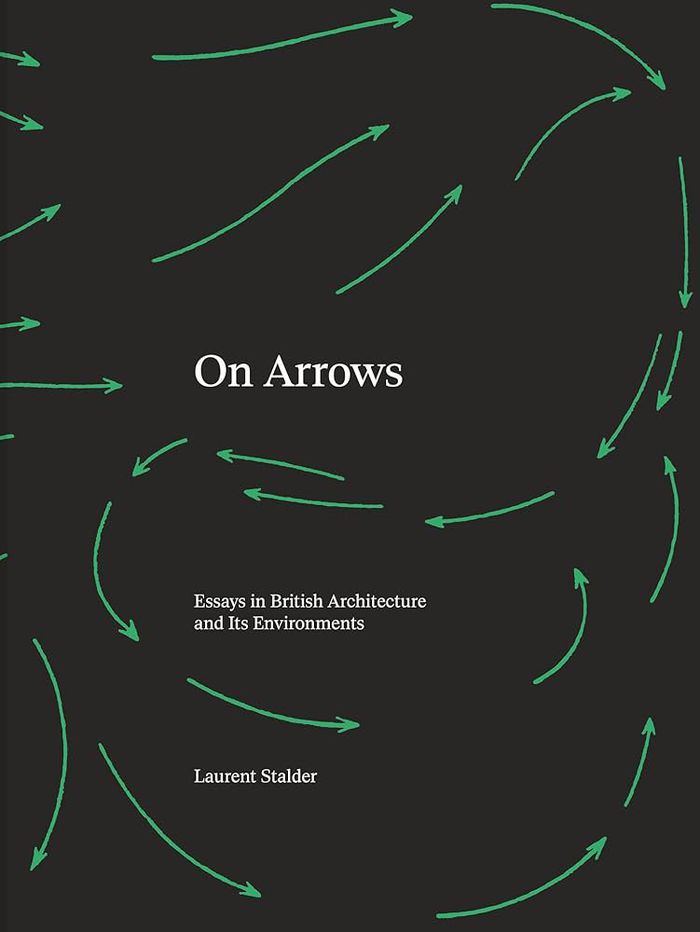
In the 1950s, the figure of the arrow had a strange kind of ubiquity in architectural drawings, publications, and advertisements, symbolizing everything from the circulation of cold and warm air in a kitchen fridge to the flow of traffic in assorted New Towns. Twenty-five years earlier there were barely any arrows within architectural publications, and 15 years later they had all but disappeared. In ''On Arrows'', Laurent Stalder looks back at the near past to trace the idea of performance in architecture by following this pervasive yet relatively unnoticed figure within the history of British architecture. During its short, intense period of use, the arrow pointed beyond any one singular author, typology, or scale, to the operative dimension of architecture and its environments, working both as an appropriate representational technique and a concrete tool for design. Stalder uses the arrow to move through the different dimensions of performance, mapping out the changing set of constellations that made up postwar British architecture and its environments: the constructive aspects, structural properties, infrastructural innovations, spatial challenges as well as their aesthetic and practical consequences. It is the arrow, he writes, that brings together debates from within different disciplines—from building physics, to sociology, structural design, and historiography, inscribed as they are in the materials, spaces, and buildings that are all too often considered in isolation from one another.
On arrows: Essays in British architecture and its environments
Actions:
Price:
$60.00
(available to order)
Summary:
In the 1950s, the figure of the arrow had a strange kind of ubiquity in architectural drawings, publications, and advertisements, symbolizing everything from the circulation of cold and warm air in a kitchen fridge to the flow of traffic in assorted New Towns. Twenty-five years earlier there were barely any arrows within architectural publications, and 15 years later they had all but disappeared. In ''On Arrows'', Laurent Stalder looks back at the near past to trace the idea of performance in architecture by following this pervasive yet relatively unnoticed figure within the history of British architecture. During its short, intense period of use, the arrow pointed beyond any one singular author, typology, or scale, to the operative dimension of architecture and its environments, working both as an appropriate representational technique and a concrete tool for design. Stalder uses the arrow to move through the different dimensions of performance, mapping out the changing set of constellations that made up postwar British architecture and its environments: the constructive aspects, structural properties, infrastructural innovations, spatial challenges as well as their aesthetic and practical consequences. It is the arrow, he writes, that brings together debates from within different disciplines—from building physics, to sociology, structural design, and historiography, inscribed as they are in the materials, spaces, and buildings that are all too often considered in isolation from one another.
Form:
books
books
Publication:
January 2025
January 2025
Subject:
Architectural Theory
Architectural Theory
Form:
books
books
Price:
$39.95
(available to order)
Summary:
Bamboo has an unparalleled history; it is very old, and at the same time very new. Bamboo extends far beyond the boundaries of most plants – it is distributed widely throughout the world, and is utilized by hundreds of millions of people in a great number of ways. Through its myriad uses as food, clothing, paper and shelter, bamboo has met the physical and spiritual(...)
$39.95
(available to order)
Summary:
Bamboo has an unparalleled history; it is very old, and at the same time very new. Bamboo extends far beyond the boundaries of most plants – it is distributed widely throughout the world, and is utilized by hundreds of millions of people in a great number of ways. Through its myriad uses as food, clothing, paper and shelter, bamboo has met the physical and spiritual(...)
Title:
Bamboo
Actions:
Price:
$39.95
(available to order)
Summary:
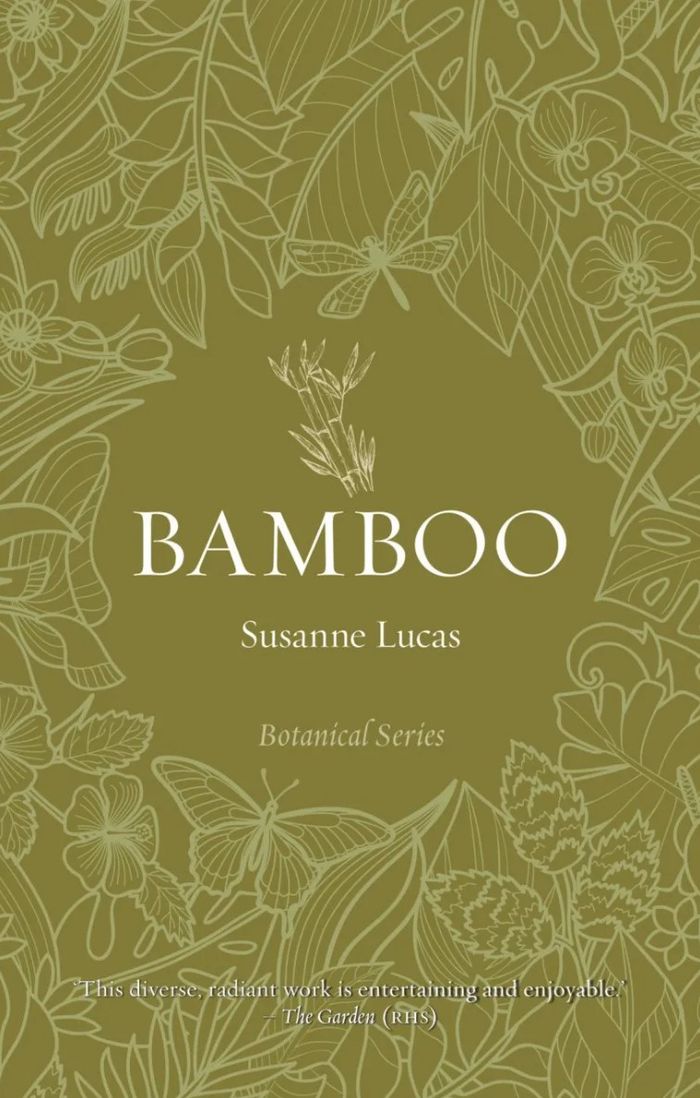
Bamboo has an unparalleled history; it is very old, and at the same time very new. Bamboo extends far beyond the boundaries of most plants – it is distributed widely throughout the world, and is utilized by hundreds of millions of people in a great number of ways. Through its myriad uses as food, clothing, paper and shelter, bamboo has met the physical and spiritual requirements of humanity since the earliest times. It is believed that the first books were written on bamboo, and there is evidence that it was used by humans more than 5,000 years ago for the framework of housing as well as musical instruments. It also occurs in the creation beliefs of cultures across the globe. Bamboo plays a vital role in the survival of many animals and ecosystems as well as having unique characteristics, offering potential solutions to modern ecological dilemmas – it grows extremely quickly, for example, making it an easily renewable resource. With the advent of modern research and technologies, the use of bamboo has increased dramatically, elevating its importance to human society – it can now be found in the filaments of light bulbs, the skins of airplanes and the reinforcements of concrete. Bamboo is even a new material for today's modern bicycles. Bamboo draws on a vast array of sources to build a complete picture of bamboo in both history and our modern world.
Bamboo
Actions:
Price:
$39.95
(available to order)
Summary:
Bamboo has an unparalleled history; it is very old, and at the same time very new. Bamboo extends far beyond the boundaries of most plants – it is distributed widely throughout the world, and is utilized by hundreds of millions of people in a great number of ways. Through its myriad uses as food, clothing, paper and shelter, bamboo has met the physical and spiritual requirements of humanity since the earliest times. It is believed that the first books were written on bamboo, and there is evidence that it was used by humans more than 5,000 years ago for the framework of housing as well as musical instruments. It also occurs in the creation beliefs of cultures across the globe. Bamboo plays a vital role in the survival of many animals and ecosystems as well as having unique characteristics, offering potential solutions to modern ecological dilemmas – it grows extremely quickly, for example, making it an easily renewable resource. With the advent of modern research and technologies, the use of bamboo has increased dramatically, elevating its importance to human society – it can now be found in the filaments of light bulbs, the skins of airplanes and the reinforcements of concrete. Bamboo is even a new material for today's modern bicycles. Bamboo draws on a vast array of sources to build a complete picture of bamboo in both history and our modern world.
Form:
books
books
Publication:
March 2025
March 2025
Subject:
Fauna and flora
Fauna and flora
Form:
books
books
Actions:
Price:
$84.00
(available to order)
Summary:
After a century largely dominated by discussions of space and form, there is now renewed interest in the material and tectonic aspects of architecture. This illustrated book takes a detailed and timely look at the importance of materials in architecture, focusing particularly on modern and contemporary buildings. Richard Weston begins with a brief cultural history of(...)
$84.00
(available to order)
Summary:
After a century largely dominated by discussions of space and form, there is now renewed interest in the material and tectonic aspects of architecture. This illustrated book takes a detailed and timely look at the importance of materials in architecture, focusing particularly on modern and contemporary buildings. Richard Weston begins with a brief cultural history of(...)
Title:
Materials, form and architecture
Actions:
Price:
$84.00
(available to order)
Summary:
After a century largely dominated by discussions of space and form, there is now renewed interest in the material and tectonic aspects of architecture. This illustrated book takes a detailed and timely look at the importance of materials in architecture, focusing particularly on modern and contemporary buildings. Richard Weston begins with a brief cultural history of major building materials--such as timber, earth, stone, steel, and glass--exploring how they have been produced, considered, worked, and used in a variety of buildings and cultures. He then explores the ways that architects, theorists, and critics have articulated the relationship between materials and architectural forms and spaces throughout modern history. Other featured topics include the importance of place, time, junctions, finish, and meaning; the proposition that in an increasingly global and virtual world, many architects emphasize the material qualities of buildings to ensure a heightened sense of reality; and a comprehensive survey of current and prospective developments in materials, from refinements of such familiar materials as fiber-reinforced concrete and “intelligent” glass to new synthetic compounds and working methods. Together, these varied perspectives on the material art of building offer insights into the impact that the type and treatment of materials has on how buildings can be constructed and designed, how they function, and how they fare over time.
Materials, form and architecture
Actions:
Price:
$84.00
(available to order)
Summary:
After a century largely dominated by discussions of space and form, there is now renewed interest in the material and tectonic aspects of architecture. This illustrated book takes a detailed and timely look at the importance of materials in architecture, focusing particularly on modern and contemporary buildings. Richard Weston begins with a brief cultural history of major building materials--such as timber, earth, stone, steel, and glass--exploring how they have been produced, considered, worked, and used in a variety of buildings and cultures. He then explores the ways that architects, theorists, and critics have articulated the relationship between materials and architectural forms and spaces throughout modern history. Other featured topics include the importance of place, time, junctions, finish, and meaning; the proposition that in an increasingly global and virtual world, many architects emphasize the material qualities of buildings to ensure a heightened sense of reality; and a comprehensive survey of current and prospective developments in materials, from refinements of such familiar materials as fiber-reinforced concrete and “intelligent” glass to new synthetic compounds and working methods. Together, these varied perspectives on the material art of building offer insights into the impact that the type and treatment of materials has on how buildings can be constructed and designed, how they function, and how they fare over time.
Form:
books
books
Publication:
September 2003, New Haven
September 2003, New Haven
Subject:
Materials and Lighting
Materials and Lighting
Form:
books
books
Actions:
Price:
$67.50
(available to order)
Summary:
"Wang Shu Amateur Architecture Studio" is the first major book on the recent work of architect Wang Shu, Pritzker Price winner in 2012, and his wife Lu Wenyu. Together they have run Amateur Architecture Studio, based in Hangzhou, China, for nearly 20 years. At a time when China’s explosive urbanization is making inroads into rural areas and leaving the marks of cheap(...)
$67.50
(available to order)
Summary:
"Wang Shu Amateur Architecture Studio" is the first major book on the recent work of architect Wang Shu, Pritzker Price winner in 2012, and his wife Lu Wenyu. Together they have run Amateur Architecture Studio, based in Hangzhou, China, for nearly 20 years. At a time when China’s explosive urbanization is making inroads into rural areas and leaving the marks of cheap(...)
Title:
Wang Shu and Amateur Architecture Studio
Actions:
Price:
$67.50
(available to order)
Summary:
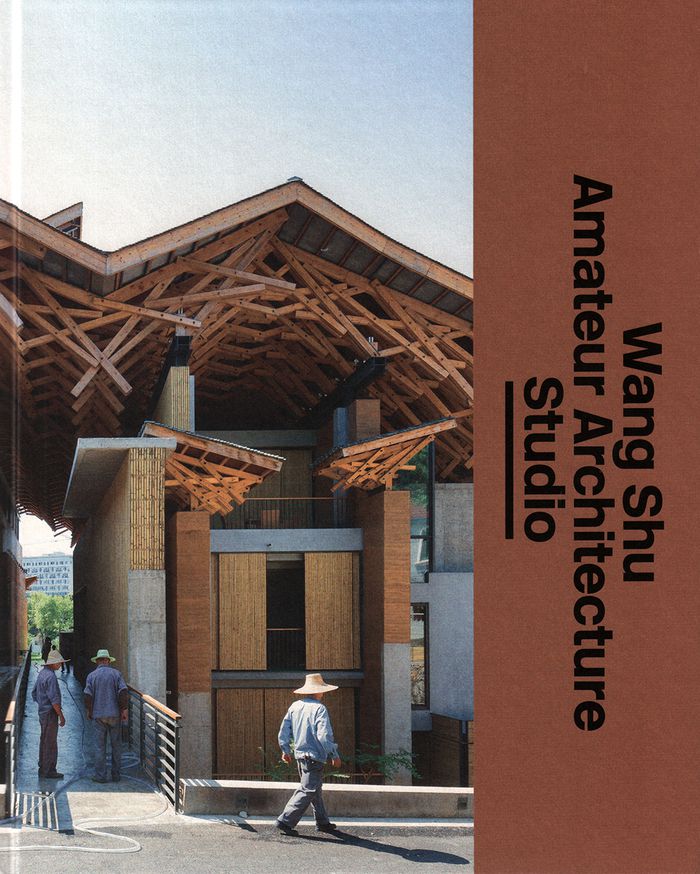
"Wang Shu Amateur Architecture Studio" is the first major book on the recent work of architect Wang Shu, Pritzker Price winner in 2012, and his wife Lu Wenyu. Together they have run Amateur Architecture Studio, based in Hangzhou, China, for nearly 20 years. At a time when China’s explosive urbanization is making inroads into rural areas and leaving the marks of cheap concrete construction everywhere, Amateur Architecture Studio is keen to work against this tendency by reusing materials from the buildings that Chinese authorities are systematically tearing down. Amateur Architecture Studio’s working ways successfully represent socially conscious and sustainable new architecture. Wang Shu’s architecture reveals a thoughtful attitude toward both design and implementation, as well as the ability to react flexibly to the surroundings and history of a particular site. At heart, it comes down to preserving Chinese building customs and local awareness of material in a nation that is fast losing its building culture. The studio’s projects inhabit a fascinating field between allusions to traditional Chinese culture and large-scale modern architecture. This book is published on the occasion of the Louisiana Museum of Modern Art exhibition in 2017 of Wang Shu and Amateur Architecture Studio’s work. Featuring a wealth of images by architecture photographer Iwan Baan this is a detailed and reflective guide to Amateur Architecture Studio’s projects, philosophy and methodology
Wang Shu and Amateur Architecture Studio
Actions:
Price:
$67.50
(available to order)
Summary:
"Wang Shu Amateur Architecture Studio" is the first major book on the recent work of architect Wang Shu, Pritzker Price winner in 2012, and his wife Lu Wenyu. Together they have run Amateur Architecture Studio, based in Hangzhou, China, for nearly 20 years. At a time when China’s explosive urbanization is making inroads into rural areas and leaving the marks of cheap concrete construction everywhere, Amateur Architecture Studio is keen to work against this tendency by reusing materials from the buildings that Chinese authorities are systematically tearing down. Amateur Architecture Studio’s working ways successfully represent socially conscious and sustainable new architecture. Wang Shu’s architecture reveals a thoughtful attitude toward both design and implementation, as well as the ability to react flexibly to the surroundings and history of a particular site. At heart, it comes down to preserving Chinese building customs and local awareness of material in a nation that is fast losing its building culture. The studio’s projects inhabit a fascinating field between allusions to traditional Chinese culture and large-scale modern architecture. This book is published on the occasion of the Louisiana Museum of Modern Art exhibition in 2017 of Wang Shu and Amateur Architecture Studio’s work. Featuring a wealth of images by architecture photographer Iwan Baan this is a detailed and reflective guide to Amateur Architecture Studio’s projects, philosophy and methodology
Form:
books
books
Publication:
February 2017
February 2017
Subject:
Architecture Monographs
Architecture Monographs
Form:
books
books

Actions:
Price:
$22.95
(available to order)
Summary:
Why do walls marking national boundaries proliferate amid widespread proclamations of global connectedness and despite anticipation of a world without borders? Why are barricades built of concrete, steel, and barbed wire when threats to the nation today are so often miniaturized, vaporous, clandestine, dispersed, or networked? In "Walled states, waning sovereignty", Wendy(...)
$22.95
(available to order)
Summary:
Why do walls marking national boundaries proliferate amid widespread proclamations of global connectedness and despite anticipation of a world without borders? Why are barricades built of concrete, steel, and barbed wire when threats to the nation today are so often miniaturized, vaporous, clandestine, dispersed, or networked? In "Walled states, waning sovereignty", Wendy(...)
Title:
Walled states, waning sovereignty, New edition
Actions:
Price:
$22.95
(available to order)
Summary:
Why do walls marking national boundaries proliferate amid widespread proclamations of global connectedness and despite anticipation of a world without borders? Why are barricades built of concrete, steel, and barbed wire when threats to the nation today are so often miniaturized, vaporous, clandestine, dispersed, or networked? In "Walled states, waning sovereignty", Wendy Brown considers the recent spate of wall building in contrast to the erosion of nation-state sovereignty. Drawing on classical and contemporary political theories of state sovereignty in order to understand how state power and national identity persist amid its decline, Brown considers both the need of the state for legitimacy and the popular desires that incite the contemporary building of walls. The new walls—dividing Texas from Mexico, Israel from Palestine, South Africa from Zimbabwe—consecrate the broken boundaries they would seem to contest and signify the ungovernability of a range of forces unleashed by globalization. Yet these same walls often amount to little more than theatrical props, frequently breached, and blur the distinction between law and lawlessness that they are intended to represent. But if today’s walls fail to resolve the conflicts between globalization and national identity, they nonetheless project a stark image of sovereign power. Walls, Brown argues, address human desires for containment and protection in a world increasingly without these provisions. Walls respond to the wish for horizons even as horizons are vanquished.
Walled states, waning sovereignty, New edition
Actions:
Price:
$22.95
(available to order)
Summary:
Why do walls marking national boundaries proliferate amid widespread proclamations of global connectedness and despite anticipation of a world without borders? Why are barricades built of concrete, steel, and barbed wire when threats to the nation today are so often miniaturized, vaporous, clandestine, dispersed, or networked? In "Walled states, waning sovereignty", Wendy Brown considers the recent spate of wall building in contrast to the erosion of nation-state sovereignty. Drawing on classical and contemporary political theories of state sovereignty in order to understand how state power and national identity persist amid its decline, Brown considers both the need of the state for legitimacy and the popular desires that incite the contemporary building of walls. The new walls—dividing Texas from Mexico, Israel from Palestine, South Africa from Zimbabwe—consecrate the broken boundaries they would seem to contest and signify the ungovernability of a range of forces unleashed by globalization. Yet these same walls often amount to little more than theatrical props, frequently breached, and blur the distinction between law and lawlessness that they are intended to represent. But if today’s walls fail to resolve the conflicts between globalization and national identity, they nonetheless project a stark image of sovereign power. Walls, Brown argues, address human desires for containment and protection in a world increasingly without these provisions. Walls respond to the wish for horizons even as horizons are vanquished.
Form:
books
books
Publication:
April 2017
April 2017
Subject:
Architectural Theory
Architectural Theory
Form:
books
books
Title:
Buildings must die
Buildings must die
Actions:
Price:
$38.95
(available to order)
Summary:
Buildings, although inanimate, are often assumed to have “life.” And the architect, through the act of design, is assumed to be their conceiver and creator. But what of the “death” of buildings? What of the decay, deterioration, and destruction to which they are inevitably subject? And what might such endings mean for architecture’s sense of itself? In Buildings Must Die,(...)
$38.95
(available to order)
Summary:
Buildings, although inanimate, are often assumed to have “life.” And the architect, through the act of design, is assumed to be their conceiver and creator. But what of the “death” of buildings? What of the decay, deterioration, and destruction to which they are inevitably subject? And what might such endings mean for architecture’s sense of itself? In Buildings Must Die,(...)
Title:
Buildings must die
Actions:
Price:
$38.95
(available to order)
Summary:
Buildings, although inanimate, are often assumed to have “life.” And the architect, through the act of design, is assumed to be their conceiver and creator. But what of the “death” of buildings? What of the decay, deterioration, and destruction to which they are inevitably subject? And what might such endings mean for architecture’s sense of itself? In Buildings Must Die, Stephen Cairns and Jane Jacobs look awry at core architectural concerns. They examine spalling concrete and creeping rust, contemplate ruins old and new, and pick through the rubble of earthquake-shattered churches, imploded housing projects, and demolished Brutalist office buildings. Their investigation of the death of buildings reorders architectural notions of creativity, reshapes architecture’s preoccupation with good form, loosens its vanities of durability, and expands its sense of value. It does so not to kill off architecture as we know it, but to rethink its agency and its capacity to make worlds differently. Cairns and Jacobs offer an original contemplation of architecture that draws on theories of waste and value. Their richly illustrated case studies of building “deaths” include the planned and the unintended, the lamented and the celebrated. They take us from Moline to Christchurch, from London to Bangkok, from Tokyo to Paris. And they feature the work of such architects as Eero Saarinen, Carlo Scarpa, Cedric Price, Arata Isozaki, Rem Koolhaas and François Roche.
Buildings must die
Actions:
Price:
$38.95
(available to order)
Summary:
Buildings, although inanimate, are often assumed to have “life.” And the architect, through the act of design, is assumed to be their conceiver and creator. But what of the “death” of buildings? What of the decay, deterioration, and destruction to which they are inevitably subject? And what might such endings mean for architecture’s sense of itself? In Buildings Must Die, Stephen Cairns and Jane Jacobs look awry at core architectural concerns. They examine spalling concrete and creeping rust, contemplate ruins old and new, and pick through the rubble of earthquake-shattered churches, imploded housing projects, and demolished Brutalist office buildings. Their investigation of the death of buildings reorders architectural notions of creativity, reshapes architecture’s preoccupation with good form, loosens its vanities of durability, and expands its sense of value. It does so not to kill off architecture as we know it, but to rethink its agency and its capacity to make worlds differently. Cairns and Jacobs offer an original contemplation of architecture that draws on theories of waste and value. Their richly illustrated case studies of building “deaths” include the planned and the unintended, the lamented and the celebrated. They take us from Moline to Christchurch, from London to Bangkok, from Tokyo to Paris. And they feature the work of such architects as Eero Saarinen, Carlo Scarpa, Cedric Price, Arata Isozaki, Rem Koolhaas and François Roche.
Form:
books
books
Publication:
August 2017
August 2017
Subject:
Architectural Theory
Architectural Theory


