


3590 Results
Form:
books
books
Actions:
Price:
$31.50
(available to order)
Summary:
In this long-awaited work, Dalibor Vesely proposes an alternative to the narrow vision of contemporary architecture as a discipline that can be treated as an instrument or commodity. In doing so, he offers an account of the ontological and cultural foundations of modern architecture and, consequently, of the nature and cultural role of architecture through history.(...)
$31.50
(available to order)
Summary:
In this long-awaited work, Dalibor Vesely proposes an alternative to the narrow vision of contemporary architecture as a discipline that can be treated as an instrument or commodity. In doing so, he offers an account of the ontological and cultural foundations of modern architecture and, consequently, of the nature and cultural role of architecture through history.(...)
Subject:
Architectural Theory
Architectural Theory
Publication:
October 2006, Cambridge (MA), London
October 2006, Cambridge (MA), London
Title:
Architecture in the age of divided representation : the question of creativity in the shadow of production
Actions:
Price:
$31.50
(available to order)
Summary:
In this long-awaited work, Dalibor Vesely proposes an alternative to the narrow vision of contemporary architecture as a discipline that can be treated as an instrument or commodity. In doing so, he offers an account of the ontological and cultural foundations of modern architecture and, consequently, of the nature and cultural role of architecture through history. Vesely's argument, structured as a critical dialogue, discovers the first plausible anticipation of modernity in the formation of Renaissance perspective. Understanding this notion of perspective against the background of the medieval philosophy of light, he argues, leads to an understanding of architectural space as formed by typical human situations and by light before it is structured geometrically. The central part of the book addresses the question of divided representation - the tension between the instrumental and the communicative roles of architecture - in the period of the baroque, when architectural thinking was seriously challenged by the emergence of modern science. Vesely argues that to resolve the dilemma of modernity - reconciling the inventions and achievements of modern technology with the human condition and the natural world - we can turn to architecture and its latent capacity to reconcile different levels of reality, its ability to relate abstract ideas and conceptual structures to the concrete situations of everyday life. Vesely sees the restoration of this communicative role of architecture as the key to the restoration of architecture as the topological and corporeal foundation of culture; what the book is to our literacy, he argues, architecture is to culture as a whole. He concludes by proposing a new poetics of architecture that will serve as a framework for the restoration of the humanistic role of architecture in the age of technology.
Architecture in the age of divided representation : the question of creativity in the shadow of production
Actions:
Price:
$31.50
(available to order)
Summary:
In this long-awaited work, Dalibor Vesely proposes an alternative to the narrow vision of contemporary architecture as a discipline that can be treated as an instrument or commodity. In doing so, he offers an account of the ontological and cultural foundations of modern architecture and, consequently, of the nature and cultural role of architecture through history. Vesely's argument, structured as a critical dialogue, discovers the first plausible anticipation of modernity in the formation of Renaissance perspective. Understanding this notion of perspective against the background of the medieval philosophy of light, he argues, leads to an understanding of architectural space as formed by typical human situations and by light before it is structured geometrically. The central part of the book addresses the question of divided representation - the tension between the instrumental and the communicative roles of architecture - in the period of the baroque, when architectural thinking was seriously challenged by the emergence of modern science. Vesely argues that to resolve the dilemma of modernity - reconciling the inventions and achievements of modern technology with the human condition and the natural world - we can turn to architecture and its latent capacity to reconcile different levels of reality, its ability to relate abstract ideas and conceptual structures to the concrete situations of everyday life. Vesely sees the restoration of this communicative role of architecture as the key to the restoration of architecture as the topological and corporeal foundation of culture; what the book is to our literacy, he argues, architecture is to culture as a whole. He concludes by proposing a new poetics of architecture that will serve as a framework for the restoration of the humanistic role of architecture in the age of technology.
Form:
books
books
Publication:
October 2006, Cambridge (MA), London
October 2006, Cambridge (MA), London
Subject:
Architectural Theory
Architectural Theory
Form:
books
books
Actions:
Price:
$34.95
(available to order)
Summary:
"The complex answer: On art as a non-binary intelligence" presents a series of entangled essays on the question on how art—and contemporary art practices in particular—embodies an intelligence capable of serving the erasure of the culture/nature distinction. The book is conceived in four parts and each not only introduces a slightly different writing on the subject(...)
$34.95
(available to order)
Summary:
"The complex answer: On art as a non-binary intelligence" presents a series of entangled essays on the question on how art—and contemporary art practices in particular—embodies an intelligence capable of serving the erasure of the culture/nature distinction. The book is conceived in four parts and each not only introduces a slightly different writing on the subject(...)
Title:
The complex answer: On art as a non-binary intelligence
Actions:
Price:
$34.95
(available to order)
Summary:
"The complex answer: On art as a non-binary intelligence" presents a series of entangled essays on the question on how art—and contemporary art practices in particular—embodies an intelligence capable of serving the erasure of the culture/nature distinction. The book is conceived in four parts and each not only introduces a slightly different writing on the subject matter, but also refers to concrete questions that affect the practice of art, the exercise of exhibiting, the duty of reflecting, and the institutional forms that define our present but may radically change in a near future. The book imagines art and contemporary art as an organ. An organ that produces an experience of inexpressible realities that are fundamental to understanding life and its processes. Stem cells exist, first, without a purpose and it is for the whole organism to decide if they will become part of an auditive nerve or the brain or the cornea of an eye. This adding to an organ is how Chus Martínez understands the intelligence of art. Poets and artists have claimed to understand the language of birds and flowers. We speak now of multi-species communication without a trace of metaphoric language. The experience of nature has evolved inside artistic practice. One could claim that the very fact that we talk about artificial intelligence is a merit of the arts. To transfer traits of organic life to inorganic entities such as information systems is a bold move that took centuries to prepare. Art has been essential in getting our senses and our arguments ready to accept this reality. The same with animal language, the synchronized reactions of a rainforest, and the transformative way fish have been discovered as able to recognize their own image in a mirror. These are just jests on the part of the sciences, developments of technical knowledges.
The complex answer: On art as a non-binary intelligence
Actions:
Price:
$34.95
(available to order)
Summary:
"The complex answer: On art as a non-binary intelligence" presents a series of entangled essays on the question on how art—and contemporary art practices in particular—embodies an intelligence capable of serving the erasure of the culture/nature distinction. The book is conceived in four parts and each not only introduces a slightly different writing on the subject matter, but also refers to concrete questions that affect the practice of art, the exercise of exhibiting, the duty of reflecting, and the institutional forms that define our present but may radically change in a near future. The book imagines art and contemporary art as an organ. An organ that produces an experience of inexpressible realities that are fundamental to understanding life and its processes. Stem cells exist, first, without a purpose and it is for the whole organism to decide if they will become part of an auditive nerve or the brain or the cornea of an eye. This adding to an organ is how Chus Martínez understands the intelligence of art. Poets and artists have claimed to understand the language of birds and flowers. We speak now of multi-species communication without a trace of metaphoric language. The experience of nature has evolved inside artistic practice. One could claim that the very fact that we talk about artificial intelligence is a merit of the arts. To transfer traits of organic life to inorganic entities such as information systems is a bold move that took centuries to prepare. Art has been essential in getting our senses and our arguments ready to accept this reality. The same with animal language, the synchronized reactions of a rainforest, and the transformative way fish have been discovered as able to recognize their own image in a mirror. These are just jests on the part of the sciences, developments of technical knowledges.
Form:
books
books
Publication:
February 2024
February 2024
Subject:
Art Theory
Art Theory
Form:
books
books
Actions:
Price:
$62.50
(available to order)
Summary:
Dalibor Vesely proposes an alternative to the narrow vision of contemporary architecture as a discipline that can be treated as an instrument or commodity. In doing so, he offers nothing less than an account of the ontological and cultural foundations of modern architecture and, consequently, of the nature and cultural role of architecture through history. Vesely's(...)
$62.50
(available to order)
Summary:
Dalibor Vesely proposes an alternative to the narrow vision of contemporary architecture as a discipline that can be treated as an instrument or commodity. In doing so, he offers nothing less than an account of the ontological and cultural foundations of modern architecture and, consequently, of the nature and cultural role of architecture through history. Vesely's(...)
Title:
Architecture in the age of divided representation : the question of creativity in the shadow of production
Actions:
Price:
$62.50
(available to order)
Summary:
Dalibor Vesely proposes an alternative to the narrow vision of contemporary architecture as a discipline that can be treated as an instrument or commodity. In doing so, he offers nothing less than an account of the ontological and cultural foundations of modern architecture and, consequently, of the nature and cultural role of architecture through history. Vesely's argument, structured as a critical dialogue, discovers the first plausible anticipation of modernity in the formation of Renaissance perspective. Understanding this notion of perspective against the background of the medieval philosophy of light, he argues, leads to an understanding of architectural space as formed by typical human situations and by light before it is structured geometrically. The central part of the book addresses the question of divided representation - the tension between the instrumental and the communicative roles of architecture - in the period of the baroque, when architectural thinking was seriously challenged by the emergence of modern science. Vesely argues that to resolve the dilemma of modernity - reconciling the inventions and achievements of modern technology with the human condition and the natural world - we can turn to architecture and its latent capacity to reconcile different levels of reality, its ability to relate abstract ideas and conceptual structures to the concrete situations of everyday life. Vesely sees the restoration of this communicative role of architecture as the key to the restoration of architecture as the topological and corporeal foundation of culture; what the book is to our literacy, he argues, architecture is to culture as a whole. He concludes by proposing a new poetics of architecture that will serve as a framework for the restoration of the humanistic role of architecture in the age of technology.
Architecture in the age of divided representation : the question of creativity in the shadow of production
Actions:
Price:
$62.50
(available to order)
Summary:
Dalibor Vesely proposes an alternative to the narrow vision of contemporary architecture as a discipline that can be treated as an instrument or commodity. In doing so, he offers nothing less than an account of the ontological and cultural foundations of modern architecture and, consequently, of the nature and cultural role of architecture through history. Vesely's argument, structured as a critical dialogue, discovers the first plausible anticipation of modernity in the formation of Renaissance perspective. Understanding this notion of perspective against the background of the medieval philosophy of light, he argues, leads to an understanding of architectural space as formed by typical human situations and by light before it is structured geometrically. The central part of the book addresses the question of divided representation - the tension between the instrumental and the communicative roles of architecture - in the period of the baroque, when architectural thinking was seriously challenged by the emergence of modern science. Vesely argues that to resolve the dilemma of modernity - reconciling the inventions and achievements of modern technology with the human condition and the natural world - we can turn to architecture and its latent capacity to reconcile different levels of reality, its ability to relate abstract ideas and conceptual structures to the concrete situations of everyday life. Vesely sees the restoration of this communicative role of architecture as the key to the restoration of architecture as the topological and corporeal foundation of culture; what the book is to our literacy, he argues, architecture is to culture as a whole. He concludes by proposing a new poetics of architecture that will serve as a framework for the restoration of the humanistic role of architecture in the age of technology.
Form:
books
books
Publication:
June 2004, Cambridge, Mass.
June 2004, Cambridge, Mass.
Subject:
Architectural Theory
Architectural Theory
Form:
books
books
Actions:
Price:
$23.00
(available in store)
Summary:
As gentrification threatens to uproot neighbourhoods across the world, the flame of co-operative housing has been reignited while the concept of community landownership has the potential to turn the tide and put the destiny of our cities into the hands of residents.Villages in Cities takes us across North America to Montreal, Boston, Vermont, and Mississippi,(...)
$23.00
(available in store)
Summary:
As gentrification threatens to uproot neighbourhoods across the world, the flame of co-operative housing has been reignited while the concept of community landownership has the potential to turn the tide and put the destiny of our cities into the hands of residents.Villages in Cities takes us across North America to Montreal, Boston, Vermont, and Mississippi,(...)
Publication:
January 2019
January 2019
Title:
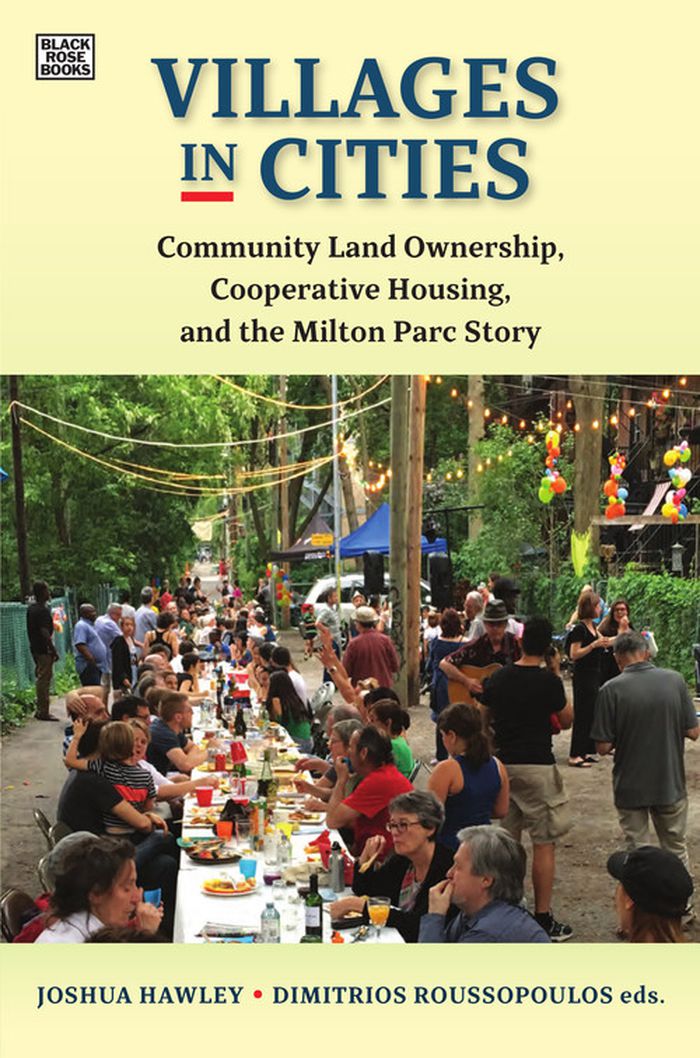
Villages in cities: community land ownership, cooperative housing, and the Milton Parc story
Actions:
Price:
$23.00
(available in store)
Summary:
As gentrification threatens to uproot neighbourhoods across the world, the flame of co-operative housing has been reignited while the concept of community landownership has the potential to turn the tide and put the destiny of our cities into the hands of residents.Villages in Cities takes us across North America to Montreal, Boston, Vermont, and Mississippi, presentingconcrete examples of citizens taking back the land and claiming their right to secure housing. It also acts as a guidebook to contemporary urban struggles through fertile archival material from the Milton Parc struggle, which is as relevant today as it was 50 years ago.Villages in Cities presents a succinct portrait of the problems facing the ownership of urban land, the challenge of contesting the State’s presupposed legitimacy in determining our urban future, and the contradictions these elements imply. n Montreal in 1968, speculators announced their ‘urban renewal’ plan to demolish six blocks of the downtown heritage neighborhood of Milton Parc in order to build enormous high-rise condos, hotels, office buildings, and shopping malls. The local community viewed this as a declaration of war. What followed was a remarkable struggle that not only saved the heritage architecture from destruction but also protected local residents from gentrification through the creation of the largest nonprofit cooperative housing project on an urban community land trust in North America. And Milton Parc is not unique. Villages in Cities takes us across North America—to New York, Boston, Burlington, Oakland, Jackson, Montreal, Toronto, Ottawa, and Vancouver—to show concrete examples of citizens taking back the land and claiming their right to secure housing. The book draws connections among these projects, examines their underlying causes, and connects them with a holistic “Right to the City” movement that is emerging internationally.
Villages in cities: community land ownership, cooperative housing, and the Milton Parc story
Actions:
Price:
$23.00
(available in store)
Summary:
As gentrification threatens to uproot neighbourhoods across the world, the flame of co-operative housing has been reignited while the concept of community landownership has the potential to turn the tide and put the destiny of our cities into the hands of residents.Villages in Cities takes us across North America to Montreal, Boston, Vermont, and Mississippi, presentingconcrete examples of citizens taking back the land and claiming their right to secure housing. It also acts as a guidebook to contemporary urban struggles through fertile archival material from the Milton Parc struggle, which is as relevant today as it was 50 years ago.Villages in Cities presents a succinct portrait of the problems facing the ownership of urban land, the challenge of contesting the State’s presupposed legitimacy in determining our urban future, and the contradictions these elements imply. n Montreal in 1968, speculators announced their ‘urban renewal’ plan to demolish six blocks of the downtown heritage neighborhood of Milton Parc in order to build enormous high-rise condos, hotels, office buildings, and shopping malls. The local community viewed this as a declaration of war. What followed was a remarkable struggle that not only saved the heritage architecture from destruction but also protected local residents from gentrification through the creation of the largest nonprofit cooperative housing project on an urban community land trust in North America. And Milton Parc is not unique. Villages in Cities takes us across North America—to New York, Boston, Burlington, Oakland, Jackson, Montreal, Toronto, Ottawa, and Vancouver—to show concrete examples of citizens taking back the land and claiming their right to secure housing. The book draws connections among these projects, examines their underlying causes, and connects them with a holistic “Right to the City” movement that is emerging internationally.
Form:
books
books
Publication:
January 2019
January 2019
Form:
books
books
Title:
OMA NY: Search term
OMA NY: Search term
Actions:
Price:
$170.00
(available in store)
Summary:
Well into its fourth decade, the Office for Metropolitan Architecture (OMA), founded by Rem Koolhaas in 1975, remains one of the most influential and successful practices of its kind. OMA describes itself as ''a firm operating within the traditional boundaries of architecture and urbanism that applies architectural thinking to domains beyond.'' OMA New York, has grown(...)
$170.00
(available in store)
Summary:
Well into its fourth decade, the Office for Metropolitan Architecture (OMA), founded by Rem Koolhaas in 1975, remains one of the most influential and successful practices of its kind. OMA describes itself as ''a firm operating within the traditional boundaries of architecture and urbanism that applies architectural thinking to domains beyond.'' OMA New York, has grown(...)
Title:
OMA NY: Search term
Actions:
Price:
$170.00
(available in store)
Summary:
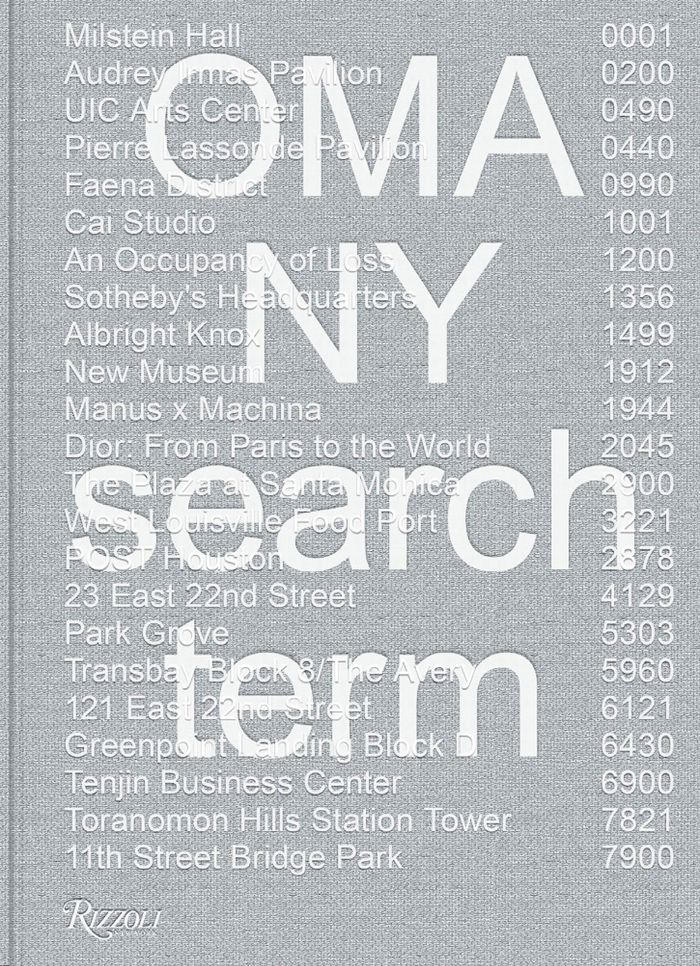
Well into its fourth decade, the Office for Metropolitan Architecture (OMA), founded by Rem Koolhaas in 1975, remains one of the most influential and successful practices of its kind. OMA describes itself as ''a firm operating within the traditional boundaries of architecture and urbanism that applies architectural thinking to domains beyond.'' OMA New York, has grown from an American outpost to a full-fledged operation with its own attitudes, contributing to the evolution of the globally acclaimed office. Through a diversity of projects, the firm has transformed our understanding of the city and our evolving relationship with art, fashion, food, sustainability, and other quintessentially twenty-first-century preoccupations. The works presented here elaborate on OMA’s philosophy even as they expand its portfolio geographically. Featured projects include residential skyscrapers in New York, Miami, and San Francisco, mixed-use developments in cities from Tokyo to Houston, and projects like 11th Street Bridge Park in the public realm, alongside more intimate spaces such as the studio for renowned Chinese artist Cai Guo-Qiang. Permanent structures, such as Milstein Hall at Cornell University, the new galleries of Quebec’s Musée National des Beaux-Arts, a cultural forum and neighborhood for Faena in Miami, and the expansion of museums such as the Albright-Knox Art Gallery in Buffalo and the New Museum in Manhattan, contrast vividly with temporary interventions such as the Manus x Machina exhibition at the Met Costume Institute and the sculptural installation of soaring concrete columns for An Occupation of Loss. In between projects are dialogues with leading policy makers, museum directors, artists, fashion designers, musicians, chefs, and curators—Christopher Hawthorne, Lisa Phillips and Massimiliano Gioni, Taryn Simon, Iris van Herpen, Virgil Abloh, David Byrne, Alice Waters, and Cecilia Alemani—who provide insight onto areas of the firm’s interests and preoccupations beyond the realm of architecture.
OMA NY: Search term
Actions:
Price:
$170.00
(available in store)
Summary:
Well into its fourth decade, the Office for Metropolitan Architecture (OMA), founded by Rem Koolhaas in 1975, remains one of the most influential and successful practices of its kind. OMA describes itself as ''a firm operating within the traditional boundaries of architecture and urbanism that applies architectural thinking to domains beyond.'' OMA New York, has grown from an American outpost to a full-fledged operation with its own attitudes, contributing to the evolution of the globally acclaimed office. Through a diversity of projects, the firm has transformed our understanding of the city and our evolving relationship with art, fashion, food, sustainability, and other quintessentially twenty-first-century preoccupations. The works presented here elaborate on OMA’s philosophy even as they expand its portfolio geographically. Featured projects include residential skyscrapers in New York, Miami, and San Francisco, mixed-use developments in cities from Tokyo to Houston, and projects like 11th Street Bridge Park in the public realm, alongside more intimate spaces such as the studio for renowned Chinese artist Cai Guo-Qiang. Permanent structures, such as Milstein Hall at Cornell University, the new galleries of Quebec’s Musée National des Beaux-Arts, a cultural forum and neighborhood for Faena in Miami, and the expansion of museums such as the Albright-Knox Art Gallery in Buffalo and the New Museum in Manhattan, contrast vividly with temporary interventions such as the Manus x Machina exhibition at the Met Costume Institute and the sculptural installation of soaring concrete columns for An Occupation of Loss. In between projects are dialogues with leading policy makers, museum directors, artists, fashion designers, musicians, chefs, and curators—Christopher Hawthorne, Lisa Phillips and Massimiliano Gioni, Taryn Simon, Iris van Herpen, Virgil Abloh, David Byrne, Alice Waters, and Cecilia Alemani—who provide insight onto areas of the firm’s interests and preoccupations beyond the realm of architecture.
Form:
books
books
Publication:
November 2021
November 2021
Subject:
Architecture Monographs
Architecture Monographs
Form:
books
books
Actions:
Price:
$36.95
(available in store)
Summary:
Comment construire après un événement aussi destructeur que la catastrophe de mars 2011 qui a affecté le Japon ? Telle est la question que pose le grand architecte japonais Toyô Itô (prix Pritzker 2013). Il plaide ici pour une architecture nouvelle, mieux intégrée dans l'environnement naturel, plus en prise avec la société et plus à l'écoute des besoins des habitants.(...)
$36.95
(available in store)
Summary:
Comment construire après un événement aussi destructeur que la catastrophe de mars 2011 qui a affecté le Japon ? Telle est la question que pose le grand architecte japonais Toyô Itô (prix Pritzker 2013). Il plaide ici pour une architecture nouvelle, mieux intégrée dans l'environnement naturel, plus en prise avec la société et plus à l'écoute des besoins des habitants.(...)
Title:
L'architecture du jour d'après
Actions:
Price:
$36.95
(available in store)
Summary:
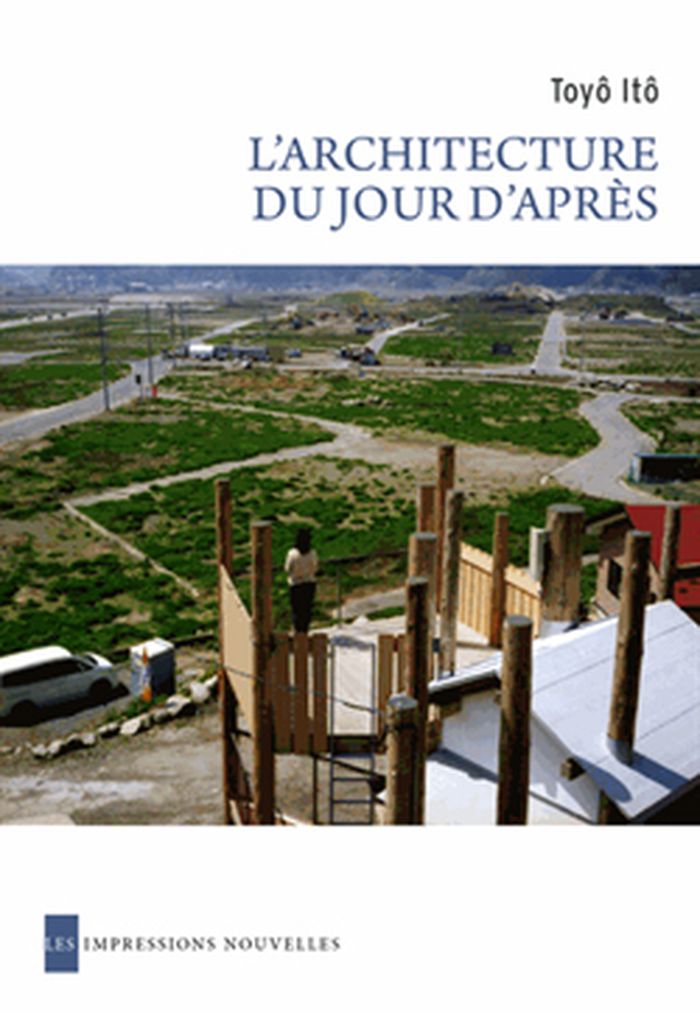
Comment construire après un événement aussi destructeur que la catastrophe de mars 2011 qui a affecté le Japon ? Telle est la question que pose le grand architecte japonais Toyô Itô (prix Pritzker 2013). Il plaide ici pour une architecture nouvelle, mieux intégrée dans l'environnement naturel, plus en prise avec la société et plus à l'écoute des besoins des habitants. Cette réflexion trouve une application concrète dans l'action que mène Toyô Itô pour la reconstruction de la région du nord-est du Japon.
L'architecture du jour d'après
Actions:
Price:
$36.95
(available in store)
Summary:
Comment construire après un événement aussi destructeur que la catastrophe de mars 2011 qui a affecté le Japon ? Telle est la question que pose le grand architecte japonais Toyô Itô (prix Pritzker 2013). Il plaide ici pour une architecture nouvelle, mieux intégrée dans l'environnement naturel, plus en prise avec la société et plus à l'écoute des besoins des habitants. Cette réflexion trouve une application concrète dans l'action que mène Toyô Itô pour la reconstruction de la région du nord-est du Japon.
Form:
books
books
Publication:
April 2014
April 2014
Subject:
Architectural Theory
Architectural Theory
Form:
books
books
Actions:
Price:
$20.95
(available in store)
Summary:
In December 2006, close to Zurich airport, Opfikerpark was completed after a construction period of 79 weeks. Central element of the park is a concrete sculpture, over 500m-long, accommodating a lake surrounded by sandy beaches and a reed belt. The idea for the design of the park was the result of an international competition initiated in 2001 and won by Berlin practice(...)
$20.95
(available in store)
Summary:
In December 2006, close to Zurich airport, Opfikerpark was completed after a construction period of 79 weeks. Central element of the park is a concrete sculpture, over 500m-long, accommodating a lake surrounded by sandy beaches and a reed belt. The idea for the design of the park was the result of an international competition initiated in 2001 and won by Berlin practice(...)
Subject:
Landscape Architecture, Monographs
Landscape Architecture, Monographs
Publication:
July 2007, Berlin
July 2007, Berlin
Title:
79 KW Zurich : building Opfikerpark
Actions:
Price:
$20.95
(available in store)
Summary:
In December 2006, close to Zurich airport, Opfikerpark was completed after a construction period of 79 weeks. Central element of the park is a concrete sculpture, over 500m-long, accommodating a lake surrounded by sandy beaches and a reed belt. The idea for the design of the park was the result of an international competition initiated in 2001 and won by Berlin practice Kiefer. As the second exhibition at gallery AedesLand, this project will be introduced in June 2007. Contrary to the usual approach, the exhibition does not aim to present an already completed construction but rather make transparent the process of creation and realization of the building project ‘opfikerpark’. The efforts and challenges to create a complex and outstanding structure, which were faced by client, planners, engineers as well as executing contractors, shall be recorded in a commented illustration of the construction work. Building sites are temporary production sites involving a multitude of disciplines and trades which need to be coordinated. The exhibition reflects the progressing technological, organizational and design process as well as the objective and subjective influences in effect and thus aims to convey a realistic image of the building activities. Photographer Hanns Joosten has documented the construction progress at regular intervals. His high-quality, large-scale images communicate the special aesthetics of a building site in all its diversity and affect the atmosphere of the exhibition. The whole exhibition space will be part of the exhibition, even floors and ceilings. In addition, a media installation explains the progress of constructing Opfikerpark where viewpoints of diverse disciplines and participants meet. The players get a chance to speak and express their personal perspective on the building process with spoken commentaries. How is a large park constructed? How does a building site work? What do you need so many planners for? And how do they work together? Based on these questions, spontaneous contributions shall throw a critical and ironic light on the expert discourse.
79 KW Zurich : building Opfikerpark
Actions:
Price:
$20.95
(available in store)
Summary:
In December 2006, close to Zurich airport, Opfikerpark was completed after a construction period of 79 weeks. Central element of the park is a concrete sculpture, over 500m-long, accommodating a lake surrounded by sandy beaches and a reed belt. The idea for the design of the park was the result of an international competition initiated in 2001 and won by Berlin practice Kiefer. As the second exhibition at gallery AedesLand, this project will be introduced in June 2007. Contrary to the usual approach, the exhibition does not aim to present an already completed construction but rather make transparent the process of creation and realization of the building project ‘opfikerpark’. The efforts and challenges to create a complex and outstanding structure, which were faced by client, planners, engineers as well as executing contractors, shall be recorded in a commented illustration of the construction work. Building sites are temporary production sites involving a multitude of disciplines and trades which need to be coordinated. The exhibition reflects the progressing technological, organizational and design process as well as the objective and subjective influences in effect and thus aims to convey a realistic image of the building activities. Photographer Hanns Joosten has documented the construction progress at regular intervals. His high-quality, large-scale images communicate the special aesthetics of a building site in all its diversity and affect the atmosphere of the exhibition. The whole exhibition space will be part of the exhibition, even floors and ceilings. In addition, a media installation explains the progress of constructing Opfikerpark where viewpoints of diverse disciplines and participants meet. The players get a chance to speak and express their personal perspective on the building process with spoken commentaries. How is a large park constructed? How does a building site work? What do you need so many planners for? And how do they work together? Based on these questions, spontaneous contributions shall throw a critical and ironic light on the expert discourse.
Form:
books
books
Publication:
July 2007, Berlin
July 2007, Berlin
Subject:
Landscape Architecture, Monographs
Landscape Architecture, Monographs
Form:
books
books
Actions:
Price:
$22.95
(available in store)
Summary:
Construction on the Märkische Viertel in northern Berlin began in 1963 under the supervision of a team of nationally and internationally recognized architects. In the ensuing decades, under the management of the housing association GESOBAU AG, the Viertel evolved from a district that generated controversy throughout the Federal Republic into an exemplary large-scale(...)
$22.95
(available in store)
Summary:
Construction on the Märkische Viertel in northern Berlin began in 1963 under the supervision of a team of nationally and internationally recognized architects. In the ensuing decades, under the management of the housing association GESOBAU AG, the Viertel evolved from a district that generated controversy throughout the Federal Republic into an exemplary large-scale(...)
Title:
Das Märkische Viertel : idee - wirklichkeit - vision
Actions:
Price:
$22.95
(available in store)
Summary:
Construction on the Märkische Viertel in northern Berlin began in 1963 under the supervision of a team of nationally and internationally recognized architects. In the ensuing decades, under the management of the housing association GESOBAU AG, the Viertel evolved from a district that generated controversy throughout the Federal Republic into an exemplary large-scale residential settlement. Architects Werner Düttmann, Hans Müller and Georg Heinrichs wanted to design a better world, with humane dwellings for both inner city residents displaced by redevelopment and evacuees from the east. The concept underlying their masterplan was to shape the landscape via architectural structures. They thought in large forms and proportions, designing a prototypical satellite town for northern Berlin that would contain 16,000 apartments for 40,000 residents, while doing justice to the varied requirements of occupants. Architects such as Oswald M. Ungers, Chen Kuen Lee, Ernst Gisel and René Gagès took part in the construction of this large-scale estate, which caused a furor simply by virtue of its immense scale, unusual for Western Europe. Already in 1964, just after the first residents moved in, the Märkische Viertel, nicknamed the "MV,” was deemed controversial. Some condemned it as a "concrete citadel launched from the drafting table,” a "stony nightmare,” or "the Parrot Estate,” while others celebrated it as a glowing example of a model large-scale settlement. Only recent years have seen an unprejudiced and discriminating appraisal of the project. The residents themselves have always seen their homes in a more positive light than outside observers. In 2003, a survey commissioned by the GESOBAU AG suggested they were perfectly comfortable in their neighborhood. And their children — and even children’s children — often remain in the district. What is the secret of the Maerkische Viertel? How was this once inhospitable bedroom community transformed into a coveted residential district, and how is the transition between generations to be accomplished? Can the Maerkische Viertel sustain itself under the altered economic situation affecting residential housing, or have drastic interventions into the existing architecture become a necessity?
Das Märkische Viertel : idee - wirklichkeit - vision
Actions:
Price:
$22.95
(available in store)
Summary:
Construction on the Märkische Viertel in northern Berlin began in 1963 under the supervision of a team of nationally and internationally recognized architects. In the ensuing decades, under the management of the housing association GESOBAU AG, the Viertel evolved from a district that generated controversy throughout the Federal Republic into an exemplary large-scale residential settlement. Architects Werner Düttmann, Hans Müller and Georg Heinrichs wanted to design a better world, with humane dwellings for both inner city residents displaced by redevelopment and evacuees from the east. The concept underlying their masterplan was to shape the landscape via architectural structures. They thought in large forms and proportions, designing a prototypical satellite town for northern Berlin that would contain 16,000 apartments for 40,000 residents, while doing justice to the varied requirements of occupants. Architects such as Oswald M. Ungers, Chen Kuen Lee, Ernst Gisel and René Gagès took part in the construction of this large-scale estate, which caused a furor simply by virtue of its immense scale, unusual for Western Europe. Already in 1964, just after the first residents moved in, the Märkische Viertel, nicknamed the "MV,” was deemed controversial. Some condemned it as a "concrete citadel launched from the drafting table,” a "stony nightmare,” or "the Parrot Estate,” while others celebrated it as a glowing example of a model large-scale settlement. Only recent years have seen an unprejudiced and discriminating appraisal of the project. The residents themselves have always seen their homes in a more positive light than outside observers. In 2003, a survey commissioned by the GESOBAU AG suggested they were perfectly comfortable in their neighborhood. And their children — and even children’s children — often remain in the district. What is the secret of the Maerkische Viertel? How was this once inhospitable bedroom community transformed into a coveted residential district, and how is the transition between generations to be accomplished? Can the Maerkische Viertel sustain itself under the altered economic situation affecting residential housing, or have drastic interventions into the existing architecture become a necessity?
Form:
books
books
Publication:
July 2004, Berlin
July 2004, Berlin
Subject:
small format
small format
Form:
books
books
Price:
$32.95
(available to order)
Summary:
Loin d'un surréalisme onirique, ce recueil de textes montre le rôle de la photographie dans les stratégies du mouvement emmené par André Breton. La puissance du document assure, dans les années 1920-1930, le passage d'une culture artistique à une culture politique. Pour parvenir à cette conversion, la photographie donne une vision concrète des concepts surréalistes en(...)
$32.95
(available to order)
Summary:
Loin d'un surréalisme onirique, ce recueil de textes montre le rôle de la photographie dans les stratégies du mouvement emmené par André Breton. La puissance du document assure, dans les années 1920-1930, le passage d'une culture artistique à une culture politique. Pour parvenir à cette conversion, la photographie donne une vision concrète des concepts surréalistes en(...)
Title:
L'image au service de la révolution : photographie, surréalisme, politique
Actions:
Price:
$32.95
(available to order)
Summary:
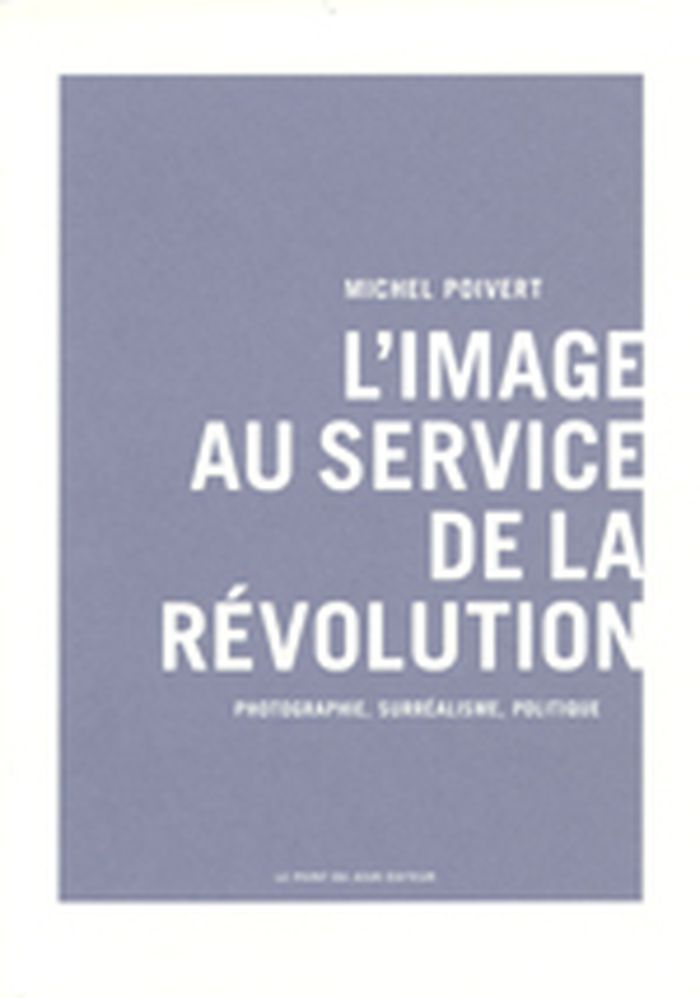
Loin d'un surréalisme onirique, ce recueil de textes montre le rôle de la photographie dans les stratégies du mouvement emmené par André Breton. La puissance du document assure, dans les années 1920-1930, le passage d'une culture artistique à une culture politique. Pour parvenir à cette conversion, la photographie donne une vision concrète des concepts surréalistes en prenant pour modèle les révolutions scientifiques. L’image mentale devient, grâce à Dali, Brassaï ou encore Man Ray, une force objective susceptible d’engager l’avant-garde dans la grande histoire.
L'image au service de la révolution : photographie, surréalisme, politique
Actions:
Price:
$32.95
(available to order)
Summary:
Loin d'un surréalisme onirique, ce recueil de textes montre le rôle de la photographie dans les stratégies du mouvement emmené par André Breton. La puissance du document assure, dans les années 1920-1930, le passage d'une culture artistique à une culture politique. Pour parvenir à cette conversion, la photographie donne une vision concrète des concepts surréalistes en prenant pour modèle les révolutions scientifiques. L’image mentale devient, grâce à Dali, Brassaï ou encore Man Ray, une force objective susceptible d’engager l’avant-garde dans la grande histoire.
Form:
books
books
Publication:
June 2007, Paris
June 2007, Paris
Subject:
Theory of Photography
Theory of Photography
Form:
audio
audio
Title:
Lattina.
Lattina.
Actions:
Description:
1 online resource.
Author:
Subject:
Publication:
[Place of publication not identified] : Lateral Addition, 2015.
[Place of publication not identified] : Lateral Addition, 2015.
Form:
audio
audio
Publication:
[Place of publication not identified] : Lateral Addition, 2015.
[Place of publication not identified] : Lateral Addition, 2015.
Author:
Subject:


