


3676 Results
Form:
books
books
Actions:
Price:
$62.00
(available to order)
Summary:
In 2014, Xu Tiantian, founder of Beijing-based studio Design and Architecture (DnA) began to work in Songyang County, in China's Zhejiang Province. Her exemplary holistic planning concept of Architectural Acupuncture, which has gained the support of local administrative and political leadership, aims at revitalising rural areas and comprises the renovation of production(...)
$62.00
(available to order)
Summary:
In 2014, Xu Tiantian, founder of Beijing-based studio Design and Architecture (DnA) began to work in Songyang County, in China's Zhejiang Province. Her exemplary holistic planning concept of Architectural Acupuncture, which has gained the support of local administrative and political leadership, aims at revitalising rural areas and comprises the renovation of production(...)
Subject:
Contemporary Asian Architecture
Contemporary Asian Architecture
Publication:
January 2021
January 2021
Title:
Songyang Story: architectural acupuncture as driver for socio-economic in rural China
Actions:
Price:
$62.00
(available to order)
Summary:
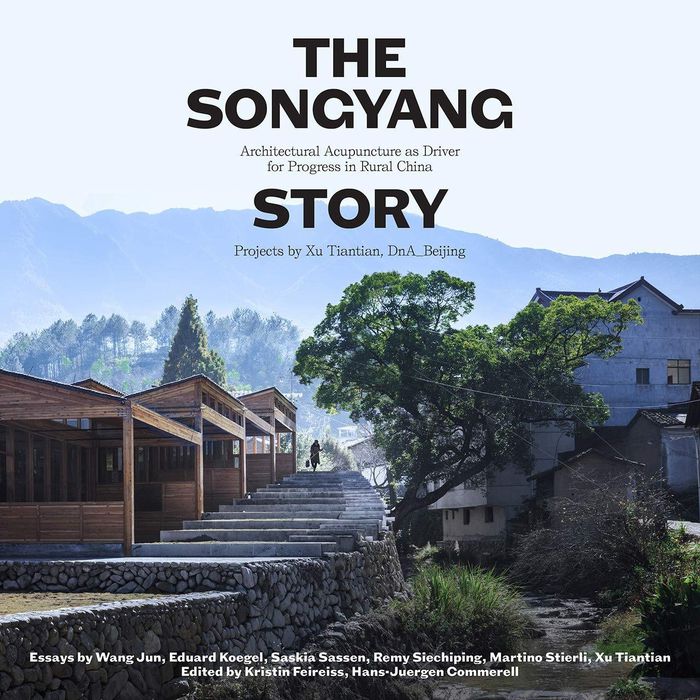
In 2014, Xu Tiantian, founder of Beijing-based studio Design and Architecture (DnA) began to work in Songyang County, in China's Zhejiang Province. Her exemplary holistic planning concept of Architectural Acupuncture, which has gained the support of local administrative and political leadership, aims at revitalising rural areas and comprises the renovation of production plants and of tourist and technical infrastructure as well as the creation of venues for culture and education and of social housing. Each of Xu's small-scale interventions at local level is unique, only the small budget is common to all of them. Moreover, they are all inter-related with each other and in their entirety serve the broader goal of mutual enhancement. This book introduces Xu's concept of Architectural Acupuncture and discusses the influence of architecture on cultural self-understanding and economic renewal in 21st-century rural China. It features some 20 new buildings and conversions of existing structures with diverse functions. Published alongside are essays by international economists, sociologists, and curators as well as by the secretary of the Songyang County Party Committee, examining the social, political, and economic implications of sustainable planning and collective action in the Chinese province.
Songyang Story: architectural acupuncture as driver for socio-economic in rural China
Actions:
Price:
$62.00
(available to order)
Summary:
In 2014, Xu Tiantian, founder of Beijing-based studio Design and Architecture (DnA) began to work in Songyang County, in China's Zhejiang Province. Her exemplary holistic planning concept of Architectural Acupuncture, which has gained the support of local administrative and political leadership, aims at revitalising rural areas and comprises the renovation of production plants and of tourist and technical infrastructure as well as the creation of venues for culture and education and of social housing. Each of Xu's small-scale interventions at local level is unique, only the small budget is common to all of them. Moreover, they are all inter-related with each other and in their entirety serve the broader goal of mutual enhancement. This book introduces Xu's concept of Architectural Acupuncture and discusses the influence of architecture on cultural self-understanding and economic renewal in 21st-century rural China. It features some 20 new buildings and conversions of existing structures with diverse functions. Published alongside are essays by international economists, sociologists, and curators as well as by the secretary of the Songyang County Party Committee, examining the social, political, and economic implications of sustainable planning and collective action in the Chinese province.
Form:
books
books
Publication:
January 2021
January 2021
Subject:
Contemporary Asian Architecture
Contemporary Asian Architecture
Form:
books
books
Price:
$62.95
(available in store)
Summary:
Throughout the early twentieth century, waves of migration brought working-class people to the outskirts of Buenos Aires. This prompted a dilemma: Where should these restive populations be situated relative to the city’s spatial politics? Enter Antonio Bonet, a Catalan architect inspired by the transatlantic modernist and surrealist movements. Ana María León follows(...)
$62.95
(available in store)
Summary:
Throughout the early twentieth century, waves of migration brought working-class people to the outskirts of Buenos Aires. This prompted a dilemma: Where should these restive populations be situated relative to the city’s spatial politics? Enter Antonio Bonet, a Catalan architect inspired by the transatlantic modernist and surrealist movements. Ana María León follows(...)
Title:
Modernity for the masses: Antonio Bonet's Dreams for Buenos Aires
Actions:
Price:
$62.95
(available in store)
Summary:
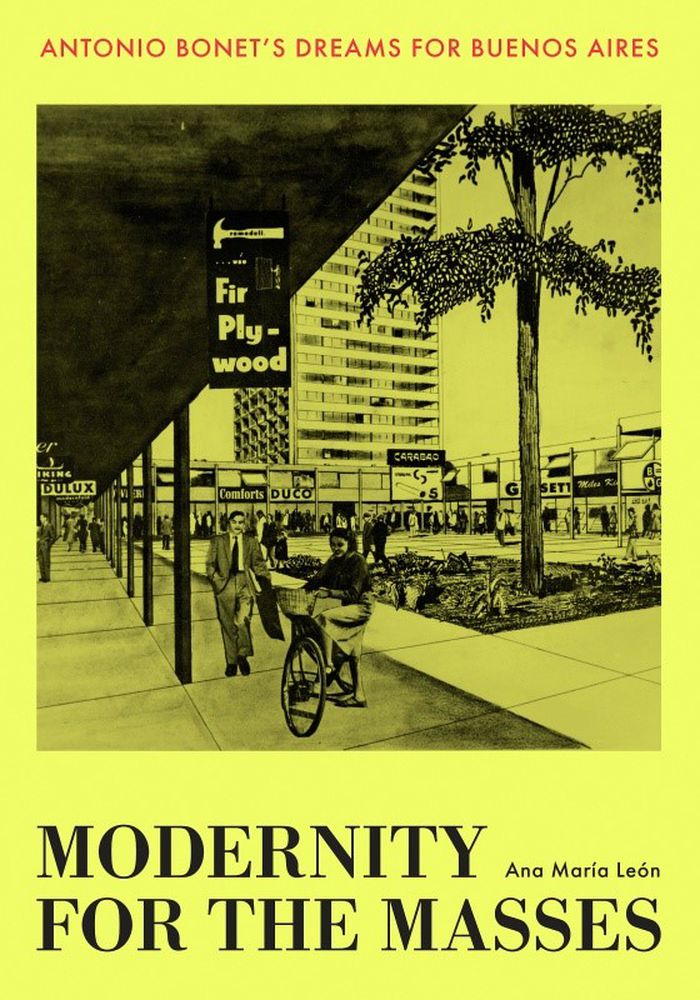
Throughout the early twentieth century, waves of migration brought working-class people to the outskirts of Buenos Aires. This prompted a dilemma: Where should these restive populations be situated relative to the city’s spatial politics? Enter Antonio Bonet, a Catalan architect inspired by the transatlantic modernist and surrealist movements. Ana María León follows Bonet's decades-long, state-backed quest to house Buenos Aires's diverse and fractious population. Working with totalitarian and populist regimes, Bonet developed three large-scale housing plans, each scuttled as a new government took over. Yet these incomplete plans—Bonet's dreams—teach us much about the relationship between modernism and state power. This volume finds in Bonet's projects the disconnect between modern architecture’s discourse of emancipation and the reality of its rationalizing control. Although he and his patrons constantly glorified the people and depicted them in housing plans, Bonet never consulted them. Instead he succumbed to official and elite fears of the people's latent political power. In careful readings of Bonet's work, León discovers the progressive erasure of surrealism's psychological sensitivity, replaced with an impulse, realized in modernist design, to contain the increasingly empowered population.
Modernity for the masses: Antonio Bonet's Dreams for Buenos Aires
Actions:
Price:
$62.95
(available in store)
Summary:
Throughout the early twentieth century, waves of migration brought working-class people to the outskirts of Buenos Aires. This prompted a dilemma: Where should these restive populations be situated relative to the city’s spatial politics? Enter Antonio Bonet, a Catalan architect inspired by the transatlantic modernist and surrealist movements. Ana María León follows Bonet's decades-long, state-backed quest to house Buenos Aires's diverse and fractious population. Working with totalitarian and populist regimes, Bonet developed three large-scale housing plans, each scuttled as a new government took over. Yet these incomplete plans—Bonet's dreams—teach us much about the relationship between modernism and state power. This volume finds in Bonet's projects the disconnect between modern architecture’s discourse of emancipation and the reality of its rationalizing control. Although he and his patrons constantly glorified the people and depicted them in housing plans, Bonet never consulted them. Instead he succumbed to official and elite fears of the people's latent political power. In careful readings of Bonet's work, León discovers the progressive erasure of surrealism's psychological sensitivity, replaced with an impulse, realized in modernist design, to contain the increasingly empowered population.
Form:
books
books
Publication:
April 2021
April 2021
Subject:
Urban Theory
Urban Theory
Form:
books
books
Actions:
Price:
$86.00
(available to order)
Summary:
This book explores contemporary apartments not as raw canvases for interior decoration but as a building type of growing significance. An introduction presents the history of multiple-occupancy housing through its most innovative 20th-century exemplars, from the urbane blocks of Auguste Perret and Henri Sauvage in Paris, to the landscaped housing estates of Weimar Germany(...)
$86.00
(available to order)
Summary:
This book explores contemporary apartments not as raw canvases for interior decoration but as a building type of growing significance. An introduction presents the history of multiple-occupancy housing through its most innovative 20th-century exemplars, from the urbane blocks of Auguste Perret and Henri Sauvage in Paris, to the landscaped housing estates of Weimar Germany(...)
Title:
Building community: new apartment architecture
Actions:
Price:
$86.00
(available to order)
Summary:
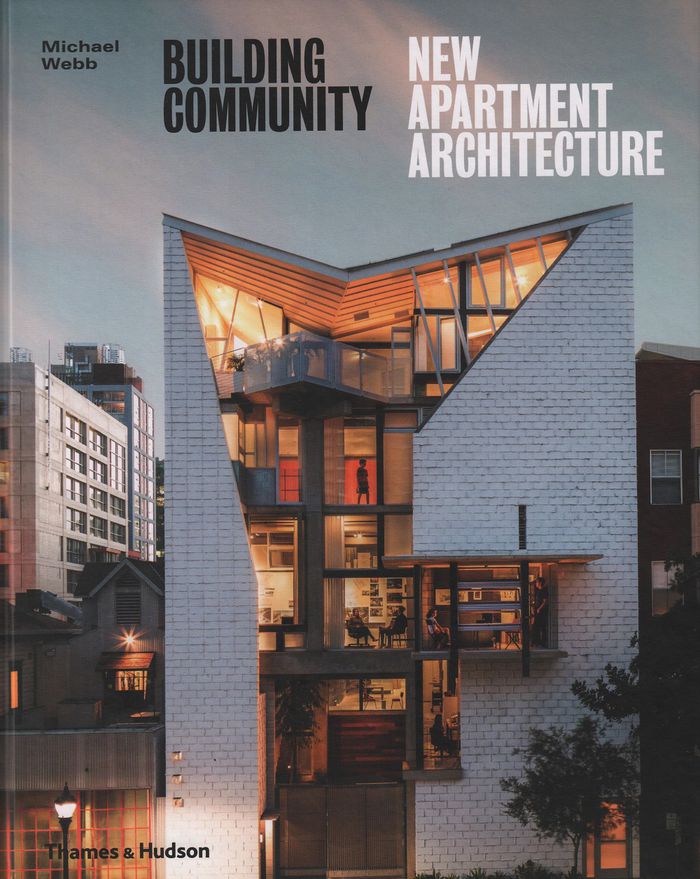
This book explores contemporary apartments not as raw canvases for interior decoration but as a building type of growing significance. An introduction presents the history of multiple-occupancy housing through its most innovative 20th-century exemplars, from the urbane blocks of Auguste Perret and Henri Sauvage in Paris, to the landscaped housing estates of Weimar Germany and the visionary schemes of Le Corbusier. The heart of the book features 38 recent and ongoing projects, designed by leading international studios and rising talents. Buildings range from social housing and micro apartments to ‘vertical villages’, megastructures and luxury high-rises. Each project is considered for the way in which it enriches the lives of residents and the city, and is shown through drawings and photographs, taken from the street and within. The book also includes interviews with such contemporary masters of apartment design as Michael Maltzan, Lorcan O’Herlihy, Édouard François and Bjarke Ingels. As our cities grow more crowded, it is critical that we produce large-scale buildings that enhance the lives of their inhabitants, their surroundings and the urban environment as a whole. Building Community offers dozens of proven successes to designers and apartment-dwellers.
Building community: new apartment architecture
Actions:
Price:
$86.00
(available to order)
Summary:
This book explores contemporary apartments not as raw canvases for interior decoration but as a building type of growing significance. An introduction presents the history of multiple-occupancy housing through its most innovative 20th-century exemplars, from the urbane blocks of Auguste Perret and Henri Sauvage in Paris, to the landscaped housing estates of Weimar Germany and the visionary schemes of Le Corbusier. The heart of the book features 38 recent and ongoing projects, designed by leading international studios and rising talents. Buildings range from social housing and micro apartments to ‘vertical villages’, megastructures and luxury high-rises. Each project is considered for the way in which it enriches the lives of residents and the city, and is shown through drawings and photographs, taken from the street and within. The book also includes interviews with such contemporary masters of apartment design as Michael Maltzan, Lorcan O’Herlihy, Édouard François and Bjarke Ingels. As our cities grow more crowded, it is critical that we produce large-scale buildings that enhance the lives of their inhabitants, their surroundings and the urban environment as a whole. Building Community offers dozens of proven successes to designers and apartment-dwellers.
Form:
books
books
Publication:
March 2017
March 2017
Form:
books
books
Actions:
Price:
$64.95
(available to order)
Summary:
Energy humanities is a field of scholarship that, like medical humanities and digital humanities before it, overcomes traditional boundaries between the disciplines and between academic and applied research. Like its predecessors, energy humanities highlights the essential contribution that the insights and methods of the human sciences can make to areas of study and(...)
$64.95
(available to order)
Summary:
Energy humanities is a field of scholarship that, like medical humanities and digital humanities before it, overcomes traditional boundaries between the disciplines and between academic and applied research. Like its predecessors, energy humanities highlights the essential contribution that the insights and methods of the human sciences can make to areas of study and(...)
Subject:
Environment and environmental theory
Environment and environmental theory
Publication:
February 2017
February 2017
Title:
Energy humanities: an anthology
Actions:
Price:
$64.95
(available to order)
Summary:
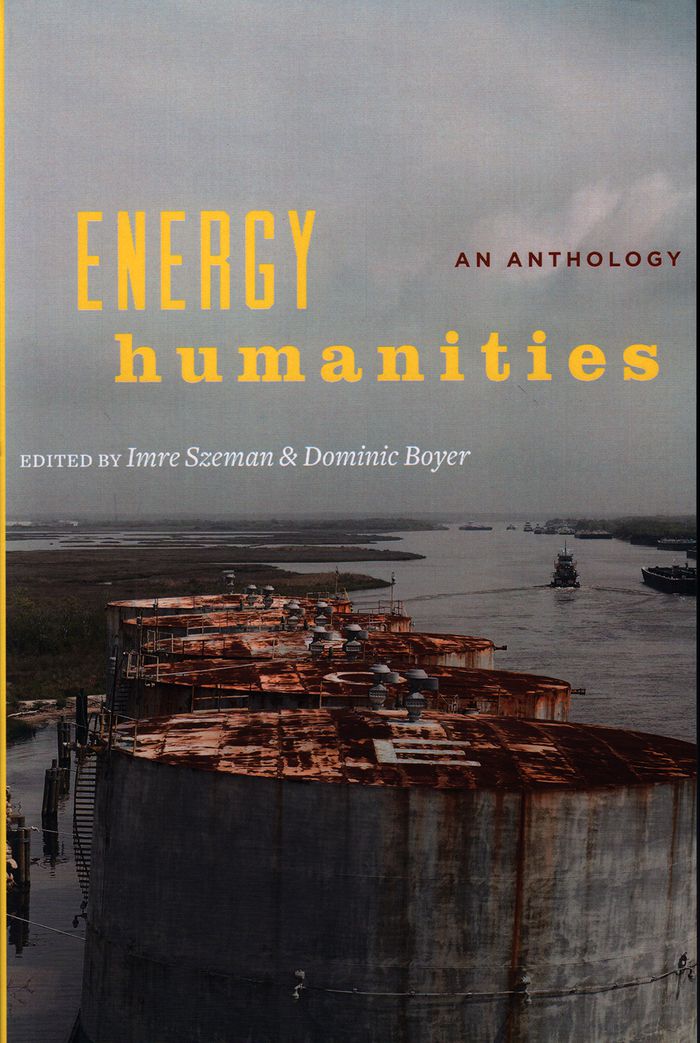
Energy humanities is a field of scholarship that, like medical humanities and digital humanities before it, overcomes traditional boundaries between the disciplines and between academic and applied research. Like its predecessors, energy humanities highlights the essential contribution that the insights and methods of the human sciences can make to areas of study and analysis once thought best left to the natural sciences. This isn't a case of the humanities simply helping their cross-campus colleagues to learn the mechanics of communication so that they might better articulate their ideas. Rather, these fields of scholarship are ones that demonstrate how the scale and complexity of the issues being explored demand insights and approaches that transcendold school disciplinary boundaries. "Energy humanities : a reader" offers a carefully curated selection of the best and most influential work in energy humanities that has appeared over the past decade. To stay true to the diverse work that makes up this emergent field, selections range from anthropology and geography to philosophy, history, and cultural studies to recent energy-focused interventions in art and literature. The three readers all agree that this is an important, ground-breaking collection of work.
Energy humanities: an anthology
Actions:
Price:
$64.95
(available to order)
Summary:
Energy humanities is a field of scholarship that, like medical humanities and digital humanities before it, overcomes traditional boundaries between the disciplines and between academic and applied research. Like its predecessors, energy humanities highlights the essential contribution that the insights and methods of the human sciences can make to areas of study and analysis once thought best left to the natural sciences. This isn't a case of the humanities simply helping their cross-campus colleagues to learn the mechanics of communication so that they might better articulate their ideas. Rather, these fields of scholarship are ones that demonstrate how the scale and complexity of the issues being explored demand insights and approaches that transcendold school disciplinary boundaries. "Energy humanities : a reader" offers a carefully curated selection of the best and most influential work in energy humanities that has appeared over the past decade. To stay true to the diverse work that makes up this emergent field, selections range from anthropology and geography to philosophy, history, and cultural studies to recent energy-focused interventions in art and literature. The three readers all agree that this is an important, ground-breaking collection of work.
Form:
books
books
Publication:
February 2017
February 2017
Subject:
Environment and environmental theory
Environment and environmental theory
Form:
books
books
Actions:
Price:
$80.95
(available to order)
Summary:
This new monograph delves into an exciting selection of esteemed works by Delhi-based firm Morphogenesis, one of the most productive and creative architectural firms in India and a world-leader in zero net energy and sustainable design. This richly illustrated book combines stunning imagery with a comprehensive study outlining the firms strong philosophical design intent(...)
$80.95
(available to order)
Summary:
This new monograph delves into an exciting selection of esteemed works by Delhi-based firm Morphogenesis, one of the most productive and creative architectural firms in India and a world-leader in zero net energy and sustainable design. This richly illustrated book combines stunning imagery with a comprehensive study outlining the firms strong philosophical design intent(...)
Title:
Morphogenesis. The Indian perspective. The global context.
Actions:
Price:
$80.95
(available to order)
Summary:
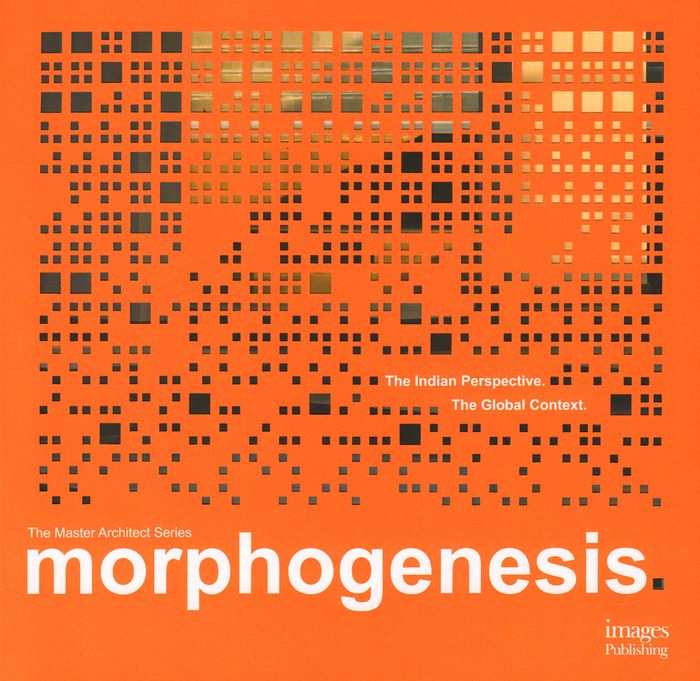
This new monograph delves into an exciting selection of esteemed works by Delhi-based firm Morphogenesis, one of the most productive and creative architectural firms in India and a world-leader in zero net energy and sustainable design. This richly illustrated book combines stunning imagery with a comprehensive study outlining the firms strong philosophical design intent across a vast range of typologies: residential; institutional; commercial; hospitality; offices; houses; interiors; public and master planning. Morphogenesis reinterprets India's architectural roots and consistently employs passive environmental solutions for a unique, contextual contemporary language. The Morphogenesis journey is a reflection of the contemporary Indian perspective within the global context, incorporating its inspired, forward-thinking vision while respectfully referencing the spirit of traditional Indian subcontinental architecture, and all the while maintaining an intimate focus on the environmental context and culture of the project. This spectacularly beautiful volume is a strong addition to IMAGES' collection of the renowned Master Architect Series and a superb example of an engaged, highly principled and vibrant emerging architectural practice in Asia that is defining a global architectural brand for countries that share similar extraordinary levels of diversity in climate, scale, economy, and typology as is seen across the subcontinent.
Morphogenesis. The Indian perspective. The global context.
Actions:
Price:
$80.95
(available to order)
Summary:
This new monograph delves into an exciting selection of esteemed works by Delhi-based firm Morphogenesis, one of the most productive and creative architectural firms in India and a world-leader in zero net energy and sustainable design. This richly illustrated book combines stunning imagery with a comprehensive study outlining the firms strong philosophical design intent across a vast range of typologies: residential; institutional; commercial; hospitality; offices; houses; interiors; public and master planning. Morphogenesis reinterprets India's architectural roots and consistently employs passive environmental solutions for a unique, contextual contemporary language. The Morphogenesis journey is a reflection of the contemporary Indian perspective within the global context, incorporating its inspired, forward-thinking vision while respectfully referencing the spirit of traditional Indian subcontinental architecture, and all the while maintaining an intimate focus on the environmental context and culture of the project. This spectacularly beautiful volume is a strong addition to IMAGES' collection of the renowned Master Architect Series and a superb example of an engaged, highly principled and vibrant emerging architectural practice in Asia that is defining a global architectural brand for countries that share similar extraordinary levels of diversity in climate, scale, economy, and typology as is seen across the subcontinent.
Form:
books
books
Publication:
December 2016
December 2016
Subject:
Architecture Monographs
Architecture Monographs
Form:
books
books
Price:
$39.99
(available to order)
Summary:
The region is back in town. Galloping urbanization has pushed beyond historical notions of metropolitanism. City-regions have experienced, in Edward Soja’s terms, “an epochal shift in the nature of the city and the urbanization process, marking the beginning of the end of the modern metropolis as we knew it.” "Governing cities through regions" broadens and deepens our(...)
$39.99
(available to order)
Summary:
The region is back in town. Galloping urbanization has pushed beyond historical notions of metropolitanism. City-regions have experienced, in Edward Soja’s terms, “an epochal shift in the nature of the city and the urbanization process, marking the beginning of the end of the modern metropolis as we knew it.” "Governing cities through regions" broadens and deepens our(...)
Subject:
Urban Theory
Urban Theory
Publication:
December 2016
December 2016
Title:
Governing cities through regions: Canadian and European perspectives
Actions:
Price:
$39.99
(available to order)
Summary:
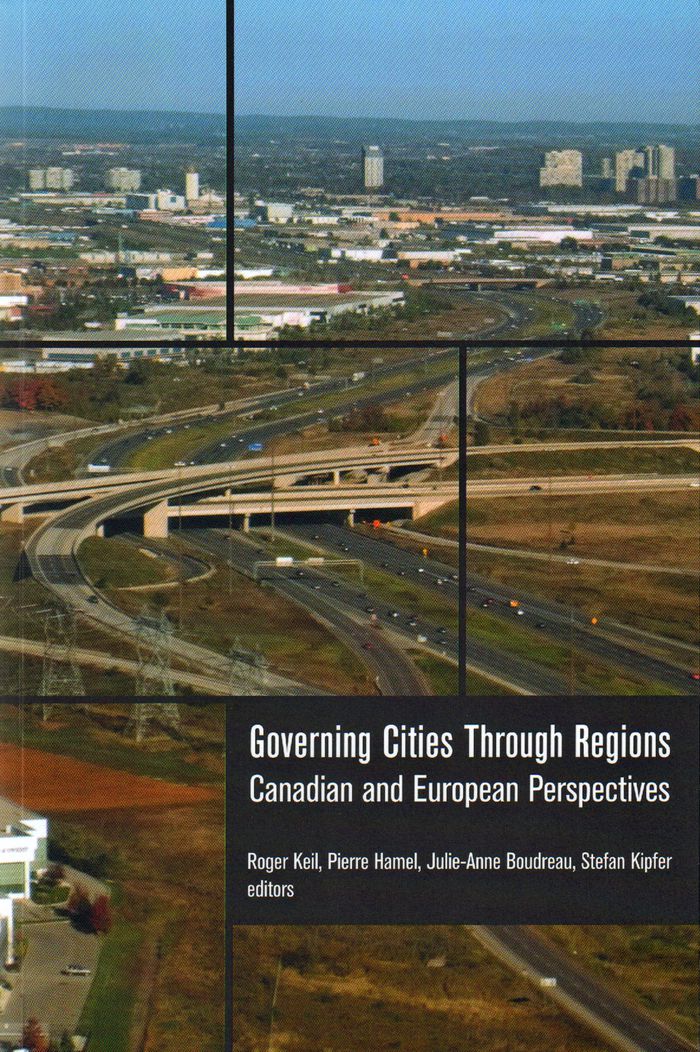
The region is back in town. Galloping urbanization has pushed beyond historical notions of metropolitanism. City-regions have experienced, in Edward Soja’s terms, “an epochal shift in the nature of the city and the urbanization process, marking the beginning of the end of the modern metropolis as we knew it.” "Governing cities through regions" broadens and deepens our understanding of metropolitan governance through an innovative comparative project that engages with Anglo-American, French, and German literatures on the subject of regional governance. It expands the comparative angle from issues of economic competiveness and social cohesion to topical and relevant fields such as housing and transportation, and it expands comparative work on municipal governance to the regional scale. With contributions from established and emerging international scholars of urban and regional governance, the volume covers conceptual topics and case studies that contrast the experience of a range of Canadian metropolitan regions with a strong selection of European regions. It starts from assumptions of limited conversion among regions across the Atlantic but is keenly aware of the remarkable differences in urban regions’ path dependencies in which the larger processes of globalization and neo-liberalization are situated and materialized.
Governing cities through regions: Canadian and European perspectives
Actions:
Price:
$39.99
(available to order)
Summary:
The region is back in town. Galloping urbanization has pushed beyond historical notions of metropolitanism. City-regions have experienced, in Edward Soja’s terms, “an epochal shift in the nature of the city and the urbanization process, marking the beginning of the end of the modern metropolis as we knew it.” "Governing cities through regions" broadens and deepens our understanding of metropolitan governance through an innovative comparative project that engages with Anglo-American, French, and German literatures on the subject of regional governance. It expands the comparative angle from issues of economic competiveness and social cohesion to topical and relevant fields such as housing and transportation, and it expands comparative work on municipal governance to the regional scale. With contributions from established and emerging international scholars of urban and regional governance, the volume covers conceptual topics and case studies that contrast the experience of a range of Canadian metropolitan regions with a strong selection of European regions. It starts from assumptions of limited conversion among regions across the Atlantic but is keenly aware of the remarkable differences in urban regions’ path dependencies in which the larger processes of globalization and neo-liberalization are situated and materialized.
Form:
books
books
Publication:
December 2016
December 2016
Subject:
Urban Theory
Urban Theory
Form:
books
books
Actions:
Price:
$40.50
(available to order)
Summary:
When Urbanization Comes To Ground is a collaborative research project between the Brooklyn-based architecture studio, CAZA, and think tank, SURBA, an urban research collective spearheaded by Carlos Arnaiz and Peter Rowe. Drawing upon case studies including projects in China, Colombia, and the Philippines, this book works across place, time, and culture to offer an(...)
$40.50
(available to order)
Summary:
When Urbanization Comes To Ground is a collaborative research project between the Brooklyn-based architecture studio, CAZA, and think tank, SURBA, an urban research collective spearheaded by Carlos Arnaiz and Peter Rowe. Drawing upon case studies including projects in China, Colombia, and the Philippines, this book works across place, time, and culture to offer an(...)
Title:
CAZA + SURBA: When urbanization comes to ground
Actions:
Price:
$40.50
(available to order)
Summary:
When Urbanization Comes To Ground is a collaborative research project between the Brooklyn-based architecture studio, CAZA, and think tank, SURBA, an urban research collective spearheaded by Carlos Arnaiz and Peter Rowe. Drawing upon case studies including projects in China, Colombia, and the Philippines, this book works across place, time, and culture to offer an allegorical journey into urbanization at large. When ''Urbanization comes to ground'' is a loosely congregated collection of essays that reflect an aggregation of encounters with urban circumstances – physical and immaterial, and structural and affective. From Robots, Utilidors, and a Brave New World to A Third Way Towards Metropolitanism and Tagging Thingness and Scale, this publication questions the role of architecture and its related disciplines in the wake of the master plan. It searches for a field guide to everyday urban life by offering palpable views into the network of relations that characterize this evolving social ecosystem. Through their collective global research projects CAZA and SURBA frame, abstract, poeticize, and render the city as a historical process, a future destination, a production cycle, and a layered landscape of overlapping phenomena.
CAZA + SURBA: When urbanization comes to ground
Actions:
Price:
$40.50
(available to order)
Summary:
When Urbanization Comes To Ground is a collaborative research project between the Brooklyn-based architecture studio, CAZA, and think tank, SURBA, an urban research collective spearheaded by Carlos Arnaiz and Peter Rowe. Drawing upon case studies including projects in China, Colombia, and the Philippines, this book works across place, time, and culture to offer an allegorical journey into urbanization at large. When ''Urbanization comes to ground'' is a loosely congregated collection of essays that reflect an aggregation of encounters with urban circumstances – physical and immaterial, and structural and affective. From Robots, Utilidors, and a Brave New World to A Third Way Towards Metropolitanism and Tagging Thingness and Scale, this publication questions the role of architecture and its related disciplines in the wake of the master plan. It searches for a field guide to everyday urban life by offering palpable views into the network of relations that characterize this evolving social ecosystem. Through their collective global research projects CAZA and SURBA frame, abstract, poeticize, and render the city as a historical process, a future destination, a production cycle, and a layered landscape of overlapping phenomena.
Form:
books
books
Publication:
January 2020
January 2020
Subject:
Architecture Monographs
Architecture Monographs
Form:
books
books
Actions:
Price:
$20.00
(available to order)
Summary:
Nature and communities in the global south is being overwhelmed at a shocking rate. In many places this is due to ventures such as large-scale open-pit mining, oil extraction in tropical areas, and the spread of monocultures. These and other such forms of natural resource appropriation are usually known as extractivisms. This introductory book on the one hand adopts an(...)
$20.00
(available to order)
Summary:
Nature and communities in the global south is being overwhelmed at a shocking rate. In many places this is due to ventures such as large-scale open-pit mining, oil extraction in tropical areas, and the spread of monocultures. These and other such forms of natural resource appropriation are usually known as extractivisms. This introductory book on the one hand adopts an(...)
Title:
Extractivisms: politics, economy and ecology
Actions:
Price:
$20.00
(available to order)
Summary:
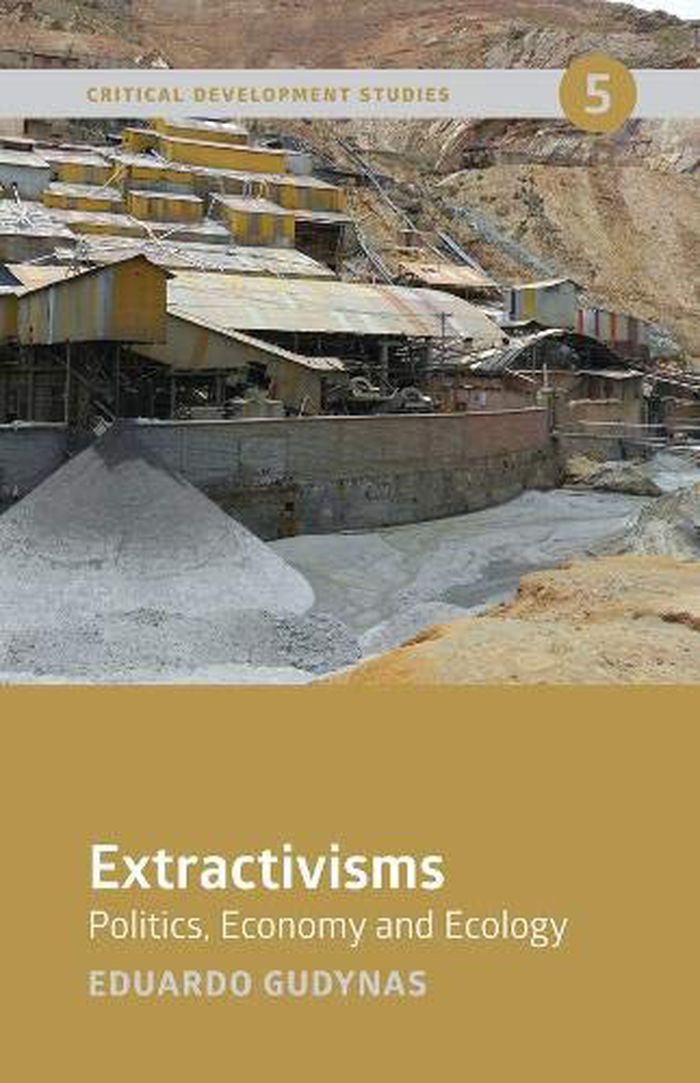
Nature and communities in the global south is being overwhelmed at a shocking rate. In many places this is due to ventures such as large-scale open-pit mining, oil extraction in tropical areas, and the spread of monocultures. These and other such forms of natural resource appropriation are usually known as extractivisms. This introductory book on the one hand adopts an interdisciplinary and critical perspective, incorporating contributions from economics, politics, ecology, and more. On the other hand it is an exercise in the politics among humans and with the environment. Eduardo Gudnyas explores negative local impacts such as ecological and health degradation or violence, along with spillover effects that redefines democracy and justice. Significantly, presented for the first time in English is a comprehensive overview of the theoretical innovations currently being discussed in the South, such as the distinction between appropriation and production modes and a redefinition of surplus to include social and economic features or new understandings on conflict dynamics. Furthermore, Gudynas discusses the Latin American peculiarities of extractivisms produced both by conservative and new-left governments, making clear that it has very deep roots in culture and ideologies, and offers solutions for the future.
Extractivisms: politics, economy and ecology
Actions:
Price:
$20.00
(available to order)
Summary:
Nature and communities in the global south is being overwhelmed at a shocking rate. In many places this is due to ventures such as large-scale open-pit mining, oil extraction in tropical areas, and the spread of monocultures. These and other such forms of natural resource appropriation are usually known as extractivisms. This introductory book on the one hand adopts an interdisciplinary and critical perspective, incorporating contributions from economics, politics, ecology, and more. On the other hand it is an exercise in the politics among humans and with the environment. Eduardo Gudnyas explores negative local impacts such as ecological and health degradation or violence, along with spillover effects that redefines democracy and justice. Significantly, presented for the first time in English is a comprehensive overview of the theoretical innovations currently being discussed in the South, such as the distinction between appropriation and production modes and a redefinition of surplus to include social and economic features or new understandings on conflict dynamics. Furthermore, Gudynas discusses the Latin American peculiarities of extractivisms produced both by conservative and new-left governments, making clear that it has very deep roots in culture and ideologies, and offers solutions for the future.
Form:
books
books
Publication:
September 2021
September 2021
Subject:
Environment and environmental theory
Environment and environmental theory
Form:
journals and magazines
journals and magazines
Actions:
Price:
$33.00
(available to order)
Summary:
Many of the texts in this volume are interviews with the speakers from the lecture series. We felt it was necessary to provide each speaker with the opportunity to reflect on how their research has been altered by the events of the past year. While past volumes asked many questions, this collection of interviews and talks puts forward strategies for addressing some of the(...)
$33.00
(available to order)
Summary:
Many of the texts in this volume are interviews with the speakers from the lecture series. We felt it was necessary to provide each speaker with the opportunity to reflect on how their research has been altered by the events of the past year. While past volumes asked many questions, this collection of interviews and talks puts forward strategies for addressing some of the(...)
Title:
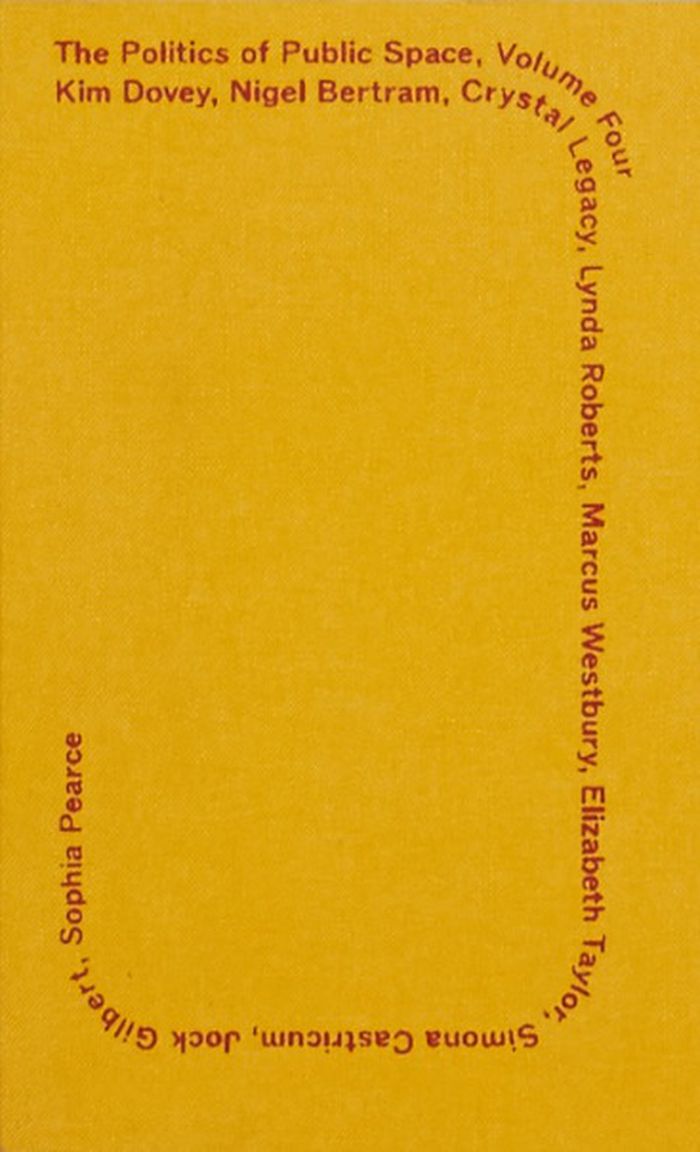
Politics of public space, volume 4
Actions:
Price:
$33.00
(available to order)
Summary:
Many of the texts in this volume are interviews with the speakers from the lecture series. We felt it was necessary to provide each speaker with the opportunity to reflect on how their research has been altered by the events of the past year. While past volumes asked many questions, this collection of interviews and talks puts forward strategies for addressing some of the perceived inequities in the public domain. Nigel Bertram and Kim Dovey’s texts explore forms of protest, preservation and civil disobedience within urban spaces. Protest continues to be intrinsic to public discourse and by consequence, how the city is preserved and developed. In contrast, these modes of resistance have their counterpart in discussions about policy-making and planning. For Lynda Roberts this is through revealing the political motivations behind the procurement of cultural artifacts and their deployment throughout the arts precinct. Crystal Legacy outlines ideas of agonism and consensus planning in large scale infrastructure projects. Marcus Westbury reflects on new forms of tenure in creating and running a public cultural institute and Elizabeth Taylor unpacks the political, social and commercial motivations behind car parking.
Politics of public space, volume 4
Actions:
Price:
$33.00
(available to order)
Summary:
Many of the texts in this volume are interviews with the speakers from the lecture series. We felt it was necessary to provide each speaker with the opportunity to reflect on how their research has been altered by the events of the past year. While past volumes asked many questions, this collection of interviews and talks puts forward strategies for addressing some of the perceived inequities in the public domain. Nigel Bertram and Kim Dovey’s texts explore forms of protest, preservation and civil disobedience within urban spaces. Protest continues to be intrinsic to public discourse and by consequence, how the city is preserved and developed. In contrast, these modes of resistance have their counterpart in discussions about policy-making and planning. For Lynda Roberts this is through revealing the political motivations behind the procurement of cultural artifacts and their deployment throughout the arts precinct. Crystal Legacy outlines ideas of agonism and consensus planning in large scale infrastructure projects. Marcus Westbury reflects on new forms of tenure in creating and running a public cultural institute and Elizabeth Taylor unpacks the political, social and commercial motivations behind car parking.
Form:
journals and magazines
journals and magazines
Publication:
October 2021
October 2021
Subject:
Magazines
Magazines
Form:
books
books
Actions:
Price:
$41.99
(available in store)
Summary:
Digital and social media have transformed how much and how fast we communicate, but they have also altered the palette of expressive strategies: the cultural forms that shape how citizens, activists, and artists speak and interact. Most familiar among these strategies are storytelling and representation. In A Theory of Assembly, Kyle Parry argues that one of the most(...)
$41.99
(available in store)
Summary:
Digital and social media have transformed how much and how fast we communicate, but they have also altered the palette of expressive strategies: the cultural forms that shape how citizens, activists, and artists speak and interact. Most familiar among these strategies are storytelling and representation. In A Theory of Assembly, Kyle Parry argues that one of the most(...)
Publication:
January 2023
January 2023
Title:
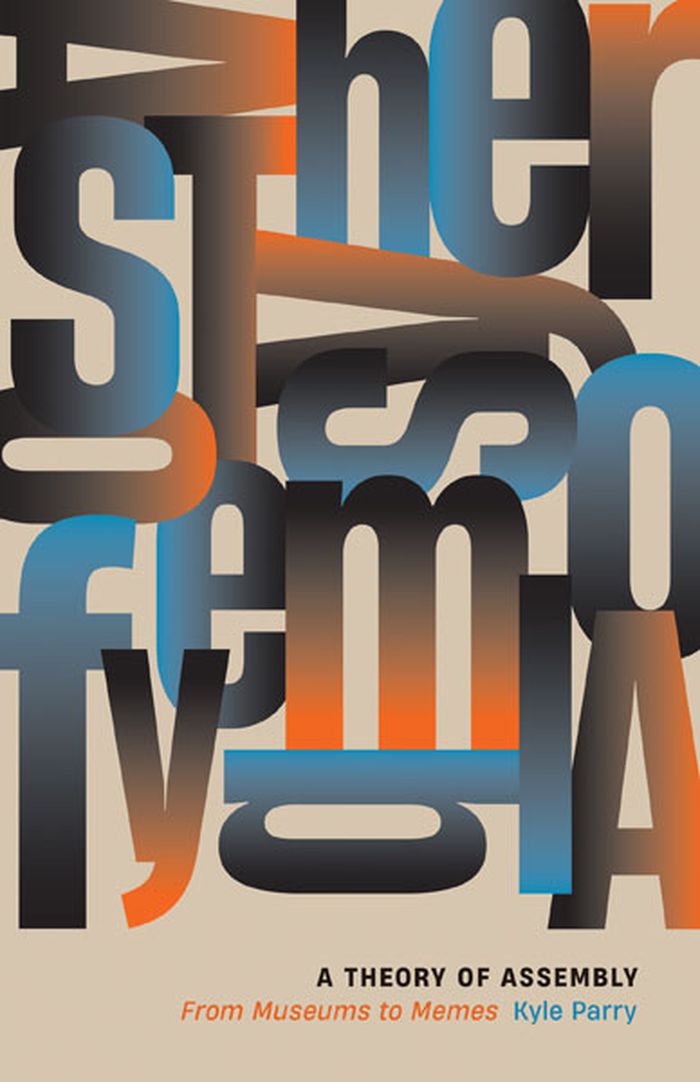
A theory of assembly: From museums to memes
Actions:
Price:
$41.99
(available in store)
Summary:
Digital and social media have transformed how much and how fast we communicate, but they have also altered the palette of expressive strategies: the cultural forms that shape how citizens, activists, and artists speak and interact. Most familiar among these strategies are storytelling and representation. In A Theory of Assembly, Kyle Parry argues that one of the most powerful and pervasive cultural forms in the digital era is assembly. Whether as subtle photographic sequences, satirical Venn diagrams, or networked archives, projects based in assembly do not so much narrate or represent the world as rearrange it. This work of rearranging can take place at any scale, from a simple pairing of images, undertaken by one person, to the entire history of internet memes, undertaken by millions. With examples ranging from GIFs and paintings to museum exhibitions and social movement hashtags, Parry shows how, in the internet age, assembly has come to equal narrative and representation in its reach and influence, particularly as a response to ecological and social violence. He also emphasizes the ambivalence of assembly—the way it can be both emancipatory and antidemocratic.
A theory of assembly: From museums to memes
Actions:
Price:
$41.99
(available in store)
Summary:
Digital and social media have transformed how much and how fast we communicate, but they have also altered the palette of expressive strategies: the cultural forms that shape how citizens, activists, and artists speak and interact. Most familiar among these strategies are storytelling and representation. In A Theory of Assembly, Kyle Parry argues that one of the most powerful and pervasive cultural forms in the digital era is assembly. Whether as subtle photographic sequences, satirical Venn diagrams, or networked archives, projects based in assembly do not so much narrate or represent the world as rearrange it. This work of rearranging can take place at any scale, from a simple pairing of images, undertaken by one person, to the entire history of internet memes, undertaken by millions. With examples ranging from GIFs and paintings to museum exhibitions and social movement hashtags, Parry shows how, in the internet age, assembly has come to equal narrative and representation in its reach and influence, particularly as a response to ecological and social violence. He also emphasizes the ambivalence of assembly—the way it can be both emancipatory and antidemocratic.
Form:
books
books
Publication:
January 2023
January 2023


