


3717 Results
Form:
books
books
Title:
Neuroarchitecture
Neuroarchitecture
Actions:
Price:
$46.95
(available to order)
Summary:
Architectural spaces are anchors for our memory. We find our place in the room by means of our sensory perception; the brain makes use of surfaces and spatial systems in order to organize the world we live in. Taking this principle as a given, this volume tracks what happens when the results of recent neuroscientific research are applied to architectural practice. In this(...)
$46.95
(available to order)
Summary:
Architectural spaces are anchors for our memory. We find our place in the room by means of our sensory perception; the brain makes use of surfaces and spatial systems in order to organize the world we live in. Taking this principle as a given, this volume tracks what happens when the results of recent neuroscientific research are applied to architectural practice. In this(...)
Title:
Neuroarchitecture
Actions:
Price:
$46.95
(available to order)
Summary:
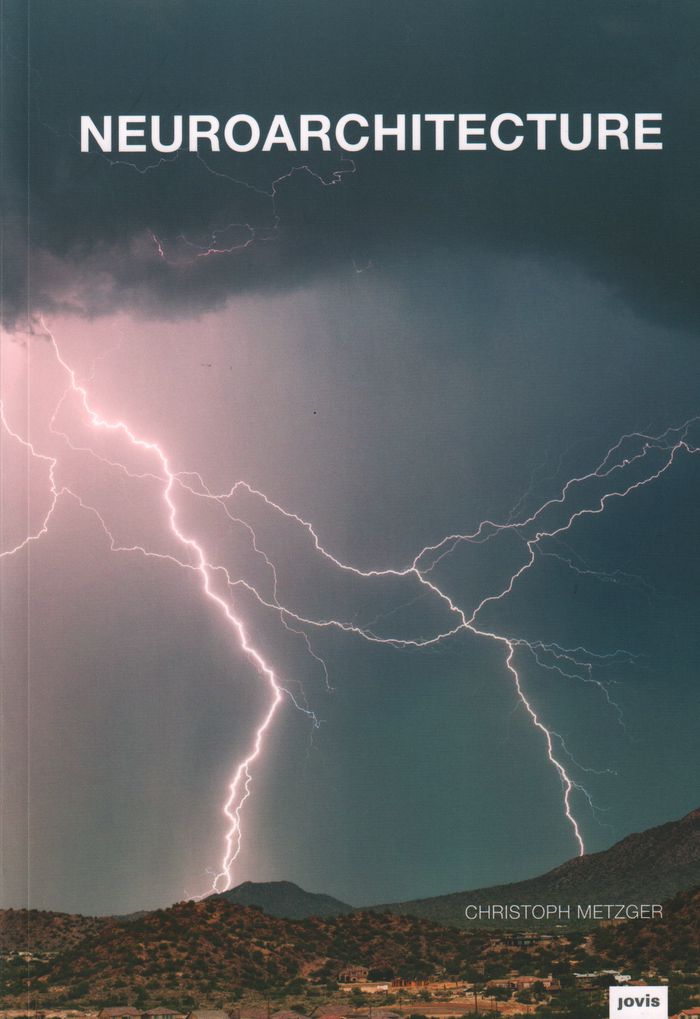
Architectural spaces are anchors for our memory. We find our place in the room by means of our sensory perception; the brain makes use of surfaces and spatial systems in order to organize the world we live in. Taking this principle as a given, this volume tracks what happens when the results of recent neuroscientific research are applied to architectural practice. In this volume, architectural theorist Christoph Metzger analyzes buildings designed by Alvar Aalto, Sou Fujimoto, Hugo Häring, Philip Johnson, Hermann Muthesius, Juhani Pallasmaa, James Stirling, Frank Lloyd Wright and Peter Zumthor in order to develop criteria for a modern, human-focused architecture that builds on neuroscientific knowledge. "Neuroarchitecture" links neuroscience, perception theory and Gestalt psychology, as well as music, art and architecture, in a holistic approach that focuses on the laws of structure formation and the movement of the individual within architectural space.
Neuroarchitecture
Actions:
Price:
$46.95
(available to order)
Summary:
Architectural spaces are anchors for our memory. We find our place in the room by means of our sensory perception; the brain makes use of surfaces and spatial systems in order to organize the world we live in. Taking this principle as a given, this volume tracks what happens when the results of recent neuroscientific research are applied to architectural practice. In this volume, architectural theorist Christoph Metzger analyzes buildings designed by Alvar Aalto, Sou Fujimoto, Hugo Häring, Philip Johnson, Hermann Muthesius, Juhani Pallasmaa, James Stirling, Frank Lloyd Wright and Peter Zumthor in order to develop criteria for a modern, human-focused architecture that builds on neuroscientific knowledge. "Neuroarchitecture" links neuroscience, perception theory and Gestalt psychology, as well as music, art and architecture, in a holistic approach that focuses on the laws of structure formation and the movement of the individual within architectural space.
Form:
books
books
Publication:
July 2018
July 2018
Subject:
Contemporary Architecture
Contemporary Architecture
Form:
books
books
Title:
Public space, NY
Public space, NY
Actions:
Price:
$75.00
(available in store)
Summary:
There are no perfect public spaces. Public space is constantly changing, shifting, never quite fixed. It is formed by laws, by regulations, by private ownership, and by city management. Public spaces are influenced both by the people who oversee them and by those who use them. And because of these facts, public spaces are never neutral. In "ublic Spaces, NY," Michael(...)
$75.00
(available in store)
Summary:
There are no perfect public spaces. Public space is constantly changing, shifting, never quite fixed. It is formed by laws, by regulations, by private ownership, and by city management. Public spaces are influenced both by the people who oversee them and by those who use them. And because of these facts, public spaces are never neutral. In "ublic Spaces, NY," Michael(...)
Title:
Public space, NY
Actions:
Price:
$75.00
(available in store)
Summary:
There are no perfect public spaces. Public space is constantly changing, shifting, never quite fixed. It is formed by laws, by regulations, by private ownership, and by city management. Public spaces are influenced both by the people who oversee them and by those who use them. And because of these facts, public spaces are never neutral. In "ublic Spaces, NY," Michael Meredith and Hilary Sample document and analyze Manhattan’s parks, streets, community gardens, privately owned public spaces, recreation areas, waterfronts, and cemeteries. Their book seeks to understand their design, construction and management, and provides detailed drawings of both the spaces themselves and speculative illustrations about how the public uses the spaces. By examining how public spaces facilitate or hinder inclusion, and by detailing the conflicts and negotiations they provoke, this book creates a discourse to reimagine the future of public life in the United States’ densest city.
Public space, NY
Actions:
Price:
$75.00
(available in store)
Summary:
There are no perfect public spaces. Public space is constantly changing, shifting, never quite fixed. It is formed by laws, by regulations, by private ownership, and by city management. Public spaces are influenced both by the people who oversee them and by those who use them. And because of these facts, public spaces are never neutral. In "ublic Spaces, NY," Michael Meredith and Hilary Sample document and analyze Manhattan’s parks, streets, community gardens, privately owned public spaces, recreation areas, waterfronts, and cemeteries. Their book seeks to understand their design, construction and management, and provides detailed drawings of both the spaces themselves and speculative illustrations about how the public uses the spaces. By examining how public spaces facilitate or hinder inclusion, and by detailing the conflicts and negotiations they provoke, this book creates a discourse to reimagine the future of public life in the United States’ densest city.
Form:
books
books
Publication:
December 2025
December 2025
Subject:
Public Space
Public Space
Form:
journals and magazines
journals and magazines

Title:
Open 12 : Freedom of culture
Open 12 : Freedom of culture
Actions:
Price:
$42.00
(available to order)
Summary:
The contemporary public domain, the "free" space where culture is produced and exchanged, is under pressure. The exchange and distribution of cultural products ("content" in the form of music, image or text) is easier in digital society, but increasingly hemmed in by corresponding moves towards greater regulation and control, new copyright laws and intellectual property(...)
$42.00
(available to order)
Summary:
The contemporary public domain, the "free" space where culture is produced and exchanged, is under pressure. The exchange and distribution of cultural products ("content" in the form of music, image or text) is easier in digital society, but increasingly hemmed in by corresponding moves towards greater regulation and control, new copyright laws and intellectual property(...)
Title:
Open 12 : Freedom of culture
Actions:
Price:
$42.00
(available to order)
Summary:
The contemporary public domain, the "free" space where culture is produced and exchanged, is under pressure. The exchange and distribution of cultural products ("content" in the form of music, image or text) is easier in digital society, but increasingly hemmed in by corresponding moves towards greater regulation and control, new copyright laws and intellectual property policy. Instead of enjoying a "free culture," we are watching the emergence of what Lawrence Lessig calls "a permission culture." Simultaneously, as an aspect of broader privatization and regulation processes, private entities are appropriating more and more of public culture, and deciding what is made available or publicly accessible. This issue of the Dutch architectural journal, Open, investigates the root causes of these developments, how they interrelate and what the implications are for the "free" production and practice of culture, as well as for the internal dynamics and balance of power in the public domain.
Open 12 : Freedom of culture
Actions:
Price:
$42.00
(available to order)
Summary:
The contemporary public domain, the "free" space where culture is produced and exchanged, is under pressure. The exchange and distribution of cultural products ("content" in the form of music, image or text) is easier in digital society, but increasingly hemmed in by corresponding moves towards greater regulation and control, new copyright laws and intellectual property policy. Instead of enjoying a "free culture," we are watching the emergence of what Lawrence Lessig calls "a permission culture." Simultaneously, as an aspect of broader privatization and regulation processes, private entities are appropriating more and more of public culture, and deciding what is made available or publicly accessible. This issue of the Dutch architectural journal, Open, investigates the root causes of these developments, how they interrelate and what the implications are for the "free" production and practice of culture, as well as for the internal dynamics and balance of power in the public domain.
Form:
journals and magazines
journals and magazines
Publication:
August 2007, Rotterdam
August 2007, Rotterdam
Subject:
Magazines
Magazines
Form:
books
books
Title:
Art history and its institutions : foundations of a discipline / edited by Elizabeth Mansfield.
Art history and its institutions : foundations of a discipline / edited by Elizabeth Mansfield.
Actions:
Holdings:
Description:
xiii, 329 pages : illustrations ; 24 cm
Description:
xiii, 329 pages : illustrations ; 24 cm
Author:
Subject:
Publication:
London ; New York : Routledge, 2002., ©2002
London ; New York : Routledge, 2002., ©2002
Title:
Art history and its institutions : foundations of a discipline / edited by Elizabeth Mansfield.
Actions:
Holdings:
Description:
xiii, 329 pages : illustrations ; 24 cm
Art history and its institutions : foundations of a discipline / edited by Elizabeth Mansfield.
Actions:
Holdings:
Description:
xiii, 329 pages : illustrations ; 24 cm
Form:
books
books
Publication:
London ; New York : Routledge, 2002., ©2002
London ; New York : Routledge, 2002., ©2002
Author:
Subject:
Form:
books
books

Price:
$12.99
(available to order)
Summary:
The story of Olmsted who designed some of North America’s most famous public spaces
$12.99
(available to order)
Summary:
The story of Olmsted who designed some of North America’s most famous public spaces
Title:
The man who made parks: the story of parkbuilder Frederick Law Olmsted
Actions:
Price:
$12.99
(available to order)
Summary:
The story of Olmsted who designed some of North America’s most famous public spaces
The man who made parks: the story of parkbuilder Frederick Law Olmsted
Actions:
Price:
$12.99
(available to order)
Summary:
The story of Olmsted who designed some of North America’s most famous public spaces
Form:
books
books
Publication:
June 2009
June 2009
Subject:
Children's Books
Children's Books
Form:
books
books
Actions:
Price:
$49.95
(available to order)
Summary:
Brooklyn’s Parkway Plan of pleasure drives and promenades was the collaborative undertaking of landscape architect Frederick Law Olmsted, who designed Prospect and Central parks with partner Calvert Vaux, and forward-looking park commissioner, James S. T. Stranahan. Featuring contemporary architectural drawings and period illustrations, Pleasure Drives and Promenades(...)
$49.95
(available to order)
Summary:
Brooklyn’s Parkway Plan of pleasure drives and promenades was the collaborative undertaking of landscape architect Frederick Law Olmsted, who designed Prospect and Central parks with partner Calvert Vaux, and forward-looking park commissioner, James S. T. Stranahan. Featuring contemporary architectural drawings and period illustrations, Pleasure Drives and Promenades(...)
Title:
Pleasure drives and promenades : a history of Frederick Law Olmsted's Brooklyn Parkways
Actions:
Price:
$49.95
(available to order)
Summary:
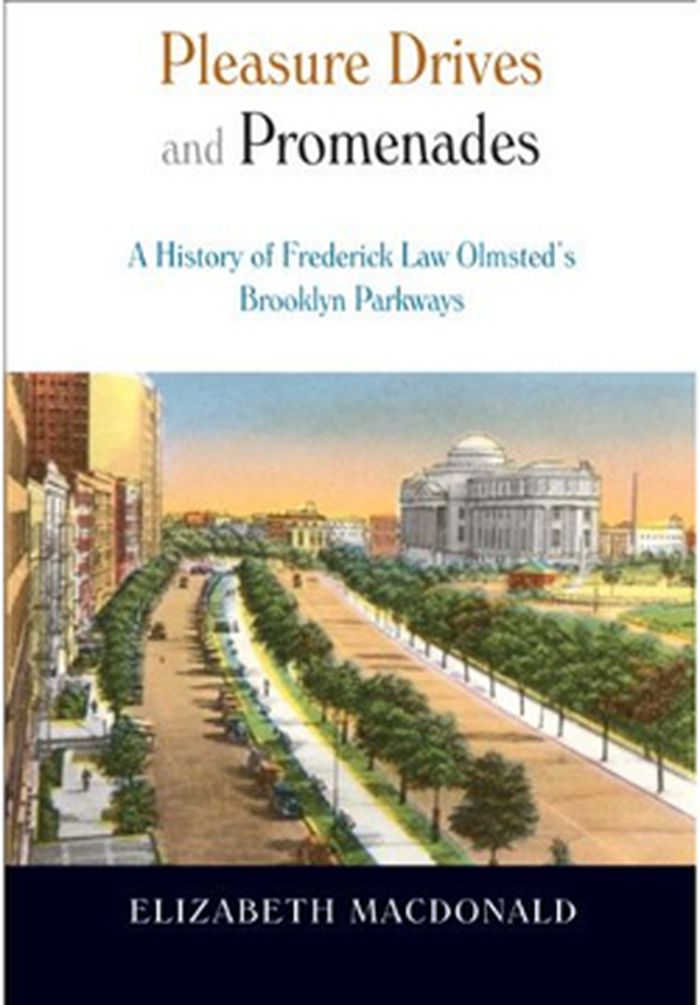
Brooklyn’s Parkway Plan of pleasure drives and promenades was the collaborative undertaking of landscape architect Frederick Law Olmsted, who designed Prospect and Central parks with partner Calvert Vaux, and forward-looking park commissioner, James S. T. Stranahan. Featuring contemporary architectural drawings and period illustrations, Pleasure Drives and Promenades charts the inception and early implementation of their plan as well as its lasting influence on the urban landscape.
Pleasure drives and promenades : a history of Frederick Law Olmsted's Brooklyn Parkways
Actions:
Price:
$49.95
(available to order)
Summary:
Brooklyn’s Parkway Plan of pleasure drives and promenades was the collaborative undertaking of landscape architect Frederick Law Olmsted, who designed Prospect and Central parks with partner Calvert Vaux, and forward-looking park commissioner, James S. T. Stranahan. Featuring contemporary architectural drawings and period illustrations, Pleasure Drives and Promenades charts the inception and early implementation of their plan as well as its lasting influence on the urban landscape.
Form:
books
books
Publication:
October 2012
October 2012
Subject:
Suburbs
Suburbs
Form:
books
books
Actions:
Holdings:
Description:
xii, 285 pages : illustrations ; 24 cm
Description:
xii, 285 pages : illustrations ; 24 cm
Author:
Subject:
Publication:
Charlottesville : University of Virginia Press, [2013], ©2013
Charlottesville : University of Virginia Press, [2013], ©2013
Title:
Mariana Griswold Van Rensselaer : a landscape critic in the gilded age / Judith K. Major.
Actions:
Holdings:
Description:
xii, 285 pages : illustrations ; 24 cm
Mariana Griswold Van Rensselaer : a landscape critic in the gilded age / Judith K. Major.
Actions:
Holdings:
Description:
xii, 285 pages : illustrations ; 24 cm
Form:
books
books
Publication:
Charlottesville : University of Virginia Press, [2013], ©2013
Charlottesville : University of Virginia Press, [2013], ©2013
Author:
Subject:
Form:
books
books
Actions:
Holdings:
Description:
xiii, 336 pages : illustrations, photographs, maps ; 24 cm
Description:
xiii, 336 pages : illustrations, photographs, maps ; 24 cm
Author:
Subject:
Publication:
Cambridge, Massachusetts ; London, England : MIT Press, [1981], ©1981
Cambridge, Massachusetts ; London, England : MIT Press, [1981], ©1981
Title:
Buffalo architecture : a guide / introductions by Reyner Banham, Charles Beveridge, Henry-Russell Hitchcock ; text by Francis R. Kowsky, Mark Goldman, Austin Fox, John D. Randall, Jack Quinan, Teresa Lasher ; sponsored by the Buffalo Architectural Guidebook Corporation.
Actions:
Holdings:
Description:
xiii, 336 pages : illustrations, photographs, maps ; 24 cm
Buffalo architecture : a guide / introductions by Reyner Banham, Charles Beveridge, Henry-Russell Hitchcock ; text by Francis R. Kowsky, Mark Goldman, Austin Fox, John D. Randall, Jack Quinan, Teresa Lasher ; sponsored by the Buffalo Architectural Guidebook Corporation.
Actions:
Holdings:
Description:
xiii, 336 pages : illustrations, photographs, maps ; 24 cm
Form:
books
books
Publication:
Cambridge, Massachusetts ; London, England : MIT Press, [1981], ©1981
Cambridge, Massachusetts ; London, England : MIT Press, [1981], ©1981
Author:
Subject:
Form:
books
books
Price:
$43.95
(available in store)
Summary:
Changing the world is difficult. One reason is that the most important problems, like climate change, racism, and poverty, are structural. They emerge from our collective practices: laws, economies, history, culture, norms, and built environments. The dilemma is that there is no way to make structural change without individual people making different—more(...)
$43.95
(available in store)
Summary:
Changing the world is difficult. One reason is that the most important problems, like climate change, racism, and poverty, are structural. They emerge from our collective practices: laws, economies, history, culture, norms, and built environments. The dilemma is that there is no way to make structural change without individual people making different—more(...)
Title:
Somebody should do something: How anyone can help create social change
Actions:
Price:
$43.95
(available in store)
Summary:
Changing the world is difficult. One reason is that the most important problems, like climate change, racism, and poverty, are structural. They emerge from our collective practices: laws, economies, history, culture, norms, and built environments. The dilemma is that there is no way to make structural change without individual people making different—more structure-facing—decisions. In ''Somebody Should Do Something'', Michael Brownstein, Alex Madva, and Daniel Kelly show us how we can connect our personal choices to structural change and why individual choices matter, though not in the way people usually think. The authors paint a new picture of how social change happens, arguing that our most powerful personal choices are those that springboard us into working together with others—warehouse worker Chris Smalls’s unionization at Amazon is one powerful example. Taking inspiration from the writer Bill McKibben, they stress how one “important thing an individual can do is be somewhat less of an individual.”
Somebody should do something: How anyone can help create social change
Actions:
Price:
$43.95
(available in store)
Summary:
Changing the world is difficult. One reason is that the most important problems, like climate change, racism, and poverty, are structural. They emerge from our collective practices: laws, economies, history, culture, norms, and built environments. The dilemma is that there is no way to make structural change without individual people making different—more structure-facing—decisions. In ''Somebody Should Do Something'', Michael Brownstein, Alex Madva, and Daniel Kelly show us how we can connect our personal choices to structural change and why individual choices matter, though not in the way people usually think. The authors paint a new picture of how social change happens, arguing that our most powerful personal choices are those that springboard us into working together with others—warehouse worker Chris Smalls’s unionization at Amazon is one powerful example. Taking inspiration from the writer Bill McKibben, they stress how one “important thing an individual can do is be somewhat less of an individual.”
Form:
books
books
Publication:
September 2025
September 2025
Subject:
Social
Social
Form:
books
books

Title:
They laid the foundation
They laid the foundation
Actions:
Price:
$48.00
(available in store)
Summary:
Beginning in the 1920s, and especially after the Nazis introduced the Nuremberg Race Laws in the 1930s, more than 130 Jewish architects chose to leave their native Germany and begin afresh in Palestine. Many of them, including Alex Baerwald and Harry Rosenthal, left behind significant buildings that were already central to the urban image of Berlin. Nevertheless, upon(...)
$48.00
(available in store)
Summary:
Beginning in the 1920s, and especially after the Nazis introduced the Nuremberg Race Laws in the 1930s, more than 130 Jewish architects chose to leave their native Germany and begin afresh in Palestine. Many of them, including Alex Baerwald and Harry Rosenthal, left behind significant buildings that were already central to the urban image of Berlin. Nevertheless, upon(...)
Subject:
Architecture since 1900, Middle-East
Architecture since 1900, Middle-East
Publication:
September 2007, New York
September 2007, New York
Title:
They laid the foundation
Actions:
Price:
$48.00
(available in store)
Summary:
Beginning in the 1920s, and especially after the Nazis introduced the Nuremberg Race Laws in the 1930s, more than 130 Jewish architects chose to leave their native Germany and begin afresh in Palestine. Many of them, including Alex Baerwald and Harry Rosenthal, left behind significant buildings that were already central to the urban image of Berlin. Nevertheless, upon arriving in their new desert home, completely unaccustomed to the climate, the culture or the language, these Bauhaus-era repatriates set about laying the foundations of a new society with amazing vigor. This volume, assembled by the Israeli architect Myra Warhaftig, provides comprehensive documentation of works by this first generation of Jewish-Palestinean architects, including kibbutzim, villages and cities with housing developments, hospitals, schools, universities, theaters, administrative buildings, etc. It also includes documentation of the lives and works of many of the most entrepreneurial individuals to escape in the diaspora, who, along with their descendents, laid the foundations of modern-day Israel.
They laid the foundation
Actions:
Price:
$48.00
(available in store)
Summary:
Beginning in the 1920s, and especially after the Nazis introduced the Nuremberg Race Laws in the 1930s, more than 130 Jewish architects chose to leave their native Germany and begin afresh in Palestine. Many of them, including Alex Baerwald and Harry Rosenthal, left behind significant buildings that were already central to the urban image of Berlin. Nevertheless, upon arriving in their new desert home, completely unaccustomed to the climate, the culture or the language, these Bauhaus-era repatriates set about laying the foundations of a new society with amazing vigor. This volume, assembled by the Israeli architect Myra Warhaftig, provides comprehensive documentation of works by this first generation of Jewish-Palestinean architects, including kibbutzim, villages and cities with housing developments, hospitals, schools, universities, theaters, administrative buildings, etc. It also includes documentation of the lives and works of many of the most entrepreneurial individuals to escape in the diaspora, who, along with their descendents, laid the foundations of modern-day Israel.
Form:
books
books
Publication:
September 2007, New York
September 2007, New York
Subject:
Architecture since 1900, Middle-East
Architecture since 1900, Middle-East


