


3676 Results
Form:
books
books
Price:
$58.95
(available to order)
Summary:
The Pan Am Building and the reaction to it signalled the end of an era. Begun when the modernist aesthetic and the architectural star system ruled architectural theory and practice, the completed building became a symbol of modernism's fall from grace. In “The Pan Am Building and the Shattering of the Modernist Dream”, Meredith Clausen tells the story as both history and(...)
$58.95
(available to order)
Summary:
The Pan Am Building and the reaction to it signalled the end of an era. Begun when the modernist aesthetic and the architectural star system ruled architectural theory and practice, the completed building became a symbol of modernism's fall from grace. In “The Pan Am Building and the Shattering of the Modernist Dream”, Meredith Clausen tells the story as both history and(...)
Subject:
Architecture since 1900, Europe
Architecture since 1900, Europe
Publication:
December 2004, Cambridge, Mass.
December 2004, Cambridge, Mass.
Title:
The Pan Am building and the shattering of the modernist dream
Actions:
Price:
$58.95
(available to order)
Summary:
The Pan Am Building and the reaction to it signalled the end of an era. Begun when the modernist aesthetic and the architectural star system ruled architectural theory and practice, the completed building became a symbol of modernism's fall from grace. In “The Pan Am Building and the Shattering of the Modernist Dream”, Meredith Clausen tells the story as both history and cautionary tale -- a case study of how not to plan and execute a large-scale urban project that seems especially relevant in light of the World Trade Center and the ongoing discussions over what should be built in its place. The Pan Am Building was despised by many as soon as the plans were announced in 1958. The star power of the celebrity architects -- those deans of modernism, Walter Gropius and Pietro Belluschi -- overrode critics' objections. When construction was completed in 1963, it became more than an architectural question; this "mute, massive, over-scaled octagonal slab," as Clausen describes it, built over Grand Central Terminal, blocked the view down Park Avenue, created deep shadows where there had been sunlight, and poured 25,000 office workers on the sidewalks each morning and evening. As Clausen tells it, the story of the building -- which was undistinguished architecturally but important because of its location and its moment in history -- encompasses the end of modernism's social idealism, the decline of Gropius's and Belluschi's reputations, the victory of private interests over public good, the revival of architectural criticism in the press (both Ada Louise Huxtable and Jane Jacobs emerged as prominent and influential critics), the birth of the historic preservation movement, and the changing culture and politics of New York City.
The Pan Am building and the shattering of the modernist dream
Actions:
Price:
$58.95
(available to order)
Summary:
The Pan Am Building and the reaction to it signalled the end of an era. Begun when the modernist aesthetic and the architectural star system ruled architectural theory and practice, the completed building became a symbol of modernism's fall from grace. In “The Pan Am Building and the Shattering of the Modernist Dream”, Meredith Clausen tells the story as both history and cautionary tale -- a case study of how not to plan and execute a large-scale urban project that seems especially relevant in light of the World Trade Center and the ongoing discussions over what should be built in its place. The Pan Am Building was despised by many as soon as the plans were announced in 1958. The star power of the celebrity architects -- those deans of modernism, Walter Gropius and Pietro Belluschi -- overrode critics' objections. When construction was completed in 1963, it became more than an architectural question; this "mute, massive, over-scaled octagonal slab," as Clausen describes it, built over Grand Central Terminal, blocked the view down Park Avenue, created deep shadows where there had been sunlight, and poured 25,000 office workers on the sidewalks each morning and evening. As Clausen tells it, the story of the building -- which was undistinguished architecturally but important because of its location and its moment in history -- encompasses the end of modernism's social idealism, the decline of Gropius's and Belluschi's reputations, the victory of private interests over public good, the revival of architectural criticism in the press (both Ada Louise Huxtable and Jane Jacobs emerged as prominent and influential critics), the birth of the historic preservation movement, and the changing culture and politics of New York City.
Form:
books
books
Publication:
December 2004, Cambridge, Mass.
December 2004, Cambridge, Mass.
Subject:
Architecture since 1900, Europe
Architecture since 1900, Europe
Form:
books
books
Actions:
Price:
$65.99
(available to order)
Summary:
Today, the physical scale model is a centrepiece for design education, celebrated practices and architecture’s public relations. The development of digital fabrication devices has made model manufacture even more pervasive. The physical model is the most accessible form of architectural communication. Clients and the general public seem to immediately respond to and(...)
$65.99
(available to order)
Summary:
Today, the physical scale model is a centrepiece for design education, celebrated practices and architecture’s public relations. The development of digital fabrication devices has made model manufacture even more pervasive. The physical model is the most accessible form of architectural communication. Clients and the general public seem to immediately respond to and(...)
Title:
Architecture and the miniature : models
Actions:
Price:
$65.99
(available to order)
Summary:
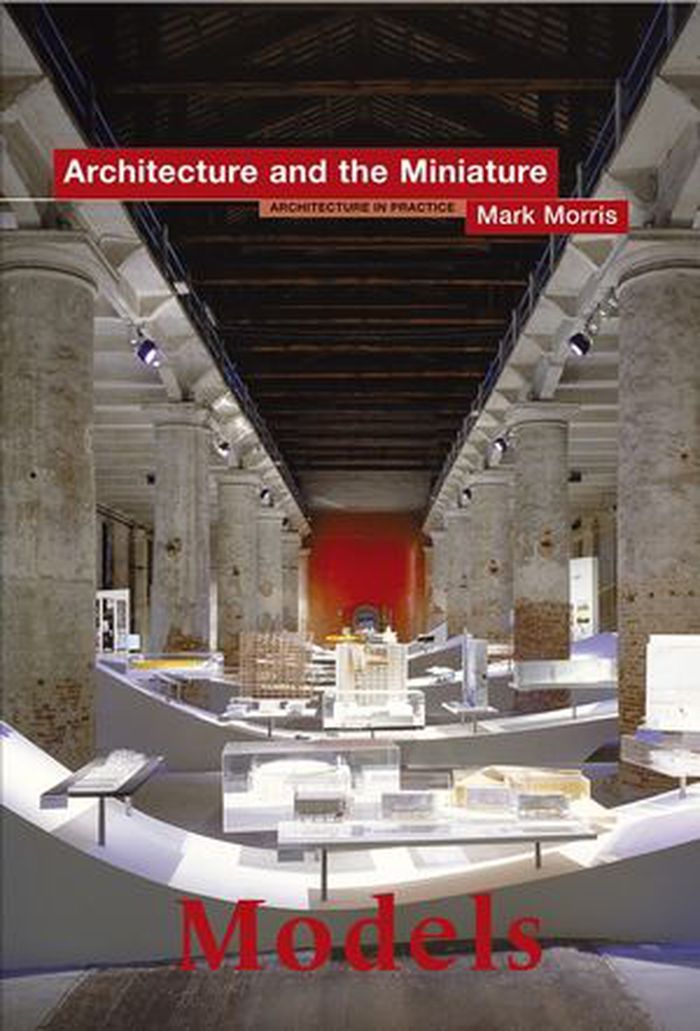
Today, the physical scale model is a centrepiece for design education, celebrated practices and architecture’s public relations. The development of digital fabrication devices has made model manufacture even more pervasive. The physical model is the most accessible form of architectural communication. Clients and the general public seem to immediately respond to and understand the model, over blueprints and computer simulations. Many architects use finished models for presentations, competitions and exhibitions. Others also embrace sketch models as quick, economic and flexible generative tools. It is only with the rise of the virtual that the advantages and disadvantages of more traditional models can be fully evaluated. As attested by this book, we are now at an important watershed for the model in architecture. Practitioners and educators alike are seeking to fully understand the multiplicity of model types and how they might be strategically deployed at appropriate stages in the design process. The historic role that the model has played is outlined with attention paid to Alberti, John Soane, the Bauhaus and education reforms. A cultural history is offered by examining models in the guise of toys, food, cinema, product design, souvenirs, narrative and art. Model theories are considered and tied to specific examples in the field. New technologies and creative combinations of traditional model-making techniques are evaluated. Kinetic, multi-media, nightscape and interdisciplinary models reveal the broad scope and exceptional versatility offered by this important tool. Models: Architecture and the Miniature focuses on current model use and experimentation by architects across the globe including David Chipperfield, Peter Eisenman, Frank Gehry, Zaha Hadid, Coop Himmelb(l)au, Daniel Libeskind, Greg Lynn and UN Studio.
Architecture and the miniature : models
Actions:
Price:
$65.99
(available to order)
Summary:
Today, the physical scale model is a centrepiece for design education, celebrated practices and architecture’s public relations. The development of digital fabrication devices has made model manufacture even more pervasive. The physical model is the most accessible form of architectural communication. Clients and the general public seem to immediately respond to and understand the model, over blueprints and computer simulations. Many architects use finished models for presentations, competitions and exhibitions. Others also embrace sketch models as quick, economic and flexible generative tools. It is only with the rise of the virtual that the advantages and disadvantages of more traditional models can be fully evaluated. As attested by this book, we are now at an important watershed for the model in architecture. Practitioners and educators alike are seeking to fully understand the multiplicity of model types and how they might be strategically deployed at appropriate stages in the design process. The historic role that the model has played is outlined with attention paid to Alberti, John Soane, the Bauhaus and education reforms. A cultural history is offered by examining models in the guise of toys, food, cinema, product design, souvenirs, narrative and art. Model theories are considered and tied to specific examples in the field. New technologies and creative combinations of traditional model-making techniques are evaluated. Kinetic, multi-media, nightscape and interdisciplinary models reveal the broad scope and exceptional versatility offered by this important tool. Models: Architecture and the Miniature focuses on current model use and experimentation by architects across the globe including David Chipperfield, Peter Eisenman, Frank Gehry, Zaha Hadid, Coop Himmelb(l)au, Daniel Libeskind, Greg Lynn and UN Studio.
Form:
books
books
Publication:
October 2005, Chichester
October 2005, Chichester
Subject:
Models
Models
Form:
books
books
Price:
$75.95
(available to order)
Summary:
More than one hundred exhibitions of Frank Lloyd Wright's work were mounted between 1894 and his death in 1959. Wright organized the majority of these exhibitions himself and viewed them as crucial to his self-presentation as his extensive writings. He used them to promote his designs, appeal to new viewers, and persuade his detractors. Wright on Exhibit presents the(...)
$75.95
(available to order)
Summary:
More than one hundred exhibitions of Frank Lloyd Wright's work were mounted between 1894 and his death in 1959. Wright organized the majority of these exhibitions himself and viewed them as crucial to his self-presentation as his extensive writings. He used them to promote his designs, appeal to new viewers, and persuade his detractors. Wright on Exhibit presents the(...)
Title:
Wright on exhibit: Frank Lloyd Wright's architectural exhibitions
Actions:
Price:
$75.95
(available to order)
Summary:
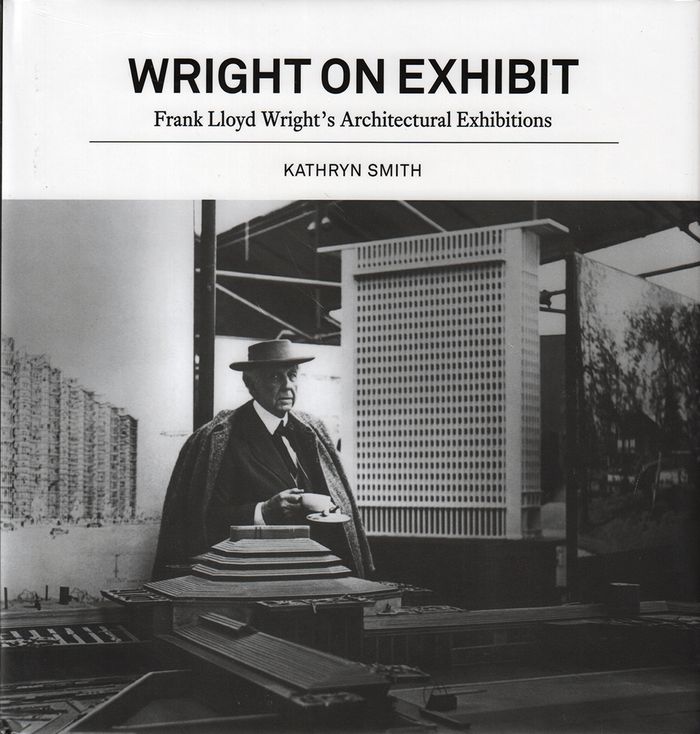
More than one hundred exhibitions of Frank Lloyd Wright's work were mounted between 1894 and his death in 1959. Wright organized the majority of these exhibitions himself and viewed them as crucial to his self-presentation as his extensive writings. He used them to promote his designs, appeal to new viewers, and persuade his detractors. Wright on Exhibit presents the first history of this neglected aspect of the architect’s influential career. Drawing extensively from Wright’s unpublished correspondence, Kathryn Smith challenges the preconceived notion of Wright as a self-promoter who displayed his work in search of money, clients, and fame. She shows how he was an artist-architect projecting an avant-garde program, an innovator who expanded the palette of installation design as technology evolved, and a social activist driven to revolutionize society through design. While Wright’s earliest exhibitions were largely for other architects, by the 1930s he was creating public installations intended to inspire debate and change public perceptions about architecture. The nature of his exhibitions expanded with the times beyond models, drawings, and photographs to include more immersive tools such as slides, film, and even a full-scale structure built especially for his 1953 retrospective at the Guggenheim Museum. Placing Wright’s exhibitions side by side with his writings, Smith shows how integral these exhibitions were to his vision and sheds light on the broader discourse concerning architecture and modernism during the first half of the twentieth century. Wright on Exhibit features color renderings, photos, and plans, as well as a checklist of exhibitions and an illustrated catalog of extant and lost models made under Wright’s supervision.
Wright on exhibit: Frank Lloyd Wright's architectural exhibitions
Actions:
Price:
$75.95
(available to order)
Summary:
More than one hundred exhibitions of Frank Lloyd Wright's work were mounted between 1894 and his death in 1959. Wright organized the majority of these exhibitions himself and viewed them as crucial to his self-presentation as his extensive writings. He used them to promote his designs, appeal to new viewers, and persuade his detractors. Wright on Exhibit presents the first history of this neglected aspect of the architect’s influential career. Drawing extensively from Wright’s unpublished correspondence, Kathryn Smith challenges the preconceived notion of Wright as a self-promoter who displayed his work in search of money, clients, and fame. She shows how he was an artist-architect projecting an avant-garde program, an innovator who expanded the palette of installation design as technology evolved, and a social activist driven to revolutionize society through design. While Wright’s earliest exhibitions were largely for other architects, by the 1930s he was creating public installations intended to inspire debate and change public perceptions about architecture. The nature of his exhibitions expanded with the times beyond models, drawings, and photographs to include more immersive tools such as slides, film, and even a full-scale structure built especially for his 1953 retrospective at the Guggenheim Museum. Placing Wright’s exhibitions side by side with his writings, Smith shows how integral these exhibitions were to his vision and sheds light on the broader discourse concerning architecture and modernism during the first half of the twentieth century. Wright on Exhibit features color renderings, photos, and plans, as well as a checklist of exhibitions and an illustrated catalog of extant and lost models made under Wright’s supervision.
Form:
books
books
Publication:
May 2017
May 2017
Subject:
Architecture Monographs
Architecture Monographs
Form:
books
books
Actions:
Price:
$29.95
(available to order)
Summary:
Once considered a mere caretaker for collections, the curator is now widely viewed as a globally connected auteur. Over the last twenty-five years, as international group exhibitions and biennials have become the dominant mode of presenting contemporary art to the public, curatorship has begun to be perceived as a constellation of creative activities not unlike artistic(...)
$29.95
(available to order)
Summary:
Once considered a mere caretaker for collections, the curator is now widely viewed as a globally connected auteur. Over the last twenty-five years, as international group exhibitions and biennials have become the dominant mode of presenting contemporary art to the public, curatorship has begun to be perceived as a constellation of creative activities not unlike artistic(...)
Title:
The culture of curating and the curating of culture(s)
Actions:
Price:
$29.95
(available to order)
Summary:
Once considered a mere caretaker for collections, the curator is now widely viewed as a globally connected auteur. Over the last twenty-five years, as international group exhibitions and biennials have become the dominant mode of presenting contemporary art to the public, curatorship has begun to be perceived as a constellation of creative activities not unlike artistic praxis. The curator has gone from being a behind-the-scenes organizer and selector to a visible, centrally important cultural producer. In The Culture of Curating and the Curating of Culture(s), Paul O’Neill examines the emergence of independent curatorship and the discourse that helped to establish it. O’Neill describes how, by the 1980s, curated group exhibitions - large-scale, temporary projects with artworks cast as illustrative fragments - came to be understood as the creative work of curator-auteurs. The proliferation of new biennials and other large international exhibitions in the 1990s created a cohort of high-profile, globally mobile curators, moving from Venice to Paris to Kassel. In the 1990s, curatorial and artistic practice converged, blurring the distinction between artist and curator. O’Neill argues that this change in the understanding of curatorship was shaped by a curator-centered discourse that effectively advocated - and authorized - the new independent curatorial practice. Drawing on the extensive curatorial literature and his own interviews with leading curators, critics, art historians, and artists, O’Neill traces the development of the curator-as-artist model and the ways it has been contested. The Culture of Curating and the Curating of Culture(s) documents the many ways in which our perception of art has been transformed by curating and the discourses surrounding it.
The culture of curating and the curating of culture(s)
Actions:
Price:
$29.95
(available to order)
Summary:
Once considered a mere caretaker for collections, the curator is now widely viewed as a globally connected auteur. Over the last twenty-five years, as international group exhibitions and biennials have become the dominant mode of presenting contemporary art to the public, curatorship has begun to be perceived as a constellation of creative activities not unlike artistic praxis. The curator has gone from being a behind-the-scenes organizer and selector to a visible, centrally important cultural producer. In The Culture of Curating and the Curating of Culture(s), Paul O’Neill examines the emergence of independent curatorship and the discourse that helped to establish it. O’Neill describes how, by the 1980s, curated group exhibitions - large-scale, temporary projects with artworks cast as illustrative fragments - came to be understood as the creative work of curator-auteurs. The proliferation of new biennials and other large international exhibitions in the 1990s created a cohort of high-profile, globally mobile curators, moving from Venice to Paris to Kassel. In the 1990s, curatorial and artistic practice converged, blurring the distinction between artist and curator. O’Neill argues that this change in the understanding of curatorship was shaped by a curator-centered discourse that effectively advocated - and authorized - the new independent curatorial practice. Drawing on the extensive curatorial literature and his own interviews with leading curators, critics, art historians, and artists, O’Neill traces the development of the curator-as-artist model and the ways it has been contested. The Culture of Curating and the Curating of Culture(s) documents the many ways in which our perception of art has been transformed by curating and the discourses surrounding it.
Form:
books
books
Publication:
September 2012
September 2012
Subject:
Museology
Museology
Form:
journals and magazines
journals and magazines
Title:
OASE #84: Models Maquettes
OASE #84: Models Maquettes
Actions:
Price:
$39.00
(available to order)
Summary:
In recent decades models have made a contribution to architectural discourse that should not be underestimated. Christophe Van Gerrewey considers the models in OMA’s oeuvre and ascertains that OMA’s models always take on a life of their own, turning into ‘a realisation of what architecture promises, yet can never attain itself’. For example, the two plaster models of(...)
$39.00
(available to order)
Summary:
In recent decades models have made a contribution to architectural discourse that should not be underestimated. Christophe Van Gerrewey considers the models in OMA’s oeuvre and ascertains that OMA’s models always take on a life of their own, turning into ‘a realisation of what architecture promises, yet can never attain itself’. For example, the two plaster models of(...)
Title:
OASE #84: Models Maquettes
Actions:
Price:
$39.00
(available to order)
Summary:
In recent decades models have made a contribution to architectural discourse that should not be underestimated. Christophe Van Gerrewey considers the models in OMA’s oeuvre and ascertains that OMA’s models always take on a life of their own, turning into ‘a realisation of what architecture promises, yet can never attain itself’. For example, the two plaster models of the Très Grande Bibliothèque in Paris afforded new insights into a space that can be read both as mass and as counter-mass, while the model of the cruise terminal in Zeebrugge exemplified the power of the iconic form. OASE 84 devotes considerable attention to (architectural) models that play an important part in the work of various artists as well, like in the work of Mike Kelley and Thomas Demand. These models are hardly ever meant to be realised on a different scale elsewhere; they work with the dualistic connotations of the model directly. Although the two disciplines have markedly different motives for using models, we are confident that the cross-pollination brought about here will generate novel insights about the model’s significance and possibilities. With contributions by Jacob Bil, Adam Caruso, Thomas Demand, Job Floris, Kersten Geers, Christophe Van Gerrewey, Anne Holtrop, Christian Hubert, Junya Ishigami, Krijn de Koning, Véronique Patteeuw, Bas Princen, Hans Teerds, Milica Topalovic and Stefaan Vervoort OASE is an independent, international journal published in Dutch and English that features architecture, urban design and landscape design. Each issue is devoted to a topical theme and thus makes a significant contribution to international discourse within these fields. OASE is published three times a year
OASE #84: Models Maquettes
Actions:
Price:
$39.00
(available to order)
Summary:
In recent decades models have made a contribution to architectural discourse that should not be underestimated. Christophe Van Gerrewey considers the models in OMA’s oeuvre and ascertains that OMA’s models always take on a life of their own, turning into ‘a realisation of what architecture promises, yet can never attain itself’. For example, the two plaster models of the Très Grande Bibliothèque in Paris afforded new insights into a space that can be read both as mass and as counter-mass, while the model of the cruise terminal in Zeebrugge exemplified the power of the iconic form. OASE 84 devotes considerable attention to (architectural) models that play an important part in the work of various artists as well, like in the work of Mike Kelley and Thomas Demand. These models are hardly ever meant to be realised on a different scale elsewhere; they work with the dualistic connotations of the model directly. Although the two disciplines have markedly different motives for using models, we are confident that the cross-pollination brought about here will generate novel insights about the model’s significance and possibilities. With contributions by Jacob Bil, Adam Caruso, Thomas Demand, Job Floris, Kersten Geers, Christophe Van Gerrewey, Anne Holtrop, Christian Hubert, Junya Ishigami, Krijn de Koning, Véronique Patteeuw, Bas Princen, Hans Teerds, Milica Topalovic and Stefaan Vervoort OASE is an independent, international journal published in Dutch and English that features architecture, urban design and landscape design. Each issue is devoted to a topical theme and thus makes a significant contribution to international discourse within these fields. OASE is published three times a year
Form:
journals and magazines
journals and magazines
Publication:
August 2011
August 2011
Form:
books
books
Actions:
Price:
$56.50
(available to order)
Summary:
At its opening on July 16, 2004, Chicago’s Millennium Park was hailed as one of the most important millennium projects in the world. “Politicians come and go; business leaders come and go,” proclaimed mayor Richard M. Daley, “but artists really define a city.” Part park, part outdoor art museum, part cultural center, and part performance space, Millennium Park is now an(...)
$56.50
(available to order)
Summary:
At its opening on July 16, 2004, Chicago’s Millennium Park was hailed as one of the most important millennium projects in the world. “Politicians come and go; business leaders come and go,” proclaimed mayor Richard M. Daley, “but artists really define a city.” Part park, part outdoor art museum, part cultural center, and part performance space, Millennium Park is now an(...)
Subject:
Architecture since 1900, Europe
Architecture since 1900, Europe
Publication:
April 2006, Chicago, London
April 2006, Chicago, London
Title:
Millennium park : creating a Chicago landscape
Actions:
Price:
$56.50
(available to order)
Summary:
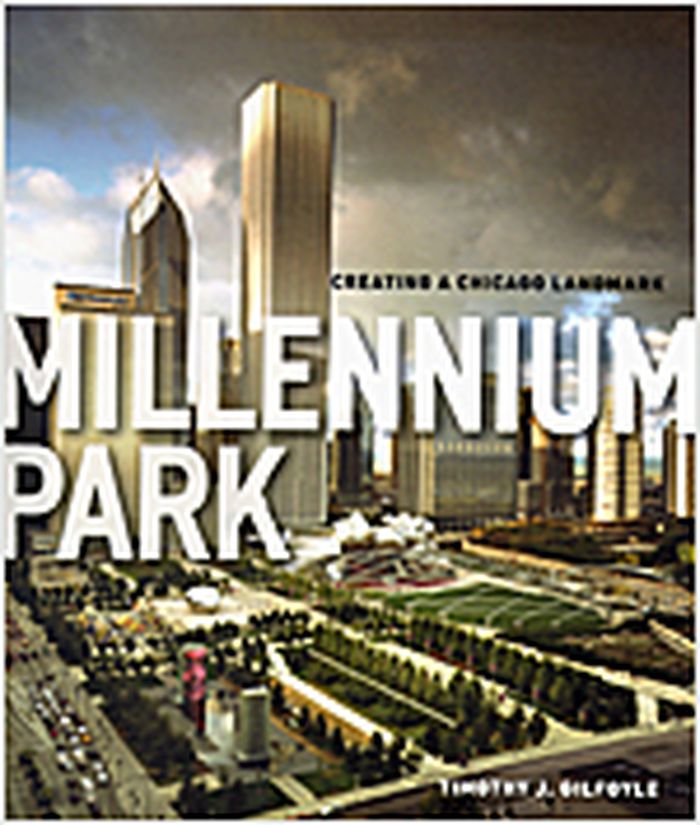
At its opening on July 16, 2004, Chicago’s Millennium Park was hailed as one of the most important millennium projects in the world. “Politicians come and go; business leaders come and go,” proclaimed mayor Richard M. Daley, “but artists really define a city.” Part park, part outdoor art museum, part cultural center, and part performance space, Millennium Park is now an unprecedented combination of distinctive architecture, monumental sculpture, and innovative landscaping. Including structures and works by Frank Gehry, Anish Kapoor, Jaume Plensa, and Kathryn Gustafson, the park represents the collaborative efforts of hundreds to turn an unused railroad yard in the heart of the city into a world-class civic space—and, in the process, to create an entirely new kind of cultural philanthropy. Timothy Gilfoyle here offers a biography of this phenomenal undertaking, beginning before 1850 when the site of the park, the “city’s front yard,” was part of Lake Michigan. Gilfoyle studied the history of downtown; spent years with the planners, artists, and public officials behind Millennium Park; documented it at every stage of its construction; and traced the skeins of financing through municipal government, global corporations, private foundations, and wealthy civic leaders. The result is an illustrated testament to the park, the city, and all those attempting to think and act on a monumental scale. And underlying Gilfoyle’s history is also a revealing study of the globalization of art, the use of culture as an engine of economic expansion, and the nature of political and philanthropic power. Born out of civic idealism, raised in political controversy, and maturing into a symbol of the new Chicago, Millennium Park is truly a twenty-first-century landmark, and it now has the history it deserves.
Millennium park : creating a Chicago landscape
Actions:
Price:
$56.50
(available to order)
Summary:
At its opening on July 16, 2004, Chicago’s Millennium Park was hailed as one of the most important millennium projects in the world. “Politicians come and go; business leaders come and go,” proclaimed mayor Richard M. Daley, “but artists really define a city.” Part park, part outdoor art museum, part cultural center, and part performance space, Millennium Park is now an unprecedented combination of distinctive architecture, monumental sculpture, and innovative landscaping. Including structures and works by Frank Gehry, Anish Kapoor, Jaume Plensa, and Kathryn Gustafson, the park represents the collaborative efforts of hundreds to turn an unused railroad yard in the heart of the city into a world-class civic space—and, in the process, to create an entirely new kind of cultural philanthropy. Timothy Gilfoyle here offers a biography of this phenomenal undertaking, beginning before 1850 when the site of the park, the “city’s front yard,” was part of Lake Michigan. Gilfoyle studied the history of downtown; spent years with the planners, artists, and public officials behind Millennium Park; documented it at every stage of its construction; and traced the skeins of financing through municipal government, global corporations, private foundations, and wealthy civic leaders. The result is an illustrated testament to the park, the city, and all those attempting to think and act on a monumental scale. And underlying Gilfoyle’s history is also a revealing study of the globalization of art, the use of culture as an engine of economic expansion, and the nature of political and philanthropic power. Born out of civic idealism, raised in political controversy, and maturing into a symbol of the new Chicago, Millennium Park is truly a twenty-first-century landmark, and it now has the history it deserves.
Form:
books
books
Publication:
April 2006, Chicago, London
April 2006, Chicago, London
Subject:
Architecture since 1900, Europe
Architecture since 1900, Europe
Form:
books
books
Actions:
Price:
$33.95
(available to order)
Summary:
Intrigued and inspired by the neon beer signs on shopfronts in his San Francisco neighborhood, Bruce Nauman created his first neon piece, "Window or wall sign", in 1967. He wanted, he said, to achieve "an art that would kind of disappear - that was supposed to not quite look like art." Light offered Nauman a medium both elusive and effervescent, but one that could also(...)
$33.95
(available to order)
Summary:
Intrigued and inspired by the neon beer signs on shopfronts in his San Francisco neighborhood, Bruce Nauman created his first neon piece, "Window or wall sign", in 1967. He wanted, he said, to achieve "an art that would kind of disappear - that was supposed to not quite look like art." Light offered Nauman a medium both elusive and effervescent, but one that could also(...)
Subject:
Contemporary Art Monographs
Contemporary Art Monographs
Publication:
January 2006, Milwaukee
January 2006, Milwaukee
Title:
Elusive signs : Bruce Nauman works with light
Actions:
Price:
$33.95
(available to order)
Summary:
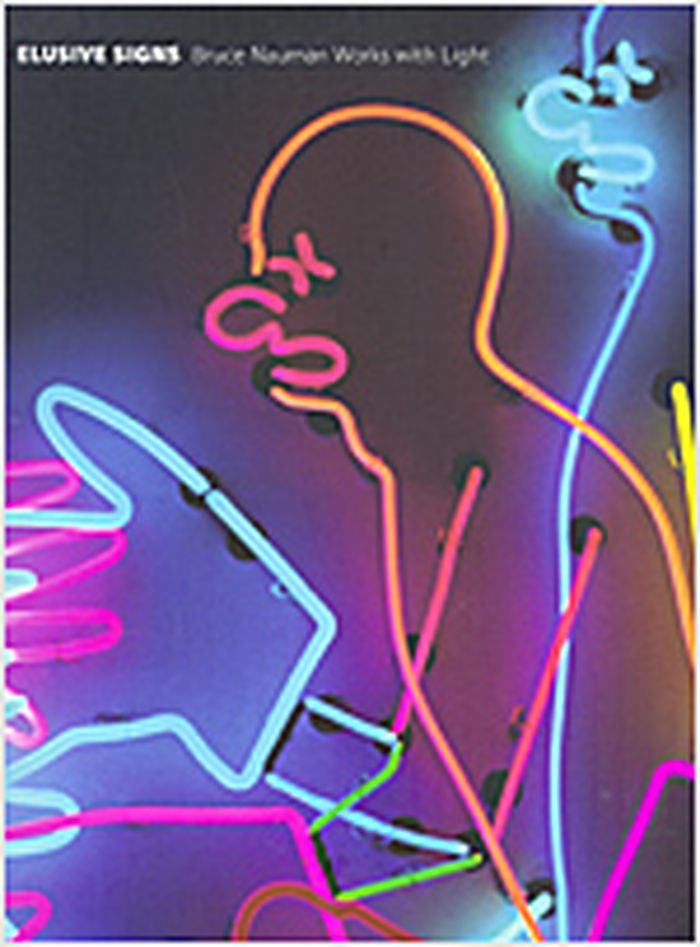
Intrigued and inspired by the neon beer signs on shopfronts in his San Francisco neighborhood, Bruce Nauman created his first neon piece, "Window or wall sign", in 1967. He wanted, he said, to achieve "an art that would kind of disappear - that was supposed to not quite look like art." Light offered Nauman a medium both elusive and effervescent, but one that could also aggressively convey a message. Over the first three decades of his career, Nauman used the medium of light to explore the twists and turns of perception, logic, and meaning with the earnest playfulness that characterizes all his art. "Elusive signs" focuses on the discrete body of Nauman's work that uses neon and fluorescent light in signs and room installations, and includes images of nearly all Nauman's work with light. After "Window or wall sign", Nauman embarked on a series of neons that grappled with the semiotics of body and identity, and with "My name as though it were written on the surface of the moon" (1968), he forces the viewer to contemplate the role of naming in forming identity. Language - signs and symbols - plays an important role in Nauman's art. His later neon works emphasize the neon as a sign, presenting provocative twists of language and offering harsh and humorous sociopolitical commentary in such pieces as "Run from fear, fun from rear" (1972). This series culminates in the monumental, billboard-size "One hundred live and die" (1984), which employs overwhelming scale to bombard the viewer with sardonic aphorisms. In the essays that accompany the images of Nauman's work, Joseph Ketner II of the Milwaukee Art Museum (which originated the exhibit this book accompanies) and critics Janet Kraynak and Gregory Volk analyze the works in light both as a body of work and as an access point to Nauman's entire career.
Elusive signs : Bruce Nauman works with light
Actions:
Price:
$33.95
(available to order)
Summary:
Intrigued and inspired by the neon beer signs on shopfronts in his San Francisco neighborhood, Bruce Nauman created his first neon piece, "Window or wall sign", in 1967. He wanted, he said, to achieve "an art that would kind of disappear - that was supposed to not quite look like art." Light offered Nauman a medium both elusive and effervescent, but one that could also aggressively convey a message. Over the first three decades of his career, Nauman used the medium of light to explore the twists and turns of perception, logic, and meaning with the earnest playfulness that characterizes all his art. "Elusive signs" focuses on the discrete body of Nauman's work that uses neon and fluorescent light in signs and room installations, and includes images of nearly all Nauman's work with light. After "Window or wall sign", Nauman embarked on a series of neons that grappled with the semiotics of body and identity, and with "My name as though it were written on the surface of the moon" (1968), he forces the viewer to contemplate the role of naming in forming identity. Language - signs and symbols - plays an important role in Nauman's art. His later neon works emphasize the neon as a sign, presenting provocative twists of language and offering harsh and humorous sociopolitical commentary in such pieces as "Run from fear, fun from rear" (1972). This series culminates in the monumental, billboard-size "One hundred live and die" (1984), which employs overwhelming scale to bombard the viewer with sardonic aphorisms. In the essays that accompany the images of Nauman's work, Joseph Ketner II of the Milwaukee Art Museum (which originated the exhibit this book accompanies) and critics Janet Kraynak and Gregory Volk analyze the works in light both as a body of work and as an access point to Nauman's entire career.
Form:
books
books
Publication:
January 2006, Milwaukee
January 2006, Milwaukee
Subject:
Contemporary Art Monographs
Contemporary Art Monographs
Form:
books
books
Price:
$49.95
(available to order)
Summary:
"Last Landscapes" is an exploration of the cult and celebration of death, loss and memory. It traces the history and design of burial places throughout Europe and the USA, ranging from the picturesque tradition of the village churchyard to tightly packed ‘cities of the dead’, such as the Jewish Cemetery in Prague and Père Lachaise in Paris. Other landscapes that feature(...)
$49.95
(available to order)
Summary:
"Last Landscapes" is an exploration of the cult and celebration of death, loss and memory. It traces the history and design of burial places throughout Europe and the USA, ranging from the picturesque tradition of the village churchyard to tightly packed ‘cities of the dead’, such as the Jewish Cemetery in Prague and Père Lachaise in Paris. Other landscapes that feature(...)
Title:
Last landscapes : the architecture of the cemetery in the west
Actions:
Price:
$49.95
(available to order)
Summary:
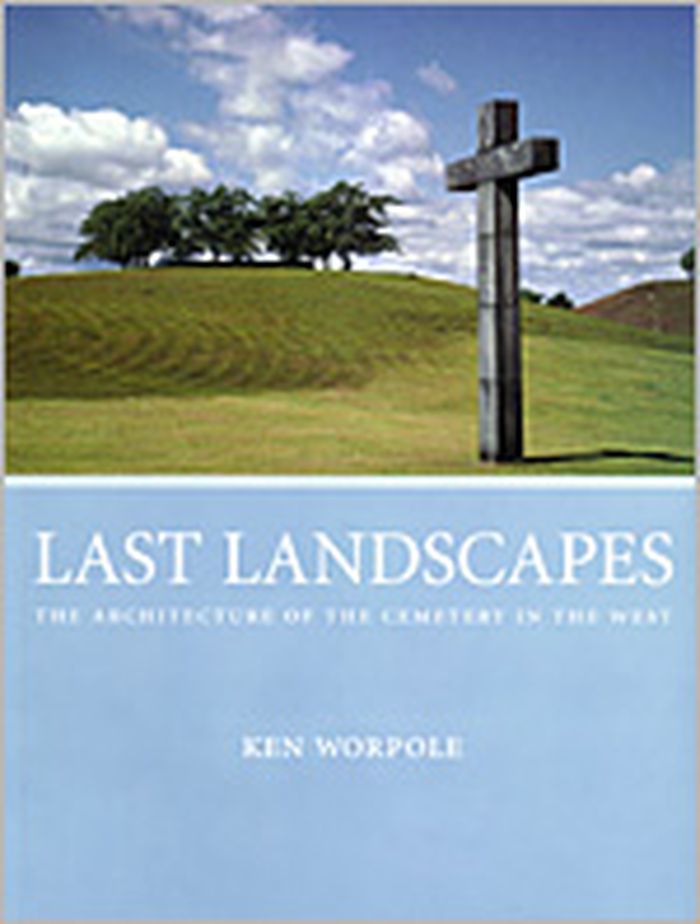
"Last Landscapes" is an exploration of the cult and celebration of death, loss and memory. It traces the history and design of burial places throughout Europe and the USA, ranging from the picturesque tradition of the village churchyard to tightly packed ‘cities of the dead’, such as the Jewish Cemetery in Prague and Père Lachaise in Paris. Other landscapes that feature in this book include the war cemeteries of northern France, Viking burial islands in central Sweden, Etruscan tombs and early Christian catacombs in Italy, the 17th-century Portuguese–Jewish cemetery 'Beth Haim' at Ouderkerk in the Netherlands, Forest Lawns in California, Derek Jarman’s garden in Kent and the Stockholm Woodland Cemetery. It is a fact that architecture ‘began with the tomb', yet, as Ken Worpole shows us in Last Landscapes, many historic cemeteries have been demolished or abandoned in recent times (notably the case with Jewish cemeteries in Eastern Europe), and there has been an increasing loss of inscription and memorialization in the modern urban cemetery. Too often cemeteries today are both poorly designed and physically and culturally marginalized. Worse, cremation denies a full architectural response to the mystery and solemnity of death. The author explores how modes of disposal – burial, cremation, inhumation in mausoleums and wall tombs – vary across Europe and North America, according to religious and other cultural influences. And Last Landscapes raises profound questions as to how, in an age of mass cremation, architects and landscape designers might create meaningful structures and settings in the absence of a body, since for most of history the human body itself has provided the fundamental structural scale. This evocative book also contemplates other forms of memorialization within modern societies, from sculptures to parks, most notably the extraordinary Duisberg Park, set in a former giant steelworks in Germany’s Ruhr Valley.
Last landscapes : the architecture of the cemetery in the west
Actions:
Price:
$49.95
(available to order)
Summary:
"Last Landscapes" is an exploration of the cult and celebration of death, loss and memory. It traces the history and design of burial places throughout Europe and the USA, ranging from the picturesque tradition of the village churchyard to tightly packed ‘cities of the dead’, such as the Jewish Cemetery in Prague and Père Lachaise in Paris. Other landscapes that feature in this book include the war cemeteries of northern France, Viking burial islands in central Sweden, Etruscan tombs and early Christian catacombs in Italy, the 17th-century Portuguese–Jewish cemetery 'Beth Haim' at Ouderkerk in the Netherlands, Forest Lawns in California, Derek Jarman’s garden in Kent and the Stockholm Woodland Cemetery. It is a fact that architecture ‘began with the tomb', yet, as Ken Worpole shows us in Last Landscapes, many historic cemeteries have been demolished or abandoned in recent times (notably the case with Jewish cemeteries in Eastern Europe), and there has been an increasing loss of inscription and memorialization in the modern urban cemetery. Too often cemeteries today are both poorly designed and physically and culturally marginalized. Worse, cremation denies a full architectural response to the mystery and solemnity of death. The author explores how modes of disposal – burial, cremation, inhumation in mausoleums and wall tombs – vary across Europe and North America, according to religious and other cultural influences. And Last Landscapes raises profound questions as to how, in an age of mass cremation, architects and landscape designers might create meaningful structures and settings in the absence of a body, since for most of history the human body itself has provided the fundamental structural scale. This evocative book also contemplates other forms of memorialization within modern societies, from sculptures to parks, most notably the extraordinary Duisberg Park, set in a former giant steelworks in Germany’s Ruhr Valley.
Form:
books
books
Publication:
June 2003, London
June 2003, London
Subject:
Gardens
Gardens
Form:
books
books
Price:
$49.00
(available to order)
Summary:
Buildings are more like us than we realize. They can be born into wealth or poverty, enjoying every privilege or struggling to make ends meet. They have parents - gods, kings and emperors, governments, visionaries and madmen - as well as friends and enemies. They have duties and responsibilities. They can endure crises of faith and purpose. They can succeed or fail. They(...)
$49.00
(available to order)
Summary:
Buildings are more like us than we realize. They can be born into wealth or poverty, enjoying every privilege or struggling to make ends meet. They have parents - gods, kings and emperors, governments, visionaries and madmen - as well as friends and enemies. They have duties and responsibilities. They can endure crises of faith and purpose. They can succeed or fail. They(...)
Title:
Fallen glory: the lives and deaths of history's greatest buildings
Actions:
Price:
$49.00
(available to order)
Summary:
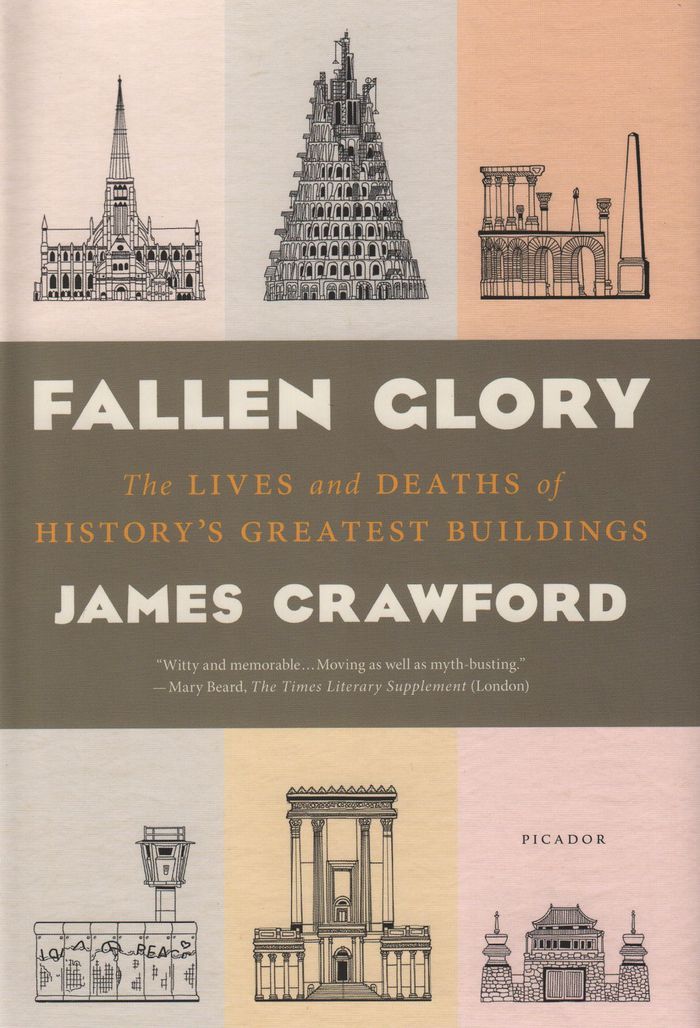
Buildings are more like us than we realize. They can be born into wealth or poverty, enjoying every privilege or struggling to make ends meet. They have parents - gods, kings and emperors, governments, visionaries and madmen - as well as friends and enemies. They have duties and responsibilities. They can endure crises of faith and purpose. They can succeed or fail. They can live. And, sooner or later, they die. In "Fallen glory", James Crawford uncovers the biographies of some of the world's most fascinating lost and ruined buildings, from the dawn of civilization to the cyber era. The lives of these iconic structures are packed with drama and intrigue. Soap operas on the grandest scale, they feature war and religion, politics and art, love and betrayal, catastrophe and hope. Frequently their afterlives have been no less dramatic - their memories used and abused down the millennia for purposes both sacred and profane. They provide the stage for a startling array of characters, including Gilgamesh, the Cretan Minotaur, Agamemnon, Nefertiti, Genghis Khan, Henry VIII, Catherine the Great, Adolf Hitler, and even Bruce Springsteen. The twenty-one structures Crawford focuses on include The Tower of Babel, The Temple of Jerusalem, The Library of Alexandria, The Bastille, Kowloon Walled City, the Berlin Wall, and the Twin Towers of the World Trade Center. Ranging from the deserts of Iraq, the banks of the Nile and the cloud forests of Peru, to the great cities of Jerusalem, Istanbul, Paris, Rome, London and New York, Fallen Glory is a unique guide to a world of vanished architecture. And, by picking through the fragments of our past, it asks what history's scattered ruins can tell us about our own future.
Fallen glory: the lives and deaths of history's greatest buildings
Actions:
Price:
$49.00
(available to order)
Summary:
Buildings are more like us than we realize. They can be born into wealth or poverty, enjoying every privilege or struggling to make ends meet. They have parents - gods, kings and emperors, governments, visionaries and madmen - as well as friends and enemies. They have duties and responsibilities. They can endure crises of faith and purpose. They can succeed or fail. They can live. And, sooner or later, they die. In "Fallen glory", James Crawford uncovers the biographies of some of the world's most fascinating lost and ruined buildings, from the dawn of civilization to the cyber era. The lives of these iconic structures are packed with drama and intrigue. Soap operas on the grandest scale, they feature war and religion, politics and art, love and betrayal, catastrophe and hope. Frequently their afterlives have been no less dramatic - their memories used and abused down the millennia for purposes both sacred and profane. They provide the stage for a startling array of characters, including Gilgamesh, the Cretan Minotaur, Agamemnon, Nefertiti, Genghis Khan, Henry VIII, Catherine the Great, Adolf Hitler, and even Bruce Springsteen. The twenty-one structures Crawford focuses on include The Tower of Babel, The Temple of Jerusalem, The Library of Alexandria, The Bastille, Kowloon Walled City, the Berlin Wall, and the Twin Towers of the World Trade Center. Ranging from the deserts of Iraq, the banks of the Nile and the cloud forests of Peru, to the great cities of Jerusalem, Istanbul, Paris, Rome, London and New York, Fallen Glory is a unique guide to a world of vanished architecture. And, by picking through the fragments of our past, it asks what history's scattered ruins can tell us about our own future.
Form:
books
books
Publication:
March 2017
March 2017
Subject:
Architectural Theory
Architectural Theory
Form:
books
books
Actions:
Holdings:
Description:
volumes <1-3, 5-15> ; 24 cm
Description:
volumes <1-3, 5-15> ; 24 cm
Author:
Subject:
Publication:
Cambridge [England] ; New York : Cambridge University Press, 1978-<2019>
Cambridge [England] ; New York : Cambridge University Press, 1978-<2019>
Title:
The Cambridge history of China / general editors, Denis Twitchett and John K. Fairbank.
Actions:
Holdings:
Description:
volumes <1-3, 5-15> ; 24 cm
The Cambridge history of China / general editors, Denis Twitchett and John K. Fairbank.
Actions:
Holdings:
Description:
volumes <1-3, 5-15> ; 24 cm
Form:
books
books
Publication:
Cambridge [England] ; New York : Cambridge University Press, 1978-<2019>
Cambridge [England] ; New York : Cambridge University Press, 1978-<2019>
Author:
Subject:


